Deep Dive into Craft: First Page Critique

I’ve got a special treat for you today. This Brave Writer submitted their first page for critique. Check it out. My comments will follow.

Lucky Lynx

Eduardo’s gun gleamed in the evening light as he tucked it into his shoulder holster.

“This guy Luckee ain’t a threat’,” he scoffed, as he pulled his jacket closer. “He’ll fold like the rest, we just gotta push him.”

Carlos shook his head. He didn’t take his hands off the wheel as the battered Ford Bronco jounced over the pothole-ridden street. “You know Hector Flores, ran with Familia Michoacana?”

“What if I do?”

“He gone. Double-crossed Luckee in a deal. Next day, his bank accounts disappeared.  Two days later, cops pick him up for murder. He’s up for fifteen at Riker’s.”

That made Eduardo sit up. The seat’s rusty springs made a creak.

“Hector never offed no one!”

“That’s right.” Carlos turned the Bronco down a side street. “Luckee hacked into the cops’ database. Swapped evidence with a gang-banger, pinned it all on Hector.”

“You’re messing with me, primo. This nerd a magician? I ain’t believing that shit!”

“Don’t matter what you believe. This guy can erase lives with a click. Don’t cross him, cousin. Keep that nine-iron under your jacket.”

Eduardo shifted in his seat.  The gun was a reassuring weight against his side.

The Bronco’s motor slowed to a grumble as Carlos pulled into the parking lot behind an old warehouse. The building’s broken windows and boarded-up doorways glinted against the sunset. The SUV’s headlights illuminated a group of four men standing next to a pair of Dodge Chargers. The lot’s outer fence ran close behind them.

Carlos put the vehicle in park, shut the motor off, and got out.  Eduardo followed suit. Their steps sounded abnormally loud in the sudden silence as they walked up to the fence.

Three of the four men watched warily as they approached.  The fourth one took a step forward. A pale face jutted out from beneath a black hoodie sweatshirt.  The sweatshirt hung loose around a lean, slender frame.

“The package is up against the fence, twenty yards to your right,” he said, in a young, high-pitched voice. “Either of you can pick it up and verify I’ve delivered what you want. If it checks out, then you’ll pay the agreed amount. You will not exit the premises until we signal that we have counted the bills.”

“Fine. I’ll pick it up,” Carlos said.

Eduardo scowled at the hoodie-wearing figure.

“You’re just a kid.”

A pause. “The name’s Ti. And yeah, I’m a kid. A kid who scored you your shipment.”

Brave Writer did a terrific job with this opener. S/he has a firm grasp of POV and the dialogue is easy-going and natural, though at times it took me a moment to figure out who was speaking. Easy fix, which we’ll get to in a moment. Because Brave Writer has the basics down, this gives us a great opportunity to dive a little deeper into craft.

First, let’s compare Brave Writer’s dialogue with my favorite craft book for dialogue: How To Write Dazzling Dialogue by James Scott Bell.

In Chapter 3, Jim gives us a checklist for what dialogue should accomplish.

  1. Dialogue Should Reveal Story Information.

But only reveal enough information for the reader to understand the scene. Everything else can wait.

Dialogue is sometimes the more artful way to reveal story information. But here’s the key: the reader must never catch you simply feeding them exposition!

Jim gives us his two top tips…

First, determine just how much exposition you really need. Especially toward the front of your novel. Here’s one of my axioms: Act first, explain later. Readers will wait a long time for explanatory material if there is solid action going on.

In fact, by not revealing the reasons behind certain actions and dialogue, you create mystery. That works in any genre. Readers love to be left wondering.

Second, once you know what you need to reveal, put it into a tense dialogue exchange.

In other words, hide the exposition within confrontation.

For the most part, Brave Writer succeeded in this area. But the punctuation causes confusion. For example…

“You know Hector Flores, ran with Familia Michoacana?”

“What if I do?”

For clarity try something like: “You know Hector Flores? [That dirtbag who] ran with Familia Michoacana.”

“What if I do?” doesn’t sound right to this particular reader. Simple and direct works best. Example: “That dude? Punk. He’s lucky I didn’t—”

“[Anyway,] he’s gone. Double-crossed Luckee in a deal. Next day, his bank accounts disappeared. Two days later, cops pick him up for murder. He’s up for fifteen at Rikers.”

Rikers Island has no apostrophe, Brave Writer. Do your research! It took me all of two seconds to confirm. Details can make or break a story.

Careful of run-on sentences, too. Example: “He’ll fold like the rest, we just gotta push him.”

Those are two sentences that should be separated by a period.

  1. Dialogue Should Reveal Character.

We can tell a lot about character by the words they use. Jim gives us another checklist to keep in mind.

  • Vocabulary: What is the educational background of your characters? What words would they know that correspond to that background?
  • Syntax: When a character does not speak English as a first language, syntax (the order of words) is the best way to indicate that.
  • Regionalisms: Do you know what part of the country your character comes from? How do they talk there?
  • Peer groups: Groups that band together around a specialty—law, medicine, surfing, skateboarding—have pet phrases they toss around. These are great additions to authenticity.

Did Brave Writer accomplish this task? Let’s find out… 

“Hector never offed no one!”

“That’s right.” Carlos turned the Bronco down a side street. “Luckee hacked into the cops’ database. Swapped evidence with a gang-banger, pinned it all on Hector.”

“You’re messing with me, primo. This nerd a magician? I ain’t believing that shit!”

The vocabulary, syntax, regionalism, and peer groups are all represented. Yet, something still feels off. If we look closer, Eduardo’s dialogue works really well. It’s Carlos’s dialogue that needs a minor tweak. “That’s right” is too on-the-nose. A more natural response might be, “No shit. But get this.” The rest of this short exchange works well.

Quick note about nicknames. If “primo” is the name Eduardo uses for Carlos, then be consistent. Don’t use both, especially on the first page. After all, we’re inside Eduardo’s head. If he doesn’t think of Primo as Carlos, then the reader shouldn’t either while we’re in his POV. 

  1. Dialogue Should Set the Tone (and Scene) 

The cumulative effect of dialogue on readers sets a tone for your book. Be intentional about what you want that tone to be… First, the way characters react to their surroundings tells us both about the location and the people reacting to it.

Brave Writer nailed this part. We know exactly where we are, and the tone is consistent. Great job! 

  1. Dialogue Should Reveal Theme

Certainly, many writers do care about message, or theme. The danger in dialogue is to allow the characters to become mere mouthpieces for the message. This is called getting “preachy.” The way to avoid this is to place the theme into natural dialogue that is part of a confrontational moment. As with exposition, a tense exchange “hides” what you’re doing.

With such a small sample, it’s difficult to determine if Brave Writer accomplished this task or not. Just keep it in mind.

Aside from dialogue…

Sentence Variation and Rhythm

The Bronco’s motor slowed to a grumble as Carlos pulled into the parking lot behind an old warehouse. The building’s broken windows and boarded-up doorways glinted against the sunset. The SUV’s headlights illuminated a group of four men standing next to a pair of Dodge Chargers. The lot’s outer fence ran close behind them.

In this one paragraph every sentence begins with “The,” which dulls the image you’re trying to convey. By varying the sentences you’ll draw the reader into the scene. Let the writing work for you, not against you.

Example:

Carlos veered into the back-parking lot, and the Bronco’s motor slowed to a grumble. Broken windows, boarded-up doorways, the headlight’s cast cylindrical spheres across the skewed faces of four men huddled next to a pair of Dodge Chargers. A chain link fence acted as an enclosure to keep this deal from going south—no one could escape unnoticed.

It’s still not great, but you get the idea.

Also, don’t rely only on sight. Add texture to the scene with smells, sounds, touch, and taste. Could there be a harbor bell in the distance? What might that sound like to Eduardo? Is he nervous and chews on his inner cheek to the point where blood trickles onto his tongue? Drag us deeper into the scene by forcing us into that Bronco.

Clarity

We never want the reader to wonder who’s speaking. An easy way to fix this is to move the dialogue up to the cue.

So, instead of this:

Eduardo’s gun gleamed in the evening light as he tucked it into his shoulder holster.

“This guy Luckee ain’t a threat’,” he scoffed, as he pulled his jacket closer. “He’ll fold like the rest, we just gotta push him.”

Try this:

Eduardo’s gun gleamed in the evening light as he tucked it into his shoulder holster. “This guy Luckee ain’t a threat’,” he scoffed, as he pulled his jacket closer. “He’ll fold like the rest. We just gotta push him.”

Or simply substitute “Eduardo” for “he.”

This raises another issue, though.

Would Eduardo really notice the sunlight gleaming off his gun as he’s holstering the weapon? Not likely. Remember Jim’s #2 tip: Dialogue Should Reveal Character. What I’m sayin’ is, you need a better opening line. We’ve discussed first lines many times on the Kill Zone. Check out this post or this one. For scene structure tips, see Jim’s Sunday post.

I better stop there. All in all, I think Brave Writer did an excellent job. The characters are real and three-dimensional, the tone is dark and pensive, and the dialogue keeps the scene active. I’d definitely turn the page.

The question is, do you agree? How many of you would turn the page to find out what happens next? What did you like most? How might you improve this first page even more?
Mastering the Basics: Point of View and Dialogue

by James Scott Bell
@jamesscottbell

We have another first page for critique today. See you on the other side.

THE OIL PATCH PROJECT

1. Slinging Pebbles at Goliath

Southwest National Laboratory
Albuquerque, New Mexico
A Monday in October

Engineering geologist Jim Checkers pushed open the door labeled “GEOCHEMISTRY LAB,” strode across the room to a workbench, and picked up a bulging old briefcase that was sitting among tools, a voltmeter, and a jar of vacuum grease. The place smelled like acetone.

Mattie Hawkins, geochemist at Southwest National Laboratory, locked into Jim’s eyes. “You’ve been spending a lot of vacation time at those oil meetings. Doesn’t your wife care?”

“I suppose, but she’s occupied with her own business.”

“Jim, did it ever occur to you that you can’t save the world?” He stopped to listen. It was pleasant to be around Mattie, the lovely tech who analyzed his samples and generated the data.

“No,” he said, as though answering a question about the weather. “I’ve got the facts … it will force change. I can’t let them continue dumping salt on the land.”

Stuffing another paper into his briefcase, Checkers reached for the old dinner jacket and tie he kept behind the door in case the lab’s brass brought official visitors from the Department of Energy.

“You can’t take on the entire oil industry, Jim.”

“Well, I’ll have to. I registered as a technical witness this time.” He brushed a stray hair from his eyes.

“Jim, you’re playing Don Quixote. The oilmen play for keeps.”

“I’m David facing Goliath, not Quixote fighting a windmill.”

She watched him hurry out and shook her head. “They’ll kill you,” she said to the closing door. “I should know. I grew up in the oil patch.” She wished she hadn’t mentioned his wife.

***

JSB: All right, let’s roll up the ol’ sleeves. I am assuming this is going to be a thriller. Thus, the first thing that needs to change is the title. The Oil Patch Project sounds like a chapter from the annual report of a city council’s energy committee … or a children’s story featuring bunnies. Maybe it’s the world Patch (e.g., Sour Patch Kids). Anyway, it isn’t a compelling thriller title, so I suggest you review this post and come up with alternatives.

I don’t like the chapter title, either. This could be the subject of a whole post, but outside of juvenile lit I’m not a fan of giving titles to chapters. In any event, “Slinging Pebbles at Goliath” is confusing. David grabbed five smooth stones from a stream, suitable for killing. So if your hero is taking on the David role in this book, why is he only using pebbles? You may have an ironic meaning in mind, but it tripped me up. Do you really need it?

Then we come to the location/day stamp (we’ll get to the actual content soon, I promise!) I’m not against these, but I do think you need to be more specific. “A Monday in October” has me thinking, Wait, aren’tyou the author? How come you don’t know the date? I’d thus use “Monday, October 13” or just cut it and indicate the month in the text (if necessary).

We’re writing a thriller here, right? Titles and character names are crucially important. Don’t use the name Checkers. It sounds funny. A clown or a dog (see, e.g., Richard Nixon) might be named Checkers, but not the hero of a thriller.

Okay, let’s get to the content. I want to concentrate on two big areas. We can nitpick sentences here and there, but I’d rater you get your craft in order on these two items before you do anything else.

First is the dialogue. It’s expository. Review my post on the subject. You have the characters saying things not so much to each other as to the reader. In a few short paragraphs you’ve told us all about the high stakes. We need to see them, feel them, as they unfold for the main character. Don’t be in such a rush to tell us everything about a scene. Readers are patient if there is some real action and tension happening.

Don’t confuse the reader with wrong pronoun placement. You have:

“Jim, did it ever occur to you that you can’t save the world?” He stopped to listen.

That is Mattie’s line of dialogue, but you have Jim’s pronoun immediately following. No, no, never, never. It should be:

“Jim, did it ever occur to you that you can’t save the world?”

He stopped to listen.

Also, you have Mattie using Jim’s name three different times in this short segment. Once is enough.

Now on to the second problem—Point of View. The first two paragraphs are omniscient, with the author telling us about each of the characters in the scene:

Engineering geologist Jim Checkers…

Mattie Hawkins, geochemist at Southwest National Laboratory…

Then we drop into Jim’s POV:

It was pleasant to be around Mattie...

But at the end, we switch to Mattie’s POV:

She watched him hurry out…

This is called “head hopping.” The effect on the reader is subtle confusion. Who am I supposed to care about? Whose story is it?

So here’s what I want you to do, author.

  1. Study Point of View

Don’t worry. Many, if not most, new writers struggle with POV. But once you get the hang of it, you’ll find it makes an almost magical difference in your writing. You can begin your studies right here at TKZ. Emeritus blogger Jodie Renner did a great series on POV a few years ago:

POV 101 – Get into Your Protagonist’s Head and Stay There 

POV 102 – How to Avoid Head-Hopping 

POV 103 – Engage Your Readers with Deep Point of View 

  1. Study Dialogue

Get a few novels by dialogue masters and see how they do it. Notice how tight their dialogue is, how there’s no rush to give out information, how it is consistent with their characters, and how it contains tension or conflict. Let me suggest Elmore Leonard and Robert B. Parker (1980s and 90s Parker) as exemplars. Perhaps others will have suggestions in the comments.

And for the definitive text on the craft of dialogue, I humbly suggest this one.

Don’t let this discourage you, author. Craft improvement is hard work. But the rewards are great. Study, write, get feedback, write some more. Do this for the rest of your life. You’re a writer, after all.

Where Am I? — First Page Critique

By SUE COLETTA

Another brave writer submitted their first page for critique. I’ll catch ya on the flipside. Enjoy!

TITLE: Sonbgird

chapter 1

I stood alone, ready to jump. A slow wavering breath parted my lips. I gripped the sides of the worn concrete tunnel and looked over the edge. The wind blasted my hair up the side of the building, and rumbled in my ears.

I could do this. Just have to push through the fear. My eyes stung, but I kept the tears from erupting.

The sunshine bounced off the pitted white walls of the building. Below me, the slow curve of it swept far away. The bottom lost somewhere in the sand below. Above me, it changed into a skyscraper. The top disappeared in the clouds. I looked over the landscape of buildings in the distance as far as I could see. So many lives held in each one, but all of them like mine. Concrete volcanoes ready to erupt.

Do it. Do it now.

I screamed at myself to move, but my feet wouldn’t budge. I could feel the rush of panic flushing over me. Tingling my fingertips as sweat prickled my forehead.

Even if I didn’t believe I could, I had to try.

I closed my eyes.

I didn’t want the responsibility. It wasn’t fair.

I backed up to get a running start, sliding my feet along the safety of the concert. My fingertips and toes zinged with pin pricks, and I was sure I would pass out. But I let my instinct take over.

I ran.

The wind slipped over the sweat starting to flush my skin, and I felt every nerve on fire. The dark, round tunnel lead me faster and faster to the end. My toes curled around the lip of the tunnel as I pushed off the edge.

I jumped.

The sunlight and wind rushed over my body, and I was free of the Block. But I didn’t fall. I ignited.

***

Almost a year earlier, I stood in the Comb’s Diner, going through the dull stammer of the only life I knew.

I cleaned and stocked all the tables for the waiter, Dan, in exchange for scraps left over from breakfast. He complained plenty about it. “Do you work here or at the Capitol?” His burly and gruff nature matched his stature.

Amelia was the owner and cook.

That day, her bight brown eyes found me from behind the cook’s window. Something was up, but I didn’t know what. Looking back, I should have realized.

She flipped her long chocolate hair over her shoulder. It draped down her back in a loose braid she had to redo several times a day.

She handed me a few coins. “That’s enough to get you to work and back before it starts raining.”

The genre would be fantasy, I think. Full disclosure: this is not my preferred genre. As a reader, I’m drawn to stories that are logical or at least possible (think: The Martian by Andy Weirs). Brave writer, please remember this is one reader’s opinions. Perhaps others will see something I missed.

Let’s look at this opener in more depth. My comments are in bold.

TITLE: Sonbgird I’m guessing this is a typo and you meant to write Songbird, which I liked right away.

Chapter 1

I stood alone, ready to jump. A slow wavering breath parted my lips. (first two lines drew me in—good job) I gripped the sides of the worn concrete tunnel and looked over the edge. The wind blasted my hair up the side of the building, and rumbled in my ears.

The previous two sentences I’ve read a gazillion times and I still can’t picture where I am. Is the MC standing in an empty culvert? If so, then how does wind blow his/her hair “up the side of the building”?

I could do this. Just have to push through the fear. My eyes stung, but I kept the tears from erupting.

The Sunshine bounced off the pitted white walls of the building (excellent visual). Below me, the slow curve of it (of what, the walls or tunnel? In my mind a tunnel is horizontal, not vertical. If it is a vertical structure and s/he’s looking down into a tunnel-like pit, then you need a better way to set the scene. Also, whenever possible substitute the word “it” for the object) swept far away. The bottom lost somewhere in the sand below.

“Sand” threw me. I’d assumed we were in a metropolitan area due to the word “tunnel,” so you need to ground the reader to where we are.

Above me, it changed into a skyscraper.

Again, what is “it”? And how did it morph into a skyscraper? Without some context, these details don’t make sense to this reader.

The top disappeared in the clouds. I looked over the landscape of buildings in the distance as far as I could see.

That passage reaffirms a metropolitan landscape in my mind. Unless we’re in the desert outside Vegas or somewhere similar. See why it’s important to ground the reader? Don’t make us guess. If we can’t envision the surroundings, how can we fully invest in the story?.

So many lives held in each one, but all of them like mine. Concrete volcanoes ready to erupt. Those two lines intrigued me. I’m thinking concrete smokestacks. Try adding more sensory details i.e. smoke plumed into an aqua-blue sky, tangoed with a lone cloud, and filled my sinuses with burnt ashes of sulfur (or somebody’s dearly departed — kidding. 😉 ) 

Do it. Do it now. Nice. I can feel the urgency.

I screamed at myself for my feet to move, but they wouldn’t comply my feet wouldn’t budge. I could feel the rush of panic flushing over me. (try to decrease the sentences that begin with “I” while remaining in a deep POV). A cold rush of panic washed over me, tingling my fingertips, as sweat prickling my forehead (changed to show how to play with rhythm to create a more visceral experience. Just a suggestion. Your call on whether to keep it).

Even if I didn’t believe I could (could what? You’re trying too hard to be mysterious), I had to try.

I closed my eyes.

I didn’t want the responsibility. It wasn’t fair. This I like. It’s mysterious yet, as a reader, I don’t feel cheated—nicely done.

I backed up to get a running start, sliding my feet along the safety of the concert. My fingertips and toes zinged with pin pricks, and I was sure I would pass out (good visuals here). But I let my instinct take over.

I ran.

The wind slipped over the sweat starting to flush my skin, and I felt every nerve was on fire (removed “I felt” to stay in deep POV). The dark, round tunnel lead me faster and faster to the end. My toes curled around the lip of the tunnel as I pushed off the edge.

I still say the MC is in a horizontal culvert that’s hanging over a cliff of some sort. Regardless, please make it clear where we’re at. I shouldn’t still be guessing.

I jumped.

The sunlight and wind rushed over my body, and I was free of the Block. But I didn’t fall. I ignited. Whoa. The MC burst into flames?

I red-highlighted all the sentences that begin with “I” to make you aware of them. If this is intentional, and it may be, then fine, but be careful of overdoing it. Too many in a row can work against us.

***

Almost a year earlier, I stood in the Comb’s Diner, going through the dull stammer of the only life I knew.

I cleaned and stocked all the tables for the waiter, Dan, in exchange for scraps left over from breakfast (this is a great way to weave in a tidbit of backstory). He complained plenty about it. “Do you work here or at the Capitol?” His burly and gruff nature matched his stature.

Amelia was the owner and cook.

That day, her bright brown eyes found me from behind the cook’s window. This is a nit: whenever I read “eyes” instead of “gaze” in this context I think of disembodied eyeballs. Something was up, but I didn’t know what. Looking back, I should have realized.

She flipped her long chocolate-colored (added “-colored” so the reader doesn’t imagine real chocolate like I did on the first read-through. Some descriptive words are like that. Or choose a different way to describe the color i.e. deep brown) hair over her shoulder. It (Strands instead of “it”) draped down her back in a loose braid she had to redo several times a day.

The first line indicates she has long flowing hair, then we find out she’s wearing a braid. Give us one solid image. When we’re not clear right away it causes confusion.

She handed me a few coins. “That’s enough to get you to work and back before it starts raining.”

Thank you, Brave Writer, for submitting your work to TKZ. It’s been a pleasure critiquing this first page. I hope you found it useful.

Over to you, my beloved TKZers! Please add helpful suggestions for this brave writer.

First Page Critique – Hell Hath No Fury

by Debbie Burke

@burke_writer

Please welcome today’s Brave Author with a submission titled Hell Hath No Fury. Take a look then we’ll discuss it.

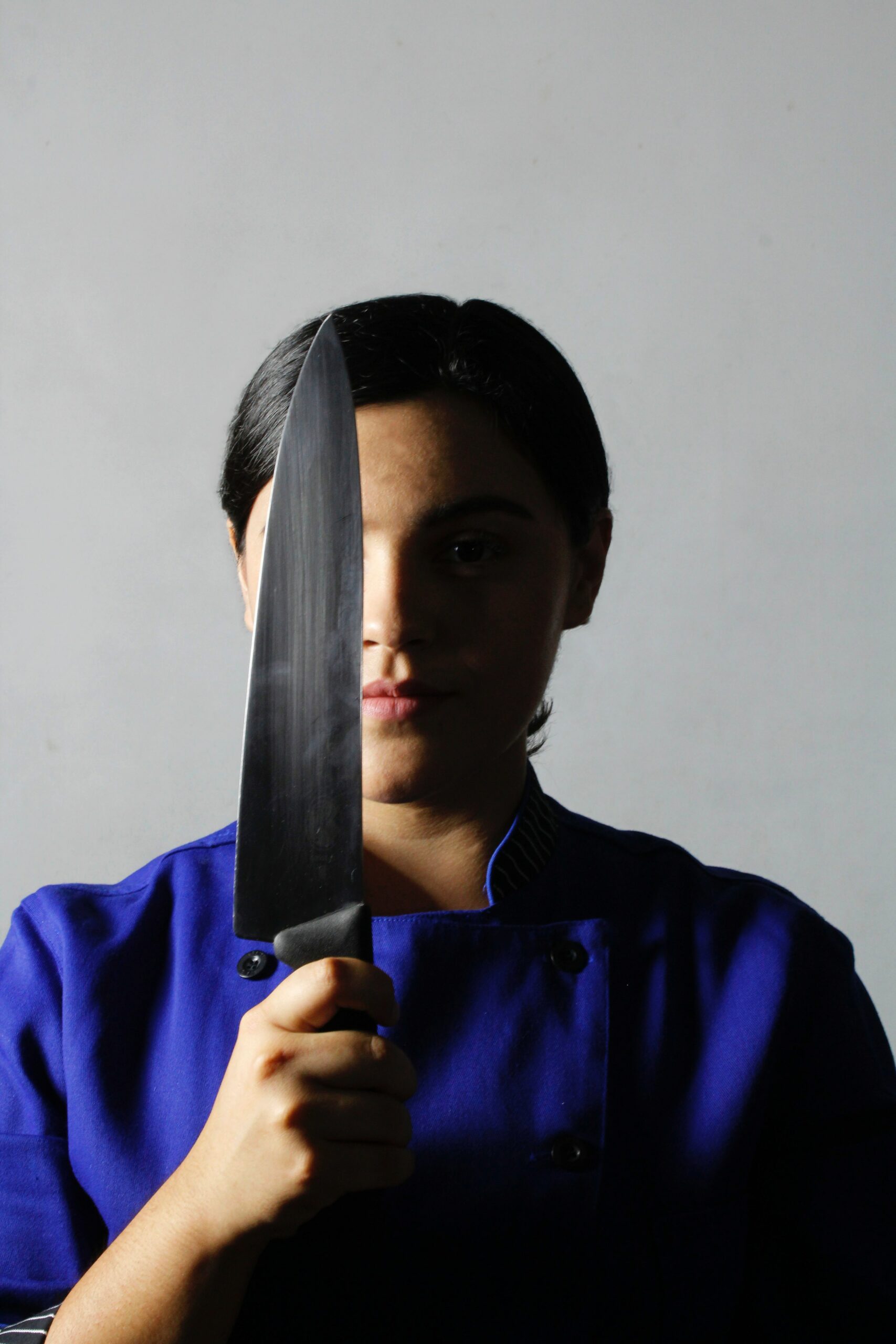
Photo credit: Fernando Aguilar, Unsplash

A DROP OF BLOOD CLUNG PRECARIOUSLY to the tip of the chef’s knife. On the fluffy white carpet of Madeline Hawthorne’s bedroom, a nasty red stain was forming. The woman gripping the knife breathed in staccato gasps; the muscles in her arm twitching after her recent exertion.  Madeline lay on her stomach on the king-sized bed, wearing a silver silk nightgown with two ragged gashes in its back.  Blood welled up from the wounds and ran down her side onto the satin sheet.  Madeline groaned and moved her left arm.

“I said die, bitch!”

The knife sliced into Madeline’s back five more times in quick succession.  Blood spatter covered the woman’s face and arms as well as her blouse.  She was petite, but the muscles in her arms and shoulders were well-defined, honed by hours in the gym and the dance studio.  Her calves, visible below her dark skirt were lithe and slender.  She tensed for another lunge, but there was no need. She stood over the dead woman while her pulse steadied and her breathing slowed to normal.  A dark pool had formed on the bed and ran in two thin rivulets off the edge of the mattress and down onto the stained carpet.  After a few minutes of motionlessness, she calmly laid the knife down on a bloodless space near the foot of the bed and wiped the handle with a portion of the comforter, leaving bloody streaks.  Then she reached down and removed her shoes, which had mostly avoided the flying blood.  She carefully walked to the bathroom and set the shoes down on the floor, then walked around the bed, not stepping in the obvious patches of blood, until she reached a closet door.  She opened it and went inside, then reached up to the shelf over a row of dark men’s business suits and removed a wooden case.

John had shown her the box once, after they had sex in his bed while his bitch wife was away for the weekend visiting her mother. He was unnaturally proud of his Colt Python .357 Magnum with the 4-inch barrel. She removed six bullets from a cardboard box lying next to the gun inside its case and loaded each of the revolving chambers, then took the gun back to the bathroom.  She sat down on the edge of the marble bathtub to wait.

~~~

The title Hell Hath No Fury makes a great first impression. The familiar phrase is commonly attributed to Shakespeare. But the source is actually a 1697 play, The Mourning Bride by William Congreve.

Here’s the original version:

“Heav’n has no rage, like love to hatred turn’d,/Nor Hell a fury, like a woman scorn’d.”

No matter who said it, the quote fulfills requirements of a compelling title for a murder mystery. A female who’s suffered betrayal and rejection is consumed with passionate vengeance. Since titles can’t be copyrighted, Hell Hath No Fury has been used before. I suggest the Brave Author do a net search to find other books with that name and how recently they were published. If it’s not overdone, it’s an excellent choice for a murder mystery.

Now to deconstruct the first page.

At TKZ, we stress the importance of hooking the reader with action or a disturbance. Today’s first page kicks off with a gruesome stabbing, immediately followed by the promise of further violence as killer lies in wait with a gun for her next victim. The Brave Author sets up a tense situation that pulls the reader into the story in media res. Well done!

Let’s get into specific details:

Point of view – Keeping the killer’s identity secret is standard for mysteries.To accomplish this, the Brave Author starts in omniscient POV where the events unfold like a movie. The killer is described by an unseen narrator. The reader knows what she looks like but not who she is.  Except for her pulse steadying, the reader is not inside the character until the last paragraph, when the POV shifts to her thoughts.

The risk is the reader isn’t yet invested in the character therefore may not read further to learn what happens to her. This is the eternal balancing act for authors. How do you start with action but, at the same time, make the characters fascinating enough for the reader to turn the page?

Using deep POV, the author might go inside the killer’s head sooner to share her visceral reaction as she plunges the knife, feels the resistance of Madeline’s muscles against the blade and the warm blood spatter on her face, as well as her rage against her romantic rival. BUT, that technique takes a chance of exceeding the reader’s gore tolerance.

Personally, I don’t mind the camera-eye POV in the first three paragraphs. It’s gory but doesn’t sicken me enough to stop reading. But that’s only one person’s opinion.

The fourth paragraph hints at the killer’s motives. At first blush, the stabbing appears to be a crime of passion by a jealous other woman. Then it grows more sinister when the killer waits to ambush John. Will she succeed with a second murder? The reader turns the page to find out.

Analysis of the craft details:

The Brave Author uses a number of unnecessary adjectives and adverbs. Strong verbs and vivid nouns paint the picture. Modifiers simply dilute the impact.

A DROP OF BLOOD CLUNG PRECARIOUSLY to the tip of the chef’s knife. Clung is a strong verb that implies precarious so you don’t need the adverb.

The chef’s knife is specific but also a bit misleading. For a moment, I thought the chef was a character rather than an adjective to describe the type of weapon. Suggest you delete chef’s to avoid confusion or use a more generic term like butcher knife.

…a nasty red stain was forming. Blood by itself evokes a strong reaction in readers so nasty is unnecessary.

The knife sliced into Madeline’s back five more times in quick succession. Sliced doesn’t accurately describe the normal movement in a knife attack. Slashed, plunged, stabbed are better verbs.

Blood spatter covered the woman’s face and arms as well as her blouse. Confusing because you refer to Madeline in the previous sentence then use “the woman” in the next. It’s not clear right away that the woman is not Madeline. Better to say: Blood spatter covered the attacker’s face and arms as well as her blouse. More changes to this sentence in a minute.

Extra credit for using the correct terminology: spatter rather than splatter.

…thin rivulets. A rivulet is thin by definition. A specific noun doesn’t need to be modified.

…stained carpet. With the vivid description of blood spatter and dripping blood, the reader already assumes the carpet is stained without being told.

After a few minutes of motionlessness, she calmly laid the knife down. Calmly contradicts the anger and passion the murderer shows with repeated stabbing. Rewrite to clarify.

She carefully walked to the bathroom and set the shoes down on the floor, then walked around the bed, not stepping in the obvious patches of blood, until she reached a closet door. 

Suggest you replace carefully walked with tiptoed.

Delete obvious. Patches of blood are visible, therefore obvious.

Is the following action unnecessary? The killer removes her shoes, goes to the bathroom, and sets them on the floor. She returns to the bedroom to get the gun from the closet then goes back into the bathroom to wait. Is the first trip needed? Seems like wasted action that doesn’t add to the story.

Since the killer is covered with blood, a normal reaction might be to immediately wash her hands and face, suggesting a Lady Macbeth conscience. However, if she ignores the sticky spatter, that cues something entirely different about her. I suggest you exploit this opportunity to show more of her personality.

Overwriting – Tighten the prose and delete unnecessary words. Here’s some line editing:

A DROP OF BLOOD CLUNG PRECARIOUSLY to the tip of the chef’s knife. A red stain pooled on the fluffy white carpet of Madeline Hawthorne’s bedroom, a nasty red stain was forming. The woman gripping the knife breathed in staccato gasps; [replace semicolon with a period]. The muscles in her arm twitcheding after her recent from exertion.

[new paragraph] Madeline lay on her stomach on the king-sized bed,  wearing a silver silk nightgown with two ragged gashes in its the back of her silver silk nightgown.  Blood welled up from the wounds and ran down her ribcage side onto the satin sheet.  Madeline groaned and moved her left arm.

“I said die, bitch!”

The knife sliced plunged into Madeline’s back five more times in quick successionBlood spatters covered the attacker’s face, arms, and blouse.  covered the woman’s face and arms as well as her blouse.  She The woman was petite, but the with well-defined muscles in her arms and shoulders were well-defined, honed by hours in the gym and the dance studio.  Her calves, visible below her dark skirt [add comma], were lithe and slender.  She tensed for another lunge, but there was no need.

[new paragraph] She stood over the dead woman, knife hanging at her side, and breathed deeply while her pulse steadied and her breathing slowed to normalA dark pool had formed spread on the mattress bed and ran in two thin rivulets off the edge of the mattress and down onto the stained carpet.  When her pulse steadied, After a few minutes of motionlessness, she calmly laid the knife down set the knife down in a clean area at the foot of the bed. She wiped the handle with a corner of the comforter, . on a bloodless space near the foot of the bed and wiped the handle with a portion of the comforter, leaving bloody streaks.  Then she reached down and removed her shoes, which had mostly avoided the flying blood.  She tiptoed carefully walked to the bathroom and set the shoes down on the floor. then walked around the bed, not stepping in the obvious patches of blood, until she reached a closet door.  She opened it and went inside, then Avoiding patches of blood, she walked around the bed to the closet. Inside, she reached up to the shelf over above a row of dark men’s dark business suits and removed a wooden case.

John had shown her the box once, after they had sex in his bed while his bitch wife was away for the weekend visiting her mother. He was unnaturally proud of his Colt Python .357 Magnum with the 4-inch barrel. She opened the case to reveal the gun and a cardboard box of ammunition beside it. She removed six bullets from a cardboard box lying next to the gun inside its case and loaded each of the revolving chambers. Gun Revolver in hand, she returned then took the gun back to the bathroom.

[new paragraph] She sat down on the edge of the marble bathtub to wait.

~~~

Overall, this first page has action, tension, and conflict with a promise of more to come. With a little line editing, this works well at drawing the reader to turn the page. Well done, Brave Author, and thanks for submitting.


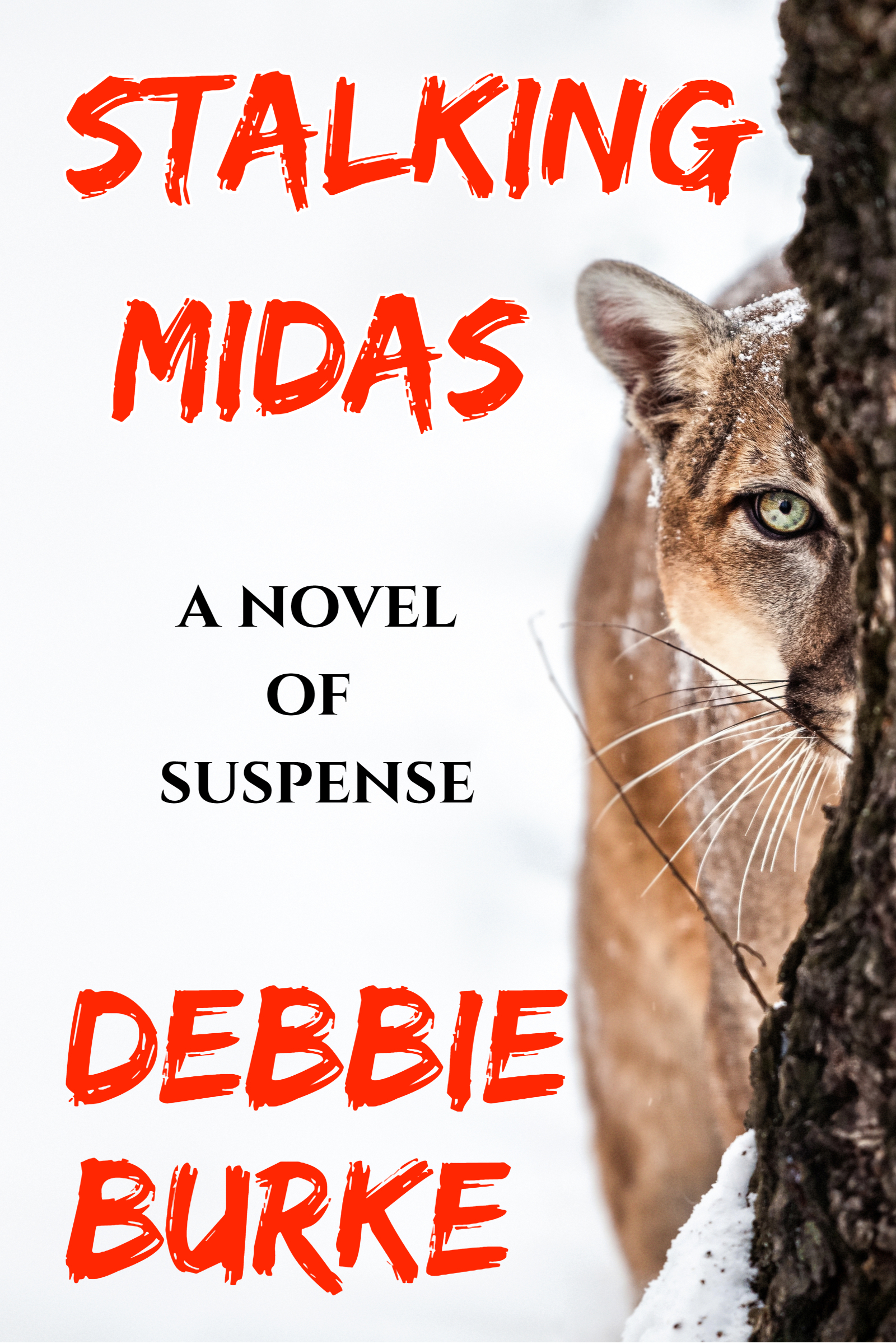
As an aside, my recent thriller Stalking Midas starts with a murder, too. The killer, also female, is immediately identified. The story question is not “Whodunit?” but rather “Will she get away with it?” Please check out the Look Inside feature at this link and let me know what you think.


TKZers, what are your opinions about starting a book with a murder on the first page?

Do you have suggestions and feedback for our brave author?


Warmest holiday wishes to everyone in the TKZ family. I’m honored to be a part of this creative, supportive community. Looking forward to seeing you in the New Year!

How To Invest Readers in Your Story: First Page Critique

By Sue Coletta

Another brave writer has shared his/her first page for critique. Enjoy! My notes will follow.

Traders Market

Blowing up a house with five people inside wasn’t the best way to slip out of town unnoticed.

Heart pounding, hands shaking, knowing she should be gone, Emelia Lopez watched through the stockade fence two houses down, mesmerized by the inferno. She pushed the other thought away when she heard the first sirens, and pushed herself into motion.

Keep to the plan, Nick said.

Staying in the deep shadows cast by the fire, she moved steadily down the alley, around a corner, merging into a crowd of gawkers spilling out of a bar.

“It had to be a gas explosion…”

“Was it a house?”

Another boom, another explosion.

“Holy shit! What is it?”

“Your wife blew up your boat. You better go home.”

Laughing, untouched by whatever it was, they began drifting back inside to get another round.

Emelia moved away, her lumpy figure in its baggy dress and sweatshirt unnoticed, one of hundreds like her in the neighborhood.

The second explosion?

Couldn’t think about it now.

A few blocks later, lights from the bus station beckoned. She pulled up her hood and grasped the key in her gloved hand. Inside, no one was paying any attention to the explosion. Too far away. Sirens were common. She put her head down and made herself shuffle to a locker, key ready. She pulled out a large duffle bag, closed the door, left the key in the lock, crossed the few feet into the restroom.

The biggest stall was open, the one with the changing table. Inside, she pulled the table down and began emptying the duffel.

Twenty minutes later, when she was sure she was alone, she came out, stuffed the refilled duffle into the trash can under the counter, slipped a carry-on bag over her shoulder, and checked herself in the mirrors. She smoothed her slim skirt and straightened the matching jacket, tested her ankles in the spike heels, and readjusted the red wig that completed her transformation into Emma Baxter, a Baltimore, Maryland wife and mother, who wouldn’t discover her passport was missing until long after it was discarded in a trash can in Amsterdam.

Emma straightened and strode purposefully out of the restroom, out of the bus station, and climbed into a waiting cab. Gave directions. Checked her phone. Nothing from Nick.

Follow the plan.

She closed her eyes, and the thought came.

Dear God. I’m a murderer.

This first page has so much promise. Anon did lose me a few times, though. So, let’s see if we can make things a bit clearer for the reader. Below is the first page with my notes.

Traders Market (I don’t have enough info. to comment on the title)

Blowing up a house with five people inside wasn’t the best way to slip out of town unnoticed. (Awesome first line!)

Heart pounding, hands shaking, knowing she should be gone, (one clause too many) Emelia Lopez watched (use a stronger verb here: peered, stared, gaped?) through the stockade fence two houses down, mesmerized by the inferno (Nice!). She pushed the other thought away when she heard the first sirens, and pushed herself into motion.

Any time you use words like thought, heard, saw, considered, etc., you’re telling the action rather than showing it. Rearrange the above sentence to avoid that.

Example: When the first siren squealed, a spike of adrenaline shot through Emelia and she shoved off the fencepost. Sprinting toward the bus station (added to show the reader a destination), Nick’s words echoed through her mind. Keep to the plan. Easy for him to say. He wasn’t the one out here in the dark (added to weave in some personality).

Keep to the plan, Nick said. 

Staying in the deep shadows cast by the fire, she [Emelia] moved steadily down the alley, around a corner, merging into a crowd of gawkers spilling out of a bar. Very good. Don’t believe the advice that all gerunds are bad. They can be effective tools. Here, you’ve created emotional rhythm, which works for this particular reader.

“It had to be a gas explosion…” Who’s speaking? If it’s a bar patron, then please briefly describe the character so we can visualize the scene. Even something simple like: a bleach-blonde cougar in a leopard-print blouse.

“Was it a house?” Here, too.

Another boom, another explosion. Meh. It’s a little underwhelming, but it gets the job done. I’d rather see Emelia stop short when the earth shakes beneath her sensible shoes—in other words, show vs. tell.

“Holy shit! What is it?” I have no idea whose dialogue this is, either.

“Your wife blew up your boat. You better go home.” Here, too. Show us who this is.

Laughing, untouched by whatever it was, they began drifting back inside to get another round. Who are “they”? Show us! Also, since you’re not in their heads, you can’t know that they’re “untouched” by anything. You can show disinterest, but you cannot tell us they’re untouched. You also can’t know they’re going inside for another round. The protagonist can presume they are, but then you need to make that clear. For more on writing in deep POV, read this first page critique.

Emelia moved away (backed away? From what?), her lumpy figure in its baggy dress and sweatshirt unnoticed (Here again, you’ve slipped out of Emelia’s POV. Emelia wouldn’t think of herself of having a lumpy figure, would she? Most women would never use that term to describe themselves. By choosing Emelia’s POV, you, the writer, have effectively slipped inside her skin. You are Emelia while writing this scene). one of hundreds like her in the neighborhood.

On my second read-through I discovered that you might be referring to padding inside her disguise. If that’s true, then show us how itchy the material is or the padding lumping together. But you need to clue in your reader to what’s going on. Most readers won’t take the time to go back and reread the first page. See what I’m saying? Nailing an effective POV is one of the more difficult craft elements to master, but it’s crucial that you do. I’d be happy to answer any questions you may have. 

The second explosion? Couldn’t think about it now. (Nice. I just moved her response up a line.)

A few blocks later, lights from the bus station beckoned (beckoned what? beckoned her closer?). She [Emelia] pulled up her hood and grasped the key in her gloved hand (key? Where’d it come from?). Inside, no one was paying any attention to the explosion (don’t tell us; show us. Inside the station five fat guys guzzling Budweisers huddled around a black-and-white television with a tinfoil antenna. Monday night football—perfect timing). Too far away (Maybe the explosion was too far away? Not sure how they missed the sirens, though they weren’t uncommon around here). Sirens were common. She put her head down and made herself shuffle to a locker, key ready (Head down, Emelia shuffled to a row of lockers, stacked two high).

Side note: show Emelia searching for the right locker number to drag out the suspense, show her excitement over finding the duffle bag (or her devastation when the locker’s empty), show her hand tremble as she drags the duffle bag off the metal shelf, careful not to make a sound. Or maybe the zipper scratches the metal and draws unwanted attention from a security guard. See all the ways to create conflict? The possibilities are endless. Don’t make things too easy for Emelia. Your protagonist needs to stumble, fall, get back up and move forward, stumble again…that’s how we humanize her into a flesh-and-blood character.

She pulled out a large duffle bag, closed the door, left the key in the lock, crossed the few feet into the restroom.

The biggest stall was open (that’s convenient; maybe too convenient? Something to think about.), the one with the changing table. Inside, she pulled the table down and began emptied the duffel.

Twenty minutes later, when she was sure she was alone (why is she certain she’s alone? Did she peek out a crack in the door? Did she press her ear to the door as footfalls trailed down the hall? Show us!), she came out, stuffed the refilled (refilled with what?) duffle into the trash can under the counter. [Emelia] slipped a carry-on bag (where did this come from?) over her shoulder, and checked herself in the mirrors. She smoothed her slim skirt and straightened the matching jacket, tested her ankles in the spike heels, and readjusted the red wig that completed her transformation into Emma Baxter, a Baltimore, Maryland wife and mother, who wouldn’t discover her passport was missing until long after it was discarded in a trash can in Amsterdam.

Okay, so, I assume the duffel bag contained all these items. Show us the action as it happens. Don’t make us guess after the fact. Why risk confusing your reader? You did a terrific job of showing us Emelia’s transformation—bravo on that!—so I know you can do it. Yes, it takes more time to show an action, but the payoff is well worth the added work. Every time we draw the reader deeper into the scene they become more invested in the story.

[With her head held high,] Emma straightened and strode purposefully out of the restroom [and slipped right past the drunken footballers who failed to notice her departure. Go Pats! (sorry, couldn’t resist ;-)) At the door to an awaiting cab Emelia hip-checked some business-type dude out of the way and stole his ride. Sucker.]

“Corner of Howser and Jewel Street.” She flashed a fan of bills over the front seat. “There’s an extra twenty in it for you if you get me there in ten minutes.” (Note: I added dialogue to show Emelia giving directions to the cabbie, rather than telling the reader about afterward.) out of the bus station, and climbed into a waiting cab. Gave directions.Checked her phone. Nothing from Nick

[Glancing at her phone, Nick still hadn’t texted.]

Follow the plan.

She closed her eyes, and the thought came. Dear God, I’m a murderer. (This makes me want to flip the page to find out what happens next. Nicely done!)

Brave Writer, I hope I wasn’t too hard on you. If I didn’t see so much promise in this first page, I might be reluctant to bathe your opener in red ink. I want you to succeed, and I know you can. With a little more knuckle grease, this opener could be amazing.

One other thing is worth mentioning. Be careful with run-on sentences. Same goes for staccato sentences. They’re most effective when used sparingly. If used too often, they become a writing tic. 🙂

Over to you, my beloved TKZers. How might you improve this first page?

First Page Critique: Singularity Syndrome

By Sue Coletta

Another brave writer has submitted their first page for critique. I’ll see you on the flipside. Enjoy!

Title:  Singularity Syndrome

It was just the kind of case I like. Someone was sipping data from Hurgle’s supposedly leakproof data cloud. Hurgle wasn’t an especially evil corporation—just average evil. So, I didn’t mind taking their coins to send sniffers loose in the data streams. I found the leak and plugged it for good with a worm that trashed the sneak thieves’ servers. They never knew what hit them, and my client and I never knew who they were. But that didn’t matter. They’d be back, or someone else would. The universe holds an infinite number of crackers.

It was 13:06 hours of work by my intelligent agents while me, the Parrot and Altima sat around the warehouse snacking on Chapul bars and fresh water.

Then she called. And reminded me what kind of case I really like.

The call came in on my public comms screen with full voice and video. A woman with long scarlet hair, glossy in the style of years ago. She was beautiful, with lines around her eyes that showed she liked to smile. But not smiling now. Of course not. She wouldn’t be calling me if she had anything to smile about.

“How can I help you?” I’m the Finder, that’s what I do, so it’s obvious. But it helps them to start from the beginning.

“I’m worried about my husband.”

“He’s missing?”

“No.”

“Then what?”

A small crease furrowed her lovely forehead. “His behavior has changed.”

“How so?”

“He’s lost focus.”

“Is he dangerous? Accident prone? I’m not clear why you’ve called me. Why not a psychiatrist?”

“We run a business together. A significant company. He’s got some strange ideas, and they’re impacting our business.”

“If this is some corporate drama, I’m not interested.”

“I know about you.”

“Then you know I don’t care about the corps.”

“Unless it interests you.”

“And why would it?”

“I think his brain has been hacked.”

Okay, she was right. That was interesting. “His brain has been hacked or you just don’t like the way he thinks?”

“I don’t like the way he thinks, but it’s more than that. He’s not thinking the way he used to.”

“People change.”

“Yes, they do.” She let the silence draw out and so did I. I could be silent much longer than most people.

* * *

Excellent first page, Anon! The writing is crisp, exciting, and has an engaging voice. The dialogue is punchy and quick, sounds natural and believable. The MC’s personality shines through. There’s a solid goal and conflict, and you’ve dropped us into the story at an ideal place and time. I liked this opener so much, I wanted to keep reading.

Even without you having to tell the reader, we can assume the MC is male. We also get a good sense of who he is—a highly skilled white hat who works for a government agency in a specialized field (my guess is a cyber-tracker). That’s a lot of information that you subtly infused into this first page without clobbering us over the head with backstory. Well done! His name would be nice, but I’m willing to wait. See what good writing does? It tells the reader we’re in capable hands. If I didn’t learn his name for another ten pages, I’d still be content to go for the ride. Try to slip it in earlier than that, though. 🙂

Let’s see if we can improve this first page even more.

It was just the kind of case I like[d] add the “d” to stay in past tense here. Someone was sipping data from Hurgle’s supposedly leakproof data cloud. Hurgle wasn’t an especially evil corporation—just [an] average evil. So, I didn’t mind taking their coins to send sniffers loose in the data streams. I found the leak and plugged it for good with a worm that trashed the sneak[y] thieves’ servers. They never knew what hit them, and my client and I never knew who they were. But that didn’t matter. They’d be back, or someone else would.

The universe holds an infinite number of crackers. I brought this line down for greater impact; also, because you’ve switched to present tense, which isn’t wrong, btw. In this context, the statement still holds true. 

It was 13:06 hours of work by my intelligent agents while me, the Parrot and Altima [the Parrot, Altima, and I] sat around the warehouse snacking on Chapul bars and fresh water. Use the pronoun “I” when the person speaking is doing the action, either alone or with someone else. Use the pronoun “Me” when the person is receiving the action, either directly or indirectly. — courtesy of Webster’s Ask the Editor

Then she called. And reminded me what kind of case I really like. This line is redundant. Instead, I’d rather see you tease the reader here. I don’t know where you’re going with the story, but perhaps you could add something like: The woman that rocked my world, and not necessarily in a good way.

The call came in on my public comms screen with full voice and video. A woman (if you decide to use something similar to my example above, then change this to [There she sat,] with long scarlet hair, glossy in the style of years ago. She was beautiful, with lines around her eyes that showed she liked to smile (how ‘bout using “laugh” instead of “smile” here to avoid repetition, since you use “smile” at the end of this paragraph?) But not smiling now. Of course not. Not now, of course. (one sentence is tighter than two 🙂 ) She wouldn’t be calling me if she had anything to smile about.

“How can I help you?” I’m the Finder, that’s what I do, so it’s obvious (last part is unnecessary). But it helps them to start from the beginning.

“I’m worried about my husband.”

“He’s missing?”

“No.”

“Then what?” (This seems out-of-character. He’s nice enough to let her “start from the beginning,” yet here he seems agitated. How ‘bout: “Then… I’m not sure why—”)

A small crease furrowed her lovely forehead (normally I’d ding you for “lovely” because it’s a non-visual word, but here, it works to show he’s enamored with the caller). “His behavior has changed.”

“How so?”

“He’s lost focus.”

“Is he dangerous? (why would losing focus automatically make him think “dangerous”? Don’t tell us; you’ll ruin the intrigue. Just give us a hint in the right direction.) Accident prone? I’m not clear why you’ve called me. Why not a psychiatrist?” (I would delete this last question. There’s nothing particularly wrong with it. It just feels… misplaced. *shrug*) 

“We run a business together. A significant company. He’s got some strange ideas, and they’re impacting our business.”

“If this is some corporate drama, I’m not interested.”

I’d love to see her stumble over her words. “It’s not. It’s just that— What I mean is, I know about you.” “I know about you.”

“Then you know I don’t care about the corps.”

“Unless it interests you.”

“Exactly. So, lay it on me. ’Cause as it stands now, I gotta tell ya, so far this sounds like a waste of valuable time and resources.” (I added to the dialogue to increase tension. Your MC is about to hang up when the caller drops a bomb i.e. brain hack) And why would it?”

“I think his brain has been hacked.”

Okay, she was right. That was interesting. (Is a brain hack something that happens every day in your story world? If not, he needs a bigger reaction. Even if it’s as simple as confusion: Whoa. Wait. Huh?) “His brain has been hacked or you just don’t like the way he thinks?”

Both I don’t like the way he thinks, but it’s more than that. He’s not thinking the way he used to.”

(Add a lame half-shrug or another body cue that shows indifference). “People change.”

“Yes, they do.” She let the silence draw out and so did I. I could be silent much longer than most people. (Delete the last line. It adds nothing. How ‘bout something snarky instead? “If she thought she could out-silence me, she obviously didn’t have the first clue about me.”)

All in all, you did a terrific job with this opener, Anon. I really enjoyed it. Be sure to let us know how things progress with your story. So far, I’m intrigued!

Over to you, my beloved TKZers. Would you keep reading? Please add your suggestions/comments of how you might improve this first page. Do you like the title? Why/why not?


A Powerhouse Secret for Point of View

by James Scott Bell
@jamesscottbell

Today’s post comes courtesy of a first-page critique. Here we go:

Tobias Martel walked from the sidewalk to the back door of an older, one-story house that screamed for basic repairs. One block east of South King Street in the historic district of Leesburg, Virginia, the run-down state of the property, which faced the Washington and Old Dominion bike trail, violated all the stereotypes of the richest county in the United States. Overgrown bushes and trees provided some needed cover for his operation, safe from the passing cyclists and runners on the W&OD trail.

The targets that lived in the house used the back door exclusively because the gravel driveway led right to it. The front and back doors were the newest parts of the house, along with the locks. Both were secured with Kwikset double cylinder locks, a grade 1 lock requiring a key to open from both inside and outside the home. It was designed to keep out a large majority of burglars, criminals, and thieves.

Martel was none of the above.

He was a fraction over six feet and weighed in at 220 pounds. His wrestling days in high school and college gave him a rugged physique that made it hard to shed any more weight. The gray hair, which had peeked through fifteen years ago, quickly accelerated because of the shock according to the doctors. It now covered his entire head, with just glimpses of his former color still visible. He kept his hair trimmed, never going more than four weeks between haircuts. Martel hated that shaggy look. Complimenting his mane of grey was a close beard. More like a five o’clock shadow. It made it easy to change up his looks or grow it back fast when needed.

Martel had eschewed any kind of tattoos. Besides easy identification, he never saw anything socially redeeming about sticking ink under your skin. His only visible identifier was a four-inch scar on his left arm, starting below his thumb and working its way at a jagged angle towards his elbow. It was the byproduct of an unfortunate decision made by a man with a knife. Martel had made sure the man had understood the consequences. He was dead certain this mistake wouldn’t happen again.

In three months, Martel would turn 48. He wondered if this was it—if this was how life would be until it was over. He had thought many times about taking the end date into his own hands. Stopping this perpetual madness before it overwhelmed his nightly thoughts. He argued with himself whether to stay in the game or not. The only issue would be how he exited —his terms or someone else’s.

***

JSB: Here’s what we have: the kernel of a good opening—an assassin about to do his thing. That would make a gripping scene. The problem is we don’t have a scene. We have description from a disembodied voice (i.e., the author’s).

So rather than going line by line, I’m first going to advise the author to re-write the entire opening chapter using no description at all. That’s what I said. Do this as a discipline to force yourself to write the action of the scene. Don’t put in any backstory, either (e.g., It was the byproduct of an unfortunate decision made by a man with a knife…)

Once you’ve done the re-write, then you can go back and marble in some descriptive elements, but only what is necessary for the reader to envision the scene. I’ll also allow you three sentences of backstory, which you can use together or spread out over the first 10k words.

But the big issue I want to talk about is this pesky thing called “author voice.” It means that as we are reading, we get the vibe that the author is telling us things in his or her own words. (Note: obviously we are discussing Third Person POV.)

It’s often subtle, but the way to tell is when the narration doesn’t seem like anything the character himself would say. A few examples:

Martel was none of the above. That’s the author telling us something, because it’s not what Martel would ever think about himself—at least not in those words.

He was a fraction over six feet and weighed in at 220 pounds. Again, not how Martel would think of himself.

Martel had eschewed any kind of tattoos. Would Martel ever use the word eschewed? I think not.

The reason this is so important is that readers crave intimacy with characters. When the author sticks his voice into the proceedings, that intimacy is diluted, if not lost altogether.

That’s why I advise a “powerhouse secret” that is simple to understand, but requires care and craft to pull off. Once you get it on the page, however, it will return massive dividends in reader engagement. Here it is:

Put all narrative in a form that sounds like the character would think or say it.

In other words, everything on the page should seem to be filtered through whoever the viewpoint character is. It should feel like this:

To illustrate, let’s compare a couple of passages.

Ernest Stickley put down his bourbon and went to the men’s room. He was tired of hearing the men around him talking and trying to sound like they were from the mean streets. He also thought it was a mistake to have made that call to Rainy. If the call had been about having a drink sometime, that would have been fine. But he shouldn’t have promised him anything.

Stickley soaped his hands from the dispenser and washed up. Then he looked at himself in the mirror. He looked pale and a bit solemn. In fact, he looked like someone else. He looked like the man he had been before that trouble in Jackson, Tennessee. Back then he had a hard look that helped him stand up to people.

There’s nothing distinctive in this narration. It’s a dry, objective recitation of facts.

Now let’s look at how Elmore Leonard did it in his novel Stick:

Stick left his bourbon and went to the men’s room. He was tired of hearing guys talk, guys wanting you to believe they were street, guys saying man all the time. He shouldn’t have called Rainy. Well, maybe call him and have a drink, but he shouldn’t have promised him anything.

Stick washed his hands with the fragrant pink soap that came out of the dispenser, washed them good and stared into the clear mirror at his features. Pale, solemn. Who was that? Like looking at someone else. Back in another life before Jackson he could narrow his eyes at his reflection––hard-boned but not bad looking––and say, “That’s it? That’s all you got?”

It’s obvious how much better this is. It is Stick’s voice we hear, his attitudes, his musings. It pulls us further into his character, rather than keeping us at arm’s length.

That’s what I want to see in this piece, author. So for your final exercise, after you’ve given us a scene with action, rewrite it in FIRST Person POV. This will force you to write in Martel’s voice.

Then…convert it back into Third Person!

Here’s what’s going to happen: when you re-read your chapter and compare it to what you have here, you will utter the word Wow.

You have the TKZ guarantee.

Two quick notes before I go. First (because this drives me bonkers) there is a difference between complimenting and complementing. You should have used the latter.

Second (from the shameless self-promotion dept.) I’ve written an entire book on the crucial subject of Voice

Comments are welcome.

First Page Critique – Counting Mountains

Credit: Joshua Fuller, Unsplash

Good morning, TKZers, and let’s welcome the brave Anonymous Author of Counting Mountains. Please enjoy this first page submission then we’ll open the discussion.

~~~~~

Title- Counting Mountains

My name is Tessa Stynes, and I was witness to and involved in all the horrible things you’ve heard about the Australian Massacre in London. My name used to be associated with my family, my university, my friends, and if I’m being optimistic, maybe my photography, or my smile.People used to tell me I had a nice smile.

Now, and I think for a long time to come, my name will have a very different association in thousands of people’s minds. People think of my name and they think of murder, fear, and death. This is hatefully unwanted- but not necessarily unwarranted. I didn’t touch the Ripper’s knife, but it knew me, hunted me, found me.

I can tell you how I almost died, how parts of me most certainly did.

If I want to dig at the wounds and baby scars that tear open so easily, I can tell you how I was responsible for people dying. I dig a lot, trying to figure out which parts of me are gone forever, which parts I can resurrect with time, and which wounds deserve to lay open, festering. Even though it hurts, it’s cathartic, like pulling six-foot weeds out of the ground, or trying to reconstruct a broken clock.

I’m attempting to build my story – and the Ripper’s – from the ground up, pulling strands and dark clumps out of my head that are hiding and digging themselves in; picking out the broken parts, so that I can hope to build something new and shiny out of the rot.

Someone once said to me; there are mountains in everyone’s path. They are all different shapes and sizes, but they are all mountains, and they are all difficult to breach.

Right now, I’m counting mountains. Some I conquer, and some sit in front of me, daunting and ice covered, just like that winter.

In the beginning of our story, it was cold. I remember the cold being a constant reminder of how far I was from home. We were in the winter of 2010, the coldest winter on English record and in anyone’s memory. The feeling of cold in England seemed worse than the cold I had felt in actual cold countries like Norway, Estonia, or Finland. The cold I felt that winter in England was harsh and bone deep, like a blow I wasn’t expecting.

~~~~~

Brave Author, I found a lot to like about this first page. It doesn’t start with action or in media res. It opens with the character alone thinking—a technique that we at TKZ often caution against. However, the voice is strong and the situation is compelling, making me want to know more.

In other words, even though you take a risk by ignoring conventional wisdom, your technique works. Well done.

Why does it work? I believe it’s because of the theme.

Tessa Stynes has been the victim of “the Ripper.” She also feels responsible for other deaths evidently caused by this serial killer. She survived where others didn’t. Her name is linked to horrific crimes—she is doomed to a haunted life of guilt by association.

The theme of guilt by association works because it’s a universal plight. Most people have suffered injustice where their proximity to a person, group, or incident taints their  reputation. There’s an immediate bond between the reader and a character who reminds us of the unfair shunning we’ve experienced ourselves.

Further, the Author has set high stakes. Tessa is not the victim of everyday petty injustice. The stakes of her suffering are life and death. Others have died in a “massacre.” Although this story is being told about events that already occurred, there is a suggestion Tessa herself might die in the future from repercussions of the tragedy.

James Scott Bell talks about death stakes that can be physical, professional, or psychological.

Tessa states: I can tell you how I almost died, how parts of me most certainly did.

She has faced all three forms of death that Jim describes. First, she almost died from knife wounds (physical). Second, she apparently once had a good name as a photographer that’s now tarnished (professional). Third, her musings show an ongoing emotional struggle that prevent her from living a normal life (psychological).

The Brave Author takes another chance by addressing the reader directly. In theatre or film, this is called breaking the fourth wall when a character speaks to the audience.

This technique momentarily disrupts the fictive dream the author wants to create, which can have negative results if the reader is pulled out of the story.

However, it can also promote the sense that the author is sharing an intimate secret with the reader. This character who witnessed terrible crimes is willing to reveal knowledge no one else has. The reader wants to learn the inside truth of what really happened.

For those reasons, I believe breaking the fourth wall works here. 

The setting is London in winter of 2010. Tessa is evidently a visitor to England, a stranger in a cold, forbidding land. The mood is chilling, physically as well as emotionally. Nice job of making the setting and weather reflect the plot.

Now to the aspects that tripped me up:

The Australian Massacre in London is treated like a news event that everyone’s heard about. I googled it and didn’t find a corresponding real-life occurrence. Not a problem but it momentarily sidetracked me.

By using “the Ripper,” readers have certain automatic, ingrained reactions to Jack the Ripper, who killed victims during the 1880s. That reference started me down a historical path. However, you then say the story begins in 2010, leading to other questions: Will this be a time-travel fantasy? Or is there a new Ripper in contemporary London?

These are not necessarily problems but merely things to consider as you draw readers into the story. You want to be mindful not to lead them off onto false trails.

You write strong, active sentences but the order in which you present them could be rearranged for more dramatic effect. What do you think of this:

People used to tell me I had a nice smile.

My name used to be associated with my smile, my family, my university, my friends, and my photography.

Now, and I think for a long time to come, my name will have a very different association in the minds of thousands of people. People think of my name and they think of murder, fear, and death. This is hatefully unwanted—but not necessarily unwarranted. I didn’t touch the Ripper’s knife, but it knew me, hunted me, found me.

I can tell you how I almost died, how parts of me most certainly did.

My name is Tessa Stynes, and I was witness to and involved in all the horrible things you’ve heard about the Australian Massacre in London in 2010.

If I want to dig at the wounds and baby scars that tear open so easily, I can tell you how I was responsible for people dying. I dig a lot, trying to figure out which parts of me are gone forever, which parts I can resurrect with time, and which wounds deserve to lay open, festering.

Next, you go into a mashup of similes and metaphors about pulling weeds, repairing a broken clock, strands of hair, clumps, digging, shiny objects, and mountains. Because these figures of speech are not obviously related to each other, they got distracting. Suggest you stick with the mountain motif, since that’s your title, and delete the rest of the debris.

Regarding semicolons: I fall into the camp of never in fiction. If you do use them, use them correctly.

Delete the semicolon in: Someone once said to me; there are mountains in everyone’s path.

The sentence could be rewritten in two ways:

1. Someone once said to me: there are mountains in everyone’s path.

2. Someone once said to me there are mountains in everyone’s path.

The second option (without punctuation) is my preference since it’s not a direct quote.

The following is a nice segue from Tessa’s thoughts into the story:

Right now, I’m counting mountains. Some I conquer, and some sit in front of me, daunting and ice covered, just like that winter.

In the paragraph that follows, you use a variation of cold seven times. Even if you intentionally repeated the word for effect, it wore thin.

The line like a blow I wasn’t expecting didn’t work for me because blow is a sudden, abrupt action whereas bone-deep cold creeps in more gradually, like gangrene.

There is additional repetition and overwriting in that paragraph you might condense. How about this:

The winter of 2010 was the coldest season on English record and in anyone’s memory. I remember the harsh, bone-deep chill that felt worse than the cold I’d experienced in actual frigid countries like Norway, Estonia, or Finland. The cold was a constant reminder of how far I was from home.

Brave Author, you took risks with this opener and they paid off. Your voice, theme, and premise are all compelling and make me want to read more. Good job!


How about you, TKZers?

Did this opening draw you in?

What suggestions do you have for our Brave Author?


Debbie Burke’s award-winning thriller Instrument of the Devil is on sale for 99 cents from July 7-14. Here’s the link.

First Page Critique: Go

By Sue Coletta

Today, we have another brave writer who submitted their first page. My comments will follow.

Title:  Go

Ch 1 Go, Said the Bird

I twirled a pencil. My second-graders rustled papers, whispered. We all watched the clock, how slow its hands moved.

The bell rang. I let out a breath.They scrambled into coats and jackets.

“…tomorrow, Miss Glass,” several shouted.

I plodded from school to the Blue Lake City cemetery. After the years I couldn’t, I now forced myself to visit my parents once a month.

“I’m fine,” I told my mother. “Really.”

I kicked at the slush of the last snow. The inside of my fur-lined boots grew wet. Someday, I’d mean those words.

A caretaker tended the graves. No gray lumps of old snow, no weeds, no trash.

I trudged back to Northside, food wrappers rattled on broken pavements, burnt out street lights, the remains of the last three snowstorms packed the gutters.

On Huron Avenue, a tall cop hustled a small, brown-skinned woman out of Ray’s Hardware.

“I did not steal,” she said.

He leaned forward. She retreated and bowed her head.

“Look at me, bitch.”

That deep voice. Redmann. I twisted my fingers together.

For years I’d avoided him, and he might not recognize in a twenty-six year old the terrified child he dragged out of the closet.

He never paid. No justice for my parents.

I ducked my head and hurried into Johnny O’s store.

A grin lit his broad ochre-colored face, and dissolved into drawn brows. “Long face, Nettie. ”

I leaned on the counter. He whipped out two pineapple popsicles and handed me one. Too sweet, the sour taste of lying to my mother, of seeing her killer, thick in my throat.

“You visit your parents today?”

I raised an eyebrow.

“Johnny O is psychic.” He clapped a hand to his heart. “But Nettie does not believe. Woe, woe.”

A smile tugged at my mouth.

“Better.” He patted my hand. “You need a boyfriend.”

“And here I thought I didn’t have a mother.” Thrusting Redmann out of my thoughts–I had to–I bought tomato soup, Swiss cheese, and bread while we made plans for dinner and checkers later in the week.

Across the street, Redmanm hauled the woman toward his car.

***

This is a tough opener for me to critique, because I get the feeling Anon is early in his/her writing journey. When we begin our writing journey, magic surrounds us. We can’t know what we don’t know, and there’s a magical beauty in that simplicity. A harsh critique at this writing stage could do more harm than good. It’s in this vein that I offer a few suggestions to help nudge this brave writer forward.

First lines

Your first sentence should entice the reader to continue on to the next sentence and the sentence after that. “I twirled a pencil.” Doesn’t accomplish that. There’s nothing particularly wrong with the sentence, except that it’s generic. Meaning, it delivers no punch, nor does it hint at the genre, nor does it promise an intriguing storyline to come. It just sort of sits there.

We’ve discussed first lines many times on the Kill Zone. Back in 2010, Joe Moore described a first line this way:

We’ve often discussed the power (or lack of) that first lines have on the reader. It can’t be emphasized enough how much a first line plays into the scope of the book. For just like first impressions, there is only one shot at a first line. It can set the voice, tone, mood, and overall feel of what’s to come. It can turn you on or put you off—grab you by the throat or shove you away. It’s the fuse that lights the cannon.

Joe nailed it! See how important your first line is, Anon? For further study, type “first line” in the search box and you’ll find numerous articles on this subject.

Point of View

Nailing Point of View is one of the hardest elements to grasp. It’s also imperative to learn, because readers connect with our main characters through the proper use of POV. 

The third sentence We all watched the clock, how slow its hands moved.” is a point of view slip. As Laura mentioned in a recent first page critique, “we” implies a rare, first-person, plural narrator. If we’re inside the teacher’s head, then we can’t know what the students are thinking i.e. “how slow its hands moved.”

You could show their boredom through the teacher’s perspective …

Carlton’s chin slipped off a half-curled palm, his elbow unable to hold the weight of his head till the bell rang. (then add a line or two of internal dialogue to show us the MC’s reaction –>) Why he insisted on sitting in the front row still baffled me.

Clarity

We never want to confuse the reader or make them re-read previous paragraphs in order to know what we’re talking about. My remarks are in red.

I plodded from school to the Blue Lake City cemetery. After the years I couldn’t, I now forced myself to visit my parents once a month.

With this sentence structure, the reader has no idea what the narrator means by “I couldn’t” until the end of the sentence. That’s too late. Easy fix, but it’s something you’ll want to look for in your writing.

Rewrite option: After years of avoiding my parents’ grave, I made it a point to swing by the cemetery once a month.

“I’m fine,” I told my mother (mother’s gravestone?). “Really.”

I kicked at the slush of the last snow. The inside of my fur-lined boots grew wet. Someday, I’d mean those words.

Here again, you’ve given us context too late. “Someday, I’d mean those words” should come before “I kicked at the slush of the last snow.” Which I love, btw. Great visual.

Dialogue

If you haven’t read How to Write Dazzling Dialogue by TKZ’s own, James Scott Bell, do it. The book’s a game-changer.

On Huron Avenue, a tall cop hustled a small, brown-skinned (<- is it your intention to show Redmann as a racist? If so, just tell us she’s Hispanic. Also “small” and “tall” are generic terms. “Petite” implies small in stature, though) woman out of Ray’s Hardware.

“I did not steal,” she said. Dialogue should sound natural. This woman sounds stiff and unconcerned. If she’s being unfairly accused of stealing, make us feel her frustration.

He leaned forward (why would he lean forward? Did you mean Redmann invaded the Hispanic woman’s personal space? Towered over her?) She retreated and bowed her head. Try to be as clear as possible. “She coward” or “quailed back” works.

Possible rewrite: Redmann invaded the petite woman’s personal space, and she coward.

“Look at me, bitch.”  Add body cue so we know who’s speaking. Perhaps something like, his spittle flew in her face.

That deep voice. Redmann. I twisted my fingers together. I don’t understand this body cue. Do you mean, my hand balled into a fist? Which implies anger.

For years I’d avoided him, and he might not recognize in a twenty-sixyearold the terrified child he dragged out of the closet. Delete the MC’s age. Or make it less obvious that you’re sneaking in information. Something like: For twenty years, I’d avoided him. Little did he know, I wasn’t the same terrified six-year-old who huddled in the closet while he murdered my family. Soon, he and I would reconnect.

Good luck dragging me out of the closet by my hair now, asshole. (Please excuse the foul language. I’m trying to show Anon how to use inner dialogue to portray rage, and the nickname works to prove my point.)

Sparse Writing

There’s a big difference between writing tight and writing that’s too sparse.

He never paid. No justice for my parents.

Here again, my initial reaction was, paid what? Sure, you cleared up the confusion in the second sentence, but that’s too late. Be concise. Don’t let your writing get in the way. “Redmann never paid the price for killing my parents” works just fine.  

I’m going to stop there. All in all, I like where the story is headed. A schoolteacher runs into the killer who murdered her family. Intriguing premise!

Favorite line: I kicked at the slush of the last snow. 

TKZ family, please add your thoughtful and gentle suggestions for this brave writer.


Write Tight

by James Scott Bell
@jamesscottbell

Here’s a first page. You know the drill. We’ll talk on the other side.

The Reaper’s Scythe

The jungle had already started to darken around them when Lucas spoke up.

“We need to head back,” he urged, even as they continued down the barely-there dirt trail. “Even if the pigs really are there, I doubt they’re safe to eat.”

Imro let out a grunt. He shifted the grip on his 12-gauge as he pushed through a tangle of vines. The man’s knuckles were as dark and worn as the fiddleback myrtle that made up his shotgun’s stock.

“My brother says he saw them,” Imro finally said. His Sranan accent smoothed brother into brudda. “That damn good enough for me. ‘Sides, say we come back to camp empty-handed, you t’ink anyone going to be happy about their empty bellies?”

“That’s right,” Maikel called back from up ahead. “Maybe if they hungry enough, they gobble you up instead!”

Maikel made a wet smacking sound with his lips and laughed at his own joke.

Lucas rolled his eyes but said nothing. He’d arrived in Suriname as a volunteer with the Peace Corps. Over time, he’d picked up the country’s English-based creole language.

He’d also picked up a bad case of gold fever.

The rumors spoke of a place downriver that glittered with bright golden flakes. The location was achingly remote. But Lucas and a dozen others had gone in and reached the place, panning the sandbars from sunrise to sunset.

Eventually the stores of beans and tinned meat ran low. Lots were drawn, so the three least lucky were sent off to forage for bush meat. Pickings had been sparse. Then Maikel had climbed a tree and spotted them with his binoculars.

A group of dead peccaries lying like tusked gray stones in the clearing up ahead.

Lucas didn’t like it. The jungle’s ‘skunk pig’ was good eating. Up to sixty pounds of meat lay under a peccary’s collar of bristly hair.

But something must have killed those animals.

Worse, the rain forest made sure that every free scrap of flesh, skin or bone got recycled by a thousand tiny mouths. That nothing had yet come to touch these pigs did not make sense to Lucas. That sense turned into an uneasy feeling that settled into an ache at his temples.

Maikel froze. He pointed up ahead, his index finger quivering in disbelief.

“What you doing?” Imro hissed. “Stop playin’ at sticks, or I’ll–”

“The pigs…” Maikel gasped. “They gone.”

***

JSB: There’s a lot to like about the content. It’s action—characters in motion toward a goal—in a fraught-with-danger location (the jungle). And there’s a disturbance: all those dead pigs suddenly … gone! Plus, it’s a unique setting (Suriname).

So what I have to say here has to do with making the writing tighter. In a thriller, that’s always the better way to go. Heck, in any kind of writing it’s better. Note: I’m not talking about pace. That’s an entirely different subject. I’m not talking about scenes or scene length. I’m talking about the sentence level, so the words you use (your stock-in-trade, after all) can be most effective.

Let’s start with the opening line.

The jungle had already started to darken around them when Lucas spoke up.

This is a bit too sloggy, because of: had already started to darken. Whenever you write the word had, train yourself to pause and see if there is a crisper way of putting it. (I’ll have more on this in a moment.) Here, a tighter line would grab faster and better:

The jungle was starting to darken when Lucas spoke up.

Boom. We’re there without superfluous verbiage. The them isn’t needed because the scene reveals the trio as we go along.

“We need to head back,” he urged

As most of you know, I’m of the said school of attribution, unless another word is absolutely necessary for clarity. Here, urged is superfluous. The line itself is urging. And we don’t need he, because you just told us it was Lucas. Try something like this:

The jungle was starting to darken when Lucas spoke up. “We need to head back.”

Boom again.

Imro let out a grunt. He shifted the grip on his 12-gauge as he pushed through a tangle of vines. The man’s knuckles were as dark and worn as the fiddleback myrtle that made up his shotgun’s stock.

I have no idea what fiddleback myrtle is, or why it’s important here. I believe a majority of readers would get tripped up by this. Since the point is to describe Imro’s skin, the shotgun’s stock would do on its own.

“My brother says he saw them,” Imro finally said. His Sranan accent smoothed brother into brudda.

This is fine. You don’t want to overload dialect-dialogue with odd spellings. The occasional use of a phonetic spelling is fine, too. This is a judgment call. You could also do it this way:

“My brudda say he saw them,” Imro said in his Sranan accent.

I like this better, since (again) fewer words. The only “rule” is to get the sound of the dialect into a reader’s head as quickly and efficiently as possible.

Maikel made a wet smacking sound with his lips and laughed at his own joke.

This is close to the line of POV violation. While Lucas (the POV character in this scene) might surmise Maikel is laughing at his own joke, it feels like we’ve slipped into Maikel’s head. So why leave in this possible “speed bump”? Since Maikel just made a joke, we don’t need to be told why he laughed. Just end the sentence at and laughed.

Lucas rolled his eyes but said nothing. He’d arrived in Suriname as a volunteer with the Peace Corps. Over time, he’d picked up the country’s English-based creole language.

He’d also picked up a bad case of gold fever.

Okay, let’s talk about that pesky little word had again. When you are dipping into the past, one had is enough to get you there. You don’t need it after that. Take a look at my rewrite:

Lucas rolled his eyes but said nothing. He’d arrived in Suriname as a volunteer with the Peace Corps. Over time, he picked up the country’s English-based creole language.

He also picked up a bad case of gold fever.

See how much more immediate that reads? (Note also that Creole should be capitalized.)

The rumors spoke of a place downriver that glittered with bright golden flakes. The location was achingly remote. But Lucas and a dozen others had gone in and reached the place, panning the sandbars from sunrise to sunset.

Note the strikethrough, getting rid of had again.

I touched up the following:

Eventually the stores of beans and tinned meat ran low. Lots were drawn, so the three least lucky were sent off to forage for bush meat. Pickings had been [were] sparse. Then Maikel had climbed a tree and spotted them with his binoculars—a group of dead peccaries lying like tusked gray stones in the clearing up ahead.

We have a POV issue again. Who would describe these pigs as tusked gray stones? Certainly not Lucas, because he hasn’t seen them. And would Maikel describe them this way? I think not. This is one of those instances where “kill your darlings” applies. Please note that I like the description. It just doesn’t fit here.

Maikel froze. He pointed up ahead, his index finger quivering in disbelief.

A POV bump again. Only Maikel would know why his finger is quivering. But the main thing is we don’t need the modifier to prop up his index finger quivering. That is great images, so tighter writing keeps it from being diluted with unnecessary verbiage.

“What you doing?” Imro hissed. “Stop playin’ at sticks, or I’ll–”

I find hissed to be another speed bump. Outside of Kaa in The Jungle Book, who ever hisses anything?

“The pigs…” Maikel gasped. “They gone.”

It’s always the better choice, in my view, to let the dialogue itself and the surrounding action do the work, making the extraordinary attribution unnecessary:

“The pigs…They gone.”

We know from the exchange that Maikel is the one speaking, and the ellipses indicate the gasp. Tight!

Just one more thing. I’m not wild about the title. It’s hard to pronounce. How many people know what a scythe is anymore? Or that it is associated with The Grim Reaper? The author says this a “pandemic medical thriller.” Maybe there’s a one-word title somewhere out there, like Outbreak (the Dustin Hoffman movie based on The Hot Zone). But do some more thinking on this. Come up with several titles and test them on your friends.

Again, I like the potential here. With a bit of trimming, this is one where I’d definitely turn to page two!

We now turn matters over to the comments. Good luck, author!