Reader Friday: Short Short Fiction
A page-turner? You decide.
Real Life Characters
She looked like a witch straight out of the Harry Potter series. Wild curly blond hair. All black outfit including a jacket with unusual cuffs and an odd pendant necklace. Black boots. I did a double take when I saw her. Had a Harry Potter store opened in the Mall at Millenia where I was shopping? Or had she come from work at Universal Studios, still in her costume?
This strange apparition strolled through the mall to the apparent indifference of anyone except myself. And this reaction brought home the claim I’d made in Warrior Prince, my first Drift Lords adventure that takes place in Orlando. People are so used to seeing themed characters in this city that they don’t think twice about someone striding around in costume. Thus when my space-faring warriors show up in their uniforms and bearing arms in this story, no one reacts to their unusual attire.
I am still curious about this person I saw in the mall. Was this the way she normally dressed? Did she believe herself to be a witch like in the Potter saga? Or was she an employee who needed to stop off at the mall before going home to change? That mass of blond hair could easily be a wig. The only thing missing was a magic wand. Or is this my imagination taking flight?
It’s not the first time I’ve been inspired by a random character. This happened to me once before on a cruise. I noticed a beautifully dressed older woman with a head of white hair and designer duds. I turned her into a countess in my cruise ship mystery, Killer Knots. It’s just so exciting to see someone who can inspire one’s creativity. Our writer’s voice whispers in our ear: “What if…?” What if this costumed character is an evil superhero from another universe? Or a nutty theme park employee who believes herself to be her fictional character? Or…the possibilities dazzle me.
When have you been inspired by a real life character you’ve encountered?
Writing Novels in a Minor Key:Where Are All the Good Tear-Jerkers?
Have you ever cried reading a novel?
No, I don’t mean your first draft. I mean, has someone’s work moved you to such a point that you shed real tears? Movies…that’s easy. We all have our favorite cinematic tear-jerkers. Here’s just a few of mine:
Breakfast At Tiffany’s: Holly searches for Cat in the rain.
Roman Holiday: The Princess and the pauper Peck. Hopeless love.
The Vikings: Kirk Douglas gets his Viking funeral.
Field of Dreams: Costner plays catch with his father’s ghost.
Sophie’s Choice: Stingo reciting Dickinson over the death bed.
Spartacus: “Please die, my love… die, die now my darling!”
The Incredible Journey: Yes, even the old dog makes it home.
But the number of books that have made me cry I can maybe count on one hand. I cried when Jack the dog, reaching old age, had to be put down by Pa in the Laura Ingalls Wilder Books. I cried when Charlotte the spider died (but her babies lived on!) I remember reading Amy Tan’s Joy Luck Club on a plane and when I got to the scene where the mother explains why she abandoned her babies by the side of the road, I had to go hide in the bathroom and compose myself.
Are novelists more leery of the “cheap” reaction of tears? I think that is certainly true in crime fiction today. It is rare to find a novel, in these days of neo-noir aping and dick-lit posturing, that appeals to the emotions. We deal with the themes of death and loss all the time. We describe blood and guts with clinical accuracy. Why do we pull our punches when it comes to showing the emotional outfall of death?
I don’t believe it is just because movies are visual. What is more powerful than the blank screens of our own imaginations? I think it might be because today’s crime writers are leery of being labeled as soft when we go into matters of the heart. But to my mind, something very special happens when crime writers decide to write in a minor key.
Time out! Quick music lesson here. There are basically two ways you can compose something — in major and minor keys. And they sound distinctly different. In the western musical tradition, major-key music is played at times of celebration (think of Mendelssohn’s Wedding March or Happy Birthday), and fun times (Celebration by Kool And The Gang). Minor-key music is used to mark mourning (Chopin’s Funeral March), heartache (Back To Black by Amy Winehouse) and despair (Gloomy Sunday by Billie Holiday).
That memorable score to The Godfather, the one that captures the despair, bloody history, horror and complicated family love? It was written in C Minor. Now here is how it sounds when rewritten in a MAJOR key (Listen to just a couple seconds and you’ll be shocked.)
Excepting many cozies, the tone of most crime fiction is minor key. (Although I find it interesting that the haunting theme for Dennis Lehane’s dark classic Mystic River is in C Major. Maybe because director Clint Eastwood wanted to go against grain and convey majesty and hope?) If you want to continue the music analogy, even romantic suspense doesn’t shy away from a darker feel at times. Yet I have found few crime novels that had me reaching for the Kleenex, that elicited from me a genuinely earned emotional response. Here are a couple:
Silent Joe by T. Jefferson Parker. The hero, a victim of child abuse, hunts for a kidnapper but every path leads him right back to uncovering the secrets of his own childhood. Sparse as a haiku but powerful and haunting.
Sandrine’s Case by Thomas H. Cook. Beautifully written like all his works but what starts out as a mundane murder trial with a semi-repulsive protag becomes a wonderfully humane love story. Think Gone Girl with a heart.
Lisey’s Story by Stephen King. Not technically a crime novel but I’m including it anyway here. It took me a while to get into this book, which slides back and forth between the real and woo-woo worlds as it tells the story of a wife coping with the aftermath of her writer-husband’s death. It is slow-building but powerful magic, King writing in B minor, about gently accepting one’s fate.
A pretty short list.
I had a conversation with a high-placed editor at a New York cocktail party last year. She told me she has noticed two trends in crime fiction recently: the decline of hard-boiled “guy books.” And the continued strength of romantic suspense. Now, let’s not kid ourselves. There is some terrific hard-boiled stuff being written right now, books that don’t turn up their noses at emotions. Likewise, there is some utterly putrid romance suspense on the shelves these days, stuff that gets everything about police procedure and forensics wrong and gets really treacly about the romance part. But where are the crime novels that hit you in the heart?
Maybe I am wrong. Or just reading the wrong stuff. What has gotten to you? What has made you cry? Movies are easy. But give me some books as well.
Or am I wrong in my belief that there is still room for well-wrought (as opposed to over-wrought) emotion in today’s crime fiction?
POV 103: Engage Your Readers with Deep Point of View
Jodie Renner, editor, author, speaker @JodieRennerEd
As I discussed in POV 101, in order to draw the reader in and grab him emotionally, every story needs to have a clearly dominant viewpoint character. We should meet that protagonist right away, preferably in the first paragraph, and the first chapter should be entirely from her point of view, so the reader knows whose story it is and can start bonding with her and rooting for her. When we see the story through her eyes, reacting as she does to her problems, it sucks us into the story and we want to keep reading to find out what happens to her.
In POV 102, I gave some tips for avoiding “head-hopping.” If we stick mainly with our main character, in his head and heart, with a bare minimum or no stepping back to describe things from the author’s stance (omniscient POV), we’re using deep point of view. Also called close third, this intimate viewpoint is a lot like first-person point of view, with the added freedom of switching to the villain’s or some other character’s POV when it suits our purpose. Deep POV is a powerful way of drawing your readers into your story quickly and making them worry about your hero right away, and keep worrying – which is exactly what you want!
But how do you go about this? Let’s suppose you’re writing a story about a macho, hero-type guy named Kurt, who defeats the villain, restores justice, and even gets the girl. It’s Kurt’s story so he’s your main viewpoint character. How do you make sure your handling of his viewpoint is as powerful as it can possibly be?
The first thing you need to do is imagine the setting, people and events as they would be perceived by Kurt, and only by him. As you write the story, you the writer must become Kurt. You see what he sees, and nothing more. You know what he knows, and nothing more. When Kurt walks into a bar, for example, you do not imagine how the bar looks from some god-like authorial stance high above, or as a movie camera might see it; you see it only as Kurt sees it, walking in purposefully and looking around.
And of course include his reactions to the other people in the bar. Show Kurt’s feelings (and only his) about what and who he’s seeing, and his reactions to the situation. Instead of saying, “The bar was noisy, dark and smoky,” say “The cigarette smoke in the air stung Kurt’s eyes and, in the dim light, he couldn’t make out if his target was there. As he looked around, the room started to quieten down. Heads turned, and eyes took him in, some curious, some hostile.” This way, the reader is seeing the scene through Kurt’s head and identifying with him, starting to worry about him. This from-the-inside-out approach is vital if you want your reader to care about your protagonist and get truly engaged in your story.
But you need to go even further – you need to describe what he’s seeing and feeling by using words and expressions that he would normally use. If your character is a rancher or a drifter or a hard-boiled P.I, you’re not going to describe the scene or his reactions in highly educated, articulate, flowery terms, or tell about things he probably wouldn’t notice, like the color-coordination of the décor, the chandeliers, or the arrangement of dried flowers in an urn on the floor.
It’s also important to be vigilant that your viewpoint doesn’t slip, so you’re suddenly giving someone else’s opinion about Kurt, or telling about something that’s happening out in the street or even in a hidden corner of the bar, while Kurt is still at the entrance of the bar. You can let the reader know other people’s reactions to Kurt, not by going into their heads at this point, but by what Kurt perceives—he sees their disapproving, admiring, angry, curious, or intense looks, picks up on their body language, hears their words and tone of voice, etc.
Then, in a later scene or chapter, you can go into the bad guy’s point of view and find out what he thinks of Kurt. Or, once he meets the girl, write a scene or chapter in her viewpoint so the reader finds out more about her and what she thinks of our hero Kurt.
This technique, properly used, will suck your readers effectively into your story world, where they really want to be, engaged, involved, and connected.
You may also be interested in these related posts:
~ Immerse Your Readers with Sensory Details
~ Show Your Characters’ Reactions to Bring Them Alive
~ Developing a Strong Third-Person Voice
~ Using Thought-Reactions to Add Attitude & Immediacy
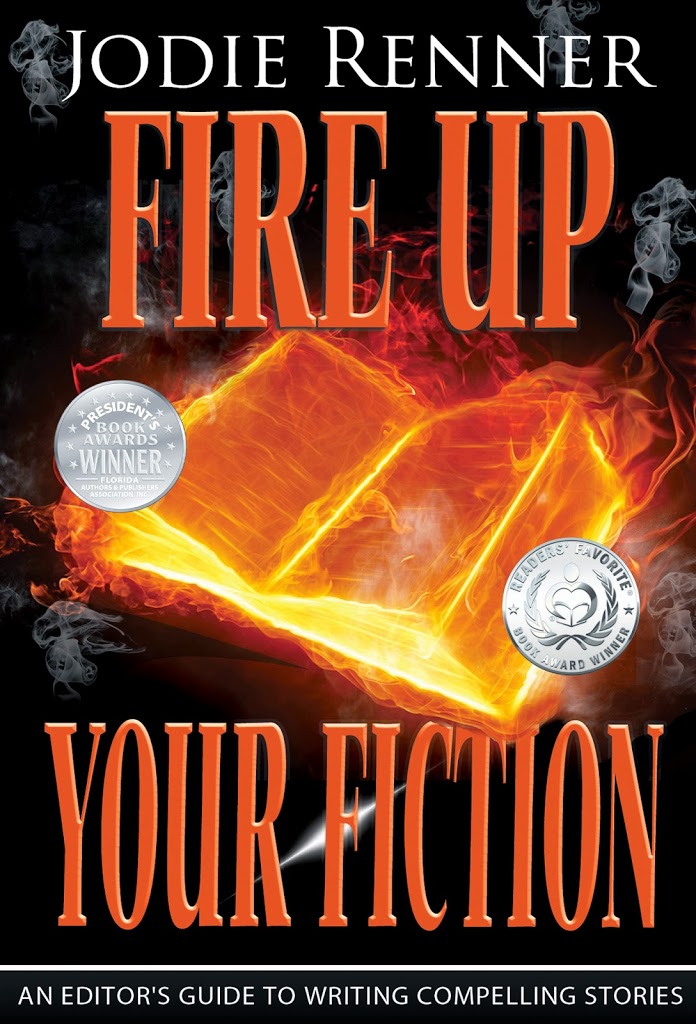
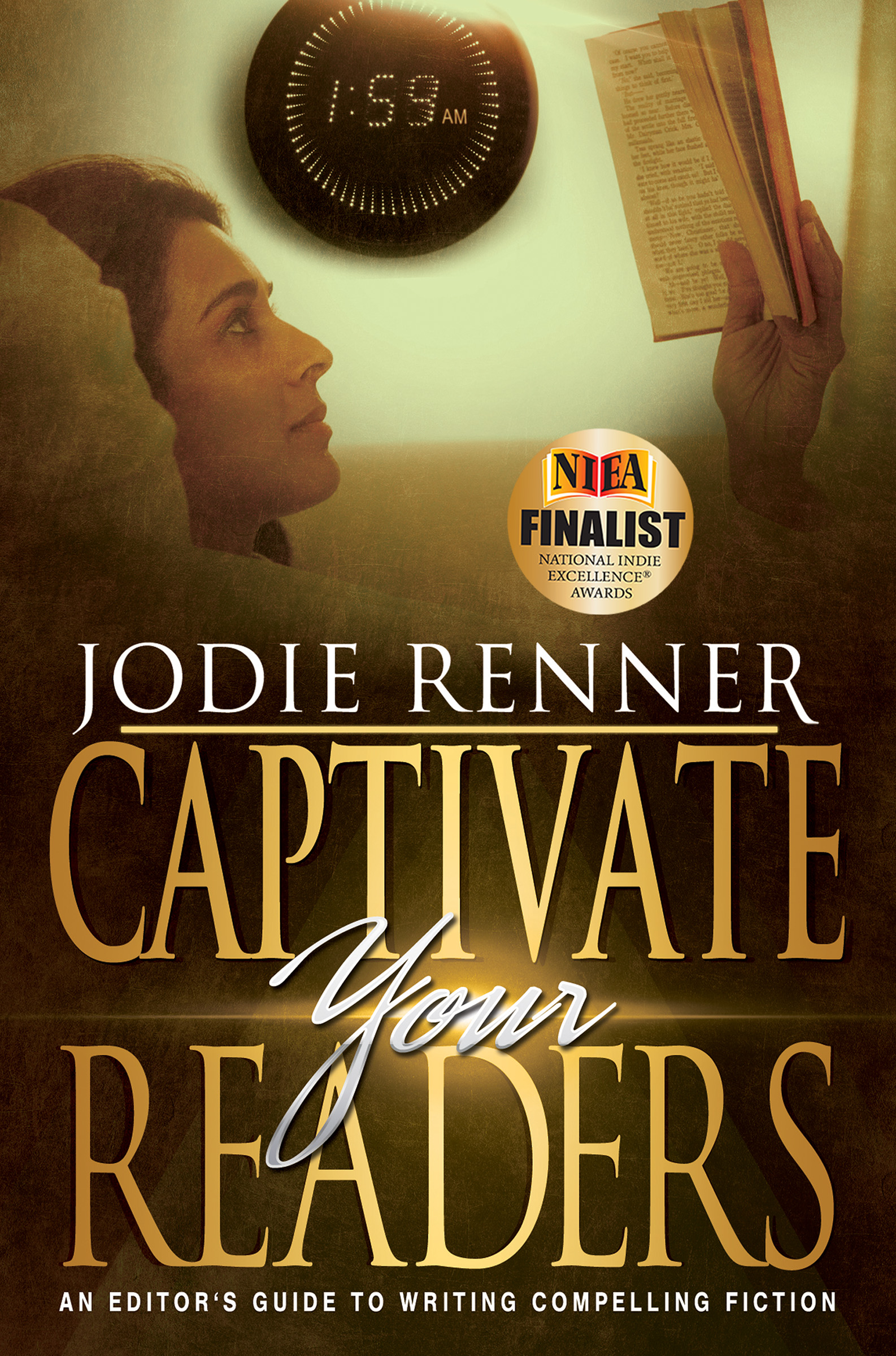
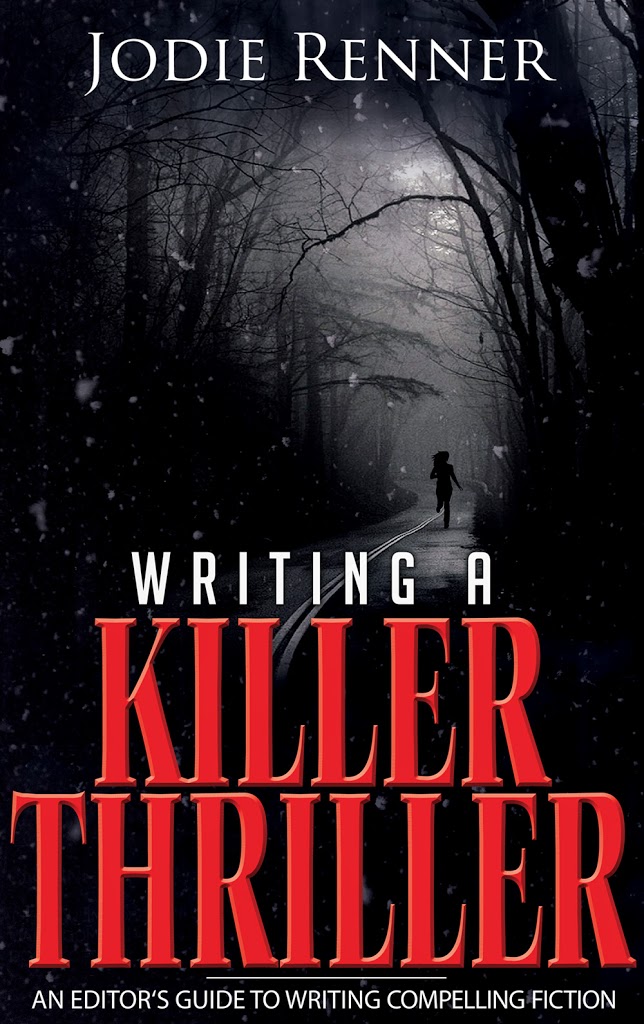
Jodie Renner is a freelance fiction editor and the award-winning author of three craft-of-writing guides in her series An Editor’s Guide to Writing Compelling Fiction: Captivate Your Readers, Fire up Your Fiction, and Writing a Killer Thriller. She has also published two clickable time-saving e-resources to date: Quick Clicks: Spelling List and Quick Clicks: Word Usage. You can find Jodie at www.JodieRenner.com, www.JodieRennerEditing.com, her blog, http://jodierennerediting.blogspot.com/, and on Facebook, Twitter, and Google+.
Bring Some Magic to Your Writing
James Scott Bell
@jamesscottbell
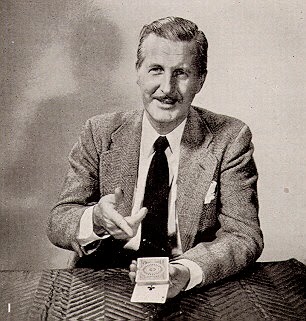
My uncle Bruce was a bartender for many years up in Santa Barbara. Like most of the Bells, who came from (or were chased out of) Ireland in the 1700s, he has the gift of gab. He started doing close-up magic right at the bar. This proved exceedingly popular and before long he started billing himself as “Bruce the Baffling, Magician and Social Chemist.”
There’s No Place Like Home
This week I’m writing a scene set in one of my favorite places in New York, the American Museum of Natural History. I’ve visited the museum many, many times in the past, but I went there again last weekend to answer a novelistic question: What would be a plausible way to break into the building? After much snooping around I came up with a plan. But I’m not going to give it away here. You’ll just have to read the book. (It’ll probably be published late next year or early 2016. Assuming I finish it, of course.)
Reader Friday: Are Physical Books Like the Dodo Bird?
Guest Author Stacy Green on Creating a Sociopathic Character
Jordan Dane
@JordanDane![]()
Swiss psychologist Carl Yung believed our conscious minds possessed four major archetypes: the self, the shadow, the anima, and the persona. Naturally, as a thriller author, the shadow interests me the most.
The shadow holds our repressed ideas and desires, our weaknesses and the darker side of our psyche. Some people it is this shadow side that comes into play when seemingly good people go bad.
But what about the sociopath? I’m not talking about the serial killers we’ve all studied (I refer to those as psychopaths), but those individuals who walk among us every day with their own agenda, no remorse, and a frightening ability to manipulate everyone they come in contact with. Are these people simply more controlled by their shadow side? More importantly, what’s my shadow side like?
In creating my character, Lucy Kendall, I studied sociopaths. Lucy doesn’t believe she’s a bad person and she doesn’t even consider herself a killer. After all, her targets are repeat pedophiles who keep being turned out by the justice system. She’s in the right, and she’s doing society a favor.
Of course, anyone who believes that has to have some kind of sociopathic traits, right? In research for and creating Lucy, I started thinking about my own shadow side and exactly how close I was to the dark side of life.
According to the ICD 10, the following are considered sociopathic traits. Presence of three or more qualifies for a diagnosis of antisocial personality disorder, aka as sociopathy.
1. Callous unconcern for the feelings of others.
2. Gross and persistent attitude of irresponsibility and disregard for social norms, and obligations.
3. Incapacity to maintain enduring relationships, though having no difficulty in establishing them.
4. Very low tolerance to frustration, a low threshold for discharge of aggression, including violence.
5. Incapacity to experience guilt or to profit from experience, particularly punishment.
6. Markedly prone to blame others or to offer plausible rationalization for the behavior that has brought the person into conflict with society.
The DSM IV is another diagnostic tool and defines sociopathic traits as:
1. Failure to conform to social norms with respect to lawful behaviors as indicated by repeatedly performing acts that are grounds for arrest
2. Deception, as indicated by repeatedly lying, use of aliases, or conning others for personal profit or pleasure
3. Impulsiveness or failure to plan ahead
4. Irritability and aggressiveness, as indicated by repeated physical fights or assaults
5. Reckless disregard for safety of self or others
6. Consistent irresponsibility, as indicated by repeated failure to sustain consistent work behavior or honor financial obligations
7. Lack of remorse as indicated by being indifferent to or rationalizing having hurt, mistreated, or stolen from another
A) The individual is at least age 18 years.
B) There is evidence of conduct disorder with onset before age 15 years.
C) The occurrence of antisocial behavior is not exclusively during the course of schizophrenia or a manic episode. SOURCE
So here’s the thing: I don’t fit that list, thankfully. But I’ve certainly had my moments when I realize I’m incredibly callous and most people would consider me a terrible person if they knew what I was really thinking.
Example: my daughter is a competitive swimmer, and she is able to practice in a very new and nice facility our tax dollars paid for. And every practice, when I see swim lesson kids taking up lanes in the pool, I get angry. I see these kids as space fillers who crowd the pool for team kids who need room to move. And I have little compassion for the parents who equally crowd the window space and get excited when little Johnny splashes a few feet and doesn’t drown. It outright annoys me. And even worse, I’m sure most people within my vicinity know I’m irritated because I certainly don’t look friendly.
What a jerk, right? How could I be so unfeeling toward these people who are excited for their kids and have just as much of a right to be there as I do? Thankfully it’s a feeling that subsides as the hour goes on.
Perhaps that’s my shadow side seeping through. The side that’s easily irritated with people and doesn’t have the patience to keep its mouth shut at certain times. The side that has no problem glaring daggers at a strange kid misbehaving in public. The side my husband affectionately refers to as Pissy Stacy. I don’t have the answer, but I bet if you take a moment to look deep inside, you can find something of yourself on this list.
Perhaps we should be afraid of our own shadows after all.
For discussion: Have you ever battled your darker shadow side?
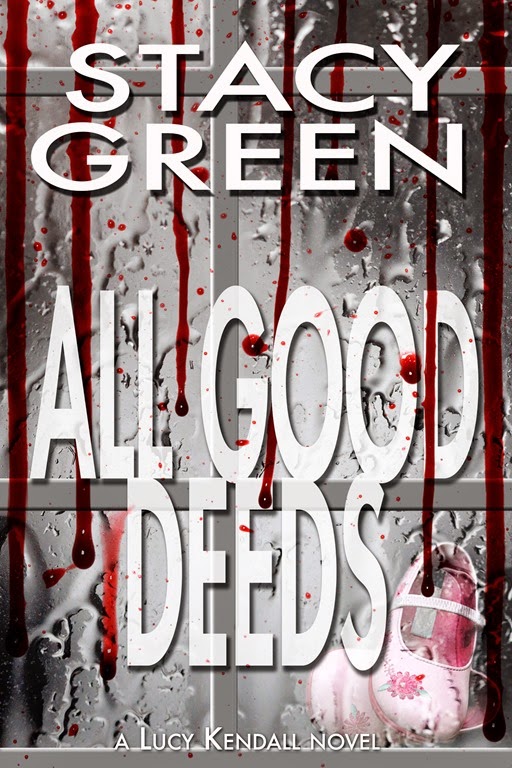
ALL GOOD DEEDS (LUCY KENDALL #1) is now available at Amazon HERE or through more purchase links HERE.![]()
About the author
Born in Indiana and raised in Iowa, Stacy Green earned degrees in journalism and sociology from Drake University. After a successful advertising career, Stacy became a proud stay-at-home mom to her miracle child. Now a full-time author, Stacy juggles her time between her demanding characters and supportive family. She loves reading, cooking, and the occasional gardening excursion. Stacy lives in Marion, Iowa with her husband Rob, their daughter Grace, and the family’s three obnoxious but lovable canine children.
Website: www.stacygreen.net
Amazon Author Page
Facebook Stacy Green, Author
Twitter @StacyGreen26