Riding Out the Rough Spots

By P.J. Parrish

This has been the week from hell. I don’t know what else can go wrong. Here’s what has happened so far:

I hit the wrong button and deleted chapter sixteen and had to recreate it from memory.

I got to chapter eighteen and realized a scene I had written back in chapter five, which I was certain was absolutely brilliant, now makes no sense and I have to cut it.

My plot timeline is out of whack and I have lost three days somewhere, sort of like Ray Milland in Lost Weekend but without the gin anesthesia.

I did a virus scan and it came up with 778 “issues” but apparently none of them are fixable unless I cough up $69.99 for the Super Anti-Spyware Deluxe Version.

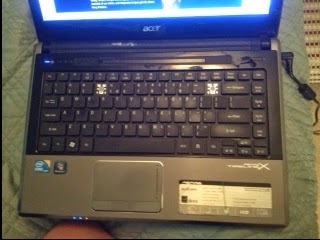
I tried to vacuum my crumb-ridden keyboard and sucked up the 4 and + keys.

I really need a vacation. The kind of vacation where I can get away from everything, including my WIP aka The Thing That Is Devouring My Soul. We all get to this point at times, right? (If you don’t, I don’t want to hear about it today, okay?) We get discouraged, disoriented in plot hell, doubtful of our talent, and desperate to just get the damn thing finished.

This is the nature of writing. It isn’t always sunshine, lollipops, rainbows, and brighter than a lucky penny. Often, very often, it is long slow slog where the words come hard and the joy comes even harder. This is where I am this week.
 
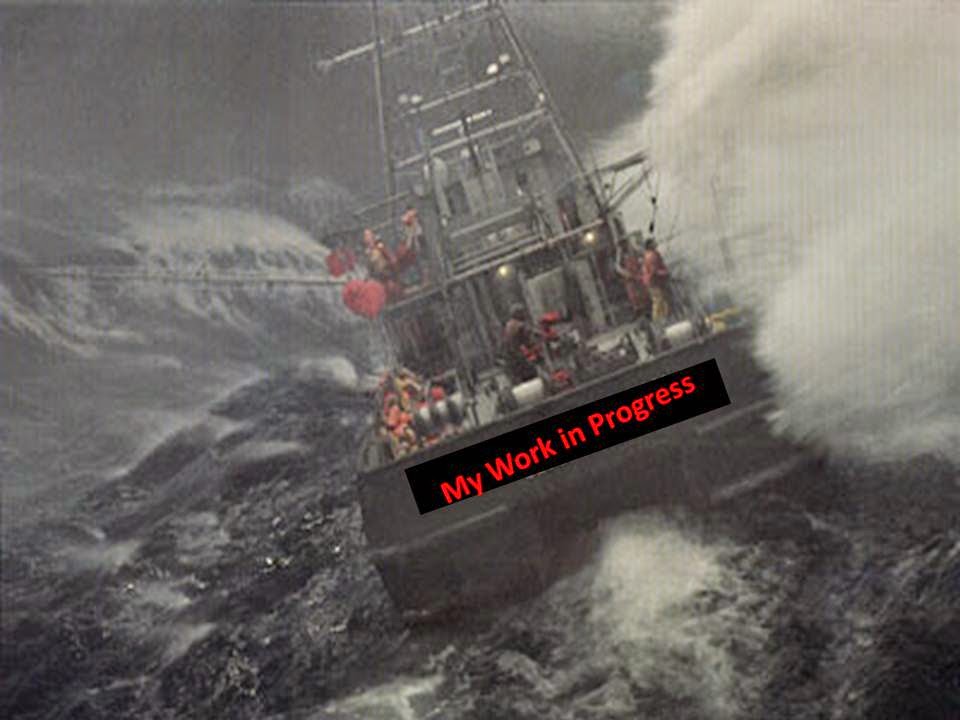
But here’s the thing: When you’re in a trough, like I am right now, you need to remember that it’s temporary. You need to know that if you just ride it out, you will end up on a crest again where you can survey the wider sea and regain your bearings. I need to be reminded of this every so often. We all do. So I made myself a list. It’s a list of the things I really love about this whacked out business. If you have something you’d like to add, please share.

TWELVE COOL THINGS ABOUT BEING A WRITER
  1. You can drink on the job and no one makes you pee in a bottle.
  2. You can write off trips to New York.
  3. You don’t have to wear a bra at work.
  4. You get to kill people you hate and not go to prison.
  5. You can have mind-blowing sex with whoever you want and not worry about rubbers, disease or your spouse leaving you.
  6. You get to read fan letters (I answer every one I get and save them forever like old love letters.)
  7. You get to be in the Library of Congress. (In 1983, I went there and asked for the librarian to bring me a copy of my paperback romance. She did. Quite humbling.)
  8. You get to walk into a tiny bookstore in Moose-Butt Maine and see your book on the shelf. And then find out the old lady behind the counter has read your entire oeuvre and remembers each character better than you do.
  9. You get to live inside your head for days, weeks, months, at a time and not get carted away in a white jacket.
  10. You get to find a note taped to your bathroom mirror from your spouse or kid saying, “I’m proud of you.”
  11. You get to do something that gives others pleasure.
  12. You get to do something that gives you joy.

Thanks for listening. I feel better now. Hit it, Lesley!

To Hyphenate or Not to Hyphenate?

… that is the question

by Jodie Renner, editor, author, speaker

NOTE from Jodie: FOR AN UPDATED, REVISED, EASIER-TO-READ VERSION OF THIS INFO, CLICK HERE.

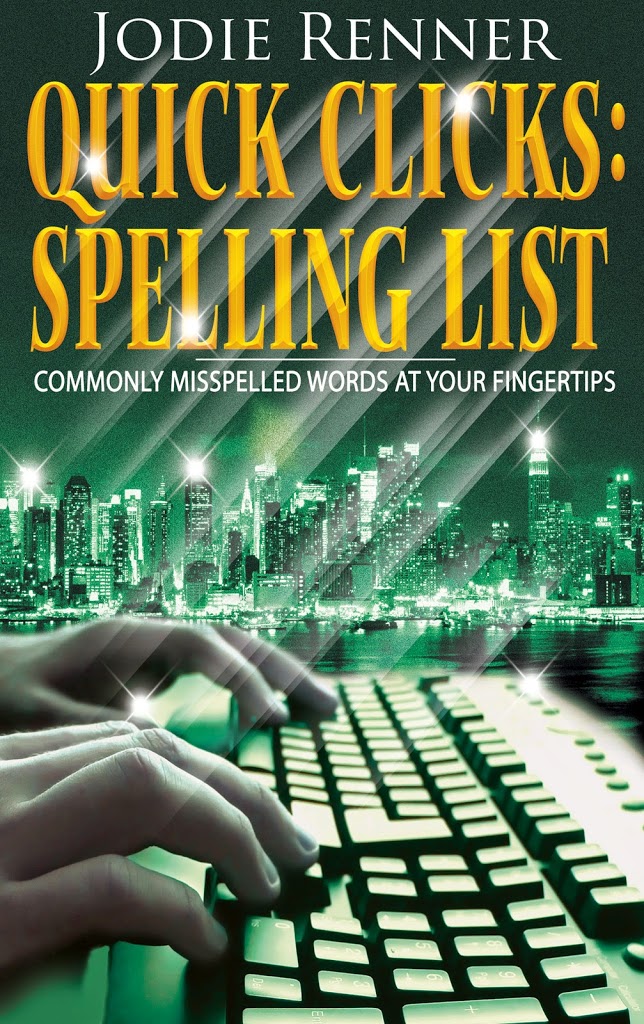
[Check out my two handy, clickable, time-saving resources for writers, editors, students, and anyone else with writing projects: Quick Clicks: Word Usage – Precise Word Choices at Your Fingertips and Quick Clicks: Spelling List – Commonly Misspelled Words at Your Fingertips. With all kinds of internal links, they’re both super quick and easy to use!]

Today I’m wearing my “Grammar Geek” hat to talk about using hyphens in fiction, nonfiction, blog posts, articles, etc. Hyphens, properly used, can actually eliminate confusion and clarify meaning. And chances are that even if you’re a really good speller, some or a lot of you, like me, often forget whether a term is hyphenated or not, so here are a few handy guidelines.

~ Is it one word, two words, or hyphenated?

According to Chicago Manual of Style (that and Merriam-Webster’s Collegiate Dictionary are considered the go-to resources for copyeditors and proofreaders), “Far and away the most common spelling questions for writers and editors concern compound terms—whether to spell as two words, hyphenate, or close up as a single word.”

When we’re busy writing, it’s easy to forget, for even the easiest words, whether it’s one word, two words, or hyphenated. Often, it can be all three, depending on the part of speech.

For example, it’s “lookout” for the noun –“Let’s head to the lookout” – but “look-out” for the adjective – a look-out tower – and “look out” for the verb – “Look out for snakes.” Similarly, castoff is a noun – “It’s a castoff”; cast-off is an adjective – “She wore cast-off clothes”; and cast off is a verb – “He cast off the boat and we headed downriver.” Many others follow the same pattern: cooldown (noun) – “We did a 10-minute cooldown”, cool-down (adj) – cool-down exercises, and cool down (verb) – “Time to cool down”. Same thing with login (noun), log-in (adj), and log in (verb). And finally, takeout (noun, M-W), take-out (adj., M-W), and take out (v, M-W).

See a pattern here? Very often, the noun form is one word, no hyphen, the adjective form is hyphenated, and the verb is two words. (Although English being English, of course there are always exceptions!)

~ Hyphen between prefix and root word?

And what about all those words with prefixes like re, un, de, pre, bi, mid, over, under, semi, sub, etc.? Is it re-read or reread?  over-conscientious or overconscientious? extramarital or extra-marital? under-employed or underemployed? semicircle or semi-circle? sub-category or subcategory?

Merriam-Webster and Chicago Manual of Style both favor not hyphenating after a prefix, so according to these two recognized authorities, none of the above should be spelled with the hyphen. But British and Canadian dictionaries seem to hyphenate them more often.

However, for some reason, Merriam-Webster puts a hyphen after the prefixes self and well, as in self-defense, self-discipline, well-mannered, well-endowed, etc.

And sometimes you need the hyphen to clarify meaning. For example, you recover a lost wallet, but you re-cover a sofa. Similarly with re-creation of the scene of a crime, to avoid confusion with recreation as leisure-time activities.

~ Hyphenate compound modifiers before a noun?

Today’s post is mainly on using hyphens (or not) for compound terms (phrasal adjectives) that describe a noun, as I get asked about this a lot. For example, is it …?

A general guideline is to hyphenate two or more modifiers before a noun (so an adjectival phrase), especially if to leave as two words could cause confusion; but to leave as two separate words when they come after the noun or verb (often functioning as an adverb).

For example, “He’s a high-profile actor” but “He maintains a high profile.”

“It’s a middle-class neighborhood,” but “The neighborhood is middle class.”

“He asked an open-ended question,” but “The question was open ended.”

“It was a hands-down win,” but “They won hands down.”

“It was a computer-literate group,” but “The group was computer literate.”

“The school has a hands-off policy,” but “Keep your hands off.”

“They had a hand-to-mouth existence,” but “They lived hand to mouth.”

“The witness was an off-duty police officer,” but “He was off duty at the time.”

“I bought a flat-screen TV,” but “The TV has a flat screen.”

“My to-do list,” but “My list of things to do.”

“We strolled past side-by-side boutiques on the street,” but “Two clothing boutiques stood side by side on that street.”

“This thriller will keep you on the edge of your seat,” but “It’s an edge-of-your-seat suspense.”

~ Hyphenate to avoid confusion.

To avoid confusion or ambiguity, it’s often best to hyphenate.

For example, there’s a big difference in meaning between a small animal hospital (an animal hospital that’s small) and a small-animal hospital (a hospital for small animals). Same with a small business owner and a small-business owner. And the hyphen in “three-ring binders” tells us that three is the number of rings, not the number of binders, as might be assumed with “three ring binders.” Similarly, the hyphen in “much-needed advice” connects the much with the needed, so we know the advice is greatly needed, not that there’s a lot of needed advice. And the hyphen in “fast decision-making” shows us that decisions must be made soon, not that they’re quick decisions.

Sometimes, to clarify, you also need to separate a word into two. For example, a used-book store is different from a used bookstore. And high school-age children could imply something different from what was meant.

~ Hyphenate where numbers are involved.

Chicago Manual of Style says to also hyphenate adjective-noun modifiers, especially where the adjective is a number:

For example, a twelve-step program, a five-year-old child, a five-dollar bill, a ten-mile hike, a six-foot-tall man, a ten-pound fish, a 16-foot square room.

Notice how when hyphenated before a noun, the plural is dropped: for example, a woman is five feet tall, but she’s a five-foot-tall woman. Pregnancy lasts nine months but it’s a nine-month pregnancy,

~ Multiple hyphens in a phrase.

Hyphenate when three or more words form an adjective (or rephrase the sentence to avoid it):

high-school-age children (to avoid confusion with “high school-age children” (not a good thing!), a sixty-foot-long boat, an over-the-counter drug, a winner-take-all contest, a one-on-one game.

~ But don’t hyphenate after –ly adverbs:

Since the ly ending with adverbs signals to the reader that the next word will be another modifier, not a noun. For example, a sharply worded reprimand, a smartly dressed woman, a hastily written email.

~ The trend toward closed compounds (one word, no hyphen):

Common usage has a tendency to simplify terms. “Web site” gradually became “website”; “e-mail” is increasingly “email”; “on line” changed to “on-line” to “online”. (Also, “Internet” became “internet,” which makes perfect sense to me – why capitalize it, since we don’t capitalize other means of communication, like telephone, newspapers, television, etc.)
If you want even more detail and examples on hyphenation, you can register at Chicago Manual of Style online and do a search for “hyphens” or “hyphenation” or go to these numbers: 5.91 and 7.77 to 7.85.

Also, see my blog post, How and When to Use Hyphens, Dashes, and Ellipses.

Jodie Renner is a freelance fiction editor and the award-winning author of three craft-of-writing guides in her series An Editor’s Guide to Writing Compelling Fiction: Captivate Your Readers, Fire up Your Fiction, and Writing a Killer Thriller. She has also published two clickable time-saving e-resources to date: Quick Clicks: Spelling List and Quick Clicks: Word Usage. You can find Jodie at www.JodieRenner.com, www.JodieRennerEditing.com, her blog, http://jodierennerediting.blogspot.com/, and on Facebook, Twitter, and Google+.

Competition, Writing and Rocky Marciano

James Scott Bell
@jamesscottbell

For years I’ve bought my Apple products at the big Apple store near my home. It’s located on the second floor of a large shopping mall. It majestically dominates the middle of the mall and, being near the food court and Coffee Bean, has arguably the best location in the whole place. There is even a walkway-bridge that leads strolling shoppers from one side of the mall directly over to the large, open and welcoming Kingdom of Jobs.
The other day my wife and I were walking through the mall when I spotted a sign alerting us that a new store had just opened. It too was located off the food court. I said, “Let’s go over there. I want to see it. It must be near the Apple store.”
Not just near, but directly across from the Apple store, at the other end of that same walkway-bridge.
You may have guessed that it was a new, gleaming Microsoft store.
You would be right.
I could not help noticing how, um, similar the store looks to Apple’s set-up. Lots of tables with laptops and tablets and phones. A help desk modeled after Apple’s Genius Bar. Sales staff in brightly colored tee-shirts like their counterparts across the way, complete with name tags hanging around their necks shaped the same as the Apple crew’s.
A year ago there was a story about Apple going after Microsoft’s bread-and-butter market, business. Now it seems Microsoft is giving Apple a run for its money in the consumer market.
The Microsoft space is just one third the size of the Apple store. But it has shown up. It is here.
Game on.
This is competition. For big stakes. Two giants battling it out.
Hmm, sort of like Amazon and (not Hachette this time!) HarperCollins. On Friday the publisher announced a new program for direct sales. HC already has an e-bookstore. Now they are offering this incentive for their authors: an added 10% royalty when they send customers to the publisher’s website to purchase the book (via “buy buttons” on their website or links on social media).
Game on.
Competition. It’s good. Because it generally makes the free market a better place for consumers.
It also makes for stronger writers.
I grew up playing competitive sports. It taught me some lessons that I’ve carried with me my whole life, including the writing part. Here are three:
1. There’s always somebody with more talent than you
You cannot change what talent or physiology you’re born with. When you get into competition you find that out pretty fast.
I was a great 6’3″ shooting guard on my high school basketball team. What I didn’t have was hops. I could not dunk. If I had been 6’9″, maybe I would have made it to the NBA. At my height, though, I didn’t have enough spring in my sticks. (Below is a picture of Taft High’s Jim Bell going in low for the layup).
So I determined to work as hard as I could with what I had. I managed not only to play at the college level, but for many years after that in leagues and pickup games, having fun.
Same with writing. What talent you have is not up to you. What is up to you is what you do with it. Do you want to be someone who writes and gets paid for it? Then work at your craft. It’s quite common that the harder worker overtakes the more gifted, but indolent, athlete. See Rose, Pete (look for him under “Baseball,” not “Gambling”).
2. When you play, play with all your heart
Once in the game, give it your all. Never quit.
In 1916, the Georgia Tech football team played little Cumberland College. The score was 63-0 after the first quarter. The final score was 222-0. Look it up.
At one point they found a Cumberland player wrapped in a blanket, sitting on the Georgia Tech bench. When they asked him why, he said he feared his coach would put him back in the game.
You’re going to suffer through disappointments. That’s part of the writing life. No matter how bad it gets, though, stay in the game. The great thing about writing is you are the only one who can stop you. So don’t stop you.
Desire and determination trump disappointment. Learn what you can from setbacks. Maybe you need to work on characterization, or dialogue, or plotting. There are abundant resources to help you in every single area. Join a critique group. Go to a conference.
Just don’t wrap yourself up in a blanket and never play again.
3. Your ultimate competition is with yourself
You should not waste any time comparing yourself to other writers, envying their successes (or, secretly, hoping they fail). Wasted energy. Sure, entering your book in an awards competition stacks you up against other colleagues. But don’t let losing (or even winning for that matter) mess with your head.
Instead always concentrate, with all your creative might, on the page in front of you, every writing day.
And forget about luck. I don’t believe in believing in luck. Guys who believe bad luck is the reason for not making it are like that geezer with three-days’ growth of beard at the end of the bar. “I coulda been a contendah, but da breaks wuz against me!”
What good does that do?
Keep fighting.
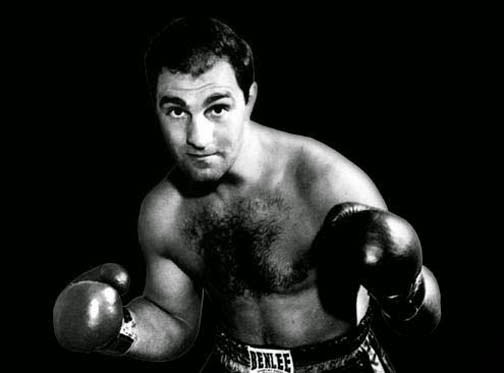
Rocky Marciano was one of the greatest boxers of all time. Won the heavyweight championship of the world and never lost a fight his entire professional career.
But his start was not so promising. Marciano, nicknamed the Brockton Blockbuster because in his youth delivered big blocks of ice for the Brockton Ice and Coal Company, had incredibly strong arms. But those muscles were heavy, and the muscles used to hold his arms up were not as developed.
The result was that after a few rounds Marciano’s arms began to sag, giving his sparring partners greater access to his face.
Instead of quitting, Marciano came up with his own training routine. He went to the local YMCA pool and practiced

throwing punch after punch underwater. He got a heavy bag that weighed 180 pounds (most heavy bags weigh about 50). He threw punches at that bag for hours…with bare fists. Needless to say those fists became solid granite and his arms become pile drivers.

The result? Marciano’s record was 49-0, 45 by knockout.
He once said, “I was willing to make sacrifices. Even while traveling, when there were no facilities. I would spend hours in my hotel room working on my strength. I wanted more than anything to be a fighter. Then I wanted to be a good one, and after that a great champion.”
What do you want, dear writer? What are you willing to sacrifice?
Not everyone is born with an iron will. But you can develop it. If you take baby steps every day –– writing, studying, editing, writing some more –– soon you’ll be making longer strides.
There’s an old saying in boxing that you have to keep punching, because you always have a puncher’s chance.
So when you get knocked down get right back up. Keep punching that keyboard. You always have another chance.  
How would you rate your determination level? How do you handle disappointment? 

And Now For Something Completely Different

Every so often writers need to take a break from writing. I’m a big believer in this piece of advice from German poet Johann Wolfgang von Goethe:
“One ought, every day at least, to hear a little song, read a good poem, see a fine picture, and, if it were possible, to speak a few reasonable words.”
So this weekend I’m taking a break by participating in the 2014 Video Art and Experimental Film Festival. I became involved with this organization because my son has been friends for the past eight years with the son of Dan Fine, the festival’s director and chief curator. When my son was younger he’d often end up at Dan’s apartment and I’d have to go there to pick him up and take him home. Whenever I got there, whatever the time, my son would plead to stay a few minutes longer, and so I spent a fair amount of time talking with Dan about his work in the field of video art. It’s hard to define the genre; they’re usually short pieces, between one and fifteen minutes long, and they differ from traditional short films or documentaries in that they emphasize the power of images or the novelty of technique or the impact of sounds and music rather than narrative storytelling. The videos are sometimes strangely beautiful, sometimes genuinely disturbing, and often just plain weird.
Over the course of many conversations Dan discovered that I’m in love with the sound of my own voice, and so he invited me to be an emcee for the festival and a moderator for the panel discussions among the video artists who participate in it. Before each festival Dan and his team of curators sift though hundreds of submissions from artists and choose the best thirty or so. The videos are screened for three nights at Tribeca Cinemas, a wonderful theater in Lower Manhattan near Canal Street. We showed some fantastic pieces Thursday and Friday nights, and we’re going to wrap up tonight with another panel discussion and a big party. If you happen to be in New York you should definitely stop by; the website for tickets is here. 
But the truth is, even when I’m taking a break from writing, I’m always thinking about it. Even though most of the videos don’t conform to the traditional narrative format, I sometimes get story ideas from them. And the best videos reinforce my conviction that shorter is usually better. I love powerful two-minute videos that make their points without beating the subject to death. In all forms of art, you want to leave your audience hungering for more. 

How to Successfully Put a New Spin to an Old Tale

Jordan Dane
@JordanDane


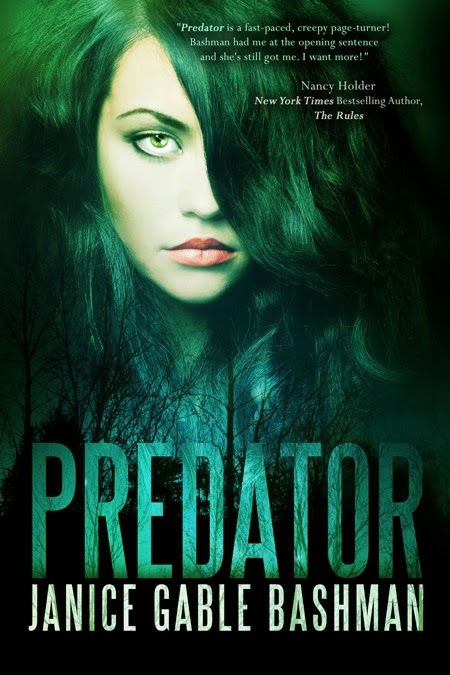
JBashman_M9B_Predator_REV2_ Final Cover for web (2)


I’m excited to have Janice Gable Bashman as my guest today at TKZ. Her latest release (now available) is PREDATOR with Month9Books. Stunning cover. Janice is a Bram Stoker nominated author and editor of the prestigious International Thriller Writers (ITW) publication, The Big Thrill, and she serves on ITW’s board of directors as the Vice President of Technology. Today Janice will share her tips on how to put a new spin to an old tale and make it fresh. Take it away, Janice—and welcome.


Janice Gable Bashman
I love when an author takes science to its extreme. Often it goes horribly wrong. I devoured early works by Michael Crichton (Jurassic Park and Sphere) and James Rollins (Deep Fathom and Amazonia) during my youth. The books were popular and it’s easy to see why. The authors took old tales—dinosaurs roaming the earth, a 300 year-old space ship at the bottom of the ocean, an ancient power causing havoc in a modern-day world, and a mysterious disease threatening to wipe out the population with the cure hidden deep inside the jungle—and put new spins on them. The stories were fresh and exciting and loved by many. They still are.


So how do you put a new spin on an old tale when readers think they already know how it’s supposed to go and there isn’t anything they can possibly learn?


You have to think outside the box, as the saying goes.


In my novel Predator, I give the werewolf legend a couple of new spins by introducing the Benandanti (an actual folkloric belief that certain families of Italy and Livonia were werewolves who fought against evil) as well as a modern scientific approach to mutation and the science of transgenics. But I take these new spins a step further. The science is used to its extreme, in some cases it goes horribly wrong, and the Benandnati may not be what they seem. How did the Benandanti end up alive today and living in Ireland and the United States? What are they up to and why? Are they good or evil?


By raising new questions, upping the stakes, and using science in a new way, I was able to put a new twist on the werewolf tale. Writing about science or werewolves or super soldiers is nothing new. They are simply a premise. It’s the story elements that give these topics a new twist and makes them fresh and exciting. And it’s the characters that bring them alive.


So how can you do the same with your premise?

Can you combine elements of different genres to create a new idea?

Can your protagonist see things from a perspective different than you ever thought possible?

Can you use your novel’s physical world to put a fresh spin on things?

Can you mash together two concepts to create something new?


Think about it. It’s possible. It’s up to you and your imagination to wow the reader with a new take on an old tale. I know you can do it.


So TKZers—what novels do you love that put a new spin on an old tale, and why?

———————————————————————————–
Janice Gable Bashman headshot-small-slide-246x300 (2)
Janice Gable Bashman is the Bram Stoker nominated author of PREDATOR (Month9Books 2014) and WANTED UNDEAD OR ALIVE (w/NEW YORK TIMES bestseller Jonathan Maberry) (Citadel Press 2010). She is editor of THE BIG THRILL (International Thriller Writers’ magazine). Her short fiction has been published in various anthologies and magazines. She is a member of the Society of Children’s Book Writers and Illustrators, Mystery Writers of America, Horror Writers Association, and the International Thriller Writers, where she serves on the board of directors as Vice President, Technology.

Links:
Website: https://www.janicegablebashman.com
Facebook: https://www.facebook.com/JaniceGableBashmanAuthor
Twitter: http://twitter.com/janicebashman


Book buy links for Janice:
http://amzn.to/1xCYQwO
http://bit.ly/ZsJgFX (Barnes & Noble)

Why do you write books?

by Joe Moore
@JoeMoore_writer

At one of my recent fiction workshops I asked the attendees why they want to write a book. The responses varied, and all were interesting. Then I pointed out which responses I felt were good reasons and which were not so good. First the not so good.

Fame. Fame is fleeting and almost never comes quickly if at all. For all those striving to become famous, only a few ever achieve it. We’ve all heard stories of writers who self published and became rich. They make the news because they’re rare. If you’re writing for notoriety, reexamine your goals and objectives.

Money. I know a few professional writers who make a good living at the craft. I know many others who make money at writing, but not enough to support themselves and their families. They must be creative in supplementing their writing income—the most common form is to maintain a day job. The rest make so little money at it that one wonders why bother. If you’re writing to make a fortune, call me when you do so I can borrow from you.

Influence. There are some new writers whose main goal is to impress their readers, perhaps with their ginormous brains or voluminous vocabularies. If that’s the motivator you rely on, stick to scientific papers with limited circulation before your brain explodes in frustration.

Agenda. You have a moral crusade and you want to preach it to the masses. You figure you can do it through a novel and no one will figure out that it’s your personal agenda you’re expressing and not your protagonist. Readers are smart. They’ll see you coming a mile away.

Now the good.

No alternative. We write novels because we can’t think of a good reason not to. Wanting to write is not a reason—needing to write is. We simply need to get our stories told. Even if there is no one to read them. Even if we never make a penny. Even if they are for our eyes only. Although it is visually gross and probably tasteless, I always think of the baby alien bursting out of the crewman’s chest in the movie Alien. The story is coming out and there’s nothing we can do about it but sit down and start typing.

As a dear friend and mentor of mine once said, “We write because we’re ate up with it.”

So, TKZers, why do you write?

————————

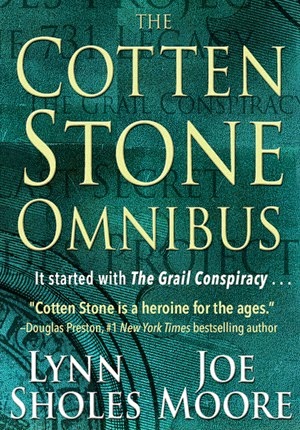
Cotten-Stone-Omnibus-DP-TKZComing October 15, from Sholes & Moore: THE COTTEN STONE OMNIBUS. The complete Cotten Stone international bestselling collection—THE GRAIL CONSPIRACY, THE LAST SECRET, THE HADES PROJECT and THE 731 LEGACY. Download from your favorite e-book store for only $9.99.

“Cotten Stone is a heroine for the ages.”
~ Douglas Preston, #1 NYT bestselling author

Manhunt Comes a Little Too Close for Comfort

It’s been an exciting week in my little  beachside burg.  A law enforcement manhunt transformed our sleepy, residential street into the eastern edge of a police perimeter lockdown.

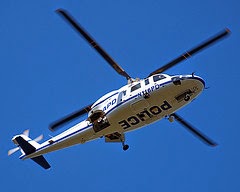
A local police chase ended around noon, when a pair of auto thieves  rammed into another car at an intersection a few blocks away from my house.  Officers quickly apprehended one of the suspects, but the other one fled and began jumping fences. The police set up a perimeter, one leg of which ended at the foot of our driveway. When I poked my head out to see what was going on,  a boyish-looking officer ordered me to stay inside the house and lock all doors. Minutes later, a police chopper began buzzing our house.

Of course, I was thrilled by the ruckus. It offered me a rare opportunity to put our overpriced, high-tech security system to good use.  As my husband looked on with a bemused expression,  I ran around the house like a jumpy little chicken hawk,  arming doors while monitoring the progress of the police chase on an iPad pressed to my ear. Then I reviewed every angle of the house from the camera monitor, to make sure no one had snuck in when we weren’t looking. Leaving nothing to chance, I grabbed our Flat-coated retriever to do a perimeter check. (Our dog MacGregor is totally untrained and exuberantly friendly, but I figured he’d at  least throw me a warning bark if he sniffed out a car thief.) We watched from the third-floor balcony as police searched our neighbors’ yards. 


In the end, they caught the bad guy hiding inside a garage a couple of doors down from ours. 

The whole time the manhunt was going on, I was making notes and taking pictures, trying to preserve the finer details in my writer’s memory. 

Maybe my excitement over the manhunt episode had nothing to do with being a writer–maybe it was just a sign that I need to get out more.  I should take up some adrenaline-pumping sport, like sky-diving.

Or what if I tried, say, sky-diving from a police helicopter? That would be exciting.

Right. I definitely need to get out more.

What about you? Do you find yourself enjoying the random bits of excitement you encounter during your everyday life, just so you can “use” them as fodder for writing?

Writing Rituals, Order and Routine

by Clare Langley-Hawthorne

Over the last couple of months I witnessed first hand the power of order and ritual in my writing – or, more correctly, I witnessed what happens when order turns to disorder and the ritual of planning and creating disappears. All this because I agreed to step up and volunteer to be president of my sons’ elementary school parent teacher organization and in a giant ‘poof!’ of hot air all my creative order and energy disappeared with it. 

Taking stock after a couple of months I now realize just how important order, routine (and time!) is to my creativity – and how I have to reclaim them all, in order to re-establish the balance we all struggle to maintain between our writing life and our ‘other life’.

This fact was solidified when I read David Brooks’ op-ed in the New York Times entitled ‘The Good Order‘ – though this opinion piece veers into politics – it was the idea that creative people need to build and maintain their own order and routine that resonated with me – as well as the fact that doing so can be surprisingly hard (which the last few months have certainly demonstrated!). This op-ed piece also referenced a book entitled ‘Daily Rituals: How Artists Work” complied by Mason Currey (whose website on creative people’s daily routines I encourage you all to visit – if only to read first hand how many artists face their work with deliberation, ritual and routine). 

Many writers establish very strict routines in order to get their writing done. Anthony Trollope was at his writing desk by 5:30am and insisted on completing 250 words every fifteen minutes for the few hours he had before his day job started at the post office. Trollope produced a staggering 49 novels in 35 years writing this way. Stephen King gets up at the same time each day, has a glass of water and his vitamins, and sits at the same seat at his desk, where his papers are arranged in the same way each day, before he starts to write. King says this helps tell his mind this is time to start dreaming (a sentiment I love by the way!).  When John Grisham was first starting out, he would arrive at his legal office by 5:30am each weekday to write with a goal of completing a page a day. He says his rituals then were “silly and brutal but very important”.

Since volunteering my time and seeing it evaporate just as quickly, I now need to reestablish a new set of writing rituals and routines. I’ve never been one to have any real ritual beyond what I call the art of showing up with my bum in the seat and my fingers on the keyboard each day – but now I need to establish a new order and a renewed sense of discipline. I’m even contemplating setting my alarm clock so I won’t be able to let my volunteer time bleed into my creative time. 

So I’m turning to you my TKZers – how do you set your writing routine? Have you had to ‘reset’ that routine when circumstances changed and you suddenly found your writing time being eroded? If so, how have you gone about establishing a new routine or order?  

Creating Characters We Care About

James Scott Bell
@jamesscottbell


Today’s post is brought to you by:


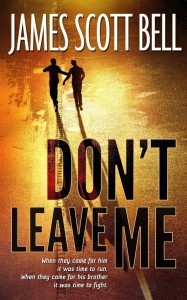
I mention the book today because it’s the story of the bond between two brothers. Chuck Samson, an ex-Navy chaplain who served with a Marine unit in Afghanistan; and his adult, autistic brother, Stan, who has a heart as big as the Pacific. And what happens when killers come after them both.
This bond is something I call the Care Package, a story element that greatly enhances reader connection to the Lead.
The Care Package is a relationship the Lead has with someone else, in which he shows his concern, through word or deed, for that character’s well being.
This humanizes the Lead and engenders sympathy in the reader, even if the Lead happens to be a louse.
Let me give you a few examples.
In The Hunger Games, Katniss Everdeen is not just some lone rogue. She is the protector of and provider for her mother and sister, Prim. What she does in taking Prim’s place in the Games is the ultimate sacrifice of love. When she makes it, we are so much on her side that we will follow her anywhere, rooting for her all the way.
In Star Wars, the only reason Luke will not leave with Obi-Wan Kenobe is that his aunt and uncle need him on the farm. Here’s a boy who dreams of becoming a knight, but he can’t just leave his family. We like that in him. It shows nobility. Shortly thereafter, of course, his aunt and uncle are murdered…and Luke is off to fight the evil Empire.
Dorothy Gale cares about Toto in The Wizard of Oz. She’ll do anything to protect her innocent dog from the clutches of Miss Gulch.
Having a Care Package relationship keeps a character from being completely selfish. We don’t like such folk. We hope that we are not that way.
Scarlett O’Hara, for all her dithering selfishness, cares about her mother and father.
Mike Hammer, not the softest of PIs, cares about Velma.
Even the bitter and bigoted Walt Kowalski (Clint Eastwood) in Gran Torino cares…about his dead wife. It is only because of her final wishes that he even tolerates the young priest who keeps showing up to check on him.
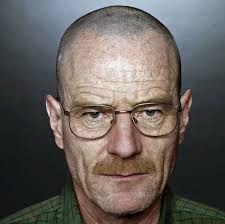
The Care Package is one of the reasons we watched Breaking Bad. Walter White engages in a truly despicable act — cooking super crystal meth for sale on the street. Yet he holds some degree of sympathy. He gets into the trade

because he’s dying of cancer and wants to provide for his wife and handicapped son.

But as the story progresses, Walt becomes more ruthless and drags his former student, Jesse, into this dark world.
And yet…and yet…whenever Jesse gets in real trouble, Walt tries to get him out of it. He cares about Jesse in spite of all that happens. And Jesse cares about Mr. White. They forget about this caring at various times when they want to kill each other, but it always comes back when the chips are down.
Now that is good writing, and a great lesson. You can have a criminal as your Lead, and if you give him a Care Package, you’ll still hook the reader. 
In short, the Care Package shows that even the worst characters have some shred of humanity in them which gives the readers hope they might, if circumstances are just so, be redeemed.
In my workshops on structure I stress the difference between the Care Package and a later beat called Pet the Dog. The latter is something that happens in Act 2, when the Lead takes a moment out of her own troubles to help someone weaker than herself. In The Hunger Games, for instance, Katniss helps the weakest of the players in the Games, little Rue.
The Care Package, by contrast, is a relationship the Lead has before the story begins. Thus, sometime early in Act 1, we are given a glimpse of this bond.
A word to you plotters/outliners. Consider using a Care Package as the emotional starting point for your developing story. That’s what I did with Don’t Leave Me. I got the initial idea of writing about a former military chaplain. I started to think about his backstory, and almost immediately came up with the idea of his having an autistic brother he has protected all of their lives, and now must do again when killers arrive on the scene.
It was such a strong emotional tie for me that it incentivized my wanting to write the entire novel, just to vindicate this relationship.
And now you pantsers, as you are writing along, maybe 10,000 words into that wonderful mess you love, why not pause for a moment and consider the lead character who is starting to come to life? You don’t have to worry about structure here, just ask yourself what kind of relationship can this Lead have with someone else that shows a caring spirit?
Heck, you’re a panster! Go ahead and write a scene like that. The benefit to you is the greater emotional connection you’ll have with your Lead. And that’s going to make for a better book.
And just to complete today’s commercial, please note that Don’t Leave Me is currently on sale at Amazon, Barnes & Noble, and Kobo.

So what character in recent fiction have you been drawn to, and why?