Can You Believe the Kindle is Ten Years Old?

by James Scott Bell
@jamesscottbell

The Kindle turns ten next month. My, how that little baby has grown!

When Amazon’s ereader first came out (November 19, 2007 to be exact), I sensed most people were skeptical about the future of digital reading. The Sony Reader had been around for years but failed to take hold. “Electronic books” were thought to be the coming thing around Y2K. Publishers Weekly even started a section to cover the subject, but later dropped it due to failure to launch.

Clearly, serious readers preferred paper. So the Kindle would probably sell to some early adopters, but likely would not revolutionize anything.

**clears throat**

In 2008, Oprah Winfrey gave the Kindle her endorsement. Talk about a boost! Then people began to realize they could have all the works of Dickens and Dostoevsky on a single device which they could take on a plane or a train or (in L.A. commuter traffic) an automobile. Pretty doggone cool!

And the biz mavens realized that Amazon was (as always, it seems) making a powerful and forward-thinking business move—selling the Kindle as a gateway to their massive bookstore.

Here at TKZ, we were analyzing all this from the start. On Kindle’s one-year anniversary our own Kathryn Lilley wrote:

I think it’s time for all of us to stop mourning the nongrowth of paper book sales, and celebrate the new digital age. It’s the future. Let’s embrace it. For example, last week when I posted, I was freaking out about the changes in the industry. This week, I have decided to reframe my thoughts about the book publishing crisis, and seek out the hidden opportunities in those changes.

Because ready or not, the digital era is here. Kindle products like the Oasis are still going strong. In fact, this review of Oasis is spot on.

And what did all this mean for authors? Well, beginning in 2009 or so, it became apparent that Amazon was presenting a viable new way for writers to get published—by their own selves!

And get this: by offering authors an unheard of 70% royalty split!

The lit hit the fan.

A complete unknown named Amanda Hocking made a cool couple of million dollars publishing directly on Amazon!

This got the attention of many, including TKZ emeritus Boyd Morrison, and a mainstream mystery author by the name of Joe Konrath who, via his blog, began to champion the new digital possibilities.

When I went to Bouchercon in San Francisco in October of 2010, everybody was wondering how to get in on the ebook thing without ticking off their agent or publisher. Agents (and I heard several) were warning writers not to “go there” for fear it would jeopardize their careers. Publishers were not at all sanguine about their authors moonlighting with a company they saw as their biggest threat. Some writers even got sued or terminated over this.

But the money was dropping off Kindle trees! That could not be ignored.

A funny thing happened at that Bouchercon. I was sitting with a couple of writer friends in the lobby of the SF Hyatt Regency, talking about all this, when Joe Konrath arrived and made his way to the bar area. He was flocked by fellow authors peppering him with questions.

The next day, at lunchtime, I was outside the Hyatt and spotted Mr. Konrath and one Barry Eisler walking and talking excitedly along the sidewalk. I thought, “What is that all about?”

A few months later I found out. Mr. Eisler, a New York Times bestselling thriller author, turned down half a million bucks from his publisher in order to publish with Amazon!

It was the talk of the industry. I saw it as a real tipping point. In fact, I gave it a name: “The Eisler Sanction.”

Self-publishing was getting serious.

I put my own toe in the E waters in February of 2011. Now I’m all wet.

So ten years after the birth of the Kindle, what have we seen?

1. Kindle devices and apps are awesome. I’m currently reading the two-volume memoir of Ulysses S. Grant, easily highlighting passages I want to review later. The General is bivouacked on my phone. Cost me 99¢.

2. While other ereaders have appeared—notably Nook and Kobo—the Kindle is dominant and unlikely to lose market share. The poor Nook, which is also a cool device, is hanging by a thread.

3. Kindle Direct Publishing has saved the careers of thousands of midlist writers, and created the careers of thousands more who are making good-to-massive lettuce every month. Those who are doing well have mastered some basic practices but also concentrate on the most important thing: quality and production.

4. The traditional publishing industry was hit hard by the digital disruption. There have been mergers, layoffs, shrinking profits and even a DOJ smackdown.

5. But the Forbidden City is still open for business. And while large-advance deals for debut authors are becoming as rare as the blue-footed booby, they still happen.

6. There has been chatter about the “comeback” of print books, but it appears that most of any increase in print sales can be traced to … Amazon. (And here’s a counterintuitive development: Millennials may actually prefer print books!)

7. Big bookstores took a huge hit due to e-commerce. The massive Borders chain of stores went down, followed by Family Christian. Barnes & Noble stores have been closing steadily for the last eight years, a trend that will likely continue.

8. However, local independent bookstores may be emerging through the cracks. Oh, and guess who else is opening up physical stores? Amazon.

9. On the other hand, many niche bookstores are closing. The latest is Seattle’s Mystery Bookshop.

10. We’ve reached a period of relative stasis in the “self v. trad wars.” From 2010 to 2014 or so, it seemed like we’d get blogosphere firestorms every week cheering for, or predicting the demise of, Big Pub. There was also a lot of “gold rush” talk on the indie side. Reality, as it is wont to do, has settled things down. There’s a lot of information out there now (e.g., Author Earnings reports) and the savvy players have a better handle on where they stand.

In an episode of Downton Abbey, when it became clear that the old ways of life were on the way out, never to return, Carson the butler mused, “The nature of life is not permanence, but flux.”

Kindle brought the flux. And a decade later, we’re living it.

What do you say, TKZers? What are your reflections on the 10th birthday of the Kindle?
HOW TO BE A CRIME VICTIM… PAINLESSLY

By Debbie Burke

The Scene of the Crime

Last year, I became the victim of an attempted sexual assault in broad daylight.

An assailant stuck a gun in my back, dragged me into a dark, deserted barn on the county fairgrounds, and tried to rape me. When he put down the gun as he tried to tear my clothes off, I kicked him where no man wants to be kicked. He escaped out the back of the barn.

I survived completely unscathed…because, fortunately, I was not a real victim, but a role player in a law enforcement training scenario.

Alumni of the local Sheriff’s Citizens Academy get tapped from time to time as role players in training sessions for reserve officers, the posse, and search and rescue. Since I completed the Citizens Academy, I’ve walked heel-to-toe in a mock traffic stop for drunk driving. I portrayed the hysterical mother of a child injured in an accident. I played a victim of a medical emergency, which turned into a bona fide emergency when a swarm of yellow jackets stung me!


Photo by Lynette Schimming, Thompson Falls, MT


The sexual assault scenario mentioned above was part of the training for posse and reservists who respond to emergencies at the county fair. Each trainee team answered mock radio calls from a 911 dispatcher about various crimes, in addition to lost children and heart attacks. Trainees rotated through stations staged around the fairgrounds, while deputies and police officers observed and evaluated how they handled each situation.

A deputy staged the scene beforehand: drag marks in the dirt, signs of a struggle in the stall, a fake gun left on a shelf by the attacker, and footprints leaving the barn. Then each team would rotate in turn to our station.

The lead instructor had already briefed trainees about their duties. In the sexual assault scenario, they were supposed to interview the victim (me), call for medical assistance, and broadcast the assailant’s description on the radio. Then they would secure and preserve the crime scene until regular officers relieved them.

Cops love to tell stories. My favorite part of the exercise was during down time between rotations. That’s when the story-telling began—a great opportunity for me as a writer to pick up details, nuances, and subtleties that lend authenticity to crime novels.

Since the county covers 5000+ square miles with only four deputies on duty each shift, stories abound of the resourcefulness required when responding alone to calls in remote locations.

A CSI related the tale of an overweight officer who’d taken a lot of kidding about his size. Late one night he arrested a rambunctious suspect who, despite being handcuffed, kept trying to run off. With backup seventy-five miles away, the deputy had to find a safe way to further restrain him until help arrived. So he spent the next forty-five minutes…lying on top of the suspect.


His fellow officers still kidded him, but with respect for a guy who used the tools at hand to solve a problem.

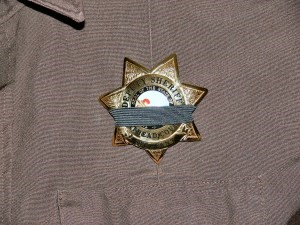
Because of a rash of ambushes on law enforcement, most officers were wearing a black band over their badges. In a lowered voice, a veteran deputy with fifteen years’ service confided, “My six-year-old just told me, ‘Dad, I don’t want you to be a police officer anymore.’” That poignant sentence spoke volumes about the family life of cops. It will stay with me for a long time.

Back to the training session. One trainee earnestly wrote down my description of the would-be rapist. Another reassured me that I was safe. Others took the initiative to clear the barn and search for the suspect.

After each team completed the exercise, the evaluators critiqued their responses. One team did not enter the barn at all. When the evaluator asked why, the answer was: “We could see the gun from where we were outside, we didn’t know if the perpetrator was still around, I wanted to keep my partner in sight.” They received a nod of approval from the evaluator.

Another team split up—one talked with me, while the other cleared the barn, checking stalls with a flashlight, careful to avoid the footprints and drag marks. Again, a nod of approval.

According to the evaluator, both approaches were appropriate since trainees took their individual limitations into account and did not compromise safety.

And then there was the posse volunteer who proved the adage, you get what you pay for…

This trainee had clearly never watched a single episode of CSI. Upon arriving at the scene, he immediately rushed into the barn and stomped on the footprints and drag marks. Then he grabbed the gun, obliterating the attacker’s prints.

The evaluator took him aside…for counseling.

After training ended, we ate lunch and reviewed the volunteers’ performances. Feedback from the 911 operator was especially useful. She cautioned if a responder didn’t answer a radio call, the operator might assume trouble and dispatch assistance, when, in fact, the responder simply forgot to acknowledge a call. Big oops.

Taking the course can broaden your education and add verisimilitude to your novels.

Besides, it’s not often one becomes a “victim” without suffering any trauma. Role-playing is far preferable to the real thing!

TKZers, what are your favorite tools to lend authenticity to your stories?


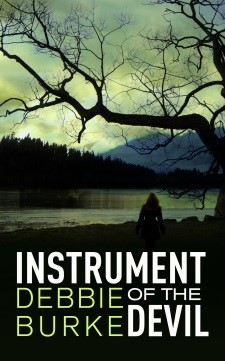
When she’s not playing a crime victim, Debbie Burke writes about them. Her new thriller Instrument of the Devil is available on Amazon.


Engineering A Brand

By John Gilstrap

This past Sunday, I returned from Indianapolis, Indiana, where I spent the weekend at the always-wonderful Magna Cum Murder conference.  As often happens at such events, the panels I participated in got me thinking more introspectively about my writing than I ordinarily do.  In one such panel, I heard myself refer to a book as “an engineered product,” and I realized that I’d landed on the topic of this week’s TKZ post.

When we buy anything from a car to a cheeseburger, we expect it to meet certain engineering specifications.  We expect less luxury from a low-end Kia than we do from a top-of-the-line Mercedes, but irrespective of price and name recognition, we expect our chosen vehicle to get us from here to there without burning up, and in the event of a wreck, we expect the seat belts to work.  The perfectly-cooked fast food burger is of no lesser quality than the perfectly-cooked Porterhouse at a 5-star restaurant, but the expectation is different.

When people buy a John Gilstrap book (yes, it’s a little creepy to refer to myself in the third person), I presume they expect a different kind of ride than what they’ll get from, say, a Danielle Steele book.  Our stories are engineered differently, from the ground up, with the result that a Venn diagram of our respective fans would likely reveal a tiny shared area.  Different readers have different tastes, and my job as a professional storyteller is to deliver what my readers have come to expect.

No, that’s too passive.  My job as a writer is to deliver what I have promised fans for over two decades, attracting new readers who could just as easily have chosen a different book and different author.  Those who sample my work and like it are willing to try me again and again, so long as I hold up my end of the bargain.  I offer a tacit promise that there will be violence without gore-porn, there may be romance, but there will be no graphic sex.  My good guys will always be principled, and when the ride is over, justice will reign over my little corner of the fiction universe.  That’s the deal.  That’s my dining menu.

If I let my fan base down even once, I risk losing them forever.  Some will give me a bye if I fall short, but others won’t.  I worked my butt off for every set of eyes, and to risk losing even one is unacceptable.

Of course, the flip side of this is the risk of my stories becoming too predictable—too formulaic—which has its own negative consequences.  So, while providing a trustworthy reading experience, it’s incumbent on me to mix it up a little.  In Scorpion Strike (July, 2018), Jonathan Grave’s team endures their first fatality.  It was a hard scene to write, and it’s a scary thing to do.  Fingers crossed that I won’t drive readers away.

A lot of cyber ink gets spilled in the blogosphere talking about platform building, social media marketing and the like.  It occurred to me this weekend that platform-building and trust are closely related.  As authors’ careers grow, I think it’s important for them to think two or three books ahead—not regarding plots, but in terms of what kind of product they want to addict their readers to.  I believe marketers would call this thinking about their brand.

The harsh truth is that writing and getting read are two entirely different, though related transactions.  Without doubt, every writer is free to write whatever he wants, and publish (or not) by whatever means he desires.  But if said writer wants to maximize his ability to build a readership, he needs to teach his readers what to expect, and then dependably deliver on the promises he makes.

I know too many talented writers who finally achieve the dream of publication only to sabotage their own careers through literary ADD.  One very talented self-published friend of mine cannot constrain his creative impulses.  In quick succession, he’s pushed out a cozy, a thriller, a PI novel and a couple of horror books.  I get the need to flex the creative muscle, but there’s a reason why we don’t see Pepsodent pistols or Smith & Wesson toothpaste.  Branding matters.

What say you, Killzoners?

The Rituals of Writing

By PJ Parrish

This one is going to be shorter than my usual Michener-esque meanderings, because two things have happened this week:

  1. We finished the book
  2. Rewrites are needed — bad.

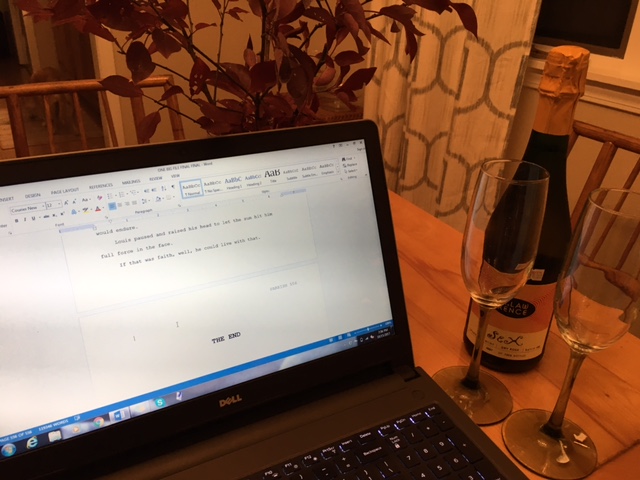
So I thought maybe, for a change, we could talk about something that doesn’t cause us writers angst — the positive little rituals that help get us through our days.  I thought about this today because whenever my sister Kelly and I finish a first draft, we have a special ritual.  First I type a word

THE

Then she types a word

END

Then we crack open an unshabby bottle of wine, preferably champagne, hug each other and get smashed. We started this ritual way back in 2000 after we finished our second book Dead of Winter.  It came about because back then, as we were nearing the finish line, Kelly would routinely come down to visit me in Fort Lauderdale and we would work together in my office, back-to-back on our computers.  Sort of like Ferrante and Teicher, except that Kelly’s two-finger hunt-and-peck key pounding tended to sound more like Keith Moon.

We kept to our ritual for a couple years, but then life started to intrude. Kelly’s life became peripatetic and hectic.  She couldn’t easily get down to Florida.  So we had to resort to ritual-by-email.  I would type THE on the Word Perfect doc and then send it to her.  She would type END and send it back. We’d then get on the phone and toast each other from our respective corners of the world.  It wasn’t as much fun.

Then around book six or nine — I forget — Skype came into being. Now, this was a god-send for our partnership because I could call up a chapter on my screen, share, and she could see it on her screen thousands of miles away while we talked about it. And we were able, when we were finished, at least see each other as we raised our glasses.

This is also how we opened Christmas presents. Better, but it still wasn’t the same.

A couple years ago, Kelly finally made it back to our home state of Michigan, settling finally, after a couple false starts, in beautiful Traverse City.  I was secretly envious because I really didn’t like living in South Florida, but I had put down deep roots. Then last year, my husband Daniel gave me the best gift he’s ever given me — he agreed to leave the place where he had lived for 40 years so I could be happier. We sold our Fort Lauderdale condo and bought a little house in Tallahassee, where we are very content. But then, came the icing on the cake.  Because of the move to Tally, we had enough left over to buy a small condo in Traverse City.  So I’m officially a snowbird.  A very happy one. So’s the husband.  He told me the other day, “Thank you for making me do this. I needed a kick in the ass.”

So for the first time in ten years, Kelly and I were in one place when we finished the book.  We bought a bottle of SEX pink champagne from Mawby vineyards here in TC, typed out THE END, hugged and uncorked.  The wine is only $15 a bottle but tasted like Veuve Clicquot Brut Rose.

I love rituals, especially when they involve family. Like opening presents on Christmas Eve instead of morning.  Deviled eggs for Thanksgiving dinner. Celebrating our sixth-month anniversary every year with my husband because we never thought we’d make it that far.  Rituals are important.  They are the bonds, born of our memories, that keep us from spinning away into the lonely void.

Most of my writer friends have rituals, some silly, some serious. One of my favorite scenes from the movie Misery is the opening, where Paul Sheldon types THE END and then indulges in his own writer-ritual — gently tucking his finished manuscript to bed in his old briefcase, setting out one cigarette, one match and a bottle of Dom. Here’s the scene if you want to watch:

I can relate. Can you? Rituals help us establish a sense of continuity in a business that can make us feel ungrounded and unguarded. And if you think your rituals are weird…

Roald Dahl, when he wants to write, gets into a sleeping bag, pulls it up to his waist and settles into a faded wing-backed armchair. He puts his feet up on a battered traveling case full of logs. This is roped to the legs of the armchair so it’s always at a perfect distance.

Joan Didion holds her books close to her heart—literally. When she’s close to finishing one, she’ll sleep beside it in the same room. “Somehow the book doesn’t leave you when you’re asleep right next to it,” she said in a 1968 interview with The Paris Review.

The great Greek statesman Demosthenes, to get himself in the writing groove, would shave one side of his head so he wouldn’t be tempted to leave the house until he was finished.

John Steinbeck, who wrote his drafts in pencil, always kept twelve perfectly sharpened pencils on his desk. He wore them down to nubs. His editor started sending him round pencils instead of normal hexagonal ones, because Steinbeck had developed such bad callouses.

So…whatever your ritual, wallow in it. It makes you special. It is part of your style, and I hope that something of that uniqueness, that weirdness, shows up on the page every day.

Gotta go. Rewrites await. I’m considering that if I don’t get serious about them pretty quickly here, I might have to go shave half my hair off.  But that might be just the Sex talking.


Books to Remember

With any luck by the time this posts I’ll be on a plane bound for Tokyo and Typhoon Lan hasn’t totally disrupted my plans. This means I won’t be able to respond immediately to comments, but I’m hoping some TKZers will join in and comment nonetheless.

I’ve been thinking about those reading moments that become etched in your mind – where you remember the exact time and place you read a particular book so that the memory itself is almost as potent as the book. This has happened to me on a few occasions – usually while I’m traveling – and it’s amazing just how vivid the recollections can still be. Like the late night flight to NYC where I read the first Harry Potter book. I distinctly remember the moment I got to Diagon Alley and just how magical that seemed. The memory is so strong I can visualize the pages of the book in the pool of overhead light.Then there was also a train ride from London to Manchester when I first read Philip Pullman’s The Northern Lights (or as it was called here in the USA, The Golden Compass) and how it felt being transported to an alternate Oxford while the English scenery whizzed past out the window. (NB: I’m hoping to reclaim this sense of exhilaration reading Philip Pullman’s latest – The Book of Dust – on the flight to Japan (or to be more accurate I will be fighting over it with one of my twins who has already disappeared off with the book to start it!).

I’ve had many flights where the book I was reading so totally consumed me that I was still  voraciously reading it after landing – gripping the book until the very last moment when I had to get out of my seat and deplane. This happened to me with both Tana French’s novel In The Woods and Elizabeth Wein’s Code Name Verity. What is surprising is why only some books provide such vivid ‘reading’ memories and yet others, just as equally good, seem to slip by – where I recollect the book but not the moment of reading it. Perhaps it’s the mark of an amazing book or maybe it’s the confluence of circumstances that make the reading part so memorable – but still it’s amazing how certain readings stay with you, while others just seem to fade away.

So TKZers what is your most vivid memory about reading a particular book? Why do you think some books inspire such strong recollections of the moment they were first read?


What is Originality?

by James Scott Bell
@jamesscottbell

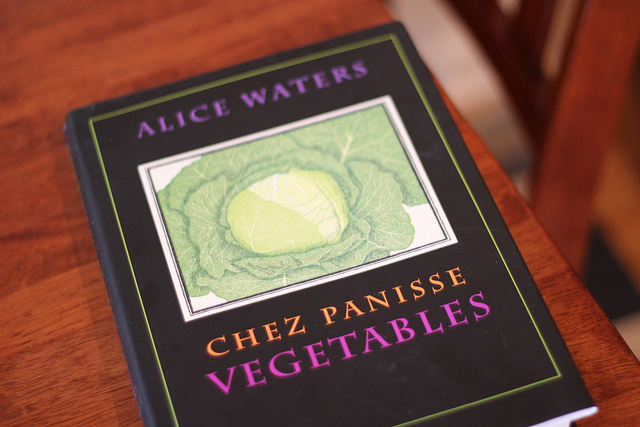
Whenever my wife and I travel to the Bay Area, we try to pop over to Berkeley and nosh at the noted bistro Chez Panisse. Overseen by its co-founder, executive chef Alice Waters, it is credited with popularizing the style of cooking known as California cuisine.

I’m no specialist in things culinary, but I know what I like. And I like California cuisine. It takes familiar foods and spices and combines them in a way that is not overpowering to the palate. It’s sort of like being in a park on a sunny California day, the temperature not overpowering, and lots of happy things going on around you.

Which brings me to the subject of originality. I connect it to Alice Waters by way of this passage from Theme & Strategy (Writer’s Digest Books) by Ronald Tobias:

We say we prize originality above all else in art. Originality is the artist’s brilliance, that indefinable something that is distinctly the artist’s and no one else’s. What gets lost in all that praise of individuality is that originality is nothing more than seasoning added to stock. Seasoning gives distinct flavor, its character or charm, if you will, and seasoning gives the distinct taste that immediately identifies the dish as unique. But we forget that the foundation remains the same, and that the chef and the diner both rely on that fact.

A chef’s genius is not to create a dish from original ingredients, but to combine standard ingredients in original ways. The diner recognizes the pattern established in the foundation of a baked stuffed turkey, and we look for the variation, the twist that will surprise and delight us. Perhaps it’s in the glaze or in the stuffing, something that makes that turkey different from all the other turkeys that came before it.

As you develop an idea for a story, start with the foundation, the pattern of action and reaction that is plot.

In my workshops I’m sometimes asked how to keep plot and structure from devolving into formulaic writing. My answer is similar to what Tobias says above. And what Alice Waters would say. You don’t cook an omelet with a watermelon. If I want an omelet, I want it made with eggs in a pan with some ingredients and spices. What those add-ons are and how they are proportioned make up the distinctiveness–the originality if you will–of the dish.

In the same way, structure is the eggs. It’s what readers expect from a story. They don’t want to be confused or frustrated. Of course, an author is free to write experimental fiction, which is also known by its unofficial name, Fiction That Doesn’t Sell.

But if you’re in this to make some dough, you’ll use familiar ingredients but you’ll spice them up with your unique brand of characterization, dialogue, and voice.

The late, great writing teacher Jack Bickham wrote the following in Scene & Structure (Writer’s Digest Books):

Mention words such as structure, form, or plot to some fiction writers, and they blanch. Such folks tend to believe that this kind of terminology means writing by some type of … predetermined format as rigid as a paint-by-numbers portrait.

Nothing could be further from the truth

In reality, a thorough understanding and use of fiction’s classic structural patterns frees the writer from having to worry about the wrong things, and allows her to concentrate her Imagination on characters and events rather than on such stuff as transitions and moving characters around, when to begin or open a chapter, whether there ought to be a flashback, and so on. Once you understand structure, many such architectural questions become virtually irrelevant — and structure has nothing to do with “filling in the blocks.”

Structure is nothing more than a way of looking at your story material so that it’s organized in a way that’s both logical and dramatic.

Don’t get ensnared by the ruinous idea that structure is the enemy of originality and this thing we call “story.” In fact, the opposite is true.

So become a great chef. Know your ingredients. Cook up a delicious tale by mixing the familiar with your unique blend of spices.

Your readers will eat it up.

What is your view of originality? What are some examples from writers you admire?

First Page Critique: THE ARCANISTS

Artwork by Jean-Louis Grandsire, courtesy pixabay.com

Good morning, my friends, and thank you for visiting us at The Kill Zone today. Please join me in welcoming Anon du jour, who has bravely offered a submission entitled The Arcanists to our irregularly scheduled First Page Critique!

The Arcanists

“Remember, this isn’t a bust, so no ruckus,” he said.

“Sure.”

“I mean it.”

“Sure.”

“If things get tight, drop out.”

Grim waved behind her and strode toward the Gasping Grouse.

Not far off, a foghorn warded ships into port. A train rattled, tracking, like a harried squirrel, along the rails overhead.

Grim hunched her shoulders, shoved her hands in her deep pockets.

As she pushed past the wooden doors, a sulfur cloud of smoke and unwashed flesh wormed into her nostrils, wringing water from her eyes. She should have been used to this by now, but that didn’t stop her from wanting to cover her face with her sleeve.She kept her eyes low as she snaked between the bar and the tables, past rows of cardsharps and washed up sogs who didn’t know when to give in.

She found the informant gazing into a full tankard at the end of the room.


Grimhorn liked to settle her accounts with a lamb’s smile and a loaded spell deck in her overcoat pocket. The smile came free of charge. The deck was insurance.

You could never know many aces an informant was hiding in his vest, and Grim didn’t give two lashings if things got messy when they refused to pay up.

She leaned into the shadow of a brick wall and turned her collar up against the cold. Across the road, smoke and steam poured from the gaslit hub of the Gasping Grouse. Tonight’s quarry was a dream merchant with a penchant for fraud.

Grim’s partner, Gravehound, stood by as Grim flexed her mechanical left arm. He tossed his cigarette onto the cobblestone and stamped it out with his boot.

“Rusty gears?” he asked.

Grim shook her head. “Steelshifter’s metal. It don’t rust.”

“That isn’t cheap. How’d you get your hands on it?”

Grim smiled.

“You’re a piece of work,” Gravehound said.

“Don’t I know it.” Grim pulled a leather glove over her metal fingers. The steelshifter had fitted her just a week ago but the arm suited her almost as well as if she’d been born with it. And it had only cost her one month’s pay—after she’d bartered him down a little.

“I’m going in,” she said, patting the deck beneath her wool coat.

Gravehound clutched her arm.

She glanced back. His hair shone silver in the darkness, making him look far older than his twenty odd years.


Anon, The Arcanists appears to me to be aimed at the steampunk audience. Steampunk is not a genre that I reflexively reach for when looking for something to read, but a good story is a good story. Unfortunately, there are what I consider to be a couple of major flaw in your first page.

— Your story structure needs some work. You need some transition between the first section and the second sections of your story on this page. The transition 1) will connect them the sections and 2) advance the story.

Specifically, your first page is divided into two sections by a large paragraph break. These two sections appear to me to be alternative beginnings in a way.  They don’t really seem to connect and thus the story does not really advance. The first section begins with a person who we eventually learn is named “Grim” talking to… someone…for a few moments before Grim goes into a tavern called the Gasping Grouse and approaches an informant. Like Achilles chasing Zeno’s tortoise, however, they never quite meet up, at least on the page. We don’t know what the informant told Grim either generally or specifically in this section, and we don’t learn later. 

There is a paragraph break and things resume.  The second section has Grim, who we learn is also known as “Grimhorn,” and her companion, who we are now told is named “Gravehound,” once again standing outside of the Gasping Grouse. Grim is about to re-enter the establishment (apparently) with the intent of getting her quarry, who is referred to as the “dream merchant.” The section ends.

The first section should include some interaction between Grim and the informant, where the latter reveals where the dream merchant is, as well as a sentence or two indicating that Grim is leaving the premises. This will help you to advance the story to the second section. You can begin the second section with Grim and Gravehound discussing what she is going to do to apprehend the dream merchant and proceed accordingly.

— The second major flaw — and to my mind, the larger — is that what you have Grim doing makes no sense at all. If you go into a place to talk with an informant — particularly a crowded bar (you don’t go into a crowded bar to talk to an informant, by the way) — and the informant tells you that your target is at the bar, you don’t leave and then go back inside to get your target. If I go into a bar and talk to an informant who tells me, “Aye, the dream merchant is sitting at the bar, right over there, and is well into his cups!” and  then I leave, re-enter, and  grab the dream merchant, everyone, including the dream merchant, will know that my informant told me that he was in there. That’s a good way to lose an informant, not to mention one’s own eye. For your story’s sake, either put the dream merchant at another location (as revealed by Grim’s informant) or have Grim wait outside of the Gasping Grouse for the dream merchant and follow him for a couple of blocks before nabbing him.  

—  A third problem: when you begin a piece with two major characters having a conversation with each other you should name them both immediately. That way you get both characters established so that the reader will 1) have a better idea of who is saying what to whom and 2) begin to form a picture of those characters. You can then begin fleshing the characters out in the opening pages of the story.  You might also mention Grim’s  mechanical arm (even though you can’t flesh it out, heh heh) in the introductory paragraph. It sets Grim up as a badass from the jump.

There are a few other problems but those items are the story killers. All is not lost, however. I like the names and descriptions of your characters and the tavern (the Gasping Grouse is a terrific name for a dive bar) as well as your manner of describing the scenery. You set up mood and tone very well. It’s your substance and structure that need some work. Keep plugging away, Anon!

I will now attempt to remain uncharacteristically quiet and open the floor to all who are assembled and inclined to comment. Thank you, Anon, for your submission.  Keep moving forward.


Is Your Inciting Incident Strong Enough? – First Page Critique – The Edge

Jordan Dane
@JordanDane

For your reading pleasure, we have the first 400 words of a novel submitted by an anonymous and brave author. It takes guts to share your baby with others on a public forum. I’ll provide my feedback below. Please share your constructive criticism in your comments.

The Edge

Naomi white-knuckled her steering wheel, working to stave off a panic attack as she drove eastbound on Route 50 toward Annapolis and the sanctuary of home. She’d flicked off the radio, as there was nothing but hurricane talk, so she didn’t even have that to distract her.

Where is the person I used to be? Or did I just think I was once someone different?

She focused on calming her breathing. The last thing she wanted was to have an all-out panic attack in full view of other post-work commuters while hurtling down the highway at seventy miles per hour. Her mind conjured a vision of losing control of the car and sailing off the side of the road into the trees. Then it skipped to crossing the median and into oncoming traffic, a reversal of what had happened to Wolfe’s late wife. Such thoughts and visions had to be beaten off with all the will she could muster.

“Get… a… grip,” she hissed, teeth clenched. Picture home.

She steered by rote, brushing aside more creeping mental images of passing out or having a heart attack—which only served to feed the anxiety. Inhaling, exhaling, one breath at a time, she slowly recovered some sense of control. Tension eased and her shoulders dropped. Calmer, her thoughts now turned to mulling over the day’s biggest challenge: the point at which she’d had to put on a neutral face while quashing down her humiliation.

Her phone rang, interrupting her thoughts. She tapped her hands-free device. “Hello?”

“Hey. How’s it going?”

Despite the blasting artificial chill of the car’s AC, warmth flooded her face and neck at the sound of Wolfe’s voice—and the news she had to tell him.

“I’m okay,” she answered, keeping her tone even.

“Uh oh. What happened?” His laconic voice belied an intensity and intelligence she admired, and which she believed many people didn’t immediately appreciate.

“I didn’t get it. I guess they just don’t see me as a leader. Sorry I didn’t call you earlier. I confess I was licking my wounds.”

He was silent a moment. “I’m sorry to hear that. You know they made a mistake in not giving it to you, right? Did you at least throw something at the person who got your promotion?”

“Clint got it. I guess they think he’s more qualified. Things work out like they’re supposed to, I hear.”

GENERAL COMMENTS

Before I give my feedback, I wanted to share my thoughts on where to start a novel. Since I am a thriller/crime fiction writer, I tend to start with a body or an act of violence or action that will change my protagonist’s life and tip it like a first domino colliding with others. An inciting incident disrupts the status quo and stirs things up in an intriguing way for the reader. It jump starts the story arcs and kicks off the plot to take its course.

An example of this is found in the first Hunger Games book where the inciting incident is a ‘district’ lottery drawing that forces Katniss into taking the place of her little sister in a fight to the death broadcast on a futuristic television show. That incident is a punch to the emotional gut of the reader who MUST turn the page to find out what happens.

But what if your inciting incident isn’t that dramatic? What can you do to strengthen your opener? 

Point of No Return – One benchmark for a solid inciting incident is that the protagonist can’t retreat once it starts. There should be a point of no return where the hero/heroine is forced to step out of his or her comfort zone and head into the abyss, to take a risk they hadn’t seen coming or that forces them into confronting their worst fears. It’s the author’s job to set the stage for the reader to discover why the hero or heroine deserves a starring role.

HERE is a link to a plotting method I’ve posted on my website under my FOR WRITERS section. It features the “W” plotting method and mentions the point of no return.

To Go Forward, You Sometimes have to Step Back – Ask yourself, what is my story about, the main thrust of the plot? Let’s call that a demarcation line. Now step back to a point where you find your protagonist, living in relative obscurity. What will drive him or her into stepping toward that demarcation line? What will stir, incite, or force them into making a move they might not otherwise? Then ask what would make that move a one-way trip? What is their point of no return, line in the sand moment? Picture a burned out mercenary, living as a hermit in the jungles of Venezuela, when a nun running an orphanage crosses his path. Their meeting may not be the point of no return, but when the villain in your story makes it his business to force the mercenary’s hand (threatening the children or the nun), the anti-hero takes action and can no longer live in obscurity. He’s forced to give up his life of anonymity and face his demons in order to do the right thing.

Questions to Ask About Your Inciting Incident to Make it Stronger:

1.) Review your current WIP for your inciting incident. Does it propel your protagonist (or even your antagonist) into your plot arcs?

2.) Is the inciting incident big enough to sustain a novel or propel it forward in a meaningful and realistic way? Are there enough building turning points to make it a journey?

3.) Are the stakes high enough to make the reader care?

4.) Does the inciting incident influence or jump start the main story question for your plot?

5.) Can your hero or heroine retreat from the inciting incident or is it significant enough to force a change into a new direction? In other words, do you have a legitimate point of no return where they are forced to cross that proverbial line in the sand?

FEEDBACK

I generally liked that the author started with Naomi white-knuckled behind a steering wheel, knowing there is a hurricane headed toward Annapolis (although Naomi quickly deflates that tension by wanting the distraction of the radio over ‘hurricane talk’). I looked up the area and hurricanes have hit this part of the country with devastating results in loss of lives.

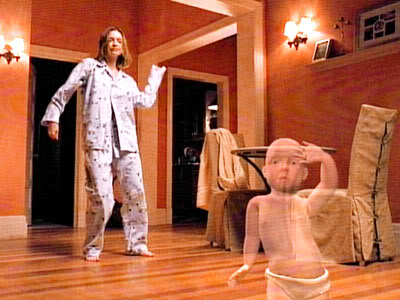
But the minute Naomi retreated into her head, asking where her old self had gone, it was a head fake into a different direction that stutter-stepped into the next paragraph. In paragraph 3, there is more faked or forced emotion that takes place in her head, with an emphasis on “telling” what she’s feeling. The fabricated suspense of imagined car accidents and panic attacks are quickly deflated when Naomi gets a call and she says, “I’m okay.” The imaginary incidents reminded me of Calista Flockhart in Ally McBeal where her inner thoughts were more exciting and dramatic than her real life, but those were done with dark humor and dancing babies as her biological clock ticked down.

I had to wonder, as an aside, where Naomi could drive 70 mph on a packed commuter highway. It’s hard to tell if the other cars are stopped and she’s the only one careening across the lanes and through trees, since the action only takes place in her head.

I don’t know if the author intended for the reference to the death of Wolfe’s late wife by car accident is intentional and a foreshadowing. Let’s hope so, but I was confused by the description “a reversal of what had happened…,” deciphering between Naomi’s imagination and what might’ve happened to his wife. That description forced me to reread and I still didn’t understand.

In the dialogue we learn that she has lost a job promotion to someone else, Clint, and she seems to accept it like a worn welcome mat. The reader doesn’t know what she does for a living either. It’s hard to relate to Naomi or get invested in her life with an opener that is more about misdirection.

The author is capable of writing a suspenseful scene. There are good parts to this submission if the author can stay focused on visualizing the fictional world through Naomi’s eyes and how her emotions manifest in her body or her senses (showing rather than telling), but when the narrative drifts to imagined car accidents, fake heart attacks or passing out at the wheel, these descriptions read as ‘over the top’ and forced emotions as more of Naomi’s story is revealed about her losing a promotion to Clint, a co-worker.

Since we don’t know from this limited 400 word submission which direction the plot will go or what genre this is, we won’t know if Naomi is a mild-mannered woman capable of hiring a hit man to take out Clint to get her promotion or doing that job herself with hours spent at a gun range. Or did the author intend for this to be a taste of Naomi’s world until the hurricane hits and she discovers what’s really important in her life? We simply don’t know.

I think the author would have a more compelling start if the contrived emotions were stripped from this intro and we get to know more about Naomi and care about her. There’s a lot of pressure to getting a lot packed into 400 words, but this intro could orient the reader into Naomi’s world with the hint of foreshadowing where the story will go. It doesn’t have to be all action and suspense when the story is a drama about a woman’s struggle to find balance in her life and how she makes a dynamic change to make to happen. How would that story look?

Maybe Naomi has been hit in the teeth by losing another promotion to a better candidate because she is overlooked at every turn, but the impending hurricane forces her out of her comfort zone and she confronts her demons that change her forever. I would read that story.


DISCUSSION

1.) What feedback would you give this author, TKZers?

2.) What tips do you have for finding the right place to start your story?