Surfing For Inspiration

Whenever the “boys in the back room” go on strike and fresh writing ideas are nowhere to be found, social media can sometimes provide a quick injection of inspiration. It can also  function as a needed cattle prod to getting off one’s lazy caboose.

A late-night surfing safari turned up a few of these little gems from social media cicerones:

From the “Thing Could Be Worse” files


How writers should handle bad reviews

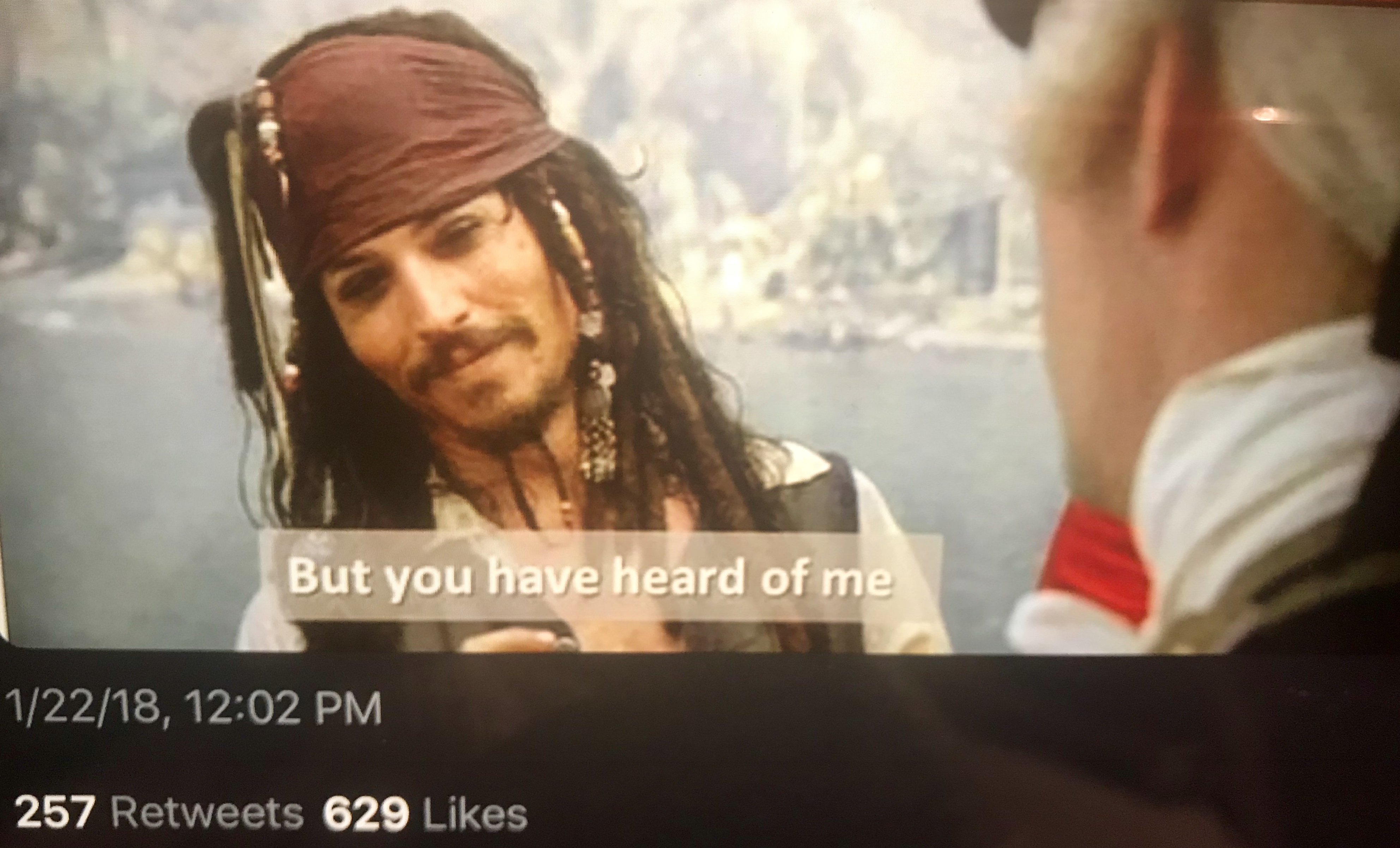
“You are without a doubt the worst writer I’ve ever heard of.”


“But you HAVE heard of me.”


Thanks, we think 


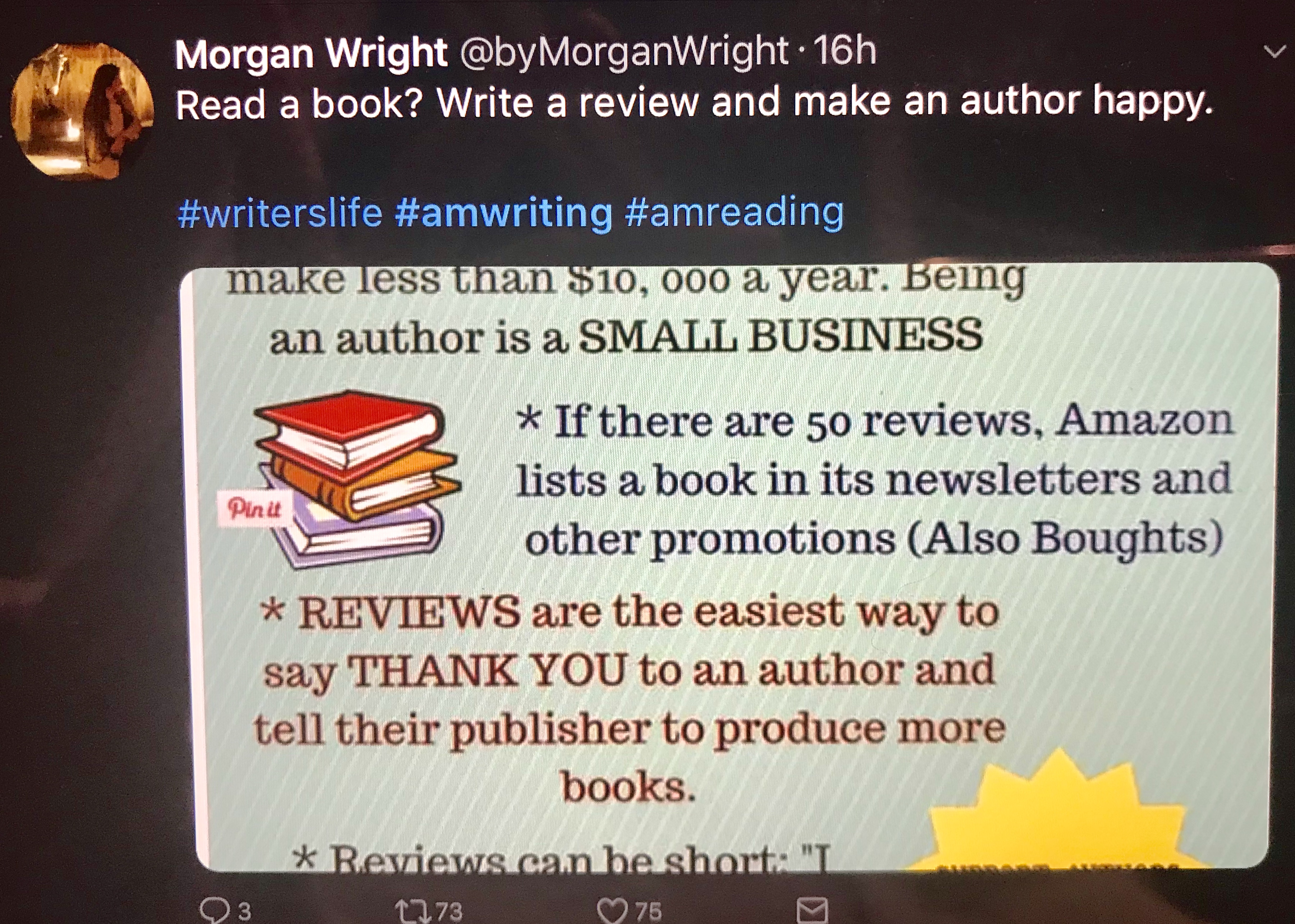
Instead of angsting over your inner clouds, spread a little sunshine 


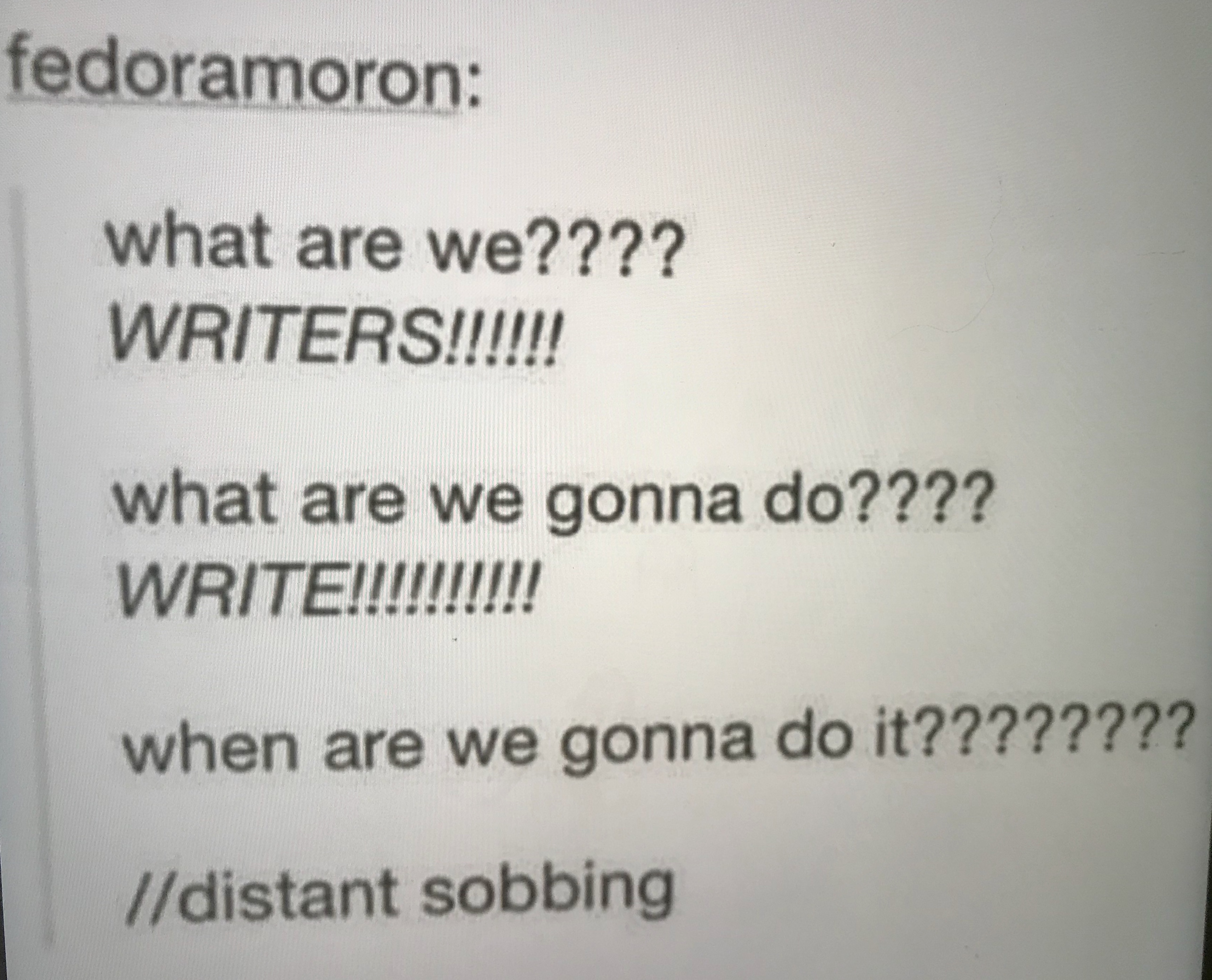
And know this: we are all in this together


What about you? Do you ever turn to the web for uplift or creative inspiration? Any good sources you can share with us?

1st Page Critique: Across the Road

By SUE COLETTA

We have another brave writer who submitted a First Page for critique. My comments will follow.

ACROSS THE ROAD

Edward stepped on the brakes and brought the car to a halt on the edge of the road. Adjusting his rearview mirror, he again looked to make certain his intervention was indeed required. On the streets of Accra two people fighting was hardly a novel sight, and third party intervention was not always welcome. But the man still held the young woman by her throat, and she squirmed in vain to break free.

Edward turned off the engine, took out the keys, and stepped out of the car.

It hit him like a falling object. “What the…?” he muttered. Cupping his hand over his eyes, he looked up.

It was a stupid thing to do. The pain in his head only worsened. He looked at his watch to ensure it wasn’t already mid-day. Even at 7:45 in the morning, the sun churned an unbearable amount of heat. If he kept driving, he’d be in his office in fifteen minutes waiting on an aspirin from his secretary. He squinted in the direction of the helpless young woman, and marched towards her.

Every step he took increased the throbbing in his head. He’d stopped his car only a couple of metres away. Amidst her gasping and choking, Edward heard the woman say, “Let…go of me.” Her small hands slipped and slapped against the man’s vice-like grip.

“Give me my money or else…” The man, who couldn’t have been shorter than six-foot-four, threw up a big, veiny left hand, palm wide open, and began to drop it at a target on the side of her face.

Edward reached it in time. He caught the weapon in his left hand before it reached its target. His fingers barely closed around the thick wrist. “Easy, my friend,” he said.

The man staggered, and Edward’s head exploded. Still holding on to the woman, the man turned his eyes from her to Edward. Deep furrows in his forehead marked his confusion. In a quick movement Edward transferred the seized hand from his left hand to his right. With his left hand he grabbed the choking hazard and calmly said to the brute, “Let her go.”

For a brief moment the two men glared at each other in a not-so-epic Mexican stand-off. Edward fixed his gaze. Too many times he’d been told he had kind eyes.

* * *

The writer has given us a peek into Edward’s character and we’re thrown into an action scene. Yet the writer didn’t hook me enough to turn the page. Why? Because when we don’t resist the urge to explain every movement in detail, it ruins the suspense. Readers are smart. Trust us to fill in the blanks. I’ll give you a quick example.

He reached for the bloody rag. By two fingers he pulled it from the stranger’s grasp, then retracted his arm.

See how overly descriptive that is? Remember, every word counts.

He snatched the bloody rag.

Same action. Same visualization. Four words instead of 19. We know what it looks like to snatch a rag from someone’s hand. Too many body movements slow (or stop) the suspense rather than enhance it.

The Headache

Throughout the first page we learn about Edward’s headache. I’m guessing these episodes play a key role in the story. In which case, the writer has done a good job of showing us how migraines start as a dull ache and little by little build into mind-numbing pain.

A word of caution here. Headaches aren’t all that interesting, nor are migraines. They help gain empathy for the MC, but they’re not enough to carry an entire story. Unless— and this is key—these migraines are a symptom of something larger. Jason Borne had migraines after the CIA erased his identity. If Edward went through a similar procedure, then you need to drop a few clues. As it stands now, Edward’s an average Joe who makes his secretary bring him aspirin. Speaking of, unless the story takes place before the 1970’s, this tidbit makes Edward look like a male chauvinist pig. Do you want to turn your female readers against Edward?

Word Choices

Throughout the first page the writer chose odd wording. For clarity, the brave writer’s questionable word choices are in red, my remarks in blue. Please add your own helpful suggestions in the comments.

Edward stepped on the brakes and brought the car to a halt on the edge of the road. “Brought” is generic. The edge of the road makes me think Edward stopped at the edge of a steep cliff. Breakdown lane or dirt shoulder may work better. 

It hit him like a falling object. What hit him? “It” tells us nothing.

The man, who couldn’t have been shorter than six-foot-four (don’t confuse the reader with odd wording. If he’s the size of a Patriot’s linebacker, say so), threw up a big, veiny left hand (first, gross; second, unless Edward is inches away he wouldn’t be able to see the dude’s veins), palm wide open, and began to drop it at a target (what target? Did a bullseye suddenly appear on her cheek?) on the side of her face.

Edward reached it (reached what?) in time. He caught the weapon (there’s a weapon now?) in his left hand before it reached its target (I still don’t see a target).

Adjusting his rearview mirror, he again looked (did he look a first time?) to make certain his intervention (intervention reminds me of an alcoholic who needs to get sober) was indeed required.

Also, the first line is nowhere near strong enough for an opener. Rather than rehash TKZ’s sound advice on first lines, I’ve linked a few posts that may help HERE, HERE, and HERE.

Always try to use strong action verbs. You can find an active verb pdf HERE.

On the streets of Accra two people fighting was hardly a novel sight, and third party intervention was not always welcome. The first half of the sentence shows us that Accra isn’t a safe place. Bravo! After the comma, however, is called over-writing. Most people don’t like others prying into their business. Because it’s common sense and it doesn’t help to clarify, well, anything, we can (and should) delete.  

But the man still held the young woman by her throat (still? This is the 1st time you’ve shown us), and she squirmed in vain (meh. You can do better) to break free. 

Edward turned off the engine, took out the keys, and stepped out of the car. 

Unless men have a habit of strangling women on the side of the roads in Accra, the terror should be palpable. He’s killing her! Yet Edward turned off the engine, took out the keys, and stepped out of the car? No, no, no.

Edward slammed the shifter into park and leaped out the driver’s door. “Let go of her, you bastard!”

Force us into that fight! Let us feel Edward’s face flush with rage as he witnesses a man beat on a woman half his size.

Let’s jump ahead.

The man staggered, and Edward’s head exploded. His head exploded? What a mess! I understand what the writer is trying to convey here, but I can’t help but giggle every time I read that line. Migraines are no joke, though. Please choose words that best describe how painful they are.

Example:

A volcanic blast exploded within Edward’s head. Vision blurred. Words jumbled. With a flat hand, he latched on to the hood to steady his gait. The goon dragged the woman by the hair, but Edward couldn’t react. The migraine held him hostage.

Still holding on to the woman, the man turned his eyes from her to Edward. How does one turn their eyes? I’m able to “shift” my eyes, but alas, I cannot turn them. I’m also a stickler for “eyes” that shoot across a room. “Gazes” can shoot to and fro. They can also roam, wander, and dance.  Eyeballs, to my knowledge, remain in their sockets at all times. Unless, or until, someone pries them out.

Deep furrows in his forehead marked his confusion. Simple, clear, paints an image in the reader’s mind. Well done!

 In a quick movement Edward transferred the seized hand (Seized? Money and property can be seized, hands cannot) from his left hand to his right. With his left hand (avoid repetition. In less than two sentences the word “hand” is used three times. Too many details confuse the reader. Which hand did what now?) he grabbed the choking hazard (I must admit, I’ve reread this first page umpteenth times and am still unsuccessful in finding “the choking hazard.” To me, a choking hazard is a small toy or toy part that we keep away from babies and toddlers) and calmly said to the brute, “Let her go.”

For a brief moment the two men (we’re not in Edward’s head anymore) glared at each other in a not-so-epic Mexican stand-off (cliché). Edward fixed his gaze (this works better than the preceding sentence; good job here!). Too many times he’d been told he had kind eyes (delete this line. Not only is it irrelevant, but it makes no sense in this context).

To review

  • Resist the urge to explain every single body movement.
  • Choose words carefully.
  • Avoid repetition.
  • Trust the reader to fill in the blanks, but give us enough information to do so.
  • Know your audience.

Over to you, TKZers. What tips would you give this brave writer?

Do You Have a Typical Writing Day?

by James Scott Bell
@jamesscottbell

Novelist Tracy Chevalier recently observed:

Part of me wishes it were easy to describe my typical writing day. I have heard about them, those smug productive hours when a writer – usually male, it has to be said – sits down each day at 9am with an espresso, writes till 1, makes bouillabaisse, writes from 2 till 5, plays tennis, and after supper sits with a glass of single malt whisky reading over what he’s written that day. That is a scenario I both crave and detest. It will never be that controlled and disciplined for me.

This is an absolute slander! I make a sandwich for lunch, haven’t played tennis in years, and in the evening prefer a California red.

I do, however, have a typical writing day, though of course it has varying tones and I’m free to be as flexible as I want to be. That’s the nice part of being your own boss. Yes, I have to call myself into the office and chew myself out from time to time, but I generally get along with the old so-and-so fellow.

Here’s how I like my day to go:

I’m up before the sun rises. The coffeemaker was set to timer the evening before so my morning brew is ready. I love starting work in the dark. Most people I’ve broached this subject with look at me with a mix of wonder and horror. Their eyes and dropped jaws nonverbally retort, “You do what? The dark? Are you daft?”

Yep. From daft to draft!

I try to do some writing immediately, to bring up what my writer’s mind has been working on all night. There might be a good plot twist there, or an idea for another book, or maybe just a way of phrasing something. Or perhaps it’s just junk. Whatever it is, I spill it into a free form document that I’ll assess later.

I then set out to write a Nifty 350.

Later on, I’ll give a light edit to my previous day’s pages, then go for my quota.

What I really have to watch out for is the temptation to jump onto social media the moment I hit some challenge or other. I’ve written about this before.

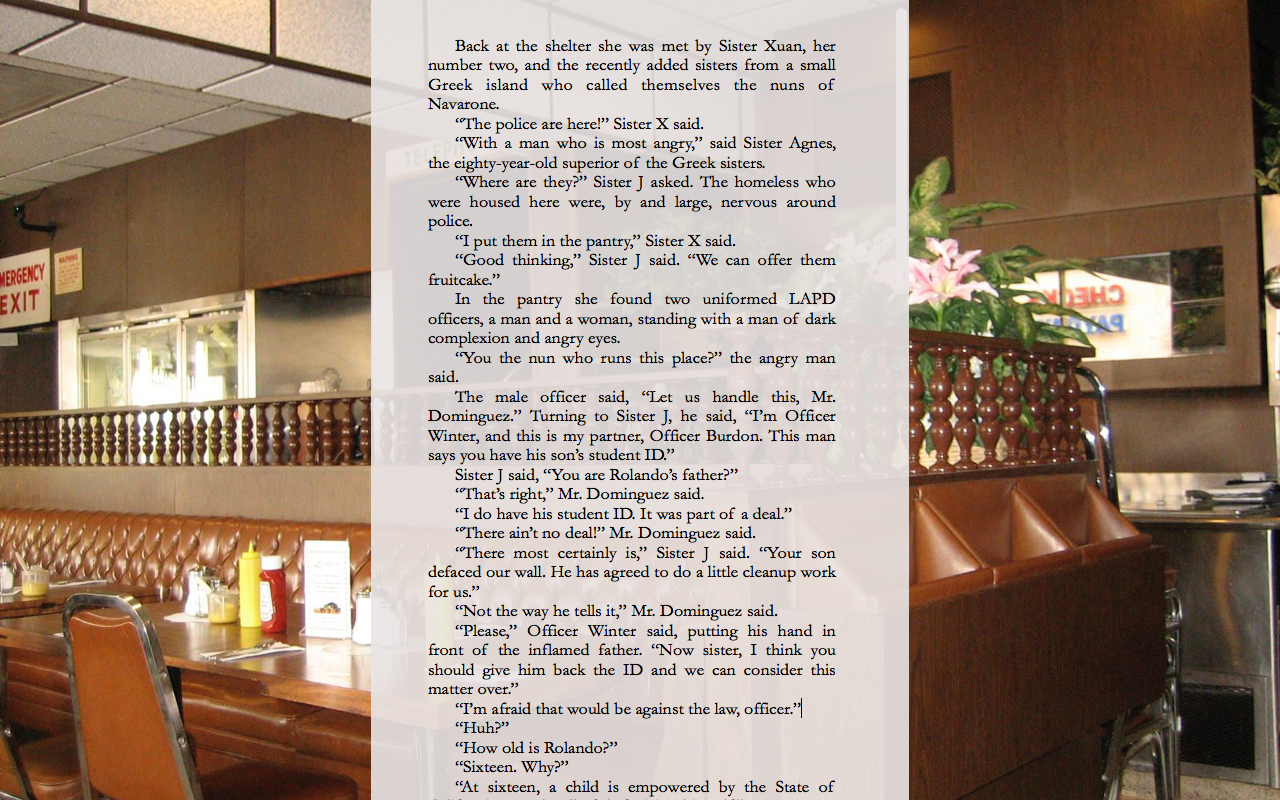
However, I do like having some ambient noise going on, which means I will sometimes be found writing at some local coffee establishment. But at home, I turn on Coffitivity. I compose in Scrivener, which allows me to have a background on my screen. I have taken a photo of my favorite deli, Langer’s, so it’s like I’m there in a booth, writing:

From about 11 – 1 I’ll generally take care of business matters (e.g., marketing, email) and have some lunch. I’ve pretty much settled that from 1 – 3 it’s zombie time. My brain just wants to lie in a hammock. So I’ll work in a power nap (15 – 20 minutes). That sets me up for the late afternoon. I can usually squeeze in another hour of writing or editing from about 4 – 5.

Then I pretty much knock off. Dinner with Mrs. B. We might watch a movie or classic TV show. If I finish a book, or my wife closes a real estate deal, we’ll celebrate by going out to eat. It’s a short drive to Malibu, where we can nosh by our beloved Pacific Ocean.

That’s as typical as it gets, so long as there are no earthquakes, fires, mudslides, power outages, or locusts.

So now I’d like to hear from you. Do you have a typical writing day? If not, how would you design one?

5 Key Ways to Balance Internal Monologue with Pitfalls to Avoid

Jordan Dane
@JordanDane

Attribution – Niki K (Wikimedia Commons)

John Gilstrap had an excellent post yesterday on Internal Monologue that resonated with me. He gave great examples of what works and what may not, with explanations on his sage reasoning. He certainly gave me things to think about in my own writing.

I tend to write in deep POV and very tight, with sparse narratives. This is especially true when I write my novella length stories for Kindle World, which is a great exercise in writing a tight plot and keeping the pace up.

In my full novels, I reign in my internal monologue and make it focused, with the character having a journey from beginning to end of the book, as well as a journey even within each scene, so I don’t repeat the deep POV thoughts.

On the FOR WRITERS resource on my website, I have a post titled – START WITH A BANG. If you scroll down to the “Ever thought about building an onion from the inside out?” sub-heading, you’ll find a section on how I let dialogue be the starting framework and how I layer in elements to fill out a scene. Internal monologue is vital to establishing my character’s journey and emotional growth and it’s something I focus on a great deal – even when I do my final draft read – but it’s the last thing I add to any scene, because I want to control it and isolate the journey to avoid pitfalls.

Despite my own methods, I greatly admire writers like Michael Connelly (particularly his Bosch series) where his mastery of his character’s internal views feel so authentic of an experienced war weary cop. He effortlessly brings in Bosch’s personal relationships and his workload to give a 360 view of this man’s life. That’s not an easy thing to do. It requires an intense knowledge of his character Bosch.

No matter how a writer learns how to craft internal monologue, it is easily one of the areas an author can veer off course and overuse…or under use, for that matter. Have you ever read a book that is all action, devoid of emotion or insight into the character’s internal battle and conflict? This is definitely a balancing game to get internal monologue to enhance your writing and make your stories memorable for readers.

Key Points to Finding the Right Balance for Internal Monologue:

1.) DIALOGUE – If you see your narrative paragraphs stretching out onto the page in weighty clumps, look for ways to make your internal monologue lean and mean by use of dialogue. This is something I have to pay attention to, even with my sparse style. Clever dialogue is a challenge, but it can be so much fun to write.

Plus, effective dialogue can help you pace your novel and tease the reader with red herrings or mystery elements, and not a plot dump of internal thoughts.

2.) LESS IS MORE – It’s easy to get carried away with every aspect of a character’s POV. The reader doesn’t need to know every logical argument for their action or inaction. People don’t think like this, especially in the heat of the moment in an action scene.

Have patience to let the story unfold. Too much internal thought can dry up pace and bore readers. The reader doesn’t need to know everything, especially all at once in a dump.

Also be careful NOT to repeat the same thought over and over. Repeating internal strife does not constitute a journey. It only reminds the reader that the author is searching for different ways to describe the same thing. Oy.

3.) TIMING – pick your spots when internal monologue makes the most sense. James Scott Bell wrote a great post on What’s the Deal on Dreams in Fiction where he talks about starting a novel with a character in thought, no action or disturbance. Resist the urge to bury your reader in internal monologue right out of the gate.

In addition, if your character is in the middle of a shoot out, that would not be the most opportune time to share his feelings on getting dumped by his girlfriend, not even if she is the one shooting at him. (Although I would love to read a scene like that.) To make the danger seem real, stick with the action and minimize the internal strife until it’s logical for the character to ponder what happened after.

Plus, if you spill the exposition too early, the reader won’t retain it as well as if you had waited for the right timing, when the reveal would be most effective.

4.) SHOW DON’T TELL – Once you get into the quagmire of telling a character’s POV, it’s too easy to get carried away with the rest of your book. If you can SHOW what a character is feeling, and let the reader take what they will from the scene, you will leave an image nugget that will stick with them. TELLING doesn’t have the same impact.

5.) ACTION & DIALOGUE DEFINE CHARACTER – These are the two areas where readers will most remember a book. Unless you’re into author craft and can appreciate the internal monologue finesse of John Gilstrap and Michael Connelly and many other author favorites, you probably may not remember how effectively the author used internal monologue. It’s like the color black. It goes with everything in such a subtle way that you may not notice it.

FOR DISCUSSION:

1.) What tips do you have to share on how you handle internal monologue in your own writing?

2.) With the key points I listed above, do any of them pose a particular challenge for you?

3.) Name a recent book you read where you noticed the author’s deft handling of internal monologue. (I would love to expand my TBR pile.)

Internal Monologue

By John Gilstrap

Today’s post responds to a request from a TKZ reader who asked about internal monologue. (I’ve heard this referred to as internal dialogue, as well, but outside the world of psychoses, I’m not sure such a thing is possible.)  This is my take on the way to present thoughts on the page.

Narrative voice.  For fiction to work at its finest, every word of every line of every paragraph should advance either story or character, preferably both. I discussed this previously in a post I called The Point of View Tapestry, and more recently, I addressed it in a video on my YouTube Channel in a piece I call, Point of View and Voice. When writing in the first person or close third person, every line of narration serves as a presentation of a character’s point of view. As an example, consider this paragraph from Scorpion Strike, the next Jonathan Grave thriller (July, 2018):

[Gail] was still trying to process what she had just seen.  She understood that she’d fallen in love with a crusader whose combat skills had been honed over nearly two decades of training and experience with the most elite Special Forces unit in the world. Yes, she’d seen him kill before.  Indeed, she’d killed right alongside him. But those incidents had all involved firearms and extraordinary marksmanship.  Killing with a knife seemed so personal, and Jonathan had wielded the blade with such expert precision that it took her breath away.

That entire passage is, in effect, internal monologue.  We are seeing the world through Gail’s eyes. And, because this scene comes from very early in the novel, we learn a little backstory, too.  In the previous scene, separated by a space break, we were in Jonathan’s point of view as he killed their attacker with a focused precision that clearly comes naturally to him.  That scene was essentially internal monologue, as well.  Done effectively, your narrative voice carries a lot of the water for internal monologue.

Quoted thought.  The accepted practice these days is to italicize quoted thought, and then tag it as if it were dialogue: Nice place, Jonathan thought. It’s a simple, effective convention that I believe can easily be overdone.  If the narrative voice handles the description of a place well, the reader–who is firmly rooted in a character’s point of view–will know simply by word choice whether or not the character is impressed or repelled.

I approach italicized quoted thought with the same trepidation with which I approach dialect. Misspellings and startling contractions stop the narrative and break the spell for the reader.  (I feel the same about expressions in foreign languages that are then translated for the reader. A much better approach is, “Please have a seat,” he said in Russian.  Why make me plow through unintelligible Cyrillic characters first?)  A little bit goes a long, long way.

The reader who asked me to address this topic presented to me in an email a passage for which his freelance editor took him to task.  He granted permission for me to share it here.  This is a paragraph from his work in progress:

Phil was right. I’ve been doing my best to keep evil out or to deny it. But what’s the alternative? Permanent depression? I’m pretty depressed right now . . . Maybe it was a mistake. Maybe Lara was with some guy and something happened and he panicked and had to ditch the body.

His editor told him–and I agree–that this passage comes off as “inauthentic” if only because we don’t actually think in words. We certainly don’t think in complex logical analyses. We think in bursts of reaction and instinct that can be an enormous challenge to present effectively on the page. The example above doesn’t work because it is too complex.  In this case, the fix is simple:

Phil was right, Paula thought.  She’d been doing her best to keep evil out or to deny it. But what’s the alternative? Permanent depression? She was pretty depressed right now . . . Maybe it was a mistake. Maybe Lara was with some guy and something happened and he panicked and had to ditch the body.

The same passage that feels clunky in italicized thought works (though it’s absent context) as straight narrative and communicates the same thoughts.

As a further example that’s a little closer to my wheelhouse, there are probably dozens of considerations in drawing and firing a pistol, and while all of them are present in the shooter’s head, it would be inauthentic to articulate them on the page.  Imagine . . .

I see that Harley’s hand is at an awkward angle. I bet he’s concealing a gun, so I’d better draw mine. Let me make sure that my shirttail doesn’t get in the way as I move my left hand to my abdomen to keep it out of the way while I move my right hand to the holster that is clipped to my belt at the four o’clock position . . . 
Or . . .
Jonathan didn’t like the angle of Harley’s arm. The son of a bitch has a gun.  Jonathan cleared his shirttail with his left hand as he moved his right to the holster on his hip . . .
Okay, that example is admittedly a bit over-the-top, but it illustrates the point. As I mentioned in the video referenced above, we tend to think of writing and the teaching thereof in terms of character and setting and dialogue and plot as if they were separate things, when in reality, they are all interdependent threads in the same garment.

The Agony and Ecstasy of Starting Over

If the wine is sour, throw it out. — Michelangelo

By PJ Parrish

Have you ever wanted to just say the hell with it and give up?

I have. I’ve been publishing fiction in one form or another since 1980 and I can’t count the number of times I have wanted to pack it in and go drive the cart at the airport for a living. Sometimes it was a bad editor who brought this on. Or being dropped from a publisher (twice). Or doing too many book signings where the only people who showed up were the staff and a homeless guy trying to get out of the rain. Or being caught in the dreaded Barnes & Noble Death Spiral. (this is an official term for the dynamic of mediocre-sales-so-we-won’t-stock-you-but-no-way-to-increase-sales-because-we-won’t-carry-your-books.

Or sometimes it was simply because I thought I had run out of energy or worse, ideas. But maybe the worst kind of giving up is the one where you have invested a lot of time and energy into a book and there’s this little voice inside your head whispering, “This is pure crap.”  And you know the voice is telling you the truth.

When is it time to give up on a story and start over?

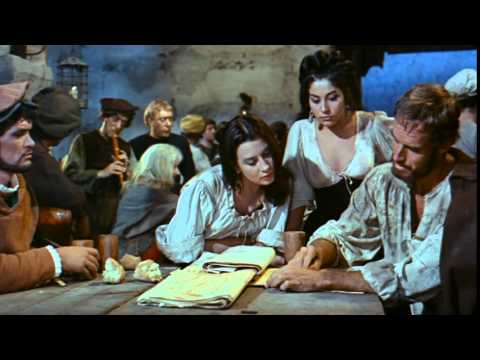
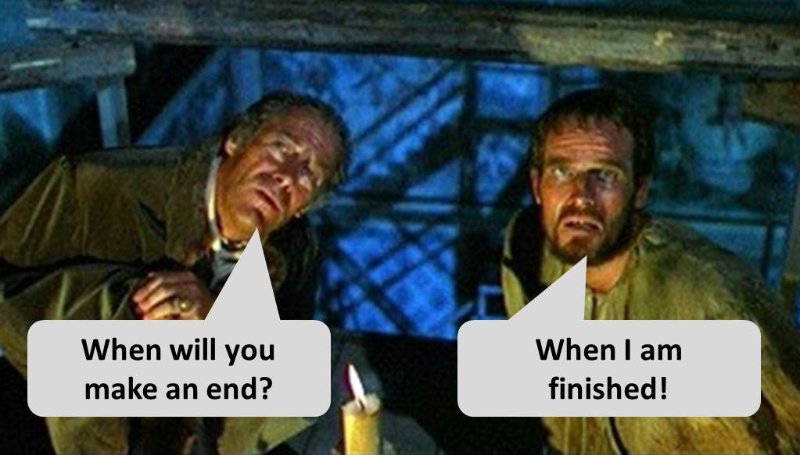
Michelangelo is the one who got me thinking about this. Or actually, Charleton Heston. Last weekend, my bad cold had me mainlining old movies and I happened upon The Agony and the Ecstasy.  Charleton Heston as the artist and Rex Harrison as the pope who commissions him to paint the Sistine Chapel. Good movie, based on the bestselling novel by Irving Stone. Michelangelo is maybe a couple hundred feet into his backbreaking project but he’s haunted by self-doubt — especially over the fresco he has painted depicting the face of God. He retreats to a tavern, where he sketches the peasants as models for apostles. But it’s God’s face who taunts him. Michelangelo takes a drink of wine, spits it out and yells, “This wine is sour!”  The tavern owner tastes it, agrees, and uncorks the cask onto the floor, saying, “If the wine is sour, throw it out!”

Michelangelo has his epiphany. He goes back to the chapel and takes a scythe to God’s face, scraping it off.  A year of work demolished. He starts over.

If the wine is sour, throw it out.

Flashback to 1998. I am writing my first attempt at a mystery. My first chapter opens with a Miami homicide detective sitting in a fishing boat in the Everglades. She is thinking…mourning…remembering…her husband who got blown up in a drug deal gone bad. Do you see the problem? She is thinking. She is…doing nothing. If you don’t get it, go back into TKZ archives and search for any of James Scott Bell’s posts on characters thinking and not doing.

I finished that first book and sent it out to agents. I got oh, maybe twelve rejections. Not one agent was kind enough or smart enough to tell me what was wrong. I tossed the whole book and started over. About two years later, the first book in the Louis Kincaid series got published. (For the record, it opens with Louis unearthing a shallow grave in rural Mississippi and finding a skeleton with a rotted noose around its neck).

Okay, flash forward to now. After our book She’s Not There was published last year by Thomas & Mercer, they asked to see a sequel that centered on a subplot featuring a secondary character named Clay Buchanan. Six chapters poured out of my laptop. I was on a roll.

Then this little voice started whispering. I ignored it, plowing on through a hundred pages. Finally, I went back and re-read Chapter 1.

I had opened with my protagonist Clay Buchanan sitting in a boat in an Arkansas bayou. He is a skip tracer by trade but also an avid bird-watcher.  He has come looking for a woodpecker that’s supposedly extinct. But he is thinking about his wife and infant son who disappeared ten years ago. This quest is supposed to a metaphor for his hopeless search for something lovely that he knows is really dead. Beautiful chapter, full of poignancy, dripping with Spanish moss and symbolism.

You’d think I would have learned something in twenty years.

Yesterday, I threw it out, all hundred pages.  It took me five months to get to this point. That’s a lot of wine on the floor.  But it had to be done. The idea for the book is solid but the first five chapters are not working. I knew it in my heart.

Why do we resist starting over? Well, after twenty years, I’ve got my thoughts.

Deadlines: It may be an actual contract deadline, or one you set yourself (I will finish this book by July! I will write 1500 words per day!) It is also the pressure of our genre, the idea that you won’t get noticed or survive unless you can produce good books at a steady clip.

Deadlines can be bad — the tyranny of the ticking clock can make you burp out some bad stuff.  But deadlines can be good — a finite amount of time forces you to write instead of playing Spider Solitaire or folding laundry).  Deadlines can make you angry. Deadlines can make you feel frustrated and exhausted. As a classic procrastinator, I’ve learned it’s best to try to embrace a deadline. Think of it as having a pet porcupine.

Self-doubt: This can be bad because it can eat away at your soul. (I’ll never get published. I can never write as well as fill-in-the-blank. I’m out of good ideas.). But self-doubt can be good because it forces you to slow down, reassess and reflect. When things look dark, sometimes it’s not a bad idea to pump the brakes so you don’t drive off the cliff. If your novel is going badly, you might need to set it aside, let the frustration cool, and go back later. Divorce or reconciliation? It’s easier to decide with a clear head instead of a heavy heart.  Some books can, with hard work, be saved. Others have to be abandoned.

Negative people: This can be bad because sometimes you have to literally live with these folks. Your spouse might not be supportive enough. Your friends might tell you your wasting your time. Your “real” job screams at you like a harpy. But it can be good if you’ve got someone in your life who can, with a clear critical eye and kind heart, tell you when your book has lost its way. All of us want praise. But what we really need are folks –a trusted beta reader or a good critique group — who will tell us “This ain’t working.”

Now I can hear some of you saying, “Okay, that’s the agony. When does the ecstasy kick in?”

I can’t say. It’s a personal thing. Each of us handles disappointment and defeat in his or her own way.  I can only say that once I made the decision to throw away the first hundred pages of Clay’s story, I felt…good.  Like Michaelango, I had a clean white canvas again. I’ve been here before. I can do it again. I’ve only got, oh, about 100,000 words to go…


First Page Critique: Somewhere in Texas

Today we’re reviewing the first page of a historical novel entitled ‘Somewhere in Texas’. As always, my comments follow

Title: Somewhere in Texas

Autumn, 1850

McLennan County, Texas. 

“I did not travel five-hundred miles cramped in stuffy stagecoaches, with the never-ending prattle of gossiping women, to wait now.” Father’s voice grew in volume as Ellena Bradbury drew the curtain back and peeked through the narrow carriage window.

The cowboy he addressed set his battered hat on his head. “Suit yourself, mister. Y’all can wait in the house for the boss.” He motioned to his right, then turned to lumber away.

Father pulled the carriage door open, his thin lips tight beneath an equally thin mustache, as he offered his hand. “Come, Ellena.”

Ellena shifted away from the window. “’Twas a long drive from the village.”

“After traveling so great a distance from Louisiana to Houston, the short drive seems especially lengthy.”

Ellena slipped from the muggy carriage into blazing Texas heat, and drew in a deep breath.

A huge, single-story house stood before her, its crude plank siding dark in the shade of a wide porch. Black and white spotted chickens pecked the barren yard, only to lift their heads and squawk in alarm when they saw her.

Beyond the structure, McLennan County rolled away in pastures of sun-dried grass.

Beautiful, though not as picturesque as home.

Ellena pivoted and clasped her hands. “Where are the horses and longhorns?”

“Hush.” Her father’s blue-eyed gaze pointed beyond her as he arched dark brows.

Behind him in the high seat, the carriage driver lifted the reins to slap them against the horses’ backs. He stilled then inched up to stand. “Lord, have mercy.” His base tone sent a shiver through Ellena.

She spun around, but everything was as it should be. House in place. Peaceful, dry pastures waived in the breeze.

What did the carriage driver see from his high perch? Ellena stood on her tiptoes. A red-tailed hawk sailed through the sky, screeching as it dove low and out of sight. Father stepped to her side and a wind gusted only to cease into eerie stillness.

The hairs on the back of her neck rose. “What is it, Father?”

The pounding of a horse’s hooves on earth sounded far off. Ellena held her breath as the pattern grew louder.

A man raced around the side of the house on horseback, his red shirt bright against a black vest. “Stampede! Stampede!” He reined in near the porch, his lean muscular body taut as his gaze met hers then narrowed. “Run!”

Comments:

Overall, I think this first page successfully evokes a sense of time and place and introduces a dramatic initial element which has the potential to keep a reader turning the pages. I liked how the writer chose to begin with an approaching stampede, but there were a few minor issues which almost pulled me out of the story, and I think there were a few missed opportunities to make this first page even more compelling.

The first of these was backstory: Now in a first page we certainly don’t want any dump of backstory information, but I did want just a sentence or two to give me a little more context for Ellena and her father’s move to Texas – something that would add emotional depth to the characters and their feelings upon their arrival. Initially in this first page, it sounded like they were coming to a place they’d recently bought, but when the cowboy tells them dismissively they can wait for the boss, I wasn’t entirely sure why they were there (which is fine, but I’d prefer a hint so I care more about why they’ve come). Dropping just an intriguing snippet or two would do – anything to make this first page also stand out in terms of specificity. At the moment it verges on being a little too generic (outsiders coming to ranch, unprepared for the realities or dangers etc.). I’d like to feel more intrigued…Why have they come from Louisiana? What have they left behind? Why is it just Ellena and her father?

Specificity when it comes to characters also provides much needed emotional resonance. I wanted to understand how Ellena felt about coming to Texas so I could care more about her as a character. The line ‘Beautiful, though not as picturesque as home‘ is the perfect set up for just a sentence or two to capture her emotions and contrast her expectations to the realities she sees before her.

Another aspect of specificity is the use of dialogue. I thought the dialogue in this first page sounded reasonably authentic (though I’m no expert on 1850’s America) but perhaps it could have been used to capture her father’s Louisiana accent (if he has one) or to give the reader a better sense of their background. Both Ellena and her father sound more upper-class, almost English to my ear (especially with Ellena saying ’twas a lengthy drive the village’ – would they even use that term for a town in Texas??) so it would be helpful to have some context for this.

I did get a little confused towards the end of this first page with the paragraph: Behind him in the high seat, the carriage driver lifted the reins to slap them against the horses’ backs. He stilled then inched up to stand. “Lord, have mercy.” His base tone sent a shiver through Ellena. I’m not familiar with horses but wouldn’t slapping the reins against their backs signal them to start moving? Also I wasn’t sure what ‘stilled then inched up’ or  ‘base tone’ really meant.  Similarly, I thought saying the man ‘raced around the side of the house on horseback’ sounded clunky. These are all easy fixes, but they will help keep a reader grounded in the scene.

Finally, I would perhaps edit out the descriptions of people’s gazes / eyes and focus more on the landscape to give a sense of foreboding – for instance the phrase ‘blue-eyed gaze pointed beyond her as he arched dark brows‘ seemed a little clumsy. And, finally, a nitpicky comment:  When the initial title specifies ‘McLennan County, Texas’, I’m not sure it adds anything for the reader to then say: McLennan County rolled away in pastures of sun-dried grass. Just keep one or the other – it is repetitious on a first page to have both.

Overall, kudos to our brave writer for submitting this – I think it has the makings of a compelling first page! What do you think fellow TKZers?

What’s the Deal on Dreams in Fiction?

by James Scott Bell
@jamesscottbell

Check out this first page from a brave author:

The house alarm is screaming out, not the early-warning beep but the piercing you’re-totally-screwed-if-you-don’t-move-now squeal. I don’t know how long it’s been going off, but it’s too late for me now. The searing oven-blast heat within the four corners of my bedroom. The putrid black smoke that singes my nostril hairs and pollutes my lungs. The orange flames rippling across the ceiling above me, dancing around my bed, almost in rhythm, a taunting staccato, popping and crackling, like it’s not a fire but a collection of flames working together; collectively, they want me to know, as they bob up and down and spit and cackle, as they slowly advance, This time it’s too late, Emmy—

The window. Still a chance to jump off the bed to the left and run for the window …

The author is Mr. James Patterson (along with his co-writer David Ellis). The novel is Invisible. Mr. Patterson is “brave” for choosing this opening gambit, for later on in the scene we learn the above is only a dream!

And that simply isn’t done.

At least you would think so if you’ve spent any significant amount of time around writers talking writing. Surely at least once a week, in some critique group somewhere, someone is uttering, as if citing stone tablets, that you must never begin a novel with a dream. Les Edgerton, in his book Hooked: Write Fiction That Grabs Readers at Page One (Writer’s Digest Books), is unequivocal:

Never, ever, ever begin a narrative with action and then reveal the character’s merely dreaming it all. Not unless you’d like your manuscript hurled across the room, accompanied by a series of curses. Followed by the insertion of a form rejection letter into your SASE and delivered by the minions of our illustrious postal service.

Les brings up a practical matter. If you’re submitting to an editor (remember the old days of the SASE?) and you pull the dream-opening thing, it’s almost certain he or she will consider your manuscript amateur hour.

But what do readers think?

The aforementioned Mr. Patterson, it may be safely said, is unequaled in his ability to gauge the pulse of the reading public. He has at least one other novel, Maximum Ride, that opens with a dream. (And last time I checked, Mr. Patterson’s manuscripts are not being returned.)

So what’s the actual deal on opening with a dream?

I don’t like it. There! That settles it.

Okay, just my opinion, folks. But it always feels like a cheat to me to get me caught up in the action, only to have the character wake up.

In all fairness, however, I’m hyper aware of craft. Most readers are not.

Maybe they don’t care in the slightest.

Let me make a subtle yet critical distinction here. One of the most famous openings in literature is Rebecca by Daphne du Maurier. It begins:

Last night I dreamt I went to Manderley again. It seemed to me I stood by the iron gate leading to the drive, and for a while I could not enter, for the way was barred to me. There was a padlock and a chain upon the gate. I called in my dream to the lodge-keeper, and had no answer, and peering closer through the rusted spokes of the gate I saw that the lodge was uninhabited.

Here we have the first-person narrator telling us about a dream. That’s not the same as the “dream fake-out”—beginning with intense action that turns out not to be real.

Practically speaking, then, if you’re a writer seeking a traditional book contract, I would counsel you not begin with a dream, for the reason Edgerton suggests. Most editors won’t go for it.

If you’re self-publishing, you have the choice.

I’d still advise against it.

Here is my further thought on dreams in fiction: Unless dreams are an integral part of the plot (e.g., a character has recurring, prophetic dreams), I would suggest limiting yourself to using a dream only once, if at all.

For what purpose? To show the emotional state of the character at some intense point in the book. Or to reveal backstory that is affecting the character’s psyche. I would also make sure the reader knows up front it’s a dream, as in the beginning of Chapter 15 of The City by Dean Koontz:

Eventually I returned to the sofa, too exhausted to stand an entire night watch. I dropped into a deep well of sleep and floated there until, after a while, the dream began in a pitch-black place with the sound of rushing water all around, as if I must be aboard a boat on a river in the rain …

Another option is to eschew a dream sequence altogether, and simply have the character describe the dream and how it is relevant. Thomas Harris does that in the aptly titled The Silence of the Lambs. Clarice Starling is a young FBI trainee tasked with extracting clues from the notorious killer and creative chef, Hannibal Lecter. Lecter trades her clues for intimate details about her life. At one point Clarice tells Lecter about the haunting memory of being at her uncle’s ranch, when she was ten, and hearing the screaming lambs being led to slaughter. And how she still dreams about it.

Lecter tells her that’s why she’s obsessed with catching Buffalo Bill. She thinks it will stop the lambs from screaming. It leads to the moving last line of the book:

But the face on the pillow, rosy in the firelight, is certainly that of Clarice Starling, and she sleeps deeply, sweetly, in the silence of the lambs.

To summarize my take:

  1. Don’t open with a dream fake-out.
  2. Use dreams sparingly (like, once) unless it’s an integral plot element.
  3. Let the reader know up front it’s a dream.
  4. Consider characters talking about a dream rather than giving it to us as a scene. Just make sure the dialogue has conflict or tension. (For example, the character doesn’t want to talk about the dream, but the other character drags it out of her, as in The Silence of the Lambs.)

Now it’s your turn, O Writer and (especially) O Reader. What do you think about dreams in fiction?


Goin’ by Fats’ House

Happy New Year! As promised, what follows is my account of meeting Fats Domino…

(c) Copyright tripadvisor.com. All rights reserved.

One of the first rock ‘n’ roll records that I recall hearing was “Blueberry Hill” by Fats Domino. I was blessed to have grown up in the 1950s and 1960s, when Top 40 radio was a wonderful mix of rockabilly, soul, rock, doo-wop, country & western, and r&b. It made for some exotic blocks of music — Everly Brothers followed by Barbara George giving way to Ferrante & Teicher and then Rick Nelson — but it was never boring. If you didn’t like a song, you just waited. You’d hear something you would like before too long. It was Fats, however, more than anyone else, who spoke to me. I had a friend (and he’s still a friend) whose older sister, LM,  had one of the best record collections I’d ever seen or heard at that point in time, and it included all sorts of Fats Domino 45s, many of which I’d never heard up until that point. We spent hours listening to them, particularly the ‘B’ sides, which were rarely played on the radio. I remember leaving his house one afternoon, my friend and me and another guy singing Fats’ infectious “I’m Gonna Be a Wheel Someday.” We were 10 years old at the time. We all got old, but the songs never did.

(c) Copyright Capitol Records, Inc. All rights reserved.

Fast forward to 1999. 45s had become a novelty, confined to limited pressing collector item releases. What were called “car phones” were being replaced by “cell phones” and “cell phones” didn’t have cameras or GPS or maps yet. The first iPhone would be released in eight years. Something called “google” was about a year old and something else called “wifi” was slowly making its way into the lexicon. Primitive times. November of that year found me in New Orleans on business. It was during this particular visit that I had lunch with a local musician who we’ll call J and whose extended family had for three generations been an integral part of the early days of rock ‘n’ roll. While we ate a couple of coma-inducing po’boys we talked about the city’s history. He looked somewhat askance at me a couple of times from across the table, expressing wonder at how a middle-aged white guy “not from around here” knew so much about his family and their musical contributions. The wonder turned to amazement when I took him back to my hotel room and played him some CDs of New Orleans music I had brought with me — iPods were two years away — which included recordings his relatives had played on but that he had never heard. We talked a bit more and were almost wrapping up when he said, “Hey, what are doing this afternoon? You got a car? You wanna go by Fats’ house?”

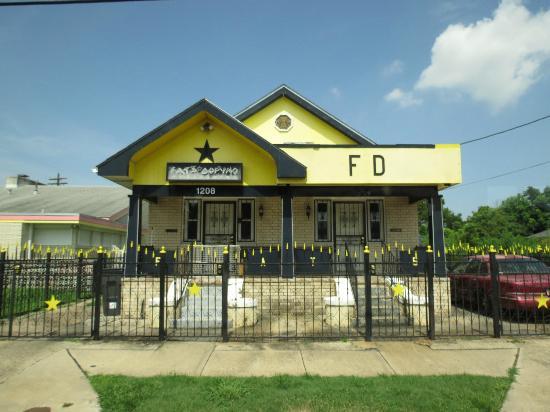
My answers were “nothing,” “yes,” and “hell yes.” It was a trip I had wanted to make on previous visits but given that the New Orleans street system — designed, apparently, by a spider on LSD — was daunting,  I had over the course of a few visits only slowly started to venture into the city’s neighborhoods and out of the French Quarter. So, yes, if J wanted to direct me to Fats Domino’s house — deep, deep in the ‘hood known as the lower Ninth Ward — I wasn’t about to pass up the opportunity. After a sinus-clearing trip on the freeway with J’s occasionally helpful guidance (“left…no…no, right…no…left…NO, RIGHT! RIGHT! RIGHT!”) through a heavy thunderstorm, we wound up driving down Caffin Street and approaching its intersection with Marais Street I saw what I was sure was the house in question on the right. It appeared to be a shotgun-style duplex, surrounded by a wrought-iron fence, with the words “Fats Domino Publishing” spelled out in lights on the front of the house.

When J had asked if I wanted to “go by Fat’s house” I assumed that he meant drive “by,” as opposed to “stopping.” And going in.  As we were um, driving by, however, J said, “Pull over there” pointing to a portion of the driveway which was in front of the house outside of the fence. I did. He got out of the car, then looked at me funny as I remained in the car, still not fully comprehending what was happening. He said, “C’mon!” and I did, turning off the engine and then stumbling a bit as I followed him. My brain and my body hadn’t quite synced up with the concept that I was walking into Fats Domino’s house. J in the meantime had negotiated the fence gate as the front door of the house opened. And there stood Fats.

I have often described myself as being too short for my weight (as opposed to weighing too much for my height) and such was certainly true of Fats. He had the appearance, as he stood there smiling shyly, of being compressed. Still very substantial at 5’4” and over 200 pounds, he nonetheless gave the impression of being possessed of a certain physical frailty. J introduced me as his “manager” (I wasn’t) and I shook hands with Fats (even as I write those words, I still can’t quite believe it) as he ushered us into his house. Please note: we were in Fats’ house, which was a combination annex and office. His HOUSE, actually, was next door, a huge place on Marais Street where he and his family (and several large automobiles) resided. The world-famous Cadillac Couch, however — a three seater fashioned from the tail-end of a Cadillac — was in the annex. Fats waved me over to it, saying something. I at that point in time was very unfamiliar with the New Orleans patois (which varies from neighborhood to neighborhood) and will confess that I couldn’t understand what he was saying. When I continued to stand there, however, he laughed and said, “Siddown!” I did. Carefully. He and J sat and talked for a bit — I couldn’t follow the conversation, but it was something about one of J’s relatives — and after about ten minutes they finished up their business. As we got up to leave, Fats shot me a smile and walked over to a beautiful piano, where he sat down, and then played and sang the introduction and opening verse of “Blueberry Hill.” It would be an understatement to say that he still had the magic. His voice was strong and his playing was complex, confident and flawless. It was if a switch had been flipped on inside of him when he sat down, releasing the muse entrapped from the reserved, seemingly infirm man with whom I had spent the past several minutes.  All I could think was, “I wish that LM were here.”

(c) Copyright Capitol Records, Inc. All rights reserved.

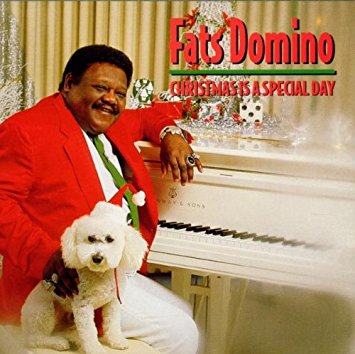
When Fats stopped playing I started to clap but he ducked his head shyly again and waved me off. J said to him, “Why don’t you give him one of those Christmas records?” and he did, handing me a copy of a disc titled Christmas Is a Special Day.  I thought later that I should have asked Fats to autograph it. I was still catching up, however, with what was going on and where I was, standing next to a man whose work I had been listening to for over five decades.  I had no way of otherwise memorializing it either — no camera or camera phone —  but that was okay. We said our goodbyes and I walked out of the “house” (as opposed to the “HOUSE”) into a world which was much different than it had been just a half-hour before.

(c) Capitol Records, Inc. All rights reserved.

The world almost twenty years on from that day is also much different. One constant, however, is that Fats’ music remains timeless. His first single, “The Fat Man,” is considered by many to be the first rock ‘n’ roll record. Listening to it seventy years after its release one can hear Fats and the assembled musicians, under the direction of bandleader Dave Bartholomew, galloping into a previously uncharted musical territory. Then there is “I’m Walkin,” which, sixty years after its release, was licensed for a FitBit commercial. It’s a perfect pairing, given that one can’t sit still while listening to it. And of course there’s…but I need to be quiet and go away. I’ve prattled on too long. Anyway, that’s my brush with stardom. I’ve met a number of my idols since that time, but my meeting with Fats is in a class by itself.

Your turn now. Have you had any meetings with a major and famous influence in your life that you would like to talk about? I am going to attempt to stay uncharacteristically silent while you inform us, but I can’t promise anything. Thank you.