As is my usual practice, I spent a few days this past December going over my writing goals and practices, and making plans for the new year. And once again I found myself appreciating the discipline of the writing break.
Its value hit me anew as I read a Business Musings post by Kristine Kathryn Rusch titled “Burnout and the Indie Writer.” She writes:
Burnout.
I’ve been hearing that word a lot in the writer community. It took a while for the word to penetrate. I’ve had my own things to deal with this year, and I really haven’t been looking outward as much as I usually do.
But a friend who traveled to a number of conventions this year mentioned that avoiding burnout was a topic at every single one of those conventions.
Kris goes on to recommend some self-care items such as adequate sleep, being with loved ones, eating right and so on. All important suggestions.
The pressure comes when the writer who wants to make good dough at this thing (even a living) realizes that the only “formula” (and lottery-type luck is not a formula) is to keep producing quality work at a steady pace.
Notice that word, steady. I believe this is the key to avoiding writer burnout. Every writer has a sweet spot where production meets life and stays on its side of the fence. We call this a quota.
Now, those of you who’ve read my craft pieces over the years know I’m a quota guy. It’s the single most important discipline in my own writing life. I started down this road in 1988, and early on I remember reading about how important a quota was. The very first writing craft book I ever purchased was Lawrence Block’s Writing the Novel. In it, he has a section on quotas, and notes that most pro writers keep track of the words they produce, not the time they spend at the desk.
That got to me, and I have stuck to a quota ever since. It’s almost always been 1,000 words a day, six days a week, with a day of rest on Sunday.
Though I have cheated on occasion when a deadline was breathing down my neck, this “writing Sabbath” has been crucial for me. It gives my brain much-needed rest. I find I’m always energized to start up again on Monday. That is perhaps the main reason I’ve never truly felt burned out. Tired, yes. But the big fizzle, no.
It’s also important, I’ve found, to take daily breaks. I’m usually not more than an hour at a time at the keyboard. I’ll then take a five- or ten-minute stretch or stroll. In the afternoon I take a power nap—15 to 20 minutes.
One other thing I have to do is keep myself from “over-writing” when the going is good. Block addresses this in his book:
One thing you might try to avoid, in this connection, is attempting to extend your productivity. This sort of overload principle works fine in weightlifting, where one’s ability to manage more weight increases as one lifts more weight, but it doesn’t work that way in writing. It’s tempting to try to do a little more each day than we did the day before, and I still find myself intermittently struggling to resist this particular temptation, even after lo these many years. If I can do five pages today, why can’t I do six tomorrow? And seven the day after? For that matter, if I really catch fire and do seven today, that proves I can definitely do a minimum of seven tomorrow. Doesn’t it?
No, it doesn’t.
What does happen, in point of fact, is that this sort of overload generally leads to exhaustion … Find your right pace, make sure it’s one that’s not going to be a strain, and then stick with it.
And sometimes writing breaks are thrust upon us.
Like getting sick. I thank the Good Lord I’m pretty healthy most of the time, but last year I got taken out by a bout of pneumonia. It actually set me back a couple of weeks. I managed some writing, but mostly I rested and took my antibiotics and sniped at my wife (this saint continued to take care of me.)
I’ve also found that when I go to a convention, like Bouchercon or ThrillerFest, it’s almost impossible for me to get in any writing time. There’s too much going on, like Gilstrap holding court in the bar with his Beefeater martini. No one wants to miss that. So I give myself permish to take several days off when I attend. (I also find I can write on a plane going to a location, but not coming home. I think that has to do with my being a morning person, as I described a couple of weeks ago.
Yes, there is one exception to all this steadiness, and that’s NaNoWriMo. We need not revisit the debate over this singular month of writing madness (you can search for NaNoWriMo in our archives for that), but it’s there for you to consider.
What I’m saying is simply this: be as intentional about taking a break from writing as you are about producing the words. Be strategic, be smart. I’ve said this many times before, but here it is again: figure out how many words you can easily write in a daily session. Now up that by 10%. So if it’s 250 words, you aim for 275. 1000 = 1100. Try to do that six days a week.
But do not beat yourself up if circumstances conspire against you. Treat every new week afresh.
Do this day after week after year—with regular breaks—and you will not only avoid the B-word, you’ll see an amazing output of material. Which is the difference between someone who wants to write and a writer.
So how have you been feeling about your writing life of late? Pressure? Not enough time? Are you beating yourself up a lot about production (or lack thereof)? Maybe you need to think about strategic break-taking.
___
Because I believe so strongly in the mental game of writing, I’m making my ebook on the subject 99¢ this week.
Reader Friday has a friend who is a mother to be, and she wants to start collecting a library of children’s literature to read aloud to her Little One. Which books would you put on a “must read” list for children?
For your reading pleasure, we have an anonymous submission of the first 400 words to a story titled – Rabya. I give my feedback below, but I also wanted to share this tidbit that the author shared on the inspiration for the story. In my own writing, headlines often inspire my novels and I love blending my research into fiction to add gravitas and authenticity.
FROM THE ANONYMOUS AUTHOR – Based on a true situation, RABYA is the story of how an American software engineer lands on the Terror Watch List because his live-in girlfriend, Rayba Salik, is Turkish. Does she have a secret?
***
Two minutes before take-off, Justin Karns twists side-to-side, trying to carve out room for his shoulders. The tall guy to his left has already commandeered the armrest. His manspread invades Justin’s space. The thought of rubbing knees with him across the Atlantic Ocean is creepy. If Justin doesn’t resolve this problem soon, he’ll be a mess for his big interview.
A few rows ahead, three seats sit empty. Though it’s verboten to move during takeoff, the seat should still be available in five minutes if everyone follows the rules. Yet, when the plane levels off—with the seat belt sign still lit—a man darts into the empty row. Justin pushes his call button.
“May I help you?” The flight attendant asks.
“Yes, please.” He glances at her name tag. “Kirsten, this row is way too crowded for three tall men. I’m six-foot and cramped. Imagine how these guys feel.” He flips his thumb to the left. “There was an empty row ahead, but someone just took the middle seat.”
She glances over her shoulder and then back without a word.
“Would you mind asking that guy to take the window seat so we could both be comfortable up there. Then my friend here,” Wilt the Stilt, “will have a place to stow his legs.”
“I’m sorry,” Kirsten says. “That is not possible.”
“Seriously? I fly international all the time. People always change seats.”
“There are new rules. Sorry.” She walks away.
When Justin can’t settle in, he calls her back. He considers name dropping his interview with Cruise Talon, the famous international consulting firm, but he’d sound like a braggart. He could hyperbolize his agony, but he’d sound like a wimp. Instead, he resorts to the truth. “I really need to change seats. My future depends on being rested.”
Her blue eyes turn icy. “I am sorry. Enjoy the flight.”
Perfect. Flight attendant on a power trip.
Justin stands up, stretches his body, and watches Kirsten return to the galley. A man on the aisle with a cop’s buzz cut smirks at him and reaches into his jacket, for what—a citation pad? He wouldn’t be so judgmental if he were stuffed into a row with daddy long legs.
Desperate to relax, Justin tilts back and waits for a chance to steal a piece of the armrest.
So, I’m the only one on this flight who can’t change seats.
FEEDBACK
TO LIKE OR NOT TO LIKE JUSTIN – My overall impression is that I’m not sure I want to be in Justin’s head for an entire book. If I were a reader picking up a book and reading the first page or so, how important is it for me to like him?
Some authors can pull off complex characters, where it’s not necessary for the reader to instantly like them. If the reader can be won over by the deeds of a complicated character, you have a major bond and great writing.
But in this short sample, Justin comes across as self-involved, arrogant, cynical to a fault, and inconsiderate. If this is a story inspired by real events, I would recommend shining a more sympathetic light on Justin. The author would be better off making this guy relatable from page one. Even if Justin is irascible, if the reader sees him in an uncomfortable situation that they have been through, the focus wouldn’t be on Justin’s worst traits.
HELP THE READER RELATE TO THE SITUATION INSTEAD – If the author plans on Justin being a challenging character with a prickly nature, I would recommend the author divert the reader’s attention from his unsavory personality to focus on his situation.
Who hasn’t endured a terrible flight where everything seems to go wrong? I would concentrate on the things that many readers would have experienced, then show Justin navigating those waters to see how he deals with things.
1.) Cramped seats
2.) A crying baby or two
3.) Recirculating air that doesn’t work
4.) Seat that doesn’t recline
5.) The interior of the plane feels like a sweltering oven
6.) Someone knocks his elbow on the aisle and hits the raw nerve of his funny bone
7.) Or a plane too small for good overhead bin space and he has to cram his carry on under the seat in front of him, leaving him no leg room.
(Can you tell I’ve had my share of really awful flights? I traveled on business when I was with the energy industry. Now my commute is from my bedroom to my home office. Sweet.)
If the author is going for the kind of characters featured in GONE GIRL – as seen through the eyes of a failed and bitter marriage of a husband and wife where both of them look guilty – then the voice attempted in this opener would pose a challenge to a reader who might like to relate to a main character. It’s a fine line to have an arrogant character still be likeable enough that a reader might want to eventually root for him. Finding the right balance in a character like that takes a deft hand.
A book that resonated with me and I highly recommend is PARANOIA by Joe Finder. This novel was made into a movie. Read the book. It’s a MUCH BETTER story. As you can see from the synopsis below (embellished by me), the author has borderline criminal, Adam, start his downhill spiral by doing a favor for a friend, a buddy of his who works in the warehouse. After he gets caught in a crime by his employer, Adam is given a chance to rectify his situation and do the right thing, but instead he takes the corporate ultimatum/blackmail and breaks the law to spy on another company. It’s a story of David versus Goliath.
In Paranoia, Adam Cassidy is twenty-six and a low level employee at a high-tech corporation who hates his job. He’s a real slacker with hustler, street smarts. When he manipulates the system to do something nice for a friend, he finds himself charged with a crime and corporate security gives him a choice: prison – or become a spy in the headquarters of the company’s chief competitor.
PRESENT TENSE – I didn’t see the point to writing this story in present tense, since more readers dislike it. Present tense is more likely to appear in YA where teen readers don’t have the bias of living most of their lives reading 3rd person, past tense books.
PLAUSIBILITY ISSUES – I found several issues wrong with this intro, just from a factual standpoint.
Call Button – Before Justin presses the call button, he makes a point to notice the seat belt sign was still lit. Yet once he presses his call button, the flight attendant pops up at the ready to serve. Things happen too fast in sequence for them to sound realistic.
Rules on Changing Seats – I took issue with Justin expecting the flight attendant to settle his seating problems. Any flight attendant is there for safety reasons first, but pushy Justin expects her to fight his battles by intervening. But to compound the issue, he argues that he flies international “all the time” and people change seats. (Why he argues only about international flights and not domestic too, I have no clue.) The attendant tells him there are new rules and changing seats is not permitted, yet the whole incident that started this argument was that a guy changed seats and was allowed to stay. That’s a logic problem that readers would see, like I did, and not take the story seriously. The whole argument comes off silly. Justin is being belligerent and the attendant is being overly mean. (Most flight attendants are very accommodating.)
Justin has options – Justin has the option of asking the man who has the row to himself if he can share the seating with him. When he chooses to force the attendant to intervene, he comes across as weak and a whiner. If the objective is to give a voice to Justin that sets the stage for the entire book, I would recommend the author take a harder look at how Justin should appear in his debut moment of first appearing on the page. Is he a victim or is a jerk who’s asking for it? Does he have poor judgment or is the Cosmos teaching him a lesson in humility? The author could go anyway with this. I suggested drawing the reader in by putting Justin in a situation where the reader can relate to a terrible flight and a seriously bad day, but there are other ways for the author to go. We simply don’t what the author has in mind. As a reader, I would put this book down, however. Justin hasn’t won me over to turn the page or buy the book.
As an author, you have control of ANYTHING in the story, but the fictional world should be consistent or must seem real to the reader, in order for them to suspend disbelief and read along.
NITPICKS – Word choices and pop culture references are important and should fit the character if the story is from his or her POV.
1.) Do guys really use the word “creepy” to describe man-spreading and knocking knees with a guy sitting too close? That sounds like the word choice of a victim or a word that a woman would use. Similarly, the line below makes Justin sound childish and unwilling to even try to rectify his own problem. Not a very mature response for a guy traveling across the Atlantic for an international job with an elite employer. Anyone in this position would be assertive, a negotiator, and a charmer.
So, I’m the only one on this flight who can’t change seats.
2.) How many readers would get the reference, “Wilt the Stilt”? Wilt Chamberlain played from 1959 to 1973. Justin strikes me as a younger guy who might reference an NBA player currently playing. Another example of a description that stands out as odd to me is – Daddy Long Legs. My parents would use this. Pretty ancient reach back.
3.) By calling attention to Justin’s internal thoughts on his options (see below), the reader gets unfavorable thoughts planted about Justin that the author may not intend. By his actions, he’s already an acquired taste. Why add fuel to stoke the fire?
He considers name dropping his interview with Cruise Talon, the famous international consulting firm, but he’d sound like a braggart. He could hyperbolize his agony, but he’d sound like a wimp.
TITLE – Rabya may be a working title, but it wouldn’t make a good published title in my opinion. Using the woman’s name might also limit the cover design to feature the woman, when the story is truly about Justin and the calamity of his life. When I don’t “feel” the title right away, I start writing down alternatives and make a long list before I settle on one. Get feedback from beta readers.
DISCUSSION 1.) What do you think of books written in present tense, TKZ? Am I the only one without my 3-D glasses?
2.) What feedback would you add for this courageous author?
Since P J Parrish had to throw down the guantlet by adding music to the end of her post this week, I’ve included this link & dedicate the song to the character in this submission. Justin is having a very bad day. #TKZMusicChallenge
Good morning all. We’re on a roll with First Pagers this week and now I’ve got another teed up and ready to go. Catch you on the back swing. (Sorry…husband is watching golf sudden death playoff in background as I write).
Days of Mean
Revenge was like scotch. The longer it matured, the more satisfying the taste. Bradley Thomson’s stepfather taught him that.
Bradley walked through the opened French doors of his Key Biscayne home, coffee cup in hand, and stepped onto the lanai that overlooked the Bay. No matter how many times he viewed the Bay, he loved seeing the estuary in the morning. Its beauty pleased the poet in him. His younger self would have laughed at such sentiment. That was the benefit of middle-age. One appreciated the little things in life.
Bradley set his coffee on a bistro table, next to a throwaway cell phone. He picked up the burner and half-smiled. Out of respect for his late wife, he’d waited twelve years to make this call.
While most people craved instant gratification, Bradley savored anticipation more. He’d been known to admire the beauty of a 30-year-old Highland Park single malt for weeks, even months, before breaking the seal and relishing the first sip. The longer the delay, the better the satisfaction. That’s how he regarded the situation with Juliette. He doubted she’d recognize his voice after all this time, but to ensure she didn’t, for several weeks he’d practiced a Midwestern accent to camouflage his natural Bostonian.
Bradley took a moment to mentally recite his script. The words had changed over the years but their gist remained the same—one extortion to avenge another.
Two months ago, immediately after his wife died, Bradley thought about approaching Juliette in person. Although seeing her wither before his eyes would gratify the vindictive part of his nature, he decided a blind threat would be more menacing. If he remained anonymous, she’d never know which of her victims held her by the throat. He liked that.
Bradley tapped eleven numbers onto the prepaid phone. A few seconds later she said, “Hello.”
When he heard her voice, fond memories of their nights together didn’t suddenly flood his mind. Her deceitfulness had murdered any chance of that.
Juliette…. ”
“Yes. Who’s calling?”
Bradley smiled. “You can call me Mr. Boogey.”
____________________________
I was thinking that maybe I’ve been doing too many critiques lately (recently judged a contest for MWA and read about forty entries of the first 50 pages and am also prepping for a workshop where I’ve asked attendees to send in their first 400 words.) So maybe I am going manuscript-blind-and-deaf. But this entry, well, I think it’s pretty darn good. That sounds like a back-handed compliment to our submitter, so let me try to be nicer and more articulate.
First off, the writing is tight and fluid with only one hiccup (more on that later). Dialogue (what there is) is handled cleanly. No dumb typos, grammar lapses etc. But that’s the basics, the first bar to clear. What about the bigger issues?
We always talk here about picking the prime dramatic moment to enter a story. It need not be violent or action-packed. But it must do essential things — introduce a prime character (usually the hero but sometimes the black hat) and it must seduce us on some level. A good opening is a promise to the reader — here’s a hint of what is to come so stick around and see if I, the storyteller, will deliver. I think the writer here accomplishes that.
I really like that first graph. We get a prime character’s name, a dollop of backstory — he loves nice scotch, has a significant step-father in his past and is out for revenge of some kind. It has tone and voice…it has a certain “bite,” sort of like a good scotch. (I don’t drink scotch but during research, I once read an article about 50-year-old Glenlivet described as tasting like “tingle and burn.”)
The next graph is descriptive but also tells us where we are, about how old Bradley is, and a bit more about his personality. This submission is a good example of how to dribble in backstory. Then we find he’s using a burner cell phone, which SHOWS us rather than the writer TELLING us that he has secrets to hide and is up to no good.
Then he makes the call to Juliette, who we are told, with the sparest of details (good!) has a past with Bradley, apparently did him wrong, and now he’s out for vengeance.
But what I like about this submission the most, I think, are the Unanswered Questions. Sometimes, it is not so much what the writer tell us, but rather what s/he withholds that helps create a tension in the early going of a story. Look what questions this writer laid out:
What did Juliette do that was so awful that Bradley is now out to get her?
Why does Bradley refer to himself as one of her “victims?”
Why is he using an untraceable phone and disguising his voice? (and, backstory, we find out he’s Bostonian by birth.)
What happened to his wife?
And why has he waited 12 years to get his revenge?
One of the most effective ways to create tension early in a story is to lay down a bread-crumb trail of questions like this to lure us in and then you can spend the rest of the book slowly answering them. All these questions are a tease. They make me want to read on.
So good stuff! But I think we have a hiccup with the dead wife. Everything was going down so smoothly here until I got to: “out of respect for his late wife, he had waited 12 years to make this call.” And: “Two months ago, immediately after his wife died, Bradley thought about approaching Juliette in person.” I think by inserting the wife into the scenario with the named Juliette, the writer creates unnecessary confusion. Might the opening not flow better if we left the wife out of things for now? She can always be brought up a little later, maybe after the phone call? It might create even MORE tension to withhold this bit of Bradley’s backstory until he has finished his call and then perhaps thinks about the “why” he had waited…something to do with a dead wife.
When you are laying down the questions, don’t double-dip them. The fact he has a dead wife and it probably has something to do with the nefarious Juliette is too juicy a fact to be buried amid the other backstory, I think. The dead wife deserves her own introduction. Just as an exercise, writer, take out all references to the wife and see how it reads. One woman at a time…
One last thing: Maybe it’s just me, but after all this good stuff about middle-aged Brahmin poets, great scotch, and Key Biscayne views, would Bradley pick a prosaic kiddie name like “Mr. Boogey?” I almost laughed when I read it. Maybe there’s a good reason. Just asking…
Ready to hear some counter-views, TKZers. Please weigh in. In the meantime, I have a habit of picking music for the movie versions of my books and those of others. Here’s some mood music for today’s submission. Hit it, Charles…
Today’s first page critique is a novel entitle ‘1940’. My comments follow, but I think it is a good example of some of the pitfalls when it comes to the opening of any novel – namely how to start with an incident that compels a reader to keep reading, while also providing a good grounding in the time and place of the story. See you on the flip side for more detailed commentary.
1940
Ilya began to fidget. The concrete bench he shared with his teacher chilled his thin frame. Martha stopped reading the Washington Herald and placed it on her lap. She watched Ilya finish a sketch of the blooming dogwood tree that stood across from them. It fascinated her he could draw the tree effortlessly at the age most boys in fourth grade just wanted to climb a one.
He slid the worn pencil over his left ear then stared at her, but kept silent.
“What is it Ilya? She asked. “I can tell something’s on your mind.”
He had been waiting for the right moment to tell her what the housekeeper said while he was waiting for the limo this morning.
“Alfrayda said teachers don’t take their students to the cemetery.”
She held her temper and calmly said, “This teacher does.” Then she confidently added, “I’ll set Alfrayda straight first thing when we get back to the compound.” She wasn’t afraid to confront the Soviet embassy housekeeper.
“Father should bring me,” he said angrily. “He’s just an attache at the embassy. He has time.”
She placed her arm around his shoulder and drew him close. “My dear boy, your father is not just an attache. He has many demands for his time and Ambassador Aleksandrovich relies heavily on your father’s skills.”
“You have demands, but you always have time for me.”
“Yes, I have demands, but nothing on the scale of a government official.”
He accepted her reply and began to sketch an outline of the gravestone set under the flowering dogwood. That upright gravestone in the sea of handcrafted concrete statues seemed cruel to her. Ilya’s slender fingers guided the pencil systematically, retreating to darken and emphasize his mother’s name engraved across the tarnished limestone.
Sigrune Haushoffer
1900-1931
Ilya nudged her. “I’ve finished.” He held the sketch at arms length for her to observe.
“One day you will have your drawings displayed in a museum,” she told him. Maybe then, she thought to herself, Yaroslav Dalmatov would appreciate his son’s artistic talent.
“You mean like the museums here in D.C.?”
“Of course.” She never hesitated to encourage him.
COMMENTS
General:
Overall, although this first page is tightly written and interesting it doesn’t have anything that reaches out and grabs me from the outset. All we really have is a conversation between a boy and his teacher. Although the fact that is his father is an attache to the Soviet Embassy in DC is interesting, there’s not much in this first page that provides anything in the way of real intrigue. There are snippets of it – the fact that he’s sketching at the cemetery where his mother is buried, the fact that his father is clearly doing something important with the Soviet Ambassador, but there isn’t quite enough to get a reader invested in the characters as yet. We need to care about Illya and his artistic talent to have our interest piqued. Right now, I’m not feeling all that compelled as a reader to read more. I think the author should reconsider where to actually start this novel – this page sounds more like the opening to a second chapter than the first.
Specific Comments:
There’s also not a lot in terms of historical grounding for this first page. If I didn’t see the title ‘1940’, I wouldn’t be able to place when this first page conversation is taking place. I liked the sparseness of the detail provided and the directness of the dialogue, but I felt I needed a greatest sense of historical footing so I could visualize the scene. Without historical context, this conversation could be taking place today, or the 1950s or 1960s. There’s no detail given to distinguish the time period for me. It’s always hard reviewing a first page when you don’t have a synopsis or outline, but it is important to set the stage both in time and space – I see Washington DC but I don’t, as yet, see 1940.
POV
This first page is written with an omniscient 3rd POV where we, as readers, hear the thoughts of Illya as well as his teacher. For me this dilutes the power of this particular first page – I wanted to feel closer to one of these two characters (registering their emotional responses and hearing their inner dialogue) to feel more engaged.
Names
Now this might be a bit of a nit pick, but the name ‘Alfrayda’ threw me out of the story – for some reason it sounded wrong for the 1940s and also (weirdly) reminded me of names in The Handmaiden’s Tale. This could just be me, but I caution the writer on including too many unusual names that could distract from historical grounding of the story (unless of course this is an alternate history/fantasy where names like that are common!). Also there are a lot of names used in this first page without any really characterisation provided: We have Martha, Illya, Alfrayda, Ambassador Aleksandrovich and Yaroslav Dalmatov (Illya’s father) – but out of all of them, I can really only picture Illya given the scene described.
Dramatic Tension
Although I liked the conversation between Illya and Martha about his artistic talent and the graveyard drawing session, all the dramatic tension feels off stage – between Illya’s father and his son, as well as between Martha and the Alfrayda. There isn’t any actual conflict on the page. Martha is supportive of Illya’s talent and wants to encourage him but we don’t understand why we (as readers) should care about his talent or his role in the upcoming story.
Summary
The good news is that the first page is well written with a nice clarity of prose and purposeful dialogue. For it to be a compelling first page, however, I think the author should either start the novel in a different place (and keep this scene for a later chapter), or inject more dramatic tension onto the page to have us, as readers, fully invested in this story from the get-go.
So TKZers what do you think? What advice would you give our brave submitter?
Our first-page submission today is an opportunity to discuss one of the more common errors I see in beginning fiction. We’ll talk about it on the flip side.
JOE’S STORY
Chapter One
On a sunny October morning, Attorney Joe Morales parked his Lexus, carried his brown leather briefcase past a sweetgum tree sporting red, yellow, and orange leaves, and headed to his Dallas office. Inside the red brick building, he walked across the pink and gray granite floor, caught a whiff of the scents from a tasteful arrangement of marigolds and chrysanthemums on the counter, and waved to the clerk behind it. The smell of coffee wafted from the little restaurant down the hall.
Moving here to help his mom with his ailing father had its good points. Something interesting was always going on in Dallas. The energy-sapping summer heat didn’t last as long as it did in San Antonio.
His phone rang. Satisfied all the arrangements had been made for the deposition this morning, he answered. “Hello.”
“Joe Morales, this is Cash Carter, your opponent in the race for representative for the 104th District in Dallas County.”
“I know who you are.” His face and voice were all over billboards and TV ads. What did the guy want now? He’d certainly paid for several erroneous ads against Joe and kept him busy denying them.
“We need to meet to talk about the issues,” Cash said in his booming voice.
“Why? I have discussed them with voters in several town meetings.”
“Actually, I believe the main issue is your running for office.”
Man, the guy had nerve. “Why? I gathered over 5,000 signatures and paid the $750 filing fee.”
“You have no legislative experience, and you haven’t lived in the county much longer than the required one year. As a candidate for the more popular party, I have an excellent chance of winning, but you running against me is an embarrassment. You’re a pitiful excuse for a candidate. You should withdraw so you won’t suffer an ignominious defeat.”
Joe laughed. “I can’t believe you have the gall to suggest that. You must be scared you’ll be the one to suffer defeat at the polls. I intend to run and make things better for my future constituents, many of whom are Hispanic like me, so if you have nothing better to say, I’m going to hang up.”
“I suggest you rethink your position.” His opponent’s voice was now disturbingly quiet, but Joe heard every word. He frowned, searching for a good reply, then heard Cash say, “Things might get ugly. Goodbye.”
# # #
JSB: Since this scene is mostly dialogue, I’m going to concentrate on that aspect. But let me make a couple of comments about the first two paragraphs.
The opening graph is overloaded with description. There’s too much of it, so instead of creating a vivid picture it just all blends together. Do we need to know the briefcase is brown, or the floor pink and gray? I like that the author employs the underused sense of smell, but there are two smells here and they cancel each other out. Choose one. The coffee smell, probably, because it’s in line with the character at this moment. Please see my post on describing a setting.
The second paragraph is backstory/exposition. I’m not opposed to bits of backstory in opening pages, and for practice’s sake I advise beginners to stick to three sentences of backstory in the first ten pages, all together or spaced out. This one has all three together. But they occur too early in my view, and do nothing to get me interested in the character. The first line is a too overt in trying to get us to like Joe. The second line is there only to tell us we’re in Dallas. The third only to tell us where Joe had come from.
All that information can wait. Act first, explain later. Let’s get Joe right into the phone call, and take a look at the dialogue.
First off, an attorney in a fancy office is not going to just pick up the phone and say, “Hello.” He will either be alerted to the call by a receptionist, or in some cases may take a direct call, but then would answer by saying his name.
“Joe Morales, this is Cash Carter, your opponent in the race for representative for the 104th District in Dallas County.”
“I know who you are.”
One of the “speed bumps” I see often in beginning fiction is dialogue that does not sound natural because the author is using it to feed information to the reader. Most of the time it manifests itself by having characters tell each other things they already both know.
And that’s what’s happened here.
Cash Carter and Joe Morales know each other well. They’re political opponents and Joe’s been the subject of many Cash Carter ads already. So there is no reason for Cash to explain that he is “your opponent in the race for representative for the 104th District in Dallas County.” Joe knows that! And Cash knows Joe knows! The author is feeding us, the readers, the information, thinking we need to know it right now. We don’t. It can come in later and in a much more natural way.
“We need to meet to talk about the issues,” Cash said in his booming voice.
“Why? I have discussed them with voters in several town meetings.”
“Actually, I believe the main issue is your running for office.”
Good dialogue is compressed (unless there’s a reason for the character to be prolix). Three ways to do that are to eliminate fluff, cut words, and use contractions.
I define fluff as a needless word or two at the beginning of a sentence. Here, Why and Actually don’t do anything for us. See how much crisper this dialogue is without the fluff, with a couple of words dropped, and with contractions:
“We need talk about an issue,” Cash said in his booming voice.
“I’ve discussed the issues at the town meetings.”
“The issue is you running for office, sport.”
I added sport as an example of a simple way to add tension, another mark of excellent dialogue.
Man, the guy had nerve. “Why? I gathered over 5,000 signatures and paid the $750 filing fee.”
Again, Why is unneeded fluff. And once more the line smacks of exposition. Carter would know all this, and why would Joe bother to cite the filing fee?
Also, as much as possible, let the dialogue do the work of revealing the characters’ feelings. The line Man, the guy had nerve wouldn’t be needed if you had Joe say something like, “You gotta be kidding.”
“You have no legislative experience, and you haven’t lived in the county much longer than the required one year. As a candidate for the more popular party, I have an excellent chance of winning, but you running against me is an embarrassment. You’re a pitiful excuse for a candidate. You should withdraw so you won’t suffer an ignominious defeat.”
This doesn’t sound real to me. Would Cash really say “ the required one year” (something they both know!) or “the more popular party” or “I have an excellent chance” or “ignominious defeat”? If he’s trying to scare off Joe, wouldn’t he use more colloquial and colorful language?
Here’s a dialogue tip: Read it out loud, with feeling (like an actor). The sound will smack you in a whole new way.
“I can’t believe you have the gall to suggest that. You must be scared you’ll be the one to suffer defeat at the polls. I intend to run and make things better for my future constituents, many of whom are Hispanic like me, so if you have nothing better to say, I’m going to hang up.”
I hope you can see it by now that …many of whom are Hispanic like me … is a line for the readers.
Here’s another tip: when you catch yourself giving expositional dialogue to a character, see if you can put it in the other character’s mouth as part of tense exchange. For example, you could have Cash say something like, “You may think you got the Hispanic vote, Morales, but your skin ain’t gonna win this thing.”
“I suggest you rethink your position.” His opponent’s voice was now disturbingly quiet, but Joe heard every word. He frowned, searching for a good reply, then heard Cash say, “Things might get ugly. Goodbye.”
I have a hard time believing a candidate would think such a vague threat over the phone would be enough to get his opponent to drop out. (Another needless word is Goodbye. Especially after a threat. Just have the guy hang up.) Because of that, I have no feeling of threat here, and thus am not worried about Joe. And a major goal of the first page is to start the reader worrying!
Whew! Listen, writer, don’t be discouraged. I went into detail because dialogue is the fastest way to improve—or sink—a manuscript. Editors, agents, and readers all make judgments based in large part on how the author handles dialogue. The good news is there are some basic dialogue techniques that are simple to understand and employ. If you wish to dig deeper, let me modestly suggest a book on the subject.
Bottom line: It’s crucial to know your characters inside and out, and know what they would say in a given situation. Don’t ever let them get caught slipping information to the reader.
One last item: the title. Perhaps this one is temporary for purposes of the WIP. I hope that’s the case, because you can and should come up with a much better title. On that matter, see this helpful post by our own P. J. Parrish (Kris).
All right, Zoners, add your helpful comments for our brave writer!
Hello, Anon du jour! Welcome to the neighborhood. Anon has brave submitted the first page of what appears to be a domestic thriller or gothic suspense novel titled The House on Horace Street which features an unsuspecting homeowner and an archetypal adversary known as a real estate agent! Just kidding. Let’s take a look at what we have:
Neither of them saw the cold black eyes that watched them from the bedroom window as the car meandered up the dirt pathway and pulled to a stop. A quiet eeriness hung heavy around the house. Theresa drummed her fingers on her knee. Joan, Theresa’s real estate agent, let out a nervous laugh. Theresa got out of the car and cupped her hand over her eyes to block the glare of the sun ash she stared up at the home. White with red shutters. Old. Solid. Proud. Nothing about itfit in with the rest of the neighborhood. The street was neatly lined with identical cape cods on both sides, each on a half acre. The 1790s colonial farmhouse sat on five acres of land in the middle of the neighborhood. At some pointthe entire neighborhood was once part of the five acres. The lot was in disarray: trees here and there with no order to them, grass that, upon closer inspection, was just weeds the current owner cultivated into a makeshift lawn, and an overgrown circular garden in front of the house that suffered from neglect. Still, Theresa was intrigued. She’d always wanted a hobby farm and the house on Horace Street fit the bill which made her willing to overlook the fact that the house changed hands 7 times over the past ten years.
“Well, the land is in desperate need of landscaping,” Theresa said.
“That just means you have the opportunity to design it to your tastes, and there’s plenty of open, level space perfect for the vegetable garden you said you wanted to have,” said Joan.
“Some of the trees will have to be cut down, too.”
“Free firewood for the fireplace.”
“Are you trying to sell me on this house, Joan?”
“I am a realtor!”
Their giggles chipped at the tension neither of them admitted to. Joan hesitated for a moment before she made her way onto the covered porch to get the key from the lock box. Theresa was looking at the porch, taking note of its sturdiness.
“The porch was rebuilt last spring,” Joan said, “wraps all the way around the house. Just needs a good staining and it will be beautiful.”
“Usually porches just go around one side.”
Anon, I got a kick out of your first page since I have had many conversations with real estate agents over the past few months. I live in an area where there is a very low inventory of homes for sale and very high demand, so I get called once or twice a week by agents who urge me to put my house on the market. You have their patter down, um, pat. Anyway, your first page has good bones. The interior, however, needs a bit of rearranging. So let’s roll up our sleeves and get to that.
— Let’s start with that first sentence. Move it to the end of this opening vignette — which is probably on your second or third page — changing it so that the car is driving away from the house rather than approaching it. You can then build your suspense incrementally, with the kill shot, if you will, coming at the end of the chapter or vignette. Begin with the line “A quiet eeriness…” then go ahead and introduce Joan and Theresa. Describe the outside as you have done (but see below), and then have Joan and Theresa go into the house and walk around a bit. If you haven’t already, set up the elements which hint that all is not right within. Let Joan and Theresa hear a couple of random creaks (“These vintage houses have good bones, but bones creak occasionally!”). Also have Joan notice that a couple of very minor things seem out of place from the last time she was there (if she was there), anything from a toilet seat being left up to a pencil being left on a counter or her real estate business cards being moved. Then, after they’ve left the house, mention how neither of them notice the cold black eyes watching them drive away.
— The rest of the first paragraph needs a bit of updating. We’ll talk about that in a minute. Before we do that, however, I’ve got a couple of punch list items that should be fixed:
There’s a glaring typo in the fourth sentence: “in the sun ash she stared”… I believe you mean “in the sun as she stared…”
2. You describe the home’s lot with a long sentence composed of clauses with a colon and commas:
“The lot was in disarray: trees here and there with no order to them, grass that, upon closer inspection, was just weeds the current owner cultivated into a makeshift lawn, and an overgrown circular garden in front of the house that suffered from neglect.”
Turn those clauses into sentences:
“The lot, however, was in disarray. Trees grew here and there with no order to them. The lawn was a collection of weeds which threatened to engulf a neglected overgrown circular garden in front of the house.”
3) I think what you are saying here is that some of the land that was a part of the original farmhouse acreage was parceled off to create the surrounding neighborhood and that five acres still belong to the farmhouse. If that is the case, the neighborhood wouldn’t have once been part of the five acres. It would have been part of a larger acreage that had been parceled out so that only five acres are left of the existing property. If so, you want to say something like this: “The surrounding neighborhood had been parceled out from what had once been a much larger farm.”
4) While we are talking about numbers, you want to be consistent in how you state them. I’m referring to the house changing hands “7 times over the past ten years.” Try “seven times over the past ten years” (my preference) or “7 times over the past 10 years.” Most but not all writing guides say to use words instead of numbers but consistency is key here.
— Now, let’s go back to the paragraph in general; You discuss the house exterior and lot, then talk about the neighborhood, then return to the house and lot. Let’s describe the house and lot first from Theresa’s viewpoint, and then talk for a second about the neighborhood in comparison to the house. While we are doing that, let’s break that long paragraph up into shorter paragraphs. I think it will be easier to read::
Theresa got out of the car and cupped her hand over her eyes to block the glare of the sun as she stared up at the home. She had done plenty of research on the 1790s colonial farmhouse when she had first considered looking at it.
She felt that the house and lot were a mass of contradictions. The house itself looked old, solid and proud. Its white color set off its red shutters nicely. Its fiveacre lot, however, was in disarray. Trees grew here and there with no order to them. The lawn was a collection of weeds which threatened to engulf a neglected overgrown circular garden in front of the house.
Nothing about the house fit in with the rest of the neighborhood. The street was lined with identical neat cape cods on both sides, each of which sat on a half acre. The lots had been carved from what had been the much larger working farm property at some point in the past. Theresa was intrigued, however, even considering the property’s drawbacks. She’d always wanted a hobby farm and the house on Horace Street fit the bill. It made her willing to overlook the fact that the house had changed hands seven times over the past ten years.
In short, Anon, your first page is a fixer-upper but has good bones and with some updating and changes, your story will find a good home with lots of prospective buyers. Good luck!
I will now attempt to remain uncharacteristically silent as I turn the page over to our many friends at The Kill Zone for their observations. Thank you, Anon, for bravely submitting your work to our First Page Critique!
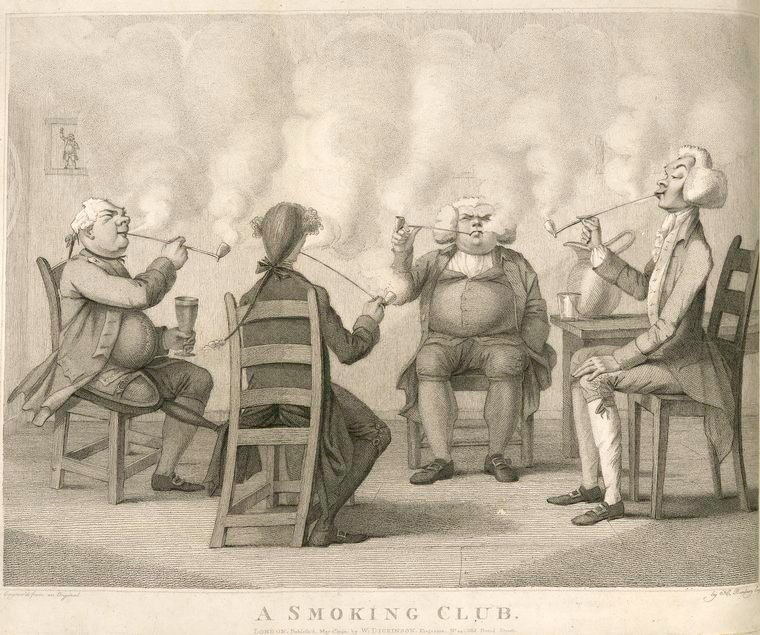
These gentlemen of bygone days knew how to double up on bad habits–sit and smoke.
“Sitting is the new smoking”— Dr. James Levine of the Mayo Clinic.
The writer’s job is to plunk our butts in chairs and produce words day in, day out. As a result, posture suffers, eyes blur, brains fog, carpals cramp, and rear ends keep getting wider. In extreme cases, Butt-in-Chair Syndrome leads to the dreaded Dead Butt Syndrome (you can’t make this stuff up!).
Here’s a countdown of five easy tips to counteract the occupational hazards of our profession:
Breathe
Sitting hunched over a computer leads to shallow breathing. The lungs need to fully expand to allow oxygen to fill the alveoli (little air sacs) and move into the bloodstream. The shallower the breathing, the less oxygen flows through the blood to the brain. The less oxygen, the harder for the brain to solve problems in stories.
According to yoga practitioners, deep exhalation is even more vital than inhalation, because exhalation flushes carbon dioxide out of the body.
If you don’t exhale fully, it’s like sticking a banana in the tailpipe of a car. Fresh air can’t get in, gases build up, and pretty soon the engine stalls and quits.
New ideas, brilliant plot twists, and compelling characters require a fresh intake of oxygen and a full expulsion of carbon dioxide.
Effective breathing is easy:
Sit straight with your butt tucked against the chair back. Lift your chest, arch your spine and pull your shoulder blades together, then allow shoulders to drop. Contract abdominal muscles to press your belly button toward your spine. Place a hand on your belly and inhale for a slow ten-count. Feel your abdomen expand as you draw air in. Hold for a slow ten-count. Then exhale slowly until you completely empty the lungs. Repeat several times an hour. You may feel tingling in the scalp.
Posture
Your mom always told you to sit up straight. Turns out she was right. According to I.A. Kapandji, MD: “For every inch of Forward Head Posture, it can increase the weight of the head on the spine by an additional 10 pounds.” In other words, if a normal 12 pound head leans three inches closer to the computer screen, it now feels more like 42 pounds. Yikes!
Over time, that additional pressure can lead to neck and spine problems that may become permanent.
It’s always better to prevent problems than try to reverse them.
To counteract the tendency to slump forward, sit with your rear end tucked firmly against the chair back. Lift your chest, arch your spine and pull your shoulder blades together.
Hmmm, isn’t this the same position for deep breathing? You can take care of two exercises at once—talk about efficient. Your mom would be proud.
Hand and wrist stretches
Caution: Stretching should NEVER be painful; if you feel discomfort, STOP!
Many writers suffer from numbness, tingling, and pain in wrists and hands from carpal tunnel syndrome which occurs when the median nerve to the hand is compressed in the wrist. Treatment options range from NSAIDs (hard on the stomach, liver, and kidneys) to splints/braces (uncomfortable and awkward to type while wearing) to steroid injections (ouch!) to surgery (been there, done that, not fun).
Simple stretches can help alleviate symptoms. Extend your arm in front of you, palm up. Bending your wrist, use your other hand to gently pull the fingers of your extended hand toward you until you feel a mild to moderate stretch in your wrist. Hold for 15-30 seconds. Repeat with the opposite hand.
Do you have 20/20/20 vision? No, that’s not a typo, but rather an exercise suggested by eye doctors to counteract eyestrain and blurry vision from too much screen time.
Every 20 minutes, look away from your screen to an object at least 20 feet away and focus on it for at least 20 seconds.
When you take your dog for a walk, she knows what she’s supposed to do. The writer’s brain can be trained and reinforced with praise the same way you train your pooch. As you move muscles and increase blood flow, your brain expels waste.
I confess during walks I’ve left many hot, steaming piles along the pathway. The best part is, unlike the dog, I don’t need a baggie to pick them up!
Once waste thoughts are cleared out, there’s room for new ideas and solutions to bubble up from the subconscious (Check out Jim Bell’s classic post about “the boys in the basement”).
Start training your brain with a small problem: let’s say you’re seeking a particular word that’s eluding you, despite searching the thesaurus. Go for a short walk and let the brain relax. After a few minutes of exercise and fresh air, the elusive word often pops up from the subconscious.
Give yourself a pat on the head and praise, “Good brain!”
A Milk Bone is optional, your choice.
Pretty soon, the subconscious learns that when you take a walk, it’s expected to perform, just like Fifi. While it sniffs the bushes and chases a squirrel, it’s also learning to deliver fresh ideas and solutions. The more you positively reinforce the subconscious for its results, the better and more frequently it comes up with solutions.
Walking works for me 100% of the time because my brain is conditioned. If I’m stumped about what a character should do next, or if the plot gets lost down a rabbit hole, I take a spin around the neighborhood. Before long, the uncertain character now knows her next move; or the rabbit hole has led to an unexpected escape route. I can’t wait to rush back to the keyboard eager to implement the solutions my subconscious offered up.
Wishing you good health and good writing in the New Year!
TKZers, do you have a favorite exercise that helps your writing?
Debbie Burke is often found aimlessly wandering the streets, claiming she’s at work. Her thriller Instrument of the Devil is on sale at Amazon for 99 cents during January.
I love it when a reader tells me one of my books gave them a good scare. Oddly enough, despite having written many dark suspense and gothic novels and stories, I’ve rarely actually set out to frighten readers. The scares in my stories are incidental to their unfolding.
Though, now that I think about it, there was one time I tried my hand at a truly creepy passage, but my editor shot it down. In my first novel, Isabella Moon, I thought it would be very cool for the villain to roll the decapitated head of my heroine’s erstwhile love interest into the kitchen to scare the hell out of her. The image seemed dramatic and seriously creepy to me, but my editor said it went too far. And I knew he was right. So I took it out. (Also, take note. DON’T kill off the love interest unless you’re writing a tragic love story, or you reveal that the love interest was a bad, bad person, and probably deserved to die. It’s almost, but not quite, as bad as killing a fictional dog or cat or rabbit or bird or mouse or even a particularly memorable flea. Kill all the humans you like, but leave the critters alone unless your story’s about the life of a very lovable dog that dies peacefully in its sleep.)
You don’t have to be writing a horror or suspense story to make good use of fear. Fear is a remarkable motivator in both life and fiction. I’m convinced that I write crime stories because I’m the most paranoid person I know.
When we write about things that frighten us, chances are there will be lots of readers who share our fears. We can exploit (terrible word, but I mean it in the nicest way) those fears and redeem ourselves through characters that may suffer for a while, but journey to overcome their fears or terrifying situations.
As humans we all have fears. They don’t have to be big, bloody fears, or deeply felt emotional fears to propel or inspire a story. They can be as small as a spider or as microscopic as damaged chromosomes. Resonance is the important thing.
Here’s a list of fears that immediately spark stories of all sorts for me:
Fear of death.
Fear of being submerged in water.
Fear of my embarrassing secrets being revealed in public.
Fear of losing a child.
Fear of being blackmailed.
Fear of being taken advantage of.
Fear of success.
Fear of being a failure.
Fear of a bug crawling in one’s ear or nose.
Fear of being watched in a lighted house from the darkness outside.
Fear of being pulled over by a fake cop on a lonesome road.
Fear of being mistaken for a criminal.
Fear of home invasion.
Fear of the apocalypse.
Fear of snakes in the house.
Fear of roaming packs of dogs.
Fear of being watched through a computer’s camera.
Fear of being kidnapped.
Fear of a child being hurt or being killed by one’s carelessness.
Fear of being judged and found wanting.
Fear of being too happy, because it can’t last.
Fear of one’s eye(s) being gouged out.
Fear of the supernatural.
Fear of random violence.
Fear of cancer.
Fear of loving too much.
Fear of poverty.
Fear of seeing open, bleeding wounds.
Fear of corpses.
Fear of being wrong.
Fear of betrayal.
Fear of snarky groups of teenage girls.
Fear of being vulnerable.
Fear of losing a lover.
Fear of losing a friendship.
As you can see from the list, many of these fears are close to being universal for humans. Readers always want to discover things in stories that they can identify with. It’s all about the resonance, and not so much about the shock value.

 As is my usual practice, I spent a few days this past December going over my writing goals and practices, and making plans for the new year. And once again I found myself appreciating the discipline of the writing break.