First Page Critique: Tenor Trouble

Today’s first page critique is entitled Tenor Trouble, and raises many of the issues we’ve addressed here at the TKZ such as the appropriate entry scene for a novel, the use of description/backstory, and clarity in POV. Kudos to our brave author for submitting this page. My comments follow.

Tenor Trouble

“Oh no, my dear. No. You simply should not even think about auditioning for this role.”

Melissa stared at her teacher, all joy flooding from her. “I shouldn’t?”

“No, no.”

Helena Montague tapped her lacquered fingernails on the shiny surface of the vocal score for Othello, which had arrived from Amazon that morning.

Melissa had been delighted that she had caught the postman before she had to leave the flat for her ten-thirty seminar on Media Adaptations of Dickens, because she went straight from work to get to Glasgow in time for her singing lesson. It was possible, of course – even probable – that the Grande dame of British opera already had the score somewhere on the shelves that lined the music room in her elegant West End townhouse, but some instinct had made Melissa hold back on mentioning her plans until she had her own copy in her own hands.

It made it real, somehow. Melissa had been so keen to get her score that she hadn’t waited for the bulk order for the company to come through from Harmony Music, but had summoned one overnight from Amazon as soon as the choice of show was officially confirmed. Not that there had ever been a great deal of doubt about whether Agnes Farquhar’s choice of Verdi’s Otellofor Doric Opera’s next production would be voted through by the Committee.

And when she had ripped off the cardboard packaging in her kitchen that morning, and gazed reverentially at the glossy cover – identical to last year’s score, with the exception of the name of the show, framed in red – she marveled at how lightweight and relatively slender the book was. It was astonishing to think that this insubstantial volume held within it the whole of such a great work.

Now she looked at the same score on the lid of the baby grand piano, tingling with dismay. “Um – why?”

My Comments

Overall Feedback

First off, I thought the first three lines of dialogue worked really well at capturing my attention and interest. Unfortunately, after that, there is far too much narrative about Melissa’s purchase of the score for Othello and her traveling to her singing lesson, which stalls the action and drains the first page of the initial dramatic tension established.

The key to this first page is, I think, establishing emotional resonance. We want to feel (and care about) Melissa’s anticipation about auditioning as well as her dismay when her teacher immediately dismisses the prospect. To do this, the author could easily reduce the various paragraphs to one or two sentences. For example, something like “Melissa clutched the glossy score to Othello that she’d eagerly had shipped overnight and stared at Helena Montague, once the Grande Dame of British opera, in dismay.” Then the scene could immediately move to providing us with more action to give the reader a tantalizing glimpse of the novel to come.

I’m assuming the novel isn’t just about Melissa’s dashed hopes so I’d like to see some kind of foreshadowing of the drama (or mystery) to come. If this is a murder mystery, the reader should start to feel a sense of anticipation that a crime is about to occur.

More Specific Comments

Dialogue

I thought the dialogue was effective – from the initial first line I already had a good sense of Helena’s arrogance as well as Melissa’s insecurity. The teacher-student relationship was obvious. I think more dialogue rather than narrative would have strengthened this first page. That being said, we also need more action in order to become committed to following (and caring about) Melissa as a character. The dialogue so far makes her seem insecure and submissive (although that is possibly understandable when faced with the Grande Dame!).

POV

I confess I got a little confused at the start when the POV seemed to shift from Melissa to Helena Montague tapping her lacquered fingers (an image I liked BTW) on the vocal score that had arrived from Amazon that morning. It made me think (incorrectly) that it was Helena who ordered it. I think this page would work better if the author stuck close to Melissa’s POV and we knew quite clearly that we were observing Helena through her eyes.

Extraneous Information

As I already noted in my overall comments, there is far too much background detail in this first page that weighs down the scene. Do we really need to know that Melissa has a ten-thirty seminar on Media Adaptations of Dickens? Likewise, do we need details such as it was Agnes Farquhar’s choice of Verdi’s Otello for Doric Opera’s next production or that a committee voted on it? Probably not. Even though Melissa’s delight and reverence for the score packs some emotional punch, this could be portrayed more succinctly. We don’t need all the details regarding her ordering it on Amazon, intercepting the postman, or how she felt opening the package.

A first page is the reader’s initial entry point to the story and so every line, every word counts. My advice to our brave submitter would be to get straight to the heart of the matter and the initial incident which (I assume) sets up the conflict for the rest of the novel.

First Scene

One question I would ask our submitter is whether he or she thinks this is the best place to start the novel – could this confrontation occur perhaps later in the first chapter or even in chapter 2? Since I’m not sure where the story is heading, I can’t answer this myself but I do wonder if this chapter contains sufficient dramatic weight to start a novel. Although Melissa’s disappointment is evident, we probably need more intrigue/drama to become fully invested in her as a character. Sometimes it helps for a writer to take a step back and re-evaluate the best place to start the story so that it grabs the reader’s attention and doesn’t let go. Maybe (and I don’t have any idea about the actual plot for this book so I’m just throwing it out there) this novel starts with the discovery of Helena’s body and then moves to this scene as Melissa grapples with her mixed feelings over her singing teacher’s demise…

All in all though, well done to our brave submitter.

So TKZers what feedback would you provide or add?


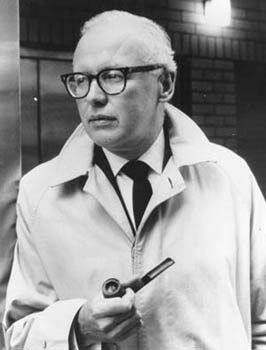
Authors I Have Learned From: John D. MacDonald

by James Scott Bell
@jamesscottbell

On July 14 I’ll be leading a panel at ThrillerFest on literary influences. The guests are David Morrell, Lisa Gardner, Ted Bell, Peter Blauner, Robert Gleason and W. Michael Gear. Still time to register for TFest. Hope to see some of you there.

That subject got me thinking about the authors who have influenced me, so I thought from time to time I’d write about them, and some of the lessons learned.

I begin with John D. MacDonald. For those of you unfamiliar with his work, here’s a clip from The Red Hot Typewriter by Hugh Merrill:

From the 1950s through the 1980s, John Dann McDonald was one of the most popular and prolific writers in America. He was a crime writer who managed to break free of the genre and finally get serious consideration from critics. Seventy of his novels and more than 500 of his short stories were published in his lifetime. When he died in 1986, more than seventy million of his books had been sold.

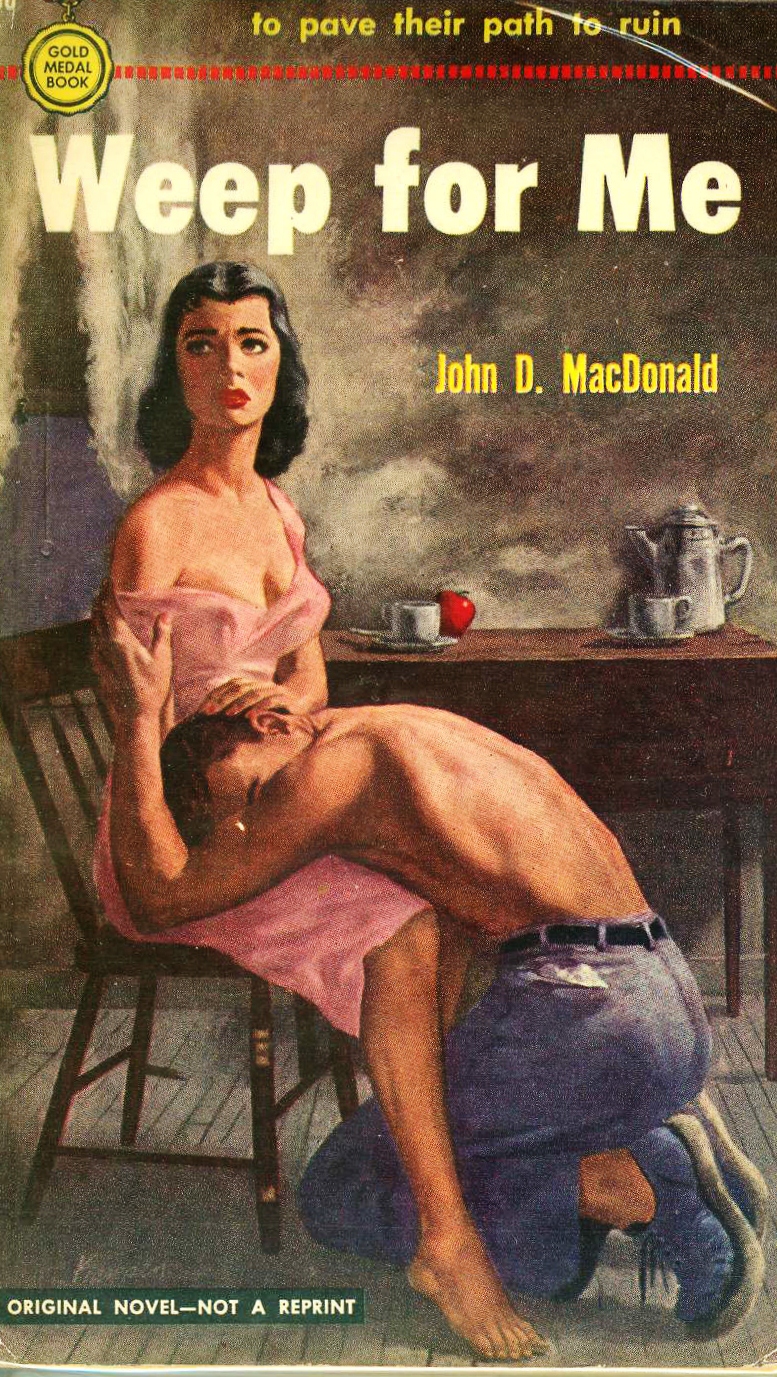
I first became seriously interested MacDonald when I read that he was one of Dean Koontz’s favorite writers. I’d read a couple of the Travis McGee books, for which MacDonald is most famous. But it was when I picked up some of his 1950s paperback originals that I really got into him. I went on a collecting binge for several years and now have a full collection of said paperbacks, including the one hardest to get, Weep For Me (1951). MacDonald refused to let it be reprinted. He was embarrassed by it, calling it a lousy imitation of James M. Cain. (I went to her in that shadowy place under the concrete arch. The early traffic slammed across the bridge, tearing the air. I took what I had won, the way any animal does.) It’s better than that (the folks at Random House have decided to give it life again) but was still hewing to the minimalist style popularized by Cain, Hammett, and Spillane—who were all beholden to Hemingway.

In those early years MacDonald wrote science fiction, hard-boiled detective, crime, contemporary adult, and even a multi-protagonist novel (The Damned) centered around a single event, influenced no doubt by Thornton Wilder’s The Bridge of San Luis Rey.

One theme he returned to was the existential angst of the 50s man. His 1953 novel, Cancel All Our Vows, is superior to Sloan Wilson’s more famous The Man in the Gray Flannel Suit (1955). It’s the story of one Fletcher Wyant, age 36, a middle manager at a big company. The following passage is quintessential MacDonald:

And, as he was looking, it happened to him again. It was something that had started with the first warm days of spring. All colors seemed suddenly brighter, and with his heightened perception, there came also a deep, almost frightening sadness. It was a sadness that made him conscious of the slow beat of his heart, of the roar of blood in his ears. And it was a sadness that made him search for identity, made him try to re-establish himself in his frame of reference in time and space. Fletcher Wyant. He of the blonde wife and the kids and the house and the good job. It was like an incantation, or the saying of beads. But the sadness seemed to come from a feeling of being lost. Of having lost out, somehow. He could not translate it into the triteness of saying that his existence was without satisfaction. He was engrossed in his work and loved it. He could not visualize any existence without Jane and the kids. Yet, during these moments that seemed to be coming more frequently these last few weeks, he had the dull feeling that somehow time was eluding him, that there was not enough of life packed into the time he had.

When MacDonald finally settled on writing mostly crime fiction, he produced some true classics, like The End of the Night, which pre-dated Truman Capote’s In Cold Blood, and The Executioners, the basis of the movie Cape Fear. (Note: The 1962 Gregory Peck-Robert Mitchum version is better than the 1991 Robert De Niro-Nick Nolte remake directed by Martin Scorsese, though it was a nice gesture to give both Peck and Mitchum minor roles in that one.)

There’s a great story around the writing of The Executioners. MacDonald regularly met with a group of writers in Florida, one of whom was MacKinlay Kantor. Kantor, who had won a Pulitzer Prize for fiction, used to needle MacDonald about all the “paperback trash” he wrote. One day he asked John, “When are you going to write a real book?”

MacDonald was ticked. He said he could write a book in thirty days that would be serialized in a magazine, become a book club selection, and be turned into a movie. Kantor laughed. MacDonald bet him fifty bucks. And, of course, won.

The first lesson I picked up from a wide reading of MacDonald is what he termed “unobtrusive poetry” in the style. That’s not an easy thing to accomplish. You don’t want a style that calls so much attention to itself that’s all the reader is thinking about. On the other hand, it’s not stripped-down minimalism of the Hemingway-Cain school.

MacDonald found the right place. His books are filled with passages that capture a character or setting with just a few incandescent lines. Here’s an example from one of the Travis McGee books, Darker Than Amber:

She sat up slowly, looked in turn at each of us, and her dark eyes were like twin entrances to two deep caves. Nothing lived in those caves. Maybe something had, once upon a time. There were piles of picked bones back in there, some scribbling on the walls, and some gray ash where the fires had been.

I’ve never forgotten that image. Indeed, I believe MacDonald could have been one of our best mainstream writers, a Book-of-the-Month Club darling like Norman Mailer or John O’Hara. He could have written “big” books that weren’t disasters. But his paperbacks paid the bills, and that’s what he kept producing.

Which brings me to another aspect of his career that inspired me—his work ethic. MacDonald came out of corporate America and approached his writing like a job. He wrote each day from morning till noon, had lunch, went back to work and knocked off at five for a martini and dinner. He took Sundays off.

MacDonald also left behind a legacy of short stories. Two collections of his crime and mystery stories are The Good Old Stuff and More Good Old Stuff. But I think I prefer his more literary collection, End of the Tiger. One of the stories, “The Bear Trap,” inspired me to try my own hand at this type of tale. So in honor of JDM, I’m making my story “Golden” free this week. Enjoy.

John D. MacDonald was once asked how he’d like his epitaph to read. His answer: “He hung around quite a while, entertained the folk, and was stopped quick and clean when the right time came.”

MacDonald’s time came much too soon. He died at age 70 from complications arising out of heart surgery. He left his wife an estate worth $5 million (in 1986 dollars) and left the rest of us some really good stuff. Not a bad way for a writer to go after all.

Pixar Storytelling – 20 Points Writers Can Learn From Animated Stories

JordanDane
@JordanDane

I ran across this great video posted on Youtube that features the 20-pt advice of Emma Coats, a master storyboard artist with Pixar. The narrator of this video is writing coach Mike Consol. It runs through tips on storytelling. Whether you are a novice writer or a seasoned pro, you can learn a lot from these amazing gems.

For your convenience, I posted Pixar’s 20 points in summary and my paraphrasing, but it’s worth it to watch the video for more. Jot down the tips that speak to you and try some if you haven’t.

1.) Create characters that people admire for more than their successes.

2.) Write what is interesting for your readers, not just you as a writer.

3.) Create a character story arc using these basic lines:

Once upon a time there was _____
Every day _____
One day _____
Because of that _____
Until finally _____

4.) Simplification & focus is important. Simplifying the flow to the essence of the story is freedom for the writer. (This is like the ELLE method of sharp fast-paced writing used in the scenes of Law & Order TV series – Enter Late, Leave Early.)

5.) What is your character’s comfort zone, then throw them a major curve ball. Challenge them and give them a twist of fate.

6.) Create an ending BEFORE you write the middle. Endings are tough. Know them upfront.

7.) Finish your story by letting go of it. Nothing is perfect. Move on. You can do better the next time.

8.) Deconstruct a story that you like. What do you like best about it? Break it down. Recognize the elements.

9.) Put your story on paper and not just keep it in your head.

10.) Discount the first few plot/story ideas that come to you. Get the obvious stuff out of the way and clear your mind for new story ideas that will surprise you.

11.) Give your characters opinions. Passive characters are boring.

12.) Ask yourself – why must I tell THIS story? This will be the heart of your story and the essence of storytelling.

13.) Ask yourself – If I were my character, how would I feel? Emotional honesty brings authenticity and credibility to your writing. If the story puts the character in over-the-top circumstances, the emotional honesty can help the reader relate to the character and draw them in.

14.) What are the stakes? Give your readers a reason to root for your character. Stack the odds against your character and make them worthy of their starring role.

15.) No work is ever wasted. If it’s not working, let it go and move on. The idea or writing might be used at another time when it’s more suitable.

16.) Know the difference between doing your best and fussing.

17.) A coincidence that gets your character INTO trouble is a beautiful thing, but a coincidence that gets your character OUT OF trouble is cheating. Don’t cheat.

18.) Take the building blocks of a movie or story that you do NOT like and rearrange them into a story that is better.

19.) A writer should identify with a situation or a character. Figure out what would make YOU act that way to make it read as authentic.

20.) What is the essence of your story and then figure out what is the most economical way to tell that story.

FOR DISCUSSION:
1.) What tips did you find most helpful?
2.) Are there tips listed that you are eager to try?

Stories Are Always Better When Something Happens

By John Gilstrap

Mr. or Ms. Anonymous has submitted a page for us to critique.  As always, the italics are mine, for the sake of clarity.  First the submission, and then I’ll see you on the flip.

Title:  Octobers Fire

The Dodge pulled up to the edge of the cliff. The man cut the engine, then the headlights. Stepping out of the car, he spent a few moments letting his eyes adjust, listening to the ticking of the hot engine block as it cooled. It was deep in the night, the hour when everyone and everything is slumbering, and the stillness was palpable. Even the crickets were asleep.

This hour was the sole domain of insomniacs.

The sliver of a crescent moon inched towards its zenith. To the west, lights from the boxy tract homes of San Amaro Hills spilled into the orange glow of the coastal cities, and to the south, a few twinkling lights peeked from the lush foliage protecting the old growth mansions of Rancho Alto. To the east, he gazed into the blackness of Fairy Glen. Its undulating hills were carpeted in shaggy chaparral, just a shade darker than the black velvet sky, freckled with stars, that hung above it. The perfect hunting grounds.

As the man’s eyes adapted, he could make out the depth of the quarry below him, the scarred surface of the granite torn away by machines and men. He pulled a half smoked cigar from the case in his pants pocket, stuck it in his mouth, but then decided against lighting it. He would savor it when the job was done.

He saw headlights approaching, bouncing and jarring up the hill.

He’d had a plan–make small talk, act jovial, share a few beers–but now found his patience was short. The thought of the whole charade seemed more distasteful than the job itself. The Rohypnol in his pocket could go to good use elsewhere, he wasn’t worried about that. He pictured a new, spectacular kind of death.

In his experience, investigations were clumsy. Police grasped at the first assumption and held on tight, like a dog with a bone. Nobody would miss this poor kid enough to investigate his death fully. It probably wouldn’t even make the local news.

He looked around his feet for the perfect rock, not too big, not too small. He remembered his boyhood in Bogota, pitching for his street gang’s stickball team. As the second car pulled up to his, he couldn’t help but smile. He still had a good arm.

=

It’s Gilstrap again.  Let’s start with the positives.  I think the writing here is very strong.  I like the details of the ticking engine and the stillness of the night.  The imagery of looking out over the sleeping town of boxy tract homes worked for me.  Kudos on that.  I have some niggling suggestions for strengthening the prose, which I’ll present below, but overall, the prose stitches together nicely.

All that’s missing is a sense of story.  And that brings us to the not-so-positives.  In these 400 words, we meet an insomniac with no name who for reasons unknown is preparing to do harm to someone else with no name.  From this sample, I could be equally convinced that the story is about either a serial killer or a werewolf.  (We learn that the remote outdoors are the “perfect hunting grounds,” yet we are also told that the hunter knows that the bouncing headlights are delivering a “poor kid” who is targeted for a “new, spectacular kind of death.”  Those are ominous phrases that ultimately have no meaning for the reader.)

I wonder more and more whether writers who submit their first-page samples have ever bothered to read the feedback given to their predecessors.  The problems that haunt this piece have mostly been discussed here on TKZ many times before.

Give us a name.  It’s impossible for a reader to bond with a pronoun or nameless entity.  The man, the boy, the woman, etc. have no humanity without a name attached. We don’t need much.  No backstory, no physical description.  Just a name will do to bring a spark of life to a character we’re meeting for the first time.

Give us action.  Lovely description is, well, lovely, but it’s not a story.  In this sample, I believe I would open with the approaching headlights.  Think of that as the framework to support the why of the story.  Consider:

Zachary Childress caressed the bottle of Rohypnol in his pocket as he watched the headlights approaching through the blackness.  They bounced and jarred up the rough hill, but they were still too far away for their engine noise to pierce the silence of the night.  Just a few feet away, the engine of his Dodge pickup ticked as it cooled.

Maybe that’s not where your story is going, but the point is that in just a few words, we know that a guy with an old-fashioned name means to make use of a date rape drug on the occupant of the approaching vehicle.  We also know that Zachary has only recently arrived.  From here, if you want to throw in a paragraph about the beauty of the night, that’s fine, but understand that that description stops the story.  (Your audience is not reading to find out what the evening looks like.  They’re reading to find out what he has in mind for his victim.)

Instead of transitioning to description, I would transition to his internal monologue.

Okay, enough of that.  Instead of rewriting your story, let me offer some suggestions on your story as it is.  The bold writing is mine.

Title:  Octobers Fire [Are we missing an apostrophe here?]

The Dodge [Give a little bit more here.  Pickup truck, maybe?] pulled up to the edge of the cliff. The man cut the engine, then the headlights. Stepping out of the car, he spent a few moments [This phrase makes me crazy.  A moment is an undefined unit of time, so a few is as long as only one.  If you mean seconds, say seconds.  Otherwise, one moment will do.] letting his eyes adjust, listening to the ticking of the hot engine block as it cooled. It was [Weak construction.  What was?  Better to say “This was the hour when everyone . . .]deep in the night, the hour when everyone and everything is slumbering, and the stillness was palpable. Even the crickets were asleep.

This hour was the sole [Really? The sole domain? What about firefighters and shift workers? Beware the unnecessary modifier.] domain of insomniacs.

The sliver of a crescent moon [As opposed to a sliver of a full moon? I’d pick either crescent or sliver, but not both] inched towards its zenith. To the west, lights from the boxy tract homes of San Amaro Hills spilled into the orange glow of the coastal cities, and to the south, a few twinkling lights peeked from the lush foliage protecting the old growth mansions of Rancho Alto. To the east, he gazed into the blackness of Fairy Glen [Be careful not to confuse your reader. Fairy Glen may well be a real place, but I’ve never heard of it. To me, this implies that Unicorn Alley may be around the corner, and that this is a fantasy/SF story.]. Its undulating hills [Do hills undulate, absent an earthquake?] were carpeted in shaggy chaparral, just a shade darker than the black velvet sky, freckled with stars, that hung above it. The perfect hunting grounds.[Except he’s not really hunting here, is he? Again, in context, “hunting” makes me think that he has not yet chosen his prey, but I think he in fact has.]

As the man’s eyes adapted, he could make out the depth of the quarry [Quarry is a bad word in this context. In the previous paragraph, you speak of hunting, and now you speak of quarry.  Beware of homonyms.] below him, the scarred surface of the granite torn away by machines and men. He pulled a half smoked cigar from the case in his pants pocket, stuck it in his mouth, but then decided against lighting it. He would savor it when the job was done.

He saw headlights approaching, bouncing and jarring up the hill.

He’d had a plan–make small talk, act jovial, share a few beers–but now found his patience was short. The thought of the whole charade seemed more distasteful than the job itself. [Does he in fact find the job distasteful?] The Rohypnol in his pocket could go to good use elsewhere, he wasn’t worried about that. He pictured a new, spectacular kind of death. [Presumably for his victim? What does he envision here?]

In his experience, investigations were clumsy. [This is a weird, jarring pivot.  Is he a cop?  If not, this seems like a non-sequitur.] Police grasped at the first assumption and held on tight, like a dog with a bone. Nobody would miss this poor kid enough to investigate his death fully. It probably wouldn’t even make the local news.

He looked around his feet for the perfect rock, [I thought it was dark. How does he see?  Is the rock his murder weapon?] not too big, not too small. He remembered his boyhood in Bogota, pitching for his street gang’s stickball team. As the second car pulled up to his, he couldn’t help but smile. He still had a good arm. [When I first read this, I presumed that he had somehow injured his other arm. Now, I think you mean a good pitching arm.]

First Page Critique: Opening
With A Big Bang…In Theory

By PJ Parrish

Get ready, because we’ve got a lot of action in today’s First Page submission. Explosions! Body parts! Fiery cars!  Whew…

I’ll be back in a…uh, a flash and we’ll talk about this.

Ice Hammer: Invincible

A blinding white light exploded across his senses. Light so bright it seemed like it had physical texture, burning white trenches across the inside of his eyeballs. A wall of sound struck a second later, with the force of a hammer blow from a giant blacksmith’s forge. It knocked Brad Stone and the other men in the room off their feet. Shards of window glass sprayed their faces and hands like hundreds of flying razor blades.

He struggled back to the window, carefully raised his head to look outside and stared down at the mess his men had created on the street below. Vehicles smoldered in front of the high-rise hotel. Arms, legs, heads, and torsos lay scattered across the pavement amidst pieces of vehicles and weapons.

Flames licked up from the underside of the overturned Suburban, its glossy black paint shimmered in the fiery reflection.

A hand appeared from inside the vehicle. A person, struggling their way out. A head and shoulders raised from the open window. The person, a woman, pushed herself up until she was half out of the vehicle. What looked like tears of blood streamed across her cheeks.

She pushed her hair out of her eyes and looked up in Brad’s direction.

Youngmi.

His wife.

His heart trembled in his chest, the sight filling him with horror.

He had seen his wife’s dead body only a few days after the war had started, two years earlier. He’d been certain it was her. She was in her new Mercedes SUV with the custom license plates. She was wearing her favorite t-shirt. And she was definitely dead. Her face had been blown apart, opened up and peeled back, like a rose blossom from the gardens of hell.

This version of Youngmi stared at him, shock and recognition mingled with terror. The flames reached the fuel tank and erupted in a roaring blaze. The fire stretched its greedy fingers around the edge of the armored SUV and caught her clothes.

She did not scream, not at first. Her mouth hung agape as she realized her own husband had killed her.

The flames erupted with new energy, enveloping her body. Her clothing lit like a human torch. Her face contorted in agony and the scream finally came.

“BRAAAAAAD!”

Her voice echoed his name across the city, bouncing off the walls of the surrounding buildings.

___________________________

Dontcha just hate slow starts?  I’m kidding, of course. We’re always harping here at TKZ about the need to get out of the gate fast.  Now, if you’re a regular here, you know not to take that literally.  Getting off to a fast start in a thriller is a good idea, and I suspect we’re in thriller territory here. But that doesn’t mean you literally have to start with a car chase or flying body parts. (See Jame’s Sunday post about omniscient point of view openings for one reference). You can create tension with a slower approach.

That, as you can see, is not the case here. Things literally start with a bang. Our writer has dropped us smack into the middle of a crisis — an explosion that propelled the protag (I think) across the room and then he staggers to the window to see all hell breaking loose down on the street. What’s not to like?

Nothing, in my humble opinion. I think this is a good door by which to enter the story.  James’s axiom of “act first, explain later” is in full bore here.  And the part about the wife — supposedly dead but now appearing in the burning car — is intriguing, to say the least.

So, good set-up, writer!  But there are some problems in the execution here. We have some issues with lack of clarity: Where are we? What exactly is going on here? We have some overwriting going on. Here’s a good guideline to keep in mind: The more intense the action, the less “writerly” your writing should be. And at times, the word choices are jarringly tone-deaf, out of tune with the tone of the scene itself. More on that small but important detail in a second. Let me go through this with a fine-tooth pencil:

A blinding white light exploded across his senses. Not a bad opening line. Light so bright it seemed like it had physical texture, burning white trenches across the inside of his eyeballs. Not sure I get this image. Maybe burning the inside of the lids? A wall of sound struck a second later, with the force of a hammer blow from a giant blacksmith’s forge. I’d end after hammer. It knocked Brad Stone and the other men I’d lose them for now. Focus on your main guy; the spear-carriers clutter things up esp in the first graph! .in the room off their feet. Shards of window glass sprayed their faces and hands like hundreds of flying razor blades. Way too many metaphors in this opening graph. Turn this into action: The window shattered and the shards razored into his face.  

He struggled back to the window, carefully raised his head to look outside and stared down at the mess his men had created on the street below. This was a big hiccup for me. HIS MEN detonated a lethal bomb in a street? Is Brad a terrorist? Because we have no context — is this a foreign locale? Are we in wartime? — I am confused about Brad’s role here and am not liking the fact he’s the cause of the carnage. Vehicles smoldered in front of the high-rise hotel. Arms, legs, heads, and torsos lay scattered across the pavement amidst pieces of vehicles and weapons. You need to tell us how high up he is. I know, it’s a stupid detail but important because he is about to recognize his wife’s face. You say only that vehicles are on fire “in front of the high-rise hotel.” Is Brad in this hotel or it is across the street? 

What blew up? Where was the bomb? (I assume it was a bomb). The Suburban is overturned, but if the bomb was under it, it would have been blown to bits like the other vehicles you mention. (You don’t tell us it’s armored until way too late). And you miss chances to enhance the mood here — where’s the acrid black smoke, which might partially obscure his view? What does this smell like? Screams? People running or staggering away? Why are there weapons laying about on the street? Again, because there is not even a HINT of place or context, this doesn’t add up. 

Flames licked up from the underside of the overturned Suburban, use of “the” implies specificity. So it was the target? Otherwise, it is merely a Suburban. Also, these cars are common in the U.S., the Mideast and only a few other countries, so make sure you’re right on it. It’s also the car of choice of secret service. its glossy black paint shimmered in the fiery reflection. Now here is where I think you’ve gone off-key.  This is a hell scape. Brad would not be noticing “glossy” paint “shimmering.”  Watch your tone. 

A hand appeared from inside the vehicle. More likely, a hand appeared out of a shattered driver’s side window? A person, struggling their way out. A head and shoulders raised from the open window. The person, a woman, pushed herself up until she was half out of the vehicle. What looked like tears of blood streamed across her cheeks. This construction implies Brad is thinking this, but again, its tone is off. Her face is simply covered in blood. 

She pushed her hair out of her eyes She wiped the blood from her eyes and looked up in Brad’s direction.

I think you need a physical beat here before her name. One, the odd name is not easily digested as name on first glance. Two, GET US IN BRAD”S HEAD FIRST.

Brad froze. Brad’s heart stopped. Brad grabbed the edge of the broken window and stared down. Something, anything.

Youngmi. Put this in itals. It’s a direct thought with no attribution. Plus, the stress is nice.

His wife.

His heart trembled in his chest, Another example of off-key tone. This word choice is too soft, too tender for the action. the sight filling him with horror. Show me, don’t tell me. 

He had seen his wife’s dead body only a few days after the war had started, two years earlier. Problem with clarity here. We need a better transition. I didn’t get this the first time read it. Thinking I was dense, I tried it on two other people. They missed it too, asking me, “so she was already dead? Is she dead now?” When you’re doing a fake-out like this (nothing wrong with that!), you have to make it clear that’s what it is. Something needed here, like:

But it couldn’t be her. She had died two years ago. He had seen her body, seen her slumped behind the wheel of her new Mercedes SUV.  Seen her blood soaking the front of her favorite Bob Seger t-shirt. And when he had finally walked around to the window, he had seen her face — blown apart, opened and peeled back, like some grotesque flower.

He’d been certain it was her. She was in her new Mercedes SUV with the custom license plates. She was wearing her favorite t-shirt. And she was definitely dead. Her face had been blown apart, opened up and peeled back, like a rose blossom from the gardens of hell. This is you, the writer talking, not Brad thinking. Stay in his sensibility.

You’ve just been in a mini-flashback. You need a transition back: Now, he stared down at the woman in the Suburban. And she stared back at him. Or, the black smoke cleared and he stared down again at the woman in the Suburban.  

Another point: This is an armored SUV in some kind of war-zone place. Yet Brad doesn’t think, what the hell is she doing driving an armored car? 

This version of Youngmi stared at him, shock and recognition mingled with terror. Why would she look up to some random window in the high-rise? Makes no sense. She’s got other things to worry about. Also, the recognition thing has to be conveyed through Brad’s consciousness: 

What was it he saw in her face? Terror…but something more. Brad felt his gut clench. She was looking right at him. Jesus, did she recognize him? (You can do better, but you get the point).

The flames reached the fuel tank and erupted in a roaring blaze. The fire stretched its greedy fingers Get out of the way of your story! Too writerly. Stay in Brad’s senses. around the edge of the armored SUV THIS IS AN IMPORTANT DETAIL and this is much too late to toss it in. It implies war but you’ve given us nothing else to support that. and caught her clothes.

She did not scream, not at first. Her mouth hung open agape as she realized her own husband had killed her. You just shifted to her point of view. You must stay with Brad. You have to filter this revelation through him. Also, SHE’S NOT YET DEAD (at least this time), so the best she can think, “My husband is trying to kill me.”  But again, this doesn’t add up giving the scant info you’ve given us. This implies the Suburban was the bomb target. Was it? Now, because you belatedly mention it being armored, it could survive a bomb, but you must be clear on what is going on here. Maybe before the hand snaked out of the window, you can give Brad a thought about the mission of his team here?  

The flames erupted with new energy, enveloped her body. Her clothing lit like a human torch. Her face contorted in agony and the scream finally came.

“BRAAAAAAD!”

Her voice echoed his name across the city, bouncing off the walls of the surrounding buildings. There is chaos going on down in the street. Probably sirens by now and screaming. Nothing is going to echo here. 

In summary, we have a bang-up set-up here that needs some work. So what? All of our openings need work. So, dear writer, dig back in and you’ll be on the right track.

Give us a little bit more info about where we are and the context. Are we at war? Is this a terrorist hit by Brad and his men? What are they doing here? What is the mission — we need a hint at least. I really have a problem with a hero-protag being willing to sacrifice innocent lives on a crowded street like this, no matter who he thought was in the Suburban. Clean up the imagery and make this scene feel more visceral. Thanks for submitting and good luck.

First Page Critique: Opening
With a Big Bang…In Theory

By PJ Parrish

Get ready, because we’ve got a lot of action in today’s First Page submission. Explosions! Body parts! Fiery cars!  Whew…

I’ll be back in a…uh, a flash and we’ll talk about this.

Ice Hammer: Invincible

A blinding white light exploded across his senses. Light so bright it seemed like it had physical texture, burning white trenches across the inside of his eyeballs. A wall of sound struck a second later, with the force of a hammer blow from a giant blacksmith’s forge. It knocked Brad Stone and the other men in the room off their feet. Shards of window glass sprayed their faces and hands like hundreds of flying razor blades.

He struggled back to the window, carefully raised his head to look outside and stared down at the mess his men had created on the street below. Vehicles smoldered in front of the high-rise hotel. Arms, legs, heads, and torsos lay scattered across the pavement amidst pieces of vehicles and weapons.

Flames licked up from the underside of the overturned Suburban, its glossy black paint shimmered in the fiery reflection.

A hand appeared from inside the vehicle. A person, struggling their way out. A head and shoulders raised from the open window. The person, a woman, pushed herself up until she was half out of the vehicle. What looked like tears of blood streamed across her cheeks.

She pushed her hair out of her eyes and looked up in Brad’s direction.

Youngmi.

His wife.

His heart trembled in his chest, the sight filling him with horror.

He had seen his wife’s dead body only a few days after the war had started, two years earlier. He’d been certain it was her. She was in her new Mercedes SUV with the custom license plates. She was wearing her favorite t-shirt. And she was definitely dead. Her face had been blown apart, opened up and peeled back, like a rose blossom from the gardens of hell.

This version of Youngmi stared at him, shock and recognition mingled with terror. The flames reached the fuel tank and erupted in a roaring blaze. The fire stretched its greedy fingers around the edge of the armored SUV and caught her clothes.

She did not scream, not at first. Her mouth hung agape as she realized her own husband had killed her.

The flames erupted with new energy, enveloping her body. Her clothing lit like a human torch. Her face contorted in agony and the scream finally came.

“BRAAAAAAD!”

Her voice echoed his name across the city, bouncing off the walls of the surrounding buildings.

___________________________

Dontcha just hate slow starts?  I’m kidding, of course. We’re always harping here at TKZ about the need to get out of the gate fast.  Now, if you’re a regular here, you know not to take that literally.  Getting off to a fast start in a thriller is a good idea, and I suspect we’re in thriller territory here. But that doesn’t mean you literally have to start with a car chase or flying body parts. (See Jame’s Sunday post about omniscient point of view openings for one reference). You can create tension with a slower approach.

That, as you can see, is not the case here. Things literally start with a bang. Our writer has dropped us smack into the middle of a crisis — an explosion that propelled the protag (I think) across the room and then he staggers to the window to see all hell breaking loose down on the street. What’s not to like?

Nothing, in my humble opinion. I think this is a good door by which to enter the story.  James’s axiom of “act first, explain later” is in full bore here.  And the part about the wife — supposedly dead but now appearing in the burning car — is intriguing, to say the least.

So, good set-up, writer!  But there are some problems in the execution here. We have some issues with lack of clarity: Where are we? What exactly is going on here? We have some overwriting going on. Here’s a good guideline to keep in mind: The more intense the action, the less “writerly” your writing should be. And at times, the word choices are jarringly tone-deaf, out of tune with the tone of the scene itself. More on that small but important detail in a second. Let me go through this with a fine-tooth pencil:

A blinding white light exploded across his senses. Not a bad opening line. Light so bright it seemed like it had physical texture, burning white trenches across the inside of his eyeballs. Not sure I get this image. Maybe burning the inside of the lids? A wall of sound struck a second later, with the force of a hammer blow from a giant blacksmith’s forge. I’d end after hammer. It knocked Brad Stone and the other men I’d lose them for now. Focus on your main guy; the spear-carriers clutter things up esp in the first graph! .in the room off their feet. Shards of window glass sprayed their faces and hands like hundreds of flying razor blades. Way too many metaphors in this opening graph. Turn this into action: The window shattered and the shards razored into his face.  

He struggled back to the window, carefully raised his head to look outside and stared down at the mess his men had created on the street below. This was a big hiccup for me. HIS MEN detonated a lethal bomb in a street? Is Brad a terrorist? Because we have no context — is this a foreign locale? Are we in wartime? — I am confused about Brad’s role here and am not liking the fact he’s the cause of the carnage. Vehicles smoldered in front of the high-rise hotel. Arms, legs, heads, and torsos lay scattered across the pavement amidst pieces of vehicles and weapons. You need to tell us how high up he is. I know, it’s a stupid detail but important because he is about to recognize his wife’s face. You say only that vehicles are on fire “in front of the high-rise hotel.” Is Brad in this hotel or it is across the street? 

What blew up? Where was the bomb? (I assume it was a bomb). The Suburban is overturned, but if the bomb was under it, it would have been blown to bits like the other vehicles you mention. (You don’t tell us it’s armored until way too late). And you miss chances to enhance the mood here — where’s the acrid black smoke, which might partially obscure his view? What does this smell like? Screams? People running or staggering away? Why are there weapons laying about on the street? Again, because there is not even a HINT of place or context, this doesn’t add up. 

Flames licked up from the underside of the overturned Suburban, use of “the” implies specificity. So it was the target? Otherwise, it is merely a Suburban. Also, these cars are common in the U.S., the Mideast and only a few other countries, so make sure you’re right on it. It’s also the car of choice of secret service. its glossy black paint shimmered in the fiery reflection. Now here is where I think you’ve gone off-key.  This is a hell scape. Brad would not be noticing “glossy” paint “shimmering.”  Watch your tone. 

A hand appeared from inside the vehicle. More likely, a hand appeared out of a shattered driver’s side window? A person, struggling their way out. A head and shoulders raised from the open window. The person, a woman, pushed herself up until she was half out of the vehicle. What looked like tears of blood streamed across her cheeks. This construction implies Brad is thinking this, but again, its tone is off. Her face is simply covered in blood. 

She pushed her hair out of her eyes She wiped the blood from her eyes and looked up in Brad’s direction.

I think you need a physical beat here before her name. One, the odd name is not easily digested as name on first glance. Two, GET US IN BRAD”S HEAD FIRST.

Brad froze. Brad’s heart stopped. Brad grabbed the edge of the broken window and stared down. Something, anything.

Youngmi. Put this in itals. It’s a direct thought with no attribution. Plus, the stress is nice.

His wife.

His heart trembled in his chest, Another example of off-key tone. This word choice is too soft, too tender for the action. the sight filling him with horror. Show me, don’t tell me. 

He had seen his wife’s dead body only a few days after the war had started, two years earlier. Problem with clarity here. We need a better transition. I didn’t get this the first time read it. Thinking I was dense, I tried it on two other people. They missed it too, asking me, “so she was already dead? Is she dead now?” When you’re doing a fake-out like this (nothing wrong with that!), you have to make it clear that’s what it is. Something needed here, like:

But it couldn’t be her. She had died two years ago. He had seen her body, seen her slumped behind the wheel of her new Mercedes SUV.  Seen her blood soaking the front of her favorite Bob Seger t-shirt. And when he had finally walked around to the window, he had seen her face — blown apart, opened and peeled back, like some grotesque flower.

He’d been certain it was her. She was in her new Mercedes SUV with the custom license plates. She was wearing her favorite t-shirt. And she was definitely dead. Her face had been blown apart, opened up and peeled back, like a rose blossom from the gardens of hell. This is you, the writer talking, not Brad thinking. Stay in his sensibility.

You’ve just been in a mini-flashback. You need a transition back: Now, he stared down at the woman in the Suburban. And she stared back at him. Or, the black smoke cleared and he stared down again at the woman in the Suburban.  

Another point: This is an armored SUV in some kind of war-zone place. Yet Brad doesn’t think, what the hell is she doing driving an armored car? 

This version of Youngmi stared at him, shock and recognition mingled with terror. Why would she look up to some random window in the high-rise? Makes no sense. She’s got other things to worry about. Also, the recognition thing has to be conveyed through Brad’s consciousness: 

What was it he saw in her face? Terror…but something more. Brad felt his gut clench. She was looking right at him. Jesus, did she recognize him? (You can do better, but you get the point).

The flames reached the fuel tank and erupted in a roaring blaze. The fire stretched its greedy fingers Get out of the way of your story! Too writerly. Stay in Brad’s senses. around the edge of the armored SUV THIS IS AN IMPORTANT DETAIL and this is much too late to toss it in. It implies war but you’ve given us nothing else to support that. and caught her clothes.

She did not scream, not at first. Her mouth hung open agape as she realized her own husband had killed her. You just shifted to her point of view. You must stay with Brad. You have to filter this revelation through him. Also, SHE’S NOT YET DEAD (at least this time), so the best she can think, “My husband is trying to kill me.”  But again, this doesn’t add up giving the scant info you’ve given us. This implies the Suburban was the bomb target. Was it? Now, because you belatedly mention it being armored, it could survive a bomb, but you must be clear on what is going on here. Maybe before the hand snaked out of the window, you can give Brad a thought about the mission of his team here?  

The flames erupted with new energy, enveloped her body. Her clothing lit like a human torch. Her face contorted in agony and the scream finally came.

“BRAAAAAAD!”

Her voice echoed his name across the city, bouncing off the walls of the surrounding buildings. There is chaos going on down in the street. Probably sirens by now and screaming. Nothing is going to echo here. 

In summary, we have a bang-up set-up here that needs some work. So what? All of our openings need work. So, dear writer, dig back in and you’ll be on the right track.

Give us a little bit more info about where we are and the context. Are we at war? Is this a terrorist hit by Brad and his men? What are they doing here? What is the mission — we need a hint at least. I really have a problem with a hero-protag being willing to sacrifice innocent lives on a crowded street like this, no matter who he thought was in the Suburban. Clean up the imagery and make this scene feel more visceral. Thanks for submitting and good luck.

Let Me Tell You a Story [Video]

By Sue Coletta

In the video, I tell you a story. After you watch it, we’ll deconstruct how and why I told the story this way. I’m hoping this will help new writers who submit their first pages for critique. For the seasoned writers, please add tips that I’ve missed.

Pardon my lack of acting skills. LOL Catch ya on the flipside.

Did you notice all the things I didn’t say? Learning what not to write is just as important as learning what to put on the page.

The first line tells the audience “someone I buried thirty years ago visited” but I’m vague. The audience doesn’t need to know more than that yet. Tease the reader into finding out on their own.

Our characters experience a slow build of emotion. In the video, I breeze over sharing my emotions because it’s visual. With the written word, we need to describe what the character is feeling, thinking, internal body cues, what she smells, etc., to paint that same vivid picture in the reader’s mind. Which, in my opinion, is why books are more visceral than movies. The reader experiences the story right along with the characters.

Let’s tear apart the transcript to see the inner workings of the scene.

Please note: For some reason I told the story in present tense. Let’s blame the humidity. 🙂 In writing, however, we should remain in past tense, with a few exceptions that’ve been discussed on TKZ before. I corrected the tense in the transcript below.

Blue brackets show the structure, green shows Motivation-Reaction Units (MRUs). Notice the rhythm.

Ready? Here we go …

Someone I’d buried over thirty years ago visited me last night. [HOOK] Hooks the reader right away and plants story questions in their mind. A good opening line forces the reader to continue. It also hints at the story to come and defines the genre.

The next paragraph introduces the main character without bogging down the writing with backstory. At the same time, we’re giving the reader a reason to empathize with, or relate to, our hero.

I was sitting at my desk, reading my manuscript, reading the story through one last time, second-guessing every move I made from the opening scene to the end, when static from the TV drew my attention. <-- First hint of trouble. [GOAL] [MOTIVATION IS 2ND PART AND TWO LINES BELOW]

It was off. Yet, it popped, crackled, hummed. <-- We’ve begun to build suspense. I should add, in writing it’s best to substitute a generic word like “it” with the item we want the reader to visualize. [CONFLICT]

We’d just bought the television last December. <-- One line of backstory to show why this situation is unusual. Don’t tell me it’s goin’ already. <-- Inner dialogue helps the reader relate to our hero. [REACTION]

When silence enveloped the room, I shrugged it off as one of life’s mysteries and got back to work. <-- Adds to characterization and sets up the following inner dialogue, so the reader doesn’t get confused. [1ST HALF IS MOTIVATION, 2ND IS REACTION]

Gee, I really love the storyline, the way it ebbs and flows. But is that the right word? Is this the right reaction for the scene? I don’t know …

Pop. Crackle. Hum. <-- There’s the conflict again — the antagonist force isn’t going away. [DISASTER] [MOTIVATION]

My gaze shot to the flat-screen. That’s weird. It’s almost like it’s trying to turn itself on. That can’t be right … can it? <-- Reaction, emotions building. If written, I’d trigger the senses here. [REACTION]

As my jaw slacked, voices in the other room whirled me around. I was alone in the house. <-- Stakes. [MOTIVATION]

Maybe the breeze carried my neighbor’s conversation through the screens. Wouldn’t be the first time. <-- Reaction. Even though emotions are on the rise, our hero still tries to reason the strange happening away. [ABOVE IS ALL REACTION] [REACTION FOR MRU, TOO]

Once again, I focused on my manuscript. <-- Hero tries (and fails) to ignore the conflict. I guess that word works. Yeah, it’s pretty good. Plus, I’m running out of time. <-- Inner dialogue allows the reader inside the hero’s head.

I glimpsed the clock. One hour left to turn it in. <-- Micro-conflict.

I read on.

The voices from the sunroom grew louder and more intense. <-- Antagonist force grows stronger and more visible. Stakes rise. Suspense increases. [DILEMMA] [MOTIVATION]

What the heck’s goin’ on? <-- Reaction. If this was a written scene rather than a visual one, I’d add more emotion and inner turmoil here. [REACTION]

Unable to concentrate, I swiveled out of my desk chair. <-- Our hero is forced to act.

Slow. Cautious. I snuck through the kitchen to the French doors. <--Action, punctuated with sentence fragments to help build suspense. Crackling blurs the voices of talk radio. <-- The hero realizes what’s happening. This also sets up the reveal at the end of this scene. [LAST SENTENCE IS MOTIVATION]

My eyes widen in disbelief. With my head swiveling like a pinwheel on a stick, scoping out the room in all directions, I tiptoed toward the stereo. <-- The hero’s emotions have reached a crescendo. If written, add more visceral details. [DECISION] [REACTION] Sure enough, the switch clicked up one notch to AM. <-- The antagonist force is revealed, but we still don’t know why or what it wants. When we raise more story questions we force the reader to flip the page. [MOTIVATION]

Oh. My. God. She’s come back. <-- Sets up future scenes and, hopefully, makes the reader fear for our hero. [REACTION]

Now, could I have shared a better story? Absolutely. But the reason I chose to use this particular story is because everything I told you in the video is true. This happened to me last week.

Quick SEO tip: When including video in your post add [Video] to your title. The bracketed word tells bots to crawl the post. Google, Bing, Yahoo, etc. give video the highest priority. I’ll share more SEO tips with you soon or you can learn more here!

TKZ family, please share your favorite writing advice, writing quote, or something that resonated with you that will help new writers on their journey.


Read the opening scene of CLEAVED, and you’ll see the same storytelling structure in action.


Be Clear About WHO and WHERE in the Opening

by James Scott Bell
@jamesscottbell

Greetings, first-page-critique fans. We have another one for you today, with my comments following. Pick up your favorite blue pencil, but don’t do anything with it, as it might damage your screen. Here we go:

The two camouflaged motorcycles approached the intersection from the east in a bowl of dust, and the soldier in front raised his hand to signal a stop before skidding to a halt. The second biker pulled up next to him, and they carefully observed their surroundings before they cut the engines. They sat motionless for a few moments, and listened for any sounds from the dense vegetation and trees around them. The first rider pointed to the intersection and identified the four spots where the disturbances in the road indicated the presence of landmines. He took his binoculars from the bag strapped to his chest, and scanned the area before he zoomed in on the identified spots. The mines were strategically planted in the middle of the intersection, and he noticed a wire connecting the four mines, lightly covered with gravel. He knew they were booby-trapped and if one were triggered, all four would explode in a split second.

They felt the vibration before they heard the sound of the vehicle approaching at a very high speed. Charlie looked up from the map he was balancing on the handlebars of his bike. Keith lowered the binoculars and turned to Charlie with a frown.

“What are they doing on the road? We have not cleared it yet?” Keith said as he got off his bike and reached for his rifle strapped to his back. He turned his head sideways to identify the direction of the sound and approaching vehicle. They both looked up and saw the dust rising above the trees to the south of the intersection as the sound became louder. They realized the danger at the same time and as Charlie grabbed his rifle from his back, he shouted to Keith.

“Hit the deck! They are not going to stop!”

They scrambled in opposite directions to the side of the road, slid underneath foliage to take cover, and rolled over to face the intersection. The black Mercedes Benz entered the intersection at high speed and detonated the first landmine with the left front wheel. The explosion of the first mine hit the rear end of the car, and the chain of explosions propelled the car forward in pieces of junk and parts that flew in all directions. The second mine struck directly under the engine which became airborne and landed a few hundred yards away from the rest of the car. It all happened in super slow motion.

***

JSB: We’ve got the raw material for a good opening page here. I like a thriller that begins with a Mercedes blowing up. But like all raw material it has to be refined. The first problem is, not surprisingly, Point of View. (I say this, author, so you’ll know it’s quite common. Once you get a real handle on POV your fiction will be 80% better.)

You start us out in Omniscient POV. There’s nothing technically wrong with this if you later drop us into Third Person. This move used to be done all the time, where the opening chapter would take a wide-angle view of a setting before focusing on a character. The famous opening of Grace Metalious’s Peyton Place is like that:

Indian summer is like a woman. Ripe, hotly passionate, but fickle, she comes and goes as she pleases …

The town lay still in the Indian summer sun. On Elm Street, the main thoroughfare, nothing moved. The shopkeepers, who had rolled protective canvas awnings down over their front windows, took the lack of trade philosophically and retired to the back rooms of their stores where they alternately dozed, glanced at the Peyton Place Times and listened to the broadcast of a baseball game.

This goes on for several pages before Metalious gives us the protagonist, Allison McKenzie.

Today’s page, however, doesn’t use omniscience for a wide-angle view of the setting or the circumstances. Instead, the focus is on two riders, who are given names in the second paragraph. Thus, there is no reason for the omniscient beginning. It merely operates to keep us at a distance from the people involved.

Further muddying the waters is something that should never be done—simultaneous POV. Whenever you have a collective “they” feeling or thinking or hearing the same thing, we’re in more than one head and our attention is split. It also violates common sense about life. No two people ever feel or think or perceive in exactly the same way.

they carefully observed their surroundings

They felt the vibration

They both looked up and saw

They realized the danger at the same time

This dilutes the scene and robs it of emotional impact. So my main piece of advice is to re-write the whole thing from either Charlie’s or Keith’s POV. Have all the observations filtered through one of them. This is how readers relate to story. The first thing they want to know about a scene is WHO it belongs to.

Now, regarding the setting. I have no idea WHERE we are. There’s dense vegetation, but also an intersection. There’s camouflaged motorcycles and a black Mercedes. You use the terms soldier, rider, and biker interchangeably.

Where are we? What are the circumstances? War zone? Drug zone? South America? Africa? Soldiers? Mercs?

You can easily use dialogue and interior thoughts to give us essential information. When I advise act first, explain later I’m referring primarily to backstory. That can wait. What we need up front are a few drops of context, which can be woven in with the action.

Here is how David Morrell begins his international thriller, Extreme Denial:

Decker told the Italian immigration official that he had come on business.

“What type?”

“Corporate real estate.”

“The length of your visit?”

“Two weeks.”

The official stamped Decker’s passport.

Grazie,” Decker said.

He carried his suitcase from Leonardo da Vinci Airport, and although it would have been simple to make arrangements for someone to meet him, he preferred to travel the twenty-six kilometers into Rome by bus.

Go thou and do likewise.

Now a technical question: Can you see landmines? I thought the point of landmines is that they’re hidden and finding them requires some kind of metal detector or radar or robot. If I’m wrong I’m still raising a question many readers will have, so you should clarify it, once again with a bit of dialogue or interior thought. Because this book seems intended for military-thriller fans, every detail of an operation has to be accurate and precise or you will surely hear about it from readers and reviewers.

Style note: When using a dialogue attribution, it goes after the first complete sentence or clause.

NO: “What are they doing on the road? We have not cleared it yet,” Keith said.

YES: “What are they doing on the road?” Keith said. “We have not cleared it yet.”

Or the attribution can be placed before the dialogue:

Keith said, “What are they doing on the road? We have not cleared it yet.”

You can also use an action beat before the dialogue:

Keith lowered the binoculars. “What are they doing on the road? We have not cleared it yet.”

One last note on dialogue (because it’s the fastest way to improve any manuscript). Make sure it’s true to the characters. Would Keith really speak without contractions? Probably not. Thus:

“What’re they doing on the road? We haven’t cleared it yet.”

Finally, as we’ve noted many times here at TKZ, white space is a reader’s friend. Your paragraphs are too “blocky.” Don’t be afraid to break them up into two or three.

So, author, I do want to know who was in that Mercedes, who Charlie and Keith are, and where they are operating. I also want to know whose scene this is. Clarify those things, and I will likely turn the page!

The floor is now open for further critique.

Communicating from Beyond the Grave

Photo courtesy sommi, unsplash.com

I recently had what I’ll call an “episode” which caused me to pause and remind myself of my mortality. The circumstances aren’t important here other than to note that my immediate thought at the time was, “I don’t want to go out like that!” I did begin thinking, however, about what would occur if I suddenly found myself standing before the ultimate throne of judgment and the potential mess I would leave behind, and I’m not just talking about the collection of music and reading material I have. I’m referring to things left unpublished and unsaid, which would include both words most tender and the slings and arrows which the French refer to as l’esprit d’escalier.

There are also footprints through cyberspace to consider. Most of us have anywhere from one to a couple of hundred passwords for various things from email accounts and insurance policies to online collections of pornog…er, erotica and everything in between. I’ve seen those adorable little notebooks with the legend “Password Keeper” on the covers in gold and bold letters, created for the purpose of letting the owner mark down each and every one of their online passwords but which make it easy for whoever picks their pocket or grabs their carry-about to access their life and fortune. You don’t want one of those. You want something a little more secure. Many of you probably have a LastPass account which functions like the memory of a twenty-two-year-old who has never sampled drugs or alcohol and which will let you access whatever whenever you need it (though God help you if you forget the magic twanger for your LastPass account itself). At some point, your significant someone may need to access all of those passwords, including “iwant2writelikeJSB!” for Google Drive or “eyehaveAsecretcrush0n(initials deleted)” for your photos in your cloud storage. Then there are all of those works in progress on which you’ve been working progressively, including the masterpiece that you finished just before that one hundred plus percent blockage of the left anterior descending coronary artery that’s been manifesting itself as that numbness in your left arm which you’ve been 1) ignoring or 2) attributing to epicondylitis for the last six weeks suddenly decides to turn off the tap.  Wouldn’t it be nice, don’t you think, to have something that would store everything from your passwords to your documents for your spouse, successor, agent, administrator, and/or beneficiary might need and get it to each and all without worrying about a court order to open your safe deposit box, or to cause a scavenger hunt through a bunch of file boxes? Here’s something else. Rather than inconvenience everyone by forcing them to attend a funeral service (or to manufacture an excuse to be absent) wouldn’t it be better to record pre-morbid messages telling folks exactly what they meant to you and which would be sent to them after your death, since we know not the date, place or the hour?

There are, interestingly enough, a number of websites that will do just that. I had never heard anyone mention such a thing until a day or two ago, but such services have been around since 2012, which is a technological eternity ago. I don’t get out much, but you would think that because I don’t get out much I would know about this. That said, there are quite a few of them, and the services offered differ from site to site, as do the cost (though many are free). What they basically offer, however, is an ability to provide delivery of online documents, lists, and multiple media files to a person or persons of your choosing. You deposit the files electronically and provide the site/service with the emails of the people to whom you want to be able to access the files. There’s a dead man’s switch (and yes, there is an app available by that name) attached to some of the services which, if you don’t check in at regularly designated intervals to demonstrate that you are not on tour with the Choir Invisible, will assume that you are dead and will then send a link to your files to your personal Max Brod. Others, when you do not check in, will query your most trusted friends (again, you supply the list) to make sure that you have really passed on (as opposed to drying out after the most recent Bouchercon). There is an incomplete list of such sites here but there are others with such warm and cheery names as ifidie.org and emailfromdeath.com that will get the job done as well.

I’m not endorsing any particular service here, having just become aware of them myself. It’s certainly something that I am going to explore, however, and not just as a tool for estate planning. This whole topic opens up a potentially rich new vein of story possibilities in what my bud Marcus Wynne calls the grammar mine. Here is one: someone receives an email correspondence from a long-estranged deceased friend which contains a cryptic video file showing a murder. I won’t ask you what yours might be, but please take a moment to check out one or more of the links and then tell us: would one of these services be of any particular benefit to you? Or does the paper file in the cabinet (or safe deposit box) work just fine for your purposes? Please let us know. And stay safe and healthy. As for me, I’m going to go write a final blog post as a goodbye. I hope it’s not needed for a long, long time.