Turn Browsers Into Buyers

by James Scott Bell

Christmas is coming, the goose is getting fat.
Please put a penny in the old man’s hat.
And if you are promoting, I’m sure it’s no offense
If you sell the man some Kindle books for 99¢.

Yes, ’tis the season for self-indulgent poetry, and a couple of announcements.
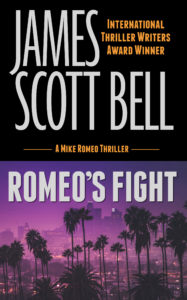
The first is that my fourth Mike Romeo thriller, Romeo’s Fight, is set to release on January 7th. It’s available for preorder for the special launch price of $2.99. In February it will go up to $3.99. Naturally I would appreciate it if you would hop over to Amazon and reserve your copy. On launch day you’ll get it automatically delivered to your Kindle.

Click here to preorder.

(You international readers can find it in your Amazon store by pasting this ASIN number into the search box: B07L9DLGVF)

Welcome back!

Romeo’s Fight, like all the Romeo thrillers, can be read on its own. But if you’re one of those who likes to read a series in order, I’ve got some good news: for the next two weeks the first three Romeos are all priced at 99¢. Now’s the time to hop on this International Thriller Writers Award winning train. The order is:

1. Romeo’s Rules
2. Romeo’s Way
3. Romeo’s Hammer

Romeo’s Fight opens this way:

“So you’re Mike Romeo,” the guy said. “You don’t look so tough.”

I was sitting poolside at the home of Mr. Zane Donahue, drinking a Corona, and wearing a Hawaiian shirt, shorts, flip-flops and sunglasses. I was the perfect embodiment of L.A. mellow, trying to enjoy a pleasant afternoon. Now this shirtless, tatted-up billboard was planted in front of me, clenching and unclenching his fists.

“I’m really quite personable once you get to know me,” I said.

“I don’t think you’re tough,” he said.

“I can recite Emily Dickinson,” I said. “Can you?”

He squinted. Or maybe that’s how his eyes were naturally. His reddish hair was frizzy. With a little care and coloring, it would have made a nice clown ’do. He had a flat nose, one that had been beaten on pretty good somewhere. In a boxing ring, the cage, or prison.

“Who?” he said.

“You don’t know Emily Dickinson?”

Blank stare.

“Then you’re not so tough yourself,” I said.

I took a sip of my brew and focused on the devil tat above his left nipple. Underneath were the words DIE SCUM.

So let’s talk a bit about marketing, specifically two items: the browsing sequence and the building of buzz.

We start with the old-school bookstore browser. She walks into Barnes & Noble, perhaps with a title in mind, but takes a moment to look at the New Release table. What is the first thing that attracts her attention? The cover. If the cover has the name of an author she’s read before, and likes, that book gets picked up first. Otherwise, she might check out a book by someone she doesn’t know simply because of the cover design.
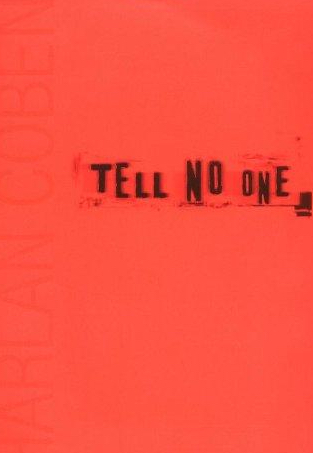
(This is exactly how I discovered Harlan Coben. I vividly remember going into Crown Books and looking at the New Release table, and one cover just jumped out and grabbed my shirt and said, “Open me!” It was the cover of Tell No One, and it was stunning, not just because of the color and title font, but also because Harlan’s name could not be seen. This counter-intuitive distinction set it apart from every other cover on that table.)

So what next? She will look at the dust jacket copy. Does that copy sizzle? Make the plot irresistible? If so, the next place she’ll turn is to the opening page. And of course we know what that has to do. Just check out our First Page Critique archives.

If she likes what she reads, our browser will look at the price. $28? Yikes! Ah, but B&N is offering it at a 30% new release discount. That might just be enough to close the sale.

It’s roughly the same with online browsing. Cover, book description, the “Look Inside” feature to sample the first pages, and the price. Understand that sequence as you plan your marketing.

So what about the second consideration, building buzz? The two primary venues for this are social media and the email list. The one overarching consideration is: Don’t annoy.

You annoy by only talking about your book and how great it is going to be. If all we see on social media is variations on “buy my book!” it’s not buzz, but “buzz off” we’re going to create.

My rule of thumb on social media is 90/10. Ninety percent of the time be, gasp, social, providing good content so people are glad to have you around. Then when a book comes out or you have other such news, you have the trust and toleration of your followers.

Everyone knows and touts the essentiality of the fan email list. It takes years to build a substantial list, which you do by a) writing great books; b) having a systematic way for readers to sign up; and c) making the actual content of your communication a pleasure to read.

So what do you do if you are just starting out and have no fan base? If you’re traditionally published, work in concert with your publisher and come up with a plan. While there are still physical bookstores around, introduce yourself locally and set up a book signing. Your publisher might be able to arrange a regional tour (travel expenses on you). Are book signings worth it? All pro authors can tell you stories about book signings gone awry (see this post from TKZ emeritus Joe Moore), but when you’re a newbie, you pay your dues.

For both traditional and self-publishing writers: send personalized emails to everyone you know, politely requesting they take a shot on your book and, if so moved, a) leave a review on Amazon; b) tell their friends about it; and c) sign up for your email list which, you assure them, won’t be spammy or too frequent. (My rule of thumb here is once-a-month, give or take.)

We all know how hard it is to get a message through amidst the din and dither of the madding crowd. Just remember to keep the main thing the main thing: write excellent books. That’s the only ironclad, long-tail secret to a career. Buzz and marketing help get you an introduction. They can turn browsers into buyers. But it’s your books that turn buyers into fans.

This is my last post of 2018. To my blogmates and all our marvelous TKZ readers: Merry Christmas and a Carpe Typem New Year!

The Organ Recital

Photo courtesy of Sydney Rae, unsplash.com

Where did the year(s) go? Is there a way to slow things down, before one reaches the age of the organ recital? What is that, you ask?

A friend of mine who is a bit ahead of me agewise has a weekly meeting with an ever-dwindling group of his friends from high school. My pal recently referred to one of these gatherings as “the organ recital.” I asked him what he meant, and he said, “Y’know, this guy talks about his liver problems. That one is talking about starting renal dialysis in two weeks. We’re going to have to change our meeting day. I’ve had two heart attacks, and my pancreas won’t survive another Christmas of Reese’s Trees and Giant Eagle Egg Nog ice cream. The bags of all-season cheese curls probably don’t help either. We all try to one-up each other about how sick we are, whose organ will go first and which one it will be.”

I’ve noticed this practice among my own circle of friends of a certain age. Their daily routines seem to be intervals between trips to this specialist or that specialist. I don’t engage in this because I don’t go to the doctor. It’s not an act of denial. I know what’s coming.  I just don’t care to know which of my bodily parts might be planning a suicidal onslaught against me or if they’re going to collaborate on some sort of kamikaze run at an inopportune time, like when I’m attempting to navigate the silly-string pattern of I-65 through downtown Nashville, when they’ll say, “Let’s cut the strings on this puppet right NOW!”  Oh, sure, I wake up at 3 AM and wonder momentarily if that sudden, tear-inducing pain in my side is a tumor the size of Milwaukee, boldly shouldering aside everything in its ever-increasing path, or if that twinge of chest pain is a signal to the conductor that, thanks to regular patronage of Arby’s and Sonic, that left anterior descending artery is blocked up and the remaining available tracks can’t handle the freight. They all go away, however, and everything still seems to work okay, so I forget about them until the next minor complaint arises. Wash, rinse, and repeat.

Young folks don’t think about this, but they normally don’t have friends who have died suddenly in their sleep, or after a series of hospital stays, or while unable to recognize loved ones or even themselves as they spend their final days in an institution which has come to be known, ironically enough, as a memory facility. When you are in your thirties, such things seem miles away, over the river and through the woods, something that happens to others, to old people. They don’t realize how fast time passes. That distant toll of the bell all too soon becomes up close and personal.

2018 wasn’t been one of my better years, but there have been worse, much worse. The worst of them were the worst of them due by and large to self-inflicted damage and will hopefully never be repeated, thanks to acquired wisdom and accumulated guile. 2018 was sadly memorable for watching a number of folks I have loved to varying degrees lay down their swords and shields and pass ahead to the next stage. I am fortunate at the moment, however, to be more Harry than Tonto, more weekend than Bernie. There is still much for which to look forward. My children continue to surprise me in good and great ways, and my granddaughter promises much and delivers more. On the cultural side, there is a new James Lee Burke novel — The New Iberia Blues — and a new season of Luther coming. The new year also has the promise of some new horizons to see before any final sunset, if good fortune prevails. Hoping for the best while preparing for the worst seems to cover all of the bases. Until that moment when it doesn’t, of course.

While I have the chance let me tell you that I am so thankful for each and every one of you that I can’t adequately express it.  Thanks for stopping by, reading, commenting, and being a friend to everyone at TKZ. You are the reason why we show up. And please: keep writing, writing, and writing until the tip of that spear you call your story is as sharp as you can get it. That friend I mentioned at the beginning of this piece is fond of saying (in another context) that a used key stays shiny. Keep using your talents and shining them up until they are so bright that they cannot be ignored.

Thank you. Have a Merry Christmas and a Happy New Year. See you in 2019.

First Page Critique: Quandor

Thank you, Brave Author, for sending TKZ your first page. I’ve critiqued it below, and then our readers will weigh in. (NOTE: The punctuation below is the author’s.) — Elaine Viets

Quandor
Quandary, age 13 and the only child of Frando and Zelmar Surdona, quasiborg rulers of exactly one half the planet Xenia, anxiously awaits his next birthday. Little does he know a space exploration science kit will radically change his future and that of the entire planet. Nor does he know the powerful pull of adolescent attraction will gain him an unexpected ally when he needs it most, but at a price.
“Mom, dad didn’t take me with him again to the council meeting.” He whined. “How am I going to take his place as supreme monarch if he won’t teach me anything?”
“All in due time Quannie.” She said.” Right now they are working on the delicate issue of where to find replacements for the dwindling supply of Beryllium and Gallium.”
“Yeah I know. Not enough to go around for the next generation. Hard choices for who gets the quality interfaces and who doesn’t.” He said.
“That’s right dear. Very important for our quasiborg family and worker cyborgs.”
“Well, at least you guys got me that special operation before I was born making me a Superborg. I’ll never have to worry about an interface. And I have lots of advantages over quasiborgs and worker cyborgs when I take over.”
“You aren’t taking over dear. Just learning to help rule. Please don’t talk to anyone about the operation. It’s a private matter.” She said. “Yes you have 70% human and 30% cyborg charactics while the other 1816 family quasiborgs are only 40% human and 60% cyborg.
“Ha. Not so private. An open secret if you ask me. And don’t call me Quannie. Sounds so childish.”
“Ok master Surdona. Is that better? We must get to the store through the thermal cloud tube before it gets crowded.” She said.
“Or we could use dad’s business pass and use the express lane.” He quipped.
“Like father like son.” She muttered as they readied the cloud rider.


Elaine Viets’ take:
Brave Author, this reads like a gentle YA sci-fi story, a coming of age novel. If you’re using it to open your story, it needs more tension to capture your reader. Here are some suggestions:
(1) Give us more world building. Is Xenia a hostile or hospitable planet? Does it have an Earthlike atmosphere, or is it hot and harsh like Mars? Let us know in a few words.
What does a quasiborg, Superborg, or cyborg look like? Do these beings resemble humans, or some other type of alien? What are their skin colors and facial features?

(2) Little does he know. That phrase in your first paragraph is borrowed from the sci-fi classic, Star Wars. It’s like another Star Wars favorite phrase: “A long time ago, in a Galaxy far, far away.” They give stories a fairytale feel. The crawl for Star Wars VI says “Little does Luke know that the GALACTIC EMPIRE has secretly begun construction on a new, armored space station . . .”
That works for the movie, but not for this novel. I’d move that section to the end of this first page to ratchet up the tension. Consider starting your novel this way:
“Mom, Dad didn’t take me with him again to the council meeting,” thirteen-year-old Quandary said. The only child of Frando and Zelmar Surdona, quasiborg rulers of exactly one half the planet Xenia, was in a whiny mood. His mother hated when his voice had that high-pitched demand and he swaggered around their dwelling, making demands. “How am I going to take his place as supreme monarch if he won’t teach me anything?”
“All in due time, Quannie,” Zelmar said. “Right now they are working on the delicate issue of where to find replacements for the dwindling supply of Beryllium and Gallium.”
Right here, Brave Author, you could put in a brief description of the planet, and what these beings look like, then have the rest of that conversation, and mention that Quandary was eagerly awaiting his next birthday. Then your omniscient narrator could add at the very end:
“Little does Quandary know a space exploration science kit will radically change his future and that of the entire planet. Nor does he know the powerful pull of adolescent attraction will gain him an unexpected ally when he needs it most, but at a price.”
Having this prediction here also comes with a price, Brave Author. It will put distance between you and your readers. But it may deliver a better story.
(3) Give us a snappier title. Make us want to read this novel. Maybe use the boy’s name, “Quandary.”
(4) Last, and most important, learn punctuation.
Here’s how those second and third paragraphs should be punctuated:

“Mom, Dad didn’t take me with him again to the council meeting,” Quandary whined. “How am I going to take his place as supreme monarch if he won’t teach me anything?”
“All in due time, Quannie,” she said. “Right now they are working on the delicate issue of where to find replacements for the dwindling supply of Beryllium and Gallium.”

These basic mistakes would drive an editor nuts. Consider a basic English course at a community college or the local library. You could also read Strunk and White’s The Elements of Style. Many major publishers either follow White’s style, or the Associated Press Stylebook. No editor will buy a book with unprofessional punctuation, no matter how well-written it is.
Writing a novel without understanding proper punctuation is like building a house without understanding how to use carpenters’ tools.
Go forth and create, Brave Author.

A Book In My Ear: Audiobooks, the Writer’s Take

My nineteen-year-old son always has his face in his phone. Drives me nuts, and I confess that when he’s around I nag him about it.

“Focus on what you’re doing,” I say.

“But I’m just rinsing off this dish to put it in the dishwasher,” says he. (Okay, at least he’s following House Rule #1–Zero dirty dishes on the counter or in the sink.)

“The phone is rewiring your brain. You need to pay attention to what you’re doing. I think you’re addicted.”

“It’s just a plate, and I’m putting it in the dishwasher! You know,” he says, after taking care of the plate. “You kind of nag me sometimes.” He puts one arm around my neck–coincidentally it’s the arm with the phone on the end of it. “What’s up with that?”

Yes, I do nag him. But I’m also a hypocrite of enormous proportions. We’re a lot alike, he and I. We both have attention issues–as in, we are both very easily distracted and desire almost constant mental stimulation. I say “desire” because I’ve spent many years working to get a handle on my distraction habit–a habit that can be both devastating and helpful to a writer.

My name is Laura, and my phone is near me at all times. Not necessarily because I want my family to be able to reach me 24/7, though that’s important, but because my AirPods might lose the audio signal of the book I’m listening to. I listen to 5-6 audiobooks a week, with a few podcasts in between.

In fact, I listened to the entire 6+ hours of the excellent true crime podcast, Bear Brook, on Monday, after talking about it with my editor around 2:00 p.m. And Monday was a pretty busy day for me.

Sometimes, when I’m cooking and have a book in my ear, my husband will come in and talk to me as he has a snack or peruses his own phone. I’ll turn a part of my attention to him and let the narrator’s voice drop into the background. Husband doesn’t necessarily know if I have a book or podcast going on, or if the pod is just there for phone convenience. If he appears to want to have a conversation, I’ll take the pod out of my ear and slip it in my pocket.  I’ve started to feel a bit icky about this scenario. I would almost always prefer to talk to him.

Last November–and I can’t believe it was so long ago–I posted about my attraction to audiobooks as a reader. The comments on that post are amazing and truly informative. I love reading about other folks’ reading habits. A rereading of that post also woke me up to the fact that I’ve since almost doubled my audio consumption. I knew it was getting out of hand, but seriously…

Audiobook overconsumption is, I’m afraid, messing with my writing. There. I’ve said it. (Took me about 500 words, but I’m fond of big intros outside of my fiction. Sorry.)

As with watching television, audiobook listening is primarily a passive experience that can happen while the listener does other things. Yet, surely there are people who listen to books and do absolutely nothing else while they’re doing it, giving the book one hundred percent of their attention. Twyla Tharp, in her book The Creative Habit: Learn It and Use It for Life, writes about listening to music that way. She’s a huge proponent of doing one thing at a time. She protests that she would be very offended if someone came to one of her dance performances and read a book, so she wouldn’t read a book while listening to Beethoven. Which leads me to wonder if I would be offended if someone vacuumed or changed tires or gardened while listening to one of my books. Or if they read a paper copy or ebook while keeping an eye on a televised football game as my dad often does. My answer is an emphatic no, of course not.

For the two and a half decades before I started writing, books were entertainment and solace for me. I paid attention when I read because I was interested in the stories. When I started writing, I learned to actively read like a writer. Writers read for language, grammar, story shape, character development, story arcs, plot elements, point-of-view. We read to learn how to do it–it’s as simple as that. Some of us try modeling our work on more skilled writers (a marvelous exercise to step into another writer’s shoes). After a while, the reading-like-a-writer habit can get frustrating for writers at every level. Sometimes you just don’t want to know about the puppeteer behind the curtain, you just want to know what happens next.

I find it difficult to track the writer’s journey in an audiobook. There are occasionally those moments when I think, “I see what she did there.” While I tend to recall plot details and my mental images of the characters in books I listen to, I retain little else besides the conclusion that I liked them or didn’t.

I have a similar problem with ebooks, oddly enough. As with audiobooks, I have a very hard time returning to a word or a scene I want to go over again. I can’t tell you the number of bookmarks I put into ebooks, and the audiobook screenshots I have in my phone so I can bookmark scenes that way. With a paper book, I usually remember where something I want to find appeared on its page, left or right, top or bottom, or middle. Also I can usually narrow it down to a half dozen pages with less than a minute of searching.

There’s something so concrete about watching a story unfold on the page and also following it in one’s mind. I feel like I can almost reach out and hold it. I remember very early on that my husband said of my short stories that they looked like short stories, but that they had little story in them. Yes, I’d read a ton of books, but I hadn’t yet read much as a writer. Still, shape is important, especially when you’re starting out.

Over the past year, most of the ebooks I’ve read have been friends’ or students’ manuscripts, or books to blurb. I’ve read some hardcovers and a couple of regretful paperback freebies I picked up at a conference. But I can say with confidence that the novels and books I’ve listened to outnumber the print/ebooks at least ten to one. That number feels pretty shocking.

I feel rather like a student who has been watching YouTube videos while sitting in a classroom as the teacher lectures. Ouch. That’s no way to learn. Content is important.

That said, I love all versions of books. Sometimes I think it’s not quite fair to the book I’m listening to if I’ve glossed over bits of it. I’ve missed something, and I hate missing out, especially on a story.

Today I ran across this interesting piece, 8 Science-Backed Reasons to Read (a Real) Book. It’s an eclectic list, focusing mainly on books themselves in place of other forms of entertainment.  But a lot of it make sense. I’m not surprised that turning pages helps one’s recall, and reading is like a workout for the brain. I’m much more likely to immediately look up a word when I’m reading, rather than when listening to a book.

Right now I have three books going: I’ve listened to the Twyla Tharp book, and have read the first fifty pages of the softcover version. The second is a ginormous hardcover, Robert Galbraith’s Lethal White. The third is, yes, an audiobook. Heinlein’s Stranger In A Strange Land. Perhaps I should be reading the Heinlein on paper, and listening to Lethal White. Heinlein’s characters are wonderful, but Galbraith’s are deeper, especially given that they are series characters. But I’m sixty-five on the waitlist for Lethal White at Overdrive. And it costs a small fortune to buy on audio.

It feels good to sit down at the computer with some hands-on, eyes-on reading backing me up again.

What about you? Do you experience a difference in your writing if your reading habits change?

Interview with cozy author Leslie Budewitz

by Debbie Burke

@burke_writer

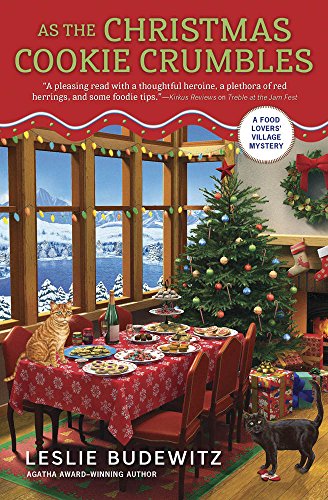
Tis the season and I have great fondness for Christmas cookies. Today’s guest Leslie Budewitz is an expert in those buttery, sugary treats. She is also an Agatha-winning author for fiction and nonfiction as well as an attorney. Her latest book As the Christmas Cookie Crumbles is a tasty mystery with recipes.

Leslie is the author of two cozy series and a reference guide for writers: Books, Crooks and Counselors: How to Write Accurately about Criminal Law and Courtroom Procedures. She’s a past president of Sisters in Crime and, after a two-year stint on the board of the Rocky Mountain Chapter of Mystery Writers of America, will be joining the national board of MWA in January.

Welcome, Leslie!

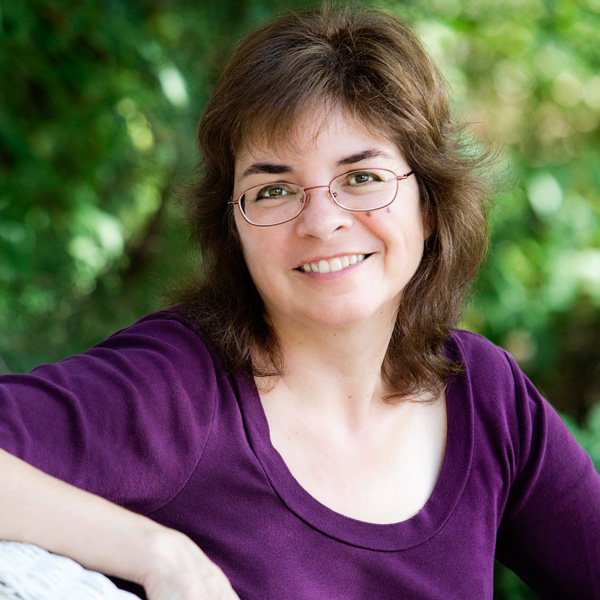
Leslie Budewitz

Question: Although you write cozy mysteries, you also tackle serious themes. How do you balance the lighthearted tone of a cozy with grim issues like homelessness and family dysfunction?

Leslie: Any mystery—any novel—depends on conflict, some internal, some external. Those conflicts often arise from the world around us, whether it’s family tension or a dispute over whose turn it is to beg on a particular street corner. Other cozy authors have tackled social justice issues as well—Cleo Coyle, Elaine Viets, and Diane Mott Davidson among them. The trick in a cozy, I think, is to explore the emotions and motivations that the issues raise and make sure that the external actions flow from those internal tensions, because a cozy is ultimately about the personal impact of a crime and the community response to it.

I tend to use an ABC plot structure, with the murder the A or primary plot, the protagonist’s relationships the B or main subplot, and life in the shop or community the C or secondary subplot. That keeps the balance, I hope, and allows me to sneak in some humor and lighter moments while giving the murder the respect it deserves.

Question: The Spice Shop series is set in Seattle; the Food Lovers’ Village series takes place in a tiny Montana town. Can you talk about the differences in handling urban vs. rural settings? Do the personalities of your big city characters differ from those in a small town?

Leslie: To me, the heart of a cozy is community, and the role of the amateur sleuth is to probe and protect it. That makes a small town a natural setting. An urban cozy works when it is set in a community within a community—the Pike Place Market and Seattle’s restaurant community, or Coyle’s Greenwich Village coffee house and the coffee business in NYC.

On the flip side, small-town series are prone to Cabot Cove Syndrome—after a while, there’s no one left to kill! You can root the conflict in the town, bring it in from outside, or create a clash between locals and visitors. An urban setting makes a high crime rate more credible, and allows you to move around the various neighborhoods of a city, although you have to simplify geography and keep the protagonist’s home or shop at the center.

As for differences in personalities, that’s a great question and not one I’d considered. Both my main characters grew up where they now live and identify deeply with their communities. Erin Murphy in the Village series left for 15 years before returning; that’s a common story, especially in Montana; it’s my story, and I’m enjoying exploring it through her eyes

Question: You’ve worked with a Big Five publisher as well as smaller presses. Share with us the contrasts.

Leslie: They’re not as different as you might think. In both, the author’s primary relationship is with the editor. At my nonfiction house, Quill Driver, my editor was also the publisher. At my fiction houses, Berkley, Midnight Ink, and Seventh Street—large, medium, and small—the editorial relationship is still key, even when the structure differs. Larger houses tend to have more robust systems for accounting, routine publicity, and sales and distribution, although smaller houses often contract with big companies for the latter.

Both the decision of the post-merger Penguin Random House to drastically cut mass market paperback originals and the recent decision of Llewellyn to stop publishing new Midnight Ink titles after the Spring/Summer 2019 catalog, as well as the still-fresh sale of Seventh Street Books, demonstrate that business decisions beyond your control can come out of nowhere and dramatically change your career. The only thing you can control is the work itself. Fortunately, that’s the most satisfying aspect, but being able to predict your cash flow ranks pretty high, too.

Question: You’re an attorney yet none of your fiction features a main character in that profession. Is there a reason you’ve chosen other fields for your characters? Is there a legal mystery in your future?

Leslie: A cozy depends on an amateur sleuth; lawyers and journalists are semi-pros, so if one were to star in a cozy series, she’d probably need to be retired and running a bakery! Pepper Reece in the Spice Shop series managed staff HR for a large law firm that collapsed in scandal, and she uses her knowledge of people rather than a knowledge of the law to solve crimes. But she also reaches out to lawyers and paralegals she’s worked with now and then. Erin Murphy consults her step-father, a lawyer turned herbalist and acupuncturist, when she needs to understand a legal detail or two.

I don’t see myself turning to legal mysteries or thrillers, but I can say that injustice will always be at the heart of what I write.

Question: Anything else you’d like to talk about?

Leslie: While writing is a solitary activity, one of the most important elements in a writer’s career is her community. You and I met ages ago, long before we’d published any fiction. We shared a magical writers’ group for a couple of years, and have met for countless lunches and cups of coffee since then, brainstorming and bolstering. I encourage Kill Zone readers at all stages of their writing careers to form and maintain those communities, on line and in person. Cozies are sometimes criticized as unrealistic—as if Jack Reacher were more realistic than Jessica Fletcher—but one thing they get absolutely right is the fundamental importance of community.

Thanks, Leslie, for sharing your thoughts with The Kill Zone.

****************************************************************************************************

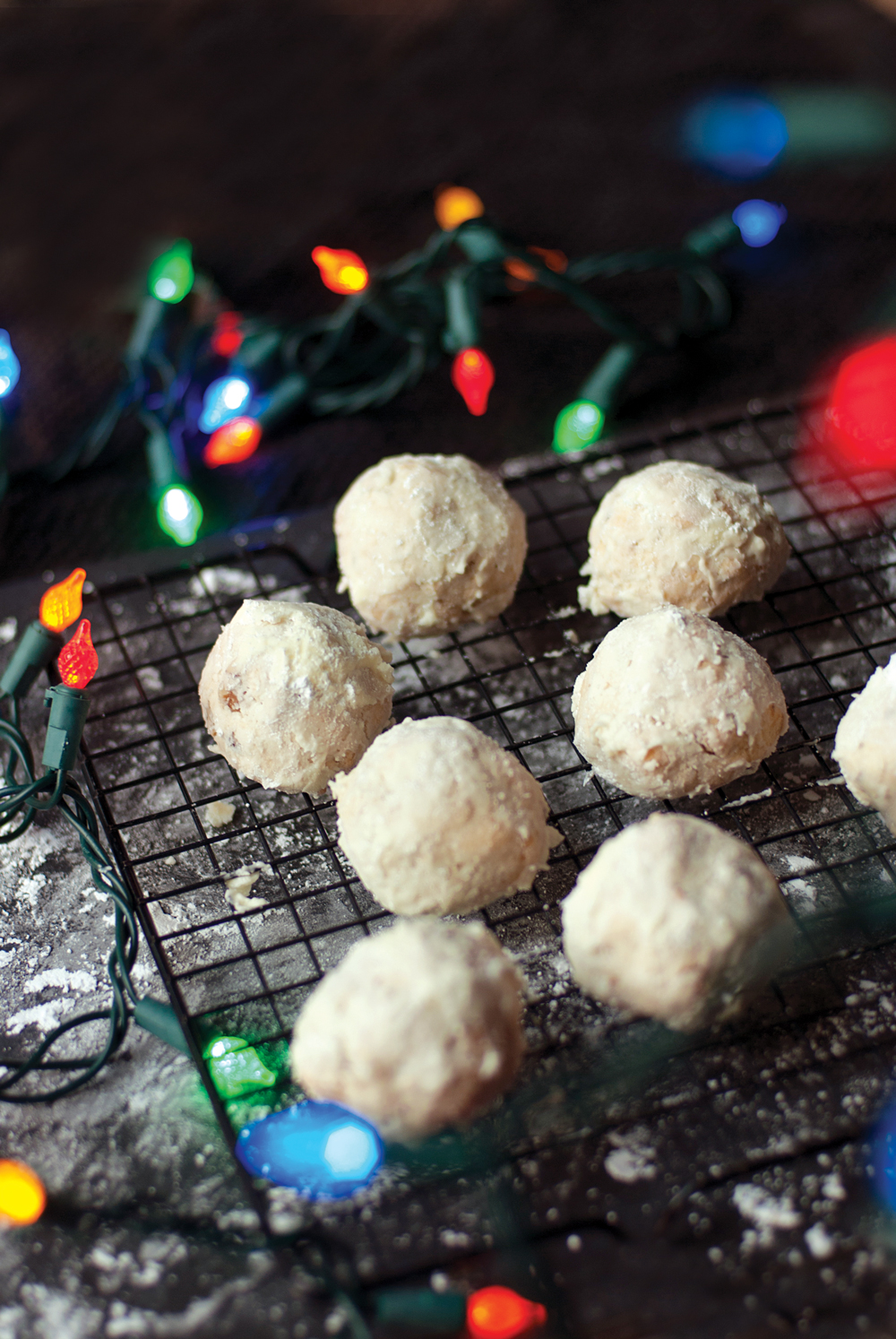
At TKZ, even cookies have aliases. Below is Leslie’s recipe for Russian Teacakes AKA Snowballs AKA Mexican Wedding Cakes:

Merrily’s Russian Teacakes

by Leslie Budewitz

The classic shape is a ball rolled in powdered sugar. But they can also be made as slice-and-bake cookies dipped in chocolate. A reader suggested the Dirty Snowball—add a little cocoa powder to the powdered sugar when you roll the cookie. A delicious idea, especially since a snowball plays a crucial role in the climactic scene.

Whatever you call these scrumptious little treats, I know they’ll be popular with everyone you see this holiday season—even the Grinch and Mr. Scrooge.

1 cup butter (2 sticks), softened

1/2 cup powdered or confectioners’ sugar

1 teaspoon vanilla extract

2-1/4 cups all-purpose flour

1/4 teaspoon salt

3/4 cup finely chopped pecans

1/3 cup additional powdered sugar, for rolling

optional:

2-3 ounces semi-sweet or bittersweet chocolate, for dipping

1 tablespoon cocoa powder, for Dirty Snowballs

Preheat oven to 350 degrees.

In a mixing bowl, cream the butter, ½ cup powdered sugar, and vanilla. Combine the flour and salt and stir into the creamed mixture. Stir in pecans. Chill up to an hour.

Roll dough into 1-inch balls and bake on an ungreased cookie sheet for 10-12 minutes. Pour the additional powdered sugar into a flat bowl or on a plate; for the dirty snowball, add the cocoa powder. When cool enough to touch but still warm, roll cookies in the powdered sugar. Cool, then roll in the sugar again if you’d like.

For slice-and-bake cookies, shape the dough into two logs, about 2 inches wide, and wrap in waxed paper, plastic wrap, or parchment paper. Chill about 20 minutes. Slice and bake 18-20 minutes. Cool cookies on a wire rack.

Melt the chocolate and dip one end of each cookie in the chocolate, or drizzle a bit on the end with a spoon. Return to rack to allow chocolate to harden.

Makes about 4 dozen.

Wishing you all a joyous holiday season!


Are You a Rereader?

Today’s post is inspired by last week’s NYT ‘By the Book’ column in which Michelle Obama was asked “are you a rereader? What books do you return to again and again?” – two questions which prompted me to think long and hard about my own habits when it comes to rereading. Growing up my father reread his faded paperback copy of ‘The Lord of the Rings’ every year – it was almost a rite of passage and when we saw the book appear once more on the coffee table it signaled something both familiar and comforting. Growing up, I was also a great rereader – all my Enid Blyton books are well-worn and dog-eared from countless reads and rereading my Chalet School collection (an obsession of mine well into my twenties as I sought to find all sixty books in the series) was an annual event (which reminds me, I need to reread them all again – it’s been too many years!).

As an adult, however, I find (like Michelle Obama) that with limited time I prefer to read new books – though there are a few books which I’ve read more than once (or even twice). My Jane Austen collection certainly gets reread (especially after visits to Austenish places like Bath) and I have to admit Charlotte Bronte’s Jane Eyre and Emily Bronte’s Wuthering Heights have had a few goes over. I also have (perhaps a bit embarrassingly) reread my Georgette Heyer collection more times than I care to remember. Going back to these books is like settling into a comfy chair with a box of chocolates – a relaxing indulgence (maybe…) but perhaps also a version of hygge:)

Rereading provides a host of different pleasures to the initial read – there’s familiarity as well as enjoyment, there’s a different kind of anticipation as the book progresses, and a different level of satisfaction when the book is finished. When I think about the books I reread, however, I notice that they really only represent a small part of my overall reading taste. If I’m honest they probably represent the more romanticized and escapist portion:)

So TKZers, are you rereaders? If so, what books do you turn to again and again? What do you think distinguishes a book that you want to reread from one which, while you certainly enjoyed it, you feel no need to pick up and read again?

The Writing Books That Helped Me At The Start

by James Scott Bell

Last week in the comments, Kay DiBianca wrote:

I sure would like to have a master list of the best books for learning the craft of writing.

You asked, you got it.

Now, modesty prevents me from mentioning my own books on the craft. If I was not the humble scribe that I am, I would probably say something like, “These books have proved extremely helpful to fiction writers,” and then I’d put a link to my website for a list of the books.

Instead, I will narrow my focus six books which I found most helpful when I was starting out. There’s that old saying, “When the student is ready, the teacher will appear.” Well, I was ready, and these books appeared. They helped lay a foundation for all my writing since.

Writing and Selling Your Novel by Jack Bickham

Apparently only available in hardback, this is the Writer’s Digest updated version of Bickham’s Writing Novels That Sell (which is the edition I studied). It was his treatment of “scene and sequel” that gave me my first big breakthrough as both a screenwriter and novelist. A light came on in my brain. It was a major AH HA! moment. Bickham’s style is accessible and practical, and a big influence on me when I began teaching. I wanted to give writers what Bickham gave me: nuts and bolts, techniques that work, and not a lot of fluff and war stories.

I found out that Bickham was running the writing program at the University of Oklahoma, where he himself had been mentored by a man named Dwight V. Swain. So I researched Swain, and discovered he’d been a writer of pulp fiction and mass market paperbacks, and written a book a bunch of writers swore by. So naturally I bought it.

Techniques of the Selling Writer by Dwight V. Swain

For those wanting to write commercial fiction (i.e., fiction that sells), this is the golden text. Swain takes the practical view of the pulp writer, the guy who had to produce gripping, ripping stories in order to pay the bills. He lays it all out in a perfect sequence for the new writer, who could go chapter by chapter, building a writing foundation from the ground up. I review my highlighted and sticky-noted copy every year.

Writing the Novel by Lawrence Block

Block was, for years, the fiction columnist for Writer’s Digest magazine. At the same time, he was a working writer himself, having come up through the paperback market and into a series character that has endured, the New York ex-cop Matthew Scudder. Thus, what Block brought to the table was the way a prolific writer actually thinks. The questions I was having as I wrote Block always seemed to anticipate and address. He opens the book with his timeless advice: “If you want to write fiction, the best thing you can do is take two aspirins, lie down in a dark room, and wait for the feeling to pass. If it persists, you probably ought to write a novel.”

Screenplay by Syd Field

This was, I believe, the first “how to” book I bought when I decided I had to try to become a writer. I started out wanting to write screenplays. With writers like William Goldman and Joe Eszterhas getting seven figures for original scripts, I thought, well, maybe this would be a good venture (the only more lucrative form of writing, according to Elmore Leonard, is ransom notes). Field’s book contains his famous “template,” which is a structure model. I studied movies for a year just looking at structure, and finally nailed it. What I added to Field was what is supposed to happen at the first “plot point.” I called it the “Doorway of No Return.” That discovery still excites me.

Zen in the Art of Writing by Ray Bradbury

This is a right-brain book, and therefore a necessary balance. The secret to elevated writing is finding a way for the rational and playful sides of the writer’s mind to partner up. Bradbury’s book is full of the joy of writing, and it’s infectious. Two of my favorite quotes: “You must stay drunk on writing so reality cannot destroy you.” And: “Every morning I jump out of bed and step on a landmine. The landmine is me. After the explosion I spend the rest of the day putting the pieces together. Now, it’s your turn. Jump!” My signed copy is always within reach.

Stein on Writing by Sol Stein

Sol Stein, 92 years young, is a writer, editor, and publisher (he founded Stein & Day back in 1962). When I started out he had an innovative, interactive computer program called WritePro, which is apparently still available. Much of the advice in the program is in this book, including inside tips on point of view, dialogue, showing and telling, plotting, and suspense.

So there you have it. My list of the books that helped me most when I was starting out. The floor is now open to you, TKZers. What books have you found helpful in your writing journey?

READER FRIDAY: The Authors in your Life (Share Your Experiences)

Image purchased from shutterstock for Jordan Dane use

Before my first books had been bought by a traditional publisher and I was an aspiring author, I had not known another writer as a friend or relative. To help me achieve my goal of becoming published, I joined writer organizations and participated in a local writers’ group and attended conferences. Ultimately another author helped me get published and find my first agent. She changed my life forever. Now my life is filled with author friends who bring me so many gifts with that connection.

Please share your experiences with other authors and what they have done to make you a better writer.

Holiday Food for Thought on Character Conflicts

Jordan Dane

@JordanDane

Purchased from iStock for Jordan Dane’s use

This is my last post for 2018, but I got my inspiration from Jim’s post “What I Wish I’d Known When I Started Writing” on Nov 25th. As always, the discussion comments were very interesting. Two comments stood out in my mind and I wanted to explore them. I thought they could combine into this post on character and conflict.

Marilynn Byerly said: “…Conflict should exist on many levels. In other words, the character’s emotional struggle should be mirrored in the action of the novel.”

Marilynn is so right. Great summary. There can be the external conflict of a global disaster or a killer on the loose, but if you add complications within the main character (a flaw or handicap that forces them out of their comfort zone to deal with the external conflict after facing their own demons), that’s good stuff.

AZAli said: “When I was starting out, I thought there was something wrong with me because I couldn’t write a scene about characters enjoying themselves.”

I could relate to AZAli’s comment here when I first started out. I didn’t want to waste a scene on the seemingly real life of the character, but in moderation, this can be insightful, especially if the internal demons of the character are at odds with what the plot will bring. In Michael Connelly books, The ups and downs of Bosch’s personal life are an intricate thread woven into the fabric of his stories, so tightly written and paced, that Bosch becomes real in the reader’s mind. It’s like you KNOW him over the series of books you’re reading. His failed relationships, the love he has for his daughter and complicated ex-wife, and his troubles on the job that arise because of his very uncompromising nature.

Be judicious, not to overdo diversions, but I would suggest that if you want to add depth to your character, give him or her a backstory that is integral to his/her internal conflicts and force your character to deal with those too, along with the plot. No scene is wasted if the reader is enthralled. It’s a balance, but one worth pursuing. (I love getting emails or social media comments from readers who ask about the personal life of my characters. They share their hopes for what might come next or ask about the service dog I have my Vigilante Justice series, Karl. You never know what will resonate with readers.)

I thought of a writing resource book by Deb Dixon called “Goals, Motivation & Conflict.” This little book (affectionately called the GMC book) has a lot of fans. It helped me add complications to my characters when I first started writing. It’s a good resource for new writers. I also attended one of Deb Dixon’s workshops and got a lot out of it. (Workshops are wonderful to learn new things and to network. I would encourage any author to attend a workshop, no matter what skill level you are. There’s bound to be something that will stick with you.)

I’m resorting to my memory on the matrix concept of the GMC book and the general idea that has stuck with me after reading it. My resources books are buried in my BOX ROOM after my last move. The idea of t he GMC book is to give your characters INTERNAL CONFLICTS and EXTERNAL CONFLICTS and maybe dare to have them conflict with each other.

What does your character want and why can’t they have it? Conflict is vital to creating memorable characters. No conflict(s), no story. I can’t emphasize this enough. If there is a common mistake many aspiring authors make, it’s not having enough conflict to keep a story flowing through to the end that will drive the characters and keep their story interesting.

Your EXTERNAL CONFLICT might be the villain or the insurmountable situation, but the most unforgettable characters will also contend with their own flaws or biases (INTERNAL CONFLICTS) or demons, so they have a journey toward self-discovery. If you have a hero who is in conflict with a villain, while he’s battling his own demons, then think about creating a heroine who has opposing conflicts where one of them must lose in order to be together. Conflicts are best when layered and made more complicated.

Find your characters’ greatest weaknesses or fears—their internal conflicts—and demand they deal with it. Torture them. It’s legal. Rubbing their nose in it generally comes from the influences of the external conflict—the plot. The one-two punch of the external and internal conflicts adds depth to your character. Make him/her suffer, then ramp up the stakes and the tension. It’s all about drama!

Add Depth to Each Character—Give them a journey
• With any journey comes baggage. Be generous. Load on the baggage. Give them a weakness that they’ll have to face head-on by the climax of the book.

• Make them vulnerable by giving them an Achilles Heel. Even the darkest street thug or a fearless young girl with magical powers should have a weakness that may get them killed and certainly makes them more human and relatable.

• Whether you are writing one book or a series, have a story arc for your character’s journey that spans the series. Will they find peace or love, or some version of a normal life? Will they let someone else into their lives or will they be content to live alone? Will a villain have a chance at redemption? Do what makes sense for your character, but realize that their emotional issues will cloud their judgment and affect how they deal with confrontations. By the end of a book, they should learn something.

Use Character Flaws as Handicaps
• Challenge yourself as an author by picking flaws that will make your character stand out and that aren’t easy to write about. Sometimes that means you have to dig deep in your own head to imagine things you don’t want to think about, but tap into your empathy for another human being. You might surprise yourself.

• Stay true to the flaws and biases you give your characters. Don’t present them to the reader then have the actions of the character contradict those handicaps. Be consistent. If they have strong enough issues, these won’t be fixed by the end of the book. Find a way to deal with them.

Summary: With a little forethought and patience, you can craft a better book if you plan your characters’ conflicts and create a tough journey of discovery for them. And remember that one book could turn into a series if you create a large enough world with characters that can be sustained through a series. I even like to plant seeds of mystery for future books within the pages of a standalone. You never know what good fortune might happen.

Happy Holidays! Wishing you the best and have a great 2019, TKZers!

DISCUSSION:

For Writers: Tell us about the internal and external conflicts of the main character(s) in your current WIP, TKZers. How have you made your characters at odds with each other?

For Readers: Share novels that had a good balance of the internal and external conflicts of the main character. What did you like most about the journey of the book?