I was teaching a writing class a couple of years ago and during a break, one of the middle-aged students came up to me with a question.
“Can we talk about the draft?”
“It sent a lot of people to Canada on extended vacations when I was fresh out of high school.”
“How long do you work on a draft?”
“Oh, that. Until I get through it.”
Budding Writer paused, thinking. “I mean, how long does it take you to get to the end?”
“That depends on Life. If everything lines up and I can really sit down and work, I can get a first draft finished in about three months, and the way I do it, the manuscript is pretty polished by the time I reach the end. I once wrote a draft in six weeks, but that’s rare.”
She wrote that down in her notebook, “Do you outline?”
“No.”
“I have to.”
“Well, you and I work differently. I sit down and put my fingers on the keys and start writing. The story unfolds, and I go with it through that entire session, however long it might be, fifteen minutes, an hour, or even three or four hours. Then the next morning I read through what I wrote the day before, and use that as a launch pad for the current day’s work. I do that every time until I type, The End.”
“What if your writing group has a suggestion about those pages and you have to go back and change them?”
“I don’t have a writing group, and you really don’t have to go back and change anything. Those are suggestions.”
Two deep lines appeared between Budding Writer’s eyebrows. “You just write all by yourself.”
“Yep. All alone.”
“My problem is that I keep changing things after my group makes suggestions, and I find that I spend weeks on one chapter.”
“Have you finished your first draft?”
“No.”
“How long have you been working on this manuscript?”
“About three years.”
“My suggestion is to simply sit down and finish your first draft without stopping for any more edits.”
“But….”
“Right. Butt. Put your butt in the seat and finish your first draft. In my opinion, you can come back and re-work those chapters that might be giving you trouble. You see, there’s no right or wrong way to do this. You have to find what works for you. I promise, there’s no formula, because if there was such a thing, everyone would be on the bestseller list with every book.”
“So is that’s how it’s done?”
“That’s how I do it.”
Don’t get me wrong, I’m not knocking writers groups. I know many readers of this blog, and several of those who post each week, belong to such groups that offer much-needed support in writing, or simply in providing the camaraderie to discuss this strange, wonderful business we’re in, but it’s not for me. I just want to write.
Budding Writer needed that support, but it seemed as if she was caught in a loop of well-intentioned suggestions that tightened like a boa constrictor named Self Doubt until she couldn’t move beyond those few chapters.
Your first draft is just that. It’s a firehose to some as it pours out in a great torrent of words, a trickle to others as they struggle to craft that perfect sentence, but writers need to reach the end, to get it all down, however full of errors, typos, or plot kinks. Once it’s done, then you can go back and add all that’s necessary to streamline and fill out the story and make the manuscript readable. Then edit with a vengeance, but the completion of that first draft is absolutely necessary both physically and psychologically.
I understand Budding Writer’s issue. She likely juggled a job, husband, kids, dogs, bills, friendships and any combination thereof, including Life it’s ownself, putting down a few words here and there and not seeing the continuity of her work as a whole.
Then that chapter, or collection of chapters and all those suggestions began to gnaw at her and she needed to get it just right before she could move on.
It just doesn’t work that way for me. I wrote my first novel over a few fitful years, lost it to an electronic hiccup, and started over to recreate the whole thing from memory. Maybe that’s where my writing regime came from, because I hammered that second draft out within about a year.
Today I begin with fingers on the keys and get that rough draft down as the story unfolds in my mind. I follow it, pounding away at the keys as the characters develop and the story moves forward, not worrying about little details, until I get to the end.
I did all that alone, but after my first novel was released, I learned of an annual event called NaNoWriMo, which translates to National Novel Writing Month, which is sponsored by a nonprofit organization that “promotes creating writing around the world. Its flagship program is an annual creative writing event in which participants attempt to write a 50,000-word manuscript during the month of November.”
I like the idea, though I never signed up on their website, but the premise is solid, in my opinion, and it boils down to one true thing.
Sit down and write the damned novel!
Better yet if you can do it in a month. Fifty-thousand words translates into those old mass market paperbacks of the 1950s, ‘60s and ‘70s. Think Louis L’Amour, Micky Spillane, and even more recently when Nicholas Sparks wrote a short novel that did pretty well, coming in at 52,000 words. The title was The Notebook.
Robert James Waller’s blockbuster novel, The Bridges of Madison County also came in at 52,000 words. Hummm, is there a connection here?
Take a look at this list of 50,000-word novels that I lifted from WikiWrimo, they aren’t Stephen King-size doorstops, but they’ve all been pretty successful.
- The Hitchhiker’s Guide to the Galaxyby Douglas Adams (46,333 words)
- The Notebookby Nicholas Sparks (52,000 words)
- The Red Badge of Courageby Stephen Crane (50,776 words)
- The Great Gatsbyby F. Scott Fitzgerald (50,061 words)
- The Apostle Paul’s Epistles from the Bible (43,293 words. 50,190 if you count Hebrews.)
- Lost Horizonby James Hilton
- Shatteredby Dean Koontz
- Fight Clubby Chuck Palahniuk
- Of Mice and Menby John Steinbeck
- Slaughterhouse-Fiveby Kurt Vonnegut, Jr.
- The Invisible Manby H. G. Wells
- Gadsby: A Story of Over 50,000 Words Without Using the Letter “E”by Ernest Vincent Wright
- As I Lay Dyingby William Faulkner (56,695 words)
- The Giverby Lois Lowry (43,617 words)
- Speakby Laurie Halse Anderson (46,591 words)
- A Separate Peaceby John Knowles (56,787 words)
- Fahrenheit 451by Ray Bradbury (46,118 words)
My own novels come in at 90,000-100,000 words, but like Mr. King, I get kinda wordy as the story progresses and the action builds. But here’s the bell I’m trying to ring. Your first draft does not have to be long. Hit that 50,000 word draft. Now you have a novel.
Then go back if you want and expand it with character development, settings, new plot twists that might occur to you, and all those seasonings that make a wonderful, successful book.
Now, put your butt in the seat and get to writing that first draft until you plow through to the end. Fifty-two thousand might be your lucky number.
 What was a time when a seemingly random event or conversation changed your life, or way of thinking, in a significant way?
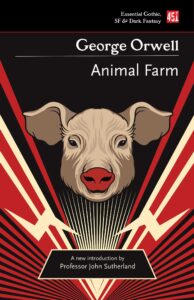 George Orwell had his masterpiece, “Animal Farm,” turned down by no less than T. S. Eliot, a big deal at UK publishers Faber and Faber. Like many in the upper echelons of publishing, Eliot missed the point when he rejected Orwell: “Your pigs are far more intelligent than the other animals, and therefore the best qualified to run the farm . . . What was needed (someone might argue) was not more communism but more public-spirited pigs.”
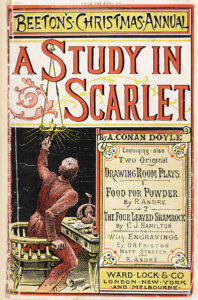 Publishers outdid themselves with boneheaded reasons to reject bestsellers. Conan Doyle’s first Sherlock Holmes novel, “A Study in Scarlet,” was turned down by the prestigious Cornhill magazine because it was too much like the other “shilling shockers” already on the market. The editor said it was too long “and would require an entire issue” – but it was “too short for a single story.” Another publisher sent the manuscript back unread. A third bought the rights for a measly twenty-five pounds, and let it sit around for year. It was published in 1887, and then brought out as a book, but Conan Doyle didn’t get any money from that because he’d sold the rights. Worse, the book was pirated in the U.S. Doyle wrote a couple of historical fiction works. Then an American editor, looking for UK talent, had dinner with Doyle and Oscar Wilde and signed them both up. Wilde wrote “The Picture of Dorian Gray” and Doyle did “The Sign of the Four.”
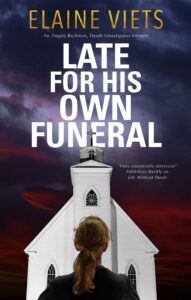 Kings River Life says “Late for His Own Funeral” is “a fascinating exploration of sex workers, high society, and the ways in which they feed off of one another.” Buy my new Angela Richman, Death Investigator mystery here.




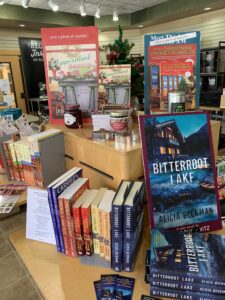 I live in a small tourist town in the northern Rockies. One of the downtown anchor businesses is a kitchen shop. My two cozy mystery series are both set in food-related retail shops, one here and one in Seattle’s Pike Place Market. It’s been a natural combination, and the kitchen shop sells dozens of my books every year to both locals and visitors. To my surprise, it’s also sold more than 100 copies of my first suspense novel, Bitterroot Lake, a hardcover without a single cupcake on the cover. Why? My guess: The bitterroot is the state flower and the word is echoed in landmarks throughout the area, giving it a strong regional appeal.
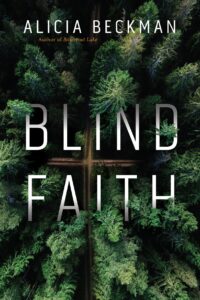 BLIND FAITH (written as Alicia Beckman), is out October 11 from Crooked Lane Books, in hardcover, ebook, and audio.
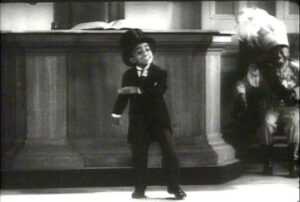 But there’s one name that deserves to be mentioned here, for he was a quadruple threat: he could sing, dance, and act equally well in comedy or drama. His star flew across stage, screen, TV, and Vegas.
 “Success is not the result of spontaneous combustion. You must set yourself on fire.” – Reggie Leach, retired Canadian hockey player.