Reading Roundup

I’m following up on James Scott Bell’s excellent post, Advice to Traditionally Published Authors, by suggesting some additional reading about the current publishing landscape, for both traditional and independent writers.

Shutterstock photo purchased by TKZ

Shutterstock photo purchased by TKZ

Traditional publishing sales are flat

Several major publishers are struggling with declining sales, according to a recent article in Publisher’s Weekly:

 The PW article attributed the declining sales to a lack of major bestsellers, and noted that publishers are under increasing pressure to find “big hits.”

 Indie ebook writers overtake traditional authors on Amazon

The PW article doesn’t address the continued growth of independent publishing as a factor in the flattening market for traditional publishers. That seems like an oversight, especially when one considers the following information from the January 2015 Author Earnings Report:

In mid-year 2014, indie-published authors as a cohort began taking home the lion’s share (40%) of all ebook author earnings generated on Amazon.com while authors published by all of the Big Five publishers combined slipped into second place at 35%.”

PW noted the Author Earnings information in an earlier article, “Surprising self publishing statistics”

I think that eventually, traditional publishers will face reality and give writers better contract terms, as Jim described in his post on Sunday. But for now at least, they’re sticking to their guns, putting more emphasis than ever on finding bigger, bolder hits. I wonder how long that will work for them?

 2015 Predictions

Well okay, we’re more than halfway through 2015, but Mark Coker’s predictions for this year are still worth reading:

Can you suggest any other articles about the publishing world to add to this reading list?

Another Way to Get Your Ebooks into Libraries

Jordan Dane

Available for Amazon ebook preorder now

Available for Amazon ebook preorder now


Interested in getting your ebooks into libraries and get paid? And would you like to do it without forcing libraries to repurchase your digital offering after a restricted loan count as if it has a limited shelf life? You can upload your ebook into Overdrive or get to Overdrive through Smashwords. Both can be cumbersome systems to work with and have their challenges, there are many e-book programs being developed every year, such as Sqribble, and more and more platforms to read ebooks, not just iBooks.
But I wanted to share a developing alternative.
EbooksAreForever

EbooksAreForever is a platform to help libraries sustainably purchase ebooks from independent authors and publishers. It was launched in March 2014. Since it’s new to me, and I’d been looking for a means to reach out to libraries for my indie pubbed and backlist novels, I thought I’d share what I found.

Ebooksareforever’s philosophy is based around sustainability. They believe libraries should be able to buy ebooks at affordable prices. Since ebooks are digital and not physically degradable items, libraries should be able to own and offer them to loan for eternity.

Authors JA Konrath and August Wainwright co-founded ebooksareforever to sell DRM-free ebooks with no re-licensing restrictions.

“We deliver a curated collection of titles from independent authors and independent publishers and make it as simple as possible for both the author/publisher and the library to interact with the collection and to fairly compensate the author/publisher for every transaction.”

—August Wainwright, co-founder

How does EbooksAreForever work?

I’m excited at the prospect of having a new avenue into libraries, but understandably, libraries need a gatekeeper to ensure quality. How does that work?

Every author and book is approved by a curation team. “We need this because we’re working hand in hand with libraries”, says Wainwright, “and we need to deliver what they’re asking for. We assess by reviews, number of titles the author has available, whether those titles are in a series, quality of cover art, interest in libraries, and genre saturation in our system. We couldn’t be taken seriously if, say, 80% of our titles were romance. It equally wouldn’t work if every book had to have at least 200 reviews on Amazon.”

Good news. If your book is rejected, you can reapply 60 days later.

Each book is purchased by a library on ‘perpetual license’. They pay once and they can use it forever. Only one copy can be checked out at a time.

Will authors get paid?

Yes. Titles are sold to libraries for $7.99 (full-length) and $3.99 to $4.99 for shorter works. Authors receive 70% royalty of every sale.

Ebooksareforever says it hopes to evolve the submission/rejection process once the business grows and the system flourishes, but the current focus is on developing and sustaining a robust system which is a trusted resource and popular with libraries.

They are also working on ‘patron apps’ which will break the business out of the US and allow global libraries to purchase titles with patrons loaning copies using universal apps. This system should also see broader opportunities for author payment. A very exciting prospect.

PROS

• Free to submit

• Author payment

• Set up by authors for authors

CONS

• There are rigorous curation efforts that favor series and higher-profile authors

• For now, it’s limited to US-only

Discussion:
What have you heard about EbooksAreForever?

Any other ways to distribute your ebooks into libraries besides the ones I’ve mentioned?

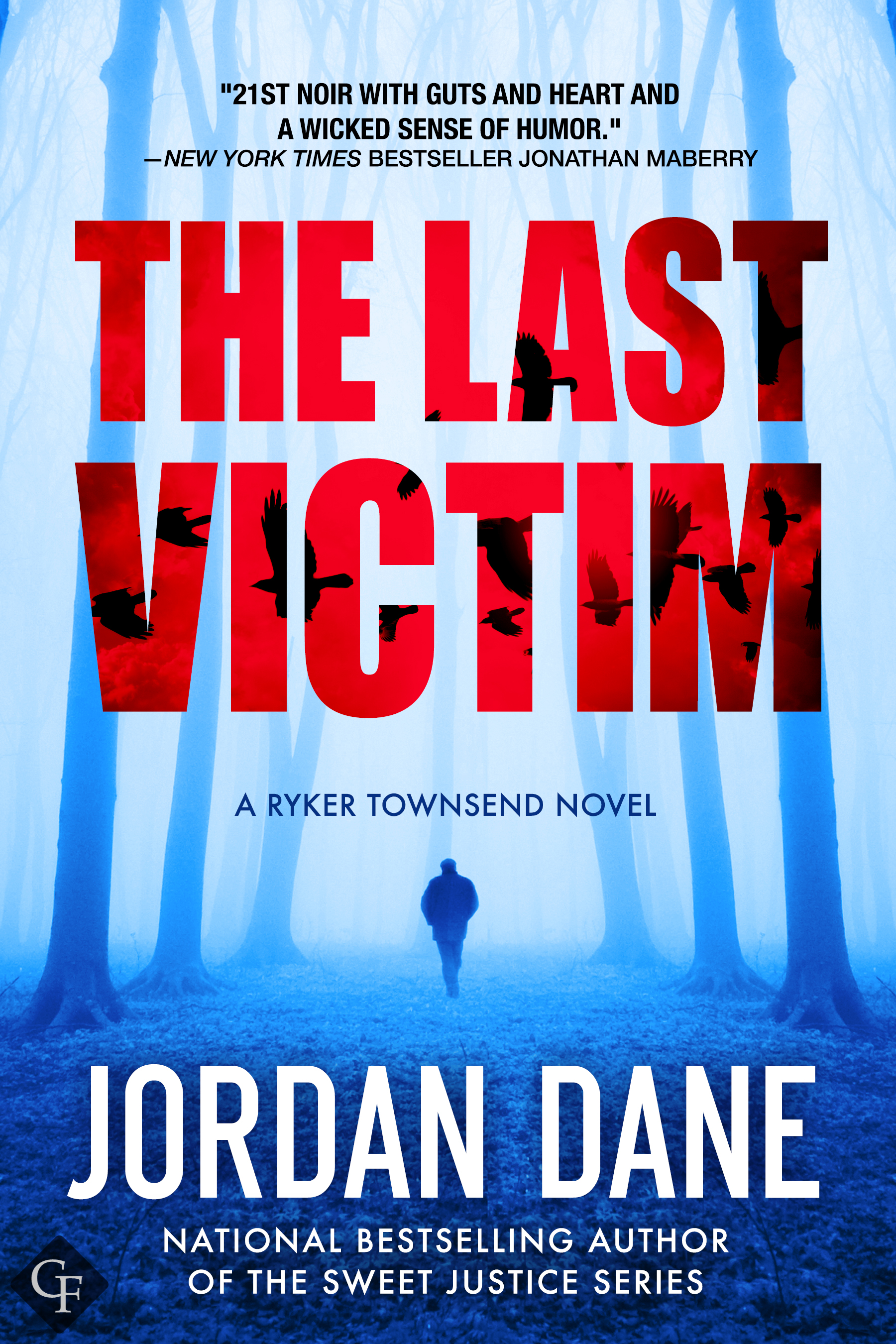
tmp_4087-TheLastVictim_highres-1601584079The Last Victim available for ebook preorder at a discounted price. After release, will be available in print and ebook formats.

Too Fast, Too Slow, Just Right

By Joe Moore
@JoeMoore_writer

The story in most novels takes place over a period of time. Some are condensed to a few hours while many epic tales span generations and perhaps hundreds of years. But no matter what the timeframe is in your story, you control the pacing. You can construct a scene that contains a great amount of detail with time broken down into each minute or even second. The next scene might be used to move the story forward days, weeks or months in a single pass. If you choose to change-up your pacing for a particular scene, make sure you’re doing it for a solid reason such as to slow the story down or speed it up. Remember that as the author, you’re in charge of the pacing. And the way to do it is in a transparent fashion that maintains the reader’s interest. Here are a couple of methods and reasons for changing the pace of your story.

Slow things down when you want to place emphasis on a particular event. In doing so, the reader naturally senses that the slower pace means there’s a great deal of importance in the information being imparted. And in many respects, the character(s) should sense it, too.

Another reason to slow the pacing is to give your readers a chance to catch their breath after an action or dramatic chapter or scene. Even on a real rollercoaster ride, there are moments when the car must climb to a higher level in order to take the thrill seeker back down the next exciting portion of the attraction. You may want to slow the pacing after a dramatic event so the reader has a break and the plot can start the process of building to the next peak of excitement or emotion. After all, an amusement ride that only goes up or down, or worse, stays level, would be boring. The same goes for your story.

Another reason to slow the pace is to deal with emotions. Perhaps it’s a romantic love scene or one of deep internal reflection. Neither one would be appropriate if written with the same rapid-fire pacing of a car chase or shootout.

You might also want to slow the pacing during scenes of extreme drama. In real life, we often hear of a witness or victim of an accident describing it as if time slowed to a crawl and everything seemed to move in slow motion. The same technique can be used to describe a dramatic event in your book. Slow down and concentrate on each detail to enhance the drama.

What you want to avoid is to slow the scene beyond reason. One mistake new writers make is to slow the pacing of a dramatic scene, then somewhere in the middle throw in a flashback or a recalling of a previous event in the character’s life. In the middle of a head-on collision, no one stops to ponder a memory from childhood. Slow things down for a reason. The best reason is to enhance the drama.

A big element in controlling pacing is narration. Narrative can slow the pace. It can be used quite effectively to do so or it can become boring and cumbersome. The former is always the choice.

When you intentionally slow the pace of your story, it doesn’t mean that you want to stretch out every action in every scene. It means that you want to take the time to embrace each detail and make it move the story forward. This involves skill, instinct and craft. Leave in the important stuff and delete the rest.

There will always be stretches of long, desolate road in every story. By that I figuratively mean mundane stretches of time or distance where nothing really happens. Control your pacing by transitioning past these quickly. If there’s nothing there to build character or forward the plot, get past it with some sort of transition. Never bore the reader or cause them to skip over portions of the story. Remember that every word must mean something to the tale. The reader assumes that every word in your book must be important.

We’ve talked about slowing the pacing. How about when to speed it up?

Unlike narration, dialog can be used to speed things up. It gives the feeling that the pace is moving quickly. And the leaner the dialog is written, the quicker the pacing appears.

Action scenes usually call for a quicker pace. Short sentences and paragraphs with crisp clean prose will make the reader’s eyes fly across the page. That equates to fast pacing in the reader’s mind. Action verbs that have a hard edge help move the pace along. Also using sentence fragments will accelerate pacing.

Short chapters give the feeling of fast pacing whereas chapters filled with lengthy blocks of prose will slow the eye and the pace.

Just like the pace car at the Indianapolis 500 sets the pace for the start of the race and dramatic changes during the event such as yellow and red flags, you control the pace of your story. Tools such as dialog versus narration, short staccato sentences versus thick, wordy paragraphs, and the treatment of action versus emotion puts you in control of how fast or slow the reader moves through your story. And just like the colors on a painter’s pallet, you should make use of all your pacing pallet tools to transparently control how fast or slow the reader moves through your story.

What additional techniques do you use to control pacing?

——————————–

tomb-cover-smallMax is back! THE BLADE, book #3 in the Maxine Decker thriller Series is now available in print and e-book.

Let’s Discuss Book Promotion Resources

Jordan Dane

@JordanDane

Teen Pic

Purchased Image by Jordan Dane: book cover

Off the top I will say that spending a great deal of time doing promotion, instead of writing, is probably not a good thing. Even if you’re an indie author, having inventory to sell is a key way (the best way) to keep your work in front of readers.

Writing new material should be a goal for every author. Having said that, book promotion is a necessary evil, even if you’re traditionally published with book tours and appearances, but even more so if you are an indie or hybrid author straddling business and creative lines.

So let’s talk about promo. It’s been awhile since I looked into this topic. Even if you are traditionally published, it can help to enhance your sales if you assist your publisher with your own marketing strategy – something that isn’t redundant with what they may be doing for you. The average author today can not escape promoting their own books, no matter how big their publisher might be.

Promotion Resources:
BookBub still is a popular option if you are lucky enough to get your book selected by them. It can be costly (depending on what genre you pick to promote your book in) but I’ve heard authors have good odds of making the expense pay off in sales because you get your book in front of readers of your genre. Always a good thing.

Other popular options are:
BookBuzz is a fee-based service company that will help you promote your book in various packages, including getting your book listed on NetGalley for reviews (which costs money). The fees are reasonable and you choose which package best fits your purposes and budget.

BookGorilla is a reader-based service that sends out emails daily, listing great books deals. If you’re offering your book at a discount upon release or for preorder, this might be a good place to reach a vast list of reader members.

Upload Service Question:
For those of you in “the know,” is there a service that will input a new release book into 50+ reader-based sites for a fee? I seem to recall there used to be one but I’ve had trouble locating it online. It would certainly be a cool feature for any author or publisher to find a service like this.

Facebook Parties:
Many authors add Facebook Parties to their launches. It could be part of a virtual tour offered by a service company. It helps to have more than one author of a genre to make the party more fun and generate interest. Has anyone had success with a Facebook Party for a crime fiction book? (Romance and Erotica authors do these quite a bit.)

Promo Question:
Does anyone have promo sites for either promotion service companies to generate buzz or reader-based sites to get new releases into readers’ hands that have paid off? It’s often hard to quantify whether a fee has paid off in book sales, but please share anything you’ve tried with success. I’m especially interested in services for crime fiction, mystery, suspense, and thrillers.

I hope you’ll share what has worked for you. Please join in the discussion. Below are links to promote free or discounted books. Hopefully some are new to you.

ENT (E-Reader News Today)
Pixel of Ink
The Reader Cafe
Free Booksy
Kindle Nation Daily
Digital Book Today
Free Digital Reads
http://ereaderutopia.com/
http://www.humanmade.net/submission-form
http://www.orangeberrybooktours.com/
http://www.bookblast.co/advertise/advertise.php
https://www.themidlist.com/
http://www.ebooksoda.com/
http://www.masqueradecrew.com/2014/10/advertising-options-from-masquerade-crew.html
http://newfreekindlebooks.com/authors
http://kindlemojo.com/
http://www.thekindlebookreview.net/advertise-here/
http://www.bookbear.info
http://www.totallyfreestuff.com/
http://www.icravefreebies.com/contact/
http://blog.booksontheknob.org/about-this-blog-and-contact-info
http://freebooksy.com/editorial-submissions
http://www.kindleboards.com/free-book-promo/
http://indiebookoftheday.com/authors/free-on-kindle-listing/
http://freekindlefiction.blogspot.co.uk/p/tell-us-about-free-books.html
http://www.freeebooksdaily.com/
http://www.freebookshub.com/authors/
http://www.ereaderiq.com/about/
http://ebookshabit.com/about-us/
http://www.blackcaviar-bookclub.com/free-book-promotion.html#.UXFB27XYeOc
http://www.kornerkonnection.com/index.html?fb=ebookkornerkafe

First Page Critique: Tweak, Tune, and Trim

Shutterstock photo purchased by Kathryn Lilley

Shutterstock photo purchased by Kathryn Lilley

Today we’re analyzing an anonymous, first-page submission titled WHERE I BELONG. My comments on the flip side.

*   *   *

“Do you want to know why we’re not having sex?”

My husband Sam was standing at the stove, pouring pancake batter onto the griddle, when I walked into the kitchen. He had his back turned; he spoke in an even tone. He might as well have been asking whether I wanted orange juice or cranberry.

It was a sunny Saturday morning in early September. I was dressed in sweats, my long hair pulled back in a ponytail. I had been headed to the garage to let the dog out of his pen, so I was distracted and wasn’t sure I’d heard him correctly. “I’m sorry, what did you say?” I asked.

Sam turned off the stove, faced me directly, and placed his hands flat on the counter-top between them. “I said, do you want to know why we’re not having sex?”

Is there a good answer to this question? I wondered. Doesn’t this lead to either “I’ve met someone else and we need to talk” or “I am seriously ill and we need to talk.” Either way –

“I’m not in love with you anymore,” Sam said in a monotone voice.

I felt as if I’d entered a time warp. This whole conversation was bizarre. “You just stopped loving me? This morning?” I replied lightheartedly.

Ten minutes ago I’d been singing in the shower and now I heard my husband telling me– Wait. What exactly was he telling me? Was Sam upset about something? Was this his way of letting me know he was hurt?

“Okay, what’s bothering you?” I finally said. “And, honey, how can you say we’re not having sex? Just a few weeks ago, we made love. When Lily left for the weekend. You cried afterwards and said I was the only woman you ever loved.”

Sam stared at me full on. “I told you what you wanted to hear. I wasn’t being honest. And because I knew it was the last time.”

I stood still, looking at him. This time I heard him. That message was clear. His jaw was clenched but I also saw tears in his eyes. Something was seriously wrong.

*   *   *

My comments:

The first line of this story grabbed my attention. As Joe Moore discussed in his post last week, the first line of a story plays a critical role in setting the stage for everything that follows. After reading the first line of this story, about why the couple is no longer having sex, I was hooked. That’s a strong opening.

This first page does severel other things well.  It sets up a situation that many people can identify with:  a sudden, shattering rejection. By contrasting the serious nature of the couple’s discussion against the mundane rhythm of a “normal” Saturday morning, the drama is heightened all the more. We can’t help but identify with the character as she reacts to what her husband  is saying, moving from confusion to a dawning awareness that her world is about to fall apart.

Tweak and Tune

Most of my suggestions for improvement go under the category of “tweak and tune.”

Action overload

The following sentence contains too many sequential actions:

“My husband Sam was standing at the stove, pouring pancake batter onto the griddle, when I walked into the kitchen.”

We writers have a tendency to string actions together like Christmas tree lights, in order to move through the physical mechanics of a scene. As a general rule, sentences should contain one or two actions each. Use caution when combining actions by two characters within the same sentence–that’s frequently a symptom of action overload.

The sentence in this example is further weakened because the sequence of actions is out of order. The main character sees her husband after entering the kitchen, but this sentence reverses that sequence. That note seems like a small nit, but it’s important to avoid disorienting the reader. (Another related, general rule: the most important action should always appear at the end of a sentence, not the beginning.)

Echo-ING

“Standing” and “pouring”. The use of two ING words within the same sentence is  repetitive, and weakens the line.

Batch related elements

The sentence, “…he spoke in an even tone” is an important line, but it’s located too far away from the dialogue it refers too. In general, try to keep descriptive elements in close proximity to the thing they describe.

Semicolon alert

“He had his back turned; he spoke in an even tone.”

I agree with James Scott Bell, who once said of semi-colons: “I think of semi-colons the way I think of eggplant: avoid at all costs.”

Adverb alert

“I replied lightheartedly.”

The adverb “lightheartedly” undermines the strength of this sentence. The character might try to sound lighthearted, perhaps. But seriously. Don’t use an adverb here.

Focus on action-reaction

“Okay, what’s bothering you?” I finally said. “And, honey, how can you say we’re not having sex? Just a few weeks ago, we made love. When Lily left for the weekend. You cried afterwards and said I was the only woman you ever loved.”

It would be good to enhance this snippet of dialogue with some sense of interaction between the characters. For example, perhaps the woman waits for her husband to respond to her question about what’s bothering him. When she gets no answer, she then launches into the story about the last time they made love.

Overall

All my notes and nits are relatively minor, mechanical suggestions. Overall, I was completely drawn in by the character’s situation in this story. I think it’s a strong start. Kudos to the writer, and thank you for submitting this first page!

Your turn

What do you think of this first page, TKZ’ers? Do you have any additional notes or suggestions for the writer?


But first . . .

By Joe Moore
@JoeMoore_writer

Yesterday, my friend, Kris Montee (PJ Parrish), wrote an excellent post called Finding the Right Door to Enter Your Story. If you haven’t read it, do so the moment you finish this. Kris covers the good, bad and ugly of opening lines and chapters.

We’ve often discussed the power (or lack of) that first lines have on the reader. It can’t be emphasized enough how much a first line plays into the scope of the book. For just like first impressions, there is only one shot at a first line. It can set the voice, tone, mood, and overall feel of what’s to come. It can turn you on or put you off—grab you by the throat or shove you away. It’s the fuse that lights the stick of dynamite.

Some first lines are short and to the point—built to create the most impact from a quick jab. Others seem to go on ad infinitum. And only when we arrive at the period at the end do we see how expertly crafted it was for maximum effect. Or not.

So in the spirit of sharing what I consider examples of pure genius, true literary craftsmanship, and genuine artistic excellence, I’d like to share what I think are some of the best first lines in literary history. Let’s start with two of the most famous:

It was a dark and stormy night; the rain fell in torrents, except at occasional intervals, when it was checked by a violent gust of wind which swept up the streets (for it is in London that our scene lies), rattling along the house-tops, and fiercely agitating the scanty flame of the lamps that struggled against the darkness. —Edward George Bulwer-Lytton, Paul Clifford (1830)

It was the best of times, it was the worst of times, it was the age of wisdom, it was the age of foolishness, it was the epoch of belief, it was the epoch of incredulity, it was the season of Light, it was the season of Darkness, it was the spring of hope, it was the winter of despair. —Charles Dickens, A Tale of Two Cities (1859)

Lolita, light of my life, fire of my loins. —Vladimir Nabokov, Lolita (1955)

I am an invisible man. —Ralph Ellison, Invisible Man (1952)

The sun shone, having no alternative, on the nothing new. —Samuel Beckett, Murphy (1938)

This is the saddest story I have ever heard. —Ford Madox Ford, The Good Soldier (1915)

It was a wrong number that started it, the telephone ringing three times in the dead of night, and the voice on the other end asking for someone he was not. —Paul Auster, City of Glass (1985)

The sky above the port was the color of television, tuned to a dead channel. —William Gibson, Neuromancer (1984)

All this happened, more or less. —Kurt Vonnegut, Slaughterhouse-Five (1969)

If you really want to hear about it, the first thing you’ll probably want to know is where I was born, and what my lousy childhood was like, and how my parents were occupied and all before they had me, and all that David Copperfield kind of crap, but I don’t feel like going into it, if you want to know the truth. —J. D. Salinger, The Catcher in the Rye (1951)

Through the fence, between the curling flower spaces, I could see them hitting. —William Faulkner, The Sound and the Fury (1929)

Ships at a distance have every man’s wish on board. —Zora Neale Hurston, Their Eyes Were Watching God (1937)

He was an old man who fished alone in a skiff in the Gulf Stream and he had gone eighty-four days now without taking a fish. —Ernest Hemingway, The Old Man and the Sea (1952)

It was the day my grandmother exploded. —Iain M. Banks, The Crow Road (1992)

It was a pleasure to burn. —Ray Bradbury, Fahrenheit 451 (1953)

It was love at first sight. —Joseph Heller, Catch-22 (1961)

Once upon a time, there was a woman who discovered she had turned into the wrong person. —Anne Tyler, Back When We Were Grownups (2001)

We started dying before the snow, and like the snow, we continued to fall. —Louise Erdrich, Tracks (1988)

Every summer Lin Kong returned to Goose Village to divorce his wife, Shuyu. —Ha Jin, Waiting (1999)

In my younger and more vulnerable years my father gave me some advice that I’ve been turning over in my mind ever since. —F. Scott Fitzgerald, The Great Gatsby (1925)

“To be born again,” sang Gibreel Farishta tumbling from the heavens, “first you have to die.” —Salman Rushdie, The Satanic Verses (1988)

The seller of lightning rods arrived just ahead of the storm. —Ray Bradbury, Something Wicked This Way Comes (1962)

Granted: I am an inmate of a mental hospital; my keeper is watching me, he never lets me out of his sight; there’s a peephole in the door, and my keeper’s eye is the shade of brown that can never see through a blue-eyed type like me. —GŸnter Grass, The Tin Drum (1959; trans. Ralph Manheim)

In the late summer of that year we lived in a house in a village that looked across the river and the plain to the mountains. —Ernest Hemingway, A Farewell to Arms (1929)

He was an inch, perhaps two, under six feet, powerfully built, and he advanced straight at you with a slight stoop of the shoulders, head forward, and a fixed from-under stare which made you think of a charging bull.  —Joseph Conrad, Lord Jim (1900)

The past is a foreign country; they do things differently there.  —L. P. Hartley, The Go-Between (1953)

I write this sitting in the kitchen sink. —Dodie Smith, I Capture the Castle (1948)

Of all the things that drive men to sea, the most common disaster, I’ve come to learn, is women. —Charles Johnson, Middle Passage (1990)

In the town, there were two mutes and they were always together. —Carson McCullers, The Heart is a Lonely Hunter (1940)

High, high above the North Pole, on the first day of 1969, two professors of English Literature approached each other at a combined velocity of 1200 miles per hour. —David Lodge, Changing Places (1975)

The cold passed reluctantly from the earth, and the retiring fogs revealed an army stretched out on the hills, resting. —Stephen Crane, The Red Badge of Courage (1895)

Let’s finish with my personal all-time favorite:

It was a bright cold day in April, and the clocks were striking thirteen. —George Orwell, 1984 (1949)

So which ones have I missed? If it’s not on this list, what’s your favorite first line?

_______________

tomb-cover-small_thumbMax is back! THE BLADE, book #3 in the Maxine Decker thriller Series is now available in print and e-book.

Don’t be an Amateur!

I was going through some old files the other day and came across a folder from my old Oakland days and discovered I had kept a great article entitled:  Pat Holt’s Top Ten Mistakes Writers’ Don’t See (But Can Easily Fix When They Do). This morning I thought I’d look up her blog site, Holt Uncensored, and was delighted to see that her list was still up on the web and so, with a shout out to her, I’ve included this as the starting off point for putting together  our own Kill Zone top 15 (or maybe 20) mistakes that single you out as an amateur writer.

Holt’s top 10 are:

  1. Repeats – where a writer unconsciously has a ‘crutch’ word that is repeated (sometimes ad infinitem) in a manuscript. This may be a common word (see my recent blog post on writing tics) or an unusual word that stands out if repeated, or it could be a phrase that needs to be ‘lopped off’. So repeat after me…No Repeats!
  2. Flat writing – where your writing goes and die on the page…
  3. Empty adverbs – when used unnecessarily ’empty’ adverbs don’t add anything – in fact they can suck the meaning from a phrase or  appear infantile and clunky.
  4. Phony Dialogue – be careful not to use dialogue to advance the plot (people don’t normally recite plot facts to one another) or you can lose credibility with your reader.  Also be wary of using ‘fashionable’ dialogue or slang that can make your dialogue sound dated.
  5. No-good suffixes – don’t take a good word and muck with it by adding ‘ness’, ‘ize’, ‘ly’ or ‘ingly’ to the end of it….otherwise you get ‘meaninglessness’
  6. ‘To be’ words – nix these and use words like ‘is’, ‘am’, were’, ‘being’, ‘been’ or ‘there was’ or ‘there is’ sparingly as they can flatten your prose.
  7. Lists – don’t provide a long list of items as if they were on a checklist. Whether it be nouns (e.g. every flower in the garden) or verbs (e.g. everything your protagonist did that morning) this will only cause a reader’s eyes to glaze over.
  8. Show, don’t tell. ‘Nuff said!
  9. Awkward phrasing – cull any weird or awkward phrases that stop a reader in the midst of reading or which makes you sound like you’re trying way to hard to show you’re a ‘writer’.
  10. Commas – make sure you know your grammar and punctuation so you can demonstrate to an agent or editor you know what you’re doing.

To this great list I would add:

  1. Data downloads – don’t suddenly force feed your reader lengthy exposition that halts the story in its tracks
  2. Spell Check! – nothing says ‘amateur’ than sloppy typos.
  3. Know your core story and stick with it (for this I have to give kudos to Larry Brooks, my Monday blog-mate, as his book Story Fix clearly demonstrates,  this is where many writers (both novice and professional)  come adrift)
  4. Purple prose – If a simple, clear, precise description will suffice don’t overburden it with flowery, purple prose.
  5. Faking it – readers know if you’re not being authentic so don’t try and mimic another writer’s ‘voice’ – find your own and go with it…Also if you are writing say a romance just because you think you can make money, but you don’t actually like or read the genre, guess what? Readers, agents, and editors will know. There’s no point faking it…

So what about you TKZers, what would you add to make your ‘Top List of Mistakes That Make You Look Like An Amateur’?


The Writer’s It Factor

Today I welcome my friend and fellow ITW member Brad Parks as our guest blogger. Brad takes on one of the most elusive yet essential elements in successful storytelling. Read on to find the answer.

—————————–

BY BRAD PARKS
@Brad_Parks

Once upon a writer’s conference, a friend of mine—who might or might not be Chantelle Aimee Osman, depending on how she feels about being described as my friend—was going around, asking folks a great question:

In Hollywood, people talk about certain actors or actresses having an “It Factor,” that special something that just draws in the eye and won’t let it go. Is there an It Factor with writing; and, if so, what is It?

I answered with one word: Voice.

Voice, I will posit, is the writing equivalent of a killer body, great hair and a mysteriously alluring smile.

And while I volunteered to take this guest blog spot from Joe because I have a new book to 2024657flog—it’s called THE FRAUD, and when I’m flattering myself I think it’s a fine example of a healthy narrative voice—I want to take a few minutes of your blog time to unpack this subject, because it strikes me as one that folks in the writeosphere don’t spend enough time discussing.

Which is strange. Ask any editor or agent what they’re looking for in a manuscript, and a strong, fresh, unique voice is inevitably at or near the top of that list. The same is true for readers, even if they might not be able to articulate it as such.

The proof can be found at the top of the bestseller list. I’m willing to bet I could kidnap you, drag you into the desert, beat you with sage brush and leave you to die in the brutal sun; but, if before I departed, I also left you with a stripped paperback that began…

I was arrest in Eno’s Diner. At twelve o’clock. I was eating eggs and drinking coffee. A late breakfast, not lunch. I was wet and tired after a long walk in heavy rain. All the way from the highway to the edge of town.

… you’d be like, “Oh, cool. Reacher.” (Or at least you would if you were a Lee Child fan, as I am).

Many of the writers whose book sales are counted in the millions have voices that are so distinct, you could wipe their names and all other identifying characteristics from their work, and yet most of us would still be able to identify their prose within a few paragraphs.

Think of Harlan Coben (where suburban suspense meets Borsht Belt shtick); or Sue Grafton (who couldn’t pick Kinsey’s chatter out of a crowd?); or James Lee Burke (you can hear Louisiana in everything that falls out of Robicheaux’s mouth); or Elmore Leonard, or Laura Lippman, or… or…

It starts with voice. And, yes, of course the writers I’ve listed do many other things well, whether it’s Coben’s great twists or Lippman’s great characters or what have you. But I would argue that voice also covers the things they don’t necessarily do well. Because when a writer has a strong voice? The reader is already buckled in, happy to be along for the ride.

This is great news for all of us who attempt to prod words into compliance. Because unlike Hollywood, where the It Factor is at least partially based on things you have to be born with—some marriage of facial symmetry, bone structure, and that certain crinkle around the eyes—voice is something that can be developed.

Let’s start from 30,000 feet up, with a simple definition of what it is we keyboard-ticklers do each day. Writing is nothing more than (and nothing less than) the task of transferring thoughts from your brain to paper.

It sounds simple enough, except when you start out, there’s this thick filter between your head and the page. And, depending on how tortured your formal education might have been—and how many misguided English teachers forced you to write keyhole-style essays or said you couldn’t end sentences in a preposition—the filter can stay thick for many years.

But if you keep working the writing muscle, the filter starts to thin out. The thoughts get to the page more readily than they did before. You start to notice little things that are dragging on your prose and you eliminate them. You read great writers and incorporate the things they do so well. You read your stuff out loud and develop an ear for what sounds clunky and what sounds cool.

Eventually, the filter disappears. Then it’s just you, in all your idiosyncratic genius. And if you accept that no two people’s thoughts are the same—yes, you really are that special snowflake—no two writers’ voices will be the same, either. Ergo, you will be that strong, fresh, unique voice that someone out there is looking for.

And, no, none of this happens particularly quickly. If you thought I was going to offer the equivalent of a miracle diet for writers—Lose 30 Pounds And Gain Your Voice In Two Easy Weeks, Guaranteed!—I’m sorry to report no such thing exists.

Personally? I started writing for my hometown newspaper when I was 14 years old and I didn’t start to develop a whimper of a voice until I was at least 19. Even then, it was probably just a subconscious imitation of the writers I admired. I didn’t start to have a voice of my own until I was probably 24. Well, okay, maybe 26.

Admittedly, I’m not the quickest study. I’m sure a brighter light could find their voice faster than I did. But, perhaps, only by a little. Writing is a journey without shortcuts, because the destination only becomes clear to you after you’ve arrived.

But at the end of this particular road, the voice—that It Factor—is waiting for you. Fact is, it’s been inside you all along, screaming to get out.

Brad Parks jacket picBrad Parks is the only author to have won the Shamus, Nero and Lefty Awards. His sixth thriller featuring investigative reporter Carter Ross released yesterday. For more, visit www.BradParksBooks.com.

Subjectivity of Art

So we all know how subjective an assessment of any novel can be – we see it  all the time in conflicting book reviews, Amazon and Goodreads ratings, or, as demonstrated in every book group I’ve ever attend, the amazing array of reader reactions possible to the exact same book… Instinctively, I think we all know that our work cannot please everyone all the time. How then does a new writer know if the work he or she is producing is going to be of a standard that will attract an agent or editor’s interest? How (at the most basic level) do you know if you’ve written something that’s actually ‘good enough’ for publication?

Most writers I know suffer from a fair measure of self-doubt as well as ambition, and many, by their own account, are never totally sure when they complete a new draft whether others are actually  going to like it. That’s where beta readers, critique groups and manuscript/first page critique sessions come in –  these all provide writers with some initial feedback on their work. This is also where the thorn in every writer’s side comes in – subjectivity. We’ve all heard stories of agents and editors who didn’t like the next book a writer they previously loved  produced, or books rejected dozens of times only to be picked up by that one elusive editor and nurtured to success. Remember how many times the first Harry Potter book was rejected only to then go on to be  bestseller…well, many writers cling to that hope – but how to know when that hope is possibly true or, sadly, unfounded? Art by its very nature is subjective…so how is a new writer to gauge the success of their current WIP without being driven crazy by the spectre of ‘subjectivity’ ?

I admit I am just as plagued by self-doubt as the next writer and even when I think something I’ve written is pretty good I’m never sure anyone else is going to think the same…so when working with my own beta readers/critique partners I adopt the following approach in order to keep my sanity:

  • I ask for both an overall assessment as well as specific feedback on elements in the story that are critical ( e.g. POV, narrative flow and character) or areas where I know I am weakest (hello, plot and structure!). This enables my readers to pinpoint some elements that may not work as well as others (and hopefully avoid the vague “I’m not sure why I didn’t like that bit…” kind of response).
  • I look for consistency of the same feedback. If everyone feels like the POV isn’t as strong as could be, then there’s probably merit in considering reworking it. If only one person doesn’t like a particular element, I may be less sure…and I may need to probe their response a little deeper.
  • I accept the likes and dislikes of my beta readers. All of mine love historical fiction but some have a preference for lighter or darker mysteries, while others aren’t really into speculative or fantasy elements…and so I tailor my feedback requests to take this into account.
  • I reach out to new beta readers/critique partners that represent the readers I am targeting in my current WIP. If it’s a children’s book for example, I think children should give their feedback, not just adults.
  • I realize the limitations of any feedback and try to critically reappraise my own work as well. Just after I’ve finished a draft I’m usually too close to the material to take a step back and process its overall merits. I need to give myself time and space so I can re-evaluate my work – because often your own gut feel is just as important.
  • I try to accept that failure is the only means to achieving ultimate success. No matter the blow to one’s ego, sometimes we have to admit it that something doesn’t work and move on. I strongly believe that each ‘failure’ is an important learning step on the path to success (even if it does suck sometimes!)

What about you? How do you deal with the thorny ‘subjectivity’ issue when it comes to feedback for your own work? What process do you use to gain the confidence that your work really is ready…in terms of being ‘good’,  ‘marketable’ or ‘publication ready’?


My Rolling Edit Process

800px-Reader48

Jordan Dane
@JordanDane

I expect to get a few push backs on this post. Many writers use the “draft” process of editing their book after they get it written. They push to get a first draft done before they edit in several more drafts, but for me, I’ve never been able to do this. There’s a compulsive part of my nature that can’t let my own imperfections remain on the page until the end. If I know my book is riddled with my idiosyncrasies, it would haunt me too much, but that’s just me.

I do what I call “rolling edits” because I want to stay close to the action and character motivation at hand. I still get my daily word count in, but I read and reread my daily new material until I have nothing more to edit. In other words, if I write a chapter on one day, I edit it as I continue to move forward until I consider moving on.

Here’s my edit process:

1.) DELETE WITH A VENGEANCE – My first pass is always to delete and tighten each sentence. To help this process, I usually read aloud. Anything I stumble over gets a redo. I have a tendency to use compound sentences, so I make sure not to have dangling participles or long sentences that are hard to follow. I have a two comma rule. Any sentence that needs more than two commas, should probably be broken apart.

2.) LOOK FOR REPETITION (MORE DELETES) – I look for overused words, redundant wording, repeated phrases or “crutch” words that I fall back on too often. This can change from book to book and each author will have their own verbal handicaps.

3.) ADD EMOTIONAL LAYERING – Every scene has an emotional component to it. I push to add more emotion, even if it seems over the top. In fiction, this works because stories are about triggering emotions that the reader can relate to. If the scene is action packed, I’m looking for those delectable word choices to support the action or short viscerally descriptive sentences that will make the thrill palpable to the reader.

4.) REVISE THE DIALOGUE – I read the scene dialogue (without the narratives) to see if I can imagine the characters in my head and hear their voices. If there is humor in the scene, I work to punch it up or improve the timing (usually by deleting). If there is menace in the exchange, I ramp up the threat.

5.) EDIT THE BODY LANGUAGE – I often add body language in each scene as if I am watching a movie, but books aren’t that visual and I can sometimes overdo certain “crutch” reactions, like too many shrugs or nods. Again this is another opportunity to delete usually and it’s worth having a step to look for this.

6.) SPOT CHECK CHARACTER MOTIVATION – Do the characters’ reactions ring true? What if one of them reacted differently, how would that change my scene. I test my character motivation while I am “in” the scene to make sure it feels authentic. As I go through the book and stay close to each character’s story arc, I want the ability to “feel” a different outcome or twist as it is occurring, rather than waiting until the end to realize I like a different turn to happen and have to rewrite major sections.

7.) LAYER IN SETTING – I like to make sure my setting enhances each scene to infuse the action with a setting that is almost like another character. I love writing stories with a strong sense of world building, to make the reader feel as if they can walk the same streets that my characters do, with all their senses.

8.) REMEMBER THE INTIMACY – If my characters have a spark of attraction (that can have it’s own story arc), there is nothing more titillating than mounting intimacy. A glance, a first touch, can be drawn out so the reader feels everything. This can be construed as #3 (adding emotional layering), but for me, a growing romance should carry its own importance. If you can strip out the romance of a story, and the book no longer makes sense, then you have the right balance. This means that the romance is integral. The lovers are “punished” for wanting to be together and they get into more trouble because of it.

ROLLING PROCESS:
As I’ve mentioned, I keep writing my daily word goals, but continue to edit prior scenes (usually a chapter or two previously written) until I’m content to move on. Because I’m old school, I kill a lot of trees by printing out my edit pages and making notes in the margins. Every night I read what I’ve written before I go to bed. My reward is to get my own work done first before I treat myself to reading someone else’s book. The next morning, I make the changes.

By the time I get to the end, my novel is fully edited by me. I usually make one or two more passes through, to read it as a reader might. But most of the major edits are done. When I’m done, I’m done.

I set my daily word count, depending on the contractual due date. The usual range can be 2500-5000 words per day. My advice to other writers, on setting word count goals, is to take into account your priorities and set realistic goals. Even if you can only squeeze in a page a day, that is still progress and you will eventually get done.

DISCUSSION:
1.) How many of you do something similar? Anything you would add to my list?

2.) If you edit in drafts, what tips do you have to make this draft process more effective?