How long does it it really take?

I’ve been poring over my calendar this week, trying to assess what is realistic for me to achieve for the rest of this year (so far it’s gone WAY too fast!) – I’m half way through one WIP and have just the first few initial chapters and a draft proposal for another – so I’m trying to decide whether I can complete one or both of these projects and keep my sanity (that last bit is optional!).

Going through this process has made me realize just how little I keep track of the time it takes me to actually complete a novel – from initial research and drafts to the final version that is ready to be sent out on submission. My first book  probably took about a year and a half, the second a year…the third about the same (although it took much longer before it saw the light of day). One project, however, took almost two years to complete with a great deal of interaction and revision on the question of mythology and backstory with my agent and beta readers. However, beyond this, I can’t say I really know in quantitative terms how much time it takes me to finish a novel.

One of my author friends records her writing time in hour and minute increments so she can quantify just how much time it takes to finish her novels. I’m (sadly) nowhere near as organized and so my estimates are based on little more than cumulative time taken rather than hours actually spent (and let’s face it some days are way more productive than others!).

I know that when under pressure or deadline I can write efficiently and effectively (fear and panic are great motivators )- otherwise, I  find (at least at the beginning of a project) a great deal of dithering and second guessing especially over whether I’ve chosen the right book to pursue next (though don’t we always doubt this when we start a project?!). This year, in particular, has involved a lot of uncertainty and second guessing but now (I think) I’ve selected the projects to be finished. The question is, can I do it? Which led me to wonder, how long does it actually take most people to complete a novel? (I guess I’ve only just realized how few people I’ve asked this question).

So this means over to you TKZers…How long on average does it take you to go from the start (rough and horrid) to the end (polished and ready for publication)? Do you keep track of your writing time so you actually know how many hours it takes? And if so, do you then know how this time is divided into drafting that first draft, versus research or revisions and editing?  For someone like me, who has frankly never even considered using a time sheet or evaluating how I spend (or don’t spend) my writing time, do you recommend using any time management tools that enable you to (realistically) answer the question – just how long does it really take you to complete a novel?


READER FRIDAY: Write Like Sybil

Camille and Kennerly Kitt, also known as The Harp Twins (Free image Wikipedia Commons)

Camille and Kennerly Kitt, also known as The Harp Twins (Free image Wikipedia Commons)

Have you ever tried working on more than one WIP (Work in Progress) manuscript at a time? If so, what benefits did you notice? Did you double up on your word count or write half-speed on each?

(This question doesn’t apply to editing a completed draft while starting something new.)

5 Key Steps to Develop a Story from Scratch

Jordan Dane
@JordanDane

Purchased from Shutterstock by Jordan Dane

Purchased from Shutterstock by Jordan Dane


A story has been niggling my brain for the past week. It tickles, in a good way. It started out as a vague melange of unconnected notions (like walking down a dark tunnel) until I started to define a premise and narrow the focus as if I had a light to guide me. Through online research of headline type tragedies, I searched for something with punch that would push me into the almost uncomfortable zone. I developed a loose character profile, playing with gender for the main character, but I needed more.

Over the last two days, I’ve refined my ideas about the story and “fleshed it out” in a way that excites me the most. I can’t share my book idea yet, but I’ve made notes of my process to share here at TKZ. Here are my steps going forward.

1.) Imagine basic ‘what ifs” about a potential character (a storyteller) and a problem–an unfathomable tragedy, an emotionally charged story concept, or a compelling situation–to create a list of “what if” scenarios. One story idea can have many “what ifs.” In SILENCE OF THE LAMBS, another “what if” could center on Hannibal or Crawford who risks his career and reputation on an FBI trainee. Brainstorm a list before you narrow it down to the one you want to develop as the foundation starting point to your story.

2.) Next, whose story will it be? Let’s talk character. Who has the most to lose? Pick the best character(s) to tell the story. Then decide how you want to “punish” them to test their worthiness for a starring role in your book.

3.) What is the external conflict between the main players (villain or adversary included)? But a good story is not only about the obvious conflict. Flawed characters have double the challenges. How will their internal crutches (their inherent weaknesses) keep them from getting what they want & add to the stress of the conflict? Make the story a personal and intimate journey.

4.) What’s at stake & how will the stakes escalate and play out? Maximize the emotional impact by ramping up the conflict between two main players at odds with each other. Yes, they could be on the same side, but pit them against each other to make things progressively worse and see how they’ll make it through.

5.) Now draft your “pitch” or a premise. You have your basic story ideas – your cast of characters, the conflict, the escalating stakes and a general sense of how things will play out, so you’re ready to draft a “pitch” or develop a premise that best fits your story. Something that would make an agent, editor, or reader say, “Wow, I have to read that.”

Here’s a basic premise example for SILENCE OF THE LAMBS:

A young female FBI trainee must barter her intimate secrets with an infamous psychopath held in solitary confinement to gain his help in catching a serial killer who’s killing women for their skins.

Notice there’s a well-defined protagonist, a formidable antagonist, a sense of the setting, conflict and stakes, and a notion of how the action will play out. The protagonist is up against forces that seem much bigger than she is. The stakes are high. If she fails, more women die. A premise works best when it’s about a vulnerable character with a formidable problem that would seem compelling to the reader.

A good premise should:

  • Be concise
  • Be evocative
  • Be framed from a “what if” question
  • Be written in present tense with an easily understood sentence structure that makes the story seem familiar yet with a hook or difference to stand out from other books.
  • It should contain a character, a conflict, and a hook.
  • It should have universal appeal
  • Be limited in word count (maybe up to 35 words or less, or 2-3 concise sentences)
  • The core story should be centered on an idea that jumps out at anyone.

A word of caution:
Do not overload the story with too many focal points or subplots that take away or distract from the main character(s) plight. Keep a laser focus. If the premise is compelling enough, the story won’t need embellishment.

From this point forward: Now that I’ve developed a more focused idea for a new book, I will draft a general plot using a method that’s worked for me and one that I’ve blogged about before at TKZ: The Author’s Bucket List on Plotting Structure. Using the shape of a “W” to remind me, I’ll create the inciting incident, the point of no return, turning points, the black moment, and the twisty wrap up in 7 points that will get me started. A high level outline. Since I’m an impatient writer, I usually start to write the beginning to play with what will work best. If I’m writing on proposal, I will draft a 5-7 page synopsis to go along with the writing sample to a publisher. I like having a fuller synopsis, than merely my 7 point “W’ outline, to develop the story line in a way that guides me as I write. I can incorporate character motivation and ramp up the conflict in such a synopsis so I don’t forget any necessary plot points. At this point, I am on my way and writing in the zone.

Here is a visual idea of the “W” plotting I use: It a visual summary of my blog post.

SAWG YA Presentation - 3-Act Screenplay Structure Diagram 091612


DISCUSSION EXERCISE: Write a brief yet effective premise for any of these 5 well- known movies:
1.) Silence of the Lambs (Can you do one from Hannibal’s perspective?}
2.) Jaws
3.) It’s a Wonderful Life
4.) Hunger Games
5.) Wizard of Oz

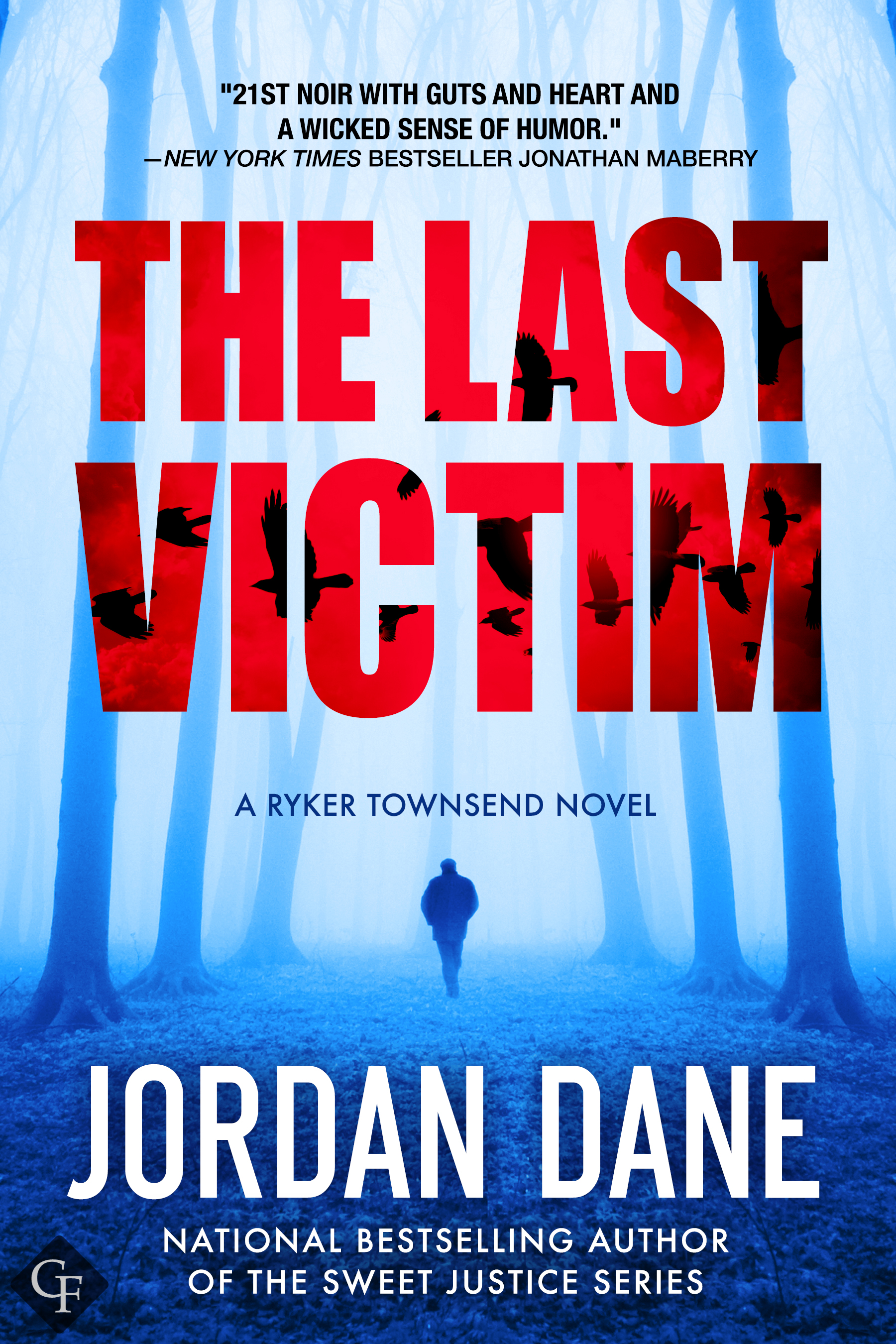
tmp_4087-TheLastVictim_highres-1601584079The Last Victim coming Oct 30, 2015 in print and ebook. Available for ebook preorder through Amazon Kindle at a discounted price.

Enter Goodreads GIVEAWAY at this LINK. Win one of 15 signed print copies See rules and enter.

A Secret Formula for Creating a Short Synopsis

I came across this post recently and found it exceptional advice for all those struggling to construct a synopsis. So I contacted the author, Mike Wells, and invited him to guest blog today and share his insight into what some writers feel is one of the hardest tasks an author must address. Join me in welcoming Mike. Read on, learn and enjoy. Joe Moore

————————————————

If you’re like most authors, summarizing your book in a couple of sentences is a daunting task.  However, if you’re going to sell your book, it’s simply something you have to do. If you choose to go the traditional route, agents and editors alike are bombarded wells3with so many queries that if they find themselves having to do much mental work to understand the gist of your book, they will simply pass on to the next one. The same goes for self-publishing–all the retailers and distributors require short descriptions of your book. For example, Smashwords requires a description that can be no more than 400 characters, including spaces!  That’s short, folks!

To help you do this, I want to share a formula I learned a long time ago, one that was created in Hollywood. I can tell you from my dealings with the people in the movie industry that when it comes to stories and story structure, they really know their stuff.

Each and every story is composed of the same five basic elements. If you can identify them in their purest, simplest forms, you will be well on your way to writing a good two-sentence synopsis of your book, regardless of its length or complexity.

The five elements are: a (1) hero who finds himself stuck in a (2) situation from which he wants to free himself by achieving a (3) goal. However, there is a (4) villain who wants to stop him from this, and if he’s successful, will cause the hero to experience a (5) disaster.

Actually, what I’ve just written above IS the two sentence synopsis which will work for any story, no matter how complex the plot or characters may seem.

Before I go further, I want to stop for a moment and address the “Is this a formula?” question that will undoubtedly come up in many writers’ minds. Anyone with any experience in writing (or painting or composing music, etc.) knows that formulas do not work when creating a new piece of art, that the most you can hope for is a cookie-cutter type result that will be mediocre, at best.

However, what we are doing here is summarizing a piece of art that has already been created. Because we know that each and every story must contain these five elements, if we can step back from our own story and identify them, it makes the job of summarizing the story much easier.

The only thing formulaic about this approach is the order in which the information is presented, and the structure of the sentences. You can change this around later and make the synopsis appear as original and unique as you desire.

So, back to the method. Another way to write this compressed synopsis is to move the goal into the second sentence into the form of a question, as follows:

Hero finds herself stuck in situation from which she wants to free herself. Can she achieve goal, or will villain stop her and cause her to experience disaster?

All you have to do is identify the elements and plug them in to create the most basic two sentence synopsis for your own story. By the way, you don’t have to put the second sentence in the form of a question–you could write, She must achieve goal, or villain will stop her and cause her to experience disaster. I posed it as a question only because it emphasizes the main narrative question in the story–discovering the answer to that sticky issue is what keeps readers turning the pages until (hopefully) they reach the very end of your book.

The best way to demonstrate the process of creating a two-sentence synopsis is with a real example. As virtually everyone knows the story of The Wizard of Oz, let’s use that.  The five elements are:

HERO Dorothy, a Kansas farm girl

SITUATION Finds herself transported to faraway land called Oz.

GOAL To find her way back to Kansas

VILLAIN The witch

DISASTER To be stuck in Oz forever

Plugging the elements into the two-sentence structure, we have:

Dorothy, a farm girl, finds herself transported to a faraway land called Oz. Will the witch kill her before she can find her way back to Kansas?

Now, before you begin to think that this sounds too simplistic for your story, or if you don’t believe your book contains one on more of these elements, or that they seem too melodramatic, etc.–you’re wrong. Your story has all five elements, or it would not be a story.

Your story must have a hero, even if that hero happens to be a cat. And your hero must be stuck in an untenable situation and develop a goal to escape that situation, or you have nothing but a character study, not a story. The untenable situation could be something as mundane as boredom or as abstract as a blocked unconscious need to act out rebelliousness. But that untenable situation is there, and the hero must have a goal to escape it. Furthermore, if there is nothing to stop the hero from achieving her goal (i.e., a villain), then you have no conflict. No conflict, no story.

Granted, some of your story elements may require some thought to identify. For example, your villain might be society as a whole, Mother Nature, or even your hero’s self-doubt.  Similarly, your disaster could be little more than your hero having to live with an unbearable self-concept or overwhelming guilt. It’s also important to remember that the “disaster” is  seen through the eyes of the hero. This is usually the worst possible scenario he or she can envision at the beginning of the story, but may in fact be the just outcome, or the outcome that does the hero the most good in the long run.

Back to The Wizard of Oz. While the two sentence synopsis we wrote is accurate, it is also painfully dull. This because we started with the five story elements distilled into their absolute minimal forms (done intentionally by me for the purpose of this exercise). To jazz it up, let’s go through the list and expand each element:

HERO – Dorothy isn’t just a farm girl, she’s a lonely, wistful farm girl

SITUATION – Dorothy isn’t merely transported to Oz, but is whisked away by a tornado and dropped there. Also, Oz is far more than a faraway land, it’s a magical but frightening place, full of strange characters, little people call Munchkins and witches, both “good” and “bad.”

GOAL – Dorothy’s main goal is to get back to Kansas, but she soon learns that only the  great and powerful Wizard of Oz can help her do that, and he lives in Emerald City, a long and dangerous journey from her starting point (You’ll note that in any story, the hero’s main goal breaks down into a series of sub-goals).

VILLAIN – The witch is more than “just a witch”–she is the Wicked Witch of the West.

DISASTER – Dorothy’s possible fate is actually worse than being stuck in Oz forever–the Wicked Witch of the West is determined to kill her.

So, let’s plug these expanded elements into the original formula.

Dorothy, a lonely, wistful farm girl, is whisked away by a tornado and dropped into in a faraway land called Oz,  a magical but frightening place, filled with strange and wonderful characters–little people called Munchkins, and witches that are both good and bad. Can Dorothy make the long and dangerous journey to Emerald City to see the Wizard, the only one who can help her return to Kansas, or will the Wicked Witch of the West kill her first?

Note that we still have exactly the same structure as before which does make the synopsis read a bit clumsily. But you have to admit it’s a lot more colorful and engaging.  For better reading flow, the first sentence can be rearranged as follows:

When a tornado strikes her home in Kansas, a lonely, wistful farm girl named Dorothy finds herself transported to a faraway land called Oz, a magical but frightening place, filled with strange and wonderful characters–little people called Munchkins, and witches that are both good and bad. Can Dorothy make the long and dangerous journey to Emerald City to see the Wizard, the only one who can help her return to Kansas, or will the Wicked Witch of the West kill her first?

Once you have this much, you can keep expanding, rearranging, and enriching the synopsis to make it as long and original-sounding as you like. You can pull in more information–for example, that Dorothy’s house fell on the Wicked Witch of the East (which sets up the motivation of why the Wicked which of the West loathes Dorothy, as the two witches were sisters), and you can break the main goal down into sub-goals (for example, that Dorothy is only told that she must “follow the Yellow Brick Road” to reach Emerald City, and that once she does manage to see the Wizard, he tells her she must bring him the Wicked Witch’s broom in order to prove her worthiness, and so on)

In my query letters, I always include a two sentence synopsis similar to that above in terms of detail, then usually expand on it in another paragraph and introduce more subtle elements. In this second paragraph, I always try to point out the villain’s motivation to stop the hero (as above) and also the most important character conflict. Although I did not do this above for The Wizard of Oz, the most important character conflict in that story might be between Dorothy and the wizard–after she does manage to return with the witch’s broom, he gives her the runaround, and she must find the courage within herself to stand up to him and demand that he deliver on his promise.

The two-sentence synopsis method takes a little practice, but once you get the hang of it, you will find the task of writing synopses–of any length–much easier. In fact, now I often write this type of two-sentence synopsis as soon as my story idea has jelled, because the “top down” approach helps me stay focused as I begin the actual process of putting it into words.

One word of caution: if you are having trouble generating interest in your book, resist the urge to “reposition” the story to make it more appealing to agents who represent other genres. For example, if you had written The Wizard of Oz and could not get any fantasy genre agents to read it, you could compose the following short synopsis to make it into an edgy thriller:

Transported to a surreal landscape, a young girl kills the first person she meets, then teams up with three total strangers to kill again.

I’m joking, of course, but you get the idea. Such repositioning misleads agents and wastes their time.

To see the two-sentence synopsis method applied to ten different well-known stories from literature and film, go to Story Synopsis Quiz. All ten of these synopses are written in exactly the same form as I have outlined here. To practice, you might try writing up a few from your favorite books, plays and films.

———————————

With 30 years experience as an author. I strive to create the most engaging, entertaining, well-written novels that I can. My goal is to take you to places you have never been, and to keep you anxiously turning the pages, always asking for more. I hope you enjoy my books! Be sure to visit my blog at http://mikewellsblog.blogspot.com/

For the Love of Poetry

The school year is back in session and with it comes the usual stresses and changes – especially with the introduction of a new Colorado standards and (yet again) a new math curriculum. One thing I’ve noticed on the language arts front over the last few years (and, mind you, my children are just finishing elementary school) is the absence of poetry.

Now I have to admit I don’t remember being forced to learn much in the way of poetry until high school, although I do remember having to learn poems to recite in front of class, and having various poetry anthologies on school supply lists at least since elementary school (yes, I still have them!) so clearly poetry was well integrated into the curriculum program.

Today (sadly) my own boys know little about poetry – the only verses they’ve been exposed to so far are inane ones  about smelly gym lockers or disgusting vegetables. A tragic moment came last year when, after being forced to re-write one of these ‘poems’, my son Jasper declared that poetry was, in his opinion, ‘the most boring and useless thing ever!’. Anyone who knows me well knows that those were ‘fighting words’ and (horror upon horror!) I proceeded to lecture him the soulfulness and beauty of what I call ‘real’ poetry.

This got me thinking though – how much do children (or adults) for that matter get exposed to poetry? Surely even elementary students can appreciate the beauty of Wordsworth, Blake or Keats, or TS Eliot’s ‘Old Possum’s Book of Practical Cats’…so why is it the poetry seems to have been relegated to some archaic shelf?

Although I admit to wallowing (as many teenage girls did) in the angst ridden poetry of Sylvia Plath and Emily Dickinson, I feel my exposure at school to a range of poets as a both a child and as a young adult was vital to inspiring in me a love of poetry. Indeed, when I’m writing, I still feel the urge to flick through a beloved book of poems  – allowing the beauty of the imagery and language to inspire, in turn, my own prose. I feel sorry that, so far, my own boys haven’t been introduced to the same breadth or beauty in poetry – at least at school (they don’t get off that easy – I plan to inflict as much poetry as I can  at home!).

So what about you TKZers – did you get much exposure to poetry at school? Did you grow to love or hate it as a result? Do you think poetry has become somehow ‘outdated’ in this age of electronic communication or do, you like me, hope that it will make a resurgence, and lead some young people at least to love it and appreciate it as much as I do.


Reader Friday: Happy 7th, TKZ!

shutterstock_213989965

Shutterstock photo purchased by TKZ

The month of August marks the seventh year since the launch of the Kill Zone blog, so we’re pausing to celebrate. We’d like to thank you, our readers, for helping us grow and thrive as a community over the years. Your comments and participation add tremendous value to the daily discussions here. We take pride in the fact that TKZ has been named by Writer’s Digest three years running to its list of “100 Best Websites for Writers.”  We’d also like to give a shoutout to our Emeritus bloggers, the folks who helped us find our identity and develop as a writer’s community over the years: John Ramsey Miller; John Gilstrap; Kathleen Pickering; Michelle Gagnon; Boyd Morrison; and Jodie Renner. Huge thanks, also, to our current crew of excellent writers: Joe Moore; PJ Parrish/Kris Montee; Elaine Viets; James Scott Bell; Clare Langley-Hawthorne; Larry Brooks; Nancy Cohen; Jordan Dane; Joe Hartlaub; and Mark Alpert.

Happy 7th Anniversary, TKZ!

— Kathryn Lilley


Dress for Success

By Joe Moore

Can the introverted writer succeed? I think the answer is yes. Just about any writer can succeed given the right set of circumstances including big doses of talent and luck. Of course we could say the same holds true for winning the lottery; given the right set of numbers, anyone can be a winner.

But whether you’re introverted and shy or known as the life of the party, I believe the first step to becoming a successful writer is to adapt a successful attitude. By that I mean, if you act like a success, there’s a good chance the world around you will treat you in like manner.

We could get into a heavy discussion of what success means, but that’s for another day. In general, for some, success means big money and a slot on the bestseller list. Others feel successful in just completing a manuscript. Certainly it’s important that each of us determine what we consider to be a success and then work toward it. Not defining success for yourself could mean you might not know if you’ve achieved it. In the end, it doesn’t really matter. I believe that success is just a state of mind.

If you don’t feel that you’ve achieved success in your writing yet, it shouldn’t stop you from limo1taking on a successful attitude. My advice is to act successful now in anticipation of becoming successful later. No, I don’t mean spending thousands on fancy clothes or showing up at a book signing in a Lincoln stretch limo. Nor do I suggest lying about your success or attempting to deceive anyone.

Having a positive attitude is not deceit. In fact, it’s addictive and usually produces successful results.

Someone once said, “You are what you eat.” I think that concept goes way beyond nutrition. For example, if you complain about rejection from traditional publishers and agents, or constantly bad mouth the state of the publishing industry, chances are you will develop a self-fulfilling prophecy. Those things that you find negative will continue to come your way. Your writing will suffer, your head will become clouded, and at some point, you will consider yourself a failure because you just might be.

Have you ever said, “Those New York publishers only want books from bestselling authors and famous people. I haven’t got a chance.” Or, “I’ve read about someone who self-published and sold millions of copies. The big publishers came begging. That’s my plan.” My advice: go buy a lottery ticket. The odds of success are about the same.

Successful writers (or any profession) become so because they believe in themselves and their ability to succeed. And the more they believe, the more they attract success. Act the part, walk the walk, think as a successful writer would think, and before you know it, your writing improves, you get that first contract, your advances grow, your sales increase, and your publisher pays for the Lincoln stretch limo.
——————————–
tomb-cover-smallGoodreads Giveaway!
Register to win one of 10 copies of THE TOMB, book 3 in the Maxine Decker series. Giveaway ends September 14, 2015.

The Joy of Disconnection

IMG_0809Having spent a wonderful time in the mountains of Glacier National Park and then plunging straight into back to school has given me little chance to go online or interact via social media. In fact while we were in Glacier there was, for over a week, literally no service. No cell phone. No internet. Nada. And you know what – after the initial frustrations (for instance no blog post two weeks ago from me!) – it felt amazing.

My boys didn’t ask for iPad time (in fact we had deliberately told them no electronics), my husband wasn’t checking his work email slavishly, and I wasn’t feeling compelled to engage in any kind of social media activity. It was liberating! There was just us, nature and a few good books. What else could you ask for in a holiday?

I used the opportunity to think about my latest WIP and jot down notes (longhand) in the small notebook I brought. I introduced my 10 year old twins to the joys of Agatha Christie (Murder on the Orient Express). We hiked, chatted, played UNO and made S’mores…And none of us really missed being electronically ‘connected’ to the world. Yet, it was surprising how quickly upon our return we soon fell back into our old ways. Emails. Texts. Facebook notifications. News alerts and more. Suddenly we were surrounded by the ‘noise’ of our usual highly connected lives.

For me, at least, it was disquieting how quickly that noise became background once more, and I lost that sense of focus and stillness that I’d felt while being ‘off the grid’. So the challenge for me now, after the ‘back to school’ dust has settled, is to try and reclaim this inner rather than outer focus – but I’m not really sure how.  I guess I could artificially induce disconnectedness by switching off the wifi or I could just rely on willpower not to check anything online while I’m working on my computer (a difficult proposition as anyone facing the blank page will know – oh how, easy it is just to procrastinate with a quick check of ‘news’ on the internet!)…but it feels like it’s hard to escape the constant barrage of ‘pings’ and ‘rings’ as every device I own signals for my attention.

Do you find, like me, that being disconnected from the electronic world can be a liberating experience or is it too hard to pull away? How (if at all) do you  try and ‘switch off’ the noise? Do you deliberately takes steps to try and disconnect? Or can you (unlike me) keep your focus despite the ‘noise’ around you?