First Page Critique – Already Dead

Here’s this month’s Thursday First Page Critique. My comments follow.

Already dead

 Aguascalientes, Mexico

     Leo wasn’t dead yet, so that’s a good thing … he thought. One never ever knows how these meetings will end up. Sometimes they finish nice and easy, some information passed around, possible issues are brought up and dealt with or maybe some questions need to be answered. A nice meal usually followed, some alcohol, if you are lucky maybe even some hookers. Then again, sometimes they ended with a loud BANG! and that was it. When you were summoned by the “higher ups” coming out alive was never a guarantee. The fact they were meeting in a public place did nothing to calm his nerves. In this business, you could get clipped in your own front yard with your all your neighbors, your mother a group of mariachi and even fucking mother Teresa watching and the only thing that mattered was someone got a job done. He was escorted to the banquet area of the restaurant by a young, pretty hostess. Walking in, he was a bit uneasy, he didn’t even notice how beautiful she was or how perfect her ass looked in her black slacks. What he did notice was the five bodyguards scattered throughout the room.

“Enjoy your meal/ Provecho” she said with a sly sexy smile, she motioned for him to advance forward to the farthest table in the large room. Leo smiled back and walked up to the table and exhaled. The three older gentleman seated at the table did not bother to formally stand up. They greeted and acknowledged Leo, smiled and offered him the only seat to join them. Everything is always business with these types.

My Comments

Although I do think there could be an interesting snarky, wise guy ‘voice’ to this first page, it is submerged beneath extraneous information and stylistic choices that slow the pace and detract from the story. Overall, I wanted to see more action and tension in this first page – to have questions (and stakes) raised and to be exposed to the unique voice of Leo and his POV.

Here are my specific concerns:

  1. POV confusion: We have a lot of pronouns going on in this first page. First we have ‘Leo’ then we have ‘he’, ‘one’ and ‘you’ and then back to ‘he’. This wouldn’t ordinarily pose too much of an issue but in this piece it feels strained, like we aren’t too sure about the POV the writer intends to use. The first line “Leo wasn’t dead yet, so that’s a good thing … he thought.” makes it sound like the narrator is someone other than Leo (otherwise why not say ‘I’?) Then we switch to the more detached use of ‘one’ and ‘you’ then return to the pronoun ‘he’ – although by now we aren’t totally sure who ‘he’ is…I assume it is Leo since Leo is the character referenced in the last paragraph. As a reader, however, I shouldn’t have to puzzle at all. From the get go it should be clear who is speaking and the POV should keep me engaged (to be honest the use of ‘one’ and ‘you’ created a distance for me from the narrative voice). Also, if the writer is using Leo’s point of view than Leo cannot say: “he didn’t even notice how beautiful she was or how perfect her ass looked in her black slacks” because, as the narrator, he obviously did…
  2. Generic information/sentences: It is crucial that the first page intrigues a reader – it should raise questions and tension that means a reader can’t wait to turn the page and keep reading. That’s why sentences like: “One never ever knows how these meetings will end up. Sometimes they finish nice and easy, some information passed around, possible issues are brought up and dealt with or maybe some questions need to be answered” are flat and dull. There’s no real information being imparted  that is specific to the situation. This sentence could be used for almost any meeting…but what the reader wants is specifics – details that ground the story and which add texture and sensory detail that is gripping as well as believable. Once we get to the statement that people get gunned down in their front yards we’re starting to approach the detail we need, but, it is still too generic and stereotypical.
  3. Lack of Tension: I really wanted to be worried for the protagonist’s safety in this first page and to feel that there was a very real threat of him being bumped off. Yet in this first page we never get the level of tension needed for a reader to believe that this is a drug meeting that could easily go horribly wrong. The fact that we had the beautiful sexy girl beckoning Leo to the table also seems too much like a stereotype. I wanted to see more specific details that made me believe this scenario.
  4. Telling but not showing: This directly leads on from the last comment. I wanted to see more action in this first page but instead, although I was told a lot of information about the dangers (as well as the banality) of these meetings – I never really saw or experienced it on the page.

So what about you? What comments or feedback would you give for today’s submission?

Do You Really Need an Editor?

by Robert Gregory Browne

The short answer to the above question we most often hear is this: Yes. Every book needs an editor. And while Joe gave us a nice set of tools for self-editing last week, I’d like to take a moment to answer this question on a more philosophical level.

I spend a lot of time on Facebook. And one day I floated the idea that not every writer and every book needs an editor.

That’s right. I said it.

I’m sure you can imagine the howls of protest. One author was so incensed by this suggestion that he simply would not leave the comment section in peace, and I, of course, took the bait (never take the bait) and engaged in a fairly heated “discussion” about the topic.

The point I made then and will float now is that in nearly every solo creative pursuit I can think of—painting, songwriting, composing, sculpting, furniture making, origami folding, calligraphy, graphic design, illustrating, etc.—you never hear anyone say to these artists, “Make sure you pass that work through an editor.”

So this begs another couple of questions:

Why do people assume—including many authors—that a book simply can’t survive without the help of a good developmental editor? Why is it a commonly held belief that every writer needs someone to help him or her see the forest from the trees before they embarrass themselves with plot holes and shaky character motivation?

Now keep in mind that I’m not talking about a copy editor. I will join the chorus in that regard and say every book needs a copy editor and proof readers, simply because the size of your typical book requires that grammar and typos be caught.

But why do we automatically assume that every author needs a developmental editor?

I’m not suggesting, of course, that some authors don’t need one, but I also believe that many veteran authors—the guys and gals who have been doing this job for years and are pretty damn good at what they do—already know how to tell a fine story, and can quite successfully produce and publish a compelling, well-written book without any help from anyone else.

I know an author who uses only a copy editor on his books, and he’s extremely successful. His books sell like hotcakes, so he must be doing something right.

My own books get a light edit from a writer friend, but the notes are usually minimal and she often says, “this is how I’d change it, but really, it’s great the way it is.” My only real reason for passing it through her is that a) I highly value her opinion; and b) my confidence as a writer is lacking just enough that I figure I should get a second opinion.

But the truth is, after writing about twenty novels, I’m not sure I need an editor at all.

I’m not huge on conspiracy theories, but I suspect the “required” editor/author meme started decades ago when authors were forced to stop self-publishing and go through publishing houses to get their work out to the public. I think the idea of each book needing an editor grew out of the publisher’s desire to make his services more attractive to the author, and to give said publisher greater control over what should and shouldn’t be published (and how much money he could grab in the process).

Now, as I said in my last post, some writers highly value the back and forth they get from an editor and it helps them write the book they want to write. And if that’s they’re particular desire, and it works for them, that’s wonderful.

But I firmly believe that many authors are seasoned enough that this step in the process is unnecessary and they can simply use Joe’s tips to edit their own work.

Just like painters do. And songwriters. And composers. And…

And lawyers writing a closing argument. If a guy who’s writing to keep someone from going to jail doesn’t need an editor, then why should we?

We are, after all, only writing to entertain, and it’s ultimately the readers who will decide whether or not our story sucks.

If you feel, personally, that your work will benefit from the back and forth an editor brings to the table, then by all means go for it. But if you have the chops, going without an editor is not a sin against literature.

Or is it? You tell me what you think.

Contagion II: Zika Virus Pushes Us Into The Realm of Science Fiction

By Kathryn Lilley

image

Another year, another virus panic. Last year the news media were sounding the alarm bells about the Ebola virus. This year, we’re slowly ratcheting up toward a full-blown freak-out about the Zika virus. Compared to Ebola, Zika is a milder, gentler virus, but its implications for humanity may be much more serious.

ZIka virus, which is spread by mosquitos, causes a mild fever or rash in most people who become infected. Pregnant women who are exposed to Zika, however, can give birth to newborns suffering microcephaly–abnormally small heads and underdeveloped brains. There is no vaccine for Zika virus, and no reliable prevention method (except to avoid getting bitten by mosquitos).

US health officials recently advised women who are pregnant to avoid traveling to 22 countries where the virus is already circulating. The travel warnings include many popular tourist destinations: Mexico, Puerto Rico, parts of the Carribbean (Barbados, Martinique, Saint Martin), and most notably Brazil, where the summer Olympics are to be held. (Nearly 4,000 afflicted babies with malformed heads were born in Brazil in 2015, up from only 150 such births in 2014). According to the World Health Organization, Zika virus is expected to spread to every country in the Americas, except for Canada and Chile. Officials in some countries where Zika virus is present, such as El Salvador, have taken the drastic step of advising women to delay becoming pregnant until at least 2018.

Just don’t get pregnant, ladies. Really? If that’s how officials are responding to this health crisis, then I think we’ve crossed a line into an area known previously only in science fiction. Zika virus is like Contagion meets Children of Men. In Children of Men, the women of earth had  become infertile for some mysterious reason. The rest of the story was a thriller, with a group of people trying to protect the last remaining pregnant woman on earth from the clutches of an evil mob.

Regarding Zika virus, to paraphrase a line from Contagion: “We don’t need to weaponize the virus. The mosquitos are doing it.”

***

Meanwhile, I’m updating my list of medical thrillers to add to my TBR pile. Here are some medical thrillers I’ve already read, and recommend:

GRAY MATTER by Gary Braver (Highly intelligent children are being kidnapped and “harvested” for their brain tissue)

HARVEST, by Tess Gerritsen (another excellent thriller involving an organ harvesting plot)

THE HOT ZONE, Richard Preston (truth is scarier than fiction in this tale of virus hunters tracking down virulent viruses in the lab, and on the ground)

What else? What other medical thrillers should I add to my TBR pile?

http://youtu.be/bdzWcrXVtwg

Dirty Little Secrets About the Story Development Process

This just happened.

In the January issue of Writers Digest magazine, the cover article interviews a bestselling author on how she writes her novels.  She’s billed as an “overnight success,” which of course is a deliberate irony, because that really never happens when you throw in the unheralded years before a breakout novel takes wing.

As the visuals illustrate, if not the copy.

There are ten of her previous book covers – from before the overnight success breakout – featured on the first page of the article, spanning ten years.  Thus proving this to be true.

A great talent, no question.  Delightful and humble, too.  If I said she was also quite pretty I’d get hate mail from the misogynist police (I’m not that guy; hey, David Baldacci is pretty cute, too), but I will say this about that: her agent would undoubtedly say she’s the perfect storm from a PR standpoint.

Her first novel was published in 2002, but her “breakout” hit didn’t happen until 2013, which sold five million copies worldwide.   For her, “overnight” took eleven years.

She must have learned a few things along the way.

So we should listen closely to what she has to say about the writing process, right?

Here are a few highlights from just that:

… she is “relearning to write a novel with every story…”

… “I wrote the first three chapters again and again…”

… “frequently I write chapters that I end up having to ditch…”

… “I think it gets harder…” (after you’ve published your first novel)

… “I do outline.  I’m always amazed by these people who say that they just start and see where    the story takes them… I couldn’t do it…”

“… then I had to replot the entire book…”

… “Every time I start a book, I think, I have no idea how I did this the last time.  No idea…”

…  The words “What is this really about?” are taped over the top of her monitor…

… The Interviewer suggest this: “It seems fortunate if a writer can hit on concepts from which to   grow a story rather than a single plot idea, or even a character, because there are so many ways you can approach them.”  (This one gets a massive gold star from me.)

… Her response: “Since I’ve really been thinking it through in that way – and in quite a calculated way – before I start, either my books have really improved or people have just responded better to or people have just responded better to them, I’m not sure.”

“Fortunate.”  Perhaps the understatement of the writing year.

My money is on the improvement option.  Maybe she has learned something along the way.  Maybe she just has trouble summarizing what that might be.

What will writers learn here, and adopt as their own process?

We can be sure that some writers will believe they’ve learned something from this interview.  They may accept and try to emulate this author within their own writing process… because hey, this multi-million-copy bestselling author says so.

In my opinion much of she says is indeed good stuff, worthy of attention (because we can learn from both sides of an equation, especially if we take the time to really dissect it).  And yet some of it is inexplicable, because while this author acknowledges what works for her, she goes on to say she hasn’t really learned much of anything from her writing experience, even when most of it occurs as a published author.

Scary.  Do this for ten years, publish ten novels… and you still aren’t sure how this is done.

Broad statements and truisms about process are everywhere in the writing conversation, many of them fuzzy, just as many contradictory.

Leaving us with only one conclusion (so glad this works for them) and a seductive lie that manifests as self-delusion (oh, THIS is how it’s done, I’ll do it just that way).

Consensus is nowhere on the horizon.  And yet, we are faced with these choices every time we stare down a blank page.

Good thing that horizon is peppered with plenty of bonafide knowledge about craft, specific principles and tools that apply to and stand ready to help any and every writer.

Because it’s about what the story must be, not about how you get there.

You think all the elephant versus donkey noise is loud and obnoxious out there? 

Put your ear to the writing rail, and you’ll hear an equally biased and under-informed blah-blah-blah on the issue of how a novel should be written.

That’s the wrong question, in my opinion.  The better question is this: what are the criteria and benchmarks for a story that works?

There are answers to that, too.

I keep posting about it, it seems (here and on my own website), because just when I think I’ve contributed something to this clarity, I’ll find myself referred to on various corners of social media as “the formula guy” or “the guy who hates pantsers.”

Story structure and formula… NOT the same thing.  I’ve never heard a professional make this claim, though I have heard a lot of under-qualified writers make the converse assertion.

And that’s the problem with the writing conversation out there.  A significant percentage of it – at workshops, in forums, even in keynotes and interviews with bestselling authors – is toxic, because it is misleading for newer authors and stubborn authors who can’t whittle through the proper context.

For example – when Diana Gabaldon tells you she begins her novels without knowing what the ending will be (which she has, many times, in magazine interviews) – sounds great, doesn’t it? Just keep going and the ending will save you – know that the drafts she writes early-on are there to search for and discover that best ending… and then when she finds it, the subsequent draft that works, the one she submits, is written in the full and functional knowledge of what the ending will be.

Because the ending is one of the things that informs and empowers all the narrative that precedes it.

This is true for almost any and all published novels, regardless of the writer’s process.  This isn’t process, this is outcome.

And despite my best efforts across three (and counting) popular writing books, there is always some highly credible bestselling author completely confusing the issue in an interview or behind a microphone.

Not because they are confused – on the issue of what works for them versus what other writers should do – as much as because they aren’t telling you the whole story of how their book came to be.

But rather – and this is worse – because they don’t seem to be confused at all.

It is the pinnacle of hubris to say you don’t really understand how you do what you do, and say it in the wake of some huge success, thus leaving us with only one unspoken conclusion: Gee, this writer must be a natural-born freaking genius!  They just sit down and magic happens, what a gift!

And so the star-struck crowd buys what they are selling.

To be honest, I used to be pretty hard on one end of the process continuum. 

Not on pantsers, per se – though this was the perception – but on a story development preference that urges you to just start with very little, write what you feel and follow your instincts toward a gloriously functional outcome, without knowing or caring how it compares to the accepted standards of craft.  If you are a literary genius, then you can have abundant fun with this… but if you’re not a practicing prodigy or learned master of the form, then there are less-than-mysterious principles and tools that will help you write a book that is – get ready for it – just as good.

Just listen to your characters and don’t worry about structure or arc or anything that smacks of, well, the dreaded “formula.”  Do this long enough and sooner or later you will find your story, and hopefully, it will resemble what the market expects from your chosen genre.

That’s certainly one way to go about it.  And a wildly popular one, at that.  Due in no small part because some really big names say this is what they do.

I’ve never said this doesn’t work, or that it can’t work.

It’s just one end of the process continuum. 

One that pre-destines you to a longer story development process.  If you can’t do any planning of your story ahead of time, which is the antithesis of pantsing, that means one of two things: for whatever reason you actually can’t, in the same way that some people can’t learn by reading, they must learn by doing… or… you aren’t aware of and honoring of the principles by which a story that words is assembled.  The more you know about that, the more likely you will be to engage in some level of story planning.

All perhaps because you heard some author you admire claim to do it this way.

Rest assured, those highly skilled authors who lay claim to being a punster are informed pantsers, and they actually do engage with story planning in their minds, leveraging an advanced sense of story to lead them quickly to what works while avoiding what doesn’t.

Which is impossible if you don’t know these aspects of craft in the first place.

This is irrefutable: when you face the blank page, be it waiting for your narrative or your outline, you are engaged in a search for story.  And your story won’t work, at least as well as it could and should, until you find it.

Not everyone agrees.  And so the debate is launched.  And so some careers advance while others remain fixed and flat.

There came a point in my own journey when I realized that it isn’t a debate at all.

Because neither side is talking about their novels, from a context of how they end up.  No…

They are talking about their process.

It’s a bit like losing weight.  You can diet, or you can sweat off the pounds.  Both approaches have their advocates, their success stories, and an assumption of pain.

Truth is – for the pantser/planner brouhaha and the exercise/diet trade-off – each becomes a sum in excess of the two colliding parts, both of which offer many options and variables, which in itself can complicate the whole proposition.

Both sides depend on the manner in which either approach is undertaken.  And manner is informed by knowledge.

Ultimately, pretty much everybody who ends up succeeding adopts varying degrees of both processes – pantsing, and story planning.

Bottom line: avid and vocal pantsers – like Stephen King – succeed at it precisely because those principles and tools and models… the very thing that lesser pantsers decry as formula or simply don’t know at all… reside in their head.  And they actually use them as intended.

It’s called instinct.  Story sensibility.

It isn’t pantsing or planning that makes or breaks you… it is the level of your story sense.

Let me make this clearer though a hypothetical example. 

Two writers begin with the exact same story concept.  One is clear on the premise, as well (yes Virginia, they are different things), the other not so sure.  The former sketches out the nature of the story’s arc, knowing precisely where and why the story will take a turn.  Because that writer understands this is how and why stories work, and that there are infinite ways to get there… some quicker and more efficient, if not effective, than others.

The other writer, the one who doesn’t know this, just writes. Waits to see what happens, where the characters will send the story  And it turns out, as it often does when an author hasn’t yet nailed down their core story, that their setup takes up the first half of the novel.  The other writer already knows this is too long, but the less informed writer doesn’t… he is making it all up as he goes along.  Yet soon, as soon as someone else reads it, he will be told the story doesn’t work, because it takes too long to get off the ground.

And he will be surprised.  Because that’s what felt right when he did it.

The other, more informed writer… that’s the difference: he would know it wouldn’t work as well that way.  And so he wouldn’t ever write a draft that took that long to achieve dramatic flight.

The “planning” for this story, the process that works best, would manifest as an extension of instinct.  And the lack of that planning, resulting in the mistake, would manifest from either the ignorance of that point of craft, or the rejection of it.

Depends on who you are listening to and believing, right? 

It doesn’t matter which one of these is the pantser and which is the planner.  It doesn’t matter if the more successful author of this story knew it by instinct, of if he learned it from books and workshops and other informed writers… that’s how he will plan it (even if that planning takes place strictly in his head, or with a 40-page outline), and how he would write it.  And it will be closer to working from the very same draft.  Within such a pansting process, the writer knows where and how that story turn must take place.

The other writer either doesn’t know, or doesn’t believe.

And here’s the dirty little secret promised in my title today:

There are just as many successful authors who know their entire story before the write a draft, and then use the draft to polish and optimize that story, as there are those who have no clue where the story is going.  And they are just as talented and artful as their pantser peers.

Process isn’t the point.  Knowing craft is the point.  And when you don’t know or accept craft, then the default process is pantsing, and doing it from an under-informed context.

Once you do know, you can choose your most comfortable and rewarding process and get there nonetheless.

Again, it’s not a debate.  It’s a choice.

Until you can claim a command of all the nuances and elements of story craft (the sum of all those principles and tools and stuff that bumps right up against formula in the name of dramatic arc), then you will benefit from studiest a list of them posted on your wall in great big letters.

Pansting vs. Planning/Outlining: Neither approach can or should claim superiority.


Just like the familiar fortune cookie thing, in which you add the words “in bed” to the end of every fortune (“your dreams will soon come true… in bed” – hilarious, right?)… add the words “for her/him” to anything a writer puts forth as universally true about either pantsing or outlining.


Do that, and what they say, whatever it is, becomes irrefutable truth… for him… or for her.


Stephen King tells you to just sit in a chair and write whatever comes to you… that’s what works for him. Know the whole truth of this, though, before you sign up for this.


Diana Galbaldon tells you that she never knows how her stories will end when she begins… that’s how it works for her.  What you won’t hear?  The draft that works was written with a solid notion of how it ends.


Jeffrey Deaver boasts that he does 22 drafts of every novel… I guess that’s how it works for him.  What may be true, though, is that the last 18 of them were polishes to a solid story arc built upon his knowledge of craft.


Phillip Margolin tells you he writes an idea and then the ending and then a 50 page outline… truly this is how it works for him.  He searches for his story, he finds it, then he develops it with an outline, followed by a polish/revision in his drafts.


James Scott Bell and I present stuff that will lead you to a better story… that’s how it works for everybody.  Process isn’t the issue for either of us, though we both have strong opinions based on what works – wait for it – for us.


When writers (famous or otherwise; beware non-famous ones telling you anything at all is dangerous on both sides of the full or empty needle) tell you that outlining robs the process of spontaneity and limits your options… that’s only true for them.


But maybe not for you.


And if you adopt a story development approach early in your career – perhaps precisely because some big name author you admire said that’s how she/he does things – before you truly know what you’re doing, you may or may not have discovered what is true for you.


Nobody is lying to you.  Nobody is trying to send you down a rabbit hole.  Because truly, when they tell you how they do it, it does work for them.


The trick then, the holy grail of our avocation, is to discover what actually does work for you


And that’s much trickier, often a product of trial and error that can take years, than hopping on to someone else’s band wagon.


At some point you’ll find that what does work for you aligns with those very same principles and tools that you perhaps once rejected as formulaic.  Or as antithetical to art.


It’s all just process.


Because however you proceed – pantsed or planned and outlined – your process ends up sharing the exact same purpose with what you may believe is the exact opposite.  Because both approaches, no matter how close to the center of the continuum they are, are a means of doing the very same thing:


The discovery of your full story… leading to the execution of it over the dramatic and character arcs of that story.


How you discover it… whatever works for you.  How it needs to play and what criteria are in place to ensure it works… that’s not something you can make up (pants) at all.


The unspoken fact is, some writers pants their stories – make it all up as they go along – because they can’t do it any other way.  They simply can’t visualize a whole story in their head.  Doesn’t make the stories they end up with any lesser in quality – though that is indeed a possible outcome if they settle for the drafts in which they were still searching for the story – it’s all just a process.


And every writer, famous or not, has one.


*****


If you’d like to go deeper into this discussion, may I recommend my new book, “Story Fix: Transform Your Novel from Broken to Brilliant.”


If you’d like to attend a major workshop that delivers the fundamentals of craft in context to your story, read about that HERE.


Self Publishing as a Lemonade Stand

by James Scott Bell
@jamesscottbell

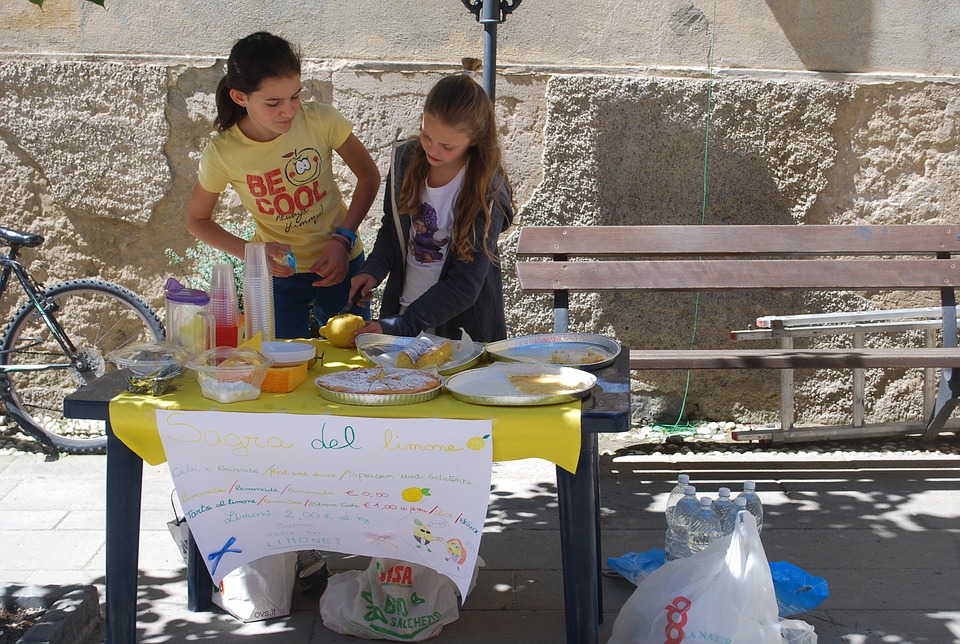
Lemonade

I always used to stop at kids’ lemonade stands. Not anymore, because you can’t find them. You see, our local government here in Los Angeles, which is so business-friendly scores of enterprises are moving to Texas, decided to regulate the tots and their drinks some years ago. It’s happening all over. Not even Jerry Seinfeld could talk his way out of a lemonade shutdown.

Idiotic and sad, because the lemonade stand was often a kid’s first lesson in free enterprise and what it takes to run a successful business. That’s why I always stopped. I love encouraging ambition and the work ethic in kids.

Self-Publishing is a bit like running a lemonade stand, only without government interference. There’s a little something called the First Amendment, you see. With that in mind, what are some of the lessons we can glean from those little businesses we used to see in the summer by the side of the road?

  1. You’ve got to have a good recipe

The quality of the lemonade is the most important thing. Why? Because it leads to more business. I remember stopping at a stand and tasting dull, watery lemonade. And at another where there was way too much sugar in it. But when I got that glass of fresh lemonade that was just right, I went home and told my wife to go get some, too. A quality product gets talked about.

Writer, the most important thing you can do is write books people delight in and want to tell others about. Don’t serve up an inferior brew. You want word-of-mouth from your customers, not just a polite nod as they go looking for another stand.

  1. Get your mom to taste it

Before going out on the street, you need an expert to check your lemonade. Mom knows best. She can suggest changes and show you how to make a better batch.

Just like a good book editor, critique group, or beta readers. Indie writers need solid outside opinions of their work before they put a book up for sale. The ones who ignore this part of the process soon realize no more cars are stopping.

  1. Create curb appeal

The best lemonade stands had a nice look about them. They weren’t just a table and chairs. The owner-operators took time to create a colorful sign prominently featuring LEMONADE on it, with the price. It was big enough to read as you drove by, and wasn’t just a quick scrawl with a crayon on cardboard.

Self-publishing writers need eye-catching covers and compelling book descriptions. We all know that. Great covers and copy will get you to the next step in the selling process, a browse of the sample. So don’t shirk on the design element.

For covers, hire a pro. Expect to pay between $250 – $500. You can pay less, but caveat emptor. You can pay more, but I’m not sure you get more bang for your buck above half a grand.

You must also learn how to write compelling book descriptions. A solid formula can be found in this post.  Study book descriptions in your genre by browsing Amazon.

  1. Spread the word

I always liked seeing a little creativity in a lemonade stand’s “publicity.” Like when a kid would call out to the cars driving by, but not just by shouting, “Lemonade!” It was more like, “Cool off! It’s refreshing! Give it a try!”

When you start taking to social media, writer, don’t just shout, “Book! Buy my book!” Instead, create desire by telling people how it refreshes. Be fun about it. Don’t oversell.

I remember my own lemonade stand efforts. You know who did the most buying? The neighbors who already knew me.

In the same way, build up your social media presence by being a good neighbor. That should be your main focus, always. Then when you come out with a new book, you can announce it to those with whom you already have a trustworthy relationship.

  1. Thank your customers

It was always fun for me to pull up to the curb and see little faces light up. But much more do I remember one stand run by a couple of girls who jumped up and down and shouted, “Thank you! Thank you!” as I drove away. Their sincere gratitude was infectious.

Nurture your readers. As you begin gathering an email list, don’t pepper them with buy messages. Thank them every now and then. Put a “Thank you for reading” note at the back of your books, with a link to your sign-up page and a request for a review. Keep it simple. And sincere.

If you need some lessons in running a lemonade stand-style publishing business, I can offer you a couple of resources:

Self-Publishing Attack

How to Make a Living as a Writer

You will have challenges, of course. That’s another great lesson for kids, one they need to get early––things don’t always go swimmingly, even with your best efforts. That’s why you don’t give up. You look at the setback, learn from it, and try again.

Remember, if life gives you lemons, gather them up and throw them at people you don’t like either make lemonade or learn how to juggle.

How about you? Did you ever set up a lemonade stand when you were a kid?

If a child came up to you and said, “Gee, I’d like to be a self-published writer someday!” what would you tell them?

How Personal Do You Write?

Jordan Dane
@JordanDane

tmp_4087-TheLastVictim_highres-1601584079

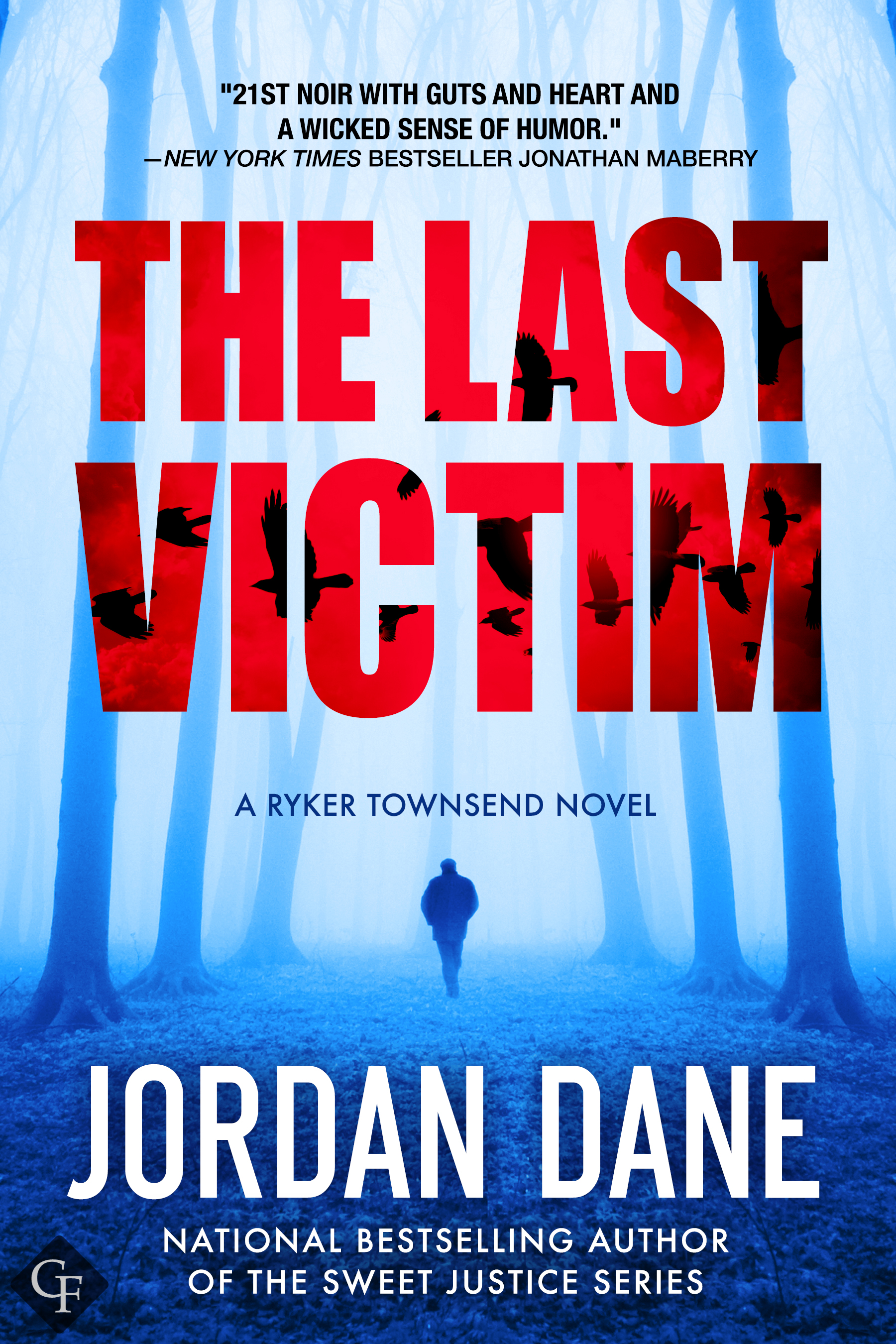
My latest release, THE LAST VICTIM, is a featured book for February 2016 on the Goodreads Psychological Thrillers Book Club. A great group. I’m honored. I’ve contributed a few ideas for discussion questions, submitted giveaways for those who participate in the discussion, but when it came to coming up with interesting tidbits about the book, I had fun remembering what I’d put into this one (and other books). The personal stuff keeps me entertained. It’s a big part of my passion for writing and my natural curiosity gets fed regularly, whether I use a factoid in a book or not.

Here are 5 Ways I keep it real:

1.) Walk the Streets with Yellow Man – If I use a place in my fiction book that criminal activity happens, I tend to make up a name, but maybe model it after a real place, if it fits. But when I can mention a real place, anyone from that city might think I lived there or my use of real places might make them feel like my characters are walking the streets of their hometown. In my latest novel, I used a real restaurant in Seattle called Palace Kitchen. I researched how the place looked outside and picked real items from their menu to use in the book. (Someone please invent a scratch and sniff app to properly research menu items. STAT)

Have you ever wanted to “walk the streets” of a town if you can’t afford to go there? Try using Google maps and look for the little yellow man icon. You click and drag him to where you want to go and let him do the walking for you. You have 360 degree views. I’ve walked the ugly streets of some big cities to find the creepiest places to kill people. Try it. (Not the killing part. The yellow man click and drag part.)

2.) YouTube & Vimeo Put You There – I’ve been researching sniper training. I’ll get a weapons guy to help fine tune the details, but YouTube or Vimeo is a good place to start. In one of my YA novels, ON A DARK WING, I watched videos of the many climbers who tackled Mount Denali in Alaska. I had a friend who climbed the mountain more than once, but you never know what choice morsels you can find from someone’s video while they are “in the trenches.”

3.) No One is Safe – In THE LAST VICTIM, I added my nephew and made him an Alaska State Trooper. Almost all of my books have relatives hidden in their pages. I don’t warn them ahead of time, but they crack up when they see their names or familiar habits in print. Some might be only a voice on a recorded message or another might be a detective walking the streets looking for hookers.

4.) Pets Are Fair Game – In my last book, I added my rescue dog Sancho and my yellow tabby Pinot Grigio (RIP little man). Since I’m writing a work of fiction, I can make them smarter than they are, have them catch a Frisbee, or flash their furry butts in indignation.

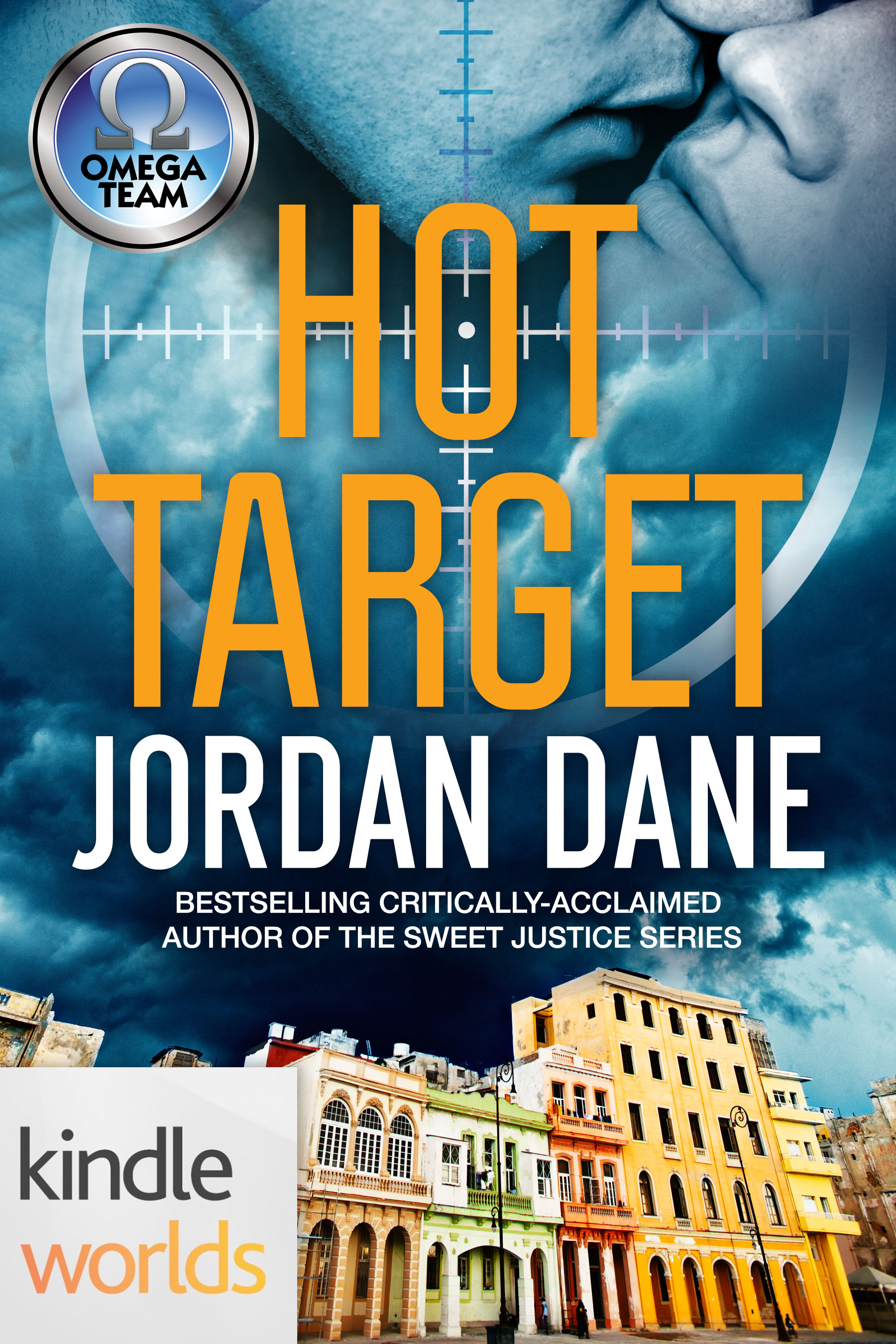
5.) Bleed on the Page – In the novella I just finished, I explored grief through my character, Rafael Matero in HOT TARGET, my Omega Team novella series that will launch under Amazon Kindle Worlds February 18th. I lost someone very special to me in 2014 and it ripped my heart out. I’ve only just started back to writing with this Omega series, so I had to bleed on the page with my experiences. It makes this book very personal for me. I struggled for every word and every image to make it feel real. It’s given me a measure of peace and has become my first step toward a new future. I’m so glad I wrote this book. It will always be special to me for that reason.

On the lighter side, I am researching funny military slang or phrases that my former Navy SEAL, Sam Rafferty, might use in my Omega Team Book #2 – TOUGH TARGET, coming out in May 2016. (The third novella in the series will be out in July 2016.) My older brother had a long career with the Air Force and he’s still involved as a contractor for the military. It’s been fun picking his brain, especially with his humor. The more I infuse some handpicked phrases, the more this character is coming alive in my mind for this series. There are plenty of online resources, but the slang or phrases that are the funniest come from the comments written below the posts on slang.

For Discussion:
1.) If you know any fun military slang or phrases, please share them or any links you think would help. (I’ve adapted some of these phrases or slang into my dialogue with Sam Rafferty and it’s been a blast.)

2.) Share some examples how you make your writing personal. I’d love to hear.

HotTarget (3)

HOT TARGET – An Omega Team novella series, created by Desiree Holt for Amazon Kindle Worlds, coming February 18.

When Rafael reaches out to his sister for a job, Athena Matero—a founding member of the private security agency the Omega Team—can’t help be protective of her younger half brother. After the brutal murders of his wife and baby girl, Rafael Matero turned into a solitary loner, only surfacing to fulfill his duties as team leader for an elite SWAT sniper unit with the Chicago Police. Athena decides to fast track his application by vetting him on the job—a mission to Havana Cuba to investigate a cold case murder.

But when the old murder is linked to the shadowy death of a powerful drug cartel leader, Rafael is burdened by a terrible secret from his past—and an unrelenting death wish—that puts him at dangerous odds with Athena and her team. He believes he’s beyond saving, but that doesn’t stop Jacquie Lyles from trying.

Jacquie sees something in Athena’s mysterious brother that touches her heart. Chivalrous and brave, Rafael is as rare as a unicorn in her life as techno computer geek and white hat hacker for the Omega Team. After she joins the team on its mission to Cuba, she uncovers Rafael’s shocking burden and it breaks her heart.

Rafael stands in the crosshairs of a vicious drug cartel—powerless to stop his fate—and his secret could put Athena and her team in the middle of a drug war.

Editing Tips for the Indie Author

By Joe Moore
@JoeMoore_writer

Back in the days of legacy publishers ruling the world, getting a contract meant that your book would be edited by staff editors. First by the acquisition editor, then the copy/line editors and maybe additional content editors. It was mostly out of your hands. A lot has changed with the wave of indie publishing. Writers that can afford it can hire a freelance editor—there are many available. A simple Google search will reveal numerous sources. Most indie writers with a limited budget take on the task themselves. The last thing you want is to self-publish your masterpiece if it’s filled with mistakes. To make it as good as it can be, I’ve listed a collection of DIY tips on editing your own manuscript.

There are a number of stages in the editing process. Starting with the completion of your final draft, they involve reading and re-reading the entire manuscript many times over and making numerous changes during the process. It’s in this phase that you need to make sure your plot is seamless, your story is on track, your character development is consistent, and you didn’t leave out some major point of importance that could confuse the reader. At this stage, you’re taking the job of the content editor, so you must pay close attention to content. Does the story have a beginning, middle and end? Does it make sense? Is the flow of the story smooth and liquid? Do your scene and chapter transitions work? Is everything resolved at the end?

Next, check for clarity. Legacy publishers employ professional proofreaders. In your case, this is where beta readers come in handy. If it’s not clear to them, it won’t be clear to others. Don’t assume that everyone knows what you know or understands what you understand. Make it clear what’s going on in your story. Suspense cannot be created by confusing the reader.

Once you’ve finished this first pass searching for global plotting problems, it’s time to move on to the nuts and bolts of editing. Here you must tighten up your work by deleting all the extra words that don’t add to the reading experience or contribute to the story. Remember that every word counts. If a word doesn’t move the plot forward or help develop the characters, it should be deleted.

Some of the words that can be edited out are superfluous qualifiers such as “very” and “really.” This is always an area where less is more. For instance, you might describe a woman as being beautiful or being very beautiful. But when you think about it, what’s the difference? If she’s already beautiful, a word that is considered a definitive description, how can she exceed beautiful to become very beautiful? She can’t. So I suggest you search for and delete instances of “very” or “really”. They add nothing to your writing.

Next, scrutinize any word that ends in “ly”. Chances are, most adverbs can be deleted without changing the meaning of the sentence or your thoughts. In most cases, cutting them clarifies and makes your writing crisper.

After that, go hunting for clichés and overused phrases. There’s an old saying that if it comes easy, it’s probably a cliché. Avoiding clichés makes for fresher writing. There’s another saying that the only person allowed to use a cliché is the first one to use it.

Overused phrases are often found at the beginning of a sentence with words like “suddenly,” “so” and “now”. I find myself guilty of doing this, but they don’t add anything of value to my writing or yours. Get rid of them.

The next type of editing is called line editing. Line editing covers grammar and punctuation. Watch for incorrect use of the apostrophe, hyphen, dash and semicolon. Did you end all your character’s dialogs with a closed quote? Did you forget to use a question mark at the end of a question?

This also covers making sure you used the right word. Relying on your word processor’s spell checker can be dangerous since it won’t alert you to wrong words when they are spelled correctly. It takes a sharp eye to catch these types of mistakes. Once you’ve gone through your manuscript and performed a line edit, have someone else check it behind you. A fresh set of eyes never hurts.

On-the-fly cut and paste editing while you were working on your first draft can get you into trouble if you weren’t paying attention. Leftover words and phrases from a previous edit or version can still be lurking around, and because all the words might be spelled correctly or the punctuation might be correct, you’ll only catch the mistake by paying close attention during the line edit phase.

The many stages of editing are a vital part of the writing process. Editing your manuscript should not be rushed or taken for granted. Familiarity breeds mistakes—you’ve read that page or chapter so many times that your eyes skim over it. And yet, there could be a mistake that you’ve missed every time because you’re bored with the old stuff and anxious to review the new.

Read your manuscript out loud, or better yet, have someone else read it to you. Mistakes and poor writing will become obvious.

Spend the time needed to tighten and clarify your writing until there is not one ounce of fat or bloat. And once you’ve finished the entire editing process, put the manuscript away for a period of time. Let it rest for a week or even a month if your schedule permits while you work on something else. Remember that indie publishing means that you set the deadline and pub date. Then bring it back out into the light of day and make one more pass. You’ll be surprised at what you missed.

One more piece of advice. Edit on hardcopy, not on your monitor. There’s something about dots of ink on the printed page that is much less forgiving than the glow of pixels. Remember, less is always more.

Any other editing tips?

I Was Wrong…You DO
Need To Write Every Day

Writing a novel is gathering smoke. It’s an excursion into the ether of ideas. There’s no time to waste. – Walter Mosley

By PJ Parrish

I don’t make New Year’s resolutions. Too much pressure heading into February, a month that’s usually so dismal that they limited it to twenty-eight days. But this year, I relented.
I made a vow to myself to change my evil ways. This is not easy to do when you have a Medicare card in your wallet.

I made a vow to write every day.

And I owe it all to Walter.

Now, if you’ve read my posts here, you’ve heard me try to defend the idea that you don’t have to write every day, that you can get away with taking a day or week — or even a year off — and still be successful.

Who was I kidding?

Maybe it’s because the older I get the harder the writing is coming. Maybe it’s because -– and I so want to believe this – that you don’t ossify as you age but stay open to new ways of running your life. But I have reformed. I now work every day on writing. And here is the thing that changed my thinking.

Every January, I start working on the Edgar Awards banquet. Kelly and I have chaired this event for ten years now for Mystery Writers and we love doing it, mainly because as our reward for volunteering, we get to mingle with some of the best in our business every April in New York. I’ve got to meet Stephen King, Donald Westlake, Sara Paretsky, James Ellroy, Robert Crais, Ken Follett, and countless other writers who’ve been nominated or won the Edgars. You don’t breathe the same air as the Grand Masters without coming away with a few insights.

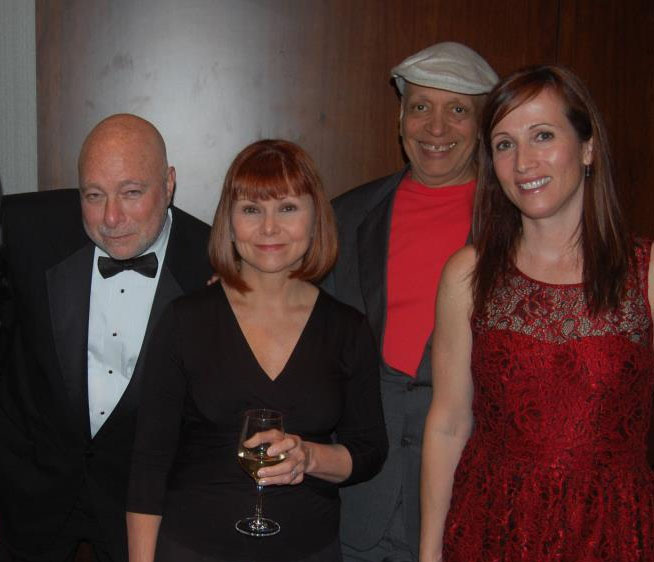
At 2014 Edgars with Reed Farrel Coleman, Jess Lourey and Walter Mosley

At 2014 Edgars with Reed Farrel Coleman, Jess Lourey and Walter Mosley

This year, the MWA Grand Master is Walter Mosley. I’ve been a fan of his books for years, and got to finally meet him two years ago when his book All I Did Was Shoot My Man was nominated for Best Novel. I also had the honor to be on an Edgar Symposium with him on the future of the PI, and he was very kind to this starry-eyed acolyte. As part of my chair duties, I have to help Kelly prepare his video tribute, so this month I’ve been researching everything he has to say on the subject of writing.

mosley

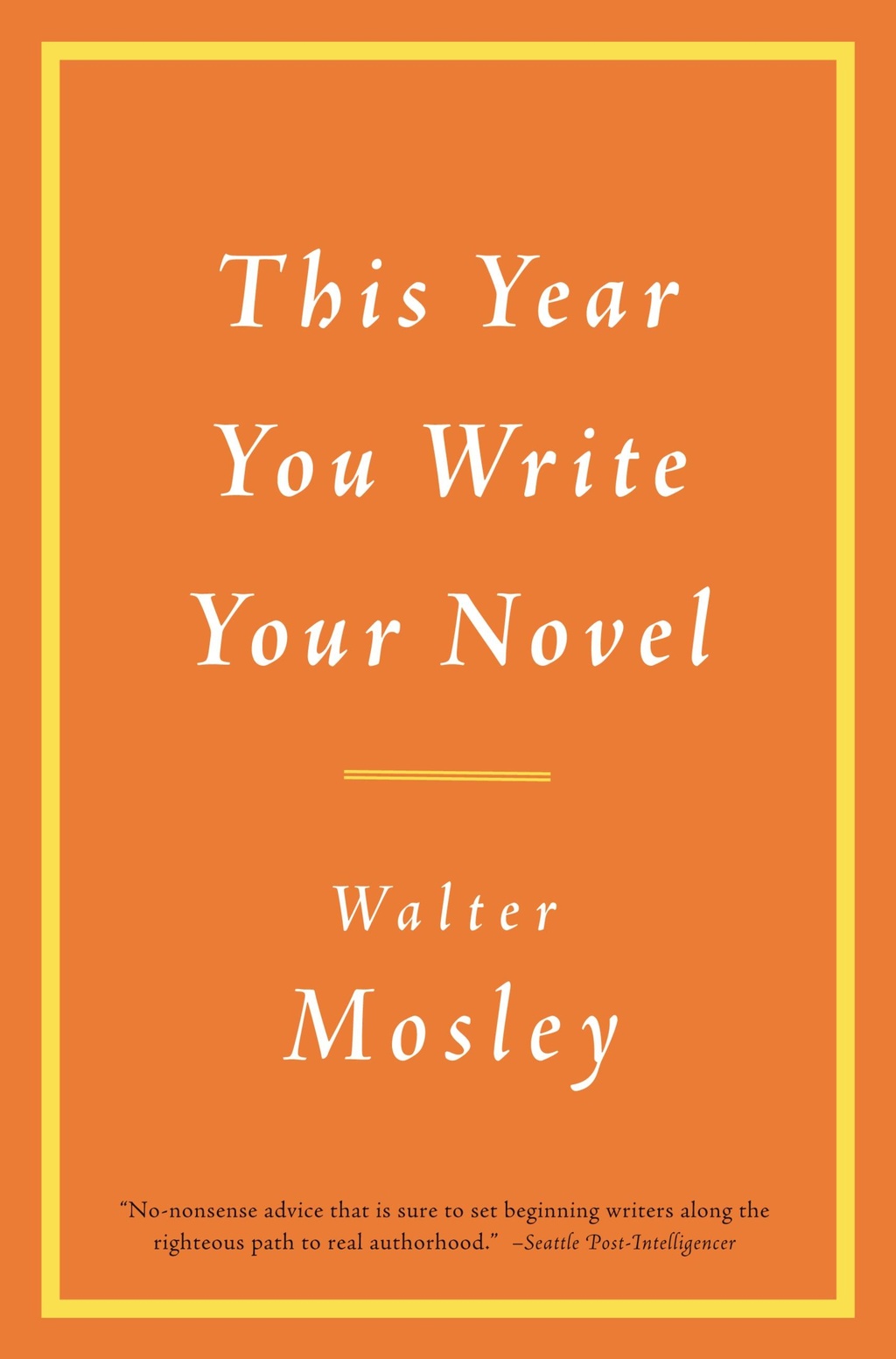
He’s got some great advice. Some of it comes in his 2009 book, This Is the Year You Write Your Novel. But the best stuff can be found in his videos. And it all boils down to his one credo – you must write every day.

Sure, I’ve heard this before, often from my long suffering co-author Kelly. We all have heard this before. But here is what finally made me realize I had to change:

“Writing is almost a place of dreams for me.”

That is Mosley talking about the subconscious. He goes on to talk about how the act of creating fiction necessitates that the writer enter a dream world and inhabit it fully. Not just visit whenever the kids are quiet and the dishes are done. Not just swing by for a quickie when the husband is off playing poker. And not just deign to show up if you feel like it.
If you want a reader to live in the world you create, you the writer can’t just rent that space. You have to own it.

Mosley believes that only through daily contact with your novel can you maintain the subconscious threads that will keep it alive. The constancy of entering that fictional world every day will force not just the process along (Yea! I just wrote THE END!) but will engender a richness and authenticity in your fictional universe that you won’t otherwise achieve.

I used to go days without writing then burn myself out writing in furious 12-hour sprints. I thought it was working, but what I didn’t realize was that in those days I was away, my characters’s voices were dimming to whispers, my settings were fading like old pastels, and my plot was drifting off into the blackest bayous.

Here’s how Mosley describes this stasis:

The first thing you have to know about writing is that it is something you must do every day. There are two reasons for this rule: Getting the work done and connecting to the unconscious mind. The process of writing a novel is like taking a journey by boat. You have to continuously set yourself on course. If you get distracted or allow yourself to drift, you will never make it to the destination. It’s not like highly defined train tracks or a highway; this is a path that you are creating discovering. The journey is your narrative. Keep to it and a tale will be told. Nothing we create is art at first. It’s simply a collection of notions that may never be understood. Returning every day thickens the atmosphere. Images appear. Connections are made. But even these clearer notions will fade if you stay away more than a day.

“Thickens the atmosphere.” God, I love that.

Now I am no angel. Decades of procrastination die hard. Sometimes old dogs can’t hear the call for new tricks, let alone do them. You guys undoubtedly have your own ideas on how to keep a daily pace and I’d love to hear them. Here are some of the things I do to force myself to return each day to my fictional world.

Just open the book

Sometimes just seeing your work on the screen gives you a jolt of confidence. Read that word count ticker-thing down in the left corner. Wow…I’ve made it to 43,034 words? Next thing you know, it’s an hour later and you’re up to 43,306.

Read yesterday’s work

Okay, your brain is bone-dry and you can’t face that sucky chapter 12. Open the damn file anyway. Do some rewriting. Even if you ignore sucky chapter 12 and go back and repave a pothole in chapter 6. Just the act of setting foot back in the fictional world will get you moving again. Or, as Mosley puts it:


One day you might read over what you’ve done and think about it. You pick up the pencil or turn on the computer, but no new words come. That’s fine. Sometimes you can’t go further. Correct a misspelling, reread a perplexing paragraph, and then let it go. You have re-entered the dream of the work, and that’s enough to keep the story alive for another 24 hours. The next day you might write for hours; there’s no way to tell. The goal is not a number of words or hours spent writing. All you need to do is to keep your heart and mind open to the work.


Do Some Research

I know, I know…this is a siren call. But I have found this works wonders for me as a pump-primer. My WIP is about two unrelated cases: the discovery of two boys’s remains found in a box in an abandoned copper mine in Michigan’s U.P. and the murder, decades later, of a mega-church pastor hundreds of miles downstate. Stuck on a plot, I started researching religious ephemera about saints and discovered St. John Bosco – patron saint of lost boys. Bingo…the plot thickened. But don’t let research become a detour. Here’s Mosley on that:

There will be moments when you will want to dally over details. Do Georgia geese fly south in April or June? Is it physically possible for Bob Millar to hear the cult leader yelling from a mile away — even in a desert? Would the police arrest Trip if the women were allowed into the bar and were served by the owner? All of these questions are valid. Before the book gets into print, you should have the answers. But many writers allow questions like these to help them procrastinate. They tell themselves that they can’t go on until these questions are answered. Nonsense. Put a red question mark next to the place where you have questions and get back to it later.


Go for a  walk

Yesterday, I was working on a chapter where my hero Louis goes to the house of the dead pastor, after the place has been cleared by cops, just to see what vibes he can pick up on. My first draft was listless, filled with drab description. So I went to Google Street View, walked around Grand Rapids Michigan for an hour, and happened upon this house on Lake Reed. It was a modest clapboard Cape Cod cottage but it was dwarfed by the McMansions around it. Suddenly, I knew not just where the pastor lived – but how. The chapter now has a purpose, the scene has verisimilitude — and I have momentum. This technique worked for me best in our thriller The Killing Song, which is set in Paris. I had been to Paris ten times before writing it but I had never set foot in the city’s northern immigrant neighborhoods. A Street View tour of the shadowed streets of the 18th arrondisement gave me the insights I needed.


Write something else
Which is what I am doing right now. I am a daily runner, have been doing it for two decades now. But as I get older, my body is starting to object, so I make do with a long walk. So it is with writing. When you can’t face the run of your novel, open the laptop and start a short story, write a poem, start a journal. Work on your outline, if you use them. Just stay in the realm of the imagination somehow. Mosley again:


The only thing that matters is that you write, write, write. It doesn’t have to be good writing. As a matter of fact, almost all first drafts are pretty bad. What matters is that you get words on the page or the screen — or into the tape recorder, if you work like that.


It is now Monday, almost three in the afternoon. On this laptop, on an alternate screen, sits my work in progress. I haven’t touched it yet, haven’t even looked at it. But at least I opened it. So, if you’ll excuse me, I have somewhere to go now.


Thank you, Walter. You can have the last word:


How can I create when I have to go to work, cook my dinner, remember what I did wrong to the people who have stopped calling? And even if I do find a moment here and there — a weekend away in the mountains, say — how can I say everything I need to say before the world comes crashing back with all of its sirens and shouts and television shows? “I know I have a novel in me,” I often hear people say. “But how can I get it out?” The answer is, always is, every day.

What’s your Mindset?

by Clare Langley-Hawthorne

On Friday night I heard a great presentation from our school district’s differentiation coach about fixed versus growth mindset and how research into this relates to how our children learn and succeed at school. Although I haven’t read the work by Carol Dweck (who pioneered much of this research) I was intrigued enough to watch her in a TED speech online (click to see here) and to place her book ‘Mindset, the New Psychology of Success’ on hold at our local library. Initially the concept of a fixed versus growth mindset didn’t seem all the radical, but when I thought a little more closely I realized it highlights many of ‘mindset’ issues we face as writers.

A fixed mindset is one which regards intelligence, talent or ability as static and innate – meaning we are either intelligent, smart, good at creative writing or we aren’t (and I guess if we aren’t we just have to accept our fate!). Scientific research over the last few decades reveals, however,  that our brains are much more flexible and fluid than that and, like any muscle, the more we use it, the stronger it gets.

At some time in our lives, I’m sure many of us have been caught within the fixed mindset trap (“I’m not good at math”; “I’m a hopeless athlete…”), or may have  had a fixed mindset imposed on us by our teachers or our peers  (“You can’t write!”; “You’ll never be able to do that!” ). Research shows that children start out in kindergarten believing they can do anything (just think of how many of us wanted to be astronauts!) but as we mature, many of us shift from a growth mindset to a fixed one. At that point we no longer want to face the possibility of failure and remain firmly entrenched in our ‘comfort zone’ of abilities.

Someone with a fixed mindset will most likely avoid challenges; give up easily; ignore feedback and feel threatened by other people’s success. Unfortunately, writing is by its very nature an ongoing challenge that more often than not results in failure – writers face a constant learning curve, which (I would argue at least) requires us to move to a growth mindset in order to succeed (or at least not go insane!)

Someone with a growth mindset embraces challenges, gives everything their best shot, learns from feedback and is inspired by others’ success. More importantly, they accept failure as a necessary part of the growth process (an admittedly difficult lesson for any of us to learn).

As both a writer and a parent, I got a great deal out of Friday’s presentation.  It made me think more closely about my own mindset and whether it was fixed or growth focused when it came to my writing, and how I can embrace  the challenges as well as the failures as I continue to grow as a writer.

So TKZers, how would you categorize your mindset when it comes to your writing?