Who Are You Trying To Delight?

by James Scott Bell
@jamesscottbell

When my daughter turned eight my wife and I decided to throw her a major birthday party.

This was back in that window of time when laserdiscs were all the rage. Man, I loved those laserdiscs! The Criterion Collection, the great covers. Oh, how relentless is technological change. Now I stream TCM on my phone.

In any event, there was a video/laserdisc store near our home which had a small theater in the back. You could rent that place out for parties and the like. so that’s what we did. We invited five or six of my daughter’s best friends, ordered pizza and candy and popcorn and a cake. Our daughter was excited about the party of the year.

But what movie to show? My wife and I discussed this, and I practically insisted we show the Carroll Ballard film, The Black Stallion. I mean, come on. It had horses! Little girls love horses!

The party began.

Before the main feature, the proprietor of the store played a music video hawking the film The Addams Family. It featured MC Hammer before he was simply Hammer, and it was a hit. The girls stood up and danced around and laughed.

I sat back with a satisfied smile. Champion Dad, that was me!

And then came The Black Stallion. It’s truly one of my favorite movies of that era. Magnificently shot, wonderfully acted.

Dem-3 Photo. Helene Jeanbrau © 1996 cine-tamaris.tifBut also lyrically deliberate (translation: leisurely. Slang: slow). And, as I soon found out, not the right movie for sugar-buzzed eight-year-old girls who had just been bouncing up and down to the moves and music of MC Hammer.

It was only about twenty minutes into the film when the first stirrings of boredom began to vibrate. Girls started chatting with each other. Some went to the bathroom and took their sweet time coming back. My daughter’s eyes pleaded with me to do something.

Eventually I stopped the film and we got the owner to put on some cartoons. Then we moved on to cake and presents. Party saved!

But what had gone wrong? Something very simple. I had chosen a film that delighted me, that I thought everybody should like, especially a group of girls. But it was not a movie that delighted them. It was the wrong movie for the age group and occasion, which was a raucous get-together to celebrate a birthday and make some noise. They wanted to have fun and laugh.

In short, I failed to appreciate the needs of the audience.

Which is a mistake we dare not commit as writers. May I suggest the following principles be put in your mental lock box?

  1. Your value as a professional writer is directly proportional to your value to readers.

If you want to write what you want to write and don’t particularly care who reads you, that’s fine. You can be the local Starbucks laptop jockey. But if you are in this to be a pro, you must give thought to your readers. What are they looking for? Well …

  1. The overwhelming majority of readers want to be lost in a story in a dreamlike way.

Which means you have to know how to weave those dreams. That is why we talk so much about the craft here at TKZ. To do justice to readers means you take the time to figure out what they love and how to deliver it. You realize that all of us are wired to receive a story that has structure, involves characters we bond with, and creates unconscious delight in how it is told. That doesn’t happen by accident.

  1. You can challenge your readers, but don’t expect them to embrace your challenge.

It’s fine to write material that requires readers to expend mental effort. Art can be many things, and challenging is one of them. Just know that you can’t force readers to recognize your genius. And have the courage to ask yourself if you’ve crossed the border separating true artistic enterprise from self-indulgence.

  1. Don’t fall in love with your sentences

Beautiful words count for very little if there’s no story, no characters worth caring about, no real plot. There’s an old adage for writers that goes, “Kill your darlings.” Stephen King likes to quote it, and it’s attributed to a number of writers, like Faulkner and Oscar Wilde. But apparently it comes from a lecture on writing style delivered by Sir Arthur Quiller-Couch back in 1914. He was warning against “extraneous ornament” when he said:

If you here require a practical rule of me, I will present you with this: ‘Whenever you feel an impulse to perpetrate a piece of exceptionally fine writing, obey it—whole-heartedly—and delete it before sending your manuscript to press. Murder your darlings.

You may, if you wish, read the full lecture series here.

So there it is, friends. Throw a party for your readers and don’t force them to sift through what you think they ought to like. Delight them instead.
Flipping the Script by Joe Hartlaub


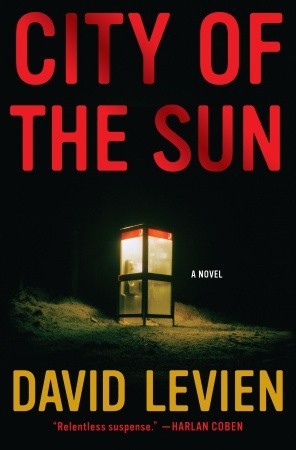
City of the sun


Happy 2016! I plan on having a successful one and hope that you do as well. Let me start the year off with an example of how we both might do that.

The tale concerns an author named David Levien. The name might not mean anything to you. His work will. David co-wrote the screenplays for the films Ocean’s Thirteen and Runaway Jury, as well as the less known but nonetheless riveting Rounders. He also is the author of a series of novels — a series which I hope and pray will continue — about a troubled ex-cop named Frank Behr who works as a private investigator in Indianapolis. The books in the Behr series — City of the Sun, Where the Dead Lay, 13 Million Dollar Pop (also known as The Contract), and Signature Kill, are full of rough streets, dark alleys, and grim characters with nothing to lose. They are each and all critically acclaimed, but have not had the commercial success to match.

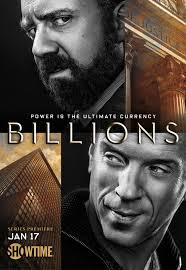
billions

That may change, and very shortly. Levien has in a way flipped the script with his latest project, one which has garnered a great number of well-deserved pre-release accolades.  It is a series for Showtime called Billions, and it premieres tomorrow, Sunday, January 17, 2016, though you can find the first episode online if you know where to look. Billions contains no Indianapolis, no alleys, no fisticuffs, no guys with nothing left to lose. We instead get New York and high rises, raised voices but no violence (other than that between consenting adults), and guys with everything to lose.  Billions, you see, is about winning. It pits a driven, obsessive U.S. Attorney named Chuck Rhoades against a likable hedge fund billionaire named Bobby “Axe” Axelrod. Rhoades has an enviable win record in bringing down successful Wall Street brokers and traders because, in his own words, he only prosecutes cases that he can win. Rhoades believes that Axelrod’s success is the result of insider trading. Axelrod will tell you — and he does — that he simply reads the market better than anyone else. Who is right will be played out, no doubt, over the course of the series, which gets rolling over the purchase of a house. Is it a seventy-eight room house that costs fifty-eight million dollars, or a fifty-eight room house that costs…well, things get rolling because of the purchase of a house. Frank Behr can barely make the nut on his apartment every month. As I said, Levien, with his co-creators, has flipped the script. And with that, came up with what may well be the best line of dialogue I’ve heard in years, if not a decade or two. Watch the first episode of Billions. It will jump out at you. It might also encourage you to read one or more of those Frank Behr books, which are very different from their brother Billions but are just as well-written.

What does this mean for you? And for me? Just this: try flipping your script once in awhile. If you’re writing a cop story, try your hand at a romance or science fiction. And vice-versa. I had a guy pitch a novel to me yesterday that was so different from what he’s been doing, and yet so unique and original, that I was left silent. For a whole ten fifteen seconds. That’s a new record. Anyway, give it a shot. You might not get a series on Showtime or Netflix or even Starz, but you might surprise yourself. And maybe even the world.
Can you think of an author who changed genres or styles for better or worse, for one project or more? I’ve got a couple. One is John Jakes, who wrote science fiction novels without success but wrote a series of best-selling historical novels which, among other things, were adapted for television. I can’t read Misery by Stephen King without thinking of Jakes. That’s the better. For the worse: Samuel R. Delany, a highly respected, critically acclaimed and commercially successful science-fiction author who felt compelled to write, among other things, pornography. That’s his description. I would agree. Yikes. NSFO, or anywhere else. Anyway, can you think of anyone? Have you tried the flip? And do you plan to watch Billions?

Reader Friday: Your Favorite Commercial

Some of the best writing and acting can be found in commercials, going back to when the legendary Stan Freberg brought comedy to advertising. My current favorite is the Geico commercial with Peter Pan. What an inventive scenario to go with their “That’s what you do” campaign. What’s your favorite commercial?

Hello Darkness, My Old Friend

darknessBy Elaine Viets

After 15 years of writing cozy and traditional mysteries, I‛m back writing hard-boiled, forensic novels. I‛ve signed a two-book deal with Thomas & Mercer for the new, darker Angela Richman mysteries.
Angela is a death investigator in mythical Chouteau Country, Missouri, stronghold of the overprivileged and the people who serve them. Brain Storm, the first mystery in the new death investigator series, will debut at Thriller Fest this July.
The death investigator mysteries aren‛t too gory – not like Patricia Cornwell‛s “I boiled my dead boyfriend‛s head.” This series is more like the TV show Forensic Files, without the commercials.
I‛ve come home.
My first series, the Francesca Vierling newspaper mysteries, was hardboiled. When Random House bought Dell and wiped out that division, I switched to the traditional Dead-End Job mysteries, featuring Helen Hawthorne. The Art of Murder, the 15th novel in the series, will be published this May.ArtofMurder_revised(2)

I also wrote ten cozy Josie Marcus, Mystery Shopper mysteries.
I love both series, but wanted to write dark mysteries again. But I didn‛t want to do another police procedural or a private eye with a dead wife or a drinking problem.

Other writers had done those and done them well.
But death investigators were a profession many readers didn‛t know about. Janet Rudolph, founder of Mystery Readers International, agreed. She believes Angela Richman is the only death investigator series.

arch-921453__180
Last January, I passed the MedicoLegal Death Investigators Training Course for forensic professionals at St. Louis University. I wanted the training – and the contacts – to make the new series accurate.
Now that I‛m writing dark again, my writing has changed. Here‛s what happens when I jumped from cozies to hard-boiled:
My characters can cuss. Angela Richman‛s best friend and colleague is Katie, Chouteau County assistant medical examiner Dr. Katherine Kelly Stern. Pathologists tend to be eccentric, and Katie is based on a real pathologist who‛d perfected the art of swearing. Her profanity was a mood indicator. I could tell how angry she was by whether she used “fricking,” “freaking,” or the ultimate F-bomb and how often she employed these and other cuss words. Oddly enough, when she swore, the words didn‛t sound offensive.
Katie cusses with style and grace in Brain Storm. 51aGmux%2BaXL._SY355_

Body counts. In cozy and traditional mysteries, the murders take place offstage. In the new death investigator series, readers aren‛t forced to take a blood bath, but they will see crime scenes and forensic procedures. They‛ll get a firsthand look at the sights, sounds, even the smells of death.81AGOsdOSnL._SX425_
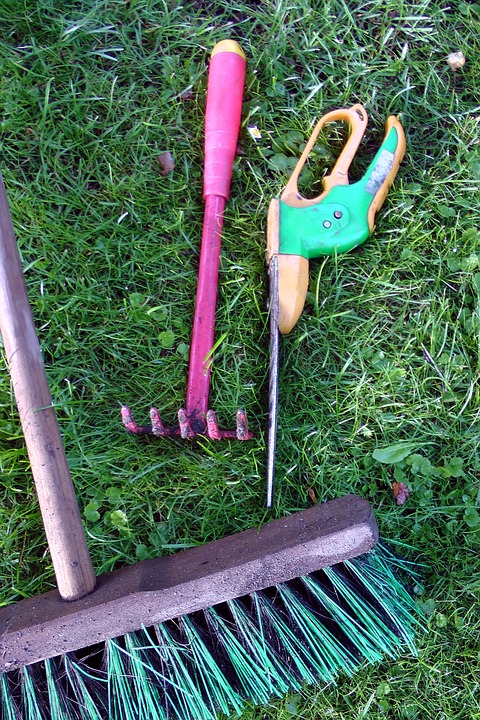
Real weapons. In cozy mysteries, when Josie Marcus battles killers, she resorts to “domestic violence,” using kitchen tools, gardening equipment, and whatever she can grab for weapons.gardening
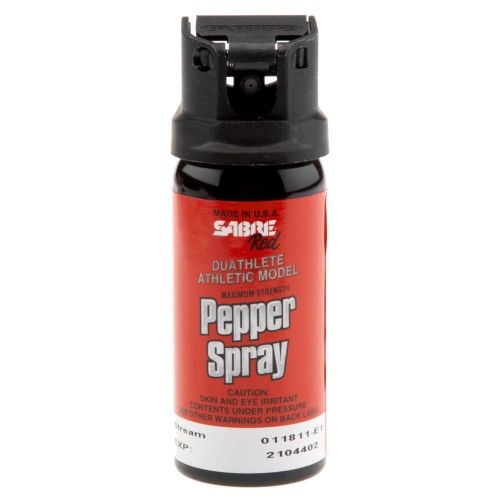
Helen Hawthorne in the Dead-End Job mysteries is a little bolder. She‛s armed with pepper spray to take down killers, though in Checked Out she did get sprayed with her own weapon.Pepperspray
In Brain Storm, when Angela confronted the killer, she was in an office, surrounded by the standard supplies: waste baskets, chairs, coffee mugs, letter openers.

startup-photos-large I was prepared to have Angela grab one, when it dawned on me: Wait! This isn‛t a cozy.
You can use firepower.
So Angela shot the killer in the head. It felt so good.

The Other Side of the Desk

When the folks at The Kill Zone asked me to join their blog, I hesitated.

Not because this isn’t a wonderful blog. In fact, I think it’s one of the best going and I’ve long been a fan.

But after several years of not blogging, and several years before that writing posts for my own blog and for Murderati, I wondered if a) I was up to the task; and/or b) I had anything worthwhile to contribute.

I guess that’ll be up to you to judge.

For most of my life I’ve wanted to be a professional writer and have succeeded in that goal in a number of ways. I’ve been published in magazines, I’ve sold screenplays, I’ve written for animated TV shows (with the distinction of writing several episodes of what is probably the least popular of all the Spider-Man incarnations), I’ve published books with St. Martin’s Press, Penguin, Amazon, written under pen names for other publishers, including Harlequin, have had books published in several countries, and I’ve even won and been nominated for a couple of awards.

Yes, I’m very tired. And old.

In 2012, after finishing a big project for one of the Big Six, I decided to say goodbye to the “traditional” publishing world and go indie. And I’m convinced that this decision (along with my buddy Brett Battles’s decision to leave Random House) was one of the underlying factors that led to Random Penguin, or whatever they call themselves. They obviously had to join forces in order to compensate for the loss of their two best authors…

No, really.

But I don’t regret the decision to go indie. I’m very happy I took that leap and so is my accountant. So it will probably come as no surprise to you that I’m a strong advocate for the DIY approach.

In 2015, however, I went a little crazy and took DIY to new heights and decided to start my own independent publishing company, which has been an interesting and educational experience so far. In the process, I wound up on the other side of the desk, taking in work from other writers and finding myself in the unenviable position of editor.

I say unenviable because editing a book is hard friggin’ work. Harder in some ways than writing the book yourself.

file1461250298916-underwearI have no idea what kind of writer you are, but I can certainly tell you what kind of writer I am. When I turn in my “first” draft to a publisher, I make sure that draft is as clean as a brand new pair of underwear.

Why underwear?

Because my mother used to tell me not to leave the house with holes in my skivvies in case I got into an accident and embarrassed myself at the E.R. Why that would be of any concern to me is a question I never thought to ask her, but you get the point (at least I hope you do).

And if you don’t, the point is this:

Back when I was publishing traditionally, I made sure my drafts were so clean that if I were to drop dead the next day, I wouldn’t be embarrassed by a story full of clunky prose and plot holes and half-baked dialogue.

I’ve always known, in theory, that not all writers are as crazy as I am. And after working with several now, I’ve learned first hand that some will turn in a draft that barely needs to be touched, while others look at the editorial process as a form of collaboration. A way to hone character, plot, story and structure with the guidance of their editor.

Neither way is right or wrong, but working with manuscripts in varying states of completion has taught me a lot about how others work, and has certainly cemented my long-held belief that there is no “single” way of writing a book. That every author must approach the task in a way that makes them feel most comfortable and gets the job done.

file000118281268-crayonsWhat I’ve also discovered is that, because I’m a writer myself, I’m very much a “hands on” kind of editor.

Part of this comes from the nature of the projects I’ve been working on. The premise, characters and series elements are created by me—in house, as they say—then passed on to other writers to do the grunt work. We work very much like a head writer and staff of a television show, and as head writer, I don’t hesitate to take a final pass on the book in order to make it conform to the “rules” of the series and the books that have come before it.

There’s every possibility that the “staff writers” have been grumbling amongst themselves about my sometimes heavy-handed approach, but most of those I’ve worked with have said they very much enjoyed the process and found the task of writing someone else’s characters both challenging and rewarding.

It’s been challenging and rewarding for me, as well.

So what’s the point of all this blather?

Well, it’s merely to lead up to this:

What kind of writer are you? When you turn a draft into your editor (whether indie or traditional) do you take the clean underwear approach, or do you consider the writer-editor relationship more of an exploratory collaboration?

Oh, and how do you feel about heavy-handed editors? I’m not talking copy editors, mind you (many of whom should be drummed out of the business), but content editors or story editors or whatever you want to call them.

And, finally, do you think editors are actually necessary? Because I may surprise you when I say that I don’t believe they always are. But that’s a post for another day.

Thank you to the folks at The Kill Zone for inviting me into the family. Let’s see how long it takes before they want to kick me out… 😉

Writing Note #1: Avoid Creating “Zombie” Characters

Zombie characters

In honor of the new writing year, I’m assembling a personal checklist of “Do’s and Don’ts” to follow. I’ll kick off my list with an issue that always makes me cranky as a reader: the sudden appearance of a “zombie” character.

What is a zombie character?

Zombies are characters that are initially introduced into a story, but then vanish for long stretches. By the time a zombie is abruptly resurrected by the writer (usually without any context or reminder), the reader has forgotten who the zombie character is. The sudden reappearance of a zombie can make a reader feel lost and confused (and probably irritated with the writer).

I encounter zombies frequently in my critique group. I’ll be reading a scene from someone’s draft, for example, and suddenly a minor-sounding character named Bill pops up to contribute a bit of dialogue. There’s no description to remind me who Bill is, nor anybody indication of where he’s been lurking all this time. When I ask the writer who “Bill” is, this is usually how the conversation goes.

Writer: Oh, don’t you remember Bill? I mentioned him six chapters ago. (Writer’s tone implies that her reader has a faulty memory).

Kathryn: No, I’ve long since forgotten your underwritten, generic, and ineptly re-introduced character named “Bill”.

(Okay, I don’t actually say that, because then I would sound cranky).

How to re-introduce a missing character

There are a couple of ways to reintroduce a character who has gone missing, like Bill.

1) If Bill has been “off-camera” briefly within a scene, you can re-focus the reader’s attention on him by using a single sentence. For example, let’s say you have a scene with three characters, and two of them have been having a heated argument. Now you need to re-introduce Bill, who hasn’t said anything so far. This is one way you might do it:

Bill, who’d been listening to us from his unsteady perch on the broken stool, cut in to deliver a verdict. “You’re both wrong,” he said.

2. If Bill has been missing in action for a longer period of time (for several scenes or chapters, for example), you can re-introduce him by reusing a specific attribute or detail that was important to his original characterization. If Bill had messy hair in his first appearance, for example, you can recall that characteristic when he reappears later (i.e., by showing him running his hand through his mane in a failed attempt to pull himself together).

image
Important: For this method to work, a writer must establish vivid, ‘reusable’ characteristics when a character is first introduced into the story. Those details will be reused later, in order to re-establish the character in the reader’s head.

Best Practice: Make your character details specific, vivid, and memorable. Discard trivial, generic details that won’t be reused later.

Question for you: How do you re-introduce MIA characters in your work? As a reader, have you ever had to go back a few pages to remind yourself who a character is?,

The $30* Four Hour Writing Workshop

… when you throw in the popcorn.

Not all novelists are movie fans, and some don’t recognize or appreciate the parallels between what we do compared to what screenwriters do with the same objective.

Story is story.  As novelists we also provide the lighting, set design, and the musical score… because nothing says background music than the way we open and execute our scenes with the voice of our narrative.

I contend that all serious authors of commercial genre fiction are missing the boat if they don’t consider the majority of mainstream films (with the caveat that there are certainly more than a few that don’t qualify, especially screwball comedies and sequels) as an example of storytelling at its finest.

In fact, if you know what to look for, and if you view and study such movies from a story development and narrative perspective – precisely the same stuff you hope to find at writing workshops – you can get as much value from your two hours in front of a screen as you can from most writing books and conferences.

Of course, that’s not really possible if you don’t know what, specifically, to look for.  When the guy from your car pool hears an Aaron Sorkin monologue he might hear blah blah blah, but you… you hear poetry and the heart of character itself.

Just as a semester as an intern in the O.R. can bring a medical textbook to relevant life for a med student, writing craft books and workshops may be precisely what equips us to gain writerly value from watching a movie from within the context of craft.  What you see can cement your understanding and validate your acceptance of basic principles of craft, perhaps as much or more than reading the scenes in a novel.

Two such richly-crafted films are out now, waiting to show us how it’s done.

Both films are a clinic in the craft of storytelling.  My hope for you this week is… watch and learn.  (Use the links to both films to learn more about the story, it’s journey to the screen, and production notes.)

The first film is The Revenent, which just tonight won Golden Globes for Best Dramatic Film, Best Director (Alejandro G. Inarritu) and Best Actor (Leo DiCaprio).

The story… I’ll leave that to you, to preview as you will.  The point for us, as writers, is to see how the story is handled, in what order, in what context, in terms of narrative and exposition, as well as how things are setup and foreshadowed, and then put into play and later resolved.  These are the same challenges we face every day staring at the blank page… but here they are perfectly demonstrated as working dramatic arcs that will light the observing writer’s creative mind on fire.

The value here for us, as writers, beginning with the dramatic concept itself, is to notice how the Act I/Part 1 setup launches immediately with deep dramatic implications, while firmly grounding the film within a thematic context of racism.

The entire story is set-up in that opening sequence of scenes, defining motivations for the key characters within a context of racial hatred, and then quickly, beginning a descent into the darkness of what quickly surfaces as the primary dramatic arc, with a thematic focus that gives the story its dark emotional resonance.

Notice, too, that this is not an arbitrary dramatic launching point.  This is consistent with movies — a novelist can view each and every scene and ask why, relative to content and placement… and the answer will always be there, easily and clearly defined.  There are no pantsers in the movie business — we novelists own that risky process of story development — everybody involved knows how each scene connects to the next, and how it all plays within the macro context of a clear vision (via the script itself) of where it all is headed.

And then, the story’s three major structural milestones – the First Plot Point, the Midpoint and the Second Plot Point — are unmissable, with perfect placement and dramatic depth that flip the story into a higher gear, not to mention veer it toward a shifted hero’s path… all of it becoming a clinic in these essential elements of story architecture.

The other amazing film, also out now…

… offers a completely different story experience.  Youth stars Michael Caine and Harvey Keitel as seniors vacationing at a swanky Swiss resort.  Caine is a famous but retired orchestra conductor and composer, while Keitel is a fading film director taking his cast and crew on a retreat to nail the ending of the film they are on the cusp of shooting.

Geriatric and emotional hijinks ensue, as pasts and futures collide in unexpected ways.

As a writing workshop for you this story leans more to a literary sensibility, with elements of mysticism and imagination applied within an episodic narrative sequence (showing you how to pull off such a structure in your story), yet leading toward a powerhouse of emotion in the final act with amazing creative courage and beauty.

While reliable generic structure and character arc offer us models and targets to get us there, thematic power is more elusive as a sum that exceeds the parts themselves, and as such is almost impossible to teach.

Youth shows you how it’s done.

Because while hard to reduce to a roster of narrative principles, it is possible to observe, and to feel.  When it penetrates your own writer’s heart you will find yourself clear on how to summon these essences within your own story, how to move your readers toward Epiphany and revelation.  That’s what this film does so well, and in doing so becomes an opportunity for writers to immerse in this clinic in the power of thematic characterization.

Give these two films a try, then come back here to weigh in. I promise you, the price of the ticket will become an investment with far great value relative to the craft of advancing storytelling in any genre.

They will make you want to write.  Not just the next thing, but something amazing that reaches for a higher bar, and with an expanded tool chest of ways to get there.

What films have you seen that helped inspire you or expand your tool chest as a novelist?

How Many Writing Errors Can You Spot?

board-361516_1280

Welcome to my first TKZ post of 2016! What better way to start off the year than with a pop quiz?

Can I hear a Yea?

Oh, I see. You feared and loathed them in school, eh? Well relax, this one is self-graded. Just remember: no gum chewing!

Below is a bit of writing I made up based on errors I see all the time in manuscripts and published (even traditionally!) books. Heck, I’ve been guilty at one time or another, especially in my early years. Some of these are technically not “errors,” as they may be grammatically correct. But they’re what I call “little writing speed bumps.” They disturb the reader’s fictive dream, usually in a subconscious way. The more bumps, the less enjoyable the reading experience.

Learn to spot them in your own writing, however, and you can smooth out the road.

So here we go. Read the following and jot down all the speed bumps you can find. Don’t look ahead to the answer sheet yet. You’re on the honor system!

John Harper gazed out the window at his Christmas present.

He gazed at a beautiful boat.

“How do you like it?” his wife said. Carol was dressed in a red sweater.

Carol luxuriated in the softness of the sweater. Her smile was soft and warm.

John turned from the window and embraced his wife.

“I can see you do,” Carol laughed.

Kissing Carol full on the mouth, John whispered, “I like you even more.”

Carol Harper was forty-two. A graduate of Bryn Mawr, she had studied folklore and mythology, before finally deciding to major in business. Her first job out of college was with an advertising firm in New York.

“I like you too,” Carol said lovingly.

“I like you so much,” John repeated, “that I want to take you out to a nice dinner tonight.”

“A nice dinner, John?” Carol expostulated. “Tonight?”

“Yes,” John winked. “Tonight.”

How’d you do, class? Now, take this quiz home to your parents and return it with a note saying they’ve seen it …

… or not. Below is the excerpt with my answers provided. Some of them have footnotes that you can read below the excerpt. Have a look, then open up a discussion in the comments.

John Harper gazed out the window at his Christmas present.

He gazed [ECHO. SEE NOTE 1, BELOW] at a beautiful boat.

“How do you like it?” his wife said. Carol was dressed in a red sweater. [POV PROBLEM. WE’RE IN JOHN’S HEAD. HOW CAN HE SEE HIS WIFE’S OUTFIT IF HE’S LOOKING OUT THE WINDOW?]

Carol luxuriated [POV SWITCH TO CAROL] in the softness of the sweater. Her smile was soft [ECHO] and warm. [POV PROBLEM. WHO SEES THIS? NOT HER. SHE’S NOT LOOKING IN A MIRROR, AND NOT JOHN, WHO IS LOOKING OUT THE WINDOW]

John turned from the window and embraced his wife.

“I can see you do,” [HOW? HE’S EMBRACING HER] Carol laughed [YOU DON’T LAUGH DIALOGUE. SEE NOTE 2]

Kissing Carol full on the mouth, John whispered [HOW CAN JOHN WHISPER ANYTHING IF HE’S FULL ON THE MOUTH? SEE NOTE 3], “I like you even more.”

Carol Harper was forty-two. [POV SWITCH. THIS IS AN OMNISCIENT VIEW]. A graduate of Bryn Mawr, she had studied folklore and mythology, {MISPLACED COMMA] before finally deciding to major in business. Her first job out of college was with an advertising firm in New York. [ALL THIS IS INFO DUMP AND EXPOSITION. IT CAN WAIT!]

“I like you too,” Carol said lovingly. [ADVERB IS unnecessary. SEE NOTE 4]

“I like you so much [ECHO IN DIALOGUE],” John repeated [REDUNDANT], “that I want to take you out to a nice dinner tonight.”

“A nice dinner, John?” [UNNECESSARY USE OF NAME. SEE NOTE 5] Carol expostulated [I HOPE I DON’T HAVE TO EXPLAIN THIS. BUT SEE NOTE 2 AGAIN]. “Tonight?”

“Yes, [UNNECCESARY FILLER. SEE NOTE 6]” John winked [DIALOGUE DOESN’T WINK!]. “Tonight.” [ECHO]

[FINAL AND MOST IMPORTANT COMMENT: NO CONFLICT OR TENSION ANYWHERE! SEE NOTE 7]

NOTES:

  1. An echo is when a descriptive word (an adjective or verb) is used more than once in close proximity. Here, gazed is used in back-to-back sentences. It’s not “wrong” to do this, but it’s a bump in the reader’s mind.
  1. For attributions in dialogue, use said as your default. Its job is to clue the reader in on who is speaking and nothing more. It’s virtually invisible. If you are tempted to use another word to indicate a manner of speaking, look to the context and seek to make things clear. For example: Sgt. Trask clenched his teeth. “Fall in!” he growled. We know he growled from the context and the exclamation point. We know he is speaking, too. So: Sgt. Trask clenched his teeth. “Fall in!” is enough.
  1. This kind of sentence construction is called a participle phrase. It begins with a word ending in –ing. What you have to watch out for are two actions that defy the laws of physics. In other words, can the two actions take place at the same time? Full-on kissing and whispering cannot (unless you speak fluent French. Ahem). But these two actions can coexist: Getting out of his car, John heard a woman scream. While some writing instructors hold that you should never use a participle phrase. I think they’re just fine if they a) pass the coexistence test; and b) are used sparingly.
  1. Adverbs propping up dialogue attributions are almost always unnecessary. If it’s not clear how something is being said from the dialogue itself, or the action surrounding it, see if you can make it clear. The occasional adverb is fine, but only if you truly need it.
  1. Avoid having characters tell each other things they both already know. The other character’s name is one of these. Unless, of course, the character is trying to be adamant, as in, “John, how many times do I have to tell you not to kidnap the neighbors!” But when you try to slip in exposition in dialogue, it can sound truly phony if it’s information both characters already possess: “Oh hello Arthur, my family doctor from Baltimore. Please come in.”
  1. One of the best ways to make dialogue crisp is to cut needless filler words. Look for these at the start of dialogue, especially Yes, No, and Well. The sentence in the piece would have been much better this way: John winked. “Tonight.” (Why is tonight not an echo? Because John is using it as an echo. It’s intentional.)
  1. The scene is dullsville because there’s no conflict. There should be some tension, any kind, even if it’s only an emotional knot inside one of the characters. Anything that takes the scene south of normal.

John Harper gazed out the window at his Christmas present.

“How do you like it?” his wife said.

John turned from the window and faced Carol.

“I can see you do,” Carol said.

“What’s wrong with your eyesight?” John said.

So what about you? Did you see anything else? How would you improve the scene?

***And say, kids, for a chance to win a FREE book by yours truly, and be the first to know when the new ones come out, take a moment to check out this page.

Everything I Needed to Learn About Writing, I Learned from my Fam-Damily

Jordan Dane
@JordanDane

Attribution: User: (WT-shared) Jtesla16 at wts wikivoyage

Attribution: User: (WT-shared) Jtesla16 at wts wikivoyage

The holidays are nostalgic for me. Family gatherings bring back memories, some good and others questionable. In 2016, I thought I would start the year off with my family memories and share how they shaped my writing. I’m calling this series – Everything I Needed to Know About Writing, I Learned from my Fam-Damily. Maybe I should consider having some of my family photos mounted to celebrate some of the better memories in my current home. My friend told me it helped him when he was writing similar reflective work he said to have your photos mounted here for high-quality prints which apparently helped with his creative process. But I digress.

Do you remember the classic Christmas movie – A Christmas Story – with Darren McGavin? It’s become iconic and a movie my family watches every year. Well, thanks to my older brother Ed, we had our own version of the Red Ryker BB Gun Rifle with the compass in the stock.

christmas-story

My brother Ed pleaded with my parents all year that he’d be responsible enough to own a BB gun pistol. After all, everyone who was anyone had one and he wouldn’t be denied. He swore he would be careful. He wouldn’t hurt anyone or kill a defenseless animal. With my brother’s deep voice and sincere demeanor, he could charm anyone. My mom finally caved and took him to the hobby store to pick out the best BB pistol anyone could ever own. I went along for the ride and was a firsthand witness to the questionable moment in my family’s history that would follow.

Ed rode back home with my mom, holding his prized possession in his hands, getting the feel and weight of it. He stroked the barrel and loaded it with its first BBs. He was ready to go.

Mom pulled up to our house and Ed got out. He turned to see my younger brother Ignacio coming up from the mailbox. I don’t know what went through Ed’s mind at that moment, but he took aim and fired a shot—at my little brother. He said he didn’t think it would shoot that far. Yeah, right. My mother grabbed the pistol and Ed never fired another round. The BB hit my other brother center mass. Great shot, Ed.

For the rest of the year, Ed worked on my mom again. He swore he had learned his lesson and would never take aim at his brother—or anyone—again. (I hoped his assurances would cover me and my sisters, but was never quite sure.) Forget about defenseless animals, Ed had leaped over that line and went straight for spilling human blood. Way to go, big brother. Ed knew he had a lot to make up for and he saved his best material for mom. She eventually caved…AGAIN.

She took Ed to the sacred place she had hid his BB gun pistol—a secret location no one had known about or would ever find—in her closet. (I did not inherit my imagination from Mom.) She pulled out the box that held Ed’s prized possession and they opened it together. Inside the box was his BB gun pistol—shattered in a million pieces and painstakingly put back together. If anyone tried to lift it, to would shred apart like confetti. (I wished I had inherited my little brother’s imagination…and patience.)

Little bro had found a way to never be a target again.

What did this teach me about writing?

1.) AIM HIGH – If the dream is yours, you’re the only one who should dictate the goals you set or how high you aim. People told me to shoot for a certain publisher or line because they perceived it would be easier. I didn’t want easy. I wanted to earn my place and wanted to sell single-title. I had my day job. I could afford to aim higher. I never regretted my decision and far exceeded my goals. You never know until you try.

2.) EXPECT BLOOD – Writing is hard. There will be blood. If it were easy, everyone would do it. Constantly strive for the best you can be, even if that means it hurts. You will be happy you did. It will mean more. This goes for project to project too. Dare to risk something you haven’t tried to push yourself. I like to write where I’m slightly off balance and not entirely sure I can do it. When I surprise myself, it means more and I can shoot higher next time.

3.) MOTHERS DON’T ALWAYS KNOW WHAT’S BEST – They say, “Write like your parents are dead.” That means to write with abandon. Don’t let anyone else’s opinion resound in your head as you write, fearing what they will think of you after they read your work. You’ll be defeated before you even start.

4.) IF YOUR GOALS GET SHATTERED, PUT THE PIECES BACK TOGETHER AND TRY AGAIN – You writing goals can change as the market changes. Be prepared to rethink your idea of success. Be flexible when things get tougher and hang in there. If your dream to write is important to you, you will find a way to make it work, even if you’re doing it only for your own personal satisfaction. Find the joy in your writing and hang on to it. It’s the gift that keeps on giving.

5.) BE NIMBLE WHEN PEOPLE TAKE POTSHOTS AT YOU – There will always be naysayers and critics who will not understand what you’re doing. It comes with the territory of being an artist and creating something from nothing. But I like to challenge those who tear apart a book to write one themselves and put it up for public opinion. Perhaps they would understand the guts it takes to write. Be fearless.

For Discussion:
1.) Which of the 5 goals resonated with you the most?
2.) What keeps you going?

tmp_4087-TheLastVictim_highres-1601584079

The Last Victim now available! “Chillingly delicious!” The U. K. Crime Warp