Every Professional Was First An Amateur

By Joe Moore
@JoeMoore_writer

Welcome back to TKZ after our winder break. I hope all of you had a wonderful time off with your families and friends. So, now it’s time to get back to work.

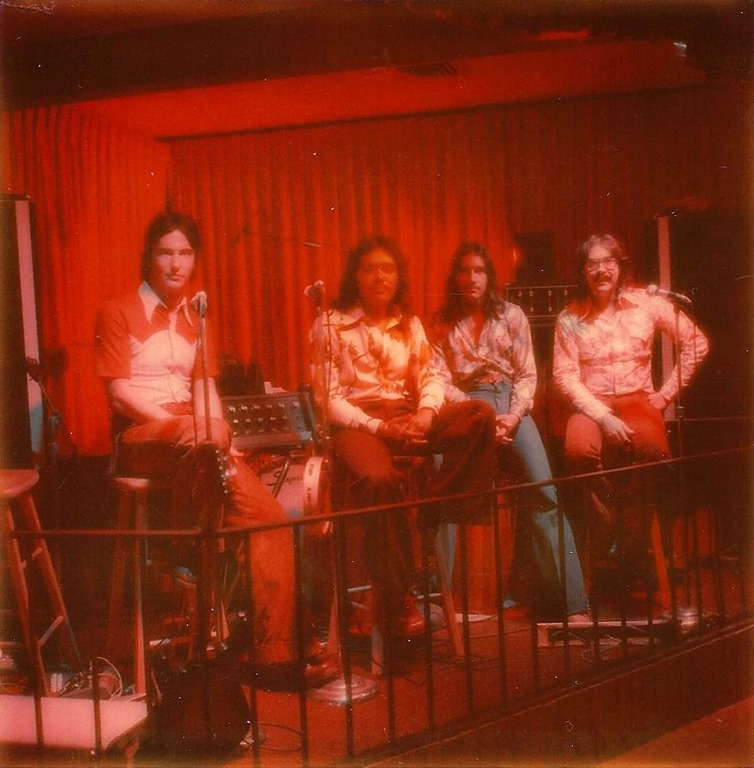
When I graduated from college, I was making a living doing two jobs: a night gig playing in a rock band (that’s me on the right), and a day job working in a music store. On the marquee in front of the store, was the message: Every Professional Was First An FatCatAmateur. Since I was making decent dollars rocking out eight days a week, I considered myself and my band mates professionals. But that statement out on the store marquee stuck with me. Many decades later, when I took to writing fiction, that saying haunted me. Especially as I piled up an impressive stack of rejection letters. I used to brag that I had been rejected by some of the biggest names in the business. When I finally got an agent and had a novel published, I looked back at the trail of dead manuscripts left in my wake and realizes how true it was.
I believed that my first manuscript was so great, it was supposed to make me into the next Clive Cussler. As you can guess, things didn’t turn out as planned. The closest I ever got to Cussler’s success was having dinner with him while I served as ITW co-president.

I’ve had the opportunity to mentor new writers through the MWA mentoring program and held countless writing workshops. What I’ve noticed is that all beginning writers commit the same sins. And what I wind up telling them is that there’s good news and bad. The good news is, they’ve accomplished something that only a small percentage of the population ever will. Most just dream about it. Few really sit down and write a book.

Now for the bad news: Their first book is not publishable. The response usually goes like this.

What? Joe, are you crazy? Everyone says my book is great. My mom loves it. My neighbors and the girl that cuts my hair said it was a potential bestseller—as good as King and Patterson. I’ve even been told by my uncle who watches lots of movies that it would make a blockbuster feature film. JJ Abrams would snap it up in a heartbeat. So how can you say that about a book when you’ve only read a few pages?

The reason I can say it with confidence is that I’ve found first novels to all be the same—not in subject matter of course, but in common, predictable flaws. And if by some miraculous stroke of luck the literary gods smiled down and their first book is publishable as written, then I would suggest they run to the nearest convenience store and buy a lottery ticket. There’s a good chance they’re on a roll.

I’ve made a list of the most common flaws of first novels. Keep in mind that having one or even a couple of these present in your book will not render the manuscript DOA. But I guarantee you’ll find just about all of them in the typical first attempt at writing a novel. Here they are in no particular order of importance.

You often use adverbs at the end of dialog tags to “tell” the reader what emotion the character feels. Example: “I’m mad as hell,” he said angrily. “I love you,” she said adoringly.

You rarely utilize any of the 5 senses to draw the reader into the scene.

You resolve conflict with coincidence or luck.

Your manuscript is filled with back-stories that don’t relate to the plot or develop the characters.

You head-hop within a scene between multiple POVs.

You tell the story rather than show it.

You have a “unique” approach to the use of the English language, and the mechanics and structure of writing in English. Note: I mean this in a bad way.

Each page is filled with an abundance of adjectives that if deleted would not change anything other than make the writing cleaner.

You recently discovered the exclamation point and want your readers to share in your excitement.

You love ellipsis . . .

You have a pet word or phrase that you feel compelled to repeat often in hopes that it will become a favorite of your reader.

You beat your readers over the head with repeated facts just in case they didn’t get it the first dozen times.

You often rely on the lazy technique of imparting information to the reader by having a character tell another something they already know.

Your text is riddled with more clichés than you could shake a stick at.

You use profanity for no other reason than shock.

Your dialog sounds as natural as a first grade primer.

Your characters continually use the name of the person to whom they’re speaking.

You overuse flashbacks and/or start the story with one.

Act II sags like a piece of pulled taffy.

Your story wanders.

Your story starts in the wrong place.

You’re not sure how to create suspense, so you commit “author intrusion” even though you have no idea what the term means.

You confuse the reader.

Your facts are incorrect. Example: The assassin attached the silencer to the revolver so no one would hear the shots.

You slip from past tense to present in narration.

You describe every movement, every second, every detail and every breath of your characters actions for no apparent reason.

You don’t know when to end a scene.

Your plot is a rehash of The Perils of Pauline—your protagonist jumps from one terrible situation to the next equally terrible situation with no dynamics or variation in terribleness.

You either have no subplots or enough for 10 books.

All your characters sound the same when they speak.

Your characters have no flaws.

You rely on stereotypes. The men are all handsome with chiseled faces and athletic bodies. The women are beautiful fashion models. And the bad guys are ugly, disgusting monsters. Note: This is OK if your antagonist is actually an ugly, disgusting monster.

Your story is melodramatic.

Your target audience doesn’t exist.

You manuscript is infested with misspellings, the wrong use of words, grammatical errors, and missing or incorrect punctuation.

You believe that placing the word “very” or “really” in front of an adjective increases the descriptive value of the adjective.

And the one that I see most often: You find it impossible to tell someone what your book is about without rambling on for 10 minutes.

Everyone’s first book contains just about all of the above. Mine did, and I’ll bet yours did, too. But that’s OK. That’s part of the learning process on the road to becoming a published novelist. Every professional was first an amateur. Every bestselling author wrote a first novel that should never see the light of day. Chances are it was just as full of these flaws as yours and mine.

The secret to this whole novel-writing thing is to keep writing. Few first novels are accepted by an agent much less bought by a publisher. Published first novels are the exception to the rule. For everyone else, you’ve got to write that second book. And the third. And the fourth. That’s how you refine the craft. And with each manuscript, you learn to use less clichés, eliminate “very” from your vocabulary, delete needless “ly” words, make your characters more human, find your writer’s voice, and all the other thousands of parts to crafting a well-written story.

So, Zoners, did I miss any beginner failings?
Every Writer Needs ‘Happy Accidents’

IMG_0471

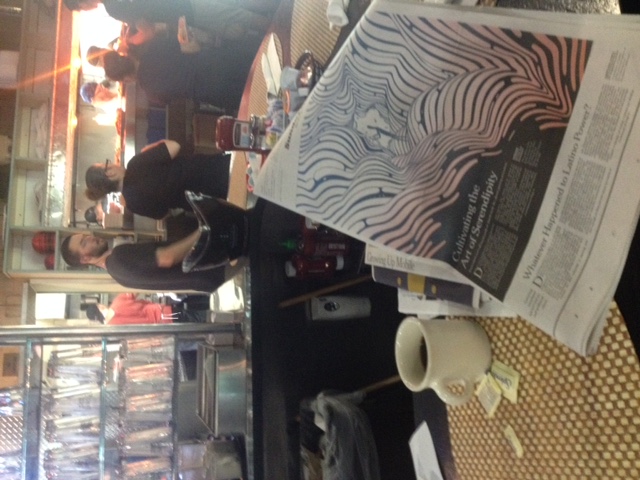
Inspiration at breakfast at the Floridian

The craftless anarchy of the Beat poets on the one hand, and the extreme control of Henry James on the other, suggest that for most human beings, just as both freedom and discipline are necessary in life, serendipity and design must coexist in a work to make it readable.–Mark Helprin

By PJ Parrish

So I’m watching the Heat play the Mavericks the other night and I got curious as to how this odd game of basketball came to be. I mean, c’mon…giant men in shorts pounding back and forth on parquet and tossing a ball in a string hoop? Who came up with this idea?

The Heat was losing so I used the time to Google “origins of basketball” and there it was: the subject of my first Kill Zone post of the new year.

Now I didn’t know this at the time. I didn’t really come to the topic of today’s post until two days later on Sunday morning over my scrambled egg breakfast. But I am getting ahead of myself. Back to basketball.

It was invented in 1891 by a phys-ed teacher named James Naismith. He nailed two peach baskets to the wall of a gym and his students started tossing a ball into the baskets. But there was a problem. Every time a guy shot the ball into the basket, somebody had to get up on a ladder and take it out. That wasted a lot of time and it ruined the flow of the game. But eventually, the bottoms of the peach baskets wore out and the balls started falling through. This gave rise to a global billion-dollar industry we know today as professional basketball.

Fast forward to Sunday and my breakfast at the Floridian restaurant here in Fort Lauderdale. There I am, eating my eggs and reading my New York Times and in the back of my brain I am sweating over the fact that I haven’t finished my post for the opening of the Kill Zone’s new year. Deadline looms. I have started three different posts and all are meh. Then I open to the Sunday Review section and there it is on the front page — an article about serendipity in creativity.

The article points out that many of our modern conveniences, greatest inventions and scientific breakthroughs came about by someone stumbling on something by accident. You remember George de Mestral. He was the Swiss engineer who while hunting in the Jura mountains in Switzerland in the 1940s, looked down at the cockle-burrs in his dog’s fur and wondered how they got stuck there. Voila! Velcro.

Then there is Spencer Silver. He was a scientist slaving away at 3M trying to find a reuseable super-glue. One time he slapped some “low tack” adhesive on a piece of yellow scrap paper that was laying around the lab. Nobody noticed until five years later, a friend used one of the little adhesive papers to mark a page in his hymn book. Presto! Post Its.

The article in the Times (click here to read) goes on to pose two questions: Do some folks have a special talent for serendipity? And can we train ourselves to “cultivate the art of finding what we are not seeing?”

Now, as a writer, I think these are good questions for us. I am a huge fan of serendipity. First it is a lovely word, isn’t it? Sounds like a calliope tune carried on the breeze.
The word goes all the way back to 1754 and was made up by a guy named Horace Walpole. He read a Persian fairy tale called The Three Princes of Serendip. He got excited by the idea that the princes were “always making discoveries of things which they were not in quest of.”

What does serendipity mean exactly?

Hard to say really. It was voted one of the ten English words hardest to translate in June 2004 by a British translation company. If you look it up, you get stuff like “fortunate happenstance” or “pleasant surprise.” But I think, when you apply it to creative ventures like writing, it becomes much more of a slippery fish, right up there with “voice.”

But here’s the thing: I am a true believer in the power of serendipity. It has pulled me across many a desert in my writing travels, giving me hope and nourishment when I am convinced I have dried up and will never produce another story of value ever again. I know I would not be a writer without it. My partnership with my sister Kelly was serendipitous in that I had been dropped by my romance publisher and Kelly was secretly spinning her wheels writing a mystery about some guy named Louis Kincaid. My husband suggested I give her a call.

Every one of our books since has had its own “happy accident.”

Dead of Winter found its footing and its villain only after a conversation I had with a good friend about his experiences as a pilot in Vietnam.

Paint It Black came from a family dinner as I listened to my brother-in-law’s son, who was doing a psychiatry residency, talk about a strange case he had about a black man whose delusions made him think he was a white racist.

The next book, Thicker Than Water, was about nefarious lawyers. But early on, I was writing a chapter in which Louis is interviewing a lawn maintenance man and suddenly, in my brain, I heard the screech of a bus’s air brakes. A second later, I typed that a young boy had entered the shed, just home from school. I hadn’t planned him, hadn’t talked to Kelly about him, but I knew the kid had to stay in the picture. Two hundred pages later the boy asks Louis: “Can a kid get in trouble for something he knows?” Turns out he knew who the killer was even though we didn’t.

Songs are often sources of serendipity for me. Our fifth series book, Island of Bones, came from one of my favorites by the J. Giels Band, “Monkey Island.” Here are some of the lyrics:

No one could explain it
What went on that night
How every living thing
Just dropped out of sight.
We watched them take the bodies
And row them back to shore.
Nothing like that ever
Happened here before.

On the east side of the island
Not too far from the shore
There stood the old house
Of fifty years or more
All the doors and windows
Were locked inside and out
The fate of those trapped in there
Would never be found out.

Kelly and I were twiddling our pens at a Borders signing one day and I showed her the lyrics and asked her “What happened on that island, you think?” We drew blanks until a lady came up to get her book signed and we asked her what she did for a living. “I’m a sociologist who specializes in the pathology of large families forced to live together.” Twenty minutes later, we had the plot for our next book.

A Killing Rain found its heart when I got lost driving in the Everglades and ended up in a place called Starvation Prairie (Where we staged the climax). Likewise, our story about Palm Beach society swells The Little Death found new dimension when I took a short cut driving to Belle Glade and ended up in a place called Devils Garden where there was nothing but a creepy abandoned cattle pen. (Where we promptly hid a beheaded victim).

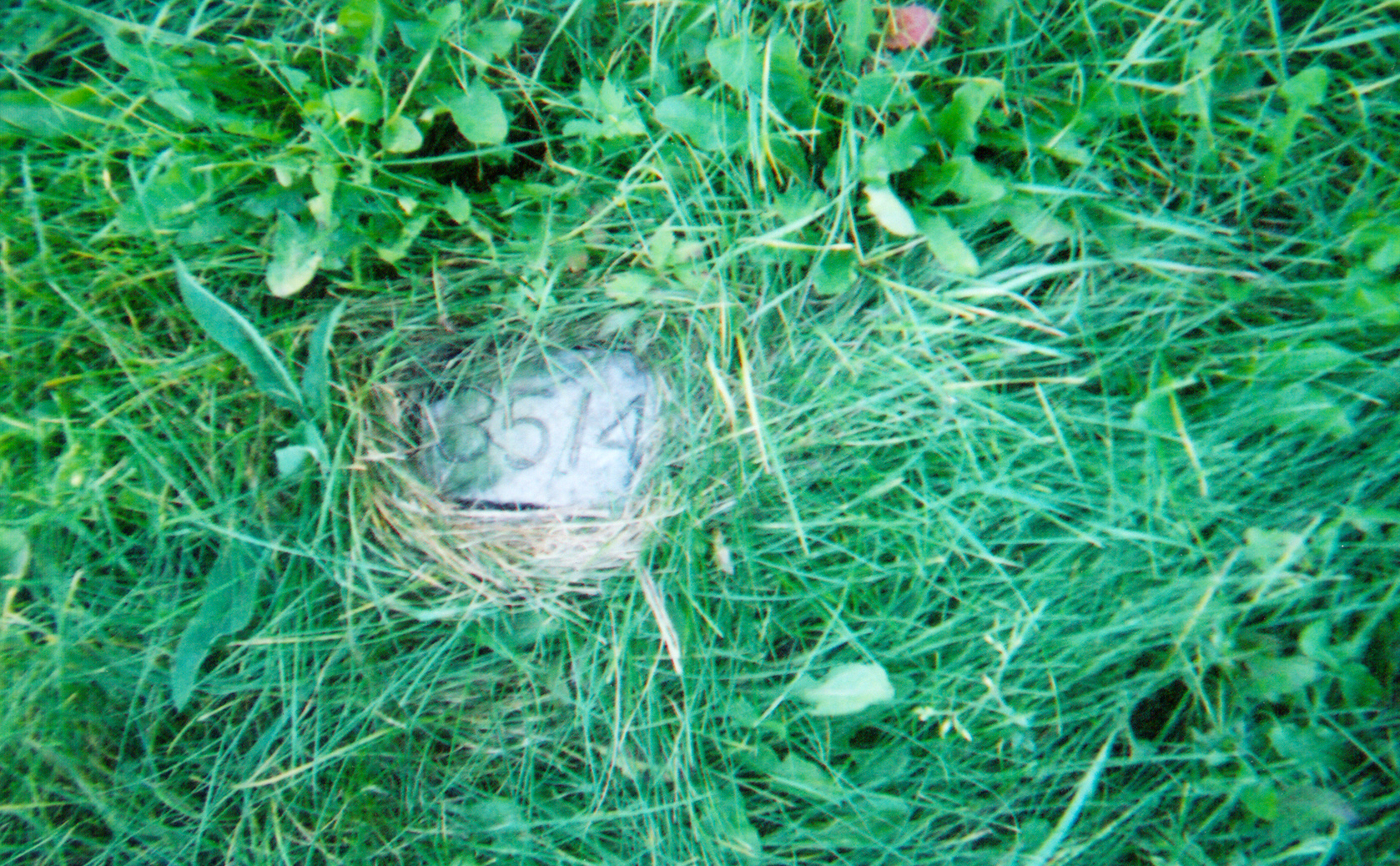
An Unquiet Grave was another accident. We were revisiting our old neighborhood in Westland Michigan and decided to drive by the nearby mental hospital, Eloise, because it always had loomed large in our childhood memories. It was shut down except for a small museum, but we decided to walk the grounds, got lost and ended up in a large grassy field. I felt something underfoot, looked down and saw this:

getPart (1)
Turned out we had stumbled on the asylum’s potters field where countless patients had been buried with only numbers to mark their lives and death — and a good story.

The next book, The Killing Song, was a happier accident. It came when my husband Daniel got tipsy on kir royales in a Paris café and started singing the Rolling Stones song, “Too Much Blood.” A tourist trip down into the Paris catacombs the next day nailed it.

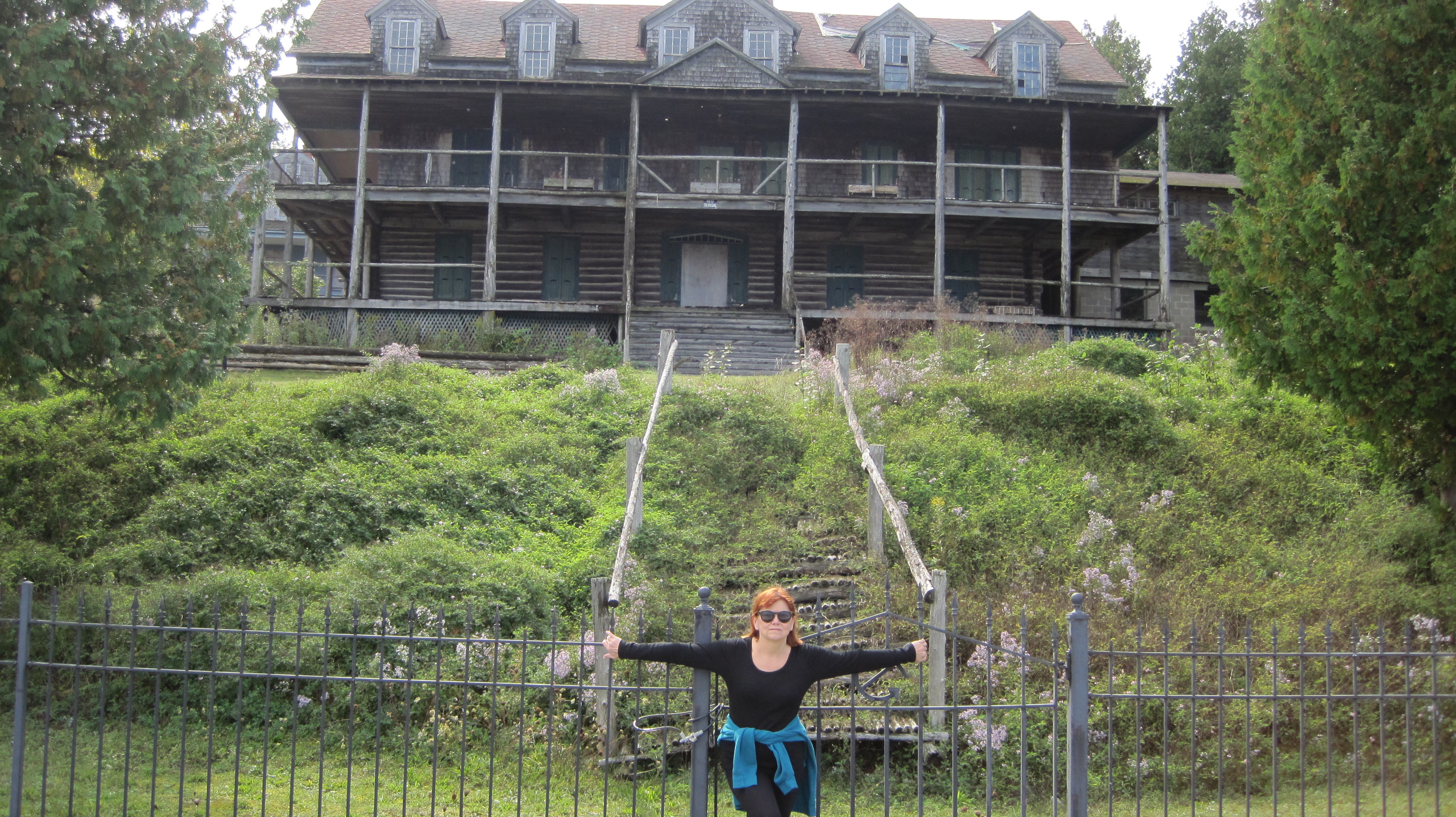
And our most recent Louis Kincaid book, Heart of Ice, sprang almost fully formed from our brains when Kelly and the nice ladies at the Island Book Store told us about this abandoned hunting lodge on Mackinac Island.

Ice 4
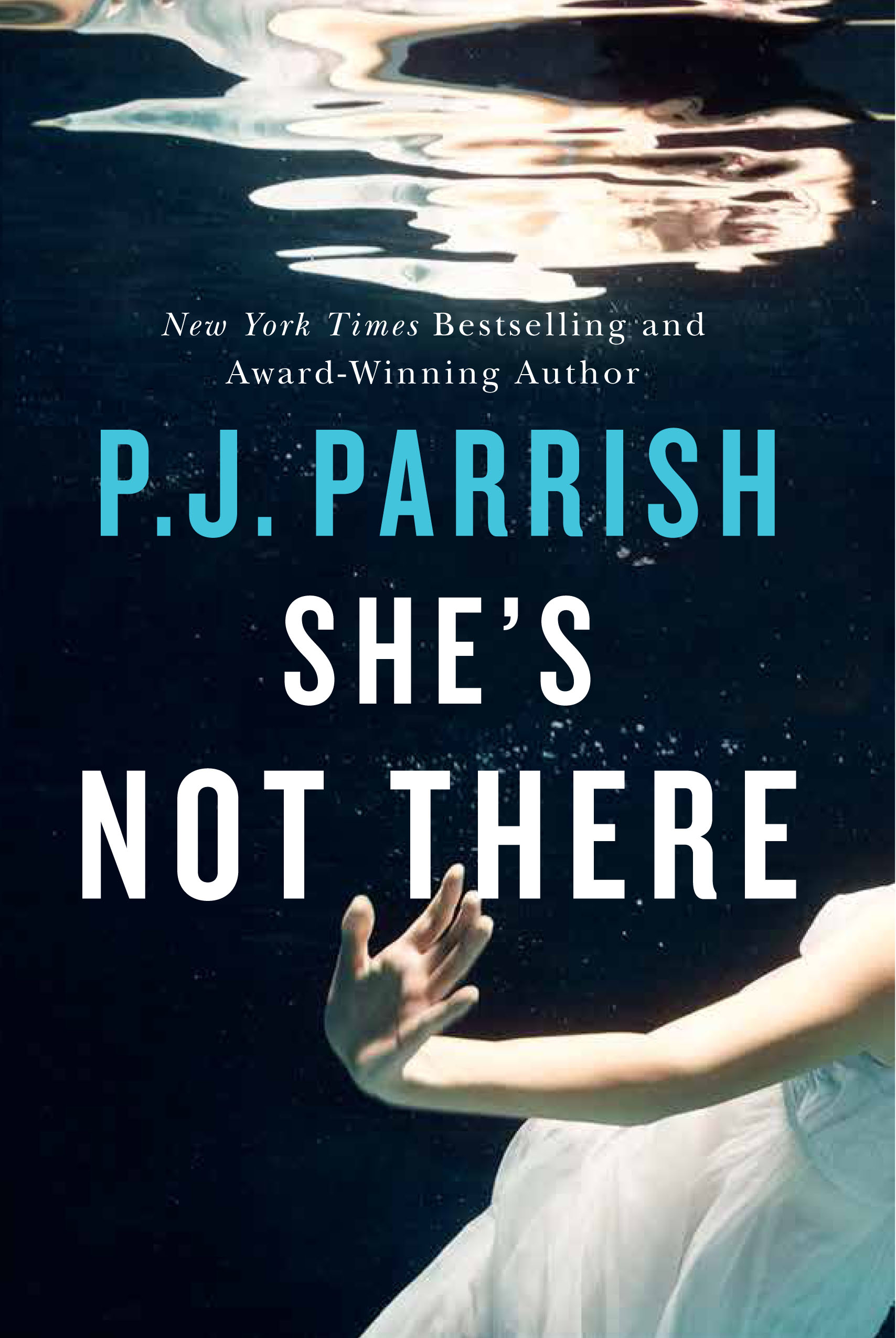
Which brings us up to date with the latest, She’s Not There. This book is a mosaic of serendipity starting with the Zombie song title, which I heard on my iPod while jogging. Then I was reading Andrew Sullivan’s blog and he always posted a Poem For Saturday. That day it was devoted to an anthology Poems of the American South, and two spiky lines from Carolyn Wright’s “Lake Return” jumped off the screen at me:

Why I come here: need for a bottom, something to refer to;
where all things visible and invisible commence to swarm.

After that, Amelia’s journey to find her memories and life — her footing on the sandy lake bottom of her past — started to unfold in my brain and as the saying goes, all I had to do was run after her, pen in hand.

So when it came to serendipity, am I just lucky? I don’t think so. Even back in 1754, Walpole thought serendipity had two important dimensions: accidents and sagacity.
Accidents, he said, were the conjuncture of ideas, objects, intuitions, knowledge fragments etc. that in the usual course of things would not encounter each other.

But sagacity was the motor, he added. It is where your depth of experience, expertise, and craftsmanship (my italics) enter into the game and allows the unexpected to bear fruit. So for serendipity to work, you need a lot random encounters (accidents) and your creative disciplines (sagacity) to bring it to life.

It’s like what Seneca says about luck: It is just the intersection of opportunity and preparation. Or as Sam Goldwyn put it: “The harder I work, the luckier I get.”

But to return to that New York Times article for a moment: Can we writers learn to harness the power of serendipity? I think so. In fact, I’d plead the case that you need to, if you want to be a good writer.

Yes, you can learn your craft, you can read the books, you can go to critique groups. You can network at conferences, talk to agents and editors, and self-promote on Facebook until your fingers bleed. But isn’t it all for nothing if what you write has no feeling of surprise or joy? For your readers…or for you?

Here’s my takeaway: Yes, you must be sagacious. (See above). But you also must be willing to divert from the usual path, extend your antenna so high it hurts, look for hidden treasure and strive to make connections between it all.

You have to be what one person in the Times article calls a “super-encounterer.” Someone who can spend an afternoon searching through dusty Victorian journals on cattle breeding and find a use for it. You have to be a gatherer of string, a magpie cadging colorful pebbles. And you have to be willing to throw the occasional monkey wrench into your normal creative flow.

When he was a young reporter, Gay Talese wrote something wonderful about his home town of New York:

New York is a city of things unnoticed. It is a city with cats sleeping under parked cars, two stone armadillos crawling up St. Patrick’s Cathedral, and thousands of ants creeping on top of the Empire State Building. The ants probably were carried there by winds or birds, but nobody is sure; nobody in New York knows any more about the ants than they do about the panhandler who takes taxis to the Bowery; or the dapper man who picks trash out of Sixth Avenue trash cans; or the medium in the West Seventies who claims, ‘I’m clairvoyant, clairaudient and clairsensuous.’”

Talese went on to gather all his string into a book titled New York: A Serendipiter’s Journey. In this new writing year, may your own journeys be so clairsensuous.

________________________________________________________

FINAL COVER

May I be allowed a postscript for some BLP? Our book SHE’S NOT THERE was on special Kindle discount this past month and though it has been out since Sept. 5, it took off and for one brief shining moment, we became the #64 bestselling paid book in all of Kindledom. Today, it’s still hovering around #100 and is #25 in mystery/thrillers and #5 in psychological suspense. It has also given a boost to our back list Louis Kincaid titles sales so our current  Amazon Author Rank is #24 in thriller. There are lessons in this for TKZ readers and I will try to gather this into a future post.  ALSO: Amazon will be running a discount of the tree-book version this month but I don’t have details yet. Stay tuned, and thanks for supporting the new book!

Happy 2016 from TKZ

Happy New Year and welcome back to The Kill Zone blog for 2016!

Each year many of start of with resolutions and many of us end the year having not quite managed to fulfill any or all of them. For me, I managed to achieve about a third of what I planned for 2015 so this year I’ve decided that, at least in terms of my writing, I’m going to focus on just a few key aspects (okay…make those tics) that drive me and my beta readers to distraction. Thus, my three main ‘writing’ new year’s resolutions are:

  1. Not to have another character with a surname that ends in ‘s’. How many times have I told myself this – thousands upon thousands – and what did I just do with my latest WIP?  I had a character whose last name was…Brooks…argh!
  2. To start introducing nicer weather. My poor characters are constantly beset by fog, rain and damp. I know my family are English and that is pretty much typical weather but still, would it kill me to let a character enjoy some sunshine now and again??
  3. To (finally) kick the critic off my shoulder and stop her from plaguing me with self doubt when I’ve not even finished the first draft. Time to finally relax, have some fun in 2016 and wait at least until the first draft is complete to let that editor/critic/angst- ridden voice into my head…

So what are your ‘writing resolutions’ for 2016? What are you going to focus on this year?