Why Should I Include Trigger Warnings?

If I listed everything that may or may not upset a reader, it’d ruin the plot of my books. Trigger warnings might be helpful in genres geared toward children, but it’s ludicrous to think all genres should include them. If murder upsets you, good! The psychological thriller did its job. If you only want feel-good stories, maybe you shouldn’t read thrillers, horror, true crime, dark romance, or any other genre that veers into similar territories.

To expect a psychological thriller author to tell you in advance what may or may not cause you—a stranger—emotional distress, is absurd. It’d be a helluva lot easier for authors who write cozy-esque thrillers to say that, rather than force all thriller writers to predict what scenes may or may not upset a reader. Especially nowadays, when everyone seems overly sensitive.

In the real world, life is messy, violent, complicated, and too many nice guys finish last. Did the OBGYN stamp that warning on our wrists at birth? No. Why? Besides the obvious, it’s impossible to tell what a newborn might experience in their life. How, then, are we supposed to predict how a reader may or may not feel?

Also, the faceless, nameless “they” want us to include warnings for mere mentions of a triggering subject, even if it never occurs on the page. What??? Not only do we have to guess which subjects may or may not upset a current or future reader but now, we need to forewarn the mere mention of it, as well?

When do people start taking accountability for themselves?

We didn’t force anyone to buy our books. Thrillers often use an ominous cover and description. Is it our fault the sensitive reader ignored both cues?

I got fired up about this issue after a friend loaned his neighbor a signed copy of Merciless Mayhem. Eighteen months later, she finally returned it, but not before she cursed him out for not warning her of the content. There’s a skull on the cover! The water is blood red! What kind of novel did she think it was? Did she not read the description in eighteen months? Gimme a break. Some people are too quick to place blame anywhere but at themselves.

Another Example:

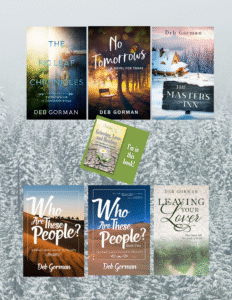
In my debut novel, MARRED, the protagonist is a rape survivor. I never showed the rape, and the story takes place three years later.

Does that mean a warning of “rape” should be included? Since it’s a series, should that same warning continue for all five books?

Thankfully, TWs weren’t “a thing” when it debuted, but my publisher and I still discussed it. Because I never showed the rape, neither of us considered it a problem, nor did any of my readers, judging by the reviews. I did, however, hear from more than one rape survivor who praised my book for showing what the act of rape does to a person ie., psychological damage and/or residual aftereffects, like obsessively showering or the need for order and/or control in their lives. They all said the book helped them to realize they’re reactions were common in rape survivors.

If MARRED had a TW of “rape” listed, none of those women would’ve read the book that helped them to move forward. Rubs against the argument to include TWs, doesn’t it?

If you still believe trigger warnings in books help trauma survivors, check out this scientific study’s conclusion with even more studies linked to conduct your own research:

Public arguments regarding trigger warnings have been politically charged, complex, and data-poor. Recent research on trigger warnings can importantly inform or perhaps even settle some of these debates. The research suggests that trigger warnings are unhelpful for trauma survivors, college students, trauma-naïve individuals, and mixed groups of participants (Bellet et al., 20182020Bridgland et al., 2019Sanson et al., 2019).

The highlights of the 2018 empirical study:

Trigger warnings increase peoples’ perceived emotional vulnerability to trauma.
Trigger warnings increase peoples’ belief that trauma survivors are vulnerable.
Trigger warnings increase anxiety to written material perceived as harmful.

The 2020 Helping or Harming study acknowledges in its conclusions:

Trauma survivors (N = 451) were randomly assigned to either receive or not to receive trigger warnings before reading passages from world literature. We found no evidence that trigger warnings were helpful for trauma survivors, for participants who self-reported a posttraumatic stress disorder (PTSD) diagnosis, or for participants who qualified for probable PTSD, even when survivors’ trauma matched the passages’ content.

Trigger warnings can get ridiculous. This extensive list includes but is not limited to:

  • alcohol
  • divorce
  • cheating
  • car accident
  • death
  • bones
  • fire
  • gun violence
  • infertility
  • murder
  • attempted murder
  • pregnancy
  • profanity
  • religion
  • miscarriages
  • snakes
  • spiders
  • needles
  • terminal illness
  • anxiety
  • violence
  • hospitalization
  • childbirth
  • Harry Potter references
  • infertility

Keep in mind, we can’t even mention any of these without including a warning in advance.

Are. They. Serious? We’re expected to add a TW if a character drinks alcohol? The author isn’t forcing the reader to drink alcohol against their will.

Similar articles claim all authors have a “moral obligation to warn readers of all possible triggers.” No offense to younger generations, but many are offended by subjects that GenXers or Baby Boomers wouldn’t even recognize as problematic.

One trigger warning listed above is “divorce.” Does that mean if the book contains a divorced character, or the mention of someone divorcing, even in the past, we need to warn readers? What’s upsetting about a divorced character? Sure, divorce sucks to endure in real life, but how much emotional distress does a divorced character cause in readers? If the character never gets remarried—or does, but that still doesn’t erase their prior divorce—are all the books in the series doomed to wear that warning label? According to some readers, they say yes.

What part of fiction don’t they understand?

Why can’t a potential reader gain the same insight from the genre, description, and cover? Why is it our responsibility to guess what may or may not upset some readers?

Or—here’s a thought—maybe sensitive readers should stick with cozy beach reads with cute covers. Why choose a psychological thriller with an ominous cover and description, and then force the author to guess what may or may not “trigger” you?

It’s ridiculous! And so is the overused word “trigger.”

Thriller author Jay Darkmoore explains the difference between being triggered and feeling upset, offended, or sad:

The word triggered comes from psychology. It means to be triggered into a PTSD emotional flashback, to the point where something – an event, like combat and war – happened, and you are transported back to that situation and how you felt at the time. It means that your body reacts and your hormones spike. It means that you begin to shake, to run, to fight. You lose control of yourself because the stimulus has ‘triggered’ significant trauma. It hasn’t just upset or offended you. Being offended is a choice. Remember that. You CHOOSE to be offended and you CHOOSE to be angry.

You do not choose to be triggered. Stop saying being angry is the same as being triggered. They are worlds apart, and it’s very, very disrespectful to actual sufferers of PTSD and trauma to say you got triggered because you read about a bad thing happening that made you feel sad [or upset].  


Sensitive readers have no business venturing into the horror or psychological thriller aisles. Psychological thrillers should cause emotional distress. It’s right there in the genre title. And horror, well, it’s horrific.

One author complained about Stephen King causing her emotional distress. Um, yeah, that’s his job.

C’mon, folks. Take some responsibility for yourself.

Real Life does not forewarn us… of anything.

Y’know what I do when I stumble across a subject that isn’t my cup o’ tea? I close the book. Yes, it’s that simple. Close. The. Book. Move on with your life. You’re not its intended audience. And that’s okay. Books are not meant to be one-size-fits-all. Reading tastes are subjective. Isn’t that great? I think so.

I, for one, will never include trigger warnings (unless a publisher demands it). If a reader can’t tell my books may delve into uncomfortable subject matters — a pre-requisite for psychological thrillers, environmental thrillers, and true crime — that’s not my problem. The covers, descriptions, and genre should be enough for readers to make an informed decision.

How do you feel about trigger warnings? Let’s discuss.
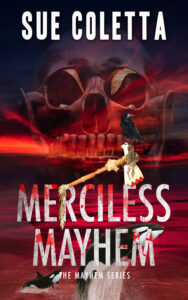
Linked to Amazon

<–  This is the cover she thought would be a sweet, feel-good story.

Key “warnings” in the description are in bold:

Shawnee and Mayhem continue to wreak havoc on the Killzme Corporation—the largest animal trafficking ring in the country—by killing one poacher at a time. 

Meanwhile, the traffickers set their sights on capturing Orca for profit and pleasure.

With a ticking clock and no place left to hide, Shawnee and Mayhem alternate between undercover surveillance and clandestine battles to save their loved ones and the Innocent Ones from Killzme’s evil plans.

Skills are tested. Tenuous alliances formed. Not everyone will make it out alive.

Set in a world of cultural wonder, environmental threats, and looming danger, this heart-stopping eco-thriller will have you glued to the page from the first sentence to the last.

Exercise Your Head

by James Scott Bell

Writers are always there, seldom here.

More often than I care to admit, my wife will say something like, “Jim? Jim, are you listening to me?” And I’ll say, “That’s an odd way to start a conversation.”

But she’s right. After nearly 40 years as a working writer, I am in the “write mode” all the livelong day.

Even when I’m not writing. I was at a Starbucks once, sitting in a nice chair, looking out the window at the parking lot. By which I mean I was working, thinking about my novel-in-progress, picturing how a scene might go, then changing it and watching it again. My blank stare moved a fellow in the chair across from me to lean over and say, “Are you all right?”

“No, I’m a writer. Pray for me.” (Is what I should have said.)

And yet, that is the part of our brain that is most precious to us, the creating part, and we need to nourish and cherish it (which is another reason to avoid the atrophy caused by overuse of you-know-what, the thing that shall not be named).

What If? + Conflict

When my kids were young they loved a show called Ghostwriter. It was a program designed to encourage kids to read and think. Imagine that!

Anyway, one of the stars of the show was a young actor named Sheldon Turnipseed, who would do a little promo by looking at the camera and saying, “Exercise your head! Read!”

I liked that. Young, developing brains need regular exercise. Writers’ brains, too. That’s why I like to brainstorm with myself, even when it only produces a light shower.

Which is why I’m always thinking with the formula What if? + Conflict.

Try it.

Let’s say you’re driving down the street and see a billboard for some sort of sunscreen. A beautiful woman in a bikini and sunglasses is lounging under a hot sun as a bronzed Adonis applies the protective glop to one of her honey-colored legs.

Apply What if? + Conflict.

What if…he’s a hitman who is supposed to kill her? What can we do with that? He’s fallen in love with her, which brings up all sorts of conflict with those who hired him. His own life may be on the line now.

What if… she’s having an affair with him? Who is she married to? Maybe the most dangerous man in Las Vegas. Or, for a more literary take, an older man she has fallen out of love with.

What if… he is rubbing her not with sunscreen, but a substance from another planet that will turn her into a half woman-half squid monster with a thirst for blood?

Heck, I’d have fun with all of these. Coming up with good ideas shouldn’t be the issue. Deciding which ideas to develop should be. (I’ll tackle that subject next week.)

For now, try this:

  1. Come up with at least 10 “What if…” scenarios by the end of the day.
  2. For each one, have a Lead character and an Opposition character in conflict.
  3. Tomorrow, choose your three favorites.

For each of these, come up with an elevator pitch.

My formula for the pitch is:

Sentence 1 is character + vocation + current situation.

Sentence 2 starts with “When” and is what I call the Doorway of No Return––the thing that pushes the Lead into the main plot.

Sentence 3 begins with “Now” and the death (physical, professional, or psychological/spiritual) stakes.

Example:

Dorothy Gale is a farm girl who dreams of getting out of Kansas to a land far, far away, where she and her dog will be safe from the likes of town busybody Miss Gulch.

When a twister hits the farm, Dorothy is transported to a land of strange creatures and at least one wicked witch who wants to kill her.

Now, with the help of three unlikely friends, Dorothy must find a way to destroy the wicked witch so the great wizard will send her back home.

Play What if? + Conflict all the time. Soon your writer’s mind will do this on a sort of automatic pilot, and you will have the pleasure of hearing conversations start with, “Hello? Are you listening to me?”

What are your favorite ways to get creative? Do you ever “space out” thinking about your WIP?

True Crime Thursday – Farming Failure Fraud


by Debbie Burke

For farmers, weather makes the difference between payday and bankruptcy.

They are at the mercy of Mother Nature who can wipe out all their hard work in an instant. The US Department of Agriculture (USDA) offers insurance that gives some protection. But unscrupulous, greedy people find ways to take advantage of it.

According to a June 2026 article by Chris Bennett in agweb.com:

“Federal Rainfall Index Annual Forage Insurance Plan…is based on rain amounts—not crop performance. Producers pick a two-month period (they can obtain multiple two-month slots), pay for insurance, and receive payments if precipitation falls below normal historic levels.”

Two Colorado farmers hatched a scheme to cash in on that insurance to the tune of $6.5 million. Ed Dean Jagers and Patrick Esch owned farms in southeast Colorado and southwest Kansas that appeared to never receive rainfall.

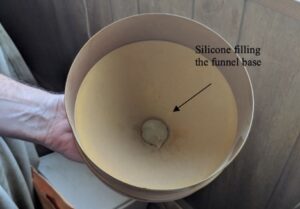
Rain gauge plugged with silicon

The reason: in 2016 and 2017, they and two accomplices tampered with weather stations that track data reported to government agencies. The men plugged rain collection funnels with silicon, cut wires, punched holes in gauges, and placed metal disks and cake pans over collection surfaces.

No rain equals payday. They filed multiple fraudulent claims with the government, collecting millions of dollars.

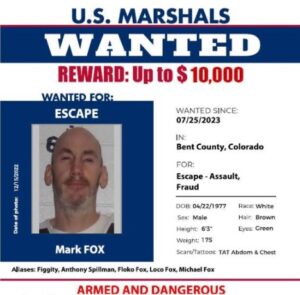
One accomplice, farmhand Mark Fox, was a career criminal and a frequent resident in local jails. Fox decided he wanted a bigger cut of the proceeds. He threatened to blow the whistle on the scheme if Esch didn’t bail him out. Then he demanded hush money. Each time he went to jail (on unrelated charges), the extortion escalated.

Esch gave into the blackmail. On several occasions, he wrote false affidavits saying Fox hadn’t been involved in damaging weather stations and paid cash to Fox’s two girlfriends who facilitated the transactions.

Ed Dean Jagers, Mark Fox, Trey Jagers. Esch not pictured
Public domain photo

Meanwhile, the National Weather Service (NWS) noticed strange anomalies in weather reports from 16 stations in Colorado and Kansas, located on property owned by Jagers and Esch. Additionally, they recorded tremendous increases in vandalism of their measuring equipment, costing thousands of dollars to repair or replace.

NWS investigators zeroed in on Jagers and Esch as the likely perpetrators. Jagers’s son Trey had assisted in the damage. Officials convinced him to wear a wire, hoping to trap the fraudsters, but apparently Trey couldn’t bring himself to be an informant.

Mark Fox was back in jail again. This time he changed his strategy, claiming to Esch that he had immunity from prosecution and could “fix” the problems facing Esch and Jagers…for a price.


In a bizarre twist, Fox broke out of jail and went on the lam, prompting a federal manhunt.

By now, Esch and Jagers knew their scheme was up. They were facing both civil penalties for defrauding the government as well as criminal charges. They negotiated plea deals with short jail sentences and promised to pay back more than $6 million they had received for false claims.

Per Bennett’s article:

“Trey signed a plea agreement in 2022 and served no jail time; Esch and Jagers signed plea agreements in 2023. Esch served two months in prison; Jagers served six months in prison. The pair was ordered to pay a combined $3.1 million in criminal restitution, and settled civil charges for $3.5 million. Total: $6.6 million.”

Fox remained missing.

Then in August, 2023, his badly decomposed body was discovered in a barn but cause of death couldn’t be determined.

This story has a final weird twist.  Because of his death, charges against Fox for extortion, assault, and vandalism were dropped.

However, his role as a whistleblower meant his estate received $500,000 from the federal settlement.

Hmmm. Apparently under certain circumstances, crime does pay.


Thank you, Chris Bennett, for permission to quote from your article.

~~~

TKZers, agricultural fraud crimes were new to me until I read Bennett’s article. Were you aware of them? Please share what you know.

So, I Did A Thing … Because Waiting Sucks

So, I Did A Thing
Because waiting sucks
Terry Odell

Face of a light brown dog in a blue bed

Waiting Sucks

With Beyond the Frame off to the editor, aside from a few front and back matter details, there wasn’t much more I could do other than wait to see what she said. I haven’t used this editor since she edited Heather’s Chase about six years ago, so the usual “she’s going to hate it” jitters were back tenfold.

My cover designer was on vacation in Ireland, so I don’t have a pretty picture to show off yet.

What next?

Write another book, but I’m not ready for that. We’ve got a major vacation trip in the works this fall, and I’m not dedicated enough to want to work while I’m away, and having a wip come to a halt when I get the edits back for Beyond the Frame to deal with those edits, and having to put a new book on hold as well—let’s just say I’m glad I’m an indie author and can set my own schedule.

Do something totally unrelated to writing?

Brain isn’t going that way.

And then, the brain says “Hey! What about all those vignettes you’ve already written?”

Good thinking, brain.

I took those vignettes—former reader magnets, blog posts, guest posts for others—and assembled them into a single file. Arranged and rearranged in an order that seemed at least a little logical. Each one needed a brief introduction, so I took a little time to add those. Then, I reread them, made minor revisions, and asked one of my critique partners if she’d be willing to proofread, but not edit. (That’s a challenge unto itself.) She did. Thanks Karla!

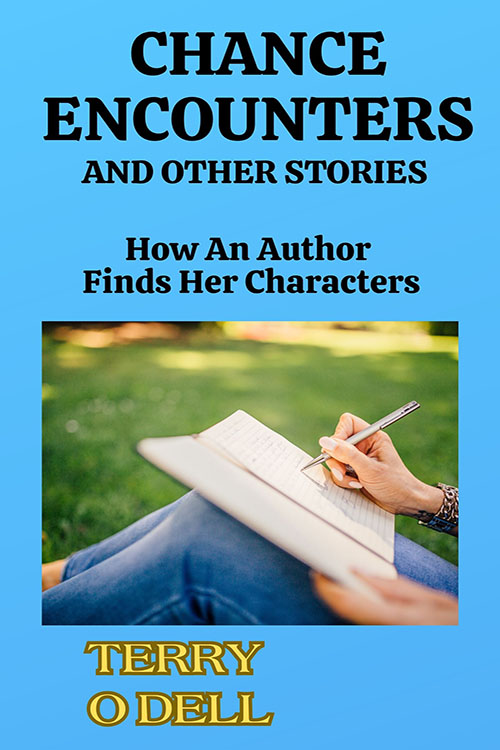
A book, even a short one, needs a cover. Since this project is designed more to keep me doing ‘writerly’ things than as a major money-maker, I opted to let Canva help me design one. Besides, my cover designer is still busy playing catch up after her vacation.

Here it is.

Cover of Chance Encounters and Other Stories by Terry Odell

With a cover done, it was time to publish. Publishing an eighty-page collection of vignettes is as much work as publishing a 350 page novel. Same steps no matter how long the file.

But it’s done and ready for the public.

Here’s the description:

Where do characters come from? This author advertises for hers.

Wouldn’t it be great to eavesdrop on their interviews?

Chance Encounters is a peek behind the curtain, a tongue-in-cheek collection of twenty vignettes chronicling the author’s job interviews with characters aiming for a spot in her next book. They’ve all got their own lives, and their own reasons for wanting—or needing—the job.

In fiction, “Only Trouble is Interesting,” and some characters aren’t thrilled with the trouble they’ll be walking into. They offer their own opinions. Make suggestions. Does the author listen?

Spanning the Pine Hills Police, Blackthorne, Inc., Triple-D Ranch and Mapleton Mystery series, these light-hearted peeks behind the scenes let you look at where characters really come from.

The biggest challenge, I found, was finding the most appropriate categories in Amazon’s lists. They’ve made their decisions as to what cubbyholes books are supposed to fit, and—in keeping with my not coloring inside the lines personality—nothing about this collection fit well into their boxes. Will people find it? I don’t know. But whether they do or not, I had fun writing these vignettes over the years, and if there’s a new home for them now, so much the better.

What are they like? Here’s the opening page of the first vignette, When I Met Sarah

“Thanks,” I say, my face aching from the polite smiles I’ve been forcing all day. “I’ll be in touch.” I pick up the last yellow file folder from my desk and scan the first page of her resume. Sarah Tucker. Thirty-one. A little old for what I have in mind. I wonder how long ago her picture was taken. I lean across my desk and push the intercom button. “All right, Jess. Send in the next applicant.”

The door opens, and a perfect girl-next-door stands there. Wearing a navy-blue suit with a blouse buttoned above her collarbone. A refreshing change from all the silicone enhancements I’ve been staring at all day. She even has freckles across her nose and cheeks. No problem casting her in her twenties.

“Come in,” I say, my smile a little less forced. “Have a seat.”

She steps into the room. Pumps. She’s wearing pumps. A little worn in the heels, but polished. It’s as if she’s read my synopsis—which is impossible because I haven’t written it yet.

She sits in the seat across from my desk, clutching her purse—which matches her shoes, for God’s sake—on her lap. “Thanks. I’m Sarah Tucker. I’m here for the job interview. For the romance novel heroine.”

“Yes, I have your resume. Tell me why you want a job in a romance novel.” I brace myself, waiting for the canned, I want to bring happiness into the lives of poor, bored housewives speech. But she doesn’t say anything for a minute. She fusses with the hem of her skirt. (Mental note: good nervous gesture.)

“I have to be honest. My business—I have a small gift shop—hasn’t been doing well, and I need a little extra cash. My neighbor—Maggie, she’s the mother hen type—well, she saw your ad and talked me into coming in for an interview.”

“Any experience?”

“Experience with what? I’ve never been in a novel before, if that’s what you mean. But I’ve read a few.” …

If you’re interested, you can find it here.


What about you, TKZers? Have you found new homes for older works?


Find me at Substack with Writings and Wanderings

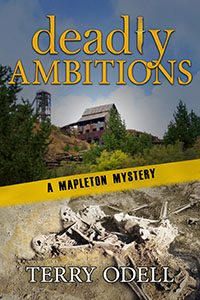
Deadly Ambitions
Peace in Mapleton doesn’t last. Police Chief Gordon Hepler is already juggling a bitter ex-mayoral candidate who refuses to accept election results and a new council member determined to cut police department’s funding.
Meanwhile, Angie’s long-delayed diner remodel uncovers an old journal, sparking her curiosity about the girl who wrote it. But as she digs for answers, is she uncovering more than she bargained for?
Now, Gordon must untangle political maneuvering, personal grudges, and hidden agendas before danger closes in on the people he loves most.
Deadly Ambitions delivers small-town intrigue, political tension, and page-turning suspense rooted in both history and today’s ambitions.


Terry Odell is an award-winning author of Mystery and Romantic Suspense, although she prefers to think of them all as “Mysteries with Relationships.”

Never Too Late – Interview with Mystery Author Rick Bleiweiss

by Debbie Burke

Back in 2022, I interviewed an energetic, dynamic 77-year-old Blackstone Publishing executive and author named Rick Bleiweiss. Rick’s debut mystery Pignon Scorbion and the Barbershop Detectives was due to release in February of that year.

Author Rick Bleiweiss
(all photos courtesy of Rick)

Four years later, an August article in People.com announced Rick’s upcoming mystery will be the first novel published under Blackstone’s new imprint, WhoopInk, led by Whoopi Goldberg. I emailed Rick to congratulate him, and he wrote back. Seemed like a good time for a catch-up interview about Rick’s exciting new adventure, embarked on in his 80s!

Here’s an introduction to Rick:

Rick Bleiweiss has been a touring/recording musician, music industry executive working with many superstar music acts & major film soundtracks, GRAMMY-nominated record producer, educator, entrepreneur, newspaper and magazine columnist, and publishing executive. As an author, his first novel Pignon Scorbion & The Barbershop Detectives won multiple international book awards and was #1 on Amazon in five categories. The second book in the series, Murder in Haxford, also won multiple awards, as did his political satire Ronald The Grump (written under a pseudonym) which was named Best Short Fiction Self-Published Book of the Year by two literary organizations. Rick was nominated as Author of the Year, was given the Career Changers Award for Authors, and hosts a popular YouTube series, Rick Bleiweiss’ Chapter & Verse, in which he interviews major musicians, actors, authors and other entertainment figurers. In 2025, at the age of 81, he wrote, sang and played all the instruments on a rock & roll record One Night Man by Captain Rick’s Retrorockit, which went to #4 on the World Indie Music Charts.

Debbie Burke: Welcome back to The Zone, Rick! Glad to reconnect.

In your professional life, you have always looked forward, pioneering new concepts in music, audio, publishing, and entertainment media. Yet as a novelist, you chose to travel back in time to 1910 with your Pignon Scorbion series that’s set in the quaint English village of Haxford. What prompted you to explore that era and setting?

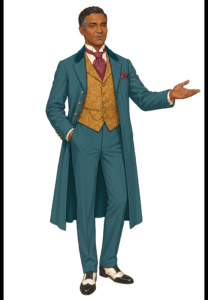
Pignon Scorbion

Rick Bleiweiss: I have always been a fan of mysteries set in that era and in England, especially Sherlock Holmes and Hercule Poirot (and the Murdoch Mysteries set in Canada though), and I wanted to write books featuring a new detective who would be a contemporary of theirs and solve cases in a similar manner – yet be a unique character of his own. Scorbion is just that, being a man of color (Haitian and Egyptian heritage), somewhat of a dapper fellow, and working on his cases by interviewing and questioning suspects and witnesses in a barbershop assisted by a colorful group of deputies including three barbers, a shoeshine man, a newspaper reporter, and a brilliant female bookshop owner.

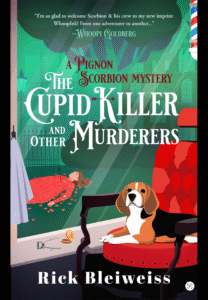
DB: Blackstone Publishing published your first two Pignon books in 2022 and 2023. The third book, The Cupid Killer and Other Murderers, is also part of the series but will come out under the WhoopInk imprint of Blackstone. Is the process different working within an imprint? In what ways?

RB: I was surprised, thrilled and literally astounded when Whoopi Goldberg told me she loved the first two books in the series, and asked if I was writing another, When I told her I was, she asked if it could be on her new imprint, and of course, I said yes! What an honor it is, not only to be on Whoopi’s imprint, but to be the first novel released on it. Wow. Being on WhoopInk I still get all the power of Blackstone Publishing behind the book, but get Whoopi as well, and that is priceless. The difference in the process from the first two books, was keeping Whoopi aware of and involved in what I was doing, and having her be behind the book. And as a side note, Blackstone has moved the first two books onto the imprint as well.

DB: Is there a fourth Pignon mystery in the works?

RB: I have just started writing it. While each book can stand on their own, each follows the chronology of the summer and fall of 1910, and the next book will be no different. I plan for it to start with the kidnapping that was referenced at the end of The Cupid Killer and Other Murderers having Julius Caesar the beagle be a central figure in that crime. I am also planning to have Scorbion travel to London to assist Scotland Yard solve a case, and of course, Pignon’s and Thelma’s relationship will deepen. Could there be nuptials in the book?

I’m also putting the finishing touches on  two books – one an adventure story about past life regression and the need to find something in one of those past lives, and the other, a comedy involving seniors living in a foster home who are harassed by a young gang of toughs who learn how to fight back, that’s sort of what it would be like if Home Alone met The Best Marigold Hotel. I’ve even written a screenplay for the last one – my first one. I find trying new things to be quite enjoyable.

DB: In our email exchange, I jokingly asked you what kind of vitamins you take. Do you have an exercise routine, diet, or other activities to stay healthy, active, and energetic in your 80s?

RB: Indeed, I do. I work out with a personal trainer twice a week, walk and use a stationary bike an average of 50 miles a week (walking my 16 year old Havanese, Gracie, is a huge part of that), I take many supplements and vitamins, and I avoid most grains, gluten, dairy and fried foods, and limit my intake of sugar and red meats which aren’t grass fed and finished, and my loving and caring wife Deborah makes sure I eat a lot of healthy vegetables. I am blessed to have both energy and good health in my 80’s and I’d like to keep it that way well into my hundreds.

Another thing I do is find time to relax and enjoy a myriad of different things. Among other things I enjoy playing word and number video games, playing Mahjong, being on committees in the community in which I live, spending time with friends and my family, and making music. In fact, I wrote, performed and played every instrument on a rock and roll record I recorded in my apartment last year which went to #4 on the Global World Indie Music Charts! It was called One Night Man by Captain Rick’s RetroRockit. At 81, Take that Mick Jagger!

DB: [Laughing] Rick, I’d rather see you in concert than Mick!

When we last visited, you reiterated it’s never too late to try something new or to follow your dreams. You certainly embody that philosophy. Did a particular person or event Influence you to adopt the attitude and way of life?

RB: Yes, I do regularly tell people of my generation (or of any age) that if you maintain your health and have energy and passion for something you are never too old to have a dream and follow it. While there was no specific person or event that influenced that attitude it was created by a combination of mostly unrelated factors. Both of my parents were brilliant and entrepreneurs who were involved in many different ventures and activities while I was growing up and later in their lives, which gave me the confidence and examples to try something whether it worked out or not. I also have read a lot and things various celebrities and writers have said and written impacted me and often confirmed my thinking. Quotes by Wayne Gretzky, Michael Jordan, Betty Friedan and many others were very confirming that the worst thing a person can do is not try something. Many of my friends are retired and enjoying their lives. I tried retirement and got bored out of my mind. I guess it confirmed a biofeedback session I had many decades ago which indicated that I was more at ease when I was problem solving than when I was trying to relax.

DB: Are there any dreams on the horizon you haven’t yet followed?

RB: A few years ago, I created and put out a rudimentary Pignon Scorbion “Find the Hidden Object” video game, which in retrospect was a valiant attempt that was not very good. Today the woman who owns the company that is assisting me market and publicize this newest Scorbion book is creating a truly outstanding video game featuring Scorbion as the host. Combining that with a new trailer and a unique film in which I’ll be interviewing a CGI version of Scorbion which Blackstone is doing, I believe the words fun and exciting lie ahead for me.

I’ve been involved in meditation and manifesting for many years, and the two things I’ve manifested which haven’t come to pass yet are having a book on the New York Times bestseller list and being a guest on a major network national TV show. I’m hoping both of those can happen now with this new book.

I must add that I get extreme pleasure in my role as a publisher in helping deserving authors have their books brought to the reading public, and I’ve been fortunate to have acquired at least 4 books that have been New York Times bestsellers in the past few years. And having more of those is certainly something I relish for the future.

DB: Any final thoughts you’d like to share with TKZ readers?

RB: Don’t be afraid to try new things. Know that most new things fail, so if what you try does fail, don’t be discouraged – try something else. Whatever you do, and no matter the outcome, enjoy the journey. Keep reading, singing, playing and doing whatever it is that gives you enjoyment in your life.

~~~

Rick, this line especially resonated with me: “…if what you try does fail, don’t be discouraged – try something else.” Great advice for writers!

Thank you for coming back to The Zone to share your wisdom. Hope you achieve that dream of a New York Times bestseller!

~~~

TKZers: What plans and dreams are ahead for you as a writer? Did any of Rick’s suggestions jump out at you?

~~~


The Cupid Killer and Other Murderers is available for preorder at:

Amazon hardcover

Amazon audiobook

Amazon ebook

Barnes and Noble hardcover

In The News

(Note: Kay DiBianca is currently on hiatus)

Amazon Prime Air Drone Delivery Expands

From Amazon News:

Amazon’s Prime Air service is rapidly expanding and plans to reach nearly 500 cities and towns in the United States by the end of 2026—a sixfold increase from its current footprint—bringing ultrafast drone delivery to communities with tens of millions of customers across the country.

Amazon’s diverse operations: warehouses, delivery, and pharmacy services

8 ways Amazon is delivering orders faster, from drone delivery within hours to Same-Day Delivery of fresh groceries

From demand forecasting to specialized delivery vehicles, here’s how Amazon is bringing faster delivery speeds for a better shopping experience.

Prime Air offers the widest selection of items by drone, including millions of groceries, electronics, cosmetics, medications, and household products at everyday low prices, delivered in as fast as 30 minutes.

Prime Air drone delivery sites have the highest average delivery volumes in the U.S., with thousands of deliveries made daily. Prime Air drone delivery currently serves customers in cities across seven states, including Arizona, Florida, Kansas, Louisiana, Michigan, Nebraska, and Texas, with plans to launch in Georgia, Ohio, Illinois, Idaho, and New York soon.

“Customers already turn to Amazon for fast Same- and Next-Day Delivery, and Prime Air provides them an even speedier option when they need it, with deliveries in as fast as 30 minutes,” said David Carbon, vice president of Amazon Prime Air. “We’ve already delivered hundreds of thousands of packages to customers by drone this year, and by the end of 2026 we plan to reach customers in nearly 500 cities and towns. We’re pairing the convenience of ultrafast drone delivery with the low prices and selection customers love about Amazon.”

***

Don’t Panic Over Gen Z Readers (h/t Jane Friedman’s The Bottom Line)

From The Conversation:

A trove of recent articles bemoan the collapse in recreational reading among younger Americans, with COVID-related reading declines, artificial intelligence and social media often described as causes.

But as the authors of “How Gen Z Discover and Consume Books,” we think many claims about Gen Z’s reading behaviors miss the mark.

Some long-standing, influential studies aren’t designed to capture how Gen Z often reads: multimodally – bouncing between print, e-book and audiobook for the same book – and on web platforms such as Wattpad, Webtoon, Kindle Unlimited, DC Universe Infinite and Marvel Comics online.

In fact, according to our 2025 data, a growing proportion of Gen Z – 66% – is identifying as readers, up 14 percentage points from 2022. In the previous 12 months, 65% of Gen Z read at least one print book, up from 59% in 2022. These findings roughly correspond with those of the Pew Research Center for the general population across all ages.

In other words, Gen Z shows us that reading isn’t dying. It’s changing….

Identifying as a reader used to mean sitting alone with a book. That is less true for Gen Z than any previous generation. Gen Zers are more likely to experience reading as a social activity.

The growing popularity of silent reading parties, where groups of people come together to read quietly and independently, suggests that Gen Zers enjoy finding community around books, even as they immerse themselves in a largely solitary act. We also note how some young people are bridging the distance between story worlds and real life by participating in literary cosplaying, in which readers dress up as characters from their favorite books and gather at conventions or themed events. Then there’s “book excerpt aesthetics” – a social media trend in which readers post memorable passages and quotations from books.

Unionizing at Hachette (From PW)

Last month, around 600 Hachette Book Group workers joined the Washington-Baltimore News Guild, forming the largest trade publishing union in history.

***

In each union’s public statements, employees expressed strikingly similar reasons for organizing: inadequate pay, large workloads, and limited potential for advancement. They all cited, in their own words, what HBG organizer Julia DeVarti, an associate editor at Little, Brown, called publishing’s “passion tax”—workers’ tendency to “be exploited for working in an industry we love.”Oftentimes, the impact of the passion tax is most visible in corporate publishing, according to NewsGuild president Jon Schleuss. Entry-level employees come in because they love books and might “initially give up decent pay and decent benefits, because they can then say, ‘I’m working at one of the Big Five publishing companies.’ ” Many times, he adds, these sacrifices become permanent fixtures of employment.

***

An organizing committee member at Dark Horse, who spoke with PW on the condition of anonymity, says they and others who were hired during the pandemic spearheaded the union drive for similar reasons. In August 2024, Dark Horse ordered employees near its Portland, Ore., offices to start coming in two days per week, after being fully remote since the start of the pandemic. In addition to the added transportation costs, a wage freeze implemented in December 2024 and rising insurance premiums worsened workers’ quality of life, according to the organizer, even after raises resumed this January.

The specter of AI has also heightened workers’ sense of uncertainty. The NewsGuild has so far won AI protections in 90 different contracts across the journalism and publishing sector, Schleuss says. The model clause he shared with PW prohibits employers from replacing employees with AI or using automation to decrease salaries.

In many cases, these are preventative guarantees. University of Chicago Press, for example, prohibits its authors and peer reviewers from using AI and is not using AI tools internally, according to senior promotions manager and organizer Adrienne Meyers. Still, she says, she wants to “make sure that doesn’t change if a management position changes, or if the university puts pressure on us.”

***

When the HWC went public, Hachette distributed anti-union infographics around its Manhattan offices. The posters, which the HWC shared on its social media, framed unions as “third parties” intruding on the manager-worker relationship.

A Hachette spokesperson explained to PW at the time that the publisher meant to “encourage workers to consider all the facts to make an informed decision” in their union election.

Trust is Your Greatest Asset

by James Scott Bell

Roughly half of all internet traffic, from what I’ve been able to gather, comes from bots. Let that sink in. An overwhelming army of non-human scrapers and crawlers are clicking, copying, analyzing, and spitting out information that humans use to find stuff. Which means that the old days of buying ad space and sitting back to await the results are kaput.

Think about it. You pay $1000 for an ad, and half the responses are not sentient human beings looking for your product. You’ve just tossed $500 into the dumpster, and the dumpster is on fire.

Five years ago, someone searching for a good book to read might head over to Amazon and put in a search term like “Action packed thriller” and see a bunch of  cover thumbnails. Then they could browse, like in a bookstore. That made keyword selection in KDP so important. Maybe it still is, but increasingly readers will go straight to Google or an LLM for a search. So how do we optimize for the bots? Like being in love, it’s complicated, and life is complicated enough as it is. Thus, I have not done a deep dive on this, but if you want to you can start with this post from Thomas Umstattd’s AuthorMedia podcast.

I would rather spend my time doing what I do best, writing the next book. Because, in the end, that is still the #1 marketing tool.

Why? Because of trust.

There are only two ways to grow a business. The first way is to find new customers through marketing and advertising. The second way is to sell more to satisfied customers.

The first way is expensive and, now, increasingly difficult.

The second way works if—and only if—your product delivers the goods.

For a novelist, the goods are stories that readers love. If they love one of your books, and that gets them to read another one, and they love that, too, you’ve made a fan. Which is why an email list is crucial. This lets you keep in communication with happy customers. Writers do this via emails/newsletters, which avoid the fog and noise of the internet space. The care and nurture of your list is a subject beyond the scope of this post. But if I may offer two bits of advice:

  1. Don’t hard sell.
  2. Don’t overstay your welcome.

These days, people are looking, across the board, for people they can trust because they have been hosed so often.

This, I think, is what’s behind the recent news of a Big 5 publisher pulling a book because of suspected AI use. The pub knows that most readers want a human being to be the sole author, and don’t want their reputation for providing that to be compromised. I’m not going to delve into the various uses of AI tools. I’ve stated that my “red line” is at the actual text that appears on the page. This is not, however, an opinion shared by all. One bestselling (and controversial) author openly states:

“Artificial Intelligence was used in both the research and composition of this book. I have asked the AI to mimic my writing style so you, the reader, will not be able to tell what was written by me and what was generated by the AI. I am also not going to tell you or make any indication of what was written by me and what was generated by the AI. It was I, the writer, who decided what words were put on the pages of this book, so despite the contributions of the AI, I still consider every word of this book to be mine. And I don’t care if you don’t.”

You know what? I have to give kudos to this fellow for being open about it. I don’t agree with his practice, but at least he isn’t trying to hide it. That’s far better passing off AI-generated text as one’s own words, which is what these scandals are all about.

In an episode of Downton Abbey, when it becomes clear that the old ways of life are on the way out, Carson the butler muses, “The nature of life is not permanence, but flux.”

Hoo boy. We’re in flux right now, on steroids.

What hasn’t changed—and never will—is the value of trust. Whatever you do, however you do it, don’t violate that trust in your work.

Comments welcome.

More Conference Words of Wisdom

Three weeks ago I attended the Willamette Writers Conference, held in person in Portland, Oregon, and online via Zoom. It was my first writer’s conference since 2019, when I co-presented at WWC on getting your books into libraries and also moderated a panel discussion on the then-current state of the science fiction and fantasy market.

This year I went to boost my writing craft and refill my creative well. The first day of WWC 2026 I took a masterclass on “layered revision” from my first writing mentor, Eric Witchey. I had taken three intensive courses from him back in 2008-09, and as usual, he packed a lot of insight into a five-hour masterclass. In the words of the program listing, the masterclass provided “specific, immediately executable techniques for deconstructing a manuscript, isolating undefined issues, defining them, and selecting a course of action to resolve them. The patterns and skills presented are useful to all levels of writers and are applicable across genres for flash fiction, short stories, novelettes, novellas, and novels.” I came away with a new perspective and a basketful of additional techniques for revising a story or novel,

I started off Saturday at crime author Glen Erik Hamilton’s presentation “The Amateur Sleuth’s Guide to Writing Mysteries, Thrillers, and Suspense,” which laid out the conventions of mystery and thrillers, tropes, sub-genres, character types and more. I followed that up with a presentation by screenwriter Randall Johnson on adapting a book to a screenplay. Publishing expert Jane Friedman’s keynote address was next, which focused on the current state of publishing and how authors are the protagonists now in publishing, getting to decide on their own paths, and discussing sales trends in traditional and self-publishing.

After lunch I attended “All Play, No Pressure: A Generative Poetry-Writing Workshop,” given by Christopher Diaz, which provided tools for creating poetry, dealing with writer’s block, coming up with prompts and other ways to brainstorm and generate poetry (and prose). I haven’t written poetry in a long time and it was good to “cross-train” in a different formI followed Diaz’s workshop with a presentation by poet and president of the Science Fiction Poetry Association Brian Garrison on “Breaking the Line,” which had us experimenting with line breaks.

Sunday I attended an Online WWC Zoom workshop given by award winning author Frank Wilde on “Genre Mashups.” I know Fran from the annual Rainforest Writers Retreat, having attended her presentations there. This workshop looked at identifying genre elements and having fun combining different genres together, something increasing in popularity not only in science fiction and fantasy, but also in mystery.

I left the conference rejuvenated, with many useful notes and techniques to explore and hone.

Today’s Words of Wisdom looks once more at different aspects of writers conferences. Debbie Burke shares a few cautionary stories from her extensive conference experience. Kay DiBianca provides reasons to attend a conference and tips on deciding on which one. John Gilstrap gives advice on taking feedback from an author on your manuscript at a writer’s conference.

Most speakers are wonderful, gracious people who want to help other writers. In 29 years, I can count the clinkers on the fingers of one hand. But those few clinkers really leave an impression.

One year, a big-name mystery author was supposed to teach a three-day intensive workshop. He showed up with his girlfriend and they were fighting. He then told us he shouldn’t have come because he was on deadline.

Uh, you didn’t know that when you committed to teach? 

The first morning, he grumbled and complained for three hours to his students about his deadline and troubles with his girlfriend. After lunch, he pitched a fit, saying he couldn’t possibly write in his hotel room because his girlfriend was irritating him. “I’m not hard to please,” he claimed, “just find me a quiet place with a table.” So I found several alcoves in the hotel where he could write. He couldn’t stand any of them.

The second morning, more whining, no teaching. Students were irritated and their complaints were totally valid.

The third morning, he put in a halfhearted effort to review a few manuscripts but the class was a disaster. We wound up refunding tuition to his disappointed students.

At the party on the last evening, in front of everyone, he apologized to me for his behavior and presented me with a T-shirt…that advertised his books.

Can you spell E-G-O?

Hiccups aren’t always with speakers. Once in a while, volunteers throw sand in the gears. One member was obsessed with finding an agent. He found out when the agent’s flight was scheduled to arrive, even though someone else had been assigned to do airport pickup. He showed up early, grabbed the agent, took him out to dinner, and badgered him for three hours about representation.

This happened before cell phones so we couldn’t call the agent. We knew he’d arrived on the plane but he’d disappeared. No one could find him.

Finally, the dazed agent arrived at the hotel. He told us he wasn’t thrilled that we’d sent this obsessed writer to pick him up. We apologized profusely and explained the guy had acted on his own, totally without our knowledge. Fortunately, the agent had a sense of humor. He probably told that story at future conferences as a cautionary tale of how not to impress an agent.

Needless to say, the kidnapper didn’t receive an offer of representation.

For every horror story, there are at least a hundred tales of writers who were inspired to finish a book, take the plunge into publication, or step up to the next level in their careers.

Debbie Burke—September 17, 2019

There are many reasons to attend a conference, and lots of benefits to be had. Here are a few:

  1. Gather with fellow writers. Authors spend a lot of time in solitary pursuit of the perfect story. It’s a good idea to get out occasionally and meet new people. Even for those of us who are introverted, the company of fellow authors is special. After all, most of those people are introverts, too.
  2. Learn a new skill. Workshops, lectures, and courses give writers an opportunity to sharpen their expertise in the craft.
  3. Get feedback on a current project. Most conferences provide some critical feedback of an author’s work for free. Others charge a small fee.
  4. Pitch your work. Conferences are an opportunity to pitch your work to an agent or an acquisitions editor. Remember to rehearse your pitch and have it ready. You never know who you may bump into on the elevator.
  5. Sell some books. Most conferences have a means to offer your books on consignment. We’ve had success in selling a few books at each of the conferences we’ve attended.
  6. Help a new author. Many attendees are first-timers. This is an opportunity to provide encouragement and feedback to someone who is just beginning their writing journey.
  7. Get motivated. Conferences have a way of energizing the author and getting the creative juices flowing. Use the excitement to build on your next novel.

Deciding on the ideal conference

Choosing a writing conference is similar to finding a college to attend. There are plenty of choices, and you’ll want to consider size, focus, cost, and travel distance. Some conferences are specifically tuned to a narrow genre selection. Others may be open to any writing area. There are plenty of lists online, but I think the best resource for finding a good conference is from your colleagues, like those here at TKZ. I hope we’ll see some recommendations in the comments.

Before you sign up

  • Check out the conference to see if it offers the kinds of courses and workshops you’re interested in.
  • Research the professional editors and agents who will be onsite for appointments, and register early to get appointments with the ones you want to meet with.
  • If you’re going to put your books on consignment in the book shop, be sure you understand when to drop the books off, when you have to pick them up, and any other requirements

Kay DiBianca—September 27, 2022

I returned to my home last Saturday after spending the better part of a week at the Midwest Writers Workshop in Muncie, Indiana, where I was part of the faculty. MWW is one of my favorite “working” conferences–that is, a conference dedicated specifically to writing technique, as opposed to other confabs that are weighted heavily toward social interaction. When you sign on to teach at MWW, you’re signing on to work. This was my fourth or fifth tour with the conference, and I’m anxious to go back when invited.

As part of my duties, I agreed to review ten, 5-page writing samples and discuss them with their authors, which I hammered out back-to-back in half-hour increments. I mentioned here last week that I’d noticed an overall decline in quality from my previous experience with MWW. None of the samples I reviewed were truly awful or beyond redemption, but none of them jumped out as sparkling with potential.

The experience did, however, provide me with the topic for this week’s TKZ missive: How to make the most (or trigger the worst) out of manuscript reviews. Presented in no particular order . . .

My opinion of your writing is merely my opinion. It’s the opinion you paid to hear, and the one that I am obliged to give. You are free to dismiss any bit of guidance that I provide. The opinions from your friends, family and beta readers, while in opposition to my own may very well be definitive. Go with them–with my blessing–but know that the fact that your Aunt Betty was an English teacher and says your characters are vivid and exciting will not cause me to change my assessment that they are neither.

If you listen to anything I say, listen to everything I say. The positive things I note about your work are every bit as honest as the negative things. I understand that we don’t know each other very well, but those who do know me will assure you that I am not a blower of unearned sunshine. Give yourself a break.

“The first five pages” actually means the first five pages. Of the ten manuscripts I reviewed, three of them were hunks of story excised from the middle of the novel, in each case chosen because the author thought those pages represented their “best writing.” Yeah, let that settle. None of the good writing happens before page 48 (and presented to me either as unnumbered pages or as “page one” of the sample). Let’s save that rant for later. Assessing a manuscript is more than just copy editing. In fact, copy editing is the last thing this kind of assessment is. If I’m going to evaluate your story, the elements of plot, setting and character all have to make sense. I’ve thought about this a lot, and I cannot think of a simpler, more understandable way to issue the instruction to “submit the first five pages of your work.”

Quit worrying about someone trying to steal your idea. If you want my help, you’re going to have to share critical elements of your story. In many years of doing this, I’ve never once heard a premise that was truly unique. I’ve seen a thousand different squints on romances and mysteries and murder weapons, but never a plot point that was unicorn-unique. When you demand that I sign a non-disclosure agreement before you allow me to dedicate my time to your writing, you double-dog guarantee that I won’t look at a word, and won’t lift a finger. Well, maybe I’ll lift one finger.

John Gilstrap—July 26, 2023

***

Have you attended a writer’s conference? If you did, what did you get out of attending? Any advice for first-timers?