If I listed everything that may or may not upset a reader, it’d ruin the plot of my books. Trigger warnings might be helpful in genres geared toward children, but it’s ludicrous to think all genres should include them. If murder upsets you, good! The psychological thriller did its job. If you only want feel-good stories, maybe you shouldn’t read thrillers, horror, true crime, dark romance, or any other genre that veers into similar territories.
To expect a psychological thriller author to tell you in advance what may or may not cause you—a stranger—emotional distress, is absurd. It’d be a helluva lot easier for authors who write cozy-esque thrillers to say that, rather than force all thriller writers to predict what scenes may or may not upset a reader. Especially nowadays, when everyone seems overly sensitive.
In the real world, life is messy, violent, complicated, and too many nice guys finish last. Did the OBGYN stamp that warning on our wrists at birth? No. Why? Besides the obvious, it’s impossible to tell what a newborn might experience in their life. How, then, are we supposed to predict how a reader may or may not feel?
Also, the faceless, nameless “they” want us to include warnings for mere mentions of a triggering subject, even if it never occurs on the page. What??? Not only do we have to guess which subjects may or may not upset a current or future reader but now, we need to forewarn the mere mention of it, as well?
When do people start taking accountability for themselves?
We didn’t force anyone to buy our books. Thrillers often use an ominous cover and description. Is it our fault the sensitive reader ignored both cues?
I got fired up about this issue after a friend loaned his neighbor a signed copy of Merciless Mayhem. Eighteen months later, she finally returned it, but not before she cursed him out for not warning her of the content. There’s a skull on the cover! The water is blood red! What kind of novel did she think it was? Did she not read the description in eighteen months? Gimme a break. Some people are too quick to place blame anywhere but at themselves.
Another Example:
In my debut novel, MARRED, the protagonist is a rape survivor. I never showed the rape, and the story takes place three years later.
Does that mean a warning of “rape” should be included? Since it’s a series, should that same warning continue for all five books?
Thankfully, TWs weren’t “a thing” when it debuted, but my publisher and I still discussed it. Because I never showed the rape, neither of us considered it a problem, nor did any of my readers, judging by the reviews. I did, however, hear from more than one rape survivor who praised my book for showing what the act of rape does to a person ie., psychological damage and/or residual aftereffects, like obsessively showering or the need for order and/or control in their lives. They all said the book helped them to realize they’re reactions were common in rape survivors.
If MARRED had a TW of “rape” listed, none of those women would’ve read the book that helped them to move forward. Rubs against the argument to include TWs, doesn’t it?
If you still believe trigger warnings in books help trauma survivors, check out this scientific study’s conclusion with even more studies linked to conduct your own research:
Public arguments regarding trigger warnings have been politically charged, complex, and data-poor. Recent research on trigger warnings can importantly inform or perhaps even settle some of these debates. The research suggests that trigger warnings are unhelpful for trauma survivors, college students, trauma-naïve individuals, and mixed groups of participants (Bellet et al., 2018, 2020; Bridgland et al., 2019; Sanson et al., 2019).
The highlights of the 2018 empirical study:
Trigger warnings increase peoples’ perceived emotional vulnerability to trauma.
Trigger warnings increase peoples’ belief that trauma survivors are vulnerable.
Trigger warnings increase anxiety to written material perceived as harmful.The 2020 Helping or Harming study acknowledges in its conclusions:
Trauma survivors (N = 451) were randomly assigned to either receive or not to receive trigger warnings before reading passages from world literature. We found no evidence that trigger warnings were helpful for trauma survivors, for participants who self-reported a posttraumatic stress disorder (PTSD) diagnosis, or for participants who qualified for probable PTSD, even when survivors’ trauma matched the passages’ content.
Trigger warnings can get ridiculous. This extensive list includes but is not limited to:
- alcohol
- divorce
- cheating
- car accident
- death
- bones
- fire
- gun violence
- infertility
- murder
- attempted murder
- pregnancy
- profanity
- religion
- miscarriages
- snakes
- spiders
- needles
- terminal illness
- anxiety
- violence
- hospitalization
- childbirth
- Harry Potter references
- infertility
Keep in mind, we can’t even mention any of these without including a warning in advance.
Are. They. Serious? We’re expected to add a TW if a character drinks alcohol? The author isn’t forcing the reader to drink alcohol against their will.
Similar articles claim all authors have a “moral obligation to warn readers of all possible triggers.” No offense to younger generations, but many are offended by subjects that GenXers or Baby Boomers wouldn’t even recognize as problematic.
One trigger warning listed above is “divorce.” Does that mean if the book contains a divorced character, or the mention of someone divorcing, even in the past, we need to warn readers? What’s upsetting about a divorced character? Sure, divorce sucks to endure in real life, but how much emotional distress does a divorced character cause in readers? If the character never gets remarried—or does, but that still doesn’t erase their prior divorce—are all the books in the series doomed to wear that warning label? According to some readers, they say yes.
What part of fiction don’t they understand?
Why can’t a potential reader gain the same insight from the genre, description, and cover? Why is it our responsibility to guess what may or may not upset some readers?
Or—here’s a thought—maybe sensitive readers should stick with cozy beach reads with cute covers. Why choose a psychological thriller with an ominous cover and description, and then force the author to guess what may or may not “trigger” you?
It’s ridiculous! And so is the overused word “trigger.”
Thriller author Jay Darkmoore explains the difference between being triggered and feeling upset, offended, or sad:
The word triggered comes from psychology. It means to be triggered into a PTSD emotional flashback, to the point where something – an event, like combat and war – happened, and you are transported back to that situation and how you felt at the time. It means that your body reacts and your hormones spike. It means that you begin to shake, to run, to fight. You lose control of yourself because the stimulus has ‘triggered’ significant trauma. It hasn’t just upset or offended you. Being offended is a choice. Remember that. You CHOOSE to be offended and you CHOOSE to be angry.
You do not choose to be triggered. Stop saying being angry is the same as being triggered. They are worlds apart, and it’s very, very disrespectful to actual sufferers of PTSD and trauma to say you got triggered because you read about a bad thing happening that made you feel sad [or upset].
Sensitive readers have no business venturing into the horror or psychological thriller aisles. Psychological thrillers should cause emotional distress. It’s right there in the genre title. And horror, well, it’s horrific.
One author complained about Stephen King causing her emotional distress. Um, yeah, that’s his job.
C’mon, folks. Take some responsibility for yourself.
Real Life does not forewarn us… of anything.
Y’know what I do when I stumble across a subject that isn’t my cup o’ tea? I close the book. Yes, it’s that simple. Close. The. Book. Move on with your life. You’re not its intended audience. And that’s okay. Books are not meant to be one-size-fits-all. Reading tastes are subjective. Isn’t that great? I think so.
I, for one, will never include trigger warnings (unless a publisher demands it). If a reader can’t tell my books may delve into uncomfortable subject matters — a pre-requisite for psychological thrillers, environmental thrillers, and true crime — that’s not my problem. The covers, descriptions, and genre should be enough for readers to make an informed decision.
How do you feel about trigger warnings? Let’s discuss.
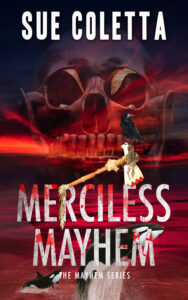
Linked to Amazon
<– This is the cover she thought would be a sweet, feel-good story.
Key “warnings” in the description are in bold:
Shawnee and Mayhem continue to wreak havoc on the Killzme Corporation—the largest animal trafficking ring in the country—by killing one poacher at a time.
Meanwhile, the traffickers set their sights on capturing Orca for profit and pleasure.
With a ticking clock and no place left to hide, Shawnee and Mayhem alternate between undercover surveillance and clandestine battles to save their loved ones and the Innocent Ones from Killzme’s evil plans.
Skills are tested. Tenuous alliances formed. Not everyone will make it out alive.
Set in a world of cultural wonder, environmental threats, and looming danger, this heart-stopping eco-thriller will have you glued to the page from the first sentence to the last.