Trust is Your Greatest Asset

by James Scott Bell

Roughly half of all internet traffic, from what I’ve been able to gather, comes from bots. Let that sink in. An overwhelming army of non-human scrapers and crawlers are clicking, copying, analyzing, and spitting out information that humans use to find stuff. Which means that the old days of buying ad space and sitting back to await the results are kaput.

Think about it. You pay $1000 for an ad, and half the responses are not sentient human beings looking for your product. You’ve just tossed $500 into the dumpster, and the dumpster is on fire.

Five years ago, someone searching for a good book to read might head over to Amazon and put in a search term like “Action packed thriller” and see a bunch of  cover thumbnails. Then they could browse, like in a bookstore. That made keyword selection in KDP so important. Maybe it still is, but increasingly readers will go straight to Google or an LLM for a search. So how do we optimize for the bots? Like being in love, it’s complicated, and life is complicated enough as it is. Thus, I have not done a deep dive on this, but if you want to you can start with this post from Thomas Umstattd’s AuthorMedia podcast.

I would rather spend my time doing what I do best, writing the next book. Because, in the end, that is still the #1 marketing tool.

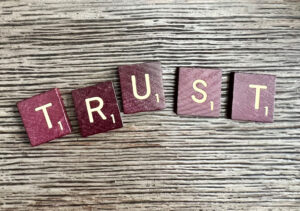
Why? Because of trust.

There are only two ways to grow a business. The first way is to find new customers through marketing and advertising. The second way is to sell more to satisfied customers.

The first way is expensive and, now, increasingly difficult.

The second way works if—and only if—your product delivers the goods.

For a novelist, the goods are stories that readers love. If they love one of your books, and that gets them to read another one, and they love that, too, you’ve made a fan. Which is why an email list is crucial. This lets you keep in communication with happy customers. Writers do this via emails/newsletters, which avoid the fog and noise of the internet space. The care and nurture of your list is a subject beyond the scope of this post. But if I may offer two bits of advice:

  1. Don’t hard sell.
  2. Don’t overstay your welcome.

These days, people are looking, across the board, for people they can trust because they have been hosed so often.

This, I think, is what’s behind the recent news of a Big 5 publisher pulling a book because of suspected AI use. The pub knows that most readers want a human being to be the sole author, and don’t want their reputation for providing that to be compromised. I’m not going to delve into the various uses of AI tools. I’ve stated that my “red line” is at the actual text that appears on the page. This is not, however, an opinion shared by all. One bestselling (and controversial) author openly states:

“Artificial Intelligence was used in both the research and composition of this book. I have asked the AI to mimic my writing style so you, the reader, will not be able to tell what was written by me and what was generated by the AI. I am also not going to tell you or make any indication of what was written by me and what was generated by the AI. It was I, the writer, who decided what words were put on the pages of this book, so despite the contributions of the AI, I still consider every word of this book to be mine. And I don’t care if you don’t.”

You know what? I have to give kudos to this fellow for being open about it. I don’t agree with his practice, but at least he isn’t trying to hide it. That’s far better passing off AI-generated text as one’s own words, which is what these scandals are all about.

In an episode of Downton Abbey, when it becomes clear that the old ways of life are on the way out, Carson the butler muses, “The nature of life is not permanence, but flux.”

Hoo boy. We’re in flux right now, on steroids.

What hasn’t changed—and never will—is the value of trust. Whatever you do, however you do it, don’t violate that trust in your work.

Comments welcome.

Who Do You Believe?

.

Distrust and caution are the parents of security. –Benjamin Franklin

The trust of the innocent is the liar’s most useful tool. –Stephen King

* * *

I left the kitchen and was strolling down the long hall toward my office, sipping a cup of coffee as I considered what new disasters I could throw at my characters, when something happened that I had never experienced before.

Picture this: the door at the end of the hall that leads into a utility room was open. Suddenly, an animal leaped out of the utility room into the hall and ran furiously. TOWARD ME! It was a chipmunk.

Now I’m not one to panic in a situation like that, and I know little critters are afraid of big humans, so I waved my arm (the one not holding the coffee—I didn’t want to spill on the carpet), and I shouted, “STOP! GO BACK!” as if Mr. Cutie could understand me. He didn’t play his part in the drama, though. He just kept coming.

At this point, I was afraid I might be in danger of getting bitten by the rodent, so I used that tried-and-true defense mechanism: I screamed for my husband to come quick.

When the chipmunk got within a foot or two from me, he made an incredible right-hand turn at full speed into an adjacent hall. Any tight end would have appreciated that maneuver. Then he turned again and ran straight into MY OFFICE. Not good.

While I was standing there looking dumbfounded and considering the next steps in the chipmunk eviction process, my husband sauntered in from another part of the house. “Did you call me?” he asked.

“Yes!” I said. “A chipmunk came running down the hall. I thought he was going to attack me!”

Now you have to visualize his reaction. Eyebrows slightly raised, a disbelieving tilt of the head, and body language that shouted, “I don’t think so.” What he actually said was “A chipmunk?.”

Now my husband knows I wouldn’t make something like that up, but he still didn’t believe me. We live in a suburban neighborhood. We rarely even see a squirrel around here, so he assumed I was mistaken, and it must have been a mouse or a baby squirrel or something else. After a suitably sarcastic remark, I described the cute little face and the stripe down the back of our unexpected visitor, and that convinced Frank that I had indeed been accosted by real, live chipmunk. So we barricaded Mr. Chips in my office, drove to the hardware store, bought a cage, and finally trapped our unwanted guest without harming a single hair on his cute little head.

After we dropped Chippie off at a park many miles away from our home, I reflected on our experience, and how useful the concept of disbelief or distrust is to authors, especially writers of mystery.

In any murder mystery, there are characters who mislead the authorities, and other characters who are trying to find the truth amidst all the noise. But even more important are the readers who are trying to figure out who’s telling the truth and who’s lying. If the author can mislead the reader artfully enough, it will result in a surprising climax that readers love.

* * *

In my second novel, Dead Man’s Watch, a man has been accused of murder and everybody thinks he’s guilty. He had motive (his wife died of a drug overdose from drugs bought from the murder victim) and opportunity. He admitted that he had met the drug dealer on the night of the murder with the intent to kill him. But he claims he didn’t go through with his plan.

However, the main character was a childhood friend of the accused and doesn’t want to think he could be guilty. She doesn’t believe he would lie to her, so she visits him in prison. Here’s a snippet of their conversation:

He smiled sadly and turned back. “Kathryn, I know you’re a real nice person, but you don’t owe me anything. Let it go.”

“I can’t let it go, Brad. I have to do this.” She paused and waited for him to focus back on her. “But first I have to know. Did you kill him, Brad?”

He jerked his head up so fast, she sat back in her chair. His eyes burned into hers. “Do you think I could be a killer?”

“No.”

“Good. That makes one person in the world who thinks I’m innocent. Maybe you can convince the jury.”

“Did you kill him, Brad?” She had to hear him say it.

Did you notice Brad avoided answering the question the first time? But Kathryn persists. She needs to hear him say he didn’t kill the man. Different readers might come away with different opinions on whether Brad is innocent, or just willing to use his friend to help him.

* * *

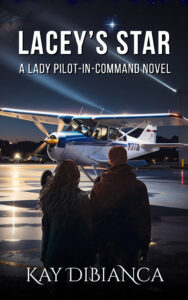
While the character Kathryn in the Watch series is a determined but naïve young woman, the main character in my new novel, Lacey’s Star, is different. Cassie Deakin is just as determined as Kathryn, but her outlook on life is far more skeptical. She is reminded frequently in the course of the book to be careful who she puts her trust in.

At one point in the book, Cassie and Detective Frank White are searching for Sinclair, a man who claims to have evidence that his young sister was murdered. Unable to track down Sinclair, they meet with law enforcement officers who had talked to him recently. When Cassie hears that Sinclair had trusted a group of strangers enough to share some important information with them, this is her reaction:

“Sinclair sounds like an idiot. If he convinced those bikers there was something of real value in Uncle Charlie’s barn, the only explanation is that some of those bikers decided to steal it. If that’s what happened, then Sinclair is the reason Uncle Charlie got injured.” I could feel the heat rising in my face. I wanted to get my hands on Sinclair and shake him until his teeth fell out.

* * *

In both books cited above, the matter of trust is an important theme. Characters have to decide who they can trust, and the reader has to decide who’s telling the truth. My job is to tilt the playing field without the reader noticing.

So TKZers: How do you handle issues of believability and trust in your books? Do you incorporate an unreliable narrator? Do you try to mislead your readers?

* * *

GET IN, SIT DOWN, BUCKLE UP, AND HANG ON!

Come along for the ride as private pilot Cassie Deakin lands in the middle of an unwanted adventure and discovers her beloved Uncle Charlie has been attacked and seriously injured by thieves.

But Cassie has a problem. She doesn’t know who she can trust. Still, she reluctantly agrees to team up with Deputy Frank White, a man she definitely does not trust, to solve the mystery behind the attack on her uncle.

But as Cassie and Frank peel back the layers of one mystery, they uncover a deeper and more sinister crime: the murder of an eight-year-old girl decades earlier. Armed with only a single, cryptic clue to the death of young Lacey Alderson, Cassie makes a crucial discovery that lands her in the crosshairs of a murderer.

Lacey’s Star is now available for pre-order for $1.99. Click here.