True Crime Thursday – Blurry Line Between Fact and Fiction

by Debbie Burke

Here’s a familiar trope in crime fiction: an author protagonist details a fictional murder that the author is later accused of. The book they wrote is used as evidence to prove their guilt or innocence.

Today’s True Crime story is a real-life case that carries that trope to the extreme.

In 2000, a Polish businessman named Dariusz Janiszewski disappeared. Four weeks later, his body was pulled from the River Oder near Wroklaw in southwest Poland. He had been tortured and tied with a rope noose around his neck that fastened to his ankles, pulling him into a painful backward cradle shape. If he struggled against the bonds, the noose would tighten, strangling him.

According to a scholarly paper (public domain) by Katarzyna Struzińska entitled “The Murderer as Writer, Storyteller and Protagonist: The Case of Krystian Bala”:

“The autopsy revealed that Janiszewski most probably died because of ligature strangulation; however, owing to some indicators showing that he was still alive when someone dropped him into the river, the possibility of death by drowning was not excluded [34]. Furthermore, the traces left on the deceased’s body showed that he had been beaten and starved for several days before he died.”

The gruesome crime shocked the community but there were no leads. The case went cold for several years.

Then in 2003 an author named Krystian Bala self-published a grisly novel entitled Amok that described a murder with specific details similar to Janiszewski’s death. The protagonist was named “Chris”, a variation on “Krystian.” Chris was portrayed as an arrogant narcissistic sadist who pushed beyond the limits of social, religious, moral, and legal boundaries.

A detective named Jacek Wroblewski had been working the unsolved cold case. When he learned about Bala’s book, he pursued that line of investigation, gathered some damning circumstantial evidence, and questioned Bala.

The alleged motive was jealousy for an affair between Janiszewski and Bala’s wife. A polygraph was inconclusive.

Bala reportedly confessed to the murder but then recanted. 

Per Polish law, he was released after 48 hours because of insufficient evidence.

Bala made public accusations against the police, claiming he’d been kidnapped, a plastic bag placed over his head, and tortured during questioning. His claims were disproved but the media had already kicked into high gear. The sensational case went viral with articles in Europe as well as international publications including The Guardian and Time.com.

Without physical proof or eyewitnesses, the detective continued to collect more circumstantial evidence. Phone calls to the victim shortly before the murder were traced back to Bala. He had also done online research about hanging and strangulation. Within days of the murder, Bala had sold Janizewski’s stolen phone through an internet auction site.

Meanwhile Bala vehemently protested his innocence, claiming an “oppressive police and justice system” had “treat[ed] the book as if it was a literal autobiography rather than a piece of fiction.”

In 2008, an in-depth account by David Grann was published in the New Yorker after Bala’s trial. Grann examined Bala’s background, influences, and beliefs. It’s a long article but gives considerable context detailing why many people were convinced of Bala’s guilt.

Grann’s article quotes Bala’s friend and former classmate Lotar Rasinski:

“He would tell these tall stories about himself,” Rasinski says. “If he told one person, and that person then told someone else, who told someone else, it became true. It existed in the language.” Rasinski adds, “Krystian even had a term for it. He called it ‘mytho-creativity.’ ”

Struzińska’s paper observes:

“Bala’s case might be one of the first stories that drew global attention to such a possibility of crossing the border between facts and fiction; nevertheless, this case of a writer-murder is not one-of-a-kind. For instance, in 2018 world media extensively covered the story of Nancy Crampton-Brophy, an American romance novelist, author of the novel The Wrong Husband and the essay How to Murder Your Husband, who was accused of killing her spouse, and in 2017 there was similar coverage of the case of Liu Yongbiao, a Chinese author (e.g., of the novel The Guilty Secret), who was sentenced to death for murdering four people after a 20-year-old cold case was solved [cf. 14, 17, 23, 26].”

During Bala’s 2007 trial, the court decided his book couldn’t be treated as evidence but still found him guilty based on other circumstantial evidence. He was sentenced to 25 years. He appealed and the case was retried, again resulting in conviction. He continued to protest, ultimately presenting his case to the Supreme Court of the Republic of Poland. They decided against him, which ended his legal recourse.

The case inspired Dateline-style true crime shows in Europe. Grann’s New Yorker article was reportedly optioned for film.

Despite the publicity, Struzińska’s paper says Bala admitted his book only sold a few thousand copies. He claimed to be writing a second book while in prison but apparently it has not been published.

Grann’s article quotes Bala as saying:

“I’m truly convinced that one day my book will be appreciated,” he said. “History teaches that some works of art have to wait ages before they are recognized.”

Bala achieved notoriety but the jury’s still out on the author’s “work of art.”

~~~

At TKZ, we often joke about police knocking on our doors based on our internet research.

As a writer, how consciously do you draw the line between fact and fiction?

~~~
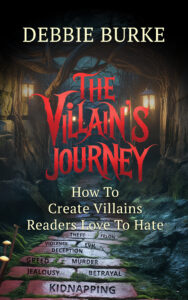
 

In The Villain’s Journey-How to Create Villains Readers Love to Hate, discover fictional and real-world villains to inspire your own stories.
Amazon

Barnes and Noble

Who Do You Believe?

.

Distrust and caution are the parents of security. –Benjamin Franklin

The trust of the innocent is the liar’s most useful tool. –Stephen King

* * *

I left the kitchen and was strolling down the long hall toward my office, sipping a cup of coffee as I considered what new disasters I could throw at my characters, when something happened that I had never experienced before.

Picture this: the door at the end of the hall that leads into a utility room was open. Suddenly, an animal leaped out of the utility room into the hall and ran furiously. TOWARD ME! It was a chipmunk.

Now I’m not one to panic in a situation like that, and I know little critters are afraid of big humans, so I waved my arm (the one not holding the coffee—I didn’t want to spill on the carpet), and I shouted, “STOP! GO BACK!” as if Mr. Cutie could understand me. He didn’t play his part in the drama, though. He just kept coming.

At this point, I was afraid I might be in danger of getting bitten by the rodent, so I used that tried-and-true defense mechanism: I screamed for my husband to come quick.

When the chipmunk got within a foot or two from me, he made an incredible right-hand turn at full speed into an adjacent hall. Any tight end would have appreciated that maneuver. Then he turned again and ran straight into MY OFFICE. Not good.

While I was standing there looking dumbfounded and considering the next steps in the chipmunk eviction process, my husband sauntered in from another part of the house. “Did you call me?” he asked.

“Yes!” I said. “A chipmunk came running down the hall. I thought he was going to attack me!”

Now you have to visualize his reaction. Eyebrows slightly raised, a disbelieving tilt of the head, and body language that shouted, “I don’t think so.” What he actually said was “A chipmunk?.”

Now my husband knows I wouldn’t make something like that up, but he still didn’t believe me. We live in a suburban neighborhood. We rarely even see a squirrel around here, so he assumed I was mistaken, and it must have been a mouse or a baby squirrel or something else. After a suitably sarcastic remark, I described the cute little face and the stripe down the back of our unexpected visitor, and that convinced Frank that I had indeed been accosted by real, live chipmunk. So we barricaded Mr. Chips in my office, drove to the hardware store, bought a cage, and finally trapped our unwanted guest without harming a single hair on his cute little head.

After we dropped Chippie off at a park many miles away from our home, I reflected on our experience, and how useful the concept of disbelief or distrust is to authors, especially writers of mystery.

In any murder mystery, there are characters who mislead the authorities, and other characters who are trying to find the truth amidst all the noise. But even more important are the readers who are trying to figure out who’s telling the truth and who’s lying. If the author can mislead the reader artfully enough, it will result in a surprising climax that readers love.

* * *

In my second novel, Dead Man’s Watch, a man has been accused of murder and everybody thinks he’s guilty. He had motive (his wife died of a drug overdose from drugs bought from the murder victim) and opportunity. He admitted that he had met the drug dealer on the night of the murder with the intent to kill him. But he claims he didn’t go through with his plan.

However, the main character was a childhood friend of the accused and doesn’t want to think he could be guilty. She doesn’t believe he would lie to her, so she visits him in prison. Here’s a snippet of their conversation:

He smiled sadly and turned back. “Kathryn, I know you’re a real nice person, but you don’t owe me anything. Let it go.”

“I can’t let it go, Brad. I have to do this.” She paused and waited for him to focus back on her. “But first I have to know. Did you kill him, Brad?”

He jerked his head up so fast, she sat back in her chair. His eyes burned into hers. “Do you think I could be a killer?”

“No.”

“Good. That makes one person in the world who thinks I’m innocent. Maybe you can convince the jury.”

“Did you kill him, Brad?” She had to hear him say it.

Did you notice Brad avoided answering the question the first time? But Kathryn persists. She needs to hear him say he didn’t kill the man. Different readers might come away with different opinions on whether Brad is innocent, or just willing to use his friend to help him.

* * *

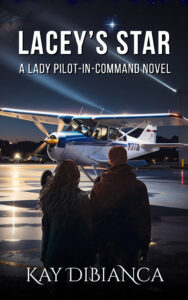
While the character Kathryn in the Watch series is a determined but naïve young woman, the main character in my new novel, Lacey’s Star, is different. Cassie Deakin is just as determined as Kathryn, but her outlook on life is far more skeptical. She is reminded frequently in the course of the book to be careful who she puts her trust in.

At one point in the book, Cassie and Detective Frank White are searching for Sinclair, a man who claims to have evidence that his young sister was murdered. Unable to track down Sinclair, they meet with law enforcement officers who had talked to him recently. When Cassie hears that Sinclair had trusted a group of strangers enough to share some important information with them, this is her reaction:

“Sinclair sounds like an idiot. If he convinced those bikers there was something of real value in Uncle Charlie’s barn, the only explanation is that some of those bikers decided to steal it. If that’s what happened, then Sinclair is the reason Uncle Charlie got injured.” I could feel the heat rising in my face. I wanted to get my hands on Sinclair and shake him until his teeth fell out.

* * *

In both books cited above, the matter of trust is an important theme. Characters have to decide who they can trust, and the reader has to decide who’s telling the truth. My job is to tilt the playing field without the reader noticing.

So TKZers: How do you handle issues of believability and trust in your books? Do you incorporate an unreliable narrator? Do you try to mislead your readers?

* * *

GET IN, SIT DOWN, BUCKLE UP, AND HANG ON!

Come along for the ride as private pilot Cassie Deakin lands in the middle of an unwanted adventure and discovers her beloved Uncle Charlie has been attacked and seriously injured by thieves.

But Cassie has a problem. She doesn’t know who she can trust. Still, she reluctantly agrees to team up with Deputy Frank White, a man she definitely does not trust, to solve the mystery behind the attack on her uncle.

But as Cassie and Frank peel back the layers of one mystery, they uncover a deeper and more sinister crime: the murder of an eight-year-old girl decades earlier. Armed with only a single, cryptic clue to the death of young Lacey Alderson, Cassie makes a crucial discovery that lands her in the crosshairs of a murderer.

Lacey’s Star is now available for pre-order for $1.99. Click here.


True Confessions, or What’s Really on my iPod

by Michelle Gagnon

Recently my household has been debating the relative merits of lying (living with a toddler will do that to you-it’s amazing what a person will say to get them to eat their vegetables sometimes). And that got me thinking about the truth, and the complicated relationship most of us have with it. How honest are we, really? When there’s a passenger in my car, I make sure to tune the radio to NPR (which, if I’m being truthful, I rarely listen to), instead of the club mix station that jars me awake on a long drive (or a short one: again, the truth hurts). So I’ve decided to seize this opportunity to come clean about several things I’ve managed to keep quiet for years.

Music:

I have wide and varied taste in music. For someone in her late-thirties, I consider myself to be fairly hip (although I suspect most teenagers would scoff at my collection). I’ve not only heard of No Age, I own a few of their songs. But if one were allowed unfettered access to my iPod, you would also stumble across (gasp) Kelly Clarkson. “Good music to jog to,” I would say defensively (which would also be a lie—I only run when I’m being chased). Now I know what you’re thinking, there’s no real shame in listening to Kelly Clarkson, a lot of people love her music. True. But dig a little deeper, and you’ll discover…the soundtrack to the Broadway show Rent. A remix of the song “Holding out for a Hero,” from the second Shrek movie. And the pièce de résistance: LL Cool J’s “I Need Love.” Shocking, I know. But not nearly as bad as…

TV:

…what I watch on TV. I shake my head and tsk at cocktail parties when everyone deplores the sad state of programming that relies increasingly on reality shows showcasing our depravity. Then I go home and flip on “America’s Next Top Model.” I can’t help myself. When Tyra Banks reads the names off, one at a time, agonizingly slowly, emphasizing each syllable: “Only eight of you will continue on to become Americas…Next….Top…Model…,” I am absolutely riveted.

Mind you, I do have some standards. That Chef that apparently just screams at people for money? No need for him. Neither will I lower myself to watch anything that involves swapping family members, desert islands, trying to hook a millionaire, or D-list celebrities trapped in any sort of situation together. (Or singing. I’ve never really enjoyed watching people sing, for some reason). But “Top Chef,” “The Apprentice,” “So You Think You Can Dance”…I am your bitch.

As an aside, let me just mention that at one of those cocktail parties, a group of extremely cultured female friends was discussing how they only still possess their televisions so that they can watch films (with subtitles, I’m guessing). I joked, “Such a shame, now you have no idea what’s happening on ‘Project Runway,’” and they turned to me en masse and began to chatter excitedly, “Ohmigod, can you believe they voted off Kit? I was shocked!!!”

So I’m guessing I’m not alone in my shame. Just brand a big red letter “R” on my chest and let’s call it a day. Oops, I almost forgot the best of them all…

Movies:

Ok, this one I’m not so ashamed of. Heck, I’ve already said in other blog posts that “movie critic” would be my dream job, and it states right in my bio that my weakness is Hollywood blockbusters. Honesty at last, right? But in throwing that right out there in the open, I neglected to mention one thing: although I love movies, it has been a long, long time since I have watched what would qualify as cinema. I finally caved to reality and canceled my Netflix subscription, because I would invariably order a critically-acclaimed film, hold on to it for months, then mail it back unopened. I had a terrible habit of putting movies in my queue that a different Michelle would watch, a better Michelle, one who really enjoyed reading as she watched a movie. The real Michelle tossed that envelope on top of her DVD player with a slight twinge of guilt and settled in to watch “Independence Day” for the umpteenth time. On network television. With commercials. Terrible, I know.

So there you have it, skeletons marched out of the closet, dirty little secrets tromped out for all the world to see. Time to fess up: what are you hiding?