Hey, Butt Out! I’m Reading Here©

by Robert Dugoni, bestselling thriller writer and writing coach

[Note from Jodie: I’m going crazy with last-minute preparations for my big move across the country
in a few days, so bestselling thriller author and writing instructor Robert Dugoni is filling in for me today. Take it away, Bob!]

I raise more than a few eyebrows when I teach, and that’s usually a good sign. I know I’ve got my students thinking. The first collective class-eyebrow-arch comes when I stand up and say, “No one can teach you how to write.” Students who’ve paid good money to be in one of my seminars or workshops begin to have immediate heart palpitations until I add, “But I can teach you how to teach yourselves how to write.”

So what do I mean by this?

How can I teach any student I don’t know intimately what to write or how to write it? I can’t even teach my two children how to write. Writing is an extraordinarily personal endeavor and each of us brings our own nuances, quirks, insights and experiences to not only what we write but how we write it. All of these things form what we frequently refer to as the writer’s “voice” – how the writer (and really her characters) views the world and others in it and how the character expresses that view. We hope that it is a unique and exciting and interesting. When it is, those are usually the novels publishers clamor to buy.

But the fact is the to-be-published novel will never make it that far if the author forsakes the craft of writing and makes one of those silly mistakes that cry out “amateur” to that would-be editor.

So rather than telling students “I can teach you how to write,” I tell them my job is “to remove as many obstacles in the path to publication as possible.”

One of those big obstacles is when the author intrudes into the story.

Author intrusions into the reader’s experience reading a novel can be deadly. Not only do they raise the “amateur” flag and slow the story pace, they also tend to annoy. It’s like being in a deep and meaningful conversation with one person and having another person continually interrupt that conversation to tell you things you really don’t need to know at that moment or, frankly, you don’t care about!

When a story unfolds, the opening chapters should develop like a play on a stage. The reader wants to see what the character sees, hear what she hears, smell what she smells, taste what she tastes, and touch what she touches. It is not the author experiencing the story. It is the reader experiencing the story through the character. So how does the author intrude?

Let us count just some of the ways.

~ Omniscient narrative

This occurs when you’re reading a scene from a particular character’s point of view and suddenly the author barges in to provide a bit of information that the character doesn’t yet know, couldn’t yet know and may never know. Sometimes this is called bad foreshadowing. Here’s an example:

You’ve just written a killer scene in which your protagonist has arrived at a mountain getaway for three days of R&R and the author ends the scene with something like, “Little did she know that three miles away, Luke Reddinger, a serial killer, had just escaped from the state penitentiary.” Okay, so if the character didn’t know, who’s throwing in this tidbit? Does the reader need it at that moment? Would it be more powerful to see Luke Reddinger escaping, or running through the woods, maybe seeing the cabin she has arrived at? Wouldn’t that raise a story question that would keep the reader reading to find out what happens? Isn’t that what every writer wants?

~ Unnecessary biographical information

Ever read a scene in a book that is going swimmingly when suddenly the author stops the flow of the dialogue and action to tell you where the main character went to high school, their major in college or that their great grandmother was an alcoholic? Unless that high school is going to play a part in the story, the major is important to illustrate the character’s skill, or grandma is a serial killer when she gets drunk, what was the point of interrupting the story? Biographical sketches, if you’re so inclined to do them, are for the author to get to know her characters so the author better understands how the character will act and what she might say in a particular situation or moment. They are not for the reader.

~ Author Opinions

Nothing is more transparent than when an author tries to ram her opinion on a topic down your throat. Even when the author tries to disguise the opinion as a “character’s opinion” it is usually easy to spot. “Mary asked John what he thought about President Obama’s health care reform.” And then John starts spouting off. This is one of those instances where the author would be better off showing rather than telling. If you want to make a statement about the death penalty, write The Green Mile and let us see one of the pitfalls of the ultimate punishment. You want to write about abortion, write The Cider House Rules. You want to write on the evils of slavery, write Twelve Years a Slave. Racism in the south – Mississippi Burning. Greed in the roaring twenties – The Great Gatsby. There’s no place like home – The Wizard of Oz. And so on…

~ Flashbacks

This is usually the cause of the third collective class-eyebrow-arch. Some even snap at this point. Why? Because so many of us use flashbacks in our novels. So before anyone snaps an eyebrow, let me clarify – flashbacks can be used. The author just needs to know how to use them so they are not an intrusion. First, a flashback, despite its name, must still move the story forward. That is, the flashback should impart some information that is relevant to the plot at that moment, drives the plot forward, and/or reveals some important character trait or relationship that will come into play.

Second, a flashback is a scene. Therefore, all of the things discussed above that go into making a great scene still apply. A flashback should not be some character sitting alone at a table reminiscing about something that happened in the past. Put the reader in the scene with the characters and allow the reader to hear and see and smell and taste and touch the scene as it unfolds.

Think about the movie Titanic. Regardless of your opinion on the movie itself, note that it was actually Rose reminiscing about her voyage on that ship. How boring would it have been if the entire three-hour movie was Rose sitting at a table telling the movie audience what happened, rather than the movie audience flashing back to that time and getting the chance to experience it?

~ Information Dumps

This is usually where the writer has done a lot of research on a particular subject and darn it, everyone is going to know it! An information dump is an excessive amount of unnecessary information or details dumped into the story when the character does not need it and might never need it. Like biographies, research is for the author, not the reader. I’d say less than 10% of the information I research and learn about goes into my novels.

Information dumps can take many forms.

Research details. The research dump is when the author has learned a lot of information on a particular subject and dumps it into the story either in omniscient narrative or thinly disguised by creating a “character” to tell the reader everything they needed to know about such things as growing vegetables on rooftop gardens in New York City during the depression.

Character descriptions. Other information dumps are excessive details about what every character who comes on stage is wearing, or looks like. What the character is wearing is only important if the author has set the scene up so that another character has a particular interest in what a particular character is wearing, or the character’s own choice of clothes is important. When your character walks into a high school prom we can assume the girls are wearing prom dresses and the guys are in tuxedos. But if you’ve set the story up so that Billy is determined to make a splash and wears a tear-away tuxedo intending to leave high school by doing the Full Monty, then we want to know the details of that tear-away tuxedo.

Setting. The same is true with excessive details to describe a setting. Authors are not weather men or travel guides so your scenes shouldn’t read like a weather report or travel book. And if your protagonist is running for her life through a forest while being chased by werewolves, please don’t have her take the time to tell us every species of tree and type of fauna they are running past. Necessary details only. Excessive details need not apply!

So when you have the urge to pontificate, opine, brag, or otherwise bore, think about what my friend and brilliant writer John Hough Jr always says: “Dialogue is action and action is dialogue.” Get your characters on the move and talking. Avoid staying too long in a character’s head. Do your biographies and research for you, not for the reader, and give us only those details that will keep the story moving forward.

And above all, once you’ve hooked us with an incredible opening, lured us in with an amazing character, and mesmerized us with a killer plot, then please, BUTT OUT! I’ll thank you to let me enjoy your beautifully crafted story on my own.
Robert Dugoni is the critically acclaimed New York Times, Wall Street Journal, Washington Post and #1 Amazon bestselling author of the Tracy Crosswhite police series set in Seattle, which has sold more than 7 million books worldwide. He is also the author of The Charles Jenkins espionage series, and the David Sloane legal thriller series. He is also the author of several stand-alone novels including The 7th Canon, Damage Control, and the literary novel, The Extraordinary Life of Sam Hell – Suspense Magazine’s 2018 Book of the Year, for which Dugoni’s narration won an AudioFile Earphones Award; as well as the nonfiction exposé The Cyanide Canary, a Washington Post Best Book of the Year. Several of his novels have been optioned for movies and television series. Dugoni is the recipient of the Nancy Pearl Award for Fiction and a three-time winner of the Friends of Mystery Spotted Owl Award for best novel set in the Pacific Northwest. He is also a two-time finalist for the International Thriller Award, the Harper Lee Prize for Legal Fiction, the Silver Falchion Award for mystery, and the Mystery Writers of America Edgar Award.

Robert Dugoni’s books are sold in more than twenty-five countries and have been translated into more than thirty languages.

Visit his website at www.robertdugoni.com, and follow him on twitter @robertdugoni and on Facebook at www.facebook.com/AuthorRobertDugoni
Toward a Fair Non-Compete Clause


Recently, a friend sent me the text of a non-compete clause to have a look at. It was from the contract of a New York publishing company. My gob, as they say, was smacked. If there was a contest for the most one-sided non-compete clause ever, this would take the crown.

I say this in love. Truly. I love traditional publishing and want it to survive. But contracts that contain clauses like this one are not going to aid the old cause.

Due to confidentiality I am not at liberty to reproduce the text verbatim, but I can give you the gist:

The clause prohibits the author from publishing “material” that is “similar” to the Work. So what if your crime novel is coming out from Publisher, and you want to self-publish a mystery short story? Or sell it to Alfred Hitchcock’s Mystery Magazine?

Too bad. Because a short story is “material.” And a mystery usually has a crime in it, so it’s “similar.”

Or suppose you’ve had the foresight to reserve audio rights. You have a mellifluous voice, and spend twenty hours recording the audio version of your book for ACX, Amazon’s platform for indie audio works.

No go, because the clause in question prohibits the author from “exploiting” any reserved rights that may “conflict” with sale of the book. And who gets to decide if there is such a conflict? Not you.

And there isn’t even language in the clause suggesting the author might seek the “prior written consent” of Publisher! Message: Don’t even ask, dude.

Further, how long do all these restrictions last? There is no time limit (though the overall agreement is for “life of copyright.”) Which leads me to believe that the wet-behind-the-ears law grad who drafted this needs to be flogged with a hardcover copy of Calamari and Perillo on Contracts. This clause is clearly unenforceable without a time limit. Courts will not allow a company to tie up someone’s economic future ad infinitum.

But the burden of challenging the clause is, of course, on the author. Or, should the author go ahead and publish a work the publisher deems to be “competing,” the publisher may task some associate at their retained law firm to put down his coffee and make life difficult for the author.

Who is going to be the big dog in that fight? Let’s compare the status of our respective parties:

Publisher = deep pockets.

Author = pockets with holes.

Now, before I move on, let me emphasize that the traditional publisher absolutely deserves to have a fair non-compete clause in the contract. Here’s why.

The publisher takes a risk with an author, puts up capital (in the form of advance and production costs) with the hope of return. A significant part of the return is from bookstores (remember those?) Bookstores do not want to stock competing titles from the same author during the same season.

Thus, the standard non-compete was to keep John Grisham from publishing The Firm with one publisher and The Pelican Briefwith another, and having them both come out at the same time. The books would “cannibalize” each other, so the saying goes. One, or more likely both, publishers would be harmed by this.

Here’s another reason publishers need the clause. Suppose Publisher is coming out with your debut thriller, and pricing it as a $14.99 trade paperback, and a $9.99 ebook. But, at the same time, you bring out a self-published thriller and price it at $3.99 in digital and the same $14.99 in POD. And then you unleash your social media marketing efforts to emphasize the book that’s brining you more money per unit (i.e., your self-pubbed effort).

That’s not cricket. You are hurting Publisher’s investment in you. That’s why the non-compete clause exists.

But by now that clause should have morphed into something more equitable than the specimen I reviewed. Publishers have to realize that the times are not a-changin’––they’re a-changed. Permanently. They should not play hardball with contracts as if it’s still 1995.

Authors (and agents) should not accede to a “standard” non-compete clause. One like this should be a deal breaker.

Here’s an idea: negotiate!

So what isa fair non-compete clause? Very simple: a time-limited clause that specifically defines the type of material covered. For example:

For one year from the date of publication of the Work, Author will not publish or authorize to be published, in either print or digital media, any work greater than thirty-thousand words in the thriller, mystery or crime genres.

This leaves open the publishing of short-form work which, I might add, the publisher should encourage. This is how the writer attracts more readers, many of whom will then seek out the author’s trad-published books. It’s a classic win-win.

In this era of suspicion, vituperation and even paranoia, here is a way for publishers and authors to actually do what is in their mutual interest.

Imagine that.

How To Write a Sex Scene

My first published piece of fiction was a short story that ran in Playboy. It appeared in the magazine’s February 1991 issue — according to the headline on the cover, this was THE SEXIEST LINGERIE ISSUE EVER — and its title was “My Life with Joanne Christiansen.” It’s really more like a play than a short story, because it’s entirely dialogue, a conversation between two young guys. One of them predicts the future of the other, telling him that he’ll meet and marry a sexy woman but the relationship will end in disaster. Playboy paid me three thousand dollars for the story, and I thought it was somewhat distinctive (there aren’t many short stories written in the future tense), but it lacked one of the elements you’d expect to see in a men’s magazine: It had no graphic sex scenes. Although the young guys talk about sex, it’s strictly for comic effect.

There are no sex scenes in my first three novels either. Because my books are nonstop-action thrillers, it’s difficult to insert a moment of quiet intimacy. My characters hardly have a minute to catch their breath, much less shed their clothes, and if by some miracle they happen to get an hour or two of free time they’re usually too frantic/desperate/terrified to get it on. My first novel included a scene in a strip club — an establishment near Fort Benning called The Night Maneuvers Lounge — but the chapter is more sordid than sexy.

But sex plays a bigger role in my latest novel, The Furies, which will go on sale this Tuesday. The sex scene in the second chapter is the novel’s formative incident, the event that triggers everything that will happen afterward. Actually, it’s a scene of unfinished sex, a case of coitus interruptus, the interruption in this case being a barrage of gunfire outside the lovers’ hotel room. The couple must then flee across the continent, running and hiding and shooting for hundreds of pages before they get another opportunity to shag.

So now that I’ve written a couple of sex scenes I can pretend to be an authority on them. The trick to writing them is the same trick that applies to all writing: you have to avoid clichés. With sex, though, the clichés are more difficult to avoid because there are so damn many of them. At one end of the spectrum you have the “Letters to Penthouse” clichés, the salacious phrases and metaphors that peppered those oh-so-realistic tales of dorm-room orgies and dalliances with deliverymen. (“I’m just an ordinary Joe, and I never thought such a crazy thing could ever happen to me, but last night when my shift was almost over…”) And at the other end you have the flowery romance-novel clichés, full of heavy breathing and sudden surges of warmth to the loins.

It’s incredibly rare to find a writer who can describe sex well. John Updike is one of the best in this regard. I’ll never forget the scene in Rabbit, Run where Harry Angstrom has sex with Ruth Leonard. I don’t remember the exact wording, but while Harry is marveling over the sensation of being inside Ruth’s vagina he pictures the inside of a ballet slipper. It’s the kind of observation that makes you think: Yes, that’s exactly right.

The sex scenes in The Furies are nowhere near as good as Updike’s, and I was nervous about how the first readers would react to them. To my astonishment and delight, one early reader said the sex scene near the end of the book was “surprisingly dirty.” When I heard this reaction I thought, That’s great! I was aiming for dirty! But then I went back to the book and reread the scene and concluded that this particular critic was dead wrong. Dirty? Are you kidding? If I’d written this scene as a Letter to Penthouse, the editors would’ve laughed in my face. It’s so tame it could probably run in Reader’s Digest. If anything, the scene veers a little too close to the romance-novel clichés. The lovers are outside, and the moonlight is shining on their bodies.

But I kept mulling over that reader’s comment. I take all criticisms very seriously. I may not agree with them, but I try to at least figure out where the readers are coming from. And I started to wonder whether the impression of “dirtiness” came from my choice of words for certain body parts. In particular, two words: ERECTION and CLITORIS.

It would be difficult to describe any sex act without mentioning at least one of these two parts. And in my opinion, ERECTION and CLITORIS are perfectly good words for them, certainly better than a lot of other terms and euphemisms I’ve heard. But perhaps I’m missing something. Does it upset people to see these words in print? Does it make them uncomfortable?

Because sex is such a big part of pop culture these days, it’s hard to believe that these words still have the power to shock. As an experiment, I’m going to repeat them a dozen times: ERECTION CLITORIS ERECTION CLITORIS ERECTION CLITORIS ERECTION CLITORIS ERECTION CLITORIS ERECTION CLITORIS ERECTION CLITORIS ERECTION CLITORIS ERECTION CLITORIS ERECTION CLITORIS ERECTION CLITORIS ERECTION CLITORIS

Okay, that was fun. Not as much fun as sex, mind you, but still pretty good.

First Page Anonymous Submission–Whisper Creek

Jordan Dane
@JordanDane


Here’s an anonymous submission for comments, entitled WHISPER CREEK. Enjoy and my feedback will be on the flip side.


Excerpt: Whisper Creek
The bullets whizzed by his head. How they missed him—he did not know. The night became a blanket of darkness—no light. Mark couldn’t see his hand in front of his face. The only light came from the intermittent flashes from the end of the muzzles pointed at them from somewhere up ahead. He squeezed off several shots from his M16 rifle, then nothing.

Empty.

Gunpowder filled his nostrils. An uncomfortable premonition of fear pervaded his senses.He blinked sweat from his eyes.

Keep it together.

Mark pushed the magazine release with his thumb, inserted another twenty round mag, and pressed the slide release. Locked and loaded. He saw a flash of light up ahead followed by another. Mark steadied the weapon on the meaty part of his shoulder, aimed, and waited. He focused his attention at what lay ahead—the enemy—Charlie—the Vietcong.

When he saw another flash, he fired several rounds at the target. No more flash. The platoon of Marines continued to fight…no matter the outcome they must push forward. Never retreat—never surrender.

Through the noises of gunfire, men screamed in agony from being shot, but the unit continued to move through the jungle. Then a fire settled into his right thigh like a hot poker. Mark realized he’d been shot, but pressed on despite the pain. They all knew what happened to Prisoners of War in Vietnam. A quick death in the jungle would surely be more humane than being tortured by sadistic men in a camp. The warm liquid snaked down his leg, but he refused to stop. If he did, he might lose the momentum to keep going.

Ring…ring…ring. Had those sounds penetrated the darkness? Light began to infiltrate the blackness in the distance. Ring…ring…ring. The noises of gunfire faded. The pain subsided.


FEEDBACK


OPENING LINES:
1.) Bullets whizzed by his head – Think about how this must feel. The noise. The chaos. His not so lucky buddies getting hit around him. In the dark, can he even see what’s going on around him? Does he feel alone in his push to follow his last known orders or is he blindly following others? Every time he moves, he risks getting killed. What’s driving him? My best advice is for the author to stay in the moment and not follow this first line with cliched phrases that take the reader from the immediacy of the battlefield. “How they missed him—he did not know” and “the night became a blanket of darkness—no light (redundant)” dilute what could be an embracing opener. Stay long enough in the moment to put the reader fully in it with their senses.


2.) To convey the chaos of battle, it might be good to shorten the sentences with the bare essence of how Mark is thinking – quick short staccato spurts, rapid fire like the bullets screaming by his ear. The line “the only light came from…” is an example of a description that strikes me as too long to convey the intensity.


3.) M16 is enough of an explanation. Adding M16 rifle reads as redundant, given that Mark is an experienced soldier.


AWKWARD PHRASING:
Gunpowder filled his nostrils – I’m sure the author intended for this to be the stench, but I am visually seeing his nose filled with black gunpowder.

An uncomfortable premonition of fear pervaded his senses – I’m not sure a premonition can be considered part of the 5 senses since it refers to a 6th sense. Rather than “tell” the reader that he’s feeling fear and it’s uncomfortable, it would be better to “show” the reader how Mark reacts to the dark notion that he’s marked or the next bullet is his. How does fear manifest in this guy? Does he develop worsening symptoms of an anxiety attack from the start to the finish of this opener…until he wakes up from his presumably troubling PTSD riddled sleep?

Never retreat—never surrender I have to admit my thoughts went immediately to Galaxy Quest. Anyone else? (I’m sure it’s just geek me.)

Through the noises of gunfire – This read as awkward to me and it’s repeated in the last lines as well. A distinctive phrase like this would be easily noticed as repetitive. Gunfire is a plural noise, not noises. 


FOLLOW LOGICAL ORDER OF ACTION:
A common thing I am seeing in this opener is leaping around with images, rather than sticking with a logical progression and flow to the action. For example, “Gunpowder filled his nostrils. An uncomfortable premonition of fear pervaded his senses.He blinked sweat from his eyes.” We move from the stench, to the bad feeling, to sweat. (This leaping can be seen in the 2nd to last paragraph as well where we too quickly move from gunfire, men dying/screaming, Mark shot, POWs & torture, then back to his leg wound.)


The author would do better to view the battle from behind the eyes of Mark and follow him through the scene, staying within his senses in a natural flow. I would recommend the author look up “PTSD” or “anxiety” disorder symptoms and build them into this scene in a subtle way so Mark builds the intensity of his reactions through the opener until he can’t take it anymore. Symptoms could include: Panic, losing control, chest pain, dizziness, hyperventilation, hot flashes, chills, trembling/intense shaking, nausea/stomach cramps, the feeling of being distanced from what’s going on. Pick the ones that would work best and build them into the scene until the reader realizes/feels his mounting affliction.

ENDING:
Ring…ring…ring. Had those sounds penetrated the darkness? Light began to infiltrate the blackness in the distance. Ring…ring…ring. The noises of gunfire faded. The pain subsided – I’m not a fan of noises being described like this – ring, ring, ring. Anyone else feel the same? In this instant, it does not appear to be Mark’s POV. It’s like an omniscient narrator is observing him from outside his body and making sure the reader knows something is ringing. Would Mark be so aware? I doubt it. I imagine where this is going is Mark wakes up from his flashback or nightmare to the shrill sound of a phone. To someone sleeping, how would that come across more realistically?


Discussion:
If war is hell, so is writing. Thanks to this brave submitter. An exciting scene of being in a battlefield would capture my attention if the author savored the rich sensory experiences and not rush it. The author’s instincts to begin here seem right if the execution could be improved a bit. What say you, TKZers?

Getting over the block

By Joe Moore

I don’t believe in writer’s block. The reason is twofold. First, I’m a professional writer; my job is to come up with ideas. I’ve never heard of a mechanic suffering from mechanic’s block or a doctor suffering from doctor’s block. When I’m faced with an issue in my story, I come up with a solution. That’s part of being a writer.

writers-blockSecond, when I do get writer’s block, I turn to my co-writer for the answer. OK, so the second reason is not something every writer has to fall back on. Lucky me.

I think that writer’s block is about being stuck with coming up with ideas, not words. If I can’t come up with the words, I’m in serious trouble. It’s like that mechanic saying he can’t come up with the correct wrench. A master mechanic has a kit full of tools (words); his job is to come up with the correct procedure to fix a problem.

So writer’s block is really a matter of a writer getting stuck for whatever reason. It’s frustrating but not a show-stopper.

First, you need to focus on why you’re stuck.

The most common form of writer’s block is not knowing what happens next. This is basically a plotting issue. The solution can be found in 5 words: What does the protagonist want? If you backtrack to the last point in the story that it was clear what motivated the protagonist’s actions and how it drove the story forward, the answer to what happens next will usually be revealed. Think about the story question. Did you stray from the process of answering it? Chances are you created a scene that does not contribute directly or indirectly in answering the main story question—the big conflict. Starting a rewrite from that point will usually get you back on track.

Another common issue that will derail your story is facing the dilemma of why anything matters. Who cares? This usually deals with the question: What’s at stake. Whether it’s an internal or external struggle, the protagonist must realize that fighting the fight is worth it. If she loses, what’s at stake? What does she stand to lose? If it’s a high concept thriller, what does the community, country, or civilization stand to lose? Reexamining the stakes can help to put you back on course.

A third issue in suffering from writer’s block is facing the crippling question: Is this story logical? In other words, why would it even happen? You might have a really cool idea, but the reality is that no sane person would follow the path laid out by the plot. It’s just not something the reader would buy into. If this is the case, rethink the story in terms of how it relates to HUMAN BEINGS. Don’t get me wrong. Even the most outrageous science fiction or horror stories still have to relate to human emotions and logic. Otherwise, they become 2-dimensional. If your story is so out there that the average reader can’t relate, try reexamining the human aspects of it. Many writers including me believe that there are only two emotions in the world: love and hate. If your story lacks either, then it becomes hard if not impossible to sell the reader on an outrageous, illogical plot. And writer’s block raises its ugly head.

How about you, my Zoner friends. How do you overcome writer’s block?

_______________

Coming soon: THE SHIELD by Sholes & Moore

“THE SHIELD rocks on all cylinders.” ~ James Rollins, NYT bestselling author of THE EYE OF GOD.

Overdoing the fear factor in real life?

As writers and readers, we love to experience a sense of fear. But it’s a different story living in a culture of fear.

We recently moved into a new town, and I immediately noticed how security-conscious the people seem. The email welcoming us to the neighborhood included an attachment with an update on local crimes. There seemed to be a lot of property crime going on. In one incident, a young woman and her father had interrupted a burglary. The intruders tied them up and held them both at gunpoint for hours.

After reading that report, I started getting more interested in the notion of home security. First I made sure we’d covered all the the standard bases of crime prevention–keeping property lights on, having a dog, never leaving doors or windows unlocked. Our alarm system was obsolete, so I met with a series of security consultants from various alarm companies.


That’s when I began to go overboard. We needed motion detectors, I decided, plus interior and exterior video surveillance. (If someone burgles our house, by golly I want to see the guy so I can identify him.) 

So now our house is bristling with cutting edge, high-tech security gear. We have a video monitor that lets us see various angles of the property. At night, the displays are infrared. (So far the only intruder we’ve caught is our male cat on the prowl for a midnight treat.) We even have panic buttons on our key fobs.

Now I’m thinking I went too far with the whole security thing. I’ve become a regular listener to the police scanner frequency. Then there are all the alerts. Our system lets me know whenever someone approaches our front gate. It also alerts me whenever a bird,  butterfly, or errant leaf passes by. I’m collecting an impressive video library of local wildlife.

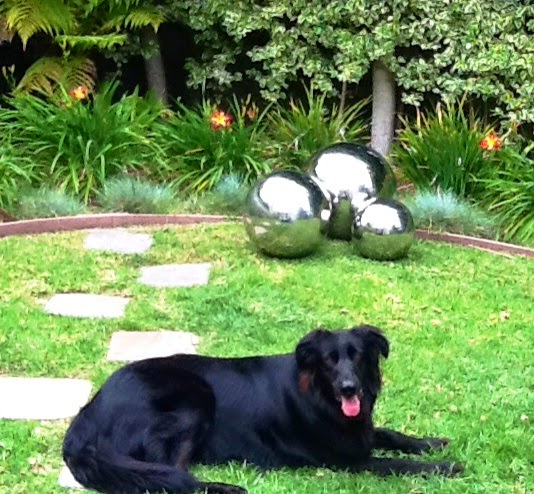
MacGregor, fearsome watchdog.


Does the new system make us feel more secure? For me, it’s had the opposite effect. Putting in all these security contraptions has actually made feel more vulnerable. It’s illogical, but I felt safer in my previous state of uninformed bliss.  

But for now, woe unto any Luna moth who strays across our portal after dark. He better smile for that camera.

“Do you feel lucky, Moth?”

Do you live in a culture of fear? Or do you still have that lovely sense of being immune from danger as you go about your daily life? I wish I had that back.

Agents – the Good, the Bad and the Ugly

by Clare Langley-Hawthorne

Recently Nathan Bransford posted a piece entitled “8 ways to know if you have a good agent” (if you want to read it, here’s the link). Given Jodie’s post last week on unethical freelance editors, I thought it might be timely to re-examine what makes a good (and bad) agent.

Nathan provides a list of things to consider when choosing an agent (or, if you have concerns about your current agent, a list to consider when evaluating whether these are justified). Basically he says that your agent should:

  • Have a proven track record of sales and/or works for a reputable agency
  • Be a good communicator (meaning he/she should reply in a reasonable time to emails and doesn’t dodge or hide)
  • Either live in New York or visit on a regular basis
  • Be able to explain every question you have about your contract or your royalty statements
  • Be completely ethical in how they approach their job (and they should advise you to behave ethically)
  • Pay you on time and send you contracts in a timely fashion
  • Charge you a commission of 15% on domestic contracts, 20% on foreign contracts and deduct very transparently for reasonable expenses like postage and copying
  • Be someone you feel comfortable with (i.e. you should be able to trust and feel good about your agent – going with your gut is key).

Most of the items on the list are pretty self-explanatory (though I’ve included clarifications where needed) but they also underscore the need for writers to research an agent before agreeing to receive representation. Given the number of issues regarding unethical freelance editors highlighted by Jodie in her post last Monday, I wonder how many writers are now falling prey to more unethical agent behaviour. 

To the last item on Nathan’s list (feeling comfortable with your agent), I would add that this doesn’t necessarily mean feeling warm and fuzzy all the time. I feel like trusting and being comfortable with your agent means that you not only know that they will champion you and your work but that they will also be your  best (and sometimes harshest) critic. I don’t want an agent who is happy to send out just any old material – I want someone who keeps me on the top of my game and who provides editorial input on how to make a manuscript the very best it can be, before it goes out to publishers.

Just as Jodie pointed out when looking for a freelance editor, there are similar pitfalls when searching for an agent. I can’t stress enough that you have to do your homework. As with anything, there are many predators out there more than willing to take your money for very little in return (and who can easily hang out their shingle on the internet based on fraudulent claims/testimonials).

So what do you think of Nathan’s list? Is there anything you would take issue with, or add? How have you approached the issue of researching agents? Have you discovered any further pitfalls that we may not have discussed?

Use Your Noggin To Get Lots of Ideas

@jamesscottbell


Herein is another entry from the unpublished journal of legendary pulp writer William “Wild Bill” Armbrewster. For the previous entry, see hereabout his initial meeting with the young writer, Benny Wannabe.
The kid came in all freshly scrubbed and smelling of Brylcreem. He had a big stupid smile on his face, like he’d just kissed a cheerleader.
“Well, I’m here, Mr. Armbrewster,” he said.
“Don’t state the obvious,” I said. “You want to be a writer, don’t state the obvious. Let the reader figure out things for himself.”
I was typing at my usual table at Musso & Frank on Hollywood Boulevard. This was the first “official” meeting between Benny Wannabe, kid writer, and yours truly, William “Wild Bill” Armbrewster, professional scribe.
“Go get me a usual, and a Coke for yourself,” I said, handing Benny a fin. I took that time to type out a line for my tough guy, Cliff Hanlon, to say to an embezzling bank president.  “Money may not grow on trees, but it certainly sprouts on your girlfriend’s ring finger.”
When Benny got back with the liquid, I said, “Where’s your notebook?”
“Notebook?”
“You know, that thing? With pages? To take notes?”
“I don’t have one.”
I slapped my forehead. “You want to be a writer, don’t you?”
“More than anything.”
“Then you have to write things down. You’ve got to observe, and record what you see. Look around the room. Tell me what you observe.”
He turned his head like Charlie McCarthy and gave Musso’s a quick gander. “People eating,” he said.
“Wrong,” I said.
He frowned.
“You’ve got to see more than you see, see?”
He shook his head.
I sighed. “Look over there. See that couple?”
He looked.
“Who are they?” I asked.
“Why, I don’t know. I never met them.”
“I’ll tell you who they are. She’s a cigarette girl from the Trocadero. He’s a bigshot lawyer from downtown. He’s also married. And not to the cigarette girl.”
“You know them?” Benny said.
“Never saw ’em before in my life, but that’s what I see. And in an hour I can type a story that’ll sell to Dime Detective.”
“But how?”
I tapped my noggin. “Up here, boy. You’ve got a muscle between those big pink ears of yours. A brain, with an imagination already included. But you’ve got to work your imagination, like it was training for a distance race. You’ve got to run it around the track, every day. Do that, and it’ll get stronger.”
“Gee.”
“Now look at the corner over there. What do you see?”
He looked at the big man with a napkin stuffed in his shirt, giving the business to a steak.
“A big man eating a steak,” Benny said.
“Try again.”
“But—”
“Try, Benny, try. Look at him. What do you see?”
Little furrows appeared on Benny’s forehead. He kept looking. That gave me time to give the business to my Martini.
Finally, he said, “Maybe he’s a policeman.”
“Good, Benny, good! Keep going.”
“Going?”
“What kind of cop?”
“A…big one?”
“Think! Why is here?”
“Because he’s hungry?”
“I’m going to need another drink.”
“Wait…let me see…he’s off duty.”
“That would explain the suit. But why here, at Musso’s?”
“He likes the food?”
“Come on, kid, don’t make me despair of life! What’s strange about a cop, on a cop’s salary, eating a steak at Musso & Frank?”
“It’s expensive!”
“Ah ha! And what kind of cop can afford an expensive steak?”
“A cop who…”
“Come on, you can do it.”
“A cop who is…”
“Yes?”
“Getting money on the side?”
I slapped the table. “That’s it! Benny, my lad, you’ve done it! Now keep that imagination whirling. Where would side money come from?”
“Why, from…bribes.”
“Yes! What else?”
“Um…gambling?”
“Benny, I think I’m gonna cry. You see what you’re doing? You’re starting from absolute scratch, and you’re thinking up a character and several possible story situations. You know what that’s called?”
“What?”
“Making stuff up! And that’s all this writing game is, boy. We make stuff up, and we jot down the ideas, and then we pick the best ideas and make a story out of ’em. And we do that over and over and over again, until we die.”
“Really?”
“In fact, I take half an hour every week just to let my imagination run free. I make up opening lines without knowing anything else. I write down as many ways as I can think of for people to get murdered. I can look at the front page of a newspaper and come up with five or ten great plot ideas on the spot.”
“Wow.”
“I write ’em all down, without judging any or them. Only later do I look at the ideas and pick out the most promising ones. I put these in a file for further development. In short, my lad, I am never without something to write.”
“Man!”
“Benny, you’ve become positively monosyllabic. So here’s what you do. Run over to Newberry’s and get a notebook and some pencils. I want you to spend half an hour every day writing down ideas. I want you to go down to Pershing Square and watch people. Make up situations on a dozen people you see there. Go to Echo Park and the Santa Monica Pier. Look at the people in your rooming house. Each one of ’em is a story waiting to be told. You fill up that notebook and come back here in a week.”
“Okay, Mr. Arbrewster!” He stood up. “What are you going to do?”
“Me?” I took the page I was working on out of the typer and set it aside. Then I rolled in a fresh sheet. “I’m going to write about a crooked cop tailing a shyster lawyer who’s making time with a cigarette girl.”
Benny just stood there, smiling.
“Who deep sixes a kid without a notebook. Now get going!”

Are you intentional about getting ideas? Do you have a regular creativity time? Do you have a file for all your ideas, and another file where you develop the best ones?

The Movie Was Okay, but the Book…

 
My wife went to the movies with a church group last week and saw Noah. When asked how it was, she responded, “Not bad. But the book was better!” How many times have those of us who love to read told someone that? I can remember the first time I did. I was in third grade, in 1959, and a film version of Jules Verne’s JOURNEY TO THE CENTER OF THE EARTH was all the rage. It starred Pat Boone as Alec (who, in the book, was named, uh, “Axel”) and was great. It wasn’t however, as good as the book. And so it usually goes. Reading requires that the reader use their imagination, even when the character is described to a crossed-t. My idea of what Jack Reacher looks like isn’t going to match yours, or, apparently, Christopher McQuarrie’s. That’s fine; it’s neither the best nor the worst example. Sometimes the reader — me, in this case — is wrong; I never imagined Robert Downey, Jr. as Tony Stark and thought casting him in Iron Man would cause the film to be a dud. Wrong. He was perfect.
I’ve been thinking about this because my younger daughter is in the middle of a short film project for her Photography class and has chosen to adapt a Kurt Vonnegut short story.  She is soldiering on in spite of all sorts of difficulties: the weather isn’t cooperating; her original choice for the male lead had a hissy fit and backed out (D.R., you’re on a Father’s List. Just so you know); she couldn’t quite get the equipment she wanted. She’ll get it done, and it will be good — great actually — but she is shooting as close to the story, word for word, as the medium will permit. We’ll see how it all works out.
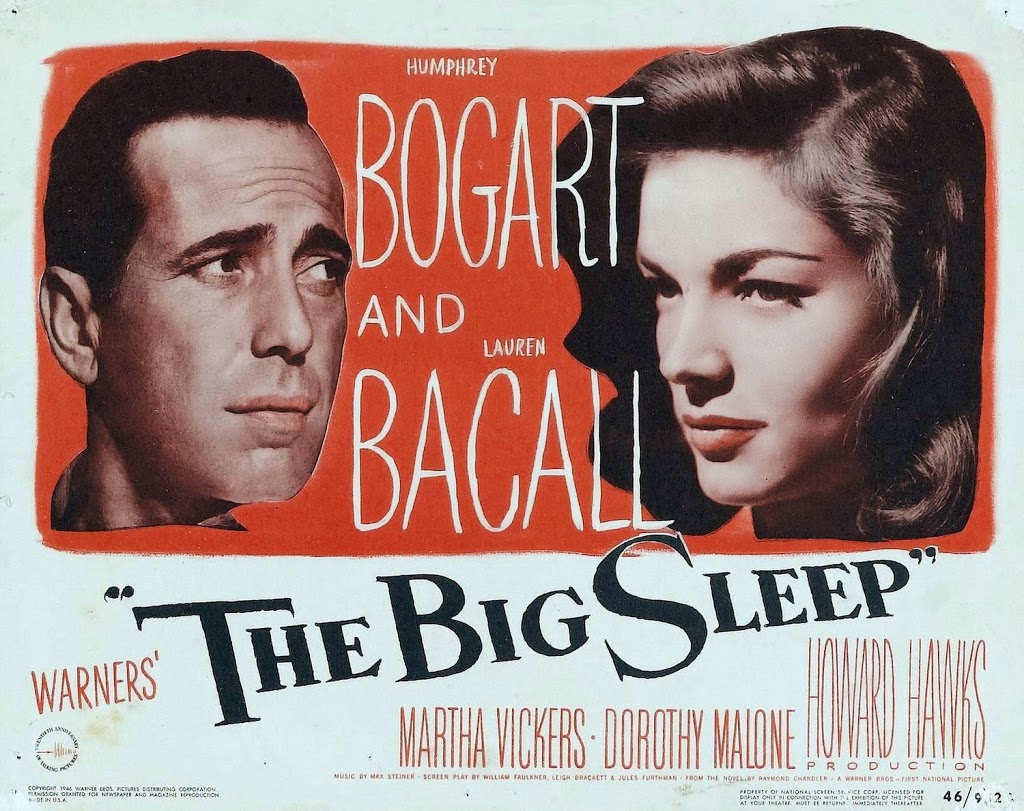
All of this leads to my question for you, which is: what is your favorite film adaptation of a novel? I have a few: my friends might be surprised when I list the adaptation of Play It As It Lays by Joan Didion, but and might not be when I mention Slaughterhouse Five by Kurt Vonnegut. The one that really did it for me, however, was Raymond Chandler’s The Big Sleep — the first one, directed by Howard Hawks — which I watched one summer morning on television when I was six years old and which planted the seed of love of detective fiction in my brain, long before I discovered The Hardy Boys or ever saw the knowing leer of Shell Scott on the cover of a Gold Medal paperback.  What’s yours? And if you wish, please tell us why.