Conference Overview #Ninc14

Nancy J. Cohen

Having just come from the Novelists, Inc. (Ninc) conference, my brain is fried with all the important information I learned. You can see photos on my Facebook Page under the Ninc Album and read my blogs of each workshop on my personal blog site.

As an overview, here are some of the important points I took away from this event.

P1030899
P1030903

If you indie publish, offer your book at as many retailers as possible. These would include Amazon, Barnes and Noble, Kobo, Apple, Smashwords and Google Play. Google is growing.

P1030919

Indie bookstores will survive the digital age, especially if they offer curating, personal service and community events.

Publishers may cry that they’re hurting but their profits are rising.

The global marketplace is not to be overlooked. There’s a huge market for English language books, plus the translation market is out there. Agents can still have a role with managing our subsidiary rights.

In the future, authors may sell directly to readers. Be prepared for new technologies and to take advantage of opportunities when they arise.

The real threat is the decline of recreational reading. There’s too much competition from video games, TV and movies, and other entertainment pursuits. We need to increase kids’ passion for reading.

P1030936

Target your readers. Analyze your data. View your results and modify your business plan accordingly. Make sure you write the best book that you can and present the product in a professional manner.

Series sell better than standalones. Even if you aren’t writing a series, try to link your books with a common theme. Have cover art that ties them together.

Back material is important. Your e-book is a living document. Include links to your other titles and to your newsletter.

P1030945
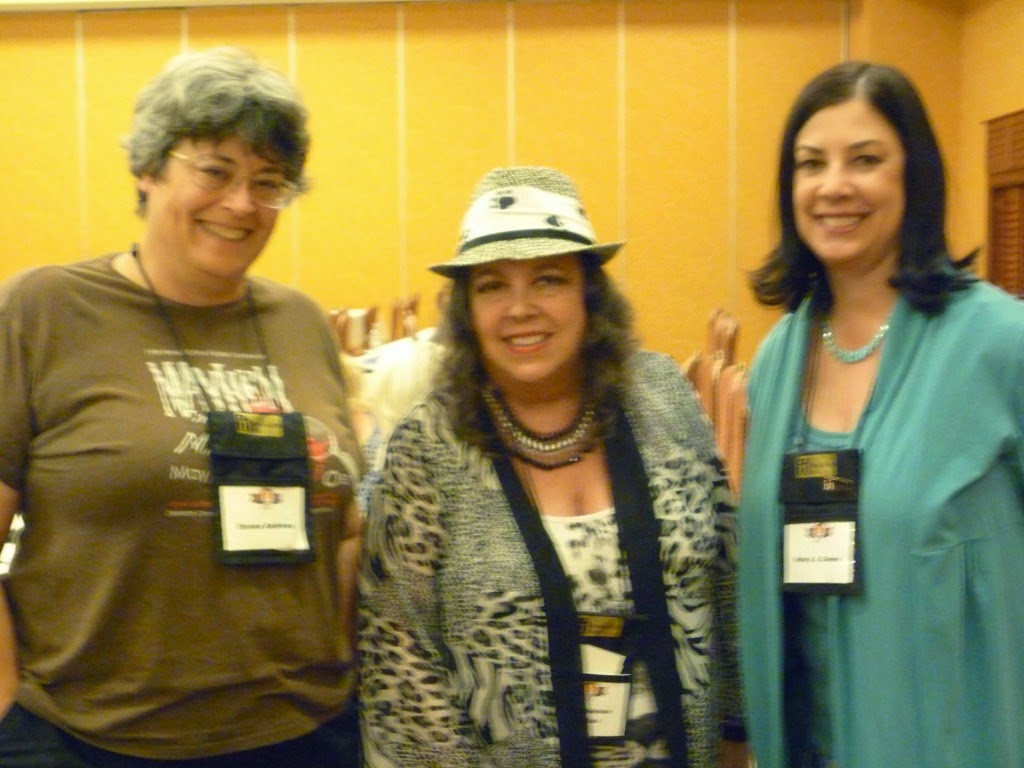
In the photo: Donna Andrews, Carole Nelson Douglas and Nancy J. Cohen

The rest is on my personal blog. Coming next there is BookBub, ACX, legalities for authors and more. Be sure to scroll down to see my previous posts.

For more information on Novelists, Inc., go Here.

Sometimes You Gotta Suck It UpAnd Write the Darn Outline

By PJ Parrish

Before you read this, I’m going to suggest you back up one day and read Steven James’s Monday post, “Fiction Writing Keys for Non-Outliners.” It’s a really good argument against outlining and I agree with almost everything Steven says.

I hate to outline. To me, it’s on par with pap smears, getting your teeth cleaned, filing taxes, and watching the Raiders play the Jets. It’s tedious, painful and feels utterly pointless. It’s not fun. It’s a major buzz-kill.

But after reading Steven’s eloquent argument, I abandoned my post-in-progress and decided I needed to respond. Because I believe – hack, hack, hack! – that sometimes you just gotta suck it up and outline.

Did I mention I hate to outline?

First, some context. I have published, via the traditional New York house route, fifteen books. My first book was bought as a full manuscript and that is the norm. First-timers don’t usually get in the door without a finished book. But for my next book (in a two-book contract), I had give my editor a full outline. This was because I had not yet established my reputation and they needed assurance I wasn’t a one-trick pony. So I did the grunt work and wrote a detailed outline.

Did I mention I hate to outline?

This outline pattern stayed in place for my second two-book contract, but by book five, I went to contract on the strength of a five-paragraph concept. This was because by this point my editor knew I could write, make deadline, and sustain my series momentum.  But when I switched to a new publisher, I had to go back to outlining because my new editor wanted a stand alone thriller. But for the four books that followed (which were back in my Louis Kincaid series), I was able to go back to contract via concepts.

I haven’t had to slog through the outline exercise for six years. Which brings us to the present. About a month ago, I submitted a detailed concept and 100 pages of my WIP to an editor at a traditional publisher. She loved it but she had to send it to the acquisitions committee, which okays every deal. (This is SOP for traditional publishing houses; everything is run up the flagpole to be saluted by editors, market types and bean counters). To do this, I had to give the editor…an outline.

Now, given my druthers, I am a confirmed pantser. My sister and I start with an idea, flesh out our main characters, then we plot-then-write in chunks of about four chapters at a time. But my new publisher wanted to know the major dramatic arcs of the story so Kelly and I spent two weeks not doing what we love – writing – but doing what we hate — brainstorming and sweating blood creating a plot map.

They bought the book.

Did I mention I hate outlining?

So I’ve swung both ways. Outlining is awful but it can be very useful if it gets you where you want to go. And every writer is different. Some of us thrive on structure; others crave chaos. There is no one path to the truth, grasshopper.

So who outlines? Let’s pull back the curtain and see…

John Grisham starts with 50-page outlines, with a paragraph or two about each chapter, setting out major events and plot points.

Michael Palmer spends four to five months outlining and goes to contract on outlines. His outlines are 40 to 60 single-spaced pages and his editor “clears” the outline before he writes one word. Sez Michael: “When I get down to the actual writing, I feel free to deviate from the outline, but out of courtesy, I will call and discuss any major deviations from what was agreed upon with my editor. There are those writers who can pen a novel and then do it over again if the story doesn’t work. With my busy schedule as a doctor and a daddy, I am not in that group. Reworking a detailed outline is possible for me. Rewriting an entire book would be disastrous.”

James Patterson writes a detailed outline and then hires someone to write the scenes, usually in 30 to 40 page chunks, which he reviews. Patterson describes it: “The outlines are very specific about what each scene is supposed to accomplish. I get pages from [the collaborator] every two weeks, and then I re-write them. That’s the way everything works. Sometimes I’ll just give notes. I’ve done as much as nine drafts of a book after the original comes in.”

Self-published eBook phenom Amanda Hocking (now in print with St. Martins) hand-writes her outlines before formatting them. “I’ll write usually about two or three outlines, so by the time I do write the book I’ve got the story completely mapped out in my head,” she says.

Joseph Finder describes writing without an outline like doing a high-wire act without a net, saying that his book Power Play, “took me several months longer than usual, simply because I wasted a lot of time on plot and on characters that I ended up cutting out.”

Robert Ludlum’s outlines routinely ran to 150 pages. I don’t know what he does now that he’s dead. I’d like to think he’s up there being a happy pantser.

Who doesn’t outline? Lee Child, for one. And Harlan Coben, who describes his process thusly: “I usually know the ending before I start. I know very little about what happens in between. It’s like driving from New Jersey to California. I may go Route 80, I may go via the Straits of Magellan or stopover in Tokyo but I’ll end up in California.”
 
That driving metaphor is a riff on E.L. Doctorow’s famous quote: “Writing is like driving at night in the fog. You can only see as far as your headlights, but you can make the whole trip that way.”

I’ve written both mysteries and thrillers, some romance and even fat historical sagas. Some came easy; others fought me all the way. And while being a pantser is my default method, I have come to appreciate that outlining can be useful. Here’s why:

1. It helps you get rid of bad ideas. This is very important because we all have bad ideas and bad ideas are like the Devil — they often assume a pleasing shape. (Wow! What if I have the bad guy sneak some plutonium into a White House toilet, then the Senate minority leader comes out of the john with green skin and…)  If you write your bad ideas down they won’t lurk in the shadows of your brain.
 
2. You might have to produce an outline to go to contract with a publisher. If you’re lucky enough to get a multi-book deal, outlining is often specified in contracts. Also, you get paid in lumps: part on signing, part on turning in the manuscript, part on publication. But sometimes, one of the lumps comes via outline.  Also, your editor might have to approve the outline before you begin working on the book.

3. It can speed up the writing process. Just seeing a map on paper can often help you manage your writing time. If you have some idea of the journey, you can budget your time more efficiently. This is important as you get farther into your career and must produce a book or more a year.

4. If you write big complex plots, it can keep you on track. Ken Follett starts with an outline between 25-40 typed pages that details chapter-by-chapter events and includes bios of all characters. He shares this with his editors before he starts writing. He also rewrites his outlines!

I rewrite the outline – and this may happen several times. Typically there will be a first draft outline, a second draft outline and a final outline, so it would twice go through the process of being shown to a number of people. The whole process of coming up with idea, fleshing it out, doing the research, drafting the outline and rewriting the outline comes to about a year all told. There are quite often a couple of false starts within this. I may spend a month working on an idea before I realise that it isn’t going to work and abandon it. But after this whole process, I’m ready to write the first draft.

5. If you’re trying a new genre, it gives you confidence. I have a friend who, after a long and successful career writing a light amateur sleuth series, is making the switch to darker fare. She has always been an avid outliner but with this new project, she found even more extensive outlining gave her sure footing in her new territory.

6. It keeps you motivated and focused. While working on my new book, the hardest thing I had to deal with was my sense of being at sea. Because I was working without the security of a contract for the first time since starting out, I often felt myself drifting into a lot of “what ifs.”  What if I can’t pull this story off? What if no one buys it? What if I’ve run out of good stuff and it’s time to hang up the creative cleats?  But there was something about writing an outline — having to do the elbow grease of the mind and produce on deadline — that injected juice back into my story and resolve back to my spine. If nothing else, I finished the damn outline.

So, yes, outlining is a good thing. But…

Can I add my caveats? If you outline, please don’t let it put a strangle hold on you and your story. It is a guide, a suggested route, one way to go but never the only one. I love this quote from Donald Barthelme:

“Not-knowing is crucial to art, is what permits art to be made. Without the scanning process engendered by not-knowing, without the possibility of the mind moving in unanticipated directions, there would be no invention.”

So even if you do outline, leave room in your planning for serendipity and detours because, as Steven said so well in yesterday’s post, that is where your story is hiding out waiting for you.

Think of an outline as those colored lines they paint on the linoleum in hospitals to help you find your way. The red will get you to the cardiac unit, the yellow to the cafeteria, the black to the emergency room. But sometimes you just gotta follow the blue and go look at the babies.

Fiction Writing Keys for Non-Outliners


Note from Jodie: I’m pleased to welcome back bestselling author Steven James to TKZ, and am looking forward to presenting a workshop at Steven’s conference, Troubleshooting Your Novel, in Nashville on January 17.

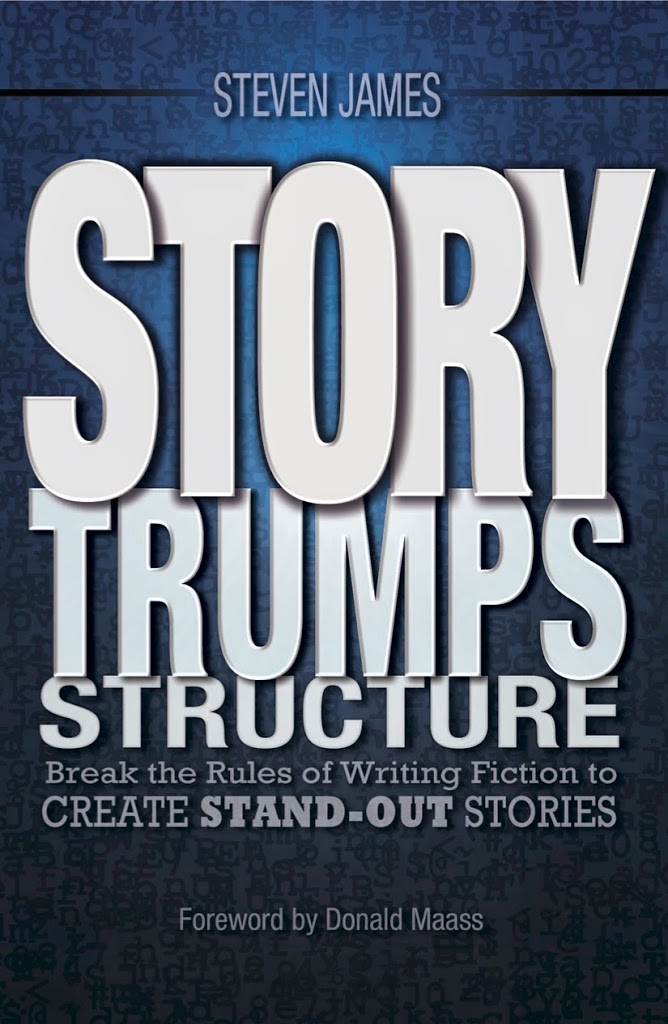
Excerpted from Story Trumps Structure (Writer’s Digest, 2014) by Steven James

Twelve years ago I had an idea for a series of mysteries featuring a one-armed detective. I attended a seminar by a well-known novelist who taught us to carefully and meticulously outline our fiction and then stick to the outline as we crafted our stories. In some cases he would write a forty-page long, single-spaced outline and then spend his actual novel-writing time pretty much filling in the blanks.

Well, I didn’t get very far in the one-armed detective project. In fact, it went absolutely nowhere. The process of outlining seemed daunting, not a whole lot of fun, and a very artificial way to approach an art form—sort of like telling an artist to use a paint-by-numbers approach.

I realized that in my heart of hearts I’m a storyteller, not an outline-maker.

If that’s you, here are a couple of secrets I’ve picked up over the course of writing ten novels without any outlines.

I’ve found that when I tell people to stop outlining their stories, I get strange looks as if writing organically is against some sort of “rule” of writing.

Well, in that case, I invite you to the rebellion.

Discarding your outline and uncovering your story word by word might be the best thing you can do for your fiction, just as it was for me. 

Here’s how to get started.

Trust the fluidity of the process.

I love Stephen King’s analogy in his book On Writing where he compares stories to fossils that we, as storytellers, are uncovering. To plot out a story is to decide beforehand what kind of dinosaur it is, how big it should be, and so on. As King writes, “Plot is, I think, the good writer’s last resort, and the dullard’s first choice.”

His analogy helps me to stop thinking of a story as something I create as much as it is something I uncover by asking the right questions. 

When people outline their stories, they’ll inevitably come up with ideas for scenes that they think are important to the plot, but the transitions between these scenes (in terms of the character’s motivation to move to another place or take a specific action) will often be weak. 

Why? 

The impetus to move the story to the next plot point is so strong that it can end up overriding the believability of the character’s choice in that moment of the story. 

Read that last sentence again. It’s a key one. 

Stated another way, the author imposes the plot onto the clay without letting it be shaped by the essential forces of believability, causality, and context. 

You might have had this experience: you’re reading a novel and it feels like there’s an agenda to the story that isn’t dictated by the narrative events. This is a typical problem for people who outline their stories. Instead, listen to the story, and respond to where it takes you.

You can often tell that an author outlined or “plotted out” her story when you read a book and find yourself thinking things like, 

◦ “But I thought she was shy? Why would she act like that?”

◦ “I don’t get it. That doesn’t make sense. He would never say that.”

◦ “What?! I thought she was . . . ?”

◦ “Whatever happened to the . . . ? Couldn’t she use that right now?”

◦ “I don’t understand why they’re not . . . ”

This happens when an author stops asking, “What would naturally happen next?” and starts asking, “What do I need to have happen to move this story toward the climax?”

The first question grows from the story itself, the second places artificial pressure on the story to do something that might not be causally or believably connected to the story events that just happened.

As soon as your character doesn’t act in a believable way, it’ll cause readers to ask, “Why doesn’t she just . . . ?” And as soon as that happens, they’re no longer emotionally present in the story.

As you learn to feel out the direction of the story by constantly asking yourself what would naturally happen next, based on the narrative forces that shape all stories, you’ll find your characters acting in more believable and honest ways and your story will flow more smoothly, contingently, and coherently. 

Here’s one of the biggest problems with starting by writing an outline: You’ll be tempted to stick to it. You’ll get to a certain place and stop digging, even though there might be an awful lot of interesting dinosaur left to uncover. 

Follow rabbit trails.

Forget all that rubbish you’ve heard about staying on track and not following rabbit trails. 

Yes, of course you should follow them. It’s inherent to the creative process. What you at first thought was just a rabbit trail leading nowhere in particular might take you to a breathtaking overlook that far eclipses everything you previously had in mind for your story. 

If you’re going to come up with original stories, you’ll always brainstorm more scenes and write more words than you can use. This isn’t wasted effort; it’s part of the process. Every idea is a doorway to the next.

So, where to start? Put an intriguing character in a challenging situation and see how he responds. Sometimes he’ll surprise you in how he acts, or demand a bigger part in the story.

And sometimes a random character will appear out of nowhere and vie for a part in the story.

As J.R.R. Tolkien noted one time, “A new character has come on the scene (I am sure I did not invent him, I did not even want him, but there he came walking through the woods of Ithilien): Faramir, the brother of Boromir.”

For fans of The Lord of the Rings books, it’s a good thing Tolkien didn’t stick to some predetermined outline.

Where do ideas and characters like this come from? Tolkien’s contemporary and the author of The Chronicles of Narnia, C.S. Lewis, wrote, “I don’t believe anyone knows exactly how he ‘makes things up.’ Making up is a very mysterious thing. When you ‘have an idea’ could you tell anyone exactly how you thought of it?”

While the exact genesis of ideas will always be, as Lewis points out, somewhat mysterious and impossible to pin down, we can tip the scales in our favor when we remember, that they often come from the questions, attentiveness, observance and responsiveness of the artist, the author, the poet, or the musician. 

Allow your characters the opportunity to flex and adapt and grow, revealing to you their quirks and inconsistencies, even as you push them to the limit to see how they respond. Then let the story shape them even while they shape the direction of the story. 

The key is responding to the story as it unfolds, being honest, keeping it believable, letting the characters act and develop naturally, and following where the trail of the story takes you. Give yourself the freedom to explore the terrain of your tale.

Without serendipitous discoveries, your story runs the risk of feeling artificial and prepackaged.

+++++++++++++++++++++

Steven James is the bestselling, critically acclaimed author of ten novels. When he’s not writing, trail running or watching science fiction movies, he’s teaching storytelling around the world. http://www.storytrumpsstructure.com/

Writing What You Love and Earning What You’re Worth

 
Many folks, including your humble correspondent, feel that this is by far the best time on earth to be a writer. In the distant past (you know, before 2007) precious few scribes were ever able to eke out a reasonable living from scribbling alone.
 
That’s all changed.
 
Every month more writers are added to the roster of those making enough lettuce to consider leaving their day jobs. But even short of that, many more are making a side income that is significant and steadily growing.
 
I love this! I love it that more writers can now earn a fair, merit–based return on what they write.
 
Today, let’s forget about the prognostications, vitriol, cries of doom, and hand-wringing over the future of culture in general and publishing in particular. Today I want to talk about being a professional writer.
 
For two decades now I’ve studied, analyzed, and practiced what works in this arena. I have determined that writers who make it almost always share these seven characteristics:
 
1. Love
 
An inner fire to make it as a writer will get you through years of cold reality. I suspect that the majority of writers who make it to full-time status love what they do. Writing is a part of them, a calling as well as a vocation.
 
It’s certainly possible to write out of sheer business-mindedness (I think, however, that this is much easier when you write non-fiction). Yet there’s a certain something that gets translated to the page by the writer who loves the work. I believe you can write what you love and, if you do so with the other characteristics listed below, earn a fair return.
 
 
2. Discipline
 
“One of the big lessons of sports for dedicated individuals and teams is that it shows us how hard work, and I mean hard work, does pay dividends.” – John Wooden, legendary UCLA basketball coach
 
Love is not enough. Ask anyone who’s married.
 
Work puts legs on the dream.
 
 
3. Perseverance
 
“The brick walls are there for a reason. The brick walls are not there to keep us out. The brick walls are there to give us a chance to show how badly we want something. Because the brick walls are there to stop the people who don’t want it badly enough. They’re there to stop the other people.” – Randy Pausch, “The Last Lecture”
 
The true writer puts this thought in mind: I am going to write and never stop because that’s what I want to do. I will keep learning and growing and producing the words. I’ll keep carving out time to write, even if it means giving some things up. And it will always be too soon to quit.
 
 
4. A Sound Mind
 
By which I mean the ability to overcome emotions and see things objectively. To take some of the hard knocks that are part of the writer’s life and turn them into opportunities to grow. To keep yourself from exploding in a stupid or vainglorious way on social media and thereby harming your reputation.
 
 
5. Business Savvy
 
If you want to earn what you’re worth you have to approach writing and publishing as a business. A successful business makes a profit. To make a profit you need a plan.
 
Many writers and other artists shudder at this notion. Some even rebel against it. For them writing success is usually an accident.
 
I don’t want you to be an accident. I want you to think like an entrepreneur. Fortunately, the business principles you need are not that difficult to acquire.
 
 
6. A Support System
 
As author Peter Straub once put it: “Every writer must acknowledge and be able to handle the unalterable fact that he has, in effect, given himself a life sentence in solitary confinement.”
 
Every writer needs support from other people. Nurture relationships with fellow writers and communities of writers. Hang out with positive folks. Be kind to your family, even Aunt Betty who thinks you’re nuts for trying to be a writer.
 
 
7. Talent
 
This is the least important item.
 
First of all, it’s a subjective judgment. There is no final arbiter of what constitutes talent. It’s a little like what a Supreme Court justice once said about obscenity: I can’t define it, but I know it when I see it.
 
You do have to have some ability to string sentences together in a coherent fashion. This is a matter of education and the habit of reading.
 
Having that, you can now put the other six items on the list into practice. This is how you make it in this game, and why I have just released a book called How to Make a Living as a Writer.
We all know that digital self-publishing has opened up a vast universe of possibilities for the writer. But this book is not about self–publishing alone. It also talks about how to approach traditional publishing. I advocate multiple streams of income, so I also discuss the best practices for writing both fiction and non-fiction. I cover what a publishing business actually looks like, and how any writer can create an enterprise based on quality and production. There are sections on how to become relentless, how to set and meet goals, unlocking your creativity, how to write better and faster, how to choose the right ideas for projects, and a whole lot more.
 
In short, I am attempting to give writers the skills that will greatly increase their odds of making a good return on what they write.
 
For the ebook:


If you like your writing books in print, HERE YOU GO.
Carpe Typem!


Stress vs. Fiction

This morning my twelve-year-old daughter will take New York City’s Specialized High School Admissions Test, which is the only criterion for admission to eight of the city’s top public high schools. About 30,000 eighth- and ninth-graders take this test every fall, competing for about 6,000 spots. The test is like the SAT used for college admissions but more devious; it includes logic questions that you’ll see nowhere else except the law-school admissions test, as well as an absurd exercise called “scrambled paragraphs” in which you have to put five sentences into the correct order based on tricky little clues. For many questions, two of the multiple-choice answers seem equally correct, but the arbitrariness of the exam is deliberate — if all the questions were clear-cut, then too many students would get perfect scores. So the only way to make sure your kids excel at the exam is to enroll them in test-prep courses that teach them the tricks for scoring higher.
So here we have a good example of something that was designed to be perfectly fair (because your admission to the elite high schools depends strictly on your test score) but in practice turns out to be completely unfair (because most of the good test-prep courses are wildly expensive). But let’s forget the fairness issue for the moment. I’d like to talk about the stress caused by this screening process. In addition to this weekend’s test, my daughter is scheduled to take two more admissions exams next week, both geared to the specific needs of two other highly regarded schools. She also has to assemble a portfolio of her best writing to prepare for an interview at yet another high school, and she’s going to play piano, participate in a dance class and submit ten of her best artworks as part of the audition process for New York’s performing-arts high school (the one made famous by the movie Fame). Doesn’t this seem like a lot of stress to put on a twelve-year-old? (She going to turn thirteen in two weeks, but still.)
And here’s the worst part: this is just the beginning of the rat race. Over the next few months we have to start looking for summer internships for my son, a high-school sophomore. To get into the best colleges now, it’s not enough to have good grades — you need to demonstrate that you have passionate intellectual interests and achievements. And if you’re admitted to a prestigious college, the race only intensifies. Last month I visited Princeton, my alma mater, for a Career Services event and was astonished to see dozens of college freshmen there, all asking me anxious questions about job prospects in the media industry. These kids had been attending college for a total of four weeks and they were already worried about what they would do after graduation.
There’s no question that the pressure on kids today is much, much worse than it was when I was a teenager in the 1970s. I never went to any Career Services events in college. I didn’t even know where Career Services was on campus. I have no idea why the stress has intensified so much, but it probably has something to do with globalization and our increasingly inequitable society. Fewer well-paying jobs are available these days, so the competition has grown fierce.
By now you’re probably wondering if there’s any connection between this rant and the business of writing fiction. There is: I believe that as economic strains and time pressures increase, the opportunity for leisure reading is decreasing. My daughter still reads good books in her English classes — The Catcher in the Rye, The Great Gatsby, The Jungle — but she has so much homework she can’t enjoy any books she chooses on her own. She’s so exhausted by bedtime (which is usually 11 pm or later) that I can’t even read to her while she lies in bed. And if this is true for twelve-year-olds, how can older kids find any time to read? How can they indulge in fantasies and mysteries and thrillers and develop a lifelong love for fiction?

I don’t see a solution to this problem. Does anyone?

Basic Formatting of Your Manuscript (Formatting 101)

by Jodie Renner, editor & author @JodieRennerEd

Often, the first thing I have to do when I receive a manuscript for potential editing, before starting my sample edit, is to reformat it, so it’s easier for me to read. Here are some guidelines for formatting your manuscript before submitting it to a freelance editor, a formatter, a contest, an agent, or a publisher. Most of these instructions are for Microsoft Word, 2007 or later.

1. For editing, your manuscript needs to be in Microsoft Word (Microsoft Office). This is a must, as almost all editors use Word’s Track Changes.

2. Send the manuscript as a .doc or .docx, unless instructed otherwise. Some contests prefer or require rich text format (.rtf) or even plain text (.txt), but most submissions want .doc or .docx documents.

3. The preferred font is Times New Roman or something similar. It’s easier to read than many other fonts. The font size should be 12-point.

4. To change the font and size for the whole manuscript instantly, click Control + A (for All) at the same time, which highlights the entire manuscript, then change the font and size by using the toolbar on “Home,” and then click “Enter.”

5. Left-justify the text, rather than justifying both sides. That way, it’s easier for the editor to spot spacing errors. That means the text is lined up straight down the left side (except for indents), but the right side is jagged, depending on the length of the last word in the line. To do that, click Control + A, then click the left-justify icon on the toolbar along the top (Click tab for Home first). You can also do that by clicking on the little arrow to the bottom and right of “Paragraph,” then click on the down arrow beside “Alignment” and click on “Left.”

6. Use only one space between sentences, not two. Two spaces between the period and capital went out with manual typewriters.
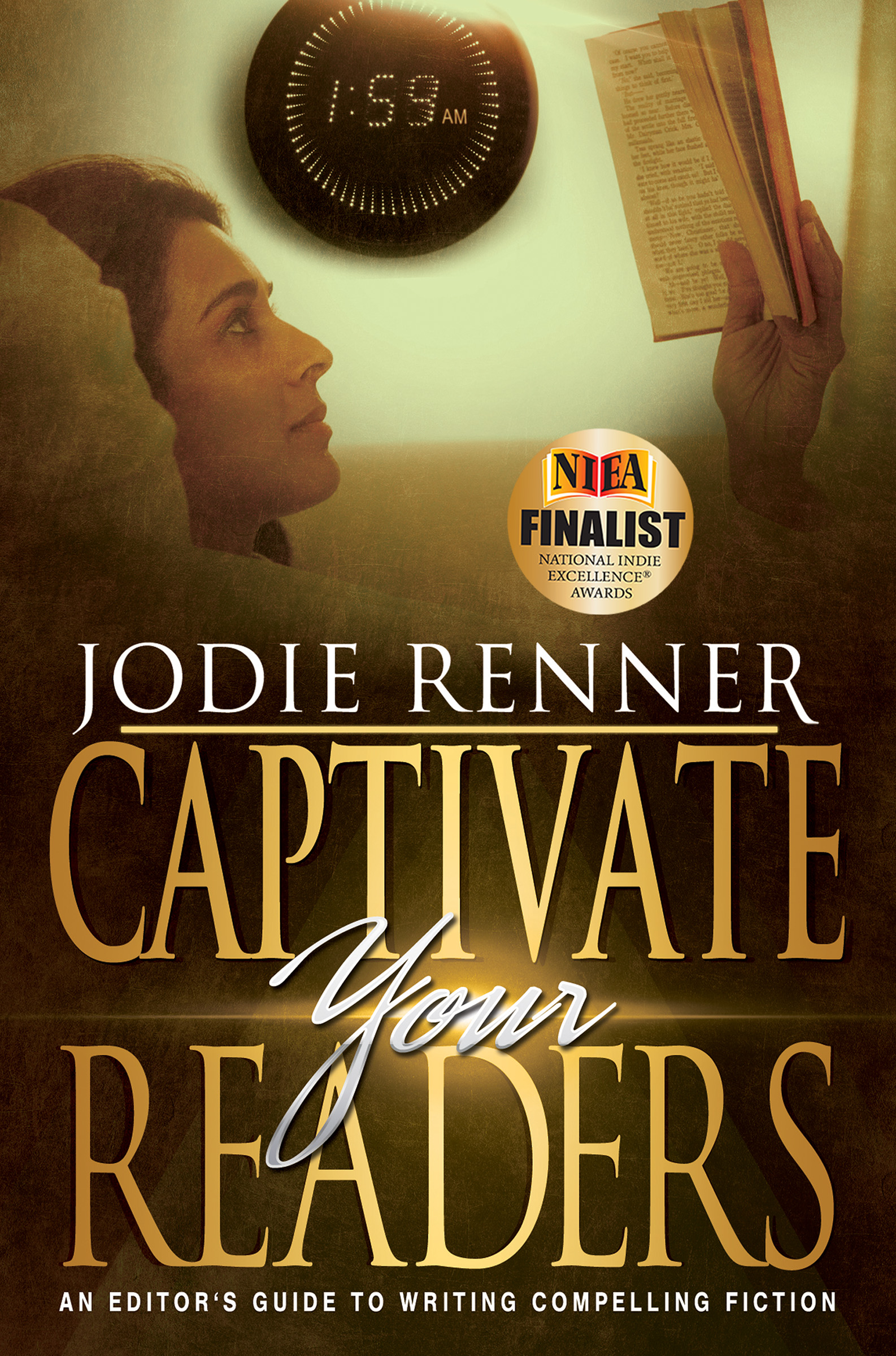
Captivate_full_w_decal7. Do not press “Enter” at the ends of the lines to add an extra line-space between the lines! This is a HUGE no-no! It causes major headaches and a lot of frustration. As soon as a few words are added or deleted (which is what editing’s all about), everything screws up. So make sure that when you’re typing and you come to the end of a line, do not press “Enter” unless it’s for a new paragraph. Let the text “wrap” around on its own.

8. A quick and easy way to double-space your whole manuscript: Control + A (for “all”), then Control + 2 (Click on Ctrl and on 2 at the same time). Voilà! It’s done! To change the whole manuscript back to single spacing later, click on Ctrl + A, then Ctrl + 1.

9. To see at a glance all kinds of formatting errors, click on the paragraph symbol on the toolbar along the top. It’s called a “Pilcrow” and it looks like a backward “P”. Here it is: ¶. You’ll see dots where spaces are and a ¶ for every hard return (Enter), at the end of a paragraph or for an empty line space between paragraphs.

10. Correct spacing between sentences. Click on that ¶ symbol again to see a dot for every space (click of the space bar). If you have two (or 3 or 4) dots instead of one between sentences (between the period and the next capital), you need to take out the extra spaces and just have one space between sentences. You can fix that for the whole manuscript in a second or two by using Find and Replace. Click on “Replace,” then after “Find what” hit the space bar twice (if you have 2 spaces). Then after “Replace with” click the space bar once. Then click on “Replace all” and Voilà again! All fixed! (Unless of course you sometimes have 3 or even 4 spaces between random sentences, as I occasionally see in my editing – a heavy or over-enthusiastic thumb, I guess.)

11. Correct line-spacing and paragraphing: Click on that ¶ symbol in the toolbar again. You’ll see the pilcrow symbol ¶ at the end of every paragraph, to indicate a hard return (“Enter”), and then again at the beginning of a line-space. If you see the ¶ at the end of every line, all down the right margin, that’s a real problem – the biggest formatting mistake of all! You need to remove those pilcrows (returns) at the end of every line, either by using your “Delete” or “Backspace” keys before or after them, or by doing a “Find and Replace.” After “Find” you type in this: ^p (for the pilcrow or paragraph mark). After “Replace” you just hit the space bar once, to replace the carriage return with a space.

When you click on that pilcrow sign ¶, also look for extra dots at the beginnings of paragraphs, before the first indented word, and take them all out. There should just be the indents, with no extra dots in front of them. (I see that quite a lot in manuscripts I edit.)

Note that you should only see the pilcrow ¶ in two places – at the end of a paragraph, and on any blank line. If you see a ¶ anywhere other than those two locations, it’s misplaced and will probably cause some type of inadvertent mischief.

12. Paragraphing for fiction: For fiction manuscripts, don’t add an extra line-space between paragraphs. Just leave it at your normal double-spacing. Press “Enter” at the end of the last paragraph, then indent the new paragraph (0.3 to 0.5 inch) using the built-in paragraph styles, rather than tabs or spaces. (See #15 below for instructions on how to indent the right way.)

13. Paragraphing for nonfiction: Nonfiction usually uses block formatting, with no indents for new paragraphs but instead an extra space between paragraphs.

14. General rule for indenting and spacing paragraphs: If you indent your paragraphs, don’t leave an extra space between paragraphs; if you don’t indent, insert the extra space between paragraphs.

15. How to indent the first line of each paragraph:

Do not click repeatedly on the space bar to indent! Click on that pilcrow again ¶ and if you see 2-6 dots at the beginning of the paragraph, you’ve used the space bar to indent. That’s another big no-no, and a bit of a headache to fix, especially if you don’t always use the exact same number of spaces. Using the “Tab” key to indent paragraphs is also not the best. By far the best way to indent for the first line of a new paragraph is to use Word’s formatting. To do this for the whole manuscript at once, use Control + A (for All), then, in the toolbar along the top, click on the little arrow to the bottom right of “Paragraph” (in Word 2010), then under “Special” click on “First line,” then 0.5″ or 0.4″ or 0.3″. Don’t go for less than .3″ or more than .5″.

And by the way, by popular current convention, the first line of a new chapter or scene is not usually indented – don’t ask me why!

16. To center your title and chapter headings, do not repeatedly click on the space bar. Again, if you click on the pilcrow (¶) and you can see a bunch of dots in front of the title, you’ve used the space bar to get it over there in the middle. And don’t use the Tab key for that, either. Instead, highlight the title with your cursor, then click on the centering in the toolbar along the top, under the “Home” tab. Or go to “Paragraph” below that, and click on the arrow in the lower right corner, then go to “Alignment,” then click the down arrow and choose “Centering.” A quick trick for centering a word or phrase is to click your cursor in the middle of it, then click Ctrl + E. (Thanks to Hitch for this one!)

17. For extra line spaces between chapters, do not repeatedly click on Enter or Return. To force a page break at the end of a chapter (in Word 2010), place your cursor at the end of the chapter, usually on the line below the last sentence, then, in the toolbar along the top, click on the tab “Insert” then click on “Page Break.” In Word 2007, click on “Page Layout” in the toolbar, then click on “Breaks”, then on “Page.” Another quick trick? Press CTRL+Enter. This will give you a forced page break for the end of each chapter. Do not do this at the end of a normal page, only for the end of a chapter. (Thanks, Hitch, for another trick!)

18. Your next chapter heading (chapter name or number) should start at least 3 line-spaces down from the top of the page.

19. For more advanced, specific formatting, read the guidelines set out by the agent or publisher. Or stay tuned for “Formatting 102,” to appear here at some future time. And of course, formatting for publication, for example on Kindle, involves a lot more that’s not discussed here! Especially if you’re writing nonfiction like I do, with subheadings and lists.

20. And a few quick notes about formatting for dialogue:

~ Make a new paragraph for each new person talking. Also a new paragraph for someone else reacting to the previous speaker.

~ Comma after “said”: He said, “How are you?”

~ Comma at the end of the spoken sentence, where a period would normally go, inside the last quotation mark: “Come with me,” she said.
Jodie Renner is a freelance fiction editor and the award-winning author of three craft-of-writing guides in her series An Editor’s Guide to Writing Compelling Fiction: Captivate Your Readers, Fire up Your Fiction, and Writing a Killer Thriller. She has also published two clickable time-saving e-resources to date: Quick Clicks: Spelling List and Quick Clicks: Word Usage. You can find Jodie at www.JodieRenner.com, www.JodieRennerEditing.com, her blog, http://jodierennerediting.blogspot.com/, and on Facebook, Twitter, and Google+.

Coming To Terms

By Joe Moore
@JoeMoore_writer

When I first started trying to write fiction, about the only thing I knew for sure was that I wanted to tell a story. I had no idea what the basic rules for writing were, so I broke them all. I also came across many words and terms related to writing that remained undefined for a long time. As time passed, I started honing the craft and the terminology that goes with it. I’m still learning the craft today, but once a term is defined, it rarely changes. To help those that are just getting their feet wet in this wacky business of making stuff up in a dark room staring at a monitor and talking to imaginary people, here are a few terms that I wish someone would have defined for me back in the day. Hope there’s one here that you’ve wondered about but never knew for sure. Or maybe two or three. So let’s come to terms with writing terms.

Concept: A vague notion such as: A world ruled by apes.

High Concept: Usually verges on the outrageous or bigger-than-life “world” story such as: A world ruled by apes where humans are the subspecies.

Idea: A story description that sounds more like a short synopsis.

Premise: Similar to an idea, the premise is a one- or two-sentence reply to the question: “What is your story about?”

Genre: Categories of fiction (suspense, science fiction, horror, romance, etc.) that help create inherent expectations for the reader. Each genre will predetermine your basic story structure.

Mystery: Usually begins with an event and spends the rest of the story finding who caused it.

Thriller: Usually begins with the threat of an event and spends the rest of the story trying to stop it.

Plot: A series of events that determine the beginning, middle and end of a story.

Subplot(s): A secondary series of events that contribute to the main plot and characters.

Commercial Fiction: Plots that generally deal with externally driven characters and conflicts.

Literary Fiction: Plots that generally deal with internally driven characters and conflicts.

Plot Driven: A story that relies heavily on a series of events to push the characters forward.

Character Driven: A story that relies heavily on the characters to push the plot forward.

Story Question: A global question posed early in the story that intrigues the reader enough to keep reading. The story question signals to the reader when the story will end.

Theme: What the story says about the human condition.

Moral: A life lesson taught or insinuated at the conclusion of a story.

Suspense: Creates a desire in the reader for something to happen, delays the satisfaction of that desire, then delivers what the reader wants in an anticipated yet unexpected manner. Suspense is used to keep the reader wanting to read more.

Conflict: Conflict is the basic difference of goals between the protagonist and antagonist.

Foreshadow: The delivery of small hints about what’s going to happen later in the novel, and is used to heighten suspense.

Telegraphing: Revealing too much too soon. Telegraphing can diminish or destroy suspense.

Query Letter: A one- or two-page business letter to an agent or editor that serves as an introduction and selling tool for the writer and story.

Elevator Pitch: Similar to the premise, the elevator pitch is a short summary of the story that is meant to attract the attention of an agent or editor.

Copy Editor: An editor who addresses such story elements as word choice, plot points, paragraph flow, clichés and style issues. The copy editor will also point out a need for clarification and possible plot mistakes.

Line Editor: An editor who deals with the rules of grammar and punctuation along with addressing such issues as passive voice and formatting.

Acquisition Editor: an editor who reviews submitted manuscripts for possible purchase and publications. The acquisition editor also deals with global issues that might need addressing before the manuscript is accepted.

This is by no means a complete list of writing terminology. Additional lists can be compiled dealing with terms about publishing contracts, marketing, and so many other topics. So, Kill-Zoners, is there a term and definition you would like to contribute to today’s discussion? Perhaps a term you would like defined. Now’s your chance to come to terms.

FB and Twitter, she just can’t quit you

Eighteen months ago, I wrote a post in which I wondered whether social media were developing a personality disorder.  Now I’m wondering whether social media are causing people to develop personality disorders.

Over the years, the content of my Facebook feed has become progressively darker. It’s reliably clogged with distressing missives–political rants, plus tales of woe about suffering animals and the environment. (I suspect this content appears because Facebook’s algorithm, like Google’s, does an excellent job of micro tracking everything I “Like”, share, or search for.) Yes, I care about these issues, but I don’t want to be slapped in the face with how dreadful everything is, first thing in the morning when I turn on the computer. 

The more I read these distressing posts, the more upset I get about the state of the world. I do try to tune much of it out. For example, I skip over my friends’ political rants online–they’re tiresome, no matter what the point of view. (I don’t block these friends, because some of these people are dear to me in real life.)  But I worry about my friends who are struggling with depression or some other personal issue in real life, who do nothing but mutter darkly online about the nefarious activities of Evil Government, or Evil Corporations. Is it a sign that they’re slipping over the edge?

I tell you, it’s enough to make me long for the boring old days when people shared what they ate for breakfast.

And it’s not just Facebook. Whenever there’s a breaking news, I find that I stay ahead of the headlines on cable news by monitoring Twitter updates. Twitter has become our new wire service, and anyone can use it. I’ve developed an unhealthy fixation with the #Breaking hashtag. 

I know there’s a simple solution to my situation. “Turn it off! Unplug!” Easier said than done. I’ve been a news junkie all my life. Now apparently I’m a social media junkie, as well.

We’ve become a nation of social media junkies, it seems. I remember an incident from years ago. I was at a cocktail party, and feeling uncomfortable for some reason. I withdrew to a dark corner and began checking my cell phone. My husband came over to see what was wrong. Nowadays, I don’t think he’d bother. Everywhere  one goes, everyone is checking their devices. 

In the context of this discussion, I have to mention the Marysville shooting. I was stunned to see excerpts of the conversations that some of children involved had been posting online. I’m wondering why minors are even allowed to post profanity, plus violent and sexual content. Unfortunately, that kind of language seems to be the rule among adolescents in the Twitter-verse, rather than the exception. And that’s scary.

When one of my daughters was young, she was an early adopter of computer technology. She had taught herself to create a web site, and she posted a .gif of an animated dancing devil, complete with pitchfork. The image caused a big kerfuffle among the mothers of her friends, I recall, and I made her shut the site down. (I actually thought the dancing devil was kind of cute and creative, which tells you something about me. But I did want her to learn to respect “community standards”, such as they were back then).

Fast forward to current time. Where are the mothers and fathers who should be monitoring their kids’ online activities today? Perhaps we’ve all become  used to a level of discourse that’s unhealthy. Perhaps it’s unhealthy for us, as well as for our children. 

Here I was complaining about Facebook rants, but I seem to have written one of my own today. As writers, I know we all tend to be heavy users of social media. (For example, the #amwriting hashtag is a frequent trend on Twitter.) Do you think that social media is causing people to develop personality disorders, or does it merely reflect a pre-existing condition?

Choosing Character Names

by Clare Langley-Hawthorne

I’m winging my way to Australia today so apologies that I won’t be able to join in the discussion. I will, however, be trying to do a little writing on the way (although you all know how hard I find it to write ‘in public’!). I started a new project last week and have been enjoying coming up with my new characters’ names – something I always have a lot of fun with and yet also suffer way too much angst over…

A character’s name can be critical to establishing the voice and feel of that person in the world that I am creating, and I often spend a considerable amount of time tinkering with main character names until they feel and fit the character exactly right.

Since I mainly write historical novels, I have a number of resources at my disposal to help me come up with names. These include lists of popular boys and girls names for  the time period I’m writing about as well as handy British last name resources like census data, historical records, newspapers, magazines and even Debrett’s (I often write about aristocrats, after all!). I’m like a sponge at first, soaking in all the details about names and then I play around with combinations until I find the right fit. Since I’ve also been writing with a renewed sense of appreciation for the humor in certain names, I have also been rereading Charles Dickens. He is, in my opinion, one of the cleverest ‘namers’ in literature (who can forget names like Uriah Heep, Ebenezer Scrooge or Mr. Pumblechook!). I recently discovered the often hilarious Dickens name generator and have spent many an hour or two concocting my own ‘Dickensian’ type names. 

So how do you come up with your character names? What resources do you use and how much time and effort do you spend? Is it something you agonize over, trying to make sure the name ‘fits’ the character or do you find the names just come to you and slide on your characters as easily as a silk glove? Apart from Dickens, who do you think has come up with some of the greatest, most memorable character names?