Getting Your Rocket Fizz Going

rocket fizz

Photo (c) Columbusunderground.com

There is a nationwide chain of stores named “Rocket Fizz.” We have had one in the Columbus area for a little over a year. It’s not on the Weight Watchers approved list, for sure, which means that it is a fun place.  I have watched people walking by the place who seem to hit an invisible shield when they see the front window, which promises a party inside. They come in, too. The store layout gives you an excellent idea of what Rocket Fizz is all about from that first glimpse inside. The front has candy that I haven’t seen in a half-century or so, items like Bonomo’s Turkish Taffy, Sugar Babies, Teaberry Gum, and Bit O’ Honey. The periphery displays all freaking sorts of bottled soda (Judge Wapner has his own root beer. Who knew?),  taffy (about fifty or so different flavors), posters, tintypes, toys (I almost — almost — laid down thirty bucks for a set of Teenage Mutant Ninja Turtles beanie babies), and novelty pranks that will remind you of what you do in your office when no one is around (you’ll know it when you see it).  There are tables piled with merchandise but none higher than five feet or so, the result being that even someone of my very normal height can see the entire expanse of the establishment from the front door. The back of the store displays all sorts of imported items like Japanese Oreos (those folks know how to do Oreos) and English toffees and chocolates of all types and configurations.Wonders beckon.

I take my granddaughter, the eight-year old antichrist, to Rocket Fizz on occasion. While she is respectfully prowling the place, looking for new opportunities for me to spoil her, I like to stand in the corner of the store furthest from the entrance and watch people as they come in. The face of each and every person lights up as they break the plain of the front door. This is true even of grumpy old me, and it’s true every time I visit there.  It’s pure entertainment. A youngster sees unfamiliar types of candy that looks like fun; those of us whose boots first hit the ground in the middle of the last century remember going to the drugstore and paying a quarter for a box of Fizzies (yes, they have those too, and no, they aren’t a quarter anymore). You hear lots of “Oh wow!’s and oohing and ahhing from people of all ages as they walk through. I have never seen anyone step inside of Rocket Fizz and turn around and walk out. No. They walk in, going deeper and deeper. They spend time and yes, they spend money.

Someone did a lot of work figuring out what would work for Rocket Fizz, and it shows. There are fifty odd Rocket Fizz stores scattered across the country and that number will double in a year or so.. I don’t know if the people who came up with the concept of Rocket Fizz sample their own wares or not, but they want their customers to be happy and have fun and hopefully spend money. And we, as authors, can learn from that. I sometimes forget who I am writing for and have to remind myself that if I am writing for me then a diary would serve the same purpose. If I am writing for someone else — or a whole bunch of someone else’s, hopefully — I need to make my book attractive to my audience, not just to me. “I couldn’t get him to stop screaming” is a stack of twelve ounce cans of cola by the front door; “He kept screaming. He didn’t stop, even when I caved his head in” is a twelve ounce glass bottle of Mighty Mouse Blue Cream Soda, made with real cane sugar. It attracts attention, and makes the reader wonder who, why, and next. As far as that next thing goes…you don’t want displays of generic animal crackers. You want gold foil chocolate coins or candy flavored cigarettes (OH, THE HUMANITY!) or Star Wars JellyBellys. This is where you start introducing characters, which you can base upon everyone from the uncle no one ever wanted to sit by to the really, really strange woman who works in the produce department of your local supermarket who won’t meet your eye and just points to what you want. As for your ending…you want exotic. Endings are dessert, at the back of the store. A creme sandwich cookie is okay, but what does a small box of double-fudge covered Oreos with Asian lettering all over it say to you? It says that it’s something familiar, but different. It’s at the back of the store, and is more interesting than anything that came before it. That’s what you want to shoot for. Even if, like me, you miss more often than not. You can’t hit something if you don’t fire.

Have you read anything recently that puts you in the mind of Rocket Fizz, as described? I have a couple of examples, one being THE HOT COUNTRIES by Timothy Hallinan, the latest and best in his Bangkok-based Poke Rafferty series. The other is THE GOLEM OF PARIS by Jonathan Kellerman and Jesse Kellerman, the genre-bending sequel to last year’s THE GOLEM OF HOLLYWOOD. It has it all, from exotic locales to explosions, romance, history and religion. And if you haven’t read anything recently that fits the bill…do you have a Rocket Fizz in your city? Have you been there? What did you buy?




Key Layers to Writing a Solid Characterization

Jordan Dane
@JordanDane

Image purchased from iStock by Jordan Dane

Image purchased from iStock by Jordan Dane

Characterization is the way an author conveys the important (and hopefully memorable traits) of their main character. An author should have a vision for how their character looks, speaks, thinks, and interacts in their world. A writer can directly state what their character is all about by saying, “George is a rigid man, both in posture and judgmental temperament.” Or an author can convey key elements and paint a picture of their character by more subtle means, such as in their actions or manner of speech or even body language.

A first person narrative provides an intimate voice for a character, as if the reader has found a personal diary of private thoughts. A third person (Deep Point of View) can be compelling if the voice of the character gives insight into who they are and allows for a colorful and distinct dialogue and internal monologue.

Excerpt from The Last Victim (First Person POV):

My mind acted like a hard drive of stored random facts, especially at stress times. Sometimes they hit me hard and I blurted them aloud. That made dating a challenge. I’d always been drawn to intelligent women, but once I let them into my world, crossing that line usually ended any relationship. I simply had no interest in hiding who I was.

In this excerpt, I envisioned FBI profiler Ryker Townsend as socially awkward yet highly effective at his job. He’s a man with secrets, even from his own team. To be good at his job, he removes any filter he has over the way he speaks so he can access key elements stored in his brain. He trusts his instincts and his team to be himself, and in his personal life he is unapologetic for his peculiar mental leaps. His work is everything to him.

In The Last Victim, I portray Ryker’s life at home where he’s still living in boxes after a recent move, yet his work life is well-ordered. He’s charmingly clueless about his affect on women and very serious minded. He’s a case solver and a high achiever because of how his mind works, yet his mental gymnastics become a challenge in a social setting, where he’s out of his element most of the time. His highly focused approach to his work (and his secretive personal life) becomes the very weakness that could get him killed when he chooses to follow a lead alone. The clues force him to cross paths with the ruthless serial killer he’s hunting, a psychopath who knows how to hide in plain sight.

It’s important for an author to have a picture of the character in their mind’s eye. I often create a storyboard of images to reinforce my ideas. Or I imagine how the character will speak (perhaps by picturing an actor I see for the character). I also give the character baggage that will challenge them with conflict. Often their weakness can get them killed or become a major crutch. Above all, a main character needs to seem real and believable to the reader with a full life on paper.

Here are questions an author might ask about their main character(s) in order to flesh them out:

1.) Who are their friends?
2.) How do they dress? What do they look like?
3.) How do they live at home? Is their work life different?
4.) Do they have hobbies or interests outside of work? What do they care about? Their passions?
5.) How do they interact with others? How do others react to them?
6.) What makes them angry?
7.) What would they die for?
8.) What are their weaknesses?
9.) What do they fear?
10.) Which adjectives would the author use to describe the character’s personality?
11.) What does the character think inside their head? What do they share?
12.) How has their past shaped their life? Is there a traumatic incident that changed everything? How is this manifested in their present?

Once an author has a solid image and characterization in their mind, a writer can set up conflicts to give that character a starring role. Can they overcome their weaknesses? Give them a journey throughout the book that will exploit their deepest insecurities or force them to deal with their worst fears. A compelling characterization is like the foundation to a building. The more solid and well-thought out it is from the start, the stronger the story will be when you build onto it.

For discussion: Please share any tips you have to creating your characters. Do you storyboard images? What resources have helped you?

tmp_4087-TheLastVictim_highres-1601584079
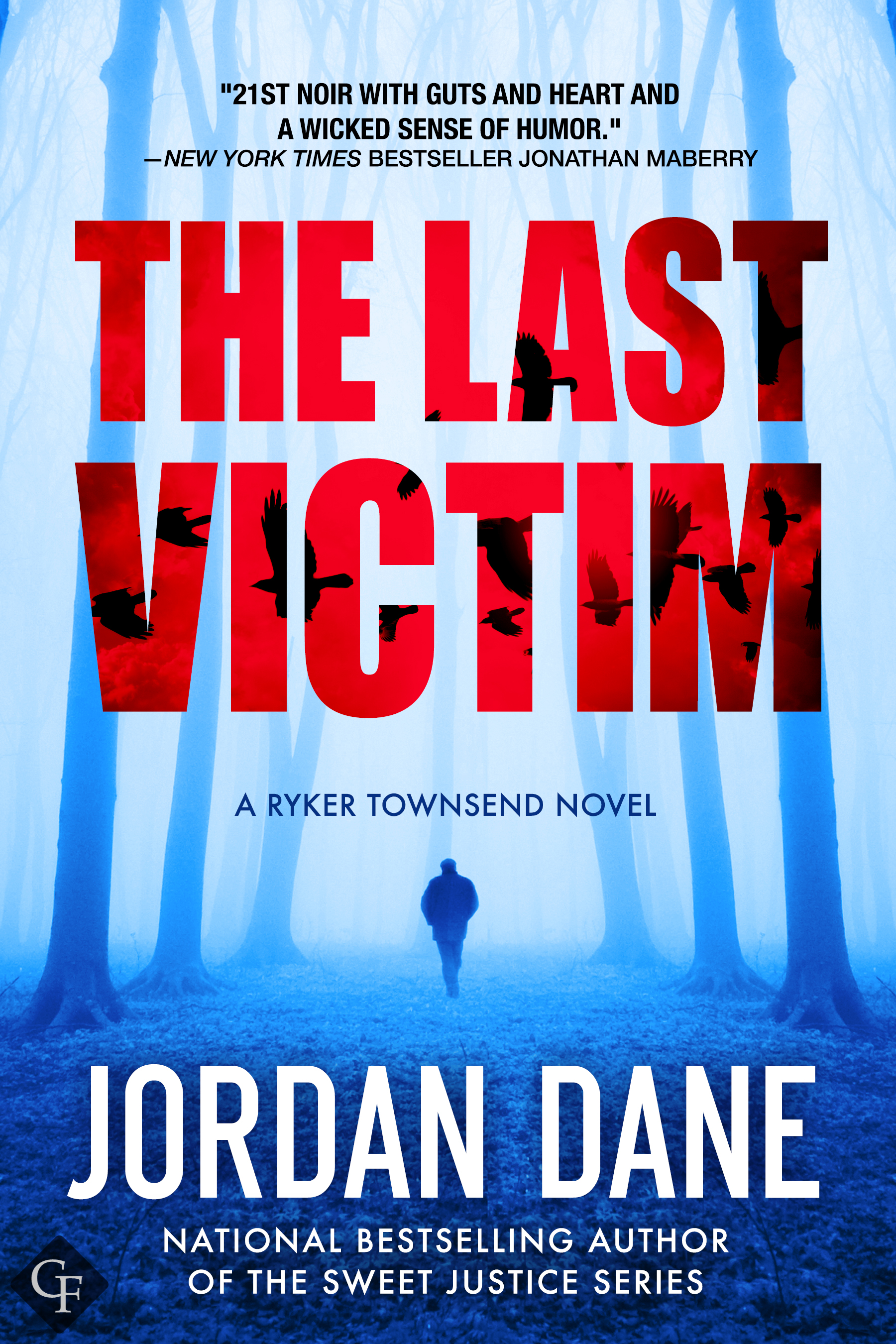
The Last Victim now available in print and ebook. Sales links HERE: “When FBI profiler Ryker Townsend sleeps, the hunt begins.” Townsend has a secret he won’t share with anyone–not even his own team–that sets him on the trail of a ruthless psychopath alone. 

Value of Listserves

I just learned this tip from one of my listserves: Bowker is running a 20% off discount in honor of family history month. The code is Family20 that you apply at checkout. I don’t know how long this discount lasts, so I jumped on it. It’s Sunday morning. I saved $59.00. While on site, I also saw you could buy 10 ISBNs and get a deal to purchase another 10 with it for 50% off the second batch.

This tip came from the Fantasy, Futuristic, & Paranormal Romance loop that I belong to with my RWA membership. I’m not too active there now since I am working only on my Bad Hair Day mysteries at this time, but gems like this one make it worthwhile to keep my membership.

A post on the FRW (Florida Romance Writers) listserve is how I learned about TweetJukebox (http://www.tweetjukebox.com/ ). This site has saved me a considerable amount of time.

What is a listserve? (Note: The trademarked term is LISTSERV) It’s a group email list that you join, usually through yahoo groups. You can choose to receive individual emails or a Daily Digest. The latter allows you to scan the topics and jump to the ones that interest you by clicking on a link.

Much of what I’ve learned about self-publishing, promotion, and business of writing tips has come from the listserves where I belong. I mine them for jewels of information. When I see something relevant, even if it’s not info I need immediately, I copy and paste it into a file. Thus when I am ready to venture out—like into audio books through ACX—I have a complete file with tips and instructions I’ve gleaned from various listserves.

Some of these groups require you to be a member to join. Others are available to all writers. In my view, they might be time-consuming emails but they’re worth their weight in gold—or in this case, in dollars saved. It’s writers helping writers. or writers connecting with readers.

book club

So here are the listserves where I belong. I’ve included the link if it’s open to the public. DorothyL is the only one that is not a yahoo group.

Mystery
Cozy Armchair Group (Readers): cozyarmchairgroup@yahoogroups.com
Crime Scene Writer (Research Questions): crimescenewriter@yahoogroups.com
Dorothy L (Readers): Mystery Literature E-conference DOROTHYL@LISTSERV.KENT.EDU
International Thriller Writers (members only)
Murder Must Advertise (Writers on Marketing) MurderMustAdvertise@yahoogroups.com
Mystery Buffs (Writers & Readers) https://groups.yahoo.com/neo/groups/mysterybuffs/info
Mystery Writers of America: (members only): EMWA, MWA-Breakout, MWA-Self-Publishing
Mystery Writers Promo (private group)
Sisters in Crime: (members only)
Sleuthmail: (Florida Chapter MWA members only)

Romance
Fantasy, Futuristic, and Paranormal RWA chapter: (members only)
Florida Romance Writers: (members only)
Marketing for Romance Writers: MarketingForRomanceWriters@yahoogroups.com
Romance Writers of America: (members only) PAN, Tech, Industry, News
Southwest Florida Romance Writers: (members only)

Other
ELoop: Eloop@yahoogroups.com
Lifeboat Team: Private group – Booklover’s Bench writers
Novelists, Inc: (members only)
Self-Publish: selfpublish-subscribe@yahoogroups.com

Publishers
Five Star: (FS authors only)
The Wild Rose Press: (WRP authors only)
The Wild Rose Press (readers) TheWildRosePress@yahoogroups.com

Do you have any other recommendations?

Writing and Publishing Links Roundup for Week of 11/3

Shutterstock photo purchased by TKZHere’s a links roundup for some recent, interesting articles about writing and the publishing biz. (Link texts follow the hyperlinks). Enjoy reading!

(PW) The Best Books of 2015:
http://best-books.publishersweekly.com/pw/best-books/2015

(PBS) Three Lessons on Writing from J.K. Rowling
http://www.pbs.org/newshour/rundown/j-k-rowlings-lessons-writing/#.Vjh9ku-_TQk.twitter

(Writers in the Storm blog via WD) Query Letters Pet Peeves (by Agents)
https://writersinthestorm.wordpress.com/2014/01/03/query-letter-pet-peeves-agents-speak/

(PW) How to build an author’s platform through email lists
http://www.publishersweekly.com/pw/by-topic/authors/pw-select/article/68469-how-to-build-an-author-platform-through-email-lists.html?utm_content=buffera6df3&utm_medium=social&utm_source=twitter.com&utm_campaign=buffer

(NYT) Russia: Librarian accused of allowing access to banned books
http://nyti.ms/1Pi1UpF

(PW) How to get Self-published books into stores and libraries
http://www.publishersweekly.com/pw/by-topic/authors/pw-select/article/68467-how-to-get-self-published-books-into-stores-and-libraries.html

(PW) Want to Succeed in Self-publishing? Tips from an Indie Author (Tony Rich)
http://tinyurl.com/q48o5rr

How about you? In the Comments, please let us know about any interesting articles to add to our list. Thanks!

The Evolution of Your Hero

Evolution

Two weeks ago James Scott Bell wrote a terrific post on hero passivity, and how to handle it (carefully) in a novel. Which in a nutshell is this: in general you should avoid it, because it’s absolutely a radioactive story killer if handled wrong.

The mistake, and the temptation that leads to it, is to get too caught up in the intention to write a character-driven story (a noble goal, but like trying to run a marathon, you need to understand the role of pace), and a facet of that character is passivity in the form of lack of motivation, lack of courage, lack of direction or simply lack of interest.

Sooner or later, you need to give your hero something to do.

This issue is an example of how story structure touches and drives everything. 

This includes character arc, the beginning of which can indeed be a viable context for your protagonist’s passivity (which may be the very thing that gets them into trouble).  Nay-sayers on structure handle this differently, and yet end up – at least when the story finally works – aligning with where structure seeks to take a story in the first place.

Which is why mastery of story structure is perhaps the most critical phase of an author’s development. Because everything in the story connects to and is informed by structure.

When someone tries to tell you that’s not true… run.

Showing your hero in a passive context can actually be a good thing…

… provided you understand when and where to allow passivity to show itself.

Some stories begin with the hero simply not yet having fully collided with a forthcoming problem or situation (which absolutely needs to happen, and at a specific place in the story sequence), while others show the hero actually contributing to that problem by virtue of being passive (like, for example, someone in a relationship being cold toward their partner, resulting in… well, you know, all kinds of issues).

But be careful with this.  Because passivity can get you – the author – in a real pickle, too.  Stories are nothing if not a vicarious experience of a central hero-centric problem/situation (plot) for the reader.  Just don’t suck on that pickle for too long… because it’s toxic if you do.

And that’s where structure will guide you.

In her book “The Hero Within: Six Archetypes We Live By”, Carol S. Pearson is credited with bringing us life’s hero archetypes, four of which align exactly with the sequential/structural “parts” of a story.  (For those who live by the 3-Act model, know that the 2nd Act is by definition contextually divided into two equal parts at the midpoint, with separate hero contexts for each quartile on either side of that midpoint, thus creating what is actually a fourpart story model; this perspective is nothing other than a more specific – and thus, more useful – model than the 3-Act format from which it emerges.)

Those four parts align exactly with these four character contexts:

Orphan (Pearson’s term)/innocent – as the story opens your hero is living life in a way that is not yet connected to (or in anticipation of) the core story, at least in terms of what goes wrong. 

And something absolutely has to go wrong, and at a specific spot in the narrative.

The author’s mission in this first story part/quartile, prior to that happening, is twofold: make us care about the character, while setting up the mechanics of the dramatic arc (as well as the character arc) to come.  There are many ways to play this – which is why this isn’t in any way formulaic – since within these opening chapters the hero, passive or not, can actually sense or even contribute to the forthcoming storm, or it can drop on their head like a crashing chandelier.  Either way, something happens (at a specific place in the narrative sequence) that demands a response from your hero.

Now your hero has something to do, something that wasn’t fully in play prior to that moment (called The First Plot Point, which divides the Part 1 quartile from the Part 2 quartile).  In this context, and if your chandelier falls at the proper place (in classic story structure that First Plot Point can arrive anywhere from the 20th to 25th percentile; variances on either end of that range puts the story at risk for very specific reasons), you can now think of your hero as a…

Wanderer – the hero’s initial reactions to the First Plot Point (chandelier impact), which comprise the first half of Act 2 (or the second of the four “parts” of a story).  The First Plot Point is the moment the story clicks in for real (everything prior to it was essentially part of a set-up for it), because the source of the story’s conflict, until now foreshadowed or only partially in play, has now summoned the hero to react.  That reaction can be described as “wandering” through options along a new path, such as running, hiding, striking back, seeking information, surrendering, writing their congressman, encountering a fuller awareness of what they’re up against, or just plain getting into deeper water from a position of cluelessness and/or some level of helplessness.

But sooner or later, if nothing else than to escalate the pace of the story (because your hero can’t remain either passive or in victim-mode for too long), your hero must evolve from a Wanderer into a…

Warrior – using information and awareness and a learning curve (i.e, when the next chandelier drops, duck), as delivered via the Midpoint turn of the story.  The Midpoint (that’s a literal term, by the way) changes the context of the story for both the reader and the hero (from wanderer into warrior-mode), because here is where a curtain has been drawn back to give us new/more specific information – machinations, reveals, explanations, true identities, deeper motives, etc. – that alter the nature of the hero’s decisions and actions from that point forward, turning them from passive or clueless toward becoming more empowered, resulting in a more proactive attack on whatever blocks their path or threatens.  Which is often, but not always, a villain.

But be careful here.  While your hero is getting deeper into the fight here in Part 3, take care to not show much success at this point (the villain is ramping things up, as well, in response to your hero’s new boldness).  The escalated action and tension and confrontation of the Part 3 quartile (where, indeed, the tension is thicker than ever before) is there to create new story dynamics that will set up a final showdown just around the corner.

That’s where, in the fourth and final quartile, the protagonist becomes, in essence, a…

Martyr (Pearson’s term)/hero – launching a final quest or heading down a path that will ultimately lead to the climactic resolution of the story.  This should be a product of the hero’s catalytic decisions and actions (in other words, heroes shouldn’t be saved, rather, they should be the primary architect of the resolution), usually necessitating machinations and new dynamics (remember Minny’s “chocolate” pie in The Help?), which ramp up to facilitate that climactic moment.

This is where character arc becomes a money shot.  Because by now everything you’ve put the hero through has contributed to a deep well of empathy and emotion on the reader’s part.  This is where the crowd cheers or hearts break or history is altered, where villains are vanquished and a new day dawns.

Instinct, Intention or Accident?

Too many writers aren’t in command of the difference.  You can be, and you should be.

In this context these three options don’t refer to your hero, they refer to you, the author of the story.  All three modes may play a role in how a story comes together, but the good news is that you don’t have to rely on any single one of them.  Armed with a deeper knowledge of craft, you get to choose which to harness, and when.

Truly, successful storytelling exceeds the sum of these three states, so listen to all the voices in your head that contribute to the way you build the arc of your character: yours, those of your characters (that’s a metaphor, by the way, because when a character “speaks to you” that’s just your story sensibility weighing in), and the sum of the learning you have accumulated from venues like this one, and the books the authors here have written to show it to you.

(image by Esther Dyson)

Embrace Your Weirdness

NaNoLogoIt’s day one of National Novel Writing Month (NaNoWriMo) 2015, and all over the world writers are clacking away in an initial rush of writing joy. The journey has begun. The climb up the mountain is on. Yes, there will need to be some oxygen intake along the way, but right now everybody’s yodeling.

To me, that’s the great benefit of NaNo. For one month there’s a community of writers engaged in the same pursuit—completing a 50,000 word novel in 30 days.

Of course, it’s not all sweetness and light. Life sometimes intrudes (it tends to do that). But those who keep on producing the words will feel an exhilaration that proves at least one thing: they are not chairs. They are writers full of passion and ideas and fervors and dreams. Some people never get to feel that way about anything.

That’s why you, writer, need to appreciate the gift you’ve been given, the gift of being slightly weird.

Yes, writers are weird. We’re weird because we do things like this: A friend has been in a terrible accident. We rush to the hospital. We enter the room. The friend is hooked up and bandaged. We go to him and take his hand. “I’m here for you,” we say.

At the same time, half our brain is thinking, This would make a pretty good scene. I wonder what they call that machine over there? Maybe I can ask a doctor some research questions before I leave. Maybe—

“What’s that? Oh, yes, yes, I’m here for you!”

And we wouldn’t have it any other way! I mean, who wants to walk through life in the tight shoes of the ordinary? We lie for fun and profit! Remember that great line from A Knight’s Tale, uttered by Chaucer: “Yes, I lied. I’m a writer. I give the truth scope!”

There’s nothing more joyful than giving the truth scope.

Let’s see it in your pages! In my recent book, VOICE: The Secret Power of Great Writing, I include a clip from John Fante’s 1939 novel, Ask the Dust. Here it is, and can’t you just feel what it’s like to want to be a writer?

Los Angeles, give me some of you! Los Angeles come to me the way I came to you, my feet over your streets, you pretty town I loved you so much, you sad flower in the sand, you pretty town. A day and another day and the day before, and the library with the big boys in the shelves, old Dreiser, old Mencken, all the boys down there, and I went to see them, Hya Dreiser, Hya Mencken, Hya hya: there’s a place for me, too, and it begins with B, in the B shelf. Arturo Bandini, make way for Arturo Bandini, his slot for his book, and I sat at the table and just looked at the place where my book would be, right there close to Arnold Bennett, not much that Arnold Bennett, but I’d be there to sort of bolster up the B’s, old Arturo Bandini, one of the boys, until some girl came along, some scent of perfume through the fiction room, some click of high heels to break up the monotony of my fame. Gala day, gala dream!

“Zest. Gusto. How rarely one hears these words used. How rarely do we see people living, or for that matter, creating by them. Yet if I were asked to name the most important items in a writer’s make-up, the things that shape his material and rush him along the road to where he wants to go, I could only warn him to look to his zest, see to his gusto.” (Ray Bradbury, Zen and the Art of Writing)

So whether you’re NaNoing or not (this year I have to transfer my gusto for NaNo to a project with an end-of-November deadline) make this month one where you surrender yourself to the joy of being that strange bird, a writer. You get to create fabulous worlds, unforgettable characters, blistering dialogue, scenes full of tension and conflict. You can write about zombies or lawyers (though some people think there is little difference between them). You can write about great loves and losses, go to Mars or New York.

And if perchance you are in one of those places in your mind, with a glassy stare on your face as your characters begin improvising––or maybe your lips are moving as you make up the dialogue––and someone happens to mention that you’re acting a little weird, simply say, “Thank you!”

Carpe Typem everyone. Have a wild and wonderful November.


First-Page Critique: The Art of Stage Setting

1gallows_shutterstock_239830486

Today we’ll be critiquing the first page of a story called THE GHOST AT BEAVERHEAD ROCK. I’ll add my comments at the end. Please add your notes and suggestions in the Comments.

THE GHOST AT BEAVERHEAD ROCK

Darkness still hid the night’s work when Daniel Stark and Timothy McDowell stepped out of the restaurant. It would not be hidden for long, Dan said to himself. A faint glow separated the outline of the easterly mountain ranges from the star-filled sky. The boy must not see it. They must be gone before anyone saw it.

The coach from Bannack to Virginia City stood in front of the Overland stage office. Restless, wanting to move and get warm, the horses stamped their feet, rocked the coach forward, then back. Their breath steamed in the lamplight spilling from the windows.

“It’s ready to leave. Hurry.” Dan slung his rifle across his back.

“Sun ain’t up yet.” Timothy yawned. “Sure is a nice morning. Crisp.”

The boy’s deep voice still could startle Dan, who thought of him as the boy he had left in the spring. “Let’s get our bags.” He set a fast pace toward the rooming house.

Boy-like, Timothy scuffed his toe at clods of frozen horse manure. “We’ll be in that dratted box all day. I want to enjoy the air.”

“You can enjoy the air in Virginia City.”

“Not if the smoke settles there. Gets so bad sometimes you can hardly breathe.” He took a deep breath, let it out. ”Nothing like mountain air.”

Dan looked over his shoulder. Timothy grinned at him, teasing, but took longer steps. Dan cuffed the boy’s shoulder, not much below his own. “That’s better.”

As he spoke, the stars lost brilliance, and the mountains around Bannack stood out from the sky.

The stage driver came out of the office, holding a coiled blacksnake whip in one hand. He arched his back, circled his arms, rolled his shoulders. Two passengers, a man and a stout woman walked out of the stage office.

Timothy lagged behind again. Dan called over his shoulder, “Hurry. They’re loading.”

“What in hell—?” Breaking into a run, Timothy veered off the boardwalk, broke into a run uphill.

Damn! He had seen it. Pivoting, Dan sprinted after him. He leaped the sluice ditch, dashed between the one-man cabins on Bachelor’s Row. His boots crushed frozen bunch grass. His breath rasped in his throat. The rifle bounced against his back.

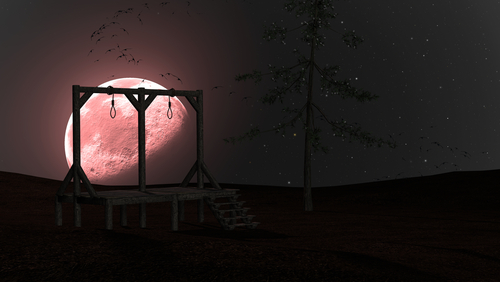
He caught Timothy amid the sagebrush several yards from the gallows and tackled him around the waist. They tumbled together onto the ground. “No, Tim, don’t look – ” What he meant to say was lost as the corpse turned on its rope; its frozen eyeballs stared into his soul.

My comments: I think this first page shows that the writer has a nice ear for dialogue. The conversation between the man and boy flowed easily. There are some other craft-related issues that need to addressed, in order to make this scene stronger.

Get important information across early

I sense that this writer has a strong vision of the story’s characters and setting, but the first paragraph needs to provide more information to convey that vision to the reader. In the absence of clues, readers start making their own assumptions. It’s easy for them to wander off track. For example, I didn’t realize until the second paragraph that the story is set in the western past. By then, I had already formed a vision of a much more modern setting. It’s jarring to the reader to have to backtrack after making a wrong assumption.

Don’t over-withhold information in an effort to build suspense

The first paragraph in this story makes a reference to “the night’s work,” followed up by several more deliberately vague references to “it”. We don’t learn what “it” is until the very end of the page, however. Too much information is withheld for too long, potentially frustrating the reader or causing him to lose interest. The first paragraph might be stronger if it contained a hint or reference to the gallows. For example, instead of repeating the use of a vague pronoun in the following sentence:

It would not be hidden for long…”

It might be more dramatic if Dan spotted the silhouette of the dark, swinging mass (the corpse) emerging against the night sky. Just a hint, enough to give the reader some sense of the terrible sight that he’s trying to keep the boy from seeing.

Avoid confusing transitions between dialogue and action

By the time I encountered the following paragraph:

“What in hell—?” Breaking into a run, Timothy veered off the boardwalk, broke into a run uphill.

I still didn’t know what it was that Timothy had seen and was reacting to. By the time I got to the payoff at the very end of the scene–the sight of the gallows and hanging corpse–I was feeling confused and somewhat frustrated as a reader. This confusion can be avoided by providing the reader with enough information earlier in the scene, to keep him oriented and engaged in the story.

Your thoughts?

Please add your notes and suggestions in the Comments. And thanks to our brave writer for submitting this first page!

#1 Rule of First Drafts

My friend and fellow ITW member Tosca Lee returns to TKZ to share her #1 Rule of First Drafts. Enjoy!
Joe Moore
___________________

I’m a second or third draft writer. That’s the point in the process when I get to see what kind of clay I’ve really got on the wheel, when I can crimp the edges and pull out my high points, and make the dire ones worse. When I’ll stay up twenty hours straight and, after imagejust enough sleep to make me more tired, go at it again. Because by then I have something to work with. But that first, initial draft? Pull my fingernails out from the beds with pliers, why don’t you.

I have friends who turn on their playlists and lay down first drafts in a state of euphoric bliss—the weird literary equivalent of women who experience pleasure in childbirth. I have never written like that. I have moments of stream-of-conscious ecstasy that churn out sentences as coherent as word salad. But most of the time I sit in silence, stare out the window, pick at my lower lip and wonder if my last book, which may have won some award, was the last good thing I had in me.

Eight novels in (ten, if you count the unpublishable ones), I have an instinct about the basic material I need to get down, more or less in order. More importantly, I have trust in the writing and editing process and faith that I can patch up the leaks—later.

For now, in the early stages, I’m only interested in one thing: getting the clay on the wheel. I trust that there are seeds in there—of things real, from me, that will resonate in another soul in months and years to come. I don’t know what they are yet and it’s not my business to force them into shape.

I have a few rules for this process but the first is the one I go back to every time, and it is this:

Write like no one will ever read it.

“But what about the audience? You have to think about them!” Forget them. Everything you do from your edits on will be about them. But for now, write with the candor you would in a secret journal. This isn’t about pantsing or plotting. It’s about capturing the grit you need without worrying that it’s pretty or eloquent or clean enough. Don’t be pretty. Be raw.

If you are an aspiring writer whose end goal is to be published, let me tell you something: you will never be as bold and daring as you are in those first years before your work gets published. Before critics post public reviews of your work and readers rank it alongside blenders on Amazon. Before even accolades usher their own kind of doubt into the next endeavor. This undiscovered period in your life is an advantage you won’t have twice. Use it.

These days, I have to trick myself into following this rule. I know my agent, editor, and a movie producer are waiting for my first draft. I want them to like it. Oh, who am I kidding—I want them to tell me it’s the best thing they’ve ever read, that they wept, told their therapist, and pre-ordered 100 copies for friends and distant acquaintances.

But the only way I will touch one cell of their soul is if I banish their faces from my mind. No one will read this. It is my mantra. This is me, writing secret stuff, dealing some audacious literary badassery in private. Time to edit, censor, and make coherent later. The good stuff happens now.

TL1Tosca Lee is the award-winning, New York Times bestselling author of ISCARIOT; THE LEGEND OF SHEBA; DEMON: A MEMOIR; HAVAH: THE STORY OF EVE; and the Books of Mortals series with New York Times bestseller Ted Dekker (FORBIDDEN, MORTAL and SOVEREIGN).

Tosca received her B.A. in English and International Relations from Smith College in Northampton, Massachusetts with studies at Oxford University. She is a lifelong world adventure traveler and makes her home in the Midwest. To learn more about Tosca, visit www.toscalee.com.