
 Let’s imagine that one day in the not-so-distant future, someone writes a definitive biography about your life. What would be a good title for your biography?
Moments In A Writer’s Life, Portrayed By Animals
By Kathryn Lilley
Note: I’m filling in today for my esteemed colleague Elaine Viets, who is on tour with her newest book, THE ART OF MURDER.
A Writer’s Life, As Shown By Animals
How a writer reacts whenever someone says, “I’d like to become a writer, but I don’t have time.”

How a writer feels after finishing Draft Five, just before starting Draft Six.
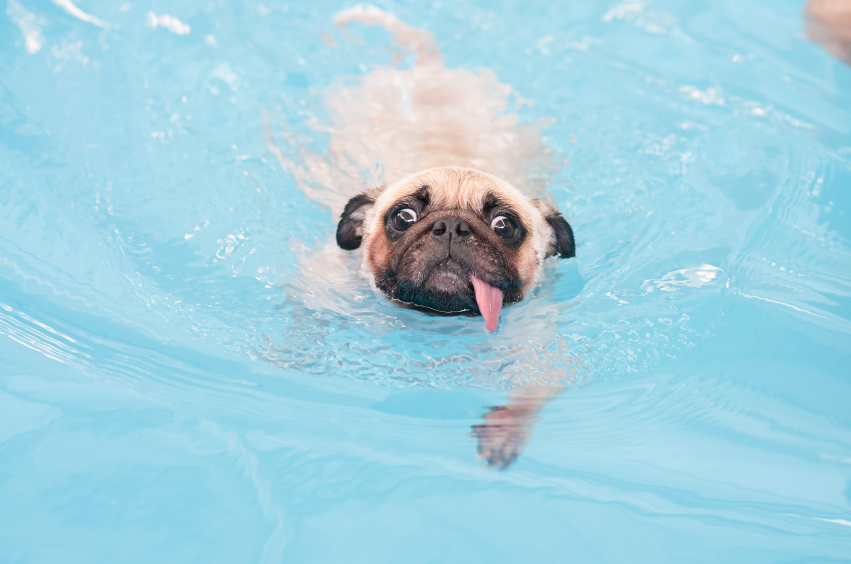
When a writer asks a friend to read his manuscript, with strict instructions to GIVE HIM HIS HONEST REACTION.

How the friend reacts to the manuscript (officially).
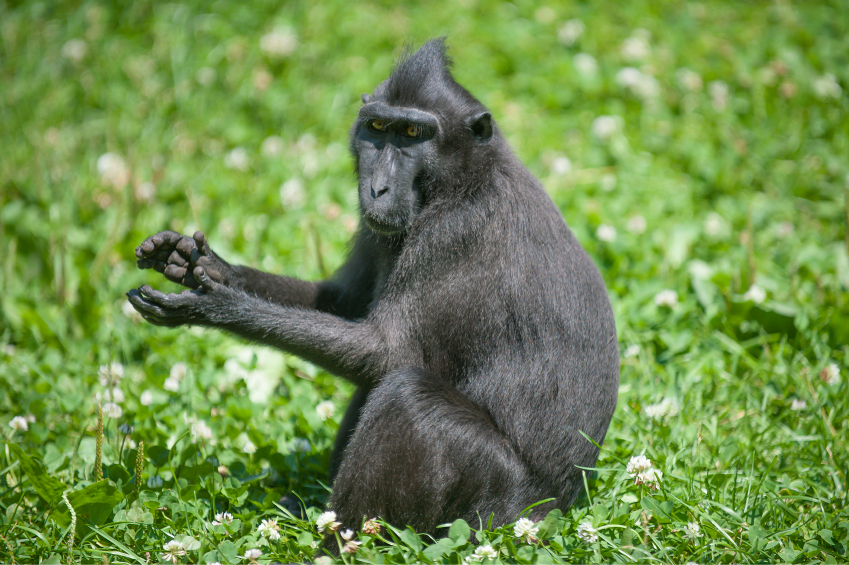
How the friend reacts to the manuscript (unofficially).

When a writer thinks, “F*ck it. I’ll just upload my (unedited, unagented) manuscript to Amazon as an e-book, and see what happens.”

“What happens” after the writer’s story is uploaded to Amazon.
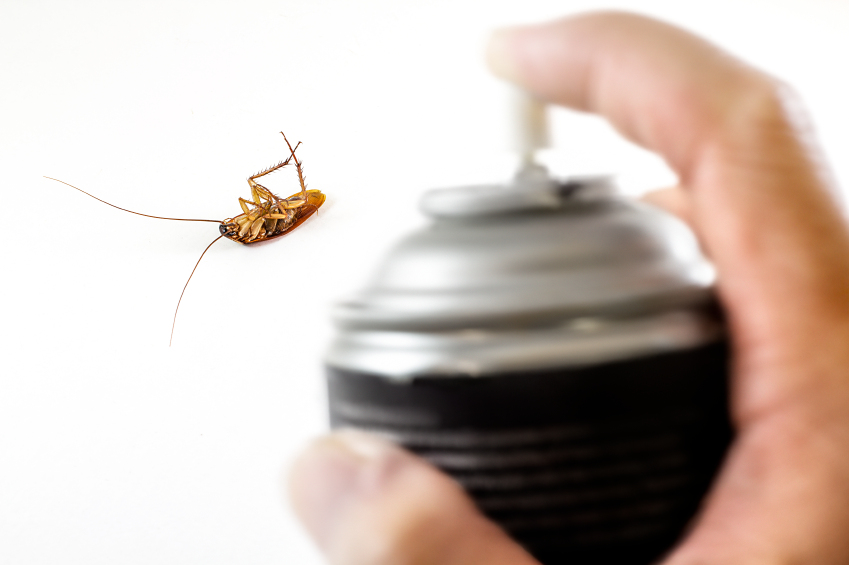
How a writer deals with rejection.

When a writer puts Story #1 into a drawer and starts Story #2 (with a newfound focus on the importance of learning craft).
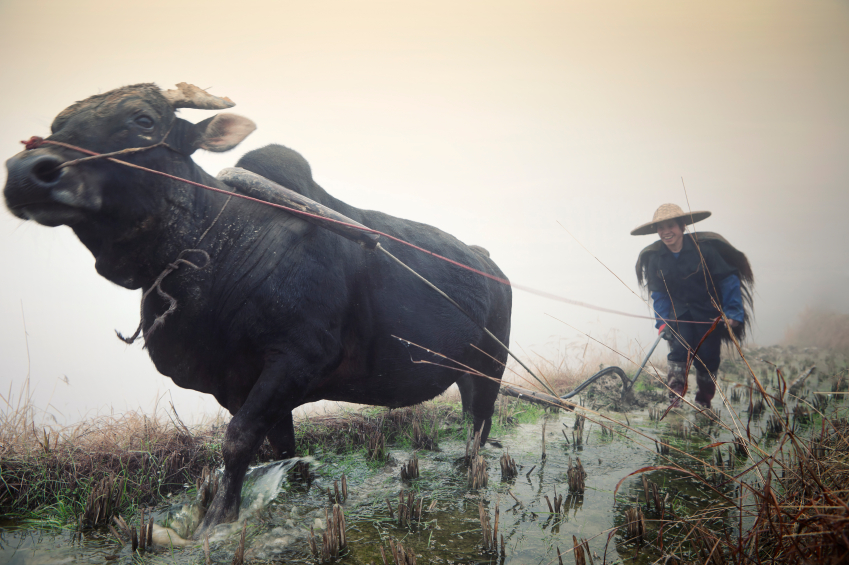
How a writer feels after he signs a contract with an agent/publisher.

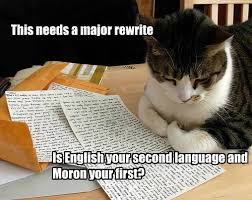
When a writer receives the first round of notes from her new editor.
When a writer figures out her hourly income, after getting her advance and doing the math.

As a writer, are you familiar with any of these “writer moments”? Which animal captures a recent moment of yours?
Lisa Black On Writing
Today I welcome back to TKZ my friend and fellow ITW member, Lisa Black. I’ve asked Lisa to share her writing techniques with us. Enjoy! – Joe Moore
————————————–
 I don’t know why we never get tired of hearing about another author’s writing habits, whether we’re looking for that one trick that will make our lives so much easier, or if it’s the voyeuristic thrill of seeing how someone else washes their dishes or packs their suitcase (“You do what? Seriously?”)
At any rate, here is mine:
I am a plotter, not a pantser, so before I start writing at all I have to know how the book begins, how it ends, and the major incidents which will take place. These points begin as amorphous thoughts rattling around in my skull for a day or a few years or a lifetime. I write a series, thus my character tends to be the same—a female forensic scientist in Cleveland, Ohio—so the rest of the book might stem from a new character, a puzzle, an incident or, in one case, simply a snarky comment I wanted my character to make. Most often I start with a building, something visual and brooding and a little intimidating—a skyscraper under construction, a wind-swept observation deck, the opulent and historic Federal Reserve building.
Then a theme: what am I going to be talking about? What new world is my character going to explore? I’ll research, looking for ideas, and come up with things I want to have happen. Then I have to think of links that tie those things together, what carries my character from one to the next.
Eventually I’ll have enough for an outline. It won’t look like an outline, more like a freestyle poem.
This happens
Then this happens
Then this happens and my heroine really doesn’t like it
Then this happens
Etc.
And penciled in between the second and third line will be scribbled addendums such as “oh wait, this happens too.”
Then I’m ready to start writing.
I have always been obsessed with word count, so I set a daily goal—whatever works for you, whether it’s 100 words or 3,000. You’ll feel a sense of accomplishment each day without overtaxing yourself. I’ve done 1,000 words/day, 2,000 words/day 5 days/week, lately I’ve been doing 1000 words/day on the days I work and 2,000 words/day on the days I don’t. I used to write the total down every day so I knew how far I had to write the next day, but for the past few books I’ve made it easy on myself and kept it at a round number. If I write extra on one day, that’s a few less words I have to write on the next. I don’t rewrite until I’m completely done, except for minor fixes or things that I’m afraid I won’t remember if I don’t do them right away. Then I keep going until I have a full length completed first draft, minus vacations and major holidays…I’m not a total slave driver.
(I never take writing on vacation with me. I won’t want to do it, won’t do it, and then feel guilty all week because I’m not doing it. If I don’t take it along, conflict resolved.)
A schedule may not work for you, but unless your system totally rebels, I strongly suggest it. The most important factor is that writing becomes, like death, taxes and aerobics class, not optional. There are authors who write when inspiration strikes, who will then hole themselves up in their room and write for 16 hour days, but they seem to be the minority.
Since I started out writing at (she whispered) work, I’m not fussy about where or when I write. I prefer to write at home when my husband is at work and the house is quiet, but the disadvantage to writing at home is that there are so many opportunities for procrastination—laundry, bill paying, the newspaper, chocolate…. Sometimes it’s better to have laptop and will travel. I have written in restaurants, witness waiting rooms at the courthouse, next to a sleeping hospice patient while the caregiver gets a few hours off, and, of course (she whispered) at work.
When I finish the first draft, I take myself out to lunch and take a few days off before starting the second draft. According to industry wisdom I should put it in a drawer for six months and then rewrite, but who has that kind of time? When that is done I’ll send it to my sisters to read, and then do a third draft before sending it to my agent and biting my nails lest she say “This stinks. Throw it out and write something else.” Which has happened.
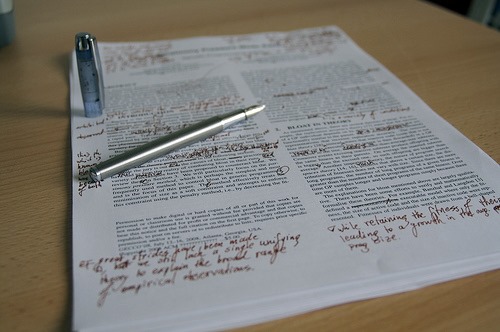 By this point I’m sick to death of the thing and never want to see it again, but have to deal with whatever changes my agent suggests, and then, when I’m really sick of it and provided she doesn’t say ‘throw it out’, I go through the same kind of round with my editor.
When I’m not writing a book, I don’t write—other than personal letters, which I send out constantly and obsessively (my friends and relatives know much more about the minutia of my life than they care to). I don’t write short stories or blog posts or novellas. I wish I did, but my brain just doesn’t work like that. At this moment I haven’t written a thing in nine months and it’s starting to freak me out.
That’s my system. It seems to work for me. If it sounds great to you feel free to adopt it. If it sounds bizarre than keep doing whatever you’re doing. There are as many different writing styles as there are writers.
And that’s a good thing.
 Please share your writing method with us.
Lisa Black has spent over 20 years in forensic science, first at the coroner’s office in Cleveland Ohio and now as a certified latent print examiner and CSI at a Florida police dept. Her books have been translated into 6 languages, one reached the NYT Bestseller’s List and one has been optioned for film and a possible TV series.
Profanity in Crime Fiction:
Reality or Lazy Writing?
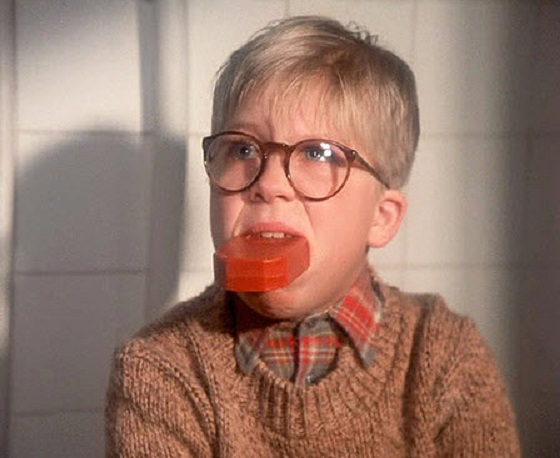
“Good authors, too, who once knew better words / Now only use four-letter words writing prose / Anything goes!” – Cole Porter, 1934
By PJ Parrish
A convenient convergence of events led me to my topic today. And thank you, Calliope, because I had nothing to say until last Friday when I started the latest book by one of my favorite crime writers, and then Saturday, when I got a fan email from a lady in Vassalboro, Maine. And both got me to thinking about dirty words.
I’ll start with the fan email, because that’s easier. Here’s what she wrote to us:
Ladies,
I have been reading your Louis Kincaid books for many years and always look forward to the next one. But about your latest book She’s Not There I have to tell that despite the fact I liked the story, I did not like the fact you felt you had to use so much profanity. You don’t need this to tell your story. I plan to buy your next book but I think this is something you should reconsider.
I’ll get back to us in a second. Now, about that book I just started reading: I was really excited about this because I adore this author and the book had a juicy premise, great setting and interesting flawed hero. But I am now 63 pages in and there is this bad ringing in my ears.
I’m being F-bombed so much I can no longer hear the story.
This makes me sad because I so want this writer to succeed. But I think this writer has made a critical error: In an effort to shrug off a reputation as a solid series practitioner, the writer over-swung for the hard-boiled fence and wiffed. What should be a compelling story of a criminal redeemed is reading like a try-out for “The Wire.”
Okay, back to us. Here’s a personal caveat: All the books my sister and I have written contain profanity. In our hard-boiled PI-police procedural series, we think it’s near impossible to construct a believable world without the language of the streets. But over the course of fourteen books, we have drastically cut down on the profanity. Does this make us angels? Hardly, as the good lady from Maine (and others) have reminded us. But it has made me think really really hard every time I go to type a word in my chapter that here in this blog I would have to bleep out.
And if I am put off by too many F-bombs in a crime novel -– me, a person who has been known to curse like a pirate in real life –- maybe we need to consider what it might be doing to our readers.
Now, I don’t think this some weird church-lady thing. When I started to look into this, I was amazed at how many message boards are out there populated with readers looking for fiction without profanity – on such disparate sites as the crime blog The Rap Sheet to the Provo Utah City Library. On GoodReads, there’s a long thread called “Is It Clean?” where I sense a real longing for non-cozies without profanity, epitomized by this posting: “Does anyone know of an author that writes like Vince Flynn but without the language?”
These readers are not all fans of cozies or Christian fiction (though many are). Many, like the Vince Flynn fan, are looking for more realistic stories without gratuitous profanity. John Sandford’s fans evidently have complained to the point that his son, Roswell Camp, was compelled to statistically document (on his own website) a book-by-book decrease in the profanity in his father’s books.
There are different reasons why readers dislike profanity in their fiction. It can colored by religious conviction, personal morals or just plain old taste. Authors are guided by the same impulses. Mark Henshaw, a Mormon crime writer, wrote a blog “Why I Don’t Use Profanity,” saying, “My short answer to the question is: because my mother reads my books. My long answer is a bit more involved.”
Writers of romances, cozies or “traditional” mysteries (sorry for the clumsy labels!), are sometimes under guidelines for market targeting. For the Mystery Writers of America’s Mary Higgins Clark Award, the definition is there in the submission guide lines: “The book most closely written in the Mary Higgins Clark Tradition (my italtics) according to guidelines set forth by Mary Higgins Clark.” It goes on to list several criteria, the last one being, “The story has no strong four-letter words or explicit sex scenes.”
The Agatha Awards, given out by Malice Domestic, specify that the awards “honor the “traditional mystery….that is to say, books best typified by the works of Agatha Christie as well as others. For our purposes, the genre is loosely defined as mysteries that contain no explicit sex, no excessive gore or gratuitous violence.” No mention of cussing there, but I have seen blogs taking the awards to tasks for honoring books that contain profanity.
And then there’s the whole Pandora’s box of YA and Juvenile fiction, something I know nothing about, except that I have heard that the genres are evolving fast.
In a 2012 analysis of best-selling teen novels, researchers from Brigham Young University reported that kids encounter about seven instances of profanity per hour — and those characters with the dirtiest mouths are often the richest, most popular and best-looking.
They analyzed profanity in 40 teen novels on the New York Times’ best-seller list of children’s books targeting children age 9 or older. Some books were especially gritty. The novel Tweak clocks in with 500 profanities, including 139 F-words. There were 50 F-bombs in Gossip Girl, and 27 in the novel Tempted. The novels with the foulest language were typically aimed at kids 14 and up. Said one researcher, “I had no clue there would be that type of content in those books. If they were made into movies, they would easily be rated R, and parents have no clue.”
What about the rest of us? Where is the line for us and when can we cross it? And what exactly is profanity? We can maybe toss in a “God, that hurts.” And maybe a bitch or bastard or “damn, that’s good!” But beyond that, things get murky.
I tried to think of current harder-boiled writers I have read that don’t have profanity or use so little that I miss it. My short list includes John Grisham, Dean Koontz (gory yes but blue no), and Sue Grafton. This is what passes for cussing in a Grafton’s K Is For Killer:
I drank my beer, heart thumping. I heard her exclaim of surprise. “Look at this. Gaaaaaaad…” She dragged the profanity out into three musical notes as she scooped up her belongings.
I seem to remember Robert B. Parker’s books being pretty tame. Yet when Ace Atkins took the series over after Parker’s death, one critic, in an otherwise glowing review, suggested some readers might be put off by the saltier language:
Parker used obscenities in his books the way Spielberg used the color red in “Jaws”: when you saw it, it was blood and it was designed to elicit a visceral reaction. So, too, did Parker use curse words in his books. They were there, no doubt, he certainly wasn’t a prude. But they were only there when needed. Atkins meanwhile laces the four letter words in and out of the dialogue with a kind of reckless abandon.
Then there’s Lee Child. In an interview with Ali Karim at Shots e-zine, Child talked about why he never uses any profanity:
Although personally I always have used profanity in my speech, for some very subconscious reason, I just could not write it down on the page. I really couldn’t and I also then realized that it’s impossible to capture speech realistically unless you are prepared to fill up the page with four letter words – which is actually how highly stressed people speak. So I thought were into artifice here anyway, so let’s go the whole hog and make highly stressed, tough-guy speech with no four-letter words and see if it’s possible and I think it comes across as convincing. There are a certain number of people who are grateful that there are no four-letter words, and I have never heard from anybody who misses them and wishes I’d put them in.
Now, I could have sworn Jack Reacher swore. But I guess I am wrong. Lee Child might be dropping dirty bombs but no F-bombs. And Child is making an important point here, not just about profanity, but about how to write great dialogue. In crime fiction, foul language is justified on the ground that it is lifelike. But dialogue is NOT a mimicking of real speech; it is a sleight of hand (or ear) that gives the impression of humans talking within the shape of story. As Child says, in real life highly stressed people WOULD cuss a blue streak. But on the written page, that quickly grows tiring and trite, and stinks of a writer trying too hard.
So, where do I come down on this? Somewhere in the middle. I still believe it is a necessary element for the style I have chosen but every time I feel the urge to let loose with a stream of blue, I do one of three things:
Show Don’t Tell. Rather than putting a cuss word in a character’s mouth, I try to find a way to convey the attitude through action. Yeah, it’s harder but often more effective.
Fudge It. “Goddammit” is pretty strong stuff. A simple “damn” will do ya. Likewise, you can get around some words with substitutes, especially if the mood isn’t exactly boiling, like when a crusty old cop is joking around about a “f-ing dirtball.” JK Rowlings uses “effing” in Harry Potter books. And “friggin'” is a good stand-in for the f-bomb, although you should be aware that there is a a really filthy Sex Pistols song called “Friggin in the Riggin.”
Leave It Out. As Lee Child said, if you over-use profanity, it can dilute its power and it can make you, the writer, look inauthentic, and do you really want to be a poor man’s Pelecanos? One or two well-placed cuss words can be the spice you need at the prime moment you need it. Remember Rhett Butler’s exit line in Gone With the Wind: “Frankly, my dear, I don’t give a damn.” Why do you think the American Film Institute ranks it No. 1 movie quotation of all time? Because it’s the only profane word in the movie and boy, what a punch it packed.
But…
Sometimes, you just gotta friggin’ use it.
So, yes, I use profanity in my books and will continue to do so. No, I don’t use as much as I use to and it isn’t because I’m afraid of offending someone. Sorry, dear reader, in Vassalboro, Maine, but it’s true. I use profanity with care and caution, because words have power. And finding the right word at just the right moment is my job.
I’m going to let another writer have the last word on this because she says it best, in my opinion: Take it away, Kathryn Schultz, in your essay “Ode To a Four-Letter Word:”
Do we need…a justification, beyond the one a writer might mount for any word, i.e., that it works? There is, after all, no such thing as an intrinsically bad, boring, or lazy word. There is only how it is deployed, and one of the pleasures of profanity is how diversely you can deploy it. Writers don’t use expletives out of laziness or the puerile desire to shock or because we mislaid the thesaurus. We use them because, sometimes, the four-letter word is the better word—indeed, the best one.
Hidden Gems
by Clare Langley-Hawthorne
I just got back from London late last week, and, as always, I loved exploring the city and discovering hidden gems – places or items that I find provide unexpected insight or inspiration for my writing. That’s partly why I love traveling for research as well as fun (book research is, after all, always fun for me!) – I get to immerse myself for a brief time in the sights and smells of a place I hope to bring to life in my books. This time, I had no specific research needs and was busy showing my mother-in-law the sights, but nonetheless those hidden gems were still there to be discovered.
The first of these came on our trip to Kew Gardens when we discovered Kew Palace (which hitherto I hadn’t visited). Inside I discovered a little Georgian gem which unexpectedly fed into my current middle grade WIP. There was a hidden staircase for the servants to enter and leave rooms without bothering their occupants, mourning heraldry to be displayed in the event of a death in the family and a meal laid out representing one of the last meals George III ate (I always love learning more about food!). There was also a wonderful physic garden with some interesting medicinal herbs that I will be able to incorporate into the book as well.
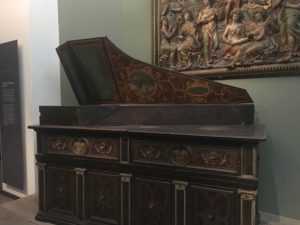
The next few gems were found during a visit to the lovely V&A museum when I discovered an illustrated herbal book that had been digitized and open to the very h erb I was using in another WIP of mine (references to which are found in Greek mythology). I then also discovered an instrument called a claviorgan decorated with the story of Orpheus – an instrument that could slip in nicely to a chapter in this same WIP. I was probably way too excited about these two finds that any normal tourist would be!
 By the time we travelled to Bath I was ready for the next few gems, including a reference to a potential character in the Bath abbey and a visit to a charming town in the Cotswolds that had a small medieval church and graveyard that could totally be used in a future book.
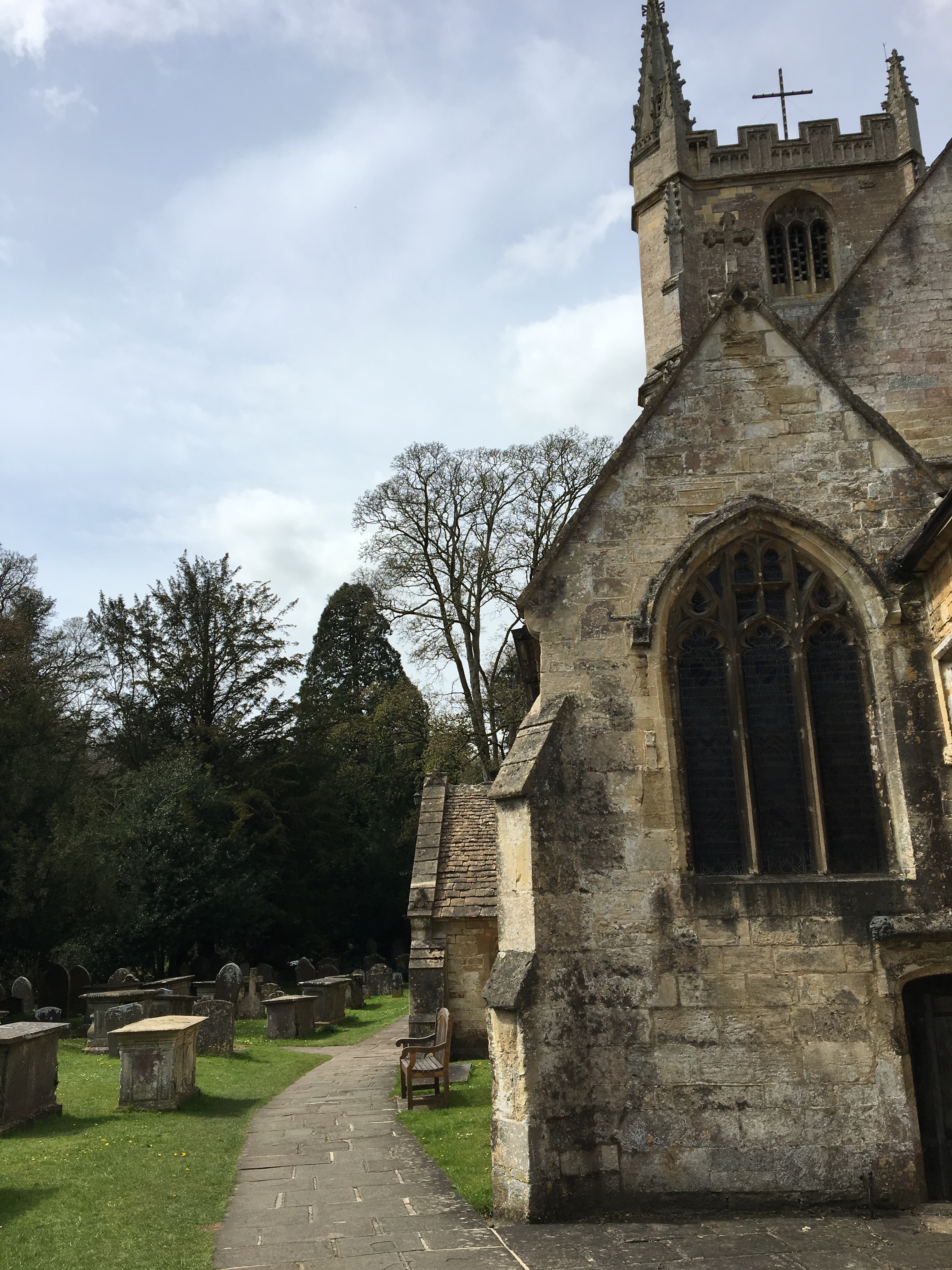
You can obviously tell how much I love deriving inspiration from places I’ve been and the hidden gems I discover are always unexpected and exciting. Sometimes they even spark brand new novel ideas (now just to find the time to write them…).
So TKZers what hidden gems have you discovered on your travels that helped inspire your work?
Writers and Competition
by James Scott Bell
@jamesscottbell
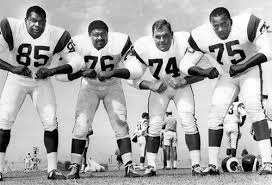
The Fearsome Foursome
Being an L.A. boy, I grew up rooting for the Los Angeles Rams.
Roman Gabriel, quarterback. The greatest defensive line in football history, the “Fearsome Foursome” – Lamar Lundy, Rosy Grier, Merlin Olson, Deacon Jones. Coach George Allen. Defensive end Jack Youngblood.
Jack Snow. Eric Dickerson. Hacksaw Reynolds. Fred Dryer.
Heck, even Joe Namath for three games before his knees gave out for good.
Yes, there was another pro team that showed up in L.A. And even though they had my man Marcus Allen, it was hard to adopt them. Although I did meet Al Davis once. He showed me his Super Bowl ring. It was as big as a Volkswagen.
But then, in 1995, the Rams skipped town and parked themselves in St. Louis.
I gradually lost my rooting interest in the team.
But now, now! The Rams are back home (yeah, I know, Cleveland fans, the Rams started out in your fair city. But cheer up. You have the Browns!)
And in the recently concluded NFL draft, the Rams made a bold move, trading away a whole bunch to get the #1 pick. They used it to snag, it is hoped, their franchise quarterback,––one Jared Goff of the University of California, Berkeley.
Now the question is, will Goff be the guy? Or will he be a bust? Or something in between? I’m pulling for him all the way, and initial reports on his leadership and work ethic are good.
But what caught my eye, and leads me to today’s post, is what one of his Cal teammates said about him.
Zach Kline is a senior at Cal, the quarterback who watched Goff from the bench. Here’s what he had to say about Goff but, more importantly, about himself:
“I knew as soon as we were competing … he was a great player. Like, look at him. He’s No. 1 for a reason. There are few guys that are ready to play their freshman year. … Competing with Jared is probably the most beneficial thing that’s ever happened to me in my career. He made me kind of assess my play and all that. Because I know I’m a good player, and to be able to compete with him, it helps you and encourages you. When you play with good guys, you raise your game.”
That makes me like Zach Kline (which I will continue to do except when Cal plays USC). Because Kline demonstrates the heart of a champion. You don’t look at your competition and fold; you let competition push you to get better.
Writers need to hear that. Because it’s quite easy for our ilk to fall into the pit of envy. You see someone from your critique group get a big contract. Or somebody you’ve met at a conference going indie and making crazy sales. You know you’re good, maybe you think you’re better than that person who just hit the jackpot. Envy may sneak up on you and grab the back of your brain. Ann Lamott talks about this in Bird by Bird:
If you continue to write, you are probably going to have to deal with [envy] because some wonderful, dazzling successes are going to happen for some of the most awful, angry, undeserving writers you know—people who are, in other words, not you. You are going to feel awful beyond words. you are going to have a number of days in a row where you hate everyone and don’t believe in anything . . . If you do know the author whose turn it is, he or she will inevitably say that it will be your turn next, which is what the bride always says to you at each successive wedding, while you grow older and more decayed . . . It can wreak just the tiniest bit of havoc with your self-esteem to find that you are hoping for small bad things to happen to this friend—for, say, her head to blow up.
Don’t wish for heads to blow up. Up your own game instead.
The crucial thing is not to compare yourself to another writer, but to see what they do well and try to do the same with your own writing.
Elmore Leonard was a master of dialogue. You read his dialogue and you’re like a second-row cellist listening to Yo-Yo Ma. You give him is due. You nod in appreciation. Then you dig into your own technique and figure out how to improve it.
And how do you do that?
By self-study.
- Focus on the area you want to study, one of the seven critical success factors of fiction: plot, structure, characters, scenes, dialogue, voice and meaning.
- Select from your collection of writing books (What? You don’t have a collection of writing books, highlighted? Start collecting!) those that have chapters dealing with the area in question.
- Select from your favorite novels those that do well what you’re studying.
- Schedule concentrated study time for six weeks.
- Read and study, writing practice pages doing that thing. Many writers of old used to copy, word for word, examples they admired. It gets the technique into your head.
- Look at your WIP. Find places to improve, based on what you’ve learned.
- Measure your progress against your own standard. That’s your real competition – you.
- Go back to Step 1.
And that’s what a writer should do about competition.
What are you doing to up your game?
Oh, and one more thing: Go Rams!

Inspiratus Interruptus
I have a home office. I love it. There’s no commute. I can get a couple of hours of work in while most people are still asleep. I have a secretary named “Joe,” a gofer named “Joe,” and a personal manservant named “Joe” who makes me coffee and breakfast and lunch. What a team we are. We all get along just fine. I don’t have anyone hassling me about “Rrrrr, rrrr, rrrr, your billable hours are down, rrrr rrrr rrr, what about rrrr, rrrr, and why are you on the internet again, rrrr?” Yep, it’s a sweet deal. I can do my big boy job, write a bit, do my big boy job, lather, rinse, repeat.
The only problem I have (for purposes of this discussion) is having to deal with non-work, non-personal interruptions. I have my office line and my home line in the same room. I have been getting a lot of calls on my home line because I will be turning 65 in a few short months. Yes, I know, I know, you wouldn’t expect someone of my countenance, libido, and good cheer to be that old but it is so. Here is a warning: when you are about to turn 65, everyone starts calling you to 1) tell you what’s what about Medicare and 2) sell you the exact policy that you need. I began acquiring all sorts of new imaginary friends, such as “Medigo,” “WhatsMedicare,” “Medsuppins,” “Marketplace,” and the alluring, mysterious “Name Not Found.” Ignoring them didn’t help because the phone would ring four times before sending the call to voicemail. That’s a distraction, even when you are screening your calls. And we haven’t even talked about the fine folks from the help desk at Windows Security who have detected a ‘wiwus” on my computer, or the guy who is willing to give me a free vacation if I’ll just watch a short demonstration video, or the woman who keeps calling me to ask if I’m interested in my cable company’s latest product. Uh huh. The “do not call” list?” It’s pretty much a joke. Muting the ring isn’t an option for me, either, as I have a daughter in college and a granddaughter in grade school, both of whom need me at unexpected times.
My life was changed for the better, however, when I came across an article in a newsletter from the Community Senior Center which my wife belongs to (and, no, I’m not a member. That stuff is for old people). The article touted a gentleman by the name of Aaron Foss, the designer of a called “NoMoRoBo.” Foss is GIVING this thing away. No strings, no deposits, no nothing. It’s a true public service. What it does is block robo calls — those things that dial five thousand numbers at a time — and telemarketers. You go to the “nomorobo” website, watch the very short video, click on “get started now” button, fill in the blanks, and within a day or so you’ll see results. Your phone rings once, gives a little purr, and “pfttt”…the annoying caller doesn’t even have a chance to leave a voicemail. They are gone. “Nomorobo” doesn’t work with every landline phone service, or every cell phone service provider, but it works with mine, and they’re adding more and more constantly. Oh. Oh. And. It supposedly will not block or divert political fundraisers or surveys, but I’ve had several blocked already (“Poll_Quest,” to name but one). “Nomorobo” constantly learns new numbers to block and you don’t have to do a thing, other than write your next bestseller without interruption (other than for that initial ring). And every time the phone rings once and disconnects during dinner, my wife and I look at each other, and smile.
Authors, readers, doctors (Hi Steve!) and all who fight the good fight on all fronts each day: try this out. I have absolutely no interest in this, financial or otherwise. It is free and it does work and no one puts your name or number on a mailing list, either. And Aaron Foss? I’d stand in front of a tank for him.
Having shared this marvelous invention with you, I want something in return (Aaron Foss, I am not). Please tell us: what devices do you use to give yourself privacy, and to keep yourself from being interrupted? And what is your favorite personal story that concerns dealing with telemarketers, solicitors, and the like?
Reader Friday: Best Book To Take Into Outer Space?

Amazon Marketing Services Coming May 1 – Thoughts?

Amazon Marketing Services (AMS) will launch May 1, 2016. What does this mean to you, authors? As an Advantage or CreateSpace publisher, you can sign up for AMS for an annual fee of $99.00. Word of caution, from what I’ve seen of the sign-up instructions, this is for Kindle Select books only. The annual fee is charged against your account as a deduction from your sales. No Paypal or credit card charge up front. Once you become a “member” of AMS, you gain access to marketing programs reserved for Amazon’s biggest vendors. Feel empowered yet?
Below are the programs available to members:
Advertising on Keywords/Tags – Pay Per Click
The right keywords and tags can help you with discoverability on your titles at Amazon while setting your own budget allowance for promotion. Popular keywords, phrases, and tags on a book can generate momentum on search pages to get a title noticed. You’d only pay when a reader clicks on your book ad. According to Amazon, a click budget can be as low at $100.00, capping off your cost at your option.
Enhanced “A+” Detail Pages
Sometimes bling is the thing to showcase a book. Amazon offers enticing content for an author’s book page for $600, such as videos, sample page shots, photos and other creative promotion ideas. The deluxe page content also features advanced formatting and rich media content to tease the readers to buy.
Price Discounts
This is a really great idea. Amazon now offers vendor-provided coupon links (offered on the product detail page) to give readers/customers immediate discounts off the Amazon sales price. This will allow you to offer true sales campaigns and promotions during a peak period, in a more nimble way than ever before. You can drive sales during a virtual tour event or for a given weekend or launch period with ease.
Dashboard Sales Analytics
Want to evaluate your promotion effectiveness with REAL sales data? Now you can with AMS. If you’d like to evaluate one campaign service provider or a blog tour or advertising on Facebook for example, now you can if you isolate the event and analyze the effectiveness through analytics offered on the AMS dashboard. You’ll be able to analyze your return on investment down to the title and event to fine tune your marketing strategies with real sales data.
Vine Reviews
Chasing reviews can be a challenge if you want exposure and honest reviews. The cost for promotion service providers to solicit readers for an honest review can take time to scrutinize the potential reader and the cost for such a service can vary. Amazon had its established Vine Reviewers program of pre-approved reviewers. This is a costly service, priced at $1500.00, but it allows you to access the entire Vine Reviewer list without taking the time to approach them one at a time. If you invest in this service, AMS handles the details.
How to sign up for AMS?
If you’re curious about this new Amazon program, here is the link for AMS – https://ams.amazon.com/ I have to admit that I thought this would be for ANY KDP author. That’s how it is presented under the instructions as you set up, but when you drill down into the instructions on page 2, it appears these services are only for Kindle Select books.
Or you can do what I tried to do, which is set up my corporation (or my publishing company name) under the Amazon Advantage program at this LINK. (I thought I could set up as a vendor.) But alas, I could not set up under the Advantage program as a vendor under my company name OR my brand name (author name). On the surface it would appear Amazon is forcing authors into their KDP SELECT program to become a member of AMS. If anyone knows any differently, or had another approach and was successful, please let me know.
I’ve read that if your book has an ISBN and you’re signed up through Createspace, this might get you into AMS, but after I explored Createspace, I did not find a way into AMS this way either.
Here’s link to an Amazon brochure on “Drive Sales with Amazon Marketing Services.”
Here is a FAQ link.
For Discussion:
1.) What do you think of the tools AMS makes available to all authors? Which service are you most interested in?
2.) Is anyone a member already? Have you encountered any problems?
3.) What do you think of the exclusivity of having this program only available to Kindle Select, meaning your book will only be sold on Amazon for a time under those rules?
HOW TO WRITE A BESTSELLING NOVEL!
I’ll say this right up front:
The title of this post is complete nonsense
I could have used similar words on the cover of my book on craft to attract those who believe there’s some secret ingredient to bestselling fiction, but I didn’t.
Why?
Because, first, I like to think I have a little integrity. And second, the truth is, nobody can tell you how to write a bestseller.
Nobody.
I don’t care if they’ve sold a gazillion books themselves, there is no person on this planet who can tell you how to write something that will rocket to the bestseller lists.
Not even the big New York publishers know how to get their books on the bestseller lists. If they did, every book they published would be there.
I decided to write this post because I was searching the Internet one day and stumbled across a writer’s website that had an article with a title very similar to the one above. So I took a look at the post and, yes, the author had included some good advice, but none of it really had anything to do with writing a bestseller. He had simply used that word to get your eyes on the page.
So I used the same trick here to make a point.
And I’ll bet your adrenalin rose just a little when you saw it, right?
But here’s the thing…
EVERYONE WANTS TO WRITE A BESTSELLER,
BUT MOST AUTHORS NEVER WILL
Because it’s completely out of your control.
If you sit down to write a “bestseller,” you are taking a wrong-headed approach to writing. Writing great fiction has nothing to do with writing bestsellers. Bestsellers are, by and large, flukes. Right place, right time. And not all bestsellers are created equal.
I can name a dozen of my friends who do everything right and should be on the bestseller lists, and authors who are and don’t belong there.
When I wrote Trial Junkies, I just wanted to write a great book. I had no idea it would go on to be an indie bestseller. Sure, it was something I hoped for, but I certainly wasn’t rubbing my hands together in anticipation of mega-sales. I just wrote the book I wanted to read and decided to let fate take care of the rest.
So don’t put all your energy into trying to write a bestseller. You should simply write the best book you can possibly write. A book you’re so excited about that you don’t care if you ever make a dime off of it.
I spent many years writing stuff that I knew would never sell. In fact, I didn’t even try to sell it, because I knew it wasn’t good enough. But I kept at it for several years. I wrote story fragments and screenplays and teleplays and partial novels and while I knew what I was producing was not quite there yet, I also knew, with great certainty, that it would be one day.
Sure, I had dreams of being Stephen King or Dean Koontz. We all do. But the reality is that most writers never make it to the lists, yet they still manage to have wonderful careers.
Should you forget about your dreams?
No. Sometimes they’re all you have.
But any thoughts of bestsellerdom should be relegated to the back part of the brain. You have a story to write. And that’s all you should be thinking about.
If you publish it and it manages to reach one of the bestseller lists, that’s just gravy.
So there is no How to write a bestseller.
And don’t ever be fooled by anyone who claims to know the secret. That particular brand of fairy dust just doesn’t exist.