You Know You Want It…
It’s the Bad Sex in Fiction Awards!

By PJ Parrish

You’ve been waiting for it all year with bated breath. Your pulse rises every time you think about it. Some of you, oh faithful TKZ regulars, have even been emailing me begging to know when I was going to post my one annual post you can’t live without.

issue-449-dec-2016-600x800

Yes, friends, just in time for Christmas, wrapped up here in a big blue-language bow, is THE LITERARY REVIEW’S BAD SEX IN FICTION AWARDS!

This is the 24th year the Literary Review has honored an author who has written the most “outstandingly bad scene of sexual description in an otherwise good novel.” Past winners have included Norman Mailer, David Guterson, and Thomas Wolfe and the nominees pretty much include every big literary name you’ve heard of. I like presenting this every December because, if nothing else, it makes us mere mortal writers understand that when it comes to sex, we’re all human — or, in one case this year, maybe bovine. The award was announced at a lavish ceremony Nov. 30 at the In & Out Club in London. No, I did not make up the name of that club. It is a distinguished private gathering place for members of the British armed forces.

But let’s get on with it, what say?

Here are the finalists first, so we can work ourselves up into a good lather waiting for the winner. And don’t write blaming me for any of this. I’m just the messenger here. I stopped trying to write sex scenes decades ago.
gas

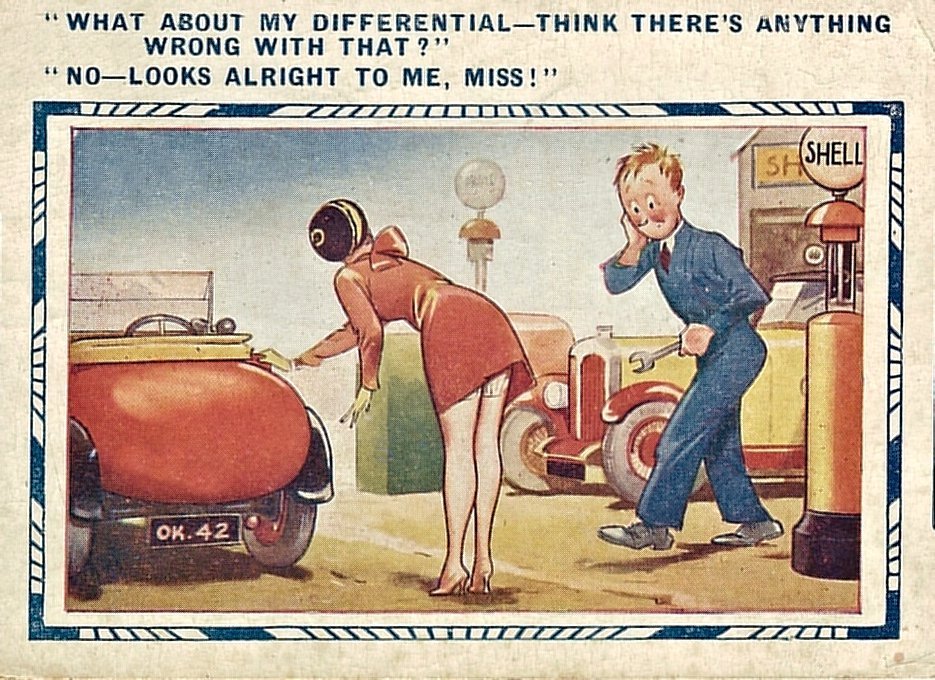
But  a loose ball bearing was his downfall…

A Doubter’s Almanac by Ethan Canin
As she talked Andret would make gentle, two-fingered tugs all the way around the hem of her dress to expose the lacy parts of her undersuit, like a child pulling candles from the rim of a birthday cake. Then he would begin kissing the frills. This she found beguiling. During sex she would quiet, moving suddenly on top of him like a lion over its prey. Her eyes stayed wide, Andret liked to keep his own closed; but whenever he opened them, there she would be, staring down at him, her black pupils gyroscopically inert. Again: leonine. He couldn’t help thinking that her gaze, even as she bent over him and strained her shoulders like a collared beast, was in fact an indictment.

The act itself was fervent. Like a brisk tennis game or a summer track meet, something performed in daylight between competitors. The cheap mattress bounced. She liked to do it more than once, and he was usually able to comply. Bourbon was his gasoline.

age-of-cigar-box-label-beach-mercuria

Is that a cigar rack in your back or are you just glad to see me?

The Tobacconist by Robert Seethaler

She looked him in the eyes, and, very slowly, brought her face up close to his, and when he felt her breath on his mouth and saw the delicate trembling of her puckered top lip, a shudder of joy passed through him with such force that he would almost certainly have fallen backwards into the cigar rack if Anezka hadn’t caught him at the last moment and pressed him firmly against her body. He closed his eyes and heard himself make a gurgling sound. And as his trousers slipped down his legs all the burdens of his life to date seemed to fall away from him; he tipped back his head and faced up into the darkness beneath the ceiling, and for one blessed moment he felt as if he could understand the things of this world in all their immeasurable beauty. How strange they are, he thought, life and all of these things. Then he felt Anezka slide down before him to the floor, felt her hands grab his naked buttocks and draw him to her. ‘Come, sonny boy!’ he heard her whisper, and with a smile he let go.

sawing-logs-on-the-airport-floor-podolux-flickr

I could have lasted longer if we hadn’t used TSA Pre-Check.

Men Like Air by Tom Connolly
The walkway to the terminal was all carpet, no oxygen. Dilly bundled Finn into the first restroom on offer, locked the cubicle door and pulled at his leather belt. ‘You’re beautiful,’ she told him, going down on to her haunches and unzipping him. He watched her passport rise gradually out of the back pocket of her jeans in time with the rhythmic bobbing of her buttocks as she sucked him. He arched over her back and took hold of the passport before it landed on the pimpled floor. Despite the immediate circumstances, human nature obliged him to take a look at her passport photo.

cows

Cow-A-Bung-Her!

The Butcher’s Hook by Janet Ellis
I slide my hands down his back, all along his spine, rutted with bone like mud ridges in a dry field, to the audacious swell below. His finger is inside me, his thumb circling, and I spill like grain from a bucket. He is panting, still running his race. I laugh at the incongruous size of him, sticking to his stomach and escaping from the springing hair below. All the while, we stifle our noise and whisper like a church congregation during the sermon. He pinches my lips when I yelp, I shove my fingers in his mouth when he opens it to howl.

‘Anne,’ he says, stopping and looking down at me. I am pinned like wet washing with his peg. ‘Till now, I thought the sweetest sound I could ever hear was cows chewing grass. But this is better.’ He sways and we listen to the soft suck at the exact place we meet. Then I move and put all thoughts of livestock out of his head.

how-to-last-longer-in-bed

Like a virgin, knock-knocking for the very first time

Leave Me by Gayle Forman
Once they were in that room, Jason had slammed the door and devoured her with his mouth, his hands, which were everywhere. As if he were ravenous.

And she remembered standing in front of him, her dress a puddle on the floor, and how she’d started to shake, her knees knocking together, like she was a virgin, like this was the first time. Because had she allowed herself to hope, this was what she would’ve hoped for. And now here it was. And that was terrifying.

Jason had taken her hand and placed it over his bare chest, to his heart, which was pounding wildly, in tandem with hers. She’d thought he was just excited, turned on. It had not occurred to her that he might be terrified, too.

Whew…

And finally, here is our winner, the Italian author Erri De Luca, who has been called by critics “the writer of the decade.” Proving, as the judges said, that even in the wake of Brexit, bad sex knows no borders.
hula

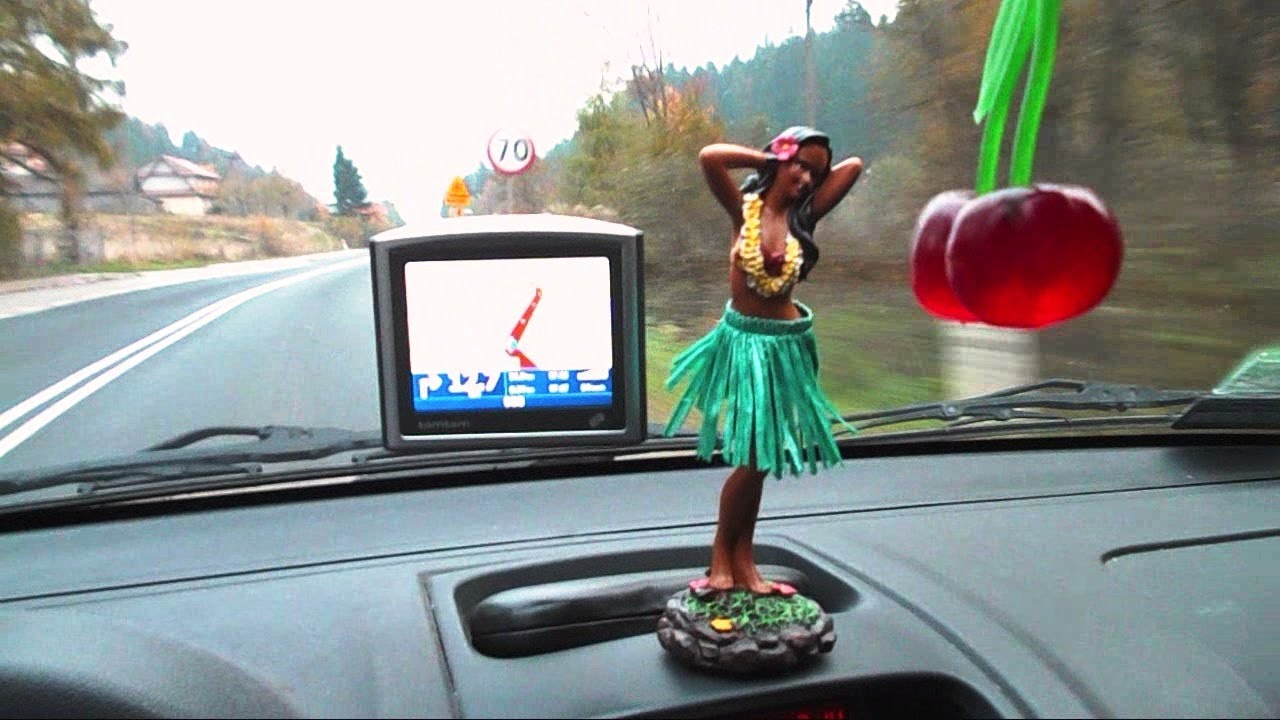
Paradise by the dashboard light

The Day Before Happiness by Erri De Luca
She looked at me, her eyes wide open, and brought her bloody lips to mine, pushed her mouth inside mine until I could feel it in my throat. My prick was a plank stuck to her stomach. She eased the pressure of the kiss, broke off. With a swerve of her hips, she turned me over and I was on top of her. She unwound her arms from my shoulders and guided my hands to her breasts. Opened her legs, pulled up her dress and, holding my hips over her, pushed my prick against her opening. I was her plaything, which she moved around. Our sexes were ready, poised in expectation, barely touching each other: ballet dancers hovering en pointe.

We stayed like that. Anna looked down at them. She pushed on my hips, an order that thrust me in. I entered her. Not only my prick, but the whole of me entered her, into her guts, into her darkness, eyes wide open, seeing nothing. My whole body had gone inside her. I went in with her thrusts and stayed still. While I got used to the quiet and the pulsing of my blood in my ears and nose, she pushed me out a little, then in again. She did it again and again, holding me with force and moving me to the rhythm of the surf. She wiggled her breasts beneath my hands and intensified the pushing. I went in up to my groin and came out almost entirely. My body was her gearstick.

Happy holidays, TKZers! Good health and good writing to you in the coming new year. Peace out.
Call the Typo Police!

Last week I was helping an author friend of mine with some final proofreading of the galley proofs her publisher had sent – she sent me and other friends approx. 50 pages each to do a final typo check and, to her dismay, everyone still found some. The manuscript had been through so many rounds of revision, editing and proofreading that it seemed incredible that there were still minor typos to be found – but, as any author will tell you, those little buggers manage to elude even the most eagle eyed amongst us…

This got me thinking about my own proofreading process (or, to be honest, the lack thereof!). Obviously, I use spell check and have beta readers (although they are mainly there for content feedback) and I do as many careful run-throughs of the manuscript that I can before I email it off to my agent. Then, whatever revisions are needed are completed and another proofreading occurs before the manuscript is (hopefully) ready to go off to publishers. If you go the traditional route, publishers also have line editors who are the last line of ‘typo defense’ and usually the process results in a relatively clean manuscript…although inevitably (as readers will always point out to you) there are still  typos that slip through the dragnet and end up in the published book.

In the indie route, it’s really up to the author to make sure this ‘typo’ cleaning process is done and dusted before the book is uploaded and made available to the reading public. While there isn’t the same formal process as a traditional publisher undertakes, I assume most professional indie authors go through the same multiple ’rounds’ of editing to ensure the cleanest manuscript is produced.

I am acutely aware of my own proofreading limitations. While I am pretty good on the content editing side (and willing to take constructive feedback on that front and revise as many times as needs be) when it comes to the laborious task of proofreading I know I fall way short. The main problem is that I am too close to the material to spot typographical errors any more – and, if my friend’s experience is anything to go by, often multiple people can miss some typos even in a rigorous proofreading process. Although it’s much easier to proofread someone else’s work, when it comes to your own manuscript it can often be hard to find friends or family who are all that keen on acting as the ‘typo police’ after they’ve already read the book in its many iterations before.

So TKZers, what is your process for dealing with ridding your manuscript of all those pesky last minute typos? How do you handle the dreaded proofreading stage?

Social Media is Eating Your Brain

by James Scott Bell
@jamesscottbell

In 2007 the lovers were born. Soon they met, and conceived a bastard child. The child looked so beautiful … until …

damienDamien!

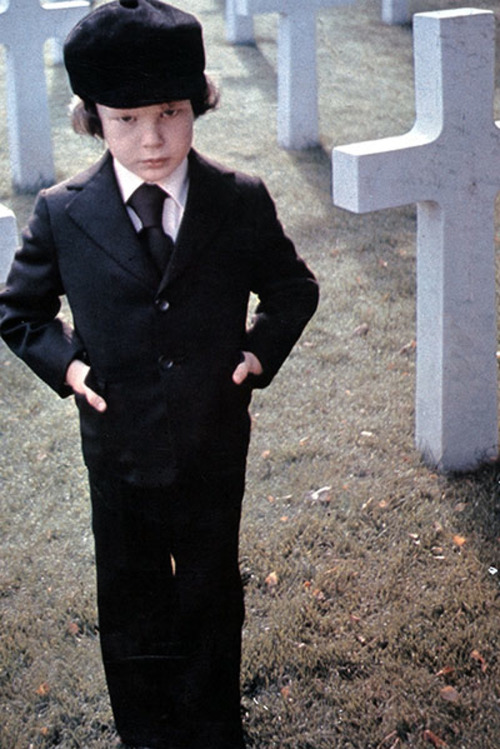
What’s this? A riff on The Omen?

Nay, for it really happened. The lovers were the Kindle and Twitter. And their child is that brain-eating spawn, social media marketing.

When the child turned one, writers were just starting to figure out they could profitably self-publish on the Kindle platform.

They also saw Twitter exploding with users. They began to reason: Hey! What an easy way to reach a zillion potential book buyers! All I have to do is tweet out, “My new thriller is not to be missed. Buy it here!” and keep on tweeting that same message. Over and over. A dozen times a day. The money will pour in!

Which it never did, of course. For authors and businesses soon woke up to the harsh reality that Twitter is not great shakes at direct marketing. In fact, it is barely any shakes at all. It is social, and personal … but it is no citadel of commerce.

Still, addicted to hope, authors jumped upon each shiny new social media outlet that appeared. Pinterest! Tumblr! Google Plus! In truth, Instagram may be the only social media platform that has shown signs of longevity in terms of a social media marketing platform. Why do you think that so many people are interested that socialfollow helps you get followers? People are always looking to boost their numbers to appear more attractive to brands.

This addiction was fueled by enablers. Writers hoping to catch the interest of a traditional publishing house were being advised by agents and editors and critique-group chatterboxes that a gigantic social media platform was an absolute necessity for success!

Biggest load of flapdoodle since Fen-Fen, with just as many ruinous side effects.

Here’s the truth: social media madness is eating your brain, affecting your ability to concentrate and work deeply, and sabotaging the quality of your fiction––which is the one thing you cannot afford to have sabotaged if you want a long-term career!

Social media stimuli is actually akin to a drug addiction. Really. Brain scans show that constant internet users have similar brain patterns as drug addicts and alcoholics. And since social media involves another “you,” the social-you, the branded-you, the you you want to present to the world, there’s a dopamine effect. You get a good jolt of pleasure when you post, because it’s easy and it’s all about you. Which in turn makes you crave more of it.

Is Walter White behind social media madness?

The book Deep Work by Dr. Cal Newport is an eye-opener on all this. The gist of the book comes from it’s cover copy:

Deep work is the ability to focus without distraction on a cognitively demanding task. It’s a skill that allows you to quickly master complicated information and produce better results in less time. Deep work will make you better at what you do and provide the sense of true fulfillment that comes from craftsmanship. In short, deep work is like a super power in our increasingly competitive twenty-first century economy. And yet, most people have lost the ability to go deep-spending their days instead in a frantic blur of e-mail and social media, not even realizing there’s a better way.

Writing a novel is hard work. So the moment you get to a challenging spot, your brain starts to crave the easy pleasure and fast distraction of hopping onto the internet. The more you follow that impulse, the stronger the impulse center grows.

Thus, you’ll be distracted from your fiction all the time. Your ability to concentrate and stay engaged, and actually work through a writing problem toward a breakthrough, will weaken. You’ll be like a former champion pole vaulter who has started to take frequent breaks from training to snag donuts and coffee. Instead of vaulting to greater heights, the bar is going to have to be set lower and lower. Pretty soon, you’ll be doing The Limbo.

After reading Newport’s book, I saw how much of it applied to me. I’d fallen into some bad habits. Too often as I wrote I’d find an excuse to go check social media, which took me out of “flow” and often kept me distracted far too long.

This, in turn, hurt my concentration in other areas, like reading. I noticed that I’d only get through a few pages in a book before I’d feel like checking Twitter or Feedly or some news sites. I was losing the ability to “get lost” in a book, one of the main pleasures of reading. (Fess up. It’s happened to you, too, hasn’t it?)

So I took some steps that have helped enormously, and now pass them on to you:

  1. Schedule your internet time

Do not go on the net at all, ever, without scheduling the time to do so. When you sit down to write or read a book, give yourself a slot––one, two, three hours––during which you will not go net surfing at all. Then jot down the exact time you’ll do some internet, what your objective is (news, email, social media, etc.), and how much time you’ll allow for it.

Do this for the entire day.

At first, you’ll notice as you work that the strong call of the internet is still there. Like the Sirens singing to Odysseus. Fight off that urge every time it arises! Put yourself back into the pages or the books. Slowly, but most certainly, you’ll retrain yourself to concentrate on matters at hand. It’s a great feeling to get that back! And your writing will be stronger, your reading comprehension better.

  1. Mute your phone

And put it somewhere where you can’t see it––pocket, backpack, another room. There used to be a time, youngsters, when we could take a phone “off the hook” so it wouldn’t ring. Learn from your grandparents.

  1. Do memorization exercises

This is something Newport recommends. The concentration required in memory work is good training for when you’re writing or reading or studying.

My two favorite memory books are …. wait a second …

Oh yes! The Memory Book by Harry Lorayne and Jerry Lucas, and Maximize Your Memory by Jonathan Hancock. (You can get a used copy of the latter for a song via sellers on Amazon. This is a very good deal!)

I’ve noticed that when I do memory exercises (one of my faves is memorizing phone numbers), my mind feels more alert and active when I get into my writing.

  1. Read something challenging every day

Choose a book or subject that forces you to concentrate in order to understand it. Then read and make yourself understand it!

I own a set of the Great Books (as collected by Mortimer Adler). The best part is the three-volume Syntopicon, an index of the 102 “great ideas” and the various places they are discussed in the books themselves. Each subject has a long introductory essay by Adler (this guy was an amazing brain! He knew not Twitter or Facebook!). My new goal is to read each essay and pursue the references that interest me, and take copious notes.

Here’s another idea: there are TENS OF THOUSANDS of great books, free and Kindle-ready, at Project Gutenberg. Literature, history, philosophy, memoir. Some starter titles I recommend:

A Manual of the Art of Fiction

The Journal of Henri-Frederic Amiel

Democracy in America

Moonbeams from the Larger Luncay

Now, I don’t advocate you ditch all social media. My own view is that you ought to specialize in one outlet and do it because you enjoy it. I specialize in Twitter, with some Facebook presence, and of course my Sunday posts here at TKZ.

pac-manBut I do, however, counsel that you take a hard look at your social media practices. Are you using it, or is it using you? Are you getting on it first thing in the morning (when you could be writing your Nifty 350 or Furious 500?). Are you haphazard about it during the day? Do you stop randomly as you write to go check something out on YouTube, Twitter, or Facebook? (If so, you could be a YouTwitFace). Do you check your phone several times an hour?

My guess is that for 97.8% of you, there’s brain-eating going on. It’s Pac-Man in the synapses! Time to unplug that game!

Does this ring true? What’s been your long-term experience with social media? Madness or method?

(Here’s the talk by Cal Newport that started me thinking about all this):

FIRST PAGE CRITIQUE: (No Title) by Anonymous

annalisa-and-colman2

Photograph (c) 2015 by Annalisa Hartlaub. All rights reserved.


Anonymous, on behalf of all the of TKZ family  I bid you welcome and thank you for submitting to our FIRST PAGE CRITIQUE and thus braving the constructive slings and arrows which may or may not be coming your way!

“Lyssa, come back!” the large, dark haired man shouted.  The woman had lured him into a hedge maze, but he suspected that was only to provide him with a false sense of security.  If the woman had survived this long, had done the things he suspected she did, there was no chance that she wouldn’t know his particular abilities.  He sighed, exhaling slowly and closing his eyes, hearing the voices on the wind as the plants themselves bent to whisper of her actions to him.  She was waiting at the center.  He hesitated, almost turning to leave but deciding that if he could not defeat this hack on his own grounds then he was doomed to fall on hers.  He strode forward, determined and defiant, the plants parting for his footsteps until he reached the end of the maze.

Lyssa saw the dwarf boxes part, a grin crawling onto her face.  She was laying on her back, her head towards the man that currently pursued her and her arms spread out to her sides, tilting her chin up to look up towards the man.  “Did you like the maze mister?  I know how much you love plants.”  She saw him hesitate again, only grinning wider, stretching comfortably on the grass.  Reaching this moment overjoyed her, the peak of her efforts, the climax of this story.  The man was reluctant, but he too had fallen to the strings that bound all living beings, and in a moment he would be no more than a mere puppet, a toy for her to toss away as she became bored with him.  Toys were never any fun after they stopped working.

He had loved her like a daughter.  He still did, but he needed to know what she was.  He continued his strong stride towards her, her words like needles in his mind, laced with that all too familiar giggle.  He snapped his fingers, the hedges moving like vines to snap around her limbs and hold her on the grounds.  She squirmed a little, but her grin did not waver in the slightest.  Was she so confident he would not kill her?  It would take only a moment like this, another snap, but he dared not imagine what the brambles would do to her if he did.

Anon, this is an intriguing opening page with an interesting premise. I like the pacing and was actually disappointed that I only had one page to read. That’s a good sign, especially for someone like myself who doesn’t read fantasy literature on a regular basis. Let’s keep that in mind as I review a few deficiencies which I think are readily remediable:

Names — Give the male character  a name at or very near to the beginning And since you have named the female character “Lyssa,” use her name rather than “the woman” as general rule. Repetitive use of  “the woman” and “the man” tends to depersonalize both of them; when we’re reading we want to get them in focus a little more clearly and naming them will do that.  often than not. And let’s use the term “dwarf boxes” — a terrific name — repetitively instead of “plants,” at least for a couple of pages. Drop little hints, like breadcrumbs through the forest of your story, each one describing the dwarf boxes so that by the third page or so we know that they are plants without telling us. Show, don’t tell.

Perspective — Let’s keep the perspective with the man for the first page or two. It changes here after the first paragraph and it’s a bit of a sudden jump. Shifting perspectives so early in the story and so quickly is a bit jarring, and doing so from paragraph to paragraph is a bit much. I’m seeing a little more of the abrupt shifting, probably for the reason of creating suspense, in published books these days but it usually takes place (much) later in the story. I recommend getting your story rolling — and I mean really rolling, like several chapters — before you start doing that if you do it at all. It appears that you are trying to create what I call a “Bugs (Bunny) and Elmer (Fudd)” scenario, as in Elmer sticking his hand down the rabbit hole saying “Now I’ve got you!” to which Bugs responds, “On the contrary! I’ve got YOU!” You can do this solely from the man’s perspective. He sees her smile, hears her question about the maze, and senses her confidence but is in turn confident in his own powers over the dwarf boxes to control the situation.

Literary elements — Some of the similes, metaphors and turns of phrase in the second and third paragraphs read as if you’re trying just a little too hard. You get an ‘A’ for effort, but sometimes the phrasing is a bit awkward. “Grin crawling on her face…” Ugh. I pictured a spider or something crawling out of the grass. Try something like “The corners of her mouth slowly turned upward.” Then there is“The moment overjoyed her, the peak of her efforts, the climax of this story.”  I’m not sure what that means. The story has barely started and you’re talking about the climax. “The words like needles in his mind…” again, it’s a simile that doesn’t quite work. It’s somewhat cringe-inducing.  I think it’s just a matter of overreaching, and while there are worse sins you could commit I recommend that you focus on telling the best story you can the first time through and then going back and judiciously embellishing your sentences. A great example of a metaphor of yours that works is in the final sentence of the second paragraph. It’s simple and we can all relate.

Relationships — I’m somewhat confused about the extent of the relationship between the two characters. The man knows Lyssa’s name, and indicates that he loves her like a daughter, while from her perspective he is “the man who currently pursued her.” Again, name the man, and you can clear up the confusion by having Lyssa either call him by name, addressing him as “Stranger,” or a bit of further dialogue that hints at their familiarity with one another.

Proofreading — Proofreading is always a must, and you did a good job here, Anon, for the most part. I spotted two mistakes in one sentence in the second paragraph.  “Did you like the maze mister” would read better as “Did you like the maze, Mister?” There are probably more, but possibly not. I need a second steady eye to review my work and recommend that you employ the same if you’re not doing so already.

Anon, all else aside, I like the conflict that you have set up by the end of the page: the two characters are confronting each other, the man seemingly having Lyssa at a lethal disadvantage for a reason that you have revealed, while Lyssa seems to have a yet-unrevealed advantage of her own. Again, I really wanted to see more of this tale when I reached the conclusion of your submission. Keep plugging away and let us know when your efforts are rewarded. And thank you again for submitting your work to our First Page Critique. With that, I shall step aside and let our readers make their comments!

Stripping Away Distance to Draw on Emotion – 1st Page Critique – A Devotion of Dads

Jordan Dane
@JordanDane

usmc-08340

This intriguing 400-word introduction comes to us from an anonymous author seeking feedback. Please read and enjoy. Share your comments/impressions with constructive criticism in your comments.

***

The video was grainy and dark, the images distorted.

“Can you tell who this is?” Dean pointed, his voice low, with only a slight nuance of horror.

“No,” Mabel lied, because she didn’t want her brother involved, not anymore.

The four people clustered around the laptop viewed the rest of the video in silence. Watched as one person slowly drowned while another patiently waited. The figure walking around the edge of the pool wore dark, loose clothing with a cap pulled low over their face, but not low enough to obscure their mouth. Whoever it was, and Mabel knew there was a chance she was wrong, had a lot to say to the poor soul in the water. There was no audio but you could see one set of lips moving slightly, as if calmly. The other set, when above water, was often distorted in apparent, but thankfully silent, screams.

Two things about the woman in the pool were obvious to the viewers. She couldn’t swim and was fully dressed. She hadn’t entered the water of her own free will. There was only one thing obvious about the person walking around the pool. They did not want that woman to live. Every time an attempt was made to cling to the side of the pool, her hands were stomped on, over and over and over, until she finally let go, fingers too broken to grip. It took a long time for her to die.

The final minutes showed the capped figure leave the pool area, alone, and Mabel was more sure by then who it was. But when she looked up to voice her opinion, she found herself alone in the room. She looked back at the blank screen. Could she stand to watch it one more time? She hit replay. She had to be absolutely sure.

FEEDBACK:

There is definite mystery to this creepy scene of people trying to unravel the identity of a killer, while looking at a video on a laptop and witnessing a murder. Very compelling. Without sound, it would be horrific to see something like this. Chilling. The opening scene (as written) is compelling and it triggered something in me, but I wondered if there might be a more effective way to tap into the emotion of those watching the grainy video as well as focusing more on the sheer panic of drowning.

Below are some suggestions on how to intensity the opener:

1.) CLOSE THE EMOTIONAL DISTANCE – As this 400 word submission is written now, the reader is held at a distance from the action of the scene, by the narrator describing (“telling”) what is happening on the grainy footage. The reader is being told of what’s not only happening, but also what is ‘felt’ by the witnesses. To close the distance, maybe the author could get into the head of the person most affected, Mabel, the one who appears to know the identity of the cold-hearted killer, and have her imagine what it would be like to be that helpless and dying, or perhaps trigger her worst fear of drowning.

2.) PEPPER IN DIALOGUE – More dialogue might help with the pace and the weighty paragraphs of “telling” descriptions. In a scene like this, less is more. Rather than describe what’s happening on a video, let the reader hear a dialogue line that is creepy or that they can imagine what is being seen. In my rewrite example below, lines like ‘She’d never seen anyone die before’ as the first hint of what’s happening on the video can carry a punch. Or a simple question like ‘Why isn’t he helping her?’ followed by ‘He’s killing her’ can be chilling.

3.) ADD PUNCHES OF MYSTERY – Added mystery elements, layered into the narrative, would draw the reader through this submission. In a short intro like this, I would add a question for the reader to ponder and pepper in more as the reader gets deeper into the story. In effect, it’s like being tugged from the shore by a strong current. In the rewrite example below, the mystery elements that might raise a question for the reader are lines like – She’d never seen anyone die before, or introducing the killer by adding a dialogue line ‘Why isn’t he helping her?’ followed by ‘He’s killing her’ is a nonchalant way of adding murder and mystery with a faceless guy.

ON REWRITES – I normally don’t like to rewrite a scene to show an author an alternative way to write it. It’s been my experience that if you can coax an author into seeing their scene in a different way, by asking them open-ended questions that could draw out a creative solution through them, the writer often finds a better way to resolve the scene than my suggestion. But on a blog, we don’t have the luxury of writing and rewriting to enhance an introduction. The following open-ended questions are designed to get the author thinking. The questions may not work or may not add anything to the scene, but in general, open-ended questions can trigger images or character motivations that could enhance the opening.

My open ended questions might be:

1.) Did Mabel ever have a close encounter with drowning? Does she see herself drowning as if she were the victim?

2.) When she sees the film over and over, who does she watch most–the victim or the killer? Does her perspective change the more she watches it?

3.) What does her answer reveal about her? Does she want to protect the killer, or is it more important to reveal the truth to the family of the dead victim?

4.) An even bigger question in my mind is – Who shot the film? Someone had taken the footage and let the killer walk away. Over the years, this mysterious someone didn’t tell anyone what happened?

REWRITE EXAMPLE:

Mabel stared down at the grainy footage on her laptop and felt the pull of the video with its distorted shadowy images. She couldn’t turn away. If she’d been alone, she might’ve succumbed to its unexplained allure and imagined she were there at poolside, watching it happen, but four others sat next to her. They were all voyeurs in the dark.

She’d never seen anyone die before.

“Can you tell who it is?” Dean broke the silence. She sensed his eyes on her, demanding an answer.

“No,” Mabel lied. She saw no point in speculating for the sake of her brother’s curiosity. What would it matter now?

The video had no sound. Thank, God. A woman, fully dressed in street clothes, floundered in the water. Her arms thrashed, but she couldn’t keep her head above water. When she gulped for air, Mabel squirmed in her seat, imagining what drowning would feel like.

You can’t do this. Help me!

Mabel swore she could read the woman’s lips as she begged for her life, pleading with the man in a cap—the only visible part of his face were his lips.

“For Christ’s sake, she’s trying to get out. Why isn’t he helping her?” A voice cut through the stillness, someone sitting next to Mabel. “Oh, no. He’s…what is he doing?”

“He’s killing her.” Mabel didn’t recognize her own voice. She wiped a tear from her cheek before anyone saw.

Mabel hadn’t believed it either, the first time she saw the video. The man, who had shoved the woman into the pool, taunted her and watched her flail and gasp for air. Whenever she reached for the side of the pool, to hoist her body up for air, he smashed his boot heel into her fingers. Blood sent dark spirals into the water.

It took the woman a long time to die.

Mabel watched the video to an ending that would always haunt her. When she looked up from the laptop, she was alone. The others had left. She never heard them go.

No one had asked who’d shot the video?

DISCUSSION:

1.) What do you think of this submission? What revision suggestions, if any, would you make?

2.) Have you used open-ended questions to enhance a scene? 

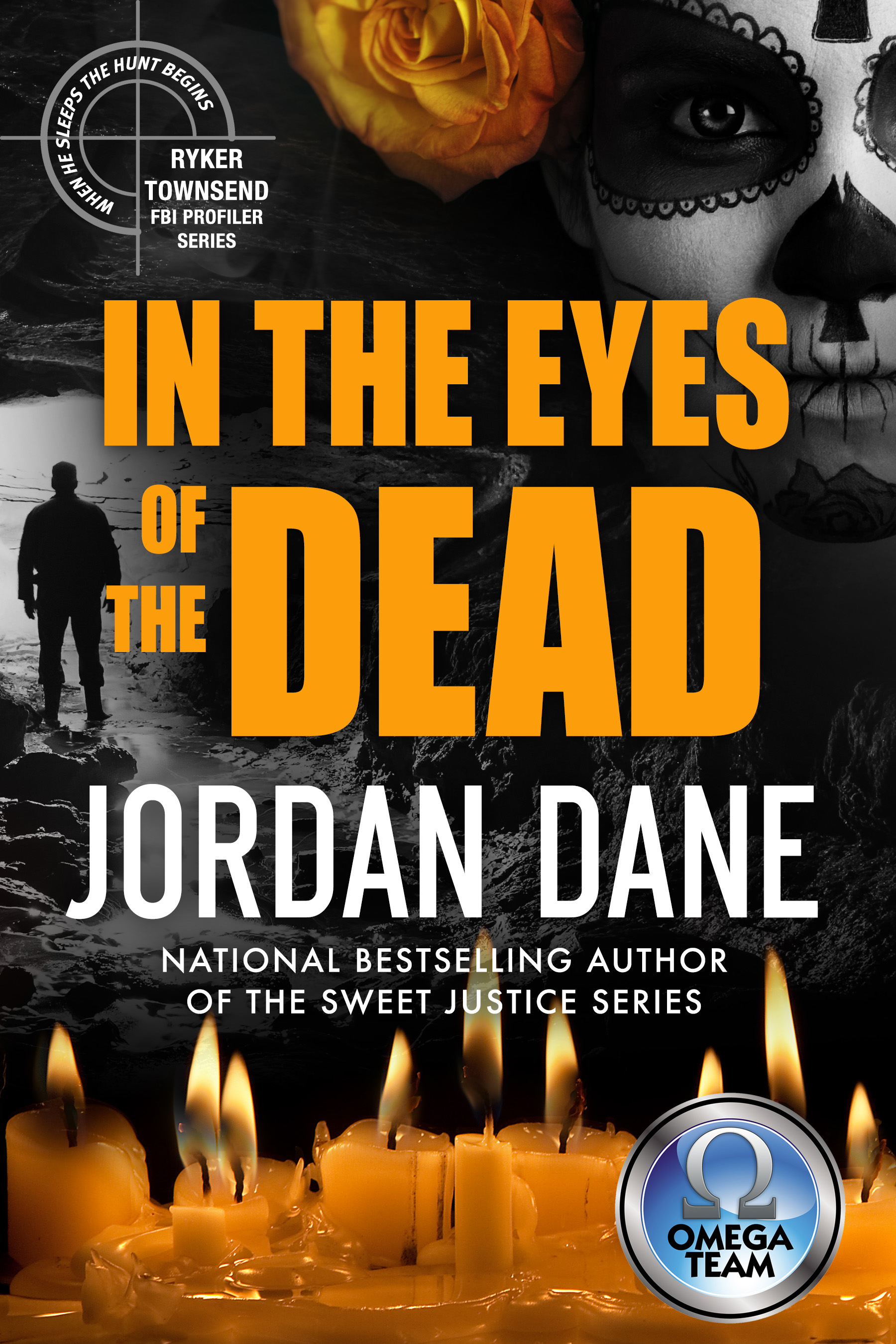
intheeyesofthedead_highres

In the Eyes of the Dead – $1.99 ebook

“He hunts killers through the eyes of the dead”

(A Ryker Townsend – FBI Profiler novella)

A Criminal Obsession: Are You Guilty, Too?

I’m not sure what I was looking at the other day, but for some reason I suddenly realized (“suddenly realized” is a phrase I would warn you away from in your fiction) that my mind and life are consumed with the subject of crime.

I would make a lame criminal. While I’ve had my brushes with Johnny and Jane Law, I’ve only ever almost been arrested (juvenile offenses, and minor ones at that—let’s leave those to your imagination for now). I’m a terrible liar, meaning that I have a very hard time lying without immediately giving myself away. No poker face for me. I blush and stammer and can’t help but laugh nervously. I can feel my heart speed up and my blood pressure rise with the red in my face. Suffice it to say I would never bother to try to fool a polygraph. I’d like to say I can’t lie because of my ironclad moral code, but I suspect it’s more a lack of self-confidence.

Crime fascinates me. I know several people who have been victims of violent crimes, or have had loved ones injured or murdered. Crime is real, and I’m not a groupie of real crimes and criminals. But the stories that catch my attention first when I’m online or reading a newspaper are always crime stories: silly, sordid, violent, white-collar, rural, urban—they’re all fascinating. And I’ve never found the variety and true weirdness in fiction that I can find in the newspaper or online. (With the exception of Harry Crews, of course. Harry used to give me the vapors.)

I’m not sure when I stopped reading books that didn’t involve crime. Or watching non-crime television. Sure, I’ve read a few biographies or literary novels over the past decade, but they’ve been outnumbered by crime, suspense, and historical fiction by a factor of ten. That feels like a strange admission to come from a person who loves the classics and used to review books of all sorts for a living. (Well, even back then, it wasn’t exactly a living.)

Not long before I stopped reviewing professionally, I was a Best Novel judge for a major mystery fiction award. Talk about a baptism by crime fiction fire. I was given hundreds of mystery novels, and read a huge number of them. It felt like a whole new world to me. There were tropes and rules, and so many plots. Did I say I read them? In truth, I devoured them. In younger days, I’d read an Agatha Christie here and there, teethed on Poe, Patricia Highsmith, and Jim Thompson. And lord knows I watched Columbo, MacMillan and Wife, the Rockford Files, and David Suchet’s Poirot until my eyeballs dried out. But I never knew there was such variety in the form. So many crime/mystery niches. So much comfort and exercise for my brain in one genre.

Comfort and exercise. Now, there’s an odd combination.

I like to tell my workshops that all good works of fiction are essentially mysteries. The mystery is the unfolding of the story. Only the author is absolutely certain what will happen before the last page is turned (or in the case of a thriller, the why is more evident, and the how is the mystery). The reader is constantly imagining what might happen next, making up her own possible scenarios that might finish the story. A good book poses at least one question at its opening, and answers it by the end. The challenge for the reader is to try to get inside the writer’s head and know where she is going at least a heartbeat before the story takes her there. Why, why, why, why, why? The reader constantly asks. Every sentence has to have some kind of answer.

If you read enough mysteries or other crime novels, or if you watch mysteries on television, you will definitely be able to predict with some accuracy what the outcomes will be. That’s where the strange comfort comes in. There’s comfort in knowing a crime or mystery has been solved, or comfort in knowing it hasn’t, but that the truth rests with one of the characters we’ve met. Or that someone is punished. You can’t always get that kind of satisfaction in real life. Closure in real life can be protracted and painful, or non-existent.

Not long ago I gave an emerging writer a critique on a family drama novel. The writing was fine, and there was some decent tension in the story. But I found myself wanting to suggest heightened drama and perhaps the introduction of…a crime. Neither the writer nor her intended readers would have much liked that.

I fear I am ruined for everything but crime stories. I want high stakes. I want to live in the head of someone who looks at the world through a lens of twisted intensity. I want things to happen, frequently and with vigor and unintended consequences.

My husband has been teaching creative writing in various universities for three decades. If I were to crystalize his advice to his students, it would be: Don’t bore me.

That’s the thing about crime fiction. It’s rarely boring. If I want quiet intensity, I can read Louise Penny. Rhys Bowen and M.C. Beaton are available for deadly shenanigans. Patricia Cornwell and Kathy Reichs are immersive. John Hart and John Connolly give us unforgettable characters. Reed Farrell Coleman and Cormac McCarthy are full of grit. Lindsay Faye and Susan Elia MacNeal offer historical secrets. I could go on all day.

Crime-centric television is my playground. In the past two years I’ve watched the entire Poirot, Midsomer Murders, Prime Suspect, Inspector Morse and Inspector Lewis series. Also True Detective, The Fall, Vera, Worricker, Bosch, Blue Murder, Grantchester, Whitechapel, Touching Murder, Broadchurch, and a truly embarrassing amount of Nordic noir (not an exhaustive list).

We also watched The Detectorists (charming, not a crime series) and Galavant (musically charming), though I could barely sit through the Galavant songs. Almost no one dies!

I tell myself that all the combination death and destruction and darkness is a big part of my job. That living it and breathing it is okay as long as there are brief excursions into other realms. Realms I used to visit much more frequently. (On Thanksgiving we went to see Arrival, the new alien film. Meh.)

endo-silence

This coming year, I’m going to make a sincere effort to read more widely and watch with a mind open to non-crime possibilities. I thought I’d start with Silence by Shūsakū Endō. Martin Scorcese has directed a film adaptation of the novel, which is about two Jesuit priests who travel to 17th century Japan to find their missing mentor. Christianity has been outlawed, and its adherents are persecuted and tortured. It sounds plenty intense, and the stakes couldn’t be higher. But it at least can’t be categorized as crime fiction. Right?

What genres make up most of your reading and viewing? Are you single-minded, reading mostly in your chosen writing genres, or do you read and watch widely?

Laura Benedict’s latest novel is The Abandoned Heart. It’s full of crime and suspense.

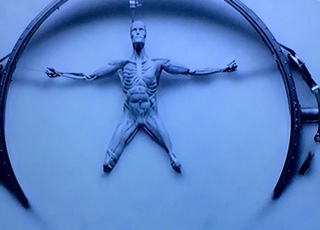
The New “WestWorld”: A Show About Storytelling

fullsizerender8By Kathryn Lilley

I don’t watch many television shows, so I was surprised that I recently become addicted to a new HBO series: “Westworld”.

When I first heard that HBO was making a series based on the original concept of the Westworld film (the earlier version was written by sci-fi writer Michael Crichton), I’ll admit that I was skeptical. The original Westworld was one of the worst movies of all time, surpassed in its hideousness (despite a bravura performance by actor Yul Brynner) only by its lamentable sequel, “Futureworld”.

The premise is simple: “Westworld” is a recreation of a 19th century western town, staffed by android “hosts”, where vacationers can act out their fantasies about living in the old West. The paying guests of Westworld are told that they can live out their Wild West fantasies in complete safety. “Nothing can go wrong,” the tourists are told. Which means, of course, that everything certainly will go wrong, and fast.

Fortunately for viewers, the new HBO series far surpasses the original film. It explores issues such as the nature of consciousness, the relationship between humans and robots, and the stories we invent about our lives.

Here is the trailer for the original 1973 movie:

And here is the trailer for the 2016 HBO series.

Same premise, much more effective execution. The HBO version of Westworld is a great show for writers to watch, in particular. At its heart, Westworld is a show about storytelling. Each episode explores an aspect of telling stories, positing the notion that our memories are nothing more than the narratives we select to anchor our identities as human beings. My favorite character in the show is the writer, Lee Sizemore, a profane, alcoholic hack who is charged with writing the “depraved little fantasies” that entertain the tourists at Westworld. Sizemore’s hapless, comedic character offers a refreshing contrast to the polished perfection of the androids and robotic-seeming humans of Westworld.

Have you been watching the Westworld series on HBO? Here is a New York Times article recapping this week’s penultimate show, Episode 9. But if you haven’t been watching the series, I wouldn’t jump into one of the later episodes. Multiple timelines and unreliable narrators abound in this ambitious show, so it’s essential to watch it from the beginning. Next Sunday is the finale, and fans of Westworld are eager to know: is Arnold really dead?

Fun aspect of the new Westworld: the integration of contemporary rock music as the musical score. Here’s a clip as an example (strong language, violence advisory).

https://youtu.be/vmOXlt83jtI

The Most Important Aspect of Craft That Gets Almost Zero Airtime

By Larry Brooks

I bet you know a writer who isn’t shy about declaring how “bad” Dan Brown’s writing is. Or James Patterson’s. Or even John Grisham’s, among a roster of other A-list names with more readers that any of us should dare to dream.

Certainly, the shaded prose stylings of E.L. James, too.

I’m not here to argue that.

I could argue that, by the way (my guess is Ms. James is laughing all the way to the bank), at least for some of those names, but that’s not my intention here today.

Conversely, we hear much conversation about how wonderful the writing is in, say, a Raymond Chandler novel. Or in the novels of Michael Connelly, Nelson DeMille or Neil Gaiman.

Or in the novel Goldfinch, by Donna Taart, who has a Pulitzer on her mantle to show for it,  (though – perhaps ironically – I will say, I haven’t met a writer who will admit to being able to finish that one…) even though critics weren’t overly impressed.

Rather than stake a position on either end of any “good writing” estimation, my mission here is to put forth a counterpoint.

It is this: While you may insist you know writers who are better than these and other authors of homerun bestsellers… I’ll also wager that you’ve never met a writer who has had a better story idea—a premise—as thematically rich and dramatically-promising as, say, Dan Brown’s The Davinci Code.

Or even as commercially resonant as 50 Shades of Grey.

I think it’s fair to say that the vast majority of authors at the writing conference aren’t seeking to become the next Raymond Chandler. That’s a rare dare-to-dream.

Rather, they are looking to unlock the key to breaking into the business.

And while there is a long list of such stuff on those agendas, perhaps the most important aspect of craft in that part of the equation gets almost no attention.

Which is: how to land on a better story idea. An idea that is truly good enough.

Tell me the last time you saw that one on the conference agenda.

I can hear the outrage now… but if that’s you, you may be missing the point.

Within the polite kumbaya of the writing conversation, the unspoken etiquette holds that nobody can—almost nobody will—tell you that your story idea is weak. That it actually sucks. The focus is on your execution… of whatever story idea you deem to bring to the party.

And yet, at least half the time, if the writing itself is good enough, it is that idea that will get you rejected. Nobody dares tell you that you can’t write your way out of a bland story idea (sort of like an average Joe auditioning for the lead role next to George Clooney)… without elevating the premise itself.

This imprecise corner of the writing conversation is always compartmentalized. Only one of those compartments has anything at all to do with glowing narrative prose, the very thing you are judging when you look down your nose at Dan Brown.

Rather, the conversation breaks down with a divide between: brand new writers… working apprentice-level writers… journeyman novelists… and A-list bestselling writers.

Look closely. Only that last group can get away with a novel that is built upon a less-then-stellar premise.

And yet, only the first three are overly-focused on the tactile sound and pitch of their writing voice.

And none of them–yes, you read that correctly–totally depends on the stellar writing chops of the John Updike variety.

Let’s take those compartments one-at-a-time.

Agents and editors like to say they are looking for the next great writer. The next great voice. But upon that closer look I just asked you to take is a clearer truth: they are actually looking for the next great story.

A story that will sell.

Truth be told, agents and editors are looking for the next great homerun.

Which means, if your story idea is remotely rote or familiar, anything smelling of vanilla or promising an overly-characterized narrative that is light on a conceptually-rich premise (which is code for that dirtiest of lit school words: plot), they will most likely pass.

No matter how lyrically rich or promising your prose. The world us full of brilliant lit majors with MFAs who can’t get arrested in the commercial marketplace.

In a game full of 90-plus-MPH fastballs, beginning at the high school level, the scouts are out there tracking down the next 98-MPH heater. And yet… all of those pitchers look pretty good on the mound.  And then–to morph this story analogy toward a prose analogy–the ball needs to come in at 102-plus on that count… something that happens about once a decade.

In other words (no pun intended there), the truly great story idea/premise is not remotely a commodity proposition, while pro-level prose (90-MPH back in our analogy) absolutely is. Think about it: at a conference with 800 writers in attendance, all of them seeking a spot on the bookshelf, how many are in possession of a story premise that would keep an agent awake all night? And how many realize that is precisely what is required to break in?

It isn’t going to be your beautiful sentences, you can pretty much be assured of that.

Maybe that’s why we spend almost no time at all talking about or describing what such premises are made of. Rather, we talk about how to hammer a middling premise–without ever really labeling it as such–into something that works… which is a tall order.

That’s the wall—the towering monolithic obstacle—that all three of those first four groups (the exception being the established author with a waiting readership and the sales data to prove it) must scale: you need an idea that lifts the agent or editor out of their seat.

A premise that makes their skin itch with excitement. Deliver that, and the prose bar falls quickly to eye level, from the ceiling where you once believed it to be.

That killer story idea is not remotely an easy task, because agents and editors have, literally, seen it all. They are not easily impressed.

And yet, that should be our goal. At least until your name is David Baldacci.

We share a venue here called The Kill Zone.

Which by definition means we are writing genre novels. Not The Great American Literary Novel, ala Ms. Taart’s Goldfinch.

The math, then, takes us to the other side of the = sign: you need a killer premise. A plot. Dramatic tension along a hero’s path arising from conflict driven in context to emotionally-resonant stakes.

Don’t hear me wrong, great characterization remains important.

To argue this as anything close to a counterpoint is like saying salt is critical to the work of a great chef.

But it is not the primary mission, or even the point. Because voice alone, born on the wings of your angelic prose… will get you quickly rejected in our dark corner of the marketplace.

And therein we find the Great Abyss into which new and newer and even some frustrated experienced authors find themselves tumbling head over tookus: the premise-void, character-driven novel, sometimes fancifully described as a thriller. A book that, however beautifully narrated, isn’t driven by the same premise-on-steroids story ideas that has allowed Dan Brown to build a 55,000 square foot home with a view of the Pacific, and pay cash for it.

But what about those famous folk, you ask.

Many of which are indeed genuinely literary.

Fact is, they are held to a different standard. Which means their premises no longer must glow in the dark.

Rest assured, they too have a concept that propels their stories into the marketplace faster and deeper than a musketeer’s kill thrust. But what takes such writers to the mountain top may not be the originality and edge of their story idea.

Rather, their concept is their name.

On the benchmark for what constitutes a compelling concept, nothing says sign-me-up faster than a book with the words John Grisham on the cover. There isn’t an agent or an editor in the business who would look the other way if such a manuscript came their way (yeah, as if Grisham and Connelly are shopping for new representation) saying, “well, the writing just didn’t speak to me.”

Which leaves us with an opportunity to grow… through this realization.

As someone who trades in unpublished and unpublishable story ideas (in my role as a story coach and workshop presenter who hears pitches in the same context as the agents and editors in attendance), I can attest to the fact that a truly compelling, conceptually-rich concept is a rare and beautiful thing.

Take note: it is that hyphenated adjective—conceptually-rich—that will get you published.

Rather, too many new-ish authors are serving up middle-shelf, been-there-read-that yawns for story ideas, some of them rendered with legitimately terrific prose. Which doesn’t serve them in the least within their genre… at least until they finally do find their book in the B&N window, which will precisely because of the premise, not their voice.

Story conception and writing voice are separate core competencies. In much the same way that storytelling and self-promotion are the separate muscle groups of the successfully-self-published.

Or, rather than that commodity premises,  new writers are pitching plot-light (or void) character studies wrapped within episodic documentaries. Such as… “I spent a summer traveling the Far East just after grad school, and it changed me… my novel is about that.”

And the agent looking for the next genre-driven homerun says: “Pass.”

If you’re lucky, they might add: “Your writing is good. But you need a better story.”

But don’t hold your breath.

Note: Eat, Pray, Love was not a novel.

Too many new authors are shocked to hear this. Stop pitching stories with something similar as the premise of your novel if you want to break into the fiction business.

Learn what a novel is. Learn how, among the wide breadth of novels, literary novels are different than genre novels. And within the genres, each has certain tropes and expectations that define what readers are expecting.

The last thing an agent will do is represent a genre novel that doesn’t deliver what fans of that genre are expecting. And the last thing they are expecting is a “novel” that describes what you did on your summer vacation.

Understand that your writing voice is only one of the six categorical core competencies you need to play with the pros (the others being concept/premise, character, theme, structure, and scene development). Accept the paradox: among those six, voice presents the most reachable bar (because odds are you were decent at it from Day One, it was probably why you’ve hung out your Writer shingle in the first place), and yet, it remains a lofty bar, indeed.

And finally, stop trying to write the books that already-famous authors are already writing.

The trick, the ticket in, is to write within the expectations of your genre, or genre mash-up, but do it with something that constitutes a fresh twist, a twist on steroids, combined with massive layers of emotional resonance within a vicarious reading experience.

Learn the difference between a concept and a premise, and make sure your story idea leads deeply into both. That particular understanding is key to nailing consistently fresh story ideas that result in rich story premises. Because it is precisely that element—something conceptual—that makes the difference.

And then, pay attention to what is selling. Notice the stories that create break-in opportunities for writers you haven’t heard of, and notice the wider latitude more established authors have in this regard. The conceptual bar is lower, precisely because the name on the cover is bigger.

Do these things, and one day your prose might matter to the extent you wish it did.

Until then, your writing voice should play like fresh, unfettered air… clean and invigorating, with only a carefully-placed dash of irony or wit, uncluttered with anything that smells up the place (read: adjectives are largely toxic)… because one reader’s perfume may be another’s stench.

There is precious little out there that will lead you to a better story idea. The kind that makes agents and editors sweat. Our job is to understand what the means, and the stuff it is made of when it happens.

Better story ideas leading to stronger story premises are a product of an evolved story sensibility. That is the goal of the truly enlightened writer at any stage of the game.

Character will always be there. But mostly, giving the character something amazing and intense and emotionally-resonant to do—giving the reader something to root for, rather than simply observe—is the recipe you are looking for.

Build your sense of story around that truth, and your ticket may be destined to be punched.


*****

Click HERE to opt-in to Larry’s mailing list announcing new video-based craft training programs and discounts. Enroll now to receive the first program — Essential Craft for Emerging Authors — FREE 

Heat Up Point of View for Greater Reader Empathy

by James Scott Bell
@jamesscottbell

Today’s lesson comes via a first page submitted by an anonymous author. Here we go:

Mr. Who
And The Curious Case Of Fatal Flatulence

Chapter 1

Mr. Who had to face facts. Breaking the law was harder than it looked. Well, not so much the breaking part, he had no trouble doing that. But the getting arrested for it part, now that was proving to be a bugger.

This time, though, would be different, he thought. Robbing a bank, now that would definitely do the trick, right? Perfect for getting thrown into the hoosegow, the pokey, the big house. Hell, he’d settle for the little house if it meant getting his pinkies checked for their criminal history.

He’d have to do some time for it, of course, but convinced that his past was filled with who-knows-how-many bad deeds and broken laws, having done so much harm to so many innocent people, it would serve him right. Right?

Oh, yeah… Better start at the beginning so you got a chance to know what’s going on here.

The exact moment he lost all memory was one he’ll never forget.

Wait.

Make that the moment right after his amnesia took hold.

It was strange enough not knowing who he was, or even simple facts about his life—talk about feeling like an idiot—but what happened after that… Well, that was stranger still.

###

The first thing he saw when he came to was… nothing. He was surrounded by complete and utter darkness.

Oh, no. His mind raced—but not in a homed in straight line, like a top fuel dragster. More like a bunch of lame bumper cars bouncing off each other in a ridiculous effort to come up with… something… anything… instead of the big fat zilch that did come forth.

His mind may have been empty, but his gut was talking to him loud and clear. And it was telling him the pitch-darkness was not his friend. Far from it. Feeling like it had him by the throat, he struggled to breathe. He couldn’t tell how many invisible hands it had, but it must have been at least three—enough to clutch his throat while also tying his stomach in knots.

It was so dark something terrible could be right in front of his face, like a crazed killer could be right there, and he’d never… Was that a growl?

Maybe a rabid pit bull was about to pounce. He cringed and braced for it.

***

In my last first-page critique, on the perils of author voice, I mentioned that the overt authorial voice is more fitting for a comic novel. Well, what can you say about a novel subtitled The Curious Case of Fatal Flatulence? It’s not going for an Anna Karenina vibe, now is it?

With that in mind, how does the voice work here? Okay, I’d say. The author chooses to set up the story with a jaunty intro which presents an intriguing mystery: why does this guy want his “pinkies checked” for criminal history?

That being said, I would counsel the author not to give any more away, leaving the readers with a mystery. That’s always a good way to get them to read further. Cut the last three lines of the intro, because you already have a wonderful last line hook: The exact moment he lost all memory was one he’d never forget.

Boom. (I changed he’ll to he’d for grammatical consistency.)

That opening would make me want to read the second part. Which, when you think about it, is the goal of any page of our fiction––get the reader to read the next page.

In this second section we move into Third Person POV. The comic author voice is not completely absent, but the more we get into the Lead’s head the better. Here are some notes:

1. Cut the line He was surrounded by complete and utter darkness.

It’s redundant. And it’s less immediate than the first line. Sol Stein has a little rule he calls 1 + 1 = 1/2. If you use two descriptive lines in a row for the same thing, it doesn’t add to the vividness, it dilutes it. Always go for one gem, not two nuggets.

2. Cut Oh no.

It doesn’t add anything to the rest of the paragraph.

3. Cut that did come forth.

It’s a little odd to think of “zilch” as “coming forth.” Zilch = nothingness, which by definition does not exist. Those four words don’t add anything, so cut them. In fact, this seems to be a point of style this author should be aware of from now on. Be zealous about cutting flab. Learn about RUE (Resist the Urge to Explain). Your writing will improve markedly.

4. Cut the first few words of the third paragraph.

So you don’t have two in a row that begin with His mind.

5. Logic problem: Does this guy still have voice and movement?

Instead of merely bracing himself for a pit bull attack, why isn’t he screaming? What position is he in? Why doesn’t he try to get up?

If speech and movement are not there, give us an indication before you end the page. If he does have speech an movement, use them!

6. Increase reader empathy with a hotter POV at the end.

Empathy is crucially important in an opening like this, where the character is alone and doing nothing else but thinking. We need to ramp up our identification with the character. (If you want to see how a master does it, read Stephen King’s short story “Autopsy Room Four” in his collection Everything’s Eventual.)

You can heat up the menace by going deeper into the Lead’s head and giving him more emotion. This is the part where you, the author, have a lot of freedom, but I’ve gone ahead and provided my own example for you. Emphasis on my own. Filter everything through your own vision and voice. The goal is to increase empathy, get that opening disturbance even more disturbing, and stretch the tension.

Here is my rewrite (in a comic novel, I allow for more exclamation points than usual!):

The first thing he saw when he came to was… nothing.

His mind raced—but not in a in straight line, like a top-fuel dragster. More like a bunch of lame bumper cars bouncing off each other in a ridiculous effort to come up with… something… anything… instead of a big fat zilch.

His gut was talking, though. Loud and clear. Darkness is not your friend! Get out!

He was on his back. A cold, hard slab under him. He tried to move but his arms and legs were dead weight. Uh-oh. Was this one of those caves serial killers love so much? Silence of the Lambs!

He opened his mouth to scream.

Nothing came out. The darkness had invisible hands clutching his throat and tying his stomach in knots.

Come on, think! You’ve got to move …

What was that? A growl?

Pit bull!

Help!

Author, I salute you for attempting a comic novel. They’re very hard to do, and the market for them has always been limited. But every now and then, with the right touch and bravura voice, one breaks through, a la Catch-22, The Hitchhiker’s Guide to the Galaxy, and Portnoy’s Complaint.

Maybe yours will, too.

Now it’s your turn, Zoners. What did you think of this first page?