Ring out the Old…

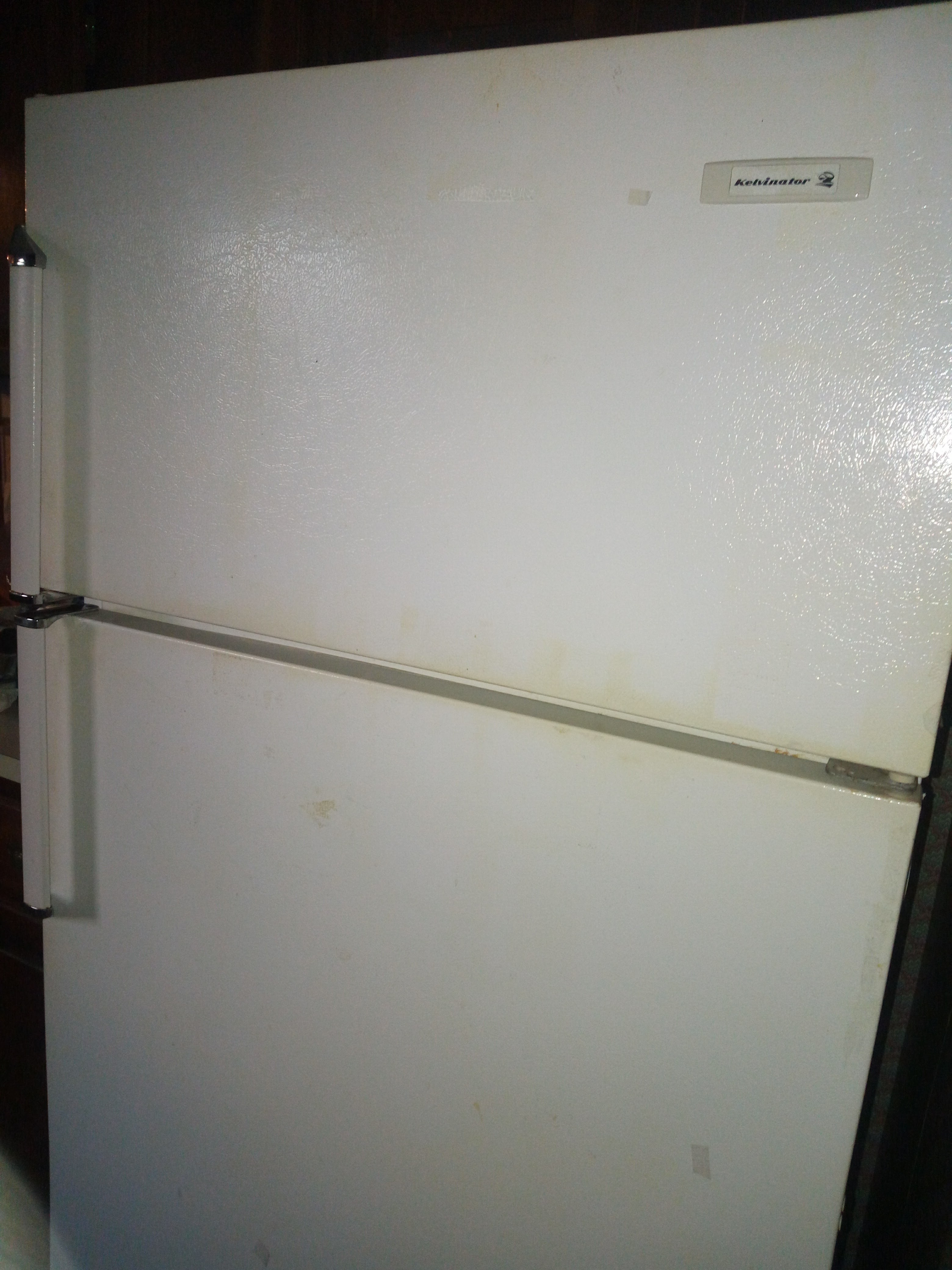
kelvinator

Sometimes I sits and thinks, and sometimes I just sits…and sometimes I write. I am doing the latter while waiting for Kelvin, our venerable refrigerator, to be hauled away. Kelvin lasted a long time, taking the blame for disappearing food (“Who ate the last pork chop?” “Kelvinator!”) for two decades and change. It is the last original major appliance in the Hartlaub House of Hoo-Ha to give up the ghost. I bought it and this house twenty-two years ago — July 1, 1994 — when I was a single dad with three children. Four days after I moved myself and my brood into this residence and started making it a home a company named “Amazon” started in Seattle, Washington, with the goal of being the world’s largest bookstore. The new refrigerator wasn’t purchased from Amazon, but it could have been.

I won’t try to list all or even a few of the things that have happened in the world since Kelvin was pressed into service. I’ll tell you a few of the things that have happened to me. They were all surprises. I remarried. I had a fourth child. I’ve had stories published, had a supporting role in a feature film (which you all may yet see in 2017), changed my field of law practice, written some book reviews for bookreporter.com (which didn’t exist in 1994 either), and acquired a whole bunch of new friends (and yes, maybe a couple of enemies too!). Kelvin was a part of a bit of all of that, and it’s going to somewhat of a somber moment when the truck pulls up to haul it away, to be replaced by what more likely than not will be my last refrigerator, particularly if the new one lasts as long as the old one did.

“Somber” for me has usually been followed by “pensive.” It would be easy as the old year ends and a new one begins to reflexively list my New Year’s resolutions, and ask you to share yours as well. Instead, I’m going to ask you: what is it that you don’t want to do in 2017? Mine is easy to state, and hard to do, particularly because it soooo easy in my case to use age an excuse to do otherwise. I’m going to try however, to follow this rule: Don’t. Screw. Up. Now let’s see yours.

Merry Christmas, Happy Hanukkah, and Happy New Year! Be safe. We’ll see you on the other side of the New Year.


Reader Friday: What is the oddest thing you’ve ever done in the name of research?

qtq80-7vCftV

Some authors attend real autopsies, spend nights in haunted houses, or travel to exotic places.

I’ve toured FBI: Quantico and CIA: Langley, shot various weapons at the FBI Academy firing range and watched a bomb squad blow up stuff at my local police department. I’ve had a flash bang grenade blown up at my feet to see what it was like, and I’ve blindfolded myself to fumble around in a dark room to see if I could sense walls.

Writers do peculiar things in the name of research. Tell us about your most memorable experiences, what you learned, and how you used it.

Put Your Setting to Work – First Page Critique – Unknown Rider

Jordan Dane

@JordanDane

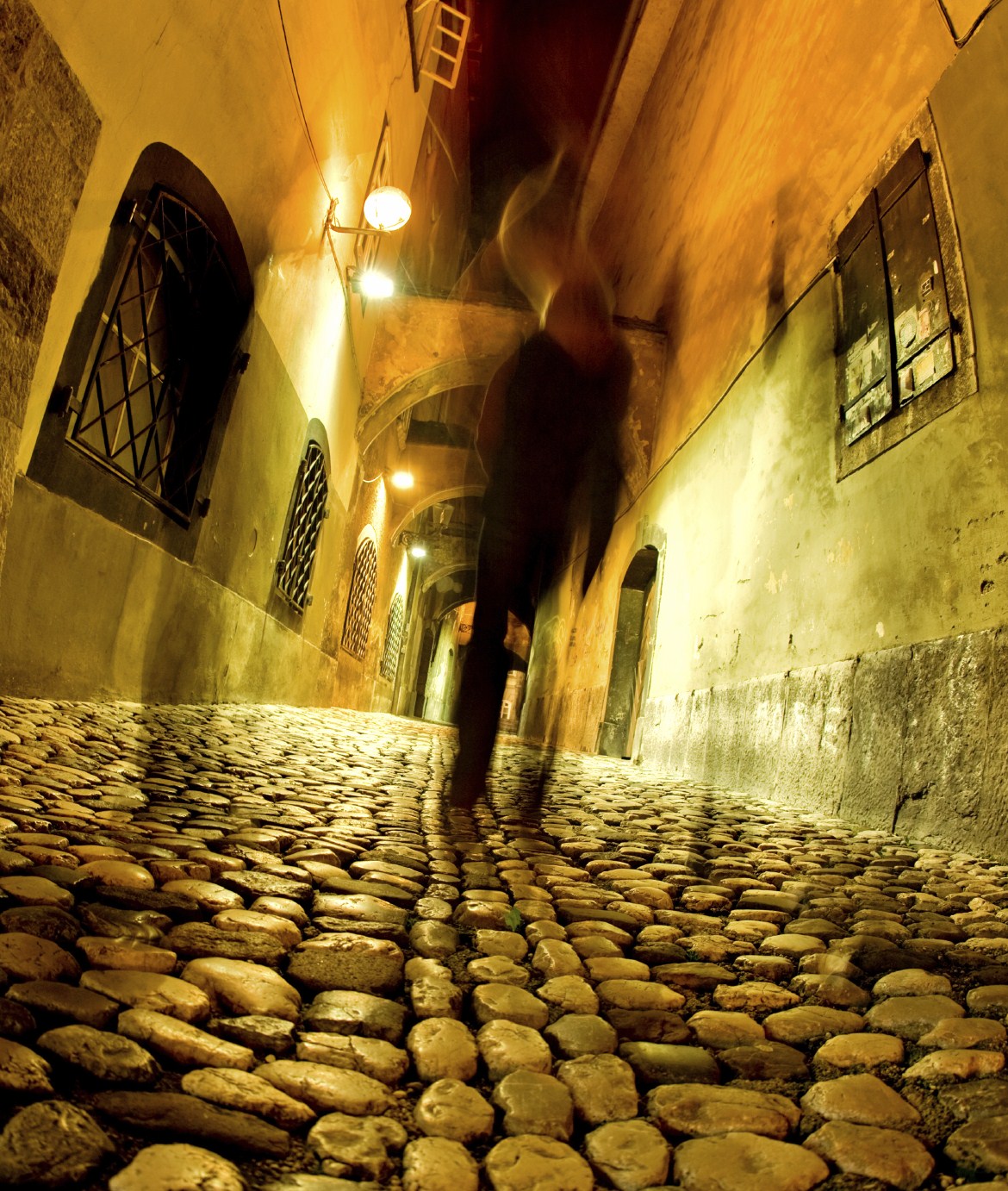
iStock image purchased by Jordan Dane

iStock image purchased by Jordan Dane

My last critique for 2016. I’ve enjoyed reading the anonymous submissions this year. We have some very talented authors following our blog. Thanks to all of you who participate with your comments and for all those brave souls who have submitted your work for our feedback. We all learn from the experience.

Enjoy UNKNOWN RIDER and I’ll have my feedback on the flip side. Please provide constructive criticism in your comments. Thank you.

***

Prologue

A narrow palm-lined alley led off the main boulevard to the boat docks. A warm front had blanketed the area with a thick overcast, obliterating the faint starlight on the moonless night. At one o’clock in the morning, the few functioning streetlights created a dimly lit gloom that made it hard to distinguish between the living and the nonliving as the tropical breeze animated palm fronds and various pieces of trash on the derelict street. It was still a quarter of a mile to the docks, but even at this distance the low-tide smell of spilled diesel fuel, dead fish, and decay polluted the air.

Frank Stodd walked quickly down one side of the pavement towards the water. He looked very much out of place in his dark suit and tie, but he hadn’t planned to be here. He had a growing suspicion that he had taken a wrong turn on the way back to the hotel, but he pressed on, looking over his shoulder every few seconds for the black Escalade. Then he patted the gun through his jacket for reassurance, and felt for the small package in his inside coat pocket. He was a large man, quite overweight, and in spite of the sea breeze blowing in towards the shore, he was sweating profusely underneath the stiff white collar of his shirt.

Maybe he could see the hotel when he got to the water at the end of the alley, he told himself. It was a well-lit high rise, after all, with a big red ‘Hilton’ on the side. There was too much at stake to blow it now.

They had seen him in the van outside the bar in old San Juan. He’d sped off immediately, cursing his bad luck, but they tailed him for several blocks. Finally, he lost them somewhere near his hotel, ditched the van, and continued on foot. The shortcut he’d taken past the marina and docks should have thrown them off. Yes, he was sure now that he’d lost them.

But against the wall of a building, well hidden in the shadows to Stodd’s left, was another man. In blue jeans and a t-shirt, he looked like anyone else you might see in the city, someone who had bubbled out of the melting pot of the Caribbean. He checked the cylinder of his revolver to confirm that it was fully loaded and wondered again whether the silencer screwed into the end of the barrel might affect the gun’s accuracy. But when he got a good look at the size of his target he decided it wouldn’t matter.

He raised the gun at arm’s length.

Stodd saw a flash from his left. There was a slight whooshing sound like someone had spit, the sledgehammer impact of the bullet, then he was lying on his side, his left arm and shoulder on fire. The pavement was cool in spite of the heat of the night, his vision blurred, and the pain took a back seat. He knew only that he was tired and wanted to rest. He closed his eyes.

FEEDBACK:

OVERVIEW – There are some gems in this intro. The author has a visual style and imagery is important. Often setting is overlooked, but not with this author. I like how he or she describes through use of the senses too. I can see Frank sweating as he lumbers through a shady part of town. But there is an issue with ORDER in this scene. The idea is to introduce a conflict and tension and build upon it, not deflate it. Below are some observations:

SETTING – The first paragraph is an author’s chance at establishing a voice. In this example, the author describes weather and setting without these elements being through any character. As much as I can appreciate a good setting, without a character seeing it, I tend to skim. I don’t even know where the description is supposed to be, other than it’s coastal and has palm trees and water. By mentioning San Juan and Caribbean much later, this appears to be Puerto Rico. Why not include a tag line to establish the location right away? That would make the setting an instant recognition for the reader and even establish a time of day. It’s best not to make the reader guess or have to reread because they thought the setting was somewhere else, like Florida.

REVISED START – I would consider starting with elements of paragraph 2. I like knowing Frank is out of place and uncomfortable where he’s walking. It makes me wonder what he’s up to, but make him sweat for more than weather. The example below is a rough draft and if it were mine I’d tweak it more, but I hope you get the idea. Getting into Frank’s head and the tension he’s feeling is the place to start.

Example – Frank Stodd picked up his pace as he walked toward the docks, looking out of place dressed in his dark suit and tie. He tugged at his stiff white collar with sweat trickling through his hair. Muggy heat turned the stench of low-tide into a vile smell of spilled diesel fuel, dead fish, and decay. He must’ve taken a wrong turn on his way back from the hotel and he kept glancing over his shoulder for the black Escalade. The small package he carried in his jacket pocket weighed heavy, pressed against his gun.

PUT YOUR SETTING TO WORK – Rather than start with a long first paragraph to establish setting, the author might consider peppering the heat and the stench and other sensory descriptions to add to Frank’s discomfort and tension. Make the setting work by using it to escalate the tension or messing with Frank’s head. I’ve incorporated some of the setting descriptions into the revised intro to exacerbate Frank’s situation and add tension. He’s a heavy man and he’s sweating, not only because of weather and where he is. He’s anxious over his situation, so an author can drop in setting through action to enhance the intended emotion for the scene, without slowing the pace.

USE of PROLOGUE – I’ve never had an editor say they wouldn’t buy something because it had a Prologue, but when you get authors together and they talk about perceived rules, they usually are not in favor of using Prologues. If a Prologue is used properly, where the inciting incident of a story begins earlier (ie Batman as a boy when he witnesses his parents murdered before he dedicates his life to fighting crime), then make it clear it’s a short segment that is the foundation for what comes. Lately, I’ve simply started on Chapter 1, even if there is an older inciting incident, because I use tag lines to establish the time and place. But I wanted to point it out, as I’m sure others might comment. I’m indifferent, but a Prologue should be used in the right way.

STICK WITH THE ACTION – Once a story has started with action, it should stick to that action and not vacillate from what’s happening to drift away from it. The idea is to BUILD on tension and not deflate it. In the short paragraph that starts with “Maybe he could see the hotel…” – this deflates the tension established when the reader sees Frank is in trouble. He thinks of getting back to his hotel and even the line of “not blowing it now” is ‘telling’ and could be deleted to stick with the action of him being tailed.

ACTION OUT OF ORDER – The action in this opener is out of order. The author should resolve this to not lose any momentum in the action from start to finish.

“They had seen him in the van…” This is a 4th paragraph flashback to an earlier incident the same evening. The author could consider starting at that point where Frank is spotted by shady characters or by men in the Escalade and he tries to outrun them in his overweight condition, not dressed for the occasion. Or have Frank evading the Escalade and stick with the action to have the vehicle find him again. No need to go back. No matter which way the author decides, the action should gain momentum and tension should be mounted and not diffused.

KNOW YOUR WEAPON – Another point I would like to make with regard to action – once guns are drawn, there’s no time for checking for bullets in a revolver. Frank was nervous enough to pat down his pocket to make sure he had his gun. He should know if it’s loaded. I’m also a believer in adding details like the type of revolver. Most gun enthusiasts know what they are carrying. It looks novice if the author ignores the details. I’m also thinking guys who ride around in Escalades, aren’t carrying revolvers. I’d be thinking of ramping up the firepower to a semi-auto.

A SUPPRESSOR ON A REVOLVER? – A revolver has a short barrel. Between the cylinder (bullets) and the forcing cone is the cylinder gap where the gases, flames, and sound escape when fired. VIDEO ON THE MYTH The way this intro is written, very generically, most crime fiction readers would question a suppressor on a revolver unless the author can research a type of gun like the Nagant M1895, a Russian revolver, where these gases are contained. Here’s a VIDEO of someone shooting a suppressed Nagant. Look at how large this weapon is (with suppressor) and how difficult it would be for Frank to have it under his jacket. I don’t see how a suppressor enhances this scene and it actually stands out as a research error. Plus if other people are shooting back, without suppressors, what’s the point of Frank being stealthy? I tend to think of suppressed weapons as in the hands of assassins or killers who are the aggressors. Frank seems to have the weapon for defense purposes.

POV – In the sentence below, the author brings in a shooter, but since the guy is “well hidden,” how can Frank see him? It would appear to be an omniscient POV as was the first paragraph where the setting is described without being in Frank’s head. I would strongly suggest one POV in this scene, through Frank’s eyes.

“But against the wall of a building, well hidden in the shadows to Stodd’s left, was another man.”

FRANK SHOT – Frank seems like he’s resting rather than shot at the end. I know in the heat of the moment, often gunshot wounds aren’t felt (except as a punch) when the adrenaline is high, but I would consider shortening the sentences and making him feel more than tired, just to add tension for the reader. He seems too calm.

DISCUSSION:

1.) What do you think, TKZers? Comments anyone? What do you like? What would you suggest to improve this intro?
intheeyesofthedead_highres

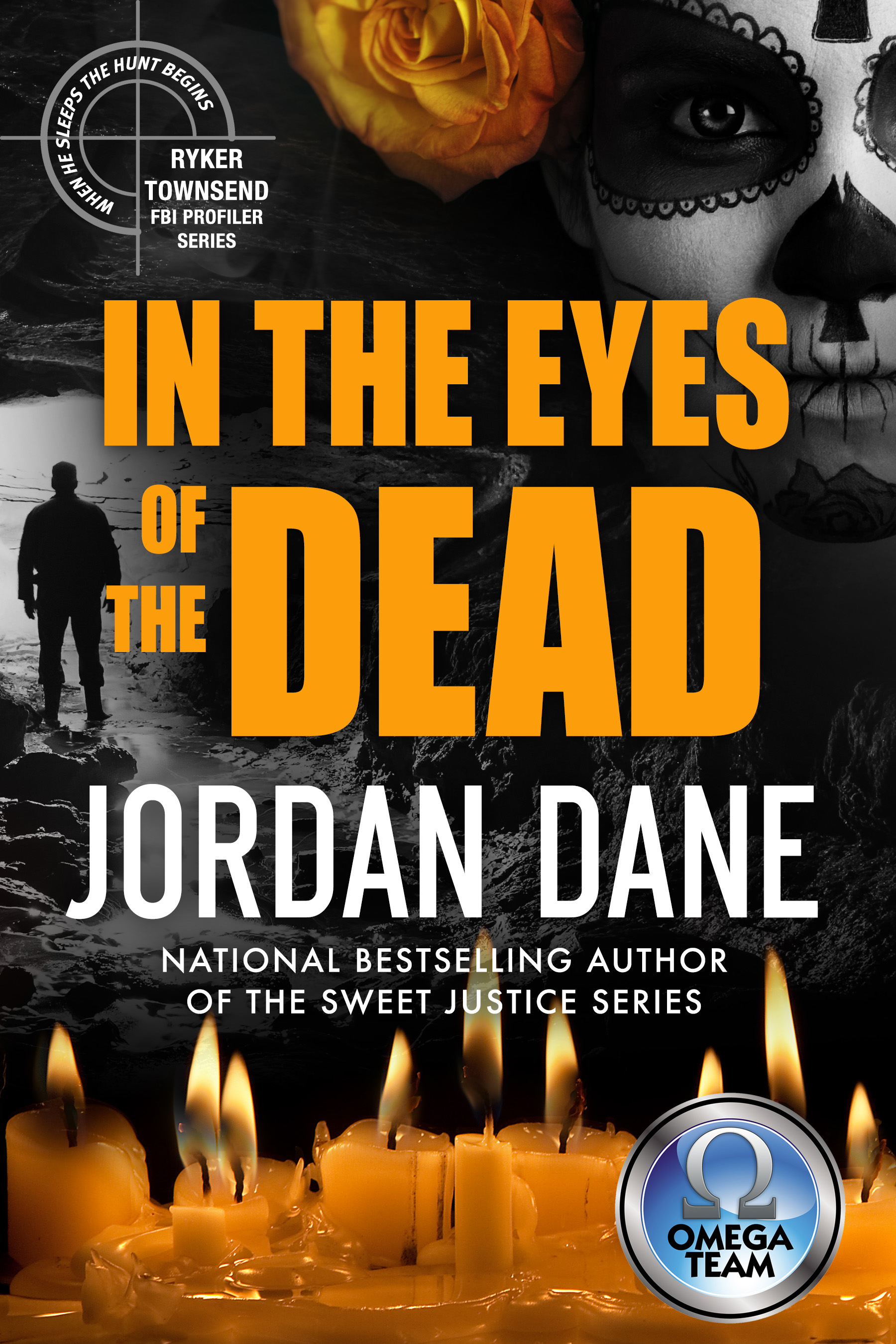
In the Eyes of the Dead – $1.99 Ebook – Ryker Townsend FBI Profiler series

After four teens are murdered, a mysterious Santeria holy man and his devoted followers force Ryker and Athena to join forces to uncover a tragic truth.

 

Bad Copy: Is This the End of the World As We Know It?

You might want to stand back, or at least put earplugs in, because I’m about to have a full-on get-off-of-my-lawn-what’s-the-matter-with-kids-these-days moment.

Two years ago, I came across this captioned photo in my Weather Channel phone app. In the interest of full disclosure, I have mocked this photo more than once on Twitter and Facebook, and even included The Weather Channel folks with an @. And, yet, it remains.

Notice anything?

fullsizerender-5

Two years ago! This abomination has shown up on my phone through two entire years of daily weather events: sunshine, fog, rain, clouds, sleet, hail, ice, and thunder snow (which is a also a thing, according to the app). The weather events are described with pleasantly short, declarative sentences, i.e., “Partly to mostly cloudy. High 34F. Winds NNW at 5 to 10mph.”

I won’t bother to dig deeply into what’s wrong with the grammar of this non-sentence, because we are all adults. Agreement is a problem, of course, and “distinguish the flames” makes me spew tea all over my keyboard every time I read it. When I read the hot, flaming mess that is, “Hear these firefighters amazing story,” I suspect that the single issue the writer considered for any length of time is whether or not the phrase should have an apostrophe hanging about somewhere. That he or she made the bold decision just to leave it out is characteristic, I think, of the incredible, sans-serif confidence of the whole bizarre caption.

I have so many questions about this:

Who wrote the caption?

What were they thinking?

Who okayed it for use online?

Is The Weather Channel requiring meteorologists to write app copy? (I don’t think so. My guess is that the meteorologists write the tidy forecast copy.)

Am I overreacting?

Does The Weather Channel not know/care that they are putting out copy that is, for want of a better word, illiterate? Despite the fact that millions may have seen it?

Does this make anyone else question the quality of The Weather Channel’s work in other areas, like forecasting?

Did the same person write the caption for the image below? Or was it a different person, one obsessed with Initial Caps? (See what I did there? I can play this game, too.)

fullsizerender-6

Captions like these make me worry. The grammar illiteracy I see in both print and online newspapers also makes me worry. Though our local university paper is always good for laughs when it comes to homophones and word choices that make me grit my teeth, national and international newspapers are almost as bad. While there are still plenty of writers and editors out there who do their best to be correct, the vast majority of words we read now–especially online–are not necessarily written by people who are concerned about communicating clearly. They’re more concerned with clicks than content.

As a child, I didn’t receive much of a formal education in the finer points of grammar. Studying Spanish and French helped me a lot. But I learned nearly everything I know about how language works through reading. If I needed to punctuate something like the phrase, “children’s stories,” or was confused about whether to use “lie” or “lay,” I would search through the books–usually fiction–on my own shelves. Shelves which held a few classics, but also a lot of Nancy Drew. These days, I always find myself in tussles with (often quite young) copyeditors. (See, I told you this was going to be a kids-these-days rant.)

I’m all about the growth of language. English is so dynamic and fun, absorbing new words and concepts with lightning speed. But what happens if it softens into a constant refrain of “oh, they’ll know what I mean” excuses?

Do you have any egregious, public examples of grammar misdeeds? Do you think we are headed for grammar chaos–and is that a bad thing?


Laura Benedict is the author of the Bliss House Trilogy and several other books of dark suspense. Sign up for her newsletter and get to know her better at www.laurabenedict.com.

How Many Of These Classic Books Have You Read?

img_1341We’re in an end-of-year, light-hearted mood today, so let’s take a quiz about what our accumulated reading habits “reveal” about ourselves, for better or for worse. Are you game?

This quiz is called “How Many Of These Classic American Books Have You Actually Read?”

I took the aforementioned quiz, dutifully checking off the books I read in high school or college (or at least, I checked the books that I remember reading–the tail end of the 70’s now seems long ago and far away. (To be honest, the entire late-70’s decade has become slightly fogged-over in my memory, somewhat obscured by a brume of natural herbal smaze).img_1342

My quiz result?

It was this: “You must be an English major.

Wrong. Back in college I was a Political Science major, with a strong interest in journalism (there was no Journalism major at my liberal arts school, so I spent every free moment working at the campus newspaper, and a local TV news outlet). In those days, I had very little interest in fiction. I did eventually end up taking a few English Literature courses, mainly because I saw those courses as being located somewhere within the realm of a Kingdom known as the “Land of Easy A’s”. Whatever “serious” literary books I read, I read them only as a result of the requirements of a course syllabus. My then-ambition was to become an ink stained wretch, not a literati (or literatus, per my Ghost of Latin Teacher Past).

Okay, so you know the worst about me–that I am an English major poseur, at best. What about you? Can you take the “Which Books Have You Read.” quiz, and share your results?? ?

The Bestseller Code

by Larry Brooks

If today’s title rings familiar, that may be because there is a new writing book out by that title (with a subtitle added: Anatomy of the Blockbuster Novel, by Jodie Archer and Matthew L. Jockers) .

The title at first struck me as shamelessly derivative (what’s next, The Lovely Funny Bones?), but when I investigated further I realized that it is actually clever, since the book describes how novels like The Davinci Code achieve as they sometimes do, with over-the-moon success that everyone immediately tries to explain.

With — literally — a code, no less.

The Davinci Code is, of course, a gift to cynics — Dan Brown? A symbologist? An albino assassin working on retainer for The Vatican? Really? — but the numbers prove them wrong. Inarguably so. Sometimes when a novel breaks that big it can be explained — even cynically — as some happy confluence of social temperature, marketing budget and the unbreakable Tipping Point Code (not a novel yet, just a mystery we all strive to solve), rather that what it really is: an intense application of the forces of story that make novels work. Which include a conceptually-rich premise, dramatic tension, an empathetic hero in a world of trouble, more dramatic tension, thematic weight, killer scenes, and a passable writing voice… stir in a publisher’s commitment to back it strongly, then hope the media likes it as much as that pub committee did… then pray for a little luck and a big order from B&N.

But there is always a better explanation behind the numbers. And, even in this book, it begins with the list of story attributes I just described.

Writing is a lot like love, in that regard. The principles are simple, but the chemistry remains beyond defintion. And so we dive in, do what we can with our best choices, and keep hoping we hit the jackpot.

Writers of these iconic blockbusters have done something right. I mean, really right. Saying you aren’t impressed with the writing is like saying you don’t think that Cate Blanchat is good looking… it’s not the point. The explanation goes much deeper than what meets the eye and ear, and for the serious emerging author it’s worth pursuing.

The Bestseller Code is to writing novels what sabermetrics is/was to baseball, and to the novel Moneyball: The Art of Winning Unfair Game (Michael Lewis, 2003) that broke it to the public, and popularized it with a movie adaptation starring Brad Pitt (because yeah, all baseball GMs look just like that). It is an attempt to codify the aesthetics of storytelling that go ballistic in ways that transcend basic, commodity craft — not to mention logic — to reach people on a deeper level. It actually seeks to explain the numbers as a form of algorithm that can be analytically applied to raw manuscripts to access potential for marketplace success.

I’ve attempted that same explanation myself, in my book Story Physics, which covers the same elements of craft without the ones and zeros.

The Bestseller Code presents a case that I believe fails in its aspiration — that we can predict success based on a survey and quantification of story essences… while indeed landing on the identification of the core elements of dramatic fiction that tend to whip readers into a frenzy. The authors duly observe that books come and go that score high on that algorhythmic scale (as high as the home run titles) and achieve little notice, while some novels with C-level scores end up on bestseller lists without an explanation at all.

Proving what William Goldman famously told us in his book, Adventures in the Screen Trade: “nobody knows anything.” Including the 46 agents who rejected Kathryn Stockett’s manuscript called The Help a few years ago.

So I’m not here to recommend the book, per se.  Rather…

… just to flag it for you, and to suggest that you go to Amazon, click on the cover and read the first chapter (The Bestseller-Ometer, or, How Text Mining Might Change Publishing) shown in the Look Inside feature. It is a fascinating 1500 word read, quite well written, which circles around the drain of suggesting that success can be predicted based on which boxes are checked off (something us writing guru types like to echo), instead of the more easily swallowed rationale that to achieve massive success those boxes corresponding to issues of core craft must indeed be honored… the very thing this magic algorhythem seeks to digitize.

It’s finding a publisher and a handful of reviewers who notice that’s the real math of it.

Click HERE to give it a read. Chewy food for thought, indeed.

*****

This is my last KZ post of 2016, before we break for the holidays to catch our breath and plan our assault on 2017. I wish you all a blessed season, rich and warm with family and friends, and may you arrive at the New Year story milestone refreshed, renewed and armed with a killer premise that will make Dan Brown wish he’d thought of it first.

See you back here in January!


The Three Stooges of Writing

by James Scott Bell
@jamesscottbell

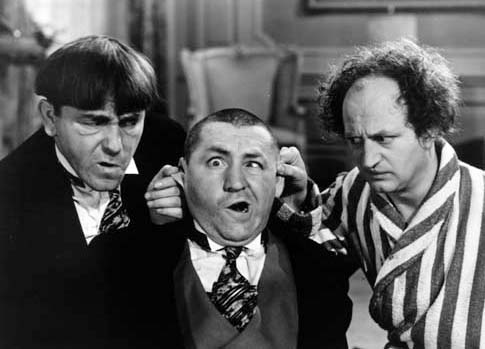
healthywealthyNo, that’s not a typo. I’m not talking about the three “stages” of writing. I’m talking about the Moe, Larry and Curly inside your head.

You know what I mean. You’re writing along, and then, all of a sudden, slap … poke … bam … woob woob woob! You’ve got a whole lot of Stooge noise going on.

So I thought it best to isolate these boys and deal with them once and for all, lest our writing time become a comedy of errors.

Moe is Perfectionism

Ah, Moe. He thinks he’s the boss. And he backs it up with violence. The two-finger eye poke, the basic slap, and any tool he can lay his hands on. And he’s always angry about something.

So you may be writing or editing, and suddenly you’re smacked with, That’s no good. And neither am I! Who am I kidding, trying to be a writer? 

Or you’ve finished a novel, you’ve done the very best you can, and the next step is submission. But then you get your eyes poked by your inner Moe. You knucklehead! This isn’t nearly good enough! Submit it, and you’ll get turned down and never get another shot! 

Now, there’s nothing wrong with a little bit of constructive questioning. But that’s far from the ham-fisted Moe! You’ve got to stop that Stooge in his tracks How? I suggest you do it physically (that, after all, is the Stooge style). Slap your cheek (gently!) and say, Stop it! All you can do is all you can do. And all you can do is enough!

Don’t laugh. This is a little trick that actually works. You can interrupt destructive thoughts with a physical move, then replace the thought with a better one, or with some positive action. When I was just starting out I’d sometimes get a Moe in my head, and he was vicious. So one day I slapped myself and, out loud, quoted Cher from Moonstruck: “Snap out of it!”

And then immediately went back to my writing.

Do this and at the very least you’ll be getting more words down on the page. That’s a lot better than letting Moe rule your roost.

Larry is Befuddlement

Poor Larry. He smarter than Curly but dumber than Moe, and is always caught somewhere in the middle. He spends most of his time confused. He can’t do a thing with his hair. When Moe slaps him, he usually has no idea why.

Ever feel like Larry about the publishing business? Should I go for an agent? How do I query an agent? How many agents can I query at once? Should I self-publish? How do I do that and get discovered? Will it hurt my chances of getting a traditional contract someday?

And then one day you’re slapped, and you don’t know why. Why didn’t they like my novel? Why didn’t it meet their needs? Is that just a phrase or does it mean I stink?

Your inner Larry needs get some education. Make a list of the areas you’re confused about. Write them down. Define them. And then you can make a plan to study each area.

Because I was once told I couldn’t learn to write fiction, and then went out and learned, I strongly believe that anything you need to learn to move forward in your career you can learn. The information is out there.

You don’t have to live with Larry in your head.

Curly is Emotion

We love Curly. Maybe that’s because he’s the Stooge who is most like us. He does things out of raw emotion and frequently ends up getting hurt. We’ve all been there.

But remember, Curly is resilient. My favorite Stooge moment is always when Moe clobbers Curly with some nasty weapon, like a pickax. Curly hollers, “OH OH OH OH!” then he quietly goes, “Look.” And the weapon itself is in worse shape than his head. That pickax is folded up like an accordion.

This writing life will hit you over the head. Rejections, bad reviews, unfair reviews, reviews with spoilers … lots of frustration! Sometimes you just want to lie on the ground and run around in a circle, Curly-style.

So realize this: it’s okay to let out an Oh! Oh! Oh! when you get hit.

And when something good happens, to shout out a full-throated Nyuck! Nyuck! Nyuck!

But never stay there. Let something hurt for half an hour, and rejoice over good news for a day.

But then get back to your keyboard!

If you do that, I guarantee you won’t get a pie in the face. You will get better as a writer.

What about you? Is there a Stooge who overstays his welcome in your writer’s mind? What do you do with him?

How Make Living Writer-printed version***

And if you need further Stooge alleviation, please see my book The Mental Game of Writing

I Got Your Number


the-bionic-woman-1-coverBy Elaine Viets

My body is special, and here’s why: It’s traceable from top to bottom.
Several winters ago, I slipped on the ice in St. Louis and wound up with a total hip replacement. I was recovering from the surgery in the hospital, floating on a fluffy morphine cloud. (Let me tell you, morphine is definitely my favorite drug. No wonder the docs take it away after three days.) Anyway, I was pushed off my morphine high when a pathologist friend called.

hospital-room“Congratulations on your hip replacement!” she said.
Huh? I didn’t see any reason to celebrate.
“No matter what happens,” she said, “if you’re murdered and buried in the woods, they’ll always be able to identify your headless body.”

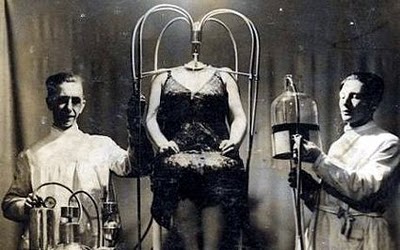
6-olga-the-headless-ladyThat’s never been one of my top ten worries. But at the time, a serial killer was stalking the area, kidnapping women, cutting off their heads, and leaving their decomposing bodies in trash bags along the highway. Police were having trouble identifying the victims – many didn’t have fingerprints in the system.
But my hip replacement had a nice traceable number engraved in the titanium. Decomp would make no difference. I wasn’t a no body any more.
Fast forward twenty years. That’s when I had six strokes, including a hemorrhagic stroke, and brain surgery. (I’m fully recovered, thanks.) Brain surgery put me a head of most people. When the surgeon sawed open my skull, he held the pieces in with titanium doodads (that’s a medical term). Those are numbered, too.
I am now identifiable top to bottom.
If deer hunters stumble across my skull in the woods, or I wind up on a shelf in some serial killer’s basement, I’m no Jane Doe.

skullMost mystery writers struggle with body identification in their novels. Identifying the victim can slow down a fast-paced plot. Yes, there are dental records, but you need to know the victim’s name to match her to them. Her prints have to be in the system for those to work. And you have to know who she is already to confirm her identity with DNA.
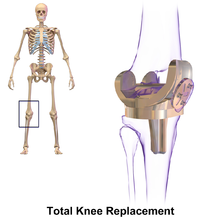
Medical implants cut through that. You usually won’t find out the victim’s name in ten minutes. But implants can help you trace your victim faster. If you want to pick up the pace of your crime novel and have your victim ID’d quicker, consider giving her a medical implant: a knee implant, hip implant, a pacemaker or other cardiac device.

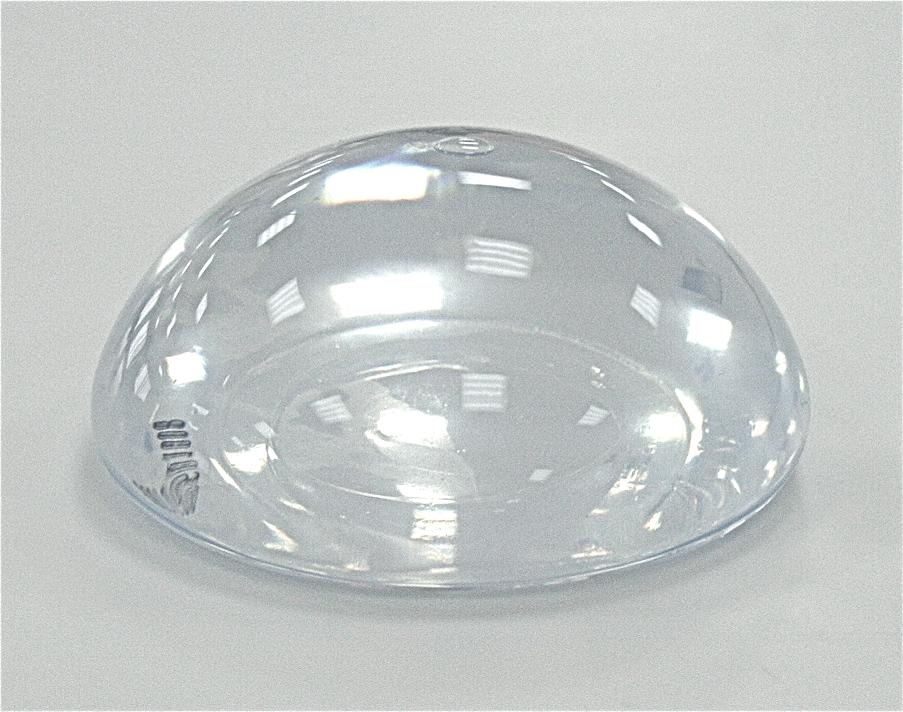
knee_replacementBreast implants are also numbered. Both kinds, saline-filled and silicone gel. So your unidentified woman – or man, for that matter – could be someone who wanted a larger chest. Or she could be a woman who had breast implants after a mastectomy or other reconstruction from an experienced surgeon.

breast-implantThe makers of medical implants sold in the US must list them with the FDA, and ME’s offices usually contact the manufacturer. It’s faster – but not lightning quick. The surgeon who used the implant may have closed his practice, and the records may be in storage. The hospital where the surgery took place may have the records on file.
Twenty years after I had a hip replacement, I had to track down the model and name of the device for an orthopedic surgeon. The surgeon who’d performed the replacement was long gone – but the hospital had the records stored in the cloud.
They had my number.

******************************************************************
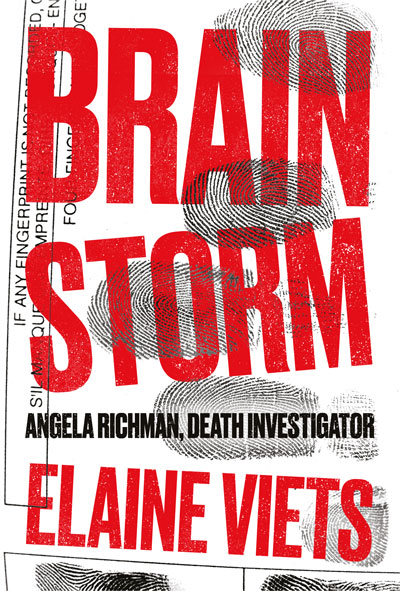
viets-brainstorm-smallWin Brain Storm, my new Angela Richman Death Investigator mystery. TKZer PJ Parrish says, “Brain Storm has everything I love in crime fiction – complexity, intelligence, pretzel plotting, and a touch of dark humor.” To enter, click Contests at www.elaineviets.com

My Day With John Wayne and Perry Como

By John Gilstrap

For those of you who came here today to learn a little more about blowing stuff up–which I promised to discuss–you’re likely to be a little disappointed.  Fact is, there’s breaking news that takes precedence.  On December 19, at 3:00 pm (and probably again, later) getTV will rebroadcast Perry Como’s Early American Christmas, which first aired on December 12, 1978.  It features the College of William and Mary Choir, of which I was a part.  Here’s a screen shot of my 21-year-old self in the company of my dear friend, Jim Shaffran (who is now part of the permanent company of the Washington National Opera).

screenshot-2016-12-06-12-11-43

That was taken while shooting a tavern scene, the entirety of which can be seen here.  It’s worth noting that shooting started somewhere around 5:00 a.m., encompassed many takes, and that the tankards all contained real beer.  More on that later.

We had known from the beginning of the school year that the Perry Como Christmas Special would be shot in Williamsburg, and that the choir would be involved.  We also knew that the Men of the Choir (as we called ourselves) would have a featured part, but as I recall, we didn’t know until very late in the game that it would be a costumed performance.  That meant visits to the Colonial Williamsburg costume shop, fittings, and, well, responsibility.  By the time I was a senior, I had designed my entire existence around as little responsibility as possible.  But I stepped up and, I have to say, rocked the outfit.

Was I concerned that the shooting schedule fell squarely in the middle of midterm exams?  Well, maybe.  But I was going to get to meet John Wayne.  No, really.  John Friggin Wayne.  I could repeat my senior year if I had to, but, come on . . . John Wayne!

First a little bit about Mr. Wayne.  For me, being a male of a certain age, the Duke exhibited pretty much everything that defined being a man’s man.  In person, he was huge.  When he shook my hand, he engulfed pretty much the whole thing, up to the wrist.  He spoke in real life in that same halting syntax that you hear in the movies.  And he was cranky.  (We didn’t know it at the time, but this Christmas special would be one of his last performances before passing away.)

If you’ve ever done any kind of video, you know how long and boring the setup for any shot can be.  While the crews did their thing, Perry worked the crowd.  We were at least one–maybe two–flagons of ale into the morning before the director said, “action” for the first time.  If you listen carefully to Perry, I think you’ll hear that he was a bit lolly-tongued when it came time for “I Saw Three Ships.”  And he kept blowing takes.  Full disclosure: As a practical matter, it was impossible for us to blow takes because the singing you hear was all prerecorded.  It’s all our voices, but done in a studio.  In the video, we’re singing along with the playback.

As the morning–and the takes–ground on, John Wayne’s fuse grew shorter and shorter.

And the flagons flowed.  I was pretty much an Olympic class beer drinker when I was 21, and I remember realizing that I was ripshit well before noon.  Not shown in the video clip is the climax of the tavern scene where Perry and the Duke toast us with, “Merry Christmas!” and we respond in kind, upending the mugs of beer and their contents.  And then a new mug would appear.  And of course, the scene had to be shot from every angle.

By the time it ended, the Duke was, well, pissed off.  Made things a little awkward on the set, but Perry seemed to be having the time of his life.

I had a blast that day.  At the end of the shooting, around 1:30, as I recall, the director said they needed extras for other scenes they’d be shooting that day and night and asked if any of us would like to stick around.  What the hell?  No one looks at senior year grades anyway.  If you watch the entire special and look closely, you’ll see me walking in and around a number of other scenes.  You’ll also see a couple of stunning performances by the entire choir.

For as long as I can remember, my mother had a serious crush on Perry Como, the the news of my involvement in the Christmas special was particularly well-received in Springfield, Virginia.  To hear her tell the story, the show was really about Perry and me.  Moms are like that.  In one especially amusing anecdote, I called home to relay the events of the shooting day.  While telling the story of the endless flagons of ale and Perry’s progressing inebriation, I mentioned in passing that during one of the breaks, Perry and I chatted while peeing at adjacent urinals.  My mother’s question: “Did you peek?”  Me: “Mom!”

When the very long day was over, and crews were breaking things down, I found myself face-to-face with John Wayne with no others pulling at his attention.  I told him that I was a huge fan of his work, and what an honor it was to have spent the day with him, and if I could please have an autograph.  He said, and I quote, “No.”  Then he walked away.  I figure he wasn’t feeling well.

But I got to meet him.  And I shook his hand.

We folks at The Killzone will be taking our Holiday Hiatus before my next posting time comes around, so let me take this opportunity to wish all of you a wonderful time with family and friends, good food and lots of laughter.  I’ll see you on the flip, in 2017, and I promise we’ll start by blowing stuff up again.