
 Although we mostly talk about writing here at TKZ, your answer to this question can be related to any aspect of life, whether it’s craft-related or something more personal in nature: what important new skill or lesson about life did you learn in 2016?
Happy Thanksgiving to Our TKZ Family
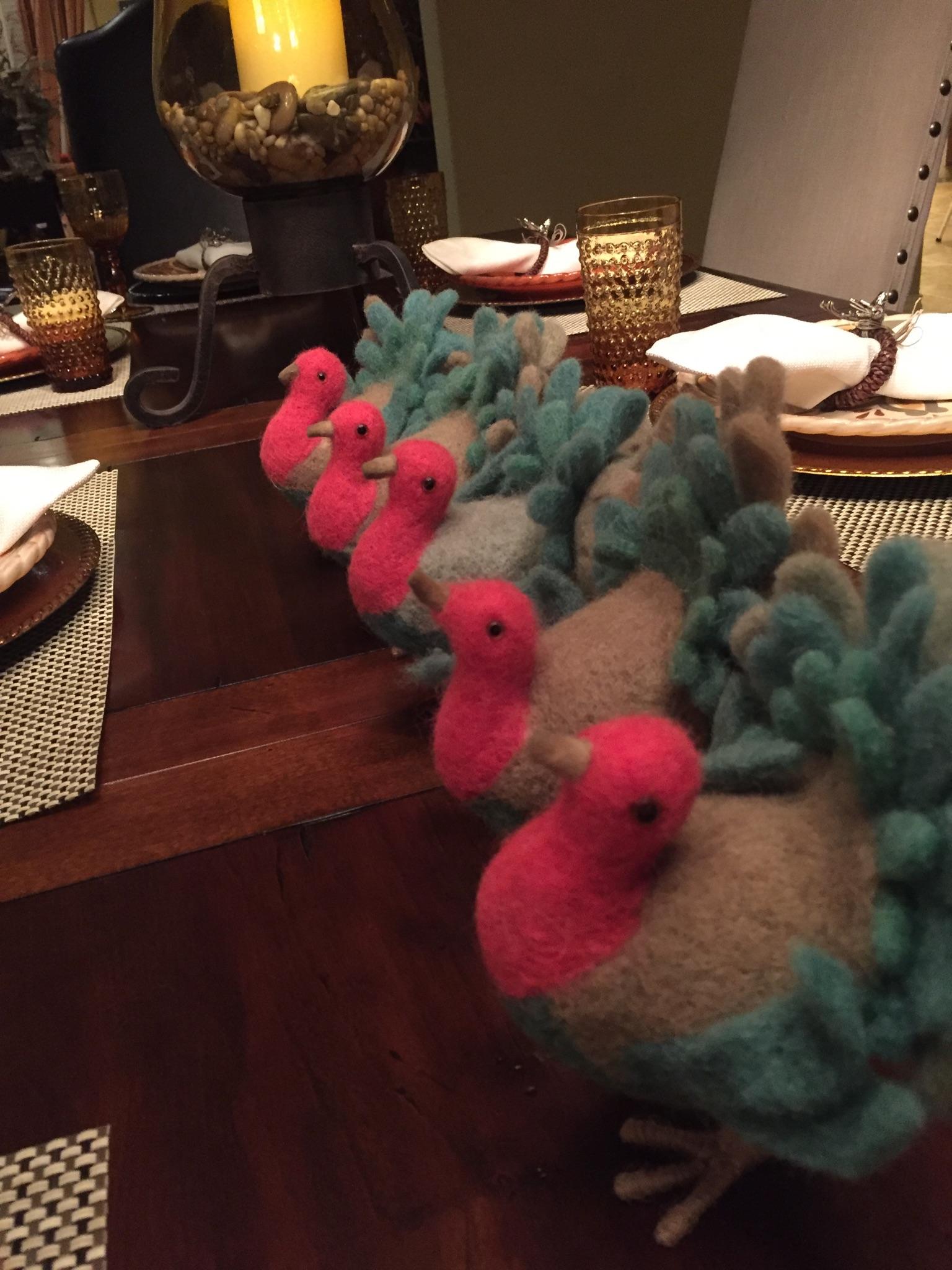
It’s hard to believe this year has flown by, but I don’t want to rush the holidays. As a writer, I’m often locked away in my office or in my head, living adventures only limited by my imagination. But with family and friends during the holidays, I want to be in the moment every day and take time with the people who truly matter in my life.
My TKZ family–the contributing writers on this blog as well as the wonderful people who follow our shenanigans and share their writing trials and tribulations–you all matter to me and I love the time we spend together during the year. I know my blog mates feel the same about the community and the camaraderie we’ve built over the years.
I hope after you read this post, you’ll share what you did for Thanksgiving and how it made you feel. I’ll go first.
It had been a tough year of transitioning my parents into a independent living facility that suited them. We had to move them twice, but they appear to be settling in and making friends and the food is great. But after selling our family home, the one we spent over 60 years carrying on family traditions, we’ve lost our anchor and have to make new traditions. Thanksgiving will be in my sister’s lovely home with her family. There will be 12 of us. Since not everyone can make it to Texas, we take pictures and videos to share with friends and family who live elsewhere and we text in the moment so they feel they are with us. The only thing we’re missing is an app for ‘Scratch & Sniff.’

We have two turkeys (one cooked in the oven with the other one smoked or fried), mashed potatoes, Cranberry Chutney, baby peas with mushrooms and green onions, sweet potato casserole, an unusual corn recipe, Caesar’s salad, pumpkin pies, and more. Thanksgiving is a time for slowing down to count our many blessings. I love the smells in the kitchen, watching my mom help my sister make a perfect gravy, the sound of football games on TV after dinner, and the feeling of home from the experience.
Here’s my family Cranberry Chutney recipe that I’m making. It’s really good and leftovers taste even better.

Ingredients:
2 – 12 oz pkgs fresh cranberries
3 cups sugar (This can be cut down to taste or apple juice concentrate can cut down on sugar)
1.5 cups of water
2 Teas grated orange peel
1.5 cups orange juice
1.5 cups Golden Seedless Raisins
1.5 cups chopped walnuts
1.5 cups chopped celery
2 red apples peeled and chopped
1.5 Teas ground ginger
1-2 Teas cinnamon to taste
Directions:
In 3 QT sauce pan over medium heat, combine sugar and cranberries and cook until boiling, stirring frequently. Reduce heat to low and simmer 15 minutes. Crush or pop some of the cranberries with large spoon.
Remove from heat and stir in remaining ingredients and refrigerate. This dish can be done a day or two before Thanksgiving. Leftovers can be made into cobbler. Enjoy!
Thanksgiving Funnies – because everyone needs a good laugh when they’re wearing fat pants.
“I come from a family where gravy is a beverage.” Erma Bombeck
“Vegetables are a must on any good diet. I suggest carrot cake, zucchini bread, and pumpkin pie.” Jim Davis
“Most turkeys taste better the day after. My mother’s tasted better the day before.” Rita Rudner
“You can tell you ate too much for Thanksgiving when you have to let your bathrobe out.” Jay Leno
Happy Thanksgiving, TKZ! Please share your day with us.
Things That Go Boom (Not Bang)
Let’s talk a bit about explosives, shall we? After such a warm reception to back-to-back posts on guns and bullets, it seems like a natural progression. This post is going to address some of the technical concepts behind what explosions are, and why they do so much damage. Two weeks from today, I’ll go into more detail on the proper applications of explosives.
Understanding the essentials of overpressure. All day every day, each of us carries on our shoulders (and the rest of our bodies) the weight of our atmosphere. All of that nitrogen and oxygen and water vapor has mass, after all, and it exerts a pressure at sea level of 14.5 pounds per square inch (psi) of surface area. Take that number literally. Every area of 10 square inches of surface area is carrying a pressure (think weight) of 145 pounds; every 1,000 inches of surface area is bearing the burden of 1,450 pounds. Like that. Scientists and engineers refer to the pressure of “one atmosphere” (14.5 psi) as 1 “bar”. Twice that pressure would be called two bars, and so forth. Any pressure that exceeds one bar is called “overpressure”. The greater the magnitude, the greater the resulting damage.
One way we experience relatively harmless overpressure every day is sound. When we speak or clap our hands, we send waves of pressure through the air that our ears register as sound. The decibel scale, then, is actually a measure of overpressure, wherein every three-decibel increase represents a doubling of sound pressure. When someone whispers, he crfeates an overpressure of about 13 decibels, which is measured in microbars (millionths of one bar). As noise increases in intensity, the pressure increases geometrically. We start seeing glass breakage at 163dB. At 195 dB, we reach a one-bar overpressure the equivalent of an additional atmosphere of pressure. Ear drums will almost certainly rupture at that level. A Space Shuttle launch exerts about 215 dB at its surface.
My point here is that sound and pressure are the same thing. It’s an important concept to keep in mind when we talk about explosions, because the practical definition of an explosion is the rapid expansion of gases that creates an audible boom. A latex balloon goes pop when you stick a pin in it because the expanding flexible surface of the balloon has trapped gas under pressure. As soon as the pressure vessel fails, the gas instantly reconverts to atmospheric pressure and the suddenness of it all creates a ripple of pressure that we register as an explosion. If you stick a pin into a Mylar balloon, however, there’ll be no pop because there’s no expansion.
Still with me? Okay, here we go.
A gunshot makes a loud boom because the combustion gases which propel the bullet down the barrel are under tremendous pressure until they get to the opening at the muzzle, at which point they instantly expand and reduce to atmospheric pressure, disturbing all the still air that was surrounding it. A suppressor (“silencer”) works by dissipating those pressures through baffles in the barrel of the device to the point that they are nearly reduced to ambient pressure by the time they are released to the atmosphere. Thus, no bang.
Why the Speed of Sound Matters. The speed of sound (767 mph) is essentially the speed at which air molecules can move out of each other’s way. When anything moves faster than 767 mph–whether it’s an airplane, a bullet or super-heated gases–air molecules stack up on the leading edge of the speeding mass because they can’t get out of the way and they create more pressure–sometimes a lot more pressure. And as we discussed when talking about bullets, since nature abhors imbalance, as soon as the speeding mass passes by, it is followed by and equal yet opposite negative pressure (a “rarefaction” wave). When this pressure fluctuation is caused by a speeding jet, the resulting explosion is called a sonic boom, and it is often powerful enough to shatter glass. When it’s caused by munitions or certain other events, we call the resulting explosion a blast wave, and it is often powerful enough to reduce buildings and people to vapor–literally.
An explosion whose blast wave travels faster than the speed of sound is called a “detonation”. If the blast wave travels at less than supersonic speed, it’s called a “deflagration”. To put that in perspective, TNT detonates; napalm deflagrates.
The military and international community refer to detonable explosives as Class 1.1 explosives (“Class One, Division One), while the American civilian community refers to them as Class A explosives. Deflagrable, or mass-fire, explosives are referred to as Class 1.3 (Class One, Division Three) or Class B explosives respectively. Most fireworks are Class B.
Primary vs. Secondary Explosives. Blowing stuff up requires trade-offs. For example, you want it to go bang on time every time, yet you never want it to go off unexpectedly. Given these constraints, how do you transport your boomers from here to there and not yourself become humidity in the process?
The solution is to make the main charge of deployable bombs relatively hard to set off. For example, you can shoot a block of C-4 explosive with a bullet and it won’t explode, but you can cut off a chunk and use it to safely start a fire. Similarly, if a bomber crashes on takeoff, the bombs it carries will not explode. (Both of the above examples ignore the presence of gremlins, who so often prove us engineering types to be full of it.) These main charges are called “secondary explosives” because in order to get them to explode you need to hit them with a “primary” detonation wave. That’s what blasting caps, or detonators, or initiators, are all about.
Primary explosives are highly energetic, stupidly sensitive explosives that will go high-order (detonate) on impact or in response to a tickling charge of electricity. The primer in the back end of a bullet is a primary explosive. So is the active ingredient of a blasting cap. When those babies go off, they send a supersonic wave of energy into the secondary explosive, thereby causing it to detonate.
We’ve all seen those old newsreels of a B17 squadron during World War Two dropping bombs out of their bellies, and then the flicker of explosions way down there on the ground. What you don’t see is the progression of events that made those explosions possible. On takeoff, none of the bombs is yet capable of exploding because the fuses have not yet been activated. As they fall, however, a tiny propeller spins off the nose of the bomb and in the process arms the fuse. When the fuse encounters the proper conditions–altitude, in the case of an air burst, or impact in the case of an impact or penetration explosion–the fuse triggers the primary charge which sends a blast of energy through the secondary charge and the bomb goes off.
Okay, that’s it for tonight. By now, I figure you’re either bored to tears or totally jazzed. Either way, I’ll be back with more explosive material in a couple of weeks.
First Page Critique:
The Dragon Within
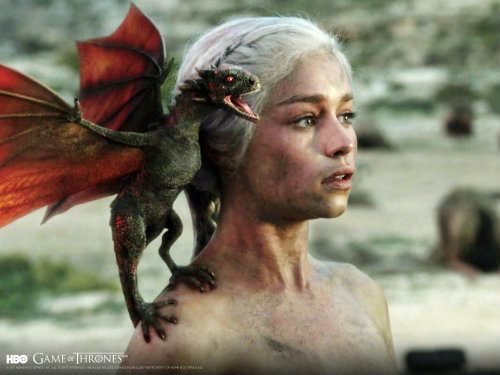
Photo from Game of Thrones
By PJ Parrish
Top of the morning to you all. I’m prepping to get out of town for turkey day up in Michigan so I am offering up a submission from one of our fellow writers. It’s titled The Dragon Within. Many thanks to our writer-submitter for letting us use his/her story for our learning purposes here. My comments follow, but please weigh in, fellow TKZers, with your input.
The Dragon Within
“Are there dragons in the elven lands?” Matthew whispered, his gaze lingering on the wooden boat carrying their mother’s body towards Illethia.
Shael ignored their eldest brother’s derisive snort. With the tip of her thumb, she wiped a tear off Matthew’s cheek. “I don’t know,” she said. “But Mum’s in the arms of Zy’el now, and He’ll protect her.”
Shael glanced at the tiny group of neighbours and friends who had accompanied them to the beach to bid Joella farewell. She knew each one well, had known them since she was a child, but life had taught her the worse dragons were those posing as friends. She squeezed Matthew’s hand and drew him closer. He was only ten. With Mum’s passing, she had to be both sister and mother to him. And she had to keep him safe.
The boat with the eye of Zy’el painted on its bow, drifted towards the elven lands. Ripples expanded from the vessel and broke up on the sand by Shael’s feet.
The waves did not bring Mum back.
Why had Mum insisted on a traditional sea burial and wanted her remains sent towards Illethia, towards the land of the enemy? The brooding outline of Illethia, a mass of darkness against the early morning orange-grey horizon, was a constant reminder of what had been and what could return to threaten the Inner Lands. Mum’s choice of funeral was bound to give rise to talk. Talk led to questions. Mum had known more than anyone what the elven had done to their family. To Shael. She knew that mere suspicion could get the whole family executed.
Yet Mum had secretly continued to love and respect them, even after it became a crime punishable by death. If only Mum had told her more about the elven. It was too late to ask now. Not that she ever answered Shael’s questions about them.
Shael raised her hand to her headscarf. The wind was picking up, but practice had taught her the best way to tie the scarf tight around her head. The scarf was in place and their secret safe. For now.
_________________________________________
First, a qualifier from me: I am guessing this story falls into the fantasy realm, given the “dragon” reference and what might be a nod to Tolkien’s “Elven lands.” Full disclosure, this genre is not my main cup of tea. But that shouldn’t matter. A good story is a good story is a good story. So let’s see if it works on that basis.
I like that the writer opened with a dramatic moment — a funeral that places our protagonist (I assume Shael is such) at the brink of a life-changing conjuncture. We get the sense that Shael is facing two challenges: the new responsibility of raising her young brother and that her mother, for unknown reasons, has left her in a fix by conspiring with the enemy elven. (at least I think that’s what’s going on here…more on that in a moment.)
I also like that the writer is using “dragons” on two levels. Dragons are a real threat in the mind of the boy (he asks, do they even exist?). Dragons are also a metaphoric threat to Shael, who sees her neighbors as dangerous if they learn the truth about Mum. And there is even a richer, possible third meaning to “dragon.” More on that later..
But all of this is a bit cloudy in the telling. I am not totally certain of what is going on in this critical opening scene and I need to be. The narrative tells me this:
Why had Mum insisted on a traditional sea burial and wanted her remains sent towards Illethia, towards the land of the enemy? The brooding outline of Illethia, a mass of darkness against the early morning orange-grey horizon, was a constant reminder of what had been and what could return to threaten the Inner Lands. Mum’s choice of funeral was bound to give rise to talk. Talk led to questions. Mum had known more than anyone what the elven had done to their family. To Shael. She knew that mere suspicion could get the whole family executed.
Yet Mum had secretly continued to love and respect them, even after it became a crime punishable by death. If only Mum had told her more about the elven. It was too late to ask now. Not that she ever answered Shael’s questions about them.
I am left to guess that this “viking” burial at sea is not usual, especially since the boat is apparently being cast off toward the enemy land across the bay. Why would Mum want this when apparently it was a betrayal of some kind since the elven had harmed Shael and the family at one time. And Mum had apparently “secretly” loved the elven, even though it was a crime. This is all fine and good for establishing a sense of intrigue and potential conflict but I wish the writer wouldn’t be so obtuse in the telling. We need a little more context and less confusion here. Maybe this is just because I am not “versed” in fantasy, but don’t we need to know what the elven are? Is this a tribe? A different race? An adjective for elf? If the last one, are Shael and her ilk human? Those of you who are big fantasy readers out there please comment and let me know if I am just being dense here.
Another point: When you are creating an un-real world (heck even a real one!) you have to give us the context of setting. Outside of one image of what Illethia looks like across the water, I don’t know where the heck I am — or what era we are in. What does this place look like? What are the people wearing (one head scarf reference, that for a moment, sent me careening into the mid-east). Please don’t neglect your setting. I call this the coma-victim-syndrome: Where am I? Who are these strange people? What year it is? Who am I? Which begs the important point…
I need a few more hints about our protagonist. How old is she? Can you drop some clues in that give us a picture? Also, we could use some more emotion from her. I don’t get a sense of what kind of person she is.
Before I go into my line edits, one last word on names. What you call your characters is so very important, as proper names help ground the reader in the world you are creating. If this protag were named Jackie Gilmore, well, we know we’re not in Elven land. So this writer, by choosing the odd names, signposts that we are in fantasy-land. That’s good! But I got hung up on the fact that both Matthew and Shael are Hebrew names. And “Mum” is straight out of England’s Cotwolds. Then we get the land names: Zy’el, which sort of sounds Hebrew or maybe sci-fi, and Illethia, which is also the name of a video game warlord. Here’s my take on this: When you are conjuring up un-real worlds, when you are working in sci-fi or fantasy, you must be doubly cautious about your naming. You need to have a consistency in tone that acts as a bridge for the reader when he ventures from the real world to your un-real one. These names sound a bit too magpie-picked to me.
Let’s go to the line edits…
“Are there dragons in the elven lands?” Matthew whispered, his gaze lingering on the wooden boat carrying their mother’s body towards Illethia. Yes, you can open your story with a quote and this one is pretty darn good — there be dragons! — because it works on several levels. But I think it is diluted in its impact by attaching that phrase afterward and by using the confusing elven reference too soon. How about this:
“Are there dragons out there?”
Shael looked down to the source of the tiny voice, down to her brother Matthew standing at her side. He wasn’t looking at her. He was watching the small wooden boat drift away from shore, the boat that held the body of their mother.
She reached down and wiped a tear off Matthew’s cheek. “I don’t know,” she said. “But mother’s in the arms of Zy’el now. He will protect her.”
But even as she said it, Shael feared it wasn’t true. Through the orange-gray morning mist, she could just make out the brooding outline of Illethia across the bay. The boat bearing her mother’s body was heading toward the land of their enemies. And that was the way their mother had planned. It had been her last wish.
I think a down-and-dirty summary of the central conflict needs to be stated quickly and up high. Then you can move on and flesh in some details. Moving on…
Shael ignored their eldest brother’s derisive snort. I find the insertion of this other brother intrusive in the nice moment between Shael and Matt. Bring him in later. With the tip of her thumb, she wiped a tear off Matthew’s cheek. “I don’t know,” she said. “But Mum’s in the arms of Zy’el now, and He’ll protect her.”
Shael glanced at the tiny group of neighbours and friends who had accompanied them to the beach to bid Joella farewell. She knew each one well, had known them since she was a child, but this line about neighors being dragons it important. Set it off in its own sentence! She had known them since she was a child. But life had taught her that the real dragons were those posing as friends. life had taught her the worse dragons were those posing as friends. She squeezed Matthew’s hand and drew him closer. He was only ten. With Mum’s passing, she had to be both sister and mother to him. And she had to keep him safe.
The boat with the eye of Zy’el painted on its bow, drifted towards the elven lands. Ripples expanded from the vessel and broke up on the sand by Shael’s feet. Here’s a place to drop in a hint about setting and culture: Is she wearing sandals, fur winter boots, barefoot? The waves did not bring Mum back. Nice ripple image above but what does this line mean? Of course they can’t. Turn it around maybe, and say, the waves were pushing mother ever farther away? And maybe that can work as a segue to Shael’s next thought — that maybe something else, an even stronger force, had been pushing her mother away long before now? Pushing her away from even Shael? Make your imagery mean something!
And we really need something to break up the backstory it’s-all-in-her-head narrative section that comes next. Show me this, don’t tell me. How about having one of people in the crowd come up and say something to Shael about this odd funeral? That could more gracefully illicit her thoughts. How about…
An old man came up to stand next to them. Matthew backed away but Shael held her ground.
“Why did she do this?” the old man muttered.
Shael tensed. There was no way he could know what mother had done, how she had really loved the Elven. But the anger in the old man’s eyes was real.
“Why did your mother insist on this old sea burial?” the old man pressed.
Then go into Shael thoughts about it. Find a way to break up the backstory. And slowly build the tension in it. Maybe she gives a vague answer to the old man and then she can try to analyze this situation in her head. Mother knew this ritual funeral would make people talk. People had always been suspicious of her anyway. And maybe hint that Shael herself might harbor some suspicions about her dead mother like, why would she do this, why would she love the enemy, even after what it did to our family. Even after what it did to ME. Again, by setting that ME on its own, you give Shael’s personal conflict weight. You must make the story be about your protag’s journey, whether it is back to Illethia to fight the enemy, or find out the truth about her mother. WHAT DOES SHAEL WANT? At a superficial level, to protect her family. But what about the deeper levels — why did mother betray me and love the enemy that hurt me?
Why had Mum insisted on a traditional sea burial and wanted her remains sent towards Illethia, towards the land of the enemy? The brooding outline of Illethia, a mass of darkness against the early morning orange-grey horizon, Lovely image here but what is lacking? We have no sense of what our surroundings look like. Are we in a fjord? English countryside? It is summer? How about the people dressed? We have no sense of setting at all here, alas, and I sense this is an interesting place geographically. was a constant reminder of what had been and what could return to threaten the Inner Lands. Is this the name of her country? Mum’s choice of funeral was bound to give rise to talk. Talk led to questions. Do more with this? Questions about the past? Mum had known more than anyone what the elven had done to their family. To Shael. She knew that mere suspicion could get the whole family executed. This is very important and you need to set this apart so we understand it. In newspaper talk, this is called burying your lead. When you are listing a litany of ills like this, put your most important one, the one that impacts your protag most, LAST. Try this…
The people in the town, the people Shael had known all her life, they had only suspicions about what had happened. But Mother knew. She knew what the elven had done. She knew what the elven had done to their family.
Shael looked out at the water, to the boat that was now just a small dark smudge in the mist.
Mother knew what they did to me.
Yet Mum had secretly continued to love and respect the Elven, even after it became a crime punishable by death. If only Mum had told her more about the elven. It was too late to ask now. Not that she ever answered Shael’s questions about them. Again, you are being a tad too obtuse about this central important conflict between mother and daughter. Ask yourself: What is my story about? I suspect, at its heart, it is about family secrets and how a daughter comes to grips with something bad her mother did. Great stuff!
Shael raised her hand to her headscarf. The wind was picking up, but practice had taught her the best way to tie the scarf tight around her head. The scarf was in place and their secret safe. For now. I’m not sure what this means. The simple act of tying a scarf tight keeps a lid on things? The metaphor is a bit too spot-on. Find a way to SHOW me this thought, rather than tell me. Maybe it works better if the scarf flies away? And maybe that draws a reaction from the old man or crowd? Make things happen in your narrative that illuminate the interior actions (thoughts and backstory).
Well, that’s it. In summary, brave writer, I like where you are going with this. I love that you open with a funeral that sets up the conflict. But I sense that you might not yet know your protagonist well enough YET to articulate what she wants, what her essential inner struggle and journey will be. As James always asks, what will be her “woman in the mirror” moment deep in your book? What will she face that will change her in some fundamental way? What is your story about? It’s not about war between Illethia and the Inner Lands. It’s not even about a young woman protecting her family. It’s about something deep inside the woman herself. Find that truth and you will find your story’s heart. It’s never about the action; it is about character. It is always about the DRAGON WITHIN.
Thanks for submitting and keep moving onward!
Marathon Effort
 A couple of weeks ago the boys and I were in New York City to watch hubby run the New York City marathon. It’s been almost twelve years since he last ran a marathon(!) and, to be honest, we just wanted him to finish without injury, incident, or trauma…Thankfully, he finished well and was even able to board a flight to India the next day(!)
Naturally, the whole marathon thing (coupled with November being NaNoWriMo month) made me think of the similarities between writing a novel and running a marathon. When people ask me for advice, I usually say writing and getting published is like a war of attrition where the last one still seated and writing usually wins, but running a marathon is a more apt metaphor (and one closer to my heart, having seen my husband train for five of them!)
Like a marathon, writing a book requires training. Just as my husband had to build up the miles, so too do writers. There are very few of us who can sit down for the very first time and pump out a novel or two – the majority of us have had to spend a number of years honing our skills, enduring false starts, half-written attempts, lousy drafts as well as set-backs. The key, just as in marathon training, is to keep going.
In order to avoid injury, part of any marathon training should involve something other than just running (cross-training, weight training, Pilates, yoga etc.). Similarly, writers need to read widely as well as write. Depending on the type of fiction you want to write, you should explore different writers in your genre, learn the implicit ‘rules’ that function within that genre and then also read outside that genre to become a more ‘well-rounded’ writer.
Just like in a marathon, a key aspect to writing a novel is pacing. You have to keep churning through the miles, but still understand how your writing process works so you keep a steady pace, don’t burnout, and have the strength to finish. As with any long race (and let’s face it that’s what completing a novel can feel like!), it also always helps to have someone cheering you on, especially when you hit the wall at mile 21… All too often I meet people who claim to want to write a novel but fail to understand the sheer stamina required to complete and revise (and revise again) a novel until it’s the very best it can be.
And finally, just as with any marathon, all your skills need constant refinement. While in running you usually focus on issues of technique, breathing and pacing – in writing the focus is more on honing skills (characterization, plotting, dialogue etc.) as well as editing and revision. When aiming to complete a novel that is publication worthy, there’s no place for sloppy skills. I usually find those final miles of revision feel just as long (if not longer) as the ‘completing-the-first-draft’ marathon (perhaps I should tell my husband that writing a novel is worth running at least two marathons…!)
So what do you think? If you were to describe writing a novel as an endurance sport, what would it be?
Crystallize Your Novel
by James Scott Bell
@jamesscottbell
When I teach workshops based on my book Write Your Novel From the Middle, I usually say that finding your “mirror moment” illuminates the entire book for you. It shows you what the story is really all about, from beginning to end––even if the novel is largely unwritten. So be ye planner or pantser, whenever you find your mirror moment, the path to your completed novel becomes a whole lot clearer.
 There’s another word to describe what’s going on, and it came to me in an email from writer Bryan Wiggins. Bryan is a serious student of the craft (via Brother Larry Brooks, myself and others). His novel, Autumn Imago, was recently selected as one of only three books to launch Harper Legend, a new imprint of Harper One, a member of the HarperCollins family.
Bryan wrote:
In my story, my protagonist, Paul Strand, is a ranger in Maine’s remote Baxter State Park. Paul has turned his back on his nuclear family after it was shattered by the death of his sister, years before. Circumstances conspire to bring them to the park where Paul struggles between the isolation that has protected him from the wounds of the past and the intimacy that stands as his only chance for the healing that can make him whole. Paul battles those opposing forces throughout the book, but Middle provided me with a way to look at the central turning point in the story that helped me shape the “before and after” of his spiritual catharsis for maximum effect. That scene takes place during a rainstorm in a lean-to at the top of a mountain. There, Paul must decide whether or not to abandon his recovering addict-brother, or to give him the second chance that Paul doesn’t believe he deserves. The Mirror Moment helped me crystallize not only that crisis for Paul, but also helped me sharpen my larger narrative with the clear focus that helped earn the book a publishing contract with one of the “Big 5.”
I like that word, crystallize. It means to assume a definite shape. When Bryan’s character reached that decision point, he was looking at himself (as if in a mirror) and asking, What kind of person am I going to be? The shape of the story became discernable. That’s always a great feeling.
Bryan went on to say:
For a story structure freak like myself, one of the most valuable lessons I’ve learned is to simply surrender to the organic power of writing when the muse begins to sing. But as an analytical writer at heart, I’m always looking for a sharp instrument that I can also apply more directly to my work. Your book has proven to be such a tool.
I love story structure freaks. But I also tell writers that when they write they shouldn’t think about “rules” or “guidelines.” Just write! (“…simply surrender to the organic power…”) But then, afterward, put on the analytical hat. Fix what you can, learn how to fix what you can’t (via craft books, workshops, editors, teachers) and absorb. I always come back to the golf analogy. Don’t think of the 22 most important tips about your golf swing as you swing! Just play! Do your thinking after the round. And if you keep messing something up, go visit a teaching pro.
What will happen is this: you’ll get all those lessons into your “muscle memory,” and they’ll be there for you next time you play (or write!) Bryan went on in his email about writing the second book in his planned trilogy:
As I’ve been outlining, free-writing, and scene-writing my way to the middle of this sequel, I’ve been conscious again of “the magical midpoint moment” of my tale that Middle illustrates. My goal in this novel is to craft a character who demonstrates the drive for success meant to resonate with my readers, but to also show how that force can corrode the compassion for others that should always temper such ambition. Middle has again pointed to a critical mid-manuscript turning point between two opposing forces in my story. In this case, it’s a critical choice Wolf must make about whether or not to propose marriage to his lifelong friend (the girl next door) not for love, but to advance his career. As Middle suggests, that vantage point is providing me not only with one of the big, dramatic beats of my plot, but a perspective for tuning the entire thrust of my story before and after that point for maximum dramatic effect.
Let me add that if you know you’re writing a trilogy, you can have mirror moments for each book, and one for the entire series. There are mirror moments in each of the Hunger Games books, and one big one for the trilogy (hint: it involves Katniss’ inner argument about whether to bring a child into the world).
So I thank Bryan for his email, and the chance to share some of his writing process. You might also be interested in an early blog post by Bryan when he felt “lost” writing his first novel, and how he fought through. It’s called “Eighty Thousand Mistakes.”
To sum up about crystallizing your novel:
- When you write, write.
- At some point, brainstorm your mirror moment. It’s subject to change, of course, but I think you’ll find one that feels right. Let it be your guide.
- Visit the Lead’s pre-story psychology in light of the mirror moment. Flesh out the moral flaw. Why is it there? What happened in the Lead’s backstory that made him this way? (E.g., Rick at the beginning of Casablanca. Why doesn’t he stick his neck out for anybody? Because he was betrayed (he thinks) by the only woman he ever truly loved.)
- Brainstorm the transformation at the end (wherein the character overcomes the moral flaw, or has grown stronger). Come up with a visual that proves the transformation. (One of my favorites is in the film Lethal Weapon. Riggs is suicidal, has been carrying around a hollow-point bullet to blow his brains out. At the end, he shows up at Murtaugh’s house on Christmas and presents the bullet—with a ribbon on it—to Murtaugh’s daughter. “Give it to your dad, okay? It’s a present for him. Tell him I won’t be needing it anymore.”)
- Finish the novel, let it sit for a few weeks, then start the editing process. What you’ll find is that the issues you have in re-write are not with the central story, but in how you tell it. In other words, because you went to the mirror, the story will have a definite shape. It will be crystallized. Now smooth out edges, deepen characters, sharpen dialogue, tighten scenes.
Then let people read it. Then fix it some more.
This is called growing as a writer.
Which, as the Geico commercials say, is what you do!
Showing and Telling for Thanksgiving
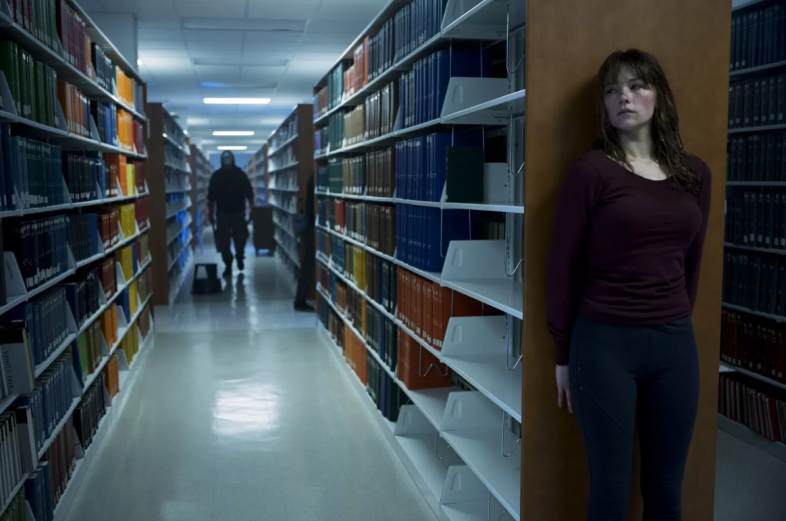
Happy Thanksgiving to one and all! That said, I have to say that it is extremely inconsiderate of Abraham Lincoln to have scheduled a time-consuming national holiday near the closing stretch of everyone’s NaNoWriMo effort (I mean, the nerve!). I do, however, have an entertaining suggestion to get you back on your creative track after you have finished dinner. It is also a very basic but extremely well done example of showing instead of telling.
Show, not tell. How often we hear those three words. We often find ourselves telling instead of showing, however, during our writing. It’s understandable because more it’s easier to write “Jack is tall” as opposed to “Jack was easy to spot. To say he looked like Gulliver among a roomful of Lilliputians would be an exaggeration, but not by much” is harder, but it reads better and begins to set up the locale of your story. That isn’t the post-Thanksgiving creative jumper and example I was talking about, however; no, that would be a film titled Kristy, a slasher film for folks who don’t like slasher films.
Kristy is a very low budget holiday horror film (currently streaming on Netflix) that gets its money’s worth out of every production dime it spent. The film stars Haley Bennett, who is currently prominently featured in the film adaptation of The Girl on the Train. If I were pitching the idea for Kristy I would call it “Die Hard goes to school.” The premise is fairly basic. A young woman named Justine unexpectedly finds herself alone on her small, rural college campus (but for a couple of policemen) over the Thanksgiving holiday when she is unexpectedly pursued with great malice and bad intent by a group of masked individuals who insist on calling her “Kristy.” It’s a slow boil for the first half or so of the film, as we watch Justine bid her friends farewell and go through the paces of studying, getting dinner from a vending machine, doing laundry, and some other mundane things. That first half is also the most important part of the movie, because we learn about Justine. I could tell you, but Kristy SHOWS you what she is studying and what one of her extracurricular activities is (two things that become very important during the second half of the film). Examples abound. The body language between Justine and Aaron, her boyfriend, during the short course of their post, pre-holiday boombah shows two people who aren’t quite on the same page of their relationship without a word being mentioned. Justine conveys compassion, courtesy, and angst with a sentence or a look; the long camera shots up the (initially) quiet and secluded dormitory corridors, with room doors cheerfully decorated create an atmosphere of solitude and loneliness. By the time that Justine attracts the attention of a group of murderous sleazoids when she makes a trip to a local convenience store we pretty much know that she is not the daughter of an Army Ranger who taught her everything she knew. That doesn’t mean that she doesn’t know anything about defending herself. She just needs to apply what she knows to the matter of defending herself…if she can. If you pay attention to the first half of the movie, you’ll know what she can do, if the creeps don’t get her first.
Yes, there is violence during Kristy, but it’s not gratuitous (well, not entirely). While I wouldn’t let the youngsters watch it I wouldn’t let them watch Old Yeller, either. Kristy has a happier ending. Oh, and if you hate movies where a guy comes in and saves the damsel in distress you will absolutely love Kristy. The reason that I mention it here, however, is that it’s instructive in showing rather than telling, and entertaining too. The reason that I mention it now is that…well, it’s a Thanksgiving holiday movie with a warm ending. Heh heh heh.
Again, Happy Thanksgiving, whether you take my recommendation or otherwise. Your turn now. What was your best or worst Thanksgiving? My best was in 2006 when my granddaughter was born. My worst was in 1994 when I set my kitchen on fire making dinner. You? And if you have had a Thanksgiving holiday like Justine, please share.
Reader Friday: Do You Find Zen In Your Writing?
 Let’s turn our thoughts today to the subject of happiness and finding inner peace. What’s your go-to method for achieving balance and harmony in life? Does the discipline of writing help you stay balanced and impact your mood in a positive way, or is it more like a daily chore?
And if you need some inspiration along those lines, please enjoy Ray Bradbury’s “Zen in the Art of Writing”.
Setting the Stage for Suspense – First Page Critique: Staying Alive

Purchased from Fotolia by Jordan Dane
A brave anonymous author has submitted the first 400 words of their WIP – STAYING ALIVE. Read and enjoy. Catch you on the flip side for my feedback & your constructive criticism in comments.
***
The Dobbs Hotel wasn’t much to look at, a cheap dump really, but if you were going to kill someone, it was the perfect spot.
Nestled down a dark side street in one of Miami’s rougher areas, about a half-block off Northwest Seventh Street, it was little more than a flop — not even good enough for whores and their johns — surrounded by a neighborhood of closed eyes and silent tongues. Just what Jimmy Quintana needed for this job.
He and Raúl pulled up in front. No other cars in sight. A dim streetlamp down on the corner and the vertical neon sign in front of the hotel were the only sources of light, and they weren’t much. The moon was blacked out by low clouds moving in from the Keys, assuring a late-night rain. They checked their weapons — semi-automatic pistols — each jacking a round into the chamber and affixing silencers to their barrels. Their eyes met, only briefly, but long enough to cement the bond between them and validate the act they were about to commit. They got out of their car into the steamy night.
Inside, the night clerk dozed behind an ancient front desk. Cigarette smoke of sixty years lingered in the air, staining the off-white walls and choking what life was left out of the dusty armchair and threadbare rug in the small lobby.
Wilfredo was in room ten, according to the snitch. The men tiptoed up the sagging stairs to the second story, where room ten greeted them right away. Jimmy took up position by the wall nearest the doorknob and motioned Raúl to the opposite side of the door. They drew their guns. Jimmy turned the knob slowly and soundlessly.
Locked.
He knocked on the door, a couple of light, unthreatening taps. No answer. More taps, more silence. He wiped sweat from his eyelids.
He nodded to Raúl, who pulled two long, pointed instruments from the pocket of his shirt. Inserting them into the lock, Raúl skillfully twisted them and jiggled them until he heard a soft click. He withdrew the picks and shoved the door open.
Feedback:
The strength of this submission is the way the author sets the stage for suspense and sticks with the action, without unnecessary back story dump to slow the pace. There is a lot to like about this, but here are my comments:
1.) FIRST LINE – The first line needs to grab the reader more. It has the word “you” in it, which reads like omniscient POV. To eliminate the “you” and keep the voice in Jimmy’s head, I would suggest the line be changed to:
The Dobbs Hotel looked like an unmade bed with lice, but Jimmy Quintanilla knew it was the perfect place to kill someone.
I’m sure you can tweak this into something better, but you get the idea. Place this thought into Jimmy’s head and make it more direct with a bit of his attitude. It will make the reader curious from the start. Plus the words “cheap dump” are cliche.
2.) PICK POV PER SCENE & STAY WITH IT – In the following sentences, the author jumps back into omniscient by using the word “they” to describe both Jimmy & Raul. I tend to like picking one POV per scene, usually the person with the most to lose, or the character telling the story.
BEFORE – is the sentence ‘as is.’ AFTER – is Jimmy’s POV with more focus on his state of mind and what he has to lose, with added tension and mystery as to what is about to take place.
I also added more details like the type of vehicle he drove and his weapon, and I changed word choices like “affixing” which doesn’t sound like a word Jimmy would have in his head and “semi-automatic pistols” which sounds stilted. I also tried to imagine what would be in Jimmy’s head as he stared at Raul. “Cementing the bond” and “validating the act” seemed like a stretch for something Jimmy would assume is in Raul’s head. I thought Jimmy would wonder if he could truly trust Raul and hoped he could.
One POV per scene is not a hard and fast rule, but it’s good to try something and understand it, before you disregard it entirely. You might discover something important if you stay open to new things.
BEFORE – They checked their weapons — semi-automatic pistols — each jacking a round into the chamber and affixing silencers to their barrels. Their eyes met, only briefly, but long enough to cement the bond between them and validate the act they were about to commit. They got out of their car into the steamy night.
AFTER – Sitting behind the wheel of his parked SUV, Jimmy racked the slide of his Glock 19 and chambered a round. As he attached his suppressor, he cleared his mind and let go of his last shred of conscience. His fingers worked from muscle memory as he watched the street. When he looked over at Raul, the man stared back with a grave look in his eyes. Jimmy would cross a line with Raul that few men did and forge a bond of secrecy. Raul would hold his life in his hands. Jimmy hoped he could trust him. Without a word, he opened the vehicle door and embraced the muggy heat of Miami.
3.) USE THE SENSES TO SHAPE SETTING – I like adding the senses to any scene to trigger memories in the reader and make the scene real. I would like to see and hear more about the streets of Miami once Jimmy gets out of his car, or he could have his windows rolled down to let the atmosphere in as he rolls onto the street. That could enhance the paragraph starting with – ‘Nestled down a dark side street…’ if Jimmy can see and hear and smell what is happening through his life’s experience and his POV.
This author does a great job with painting a scene. Here are some examples I liked:
A.) …surrounded by a neighborhood of closed eyes and silent tongues. (This gives a face to the neighborhood that is memorable.)
B.) Inside, the night clerk dozed behind an ancient front desk. Cigarette smoke of sixty years lingered in the air, staining the off-white walls and choking what life was left out of the dusty armchair and threadbare rug in the small lobby. (I’ve been to this hotel. I can see the worn furnishings and smell the embedded smoke. Well done.)
SUMMARY:
I would definitely read on. This is an enticing crime fiction read, right up my alley. The author’s voice paints a great picture in word choice. A few things could be tightened or strengthened to punch up the voice, but there is a lot to like about this submission.
DISCUSSION:
1.) What do you think, TKZers? Would you read on?
2.) What suggestions do you have?
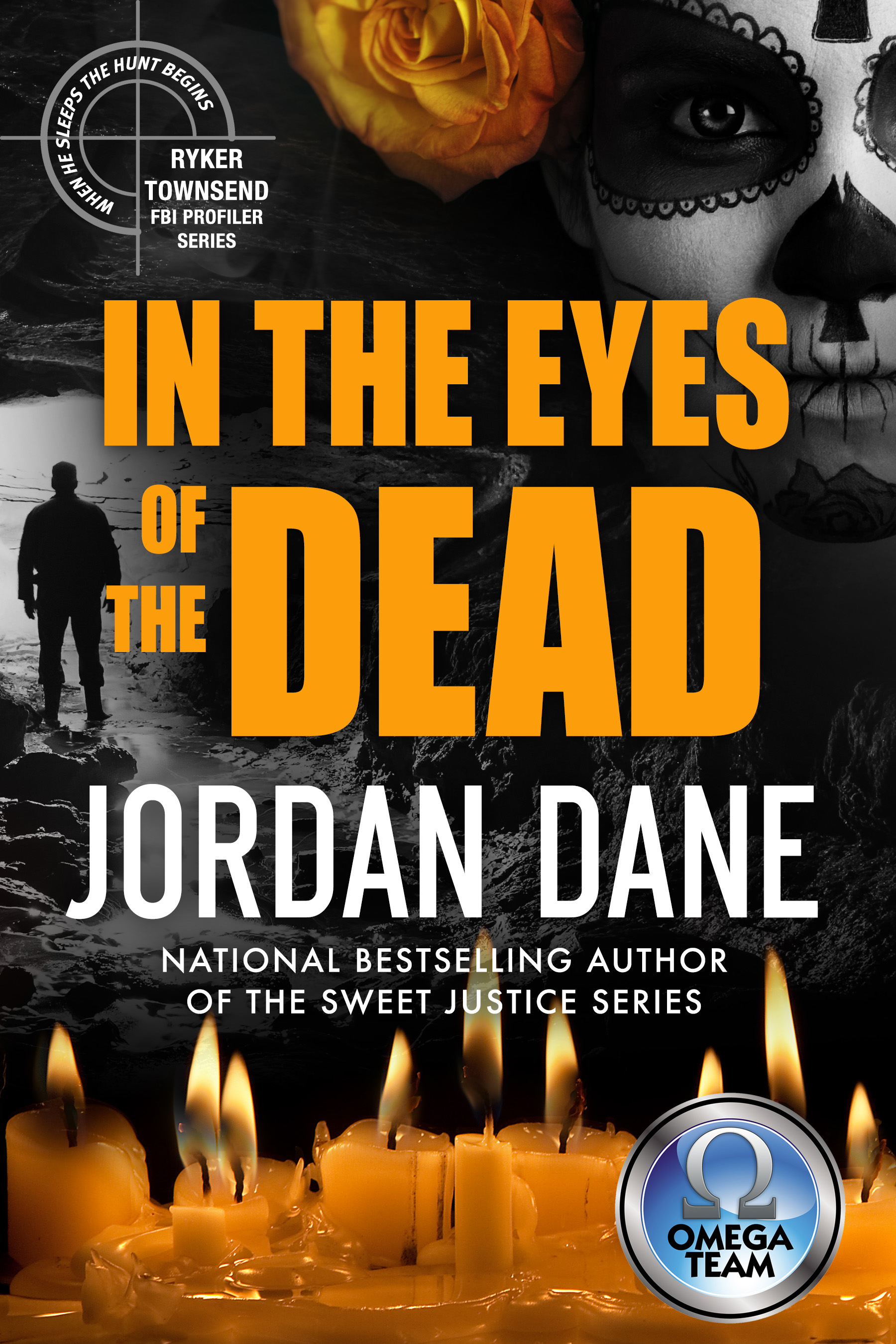
In the Eyes of the Dead – Book Birthday! $1.99 ebook
FBI profiler Ryker Townsend and Omega Team’s Athena Madero join forces in a small Texas border town after ritualistic murders of four teens point toward a sinister Santeria holy man and his secret believers. (31,000 words)
What’s In a Name? A Lot, That’s What
One of my very favorite crowd-source exercises to throw out in a writing workshop is “Name the Man, the Restaurant, the Gas Station, and the Dog.” I make a long list of nouns and we have a free-for-all naming names. Usually I offer qualifiers like, “the preacher shouting on the street corner,” or “the only bar in town,” or “a vegetarian restaurant,” or “a dog owned by a pair of retired missionaries.” You get the idea. It’s an exercise that gets people talking, thinking, and laughing. But it’s also a great reminder of how important names are in fiction.
The right character and place names go a long way to create a universe. It doesn’t matter where on earth The Overlook Hotel is located: the immediate image is that of a hotel teetering on the edge of vast, dangerous space. East Egg and West Egg are two halves of a whole—the old rich and the nouveau riche, forever separated. The image is very simple, implying that the names were determined far back in history; East Egg is old and settled, West Egg is the place where the newly-arrived have to create their own society, just as the American western frontier was settled. Faulkner’s stories would not be the same if they were all set in Jefferson or Bedford County. Yoknapatawpha County is a name not easily forgotten.
There are so many incredible character names in classic fiction: Sam Spade; Ichabod Crane; Humbert Humbert; Major Major Major Major; Tess of the d’Urbervilles; Miss Haveshim; Bathsheba Everdene (could Katniss Everdeen be far behind?); Nick and Nora Charles; Ebeneezer Scrooge. (I culled several of these names from this list, but there are surely many more similar lists out there.) I’ll leave it to you to decide how these names work within their stories.
Every writer has to develop their own system for naming things. Research is critical. If you think you’ve come up with a great name, do a web search for it. It’s surprising how often I discover I’ve accidentally used the name of someone semi-famous. (In my first novel, my editor made me change a name because it was too similar to Liev Schreiber.)
Here are a few names I chose to use in my third novel, DEVIL’S OVEN, an Appalachian Frankenstein story, and why I chose them. I envisioned the novel as a kind of folk tale, and so I let my selections be very broad. I wasn’t worried about naming against type for effect. It’s a rural story, a kind of contemporary mountain fantasy.
Devil’s Oven is the name of the Kentucky mountain where the story takes place. The name had to be archaic and threatening, with a sense of mystery about it. The supernatural is not just suggested, but implied. And the oven part implies that things are created and tempered there over long periods of time.
Ivy Luttrell is the seamstress who not only makes clothes and does alterations for people in the area, but also finds the half-buried, dismembered body of a man on Devil’s Oven and sews him back together. (I know. But it works, I promise.) I liked the delicacy of the name, Ivy. Ivy the character is quiet and attractive and moves slowly but precisely. Ivy the plant winds itself over and through things, just like thread, and before you know it, it has touched everything. The last name, Luttrell, was a bit of a construct. The writer Daniel Woodrell is a friend of mine, and I liked the –rell ending. Luttrell has an antique, Appalachian sound to me. I have no idea if it sounds that way to anyone else.
Thora Luttrell is Ivy’s half-sister and is fifteen years older. Thora is large and plain and has a lot of health problems. She worked for many years at the DMV. I wanted her to have an old-fashioned, but very simple and unadorned name.
Bud Tucker is one of three men who are central to the story. Bud owns a trucking company, as well as a strip club in town. He’s a straightforward guy who works hard to hide his sensitivity. He wears his hair short and worries about intimidating people with his size. His father is Olney Tucker, a self-made coal baron. Olney’s name is pure country. Bud’s opposite is Dwight Yarbro, the squirrely guy who has come to the mountains because he no longer wants to deal with mid-level crime and criminals in the city. In his job as the strip club’s manager, he wears funky, elaborate cowboy shirts (I probably made a Dwight Yoakam connection here), and aviator glasses that make him look a bit like 1970s Elvis.
When I looked back at Devil’s Oven for location names, I was a bit disappointed that I didn’t get more creative than House of Waffles for a waffle house. But then, it does sound a bit against type. A bit pretentious. I only wish I had called it Twyla’s House of Waffles, or Junior’s House of Waffles.
Bud’s strip club is called The Twilight Club. I liked that the name sounds quaint, as strip clubs go. Bud is not a vulgar man, and even though he has opened a strip club, he doesn’t want it to be tacky.
The man that Ivy sews back together is a handsome devil named Anthony. She knows this because it is tattooed on his broad torso. And, yes, he has Mob connections. Sometimes you just go with the stereotype.
Choosing names involves a lot of research and a little magic. Here’s a link to a random name generator, which is a particular kind of magic. I’ve played with it some, but have found it works best for ancillary characters. You have to let it throw up a lot of possibilities if you already have the character sketched out in your head.
I prefer to target names a bit more closely. Here’s my list of qualities in descending order of consideration (always subject to change).
–Gender
–Character’s age
–Physical appearance
–Time period
–Location
–Family traditions
–Social class and cultural traditions
–Cultural ethnicity
Very occasionally a character will present herself with a first name, but rarely with a second. I spend a lot of time on baby name websites. But the true gold is on the Social Security website, which lists the most popular names by decade for the past 140 or so years.
Names go in and out of fashion, and you can get a feel for what will work as you go through the lists. I’ve also spent time looking at old English documents online, seeking out historical names. Let me make this easy for you: John, Mary, Elizabeth, and Edward were very popular for a long, long time..
Social norms change constantly, and it’s important to make sure your characters reflect the world they live in. Pick up any number of pre-WWII novels and you’re liable to find yourself in a minefield of racial and cultural insensitivity.
You can, of course, name your characters and setting anything you like. You are in control, and if a name sounds right to you, you are certainly within your rights to use it. But tread carefully. Keep in mind that no given reader will share your exact cultural background and values, and if you give a character a name that evokes an unpleasant event or stereotype—and the use of it is not a relevant subject in the story—you’ll alienate readers, and rightfully so. That is, if your story even makes it into print. I’m not talking about political correctness, but common sense. If you want to engage readers, you have to meet them at least halfway.
A name carries a lot of weight. If it’s done right, and subtly, it will instantly telegraph important information about the character or location, or even the story’s tone. Sometimes I feel like I’m running a computer program of names in my head, checking possibilities against all the variables. Because I want each name and place to come out exactly right. Don’t make the reader think twice.
What are your tricks for finding the perfect character and place names? What are some of your favorite names in fiction?
Laura Benedict’s latest novel is the suspense thriller, The Abandoned Heart: A Bliss House Novel.