Writing without revising is the literary equivalent of waltzing gaily out of the house in your underwear. — Patricia Fuller
By PJ Parrish
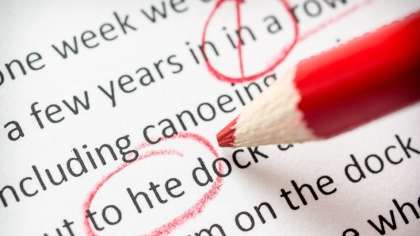
Copy editors, bless ‘em. Good ones are hard to find and hard ones are even better to find.
Over the course of thirteen books, numerous short stories, magazine articles, and a 25-year stint in newspapers, I’ve had my share of copy editors — good, bad and indifferent. I was even one myself for a brief time, until I realized I was better at seeing the forest instead of the trees, so gave that up for becoming a dance critic. But I have a deep and abiding respect for great copy editors. They have saved my bacon on more than one occasion.
When we signed with Thomas and Mercer for our most recent book, I was wary. Was the quality of editing for this Amazon imprint going to be as a good as we were used to from the “traditional” New York houses? Turns out it was better…four, count ’em four…different copy editors went over our manuscript and each brought a special talent to the project and improved our book. One fellow had lived most his life in San Francisco so he was able to double-check all our locations and landmarks there. Another woman had once been a dancer so she honed in on every detail of our heroine’s arts background.
Working with them made me remember one of my first copy editors, who was so good that I still remember with fondness — Wendy the Word Wonk. Her name really was Wendy. I tacked on the rest out of deepest respect for her talents because I really love folks who really love words.
But before I tell you about Wendy, let’s back up a moment. Here is one major truism I have learned about publishing: When you write a book, you have only five chances to not end up looking like the world’s biggest fool:
Write the best book you can.
Rewrite that book how ever many times it takes to cleanse it of all the cretinous prose, dumb mistakes and smelly cheese.
Have a great line editor who makes you go back and de-cheese it some more. Even if you have to hire one yourself. Especially if you have to hire one yourself.
Luck into getting a great copy editor, who has your back. Or again, hire one.
And finally, read your galleys carefully. And if you are self-publishing, I’d even go so far as to print out your final manuscript justified and formatted to look like a real book, then treat it like a galley and find your mistakes. There is something about looking at your book in this final form that makes the sly mistakes and typos jump out in high relief.
Obviously, no. 1 is most important. For all practical purposes, your only real last best chance is No. 4. The copy editor. She is the last gas station on Highway 95 between Las Vegas and Searchlight. He is the last butt in the car ashtray after you’ve just gotten off a four-hour flight. She is the one who tells you your skirt is caught in your pantyhose when you walk out of the bathroom. He is the one who tells you when to zip your fly or button your mouth.
When you get to the galley stage, it is too late. The copy editor is all that stands between you and the abyss of hackdom and reviewers on Amazon who cackle that you don’t know the difference between “its” and “it’s.”
So, back to Wendy the Word Wonk and her unheralded ilk (I think that’s the right word…where’s Wendy when I need her?)
Wendy corrected our lays and lies without being smug. Because she is a fellow Michigander, she knew the difference between Mackinaw and Mackinac. She respected our idiomatic dialogue. She double-checked our use of foreign languages without being snide. (When I was writing romance, I had a British editor who scribbled in the margin of my manuscript: “Considering this author’s lack of command in English, I don’t think we should trust her French.”)
Not only did Wendy help us keep our dates, ages and eye colors straight, she raised a couple plot questions we hadn’t thought much about, which technically wasn’t her job, but that of the line editor. Once we did think about her polite but pointed questions, we went back in for a final critical rewrite that made the plot stronger.
But copy editors being the eccentric souls they are, Wendy did bring up some questions that we — or any other writers in their wildest dreams — would never expect to encounter. Like…
Is underwear plural or singular?
Here is the paragraph from our book as we wrote it:
Last night, she had washed out her underwear in her room and put them on the heating unit to dry, but they had fallen off during the night and were still wet.
This was her suggested version:
Last night, she had washed out her underwear in her room and put it on the heating unit to dry, but it had fallen off during the night and was still wet.
This set us thinking…
In almost every Thesaurus reference to underwear, there is an ‘S’ added to the word — shorts, long johns, panties, drawers, bikinis, undies, woolies, bloomers, flannels, thermals, skivvies, boxers. Despite the fact the clothing in question is, indeed, a single piece of fabric.
Is it because panties have two holes for two extremities that we perceive it to be plural?
“She picked up her panties and put them on.”
“He took off his boxers and tossed them to the bed.”
This sounds right to us because this is how people think. But that leads us to an even more perplexing question: How come a bra, another single-piece item, which also holds two separate body parts, becomes an IT when we think of it in every day usage? Or what about a jock strap, which is similar but, technically speaking, holds three body parts?
“She took her bra off and laid them on the bed.”
“He took off his jockstrap and flung them into the corner.”
Whoa, what kind of image does that put in a reader’s head?
Now our particular problem maybe have come from Wendy’s perception that our character had washed both pieces of her underwear, not just her panties. And referring to a set as IT may have been more appropriate, even though we still prefer THEM.
In the end, that’s what we opted for and Wendy let us win that battle. But here at the Kill Zone, we are here to serve your writing needs. And since we writers do love our rules, we leave you with this:
The Crime Writer’s Rules About Underwear
Clothing with two sleeves or arm holes are an It.
Clothing meant to hold two pieces of the anatomy are an It.
Clothing designed for three (or more appendages) are an It.
Clothing with two legs or leg holes are a Them.
Except, of course, for a girdle, which is an It. We think. But that’s only a problem for you historical writers out there, thank goodness.
The filmArrival, starring Amy Adams as an off-the-charts brilliant but melancholy linguist with military intelligence chops, was released to theaters this weekend to stellar reviews and decent a box office.
Why, as novelists, should we care?
To state the obvious, we are storytellers. Which means we have a soft spot for good stories, period. That and the fact that critics actually liked it better than audiences is telling (93 to 82 percent on Rotten Tomatoes)… this is one smart story with strings that don’t necessarily all tie up nicely at the end.
It is my contention (one of many) that as authors working deeply in genre-driven storytelling (as opposed to, say, Goldfinch or something by Jonathan Franzen, both of which/whom are scary wonderful, but not exactly ideal models for what we’re up to), we can learn a lot about storytelling from quality films in our chosen genre.
Especially when it bends the laws of story physics and lives to play another day.
The Arrival is a virtual buffet of learning in this regard.
The film is technically science fiction (very cool hovering alien spaceships occupied by creatures that look like a cross between an octopus and a circus elephant), but so much more. Before we dig in here, check out the trailer, which certainly doesn’t model the precise linear structure of the film, while absolutely selling it as a conceptual proposition.
Great stories often show up that way in trailers. Sell the concept, close the deal with the premise.
While risking bumping up against a spoiler here, let me say that the ending is a polarizing proposition.
You’ll either love it, or be confused to an extent you can’t quite recommend it. A writer’s ending, rather than from the desk of some Hollywood suit. It’s truly trippy, to say the least, and while in retrospect is cleverly and abundantly foreshadowed (within the trailer, as well), I dare say you won’t see it coming. And when it lands in your lap it’ll stir what may perhaps be a deeply buried agenda as a writer—to speculate on the true nature of things in our world. Indeed, in our universe.
While there is indeed a bona fide genre out there called speculative fiction, closer thought reveals that almost all fiction is speculative in nature, which sort of blurs the lines on the playing field of whatever genre we are working within.
This being one of the things this film models for us.
Two other key aspects of craft are modeled in the film, as well.
First: the power of a killer concept.
This film is nothing if not off-the-charts conceptual (a visual feast, at that), while remaining one of the more character-driven and achingly emotional films you’ll ever see in this or any other genre.
So I guess just mashed two facets of craft together (precisely what the film itself does)… encouraging us to think big where concept is concerned… while showing us how deeply characterized a high concept story can and should be.
The other—you knew I’d land on this one—is story structure.
The trailer is nearly all about the concept, while foreshadowing the rest of the premise as an afterthought (because, as you know, it’s not a story until something goes wrong… or as Jim Bell quoted to us not long ago, until someone shows up with a gun).
But unlike some trailers (all of which, by the way, almost without exception, show The First Plot Point of the story somewhere within; trailers become one of the fastest tools writers can use to cement their understanding of this essential story milestone), the moment when something goes wrong doesn’t show until the 2:02 mark.
Literally, that’s when someone with a gun shows up.
In this story, though, it happens at the midpoint of the movie, not the First Plot Point. And yet, it colors within the lines of both in terms of the principles that define them.
This is liberating while perhaps slightly fogging for writers who have learned the FPP as the moment when something goes wrong, thus launching the hero down the core dramatic tunnel of the story (everything prior to that moment being a setup for it).
In Arrival, fully half the movie is a setup for what turns out to be the Key Inciting Incident… which again is, quite literally in a normal sense, when something goes wrong. At the midpoint, in this story. Watch the trailer again, and note how everything changes at the 2:02 mark. The setup, as conceptual and compelling as it is, suddenly becomes dramatic, because everyone is now in danger. Before that, they were only worried about being in danger.
The core dramatic story (when bad guys come into play) starts right there… when the guns show up.
Just to be clear, the film does deliver a true and accurately placed First Plot Point (also in the trailer, at the 1:02 mark) following the first-quartile setup narrative. This is when Amy and her crew actually venture into the spaceship for the first time.
Everything is different from that point on—the narrative shifts into a new, more dramatic context—which is the purest mission of that particular story milestone (the FPP).
Except, in this case, the FPP simply escalates the tension without introducing the core dramatic element of the story (which is usually an expectation of the FPP… just not in this film). That contextual shift (danger danger danger) happens at the midpoint, when (spoiler warning, that is in the trailer, very clearly so, in fact) the military steps in and tries to hijack Amy’s higher purpose and turn the whole thing into an existential global emergency.
Here’s the great news for structure cynics and advocates alike:
The whole storytelling enchilada remains a flexible, author-driven proposition.
Yes, you still should seek to change and escalate your story with a First Plot Point that lands somewhere before yet near the first qaurtile turn (page count or running time, same standard for both)…
… but you don’t necessary need to clarify the presence of an antagonist (hint at it, at least, yes, absolutely). You can continue to escalate tension and foreshadowing until the midpoint, relying (as this film does) on the power of your evolving concept.
Then bring out the guns.
The midpoint, used this way, would be absolutely the last exit ramp for the story to take that requisite turn into more focused dramatic lane, via the introduction of the core dramatic arc (antagonist/conflict-driven; in this story, there is virtually no conflict in play at all for our hero until the midpoint, other than a paranoid military handler and, of course, those twelve massive scone-like spaceships literally hanging around).
My hope is that this alone—trailer and explanation—helps expand your grasp of story structure at the level of principle. Seeing it in play is always the best way to wrap you head around it…
… so here you go. Head to multiplex with notepad and timer in hand. Because The Arrival is a story clinic that just might blow your writerly mind as it expands it.
*****
Click HERE for information about my soon-to-be released “hardcore training for serious authors.” Freebie and discounts, too.
I love a good short story. When done right, it can lay you out emotionally, delight you, scare you, make you think, or some combination of the above. All in under 7,000 words.
Some of my best reading experiences have been short stories. Off the top of my head I see:
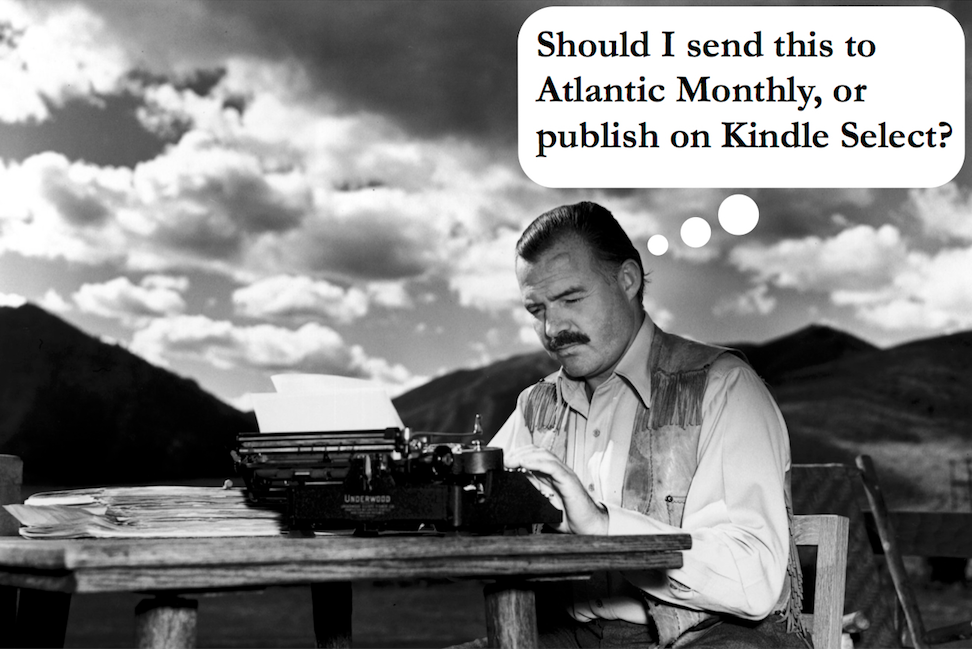
“The Short Happy Life of Francis Macomber” by Ernest Hemingway.
“The Eighty-Yard Run” by Irwin Shaw.
“Chapter and Verse” by Jeffery Deaver.
“The Veldt” by Ray Bradbury.
All the stories in My Name is Aram by William Saroyan.
“The Ledge” by Stephen King.
When I was in college, I got into a workshop with one of the masters of the short story, Raymond Carver. What I learned was this: I couldn’t write like him. Or Hemingway. Or Saroyan. And I could not figure out the craft of the story. I was discouraged. I wish I’d known what Ray Bradbury was about to say in his Paris Review interview: “You can’t learn to write in college. It’s a very bad place for writers because the teachers always think they know more than you do—and they don’t. They have prejudices. They may like Henry James, but what if you don’t want to write like Henry James?”
A couple of decades later I became a published novelist. Short stories remained elusive to me. But I still wanted to write them. Eventually, I went looking for some sort of key to the craft of short story writing. It took me a long time, but I finally found it.
Naturally I had to write a book about it.
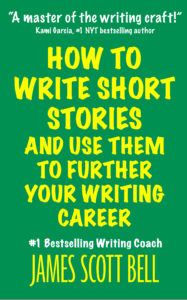
This book covers my theory of this “master key,” and goes on to suggest strategies for using short stories to help you with your long-term career goals. The book also has five complete stories for your analysis, including the aforementioned “Chapter and Verse” (with the kind permission of Mr. Deaver).
Today I want to talk about two often overlooked reasons for writing the occasional short story. The first reason is, simply, that they’re fun. Lawrence Block, one of the grand masters of crime fiction––short and long––says in The Liar’s Companion: A Field Guide for Fiction Writers:
I figured short stories would be fun. They always are. I think I probably enjoy them more than novels. When they go well, they provide almost immediate gratification. When they go horribly hopelessly wrong, so what? To discard a failed short story is to throw away the work of a handful of hours, perhaps a couple of days. In a short story I can try new things, play with new styles, and take unaccustomed risks. They’re fun.
Why should you sometimes write just for fun? I’m glad you asked:
Because “fun is the best thing to have.” – Arthur Bach
Taking a break from longer work to have fun refreshes your writer’s mind
Now, “fun” does not mean you’re just writing fluff. Far from it. Which leads me to the second overlooked reason for writing short stories: to deepen your intensity. Once again, Bradbury:
[T]he problem of the novel is to stay truthful. The short story, if you really are intense and you have an exciting idea, writes itself in a few hours. I try to encourage my student friends and my writer friends to write a short story in one day so it has a skin around it, its own intensity, its own life, its own reason for being. There’s a reason why the idea occurred to you at that hour anyway, so go with that and investigate it, get it down. Two or three thousand words in a few hours is not that hard. Don’t let people interfere with you. Boot ’em out, turn off the phone, hide away, get it done. If you carry a short story over to the next day you may overnight intellectualize something about it and try to make it too fancy, try to please someone.
Writing a short story this way sharpens your ability to concentrate, and also teaches you to bring intensity to the writing of scenes. Since scenes are the building blocks of your novels, that’s all to the good for your overall craft toolbox.
And so I have launched How to Write Short Stories And Use Them to Further Your Writing Career. The e-version may be found here:
In last week’s post, I asked you about books that may have brought solace to you at a point in your life. Can you think of a short story that had a similar impact? Was it memorable in other ways? Who is your favorite short story writer?
And have you tried your hand at the short story? What’s been the result?
Today, another brave author has stepped into the TKZ spotlight with this untitled First Page critique. Thank you, author, for your courage. We all learn from critiques. I certainly do. “No Title” is mostly set in Tripoli, Libya. Read it first. My comments are below. — Elaine Viets
NO TITLE
Prologue
March 1972 Brooklyn, New York
Lilah stood with her twin, Daniel, under the big black umbrella, fat rivulets of rain dripping off its sides. She barely heard the words of the minister as he said the final prayers committing the remains of her parents to the ground, but the smell of damp dug-over earth on that wet spring morning would stay with her all her life as a reminder of the end of her childhood. Walking unsteadily to the graves with a fistful of dirt, Lilah fell as her knees buckled, and an arm caught her around the shoulders.
“I’m here,” said Harry.
Part I – The beginning of always (Remember tonight, for it is the beginning of always – Dante Alighieri)
1 November 1973 Tripoli, Libya
“Hide, Lilah! Don’t come out till they’ve left.” Her aunt shoved the sixteen-year-old towards the back stairs as hammering continued at the door below. “Hurry!”
Lilah was tearing across the second-floor gallery when the deadbolt shattered, and black-clad men rammed into the house, demanding to speak to the Sheppards. Mrs. Sheppard, Lilah’s aunt, ran down the wide curving central staircase to join her husband.
The taste of blood filled Lilah’s mouth as she bit her lip to muffle the shriek. She slid to the floor behind the pillar, back against the marble. The kitchen stairs were just a few feet away. Almost there. She clenched clammy hands on her white cotton nightgown. Her heart thumped painfully against her ribs as she waited for a chance. Pushing aside the long tendrils of dark hair that clung to her damp cheek, she ran, bent double, to crouch by the side of a chest.
Dark eyes widened as she scanned the scene below through the railings. She almost sobbed with relief when she saw Harry wasn’t there. The Sheppards’ son was her best friend. Be safe, be safe. Oh, God, be safe, Harry.
One of the intruders kicked over the ottoman in the living room, sending colorful pillows sliding across the polished wood floor. The tall lamp crashed down and sputtered, throwing the room into shadows. Blue moonlight filtered in through gauzy curtains as menacing figures continued the escalating argument.
Keeping to the darkness, she crawled on all fours towards the door to the back stairs, tripping when the folds of her nightie twisted around slim legs. Uncle Dev shook off the hands of one of the men as another swung a lethal looking cane at his head and he crumpled to the floor wordlessly. Her aunt stretched out a hand, her cry choking in her throat.
Lilah gasped, instinct yanking her to her feet. A hand clamped over her mouth, cutting off the scream, and drew her inside the door.
_________________________________________________________________
Elaine: What you have here is well-written and action-packed, but reads like a sketchy outline by a professional writer. You have a good idea, but you have to put meat on those bones. I suggest ditching the prologue. Prologues often raise red flags for editors. You could expand this prologue, and the same information could be used much later in the story, when we know Lilah better.
Your novel really starts in Tripoli, which you call Part I. Are you planning to have several parts? I like the quote, though I wonder if it detracts from the action. Is there a reason for the date and city? Are you going to be moving the novel to other cities and back and forth in time? If not, I’d get rid of the dateline and year. I’m guessing you are not a US writer, since standard date style is November 1, 1973.
The action in Libya gets your novel off to a rousing start, but there’s too much confusion. Readers need a clearer picture of the house to understand what’s happening. We’re told it has a “second-floor gallery,” but how tall is the house – just two stories? Three? Five? The aunt shoves 16-year-old Lilah “toward the back stairs” as “black-clad men” hammer at the door below and shatter the deadbolt. Why push Lilah toward the back stairs? Where do they go? Will they take Lilah to safety? To a hiding place? To an exit or an escape route? Are these the same stairs as the “kitchen stairs”? Please clarify.
You give us an excellent picture of Lilah. Give us more clues about the Sheppards, her aunt and uncle. How old are they? Who are they? Are they Libyans? Foreigners living in Libya? Why do they fear the intruders? Who are these men? Terrorists? Criminals? Where does the Sheppards’ wealth come from: are they merchants, or in some shady business like arms dealing, human trafficking or drugs?
This is an excellent description of the invaders destroying the house: “One of the intruders kicked over the ottoman in the living room, sending colorful pillows sliding across the polished wood floor. The tall lamp crashed down and sputtered, throwing the room into shadows. Blue moonlight filtered in through gauzy curtains as menacing figures continued the escalating argument.”
However, this sentence stopped me: “Uncle Dev shook off the hands of one of the men as another swung a lethal looking cane at his head and he crumpled to the floor wordlessly. Her aunt stretched out a hand, her cry choking in her throat.”
Where is Uncle Dev? Still downstairs? Then help us out by adding “Downstairs at the doorway,” or something similar. That phrase “lethal looking cane” was another stopping point. Can a cane look lethal? Who is wielding it – is the attacker an old man or a young one? Did he take the cane away from Uncle Dev? If we can’t see the attackers’ faces, tell us what they’re like: are they muscular? Wiry and whippet thin? Slight but deadly?
The section ends on a suspenseful note. You have the beginnings of a good opening here. Answer these questions and you’ll be on your way to giving readers a first-rate yarn. Hope you’ll keep writing. I’d like to see where this novel goes.
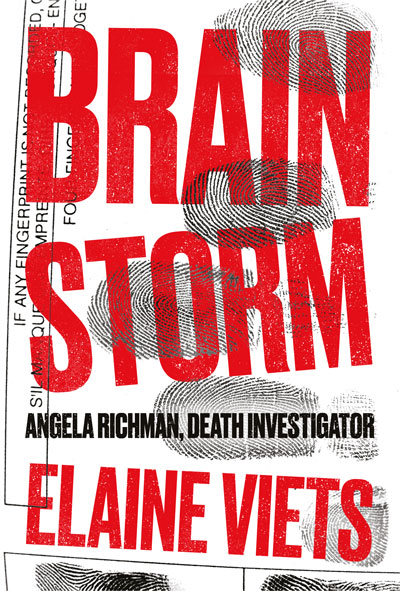
Last month, Brain Storm was #1 in hardboiled mystery books and #1 in hardboiled Kindle books on Amazon. Win an autographed copy of my first Angela Richman, Death Investigator mystery. Click on Contests at www.elaineviets.com
I know I promised last post that I would talk about dialogue this week, but I got distracted and had a hard time taming the post. Next time.
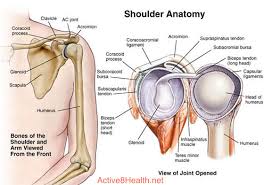
This week, inspired by the classic John Miller piece posted a little while ago about guns and cordite and stuff, I thought I would continue the theme with a post about bullets and their behavior. Let’s start by recognizing that virtually everything you’ve ever seen on television regarding bullet behavior and the damage they cause is wrong. No matter how tough a tough guy is, if he’s been shot in the leg and his leg is broken, he cannot walk on it–except maybe if it’s a fibula (ask John Wilkes Booth about that). Remember all those heroes of our youth who were “only” shot in the shoulder, and then were back in action by the epilogue with his arm in a sling? Well, here’s what a shoulder joint looks like:
There’s no place for a bullet to go that would not shatter a bone or three. Not to mention the complex arrangement of blood vessels in there that are just waiting to get torn up. Torn blood vessels bleed. If the bleeding can’t be stopped, the victim dies. Blood loss is the primary cause of fatalities when bullets are involved.
The Myth That Caliber Equals Stopping Power
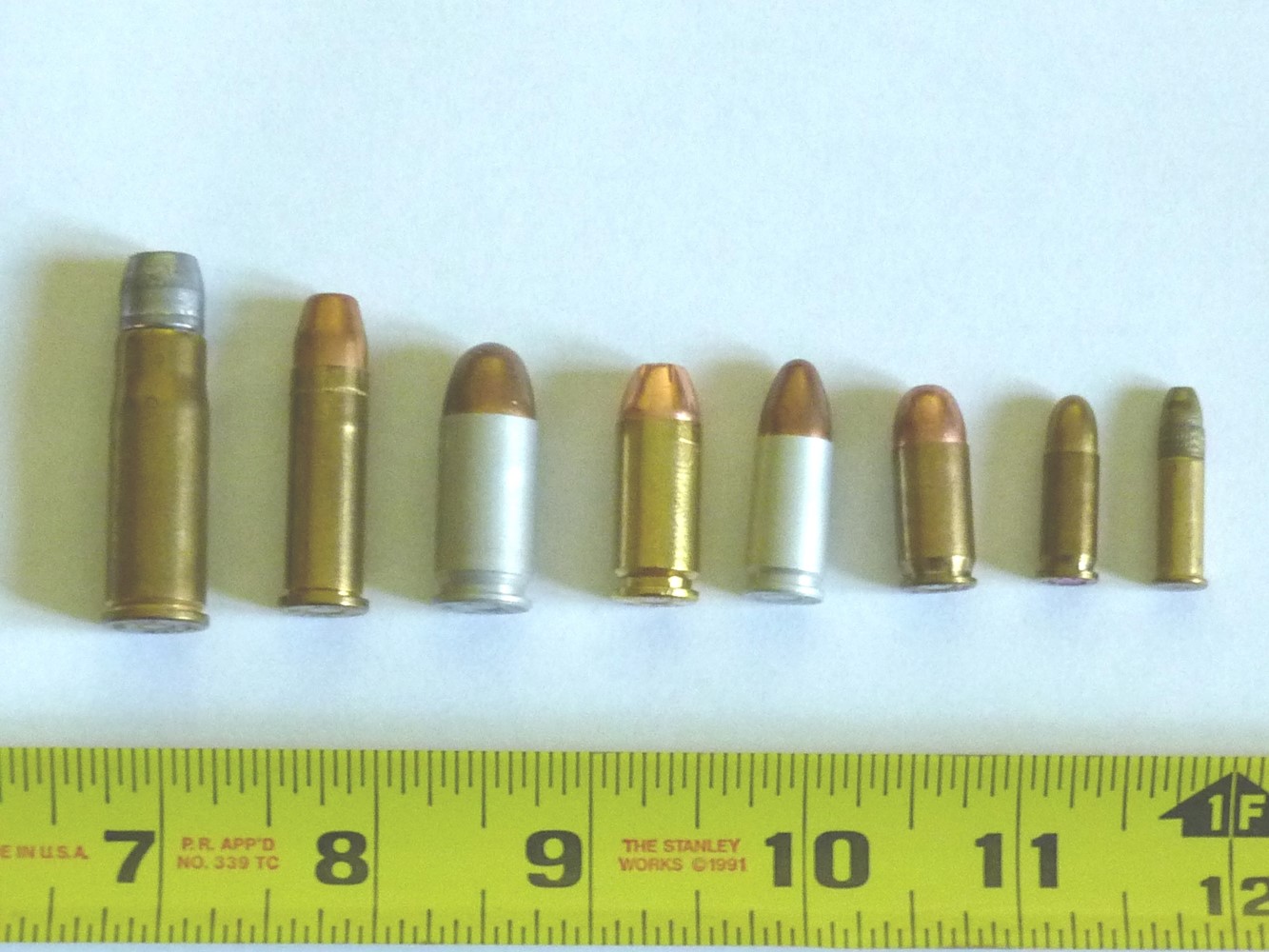
Here’s a selection of common pistol bullets:
From left to right, the bullets are .410; .38 Police Special; .45 ACP; .40 ACP; 9mm Luger; .380 ACP; .25 ACP; .22 Long Rifle. The ACP suffix stands for “automatic Colt pistol” because that was the first firearm to use that shell casing design. The decimals refer to the diameter of the bullet at its widest point (and remember, the bullet is the nosecone atop the shell casing), measured in inches. A .45, then, is 45/100 of an inch at its widest point. You’ll also see bullets measured in millimeters. Thank NATO for that.
And here is an assortment of rifle bullets:
From left to right: .300 WinMag (Winchester Magnum–a sniper round); 7.62mm; 5.56mm (used in M16s, AR15s; M4s); 4.6mm (used mainly by Special Forces and specialized units); .22 Long Rifle. Without getting too deeply into gun porn, it’s important to note that two of these NATO rounds–noted by the metric measurement–have caliber equivalents: 7.62mm=.308 caliber; 5.56mm=.223 caliber.
Note, then, that both of these bullets are .22 caliber:
So, there’s more to bullet energy than caliber. The amount of propellant and the weight of the bullet, usually measured in grains, have a lot to do with the lethality of a bullet. The rest of the lethality equation has everything to do with shot placement. A small bullet, properly inflicted, will do more harm than a poorly aimed big bullet. Ronald Reagan and George Wallace were both critically wounded by that little bitty .22 long rifle round, and Bobby Kennedy was killed with one.
Kinetic Energy
Most modern bullets travel at supersonic speeds. Since the speed of sound represents the speed at which air molecules can get out of each other’s way a bullet in flight creates a pressure wave at its nose, and because Mother Nature abhors imbalance, that positive pressure at the nose creates a negative pressure at the tail. When a bullet hits a person, the pressures surrounding the projectile do an enormous amount of damage to surrounding tissues.
Here’s a slow motion video of a 9mm pistol bullet impacting ballistic gelatin, which is designed to simulate the consistency of human flesh:
See how that wound channel opens and snaps shut? Imagine that all of that energy was being absorbed/inflicted on a liver. Getting the bullet out is far from the most pressing emergency in many bullet wound cases.
Here’s a similar video showing the damage inflicted by a .308/7.62mm rifle bullet:
So, yeah. A bigger, heavier bullet traveling at a much greater speed causes a heck of a lot more damage. The reason you’re able to see such pronounced spiraling in that video is because the bullet is a hollow point, which is designed to open up on impact. This is what a hollow point bullet looks like before it’s fired:
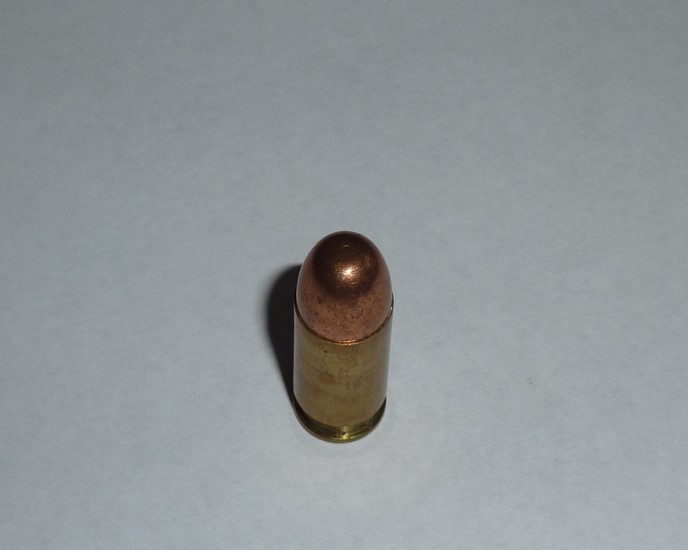
The common alternative to a hollow point is a full metal jacket, which looks like this:
While the hollow point undoubtedly inflicts more damage upon the person it hits, the true purpose of the bullet’s design is to prevent over-penetration, where a bullet intended for a bad guy would not travel through-and-through to hit the good guy standing behind him.
We talk about research quite a lot here at TKZ, and I recommend that anyone who writes about this stuff in their stories take some time to visit your local gun store or go to a gun show. You’ll find lots of very nice folks who love to talk about all things firearms related. Many gun stores will let you rent a gun and fire it on their range. If you’re not comfortable handling them, no problem. They’ll be happy to help you out.
Just remember rules:
Assume that every gun is loaded, even when you’re certain it is not;
Never point the muzzle at anything you’re not wiling to destroy; and
Don’t touch the trigger until you’re sure you’ve acquired your target.
Well, it’s time. It’s Tuesday, Nov. 8 and you have to make a choice.
No…not that one. We here at The Kill Zone are fiercely apolitical, so what you do today in the privacy of your little curtain or cubbyhole is your business alone. I’m talking about more important choices today -– about your novel.
But first, let’s pause for a short break. I am PJ Parrish and I approve this message:
Shoot, I’d vote for this guy. He makes as much sense as anybody running today. Okay, back to regular programming.
When you sit down to write a novel, you may not realize it, but you will be — for the next six months to six years it takes you to finish — constantly making choices. Some of these choices will be as big and strategic as picking your characters and plot. Others will be tactical choices like grammar, word choice, use of imagery, punctuation, chapter length, even book length. These latter choices are all really important and we’ve covered all of these topics here at TKZ. But today, let’s hone in on the big choices.
Yes, we’ve covered these a lot here, too. But on this, ahem, really yuge election day, I think it’s a good time for review.
The Ten Most Important Choices You Make About Your Novel
1. Who’s story is this? This sounds simplistic, but you must be clear about who you are going to focus on for your readers to follow. Now usually (but not always), you want to chose a single protagonist, one main person who will be challenged, who will triumph (heroic) or fail (tragic), and who will be the central figure in the story’s plot arc.
Can you have more than one protag? Well, yes. But in my humble opinion, a dual (or multiple protag) book is harder to pull off. Why? Because unless you are really good at weaving the threads of plot and motivation, you will probably understand or even favor one protag over another — and readers will really miss that person when they are “off stage.”
I recently critiqued a manuscript whose author couldn’t make this choice. She had created four equal main characters, but none really captured my interest. I asked the writer why she had done this and she said that her “real” protag was her setting. I advised her to go read Joseph Campbell’s The Hero’s Journey:
A hero ventures forth from the world of common day into a region of supernatural wonder: fabulous forces are there encountered and a decisive victory is won: the hero comes back from this mysterious adventure with the power to bestow boons on his fellow man.
The “region of supernatural wonder” can be the Hogwarts School of Witchcraft and Wizardry or a bar in Cleveland, if you want. But we must have someone to care about, someone we are willing to follow for 300 pages.
2. Where am I? It surprises me how often writers neglect this. Yes, all fiction takes place somewhere, but unless you make that your setting come alive in your reader’s imagination, you are just moving characters against a cardboard backdrop. Do you need to “write what you know?” Not really. You needn’t have lived in Belle Epoque Paris to be convincing, but you need to do your homework and create not reality but verisimilitude (the appearance or being real and convincing). Do your homework (Guest poster Barbara Nickless had a good take on this yesterday.)
And establish your setting very early in your story. Readers need to know where they are from the get-go, and while you don’t want to slow things down in your opening chapter(s) with too much description, you need to begin setting your scene early. And no, hanging one of those pitiful little taglines on chapter one — QUANTICO, VIRGINIA — won’t cut it.
Behavioral Science, the FBI section that deals with serial murder, is on the bottom floor of the Academy building at Quantico, half-buried in the earth.
That’s one of my favorite opening lines from Thomas Harris. He didn’t need a tagline, just those fabulous final five words.
3. What’s your point of view? So who is going to be your narrator? Sometimes, this can be a secondary character. Jay Gatsby is the protagonist of Fitzgerald’s classic, but the story is related by Nick Carraway. Most likely, your narrator will be your protagonist. So do you use first person or third person? Your choice. First-person is more immediately intimate because having your protag relate everything via “I saw” “I did” or “I thought” you establish a tight bond with the reader. But this is also very limiting as everything must be filtered through one prism. I think first is harder to write than third. Why? Because if you whiff on motivation, if you don’t grasp every nuance of your protag’s psyche, your narrator will feel flat. And if he’s boring, well, shoot…there goes the reason to turn the page.
Having trouble with this? Switch from first to third or vice versa. You may discover the plot you are dealing with demands the richer variety and complexity of a third-person vantage point. Or you might need multiple third-person POVs. Your protag may be doing a Diana Ross but she might need Mary Wilson and Florence Ballard backing her up.
Time for another break. I’m PJ Parrish and I approve this message:
I’d vote for that guy, too. He’s crazy but at least he’s honest. Back to your book:
4. What’s the best entry point? Let’s start with a premise: A rich teenage girl disappears from in front of a nightclub in London, snatched by a man re-inacting Jack the Ripper murders. A disgraced female cop who’s trying to reconnect with her own estranged daughter gets the case. Where do you start this story?
Bad starts: From victim’s POV: She wakes up, eats breakfast, has testy phone call with mom and later that night goes to nightclub. Cop’s POV: She’s sitting at her desk, thinking about her bad job and her lost relationship with daughter. From killer’s POV: he is watching girl exit the nightclub thinking about what he is going to do with her.
Why are these bad? The first is throat-clearing. Yes, you might want to establish sympathy for the victim but you can do this after she is gone or even in a few good tense ACTIVE moments in the nightclub. The second example is back story that should be dribbled in as the plot begins to unfold. The third example, while it sounds juicy, it has become a giant cliche. If you open this way, it must really be original, and you will then need to go back to the killer’s POV at other times in the book or the opening scene feels tacked on and artificial.
When considering where to start: Get in as late as possible but still be clear in what has already happened. Pick a moment where something is happening or about to happen, where a status quo is changing, where someone is about to be challenged.
Prologues? That’s a whole post in itself. I generally don’t like them because they are almost always mis-used. If you have one, cut it out and see if you can start your story in chapter 1. Betcha it works.
5. What does your hero want? Ray Bradbury said all you have to do is figure out what your hero wants then just follow him. Easy for him to say! Plumbing the depths of motivation is the key to creating characters who live on the page. I’ve written about this often because I think that once you, the writer, can answer this question, everything falls into place. It’s helpful to think of “want” as having many levels. In Silence of the Lambs, what does Clarise Starling want? Easy — to catch Buffalo Bill. But go deeper into her psychological basement:
To catch Buffalo Bill
To save Kathryn
To prove she can make it among the boys of the FBI academy
To impress her boss Bill Crawford
To make her dead father proud
To silence the lambs (her demons over being orphaned as an innocent girl)
Do this for your protag, then for your villain and everyone in your book if you can. Remember what Kurt Vonnegut said: “Every character should want something, even if it is only a glass of water.”
6. What happened? This is simplistic, too, but needs to restated: Something has to go south fast. As you concentrate on character, don’t neglect story. Your hero needs an obstacle to overcome. As Stephen King says in On Writing: “In many cases when a reader puts a story aside because it ‘got boring,’ the boredom arose because the writer grew enchanted with his powers of description and lost sight of his priority, which is to keep the ball rolling.” You must create obstacles for your hero to overcome (Sheriff Brody in Jaws has not just a killer shark to hunt down but he has to deal with a dumb mayor, a rift in his team (Quint and Hooper) and he can’t swim. I love what sci-fi fantasy author Nancy Kress says about plot: “Fiction is about stuff that’s screwed up.”
Uh-oh…we gotta break again. I’m PJ Parrish and I approve this message:
I’d definitely vote for that guy, but I think Ted Cruz might gnaw him down to bones. Back to your choices:
7. What are you trying to say? Samuel Goldwyn famously said, “If you want to send a message, call Western Union.” Well, yeah, I sorta of agree with that. Especially since I just finished a mystery that was about meth addiction in Appalachia. It was good but after a while I just thinking, “enough with the drug thing. Who killed that old man?” The writer was so enamored with his message, it let the story go flaccid. However…
Great books are always about a theme. Herman Melville said, “To produce a mighty book, you must choose a mighty theme.” So Moby Dick is not just a fish tale. It is about man’s inability to know God. But merely good books also have something to say. You can hear the theme humming soft and steady beneath the clanging machinery of the plot. At its best, a theme has some sort of meaning to your protagonist, even in genre fiction. Which brings to mind Joseph Wambaugh’s quote, “It’s not how the detective works the case but how the case works on the detective.” This is a little facile, but here’s an interesting list of common fiction themes — everything from abuse of power to xenophobia.
8. What do I call this? Let’s talk about titles. I know, I know…you don’t want to because titles are hard. And if I know you, you’ve probably slapped something gawd- awful on your work in progress just so you can find it in your computer. But here’s the thing: A good title can make or break your chances out there. I’d go so far to say it’s the single biggest marketing decision you will make. A good title is a neon sign to your readers, not just luring them in but signaling in shorthand what your story is about. And maybe most important, a good title helps you, the writer, understand at a very basic level what your book is about. You need to think about this until your brain hurts. You need to wake up in a cold sweat at night over this. Don’t settle.
What makes for a great title? It’s pithy, it has promise. It’s a tease and a tell. It’s memorable, original, and easy to say. It boils your entire story down its essence and conveys its heart. This topic needs its own post to do it justice, so for now, just Google and read up on the good advice out there. Good titles: Hunger Games. The Last of the Mohicans. To Kill a Mockingbird. Bad: I can’t print most of them here. Click here.
Another break? Geez. I’m PJ Parrish and I’m getting tired of approving messages.
It’s all a blur but I am pretty sure I voted for that guy. I like his wife. Maybe she’ll run someday…
Back to your own choices:
9. What is my tone? This is important but sort of slippery to grasp. It’s important, however, because if the tone of your book is off, you’re going to have trouble selling it to agents and editors or, if publishing it yourself, finding your target audience. The tone is your attitude or feelings toward your subject matter. You convey this through your style, word choice, and through the personalities of your characters. If you’re writing for a genre audience, getting your tone right is important because readers have certain expectations. A reader looking for light romance suspense doesn’t want to open your book and discover halfway through that you’ve started out light and descended to a darker place. Likewise, if like me, you prefer darker fare, you don’t want to be misled in the opposite direction.
Your chosen tone can be whimsical, humorous, gloomy, ironic, hardboiled, neo-noir, …you pick it. But you must be honest and consistent. Years ago, I wrote an amateur sleuth novel that I thought was peachy. It was roundly rejected, despite the fact I had a good track record with my current series. What happened? My tone started out light and wacky but veered toward the dark about halfway through. Two editors even used the same words in their rejection letters: “Loved the writing but it’s neither fish nor fowl.” I learned a lesson — I can’t maintain soprano when my true voice is contralto.
10. Do I finish this book or start over? No one can help you with this, but it’s something you have to ask yourself as you move along. Not every book needs to be finished. Some are exercises of sorts to help you learn. Others might be short stories instead of novels. And then there is the question of stamina and confidence. If you do believe in your story, then yes, you need to finish it. Even if it never gets published, it won’t be wasted effort. Every successful writer out there has unpublished manuscripts moldering in bottom desk drawers or lurking on old thumb drives. You need to finish something. Just for the knowledge that you can do it.
I’ll leave you with a telling quote from Erica Jong: “I went for years not finishing anything. Because, of course, when you finish something you can be judged.”
Yes, you will. Don’t be afraid of it. It’s called being a professional writer.
And finally, one last break. I’m PJ Parrish, and I think this candidate speaks for all of us very weary voters out there:
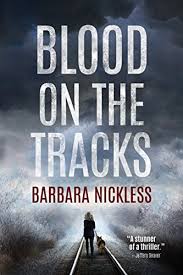
Today we welcome Barbara Nickless as a guest blogger. Her new novel, Blood on the Tracks, has just been released and today she talks about some of the real problems involved in researching this great book. I’ll be on the airplane home to Denver after cheering my husband on in the NYC marathon so I hope you give Barbara a great TKZ welcome and lots of comments!
“Real World” Problems
As soon as I decided to write a police procedural about a modern-day railroad cop in Colorado, I knew I had to set my thriller in the very real city of Denver. Denver is a major hub for western railroads, which have large operations there. As a railroad cop, my protagonist’s territory would cover 35,000 miles. But she—like her railroad—would be based out of Denver.
The problem? Even though I live only 60 miles away, Denver might as well be on the other side of the world for all I knew about it. To write a believable book, I had to go beyond geography. I needed to understand the workings of the Denver Police Department, the ins and outs of the railroads operating out of Denver, and Denver’s history, demographics, economy, and government. I had to get a feel for where my heroes would dine, work, study and live. Just as important, I had to know where my villains would lie, cheat, steal and murder.
Unsure whether to use actual settings for your novel? Here are some dos and don’ts if you decide to play it real.
Do get your facts straight. Errors will jolt your readers out of their willing suspension of disbelief. Start by learning as much as you can about your locale upfront. Online resources like Wikipedia and Google Earth provide everything from weather conditions to street views. There are websites for businesses and institutions where your characters might work, as well as information on museums and restaurants where they can conduct meetings or relax. Additional digging can turn up articles written by the locals, which will give you a feel for the local lingo and tell you what about their city makes them proud (or ashamed). Look at online magazines and newspapers, too, and consider subscribing. When I needed a swanky home in a swanky neighborhood for one of my characters, the Denver magazine 5280 told me the best areas of town, while Zillow offered maps, prices and photographs. And speaking of maps! I bought a large city map, a Denver street guide, a railroad map and a police precinct map. Hang them on your wall and add satellite or street-level photos. Or use pushpins to mark where the bodies are buried.
Don’t think everything has to be real-world. Feel free to make up some locales, especially if bad things happen there and you want to avoid a lawsuit. For my thriller, I took real neighborhoods, gave them the twist I needed, then sometimes renamed them. Denverites who’ve read my novel tell me it’s been fun trying to pinpoint neighborhoods and separate fact from fiction. Another huge part of my setting is the railroad my cop works for. Since railroads are privately owned and I didn’t want to risk offending the actual businesses, I created my own. While I’ve done my best to get general railroading facts straight, I’m free to make up the details.
Do travel there if you can. Nothing beats on-the-street research. For my novel, I was fortunate to find a retired Denver PD detective who also loves trains. Not only did he take me on tours of the Denver Crime Lab and police headquarters, he helped me pinpoint train track locations and find hobo camps. The railway cop who provided invaluable information for my book told me where hobos “catch out” (hop a freight train) and gave me a tour of the yards. He also banished my preconceived notion that railway police, like a lot of traditional police, have partners to help shoulder the load.
Don’t worry about getting it perfect. In Blood on the Tracks, I added a disclaimer at the end of the book stating that I’d taken a few liberties not only in the layout of my settings, but also in the institutions I portrayed such as the Denver police and the U.S. Marines.
What about you? Does your book take place in a real setting or a fictional one? And what are some of your tricks for handling either situation?
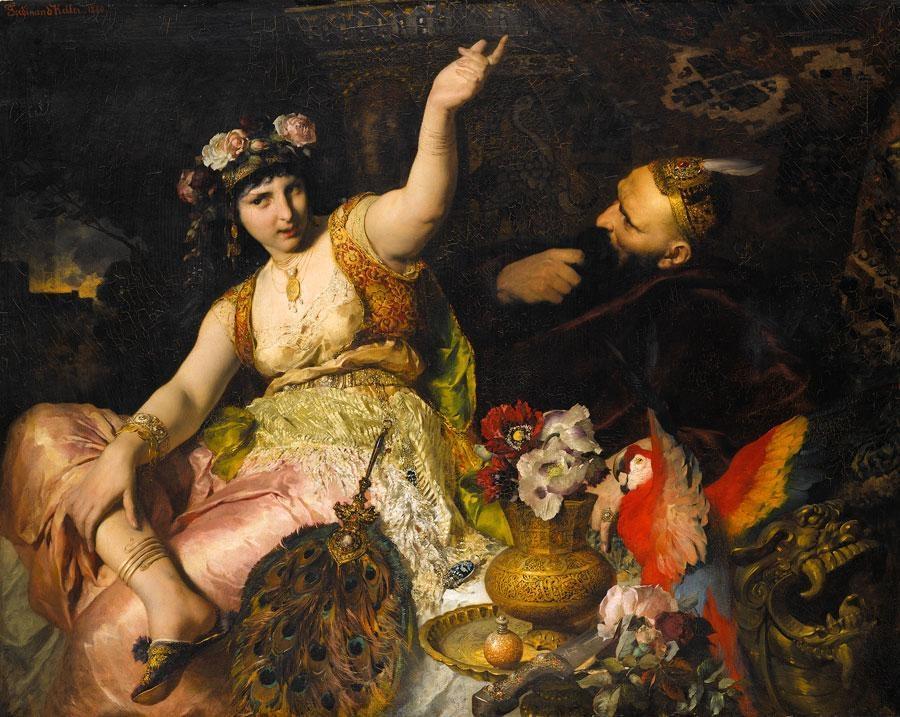
Once upon a time there was a king of Persia who witnessed his wife’s clandestine infidelity. Distraught, the king cried out, “Only in utter solitude can man be safe from the doings of this vile world!”
He then had his executioner dispatch the queen. And he swore an oath that he would ever after take a virgin as wife, abate her maidenhood that night, and slay her the next morning. This plan was to “make sure of my honor. For there never was nor is there one chaste woman upon the face of earth!”
Too bad there was no Xanax back then.
Anyway, the king’s project proceeded apace, until the supply of local maidens began to dry up. One day the king tasked his chief wazir to bring him a beautiful bride-to-be, but the poor counsel could not find one … except his own, beloved daughter.
Her name was Scheherazade.
To save her father’s life, Scheherazade insisted on being delivered to the king. Her resolve was a wonder to her father. What he didn’t know was that the clever Scheherazade had a plan of her own.
She was going to tell stories.
It was midnight when Scheherazade arose from the marriage bed and asked the king’s permission to spin him a yarn. And so she began … told a mesmerizing tale … and left off with a cliffhanger!
The king was so pleased by this that he gave her another night to finish the story. She did, then started a new one, and left off at another page-turning moment. So the king spared her again!
And so it went, for 1001 nights, as Scheherazade extended her life by the power of her storytelling. Included in the tales were the likes of “Ali Baba and the Forty Thieves,” “Sinbad the Sailor,” and “Aladdin and his Wonderful Lamp.”
After the whole cycle, the king was thoroughly smitten (about freakin’ time!), and decided to spare Scheherazade and make her queen.
Storytelling, you see, saves lives.
As I was working on this subject, writer Kristine Kathryn Rusch shared a most interesting post. She wrote about the days following the 9/11 attacks, the despair, the feeling that “we were all waiting for another, equally horrible shoe to drop.”
She needed to escape.
Thank heavens for J.K. Rowling and Harry Potter. I had never read Harry Potter, and frankly, I wasn’t planning to. But I had the first book, and since nothing else was holding my attention (besides the tragedy), I started to read.
And escaped. Harry’s world is different enough from ours to shut out the horrors of the real world, and heal. I will forever associate those books with that need for healing.
I also credit them for teaching me about the value of fiction.
***
I had forgotten that fiction got me through a dark, bleak, and lonely childhood. I had forgotten that stories were the only thing that bonded me and my cold, unhappy mother. I had forgotten that stories got me through tragedies and injuries and losses. I had forgotten just how important escape was, how essential it is to rest, relaxation, and gearing up to go another round in the fight—whatever that fight is.
Dean Koontz makes much the same point in his book, How to Write Best-Selling Fiction. “I write to entertain. In a world that encompasses so much pain and fear and cruelty, it is noble to provide a few hours of escape.”
My friend, the late Stephen Bly, once told a group of writers why he wrote the kinds of books he did. First, it was for “Jannie-Rae,” his beloved wife (the writer Janet Chester Bly). Then, he said, it was for that single mom who has put in a hard day at work. She picks up the kids from day care, brings them home, feeds them, gets them washed and in bed. And now she has a few moments to herself before falling asleep, and picks up a book.
If it was to be his book, he wanted it to carry that mom away and give her the fictive dream and the uplift of an inspiring story.
Isn’t that all to the good? Stress relief can extend life. Entertainment can make the present life better. Sure, we can have challenging fiction of various kinds, but the real power comes from the “lostness” of a reader inside a compelling narrative.
That should be the goal, anyway. Just ask Scheherazade.
Have you ever had a book take you out of a dark time? Provide solace? Make you glad to be alive?
Image (c) Copyright 2016, The LEGO Group. All rights reserved.
THE ELF PRINCE
I stepped through the mirror and into the Elven city. I knew my mother was alive was determined to find her. If anyone could find her it was the elves; their powers of divination equaled no other. Compared to the other worlds I’d visited this one was one of my favorites. Everything was done by magic so the air was clear and clean. Everything was lush, colorful and the air hung with magic. The Elves were friendly people; waving to me as I passed. I continued until the palace came into sight where I stopped and stared in awe. It seemed to shimmer with rainbows in the light. Once I got closer I realised that the palace was made of crystal, the sunlight refracted off the many facets and created a rainbow aura around the whole building.
Elven guards flanked the doors as I approached. Everything about them screamed otherworldliness. Perfect faces under perfect sapphire eyes, perfect brown hair and perfect bodies. Everything was so perfect. The guards didn’t look at me as I approached, but reached out in synchrony and opened the double doors. The inside of the castle wasn’t crystal as I expected but stone. I could feel the effects of heavy magic and suspected the stone was changed from crystal. I continued down the hall and soon came to the throne room. These doors were opened by another pair of guards.
“Shoes off please miss.” One guard said. I slipped off my sandals and stepped into the throne room. The Elf Prince was lounging in his throne. He looked different than the others. His face had a regal edge, his eyes were the color of emeralds and his hair was silvery blonde. He wore all black, contrasting with the pale of his hair and skin. From across the room his eyes pierced mine.
“You’re looking for your mother.” His voice was deep and musical.
“How did-” I stopped. The Elves were masters at divination. Of course he knew. “Can you help me?” I asked, walking up the lush carpet to the throne.
“I could. But will I help you?” He watched me calmly.
“Well will you?” His green eyes watched me with detached amusement. The Prince stood and strode towards me until we were practically nose to nose. I looked up, his eyes sparkled as he leaned down and whispered into my ear.
“No.”
Let us start with a disclaimer: I read very little fantasy. My interest in the genre is limited to the so-called horror sub-genre, and from there to Turkish and Spanish horror films (I’m not making a recommendation, by the way). So it is that when one mentions the word “elf” I am generally not interested unless the name “Keebler” is in front of it. I do know a bit about the contemporary popular fantasy genre, however, and have tried to base my critique on that knowledge. If anyone out there believes that I am too tough or flat out wrong in my First Page Critique of “The Elf Prince” by Anonymous du jour please step right up and say so.
That said, I felt while reading the first page of “The Elf Prince” as if I was in one of those westerns where the cowboy is riding a horse which is out of control, eventually causing the rider (me) to fall off with his foot caught in the stirrup, resulting in his being dragged along until he could bring the steed under control. I am aware that it is part and parcel of fantasy novels to drop the reader in medias res from the first page. When I did read fantasy, back in the day, books like Dune and Lord Foul’s Bane did exactly that. I didn’t feel dropped here so much, however, as I felt dragged at warp speed through a field of stones. What I think we’re looking for as readers is to be tugged into the narrative. Here, within the first page, the protagonist arrives in a different world/city populated by elves and within (apparently) seconds goes to the castle where she’s ushered in and given a ‘no” to her plea to help her find her mother before she even asks. Whoa!
My best advice — the short version — is to blow this first page up ( including the title) and start over. It is what is known in the real estate business as a “tear down,” meaning that you’ve got a great lot but the old house on it does not pass building codes. It’s easier to tear it down and build a new house than to remodel it.
Let’s do that. After the dust settles and the smoke clears we’ve still got the land, and the idea for a story. I suggest, Anon, that you do the following:
Begin by naming things and people. Science fiction and fantasy authors love to come up with exotic titles and words.. Make a list of your characters and give them names. Do the same for the places. “The Elven City” doesn’t cut it. Give it a name. Do the same with the palace. If the palace has guards they’ve undoubtedly got some sort of military hierarchy with titles to match. Those two guys who brought the narrator in probably have a title, like “Garda” or something. Use it.. Give the prince a name, and his throne a name as well. You could make a game of it (…did I really say that?). And who is your narrator? You can drop that into the text quite easily (see below). Since the elves are so smart they’ll be greeting her by her name since they already know it, correct? And what do the Elves call themselves? Do the elves call themselves elves? Do they have different name for themselves? Do they have a term for human beings that can be used in polite company? I suggest that you avoid calling them “elves” for a bit. You don’t have to explain what each term is; your readers should, if you’re doing your job, be able to pick it up in context. I’ll reference Dune. I had no idea who the Bene Gesserit was at first, but it all gradually became clear.
Next. I was very confused as to whether our narrator had been to the Elven City before. She seemed familiar with it, but she was describing the elves as if seeing them for the first time. Clear that up. A sentence will do it. One way would be “It looked the same as it did on my previous visits, (insert description of weather and streets here). Or, if it’s her first time, say so.
Also: as you tug us through the narrative give us more detail concerning what the narrator sees. Let her stop and smell the roses. What are the elves doing? Are they selling cookies from market stands or flying through the air on hoverboards? Are they tending to plants or crops? Are they playing with their children? Are they committing acts of mayhem or robbery? Tell us a bit more about what she sees. It will help you to “grow the book” and help your reader visual things as well.
Personal taste: I don’t like the mirror thing at all. How does one control it?The narrator mentions going to other places while using it, but I was wondering how she keeps from winding up in, say, Hammond, Indiana when she wants to go to Louisville, Kentucky, or finds herself in Columbus, Mississippi when she wanted to go to Columbus, Ohio. She might as well be flying. I think that this may be a problem later in your story, so I would solve it at the beginning by getting rid of it.
The narrator states that the elves have perfect eyes, perfect hair, and perfect bodies. What does that mean? Are they all five-feet seven, pleasingly plump and always wearing a winning smile? A term like “perfect” to describe someone can mean many things to many people. Maybe you could describe them as wonderfully crafted sculptures, come to life” in addition to the specific descriptions you do give. And use this as an opportunity to describe your narrator, and how her appearance compares and contrasts with the elves.
Proofread, and get someone else to look it over for you. There is a grammatical error in the second sentence of the story (where did that “and” go between “alive’ and “was”?), a punctuation error in the seventh (common instead of a semi-colon), and they continue from there. You also use the word “everything” to begin two consecutive sentences. Use it in the first and combine the two sentences. And…if your narrator and the prince are nose to nose, she doesn’t have to look up at him and he doesn’t need to lean down to whisper in her ear. I am not a proofreader; for every one I find in my own work a fifth grader can find six more. Check your work over as best you can and then get a proofreader to go over it again and again.
In closing, let me give you an example of some of the elements I’m discussing. There are any number of ways to begin this story, but try this on:
Prince Quaffa stared directly at me and said, “No, Sarah Quinn.”
I had come too far, and expended too much effort for too good a reason to hear a negative answer.I wasn’t going to be brushed off or refused by anyone, not even the royal Johnny Winter lookalike who stood in front of me. Getting angry, however, wasn’t going to help. I checked myself, took a breath, and tried again. “Your Highness, the abilities of the Huldufolk —”
“Don’t. Call. Us. That.” Prince Quaffa didn’t raise his voice, but it sounded as if it was coming from the bottom of a well.. His green eyes — so different from the sapphire color of his subjects — sparked with an anger that replaced the shine of aamusement they had exhibited a few seconds before. “We hate that term worse than ‘elf.’” He clenched his fist and struck his chest, whispering fiercely. “We are the Lowenpick, you stumpig!”
“We don’t like being called stumpig,” I replied, trying to keep my voice even.
What the foregoing does is hold the action in one place while telling you just a bit about two the characters and creating immediate conflict. You can spread outward from there. Let Sarah plead her case, and have Quaffa explain why he won’t help. After Sarah leaves Quaffa’s presence and walks through the city, have her describe it and the people a bit. Who knows, maybe she’ll encounter an el…er, member of the Lowenpick who will take pity on her and assist her, using those powers you hinted at in your original first page. Or not. I am sure that our readers will have other ideas and suggestions. Please check them all out, Anon, and take heart. Be not discouraged, but encouraged: continue telling your story. And thank you for submitting your first page to The Kill Zone.
Readers, what say you? I’ll be checking up on things throughout the day but will keep my comments to a minimum..