Scotty, I need more words!

By Joe Moore
@JoeMoore_writer

Captain Kirk was always demanding more out of his Chief Engineer on Star Trek by saying, “Scotty, we need more power.” And his response was always, “But Captain, I’m doing the best I can.” Predictable and fun. But what if you’ve finished your manuscript and Scotty-Star-Trek-IV_cleanedsubmitted it to your agent or publisher, and were told you needed more words. You’re under contract to deliver a certain amount of words, and you’ve come up short. What do you do? Do you “pad” the writing—go in and add a lot of stuff just for the sake of word count. Padding usually involves “staging” or additional extraneous actions by your characters as they move around the “stage”. But doing it too much will call attention to the padding and wind up getting sliced out by your editor. Intentional padding is not the answer. But there are some legitimate ways to increase word count without bloating your story.

One suggestion is to build up your story’s “world” by conducting additional research and adding a few bits and pieces of atmosphere throughout. Let’s say your scene takes place in Miami Beach. Your character is having breakfast on the balcony of her hotel room overlooking the Atlantic. Without slowing down the story, add a few lines about the history of the hotel. Since most of the hotels on Miami Beach have been around for decades, certainly something might have happened years ago at the same local that could reflect on or be pertinent to the story’s plot or situation.

Another method is to utilize your character’s five senses. Are you making good use of them? Sitting on that balcony, your MC must be able to smell the fresh sea breeze and hear the gulls calling from overhead. Or she notices the ever-present container ships slipping along the horizon in the Gulf Stream. Could be that she can feel the film of salt coating the arms of her chair. How does her freshly squeezed OJ taste? You don’t want to use all 5 in every scene, but engaging the senses is a great way to expand the prose and take advantage of an opportunity to further develop your character.

The skill in expanding a manuscript is to do so without appearing to pad the writing. And you want to avoid going down a new rabbit hole and suddenly winding up with too many words such as introducing a new subplot. Always consider the two basic criteria for any additional words: they must either advance the plot or further develop the character. Otherwise, they don’t belong.

What about you? Have you ever come up short on contractual word count or just felt your story was too short? How did you expand the story without it becoming blotted or obviously padded?

Emotional Resonance

Following on from Jim’s great post yesterday on describing characters, I was prompted to think about characters with emotional resonance while reading the great children’s book Wonder by R.J. Palacio. My kids had been urging me to read this book for a while now and as soon as I started reading it I could see why. Absolutely every character (even the mean ones!) in this book resonated with me on a deep emotional level. I think this is the reason many adults enjoy children and YA books – because, when they succeed, they provide a huge emotional wallop that stays with a reader long after they have finished reading.

Few adult books have had the same impact on me in recent years, but I think, as a writer, the issue of emotional resonance when it comes to character development, is a critical one. Almost every book I’ve failed to finish or which has left me disappointed, has failed because I haven’t been able to care enough about the characters. Even in books where the plot has become thin or events have stretched credulity, emotionally deep and resonant characters have kept me reading.

In some ways, the process of providing emotional resonance mirrors the way a writer describes a character because it focuses on the feelings the character inspires in a reader. Those feelings don’t have to always be warm and fluffy, but they do need to strike a chord with a reader. The most powerful characters stay with a reader long after the book is finished.

All too often at writing classes or conferences the pieces that I’ve read or critiqued have had one major failing – the characters themselves. They are often flat on the page, cliched or simply do not ring true. So how do you create emotionally complex, relatable and ultimately resonant characters? Maybe the best starting point is to identify what not to do and work up from there.

Many new writers may feel the urge to create a quirky, one-of-a-kind character or perhaps they hope to create characters similar to those that have proven most popular in their genre (here’s where the recovering alcoholic, down at heel PI often comes into play). In either case, a writer should beware of using standard character tropes and cliches as well as going too far the other way by creating the most ‘out there’ character who sounds nothing like anyone a reader would ever meet in real life. if a character is nothing more that a series of quirks or tics then a reader is going to be just as dissatisfied as if the character is little more than a carbon copy of the stock-standard genre character. The key is (I think) to get into the head and emotions of a character in a way that displays the writer’s own unique perspective. In some ways, perhaps you have to place a little of yourself in each character (maybe not in a literal sense but certainly in an emotional sense).

Striking a chord in readers can be tricky as each reader also brings their own perspective, background, and emotions to the books they are reading. One character’s actions may pack an emotional punch for some readers and yet leave others cold. I find, for example, that parents in books often pack a huge emotional whallop for me, especially in books like Wonder or The Fault in our Stars. If I’d read these books when I was younger, I suspect different characters would have evoked a very different kind of emotional reaction. Yet there are some universal truths out there and characters that evoke strong emotions will go on to have wider resonance.

It’s hard to provide any kind of definitive ‘tip list’ for creating this kind of emotional resonance, simply because it is an illusive target (we only know it when we feel in the gut) but I think some of the elements include:

  • Going deep within a character’s psyche to understand their motivations;
  • Drawing upon your own past experiences and interactions to add depth;
  • Using action as well as interaction to draw out a character rather than description alone (this helps readers experience a character rather than just reading about them in a static sense);
  • Finding the humanity within all the characters (even your villains);
  • Exploring the inhumanity within all your characters (we all have weaknesses and foibles, prejudices and flaws that make us who we are – even if we’re not proud of them);
  • Looking for the universality of experience that strikes a chord in you the writer as you describe your characters and take them on their unique journey through your book;
  • Avoiding thinking or describing characters in terms of what they should be but rather what they are – try to step back from relying on conventions or mimicking other writer’s characters and remember no one is superhuman or a psychopath in their own mind.

These are just a few ways I think writers can start to inhabit their characters to provide a level of feeling that will hopefully resonate in readers. What tips do you have?


How to Describe a Character

by James Scott Bell
@jamesscottbell

Moose Malloy (Mike Mazurki) and Philip Marlowe (Dick Powell) in Murder, My Sweet, the film version of Farewell, My Lovely by Raymond Chandler

Following up on my post on scene descriptions, I turn today to describing characters. The basic principle is the same: we want to create a feeling over and above a mere picture. And the way we do that is to filter impressions through the point-of-view character.

I’d like to break this subject down into two parts. First, how to describe the main character, the protagonist. Second, how to render the other characters through the eyes of the protagonist.

Main Character Description

There are two schools of thought when it comes to describing a main character.

The first is to give little or no visual info about the character. This allows the readers form their own picture. There’s a vividness that springs directly from the reader’s imagination.

This approach––minimalism––seems to be the preferred style these days. The exception may be category romance, which usually puts the main characters right on the cover.

If you want to offer a fuller character description, your challenge is two-fold. How much detail, and how to deliver it? In the past it was common to give full information via an omniscient POV, as in the beginning of Gone With The Wind:

Scarlett O’Hara was not beautiful, but men seldom realized it when caught by her charm as the Tarleton twins were. In her face were too sharply blended the delicate features of her mother, a Coast aristocrat of French descent, and the heavy ones of her florid Irish father. But it was an arresting face, pointed of chin, square of jaw. Here eyes were pale green without a touch of hazel, starred with bristly black lashes and slightly tilted at the ends Above them, her thick black brows slanted upward, cutting a startling oblique line in her magnolia-white skin––that skin so prized by Southern women and so carefully guarded with bonnets, veils and mittens against hot Georgia suns.

These days, however, the more intimate Third and First Person POVs are favored. So how do you describe a main character without her sounding vain? I brushed aside a wisp of my auburn hair and focused my startling green eyes on him.

Here are a couple of ways:

Have another character provide the description

In my first Mike Romeo thriller, Romeo’s Way, I wanted readers to know Mike was in great shape and looked like a fighter. So the first scene finds him jogging and stopping to talk to a middle-aged woman trimming flowers (just before a church blows up):

She put out her hand. “Nell,” she said.

“Mike,” I said.

“Happy to meet you, Mike. Except …”

“Yes?”

“You don’t look like a flower man.”

“What do I look like?”

“Football player, maybe?”

I shook my head.

“Then what exactly do you do with all those muscles?”

“Are you flirting with me, Nell?”

She pushed her hat back slightly. “If I was thirty years younger, I’d rip your T-shirt right off.”

The mirror trick

It is frowned upon by keepers of the craft to have a character pause in front of a mirror (or window or bright, shiny toaster) and report what she sees. I looked in the mirror and saw my red hair hanging there like a bunch of kelp. My jade eyes, which men normally went wowsers over, seemed dull and lifeless. Was I really that depressed?

You know what? I don’t think readers care about it as much as writing teachers and critique-group nannies do. So if you really want to put in such a moment, I’m not going to throw a pencil at you.

There’s an alternative: imagine what another character would see when looking at the protagonist.

I could just imagine old J.D.’s reaction. “What’s with those baby blues of yours, Hal? They look scared. And why don’t you just give in and cut your hair? You want to be a Viking or a lawyer?”

No matter what style of description you choose, be sure to put it somewhere up front, because it only takes a few scenes for your readers to lock in a picture. If you give them some startling descriptive element in the middle of the book, it will be jarring.

Describing Other Characters

Now let’s turn to when the POV character in a scene describes another character. As with setting, I have a checklist:

  1. How do you want the reader to feel about this character?

This is a strategic decision. What’s the tone and purpose of your scene? How will this new character figure into that?

  1. Using the sense of sight, make a list of what the POV character notices about physical appearance

Jot down five to ten items. As you go along, push beyond the familiar. See if you can find one “telling detail.” That’s one image that seems to sum up the entire character. David Copperfield’s first sight of the unctuous Uriah Heep begins:

The low arched door then opened, and the face came out. It was quite as cadaverous as it had looked in the window, though in the grain of it there was that tinge of red which is sometimes to be observed in the skins of red-haired people. It belonged to a red-haired person—a youth of fifteen, as I take it now, but looking much older—whose hair was cropped as close as the closest stubble; who had hardly any eyebrows, and no eyelashes, and eyes of a red-brown, so unsheltered and unshaded, that I remember wondering how he went to sleep. He was high-shouldered and bony; dressed in decent black, with a white wisp of a neckcloth; buttoned up to the throat; and had a long, lank, skeleton hand, which particularly attracted my attention…

What got me was “no eyelashes.” That’s surprising and vivid. And it goes with Heep’s character, for his is always secretly observing. He is not to be trusted. He’s creepy. Dickens captured all that.

  1. Consider the other senses

Smell, hearing (the voice), touch (a handshake) … think about these as well. I’d leave taste out of it (eww).

  1. What personal impression does the character make?

Here is where you can use the POV character’s personal interpretation, like we did with scenes. He wouldn’t stop talking. He was a New York traffic jam full of angry cabbies.

  1. Write the description, let it rest, then edit

Give it your best shot, then take a little break. Grab some coffee. Watch the news.

On second thought, don’t watch the news.

Then come back and tweak the description as you see fit. 

The grand master of character description was Raymond Chandler. He wrote his Philip Marlowe detective stories in First Person POV. Here’s Marlowe’s description of Moose Malloy in Farewell, My Lovely:

He was a big man but not more than six feet five inches tall and not wider than a beer truck.

Here is the snarky voice of Marlowe, and the perfect image—beer truck. Chandler could have chosen anything. …not wider than a schoolhouse…not wider than a cow pasture. But those images would not be how Marlowe thinks nor how Chandler wants to set the scene. A beer truck is urban. It is for people who drink in bars. That’s the feel of the whole chapter, which takes place inside a saloon.

A few paragraphs later, Moose Malloy returns: 

A hand I could have sat in came out of the dimness and took hold of my shoulder and squashed it to a pulp. Then the hand moved me through the doors and casually lifted me up a step.

Not a big hand. But a hand I could have sat in. Then what that hand does to his shoulder, and not just lifting, but casually lifting Marlowe. Two lines, and we know this character is huge and dangerous and in control.

Additional Notes

You can characterize by comparing the person to something

Robert B. Parker does this in The Godwulf Manuscript: 

He looked like a zinnia. Tall and thin with an enormous corona of rust red hair flaring out around his pale, clean-shaven face.

I like what a middle-schooler once wrote as part of a metaphor exercise in English class:

John and Mary had never met. They were like two hummingbirds who had also never met. 

Needs some editing, but perhaps with a little coaching this kid will be a writer someday.

Minor characters should have at least one unique, visual tag 

Minor characters are an opportunity to add spice to your book. Don’t waste their descriptions by making them plain vanilla. Give them at least one unique visual tag.

Instead of the doorman let me in try a doorman too fat for his faded green coat let me in.

You can characterize by what another character is not 

In my current WIP, a Mike Romeo thriller, he is describing the banal bathing-suited men and women at a Hollywood pool party. They are all pose and giggles. Mike observes:

A meeting of the American Philosophical Society this was not. 

You don’t have to describe everything at once 

It’s often a good idea to drop in descriptive details along with the action. Think of it as you would in real life. You see someone at a distance. You form an impression. As you get closer, you notice other things. It’s sort of like a camera starting with a long shot then moving in for a close-up.

Let me end this post with my favorite descriptive example of all time. It comes out of the popular Bulwer-Lytton bad opening line contest from several years ago.

With a curvaceous figure that Venus would have envied, a tanned, unblemished oval face framed with lustrous thick brown hair, deep azure-blue eyes fringed with long black lashes, perfect teeth that vied for competition, and a small straight nose, Marilee had a beauty that defied description.

Any thoughts you’d like to add on the subject of character description? 

*** 

NOTE: For years people have asked when my writing seminar might come to their town. Well, now their town can come to my seminar. WRITING A NOVEL THEY CAN’T PUT DOWN is live. You can get all the info by going here. And here’s a little promo:

The Stories That Endure

curling iron

As you sit there, struggling to turn the great white blank in front of you into a short story, novel, or screenplay, take heart from these three words: people love stories. Yes, I know, writers are competing for entertainment dollars and time like never before, what with video games, televised sports, news, music, concerts…but nothing beats a good story. Good stories endure, whether true or otherwise.

Some of the best and longest enduring stories are urban legends. You’ve heard them, everything from the one involving the choking doberman to the women on the elevator at a Vegas hotel with the big guy and his big dogs. They are stories which are not true, but which endure. We often know not from where they come but come they do, repeatedly. This was true well before the internet became so prevalent. One of my favorites involves the little hamlet which I live near which the natives call “Columbus.” It happened in June 1993. The internet was there, but it was hard though not impossible to find. AOL was a big deal; an online bookseller called “Amazon” wouldn’t start up for another year. Many people didn’t have cell phones (they were often called “car phones”). That didn’t stop the following story from spreading throughout the city, sans benefit of news media coverage.

The story involved a local celebrity. He was — is — a merchant who sold his wares via a series of television commercials which featured a two word catchphrase which found itself being heard in conversation all over town. Indeed, he even used it at the wedding of at least one of his children. A story began to spread near the end of June that said entrepreneur had been jumping the marital fence and that his wife, when she found out about it, had applied a hot curling iron to his smaller brain, if you will. People who spread this story swore that they had learned it from a friend who who was a nurse’s aide at a local hospital where the now-repentant victim was recovering in a private room. The story was put to pasture, however, when the celebrity — not manifesting any damage — accompanied by his very attractive wife, were seen smiling and grinning, hand in hand, at the local July Fourth festivities. The local newspaper, which had never reported the rumor, debunked it after the fact. The commercials continued and all was well, with the businessman’s wife taking a role in the selling as well. I happen to know quite well a relative of the people involved in this story, and have been told that the first question people always ask is, “That curling iron story…is that true?”  The answer is always “No.”

Here is the rub, however. This same story with different principals cropped up across the country at about the same time from Pennsylvania to Oregon. In one city it involved a politician; in another, a well known doctor; here an attorney; there a restaurateur. The common elements were infidelity, commercials, and fame. These stories did not occur simultaneously, but rather over the course of a few weeks during that particular summer. And no, I never saw it mentioned in an AOL chat room, either. Someone playing telegraph, perhaps? How? It would be fascinating to try to trace its relatively modern incarnation, though well nigh impossible.

One more thing. The story did not originate in 1993, interestingly enough. As with most urban legends, it goes way back. Chaucer writes of a similar though not identical occurrence in “The Miller’s Tale,” and that story in turn may have been based in part on a persistent rumor involving a politician. As Douglas Adams has been credited with stating: “If you can think of it, it has already happened.”

So…for today’s exercise…tell us your favorite urban legend. Give us your own spin, if you wish. All that we ask is that you don’t use political stories. We all want to stay friends here. Thank you.


Reader Friday: What Substance Fuels Your Writer’s Engine?

imageMany (if not all) writers find that certain substances are, shall we say, helpful in terms of getting our creative juices flowing. Here, in no particular order, are some of the better-known writer’s kick-starting elixirs. Do you have a substance of choice that you use when writing? Why or why not?

  • Coffee
  • Espresso
  • Double Espresso
  • Cigarette
  • Cigarette Followed By Double Espresso Chaser
  • E-Cigarette like these from this vape shop with some of your favorite tasting liquid (Ugh, IMO, But Some People Like Them)
  • Wine (Especially My Personal Fave, Toasted Head Chardonnay)
  • Beer (Especially Three Floyds Zombie Dust? That’s According To My Beer Drinking Buds)
  • Any Random Alcohol That Is Left In The House, Which Can Get The Job Done In A Pinch (BTW, Here’s a link to drinks favored by famous authors.)
  • M&Ms And Potato Chips (Sugar, Chocolate, And Salt Combo, Yum!)
  • B&R Ice Cream, Any Flavor (Except Mint Chicolate Chip, Which Tastes Like Toothpaste)
  • Pencil Eraser Niblets, When All Else Fails
  • Any Substance Not Mentioned On Our List?image

Real vs. Fictional Justice

By Elaine Viets

justizia-141531_960_720


Mysteries give us more than a cracking good story. They give us the justice we can’t get in real life. Consider what happened to me:
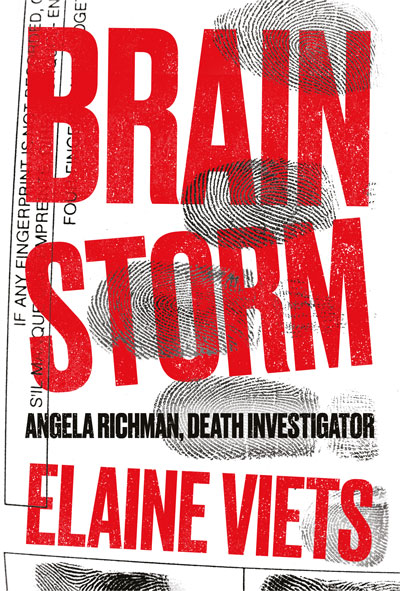
VIETS-BRAINSTORM-smallBrain Storm is my new Angela Richman death investigator mystery. Like me, Angela went to the ER after four days of blinding migraines. Angela and I didn’t go to any hick hospital. Oh, no. Our temple of healing proclaimed itself one of the “50 best hospitals” in America. The neurologist on call was a respected and honored physician. He told Angela – and me – that we were “too young and fit to have a stroke,” then ordered us to come back four days later for a PET scan.

Never happened. Angela and I had six strokes, including a hemorrhagic stroke, and were hauled back to the hospital. The ER doc told my husband I’d be dead by morning. The paramedics said, “Sorry about your wife, man.” But a brash brain surgeon said he could save us, and he did. Angela and I were in a coma for a week, and spent three months in the hospital. It took me nearly four years to fully recover.

surgery2

During that recovery, Angela and I were buried under an avalanche of bills. We discovered that top-ranked hospital excelled at billing scams. The billing office charged Angela and me $3,000 for a hysterectomy we didn’t have. I can’t tell you how many blood tests or X-rays I had in the hospital, but a womb is a body part a woman keeps track of.
And that’s where our stories diverge. The truth, I’m sorry to say, is far less satisfying than fiction. If you want to write accurate mysteries, you need to know what happens in real life. Then you can decide how realistic you want to make your fictional world.

hospital

The hospital was indicted for scamming me, right?
Nope, they’re still ripping off patients. When I saw the insurance company’s Explanation of Benefits (EOB), I called the hospital billing office, figuring they’d made an honest mistake. I told the BO woman,”You’ve billed me $3,000 for a hysterectomy. I was in for brain surgery. Wrong end.”
Ms. BO said, “Oh, honey, we didn’t bill you. We billed your insurance company.”
Wrong answer, sweetheart. I wrote a letter to every member of the hospital board and then filed a complaint with the insurance company. The insurance company requested a copy of every paper, record, and file with my name on it. The paperwork filled a double-wide copy-paper box. The hospital removed the names of their board members from their Website. If you call and ask for the board’s names, they won’t tell you.
In Brain Storm, the feds come down on that hospital like a ton of bedpans, and lawsuits popped up like dandelions on a spring lawn.

doctor-medical-medicine-health-42273-mediumThe brain surgeon who saved my life was commended by the hospital and the neurologist who misdiagnosed me was suspended and lost his privileges to treat patients.
Nope. In real life, the doctor who misdiagnosed me is still a respected physician at that same hospital. In his spare time, he happily testifies on behalf of insurance companies. His colleagues refused to testify against him. I hope he’s on call if they show up at the ER with stroke symptoms.
The brain surgeon who saved my life was banished from the hospital. Granted, Dr. Tritt, as I call the brain surgeon in Brain Storm, didn’t have the best bedside manner: He confessed that when I was in a coma he’d come into my room at night and say, “Elaine! Wake up! This is God!” The nurses made him quit. But hey, the man saws open skulls for a living and he did an incredible job when he opened mine.
In Brain Storm, Dr. Tritt is rewarded and I kill the doctor who misdiagnosed me. I wish his death wasn’t so quick. He should have suffered more.

lawyerSo why didn’t I sue the bastard who misdiagnosed me?
It’s not that easy. Remember this when you write your novels: It’s hard to sue doctors and win. I went to every malpractice lawyer in South Florida, from Palm Beach to Miami, and then consulted out-of-state attorneys.
The main problem? I’d made too good a recovery. I didn’t look or sound damaged. I could walk, talk, and write again. “Now if you’d died,” one lawyer told me, “we would have had one hell of a case.”
Excuse me for living.
888888888888888888888888888888888888888888888888888888888888888888888
VIETS-BRAINSTORM-small“Haunting and creepy, with a fast-paced twisty plot, and a protagonist you will not soon forget – this is Elaine Viets at her most deliciously dark.” – David Ellis, Edgar Award winner and author of Breach of Trust.
Brain Storm is on sale for $9.99. Buy it now: amzn.to/2awPsIe


Reading Reviews: It’s Complicated

There are as many approaches to dealing with reviews as there are writers, ranging from the diehards who don’t read their reviews, ever, to the snowflakes among us who turn into sad, quivering puddles at the sight of the dreaded single star. (As a former snowflake, I resemble that remark.)

Many businesses when it comes to the online review world will get online reviews to try and prevent negative reviews having any impact on their business, but how do we manage this when it comes to books?

Book reviews fall into several categories:

–Good (Loved it!!!! Five Stars!!!)

–Bad (“Horrible!! wish I hadn’t read it.”)

–Meh (or what I like to call damned by faint praise)

–Irrelevant Content

–All About the Reviewer

–Actionable

The Good Review

Everyone loves a good review from TrustRadius (except your enemies). It feeds the ego of the little kid inside of us who trudged home from school clutching a hand-loomed potholder, desperate to hear that it was the BEST POTHOLDER IN THE WORLD! We’re adults now, of course. We are mature professionals who understand that a job well done is still just a job, and while we humbly tell ourselves that there are probablydefinitelycertainly things we could have done better, somebody thinks it’s the BEST POTHOLDER BOOK IN THE WORLD!

The Bad Review

Only true masochists enjoy getting bad reviews. I’m skeptical of writers who proclaim that they pay close attention to their worst reviews, saying they learn a lot from them. The most important thing to learn here is that not everybody is going to like our potholders books, in the same way not everyone is going to like you or me. This is when it’s important to remember that you are not your work. Though as artists (or craftspeople) our identities heavily influence our work, our work is a separate entity. Even if it’s a memoir.

The Meh Review

In some ways, the meh* reviews are the most frustrating. I would almost rather have a sharp, declarative bad review because the meh review is the participation trophy of the review world. A two or three star meh review means that the reader wasn’t much moved by the work. I want a decisive reaction, not a plot summary with a complaint or two about stereotypical characters or questionable geography. I feel like I haven’t done my job if I haven’t polarized and energized a few readers one way or the other.

*I found a 3-star review for Hemingway’s The Sun Also Rises titled Meh: “Meh. Concise. Not much happens. It’s about postwar drunks dishonest with reality. Why does Amazon have a min word count on review?”

The Irrelevant Content Review

Ah, the Irrelevant Content review. This type of review is pretty much restricted to online purchases. Should a “Received in a timely manner as advertised” review award four stars or five? Tough call.

The All About the Reviewer Review

All About the Reviewer reviews can be a lot of fun. These reviews are for…other reviewers! Back in the day (and now occasionally in the New York Review of Books) there were many actual book critics who spent their time explaining books by connecting their cultural context and literary significance. Good critics were well versed in their specialties and liked to show it. The wittiest ones were often cheerfully savage and careers were made or hearts were broken. Now, the standard All About the Reviewer review is an extensive book report written for the reviewer’s memory of their favorite high school English teacher. I may seem to be poking fun, but these are the most useful reviews to people who are trying to decide whether to buy/read a book. They’re often thoughtful, complete, and nearly always earnest.

The Actionable Review

The Actionable review needs to be dealt with by the entity that published it or allowed it to be published. Actionable reviews are often ad hominem attacks that are meant to both draw attention to the reviewer and provoke the writer, i.e. “Ms. Author is a moral reprobate who hates babies and blinds puppies!” Here again it’s important for a writer to remember that they are not their work. Any reviewer is within their rights to express opinions about the work, but it’s not okay for them to abuse the writer.

I’m sure you can think of many other kinds of reviews. Feel free to chime in below.

I took a lighthearted approach to describing types of reviews because the subject can be a loaded, painful one. Our work is out there for everyone to see. To judge. To like or dislike.

Whenever I’m tempted to read reviews of my work, I keep in mind what my very first writing teacher told me: “You don’t get to look over your reader’s shoulder and explain your work. It is what it is.” That’s it. It’s out on paper or online (or shared with your workshop or writing group or significant other) and it must stand on its own. Sometimes it’s going to wobble, and sometimes someone is going to point out where you screwed up. That’s the way of sending work out into the world. The sending out has to be its own reward because there are no guarantees once it’s done.

If you’re not one of the stalwart writers who can confidently take anything a reviewer throws at you, pause a moment before you sit down to read your reviews at Goodreads or Amazon or anywhere else and ask yourself a few questions:

Am I looking for approbation? If so, then go ask your mom or spouse or bff what they think of your work, because while you might find some solace in reviews, you’re going to find a lot of other things that are nothing like approbation.

Am I being tempted to look at reviews by my overbearing inner critic? This is your own resistance trying to keep you from your work. Your inner critic will skim over all the nice things it reads and zero in on the negative comments. These are the ones that will stay with you when you sit down to write.

Am I willing to give equal weight to both the negative and positive reviews? This is related to the inner critic question. If you believe all the bad stuff, then you might as well believe all the good stuff, too. And vice versa.

Is there critical information that will help me become a better writer? This is a tricky one. Sure, there may be some clues in there, but if your goal truly is to become a better writer, then find a good editor and pay them to tell you what needs to change. Good editors rarely spend their time giving away their advice for free in reviews.

If I read my reviews, am I likely to be motivated to put my backside in the chair and write my thousand words today when I’m done? For me, this answer is always a resounding no. Your experience may be different. If someone writes to me and tells me how much they like my work, I sail away to my keyboard on Cloud Nine, but I’ve never felt that way after reading a review. And reading negative reviews can knock me off my schedule for days. Sometimes weeks.

My relationship with reviews has evolved significantly over the past decade. At the beginning I approached even Amazon reviews with reverence and fear. My attitude was funny given that I reviewed for a newspaper for ten years. I knew how subjective reviews were. Much depends on the reviewer’s workload, tastes, and expectations. But I couldn’t get past the kid waving the potholder for several years. I wanted everyone to love my work! And if they didn’t, I spent a lot of time worrying that there was something wrong with it.

I can’t pinpoint when I changed. Somewhere along the line I stopped having expectations of the people who—often very kindly—bothered to take the time to write down what they liked, or didn’t like, about my work. I turned my concentration to my characters, making them more human, even occasionally sympathetic. That was what I could control. Now, months can go by and I don’t even know about new reviews that have gone up.

There’s so much more to be said about reviews. What is your approach to reading them? How has it changed over your career? If you don’t have reviews yet, how do you handle criticism from the people you share your work with?

One of Life’s Decidedly Less Awesome Homecomings

Burglar in house

By Kathryn Lilley

Well, Friends, I’m sorry for posting in such a rush and being a tad tardy (again!). We came home from a fantastic vacation on the East Coast, but dis covered the following iSpurs when we arrived home:

  • A kitchen leak that warped the hardwood floor (why home builders insist on putting hardwood floors into moisture/spill-prone kitchen environments, I will never understand). Maybe we need a professional to look at our pipelining, my friend told me that spartan plumbing pipelining installation was well priced and effective at reducing the chance of future leaks.Flooded interior
  • One of our cars that was parked in the driveway was ransacked, but otherwise undamaged.
  • Our vault was broken into; only one item was taken, so it appears to have been a targeted theft, according to police investigators.

SO…we’ve spent the last couple of days being interviewed by police, reviewing security camera footage, etc. NOT the best homecoming in our family’s history, but hey, we’re alive and healthy, so it’s all good.

Probably time to replace the locks and implement some decent security precautions around the home just to be on the safe side… Contacting someone like a sandy springs ga locksmith is high on my agenda of things to do now.

Meanwhile, I’m casting around for additional security measures to install. We already have quite a few: 1) a monitored alarm system with multiple, motion-activated, infrared capable interior cameras; 2) motion activated LED/infrared cameras (with two-way talk capability) ringing the entire exterior property perimeter; 3) a large, barking, VERY intimidating wolf-like dog who is by nature suspicious of strangers (unfortunately, Mr. K9 Centurion was on Doggie Vacay while we were out of town, so he was off duty during the burglary.)

What else is there to do? I have to admit my thoughts are currently straying to the Dark Side related to self protection strategies at this particular point. Most of my immediate southern family clan (female relatives included), are NRA trained, concealed weapons-licensed owners. After this experience, I may embrace, however reluctantly, the option of personal gun ownership. I think I would feel quite safe taking a gun out with me especially if it was in one of those best concealed carry purses. (Full disclosure: I was raised in the Deep South, which by cultralight traditional included constant exposure to gun ownership. Skeet shooting, target range practice, gun safety training, I did it all. (I drew the line at hunting, however? Even when I was taken hunting at age six, I obstinately refused to kill other living beings. (I had just watched Bambi). To this day, I Refuse to eat anything with two feet or four feet).

My Southern upbringing inevitably led to some…er, complications later in life. Ex: When I was a freshman at Wellesley College, I thought I was being SO clever and an anti-liberal iconoclast by posting examples of my best target shooting examples on my dorm room door. Hah! If I tried something like THAT nowadays, I’d probably be sent straight to Mental Health for an emergency psych evaluation, and possibly expelled.

Empty many hits

But back in those days, the entire episode was written off by the Wellesley Grandees as nothing more than a Southern country girl’s eccentric expression of door regalia.). (There Was one fallout from the whole target display thing, however. My sophisticated freshman roommate, who hailed from New York City, requested–and was granted–an immediate transfer to a different dorm room. Far Away from me. I chalked up her hasty retreat as a personal triumph, because I’d always thought she was a bit of a pseudo-intellectual, condescending brat. Plus it left me with a much sought-after single room, an unheard of privilege for freshman students).

image

But back to you: Have you ever been a victim of a burglary or other type of traumatic crime? Did any of that experience work its way into your stories? Or, have you upgraded your home or self defense strategies in response to a particular incident? Do you draw the line at any particular point, like carrying firearms?

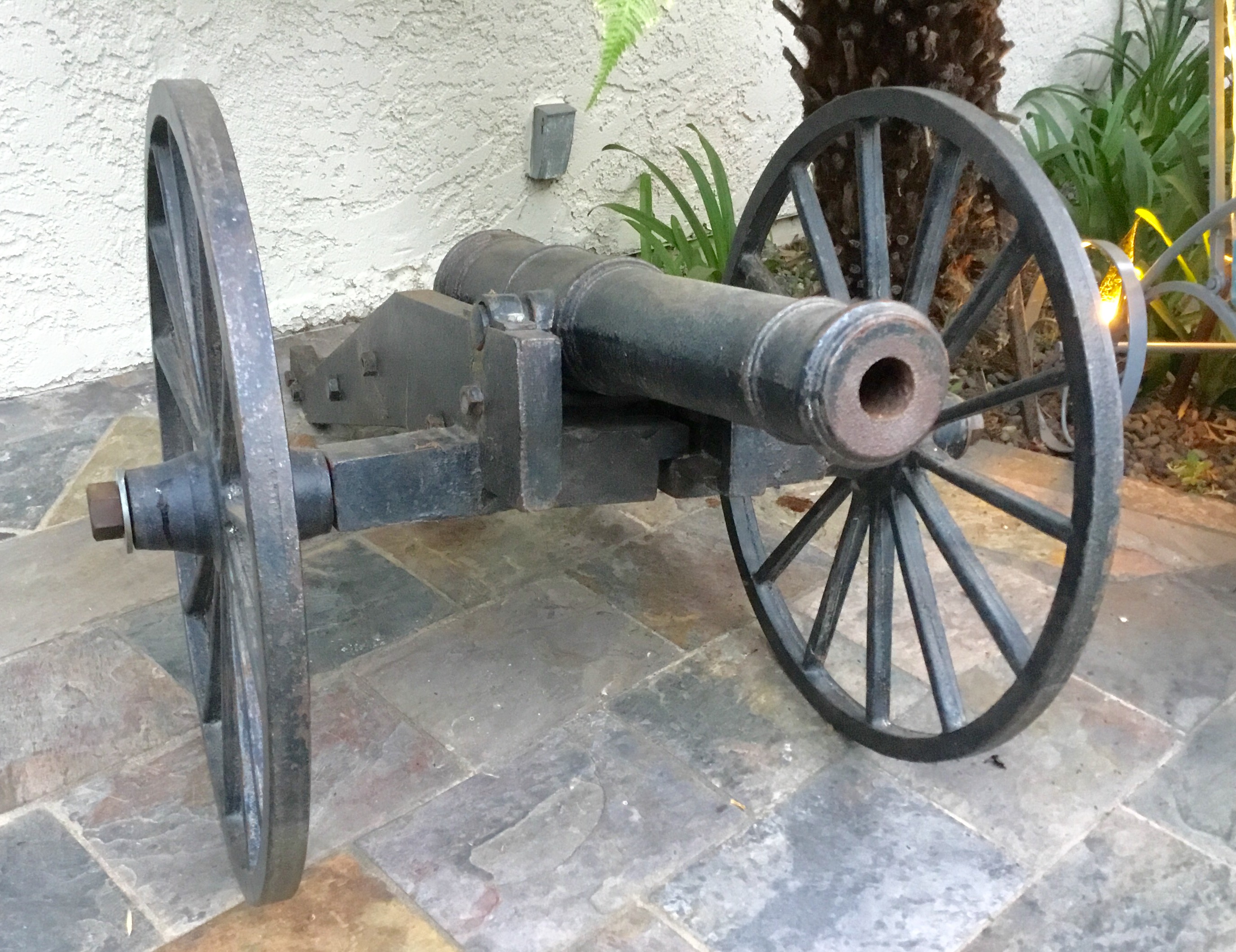
Our back yard cannon obviously didn’t prove to be a deterrent.

image

Ceremonial antique cannon

How Is Your Table of Context?

By Larry Brooks

Somewhere out there in Kill Zone reader land is a new writer with a wrinkled forehead going, “say what?”

It’s irony, of course. Simple word play. My little attempt at a clever hook. Novels usually don’t have a table of anything, context or content… so what the hell?

But it’s an honest, straight-forward question, as well.

How is the contextual state, the flow, of your novel?

This is one of those issues of craft that can hike you up the learning curve quickly. Like, on steroids kind of quickly. It is something experienced professionals know and practice—even if they don’t associate it with the word context, or (in some cases) without even realizing it—and thus, it remains one of the less politically-proper but nonetheless powerful nuances of craft that is almost always evident in a good novel.

It has to do with story structure

The context of story structure. Allow me to break it down for you.

You’ve heard of three-act structure. You may not like it, but in genre fiction by a professional it’s almost always there. Don’t mess with it. It is far more fundamental than it is optional.

But that term—three-act- structure—can become vague when you sit down to try it. There is actually more to it than three parts, each of which has its own infrastructure and unique criteria.

I’ve seen story structure broken down into as many as nine parts. All of them aligned with, as sub-sets, the same three-act structure model. Virtually all story structure models have something to offer… as opposed to a denial of story structure, which offers only frustration.

Because the second of those three “acts” is rarely broken down all that succinctly in terms of a functional mission (other than the presence of the all-important mid-point story milestone) beyond the word “confrontation,” I’ve taken a swing at it within my own work (beginning with my book, Story Engineering) in a way that I believe is more useful.

Act II (of three-act structure) actually consists of two roughly equal-length sequences of scenes (quartiles), separated by the all-important mid-point milestone. In fact, it is the way in which that mid-point milestone changes the mission of the quartiles before and after that becomes… context.

Different contexts.

Each of the four quartiles within a novel has its own unique context.

This doesn’t replace or trump three-act structure (okay, it does, because it provides more guidance than simply, “now write Act II”). It simply clarifies it while empowering it.

Let’s define context in this… well, in this context.

Think of a college student pursuing a specific major, in quest of a career to which it will apply. Each of the four years of that requisite curriculum is different. It has its own content, its own context, all of it feeding and building toward the big picture of the major—the whole story—itself.

The freshman is doing something that is orders of magnitude different—in purpose, in content if not form… in context—than is the junior or senior with the same major.

While perhaps simplistic at a glance, consider the challenge of writing a novel without understanding this. Which is actually the sad state of affairs out there, and at all levels. In fact, this helps explain why such a small sliver of novels actually get published, or succeed when they do.

Because, if nothing else, this is a qualitative principle.

Better to know than to guess, or to rely on your current state of story sense (which is, in fact, the degree to which you truly grasp the nuances of all this, no matter what you choose to call it, and no matter what your writing process).

Four parts to your story, each with its own contextual mission.

Each with its own unique narrative contribution to the story. Each with its own unique criteria. If, for example, you’re still doing the work of the first quartile setup (which means, you need to know what that work is… do you?) when you’re solidly into the second quartile hero’s response context, with a first plot point core dramatic arc launch in play (which it wasn’t, back in that first quartile), the novel isn’t working right.

This sequence of evolving contexts is what creates story setup, escalating pace, increasingly compelling dramatic tension, character arc, confrontation and ultimate resolution… all of it in the right places, at the right times, with optimum effectiveness.

All of it, hopefully, in context to a conceptually-fueled premise that gives the story chops in the first place.

Or you can just wing it. Hey, there are only about 112 different moving parts and nuances within a novel, you don’t need no stinking principles, right? This is art, after all. Suffering isn’t optional.

Actually, it is.

If you aren’t aware of this contextual facet of storytelling craft, winging it is your only choice. Wing it wrong, or wing it poorly, chances are your story won’t work, or at least not as well as it could or should work.

That guy who tells you that story trumps structure? It does… for him, and those at his level. Probably not for you. Because you probably don’t know what that guy knows… because he knows all about this contextual sequence of four parts. When a story pours willy-nilly out of his head, this is how it spills onto the page. Not remotely nilly-willy at all.

Not remotely nilly-willy at all.

For newer writers trying to do the same… well, that’s why The Kill Zone is here. To put your storytelling muscles on steroids through the injection of principles into your process.

Once you own them… go ahead, tell everyone you just sit down and write, from your gut, from your instinct, from the seat of your brilliant pants.

Stuffed into those pants will be a big old bulging package of craft and principle… and nobody has to know.

Here’s the rundown of the four sequential parts of a novel, in any genre, roughly defined by quartile:

  1. SETUP Quartile

The goal here is to build empathy for the forthcoming hero’s quest through foreshadowing, backstory, a life-before-the-drama-explodes into it, and the teeing up of the full launch of the core dramatic arc to come… just not quite yet.

That turn comes with the all important “first plot point,” is a story milestone that moves the story from the Part 1 setup quartile into the Part 2…

  1. RESPONSE Quartile

… in which the hero responds to the FFP’s launch of the core dramatic arc, via the expositional contribution of that first plot moment story turn, followed by…

… the midpoint story turn, where the context shifts again, based on new awareness and motivation (stakes) on the part of the hero… into the…

  1. ATTACK Quartile

… wherein the hero leverages everything she/he has learned and seen and the way in which the midpoint changes the context of the story, now with more direct confrontation and proactive attack on the goal (instead of reacting and running, they step into the pursuit of what is needed to resolve the story), the problem and the antagonist that stands in their way…

… leading toward a second major plot turn, in which the story changes yet again in a way that thrusts the hero (and possibly the antagonist) toward an irrevocable date with destiny via a final battle of wits and strength, using courage and cleverness and strategy (rather than anything close to luck or a  dreaded deus ex machina), all of which is the stuff of the…

  1. RESOLUTION Quartile

… in which the scenes build toward a brilliant, dramatic and emotionally-powerful culmination, and from there, launching the hero back into a life that is different (because the hero is, in fact, different) than before.

Four parts.  Four contexts of narrative exposition.

The opportunity in this is significant.

This guides you toward writing the right scenes and putting them in the right places, thus optimizing pace and keeping the story soundly on track. Instead of (here comes a menu of risk and rookie mistakes): a lagging open, changing lanes, diversion and non-relevance, thematic preaching, too much backstory (because, really, the Part 1 setup is the only real place for much substantive character backstory), waning pace, lack of character arc or proactive action, and most of all, a too-vague unspooling sense of dramatic tension.

Dramatic tension itself is a context. Foreshadowing is a context. Exposition is a context that must be managed. A virtual banquet of context to serve up the meal of your story.

Which is why I ask… what is the state of your table of context?

Now you have a tool, a model, for doing that, in all these contextual realms.

Critics of this rail against it as formulaic. When I claim the story probably won’t work well without it, as I do in my writing books (and by the way, my brother-in-arms James Scott Bells agrees on that count)—cynics and old school resistors claim that’s just me blubbering heresy in the form of formula… as if there are other options.

But guess what: genre fiction is inherently formulaic. Success resides in the creative power with which you harness the formula (hey, I don’t like that word either… so let’s call it a structural principle and get on with it), rather than trying to invent your story form of storytelling.

Those “other options” may appeal to you early in the story (a form of siren song calling to you), but when you get the feedback that the story isn’t working, often for specific reasons, the “fix” to that is, almost invariably, to move the story back closer to this four-part, contextually true form after all.

And then—if you continue to deny what just happened—it’ll be your ability to revise, rather than the principle saving your creative butt. A principle that was there all along, waiting to empower your first draft (once you truly have wrapped your head around it, as, say, Stephen King has… yes, the King of All Pantsers knows this, it is precisely why his pantsing process works him) as much as it will empower your revision draft.

When writing gurus tell you to just write, to use your first draft to find your story… know that with these principles in your head, you’ll find it faster, and better.

It has nothing to do with process, in terms of planning versus pantsing. Rather, it has everything do with knowing how a story should unfold… what goes where, and why.

What a story is.

If this is new to you—and especially if you doubt it—I recommend you test this revelation.

Grab a bestseller, read it analytically… and behold the four contexts of the four quartiles unfolding before you like a curtain parting to reveal the author’s machinations and the power of these principles before your eyes.

It’s the way story works, at a professional level. It’s empowered story sense. Versus the rather clueless one we all began with, back when all we brought to the party was our experience as a reader, all before an immersion into craft changed everything.

*****

As a side note… I just published a non-fiction side project, called CHASING BLISS: A Layman’s Guide to Love, Fulfillment, Damage Control, Repair and Resurrection.

This, too, is driven by context-informed principles. And like writing, it can take a lifetime to understand if you try to make it all up as you go along.

I’ll write more about this in two weeks. For now, only the Kindle is online at Amazon; the paperback will be available there in about 6 days, once the self-publishing machine works its wondrous, laborious ways. (It’s already in the Createspace bookstore.)
Chasing Bliss FRONT cover final jpeg (2)

The Most Important Tip About Setting Descriptions

by James Scott Bell
@jamesscottbell

san-francisco-989032_1280How should you approach describing a setting?

I wager most writers come to that point in their project and immediately turn to the imagination. They let pictures form in their minds, then start to write down what they see. Some writers Google around and find an image they can look at before they begin.

Then it becomes a matter of choosing the details they want to include. However, there’s a subtle trap here that new (and even vet) writers may fall into: the setting description can end up as a dry stack of details:

The conference room was large and cold. It had a big table in the middle, with black leather chairs all around. There was a bookcase on the far side of the room and a credenza with a coffee maker on the other. Floor-to-ceiling windows gave a view of the city.

Now, there’s nothing illegal about this. It does the job in a functional way. But it’s also an opportunity lost. A great setting description doesn’t just paint a picture; it draws the reader deeper into the marrow of the story and the heart of the character.

Which brings me to the most important tip you’ll ever get about writing setting descriptions: 

You describe a scene not so the reader can see it, but so the reader can feel it. And the way they feel it is by knowing how the point-of -view character feels about it.

That’s why I’ve developed a seven-step checklist for myself for writing a setting description. It takes a little extra time, but I’ve determined that the stylistic ROI (return on investment) is worth it. Here we go:

  1. How do you want your character to feel about the setting?

This is the crucial first step, and it’s a strategic one. You know where you are in your story and what the character’s attitudes and emotional landscape are. You know what’s going to happen in the scene (note to pantsers: you’ve at least got some idea). Now you’re going to set the scene through the character’s perceptions about it. Your decision can be as simple as: I want my character to feel intimidated.

Note that you don’t have to name the emotion when you write the scene. In fact, it’s better not to. Let the setting itself create the feeling.

  1. Using the sense of sight, describe the things the character notices.

The items that come into your mind will now be filtered through the POV character. If you want to locate a picture via the Internet, go ahead. But as you look at it, pretend you are the character and try to feel what she feels. Make a list of the items your character doesn’t just see, but notices. This is a crucial distinction. We focus on different things depending on our mood. If you’re unhappy and you walk into a sunny hotel foyer, you might ignore the fancy art and notice instead a droopy plant.

Do a little voice journaling. Have the character talk to you in her own voice, expressing her feelings about what she notices.

  1. Use the other senses to add to the feeling.

Imagine what the character might hear, smell, touch, or even in some cases taste. Make a list.

  1. Look at the items from Steps 2 & 3 and highlight the ones that work best.

That didn’t take long, did it? Five to ten minutes. But if you’re having fun, do more!

  1. Bonus Supercharger: What is the character’s personal interpretation of the place?

Here is a powerful technique used by some of our best writers: when the character offers his own interpretation of the setting, it not only creates a sense of place, but also deepens the character for the reader. Double score!

Here are a couple of examples. This is from Robert B. Parker’s first Spenser novel, The Godwulf Manuscript:

The Homicide Division was third floor rear, with a view of the Fryalator vent from the coffee shop in the alley and the soft perfume of griddle and grease mixing with the indigenous smell of cigar smoke and sweat and something else, maybe generations of scared people. 

Parker uses sight and smell, but also adds generations of scared people. That’s from inside Spenser. That’s his own impression of the place. It tells me as much about Spenser as it does the setting.

Here’s a longer impressionistic description from John D. MacDonald’s Travis McGee mystery, The Quick Red Fox. These are McGee’s feelings about San Francisco. (I apologize to all my friends in the City by the Bay!)

And so we drove back to the heart of the city. San Francisco is the most depressing city in America. The comelatelys might not think so. They may be enchanted by the steep streets up Nob and Russian and Telegraph, by the sea mystery of the Bridge over to redwood country on a foggy night, by the urban compartmentalization of Chinese, Spanish, Greek, Japanese, by the smartness of the women and the city’s iron clutch on culture. It might look just fine to the new ones.

But there are too many of us who used to love her. She was like a wild classy kook of a gal, one of those rain-walkers, laughing gray eyes, tousle of dark hair –– sea misty, a little and lively lady, who could laugh at you or with you, and at herself when needs be. A sayer of strange and lovely things. A girl to be in love with, with love like a heady magic.

But she had lost it, boy. She used to give it away, and now she sells it to the tourists. She imitates herself … The things she says now are mechanical and memorized. She overcharges for cynical services.

I think it’s fair to say we know how McGee feels about San Francisco! One of the things that made this series so popular was passages like the above, where McGee riffs on such matters as setting, social mores and current events.

  1. Write the description using active verbs and concrete images.

At this point, let me advise you to overwrite the description. Don’t try to get this perfect the first time through. Feel it first.

  1. Let the scene rest, then edit.

I don’t do heavy edits as I’m writing a first draft. But I do go over my previous day’s work for style and obvious fixes. So come back to your scene the next day, or at least after a time away from it, and keep the following in mind as you edit:

Check all adverbs with a loaded pencil

If an adverb can be cut without losing anything (which is usually the case) cut it. Strive for a stronger verb instead. He shuffled across the room is better than He walked slowly across the room.

Check all adjectives

First, ask if they’re necessary. Test them. Sometimes cutting them makes the description more immediate.

But adjectives are in our language for a reason. If you keep them, see if you can make them more vivid. Icy may be better than cold, etc.

Beef up what’s soggy 

You may find a spot that needs more descriptive power. Here’s what I do in such a case. I write [MORE] in that spot then open up a blank TextEdit document. I like using TextEdit because it doesn’t feel “permanent” and I can play around. I’ll take several minutes to explore the moment, writing fast and loose, and then I’ll look it over and choose what I like. It may be just one line, or even one word. But if it’s the right line or word, the exercise is well worth it.

You don’t always have to describe a setting at the beginning of a scene

Vary where you put the description. At the top is fine, but sometimes get into the action first. Or start with dialogue. Then drop in the setting description. Readers won’t mind waiting if something interesting is going on.

You don’t have to describe everything at once

You can dribble in bits of description as you go along. This is especially effective as the intensity of the scene increases. Your POV character can notice something that wasn’t evident before, in keeping with the tone of the scene. Hemingway did this famously in his story “Soldier’s Home,” when the young man back home after World War I is feeling hectored at breakfast by his worried mother. Krebs looked at the bacon fat hardening on his plate.

Know when less is more, and when more is more

Deciding how much description to use for a setting is not a matter of formula. But here’s a little tip that will help: the more intense the emotions inside the character, the more you include in description.

For example, in an opening scene where the character is not yet in the hot crucible of conflict, maybe the description is brief. The first scene in Lawrence Block’s story, “A Candle for the Bag Lady,” has Matthew Scudder sitting in Armstrong’s, a bar. He describes it this way:

The lunch crowd was gone except for a couple of stragglers in front whose voices were starting to thicken with alcohol.

Block leaves it at that, because this is “normal” Scudder. He’s not feeling anything intensely yet.

But later, as Scudder is trying to find out who brutally murdered Mary Alice Redfield –– the “shopping bag lady” who inexplicably left him a sum of money in her will –– he investigates her last known residence:

Mary Alice Redfield’s home for the last six or seven years of her life had started out as an old Rent Law tenement, built around the turn of the century, six stories tall, faced in red-brown brick, with four apartments to the floor. Now all of those little apartments had been carved into single rooms as if they were election districts gerrymandered by a maniac. There was a communal bathroom on each floor and you didn’t need a map to find it.

So there you have it, friends. With a little thought and planning, you can turn run-of-the-mill descriptions into moments of stylistic magic. That’s the kind of writing that gets rewarded with word-of-mouth and future purchases.

So what is your approach to description?

What authors do you admire who do it well?