By Debbie Burke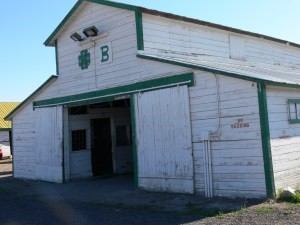
The Scene of the Crime
Last year, I became the victim of an attempted sexual assault in broad daylight.
An assailant stuck a gun in my back, dragged me into a dark, deserted barn on the county fairgrounds, and tried to rape me. When he put down the gun as he tried to tear my clothes off, I kicked him where no man wants to be kicked. He escaped out the back of the barn.
I survived completely unscathed…because, fortunately, I was not a real victim, but a role player in a law enforcement training scenario.
Alumni of the local Sheriff’s Citizens Academy get tapped from time to time as role players in training sessions for reserve officers, the posse, and search and rescue. Since I completed the Citizens Academy, I’ve walked heel-to-toe in a mock traffic stop for drunk driving. I portrayed the hysterical mother of a child injured in an accident. I played a victim of a medical emergency, which turned into a bona fide emergency when a swarm of yellow jackets stung me!

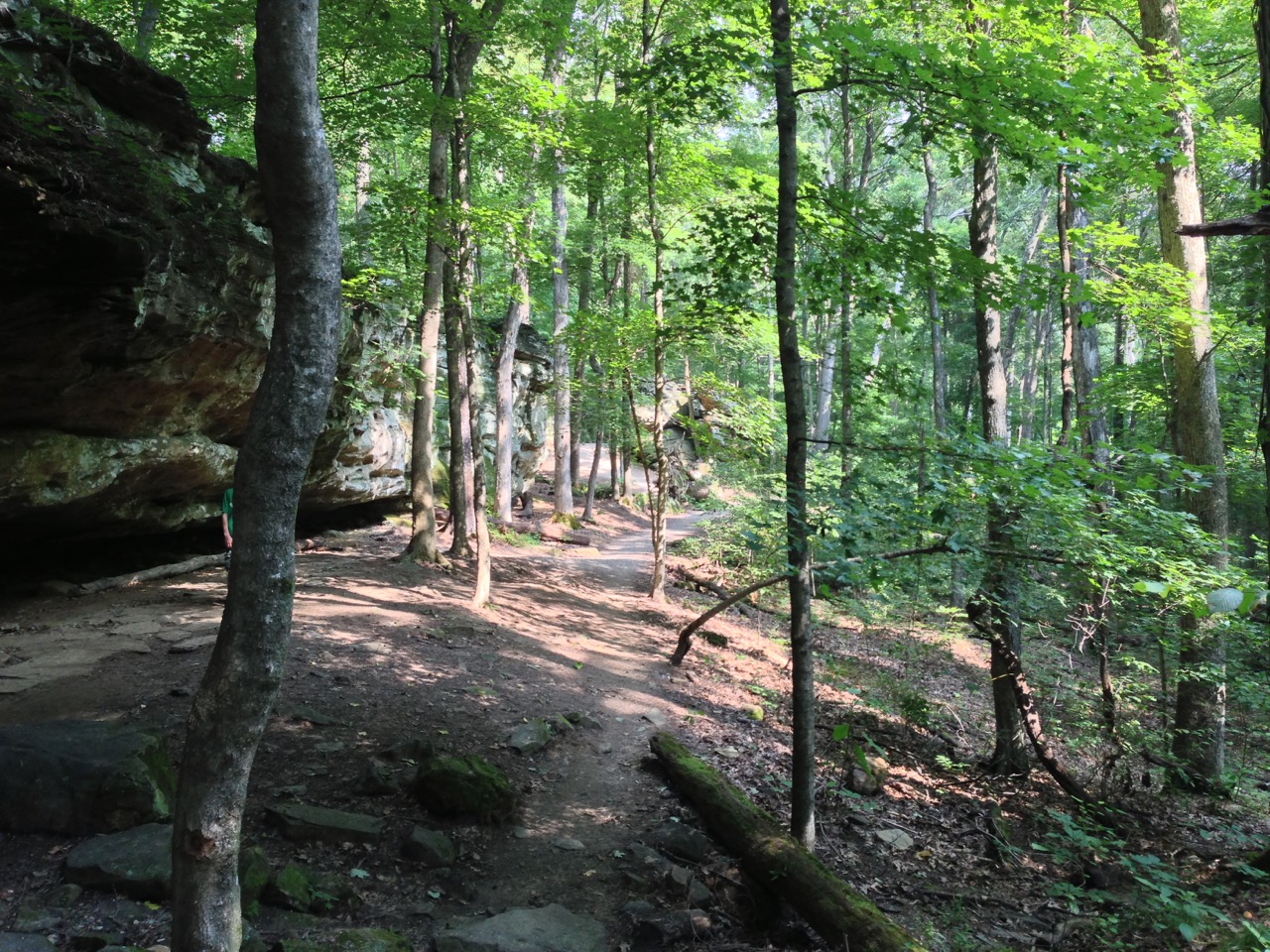
Photo by Lynette Schimming, Thompson Falls, MT
The sexual assault scenario mentioned above was part of the training for posse and reservists who respond to emergencies at the county fair. Each trainee team answered mock radio calls from a 911 dispatcher about various crimes, in addition to lost children and heart attacks. Trainees rotated through stations staged around the fairgrounds, while deputies and police officers observed and evaluated how they handled each situation.
A deputy staged the scene beforehand: drag marks in the dirt, signs of a struggle in the stall, a fake gun left on a shelf by the attacker, and footprints leaving the barn. Then each team would rotate in turn to our station.
The lead instructor had already briefed trainees about their duties. In the sexual assault scenario, they were supposed to interview the victim (me), call for medical assistance, and broadcast the assailant’s description on the radio. Then they would secure and preserve the crime scene until regular officers relieved them.
Cops love to tell stories. My favorite part of the exercise was during down time between rotations. That’s when the story-telling began—a great opportunity for me as a writer to pick up details, nuances, and subtleties that lend authenticity to crime novels.
Since the county covers 5000+ square miles with only four deputies on duty each shift, stories abound of the resourcefulness required when responding alone to calls in remote locations.
A CSI related the tale of an overweight officer who’d taken a lot of kidding about his size. Late one night he arrested a rambunctious suspect who, despite being handcuffed, kept trying to run off. With backup seventy-five miles away, the deputy had to find a safe way to further restrain him until help arrived. So he spent the next forty-five minutes…lying on top of the suspect.
His fellow officers still kidded him, but with respect for a guy who used the tools at hand to solve a problem.
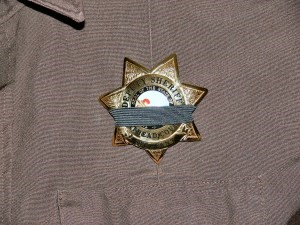
Because of a rash of ambushes on law enforcement, most officers were wearing a black band over their badges. In a lowered voice, a veteran deputy with fifteen years’ service confided, “My six-year-old just told me, ‘Dad, I don’t want you to be a police officer anymore.’” That poignant sentence spoke volumes about the family life of cops. It will stay with me for a long time.
Back to the training session. One trainee earnestly wrote down my description of the would-be rapist. Another reassured me that I was safe. Others took the initiative to clear the barn and search for the suspect.
After each team completed the exercise, the evaluators critiqued their responses. One team did not enter the barn at all. When the evaluator asked why, the answer was: “We could see the gun from where we were outside, we didn’t know if the perpetrator was still around, I wanted to keep my partner in sight.” They received a nod of approval from the evaluator.
Another team split up—one talked with me, while the other cleared the barn, checking stalls with a flashlight, careful to avoid the footprints and drag marks. Again, a nod of approval.
According to the evaluator, both approaches were appropriate since trainees took their individual limitations into account and did not compromise safety.
And then there was the posse volunteer who proved the adage, you get what you pay for…
This trainee had clearly never watched a single episode of CSI. Upon arriving at the scene, he immediately rushed into the barn and stomped on the footprints and drag marks. Then he grabbed the gun, obliterating the attacker’s prints.
The evaluator took him aside…for counseling.
After training ended, we ate lunch and reviewed the volunteers’ performances. Feedback from the 911 operator was especially useful. She cautioned if a responder didn’t answer a radio call, the operator might assume trouble and dispatch assistance, when, in fact, the responder simply forgot to acknowledge a call. Big oops.
Taking the course can broaden your education and add verisimilitude to your novels.
Besides, it’s not often one becomes a “victim” without suffering any trauma. Role-playing is far preferable to the real thing!
TKZers, what are your favorite tools to lend authenticity to your stories?

When she’s not playing a crime victim, Debbie Burke writes about them. Her new thriller Instrument of the Devil is available on Amazon.