“Everyone has a novel in him or her. Not everyone has a SECOND novel.” – Jeremiah Healy.
By PJ Parrish
We really need to talk about your second book.
What? Are you nuts? I’m still working on the first! I’ve been working on it for five years and it’s killing me!
Yeah, I know. But you really have to trust me on this one. Even if you haven’t published squat yet, you really need to hear me out on how important it is to starting thinking now about your sophomore effort. Why? Two reasons.
- Your first book might not get published. What then? You going to curl up and die? Or will you live to write another day?
- Your first book might get published. What then? No one can ride a one-trick pony to a successful career. Not even a scribbling monkey scribe.
All of us here at TKZ are at different points on the writing path. Some of us are just starting out. Some are mid-road and mid-list. Some are published but stalled. Some are gliding along with dozens of titles up on Amazon. But all of us need to think about that “second” book…or for some of us, the “next” book, always the next book, to paraphrase Virginia Woolf. So even if you are sitting there at Book I, Chapter 4, this is still something you need to think about. Because being a successful writer isn’t about playing checkers. It’s all about chess, and looking a couple moves ahead, even if you’re stuck on moving out your pawn.
There’s a ton of advice out there on what’s called Second Novel Syndrome. Some of it is good. Some of it is dumb because as we’ve learned here, not every path is your path, Grasshopper, and advice is cheap and cheap anything is often bad.
Books are like kids. Some slip out easy. Some come out kicking and fighting only after months or years of labor. Your first book, like your first kid, is fraught with tension, tenderness, and outright terror. Oh God, what if I drop him on head? What if my kid is ugly and dumb? Should I switch him from Gerbers to Sprout Organic? The second book, if you’ve learned anything from the first experience, is more like second kid. It’s bath time and dinner! Ah, just set him out in the backyard in the rain with a handful of Cheerios.
Let’s go back to that one-trick pony. Because if you get hitched up with an agent or editor and they buy your book, the first question out of their mouths will be, “What else you got in your pipeline?” The second question is “How soon can you get it to me?” This is because we are primarily talking about the mystery/thriller genre here and that means you have to be prepared to turn out quality on a regular (like annual) basis.
Even if you are self-publishing you must do this. Especially if you are self-publishing, because you are going to have an even harder time of getting noticed, and the more real estate you occupy out there, the more often you can feed your readers, the better your chances.
Like my good buddy Jerry Healy said, you have to have more than one novel in you. You don’t want to Question Mark and the Mysterians. You want to be Elvis. Okay, that’s overly ambitious. You want to be Billy Joel. Or maybe Phil Collins but only after he left Genesis.
History is paved with the graves of one-hit wonders in every arena, from music to sports to tech inventions (like the guy who invented the computer mouse prototype and never came up with anything else.). Maybe the saddest one-hit wonder was a guy named Harvey Bell. He was a graphic artist who created the smiley face in 1963 for an insurance company ad campaign. More than 50 million smiley buttons alone were sold in the 60s. Bell was paid $240 for his design and never hit it big again.

Music is filled with one-hitters. Rick Astley made a career of it. Here’s a whole list of musical one-hitters. Some of my faves are Wooly Booly, I’m Too Sexy by Right Said Fred, and Popsicles and Icicles by the Murmaids. And I have a soft spot in my heart for Funky Town.
In acting, there’s a term called the One-Scene Wonder. This is a character who has one good scene then disappears (not to be confused with a cameo or spear-carrier). My favorite One-Scene Wonder comes in Pulp Fiction when Christopher Walken tells a gross story about his father’s watch. There’s also a terrific One-Scene Wonder in Four Weddings and a Funeral when Rowan Atkinson, as the priest, keeps screwing up his lines.
Sports has its share. Joe Namath, Mark Fidrych and my favorite Ickey Woods, the Bengals running back who scored 15 TDs one season, had a hit dance with The Ickey Shuffle, then shuffled off to Buffalo. (actually, he got hurt and retired).
Which takes us back to books. Now any one of you out there can name a One-Hit Wonder in fiction, but the list toppers include Margaret Mitchell, Salinger, Emily Bronte, Boris Pasternak et al. If you want to know what the New York Times Bestselling One-Hit Wonders of all time are, click here where you find Richard Simmons sharing space next to Stephen Hawking.
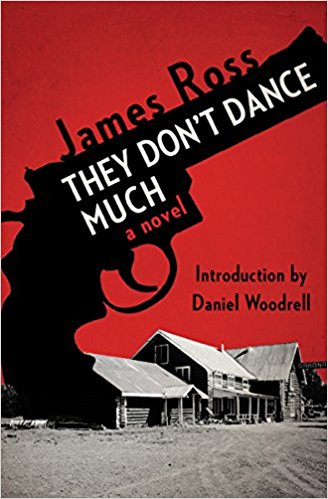
This post today was inspired by synchronicity. My writer friend Rick Helms posted some advice on Facebook (and reminded me of Jerry Healy’s quote) on the same day I read a story about a writer named James Ross. I had never heard of Ross, but he published only one novel in his life, They Don’t Dance Much. It wasn’t really a hit in in 1940. In fact, Flannery O’Connor, who met Ross at a writers conference, wrote to her agent to say, “Ross is looking for an agent. He wrote a very fine book called They Don’t Dance Much. It didn’t sell much.” The book later became a cult hit, though, with the Washington Post calling it “a hardboiled gem.”
But I am not sure any one of us wants our one novel, gem that it is, discovered 35 years after its birth. So I really urge you to think now about book 2, 3…and 10. For what it’s worth, here’s some things I have learned along the way about this. Maybe it will help, maybe it won’t. But I offer it in good faith as someone whose first mystery came after her third finished (unpublished) manuscript and whose first published book didn’t sell for beans but whose second book is still selling (and got an Edgar nomination).
- Don’t be shy about getting feedback mid-stream as you write. Whether from an editor, agent, critique group or trusted beta reader. Test the waters.
- Don’t wait. Get going on your sophomore effort as early as you can. Literary folks can maybe afford the luxury of a Donna Tartt layoff. The rest of us, not so much.
- Don’t write the same book twice. You have to have a flow of fresh ideas. But if you are writing a series, you have to have continuity between books and still be fresh with your second plot.
- Don’t be afraid. Because you probably learned something from writing book one. You’ve improved. You’ll have some discipline and a better idea of your writing routine.
- Do understand that you might make the same mistakes. Go back and read your first book and look for what you did wrong. (I did this and boy, what a lesson!) Don’t repeat your mistakes. Watch out for your “writer tics” and try to correct them before they become full blown bad habits. Like using “And then…” (one of mine)
- Do understand that your second book might gestate and be born in a completely different way. You have to treat each in its way yet impose the same discipline upon your approach to it. (Back to that kids metaphor again, right?)
- Do establish a deadline. A first book has the luxury of taking as long as it wants to finish. You can’t do that with a second book because if you want to be published, you have to be able to produce on a regular basis that might be at least a book a year. If you give yourself deadlines – daily, monthly, and final – you might have a chance of success. Stephen Fry said of second novels: “If I write my first novel in a month at the age of 23 and my second novel takes me two years, which one have I written more quickly? The second, of course. The first took 23 years and contains all the experience, pain, stored-up artistry, anger, love, hope, comic invention and despair of a lifetime. The second is an act of professional writing. That is why it is so much more difficult.”
- Do know that second times are often the charm. Mike Connelly completed four manuscripts before he sent out his debut novel The Black Echo. Alice Sebold’s first book was Lucky, a raw memoir about rape survival. It got no attention. But her second book was The Lovely Bones. You might have heard of it.
- Don’t get discouraged if the first book doesn’t fly. Or even gets off the ground. Erosion of confidence is common after a first stab, especially if you didn’t get it placed with a publisher or got a lot of rejection. Well, you gotta toughen up. Maybe it wasn’t you the writer, maybe it was the story. It wasn’t fresh enough. It wasn’t unique. You didn’t quite have your craft under control. You put it out there before it was really ready. If you are knocked down by one blow, you will never be a writer.
Which leads me to one of my favorite One-hit Wonder songs of all time. Hit it, boys!