Photo (c) 2018 by A. L. Thummz. All rights reserved.
I for whatever reason am occasionally asked for advice about writing. My bottom line suggestion — one that I follow myself only after being dragged to it, kicking and screaming — is to tell the story simply. Not everyone needs to be James Lee Burke, William Faulkner, Toni Morrison or Cormac McCarthy, and they shouldn’t be. Write from Point A to Point B, at least at first. You have to build the wall before you decorate it. Get those corners at right angles and those verticals plumbed in your story before you decorate it. You’ll have plenty of time for that later. Your story or novel isn’t going anywhere unless your cat walks across the keyboard and steps on the delete button.
That brings me to an example of the foregoing.
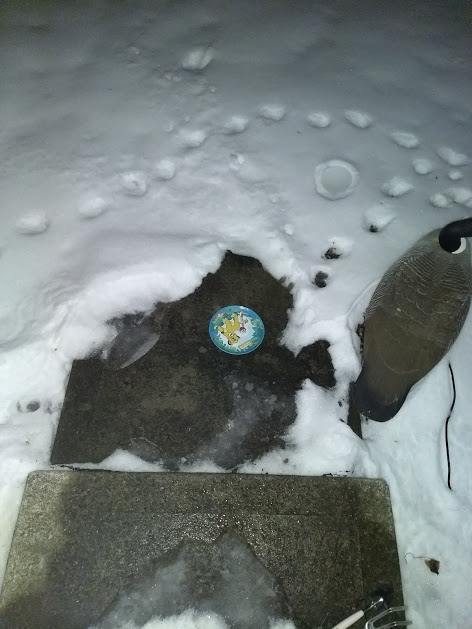
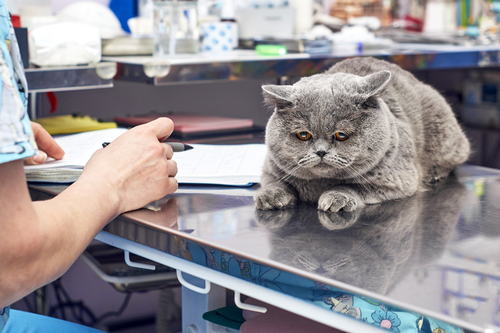
There is a feral cat who has been coming around since late last spring. We call him “Felix.” He’s grey and skittish. His trust is measured in incremental inches, bought and paid for with food on demand. Felix disappeared for several weeks near the end of summer. I was fairly certain that he had crawled into the brush to await the arrival of the picadors and had risen to meet them one last time. He surprised me, however, by returning near the end of October, gazing at me through the rear sliding glass door with an expression that probably translated to, “Yeah? Whaddya want from me?” He has visited regularly since. It’s been a tough winter, and I’m surprised whenever I see him, but see him I do, and almost every day.
Felix and I tell each other a story each day. When I get up each morning I turn all of the backyard lights on. Felix always shows up within ten minutes. His arrival is heralded by Demonspawn, the resident housecat and indoor maitre ‘d. I bring the food out while Felix stands an arm’s length (mine, not his) or so away from me until I go back into the house. If he wants more, he hangs around and I give him more. We follow the same pattern at night. Sometimes I’ll see his footprints on fresh snow, weaving in the same pattern he always makes, and know that one of us missed the signal. I make it up on his next pass.
The story that Felix and I tell each other is simpler than that, however. He tells me he’s hungry. I tell him I care. Actually, that’s the root of just about every story, from Aesop’s Fables to The Bible to The Dark Tower series and beyond. So there you go.
Simple stories aren’t just for children, but it’s during childhood that we normally hear our first ones. Are there any that you care to share?
As always, thank you for stopping by. And if you are able please take a minute to feed our friends outside. It’s a cold one this year.
Another intriguing offering from an Anonymous Author. This one seems to be science fiction. Read it first, and then I’ll add my comments.
**********************************************************************************
He had no memory from before waking up inside the tank. A bespectacled face peered at him through the water, which flashed red at set intervals. A worried smile played across her features as the water flushed from the tank. With a soft hiss the glass panel in front of him slid open and he fell forwards into her arms. He shivered against the cold air as she helped him further out of the tank. She inhaled, the sound sharp in his ear.
“It feels so good to hold you. I know you don’t know who I am,” she placed her hand on his shoulder as she pulled back. “I’m your mother, in a manner of speaking.”
Her hand felt cold and trembled as it grazed his naked skin. The red lights were still flashing and he noticed the sound of an alarm now, like a deep throbbing pulse to accompany the light.
She pointed down the hallway behind her, “You have to go now son, quick, I’ll try to give you time.”
He opened his mouth as if to speak but she shook her head, then she cocked it sideways and ran her hand through his hair and peered into his eyes. “Blinking seems OK, you understand what I’m saying . . . The memory engrams were integrated then,” she muttered under her breath. Then she pecked him on the cheek. “Go now,” she whispered in his ear.
He nodded and ran in the direction she pointed. The alarm shifted in pitch. He could hear voices, loud and sharp. Were they coming for him?
“Go!” his mother repeated.
He ran and stopped as soon as he heard several loud bangs behind him. A woman screamed and then fell silent. Was it his mother?
His heart pounding in his ears, he ran faster. Pushing through a door, he felt snow crunch underneath his bare feet. His shivering became more intense as his teeth began to chatter. Small branches hit him as he crashed through the bare trees, but he kept going, not knowing where. With no light to guide him this far from the building he let his eyes adjust to the night. The moon slid in and out of view behind clouds above, providing scant illumination to guide him. A gust of biting wind blew across his skin and he stifled a sharp cry.
Something roared in the distance below him and he came to a sudden halt as the ground dropped away in front of him.
**********************************************************************************
Wow! I’m impressed. This grabbed me from the first sentence. The unusual opening, creepy setting, and plenty of action kept me reading to the last line. Now I wonder what’s going to happen to our “newborn” man.
Sure, I can nitpick this offering.
In this sentence, I’d take out the word further: He shivered against the cold air as she helped him further out of the tank.
And the punctuation for the dialogue is odd. In this sentence I’d put a period after “who I am” and make the next part a separate sentence. “It feels so good to hold you. I know you don’t know who I am,” she placed her hand on his shoulder as she pulled back,” so it looks like this: I know you don’t know who I am.” She placed her hand on his shoulder as she pulled back.
I’d make some of the dialogue into separate sentences instead of running them together: “You have to go now son, quick, I’ll try to give you time” would become: “You have to go now, son. Quick! I’ll try to give you time.”
But these are minor quibbles. Sometimes, the art of editing is knowing when to leave something alone. You have a terrific piece of writing here, AA. You say that “Squenced Humanity” is a working title. Give it a better title, and you’ll have a winner. **************************************************************************
Win my 10th Dead-End Job mystery, Pumped for Murder, in hardcover. Click Contests at www.elaineviets.com.
Today’s post is short. I promise I’m not lazy. I’m really, truly not. This past week, I was on the road (I’m looking at you, Alabama!) and when I returned, I immediately resumed Mom’s Taxi Service for my eighteen year-old son who’s still on crutches.
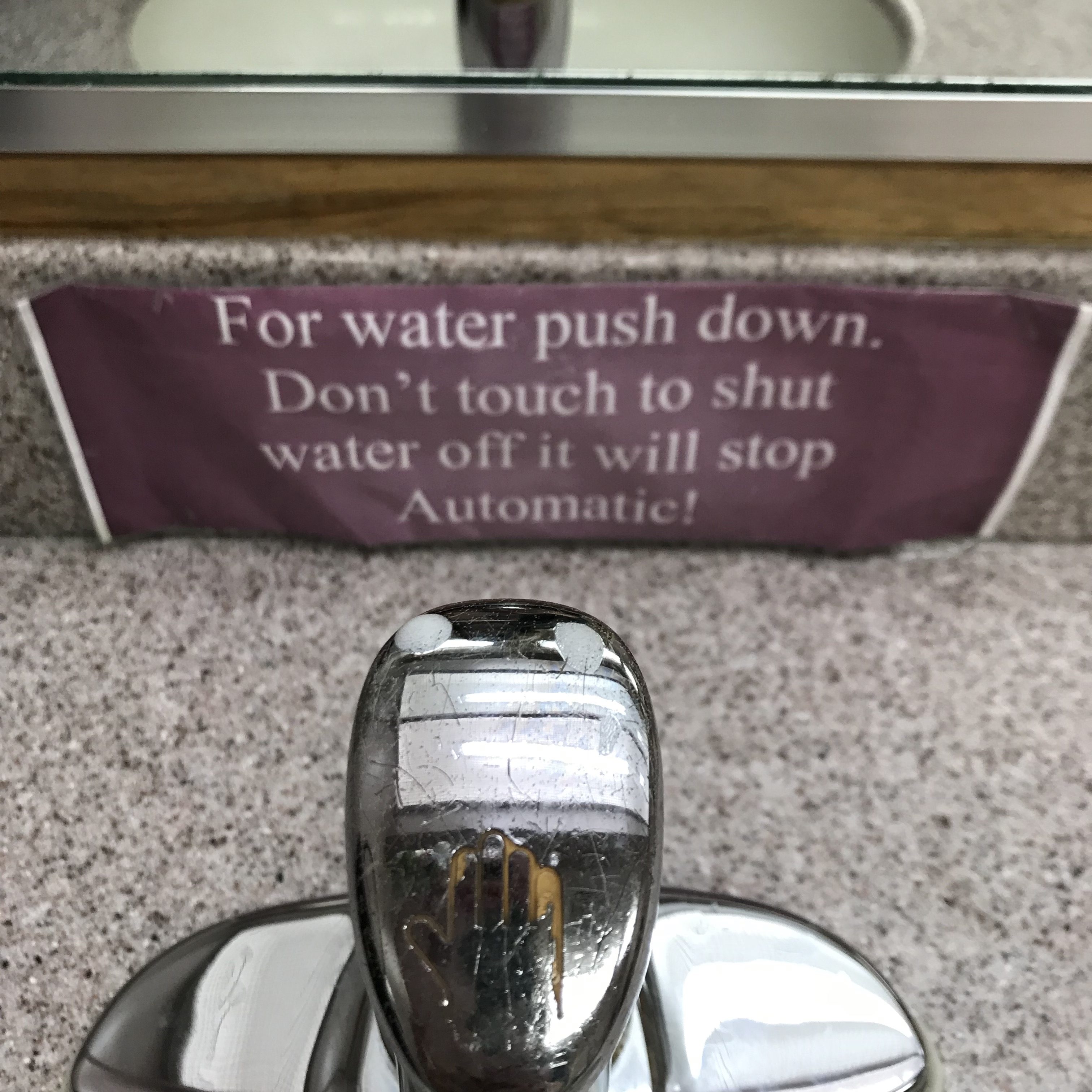
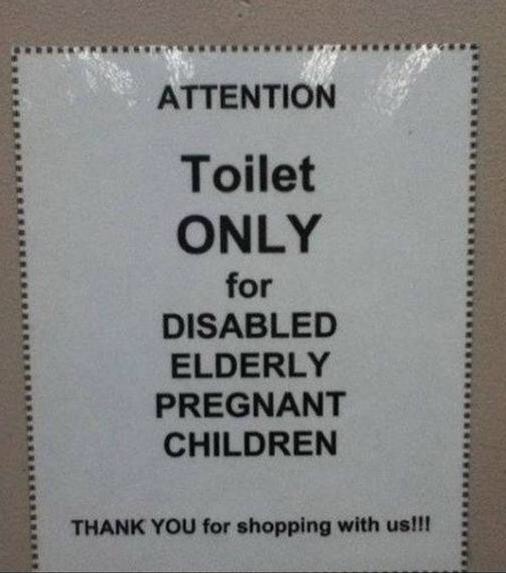
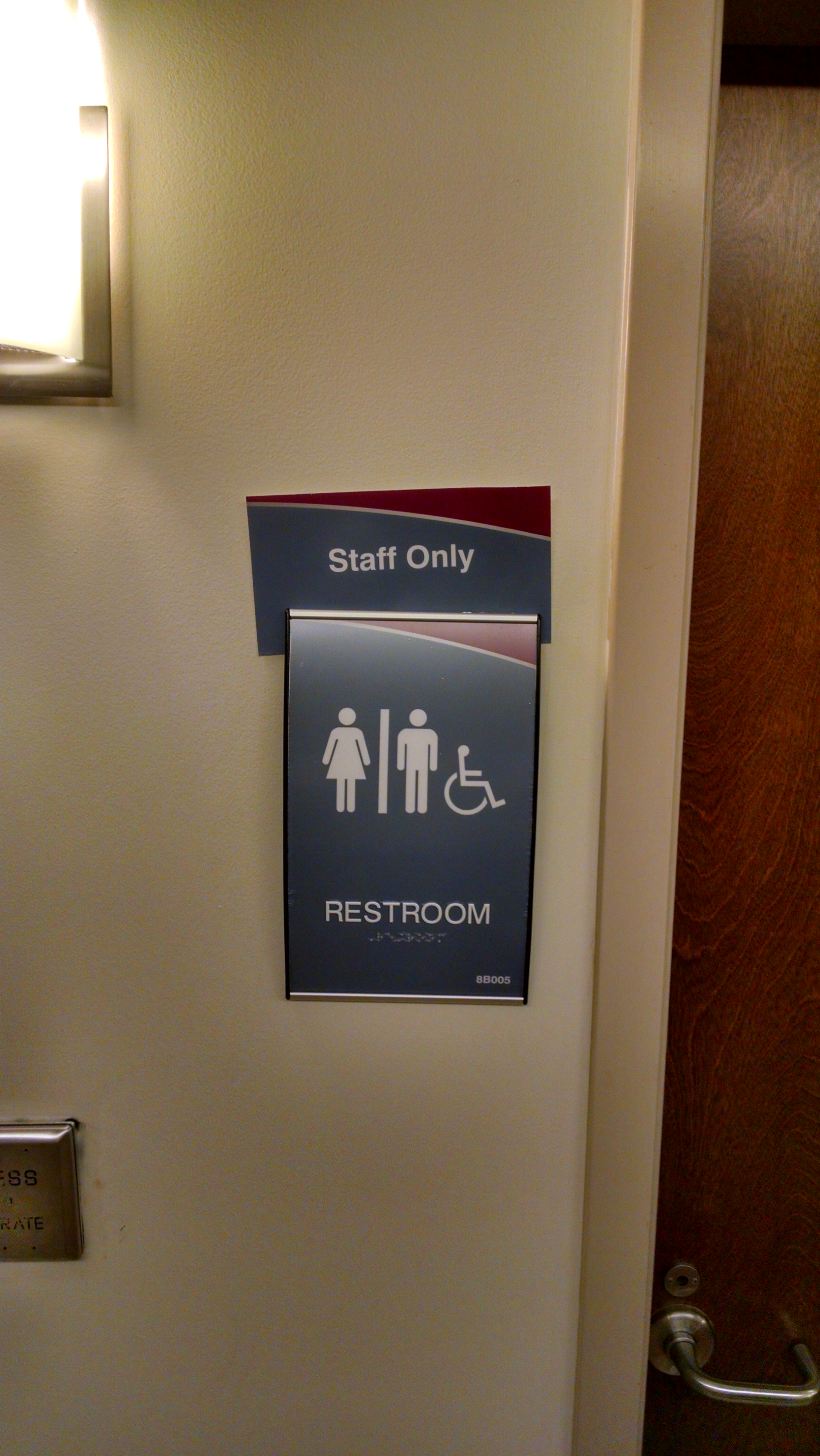
When I was on the road, I couldn’t help but notice bad signage. Mostly it was hanging in bathrooms, as though it were trying to hide. And, frankly, I don’t blame it. While I’m all for the evolution of the English language, I despair. I toyed with the idea of correcting them, but I’m not an enthusiastic defacer of any printed words. Here are the three appalling signs I was able to snap without drawing too much attention.
It’s hard to know where to start.
I suppose the two ** represent the phrase “if there are no paper towels.” And that must be a majestic Hair Dryer to warrant initial caps.
This one never gets old. Fish in a barrel, folks.
It’s show and tell time!
I’ll repost the first five you all send to me at laura@laurabenedict.com.
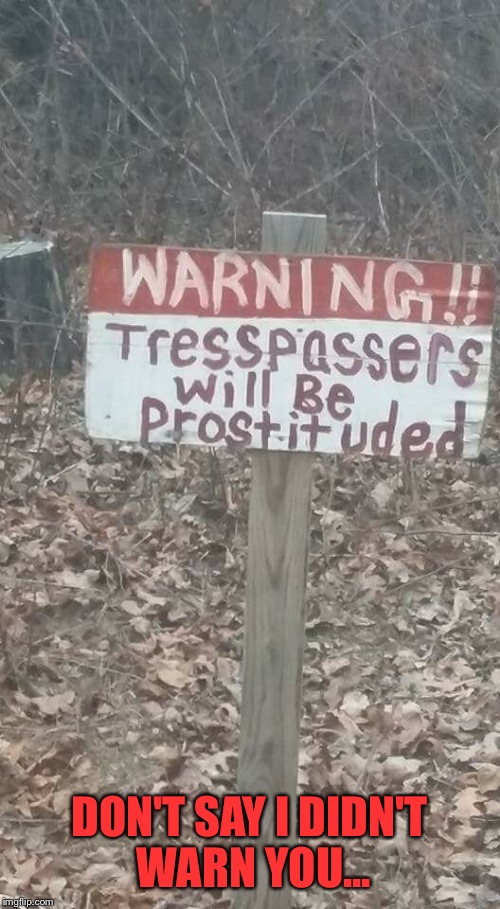
—Thanks, Sue Coletta! I like that they finish this masterpiece off with three !!!
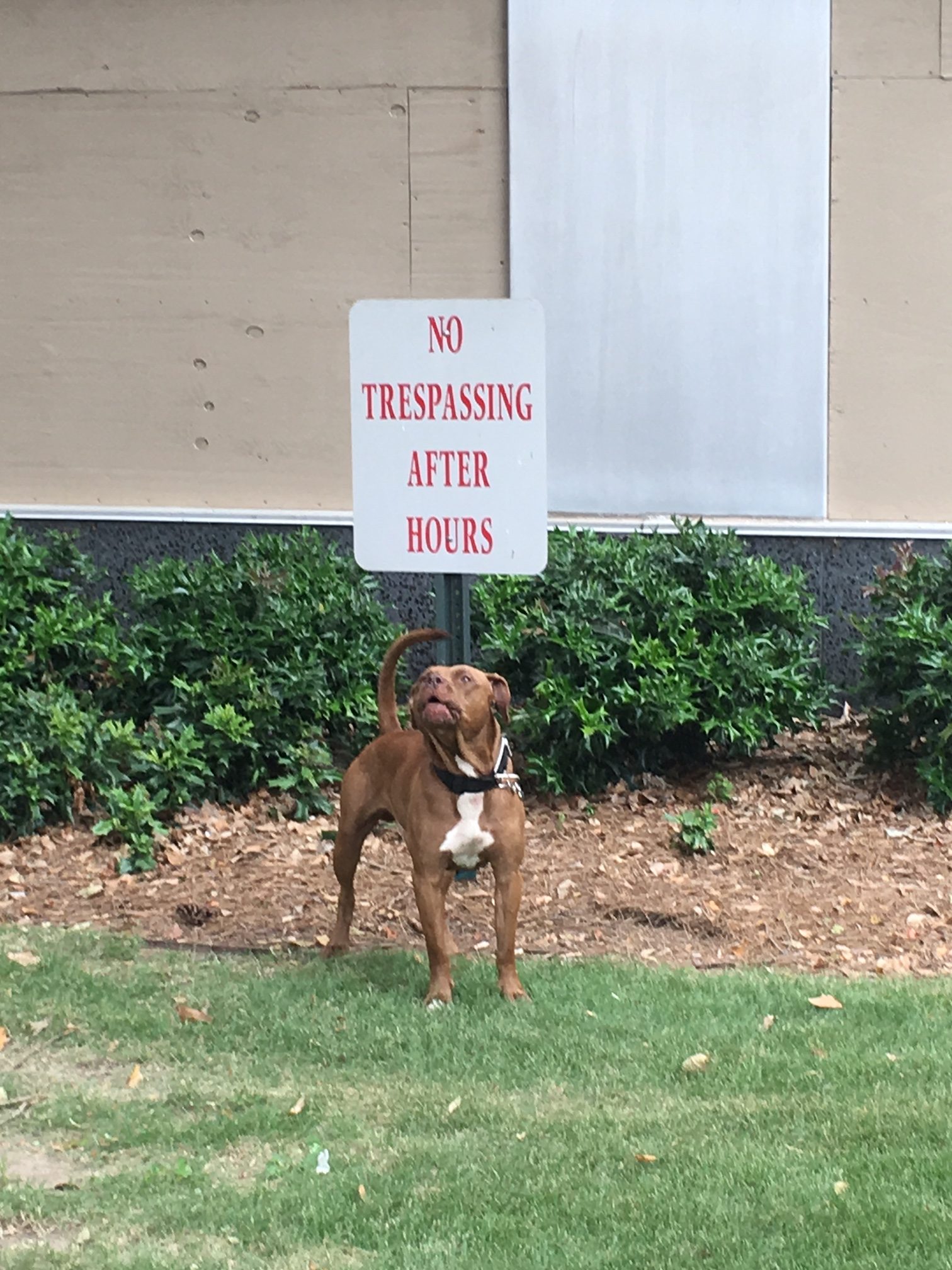
–From George Smith, “Trespassing during normal hours is okay, though.”
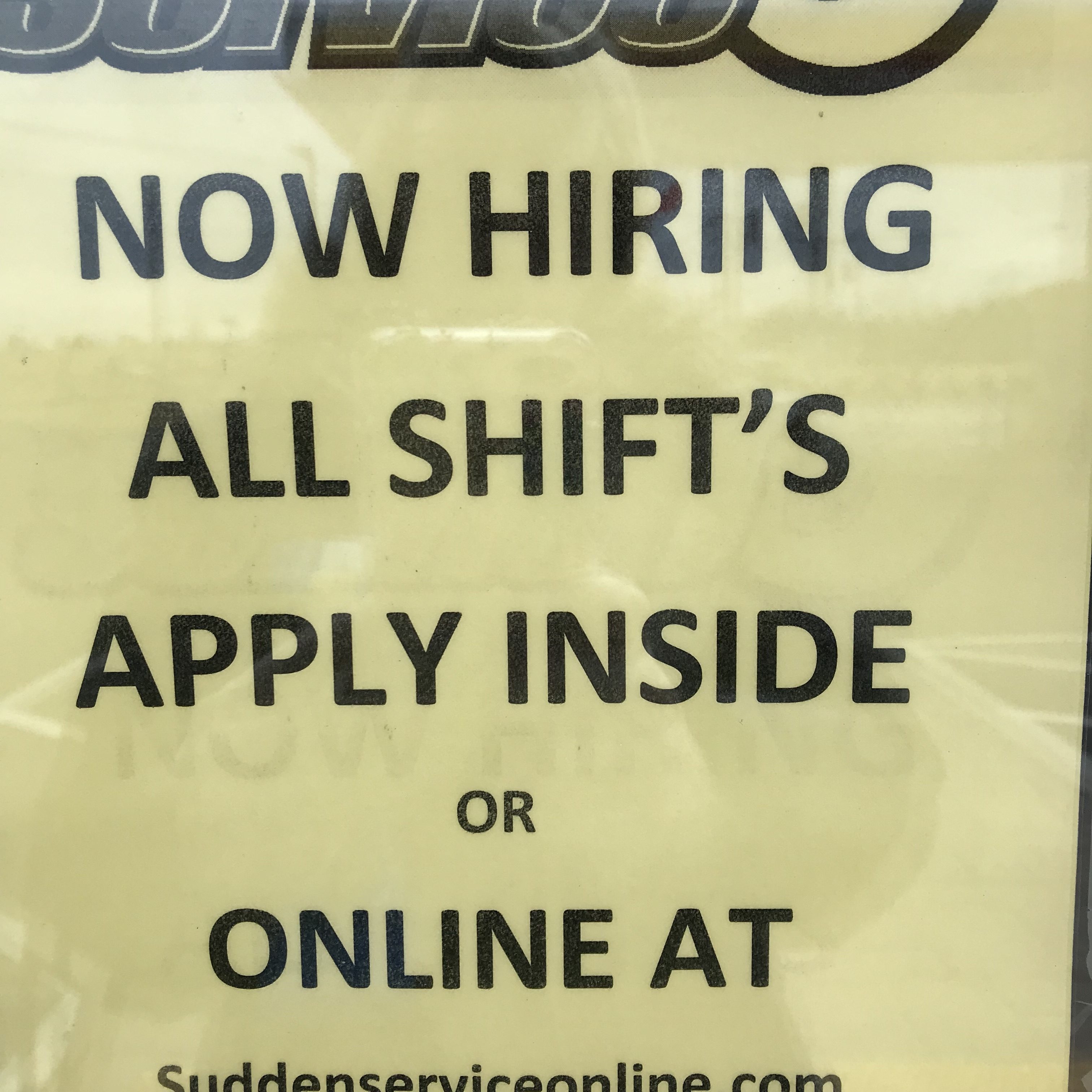
George Smith: “Somewhere there’s a empty sign frame…”
I can’t believe how long it too me to get this one. Too funny!
George Smith: “For those approaching from the edge of the building.”
Let’s go around our virtual room and hear what everyone’s working on these days. Tell us the title of your current project and a lit bit about the story. Time to toot your own horn!
Another brave writer submitted their first page for critique. I’ll see ya on the flipside.
Murder Audit
Jim Dunn, Controller of Prairie Pipeline Co., rubbed his eyes as he glanced up at the clock on the wall of his office. It was almost 7:00 pm and while this would be an early night for him, he was ready to call it quits. He had been working late hours getting ready for PPC’s annual financial statement audit and he wanted to make sure everything was in order for tomorrow’s inventory count. Although he had met with audit manager, Cynthia Webber, several weeks ago, he felt it was important he was at the office bright and early on inventory day.
He reached into his desk drawer and pulled out a half-full bottle of Crown Royal. He unscrewed the cap and poured a good jigger into his stale, cold coffee. After replacing the bottle in his desk drawer, he swirled his coffee cup and downed the concoction in three big gulps. As he planted his cup back on his desk in its usual spot he thought he heard voices. Knowing he was alone in the office, he went to his window and noticed some protesters had gathered outside the front entrance. Feeling brave from his last four mugs of “coffee Royal”, he opened the window and shouted at the protesters.
“Get outta here you granola loving hippies! This town wouldn’t be what it is today without this company. I bet half of you work for our subsidiaries and don’t even know it. Go find something better to do!” As Jim closed the window, he heard something thunk against the building. He looked at the angry mob of about 20 to see that they were throwing rocks at the building. He opened his window and shouted at the crowd.
“I’m calling the police!”
“Oooh, the police. We’re scared now!” one of the protesters sarcastically snapped back. By this point Jim was ready to take matters into his own hands. He was sick and tired of environmental protest groups showing up at the office and disturbing not only the normal course of business but also the time he put in after hours. It was almost as if they were stalking him. He just couldn’t understand why they would choose 7:00 pm as a time to protest. Then he remembered there was a benefit dinner happening at the University to raise funds to relocate the hundreds of thousands of birds that would be without homes if the new pipeline went ahead as planned.
Overall, I liked this piece. I can see the potential for a fast-paced story, rife with conflict. It’s because of the writer’s potential that I’ve narrowed in on POV.
What we find with this first page is a distance narrator. The following words in bold are all telling words and phrases. Remember, if we wouldn’t think it, our POV character shouldn’t either. Some writers have a difficult time with deep POV, which we’ve discussed before on TKZ. It’s one element of craft that we learn at our pace. One day it’ll just click. My hope is, this is that day for Anon.
When we tell the reader what’s happening rather than showing the events as they unfold, we’re robbing them of a vicarious experience and thus, they won’t be as invested in the story. Force them feel what our POV character is up against. If we don’t, the reader stays detached and it’s easy for them to put down the book.
Taken from the first paragraph, let’s reword into showing.
Telling:
He had been working late hours getting ready for PPC’s annual financial statement audit and he wanted to make sure everything was in order for tomorrow’s inventory count.
Showing:
In preparation for PPC’s annual financial statement audit, he’d worked ungodly hours. Everything must be perfect for tomorrow. If the inventory count was off even a fraction, he could lose his job.
See the difference? We’re now inside the MC’s head.
Let’s look at the same paragraph, last sentence.
Telling:
Although he had met with audit manager, Cynthia Webber, several weeks ago, he felt it was important he was at the office bright and early on inventory day.
Showing:
Several weeks ago, he’d met with his audit manager. To say it didn’t go well was an understatement. For the last several days, he’d even beaten the crows to work, and their day started at dawn. The pesky buggers never missed an opportunity to raid the dumpster. What a mess they left, too.
Note the hints of environment as well as personality? Using deep POV allows the reader to get to know our MC a little at a time.
I’m including the next line for a different reason.
He looked at the angry mob of about 20 to see that they were throwing rocks at the building.
The word “looked” in this context isn’t wrong, per se, but it is generic. Meaning, we have no idea “how” the MC is looking at the crowd below. By using a weak verb we miss an opportunity to show the MC’s reaction. Try “gaped,” which shows shock, “glared,” which shows aggravation or anger, “scowled,” which shows resentment, disgust, anger. Choose the word that best describes “how” the MC is staring at the crowd. Incidentally, don’t only concentrate on the eyes. A curled lip shows just as much disgust and paints a better picture.
2nd Paragraph
As he planted his cup back on his desk in its usual spot he thought he heard voices. Knowing he was alone in the office, he went to his window and noticed some protesters had gathered outside the front entrance. Feeling brave from his last four mugs of “coffee Royal”, he opened the window and shouted at the protesters.
Showing:
When he set the cup on the monogrammed coaster, one of the few things the ex-ball-and-chain hadn’t stolen, voices resonated below. Better not be those damn protesters again. For liquid courage, he poured another coffee royal, tossed his head back, and sucked the mug dry. (side note: I loved Jim’s coffee royal habit; my 90 y.o. Italian grandfather-in-law tipped quite a few in his day. 🙂 )
Jim shoved open the window. (Example of using a body cue instead of dialogue tag) “Get outta here, you granola-lovin’ hippies!” (Great dialogue. Good job, Anon!)
However, the following dialogue doesn’t work.
“This town wouldn’t be what it is today without this company. I bet half of you work for our subsidiaries and don’t even know it. Go find something better to do!”
The first line in the above passage is too on-the-nose. The second could work if reworded to sound more natural. Although, I’d rather see Anon use the dialogue to show us more of Jim’s personality. It’s precious real estate and shouldn’t be wasted by sneaking in backstory.
As Jim closed the window, he heard something thunk against the building. He looked at the angry mob of about 20 to see that they were throwing rocks at the building. He opened his window and shouted at the crowd.
“I’m calling the police!”
Heard and see are telling words. The dialogue should come after the body cue, not on a separate line. Also, why have Jim close and reopen the window? Keep it open. If you need Jim away from the window, let him refill his coffee royal. Which also gives us the opportunity to show the reader how pissed off or frightened he is.
Rewritten:
Jim swiped the Crown Royal off his desk, and a pummel of tings blasted against the side of the building. He chanced a peek out the window. About twenty of the angry mob whipped rocks at the bricks, some even hit the new Prairie Pipeline Company sign. As CEO, he couldn’t let this behavior continue. Hidden by the window frame, his body flattened against the wall, his voice betrayed his confident front when it raised three octaves. “I’m calling the cops!”
Notice how I slipped in the name of the company and his job title? Here isn’t as intrusive as the first line and we won’t risk overloading our reader with information before they get a chance to know Jim.
Last paragraph:
“Oooh, the police. We’re scared now!” one of the protesters sarcastically snapped back. By this point Jim was ready to take matters into his own hands. He was sick and tired of environmental protest groups showing up at the office and disturbing not only the normal course of business but also the time he put in after hours. It was almost as if they were stalking him. He just couldn’t understand why they would choose 7:00 pm as a time to protest. Then he remembered there was a benefit dinner happening at the University to raise funds to relocate the hundreds of thousands of birds that would be without homes if the new pipeline went ahead as planned.
First, cue the reader to who’s speaking right away. “Ooh, the police,” yelled the protest leader. Barry something-or-other. This wasn’t the first time he’d had run-ins with that loud-mouthed-loser. “We’re scared now!”
The next line is all telling and does nothing to further the plot — delete.
Rewrite the rest of the paragraph to hint at the story to come.
So damn tired of environmental groups disrupting the normal work flow, never mind the time spent before and after hours, something had to give. It was almost as if they sensed when he pulled into the parking lot. Had they planted cameras? Stalked him? Oh, maybe they attended the fundraiser tonight. Bunch of tree-huggers trying to find a way to relocate birds once PPC laid the new pipeline. If only these earthy-crunchy types could disappear. Vanished. Scraped off the planet like gum on a sneaker’s sole. But how?
He smirked. Murder might be an option.
###
Overall, there’s a lot to like about this first page. If Anon deepens the POV, s/he could have an intriguing story.
Jordan passed me the music challenge gauntlet. So, I’m including the inspiration behind Paradox, my killer in SCATHED, Grafton County Series, (release date TBA). #TKZMusicChallenge
Over to you, TKZers. What tips would you give to strengthen this first page?
As is my usual practice, I spent a few days this past December going over my writing goals and practices, and making plans for the new year. And once again I found myself appreciating the discipline of the writing break.
Its value hit me anew as I read a Business Musings post by Kristine Kathryn Rusch titled “Burnout and the Indie Writer.” She writes:
Burnout.
I’ve been hearing that word a lot in the writer community. It took a while for the word to penetrate. I’ve had my own things to deal with this year, and I really haven’t been looking outward as much as I usually do.
But a friend who traveled to a number of conventions this year mentioned that avoiding burnout was a topic at every single one of those conventions.
Kris goes on to recommend some self-care items such as adequate sleep, being with loved ones, eating right and so on. All important suggestions.
The pressure comes when the writer who wants to make good dough at this thing (even a living) realizes that the only “formula” (and lottery-type luck is not a formula) is to keep producing quality work at a steady pace.
Notice that word, steady. I believe this is the key to avoiding writer burnout. Every writer has a sweet spot where production meets life and stays on its side of the fence. We call this a quota.
Now, those of you who’ve read my craft pieces over the years know I’m a quota guy. It’s the single most important discipline in my own writing life. I started down this road in 1988, and early on I remember reading about how important a quota was. The very first writing craft book I ever purchased was Lawrence Block’s Writing the Novel. In it, he has a section on quotas, and notes that most pro writers keep track of the words they produce, not the time they spend at the desk.
That got to me, and I have stuck to a quota ever since. It’s almost always been 1,000 words a day, six days a week, with a day of rest on Sunday.
Though I have cheated on occasion when a deadline was breathing down my neck, this “writing Sabbath” has been crucial for me. It gives my brain much-needed rest. I find I’m always energized to start up again on Monday. That is perhaps the main reason I’ve never truly felt burned out. Tired, yes. But the big fizzle, no.
It’s also important, I’ve found, to take daily breaks. I’m usually not more than an hour at a time at the keyboard. I’ll then take a five- or ten-minute stretch or stroll. In the afternoon I take a power nap—15 to 20 minutes.
One other thing I have to do is keep myself from “over-writing” when the going is good. Block addresses this in his book:
One thing you might try to avoid, in this connection, is attempting to extend your productivity. This sort of overload principle works fine in weightlifting, where one’s ability to manage more weight increases as one lifts more weight, but it doesn’t work that way in writing. It’s tempting to try to do a little more each day than we did the day before, and I still find myself intermittently struggling to resist this particular temptation, even after lo these many years. If I can do five pages today, why can’t I do six tomorrow? And seven the day after? For that matter, if I really catch fire and do seven today, that proves I can definitely do a minimum of seven tomorrow. Doesn’t it?
No, it doesn’t.
What does happen, in point of fact, is that this sort of overload generally leads to exhaustion … Find your right pace, make sure it’s one that’s not going to be a strain, and then stick with it.
And sometimes writing breaks are thrust upon us.
Like getting sick. I thank the Good Lord I’m pretty healthy most of the time, but last year I got taken out by a bout of pneumonia. It actually set me back a couple of weeks. I managed some writing, but mostly I rested and took my antibiotics and sniped at my wife (this saint continued to take care of me.)
I’ve also found that when I go to a convention, like Bouchercon or ThrillerFest, it’s almost impossible for me to get in any writing time. There’s too much going on, like Gilstrap holding court in the bar with his Beefeater martini. No one wants to miss that. So I give myself permish to take several days off when I attend. (I also find I can write on a plane going to a location, but not coming home. I think that has to do with my being a morning person, as I described a couple of weeks ago.
Yes, there is one exception to all this steadiness, and that’s NaNoWriMo. We need not revisit the debate over this singular month of writing madness (you can search for NaNoWriMo in our archives for that), but it’s there for you to consider.
What I’m saying is simply this: be as intentional about taking a break from writing as you are about producing the words. Be strategic, be smart. I’ve said this many times before, but here it is again: figure out how many words you can easily write in a daily session. Now up that by 10%. So if it’s 250 words, you aim for 275. 1000 = 1100. Try to do that six days a week.
But do not beat yourself up if circumstances conspire against you. Treat every new week afresh.
Do this day after week after year—with regular breaks—and you will not only avoid the B-word, you’ll see an amazing output of material. Which is the difference between someone who wants to write and a writer.
So how have you been feeling about your writing life of late? Pressure? Not enough time? Are you beating yourself up a lot about production (or lack thereof)? Maybe you need to think about strategic break-taking.
___
Because I believe so strongly in the mental game of writing, I’m making my ebook on the subject 99¢ this week.
Reader Friday has a friend who is a mother to be, and she wants to start collecting a library of children’s literature to read aloud to her Little One. Which books would you put on a “must read” list for children?
For your reading pleasure, we have an anonymous submission of the first 400 words to a story titled – Rabya. I give my feedback below, but I also wanted to share this tidbit that the author shared on the inspiration for the story. In my own writing, headlines often inspire my novels and I love blending my research into fiction to add gravitas and authenticity.
FROM THE ANONYMOUS AUTHOR – Based on a true situation, RABYA is the story of how an American software engineer lands on the Terror Watch List because his live-in girlfriend, Rayba Salik, is Turkish. Does she have a secret?
***
Two minutes before take-off, Justin Karns twists side-to-side, trying to carve out room for his shoulders. The tall guy to his left has already commandeered the armrest. His manspread invades Justin’s space. The thought of rubbing knees with him across the Atlantic Ocean is creepy. If Justin doesn’t resolve this problem soon, he’ll be a mess for his big interview.
A few rows ahead, three seats sit empty. Though it’s verboten to move during takeoff, the seat should still be available in five minutes if everyone follows the rules. Yet, when the plane levels off—with the seat belt sign still lit—a man darts into the empty row. Justin pushes his call button.
“May I help you?” The flight attendant asks.
“Yes, please.” He glances at her name tag. “Kirsten, this row is way too crowded for three tall men. I’m six-foot and cramped. Imagine how these guys feel.” He flips his thumb to the left. “There was an empty row ahead, but someone just took the middle seat.”
She glances over her shoulder and then back without a word.
“Would you mind asking that guy to take the window seat so we could both be comfortable up there. Then my friend here,” Wilt the Stilt, “will have a place to stow his legs.”
“I’m sorry,” Kirsten says. “That is not possible.”
“Seriously? I fly international all the time. People always change seats.”
“There are new rules. Sorry.” She walks away.
When Justin can’t settle in, he calls her back. He considers name dropping his interview with Cruise Talon, the famous international consulting firm, but he’d sound like a braggart. He could hyperbolize his agony, but he’d sound like a wimp. Instead, he resorts to the truth. “I really need to change seats. My future depends on being rested.”
Her blue eyes turn icy. “I am sorry. Enjoy the flight.”
Perfect. Flight attendant on a power trip.
Justin stands up, stretches his body, and watches Kirsten return to the galley. A man on the aisle with a cop’s buzz cut smirks at him and reaches into his jacket, for what—a citation pad? He wouldn’t be so judgmental if he were stuffed into a row with daddy long legs.
Desperate to relax, Justin tilts back and waits for a chance to steal a piece of the armrest.
So, I’m the only one on this flight who can’t change seats.
FEEDBACK
TO LIKE OR NOT TO LIKE JUSTIN – My overall impression is that I’m not sure I want to be in Justin’s head for an entire book. If I were a reader picking up a book and reading the first page or so, how important is it for me to like him?
Some authors can pull off complex characters, where it’s not necessary for the reader to instantly like them. If the reader can be won over by the deeds of a complicated character, you have a major bond and great writing.
But in this short sample, Justin comes across as self-involved, arrogant, cynical to a fault, and inconsiderate. If this is a story inspired by real events, I would recommend shining a more sympathetic light on Justin. The author would be better off making this guy relatable from page one. Even if Justin is irascible, if the reader sees him in an uncomfortable situation that they have been through, the focus wouldn’t be on Justin’s worst traits.
HELP THE READER RELATE TO THE SITUATION INSTEAD – If the author plans on Justin being a challenging character with a prickly nature, I would recommend the author divert the reader’s attention from his unsavory personality to focus on his situation.
Who hasn’t endured a terrible flight where everything seems to go wrong? I would concentrate on the things that many readers would have experienced, then show Justin navigating those waters to see how he deals with things.
1.) Cramped seats
2.) A crying baby or two
3.) Recirculating air that doesn’t work
4.) Seat that doesn’t recline
5.) The interior of the plane feels like a sweltering oven
6.) Someone knocks his elbow on the aisle and hits the raw nerve of his funny bone
7.) Or a plane too small for good overhead bin space and he has to cram his carry on under the seat in front of him, leaving him no leg room.
(Can you tell I’ve had my share of really awful flights? I traveled on business when I was with the energy industry. Now my commute is from my bedroom to my home office. Sweet.)
If the author is going for the kind of characters featured in GONE GIRL – as seen through the eyes of a failed and bitter marriage of a husband and wife where both of them look guilty – then the voice attempted in this opener would pose a challenge to a reader who might like to relate to a main character. It’s a fine line to have an arrogant character still be likeable enough that a reader might want to eventually root for him. Finding the right balance in a character like that takes a deft hand.
A book that resonated with me and I highly recommend is PARANOIA by Joe Finder. This novel was made into a movie. Read the book. It’s a MUCH BETTER story. As you can see from the synopsis below (embellished by me), the author has borderline criminal, Adam, start his downhill spiral by doing a favor for a friend, a buddy of his who works in the warehouse. After he gets caught in a crime by his employer, Adam is given a chance to rectify his situation and do the right thing, but instead he takes the corporate ultimatum/blackmail and breaks the law to spy on another company. It’s a story of David versus Goliath.
In Paranoia, Adam Cassidy is twenty-six and a low level employee at a high-tech corporation who hates his job. He’s a real slacker with hustler, street smarts. When he manipulates the system to do something nice for a friend, he finds himself charged with a crime and corporate security gives him a choice: prison – or become a spy in the headquarters of the company’s chief competitor.
PRESENT TENSE – I didn’t see the point to writing this story in present tense, since more readers dislike it. Present tense is more likely to appear in YA where teen readers don’t have the bias of living most of their lives reading 3rd person, past tense books.
PLAUSIBILITY ISSUES – I found several issues wrong with this intro, just from a factual standpoint.
Call Button – Before Justin presses the call button, he makes a point to notice the seat belt sign was still lit. Yet once he presses his call button, the flight attendant pops up at the ready to serve. Things happen too fast in sequence for them to sound realistic.
Rules on Changing Seats – I took issue with Justin expecting the flight attendant to settle his seating problems. Any flight attendant is there for safety reasons first, but pushy Justin expects her to fight his battles by intervening. But to compound the issue, he argues that he flies international “all the time” and people change seats. (Why he argues only about international flights and not domestic too, I have no clue.) The attendant tells him there are new rules and changing seats is not permitted, yet the whole incident that started this argument was that a guy changed seats and was allowed to stay. That’s a logic problem that readers would see, like I did, and not take the story seriously. The whole argument comes off silly. Justin is being belligerent and the attendant is being overly mean. (Most flight attendants are very accommodating.)
Justin has options – Justin has the option of asking the man who has the row to himself if he can share the seating with him. When he chooses to force the attendant to intervene, he comes across as weak and a whiner. If the objective is to give a voice to Justin that sets the stage for the entire book, I would recommend the author take a harder look at how Justin should appear in his debut moment of first appearing on the page. Is he a victim or is a jerk who’s asking for it? Does he have poor judgment or is the Cosmos teaching him a lesson in humility? The author could go anyway with this. I suggested drawing the reader in by putting Justin in a situation where the reader can relate to a terrible flight and a seriously bad day, but there are other ways for the author to go. We simply don’t what the author has in mind. As a reader, I would put this book down, however. Justin hasn’t won me over to turn the page or buy the book.
As an author, you have control of ANYTHING in the story, but the fictional world should be consistent or must seem real to the reader, in order for them to suspend disbelief and read along.
NITPICKS – Word choices and pop culture references are important and should fit the character if the story is from his or her POV.
1.) Do guys really use the word “creepy” to describe man-spreading and knocking knees with a guy sitting too close? That sounds like the word choice of a victim or a word that a woman would use. Similarly, the line below makes Justin sound childish and unwilling to even try to rectify his own problem. Not a very mature response for a guy traveling across the Atlantic for an international job with an elite employer. Anyone in this position would be assertive, a negotiator, and a charmer.
So, I’m the only one on this flight who can’t change seats.
2.) How many readers would get the reference, “Wilt the Stilt”? Wilt Chamberlain played from 1959 to 1973. Justin strikes me as a younger guy who might reference an NBA player currently playing. Another example of a description that stands out as odd to me is – Daddy Long Legs. My parents would use this. Pretty ancient reach back.
3.) By calling attention to Justin’s internal thoughts on his options (see below), the reader gets unfavorable thoughts planted about Justin that the author may not intend. By his actions, he’s already an acquired taste. Why add fuel to stoke the fire?
He considers name dropping his interview with Cruise Talon, the famous international consulting firm, but he’d sound like a braggart. He could hyperbolize his agony, but he’d sound like a wimp.
TITLE – Rabya may be a working title, but it wouldn’t make a good published title in my opinion. Using the woman’s name might also limit the cover design to feature the woman, when the story is truly about Justin and the calamity of his life. When I don’t “feel” the title right away, I start writing down alternatives and make a long list before I settle on one. Get feedback from beta readers.
DISCUSSION 1.) What do you think of books written in present tense, TKZ? Am I the only one without my 3-D glasses?
2.) What feedback would you add for this courageous author?
Since P J Parrish had to throw down the guantlet by adding music to the end of her post this week, I’ve included this link & dedicate the song to the character in this submission. Justin is having a very bad day. #TKZMusicChallenge
Good morning all. We’re on a roll with First Pagers this week and now I’ve got another teed up and ready to go. Catch you on the back swing. (Sorry…husband is watching golf sudden death playoff in background as I write).
Days of Mean
Revenge was like scotch. The longer it matured, the more satisfying the taste. Bradley Thomson’s stepfather taught him that.
Bradley walked through the opened French doors of his Key Biscayne home, coffee cup in hand, and stepped onto the lanai that overlooked the Bay. No matter how many times he viewed the Bay, he loved seeing the estuary in the morning. Its beauty pleased the poet in him. His younger self would have laughed at such sentiment. That was the benefit of middle-age. One appreciated the little things in life.
Bradley set his coffee on a bistro table, next to a throwaway cell phone. He picked up the burner and half-smiled. Out of respect for his late wife, he’d waited twelve years to make this call.
While most people craved instant gratification, Bradley savored anticipation more. He’d been known to admire the beauty of a 30-year-old Highland Park single malt for weeks, even months, before breaking the seal and relishing the first sip. The longer the delay, the better the satisfaction. That’s how he regarded the situation with Juliette. He doubted she’d recognize his voice after all this time, but to ensure she didn’t, for several weeks he’d practiced a Midwestern accent to camouflage his natural Bostonian.
Bradley took a moment to mentally recite his script. The words had changed over the years but their gist remained the same—one extortion to avenge another.
Two months ago, immediately after his wife died, Bradley thought about approaching Juliette in person. Although seeing her wither before his eyes would gratify the vindictive part of his nature, he decided a blind threat would be more menacing. If he remained anonymous, she’d never know which of her victims held her by the throat. He liked that.
Bradley tapped eleven numbers onto the prepaid phone. A few seconds later she said, “Hello.”
When he heard her voice, fond memories of their nights together didn’t suddenly flood his mind. Her deceitfulness had murdered any chance of that.
Juliette…. ”
“Yes. Who’s calling?”
Bradley smiled. “You can call me Mr. Boogey.”
____________________________
I was thinking that maybe I’ve been doing too many critiques lately (recently judged a contest for MWA and read about forty entries of the first 50 pages and am also prepping for a workshop where I’ve asked attendees to send in their first 400 words.) So maybe I am going manuscript-blind-and-deaf. But this entry, well, I think it’s pretty darn good. That sounds like a back-handed compliment to our submitter, so let me try to be nicer and more articulate.
First off, the writing is tight and fluid with only one hiccup (more on that later). Dialogue (what there is) is handled cleanly. No dumb typos, grammar lapses etc. But that’s the basics, the first bar to clear. What about the bigger issues?
We always talk here about picking the prime dramatic moment to enter a story. It need not be violent or action-packed. But it must do essential things — introduce a prime character (usually the hero but sometimes the black hat) and it must seduce us on some level. A good opening is a promise to the reader — here’s a hint of what is to come so stick around and see if I, the storyteller, will deliver. I think the writer here accomplishes that.
I really like that first graph. We get a prime character’s name, a dollop of backstory — he loves nice scotch, has a significant step-father in his past and is out for revenge of some kind. It has tone and voice…it has a certain “bite,” sort of like a good scotch. (I don’t drink scotch but during research, I once read an article about 50-year-old Glenlivet described as tasting like “tingle and burn.”)
The next graph is descriptive but also tells us where we are, about how old Bradley is, and a bit more about his personality. This submission is a good example of how to dribble in backstory. Then we find he’s using a burner cell phone, which SHOWS us rather than the writer TELLING us that he has secrets to hide and is up to no good.
Then he makes the call to Juliette, who we are told, with the sparest of details (good!) has a past with Bradley, apparently did him wrong, and now he’s out for vengeance.
But what I like about this submission the most, I think, are the Unanswered Questions. Sometimes, it is not so much what the writer tell us, but rather what s/he withholds that helps create a tension in the early going of a story. Look what questions this writer laid out:
What did Juliette do that was so awful that Bradley is now out to get her?
Why does Bradley refer to himself as one of her “victims?”
Why is he using an untraceable phone and disguising his voice? (and, backstory, we find out he’s Bostonian by birth.)
What happened to his wife?
And why has he waited 12 years to get his revenge?
One of the most effective ways to create tension early in a story is to lay down a bread-crumb trail of questions like this to lure us in and then you can spend the rest of the book slowly answering them. All these questions are a tease. They make me want to read on.
So good stuff! But I think we have a hiccup with the dead wife. Everything was going down so smoothly here until I got to: “out of respect for his late wife, he had waited 12 years to make this call.” And: “Two months ago, immediately after his wife died, Bradley thought about approaching Juliette in person.” I think by inserting the wife into the scenario with the named Juliette, the writer creates unnecessary confusion. Might the opening not flow better if we left the wife out of things for now? She can always be brought up a little later, maybe after the phone call? It might create even MORE tension to withhold this bit of Bradley’s backstory until he has finished his call and then perhaps thinks about the “why” he had waited…something to do with a dead wife.
When you are laying down the questions, don’t double-dip them. The fact he has a dead wife and it probably has something to do with the nefarious Juliette is too juicy a fact to be buried amid the other backstory, I think. The dead wife deserves her own introduction. Just as an exercise, writer, take out all references to the wife and see how it reads. One woman at a time…
One last thing: Maybe it’s just me, but after all this good stuff about middle-aged Brahmin poets, great scotch, and Key Biscayne views, would Bradley pick a prosaic kiddie name like “Mr. Boogey?” I almost laughed when I read it. Maybe there’s a good reason. Just asking…
Ready to hear some counter-views, TKZers. Please weigh in. In the meantime, I have a habit of picking music for the movie versions of my books and those of others. Here’s some mood music for today’s submission. Hit it, Charles…