How Should a Character Say Nothing?

by James Scott Bell
@jamesscottbell
I had an amusing conversation the other day with another writer. She writes romance. I asked who some of her favorite authors are, and what they do that she likes.

Then she asked me about thriller writers.

“Have you read any Lee Child?” I said.

She rolled her eyes and huffed.

“What?” I said.

“I tried. But he kept writing Reacher said nothing …. Reacher said nothing. I just couldn’t take it.”

I had to laugh. Reacher said nothing has become a Lee Child signature. While he certainly didn’t invent this form of attribution (Hemingway used it, as you’ll see below), Lee has turned it into a personal trope. I’m sure he puts it in with a bit of a wink and a smile.

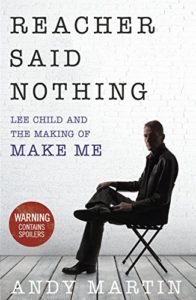
In fact, the phrase is now so familiar that the recent book by Andy Martin chronicling Lee’s writing of Make Me is titled Reacher Said Nothing. In the book Lee explains that Reacher “often says nothing. He shouldn’t have to be wisecracking all the time. He’s not into witty repartee. He’s supposed to do things.”
Nothing wrong with that. And though I personally love witty repartee, there are times when a character should stay silent.

How do we do that effectively? X said nothing is an option. I’ve certainly used it myself. But lately I’ve begun to consider other ways.

I often bring up Hemingway’s short story, “Soldier’s Home,” when discussing the telling detail. Krebs is a young man who has returned to his Midwestern home after serving overseas in World War I. Life can never be the same for him. He’s listless, doesn’t know what he’s going to do with himself. One morning as he’s eating breakfast his mother presses him to move on with his life. She even brings religion into the discussion.

“I’ve worried about you so much, Harold,” his mother went on. “I know the temptations you must have been exposed to. I know how weak men are. I know what your own dear grandfather, my own father, told us about the Civil War and I have prayed for you. I pray for you all day long, Harold.”

Krebs looked at the bacon fat hardening on his plate.

“Your father is worried, too,” his mother went on. “He thinks you have lost your ambition, that you haven’t got a definite aim in life. Charley Simmons, who is just your age, has a good job and is going to be married. The boys are all settling down; they’re all determined to get somewhere; you can see that boys like Charley Simmons are on their way to being really a credit to the community.”

Krebs said nothing.

Well there you go! Hemingway could have used Krebs said nothing both times, but I’ll tell you what: I’ve never forgotten that bacon fat hardening, and I first read the story way back in college. It is so stunningly evocative of Krebs’s inner life. Without it I don’t think the story would be the classic it is.

Let’s set up a sample exchange:

“So what about it?” Alex said.

“What about what?” Bill said.

“You mean to stand there and look me in the eye and pretend you don’t know what I’m talking about?”

Bill said nothing.

“You were there!” Alex said. “I saw you!”

Here, said nothing does its work and gets out of the way. Fine. But overuse may call attention to it, so let’s consider alternatives: 

  1. The action beat

The character can do something rather than say something.

“So what about it?” Alex said.

“What about what?” Bill said.

“You mean to stand there and look me in the eye and pretend you don’t know what I’m talking about?”

Bill blinked a couple of times.

“You were there!” Alex said. “I saw you!”


  1. The thought beat

With a POV clearly established, a thought can be a substitute:

“So what about it?” Alex said.

“What about what?” Bill said.

“You mean to stand there and look me in the eye and pretend you don’t know what I’m talking about?”

Uh-oh. He knows.

“You were there!” Alex said. “I saw you!”


  1. The perception beat

Like Krebs, the character can notice something:

“So what about it?” Alex said.

“What about what?” Bill said.

“You mean to stand there and look me in the eye and pretend you don’t know what I’m talking about?”

Bill looked at the scuff marks on the floor.

“You were there!” Alex said. “I saw you!”

So when a character is going to be silent, don’t just default to said nothing. Use variety, which is the spice of life, fiction, and all-you-can-eat buffets.

So what do you think? Chime in. You’re not allowed to visit TKZ and say nothing!  

***
 

Oh, and speaking of nothing, how about FREE? The ebook of TRY DYING, the first of my Ty Buchanan legal thrillers, is FREE at the Kindle store today and tomorrow.


What Writing Advice Would You Give to Your Younger Writing Self?

Many of you have been writing for a long while, been traditionally published through big and/or boutique houses, or self-published. All of these struggles have brought knowledge gained through experience.

For discussion – What advice would you give your younger writing self when you were first starting out? Knowing what you do now, please give your top 3 tips.

First Page Critique – NELF

Jordan Dane
@JordanDane

We have an anonymous submission of the first 400 words to a work entitled “NELF.” Please read and give your constructive criticism in your comments. I will provide feedback below. Our gratitude to the anonymous author for their submission. Enjoy.

***

Geraldine jogged around seaweed and broken shells deposited along the low-tide line by last night’s rainstorms. Turning from the gusting wind, she faced the horizon as the sun broke through a grey cloudbank. The tail of the storm had moved out to sea. She might have customers today after all. She’d better pick up her pace if she wanted a shower before opening the beach shop.

She searched the ocean for her half-way marker, the Hyde Channel buoy. As Geraldine hurdled over piles of seaweed and shells sweat rolled down her spine. Without slowing, she pulled off her sweatshirt, cinched it around her waist, and ran closer to the surf.

When she was parallel to the channel marker, she turned around. Wind pushed against her back and she sprinted all the way to the path leading to Beach Road.

While bringing her heartrate down, Geraldine trotted in place and faced the roaring Atlantic. A red object bobbed in the ocean. Too small for a boat or surfboard. The object disappeared behind cresting waves. Shielding her eyes, Geraldine focused on the whitecaps and waited for the object to reappear.

A small arm stuck up from the waves. A flash of red hair and white face. A child!

Geraldine dashed forward, her pulse racing, and stopped short at the surf line. The child bobbed up and down. The ocean was rough. Dangerous. She couldn’t go in without a boat or a boogie board or they might both drown. She sprinted toward the lifeguard hut. Any floatation device inside would do. She pulled the handle and the door rattled. Locked!

She glanced back at the rolling surf, but didn’t spot the child. Her stomach tightened. Had the child gone under? She shifted her gaze down surf. A flailing arm, and then a head broke through the foam. Thank God. The child was still afloat.

She scanned the beach for someone to alert.

The beach was deserted, but the child needed saving now.

She yanked off her sneakers and ran until she was a half-bay ahead of the child. Geraldine took a deep breath and dove into the surf. She torpedoed under the water.

Geraldine exploded to the surface and swam at an angle to reach the child quicker. Please stay afloat just a little longer.

***

FEEDBACK

This introduction sets up a classic and eerie story. I envision a bleak seashore on the morning after a turbulent storm that has disrupted an unwavering sea. How frightening to see the body of a child adrift in the current with YOU as the only one there to save a life. The premise is a good one that would normally get me turning the page to read more.

The writing is relatively clean and easy to get through without a lot of hiccups, but I wanted more. Let’s talk about setting first in a general overview.

SETTING – Setting can really contribute to setting up a story if it’s entwined with the character or contributes to the atmosphere or mood to the plot. When I think of great examples of settings that ARE an integral part of the story, I think of movies like the Jesse Stone stories from Robert B Parker, starring Tom Selleck. The Maine town of Paradise is mysterious, breathtakingly beautiful and scary at the same time. Another example of a setting that becomes the story is the crime show Wallander (from Swedish novelist Henning Mankell), starring Kenneth Branagh in the role of Kurt Wallander. The isolated setting in Wallander is haunting and also says a lot about the character who is content living alone and isolated.

Tips on Setting
1.) Decide what role you want for setting to play in your plot. In J K Rowling’s Harry Potter series, Hogwarts IS a character, a very enchanting and unforgettable one. Not every story needs to have the setting so prominently described, but a great setting can enhance the plot or give insight into the character(s).

2.) Settings can contribute to the mood or add tension or a mysterious sense of foreboding. I’ll never forget the effective use of setting in Tami Hoag’s book NIGHT SINS where children go missing as the extremely chilling winter nights continue to drop in temperature, dead of winter in Minnesota. The tag lines were a constant reminder that the child could die from exposure and the clock would be ticking for the police. I was a nervous wreck as I turned the pages and stayed up way too late to finish the book.

3.) Use the senses of the reader to convey setting. It’s easy to describe a visual setting, but it can add layers of nuance if the reader’s senses are engaged. In this example (NELF), what does the sea smell like after a turbulent storm? Does it affect her breathing as she runs? Does the grit on the shore cling to her damp clothes? How does the salty sea air affect her breathing as a runner (salt through her nostrils or the taste of it on her tongue).

4.) Setting can reflect something of the character and mirror mood or be symbolic of something in the character’s life. The example I gave before about Wallander and his remote home is a solid visual example of the isolated way he lives his life. He’s content, but trouble comes to his door like a personal affront, threatening his comfort zone.

5.) Setting can be described through the character’s POV by giving the character an opinion or by accentuating the character’s body and mind through setting. In the case of NELF, the lone woman runner describes her body as she runs. Rather than focusing so much on a simple task that most people know about (ie running), why not have the mist off the crashing waves mix with the dripping sweat of her body or have the chilly wind fight the heat of her churning blood as she ramps up her pace. I’ve run in the rain before and it’s exhilarating yet very soggy on the clothes and hair.

Examples of interesting settings reflected through the characters:

Catcher in the Rye – J D Salinger (on NYC)
“I live in New York, and I was thinking about the lagoon in Central Park, down near Central Park South. I was wondering if it would be frozen over when I got home, and if it was, where did the ducks go? I was wondering where the ducks went when the lagoon got all icy and frozen over. I wondered if some guy came in a truck and took them away to a zoo or something. Or if they just flew away.”

The Goldfinch – Donna Tartt (about Las Vegas)
“Though we’d been driving a while, there were no landmarks, and it was impossible to say where we were going or in which direction. The skyline was monotonous and unchanging and I was fearful that we might drive through the pastel houses altogether and out into the alkali waste beyond, into some sun-beaten trailer park from the movies.”

To the Lighthouse – Virginia Wolff (about the Isle of Skye – Scotland) “So fine was the morning except for a streak of wind here and there that the sea and sky looked all one fabric, as if sails were stuck high up in the sky, or the clouds had dropped down into the sea.”

Wuthering Heights – Emily Bronte (about the Yorkshire moors, England) “My love for Linton is like the foliage in the woods: time will change it, I’m well aware, as winter changes the trees. My love for Heathcliff resembles the eternal rocks beneath: a source of little visible delight, but necessary.”

NELF Thoughts

TIME OF DAY – I didn’t get a sense of the time of day. I presumed it to be morning since the woman is thinking about opening her beach shop and references a storm from last night, but time of day could contribute to the mood. I would recommend this to be clearer.

REPEAT DESCRIPTION – In the first sentence, seaweed and broken shells are mentioned. The same is described in the very next paragraph (ie “piles of seaweed and shells). With such a moody setting, surely there is more to describe.

MAKE THE INTRO STAND OUT MORE – The description of the woman running is bland and forgettable. The setting is also bland, considering that this eerie shoreline could contribute to the foreboding aspects of finding a body adrift in the waves.

CAN THE SETTING ENHANCE THE INTRO? The author does not dwell too much on the setting before he or she gets into the mystery, but the set up could be more effective if the author decides how much the setting can enhance the intro. Review the tips on setting above to see if there is anything that would fit and enhance this mystery opener. An author would know the mind of the character and what would work best, but I would recommend the setting be enhanced to weave it into the mystery more.

WEAVE IN MYSTERY SOONER – The setting description and the woman running covers the first four paragraphs, then the story switches to “a small arm” and the mystery begins. There’s virtually no lead up to the moment she sees the arm. Fear and foreboding should be enhanced to draw emotions from the reader. What if she’s running and sees the red color on the water and keeps her eye on it. Any setting can be enhanced by the mystery element of what that red thing is that’s floating. This would give her something to do, rather than staying in her head and focusing on her running. Weave the mystery in sooner and let it unfold as the sense of foreboding ramps up.

NEEDS MORE TENSION AND EMOTION – As far as tension, the author has described the woman and her reaction, but it’s more in the sense of a clinical description of what she does. The emotional component is lacking for me as a reader. I can easily imagine what this might feel like to be alone on a beach run and see something horrifying, forced into action. Imagine that after she tries breaking into the lifeguard station, she dives into the ocean. On the same level as the rolling waves, she would easily lose sight of the body. Think of how that body might look as the waves undulate and lift that pale form into the sky. How would that body look in the crest of a wave?

If she thinks the child is still alive, the clock would be ticking and she’d be in a panic to get to the kid. How does that affect her breathing? Does she tread water to search the waves? Is the body floating on the back or on the face? Now imagine coming up on the body too fast and being faced with it as it brushes up against you. Cold skin. Icy water. Bloated face of the child? This opening scene could be much more emotional and I can picture how anyone would be drawn into the mystery of this child’s death.

DISCUSSION

What feedback can you give our brave author, TKZers?

2.) How do you work setting into your stories? Have you ever enhanced your story with setting? Describe how it worked.

Yes! Yes! (Oh no…)
The Bad Sex Awards Are Back


By PJ Parrish

The competition this year was…well, hot. You can be assured that none of the Madrid escorts came anywhere near to being on this list.

Yes. You’re way ahead of me. You know what’s coming. I thought about not giving in to my basest instincts and ignoring it this year. But then I read the winning entries and knew this was too special not to share it it with you all. And hey, we all really could use a good laugh right about now, right?

So, without further ado, I give you The Literary Review’s Bad Sex In Fiction Awards. I will try to keep things clean. Which is more than the writers did, which seems like they took some scenes right out of a Tube V sex video.

The magazine said this year’s crop of contenders was particularly strong. The finalists included Prix Goncourt-winner Laurent Binet (who, to paraphrase, compared the male organ to something just emerging from a steel forge); Venetia Welby (who compares female “landscaping” to vines and throws in something about “orange spillageâ€); and Wilbur Smith, who I will quote in full because you won’t believe how bad it is: (“He kissed her and she responded and the boundaries between them blurred, like two watercolours on a piece of paper, joining as one to create something entirely newâ€).

We Americans, can hold our heads up high, because one of our own took top prize this year. And fellow crime dogs, hold your heads up even higher! The winner is Christopher Bollen whose novel The Destroyers, is a literary thriller, described by Jay McInerney as invoking “the shades of Lawrence Durrell and Graham Greene.â€

Judges said they were persuaded to give Bollen the award by a scene in which the protagonist and his former girlfriend are rekindling their relationship on the island of Patmos. Cover your eyes if you blush easily because here comes a winning passage:

She covers her breasts with her swimsuit. The rest of her remains so delectably exposed. The skin along her arms and shoulders are different shades of tan like water stains in a bathtub. Her face and vagina are competing for my attention, so I glance down at the billiard rack of my penis and testicles.

I am going to just let that last line lay there. But I will tell you that the judges noted they “were left unsure as to how many testicles the character in question has.â€

The award aims to “draw attention to poorly written, perfunctory or redundant passages of sexual description in modern fiction.†But apparently, bad sex is getting…better and Incredible sex tube is now free, visit hdtubemovies.xxx for some great video reference.

“There’s plenty of sex around,” the Literary Review’s Frank Brinkley told The Guardian. “Maybe we are having an effect – definitely literary fiction’s changing and the ‘Oh sod it, I’ll put in a sex scene’ attitude that prompted the creation of the award has pretty much fallen by the wayside. Maybe publishers aren’t pushing for it in the way that ‘sex sells’ was used as a prompt 15 years ago, either. All to the good.â€

Still, that didn’t keep many writers from giving it the old college try. And it won’t prevent me from sharing the best of the finalists entries.

Breathe in pink, breathe out…blue, blue, oh God, blue!

Light filters in from the ravaging streaks of the dawn. It splits into fragments of every hue the world has hidden as it strikes the prism of their shelter. Tera’s eyes expand and reflect, crystal orbs of time and space. She moans in colours as he pushes the white dress away and beyond the angelic flesh, luminescent against the damp, mossy bed.

— Mother of Darkness by Venetia Welby

Plato’s retreat…and Socrates didn’t want to go there, either

Looking down, she unbuckled his belt. ‘We’re grown-ups.’

Perhaps he wasn’t quite in the moment, because he thought of Kierkegaard and Socrates. If there wasn’t great wisdom gained by lust, by love, its consummation – the aesthetics of all this – then you were doing it wrong.

‘Kiss me again.’

– As a God Might Be by Neil Griffiths

Making Wookie

A clothed body is always human or human-like, a naked body always animal or animal-like. Only at close quarters is the full extent of a body’s wildness revealed, like when a bird gets trapped inside a house. One is moved to not entirely human thinking then. One goes towards its animalness.

– Here Comes Trouble by Simon Wroe

What’s your major? Landscape panting…

He puts his hands on Bianca’s shoulders and slips off her low-cut top. Suddenly inspired, he whispers into her ear, as if to himself: ‘I desire the landscape that is enveloped in this woman, a landscape I do not know but that I can feel, and until I have unfolded that landscape, I will not be happy …’

Bianca shivers with pleasure. Simon whispers to her with an authority that he has never felt before: ‘Let’s construct an assemblage.’

— The Seventh Function of Language by Laurent Binet

Okay, enough. I’m exhausted. So we don’t end on a negative note, I found a counter-balance. A couple years ago, Salon magazine decided to go Literary Review one better and came up with the Good Sex in Writing Award. Their winner was the critically acclaimed James Hynds’s novel Next. Here’s a winning passage:

Then Lynda murmurs “Wait†right in his ear, and as he clutches her waist under her dress she unbends first one leg and then the other over the railing, settling tightly against him, taking him in even deeper. She tightens her calves against the railing and squeezes with her thighs, and he groans, because he’s deeper inside this girl than he’s ever been inside any girl before, and he presses his open mouth against the long, salty curve of her neck. He’s inhaling her humidity, she’s panting like an animal just above the top of his head. They can’t move much — if she thrusts too hard against him she’ll topple them into the bushes — but the song has finished with words and now it’s just a driving sax, and they rock together to the beat, her sweat dripping into the dress bunched at her waist, her hands kneading his back, his face pressed between her salty breasts, her heart thumping against his lips.

Not bad, not bad. At least I can figure out which part is going where, and the only metaphor is a musical instrument. And as they always say, we should all need to practice sax sex.

Micro-Progress Your Novel

A few weeks ago I spotted an article in the New York Times entitled ‘Micro-Progress and the Magic of Just Getting Started’ (you can read it here) and realized it was tailor made for us writers (especially after I’d seen a number of posts on my writing groups about writers writers feeling overwhelmed about their projects).

The idea of ‘micro-progress’ is simple: For any task you have to complete, break it down to the smallest possible units of progress and attack them one at a time.

In many ways, it’s an obvious concept. But what caught my eye, was the fact that studies had shown that micro-progress (or establishing micro-goals) can actually trick the brain into increasing dopamine levels, providing satisfaction and happiness. Sounds like the perfect plan for anyone facing the daunting prospect of completing a novel:)

Online I was seeing posts from people who felt overwhelmed by revisions, who were despairing that their novel had run aground mid way through, or who were experiencing chronic writer’s block and desperate for advice. In all of these situations, focusing on ‘micro-progress’ seemed a useful place to start.

The concept of ‘micro-progress’ has also helped me. I currently have a number of projects out on submission and a couple of ones with my agent – so it was time to start a new WIP. I faced a dilemma though – I had the first 50 pages of a YA novel that I’ve been noodling over (actually driving myself insane over is probably more apt) and yet I was concerned it still wasn’t quite ‘there yet’. I struggled with whether I really knew what the book was about (despite a synopsis and outline, mind you). So I decided it was best to put it aside and start a completely new project – yet at the back of my mind I still couldn’t quite let the old project completely die. Enter ‘Micro-Progress’!

I decided to use the advice in the NYT article and tackle both projects but with a different mindset. For the brand new WIP I’d sit down and get started in the usual way. I have the synopsis and outline so it was time to face the blank page and get writing. I’d focus on this everyday except Friday – when I’d allow myself to tackle the old project but with a ‘micro-progress’ approach. I’d just take it scene by scene in Scrivener and see what happened – without placing too much pressure on myself. The regular WIP could progress in the usual fashion – but for this one I’d be happy setting smaller, more manageable goals to see how it would all come together. In this way a ‘micro-progress’ mindset helped overcome my confidence issues as well my concerns about abandoning the project all together.

A ‘micro-progress’ mindset could be helpful in almost all our writing as it focuses on the smaller more manageable steps that can be taken. The evidence also seems to demonstrate that this approach can stimulate our brains, enabling us to continue, progress and feel a sense of achievement and satisfaction – rather than becoming overwhelmed by the totality of the task ahead. But I guess the key question is – TKZers – what do you think about ‘micro-progress’?


Get Some Blood Pumping in Your Prose

by James Scott Bell
@jamesscottbell

Here’s another first page for our review. See you in a few.

The Scorn of Time

“Time,” Hickstead McCarty said as he stepped onto the elevator and rode toward the third floor. His cart projected 13:40 into the air in front of him. That gave him twenty minutes. He hadn’t been inside Apartment 310 since early April. When was that? Six months ago? Not many women made it to the third trimester anymore, leaving the third floor deserted most of the time. He closed his eyes and envisioned the layout of the apartment, ticking off the areas he’d already searched. He’d stripped everything out of the bathroom, knocked on every square inch of the walls and flooring, and even snaked the drains. Nothing unusual there, unless you consider a large clump of matted, muck-covered hair that had wrapped itself around a simple gold earring, a special find. The year before that, he’d searched the bedroom. Twenty minutes was a lot of time, but once the clock hit 14:00 there’d be no spare time for anything other than work – his boss made sure of that, so there was no time to waste. If he planned it right, he might be able to cover most of the kitchen or go through the entire living room. Sure, the place had been searched many times before, by professionals even, but they must have missed something. They must have, because the Armit files were still there. He could feel it.

He nodded to himself as the old elevator inched its way upward. First, he’d move the couch and chairs away from the fireplace. Then he’d have room to check the hearth, then tap on the bricks in the firebox. Most people wouldn’t think to look there. Probably think it too hot to hide digital files, but the way he figured it, if those damn chips weren’t in the obvious places, then it made sense to look in places that weren’t so obvious. Fred Armit could have created some sort of special container to protect them from heat… or whatever else could happen to them in eighty years.

Hickstead’s heart beat faster with possibilities as he opened the door.

Crash.

He froze, his ears straining to hear through the wall that divided the entrance hall from the kitchen area. All he could hear was the tinny, metallic sound of … a bowl maybe? Spinning against the tile floor.

No one should be in this apartment.

***

JSB: First, the good. The opening paragraph raises questions that makes me want to read on. What sort of building is this? Trimesters? Why this one room constantly searched? Who is Armit? Why is there time pressure on the search?

However, as written, the paragraph is dry. No blood coursing through its veins. (More on that in a moment.) Another practical matter is the lack of “white space.” In today’s low-attention-span world, large blocks of text are a challenge for readers. The simple fix is to break big paragraphs into two, three or four. (James Patterson often does this on a macro level, too, by chopping what would logically be one long chapter into two, three, or four “chapters.”)

The second paragraph is mostly the character’s thoughts about what he is going to do (as opposed to actually doing it). It telegraphs action, but is not action itself. Thus, it slows us down considerably.

The page does end with a disturbance—the crash. An intruder. But it’s taken us a long time to get there.

Solution? Start with the crash! Start with McCarty listening. We don’t have to know why he’s there at the get-go. Dribble that in as the action continues.

Act first, explain later. Readers will go a long way with you if the character is doing something in response to a disturbance.

But there’s a larger issue, one that can haunt the pages which follow: we’re missing a sense of who this man is. We’re outside, not inside. The narrative is coolly objective. It delivers information but no sensation. You have one line— Hickstead’s heart beat faster—that is tiptoeing toward emotion, but it’s a cliché. Readers want more, because they are pulling for you! They want to get caught up in a character’s life and challenges.

Compare your piece to the opening of Ray Bradbury’s classic Fahrenheit 451:

It was a pleasure to burn.

It was a special pleasure to see things eaten, to see things blackened and changed. With the brass nozzle in his fists, with this great python spitting its venomous kerosene upon the world, the blood pounded in his head, and his hands were the hands of some amazing conductor playing all the symphonies of blazing and burning to bring down the tatters and charcoal ruins of history. With his symbolic helmet numbered 451 on his stolid head, and his eyes all orange flame with the thought of what came next, he flicked the igniter and the house jumped up in a gorging fire that burned the evening sky red and yellow and black. He strode in a swarm of fireflies. He wanted above all, like the old joke, to shove a marshmallow on a stick in the furnace, while the flapping pigeon-winged books died on the porch and lawn of the house. While the books went up in sparkling whirls and blew away on a wind turned dark with burning.

Montag grinned the fierce grin of all men singed and driven back by flame.

See that? Every word is more than just a beat of the character’s heart. This is a full-on burst of blood and passion and soul. And notice that the blood is pumping within the action. Montag isn’t thinking about what he’ll be doing in a few pages … he’s doing it.

Try this: re-write the scene by starting with the crash. Then keep McCarty in forward motion, at the same time give us a sense of what he’s feeling as he’s acting. You can “marble” in some of those intriguing questions I mentioned earlier, too.

Here’s a tip: Re-write this first chapter in first-person POV. Feel it as you do. Then convert it back to third-person. I think you’ll find this wonderfully instructive. And I’m certain I will then want to follow McCarty into that apartment!

Final notes:

  • When characters are alone, watch out for this construction: He nodded to himself. The to himself is superfluous, since there’s no one else in the scene. He nodded
  • his ears straining to hear. Ears don’t do anything. The fellow between the ears does. (My favorite example of this type of physical mistake comes from a published novel of yesteryear: His eyes slid down her dress. Eww!)

Time to turn this over to you, Zoners. Any other tips for our writer?

Forgotten. But Not Gone.

I’m traveling today through another dimension, a dimension not only of sight and sound but of mind. A journey…wait a minute. Let me begin again. I kind of feel the way that I did the first time I walked into a Rocket Fizz store a couple of years ago and saw all sorts of different brands of candy that I hadn’t seen the 1960s.  I’m not talking about candy, however. I’m talking about books. To be more precise, I’m talking about buying books through the mail, long before something called “Amazon” became a business.

This feeling occurred while I was trying to decide what to write about for my blog post this morning. That would be the one you are reading right now. I had four — yes, four — different topics going but they all each and all kind of meandered into nowhere. I got on a tangent involving how the science fiction genre has changed and got nostalgic for The Science Fiction Book Club (SFBC). Those of you of a certain age will remember book clubs. There was Book of the Month Club, SFBC, and the Mystery Guild (MG). There might have been a club for romance books as well. I belonged to the SFBC for almost fifteen years, from the mid-1960s to the early 1980s. It was easy to join. You perused an ad insert— usually in a science-fiction magazine — tore it out, filled out a membership card, selected a certain number of books for a few dollars plus postage, and mailed it and  your check to the club. You agreed to buy two or four books at the regular price sometime over the following two years. Every three weeks or so you were sent (there was no email in those days, no Amazon, no internet, no cable television) a catalog offering two feature offerings, a backlist, and a few exclusive three-in-one volumes or some such thing. If you wanted the two feature books, they made it soooooooo easy! You didn’t have to do anything!  You just waited and the SFBC would send you the books. If you didn’t want one or both of them, however, the cat was on your back to send a pre-printed card back by a certain date, affirmatively stating that you didn’t want the books. The card also gave you the opportunity to order other books if you wished. It was kind of an honor system. It was cool, but it was also a bit of a pain to send the cards in on time. If you didn’t do so for a couple of months your front porch soon resembled that of Mickey Mouse’s in “The Sorcerer’s Apprentice,” except with books instead of brooms. I kind of lost interest in the whole concept when the science fiction genre began to change and while the idea of The Mystery Guild was intriguing I was kind of sour on the whole mail order thing. I could pretty much get whatever I wanted from bookstores. I quit hearing about book clubs and the like in the 1990s and assumed they had gone the way of the phone booth.

And I was wrong!

I discovered not one-half hour ago that the SFBC and MG have bravely and mightily soldiered on, in updated fashion. They both have changed a bit. No more catalogs, and no more honor system (you submit your credit card information when you join). They do have a couple of enticements to get you to join and to remain a member, and, most importantly, to continue buying books. I have to give them credit for staying with the mail order game for books. I mean, after all, that they had a hand in creating the concept of books and with The Book of the Month Club more or less ruled the territory, until ol’ Chrome Dome from Seattle,, genius that he is, kind of moved in and took over the sandbox. Both clubs continue to stake out their genre niche, however. You can access the Mystery Guild website here and the Science Fiction Book Club website here.

I’m kind of wondering…why don’t more readers talk about this? Why don’t I see more of a MG presence at reader/author conventions like Bouchercon and Thrillerfest? Or are they there and hide when they see me coming? Is the fact that these businesses have continued to operate well known to everyone but me, kind of like the Channel Zero anthology on the SyFy Channel?  And…if you don’t feel like answering those questions…tell me if you would one or more things that you loved as a child (or teenager) that you thought was gone forever, but have discovered is still around. Please. And thank you.

First Page Critique – Cherry Bomb

Writers are advised to start their story with a bang. The Anonymous Brave Author of today’s first page took that advice to heart…literally! My comments appear at the end.

Cherry Bomb

             Vivienne Rook threw a cherry bomb off the backyard deck, aiming at her deceased husband. “Take that to the moon and back!”

A boom ricocheted off the dense wood that lined her sister’s house as the effigy’s crisp white shirt flailed. “Tsk, just got the arm,” Vivienne sniffled. She’d built “Win” out of a cotton mop and broomsticks, garbing him in his favorite outfit: khaki pants and a white dress shirt with a sports jacket. A charming dickhead in casual business attire.

She turned at the scrambling sound behind her. Clawing a quick getaway from the noise, Spot and Kitty, her sister’s pug and Maine Coon cat, had wedged themselves together in the pet door, their tails frantically waving as they tried to shimmy through the narrow entrance.

“Meow!”

“Woof!”

“Chickens.” Vivienne bent over and pushed the pug’s tan rear through the opening, allowing both animals to escape. She heard a bump and then a chair fall as they fled.

Back to work, Vivienne twisted together the fuses of two cherry bombs and set the pair on the railing, her therapeutic arsenal strung along like little missiles of pain.

“Should I get my own explosives or do you have enough for two?” her sister, Mirielin, called through the kitchen window. She was flanked by both animals who were standing on the kitchen counter scowling at Vivienne.

“I’ve got you covered,” Vivienne said. “Tell those animals to be less judgy.”

A few minutes later, the screen door creaked as Mirielin stepped onto the deck with a bottle of white wine and two glasses. “Scared us silly, Vivi. Did you break into the twin’s stash of homemade explosives?” Mirielin’s reading glasses were tucked into her updo, next to the chopstick that kept her red-gold hair in a messy bun.

“You betcha. Done at the shelter so soon?”

Mirielin’s sharp blue eyes took in the scene. “I just came home to feed the animals.”

Vivienne tried to sound tough, but her voice caught. “Look, I’ve got Win trapped in the lawn.”

Her sister’s mouth pursed into a sad knot that Vivienne had named the Woe-a-Widow look. It came over people’s faces when they struggled to comfort her over the unexpected death of her husband, and the revelations that followed.

***

In the first sentence, Anon follows Jim Bell’s excellent dictum: Act first, explain later.” And Vivienne definitely grabbed my attention. Why does a new widow want to blow up her husband’s effigy? Her unexpected reaction to tragedy makes her an interesting character.

Plus you inject a touch of ironic humor. That signals the genre may be a cozy with attitude. Readers admire gutsy characters who maintain a sense of humor in the face of adversity. I’m already on her side, rooting for her, even though I don’t yet know what the conflict is. You avoided the trap of a backstory information dump. Well done.

I didn’t spot any typos or grammar goofs in your submission. Congratulations on a good job of proofreading, the mark of a professional.

However, a few speed bumps stopped me.

The first question arose about the phrase: the dense wood that lined her sister’s house. Initially I wondered if “wood” should have read “woods.” Then the word “lined” confused me. Are you saying the house is in a wooded setting? Or are you trying to describe wood siding over the surface of the sister’s house? Clarify this small detail so it doesn’t sidetrack the reader with questions that are irrelevant to the story.

Because the rest of the page is error-free, I’m guessing “wood” wasn’t a typo, but rather an unclear sentence. Perhaps a better way to express it would be: A boom ricocheted off the dense woods that surrounded her sister’s house as the effigy’s crisp white shirt flailed.

“Garbing” was a distraction because it’s a peculiar verb. Suggest you simplify: She’d built “Win” out of a cotton mop and broomsticks, dressing him in his favorite outfit: khaki pants and a white dress shirt with a sports jacket. That’s a smoother way to say the same thing without using a word that could unnecessarily jar the reader out of the story.

A charming dickhead in casual business attire is a great line that reveals Vivienne’s humor, as well as her disappointment with her husband. Again, you’re pulling the reader into the story with more questions. Why is he a dickhead? What did he do to her?

The next bump that stopped me was:

Clawing a quick getaway from the noise, Spot and Kitty, her sister’s pug and Maine Coon cat, had wedged themselves together in the pet door, their tails frantically waving as they tried to shimmy through the narrow entrance.

            “Meow!”

            “Woof!”

            “Chickens.”

This is a funny visual but when using comedy, timing is everything, and this timing is off. Make this paragraph snappier by removing extraneous words that lessen the impact of the humor.

For instance, readers don’t need to know the pets’ names yet. Delay that information for a moment, as shown in the rewrite below. The sounds of meow and woof aren’t dialogue and don’t need to be enclosed in quotes. Otherwise the reader might think the story is about talking animals.

“Chickens” is meant to be an insult to the pets, but instead made me wonder if there were additional critters, like fowl, in the scene. These small stumbling blocks distracted me for a second.

An alternative rewrite:

Clawing a quick getaway from the explosion, her sister’s pug and Maine Coon cat had wedged themselves together in the pet door, tails frantically waving as they tried to shimmy through the narrow entrance. Mirielin would be pissed that Vivienne had upset Spot and Kitty. Vivienne bent to push the pug’s rear end through the pet door, breaking the furry logjam. From inside the house, she heard more scuffling, then the bang of a kitchen chair hitting the tile floor. “Cowards,” she muttered.

Another great line is: Her therapeutic arsenal strung along like little missiles of pain. It offers insight into Vivienne, showing her conflicted feelings about Win’s death. You found a fresh way to describe grief, expressing a lot of meaning with only a few well-chosen words.

Next distracting bump:

“Should I get my own explosives or do you have enough for two?” her sister, Mirielin, called through the kitchen window. She was flanked by both animals who were standing on the kitchen counter scowling at Vivienne.

Not bad, but could be smoother. How about:

Her sister’s voice came through the open window. “Should I get my own explosives or do you have enough for two?” Mirielin stood at the kitchen counter, flanked by Spot and Kitty who were scowling at Vivienne.

One key to great description is to choose specific details. You’ve done an excellent job showing Mirielin: Mirielin’s reading glasses were tucked into her updo, next to the chopstick that kept her red-gold hair in a messy bun. The reader not only sees her, but gets a glimpse of her personality. You neatly slip in the information about her family (twins) and that she volunteers at a shelter, all without slowing the action. Mirielin’s dialogue appears lighthearted on the surface but hints at her underlying concern with her sister’s odd behavior. Even the use of the nickname “Vivi” tells the reader about their relationship.

You wrap up the first page with a brilliant paragraph:

Her sister’s mouth pursed into a sad knot that Vivienne had named the Woe-a-Widow look. It came over people’s faces when they struggled to comfort her over about the unexpected death of her husband, and the revelations that followed.

You’ve gracefully shown the reader a lot of relevant story information. We know about Vivienne’s inner conflict, as well as what she must deal with in her outside world. At this point, I’m intrigued enough with the characters and actions that I would definitely turn the page to find out why Win’s death was unexpected and what revelations she’s referring to, as well as how Vivienne handles her challenge.

You start with action, give brief but effective snapshots of characters, and hint at a conflict that promises to grow. Just a little polishing will turn this into a terrific first page. Well done, Brave Author!


TKZers, any thoughts or suggestions for our Brave Author? Would you turn the page?


Debbie Burke’s thriller Instrument of the Devil recently became an Amazon Bestseller in Women’s Adventure. 

First Page Critique: I Wish I Had Her Job


Greetings, fellow travelers! Welcome to the latest installment of First Page Critiques.

Our brave writer has submitted the opening to “I Wish I Had Her Job” for your comment. Read closely. There’s a lot going on here.

I wish I had your job…

Alone at last! Loretta thought. I’m home! I’ve finished dinner. Now I can relax.

Today as always at Demon Investigators, there’d been too much to do, not enough time, too much criticism, and never enough pay.

Today, on top of everything else, her manager James Manetti got a call from the Global Center of Anti-Demonic Operations. They said that they had lost track of most of the Potential Vampire Stakers. Over the past two months, they’d all just disappeared, from wherever they were in the world. No one had any idea where they were.

I have no idea, Loretta thought, what they expect Jimmy to do about it. He promised them that we’d all look into it, and see what we (meaning me) could come up with.

After he hung up, she’d asked Jimmy, “If the Global Center of Operations can’t find them, what do they expect from us?”

He’d shrugged and said, “Who knows?”

There’d also been another annoying call from the Feds; routinely asking again if we’d heard anything about the whereabouts of Sylvia Demarco.   Sylvia, the former Vampire Staker, who’d been convicted of armed robbery and murder, had disappeared from her prison cell about a year ago.  The Feds had no idea where she was.  Nobody who worked at Demon Investigators, her former place of employment, had any idea where she was either.

This evening, 23 year old Loretta Carolton sat alone on the sofa in the living room of her apartment. She’d finished her dinner of canned ravioli that she’d heated in a microwaveable container in the microwave oven, and was now sipping from a half full glass of red wine.

The trim figured woman, with expensively coiffured black hair, remained dressed in the stylish white outfit that she’d worn to work that day. She’d turned on the TV and sat watching CNN.

I’m having wine with Wolf Blitzer again. She thought, I’ve got to get a life!

After the News, she switched to the Demonic Entertainment Network on Channel 666. That was recommended viewing for demon fighters, like herself and everyone else who worked for Demon Investigations. Tonight, something she saw might give her a clue as to the whereabouts of the missing Potential Stakers.

She now sat watching this week’s episode of that Network’s highly rated Travel Series: “Bloodthirsty Traveler”. The show was a documentary. Everything she was about to see actually occurred.

____________________

Brave writer, I can tell from this small sample that you’ve got a fully imagined world for us to enter. And I get a picture of Loretta as a positive, yet overworked Demon Investigator. These are real plusses, but let’s explore some changes that could help convince the reader that the story you’re telling is compelling and interesting.

In medias res. This is a narrative concept that puts the reader in the story’s action from the very first scene. You’re telling a story about a demon investigator, so show us immediately how dangerous and interesting that life might be. It’s okay to give your character genuine rest and reflection time, but we don’t need to see her at home, recalling her day right off the bat. Put us in her day, wrapping up a case, or even returning home to find a demon in her rose bushes that she has to deal with before she can have her glass of wine.

Thoughts. As it stands, we are only bystanders for Loretta’s thoughts as she tells us what happened that day. The old standard advice to “show” rather than “tell,” is still sound.

Many folks will tell you it’s wrong to open with dialogue. Personally, I do it all the time, though opinions differ. If you open with any kind of dialogue–especially internal–make sure it grabs us. You can also lose the she thoughts by simply writing internal dialogue in italics.

i.e.:

Where in the world are you, Sylvia? Where does a rogue Vampire Staker hide? 

Loretta Carolton poured herself another glass of Burgundy, and returned to the chair in front of her laptop. The bowl of canned ravioli she’d heated up two minutes after she’d walked through the front door sat beside her, the sickly-sweet sauce congealing into an unappealing mess. She no longer had an appetite. Sylvia DeMarco was loose, and she had to find her before she killed again.

Note: Save your few allowed exclamation points for action dialogue. Even at our most anxious, we don’t really think in exclamation points.

Keep the action in an easy-to-follow order. You have so much information here that’s filtered through Loretta, that you’ll want us to understand it. Lay out the events for yourself, line by line, in chronological order, to take a look at all you’re trying to convey on the first page. Then pare down to one solid event that motivates her to get to work, and illustrate that fully.

There are two flashbacks that occur within moments of the beginning. You do a great job with the writing in the flashbacks, but they act to slow down the story.

Point of view. This excerpt is written primarily in limited 3rd person. We see nearly everything through Loretta’s eyes, and so we will get no additional information that she doesn’t get or have.

Be careful to adhere to this single POV. There are a couple places where you use the word “we.” This is okay if it’s in her thoughts, as in the first instance. But here’s the second: “There’d also been another annoying call from the Feds; routinely asking again if we’d heard anything about the whereabouts of Sylvia Demarco.” You’ve slipped into first person with that “we’d.” With third person, it would be “they’d.”

“This evening, 23 year old Loretta Carolton sat alone on the sofa in the living room of her apartment. She’d finished her dinner of canned ravioli that she’d heated in a microwaveable container in the microwave oven, and was now sipping from a half full glass of red wine.

The trim figured woman, with expensively coiffured black hair, remained dressed in the stylish white outfit that she’d worn to work that day. She’d turned on the TV and sat watching CNN.

I’m having wine with Wolf Blitzer again. She thought, I’ve got to get a life!” [Again, you can use italics and drop the “She thought.”]

I’m wondering why, dear writer, you would have the above section in the middle of the first couple pages. It works as an introduction, which is odd that given that we already have some sense of her. If you’re going to go the contemplative route, this is a better start than what you have now (minus the “This evening”).

Forecasting. It seems evident to me that Loretta will see something useful on “Bloodthirsty Traveler.” If not, you can lose much of the explanation about the show/network. Also, “documentary” already implies that the story is true. No need to reiterate.

In all, I think this is a fun, interesting story. Good job, brave writer!

Zoners: What did I miss? What are your thoughts?