The Truth About Silencers

By John Gilstrap

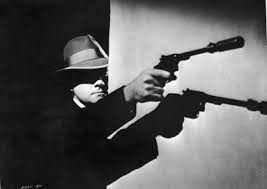
We’ve all seen how silencers work on firearms, right? Our assassin lies in wait as his victim approaches down the street. His silenced revolver is loaded and ready to fire. The shooter takes his time, waits for his shot. And then, from ten feet away (or 20 yards away), he makes his move. The revolver puffs twice. Phut, phut. The victim falls, and no one knows whats wrong. The killer makes his getaway.

And that, ladies and gentlemen, is yet another example of how movies and television get pretty much everything wrong when it comes to firearms and tactics. Where, oh where to begin?

First of all, they’re called suppressors, and that’s because they’re not all that quiet. Except sometimes.

A YouTuber who calls himself SmarterEveryDay posted a unique and very cool video on the function of suppressors. He hooked up with a guy from Soteria, a suppressor manufacturer from Munford, Alabama, and together, using a high speed camera and a see-through acrylic suppressor, they were able to demonstrate exactly how a suppressor does its thing.

In case you can’t get the video to run, the suppressor (or the “can”) uses a series of internal baffles that contain the flash and expanding gases of a fired round, and then vent them slowly. The effect is a more muffled report. But there is still a substantial report. Such things are hard to quantify in a blog post, but to my ear, most suppressed rifle shots sound like unsuppressed small caliber pistol shots. Click here for a video of me shooting a suppressed Heckler & Koch MP7 at the Navy SEAL range in Virginia Beach. What you’re hearing is a wicked little 4.6mm round, which translates to around 19 caliber.

The real benefit of suppressors is muzzle flash control.

Imagine you’re a bad guy doing bad things, when in the middle of the night, you hear pop-pop-pop and your friends start falling down around you. There’s noise, but no muzzle flash–no visual reference for where the attack is coming from. It’s just from out there somewhere. Recognizing your situation for what it is, you pick up your own weapon to return fire, and every pull of the trigger releases a blinding flash at the tip of the barrel that not only destroys your night vision, but announces your location to anyone who maybe hadn’t noticed you yet. Your night is likely to get pretty unpleasant. For more information on night vision technology for firearms, you could read nightvision scope reviews from outdoorempire.com.

For military operators, SWAT folks, Border Patrol and all manner of other groups who do dangerous things under the cover of darkness, suppressors, combined with night vision technology, are tremendous force multipliers. Owning the night doesn’t mean much if every shot gives away your location.

You can’t suppress a revolver.
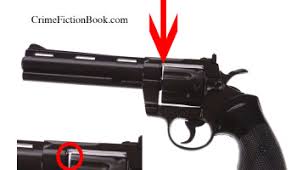
Before my gun buddies get too twitchy that I let that first picture stand too long without contradiction, I need to point out that every old movie that shows a suppressed revolver is demonstrating the impossible. The only way a suppressor is even a little effective is if the combustion gases are all contained long enough for the pressure to dissipate. As the picture shows, every revolver has a gap between the cylinder and the barrel, through which a significant amount of gas escapes. So significant is the pressure, in fact, that a revolver needs to be fired using a significantly different grip than that used with a semiautomatic pistol. if you rest the thumb of your support hand along the base as you would with a semi-auto, you’d stand a good chance of blowing your thumb off with the escaping cylinder gas. The technical term for that is “a bad thing.”
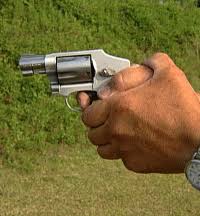
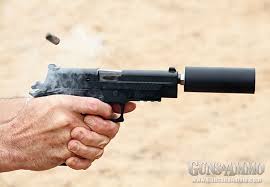
Guns need to be modified to accept a suppressor.

Because of the pressures involved, adding a can to the muzzle of a firearm requires a strong bond. For a suppressor, that means lots of pretty fine threads that extend beyond the frame of the firearm. The picture of the 1911 variant pistol shows the modified barrel that would be used to accept a can. As shown, the threads are protected with a threaded cap, and the can has not yet been attached. As shown, the gun will still shoot just fine. Also note that this pistol has taller sights than usual to accommodate diameter of the suppressor.

Bullet speed means more than bullet size when it comes to suppressor effectiveness.
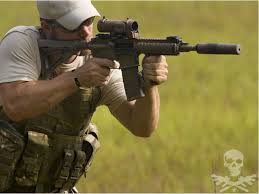
The bang of a gunshot actually has several sources. First, there’s the obvious explosion of gunpowder in the breech. Depending on the load, that may or may not rise to the level of detonation, but in any case, there’s a lot of fast-burning gas. Second, in the case of high-powered pistols and rifles whose bullets travel at supersonic speed, there’s the sonic boom that is caused by the projectile in flight.

Shotguns, on the other hand, are almost always subsonic. (I can’t think of one that is not, but I’ll avoid the absolute anyway.) A full load of .00 buckshot will send nine to fifteen .32-caliber pellets downrange at around 1,100 feet per second, and because they are not rifled, they lose velocity more quickly than bullets. Thus, a suppressed shotgun is really very quiet, to the degree that no hearing protection is required.

If you really need the drama of more traditional “silencer” . . .
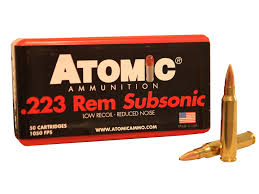
If your story desperately needs the visuals or drama of that phut, phut of old, you’re not totally out of luck. Most manufacturers make a line of subsonic ammo in most calibers. When used in conjunction with a suppressor, they can be fairly effective. You’re still going to get more of a bang than a phut, and it will still be audible within, say, 20 yards in the open, but you might not hear it in the basement if the shot is fired on the second floor. All else being equal, larger calibers create louder noise.

If your character really needs to shoot a bad guy at bad-breath distance and not be detected in the next room . . .
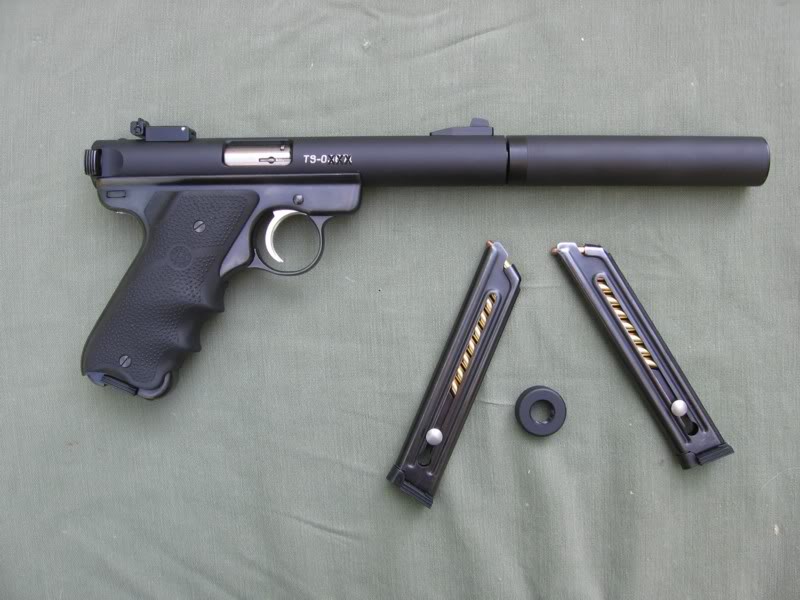
This picture of a suppressed .22LR pistol also shows the ring (now removed) that protected the threads before the can was attached.

I have it on good authority that the preferred bullet for wet work contractors engaged in close-in killing is the subsonic .22LR (long rifle) round. This is the little bitty round that most people think of as a plinker–the round you fired at summer camp when you were a kid–but in reality it is the most common caliber in the world, and is therefore the world’s deadliest round in terms of sheer numbers of people killed (including Bobby Kennedy). When fired through a good suppressor, a subsonic .22LR doesn’t even produce a phut. The only audible noise is the clack, clack of the action.

Those are the basics. I’ll be happy to answer any questions you might have. Okay, TKZers, it’s your turn.

 

First Page Critique: Clear Out Briars
So Style and Story Can Shine

By PJ Parrish

A broken pipe caused a flood in our house, ruining a third of our old pine floors and all of the kitchen.  Bad news — six weeks in a hotel. Good news — I get a new kitchen. So I’m feeling the vibe of the title of our First Page Critique this week.

Thank you, dear writer, for submitting.  Without you, we are nothing. Catch you on the back swing with comments and, as always, please weigh in TKZers, because my opinion is just one voice. It takes choir to do this right.

The Battle At Home

The weary van shuddered to a stop, yet Allie Newland’s body refused to move.

“Allie? Honey? We’re here.” Derek nudged her shoulder.

Allie raised one heavy eye. Derek’s chiseled face and dark, curly hair swirled. Nope,can’t do it. The lid snapped shut. She covered her swollen face with her sweaty palm. Her cheeks flushed. A sigh lifted off her mouth and hung stale like the pool of greasy French fries littering the floor of the ten-year-old minivan. A tear trickled down her cheek and dropped onto her clasped hands. It splattered against a ragged cuticle.

Time.

As much as she didn’t want it to be. As much as she’d never be ready. As much as her arms desired nothing more than to hug her Derek and trap him at her side forever.

It.

Was.

Time.

Allie lifted her eyes and plastered a smile onto her face. A delicious smattering of freckles crinkled across the bridge of her nose. She turned away. Clutched the sticky handle and rested her forehead against the cool pane.

“I guess we should get going.”

“Allie.” Derek cradled her chin and forced her gaze from the window to his eyes. She squirmed away from the chocolate brown pools. He grabbed her hands and kissed the top of her light-brown, shoulder length hair. “You’re strong, Al. The strongest woman I know.”

Allie choked on a grenade-sized lump. Swallowed. It exploded into the walls of her carefully patched together dam of emotion bursting it wide open and sending two salty streams cascading down her cheeks. The tears drenched her stretched-to-the-limit, faded black t-shirt and puddled on top of her post-baby bulge. She sniffed. Wiped. Added a new stain to the dozen or so toddler snot smears decorating her comfy cotton ensemble. She should tell him. Really, she should. But she didn’t. She couldn’t. So instead, she kept silent. She bottled her fears, feigned a tight-lipped smile, and nodded her head.

“I know. We’ll be fine. We’ll miss you like crazy, but we’ll be fine.” Allie squeezed his hand. Her finger wavered on top of the orange button. She pressed. Unbuckled. Opened the squeaky door. She wiped stowaway tears off her face and squinted her brown with little flecks of green eyes as she stepped onto the paved parking lot. She slid open the rear door.

“Hi, Jadey,” she said fake enthusiasm pumping up her sullen words, “time to say bye-bye to Daddy.”

____________________

We’re back. I have to say straight-off, I’m intrigued, and I like this submission. Here’s why: We’re entering at an emotional moment. (no throat-clearing). We have two interesting likeable characters (and only two, which serves to concentrate our attention.)  We get the putative protagonist (at least I hope it’s Allie) right away. We have drama. We have unanswered questions.

I like the subtlety here. Something obviously not-good is going on, but the writer is sly though to not tip his/her hand and hit us over the head with HOW bad it is. It could be something as simple as dad has to go away temporarily. It could be something really dire. Hard to say since we don’t know what kind of genre we’re dealing with here. Could be domestic suspense, could be dystopia. But no matter what the genre, a good opening is a promise. I want to read on here to find out what’s coming.

Second, notice how the writer slips in details that show us things about the characters rather than telling us about them. Yes, s/he could have written something like:

Her daughter Jadey wasn’t yet two, and they had no money and no where to live except a broken down van. How was she going to cope alone with a baby now that Derek was leaving?

Instead, the info is conveyed by describing a swollen belly,  “toddler snot” on her clothes. Emotions are conveyed through actions — tears, caresses, kisses on hair — rather than something like: Allie loved him with all her heart and was going to miss him. She knew Derek felt the same way.  We always talk here about showing instead of telling. Also, we aren’t told they are poor. We learn, again through selective descriptive details, of this couple’s financial situation — a broken down van, greasy take-out bags on the floor, stretched out clothes.

I also love the fact that Allie has something to tell Derek, the implication being she has kept something from this man who seems so good to her. I like that you didn’t tell us what it is, just dropped in that hint, that unanswered question: What is Allie hiding?

So, good job, writer. But there are times when you could do some self-editing to make your writing tighter, more efficient and, in the end, more evocative. The more emotional the scene, the less emotional the writing itself should be. If I can, let me offer a few tweaks for you to consider in line edits:

The weary van careful using anthropomorphic descriptions. Not sure you even need “weary” since you use the great verb-phrase “shuddered to a stop.”. Maybe something specific like the rusty VW van shuddered to a stop. Then break into a new sentence so our focus goes squarely on the charcacter. But Allie Newland’s body refused to move.

“Allie? Honey? We’re here.” Derek nudged her shoulder.

Allie raised one heavy eye. Derek’s chiseled face suggestion: This is a hackneyed description of bad romance novels. You can do better.and dark, curly hair swirled. this implies movement. Is a window open? Or do you mean that his image seemed to swirl in her eyes because she’s so tired? Clear this up.

Nope,can’t do it. Suggest setting this off by itself. Love that you’re using intimate POV!

The lid snapped shut. You have a tic (we all do!): a tendency to over-describe. She cries, she’s sweaty, she’s swollen, she sighs. It’s a couple tokes over the line. Simplify your emotional descriptions — less is often more — and trust your reader to get it. She closed her eyes and covered her swollen face with a sweaty palm. She covered her swollen face with her sweaty palm. Her cheeks flushed. A sigh lifted off her mouth and hung stale like the pool of greasy French fries littering the floor of the ten-year-old minivan. I like that you are using all the senses here but again, simplify this good description: She sighed, and her breath, smelling like the greasy McDonald’s bag on the floor, hung in the stale air of the old van. A tear trickled down her cheek and dropped onto her clasped hands. It splattered against a ragged cuticle. Suggest you save the tears for later. They are more effective below. And again, by layering in too many emotional descriptions (sigh, tears) you dilute the effect. Space them out a tad.

Time.

As much as she didn’t want it to be. As much as she’d never be ready. As much as her arms desired nothing more than to hug her Derek and trap him at her side forever.

It.

Was.

Time. I liked this disjointed structure. It mimics exhaustion. It makes me get the feeling this couple has come a long way and Allie is spent, physically and mentally.

Allie lifted her eyes and plastered a smile onto her face. Again, I think this might be too much here, since she feigns a smile later as well. I like it better below. A delicious smattering of freckles crinkled across the bridge of her nose. Cut this. It jerks us out of that intimate POV you’ve worked hard to establish — she cannot SEE her own face and “delicious” is jarringly out of mood here. Just go right to: She reached for the door handle but couldn’t bring herself to move it. She rested her forehead against the cool window. She turned away. Clutched the sticky handle and rested her forehead against the cool pane.   Here is where I would put in a few quick, well-drawn strokes of what she sees outside. See comment below about this.

“I guess we should get going,” she said or even whispered, given her mood.

“Allie.” Derek reached over and (I think you need to tell us where he is; I assume he’s in driver seat?) cradled her chin and turned her to face him. forced her gaze from the window to his eyes. She squirmed away from the chocolate brown pools. I think this feels romance-cy and it distracts from the mood. He grabbed her hands and kissed the top of her light-brown, shoulder length hair. Again, simplify the movements of your characters:  She tried to squirm away but he pulled her toward him and gently. kissed the top of her head. Delete the description of her hair because you are IN HER INTIMATE POV. Stay there! She would not be thinking about what her hair looks like.

“You’re strong, Al. The strongest woman I know.” Good dialogue so it deserves its own line. Don’t bury it in graph above.

Allie choked on a grenade-sized lump. Swallowed. It exploded into the walls of her carefully patched together dam of emotion bursting it wide open and sending two salty streams cascading down her cheeks. I like the grenade metaphor but it’s so writerly that you have to know when to stop. Again, simplify so the metaphor shines more: It exploded the walls of her carefully constructed emotional dam, bursting it open. She began to cry. The tears drenched her stretched-to-the-limit, faded black t-shirt and puddled on top of her post-baby bulge. Simplify: The tears fell on her faded black T-shirt, puddling on top of her post-baby bulge. She sniffed. Wiped. Added a new stain to the dozen or so toddler snot smears decorating her comfy cotton ensemble. She ran a hand under runny nose, thought about using one of the McDonald’s napkins wadded on the floor, but instead just wiped her hand on her T-shirt. One more stain wouldn’t matter among all the toddler snot smears. 

She needed to tell him. But she couldn’t. So instead, she kept silent. She bottled her fears, feigned a tight-lipped smile, and nodded her head.

“I know. Non sequitur response, I think. Derek said, “You’re strong.” Would she respond “I know (I am?)” She doesn’t feel strong now. What might be a better comeback from her? Or maybe you can even have her thinking something in response to Derek’s compliment, something that laces in a bit of backstory? She didn’t feel strong right now. Whatever strength she had felt when they had started out five weeks ago in WHEREVER we are, had been long lost. We’ll be fine. We’ll miss you like crazy, but we’ll be fine.”

Allie squeezed his hand. Derek should do something in return, I think. His woman is crying now. Her finger wavered on top of the orange button. She pressed. Unbuckled. Opened the squeaky door. She wiped stowaway tears off her face and squinted her brown with little flecks of green eyes as she stepped onto the paved parking lot. She slid open the rear door. This is what I call mundane physical movement. Enough with wiping tears. Just have her get out of the van. And again, she can’t see her own eyes, so don’t stop here to tell us about them. Also, where’s the baby? Have her reach in the back or wherever before you go with following dialogue:

“Hi, Jadey,” she said fake enthusiasm pumping up her sullen words, her words aren’t sullen. Her mood is. “time to say bye-bye to Daddy.

Again, nice start, writer. You’ve got our attention. A few more things to think about: We could use a little grounding in where we are. You can afford to slow down enough to have Allie take note of her surroundings. Readers want to know where the story is taking place. That doesn’t mean you give us a long descriptive narrative here — it would disrupt your mood and your style is, once you clear out the brush, nice and spare.  But find a way to use the surroundings to enhance the mood you’re establishing.  When Allie first opens her eyes and looks out the van window, what does she see? Show us! Is it winter and the heater broke miles ago? Is it hot and stifling in that old van? You’re in No Man’s Land here, one moment telling us she has sweaty hands (implying warm), the next leaning her forehead against cool glass (cold weather?) All we get is “a parking lot.” This opening feels like they have reached a destination, a metaphoric fork in their road since Derek is about to depart for some reason. Don’t neglect your setting — it can be a powerful tool in supporting your mood and increasing suspense.

Thanks for giving us the chance to read your work and learn.

First Page Critique: Gideon

Happy Monday! Today we have a first page critique from a dystopian novel – the extract we have is from a chapter entitled Gideon so I’m not sure if this is the first page to the novel itself or merely to a later chapter. The author who submitted this also provided an overview of the dystopian world he/she has created but I’m just going to focus on the page itself – as this is typically how a reader would first immerse themselves in the world  (and we at TKZ don’t typically go through a synopsis or overview for the pages we review). Suffice to say this novel takes place in the near future after a Third World War that has obliterated civilization in a nuclear strike. My comments follow after the extract but I do think this first page critique illustrates the need for clear, consistent world building for any novel that relies on a futuristic or alternative world that is unfamiliar to a reader.

Gideon

On his way to his scheduled fear desensitization treatment at the House of Pain, Gideon Guidry and his friend Paul Roseau had stopped at the Iron Byrd Tavern, where Gideon’s friend Paul, who had made several visits himself, felt sympathy for poor Gideon had purchased several large pink glasses of Le Grand Courage, a rare and expensive French wine for him, and began slurring his words, as the two shared the wine and sat discussing Gideon’s pending appointment and possible death sentence.
Gideon gulped the wine as if he had spent the day in the desert without liquids and as if wine would never be available again, to bolster up his courage for the day ahead.
Paul said, “You know they steal your memories and sell them to those rich citizens up on the Excelsior level of Sanitorium.”
  “No, you must be kidding. They wouldn’t dare.
  “They would, and they do. “Paul said.
  “And people go along with this? “asked Gideon.
  “Either the poor subversives don’t realize it is happening to them, or they just pretending it isn’t happening to them. No one has the courage to face the whip on Public Punishment Day. So, there really is no way, you can avoid the treatment. Why not fake an illness? ”Paul suggested, Gideon just shook his shoulders and said, “There is no point in putting it off. They will get me eventually and then I’ll be in the punishment square. Might as well get the dammed thing over. Right?”
  “No, OK, maybe. Well, let’s at least meet up tomorrow anyway and you can tell me how it went. My prayers are with you, my old friend.”
  Now Gideon was like a bull seeing red, as hate poured over Gideon’s soul like hot grease on a cook stove, imaginary smoke came out of his ears, as he stood there his hands shaking, his fist balled up tight, as he faced this indignity stoically and stood in front of the old converted psychiatric hospital. Surprisingly, near the front entrance, he saw a large pile of rotted timbers stacked neatly up against the sleek new part of the House of Pain and thought, I wonder what that stuff is for? Then, he thought, oh, I hope it is not what I think it is?
  Then, Gideon thought, Am I Drunk enough? Am I strong enough?  To hide the deep dark secret.

My Comments

As always, bravo to our brave submitter for providing us with an extract of his/her work to review. Even though I don’t typically write these sorts of novels, I’m a huge fan of works that fall in both the dystopian and science-fiction genre (which this clearly seems to do). When reading these genres, I look for the following: (1) novelty and clarity in world building; (2) an immersive experience that surprises or shocks me with details or events and; (3) something unique that sets apart the world from others I’ve read. Given how many novels have been set in a post-apocalyptic world it is very difficult to achieve all three.

Rather than providing an overview as I usually do followed by specific comments, this time I’m going to provide notes embedded in the extract itself – in bold and italics – as I think this is a more effective approach.

Extract with my notes:

On his way to his scheduled fear desensitization treatment at the House of Pain, Gideon Guidry and his friend Paul Roseau had stopped at the Iron Byrd Tavern, where Gideon’s friend Paul, who had made several visits himself, felt sympathy for poor Gideon had purchased several large pink glasses of Le Grand Courage, a rare and expensive French wine for him, and began slurring his words, as the two shared the wine and sat discussing Gideon’s pending appointment and possible death sentence.

This sentence is far too long and unweildy. The use of ‘had’ seems redundant in the use of the past tense. The ‘House of Pain’ and ‘fear desensitization treatment’ kind of make sense but when we learn that this appears to be a public whipping I’m not sure what the purpose of this treatment really is….or why this might be a death sentence. The world I’m expected to suspend disbelief and inhabit doesn’t seem entirely consistent. The description of a tavern in particular is hard to reconcile in a more sci-fi post apocalyptic world (sounds more fantasy/middle ages). I need to believe that this world has ‘taverns’ and pink French wine called ‘Le Grand Courage’ even if it also sounds pseudo science-fiction. 

Gideon gulped the wine as if he had spent the day in the desert without liquids and as if wine would never be available again, to bolster up his courage for the day ahead.

Gulping wine as if ‘he had spent a day in the desert without liquids’ and ‘as if wine would never be available again’ and ‘to bolster up his courage’ is too much – one of these reasons would have been fine and I’m also confused: In this post apocalyptic world, why is wine available? Are there still deserts even? 

Paul said, “You know they steal your memories and sell them to those rich citizens up on the Excelsior level of Sanitorium.”

More confusion – so do they steal the memories of pain/fear desensitization treatment? If so, why would rich citizens want them? If they are stealing other memories, how and why does this occur and how does this fit into the discussion of what is going to happen to Gideon at the House of Pain?

“No, you must be kidding. They wouldn’t dare.
  “They would, and they do. “Paul said.
  “And people go along with this? “asked Gideon.
  “Either the poor subversives don’t realize it is happening to them, or they just pretending it isn’t happening to them. No one has the courage to face the whip on Public Punishment Day. So, there really is no way, you can avoid the treatment.

This makes it sound like the memories are of the whipping – but how does Public Punishment Day relate to the House of Pain/Fear desensitization treatment? Again, I’m confused as to what this discussion is really about. Would Gideon really think people might go along with having their memories stolen? Why are we now talking about subversives when before it sounded like everyone went to the House of Pain for treatment (Paul, after all, had already made several visits). Also, why in a dystopian world wouldn’t ‘they dare’ steal memories (I mean they are happy to whip people in public…)

Why not fake an illness? ”Paul suggested, Gideon just shook his shoulders and said, “There is no point in putting it off. They will get me eventually and then I’ll be in the punishment square. Might as well get the dammed thing over. Right?”
  “No, OK, maybe. Well, let’s at least meet up tomorrow anyway and you can tell me how it went. My prayers are with you, my old friend.”

So you can avoid treatment by faking an illness? Seems incongruous for a society/government that inflicts treatment at the ‘House of Pain’ to allow people to delay just because they don’t feel well…again this goes to presenting a consistent and authentic feeling world for a reader. If a reader is confused or has to ask these questions, then the world building isn’t clear.

Also, it seems very strange that Paul which say ‘let’s meet up tomorrow and you can tell me how it went’ when he’s already endured ‘several visits’ to the House of Pain. Not only does this minimize what was described in the first paragraph as a ‘possible death sentence’ it also robs the scene of dramatic tension.

Finally, there is a missing quotation mark before Paul’s comment. As we always emphasize here at the TKZ, an author must go over his/her work to ensure it is error and typo free before sending it to an agent or editor.

Now Gideon was like a bull seeing red, as hate poured over Gideon’s soul like hot grease on a cook stove, imaginary smoke came out of his ears, as he stood there his hands shaking, his fist balled up tight, as he faced this indignity stoically and stood in front of the old converted psychiatric hospital.

Notes: Again, way too many descriptions/similes going on here – to the point where it almost seems humorous…and how did he get from the tavern to standing in front of an old converted psychiatric hospital (which I’m assuming is part of the House of Pain)?

Surprisingly, near the front entrance, he saw a large pile of rotted timbers stacked neatly up against the sleek new part of the House of Pain and thought, I wonder what that stuff is for? Then, he thought, oh, I hope it is not what I think it is?
  Then, Gideon thought, Am I Drunk enough? Am I strong enough?  To hide the deep dark secret.

I’m confused as to what the pile of rotting timbers were for – a hanging? A funeral pyre? Again, the punishments inflicted in this society sound more medieval that future/post apocalyptic so it is vital that this world is described in a way that the reader believes it has sunk back into medieval style punishments (which doesn’t seem to fit with having the technology available to steal people’s memories…). The final line also isn’t clear as we have been given no sense up to this point that Gideon is hiding any dark secret. 

Final Comments

Overall, my key concern here is world building consistency – especially in a genre that necessitates something different/unique to set it apart from all the other dystopian worlds out there. The writing could easily be tightened up but this dystopian world has to be clear to both the author and the reader. Believe me, I know how hard it is to create a world and to ensure all the elements are there on the page, rather than just in your head – but in this genre it is critical.

So TKZers, what comments do you have for our brave submitter?


Short Chapters and Lots of Dialogue

by James Scott Bell
@jamesscottbell

Last week commenter Alec asked: “JSB, I’m reading your Ty #1 book at the moment (I’ve read thru Chap. 36). I’m struck by two things – the amount of dialog and you seem to be using and chapter breaks to move time along … Do you recommend shorter chapters with the intent being that each chapter reflects a scene or a conversation? I looked and this book has 127 chapters.”

Several years ago I was having my teeth cleaned (stay with me, Alec, this will connect) and the hygienist asked what I did for a living. I told her I was a writer. (Such conversations invariably lead to the person asking something like, “Oh, have I heard of you?” Which leads, also invariably, to a furrowed brow and some sort of negative response.)

“Oh,” she said. “Have I heard of you?”

I gave her my name.

Her brow furrowed. She said, “Hm, I don’t think so.”

Shocking.

As she put the little bib on me, she asked, “Have you heard of James Patterson?”

“Sounds somewhat familiar,” I said.

She leaned over conspiratorially and said, “I know his secret.”

“Do tell,” I said.

“He uses really short chapters.”

So that’s it! So simple! Short chapters = millions of copies sold!

I’m only half kidding. For Patterson really did popularize the short chapter method for thrillers. Indeed, much of the time he takes what would be a traditional chapter of, say, 2k words or so, and breaks it down into three or four shorter units. The last line of a unit will have some sort of read-on prompt and there you have it—a page turner. It’s kind of worked for him.

In the early 2000s, as Patterson sold more and more, I began to notice the chapters of other thriller writers getting shorter, too.

Which was aces with me.

Writing in Scenes

I’m a movie guy. I grew up devouring movies on the tube. There was a regular program called The Million Dollar Movie on a local L.A. station (Channel 9, I think it was) and they’d show the same movie each night for a week, and twice on Sunday. I’d sometimes take in the same movie four or five times.

For my first official date I took the girl to a movie. It was a really romantic one, too. Willard, a horror movie about killer rats. (I should mention that this was also my last date with said girl.)

Still with me, Alec?

When I found out you could actually major in film studies at the University of California, Santa Barbara, I was all in.

I’m drenched in movies, and indeed it was a movie that reawakened in me a desire to try to write and sell stories.

Naturally, being from Tinseltown, I started with screenplays. I really learned about structure and dialogue and writing tight scenes via screenwriting.

Part of what got me a contract to write legal thrillers was the acquisitions editor telling me that I wrote “cinematically.”

Heck, I couldn’t help it.

I began my fiction career writing in traditional chapters, of a certain minimum length. Then one day I picked up a book by the hardest of the hardboiled, Andrew Vachss. It was Dead and Gone, and I loved his approach. No chapters. No numbers. Just scenes, some long, some short, set off only by white space and a drop cap. Here’s a screenshot of the first page:

What I loved about this was how liberating it felt. This was permission to write in pure cinematic style.

So when I began writing Try Dying, the first in my Ty Buchanan legal thriller series, that’s how I did it. In deference to the publisher, I did number the scenes. But the point is that writing this way means a scene can be as long or as short as it wants to be. No padding required. It also lets me easily control pace. I can put in a short scene that is rapid-fire action, or quiet emotional reflection, depending on how I want the book to feel at that point.

There are lots of possibilities so long as the reader is never lost on POV.

And that’s why I write in scenes.

Lots of Dialogue

Alec also mentioned the amount of dialogue, implying that it seemed, well, like a lot.

That’s because it is. I write thrillers and noir, and dialogue plays a major role in both. But I also love writing dialogue. Again, the movie influence. (See all those “zingers” from Friday).

So assessing the quantity of dialogue is the wrong focus. The only question is, does it work? The Fletch books by Gregory Macdonald, for example, are almost entirely dialogue. And they work as both mysteries and entertainments.

In addition, dialogue helps pace because it creates white space for the readers.

And dialogue is the fastest way to improve your novel. When an agent or editor (or reader, for that matter) sees crisp, orchestrated dialogue, they immediately gain confidence in the writer. That’s because they see so much flabby, plain-vanilla dialogue in their submissions.

I recall another date I went on where—

“Wrap it up, Jim,” he said.

“But it’s a funny—”

“Now.”

That’s a wrap.

I’m Joe…

…and I’m an alcoholic. Last Sunday, April 1, marked the conclusion of my twenty-seventh year of sobriety. I’ve had six additional days of sobriety as I am typing this and I’m hoping for another one as you are reading this.

I’ve talked about alcoholism and sobriety before in this venue — most recently two years ago — and I’m going to do it again. If you are writing and working on your twelfth book or the first five pages of your first one you might think that four or five glasses of wine help to lubricate the creative glands either while you are writing or before you even start. Fair enough. All I ask is that you keep yourself open to the possibility that your intake — if it is regular and excessive — may be holding you back rather than helping you.

Addiction can find a home with anyone but especially with creative folks. Evict it, and it just hides in a tree in the backyard and waits patiently for an open door or window to creep right back in. It can take a while to recognize that you might have a problem if indeed you have a problem. Once you realize that you have a problem, don’t be afraid to look up “rehab center near me” online to see where you can get help. I met a man in 1988 who told me straight up, within ten minutes of our introduction, that he was an alcoholic. “I’ve been sober for nine years!” he said. I couldn’t believe it. I thought, Nine years! Without a drink?! I can’t even go for nine days. It’s a good thing I don’t have a problem! Yep. That’s what denial looks like, and I’m not talking about the river in Egypt. It took me three years after that and a near tragedy to get myself together.

Actually, make that several near tragedies. It is a miracle I’m sitting here. I’m glad that justice is a rare thing. If justice were in great supply I would be dead or in prison or on the street, rather than waking up in a nice home in a great neighborhood and having the privilege — and it is a privilege — of sitting here writing something for TKZ and having you read it.

It took me a while to figure something out. If you are going to write you have to treat it like you would a job, even if you’re not yet making any money from your endeavors or are making just enough to keep going. You wouldn’t show up at a regular job drunk or high — not with all those employee drug tests — because you would get fired. Don’t show up at your writing desk drunk, either. You’re on the road to firing yourself from the best job in the world.

If you think you have a problem — whether it’s with alcohol or drugs or gambling or whatever — you probably do. There is a test that you can take that might give you some guidance. The argument about whether alcoholism is a disease or a character disorder has vigorous and excellent proponents on both sides. It ultimately doesn’t make any difference. It’s a problem and it won’t go away on its own. You need to take a step. What is now hysterically funny to me is that a couple of times I almost stopped but didn’t because I didn’t know how. That’s funny, in a way. But it’s also pretty sad, in retrospect. You would be surprised at how many people needing to take that important first step down the road to sobriety feel the same way. If you feel comfortable going to your physician about it, please do so. If you reflexively shy away from doing that, please try an AA meeting. If you Google “AA” and your city you’ll find a schedule. I guarantee that you will find several. Some target specific groups. Others are quite the mixed bag. I attended a meeting several weeks ago in support of a friend attaining his first year of sobriety. There were doctors, attorneys, bikers, mechanics…but we were all siblings for an hour or so. If you don’t feel up to that just yet, then email me. I promise that I will get back to you immediately, do whatever I can to help, and take our conversation to my grave.

One last thing…if you do not have an addiction but have a family member who does then run — seriously, run — to an Al-Anon meeting. Again, just Google “Al-Anon” and your city. You are almost certainly one hour away from feeling less alone. You might attend one meeting and wonder who these strangers are who lead a life identical to yours.

That’s me today. Thank you for being here. You all are the best. And keep writing. Don’t let anything — like a bottle — or anyone, including yourself, get in your way.


When Fiction Meets Reality – The Challenges of my Current WIP

Jordan Dane
@JordanDane

Falkue at German Wikipedia

I’m 75% finished with my latest novel and I can’t stop dreaming about it. It’s keeping me up. I hope that’s a good thing. I’ve never had this happen before. Have any of you?

My novel is something very far from my comfort zone. For a large section of the story, my characters time travel (in an odd way) to Victorian London where they hunt Jack the Ripper. They have their reasons and the clock is ticking.

Whenever I add paranormal elements to any of my stories, I want the premise to almost seem plausible. You know how most people get scared when sitting around a campfire, telling ghost stories? That’s the visceral feeling I hope readers will get when they come along for a ride to the streets of White Chapel 1888.

I not only had to research the many resources on the Jack the Ripper case and take a view on what I think might’ve happened for the sake of my plot, I also had to research the time period to recreate a setting that will come alive on the page. In 1888, London was not the progressive modern city it is today. This was before proper sanitation, plumbing, and before police investigative methods were improved.

Tenement slum houses held large families of immigrants contained in small rooms rented by the day. Disease ran rampant with poor options for drinking water. Within close proximity to these slums lived wealthier Londoners who attended the opera and dined in fine restaurants. A newspaper called The Star had started in 1888, the year Jack had been born to evil. It had originally provided a voice for the common folk on injustice, but anything on the White Chapel murders turned a profit for the newspaper and became the driving story of the day.

A challenge has been to add enough details for history buffs yet recreate this world for readers who might be more interested in the peril of the characters. There’s always a balance and a consideration for good pacing.

My story is seen through the eyes of a young woman in present day who is desperate to find justice for a murdered friend in New Orleans. She’s obsessed with the Ripper case because she thinks it is related to the death of her friend. She steals a vintage necklace off a body and brings it to a mysterious yet reclusive psychic, only to find that she is correct that the jewelry is linked to her friend’s investigation. When held in his hand, the necklace catapults the psychic to two horrific murders. The vintage piece is the key to locating Jack the Ripper on the night he kills his 5th victim, Mary Kelly. I can’t give too much away, but I hope you’ll see the many moving parts of this story.

In order to recreate time travel, the hunters (led by the psychic) must be willing to suspend their bodies in a near death coma. Similar to how dreams work, a willing mind can share the common existence of a shared dream. My twin sisters often shared the same dreams. For most that would be scary, but it was normal for them. It’s been said that if you dream of your own death, you die in the dream. How many of you believe that is possible? Does it make you think twice before imagining it?

While my characters hunt the Ripper in spirit form, they are invisible to everyone except their one spirit guide (someone from 1888 that they must find in order to remain tethered to their world). As you can imagine, there are challenges to not having a physical body, yet they must be presentable in period clothing to the one guide (their citizen of heaven) who is capable of seeing the traveler.

Another challenge was to create believable dialogue during the time travel segment. What my modern woman hears from the people she meets must sound authentic. That involved a lot of historical research as well. It helped that my narrator was a modern young woman. For most of the historical part of the plot, her voice dominated, but I made sure she overheard the locals to make sure the color would be there.

But things are not what they seem in the netherworld between life and death. Evil and Fate combine to change history in ways my team of hunters will never foresee. Their worst fears are exposed and they must face their worst nightmares. As a writer, it’s my job to make my characters pay for the daring things they do to become a star in their story.

Thinking through all the ramifications of affecting history or interfering with fate–while doing it in a way to create mysterious twists in the plot–has been another fun challenge. Every time I think I know where the story is going, it changes course again, in a good way. I’ve surprised myself in ways I couldn’t have foreseen. The plot had to develop and the characters’ dilemmas had to rise to the top in order for me to see different outcomes and motivations. I’ve added layers to my story that I never would’ve seen coming. That’s a good feeling.

This is the first book in a new Trinity LeDoux series for me. The working title is – The Curse She Wore. Trinity is a 24-year-old wannabe bounty hunter, trying to get her license in New Orleans. At the start of the story she is homeless, but everything changes after my hermit psychic sees something brave yet vulnerable in her.

The first time I visited New Orleans, I sensed the layers of richness to the setting and understood why so many writers find the location completely captivating. I’ve waited to write a story set in New Orleans. This is it. I’m bringing in a Cuban influence, the Santeria faith (used for the concept of an ancestral spirit guide or citizen of heaven), a discreet Voo Doo shop for true believers, and a reclusive psychic from an old wealthy family who lives on an historic plantation. He’s got secrets of his own.

My tag line for this story is – “They had Death in Common.”

For Discussion:
1.) Tell me about the challenges of your current WIP. Anything interesting to research?

2.) Have you ever worked in the details of a real murder into your work of fiction? How did that work for you?

If you’re on Instagram, please find and follow me at this LINK.

Chappaquiddick, The Story


About a month ago, I began to see advertisements for the film Chappaquiddick. Being familiar with the subject–Ted Kennedy’s involvement in the death of a young woman named Mary Jo Kopechne–there was no question in my mind about whether I would go to the film or not.

My parents were Catholic sweethearts still in their twenties when Bobby Kennedy was assassinated in June, 1968. One of my early memories is of my mother watching his funeral on our small black and white television. Just a little over a year later, two weeks after I turned seven, Mary Jo Kopechne died, suffocated in a car submerged in the dark water just off the Dike bridge near Chappaquiddick, Massachusetts. Senator Ted Kennedy, who was positioned to run for president in 1972, was driving the car when it went into the water. He didn’t report the accident until ten hours later. He pleaded guilty to leaving the scene of an accident and was given a two-month, suspended jail sentence.

I’m not sure when I truly became aware of this terrifying story. While the adults around me spoke pretty freely at the time, I’m certain no one mentioned the details of the accident right after it happened. Given my visceral reaction every time I think about it, I must have first heard about it when I was a young teenager. What imaginative child doesn’t spend at least some time thinking about drowning? Worse, I had a fear of both water and bridges. We often traveled across the Ohio River, and my sisters and I tried to hold our breath as long as the car was on the bridge. It was a great distraction.

This blog really isn’t about the Chappaquiddick film. No, I won’t be going to see it. I know the story, and have read all sorts of accounts and theories about it. I won’t offer my opinion on it here. But it would be interesting to know what viewers unfamiliar with the event think after seeing the film.

This blog is about a book.

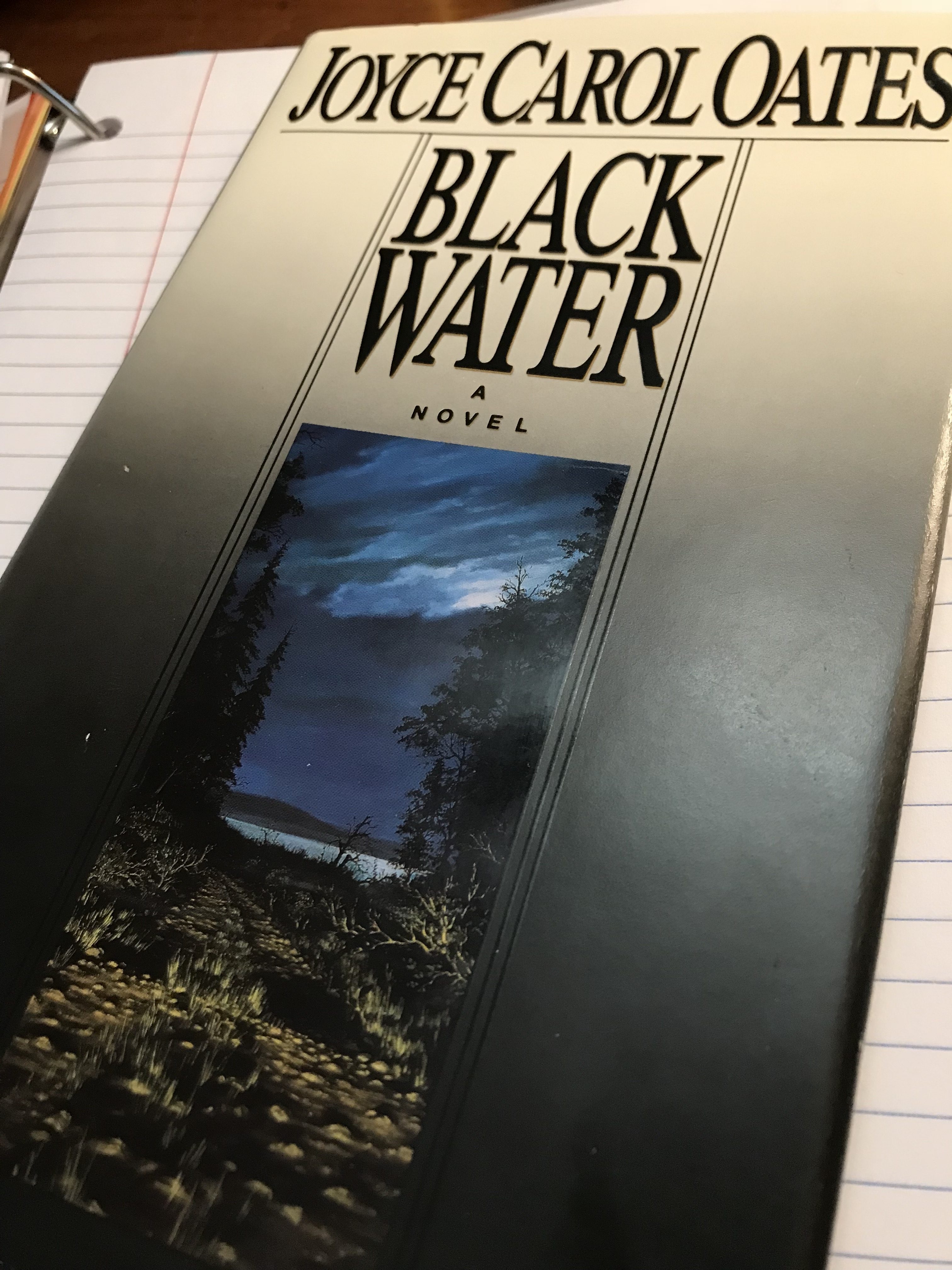
In 1993, I read Joyce Carol Oates’ novella, Black Water. Oates has boldly fictionalized real-life situations and characters in several novels: Blonde, about Marilyn Monroe; Sacrifice, about the Tawana Brawley case; and My Sister, My Love, about JonBenet Ramsey’s death. There are many, many true crime books, and novelized historical fiction is very hot right now. Oates’ writing is always intensel, and delves deeply into the psychology of her characters. So I guess it’s no surprise that I found myself profoundly affected by Black Water. It nails two of my darkest fears, and throws in the always-timely subject of young people (often young women) betrayed by powerful figures (often older men).

This 1992 Washington Post article reports that Oates says, “The Senator in “Black Water” shouldn’t be mistaken for Ted Kennedy, Kelly Kelleher isn’t a pseudonym for Mary Jo Kopechne, and this brief tale isn’t about Chappaquiddick at all.” (Reporter’s quote, not Oates’ actual words.) But it is a story about a party, a senator, a girl, a car accident, a death in the water, and a betrayal. It’s all there.

Black Water is written in Oates’ unique close third voice–a voice which also hints at the existence of a rather arch and wise narrator. Kelly Kelleher is her own memoirist, judge, jury, cheerleader, critic, and inner child. As she waits for the senator to come back to save her, she fights desperately to live. She’s flooded (no pun intended) with memories, and  tells herself stories about what’s happening in the outside world. She clings to her optimism.

I’m told by someone who spoke casually with Oates about the novella that she means for it to be read in one sitting of two hours–the same amount of time the authorities believe Kopechne lived after the car went into the water. That notion leaves me breathless. This will sound ridiculously theatrical, but I almost wish that this fact were written on the page facing the ending of the novella.

The true horror of this story lies in those two hours. Forget the party. Forget Kelly’s romantic thoughts. Forget the way the senator kicks at her as he propels himself away from the sunken car. Forget the alcohol and rumors of infidelity. All you need to know about is those two endless, infinite hours. At the end of those two hours, she is dead, but the reader has visited her entire life just as Kelly relived it–In bright and dark patches of emotion, wonder, and terror.

Why would I want to see the film? After reading extensively about the Chappaquiddick incident, I’ve come to my own conclusions. I’m not particularly interested in hearing more theories. The story has always been about those two hours for me.

This is the power of the book. Don’t get me wrong. I watch at least a couple films a week. But film viewing is mostly passive, even when the film is well done. I’m not saying that films don’t inspire or teach, horrify or amaze. It’s only that prose fiction engages imagination and emotion in a unique way. I want more of that. Always.

Okay, TKZers. How do you feel about the novelization of history? Are there any books you believe truly capture the spirit and heart of a real-life story?


Facebook, She Just CAN Quit You

Note: This post erroneously made a brief, premature appearance before its scheduled due date. Re-upping it for today.

By Kathryn Lilley

Photo purchased from Shutterstock by KL

Recently the dynamics on commercial social media have become…a tad weird. So about a fortnight ago, after one too many hacking episodes, privacy scares, and nasty encounters with online trolls, I took the plunge and deactivated my Facebook account. I’ll miss the ease of staying in touch with certain folks (and of course I’ll miss “Yoga with Baby Goats” and other video gems), but it was long past time to cut my ties with advertising-supported social media.

I started feeling conflicted about commercial social media as far back as 2013, when I wrote Is Social Media Developing a Personality Disorder?  

Five years later, the answer (for me, anyway) is an emphatic “Yes.”

Here at TKZ we made a firm decision at the outset not to go down the commercial advertising route. It’s wonderful that out little corner of the cyber sphere continues to serve as a little oasis of calm amidst the winds of the social media Furies.

I’ll miss seeing my friends and family on Facebook, of course. (And I’ll really miss my daily dose of baby goats.)

How about you? Is anyone else rethinking their relationship to social media these days?

Postscript: it’s been two weeks since I cut the cord with Facebook; I’ve been surprised by how much I haven’t missed it. I think what Facebook actually provided was simply that endorphin rush one feels as one frequently checks for Likes, posts, and messages. It does feel a bit like kicking a habit, but not nearly as difficult as I’d imagined.

The Wagon Wheel of Suspense

By Sue Coletta

We have another gutsy writer who submitted their first page. Please pay special attention to the notes at the end of this post, and you’ll understand my title (I hope).

Gym Body

With my hand on the gym door handle, I could feel the thud of the bass beat in the upstairs studio. I stopped, the pulse of the gym in my hand, or perhaps, it occurred to me, it was my own heartbeat in my palm. Deep breath. Step in. The cop cars outside reminded me of something that had happened long ago.

Another instructor pounded down the stairs and brushed by me, wiping tears from her eyes.

The background sound was now a disordered group clap in time to the Zumba cool down.

Breathing in the whirlpool chlorine, the familiar clink of weights being set in place at the top of the stairs, I fished through my wallet for my membership card.

“Suzi – don’t worry about it,” said Trixie, the front desk attendant, waving her hand in the air and making her eyes look even more bored than usual. “You teach here. I have no idea why you’re supposed to show your card.”

I raised my voice over the soothing buzz of the smoothie bar blender to thank her.

Trixie’s dirty blond hair fell to her waist, and her eyes, smudged with thick gray eyeliner, held a bored expression that she could deepen into greater and more cynical levels of boredom depending on how cool she thought you were. Right now she was pushing 11 on a bored-look scale of 10. I must be pretty cool. “Just go on in.”

“Excuse me!” said a gravelly voice to my left. “I need a ticket for the 9am Push class!”

Trixie lightened her bored look to appear almost polite – not welcoming, but at least not as bored. It was amazing how fast she could wind down to a 6. “I’m so sorry, but Suzi’s class is full this morning.”

I turned to see who was getting the bad news. It was Georgia, one of my regulars. She had the pale papery skin and short gray hair of a woman in her golden years, but emerging under her Lululemon spandex tank top were the bicep and deltoid muscles of a woman who pumped iron like a 20-year-old in a bikini contest.

* * *

NITTY-GRITTY

With my hand on the gym door handle, I could feel the thud of the bass beat in the upstairs studio. I stopped, the pulse of the gym in my hand, or perhaps, it occurred to me, it was my own heartbeat in my palm. If her hand is on the door handle, how could she feel her heartbeat in her palm? If you’d like to deepen the POV, reword like this: With my hand on the gym door handle, the thud of the bass beat in the upstairs studio pulsed through my hand.  Deep breath. Staccato sentence, which varies sentence structure and adds rhythm. Good job! Step in. This one may be overdoing it, but it’s a stylistic choice. The cop cars outside [the building] reminded me of something that had happened long ago. I’d love a hint to what happened. Don’t explain in detail, though. Rather, hint at it, teasing us to keep us interested. As written, it’s not enough.

Another instructor pounded down the stairs and brushed by me, wiping tears from her eyes. Good. It makes me wonder why she’s so upset. I hope it’s because someone got their head bashed in with a weight and not due to a minor disagreement. Meaning, if you’re going to show us a woman racing down the stairs in tears in the opening paragraph, you ought to have a compelling reason why, a reason the reader will soon discover. This is precious real estate. Don’t waste it on meaningless conflict that has no bearing on the forthcoming quest. 

The background sound was now a disordered group clap in time to the Zumba cool down. Meh. I’d delete this sentence. It detracts from the next sentence, which I like. Breathing in Inhaling the whirlpool chlorine, the familiar clink of weights being set in place at the top of the stairs, I fished through my wallet for my membership card. Bravo on using sound and smell to enhance the mental image. Too often writers forget to use these senses, and often they’re the most powerful.

“Suzi – don’t worry about it,” said Trixie, the front desk attendant, waving her hand in the air and making her eyes look even more bored than usual. “You teach here. I have no idea why you’re supposed to show your card.” You managed to sneak in the main character’s name, which is great. However, this dialogue is too on-the-nose. What if Trixie gossiped about why the woman ran out in tears? Again, give us a compelling reason. 

I raised my voice over the soothing buzz of the smoothie bar blender to thank her.

Trixie’s dirty blond hair fell to her waist “Fell” indicates she had her hair up prior to this., and her eyes, smudged with thick gray eyeliner, held a bored expression that she could deepened into greater and more cynical levels of boredom, depending on how cool she thought you were. Right now, she was pushing 11 eleven on a bored-look scale of 10 ten. I must be pretty cool. “Just go on in.” Love the snark. This paragraph shows us Suzi’s fun personality. Very good.

“Excuse me!” said a gravelly voice to my left. Unless the character is shouting, lose the exclamation point. “I need a ticket for the 9am Push class!” <– Here too. Rather than pick away at this, I’m stopping here. Please jump to the notes below. Trixie lightened her bored look to appear almost polite – not welcoming, but at least not as bored. It was amazing how fast she could wind down to a 6. “I’m so sorry, but Suzi’s class is full this morning.”

I turned to see who was getting the bad news. It was Georgia, one of my regulars.  She had the pale papery skin and short gray hair of a woman in her golden years, but emerging under her Lululemon spandex tank top were the bicep and deltoid muscles of a woman who pumped iron like a 20-year-old in a bikini contest.

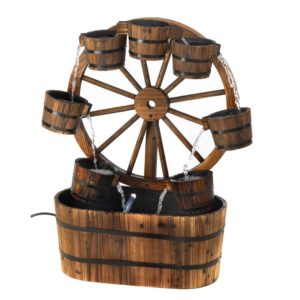
Old Fashioned Wagon Wheel Garden Fountain

NOTES

Even if we tightened the writing, these last two paragraphs still aren’t interesting enough for the opening page. I’d rather see you use this space to hint at what Suzi will find inside her classroom. Dead body? Blood? An escaped zoo gorilla? Hordes of tarantulas from the exotic pet store next door? Prison escapee? Suzi’s ex-husband who just dumped the crying woman? My point is, the details must connect. Or show us why she fears the past might be repeating itself. Hint at the disturbance you mentioned in the first paragraph. As it stands now, the cop cars disappeared from Suzi’s mind. By including too many details about the surroundings you’ve undone the tension you started to build in the opening paragraph.

The title, I assume, is a play on words. Gym body = dead body in the gym? As a crime writer, my mind jumps to a scenario that involves murder. If this isn’t the case, then you need a new title. Preferably one that hints at the genre.

THE WAGON WHEEL OF SUSPENSE

Envision an old fashioned wagon wheel fountain (pictured above). The water rides up in the buckets, over the top of the wheel, and spills down into the same basin. The water itself never changes, even though it cycles through several buckets. In writing, especially in our opening chapter, we need to narrow our focus to one main conflict (i.e. a killer on the loose), one compelling question that the reader needs to answer (why do folks die at this specific gym?). This is how we force them to turn the page. We can and should include several disturbances along the way (in this analogy, I’m referring to the buckets), but they all should relate to that main conflict (the water) in some way.

In the opening chapter it’s crucial to stop the wheel partway. Don’t let that water escape till later, thereby raising the main dramatic story question. We still need to transfer the water from bucket to bucket on the way up the wheel (remember, conflict drives story). That’s how we build suspense, little by little, almost painfully teasing the reader till we’re ready to let the water flow.

In this opening chapter, the main conflict could be what’s inside Suzi’s classroom that’s so horrible a woman pounded down the stairs in tears after witnessing it, but you’d need to drop more clues to make us want to find out. Use the patrol cars outside the building as one disturbance. How does the past relate to present day? What sort of reaction do the lights and sirens have on Suzi? Has this gym been the scene of other murders? Hint at how these things connect to pique the reader’s interest.

Anon, please remember, if I thought you were just beginning your writing journey, you wouldn’t see this much red ink. Your grasp of POV tells me you’ve got the skills to do better. I already like Suzi enough to go for the ride. That’s a huge plus. All you need to do is give us a compelling reason to turn the page. With some tweaking, I know you can do it.

Over to you, TKZers! What advice would you give to improve this first page?