Pack More Punch in Your Prose

by James Scott Bell
@jamesscottbell

We talk a lot about the big stuff here at TKZ—plot, structure, characters, scenes, and so on.

Today, I want to discuss the small stuff: words and sentences. But though they are small in stature, they are monumental in effect. It’s our sentences that create the pictures which deliver the stories to our readers.

If they’re flabby (the sentences, not the readers) the book won’t have nearly the effect it should.

So let’s get serious about sentences. The jumping-off point for our discussion is another of our first-page critiques. See you on the other side:

Lies on the Seine

Chapter One

There were three people in line in front of her. Danny Sullivan didn’t recognize the man behind the cart. Having to deal with a stranger wasn’t unheard of, but ever since the woman in Berlin it always made her throat dry and she had to force herself not to swallow. She was on high alert whenever it happened.

Danny surveyed the area around her for anyone who looked suspicious. A woman sitting on a wooden bench had a stroller and a book, but she didn’t seem to be reading or paying any attention to her child. A man in a fully buttoned suit was leaning on a tree talking on his phone. He wouldn’t stand out if he loosened his tie, she’d keep him in her sight. She noticed a group of teenagers over her left shoulder, the one in the baseball cap and sunglasses seemed to be looking directly at her, she couldn’t be sure. She wasn’t paranoid, suspicious people could be extremely dangerous.

There were two people in line in front of her. Danny turned her attention to the sandbox. Jacob and Jason were playing their favorite game, burying their cars then needing help to find them. Being that it was rare for their father to get a few minutes off in the middle of the day to meet his family at the park, Mark was unaware that the four-year-olds were conning him. She watched as he desperately looked for cars where the twins pointed even though they each knew he was excavating in the wrong location. To him, ruining his suit was a small price to pay if it meant he could play with his sons. Her family was a distraction.

There was one person in line in front of her. Her hand shook as she reached into her bag preparing for the worst. Meetings like this always put her on edge. At least she was out in the open, unlike the time inside the rubbled hospital remains in Iran when the only thing she accomplished was getting out alive. Danny had been with the CIA for almost fifteen years, danger came with the job. Now, as an operative assigned to bring down a black market arms dealer, she expected to find herself in situations that put her life at risk. However, being in such close proximity to her family was a whole different kind of scared.

***

JSB: Author, you’ve got the makings of a good scene here. CIA, something big about to go down, kids and husband close by. So let’s see if we can’t render this with more vigorous prose, more action, and less telling.

There were three people in line in front of her.

I want you to be on the lookout for sentences that begin with the There were… construction. It’s not ungrammatical, and I use it myself sometimes. But there are (!) other ways to deliver the same information. I mention it because you use this construction in three of the four paragraphs. I get that you’re showing the line getting shorter, but variety in the language would make this more inviting.

Also, while it’s often done, beware of beginning a story with a pronoun (her) instead of a name. Yes, a writer could have a valid reason for doing so, but be darn sure about that reason.

Why not this for the opening line:

Danny Sullivan didn’t recognize the man behind the cart.

Now we have a name, which gets us closer to the character from the jump. We have action—she’s looking and not recognizing. And we have a specific image—the man behind the cart. This opening line put us right into an actual scene. In medias res, as they say.

I like the mystery that’s dropped in about the woman in Berlin. I think we can also make this crisper, not only by cutting flab (there’s that word again) but by making this two or three sentences:

OLD: Having to deal with a stranger wasn’t unheard of, but ever since the woman in Berlin it always made her throat dry and she had to force herself not to swallow.

NEW: Dealing with a stranger wasn’t unheard of, but ever since the woman in Berlin it made her throat dry. She had to force herself not to swallow.

OR: Dealing with a stranger wasn’t unheard of. But ever since the woman in Berlin it made her throat dry. She had to force herself not to swallow.

In general, compact sentences increase tension.

The second paragraph gives us Danny’s observations. We can do some more cutting:

OLD: A man in a fully buttoned suit was leaning on a tree…

NEW: A man in a fully buttoned suit leaned on a tree… 

Grammatically, there’s nothing wrong with the first version. But when you can cut words and still convey the same information, try it. Especially if you’re writing a thriller.

He wouldn’t stand out if he loosened his tie, she’d keep him in her sight. She noticed a group of teenagers over her left shoulder, the one in the baseball cap and sunglasses seemed to be looking directly at her, she couldn’t be sure.

Odd use of commas. Change each comma to a period and I think you’ll see it reads better.

Third paragraph: As I’ve already mentioned, There were… should go. Also, we can cut some more flab. Try it this way: Two people to go. Danny looked at the sandbox.

I’d also cut the last line: Her family was a distraction. I’m not sure what it means. What kind of distraction—one that gives her pleasure, or makes her nervous? If you want this information in the scene, show us how Danny’s feeling by way of something physical—a smile, a twitch, inner warmth, inner trembling, a deep breath—or perhaps a thought beat (e.g., Mark, why’d you pick today?) 

In fact, you should cut the last line of each paragraph. There’s a little guideline called RUE (Resist the Urge to Explain). Each of your last lines is an author explanation of what we’ve just read. Let the action speak for itself.

The fourth paragraph begins: Her hand shook as she reached into her bag preparing for the worst. Meetings like this always put her on edge. At least she was out in the open, unlike the time inside the rubbled hospital remains in Iran when the only thing she accomplished was getting out alive.

I like this because it’s active and has a bit of backstory is woven in naturally. Notice how the effect can be enhanced by leaving some things out:

Her hand shook as she reached into her bag. At least she was out in the open, unlike the time inside the rubbled hospital remains in Iran.

Now we have micro-mysteries. What is she reaching for? Why was she in Iran? Micro-mysteries are great in opening pages. They compel the reader to read on.

So cut the rest of the paragraph, which is plain exposition—CIA, fifteen years, black market. Instead, let us see by Danny’s subsequent actions what her skills are.

Act first, explain later.

I recall an action movie, The Long Kiss Goodnight starring Geena Davis. She’s this nice, prim wife in a small town. But when she’s viciously attacked in her home, she suddenly has this amazing skill with a knife, and dispatches her attacker with lethal force.

WHU?

We have to wait a long time to find out the backstory. That’s okay. We’re hooked. (Oddly, I can’t remember the rest of the movie. But the opening remains vivid.)

Author, you’ve got the stuff here for a tense opening page. Rework it. Cut and shape those words so they punch us in the heart.

Oh, and one more thing—don’t ever start a sentence with However. That’s for academic papers and stuffy speeches to the Rotary Club, not fiction! [UPDATE: Unless it’s in the mouth of a prim character who would begin a sentence with However!]

All right, kids. Your turn.
First Page Critique: Endless Tomorrow

By John Gilstrap

We all know the drill by now.  A brave author has taken a big risk that we all respect.  First, the submission, and I’ll join you on the flip side:

Endless Tomorrow (TITLE)

The message from the Consul arrived before breakfast. Agnes had just wiped the last of the shaving lather from his face when Congressman John Paul opened the embossed and sealed envelope. He stared for far longer than it took to read the few words on the short scrap of paper.

“Well, what is it now?” asked Agnes.

Not the reserve a housekeeper should show to an employer but his momentary flash of irritation was soon forgotten. His fingers slid numbly over still tingling cheeks. “They know how to make guns.”

“Guns?” Her disbelief was evident. “Who’s got guns?”

John might as well have told her he could do magic. Guns were a relic of the past and long since gone from the world. “Strangers from behind the Eastern Mountains. We got word of them yesterday at the Ministers’ Meeting but there was no talk of guns.” He stared absently ahead. “A messenger must have come in the night.”

She laughed dismissively. “No one has guns anymore. Not for hundreds of years.” Agnes gently slapped powder on his cheeks and untied the barber cloth.

“Don’t be so sure, Agnes. I learned about them once in school. They are not complicated—at least in theory.”

“Oh, goodness. What else does the Consul’s note say about these people? They have rocket planes too?”

John had the feeling that rockets and planes were two different devices but his memory was fuzzy on the subject of the Moderns’ technology. He read the Consul’s note aloud. That was what Agnes wanted anyway. She was never satisfied until she knew everything.

Dozens of strangers from east now camped in field by Beaker’s Farm. Requesting our presence. Tech and crops unclear. Claim to have guns!? Ministers meeting at eleven. Then we ride. Richard.

Her voice was scolding. “Guns! Don’t believe those people—telling whatever lies they think might impress us. They’ll be wanting to settle here in the valley, just like every wanderer coming from the east. We both know it!” Her fingers moved adeptly over the contents of his shaving kit, brushing the blades clean, packing everything.

He folded the note away and regarded the woman beside him as she busily tidied his dressing room. Short in stature with a curvy figure slowly going plump, long dark hair done up in a bun, sharp gray eyes that never hesitated to meet his own. Clever she was, a bit of a schemer, a good source of town gossip—useful in every way but she had spent her whole life in the quiet town of Newhaven. Can she imagine the violence and slave-taking that reign outside our valley? Maybe none of us can. 

John shook his head and wished suddenly that he had heard fewer stories from terrified refugees who had fled from over the mountains. The era of the great seed traders was over. Only the wretched came now.

It’s Gilstrap again.

First the full disclosure: This piece is not from any genre that I care to read.  I don’t even know what genre it is.  And Author, that was not an insult, merely a confession.  That said, storytelling is storytelling, and from that perspective, this piece is troubled.  First, some general observations, and then I’ll dig a little deeper.

Adverbs.  Goodness gracious, there are a lot of them, and none are necessary. At a glance, I got numbly, absently, dismissively, gently, adeptly, busily, slowly, and suddenly. It’s a mistake to believe that -ly adverbs clarify meaning, because they never do. Either the modified verb will do the job on its own, or the writer has chosen the wrong verb in the first place.  There are exceptions, but I can’t think of one as I write this.  And yes, we’re all guilty of it.

Point of view.  The piece doesn’t have one.  I don’t know whose story we’re telling here.  The head-hopping detracts from the narrative pull of the story.

Setting.  Clearly, we are hundreds of years into the future, but the technology clock has for some reason spun the other way.  I don’t buy it.  This could very well be my unfamiliarity with the genre.

You started your story in the wrong place.  Getting a shave and receiving a note are not barn-burners of crises.  As it’s currently written, the opening is mainly a framework on which to hang backstory that we don’t yet need.  Assuming that guns are a big part of the McGuffin, I suggest starting with a holy-crap reaction that those new strangers have them.

Now, let’s get picky . . .

Endless Tomorrow (TITLE) JG: Years ago, I was told by an editor never to make a title an easy target for a snarky reviewer.  Casting no aspersions on this piece, Endless Tomorrow invites something like, “Endless Story” in the review. Just a thought.

The message from the Consul [Why capitalized?] arrived before breakfast. Agnes had just wiped the last of the shaving lather from his face [gramatically, the “his” here refers to Agnes] when Congressman John Paul opened the embossed and sealed envelope. [What did it look like? Thick, thin? How did it arrive?] He stared for far longer than it took to read the few words on the short scrap of paper. [So? what does Agnes think about that?]

“Well, what is it now?” asked Agnes.

Not the reserve a housekeeper should show to an employer [according to whom? Whose POV are we in?] but his momentary flash of irritation was soon forgotten [by whom?]. His fingers slid numbly [Why are his fingers numb?] over still tingling cheeks. “They know how to make guns.”

“Guns?” Her disbelief was evident [How? In what way?]. “Who’s got guns?”

John might as well have told her he could do magic. [POV?] Guns were a relic of the past and long since gone from the world. “Strangers from behind the Eastern Mountains. We got word of them yesterday at the Ministers’ Meeting but there was no talk of guns.” He stared absently ahead. “A messenger must have come in the night.”

[She laughed dismissively. “No one has guns anymore. Not for hundreds of years.” Agnes gently slapped powder on his cheeks and untied the barber cloth.

“Don’t be so sure, Agnes. I learned about them once in school. They are not complicated—at least in theory.”

“Oh, goodness. What else does the Consul’s note say about these people? They have rocket planes too?”

John had the feeling that rockets and planes were two different devices but his memory was fuzzy on the subject of the Moderns’ technology. He read the Consul’s note aloud. That was what Agnes wanted anyway. She was never satisfied until she knew everything.] The bracketed and underlined section is unnecessary backstory, and mostly redundant.  Recommend deleting it.

Dozens of strangers from east now camped in field by Beaker’s Farm. Requesting our presence. Tech and crops unclear. Claim to have guns!? Ministers meeting at eleven. Then we ride. Richard.

Her voice was scolding [What is a scolding voice? Tone, maybe?]. “Guns! Don’t believe those people—telling whatever lies they think might impress us. They’ll be wanting to settle here in the valley, just like every wanderer coming from the east. We both know it!” Her fingers moved adeptly over the contents of his shaving kit, brushing the blades clean, packing everything.

He folded the note away [What does “folded away” mean? Where did he put it?] and regarded the woman beside him as she busily tidied his dressing room. Short in stature with a curvy figure slowly going plump, long dark hair done up in a bun, sharp gray eyes that never hesitated to meet his own. Clever she was,[this structure sounds like Yoda] a bit of a schemer, a good source of town gossip—useful in every way but she had spent her whole life in the quiet town of Newhaven. Can [Could?–keep it in past tense] she imagine the violence and slave-taking that reign outside our valley? Maybe none of us can [Could?]. 

John shook his head and wished suddenly that he had heard fewer stories from terrified refugees who had fled from over the mountains. The era of the great seed traders was over. Only the wretched came now.

Overall, this piece feels like a very early draft to me.  Okay, TKZers, what say you?


Writing About What You Know
–Even When It Hurts

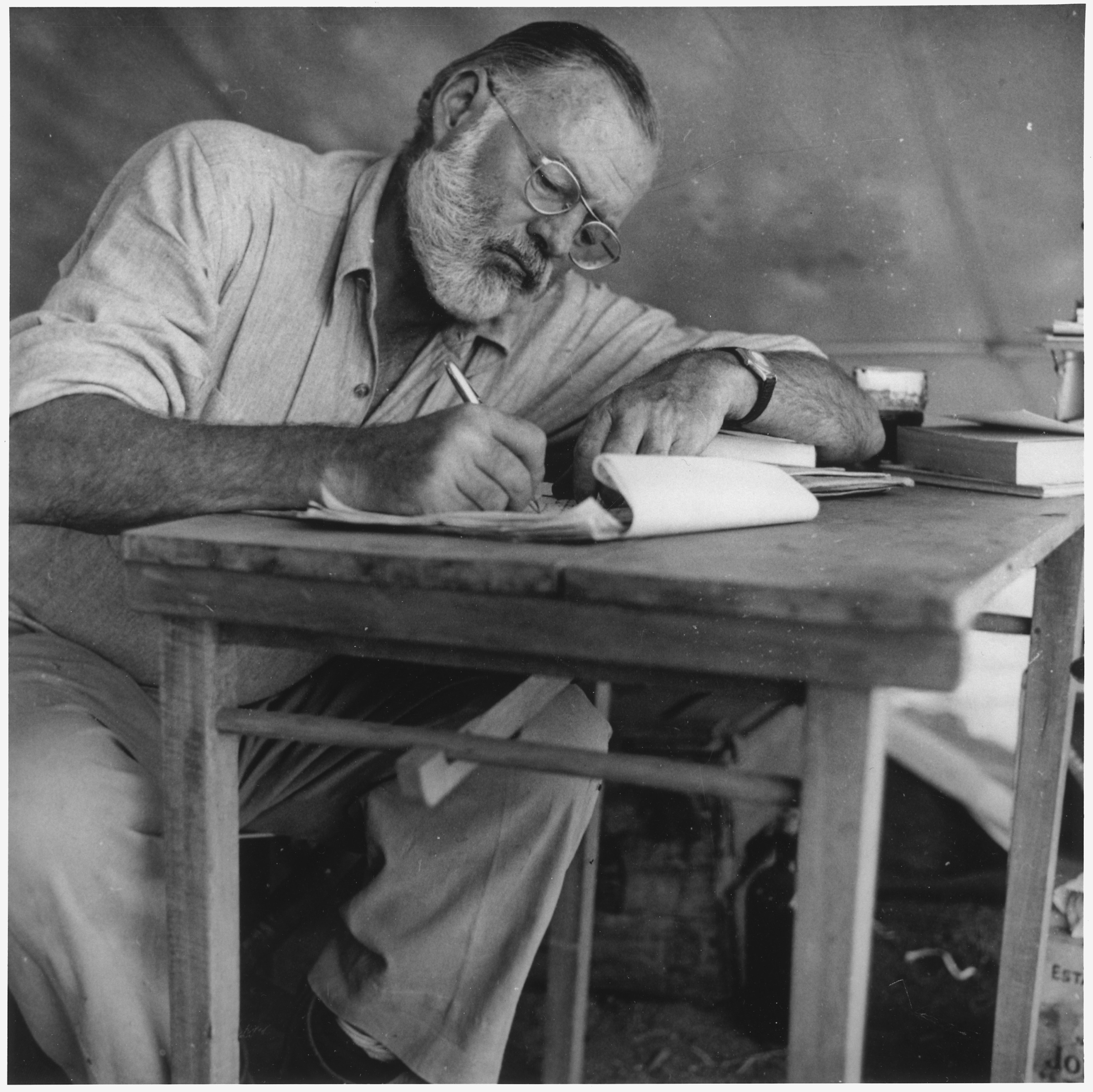
Write hard and clear about what hurts. – Ernest Hemingway

By PJ Parrish

Years back, I had the pleasure to hear David Morrell speak as luncheon guest of honor at a writer’s conference. Now, if you’ve ever been lucky enough to hear David or better yet, talk to him, you know he’s a fount of fabulous advice for a writer, no matter where you are on the food chain.

That day I heard him speak, I was well into my own career, so I was munching away on my carrot cake, listening but also mind-wandering. Then he said something that made the hairs stand up on my neck.

“Write about what you fear most.”

I sat there stunned. Tears threatened. Because David had poked a wound in me as a writer. I had been struggling with a short story. It felt artificial and too cool. And I realized, sitting in that ballroom fork in mid-air why. I had been unwilling – or unable – to confront my demons.

I knew the demons were there. That was why I had chosen the story I did. (Or did it chose me?) But I was holding the demons at arm’s length. Or maybe hiding from them. The next day, I went back and started over. It was a hard story to write. But I finished it. I didn’t publish it, but I finished it. And it taught me a great hard lesson.

You have to be willing to open a vein.

David Morrell talks often about a book called The Gift of Fear. The author Gavin de Becker says we should all learn to trust our gut instincts to protect us from life’s traumas and, ultimately violence. But David suggests the book has lessons for writers:

As de Becker says, we have all these signals coming at us all the time, and some people choose to ignore them, and get mugged, or have their car stolen, or terrible stuff, because they say, “I kind of knew there was something wrong there, but I thought, oh heck, it doesn’t matter.” Well, when you feel that, it, it does matter, and basically that’s what my books are about: the gift of fear.

David speaks from experience, and is not shy about sharing this. After his father died in WWII, his mother was forced to put him in an orphanage for a time. When she remarried, his step-father was a brute who hated kids and there was constant fighting in the house. From an interview:

I was in fear for much of my early years. And in my fear, I told myself stories. I was at the time, four years, five years, six years old, and I told myself stories in which I was the hero, and rescuing people or whatever—in effect, rescuing myself.

He carried this into his career as a bestselling thriller writer. If you’ve lived under a rock, you might not know that he is the father of Rambo. He has produced a long, stellar, bestselling list of other novels that range from spy novels to Victorian mysteries. But his theme is always human fear, and his characters’ struggle to suppress it or else give in to it.

He’s not afraid of fear.

In 1987, his teenage son died from complications from a rare bone cancer. David took his panic attacks, despair, grief and deepest fears and turned them into a memoir, Fire Flies. Stephen King wrote of it: “I found myself almost speechless…It left me feeling shaken, uplifted, and terribly moved.”

Many other writers have found their voices in what they fear. John Green, author of The Fault Is In Our Stars, was stricken with severe anxiety and obsessive compulsive disorder, unable to escape “the spiral of my own thoughts,” as he put it. With therapy and medication, he recovered and wrote Turtles All the Way Down, a wrenching novel about what it is like to live in constant fear of your own mind.

“Coming out of that, it was difficult to write about anything else,” he told an interviewer. “The topic demanded itself.”

One of my favorite early reads, The Bell Jar, is irrevocably associated with Sylvia Plath’s experience with depression, with the character Esther Greenwood’s mental breakdown mirroring Plath’s own. On the Road is based on Jack Kerouac’s real life drugged out road trip with his friend Neal Cassady. Amy Tan’s brilliant novel Joy Luck Club is based on her immigrant childhood in San Francisco. In an interview, Tan talked about how writing the novel moved her to connect with her difficult mother:

When I was writing, it was so much for my mother and myself…I wanted her to know what I thought about China and what I thought about growing up in this country. And I wanted those words to almost fall off the page, so that she could just see the story, that the language would be simple enough, almost like a little curtain would fall away.”

The story I like most on this subject involves Fitzgerald and Hemingway. Of course.

Fitzgerald, flush from his success with The Great Gatsby, started working on his next novel. It was about a glamorous couple living in the South of France. By this point, his wife Zelda was hospitalized with schizophrenia and Fitzgerald was broke, borrowing money from his editor, and drowning in alcohol. The novel, Tender is the Night, told the sad tale of the self-destructive Dick and Nicole Diver.

A month after it came out, Fitzgerald wrote to Hemingway to ask his friend’s honest opinion of the book. Hemingway wrote back: “Forget your personal tragedy. We are all bitched from the start and you especially have to hurt like hell before you can write seriously. But when you get the damned hurt use it—don’t cheat with it. Be as faithful to it as a scientist—but don’t think anything is of any importance because it happens to you or anyone belonging to you.”

There’s a lesson in that for us mortal writers. Yes, write what you fear most. Plumb your life experiences. Use your pain. Write what you know.  But there’s a trick.

I have a writer friend named Jessica Lourey. Jess writes two terrific mystery series, kids books, women’s fiction and fantasy. But her non-fiction book Rewrite Your Life, is what I’d like you to take a look at for our purposes today. Jess writes about how writing fiction can help you heal the wounds in your life. She gives TED talks to non-writers about the power of memoir writing. But her book is full of good advice for novelists:

When writers base fiction too closely on their own experiences, they can sometimes lose the ability to truly play with the story. I think this is because they are not consciously making as many decisions as a writer of “pure” fiction. They can be tempted to simply record what happened in real life (and to skip inventing material to fill in the gaps of their own knowledge about other people’s motivations or bits of the experience that they didn’t notice), instead of pondering how to best tell a good story. I’ve known writers whose story details should have been changed or expanded to better support their theme or create atmosphere, but who resisted the suggestion that they do so because “this is how it really happened.”

Most of us have encountered folks who say, “Boy, do I have a story to tell.” Or “my life would make a great novel.”  Instinctively, all fiction writers know the problem with this. Yes, every human walking the earth has a unique story to tell. But few have the ability to tell it in a way that emotionally touches others.

That’s the trick.

The trick is to face your fear and turn it inside out and upside down. Your own true experiences – be it the horror of war, the loneliness of childhood or the terror of domestic violence – is only fodder. If you spill it out too raw on the page, it can feel strangely trite and, in the case of my short story, artificial. The trick is to take your specific and deeply personal emotions and experiences and make them feel universal. Your pain has to become something bigger.

Your story begins inside you. But in the end, it belongs to your reader.

How to Handle Critiques

After undertaking quite a few first page critiques here at TKZ, it occurred to me that it might be timely to (re)consider the role of critiques and, perhaps more importantly, how a writer should handle the feedback received.

Receiving criticism, even when constructive (but especially when it isn’t!)  is never a pleasant experience (and trust me, I’ve been there many, many times) but it’s a vital part of any writer’s review process. The tricky part comes when the feedback provided isn’t consistent – which quite often it isn’t (Hint: when the feedback is consistent, it’s usually worth considering!). As we’ve seen here at TKZ, reviewing someone’s writing is a very subjective experience. So how should a writer handle multiple points of view, advice and feedback?

Here are some of my thoughts – based on my experience with beta readers, reviewers, writing groups, agents and editors….

Trust the opinion of those you admire and who genuinely want you to succeed in your writing.

I would say everyone who provides feedback here at TKZ is supportive of the brave souls who submit their work for a first-page critique – so this comment is more directed to other reviewers or writing groups, where sometimes the quality of the feedback provided may be colored by differing degrees of experience as well as intention (just saying!) so make sure the advice you’re getting is from people whose honest opinion you admire and trust. This also means not seeking opinions solely from friends or family members who may hold back on giving you an honest appraisal out of fear of hurting your feelings.

Look for consistent themes in the feedback provided.

If everyone has difficulty say with the voice or POV you’re using in your work, even if their advice differs on how to fix that, I’d genuinely consider the issue. If a consistent ‘flaw’ is identified by multiple reviewers, then it’s always worth take a close look at the problem even if, as the writer, you disagree with the solutions offered.

Avoid comments that are vague and focus on the specifics.

There’s not much a writer can do with ‘I just didn’t like the character’ feedback so it’s much better to focus on specifics rather than vague generalities. That being said, if everyone gives you the same (albeit vague) feedback, then fundamentally something isn’t resonating with readers so, as a writer, I’d take that feedback on board and see what I could do to fix it.

Discuss comments and feedback with those your admire and trust

Sometimes, when my agent has identified an issue I haven’t even thought of, and none of my beta readers have identified, I’ll go back to them with her comments – and 9 times out of 10 they will agree…so it’s always worth bouncing ideas and feedback with your reviewers. This often leads to greater clarity and consistency in terms of what may not be working in a story.

When multiple, conflicting, but specific feedback is given, go with what feels right for you… 

This is the trickiest aspect of dealing with inconsistent feedback and, as writer’s gain more experience, it does get easier to identify what rings true and what doesn’t. In one of my writing groups, I’d sometimes get random feedback that I quickly realized was completely wrong for the genre of book I was writing, or which led me down a path that wasn’t going to work for me. It’s extremely hard, though, to sift through all the comments given in a writing or critique group and know what feels right. In that situation, I’d go back to my initial comment about relying on the feedback of those you trust and admire and who really want you to succeed in your writing.

But also take a big step back to see what the heart of the issue might really be…

One of our TKZ alumni, Larry Brooks, identified it best in his book ‘Story Fix’ – where he noted that what brings a story down is often less about the writing and more about the inherent appeal and strength of the story itself. So when digesting the plethora of feedback  you’ve received, I’d initially classify the advice into two buckets (1) feedback on the actually mechanics of your writing (weak grammar, clumsy sentence structure etc.) and (2) feedback that goes to the heart of the story you are trying to tell (POV, appeal of characters, dramatic tension etc.). It’s much easier to fix issues that reviewers identify in bucket number (1). Feedback the falls into bucket (2), may require you to take a long hard look at the concept and premise of your story. That doesn’t mean despairing, it just means going back to identifying the core of story you are hoping to tell and seeing whether it holds up under scrutiny. That could be the first step in identifying what is going wrong and the best way of rectifying it.

So TKZers, what advice would you give, particularly to our brave first page submitters, on handling multiple, sometimes inconsistent, feedback when it comes to your writing?

What Should I Expect From My First Novel?

by James Scott Bell
@jamesscottbell

I got an email the other day from a young writer seeking advice about his foray into self-publishing. Here’s a clip:

As for my career this is going to be my debut work and as an author I currently have no following. My goal with the book is to establish myself professionally and get a small following going as well as bring in a good amount of money for a first book. My question is what are some steps I can take to build publicity about the book and myself without having any real following or platform?

Here is my answer.

  1. A small following does not bring in “a good amount of money”

Of course, what qualifies as a “good amount” varies, but I’m assuming this writer means more than Starbucks money. To get there, you’ll need a large following and more than one book. When it comes to anything in the creative industry, if you are only focused on money, then you’re passion won’t shine through as much as you’d like to think. A lot of people can get caught up in this, especially just starting out. I know a few elderly people who were writers and did it becuase they loved it. After a while, they started publishing their stories and made a lot of money from it. A number of years after, they decided to retire. But because they had been writing for so long, they didn’t know where to begin on the retirement journey. So, they were advised to look into specialist companies like KeyAdvice for financial advice. I still speak to them sometimes and they tell me about all their stories about the holidays they have been on and how they are still writing. Not for profit, but just because they love it that much. Being an author can be rewarding. Everything will eventually fall into place for us creative individuals. We all need money to get by, but this shouldn’t just be your main focus.

So here’s what you should do to start off as an author…

  1. Attract a following with really good books

And what qualifies as a good book? Any book that follows all the advice on Kill Zone.

Ahem.

Only halfway kidding. It’s a book that is crafted in a way to connect with readers. It’s a book by an author serious about that craft. Which means …

  1. Get serious about your craft

Because this is what you want to do. But there’s a big difference between wanting to do something and actually doing it well. Get feedback from a critique group or beta readers or professional editors. And…

  1. Plan ahead

Even as you’re finishing your novel, be developing two or three or four more, because …

  1. Your first novel will probably not be ready for prime time

They say everybody has a novel inside them, and that’s usually the best place to keep it. Really. First novels are almost always best seen as a learning experience. Rarely does an author hit it out of the park on the first pitch. In the “old days” of traditional publishing (roughly 1450 – 2007) the vast majority of authors went through many rounds of rejection, and it was that third or fourth or fifth novel that finally sold.

There were some notable exceptions, like Brother Gilstrap’s debut effort, Nathan’s Run. An exception which, you guessed it, proves the rule.

Today, of course, you can easily self-publish, but that ease is a lure, because …

  1. Self-publishing is not a get-rich-quick scheme

The explosion of content out there now demands not only that books be of good quality, but that the author understand and implement some basic fundamentals about running a small business.

Self-publishing can be a profitable enterprise if you …

  1. Produce and market at a steady clip

The only real formula for making bank as an indie is quality production over time, sprinkled with a modicum of marketing knowledge. Keep in mind that the single greatest factor in selling books is word-of-mouth. Hands down. Glitzy marketing efforts only get you so far. Your books have to do the heavy lifting, so don’t fall into the trap of thinking the only thing that matters is how vigorously and breathlessly you check all the marketing boxes.

Keep writing and learning on parallel tracks, and …

  1. Don’t go shopping for a yacht

At least not until you can pay cash for it, and have enough in the bank for docking fees, upkeep and a crew. Which reminds me …

  1. Learn to handle money like a Scottish shopkeeper

That’s good advice for anybody, no matter what they do. But what you do is write, so follow the above advice and…

  1. Repeat over and over the rest of your life

A real writer writes and does not stop, even if it means managing only 250 words a day between family or work obligations. Even if it means you’ve got a broken leg and you’re in a cast that’s hanging on a chain from a rack over your hospital bed. You can still talk 250 words into Google Docs through your phone.

That is what you can expect from your first novel.

So, Zoners, what did you all learn by finishing your first novel? Where is it now?


First Page Critique: TATRICE

Photo (c) Kerrie Kelly via Pinterest

Happy Saturday! Please join me in welcoming Anon du jour for our irregularly featured presentation known as First Page Critique. Our First Page today introduces a work in progress titled Tatrice, so without further ado let’s take a look:

“Donna, get to this address for an interview.”

    I took the note and asked my boss, JJ, about my current assignment. He made a throat cutting gesture and I gritted my teeth. Two weeks research shot.

           “When is the appointment?”

           “Now. Get going.”

           “Excuse me, JJ. Who am I meeting?”                                    

           “It’s all there.” He flapped his hand toward the scrap of paper.

           The address was a magnificent Craftsman on the west edge of town. A tall, well-dressed man answered the doorbell.

           “Mr. Bonfig…”

           “Silent g. Bon-feel-ee-oh. Please come in Ms. Burdett.”

           My day went downhill from there.

     Mr. Bonfiglio and I had an unproductive first meeting. He claimed the only chair in the room sized for a lady so I sat on a leather ottoman rather than sink into the matching overstuffed armchair. I didn’t fancy him looking up my skirt. My strategy backfired. Now I found myself in imminent danger of sliding off the slick footstool. The muscles in my calf spasmed into a charley horse and I feared I would sprawl on the floor if my high heel broke. Nevertheless, my precarious seat was an improvement over getting sucked into quicksand cushions.

Since JJ failed to provide the nature of the assignment, I decided to jump right in. I would either stay at the edge of the pool testing the temperature or swim laps with this man.

“What can I do for you, Sir?” Thanks, JJ , for sending me here with nothing to go on. Was I supposed to write a piece on this fabulous house? My fingers itched to click away at the prospect. I flexed my ankle to relieve the cramp and slipped lower on the side of the footstool.

While I uneasily treaded water, he studied me as carefully as a prospective car buyer looking under the hood. Did he wonder why I didn’t take the chair he offered? We silently contemplated one another as I speculated on his marital status. My post graduation goals were to establish my career, get married and start a family before I turned thirty.

Thus far, except for my job, my time had been wasted on warm up exercises. Inexplicably, I was seldom asked for a second date. At age twenty-eight I saw myself as a speed swimmer poised on the starting platform. The finish line painted with that magic number loomed closer each week.

*                                *                              *

 Let’s start with the good, Anon. You do a terrific job in establishing that JJ, Donna’s boss, is a dou…um, jerk in just a couple of lines of dialogue. Donna’s interior dialogue tells us quite a bit about her as well, though perhaps a little early in the game.

Now for the rest. Let us begin with a few typos and then get to the meat of things:

“Two weeks research shot.”

Either “Two weeks’ research shot” or “Two weeks of research were shot” will fix that up.

— Also…”throat cutting,”  “room sized,” “post graduation,” and “warm up” should all be hyphenated. And…

— “Thanks, JJ ,“…let’s get that comma after “JJ” one space over to the left.

As to the meat of things, as it were:

The address was a magnificent Craftsman on the west edge of town. A tall, well-dressed man answered the doorbell.

I visualize a great big space between those two sentences, Anon, and you can help your story by filling it in. So the house where Donna is going is on the west edge of town. What town? How long does it take her to drive there? On the way, maybe Donna in her internal dialogue could tell the reader about the name of the company she works for, the nature of her job, whether JJ treats all of his employees so abruptly, and where she is in the company hierarchy. Perhaps she will be at her destination by the time she gives the reader that information. Donna at that point can give us more of a description of what she sees as she pulls up to Mr. Bonfiglio’s house. What is the neighborhood like? Does the house stick out or blend in? What is magnificent about it? Show us through Donna.


Now I found myself…

Drop the “Now” and begin with “I.” Your narrative is in the first person past so there is no “Now,” only “Then,” and you don’t really need “Then” here, either.


Mr. Bonfiglio and I had an unproductive first meeting.  

Whoops. You’re telling the reader this at the beginning of the meeting. Accordingly, the reader already knows what is going to happen.  Show your audience that rather than telling them. Leave that sentence out, and show the reader throughout the meeting that it is going bottoms up, instead of saying so at the beginning. Let the reader share Donna’s agony as the meeting unfolds, and establish empathy with her. After the interview, you can have Donna thinking about it as she is driving away, something to the effect of,”

“Well, THAT went well!” I thought, as I drove back to the office (or home, or to her favorite tavern, or whatever).


Which brings us to:

My post graduation goals were to establish my career, get married and start a family before I turned thirty.

Thus far, except for my job, my time had been wasted on warm up exercises. Inexplicably, I was seldom asked for a second date. At age twenty-eight I saw myself as a speed swimmer poised on the starting platform. The finish line painted with that magic number loomed closer each week.

This should all go somewhere else, such as after Donna’s meeting. You’re dropping it right at the beginning of her conversation with Bonfiglio and it brings everything to a halt instead of advancing things. The trip back to the office/home/wherever may also be a good place for Donna to review the current state of her life. When you do that, drop the word “(I)nexplicably.” Instead, why don’t you take a couple of sentences to have Donna describe her first dates and why she thinks they go well — shared interests with the person across the table, lots of shared laughs, the other party seemed interested and complimented her frequently — and then end the internal dialogue with Donna talking about waiting for the call that never comes. Communicate Donna’s befuddlement but drop a couple of hints that might indicate why she never gets a callback. Maybe it has something to do with her job, like constant complaints about her boss. 

Also, the metaphor that you used for the state of Donna’s life isn’t quite appropriate. What you are describing — Donna’s goals, and time running out — would more appropriately be described by a ticking clock, or a fuse burning, or, to use your swimming metaphor, the lane getting longer, not shorter, since Donna doesn’t seem to be getting any closer to her goal. I also notice that you like to use a lot of swimming metaphors, Anon. I hope that you are going to connect those to Donna’s life in some way. Maybe Donna was on the swim team in high school or college, or maybe it is her favorite form of exercise of recreation. Either way, it makes for a minor but interesting element of her personality, one that would make her feel more relatable to the reader and could perhaps tie into the main plot later in Tatrice.

Just in closing…I’m having a bit of trouble getting a handle on what sort of novel Tatrice is. I’m not being critical. If I were browsing either in a bookstore or online and saw Tatrice there would be a cover, the inside front jacket flap, or a RIYL hint to help me along before I skimmed the first page. That said, I  am fairly certain that Tatrice is not a thriller, hard-boiled detective novel, or science fiction. I’m guessing that it’s a cozy, cutesy, chicklit, or romance assuming that, on page three, Donna doesn’t look down the street and see the Zombie Apocalypse approaching.  Since I rarely read the latter genres, please accept my comments concerning the substance of the book with that in mind.

I shall now move out of the way and attempt to be uncharacteristically silent while our friends out there offer their own thoughts. Thank you again, Anon, for submitting your work to TKZ’s First Page Critique!


If You Hadn’t Become a Writer, What Else Would Have Filled That Void?

Many writers develop the passion to write because they were avid readers as children. The rabid craze wouldn’t be denied and years later, they have come face to face with an amazing addiction for self-expression.

If you didn’t write, what else would you have done to fill the void? What other forms of self-expression would have taken hold of you? Do you have a secret talent?

Book Clubs – The Human Touch in Marketing

Today, algorithms determine the most minute details of our buying habits, down to the finer points of the dental floss we prefer (waxed or unwaxed, plain or minty). Advertising is a constant blitzkrieg of spam, pop-ups, and phone alerts. Those ads are specific, focused, targeted…and totally impersonal.

For all the information that Google, Facebook, and Amazon collect about us, Alexa’s robotic voice will never replace that of a trusted friend who enthusiastically says, “You’ve got to read this book I just finished!”

In bygone days of the last century, the friendly clerk at the neighborhood bookstore introduced customers to new authors s/he knew they’d love. Back then, it was called “hand-selling.” Such word-of-mouth recommendations launched many unknown books that went on to become bestsellers. I, for one, miss those days.

Today, with a billion books competing for attention, how does an author make a personal connection with readers?

Book clubs provide that opportunity.

Serendipity led to my first appearance as the featured author at a book club. While on vacation in Florida, I reconnected with a Zumba class I hadn’t seen for a year. In catch-up conversation, I mentioned my novel had been published. Joan said, “I’m in a book club. Would you like to speak to us in two weeks?”

Would I??!!

In another bit of luck, Amazon had put the Kindle version of my novel Instrument of the Devil on special for 99 cents during that month. Thanks to the upcoming meeting and people talking about it at Zumba classes, sales experienced a nice spike.

On a Friday afternoon, over drinks and snacks, I met eleven accomplished, professional women from their mid-50s to mid-70s. I knew several from Zumba but most were strangers.

Here in front of me sat the exact people I had in mind as I wrote the story.

And, better yet, they were excited to talk with the author whose book they’d just read.

Book club feedback is solid gold. These are real customers who buy books, not just looky-loos. They constantly browse for new works. They know what catches their interest and keeps them up late, as well as what bores them or turns them off. Most of all, they know what makes them click the “Buy Now” button.

These readers were willing to share their reactions with me—a priceless gift for a writer building a fan base.


If you’re an author in search of book clubs, how do you find them?

A Zumba class might not be the first place you’d think to look, but that’s where I’ve gained followers in Florida, Canada, and Montana. Serious readers can be found at work, on the golf course, at your children’s school activities, at Bible study, while volunteering at the animal shelter. At the next gathering or party you attend, ask if anyone participates in a book club. Chances are the answer will be yes.

In my little Montana town, a local microbrewery hosts a regular reading group–Books and Brews. Why not?

Google: “book clubs near me.” Meetup.com is a great clearing house of specific interest groups. Narrow the search by geographical area, genre, and age range. In the greater Tampa area, I located at least two dozen clubs within twenty miles of our vacation spot.

Many more groups exist under the radar of the internet or meet privately.

Visit the library, colleges, and book stores (if you can find one!). Mention you’re an author who’d like to meet with book clubs. Leave business cards with them so groups can contact you.


Once you hook up with a book club, how do you prepare?

Generally, members read your book before you meet them. If they haven’t, practice your fascinating story summary on them, but don’t give away the ending.

Many readers use Kindles or devices, but some still prefer a print edition, which I offer to groups at my cost. At this point in my career, I’d rather build a foundation of loyal readers than worry about a few bucks. Check your contract to make sure that’s permissible.

Expect FAQs: How long did it take to write? What sparked the idea? Did you make up the characters or are they based on real people? Are the sex scenes autobiographical? Here’s your cue to joke about diligent research.

The question you hope they’ll ask: What’s your next book about? If they enjoyed your first book, they’ll be eager customers for your next one.

Readers love insider knowledge. Give them a sneak preview. They might even agree to be your focus group.

Before meeting with the Florida club, I’d been toiling over loglines and blurbs for Death by Proxy, the unpublished second book in my series. Those can be tougher to write than the novel because the author is too close to his/her own story. Input from your critique group or beta readers, while valuable, is limited because they already know the plot.

You want to seek  out the spontaneous reaction of random customers skimming through book descriptions on Amazon.

I asked the ladies if they’d be interested in hearing my proposed blurbs.

Unanimous answer: “Sure!”

They listened to several choices then voted for the one they liked best. Of course, that’s the one I’ll use.

I also read them the opening pages of the story and gauged their reactions. Was it clear and understandable? Did they get lost? Did they laugh in the right places? Were they intrigued enough to continue?

If their reactions are less than enthusiastic, seize that opportunity to ask what specifically turned them off. Were they confused? Bored? Did they find a character dull, flat, or unlikeable? Ask their opinions about your cover. You might find it’s time to freshen the design.

This is not the time to get defensive. Even if you disagree, give their opinions serious consideration.

After all, they are your readers, the most important people in your writing career.

An author has no way to determine why an anonymous browser on Amazon skipped over one book and bought another. But the book club will tell you. Listen carefully because they’ll give valuable feedback that’s impossible to get otherwise. 


What to bring when you meet a book club:

A smile and a friendly manner so they feel comfortable asking questions. If you’re shy or nervous, learn to overcome that. A stand-offish, aloof author makes a poor impression.

Business cards and swag if you have it–bookmarks, pens, etc.

A sign-up sheet to collect contact information to notify them of upcoming books, appearances, etc.

A signed print copy for the host if you meet at a home.

Do a giveaway. Hold a drawing or contest where the prize is the print edition of your book, or a gift certificate for your next book. Make your guest appearance fun and they’ll remember you.


If you can’t meet in person, try other options:

Skype or Facetime allows an author to speak to book clubs anywhere there’s an internet connection.

Include reading group discussion guides at the end of your books. Here are some samples.

Include a special book club link on your website. Engage readers as described in this article from the Alliance of Independent Authors.


As I bid the Florida book club goodbye, Mary, the Zumba instructor, hugged me and said, “I can’t believe I met a real author.” I assured her that she’d earned far more money from Zumba than I ever would as a writer.

But Mary’s comment made me think about how readers view authors. As we toil at our computers, enduring years of frustration and rejection, our lives don’t feel very glamorous.

But the club taught me that readers are excited to meet the person behind the book they just read. They’re interested in the journey, the setbacks, and the triumphs. They like knowing the inside scoop. If their input helps shape your next book, they’re invested in it.

In an impersonal world, humans still crave connection. Book clubs give writers and readers the chance to make that connection.

As Bruce Springsteen sings:

I just want someone to talk to and a little of that human touch.


TKZers:

If you belong to a book club, have authors made personal appearances at meetings? Did that influence you positively or negatively?

If you’re an author, have you spoken to book clubs? What was their response?


I’d love to talk about Instrument of the Devil with your book club, whether in person, by phone, or Skype. Contact me here.

Tough Love


–GoDaddy stock photo


I have a dear writer friend with whom I talk everyday. We don’t always talk about work, but yesterday she told me it was time to “stop messing around” and finish my proposal for the novel I’ve been dithering with for the past two months. “You’re out of time.”

“But…but…my daughter’s wedding! Ordering things! Cleaning! And what about taxes?” I whined. Except I knew she was totally on target. I’d been resisting, fretting that this novel couldn’t possibly match the promise of the one I’d just turned in. She didn’t respond that I was being foolish, or that I could also get those other important things done. “This is your job,” she said. “If you don’t do your job, you get fired.”

Damn, the truth can hurt. But truth it is. If I don’t write consistently and spend time imagining, plotting out, and writing at least one book and a story or two every year, I get wound up in my own head and go a little crazy. Also, publishing could very well leave me behind. It happens to professional writers all the time. It’s happened to me. Once you have hold of the train, you have to keep moving to stay caught up.

Resistance–real and imagined–provides me with plenty of excuses not to get down to my work. It’s an old, tired story. Writing is my true love, but I can only get it done if I work in spite of my resistance. (This is our theme song.)

I feel awfully fortunate to have someone in my corner who understands what I care about. She focuses my attention on reality instead of standing by and watching me substitute busyness for business. Writing can be such a lonely endeavor. The isolation and the living-in-one’s-own-head can put us at risk for depression or make us twitchy with neuroses. When you spend a lot of time in places that aren’t actually real, the boundary between reality and daydreams blurs.

Having a friend who keeps it real–at least when it counts–can make all the difference in the world. And sometimes you get the privilege of doing the same for her.

If you don’t have one already, make a friend of a another writer. Support that writer and you’ll be helping yourself.

So, TKZers. Where do you get support for your work? What can you offer another writer?