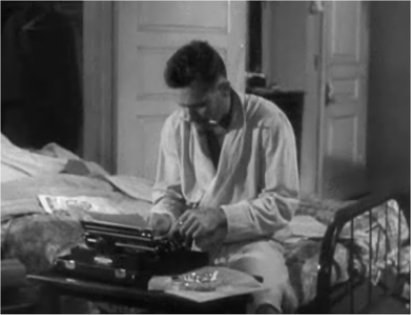
What’s In An Author’s Chair?

Photo purchased from Shutterstock

Back in 2002, author JK Rowling donated the chair she had used while writing the first two Harry Potter books to a children’s charity. Instead of donating the humble chair in its original condition (Rowling reportedly described the chair as something that could have been “purchased from a junk shop for a tenner”), she hand painted it in rose, gold, and green paints, infusing it with a bit of literary magic.

Do you gravitate to a special author’s chair while writing? If so, what is it about that particular chair (or couch, or coffee shop booth) that helps get your creative engine running?

Update: Sorry for delays in responding to folks: I’m away helping the family celebrate my father’s 90th birthday, too busy celebrating!

Photo purchased from Shutterstock

By The Book

One of my favorite parts of reading the NYT Book Review is reading the interview in the ‘By the Book’ section (you may also recall some controversy when an author poo-poo’d genre fiction in one such interview). I love seeing that other writers have far too many unread books on their nightstands and that, quite often, are as disappointed by some of the so-called ‘great books’ as we all are – it’s also a great way to get insight into the workings of a writer’s mind, their literary loves and hates, their passions as well as their favorite authors.

One of this week’s questions prompted this particular blog post – after all it’s Memorial Day weekend so most of us are enjoying a long weekend, hopefully spending at least some time thinking about those who gave the ultimate sacrifice for their country (and saying a thank you to all that have and who continue to serve) as well as setting some time aside for reading and/or writing.

The question this week was: What’s your ‘go to’ classic? And your favorite book no one else has heard of…

For me, my ‘go to’ classic is Joseph Conrad’s Heart of Darkness. I studied it in my final year of high school and fell in love with it (so much so that my husband even bought me one of those prints that recreates the entire book in the shape of the continent of Africa). There’s something about the journey itself (both physical and metaphysical) as well as the lush, powerful prose that lured me in and wouldn’t let go. If I was asked to take one book to a desert island, Heart of Darkness would be it (despite the fact that it’s hardly the most uplifting tale to have with you!).

The second question is equally easy for me to answer and stems back to another book I studied in my final year of high school. It’s a book by an Australian author, David Malouf, entitled An Imaginary Life and, although it’s about the Roman poet Ovid in exile who encounters a feral child, it really deals with the whole concept of knowledge, language, imagination, civilization, man’s relationship with nature…you get the picture. Again, the lush, poetic prose is what really drew me in, as well as the amazing ability of David Malouf to describe the most complex, deep rooted concepts in the most simple yet magical terms.

I was recommended this book by my English teacher after I couldn’t get into the assigned text, Fly Away Peter (also by David Malouf). This novel is set in Australia during the First World War and, after being obsessed with British First World War poets and books like Testament of Youth, it seemed too simplistic and understated to appeal to my more dramatic tastes. My teacher, however, wisely told me to read An Imaginary Life first and then re-read Fly Away Peter…and I fell in love not only with An Imaginary Life but also David Malouf (I’ve bought and read every novel of his since). Reading that book was an almost mystical experience and yet (sadly) it’s not a novel I think many people have heard of…

So TKZers in the spirit of ‘By the Book,’ what is your ‘go to’ classic and what is your favorite book that no one else has probably heard of?


Your Writing Sweet Spot

by James Scott Bell
@jamesscottbell

“Things were tough at the moment. I hadn’t worked in a studio for a long time. So I sat there, grinding out original stories, two a week. Only I seemed to have lost my touch. Maybe they weren’t original enough. Maybe they were too original. All I know is, they didn’t sell.” – Joe Gillis (William Holden) in Sunset Boulevard

Ah, poor Joe. We can feel his pain (not really, since he’s narrating this as a corpse floating in a swimming pool. But I digress). Still, I love how screenwriters Billy Wilder and Charles Brackett captured the writer’s dilemma—what should I write that has a decent chance to sell?

For writers still operating in the world of traditional publishing, that question is more important than ever. Publishing companies are being squeezed and must concentrate on big hits to survive. This makes it harder for a newbie to break in or, if they manage to get ushered through the gates of the Forbidden City, to receive what used to be called a “decent advance” and marketing support.

Indie writers must be market conscious, too, as the crush of content and reading choices grow ever larger. If you want to make decent scratch you have to provide products (plural) that a good number of people will want to buy.

The danger, of course, is the temptation to jump on a trend, or try to replicate what’s already been done. But demanding readers don’t want something that feels same-old. They want to be delighted, surprised, swept up. So do acquisitions editors.

They all want originality.

Just not so much that they can’t figure out what ride they’re on.

Which reminds me of the famous quip by Samuel Johnson who had been asked to review a manuscript. He wrote, “Sir, your book is both good and original. Unfortunately the parts that are good are not original, and the parts that are original are not good.”

Um, ouch.

(As long as we’re on the subject of literary snubs, I can’t help but quote what is reputed to be the shortest book review ever, attributed to Ambrose Bierce: “The covers of this book are too far apart.”)

So how could we have helped Joe Gillis? Where is the sweet spot for the writer who needs to sell in order to get his car out of hock?

As I assert in Voice: The Secret Power of Great Writing, the sweet spot is where you find the most joy. Way back in 1919, a professor of writing at Columbia University, Clayton Meeker Hamilton, said this:

In the great story-tellers, there is a sort of self-enjoyment in the exercise of the sense of narrative; and this, by sheer contagion, communicates enjoyment to the reader. Perhaps it may be called (by analogy with the familiar phrase, “the joy of living”) the joy of telling tales. The joy of telling tales which shines through Treasure Island is perhaps the main reason for the continued popularity of the story. The author is having such a good time in telling his tale that he gives us necessarily a good time in reading it. (A Manual of the Art of Fiction.)

I think Professor Hamilton nailed it. When an author is joyous in the writing, it pulses through the words. When you read a Ray Bradbury, for instance, you sense his joy. He was in love with words and his own imagination, and it showed.

“For the first thing a writer should be is––excited,” writes Bradbury in Zen and the Art of Writing. “He should be a thing of fevers and enthusiasms. Without such vigor, he might as well be out picking peaches or digging ditches; God knows it’d be better for his health.”

“Let her go!” says Brenda Ueland in If You Want to Write. “Be careless, reckless! Be a lion, be a pirate!”

You liked to play those things when you were a kid, right?

So play! Here are three ways to do it:

  1. Go to risky places. Bungee jump off the Bridge of Banal. The cord of a solid concept will keep you from crashing into the gorge.
  2. Have fun with minor characters. Make them spicy, not mere walk-ons. Never underestimate the power of comedy relief in a thriller. Alfred Hitchcock did it in almost every film (e.g., Thelma Ritter in Rear Window; Hume Cronyn and Henry Travers in Shadow of a Doubt).
  3. Make things harder on the main character. You thought that setback was bad? Make it worse. (This form of joy is not veiled sadism; it’s plot happiness! Readers will love you for it.)

So what about you? Where do you find your writing sweet spot?

Virtual Vigilantes – Revenge of the Scambaiters

From: “HALLIBURTON AWARD”
Date: Sun, 06 May 2018, 01:41:36 +0100
Subject: Congratulation You Have Won !!
Hello Dear,
This is to officially inform you that a total of $ 3Million USD has been donated to you by Halliburton Company.

As you can imagine, I was thrilled to receive this message. Such a warm, gracious salutation. They don’t even know me but they address me as “Dear.” How touching.

If you have an email address (and who doesn’t have several?), you’ve probably received numerous 419 scams, named for the Nigerian criminal code section about fraud since many operations originate there and in West Africa.

For your listening pleasure, here’s a catchy tune about 419 scammers entitled “I Go Chop Your Dollar.”

Advance fee schemes are the most popular: the mugu (Nigerian Pidgin for “big fool”) is asked to wire money in order to receive lottery winnings or awards, like the $3MM from my generous friends at Halliburton. Or the fraudster spins a tale of the death of a loved one (often related to a dead dictator like Gadaffi) who’d secretly stashed millions, now inaccessible. If you, dear trusting victim, will help by sending money for bribes, bank fees, etc., the bounty will be split with you. No extra charge for misspellings and fractured syntax in their communications.

Most of us wisely hit “delete” and don’t give spam a second thought.

But there are virtual vigilantes who fight back by scambaiting. The Better Business Bureau defines scambaiting as “getting even with person or a business that has either scammed you or attempted to scam you.”

Some scambaiters tie up criminals in long, convoluted email and phone exchanges with the goal of wasting as much of the scammer’s time as possible to prevent them from targeting other victims.

However, more aggressive vengeance seekers, like 419eaters.com, engage criminals in a “cyber-sport” game to turn the fraud back on the perpetrators. Some scambaiters cooperate with law enforcement to ensnare con artists. Many, however, act as freelance vigilantes.

Initially, the scambaiter pretends to play along with the scheme. He regretfully cannot follow the scammer’s original instructions but offers an alternative plan. For instance, he may answer along these lines:

My dear Friend,

Even though I’ve never met you, I can tell you are a person of the highest integrity. I put my absolute faith in you as my honorable friend that you will guarantee I will receive my reward as soon as I transfer the required fee to you. In order to facilitate that, please fly to London at your earliest convenience where my bank is located, and check into the Ritz (or the Savoy or other expensive accommodations the scammer has to pay for). While you are there, my trusted advisor, the Barrister Dr. Mon T. Python, will meet with you to arrange transfer of my monies into your hands.

Most sincerely with undying gratitude for allowing me to be of service to you,

I. M. Sucker

Except there’s always a slight regrettable hitch…One delay follows another, always with sincere apologies, while the scammer runs up expenses waiting to collect from Mr. Sucker.

Another variation moves the delivery location from place to place, necessitating more travel, time, and cost, sending the eager scammer on a wild goose chase in pursuit of his elusive fortune.

In one elaborate scheme, “Shiver Metimbers,” a well-known scambaiter, strung along the scammer “Mr. Martins” for several weeks. Finally Shiver had a long conversation by cell (recorded and available for listening below) that he was on his way to the Western Union office to deliver the money. In the background, traffic noise indicated a busy urban street.

As Shiver claimed to be entering Western Union, a sudden, loud crash could be heard, along with screeching brakes and blaring horns. The cell remained on so Martins could hear screams of agony, arriving sirens, concerned police and emergency personnel.

Guess who the unfortunate fake victim was?

Poor Mr. Martins remained in limbo for several days. One can only imagine his dilemma. Should he stay, hanging on the chance he’ll still receive the money? Or cut his losses and return home empty-handed?

Finally the frantic Martins reached “Gladys Knight,” Shiver’s pip of a secretary (half the fun seems to be making up names of players). Miss Knight regretfully informed him that her boss had been tragically killed.

Even more tragically, the promised money got lost in the confusion.

In addition to wasted time and money, the scammer is often publicly humiliated as well. He may be required to send embarrassing photos as proof of his “true” identity to receive the promised money. Such photos become “trophies” on the scambaiter’s wall of shame, shared all over the net.

The Better Business Bureau and law enforcement strongly advise against scambaiting. Revenge against criminals can be dangerous. Even experienced scambaiters like Shiver Metimbers warn of the dangers. After all, these folks are criminals. They could wreak vengeance of their own if the scambaiter isn’t highly skilled at hiding his location and true identity.

This topic started plots swirling in my head. Elusive scammers lurking in cyberspace seeking hapless prey; angry victims trying to get back their money; even angrier fraudsters who’ve been suckered.

When I did a Google search for novels about scambaiting, I found none, only a compilation of scambaiting stories by Shiver Metimbers.

Hmmm. Is this an untapped reservoir for crime fiction?

To work, the setting would obviously need to be broader than protagonist and antagonist squaring off at dueling computers. Still the concept intrigued me.

What do you think, TKZers?  Have you read stories about scambaiting? Do you see potential for a new fictional trend?


Update: In last month’s post about cadaver dogs I mentioned a pending search for a skier who’d gone missing last February in Montana. A few days after my post, the mission was launched with dog teams brought from other areas. A couple of hours into the search, a Golden Retriever from Colorado located the skier’s body buried under avalanche debris. Here are more details: Flathead Beacon news story. After months of uncertainty, the family at last has closure.


The Kindle version of my thriller Instrument of the Devil is on sale for $1.99 until the end of May.

Try a cheap thrill!

Bad Guy Boot Camp Redux

By John Gilstrap

I’m pleased to announce that my publisher, Kensington, has signed me on for three more installments of the Jonathan Grave series.  The working titles are Untitled Grave 12, 13 and 14.  Few series get that kind of lifespan, and I am both humbled and thrilled.

One of the questions I have to wrestle with at the plotting stage of every book is the most basic of them all: Why?  Jonathan Grave and his team are freelance hostage rescuers who frequently end up rescuing far more than that, and there has to be a plausible reason why his clients, who often are government officials, are compelled to turn to him instead of to local police, the FBI or even the military.

There’s another compelling why question that is often more difficult to satisfy.  More times than not, Jonathan’s enemies are bad-ass dudes who are well-schooled in their bad-assery.  Why do they always lose the fight in the end?  If I’ve established a bad guy who is an expert sniper, it’s not fair to the reader or to the story to make his one bad shot of the book the one that was intended for my protagonist.  All elements of a story need to be earned by the characters.

I’ve just recently discovered the wonderful Amazon original series, “Bosch,” based on the novels of Michael Connelly.  I binge-watched all four seasons over the course of a couple of weeks.  For the most part, the writers keep within the realm of probability, but they dropped the ball at a critical juncture.  Over the course of eight episodes, we’ve come to know and hate a mass-murdering bad guy who is ruthlessly good at what he does.  He’s a killer who kills.  Then, in the final scenes, as Bosch and his partner creep through the woods toward our bad guy’s mountain cabin (without backup, of course), the bad guy gets the drop on our heroes and opens up with a machine gun.  He rips out a good 30 rounds from a defended position from which he’s had plenty of time to aim, but he misses, thus setting up a pretty cool shootout. It’s an exciting scene that just happens to defy logic.

More recently, I was watching the season finale of “Blue Bloods,” another favorite, in which the NYPD is searching for an assassin who’s been offing people with amazing marksmanship.  The MacGuffin of the episode is pretty compelling, and as each of the killer’s targets drops dead, we learn that the police commissioner’s own family is in danger.  In the final reel, our assassin has the commissioner’s son in his sights at point blank range—think three feet—and this one time, when he pulls the trigger, his bullet goes wide.  Aargh!

This has been a pet peeve of mine for a long time.  In fact, I wrote about it here in the Killzone back in 2010.  I decided to host a convention of fictional villains to give them a pep talk to inspire them to have more pride in their work.  I called it Bad Guy Boot Camp.  Here is a transcription of my opening remarks:

Good morning, everyone. Welcome to Bad Guy Boot Camp. Please take your seats so we can get started. Yes, it’s good to see you, too, Dr. Lecter. What’s that? Oh, no thanks. It looks delicious, but I’m still full from breakfast. Couldn’t eat another thing.

Um, Mr. Morgan? Dexter? Please don’t sit so close to Dr. Lecter.  I’m pleased that you’d like to get to know him better, but wait till after the session. The lounge downstairs has a very nice wine list. I recommend the Chianti. 

Let’s get right to it, shall we? I think I speak for all when I say that I’m sick and tired of the good guys getting all the credit in fiction. Without you, all those stories would be pretty darned boring and I think that . . .

Um, Mr. Dolarhyde, please turn off the camera. We don’t allow filming of these sessions, and I believe you know why. Thank you.

As I was saying, I think it’s about time that, as a group, you started taking more pride in your work. It’s about craftsmanship and respect. For example—and please take no offense—several of you were taken down by a quadriplegic detective. I mean, really. That’s embarrassing. Yes, we all know that it’s the hot chick doing all the leg work (no pun intended), but the quad is the headline, and that makes all of you look bad.

Let’s start at the beginning. You’re villains.  Be . . . I don’t know . . . villainous. Be a freaking bad guy. Do your crimes, get them over with, and quit making it so easy for the heroes. If we frustrate those detectives enough, they’ll quit being so glib.

Let’s start with you serial killers. I know you’re crazy and all, but try to stay focused on your goals: sexual gratification through unspeakable mutilation. Everything else is secondary. Are the notes and the clues really necessary?  You know those always work against you, right?  I know that for some of you, your creative process requires spewing DNA, but how about leaving that as your only direct pathway to arrest? It’s about risk management, people.  Business 101.

If making bombs is your thing, I submit that the digital countdown clock is not your friend.  And folks, please.  All the same color wires.  Trust me, this will frustrate the daylights out of the cops. 

A note about travel: Stay out of Miami, Vegas, New Orleans and New York. They’ve got CSI teams there that are amazing. They’ve got a hundred percent catch ratio, and the average time from incident to arrest is only an hour. Really, an hour. I recommend keeping to the heartland, where all the local police are incompetent and depend exclusively on the FBI or on passing private investigators to get anything done.

Oh, and there’s a town in Maine called Cabot’s Cove.  Bad, bad news there.

Any questions? Great.

Let’s move on to marksmanship and gun play. Folks, at the end of the session today, I’m hosting an outing to the shooting range so you can hone your skills. There’s a trend among all of you where you show excellent marksmanship at the beginning of your crime spree, but then they erode toward the end. Maybe you’re choking because of the pressure, but the basic skills are there. When you whiff that critical shot, you miss by only a fraction of an inch.  When your instructor, Mr. Wick, is finished with you, I’m confident you’ll see a world of difference. 

While we’re on the topic of guns, I beg you to keep one point in mind: When in doubt, shoot. If the moment comes when you’re muzzle to muzzle with the protagonist, don’t negotiate, shoot. Why do you care if he drops his gun? You’re a villain, for heaven’s sake. Just pop him. You don’t need to tell him why.

Yes, Dr. Moriarty, you have a question?

Actually, I’m not sure I agree that murders have become less civilized over the years, but I encourage you to bring that up during your breakout session . . .


Dear Diary: I’m Dead.
Will Anyone Care?

By PJ Parrish

I’ve been having a tough time these days trying to raise the dead.

My work in progress is progressing in fits and starts and the other day I realized part of the problem:  I am not seeing dead people.

Here’s the case in a nutshell: My hero Louis Kincaid now works for an elite cold case squad attached to the Michigan State Police. He has discovered his mercurial boss, Captain Mark Steele, has been obsessed by an unidentified young woman who was brutally murdered ten years ago.  Louis decided to  look into the case at first just to find out what makes his boss tick.  But of course, the cold case — someone hit the woman on the head with a rock and left her to freeze to death in winter in the Michigan sand dunes — comes to obsess Louis as well.

I’ve been struggling to find the best entry point into the story. So for inspiration, I went back and re-read one of the passages from Margaret Atwood’s book Negotiating With the Dead: A Writer on Writing. She talks about how insistent the voices of the dead can be in the solving of a fictional crime and how writers must listen very carefully when the dead begin to talk:

“All writers learn from the dead…because the dead control the past, they control the stories, and also certain kinds of truth. So if you are going to indulge in narration, you’ll have to deal, sooner or later, with those from previous layers of time. The dead may guard the treasure, but it’s useless treasure unless it can be brought back to the land of the living and allowed to enter time once more — which means to enter the realm of the audience, the realm of the readers, the realm of change.”

Get that? The dead control the stories.

We talk here at TKZ often about how to make characters jump off the page, how to make the protagonist compelling, how to make the villain original. But how to you make the victims memorable? How do you make a dead person come alive?

I can hear your question – why bother? They’re dead and gone and they are only a catalyst for telling a story about the protagonist. But I disagree. The hero has to care about the victim or his job is meaningless. Might as well make him a burger flipper in a hairnet. The case has to work on him as he works the case. So if you, the writer, don’t care about the victim, how can you expect the hero to? Or worse, how can you expect the reader to care? You have to create sympathy for the bedeviled.

In our third book, Thicker Than Water, our hero Louis Kincaid is trying to solve the rape and murder of Kitty Jagger. She has been dead for 20 years but Louis talks to her boss, her best friend, the detective who worked her case, anyone who remembers her. He goes to her home and carefully examines everything in her room. What slowly emerges is a Rashamon portrait of Kitty that sends the case in a new direction even as it builds sympathy for the dead girl.

But I can’t do that with this new book because the victim remains unidentified almost to the end. She has no name and thus no past to reconstruct through friends, family or official record. So she has to speak for herself.

And the only way to do it is by using — ack! ack! — the hoary literary device of The Journal.

I fought the idea for a long time. Diaries, journals and letters in fiction can be big clichés. Because they jerk the reader out of the linear narrative, they can jarring. And because they are a brake on the forward motion of the plot, they can be annoying. The reader sees the type change to italics, or sees the tagline: Judith’s diary, April 1, 1943, and they think, “Oh for corn’s sake, just go back to the present!”

I mentioned in my last post here that I was reading an Edgar finalist book, Ragged Lake by Ron Corbett. It’s a juicy first novel about a laconic cop named Frank Yakabusti working the gruesome murder of a man, wife and daughter in a remote cabin in the Canadian wilderness. The cop, in search of suspects, has to find out something about the dead couple’s past but no one seems to know much about them in this Godforsaken place where the collapse of the saw mill industry has left ghost towns and ghost people who’ve been lost and forgotten.

Yak goes to talk to an old Cree woman who is the closest thing this place has to a town elder. The woman tells Yak a young woman came to her three days ago, alone and scared and said someone “had come back for her.” She asked the Cree woman to keep a book for her. It turns out to be a journal. So, of course, the chapter ends with, “Yakabuski turned the journal to the window for better light and began to read.

We then get several chapters of Lucy Whiteduck’s journal that tell us how this lovely lonely girl fell into a black abyss, and how she struggled to get out by sitting in the back of AA meetings and working at McDonald’s – all the while fearing the major creep that she ran away from would find her again.

The first line of the first diary entry is: “I have begun to think I should hide this journal.”

Corbett toggles between these journal entries and Yak working the case. Yak is learning about the victim and who was chasing her, and we are learning to mourn her.

I’ve decided to use this same device in my work in progress but with a slight twist. My opening chapter is written from my victim’s point of view on the last night of her life. She is alive, but she knows what is coming. Here is my opening:

These are my last words. Words are important. That’s why I have left so many for you. Words that I have written to you in the last ten years, so many words. I didn’t even know if you were alive or dead. But still, I had to get them out, all these words, all these things I never was able to say to you in real life.

I’m not writing these words. They are alive only in my head. Alive for as long as I am alive. And I know now that I will soon be dead.

She dies soon after this. But somewhere in the plot, Louis will find the journal and it will lead him to new suspects and a couple of red herrings. This journal will help buck up the murky middle, creating new obstacles, false starts, solid clues and costly detours. The journal will also, I hope, make the reader care about the victim.

But I have to be really careful in trying to pull this off. Because when it’s done badly, it’s deadly.

There are plenty of novels that use journals or diaries. Dracula begins with Jonathan Harker’s journal, goes to Dr. Seward’s diary and to Mina Harker’s journal and Lucy Westenra’s diary. In Alice Walker’s The Color Purple, Celie writes letters to God. Daniel Keyes became famous on the basis of one diary novella Flowers For Algernon. And then of course, there’s Bridget Jones’s Diary. The Diary of Adrian Mole et al.  But I couldn’t think of any novels wherein the diary writer is dead.

Unless you count the head-fake Gone Girl. Gillian Flynn uses diary entries from Amy to make her “come alive” after we assume she has been abducted and murdered. Chapter 1 is written from her husband Nick’s point of view and he lays out the break domestic landscape we are about to enter. Chapter 2 is titled AMY ELLIOT January 8, 2005. Diary Entry.  In it, Amy recounts in her florid style how she met and fell in love with Nick. The book toggles between Nick in present time and Amy’s diary until the time gap catches up and we then find out Amy is alive and we then get her POV in present time.

Does it work? Well, Gone Girl was a massive hit book. But I have to admit I didn’t like reading Amy’s diary. But I think this was because I found her voice so annoying, like nails-on the blackboard annoying. In contrast, I am fascinated by Lucy Whiteduck in Corbett’s book. Her diary entries are poignant, and make me feel her loss. She’s dead but comes alive on the page.

For my opening of my WIP, I was partially inspired by Alice Sebold’s The Lovely Bones. It isn’t written in diary form — the dead girl speaks directly to the reader. It opens thusly:

My name was Salmon, like the fish; first name Susie. I was fourteen when I was murdered on December 6, 1973. In newspaper photos of missing girls from the seventies, most looked like me: white girls with mousy brown hair. This was before kids of all races and genders started appearing on milk cartons or in the daily mail. It was still back when people believed things like this didn’t happen.

The entire book is narrated by Susie in first person, as she recalls her horrible rape and murder, comments about how life on earth is going without her, and watches her murder case progress. I remember thinking, when I read it years ago, that its opening was dazzling and daring. But as compelling as Susie’s voice was, the book felt claustrophobic to me. That might just go to taste, however. I tend to like multiple points of view.

So, how about you guys? Do diaries and journals in novels work for you? Any advice as I go down this road? I’ve never tried this kind of structure before, but it feels like the right way to tell this young woman’s story. Maybe I do hear dead people after all.  I’ll let you know.


First Page Critique: She Said No

By Sue Coletta

Another brave writer submitted their opening page for critique. Your help is encouraged and appreciated. Catch ya on the flipside with my comments/suggestions.

She Said No.

1996

She walked with a steady clip down Wilshire Boulevard as she did every morning, looking forward to nothing but the usual. The bank where she worked as a telephone operator was two blocks away, but she was early and not in a hurry. With the sun warming her skin, she reached the familiar theater where she spent many free nights.

Her gaze sought out the movie posters and her feet dragged. She veered right and followed the worn path as if programmed. Won’t take but a minute to see what’s playing. An alien hovered over New York in Independence Day. A girl with wide eyes and open mouth filled the poster for Scream. Richard Gere under a circle of light in Primal Fear. She enjoyed being alone in a dark theater. A few quick hours in the worlds of romance, adventure, and mystery replaced her dull existence of money troubles, loneliness, and an uncertain future.

At eighteen she was on her own for the first time. Kicked out of the house, living at the YMCA, she had no regrets. She got what she wanted. The freedom to live with nobody telling her who to befriend or how to pass the time. After her boring job paid for the room and a few necessities, she used what was left to see a flick once a week.

A movement inside the theater caught her attention. A young man opened the door and stepped outside. He used a rag to swipe the window next to the entrance then stopped to admire his handiwork. Or his own reflection. He must have seen her in the mirrored shine because he turned and flashed a smile. She couldn’t help but stare. He was Brad Pitt in her favorite movie, Thelma and Louise. His streaked blond hair swept casually across his forehead. His tight shirt showed off a muscular torso. He beckoned with a friendly wave. She started to wave back, but let her hand drop. Is he flirting?She stifled a giggle. Shouldn’t encourage him. She had to get to work.

She hadn’t met any young men since she moved to L.A. Even if she did meet someone, the YWCA didn’t allow male visitors in her room, and who wanted to sit with a date in the common area?

“Come here, don’t be shy,” he called out. “Want to show you something.”

***

Okay, time for a little tough love. Anon, please know what follows comes from a place of genuine concern. I want you to succeed, I really do.

By the title I assume this story will deal with date rape. Which promises a landscape rife with conflict, yet nothing interesting happens on this first page. Nothing. As written, the protagonist—by the way, please use her name right away so we know who’s head we’re in—has a boring job and boring life. Why would we want to spend time with her? We read to escape, to experience adventure, to live through heroes we relate to or yearn to be more like. Readers don’t necessarily need to like our MC as long as they “empathize” with them. I’m sorry, but you didn’t accomplish that in this opening.

The only thing that intrigues me is that title—a promise of an emotional journey.

Let me tell you where I’m comin’ from real quick. My Grafton County Series features a rape survivor as the MC, and she’s not an easy character to write. I’m so invested during the writing process, it emotionally drains me. Nightmares resume. I’ve even screamed in my sleep and woken my husband. By the time edits roll around, part of me dreads having to relive the hell I’ve put my MC through. My dark side revels in it. The point is, if we play it safe, readers will able to tell. As writers, we risk losing pieces of our soul, our blood spilled across the keyboard, raw emotions on display for all to judge.

I tell you this, Anon, to show you I understand how difficult it is to read a harsh critique. In fact, I delayed working on this first page for the same reason. Trust me when I tell you, there isn’t one professional writer who hasn’t read similar notes about their own work. Myself included.

Okay, so, now that we know what the problem is, how can we improve this first page?

START OVER

Choose a better place to start your story. Keep the important parts of this first page for a later scene. I’m guessing the dude at the theater is the rapist? If so, showing how they met may be crucial to the plot. Include the backstory by sprinkling it in after their encounter. An option is opening with this woman in the hospital undergoing the rape exam, which many victims say feels like being raped all over again. While nurses poke and prod her, she thinks back to the first time they met.

Quick example …

On the first day she met [insert name] he reminded her of Brad Pitt. Aqua cleaner trickled down the windows of the theater as he scrubbed the glass, muscle upon muscle testing the seams of his T-shirt. A blazing sun burned through morning clouds, warming her face, chest, and arms, tricking her to believe this was an ordinary day. Why didn’t she keep walking?

Then get back to the action in the room. You’re doling out information little by little but leaving out tidbits to intrigue the reader. Thereby setting up a future scene.

If you plan to show the actual rape rather than the aftermath that stems from such brutality, Chapter Two could start x-amount of days earlier. The readers are already invested in her story, because they know something terrible is about to happen. Showing how humdrum her life was before the rape will take on new meaning. Here’s the thing, though. Even with this technique, we still need some sort of conflict in each scene. Skip the parts where nothing happens and get right to the good parts. The more visceral the experience, the better.

STRUCTURE THE SCENE

By structuring our scenes, the story keeps moving forward. Proper structure makes it nearly impossible to leave the MC musing about nothing.

Scene structure looks like this …

GOAL: What does your POV character want?

CONFLICT: Obstacles she encounters that prevents her from reaching that goal.

DISASTER: Things get even worse for her. Pile on the conflicts to prevent her from reaching that goal.

REACTION:  How does she feel about it? Try triggering all five senses for a more emotional read.

DILEMMA: If she does this, then that will happen. A situation where there’s no right answer. If she does X, then Y will happen. She has an impossible choice to make with no good options.

DECISION: What will your MC do? This decision is often the GOAL of the next scene.

MOTIVATION-REACTION UNITS

Motivation = external

Reaction = internal

Humans are emotional creatures. Outside stimuli causes us to react. Sometimes it’s on a micro-level, other times it manifests physically. It’s our job to match the reaction to the motivation. To see MRU’s in action check out this post.

Once we learn how to use MRU’s in our writing it becomes automatic.


Anon, you’ve got a firm grasp of POV which puts you ahead of the game. Let us feel your character’s emotions, let us experience her terror, joy, fear, and sadness. Force us to care and we’ll stick around to see what happens. Best of luck to you, Anon. You can do this!

Over to you, TKZ family. Please weigh in with your suggestions and/or comments. I’m in final edits for SCATHED (deadline Friday), so please excuse my delay in responding to comments.

Advanced Scene Technique: The Jump Cut

by James Scott Bell
@jamesscottbell

A while ago I wrote about the perils of the eating scene, how to rescue them from dullness by injecting a few forms of conflict.

Most of us include restaurant or sitting-down-for-coffee scenes in our books. They are a natural part of life and provide an opportunity to delve a little deeper into relationships. Those relationships can be between friends, family, or potential lovers.

An eating scene can also be a “breather” in an otherwise relentlessly-paced thriller. It helps sometimes to slow down the pace. The trick, of course, is not to make things too slow.

One technique to keep these scenes from bogging down is called the jump cut. This is a screenwriting term referring to a scene that jumps slightly ahead in time while staying in the same location. It’s used to excise irrelevant or otherwise dull material, so only the “good stuff” remains.

John Sandford uses this technique in his thriller Winter Prey. The hero, Lucas Davenport, is an ex-cop now living in Wisconsin. The local cops ask him to to take a look at a murder scene. There he encounters a small-town doctor named Weather Karkinnen. She is smart and straight-talking. Naturally, there’s a bit of a spark between them.

Several chapters later they see each other again. Davenport asks Weather to have dinner with him. She suggests a local joint that offers a wine choice—red or white, with breadsticks on the table. As they walk to the restaurant from the parking lot there is a small interchange of backstory material.

Then we jump cut, via white space, to their getting seated in a booth and exchanging a little more information, but deeper this time, as they are beginning to trust each other. It’s a long conversation that follows, punctuated by jump cuts. After the white space, a new paragraph begins with ALL CAPS. It looks like this:

AND LATER, OVER walleye in beer batter:
“You can’t hold together a heavy duty relationship when you’re in medical school and working to pay for it,” Weather said. He enjoyed watching her work with her knife, taking the walleye apart. Like a surgeon…


AFTER A CARAFE of wine: “Do you worry about the people you’ve killed?” She wasn’t joking. No smile this time.
“They were hair balls, every one of them.” …


“CARR SEEMS LIKE a decent sort,” Lucas said.
“He is, very decent,” Weather agreed….


“YOU DON’T ACT like a doctor,” Lucas said.
“You mean because I gossip and flirt?” …

And so we get through a long restaurant conversation without needless filler. It flows nicely, the conversation getting more intimate as it goes along, so by the end of the chapter we’re pretty sure these two will soon be lovers.

It’s also a nice break in what is essentially a police procedural.

White space on the page is your friend. It helps harried readers hang in there. So when you write a scene that is a long conversation, consider:

  1. Injecting tension by giving the characters different agendas.
  2. Adding conflict by giving at least one of the characters a fear or worry about something (something they don’t want to reveal to the other).
  3. Cutting filler by using the jump cut.

For a hilarious movie example of the jump cut, here is a scene from the Preston Sturges classic, The Lady Eve. Barbara Stanwyck plays a con woman who schemes to marry the straight-laced heir to a fortune, played by Henry Fonda. She doesn’t expect to fall for him, but she does.

But when Fonda discovers her duplicity, he pretends he never loved her, that he was playing her for a sucker. To get revenge, Stanwyck comes back into his life as a woman named “Eve” and wins his heart. They get married. On their honeymoon night, on a train, Stanwyck completes her plan by telling Fonda about a previous marriage when she was sixteen, to a stable boy named Angus. Fonda is shaken, but forgiving … until she starts dropping the names of several other former husbands! (Press play then move your cursor off the clip. Enjoy!)


Gone, but not forgotten…First Page Critique: REMINISCENCE

Photo courtesy marina4848 from pixabay.com

Welcome, Anon du jour, to yet another installment of First Page Critique. I’m a little hard on you today, but if you can make it through what follows I think you will ultimately be okay in the long run. Consider this your first day at Parris Island but remember that Myrtle Beach is only a few hours away! Let’s begin:

Reminiscence

The piercing silence rang in my ears. My nerves rattled from a week of weeping. This wasn’t supposed to happen, not now but later, way later. I was never ready for this.

His smile shined at me every morning, embracing the life I hated for the past year. I struggled to keep my peace and appreciate every waking moment. It was hard to do knowing the certainty. I’d smile along with him, laughed at his jokes, it kindled a soft glow in my soul when it was dying.

At night, when I’m alone, tears wetted my pillow as I reminisced about the past. There was more good than the dreaded times. I’d taught him how to cook. He showed me I’m never alone. He promised me he’d be by my side with the rough and tough events in life that taunted me. Yes, he was there, comfort and content.

Oh, and he was strong, physically and mentally, supporting both our anguish and a wary eye for both of us. How sincere, sympathetic, and empathetic he was to this crisis in our lives. That was him, a man I wished we all could be. To think how the world would be if we all had that kindness in our hearts.

My hand shook out of control.

This wasn’t supposed to happen.

I watched my hands tremble as I reached and opened the envelope. This time a tissue wasn’t enough for my cascading tears. The letter read . . .

The reminiscence of past times of laughter, sorrow, and the emotion that shot steam out of my ears, I could never forget, even if I tried. It was a crazy life with her, but I loved every minute spent with her. She was the soul that kept me motivated to succeed. She was my inspiration. She was my life. I will miss her, but the reminiscences will hold the torch burning in my heart for her. I am proud of her and proud to be a part of her life. ‘Live for it,’ she’d say, and I did, every day in my planner book, every night in my prayers. Thank you for nurturing me, giving me the strength to live as far into the future as I can. I will be your angel in heaven as you have been my angel on earth. I love you, mom.

Anon, you have two major problems right from the jump. The first is overwriting. The second is vagueness. You’re saying too much and too little at different times and at the wrong times.

Let’s start with the overwriting. You’re getting in your own way.  You start in the first paragraph, which is kind of like putting a speed bump just past an intersection.  “Piercing silence ringing”…no. Also…Nerves don’t “rattle” but they do get rattled. You might never be ready but in the past tense you should simply be not ready, not “never ready.” It doesn’t stop there, either. The third paragraph includes the sentence, “Yes, he was there, comfort and content.” I don’t know what that means. I think what you mean is “Yes, he was there, providing comfort and content.” The letter (see below) is also overwritten, with phrases such as “…shot steam out of my ears…” “torch burning in my heart for her…”  

Now we come to vagueness. I’m having trouble figuring out who the narrator is and who they are to the deceased. I think someone is deceased. Maybe they’re just gone. What I am getting is that someone important to the narrator has died. I am assuming it is a son. At one point the narrator says that the deceased is “a man I wished we all could be.” But then that letter the narrator is reading is addressed to “mom.” Let’s try to get the identities and relationship established in the first paragraph, just to keep the reader on firm ground. And that letter…I assume that the last paragraph is a letter, based on your sentence “The letter read…” but I’m not entirely sure.  If so, please italicize the letter to set it off so that we know it’s separate from the story narration.  

You might ask (and should) why any of this is important. The reason is that I had to read your first page a couple of times to even come close to understanding what you were getting at, Anon, other than the obvious manifestation of loss and resultant grief. That’s a problem. If you’re submitting your work to an agent, editor, or ultimately to a reader, they’ll need to see a first page that grabs them and makes them want to go for the second, the third, and the fourth page and beyond, all the way to the end, without having to try to figure out who is what. If someone is browsing for a book on Amazon or in a store, they normally read the jacket summary or the Amazon blurb and then if it’s of interest they’ll read the first page or two to see if it grabs them. If it doesn’t, they put that book down and pick up another until they find one that does. I happened across a terrific quote from Mickey Spillane, who said, “Nobody buys a mystery to get to the middle.” That’s true of any book. If you would like an excellent example of a book that picks you up from the first page and carries you through all the way to the end, take a look at the newly published novel HOW IT HAPPENED by Michael Koryta. You can get a sample of the Kindle edition easily enough. It starts with a strong first sentence and keeps things moving all the way through.  Actually, Anon, better yet, walk over to your bookshelf and pick up any novel that you call a favorite and read the first page. I bet that it still calls and sings to you, even after repeated readings. That’s what you want to aim for.

The short version of the above? Name the person who is so dearly missed early on, in the first paragraph. Establish the identity of the deceased with the narrator. Delete four out of every five adjectives, similes, and metaphors.

Let me if I may rewrite what you have written to give you an illustration of what I’m talking about:

I couldn’t get used to the silence. It took on a presence of its own the house. It made my home — what had been our home — sad and lonely. The quiet was an unwelcome and unwanted guest that had arrived uninvited before its time.

Mike’s passing was inevitable, as is everyone’s. His, however, was a violation of the unwritten law that a parent should predecease their child. His Bose mp3 SoundDock sat silently in his room but I still kept hearing one of his favorite songs, a Bob Dylan tune with a jaunty melody about wanting and not being born to lose someone. I didn’t want to listen but my memory didn’t have an “off” switch. We had supported and complemented each other, freely giving to and taking from each other according to our needs and abilities. Now it seemed as though half of me — my better half — was missing.

Mike near the end could not talk but he could still write. I found his last note to me a few days after he passed. The ink was tear-smeared by my frequent  readings, but I could still make out his words, even though my hands were trembling as I held the thin paper:

I’m not saying that what I’ve just done is the only way to write this, or the best way, or even a good way, but it’s a start. It establishes (or at least hints at) the identity of the narrator and the narrator’s relationship with the deceased. It names the deceased. It also removes some of the clutter.

The bottom line, Anon, is that you’re going to need to roll up your sleeves, hit the delete button, and start over. There is no sin or weakness in that. Everyone — and I mean everyone — overwrites and loses focus the first time(s) through. What you see when you pick up any work of art is the end of the journey through the thicket, a sojourn fraught with getting lost, cutting through brush, fighting off chiggers, spiders, and wasps, and enduring cuts, scrapes, and bruises. Sit down and have the Raid, bandages, Neosporin, maps, and machete at the ready.   Keep trying to get through that thicket again and again. Don’t hesitate to write, revise, and revisit repeatedly until it’s the absolute best it can be. And thank you for being brave enough to bare your soul to us and risk the criticism. I hope you accept it in the spirit in which it is offered.

As I post this, Anon, one of our past submitters, if you will to the First Page Critique process got ‘er done, if you will. Harald Johnson (he of “the boy in the canoe”) has just published 1609 https://www.amazon.com/New-York-1609-Harald-Johnson/dp/0692115250/.  Yes. You can do this.

I will now step back and strive mightily to remain uncharacteristically quiet while I open the floor to our wonderful visitors and commenters. Thank you all, and especially you, Anon, for contributing to our First Page Critique!