Cozy Book Promotion: A Soft Sell in a Hard Business


By Elaine Viets

TKZ regular Eric asked us to define “a true cozy,” as opposed to what he called a “cutesie,” and how to market true cozies. Eric’s definition of a “cutesie” was “novels that start with a silly pun in the title, usually having to do with food or animals or Amish, that have a cartoonish cover, and that go downhill from there into worse silliness.”
Eric’s novel is “somewhat like James Scott Bell’s Glimpses of Paradise, with more crime and mystery and more realistic language.”
Since I’m a former cozy writer who now writes forensic mysteries, Jim asked me to address your question.
Last time, I defined a cozy as “a mystery with no graphic sex, cuss words or violence. Generally, the murder takes place offstage. Dame Agatha is the queen of cozies, but Miss Marple is no pushover. ‘I am Nemesis,’ the fluffy old lady announces, and relentlessly pursues killers.
“Conan Doyle’s Sherlock Holmes mysteries are not cozies, though they have many of the same elements. Sherlock has a hard edge to him, and some of his stories, like ‘The Man With the Twisted Lip,’ border on noir. Doyle, like Grafton and Sayers, writes traditional mysteries, but they aren’t considered cozies. You’ve lumped a lot of traditional novels together under the cozy umbrella. Traditional mysteries play fair – they give readers all the clues, though they may be cleverly disguised. You may be writing a traditional mystery.
“The ‘cutesies’ that you object to are simply one branch of the cozy sub-genre.”
Now, on to the promo part. These tips are for traditionally published authors. Self-published promo is a different world.

(1) Know the men writing cozies. Read their work. Here are a few: Jeff Cohen, aka EJ Copperman, who writes several series, including the Asperger’s Mysteries and the Haunted Guesthouse series. http://www.ejcopperman.com/
There’s also Dean James, aka Miranda James and his Cat in the Stacks series, http://catinthestacks.com/
And James Ziskin, https://jameswziskin.com/ whose Ellie Stone series has been nominated for the Edgar, and Lefty Awards and won the Anthony and the Macvacity Awards.
(2) Know the women writing cozies. Put aside your prejudices and read some really good cozies. I’ve mentioned Charlaine (Sookie Stackhouse) Harris’s Aurora Teagarden series. Marcia Talley’s Hannah Ives series, and Margaret Maron’s Judge Deborah Knott series. Keep on reading and you’ll find lots of cozies that have real social commentary.
(3) Meet your readers. Bouchercon, Thrillerfest, Left Coast Crime are some of the good mystery conferences, but if you really want to meet cozy readers, I recommend the Malice Domestic Mystery Conference in Bethesda, Md. (malicedomestic.org). Malice is devoted to the traditional mystery, but it has the highest concentration of cozy readers. Only a few men attend – lucky you. Also, think about a giveaway of your books for the Malice book bags. If your publisher won’t do it, buy a case of your books for the bags.
(4) Facebook. There are dozens of cozy sites. Get to know them. A few include Save Our Cozies, Cozy Mystery Giveaways, the Cozy Mystery Once a Month Book Club, Cozy-Mysteries.com. “Friend” the cozy writers you admire.


(5) Bloggers you should know. Dru Ann Love and Dru’s Book Musings. Dru calls herself a “book advocate” and she is definitely a friend to writers. Dru Ann won the Raven Award for her work. Another book lover you should know is BOLO Books reviewer Kristopher Zgorski, who’s also won a Raven.


(6) Join writers groups. Stay in touch with your peers. Join the Mystery Writers of America, the International Thriller Writers, and don’t forget Sisters in Crime. They accept Misters. Each one of these groups can help you.


(7) Bookstores. Mysteries, especially cozies, are sold by word of mouth. Get to know your local bookstore. Stop by and say hello. Buy something, even if it’s only a card or a bookmark. And ask the owner or manager if they’d like to read a copy of your book. They may ask you to do a signing. Booksellers have done amazing acts of kindness for me through the years. When I was first starting out – and returns could have hurt my career – one bookseller kept a case of my books in her office for a year until she sold them all.
(8) Avoid cutesy giveaways. Pens, tea bags, emery boards, even lipstick, are often given as gifts by cozy writers to promote their books. Unless your publisher is paying for this paraphernalia, don’t bother. I used to work at a bookstore, and we had a box in the break room with all the cozy goodies. If we needed a nail file or a pen, we’d root around in the box. To my knowledge these gifts never sold a single book.
(9) Do get bookmarks. Those are worth your money. They sell books. Most bookstores like to keep them by the cash register, and so do many libraries – and libraries are big book buyers. They buy more hardcovers than the big box stores.
Can’t afford bookmarks? Get business cards with your book cover on the front and your information on the back – including the ISBN and a Website where your book can be bought.

*************************************************************************************************

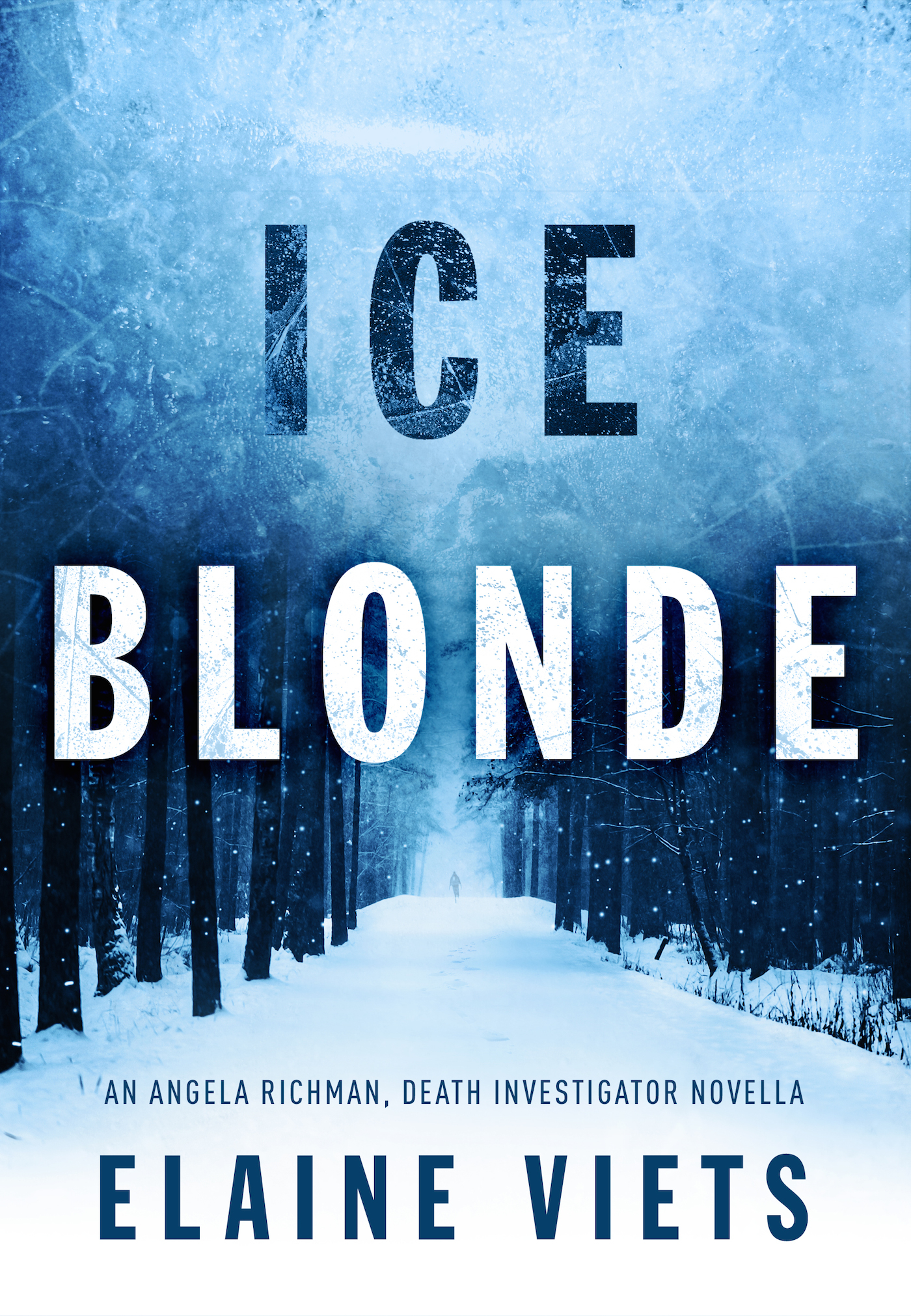
Like forensic mysteries? Win my new Angela Richman, Death Investigator novella. Click Contests at www.elaineviets.com.

First Page Critique: No Such Thing as Enough

Go Daddy Stock photo

Greetings and Salutations, happy readers!

It’s my pleasure to bring you a new First Page Critique. The chapter is the first from a novel called, No Such Thing as Enough.

Jamie Frampton took seventy-five feet to die. The first bullet entered his chest and blew out his back, leaving blood spatter on the brick wall of the alley. A crooked blood trail marked the cement where he staggered between the Chinese take-out place and the hardware store. Finally, he left a pool of blood where he collapsed on the North Main Street sidewalk after turning right and taking his last steps, trying to get home, the shooter putting another bullet in his head. The skinny seventeen-year-old had put up a good fight, but he lost.

Jamie’s mother, Alice, rousted me out of bed with a phone call at about 3:00 AM. “Pastor Rathbone, my boy is dead.” Her voice came through flat, expressionless. “Please come down to North Main Street. Maybe you could tell me where God was when my boy was dying? Or maybe you could tell me why God didn’t care that my boy was murdered in the street?” She cried as she hung up, leaving me sitting in my underwear, staring at the receiver.

I tried to place her face, but nothing registered. She had to be a member of the congregation, but I couldn’t remember ever seeing her. In a church the size of the Dayton Crossing Christian Tabernacle, that was easy. How had my predecessor, Pastor Richmond, been able to keep track of so many people?

I wondered what Alice expected me to do or say. Where was God when we needed him? I had no idea. I had struggled with that question most of my life, and still I had no answers. Nevertheless, it was my job to bring comfort—not that anything I could say would really comfort her—so I threw on some clothes and headed out to downtown Dayton Crossing.

***************

While I do enjoy working with writers who have that new baby writer smell (Mmmmmm, those potent combinations: Fearlessness/fearfulness. Inventiveness. Enthusiasm/despair. Overconfidence/zero confidence.), it’s always a pleasure to work with a writer who has read a lot of fiction and can construct not just a pleasing sentence, but a well-thought-out paragraph. Hear, hear, brave author! You’re off the ground, but let’s work on your aim.

I was going to start off with a most obvious comment about presenting a logical sequence of events, which is something a lot of us struggle with. What comes first, second, third, etc.?

But I’m going to short circuit that comment with an observation that came to me on my fourth or fifth reading of this opening: It reads exactly like a novelized screenplay. While I’ve only written one produced screenplay, and a handful of live theater pieces, I have—if there were such a thing—an unofficial  doctorate in crime television viewing.

[Opening]

Setting: dark, urban alley

Seventeen-year-old boy walking downtown at night is ambushed, shot in the chest with a high-caliber bullet by a shadowy assailant who could be either a man or woman. He staggers, badly wounded, through an alley leaving a trail of blood. He’s thinking of home (perhaps he’s just been on his phone, calling Mum to say when he’ll be home), and is desperate to get back there, but we can tell by the music he won’t be saved. He collapses on North Main Street, and the assailant shoots him in the head.

[Main titles]

Scene

Slightly tatty, darkened bedroom

Rathbone, a middle-aged man, ruggedly handsome buy not cocky, fumbles for the ringing phone. A woman speaking in a rather monotone, expressionless voice is on the line. She launches into the tale of her son being murdered, while Rathbone frantically feels around for the Dayton Crossing Christian Tabernacle membership directory. Who is this woman, and what is she saying? He sits up, wearing only his underwear. She hangs up, now weeping, and he’s left still puzzled as to who exactly she is. He stares at the receiver, still wondering if he’s supposed to remember who she is.

Rathbone puts on clothes, obviously pensive. He’s not sure what she expects from him, but he knows it has something to do with comforting her. He leaves the house in a God-existential crisis to meet her.

(I’m guessing that he shows up on the scene and finds himself more drawn to solving the crime than comforting the expressionless Alice? It’s a solid start to a story.)

***************

Most of the opening chapter is in Rathbone’s first person POV. But the very first paragraph—the establishing shot, if you will, is rather omniscient, with a bit of authorial editorializing thrown in for good measure. “The skinny seventeen-year old had put up a good fight, but he lost.” Something/someone with a personality is making this comment.

Who is saying this? I’m intrigued. The description of Jamie’s path is extremely specific. Are the mentioned places important?

First line: “Jamie Frampton took seventy-five feet to die.” I like this sentence. It sets up the paragraph well, and I suppose it connects to the specificity of his path. But in the end I find it awkward. Maybe more detail to improve the rhythm.

“Jamie Frampton took a 147-grain, .9mm bullet to the chest, but it took him two minutes and seventy-five frantic, painful steps to die.” If you’re going for drama, go big!

Consider doing one of two things with this paragraph. You can make it a prologue or the first chapter by itself. Back off on the editorializing unless that voice is going to reappear many more times throughout the book. The other thing you could do is give us—or give Rathbone—this information when he’s hanging around the crime scene. Perhaps the guy is a garrulous detective or M.E. who sees Rathbone as non-threatening because of his profession.

It just doesn’t work where it now is.

Rathbone seems a pretty sensible guy. Very philosophical and a bit troubled. Let him have his way with his story, and don’t be afraid to take chances with him.

It’s a terrific start! Just remember that what works in a screenplay won’t translate directly into a novel.


First Page Critique: Tenor Trouble

Today’s first page critique is entitled Tenor Trouble, and raises many of the issues we’ve addressed here at the TKZ such as the appropriate entry scene for a novel, the use of description/backstory, and clarity in POV. Kudos to our brave author for submitting this page. My comments follow.

Tenor Trouble

“Oh no, my dear. No. You simply should not even think about auditioning for this role.”

Melissa stared at her teacher, all joy flooding from her. “I shouldn’t?”

“No, no.”

Helena Montague tapped her lacquered fingernails on the shiny surface of the vocal score for Othello, which had arrived from Amazon that morning.

Melissa had been delighted that she had caught the postman before she had to leave the flat for her ten-thirty seminar on Media Adaptations of Dickens, because she went straight from work to get to Glasgow in time for her singing lesson. It was possible, of course – even probable – that the Grande dame of British opera already had the score somewhere on the shelves that lined the music room in her elegant West End townhouse, but some instinct had made Melissa hold back on mentioning her plans until she had her own copy in her own hands.

It made it real, somehow. Melissa had been so keen to get her score that she hadn’t waited for the bulk order for the company to come through from Harmony Music, but had summoned one overnight from Amazon as soon as the choice of show was officially confirmed. Not that there had ever been a great deal of doubt about whether Agnes Farquhar’s choice of Verdi’s Otellofor Doric Opera’s next production would be voted through by the Committee.

And when she had ripped off the cardboard packaging in her kitchen that morning, and gazed reverentially at the glossy cover – identical to last year’s score, with the exception of the name of the show, framed in red – she marveled at how lightweight and relatively slender the book was. It was astonishing to think that this insubstantial volume held within it the whole of such a great work.

Now she looked at the same score on the lid of the baby grand piano, tingling with dismay. “Um – why?”

My Comments

Overall Feedback

First off, I thought the first three lines of dialogue worked really well at capturing my attention and interest. Unfortunately, after that, there is far too much narrative about Melissa’s purchase of the score for Othello and her traveling to her singing lesson, which stalls the action and drains the first page of the initial dramatic tension established.

The key to this first page is, I think, establishing emotional resonance. We want to feel (and care about) Melissa’s anticipation about auditioning as well as her dismay when her teacher immediately dismisses the prospect. To do this, the author could easily reduce the various paragraphs to one or two sentences. For example, something like “Melissa clutched the glossy score to Othello that she’d eagerly had shipped overnight and stared at Helena Montague, once the Grande Dame of British opera, in dismay.” Then the scene could immediately move to providing us with more action to give the reader a tantalizing glimpse of the novel to come.

I’m assuming the novel isn’t just about Melissa’s dashed hopes so I’d like to see some kind of foreshadowing of the drama (or mystery) to come. If this is a murder mystery, the reader should start to feel a sense of anticipation that a crime is about to occur.

More Specific Comments

Dialogue

I thought the dialogue was effective – from the initial first line I already had a good sense of Helena’s arrogance as well as Melissa’s insecurity. The teacher-student relationship was obvious. I think more dialogue rather than narrative would have strengthened this first page. That being said, we also need more action in order to become committed to following (and caring about) Melissa as a character. The dialogue so far makes her seem insecure and submissive (although that is possibly understandable when faced with the Grande Dame!).

POV

I confess I got a little confused at the start when the POV seemed to shift from Melissa to Helena Montague tapping her lacquered fingers (an image I liked BTW) on the vocal score that had arrived from Amazon that morning. It made me think (incorrectly) that it was Helena who ordered it. I think this page would work better if the author stuck close to Melissa’s POV and we knew quite clearly that we were observing Helena through her eyes.

Extraneous Information

As I already noted in my overall comments, there is far too much background detail in this first page that weighs down the scene. Do we really need to know that Melissa has a ten-thirty seminar on Media Adaptations of Dickens? Likewise, do we need details such as it was Agnes Farquhar’s choice of Verdi’s Otello for Doric Opera’s next production or that a committee voted on it? Probably not. Even though Melissa’s delight and reverence for the score packs some emotional punch, this could be portrayed more succinctly. We don’t need all the details regarding her ordering it on Amazon, intercepting the postman, or how she felt opening the package.

A first page is the reader’s initial entry point to the story and so every line, every word counts. My advice to our brave submitter would be to get straight to the heart of the matter and the initial incident which (I assume) sets up the conflict for the rest of the novel.

First Scene

One question I would ask our submitter is whether he or she thinks this is the best place to start the novel – could this confrontation occur perhaps later in the first chapter or even in chapter 2? Since I’m not sure where the story is heading, I can’t answer this myself but I do wonder if this chapter contains sufficient dramatic weight to start a novel. Although Melissa’s disappointment is evident, we probably need more intrigue/drama to become fully invested in her as a character. Sometimes it helps for a writer to take a step back and re-evaluate the best place to start the story so that it grabs the reader’s attention and doesn’t let go. Maybe (and I don’t have any idea about the actual plot for this book so I’m just throwing it out there) this novel starts with the discovery of Helena’s body and then moves to this scene as Melissa grapples with her mixed feelings over her singing teacher’s demise…

All in all though, well done to our brave submitter.

So TKZers what feedback would you provide or add?


Authors I Have Learned From: John D. MacDonald

by James Scott Bell
@jamesscottbell

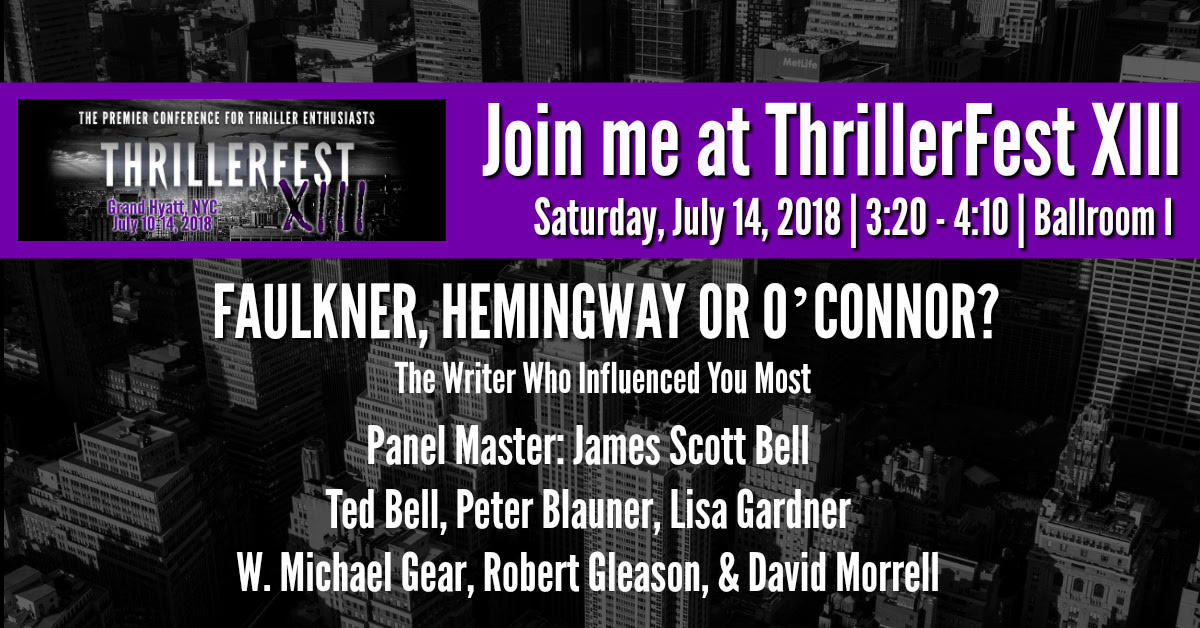
On July 14 I’ll be leading a panel at ThrillerFest on literary influences. The guests are David Morrell, Lisa Gardner, Ted Bell, Peter Blauner, Robert Gleason and W. Michael Gear. Still time to register for TFest. Hope to see some of you there.

That subject got me thinking about the authors who have influenced me, so I thought from time to time I’d write about them, and some of the lessons learned.

I begin with John D. MacDonald. For those of you unfamiliar with his work, here’s a clip from The Red Hot Typewriter by Hugh Merrill:

From the 1950s through the 1980s, John Dann McDonald was one of the most popular and prolific writers in America. He was a crime writer who managed to break free of the genre and finally get serious consideration from critics. Seventy of his novels and more than 500 of his short stories were published in his lifetime. When he died in 1986, more than seventy million of his books had been sold.

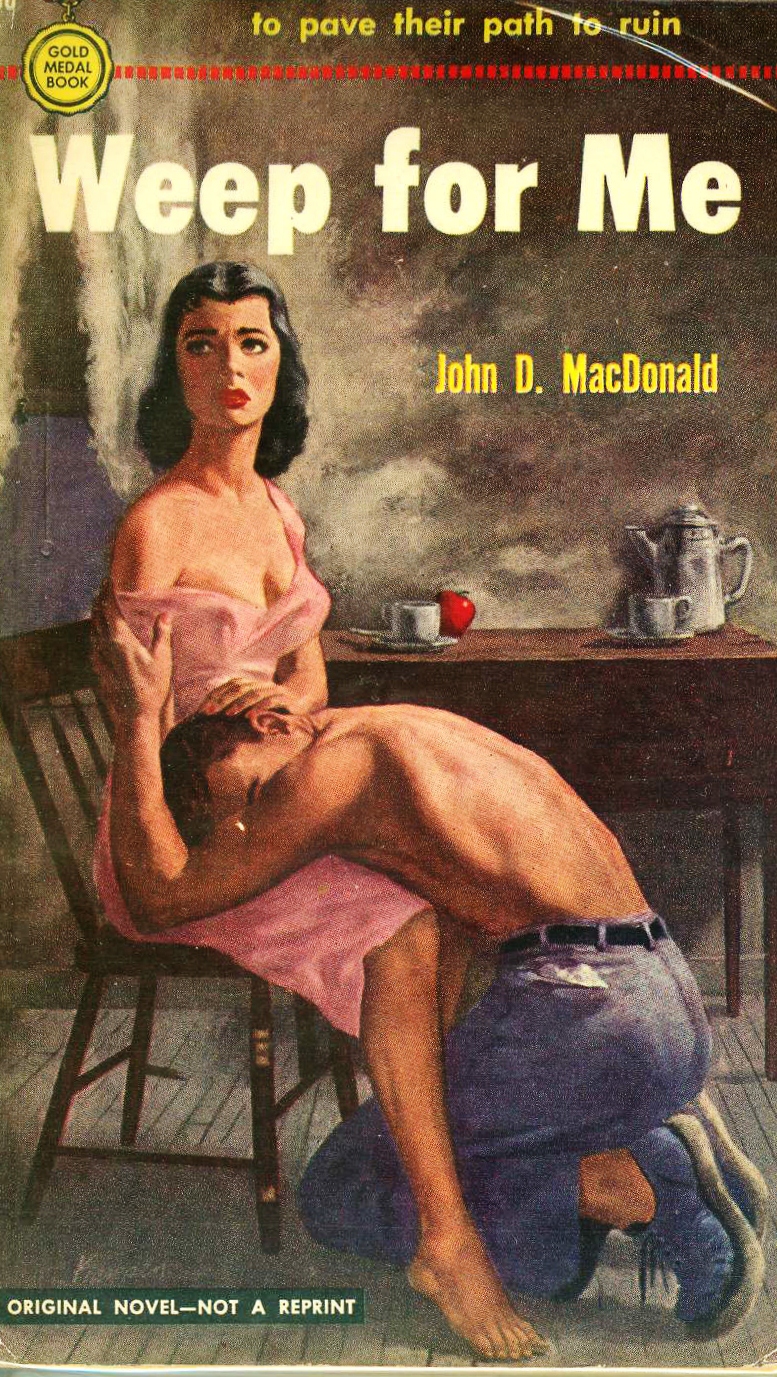
I first became seriously interested MacDonald when I read that he was one of Dean Koontz’s favorite writers. I’d read a couple of the Travis McGee books, for which MacDonald is most famous. But it was when I picked up some of his 1950s paperback originals that I really got into him. I went on a collecting binge for several years and now have a full collection of said paperbacks, including the one hardest to get, Weep For Me (1951). MacDonald refused to let it be reprinted. He was embarrassed by it, calling it a lousy imitation of James M. Cain. (I went to her in that shadowy place under the concrete arch. The early traffic slammed across the bridge, tearing the air. I took what I had won, the way any animal does.) It’s better than that (the folks at Random House have decided to give it life again) but was still hewing to the minimalist style popularized by Cain, Hammett, and Spillane—who were all beholden to Hemingway.

In those early years MacDonald wrote science fiction, hard-boiled detective, crime, contemporary adult, and even a multi-protagonist novel (The Damned) centered around a single event, influenced no doubt by Thornton Wilder’s The Bridge of San Luis Rey.

One theme he returned to was the existential angst of the 50s man. His 1953 novel, Cancel All Our Vows, is superior to Sloan Wilson’s more famous The Man in the Gray Flannel Suit (1955). It’s the story of one Fletcher Wyant, age 36, a middle manager at a big company. The following passage is quintessential MacDonald:

And, as he was looking, it happened to him again. It was something that had started with the first warm days of spring. All colors seemed suddenly brighter, and with his heightened perception, there came also a deep, almost frightening sadness. It was a sadness that made him conscious of the slow beat of his heart, of the roar of blood in his ears. And it was a sadness that made him search for identity, made him try to re-establish himself in his frame of reference in time and space. Fletcher Wyant. He of the blonde wife and the kids and the house and the good job. It was like an incantation, or the saying of beads. But the sadness seemed to come from a feeling of being lost. Of having lost out, somehow. He could not translate it into the triteness of saying that his existence was without satisfaction. He was engrossed in his work and loved it. He could not visualize any existence without Jane and the kids. Yet, during these moments that seemed to be coming more frequently these last few weeks, he had the dull feeling that somehow time was eluding him, that there was not enough of life packed into the time he had.

When MacDonald finally settled on writing mostly crime fiction, he produced some true classics, like The End of the Night, which pre-dated Truman Capote’s In Cold Blood, and The Executioners, the basis of the movie Cape Fear. (Note: The 1962 Gregory Peck-Robert Mitchum version is better than the 1991 Robert De Niro-Nick Nolte remake directed by Martin Scorsese, though it was a nice gesture to give both Peck and Mitchum minor roles in that one.)

There’s a great story around the writing of The Executioners. MacDonald regularly met with a group of writers in Florida, one of whom was MacKinlay Kantor. Kantor, who had won a Pulitzer Prize for fiction, used to needle MacDonald about all the “paperback trash” he wrote. One day he asked John, “When are you going to write a real book?”

MacDonald was ticked. He said he could write a book in thirty days that would be serialized in a magazine, become a book club selection, and be turned into a movie. Kantor laughed. MacDonald bet him fifty bucks. And, of course, won.

The first lesson I picked up from a wide reading of MacDonald is what he termed “unobtrusive poetry” in the style. That’s not an easy thing to accomplish. You don’t want a style that calls so much attention to itself that’s all the reader is thinking about. On the other hand, it’s not stripped-down minimalism of the Hemingway-Cain school.

MacDonald found the right place. His books are filled with passages that capture a character or setting with just a few incandescent lines. Here’s an example from one of the Travis McGee books, Darker Than Amber:

She sat up slowly, looked in turn at each of us, and her dark eyes were like twin entrances to two deep caves. Nothing lived in those caves. Maybe something had, once upon a time. There were piles of picked bones back in there, some scribbling on the walls, and some gray ash where the fires had been.

I’ve never forgotten that image. Indeed, I believe MacDonald could have been one of our best mainstream writers, a Book-of-the-Month Club darling like Norman Mailer or John O’Hara. He could have written “big” books that weren’t disasters. But his paperbacks paid the bills, and that’s what he kept producing.

Which brings me to another aspect of his career that inspired me—his work ethic. MacDonald came out of corporate America and approached his writing like a job. He wrote each day from morning till noon, had lunch, went back to work and knocked off at five for a martini and dinner. He took Sundays off.

MacDonald also left behind a legacy of short stories. Two collections of his crime and mystery stories are The Good Old Stuff and More Good Old Stuff. But I think I prefer his more literary collection, End of the Tiger. One of the stories, “The Bear Trap,” inspired me to try my own hand at this type of tale. So in honor of JDM, I’m making my story “Golden” free this week. Enjoy.

John D. MacDonald was once asked how he’d like his epitaph to read. His answer: “He hung around quite a while, entertained the folk, and was stopped quick and clean when the right time came.”

MacDonald’s time came much too soon. He died at age 70 from complications arising out of heart surgery. He left his wife an estate worth $5 million (in 1986 dollars) and left the rest of us some really good stuff. Not a bad way for a writer to go after all.

Pixar Storytelling – 20 Points Writers Can Learn From Animated Stories

JordanDane
@JordanDane

I ran across this great video posted on Youtube that features the 20-pt advice of Emma Coats, a master storyboard artist with Pixar. The narrator of this video is writing coach Mike Consol. It runs through tips on storytelling. Whether you are a novice writer or a seasoned pro, you can learn a lot from these amazing gems.

For your convenience, I posted Pixar’s 20 points in summary and my paraphrasing, but it’s worth it to watch the video for more. Jot down the tips that speak to you and try some if you haven’t.

1.) Create characters that people admire for more than their successes.

2.) Write what is interesting for your readers, not just you as a writer.

3.) Create a character story arc using these basic lines:

Once upon a time there was _____
Every day _____
One day _____
Because of that _____
Until finally _____

4.) Simplification & focus is important. Simplifying the flow to the essence of the story is freedom for the writer. (This is like the ELLE method of sharp fast-paced writing used in the scenes of Law & Order TV series – Enter Late, Leave Early.)

5.) What is your character’s comfort zone, then throw them a major curve ball. Challenge them and give them a twist of fate.

6.) Create an ending BEFORE you write the middle. Endings are tough. Know them upfront.

7.) Finish your story by letting go of it. Nothing is perfect. Move on. You can do better the next time.

8.) Deconstruct a story that you like. What do you like best about it? Break it down. Recognize the elements.

9.) Put your story on paper and not just keep it in your head.

10.) Discount the first few plot/story ideas that come to you. Get the obvious stuff out of the way and clear your mind for new story ideas that will surprise you.

11.) Give your characters opinions. Passive characters are boring.

12.) Ask yourself – why must I tell THIS story? This will be the heart of your story and the essence of storytelling.

13.) Ask yourself – If I were my character, how would I feel? Emotional honesty brings authenticity and credibility to your writing. If the story puts the character in over-the-top circumstances, the emotional honesty can help the reader relate to the character and draw them in.

14.) What are the stakes? Give your readers a reason to root for your character. Stack the odds against your character and make them worthy of their starring role.

15.) No work is ever wasted. If it’s not working, let it go and move on. The idea or writing might be used at another time when it’s more suitable.

16.) Know the difference between doing your best and fussing.

17.) A coincidence that gets your character INTO trouble is a beautiful thing, but a coincidence that gets your character OUT OF trouble is cheating. Don’t cheat.

18.) Take the building blocks of a movie or story that you do NOT like and rearrange them into a story that is better.

19.) A writer should identify with a situation or a character. Figure out what would make YOU act that way to make it read as authentic.

20.) What is the essence of your story and then figure out what is the most economical way to tell that story.

FOR DISCUSSION:
1.) What tips did you find most helpful?
2.) Are there tips listed that you are eager to try?

Stories Are Always Better When Something Happens

By John Gilstrap

Mr. or Ms. Anonymous has submitted a page for us to critique.  As always, the italics are mine, for the sake of clarity.  First the submission, and then I’ll see you on the flip.

Title:  Octobers Fire

The Dodge pulled up to the edge of the cliff. The man cut the engine, then the headlights. Stepping out of the car, he spent a few moments letting his eyes adjust, listening to the ticking of the hot engine block as it cooled. It was deep in the night, the hour when everyone and everything is slumbering, and the stillness was palpable. Even the crickets were asleep.

This hour was the sole domain of insomniacs.

The sliver of a crescent moon inched towards its zenith. To the west, lights from the boxy tract homes of San Amaro Hills spilled into the orange glow of the coastal cities, and to the south, a few twinkling lights peeked from the lush foliage protecting the old growth mansions of Rancho Alto. To the east, he gazed into the blackness of Fairy Glen. Its undulating hills were carpeted in shaggy chaparral, just a shade darker than the black velvet sky, freckled with stars, that hung above it. The perfect hunting grounds.

As the man’s eyes adapted, he could make out the depth of the quarry below him, the scarred surface of the granite torn away by machines and men. He pulled a half smoked cigar from the case in his pants pocket, stuck it in his mouth, but then decided against lighting it. He would savor it when the job was done.

He saw headlights approaching, bouncing and jarring up the hill.

He’d had a plan–make small talk, act jovial, share a few beers–but now found his patience was short. The thought of the whole charade seemed more distasteful than the job itself. The Rohypnol in his pocket could go to good use elsewhere, he wasn’t worried about that. He pictured a new, spectacular kind of death.

In his experience, investigations were clumsy. Police grasped at the first assumption and held on tight, like a dog with a bone. Nobody would miss this poor kid enough to investigate his death fully. It probably wouldn’t even make the local news.

He looked around his feet for the perfect rock, not too big, not too small. He remembered his boyhood in Bogota, pitching for his street gang’s stickball team. As the second car pulled up to his, he couldn’t help but smile. He still had a good arm.

=

It’s Gilstrap again.  Let’s start with the positives.  I think the writing here is very strong.  I like the details of the ticking engine and the stillness of the night.  The imagery of looking out over the sleeping town of boxy tract homes worked for me.  Kudos on that.  I have some niggling suggestions for strengthening the prose, which I’ll present below, but overall, the prose stitches together nicely.

All that’s missing is a sense of story.  And that brings us to the not-so-positives.  In these 400 words, we meet an insomniac with no name who for reasons unknown is preparing to do harm to someone else with no name.  From this sample, I could be equally convinced that the story is about either a serial killer or a werewolf.  (We learn that the remote outdoors are the “perfect hunting grounds,” yet we are also told that the hunter knows that the bouncing headlights are delivering a “poor kid” who is targeted for a “new, spectacular kind of death.”  Those are ominous phrases that ultimately have no meaning for the reader.)

I wonder more and more whether writers who submit their first-page samples have ever bothered to read the feedback given to their predecessors.  The problems that haunt this piece have mostly been discussed here on TKZ many times before.

Give us a name.  It’s impossible for a reader to bond with a pronoun or nameless entity.  The man, the boy, the woman, etc. have no humanity without a name attached. We don’t need much.  No backstory, no physical description.  Just a name will do to bring a spark of life to a character we’re meeting for the first time.

Give us action.  Lovely description is, well, lovely, but it’s not a story.  In this sample, I believe I would open with the approaching headlights.  Think of that as the framework to support the why of the story.  Consider:

Zachary Childress caressed the bottle of Rohypnol in his pocket as he watched the headlights approaching through the blackness.  They bounced and jarred up the rough hill, but they were still too far away for their engine noise to pierce the silence of the night.  Just a few feet away, the engine of his Dodge pickup ticked as it cooled.

Maybe that’s not where your story is going, but the point is that in just a few words, we know that a guy with an old-fashioned name means to make use of a date rape drug on the occupant of the approaching vehicle.  We also know that Zachary has only recently arrived.  From here, if you want to throw in a paragraph about the beauty of the night, that’s fine, but understand that that description stops the story.  (Your audience is not reading to find out what the evening looks like.  They’re reading to find out what he has in mind for his victim.)

Instead of transitioning to description, I would transition to his internal monologue.

Okay, enough of that.  Instead of rewriting your story, let me offer some suggestions on your story as it is.  The bold writing is mine.

Title:  Octobers Fire [Are we missing an apostrophe here?]

The Dodge [Give a little bit more here.  Pickup truck, maybe?] pulled up to the edge of the cliff. The man cut the engine, then the headlights. Stepping out of the car, he spent a few moments [This phrase makes me crazy.  A moment is an undefined unit of time, so a few is as long as only one.  If you mean seconds, say seconds.  Otherwise, one moment will do.] letting his eyes adjust, listening to the ticking of the hot engine block as it cooled. It was [Weak construction.  What was?  Better to say “This was the hour when everyone . . .]deep in the night, the hour when everyone and everything is slumbering, and the stillness was palpable. Even the crickets were asleep.

This hour was the sole [Really? The sole domain? What about firefighters and shift workers? Beware the unnecessary modifier.] domain of insomniacs.

The sliver of a crescent moon [As opposed to a sliver of a full moon? I’d pick either crescent or sliver, but not both] inched towards its zenith. To the west, lights from the boxy tract homes of San Amaro Hills spilled into the orange glow of the coastal cities, and to the south, a few twinkling lights peeked from the lush foliage protecting the old growth mansions of Rancho Alto. To the east, he gazed into the blackness of Fairy Glen [Be careful not to confuse your reader. Fairy Glen may well be a real place, but I’ve never heard of it. To me, this implies that Unicorn Alley may be around the corner, and that this is a fantasy/SF story.]. Its undulating hills [Do hills undulate, absent an earthquake?] were carpeted in shaggy chaparral, just a shade darker than the black velvet sky, freckled with stars, that hung above it. The perfect hunting grounds.[Except he’s not really hunting here, is he? Again, in context, “hunting” makes me think that he has not yet chosen his prey, but I think he in fact has.]

As the man’s eyes adapted, he could make out the depth of the quarry [Quarry is a bad word in this context. In the previous paragraph, you speak of hunting, and now you speak of quarry.  Beware of homonyms.] below him, the scarred surface of the granite torn away by machines and men. He pulled a half smoked cigar from the case in his pants pocket, stuck it in his mouth, but then decided against lighting it. He would savor it when the job was done.

He saw headlights approaching, bouncing and jarring up the hill.

He’d had a plan–make small talk, act jovial, share a few beers–but now found his patience was short. The thought of the whole charade seemed more distasteful than the job itself. [Does he in fact find the job distasteful?] The Rohypnol in his pocket could go to good use elsewhere, he wasn’t worried about that. He pictured a new, spectacular kind of death. [Presumably for his victim? What does he envision here?]

In his experience, investigations were clumsy. [This is a weird, jarring pivot.  Is he a cop?  If not, this seems like a non-sequitur.] Police grasped at the first assumption and held on tight, like a dog with a bone. Nobody would miss this poor kid enough to investigate his death fully. It probably wouldn’t even make the local news.

He looked around his feet for the perfect rock, [I thought it was dark. How does he see?  Is the rock his murder weapon?] not too big, not too small. He remembered his boyhood in Bogota, pitching for his street gang’s stickball team. As the second car pulled up to his, he couldn’t help but smile. He still had a good arm. [When I first read this, I presumed that he had somehow injured his other arm. Now, I think you mean a good pitching arm.]

First Page Critique: Opening
With A Big Bang…In Theory

By PJ Parrish

Get ready, because we’ve got a lot of action in today’s First Page submission. Explosions! Body parts! Fiery cars!  Whew…

I’ll be back in a…uh, a flash and we’ll talk about this.

Ice Hammer: Invincible

A blinding white light exploded across his senses. Light so bright it seemed like it had physical texture, burning white trenches across the inside of his eyeballs. A wall of sound struck a second later, with the force of a hammer blow from a giant blacksmith’s forge. It knocked Brad Stone and the other men in the room off their feet. Shards of window glass sprayed their faces and hands like hundreds of flying razor blades.

He struggled back to the window, carefully raised his head to look outside and stared down at the mess his men had created on the street below. Vehicles smoldered in front of the high-rise hotel. Arms, legs, heads, and torsos lay scattered across the pavement amidst pieces of vehicles and weapons.

Flames licked up from the underside of the overturned Suburban, its glossy black paint shimmered in the fiery reflection.

A hand appeared from inside the vehicle. A person, struggling their way out. A head and shoulders raised from the open window. The person, a woman, pushed herself up until she was half out of the vehicle. What looked like tears of blood streamed across her cheeks.

She pushed her hair out of her eyes and looked up in Brad’s direction.

Youngmi.

His wife.

His heart trembled in his chest, the sight filling him with horror.

He had seen his wife’s dead body only a few days after the war had started, two years earlier. He’d been certain it was her. She was in her new Mercedes SUV with the custom license plates. She was wearing her favorite t-shirt. And she was definitely dead. Her face had been blown apart, opened up and peeled back, like a rose blossom from the gardens of hell.

This version of Youngmi stared at him, shock and recognition mingled with terror. The flames reached the fuel tank and erupted in a roaring blaze. The fire stretched its greedy fingers around the edge of the armored SUV and caught her clothes.

She did not scream, not at first. Her mouth hung agape as she realized her own husband had killed her.

The flames erupted with new energy, enveloping her body. Her clothing lit like a human torch. Her face contorted in agony and the scream finally came.

“BRAAAAAAD!”

Her voice echoed his name across the city, bouncing off the walls of the surrounding buildings.

___________________________

Dontcha just hate slow starts?  I’m kidding, of course. We’re always harping here at TKZ about the need to get out of the gate fast.  Now, if you’re a regular here, you know not to take that literally.  Getting off to a fast start in a thriller is a good idea, and I suspect we’re in thriller territory here. But that doesn’t mean you literally have to start with a car chase or flying body parts. (See Jame’s Sunday post about omniscient point of view openings for one reference). You can create tension with a slower approach.

That, as you can see, is not the case here. Things literally start with a bang. Our writer has dropped us smack into the middle of a crisis — an explosion that propelled the protag (I think) across the room and then he staggers to the window to see all hell breaking loose down on the street. What’s not to like?

Nothing, in my humble opinion. I think this is a good door by which to enter the story.  James’s axiom of “act first, explain later” is in full bore here.  And the part about the wife — supposedly dead but now appearing in the burning car — is intriguing, to say the least.

So, good set-up, writer!  But there are some problems in the execution here. We have some issues with lack of clarity: Where are we? What exactly is going on here? We have some overwriting going on. Here’s a good guideline to keep in mind: The more intense the action, the less “writerly” your writing should be. And at times, the word choices are jarringly tone-deaf, out of tune with the tone of the scene itself. More on that small but important detail in a second. Let me go through this with a fine-tooth pencil:

A blinding white light exploded across his senses. Not a bad opening line. Light so bright it seemed like it had physical texture, burning white trenches across the inside of his eyeballs. Not sure I get this image. Maybe burning the inside of the lids? A wall of sound struck a second later, with the force of a hammer blow from a giant blacksmith’s forge. I’d end after hammer. It knocked Brad Stone and the other men I’d lose them for now. Focus on your main guy; the spear-carriers clutter things up esp in the first graph! .in the room off their feet. Shards of window glass sprayed their faces and hands like hundreds of flying razor blades. Way too many metaphors in this opening graph. Turn this into action: The window shattered and the shards razored into his face.  

He struggled back to the window, carefully raised his head to look outside and stared down at the mess his men had created on the street below. This was a big hiccup for me. HIS MEN detonated a lethal bomb in a street? Is Brad a terrorist? Because we have no context — is this a foreign locale? Are we in wartime? — I am confused about Brad’s role here and am not liking the fact he’s the cause of the carnage. Vehicles smoldered in front of the high-rise hotel. Arms, legs, heads, and torsos lay scattered across the pavement amidst pieces of vehicles and weapons. You need to tell us how high up he is. I know, it’s a stupid detail but important because he is about to recognize his wife’s face. You say only that vehicles are on fire “in front of the high-rise hotel.” Is Brad in this hotel or it is across the street? 

What blew up? Where was the bomb? (I assume it was a bomb). The Suburban is overturned, but if the bomb was under it, it would have been blown to bits like the other vehicles you mention. (You don’t tell us it’s armored until way too late). And you miss chances to enhance the mood here — where’s the acrid black smoke, which might partially obscure his view? What does this smell like? Screams? People running or staggering away? Why are there weapons laying about on the street? Again, because there is not even a HINT of place or context, this doesn’t add up. 

Flames licked up from the underside of the overturned Suburban, use of “the” implies specificity. So it was the target? Otherwise, it is merely a Suburban. Also, these cars are common in the U.S., the Mideast and only a few other countries, so make sure you’re right on it. It’s also the car of choice of secret service. its glossy black paint shimmered in the fiery reflection. Now here is where I think you’ve gone off-key.  This is a hell scape. Brad would not be noticing “glossy” paint “shimmering.”  Watch your tone. 

A hand appeared from inside the vehicle. More likely, a hand appeared out of a shattered driver’s side window? A person, struggling their way out. A head and shoulders raised from the open window. The person, a woman, pushed herself up until she was half out of the vehicle. What looked like tears of blood streamed across her cheeks. This construction implies Brad is thinking this, but again, its tone is off. Her face is simply covered in blood. 

She pushed her hair out of her eyes She wiped the blood from her eyes and looked up in Brad’s direction.

I think you need a physical beat here before her name. One, the odd name is not easily digested as name on first glance. Two, GET US IN BRAD”S HEAD FIRST.

Brad froze. Brad’s heart stopped. Brad grabbed the edge of the broken window and stared down. Something, anything.

Youngmi. Put this in itals. It’s a direct thought with no attribution. Plus, the stress is nice.

His wife.

His heart trembled in his chest, Another example of off-key tone. This word choice is too soft, too tender for the action. the sight filling him with horror. Show me, don’t tell me. 

He had seen his wife’s dead body only a few days after the war had started, two years earlier. Problem with clarity here. We need a better transition. I didn’t get this the first time read it. Thinking I was dense, I tried it on two other people. They missed it too, asking me, “so she was already dead? Is she dead now?” When you’re doing a fake-out like this (nothing wrong with that!), you have to make it clear that’s what it is. Something needed here, like:

But it couldn’t be her. She had died two years ago. He had seen her body, seen her slumped behind the wheel of her new Mercedes SUV.  Seen her blood soaking the front of her favorite Bob Seger t-shirt. And when he had finally walked around to the window, he had seen her face — blown apart, opened and peeled back, like some grotesque flower.

He’d been certain it was her. She was in her new Mercedes SUV with the custom license plates. She was wearing her favorite t-shirt. And she was definitely dead. Her face had been blown apart, opened up and peeled back, like a rose blossom from the gardens of hell. This is you, the writer talking, not Brad thinking. Stay in his sensibility.

You’ve just been in a mini-flashback. You need a transition back: Now, he stared down at the woman in the Suburban. And she stared back at him. Or, the black smoke cleared and he stared down again at the woman in the Suburban.  

Another point: This is an armored SUV in some kind of war-zone place. Yet Brad doesn’t think, what the hell is she doing driving an armored car? 

This version of Youngmi stared at him, shock and recognition mingled with terror. Why would she look up to some random window in the high-rise? Makes no sense. She’s got other things to worry about. Also, the recognition thing has to be conveyed through Brad’s consciousness: 

What was it he saw in her face? Terror…but something more. Brad felt his gut clench. She was looking right at him. Jesus, did she recognize him? (You can do better, but you get the point).

The flames reached the fuel tank and erupted in a roaring blaze. The fire stretched its greedy fingers Get out of the way of your story! Too writerly. Stay in Brad’s senses. around the edge of the armored SUV THIS IS AN IMPORTANT DETAIL and this is much too late to toss it in. It implies war but you’ve given us nothing else to support that. and caught her clothes.

She did not scream, not at first. Her mouth hung open agape as she realized her own husband had killed her. You just shifted to her point of view. You must stay with Brad. You have to filter this revelation through him. Also, SHE’S NOT YET DEAD (at least this time), so the best she can think, “My husband is trying to kill me.”  But again, this doesn’t add up giving the scant info you’ve given us. This implies the Suburban was the bomb target. Was it? Now, because you belatedly mention it being armored, it could survive a bomb, but you must be clear on what is going on here. Maybe before the hand snaked out of the window, you can give Brad a thought about the mission of his team here?  

The flames erupted with new energy, enveloped her body. Her clothing lit like a human torch. Her face contorted in agony and the scream finally came.

“BRAAAAAAD!”

Her voice echoed his name across the city, bouncing off the walls of the surrounding buildings. There is chaos going on down in the street. Probably sirens by now and screaming. Nothing is going to echo here. 

In summary, we have a bang-up set-up here that needs some work. So what? All of our openings need work. So, dear writer, dig back in and you’ll be on the right track.

Give us a little bit more info about where we are and the context. Are we at war? Is this a terrorist hit by Brad and his men? What are they doing here? What is the mission — we need a hint at least. I really have a problem with a hero-protag being willing to sacrifice innocent lives on a crowded street like this, no matter who he thought was in the Suburban. Clean up the imagery and make this scene feel more visceral. Thanks for submitting and good luck.


First Page Critique: Opening
With a Big Bang…In Theory

By PJ Parrish

Get ready, because we’ve got a lot of action in today’s First Page submission. Explosions! Body parts! Fiery cars!  Whew…

I’ll be back in a…uh, a flash and we’ll talk about this.

Ice Hammer: Invincible

A blinding white light exploded across his senses. Light so bright it seemed like it had physical texture, burning white trenches across the inside of his eyeballs. A wall of sound struck a second later, with the force of a hammer blow from a giant blacksmith’s forge. It knocked Brad Stone and the other men in the room off their feet. Shards of window glass sprayed their faces and hands like hundreds of flying razor blades.

He struggled back to the window, carefully raised his head to look outside and stared down at the mess his men had created on the street below. Vehicles smoldered in front of the high-rise hotel. Arms, legs, heads, and torsos lay scattered across the pavement amidst pieces of vehicles and weapons.

Flames licked up from the underside of the overturned Suburban, its glossy black paint shimmered in the fiery reflection.

A hand appeared from inside the vehicle. A person, struggling their way out. A head and shoulders raised from the open window. The person, a woman, pushed herself up until she was half out of the vehicle. What looked like tears of blood streamed across her cheeks.

She pushed her hair out of her eyes and looked up in Brad’s direction.

Youngmi.

His wife.

His heart trembled in his chest, the sight filling him with horror.

He had seen his wife’s dead body only a few days after the war had started, two years earlier. He’d been certain it was her. She was in her new Mercedes SUV with the custom license plates. She was wearing her favorite t-shirt. And she was definitely dead. Her face had been blown apart, opened up and peeled back, like a rose blossom from the gardens of hell.

This version of Youngmi stared at him, shock and recognition mingled with terror. The flames reached the fuel tank and erupted in a roaring blaze. The fire stretched its greedy fingers around the edge of the armored SUV and caught her clothes.

She did not scream, not at first. Her mouth hung agape as she realized her own husband had killed her.

The flames erupted with new energy, enveloping her body. Her clothing lit like a human torch. Her face contorted in agony and the scream finally came.

“BRAAAAAAD!”

Her voice echoed his name across the city, bouncing off the walls of the surrounding buildings.

___________________________

Dontcha just hate slow starts?  I’m kidding, of course. We’re always harping here at TKZ about the need to get out of the gate fast.  Now, if you’re a regular here, you know not to take that literally.  Getting off to a fast start in a thriller is a good idea, and I suspect we’re in thriller territory here. But that doesn’t mean you literally have to start with a car chase or flying body parts. (See Jame’s Sunday post about omniscient point of view openings for one reference). You can create tension with a slower approach.

That, as you can see, is not the case here. Things literally start with a bang. Our writer has dropped us smack into the middle of a crisis — an explosion that propelled the protag (I think) across the room and then he staggers to the window to see all hell breaking loose down on the street. What’s not to like?

Nothing, in my humble opinion. I think this is a good door by which to enter the story.  James’s axiom of “act first, explain later” is in full bore here.  And the part about the wife — supposedly dead but now appearing in the burning car — is intriguing, to say the least.

So, good set-up, writer!  But there are some problems in the execution here. We have some issues with lack of clarity: Where are we? What exactly is going on here? We have some overwriting going on. Here’s a good guideline to keep in mind: The more intense the action, the less “writerly” your writing should be. And at times, the word choices are jarringly tone-deaf, out of tune with the tone of the scene itself. More on that small but important detail in a second. Let me go through this with a fine-tooth pencil:

A blinding white light exploded across his senses. Not a bad opening line. Light so bright it seemed like it had physical texture, burning white trenches across the inside of his eyeballs. Not sure I get this image. Maybe burning the inside of the lids? A wall of sound struck a second later, with the force of a hammer blow from a giant blacksmith’s forge. I’d end after hammer. It knocked Brad Stone and the other men I’d lose them for now. Focus on your main guy; the spear-carriers clutter things up esp in the first graph! .in the room off their feet. Shards of window glass sprayed their faces and hands like hundreds of flying razor blades. Way too many metaphors in this opening graph. Turn this into action: The window shattered and the shards razored into his face.  

He struggled back to the window, carefully raised his head to look outside and stared down at the mess his men had created on the street below. This was a big hiccup for me. HIS MEN detonated a lethal bomb in a street? Is Brad a terrorist? Because we have no context — is this a foreign locale? Are we in wartime? — I am confused about Brad’s role here and am not liking the fact he’s the cause of the carnage. Vehicles smoldered in front of the high-rise hotel. Arms, legs, heads, and torsos lay scattered across the pavement amidst pieces of vehicles and weapons. You need to tell us how high up he is. I know, it’s a stupid detail but important because he is about to recognize his wife’s face. You say only that vehicles are on fire “in front of the high-rise hotel.” Is Brad in this hotel or it is across the street? 

What blew up? Where was the bomb? (I assume it was a bomb). The Suburban is overturned, but if the bomb was under it, it would have been blown to bits like the other vehicles you mention. (You don’t tell us it’s armored until way too late). And you miss chances to enhance the mood here — where’s the acrid black smoke, which might partially obscure his view? What does this smell like? Screams? People running or staggering away? Why are there weapons laying about on the street? Again, because there is not even a HINT of place or context, this doesn’t add up. 

Flames licked up from the underside of the overturned Suburban, use of “the” implies specificity. So it was the target? Otherwise, it is merely a Suburban. Also, these cars are common in the U.S., the Mideast and only a few other countries, so make sure you’re right on it. It’s also the car of choice of secret service. its glossy black paint shimmered in the fiery reflection. Now here is where I think you’ve gone off-key.  This is a hell scape. Brad would not be noticing “glossy” paint “shimmering.”  Watch your tone. 

A hand appeared from inside the vehicle. More likely, a hand appeared out of a shattered driver’s side window? A person, struggling their way out. A head and shoulders raised from the open window. The person, a woman, pushed herself up until she was half out of the vehicle. What looked like tears of blood streamed across her cheeks. This construction implies Brad is thinking this, but again, its tone is off. Her face is simply covered in blood. 

She pushed her hair out of her eyes She wiped the blood from her eyes and looked up in Brad’s direction.

I think you need a physical beat here before her name. One, the odd name is not easily digested as name on first glance. Two, GET US IN BRAD”S HEAD FIRST.

Brad froze. Brad’s heart stopped. Brad grabbed the edge of the broken window and stared down. Something, anything.

Youngmi. Put this in itals. It’s a direct thought with no attribution. Plus, the stress is nice.

His wife.

His heart trembled in his chest, Another example of off-key tone. This word choice is too soft, too tender for the action. the sight filling him with horror. Show me, don’t tell me. 

He had seen his wife’s dead body only a few days after the war had started, two years earlier. Problem with clarity here. We need a better transition. I didn’t get this the first time read it. Thinking I was dense, I tried it on two other people. They missed it too, asking me, “so she was already dead? Is she dead now?” When you’re doing a fake-out like this (nothing wrong with that!), you have to make it clear that’s what it is. Something needed here, like:

But it couldn’t be her. She had died two years ago. He had seen her body, seen her slumped behind the wheel of her new Mercedes SUV.  Seen her blood soaking the front of her favorite Bob Seger t-shirt. And when he had finally walked around to the window, he had seen her face — blown apart, opened and peeled back, like some grotesque flower.

He’d been certain it was her. She was in her new Mercedes SUV with the custom license plates. She was wearing her favorite t-shirt. And she was definitely dead. Her face had been blown apart, opened up and peeled back, like a rose blossom from the gardens of hell. This is you, the writer talking, not Brad thinking. Stay in his sensibility.

You’ve just been in a mini-flashback. You need a transition back: Now, he stared down at the woman in the Suburban. And she stared back at him. Or, the black smoke cleared and he stared down again at the woman in the Suburban.  

Another point: This is an armored SUV in some kind of war-zone place. Yet Brad doesn’t think, what the hell is she doing driving an armored car? 

This version of Youngmi stared at him, shock and recognition mingled with terror. Why would she look up to some random window in the high-rise? Makes no sense. She’s got other things to worry about. Also, the recognition thing has to be conveyed through Brad’s consciousness: 

What was it he saw in her face? Terror…but something more. Brad felt his gut clench. She was looking right at him. Jesus, did she recognize him? (You can do better, but you get the point).

The flames reached the fuel tank and erupted in a roaring blaze. The fire stretched its greedy fingers Get out of the way of your story! Too writerly. Stay in Brad’s senses. around the edge of the armored SUV THIS IS AN IMPORTANT DETAIL and this is much too late to toss it in. It implies war but you’ve given us nothing else to support that. and caught her clothes.

She did not scream, not at first. Her mouth hung open agape as she realized her own husband had killed her. You just shifted to her point of view. You must stay with Brad. You have to filter this revelation through him. Also, SHE’S NOT YET DEAD (at least this time), so the best she can think, “My husband is trying to kill me.”  But again, this doesn’t add up giving the scant info you’ve given us. This implies the Suburban was the bomb target. Was it? Now, because you belatedly mention it being armored, it could survive a bomb, but you must be clear on what is going on here. Maybe before the hand snaked out of the window, you can give Brad a thought about the mission of his team here?  

The flames erupted with new energy, enveloped her body. Her clothing lit like a human torch. Her face contorted in agony and the scream finally came.

“BRAAAAAAD!”

Her voice echoed his name across the city, bouncing off the walls of the surrounding buildings. There is chaos going on down in the street. Probably sirens by now and screaming. Nothing is going to echo here. 

In summary, we have a bang-up set-up here that needs some work. So what? All of our openings need work. So, dear writer, dig back in and you’ll be on the right track.

Give us a little bit more info about where we are and the context. Are we at war? Is this a terrorist hit by Brad and his men? What are they doing here? What is the mission — we need a hint at least. I really have a problem with a hero-protag being willing to sacrifice innocent lives on a crowded street like this, no matter who he thought was in the Suburban. Clean up the imagery and make this scene feel more visceral. Thanks for submitting and good luck.