“There is a muse, but he’s not going to come fluttering down into your writing room and scatter creative fairy-dust all over your typewriter or computer.”
Stephen King, On Writing.
The Ancient Greeks believed there were goddesses or muses who were the sources of knowledge and inspiration for the creative arts. From Calliope and Errato in poetry to Melpomene (tragedy) and Thalia (comedy), they personified the force of creative inspiration. Even today, many people describe creativity as a capricious power to be harnessed – some even speak of it as a kind of ethereal being, who (when the mood is right) flutters down to bestow inspiration (and possibly genius) on the lucky artist or writer. I don’t hold a great deal of stock in the ides of muses, simply because as a writer I don’t have the luxury of waiting for the muse to appear. For me, inspiration comes with the active practice of writing – a ‘bum in your seat’ kind of inspiration rather than a sprinkling of fairy-dust. Although this week I found, in the midst of some dreadful first draft writing, there was a moment of inspiration – generating a single line that opened up a character and a relationship in a way I hadn’t expected. In that moment, it truly was as if I had a muse on my shoulder but she certainly wouldn’t have been able to visit had I not been typing away in the first place.
As Stephen King describes it, the muse is ‘a basement kind of guy’ and my fellow blogger, James Scott Bell often likes to refer to the ‘basement guys’ when he describes his writing process. I like the analogy, particularly because, as King says, writers still have to do the grunt work regardless – because only in burning the midnight oil can you find the bag of magic in the end. Although sometimes, especially when stuck in the middle of a chapter, I really wish there was some other-worldly goddess who could visit and endow me with talent and inspiration:)
Apart from the concept of the muse as an ethereal visitor, there’s also the real life people that many called their muses. From Dante’s childhood sweetheart Beatrice to F. Scott Fitzgerald’s wife – these so-called muses inspired and motivated the creation of great works of art. Often times, these muses were lovers, mistresses or wives – I couldn’t find any great example of a husband muse but maybe I didn’t search widely enough! I like Anais Nin’s perspective when she wrote: “For too many centuries women have been being muses to artists. I wanted to be the muse, I wanted to be the wife of the artist, but I was really trying to avoid the final issue — that I had to do the job myself.”
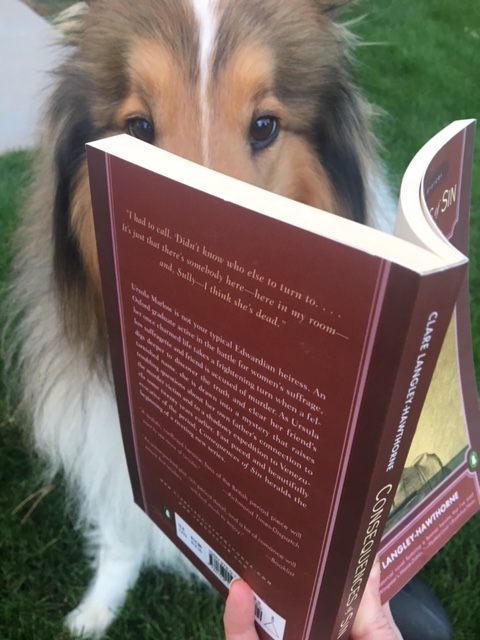
I guess my only real muse is my collie Hamish – he’s my constant companion, lying on the floor by my chair while I’m writing. He’s always willing to listen as I complain or tear my hair out in frustration, and is always happy to misinterpret my triumphs (a completed chapter!) as a request to play tug with a chew toy. He willingly goes for multiple walks a day when I need to clear my head and is always content to lie next to the couch when I resort to watching Masterpiece Theatre as ‘research’. In honor of him (and my previous collies) I always try to include at least one collie in each novel I write:) As you can see from this photo, he really is the perfect writer’s muse.
As much as I would love to embrace the whole concept of the muse, I think my attitude can be best summed up by a quote from a fellow Australian writer, Kerry Greenwood (of Phryne Fisher fame), when she said. “If I ever saw my muse she would be an old woman with a tight bun and spectacles poking me in the middle of the back and growling, ‘Wake up and write the book!'”.
So TKZers do you have a muse? If so, in what form does your muse visit (real or imagined)? Do you ever feel like you could use one to sprinkle some fairy-dust of inspiration?
It used to be the standard advice for new writers: Write what you know!
The driving idea behind that sentiment, of course, was that to write authentically, accurately, and with convincing detail you needed to stick with your own experience, for that is obviously what you know best.
Thus, for many decades, writers kept it close to home. Fitzgerald wrote about the Jazz Age as he was living it with Zelda. Hemingway wrote about World War I and its aftermath, then about other things he experienced—fishing, hunting, the Spanish Civil War. James Jones and Norman Mailer burst on the scene with novels about World War II. Harper Lee wrote about her own childhood.
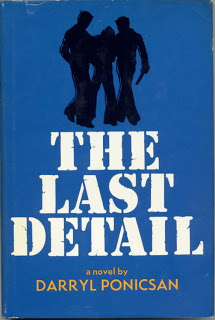
I recall when the movie The Last Detail came out, based on the novel by Darryl Ponicsan. There was a story about Ponicsan in the L.A. Times in which he talked about his decision to join the Navy at the age of 24. He did so because he wanted to expand his experience so he had something to write about.
I was a college student at the time and got a copy of the novel, read it and loved it. So I wrote a “wannabe a writer” letter to Ponicsan, care of his Hollywood agent. Mr. Ponicsan wrote me a nice letter in return, with advice and encouragement and one important caveat. The last line of his letter was, “Be prepared for an apprenticeship of years.” That was 21 years before my first novel came out.
But is Write what you know still sound advice? If you incorporate your special area of expertise in a natural fashion (say, as a lawyer writing legal thrillers), it’s fine. What’s not fine is if it’s taken as Write only what you know. That, it seems to me, destroys one of the great joys of being a writer—the ability to go anywhere, create any character, so long as you do enough research to make it all ring true.
Thus, the better advice, it seems to me, is Write what you WANT to know.
I may be wrong about this, but it seems as though so much fiction, particularly that by younger people, is very much about themselves. Love and death and stuff, but my love, my death, my this, my that. Everybody else is a light character in that play.
She continues:
When I taught creative writing at Princeton, [my students] had been told all of their lives to write what they knew. I always began the course by saying, “Don’t pay any attention to that.” First, because you don’t know anything and second, because I don’t want to hear about your true love and your mama and your papa and your friends. Think of somebody you don’t know. What about a Mexican waitress in the Rio Grande who can barely speak English? Or what about a Grande Madame in Paris? Things way outside their camp. Imagine it, create it. Don’t record and editorialize on some event that you’ve already lived through. I was always amazed at how effective that was. They were always out of the box when they were given license to imagine something wholly outside their existence.
What a refreshing counterpoint to sticking to “what you know.” Go outside the camp. Be reckless, be an explorer. Imagine it, then create it. Part of the imagining, of course, involved research.
As I look back on my own writing, I notice that at least half the time I’m writing about a woman protagonist.
How on earth did that happen?
Well, first of all, I find women more fascinating than men. I’m a simple creature. My wife is complex. I count our 37 years of marriage as not only an adventure in love, but also an engagement in a ton of research. Which is why Mrs. B is always the first to read my work. I need to get this stuff right.
When I came up with the concept for the Kit Shannon series, the publisher I pitched it to had the idea of teaming me up with one of its top-selling authors, Tracie Peterson. We got along famously. We brainstormed the plots and I wrote the first drafts. Tracie went over the drafts and tweaked and added more of what a woman would have thought, spoken, noticed. By the time we finished the third book, I felt I had inside me the voice we’d developed together. I was then able to go on and do three more of these novels on my own.
Which may have been the most enjoyable part of my career. I loved living through Kit Shannon, even though I have never been a woman living in 1903 Los Angeles. (Not many of us have, I venture to say.)
So follow Toni Morrison’s advice. Don’t be afraid to go outside your camp. It’s one of the great pleasures of writing fiction.
So what do you think of that old chestnut, Write what you know?
For your reading enjoyment, we have the first 400-word submission from a work-in-progress introduction from an anonymous author. When I got this submission, the first few lines were broken apart, so I had to reunite them. I don’t know if this weighty first paragraph was the author’s intention, so forgive me if it doesn’t look right. I’ll have my feedback on the flip side. Please share your thoughts in the comments.
***
She had the dream again last night. It lingered as awareness of morning pulled her up and her thoughts coalesced into memory. Audrey Grey saw Jacob’s imprint on the pillow beside her. The light through the curtains told her it was time to get up, too. She stood under the water, transitioning to the day ahead. Thoughts of her dream receded as the day took hold. She dressed and finished a buttered bagel. He should be back anytime. The knocking surprised her. Not tentative and apologetic like you might expect so early in the morning. It sounded . . . commanding. She tiptoed to the window and eased apart a slit between the blinds. A man in a gray and black uniform waited. She let the slats fall shut and took inventory of her appearance. Wet hair, worn skinny jeans, baggy knit top. He knocked again.
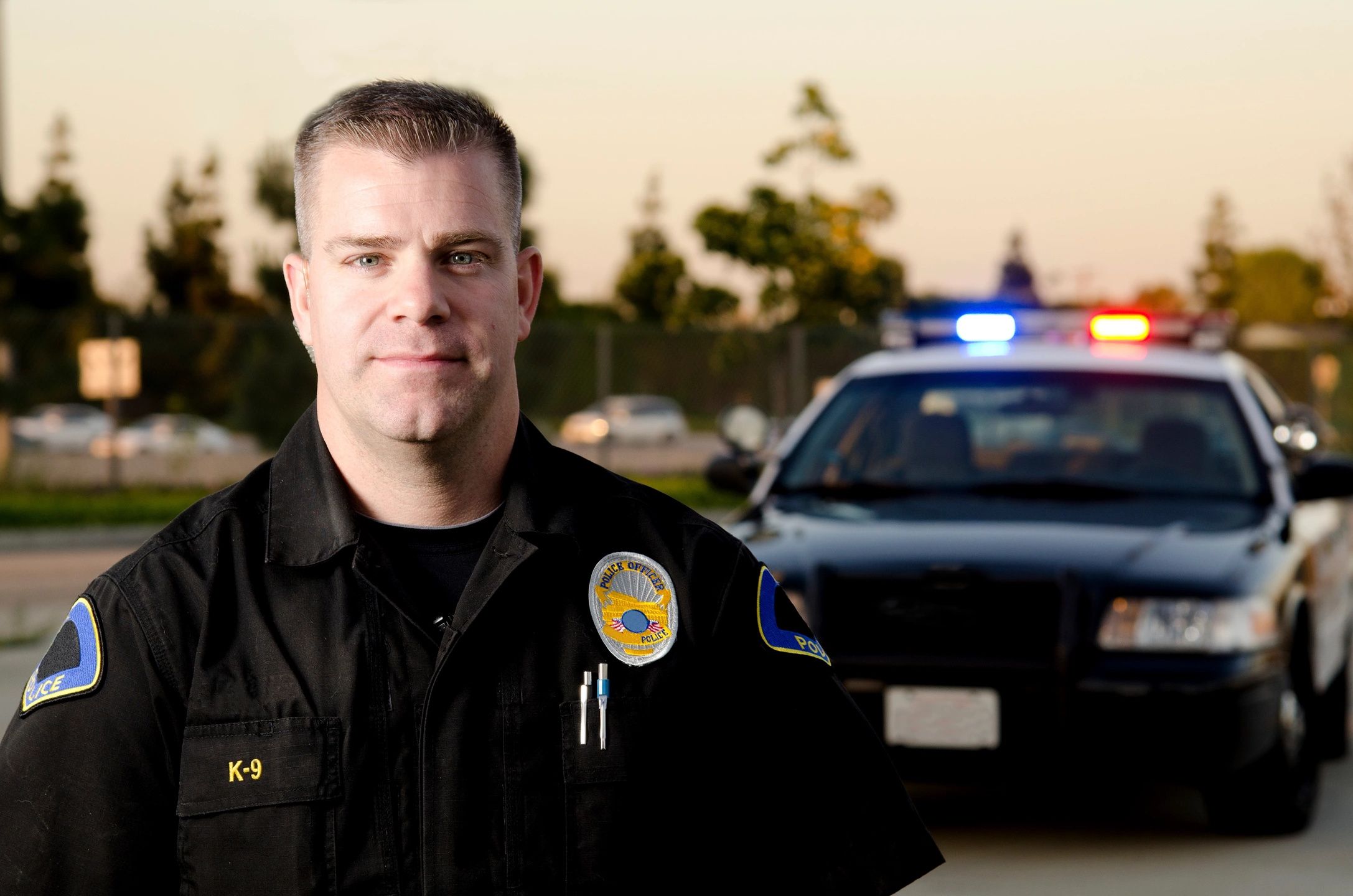
You don’t just ignore the police at your door. It’s dishonest and she couldn’t lie to a cop about not being home. Her clumsy fingers fumbled with the lock and slid the chain off. The door always stuck a little, but with an extra tug it gave way. She leaned into the door frame, face to face with the visitor. She could see the gold shield, the belt fully rigged with gear and the black gun at his side.
“Good morning, Ma’am. My name is Officer Mike Welden, Wake County Sheriff’s Department.” He consulted a black notebook flipped open in his hand. His questioning eyes moved from the page to her wary ones.
“There’s been an accident and the identification on the injured party gave this address. Do you know Jacob R.
Grey?” She caught her breath. “Yes, he’s my husband.”
“May I come in?”
She stepped back allowing him to enter. His trained eyes scanned beyond the entry and he spoke her line.
“Would you like to sit down?” Obediently, she took a seat on the edge of the sofa, swiping at shower damp tendrils of hair falling onto her face. “You saw my husband? Is he okay?”
“I found him, yes, ma’am. It appears he was hit while on his bicycle this morning. He’s been taken to Duke Hospital.”
No. He would be here soon. They had to buy a grill for the cookout. “I’m sorry, what do you mean, ‘appears’?”
“We have no witnesses, so it’s not clear exactly what happened.
FEEDBACK
OVERVIEW – This intro is a classic opener with police knocking on the door of a wife to share bad news about the husband or a family member. Here at TKZ, we preach to start with a disturbance and cops at your door would qualify, but I would’ve liked to see the dialogue with more tension and intrigue. With this being a bicycle accident, the lines are bland. If you isolate only the dialogue and take everything else away, nothing much happens.
Would it have been better to open with the bicycle accident?
We also have an opener with someone in their own head and thinking about a dream, but with the dream not explained any more than a vague 2-line notion, it’s not interesting either. I’ve opened with internal thoughts of a character, but the writing has to intrigue and create elements of mystery to keep the reader (or an editor and agent) turning pages.
It’s my opinion that the author might try to find a better place or a better way to start. Let’s drill down into the details.
OPENING LINE: ‘had the dream again last night.’
The dream is only brought up twice in this weighty opening paragraph. With the first line and this one in the middle of the first paragraph – ‘Thoughts of her dream receded as the day took hold.’ There is so little known about the dream, it’s almost not worth bringing up. It’s a cheap tease that doesn’t work for me.
To intrigue a reader, there needs to be elements of mystery that would force them to want to know more about the dream. In these two lines, even the author dismisses the importance by saying ‘her dream receded as the day took hold.’ If this dream is significant, more of it needs to be layered in and it must reflect or foreshadow what is about to happen–or create the start of a mystery to be solved–otherwise it’s not worth the focus.
If this is a dream where Audrey symbolically loses her husband Grey or can’t find him, that might provide an answer as if she is telepathic or deeply connected to him. If the dream is of something else that will carry through the story, like a distinct thread that evolves, then more needs to be hinted from the start.
Maybe the dream is something buried in Audrey’s subconscious that has put Grey in danger. The author must show patience at dangling this kind of story element into the story, but there needs to be more in order for it to gain traction.
To play with this opener, the author could have the cops get Audrey out of bed from a dead sleep. I liked the imagery of her waking to see Jacob’s imprint on his pillow. She could be more traumatized and her mind muddled if they wake her from an exhausting night of bad dreams, only to wake into her own nightmare.
But I’m more of a fan of action in the opening. Hard to say what I might’ve done in these 400 words, but the bicycle accident would appeal to me more. The reader could be drawn into Grey’s world of normalcy as he rides his bicycle, only to be suddenly struck down by a mystery assailant who races from the scene. BOOM! Opener. Then build on the foreboding dream of Audrey’s that comes to fruition with a knock on her door with police standing there. Solid start.
DISTRACTING LINE – ‘You don’t just ignore the police at your door. It’s dishonest and she couldn’t lie to a cop about not being home.’
This line should be deleted. It’s a strange thought for her to even think about not opening the door to police. A lie about not being home is odd. Most people would be intrigued as hell about why cops were at the door. Why isn’t she? It makes her sound flaky and doesn’t read as solid motivation. In the following line, there’s a focus on action where ‘her clumsy fingers fumbled with the lock.’ That shows her mental state, as if she’s nervous (and rightly so) which is contrary to her strange thought about not opening her door as a dishonest gesture.
VISUAL IMAGERY – In the second paragraph, Audrey comes face to face with the policeman. This struck me as odd, given the next imagery of her staring at his duty belt and gun. I would imagine a cop would be taller than Audrey, unless she’s tall. If she’s shorter, her eyesight might see his duty belt better. I can see her distraction with it. Many people aren’t familiar with guns and she might be intimidated by it, but the police are there for a reason and she doesn’t seem curious enough about why they are there. If this image is important, then clean it up and make the cop more intimidating, if that’s the intention, but in the whole intro, Audrey doesn’t act like a normal wife getting bad news about her husband. I’ll explain below in the section on CHARACTER MOTIVATION.
HOUSEKEEPING – There’s plenty to clean up, line by line. I’m sure other TKZers will help with that, but something that stood out was the cop’s mention of Jacob R, about halfway down. Who is Jacob R? Didn’t the police have his last name? Why would the cop only call him by his first name and an initial? When Audrey says, “Grey?” I had to reread to get the leap she made. (Maybe she jumps in to add it and interrupts him, but there’s punctuation of em dash that would help make that clearer. The author should explain why the police only referred to Jacob R or use his full name. Presumably they would have it since Jacob is at the hospital and survived the accident. He would have ID on him.
In the sentence that starts with ‘His trained eyes scanned beyond the entry and he spoke her line.’ If this is in Audrey’s POV, the author leaps into the head of the cop when referring to ‘his trained eye.’ The author should delete the word ‘trained.’ I also had to reread the last part of that line – ‘he spoke her line.’ This is out of order from real action. How would Audrey know he was about to speak her line -‘Would you like to sit down?’ In that one short paragraph, two characters are speaking and it’s confusing. Separate the lines with space to make things more clear and I would write the cop’s line more distinctly to show he’s speaking.
“It’s best we sit down. After you.” The big man took charge and Audrey lead him into the parlor.
“You saw my husband. Is he okay?”
CHARACTER MOTIVATION – Officer Welden tells her that he found her husband, saying ‘it appears he was hit…’ Instead of Audrey focusing on what a real wife might want to know – “If he’s okay, why isn’t he home?” “Was he injured? Where is he?”
Instead, Audrey focuses on the word ‘appears’ and acts like a sleuth, at the expense of the well being of her poor husband. If she comes across as jarred by the news, physically and mentally, she would be more sympathetic and the tension and emotion would be escalated. But with this cold reaction, it only adds to the bland nature of this opener. The reader will care more if they can relate to the character and Audrey’s understandable emotion.
After Audrey asks if her husband is okay, Officer Welden only says, ‘I found him, yes, ma’am’ before he jumps to more of what happened. This is a police notification to a family. They would be more concerned with sharing news about the husband’s condition and where he’s been taken. Audrey can push for details on the case and who caused the accident once she knows her husband is okay and sees for herself, but there is no sense of urgency on Audrey’s part and the cop should explain more about Jacob’s condition.
“Your husband sustained a broken arm and a few cracked ribs. Doctors at Duke Hospital are examining him now.”
Audrey mentions an internal thought of ‘No, He would be here soon. They had to buy a grill for the cookout,’ (a line that I would italicize to show an internal thought for the reader). The emotion or her confusion isn’t in sync with her cold reaction and focus on the word ‘appears.’ Put more emotion into this section and have her react like a more normal wife and the reader will care more too.
DISCUSSION: 1.) What is your feedback, TKZers?
It takes guts to submit your work for critique. Any comments are solely for the purposes of providing help to a fellow author. We’ve all been here. Thanks for your submission, brave author. The beginning of every story is my greatest challenge, always. Tweak this and perhaps re-imagine a different beginning for Audrey and Jacob and you’ll have a solid start.
Perhaps the title of this post is a bit misleading. Truth be told, I don’t believe in writer’s block. There are days when the creativity feels like it won’t flow at all, and there are certainly days when I would prefer to do something other than tying my backside to the chair and hammering out words, but that’s what everybody feels about any job on some days.
“Writer’s block” is, I believe, too often an excuse to be wielded on those days when a writer would prefer to play hookie. There’s nothing wrong with playing hookie, but whilst playing, it’s disingenuous to complain about not getting stuff done on your manuscript. There truly is no substitute to a writer writing, even when the words don’t flow easily.
I think of creativity as a flow, and the writer as the pump. When the pipes are filled and the pressure is even, creativity pours out of us, sometimes in such volume that we can’t handle it all. Then stuff happens in our lives or in our surroundings that causes intellectual cavitation, and our pump loses prime. All that flow reduces to a pool, and it’s hard work to get it going again.
Everybody has a proprietary secret sauce to re-prime their own pipes, but one that always works for me is to return to the basics: pen and paper. I posted a video on the topic on my YouTube channel. I don’t know why it works, but somehow, the tactile connection between my brain and the page, flowing through an old-fashioned fountain pen, never fails to set me straight. For every book I write, I’d guess 20% of the prose starts as being written longhand. Once the story is flowing again, I type up the handwritten pages and I’m off and running.
What about you? Any tricks you want to share for getting past the story parts that don’t seem to want to work?
The man who won’t read good books has no advantage over the man who can’t read them. — Mark Twain
By PJ Parrish
Saw a depressing video on Facebook the other day. People on the street were being polled about what was the last book they read.
The guy then asks folks to name an author. Any author. Crickets. Sigh.
I know we here at TKZ are preaching to the choir. But I also think maybe we need to be more worried about this. I’m not going to talk politics here, rest assured, but I am going to say that our ability to absorb information seems to be questionable, at best, these days. And we need to be smart right now. About a lot of things.
We need to read.
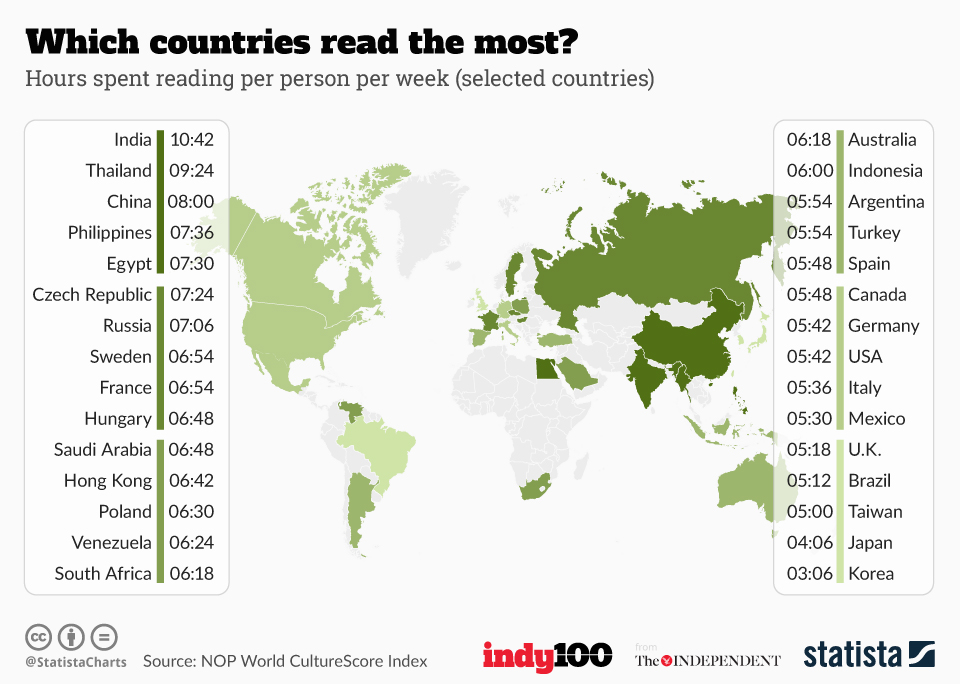
The latest Pew poll I could find on this subject says that 28% of adults ages 50 and older have not read a book in the past year, compared with 20% of adults under 50. . And as a country, we’re at the bottom of the reading pack.
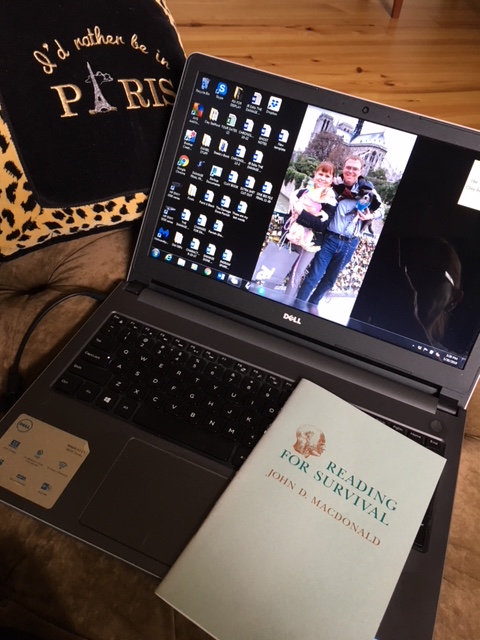
This subject slid to the front of my brain only because I was cleaning out my file drawer in my office. I found a slender little booklet that I had thought I had lost years ago. It’s a copy of an essay that John D. MacDonald wrote for the American Library Association and the National Endowment for the Arts.
It’s called Reading For Survival.
Now, if you think it’s some dust-dry diatribe, some shrill screed about how we’re raising a generation of morons, well, then you must not have read John D before. It reads like, well, one of his novels. (By the way, I didn’t know James and I would be writing about JDM in the same week. Click here to go back and read his post on what JDM taught him.)
A little background: Years ago, a friend of mine, Jean Trebbi, had a local TV show in South Florida called Library Edition. Jean was a force in the literary community. She was the head of the Broward County Center for the Book, a tireless supporter of all authors and most any book. In 1985, she interviewed MacDonald on her program, and when the camera stopped rolling, he kept going, but wanting to talk about non-readers instead of his own books.
Jean suggested he should write something on the subject for NEA and the Library Association. MacDonald didn’t want to do it, fearing he would be just preaching to the converted, but he finally agreed — with the caveat that he could use “colorful enough language to it will be quoted, sooner or later, to a great many non-readers.”
Things didn’t go well. “I could not make the essay work and I could not imagine why,” he recalls in the booklet’s forward. “I must have done two hundred pages of junk.”
Does hearing that make you feel any better about your own writing problems?
Jean Trebbi, finally wrote him asking what he hold-up was and MacDonald told her he had written a hot mess. Jean suggested using the device of a conversation between Travis McGee and and his friend Meyer. And that is what he did.
MacDonald called it “a small, mangy, bad-tempered mouse of 7200 words.” But as I re-read it the other day, I realized its message is as vital today than it must have been thirty-one years ago. MacDonald said the theme of his essay was “the terrible isolation of the non-reader, his life without meaning because he cannot comprehend the world in which he lives.”
If that doesn’t set off in a bell in your head, you haven’t been paying attention to what’s going on in our country these days.
The essay opens like a vintage MacDonald novel. Thunderclouds are gathering over the slips at Bahia Mar and McGee and Meyer are sitting on the deck of the Busted Flush. And next time someone tells you never open with weather, read them this:
The big thunder-engine of early summer was moving into sync along Florida’s east coast, sloshing millions of tons of water onto the baked land and running off too quickly as it always does.
An impressive line of anvil clouds marched ashore on that Friday afternoon in June, electrocuting golfers, setting off burglar alarms, knocking out phone and power lines, scaring the whey out of the newcomers.
The power goes out and Meyer puts down his book, and McGee says that it’s too dark to read anyway. (weather as metaphor!)
“I wasn’t reading, Travis,” Meyer said. “I was thinking about something. A passage in the book started me thinking about something.”
Over the next twenty-two pages, Meyer — whose mind is like a maze — spools out his argument — that man’s brain evolved the way it did, creating a genetic storehouse of memories, out of the pure need to understand his environment and thus survive.
Meyer concocts a prehistoric man named Mog and his modern counterpart Smith. Mog happens upon some fruit but he’s wary of eating it. Using all his memory skills, he decides to not chance it, that it’s a trap. His modern counterpart, Smith, gets a job offer at twice his salary. But using his memory skills, he deduces the employer is in a high risk banking arena with bad management turnover rates. So he says no.
“Back in prehistory,” McGee offers, “man learned and remembered everything he had to know about survival in his world. Then he invented so many tricks and tools, he had to invent writing. More stuff got written down than any man could possibly remember. Or use. Books are artificial memory. And it’s there when you want it. But for just surviving, you don’t need the books. Not any more.”
Books are artificial memory. Don’t you love that? But then Meyer lays it on him:
“So why are we doing such a poor job of surviving as a species, Travis?”
MacDonald goes on to say that the world of prehistoric man was small, limited to what the man could see, hear, taste, eat, kill, carry and use. But to modern man, who can read and remember, the world is huge and monstrously complicated.
“The man who can read and ponder big realities is a man keyed to survival of the species. He doesn’t have to read everything. That’s an asinine concept. He should have access to everything, but have enough education to differentiate between slanted tracts and balanced studies, between hysterical preachings and carefully researched data.”
Makes you wonder what MacDonald would have thought of today’s fake news debate, Facebook’s propaganda problems and the isolated little echo chambers we’ve crawled into. MacDonald and McGee go on:
“To be aware of the world you live in you must be aware of the constant change wrought by science, and the price we pay for every advance. These are our realities, and, like our ancestors of fifty thousand years ago, if we — as a species rather than an individual — are uniformed, or careless, or indifferent to the facts, then survival as a species is in serious doubt.”
So what’s the answer? Meyer thinks he knows:
How do we relate to reality? How do we begin to comprehend it? By using that same marvelous brain our ancestor used. By the exercise of memory. How do we take stock of these memories? By reading, Travis. Reading! Complex ideas and complex relationships are not transmitted by body language, by brainstorming sessions, by the boob tube or the boom box. You cannot turn back the pages of a television show and review part you did not quite understand. You cannot carry conversations around in your coat pocket.
Ha! What would MacDonald have to say about Tivo and iPhones?
Meyer is worried, he tells Travis, that non-readers are disenfranchised, cut off from any knowledge of history, literature and science. And worse, they become negative role models for their children, who will in turn, “become a new generation of illiterates, of victims.”
“The non-reader, Travis, wants to believe. He is the one born every minute. The world is so vastly confusing and baffling to him that he feels there has to be some simple answer to everything that troubles him. And so, out of pure emptiness, he will embrace spiritualism, a banana diet, or some callous frippery like Dianetics.”
Or worse. Name your modern opiate.
MacDonald died Dec. 28, 1986, a few months after finishing the essay. I really wonder what he might think of where we are today, of what he might think watching those blank-eye folks on the beach, trying to think of one author’s name. What would he make of the fact we are barraged with information twenty-four hours a day, yet we seem to be growing not smarter but more lost and disconnected?
The essay ends with Meyer saying that he has no cure to offer, but that just identifying the disease is a good first step. But then he adds:
“Bleak, my boy. Bleak indeed. And so let us trudge back toward home, and stop at the bar at the Seaview for something tall and cold, with rum in it.”
“Beautifully said,” I told him.
On the way back, I told him that he had made me feel guilty about my frivolous reading fare of late, and what might I read that would patch up my comprehension and my conscience at the same time.
Meyer thought about it until we had our drinks. He took a sip, sighed, and said, “I’ll lend you my copy of Barbara Tuchman’s A Distant Mirror.”
I am halfway through it. And the world has a different look, a slightly altered reality. That fourteenth century was the pits!
I ordered the Tuchman book from Amazon. (My local bookstore can’t get it, I tried). Now I am going to go mix a stiff gin and tonic, crack it open and try to get some badly needed sense of perspective.
Happy reading, folks. By the way, I am on the road today, probably somewhere near the Michigan-Indiana border as you read this. So if I can’t reply quickly, please chat among yourselves. Will check in when I get home to Traverse City, MI.
We have another brave writer who submitted their first page for critique. I took the liberty of breaking up the paragraphs for easier reading. Anon, white space is our friend. My comments will follow. Enjoy!
Untitled
The smell of burning wood and flesh began to be drowned out by the sound of screams…the screams of a woman. Deafening and chilling screams, echoed through the steel door. Andromeda found herself in a small room, with cold metal walls, a plain steel table, metal bed with a thin mattress and blanket, and an uncomfortable looking metal chair. She was a tall, beautiful young woman, whose long black hair fell down to her shoulders, and slightly covered her almond shaped face.
An eerie chill pierced the air in the room, and Andromeda wasn’t sure if the goosebumps that followed were because of the woman screaming, or the total lack of insulation in the room – likely a combination of both.
Andromeda looked around the room, her heart pounding through her chest. Her attempts to remember how she got here was futile; the only thing she remembered was cleaning up after her best friend and roommate Sofia, who was recuperating from the flu.
After disposing of soiled tissue paper and disinfecting their dorm room, Andromeda turned on some classical music and tucked herself in bed. After that, there was a black spot in her memory. She sat up in the bed that she woke up in, and began to stretch and look around the room.
Dressed in a white t-shirt, gray fleece shorts, and white socks, she began to walk around the stark and unoccupied room, looking for anything that may give her a clue as to where she was. She wrapped her arms around her body, bracing herself for the shudder and chills that followed.
The room had the look and feel of a military interrogation chamber: there were no windows, no traces that anyone even knew she was there. But someone knew she was here, the same someone who put her in this place. Suddenly, Andromeda was reminded of the screams as they began again, growing increasingly louder, followed by a loud “BOOM!” Andromeda ran to the door, preparing her mind to bang on the door with all of her might, to hell with alerting whomever put her in this room; the only thing on her mind was escaping. However, before she could even touch the door, it receded into the floor. Andromeda fell face first onto the cold, hard, metal floor of the hallway. The palms of her hands were burning, and so were her legs.
***
After reading this piece several times, I still can’t figure out if it’s a dream sequence or if it’s the opener for a fantasy novel. The last line indicates the events happened in the real world—how else would her hands and legs be burning?— so my guess is we’re in a fantasy world. If this is a dream, however, we need to be careful not to trick the reader. Opening with a dream is risky. Does that mean we can never do it? No. But we do need to learn the rules of storytelling before we break them.
Let’s set aside the last two sentences for a moment.
Our hero is actively searching for a means of escape while at the same time, wrestling with how she landed in an unfamiliar room. Anon didn’t give away too much too soon, either. Which is great. An opening page should raise story questions and pique the reader’s interest. Our goal is to make it impossible not to flip the page. Anon, I really hope this isn’t a dream, or it’ll undo all the conflict and tension you’ve worked so hard to create.
Writing Tics
Believe me, we all have our fair share of words we favor, extra words (overwriting), and unnecessary words that get in the way. The trick is learning how our writing tics weaken our writing.
This first page is littered with began. It may seem nitpicky to mention it, but it popped right out at me. Our goal is for individual word choices to deliver the right balance of cadence, emotion, transparency, and rhythm, so the reader enjoys the story with no hiccups. Words like began and started detract from the action. Allow me to show you what I mean.
First line of the excerpt …
The smell of burning wood and flesh began to be drowned out by the sound of screams…the screams of a woman.
If we only remove “began to be” …
The smell of burning wood and flesh drowned out the sound of screams … the screams of a woman.
See how more immediate that reads? Next, let’s shuffle a few words around so the reader can share in the experience.
Screams drowned out the smell of burning wood and flesh … the screams of a woman.
Better, but it still needs a few tweaks. By being specific and intentional we paint a more vivid picture …
High-pitched screams collided with the stench of burning flesh … screams of a woman.
Next line: remember to introduce the hero right away so the reader knows who’s telling the story. While we’re at it, let’s deepen the point of view by removing all telling words i.e. smell, sound, remember, knew, thought, felt, etc.
Inside the cramped room with metal-lined walls, Andromeda [last name] jolted upright in an unfamiliar bed, the bare mattress yellowed, torn.
Adding Inner dialogue allows the reader to empathize with our hero. Let’s add that here …
Wherewasshe?
We still need sensory details and conflict …
Rotted meat blended with the warmth of a campfire. Plumes of smoke billowed through the barred-window in the steel door—her only source of air. And light. No windows, no other doors, no means for escape. A steel hydraulic table sat in the corner, a trickle of blood snaked down one leg, the remaining surface polished to a glossy shine.
Hero’s reaction …
Andromeda’s heart thrashed, rattling her ribcage. Was her captor incinerating live victims?
Put it all together …
High-pitched screams collided with the stench of burning flesh … the screams of a woman. Inside the cramped room with metal-lined walls, Andromeda [last name] jolted upright in an unfamiliar bed, the bare mattress yellowed, torn.
Wherewasshe?
Rotted meat blended with the warmth of a campfire. Smoke billowed through the barred-window in the steel door—her only source of air. And light. No windows, no other doors, no means for escape. A steel hydraulic table sat in the corner, a trickle of blood snaked down one leg, the remaining surface polished to a glossy shine.
Andromeda’s heart thrashed, rattling her ribcage. Was her captor incinerating live victims?
See how these tweaks pull the reader deeper into the story?
Because it feels like this brave writer is early on in their journey, I added a few quick tips rather than bleed red ink all over the excerpt. I’d hate to be responsible for shattering the magic that keeps us thirsting for knowledge, keeps us creating. The beginning of our journey is an important time in every writer’s career. The muse is running wild and possibilities are endless.
Quick tips
Watch your adverbs; words like suddenly don’t add tension;
Be specific; rather than “some classical music,” name the composer;
All caps are reserved for acronyms, not for words like “Boom”;
Use active voice, not passive; this post may help;
Followed by, for the most part, is similar to began and started in that we need to reword to make the action more immediate;
Anytime you write “herself” you lessen the point of view i.e. tucked herself in bed. Instead, try something like: she slipped under the covers. Or, she swung her legs under the blanket.
I hope these tips help with your next draft, Anon. If this first page isn’t a dream, you have the makings of an intriguing story. Wishing you the best of luck!
Over to you, TKZ family. What tips would you give this brave writer?
The first time was fifty years ago as we watched the funeral train of Robert Kennedy on TV. I was just becoming politically aware then, and Bobby Kennedy was the first politician I ever responded to. I was too young to vote, but was caught up in the aura and optimism of this man running for president.
When he was cut down at the Ambassador Hotel it was such a seismic shock, especially in view of the Rev. Martin Luther King’s assassination just weeks before.
My dad, who grew up in the Depression and fought in WWII, was a Roosevelt Democrat. We were thus a Kennedy family when JFK was elected. I was just a kid, but (like most people alive then) I remember where I was when I heard that JFK had been shot. I was on the playground at Serrania Avenue Elementary school, sitting on bench awaiting my turn at kickball,. A boy ran up and started spouting the news. I didn’t believe him.
So I ran back to our classroom and looked in the window and saw my teacher, Mrs. Raymond, at her desk, her head in her hands, shoulders shaking. And I thought, “Wow. It’s true.”
Cut to June, 1968. I was sitting on the floor in our living room, my dad was in his favorite chair, and Bobby Kennedy’s funeral train was on TV. All of a sudden Dad burst into tears. Not little ones. Heaving sobs. My mom heard him from the kitchen and ran in and threw her arms around him and held him. I sat there in stunned silence, looking at my big, strong rock of a father as I’d never seen him before.
Life started to get a little more complex for me then. And life, as we all know, does not let up. The next year, 1969, was the year of the Manson murders. The evil of that was hard to comprehend, especially living in L.A. where it all went down. Manson and his “family” holed up in a canyon just ten miles from where I lived and where I rode my bike and stayed outside all day during the summers.
Now Manson’s face was in the papers and on the local news. This crazy-eyed monster had manipulated several people into committing such heinous acts. When the trial began we saw the defendants, stuporous and smiling about the whole thing. Female “family members” who kept vigil outside the courtroom carved Xs into their foreheads and warned whoever walked by, “You better watch your children because Judgment Day is coming.”
How the hell (literally) could this happen? If you want to know, read Helter Skelter, Vince Bugliosi’s riveting account of the Manson murders and trial (Bugliosi was the prosecutor). But beware—you may have a nightmare or two, as I did.
The second time I saw my dad with a tear in his eye was when he was giving a speech to a ballroom full of criminal lawyers. Dad was by this time the leading expert on California search and seizure law, and he was describing an infamous event where the LAPD used a battering ram to crush a house in a black neighborhood. He saw the pictures, which included a scared little boy on the street watching all this as he held his ice cream cone. The words caught in Dad’s throat. He was silent for a moment, took a breath, and moved on.
I was a law student at the time and had inherited my dad’s view of the majesty of the law. But that moment, short as it was, showed me how deeply he felt about his calling.
And about the incalculable value he placed on our 4th Amendment. I can still hear Dad’s voice when someone would question him about this basic right. Dad would go into oratorical mode and recite, word for word, William Pitt’s famous utterance to the House of Commons in 1763: “The poorest man may, in his cottage, bid defiance to all the forces of the Crown! It may be frail; its roof may shake; the wind may blow through it; the storm may enter; the rain may enter. But the King of England cannot enter. All his force dares not cross the threshold of the ruined tenement!”
Dad also helped set up a federal indigent defense panel in Los Angeles, giving the poor legal representation before Gideon v. Wainwright made it mandatory. I was proud to be his son. Still am.
That’s why justice is the theme I’m always writing about, consciously or not. Because in our books we have the chance to bring about what is often absent in “real life.” That’s one reason people read thrillers, isn’t it? We long for justice, hope for it, and within the pages of a good book we can find it.
I’m not into nihilism. I’m not into the ending of Chinatown. I’m into good prevailing over evil. I’m into fighting the good fight even—no, especially—in a world that can produce a Manson and assassins of good people.
The other day my son told me the story most requested by his own son, not yet four years old, is “St. George and the Dragon.” It put me in mind of that great quote from G. K. Chesterton: “Fairy tales do not tell children that dragons exist. Children already know that dragons exist. Fairy tales tell children the dragons can be killed.”
Put me down as a fan of the dragon slayers.
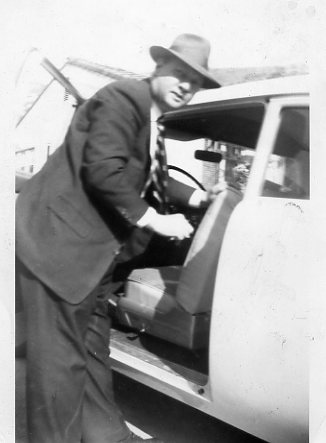
I dedicate this post to the memory of them—my father, Arthur Scott Bell, Jr.
Photo courtesy Eberhard Grossgasteiger through unsplash.com
Fair warning: this is going to be a very dark and sad post. You might want to go elsewhere, to a place where quiet is disturbed only by laughter and where there is no fear or bad endings instead of reading what follows.
I am blessed with living on a very nice street in a very nice neighborhood. What little crime occurs here tends to be transitory. Maybe the police will stop an intoxicated driver or there will be a bit of vandalism or a fight at one of the schools. It’s generally boring, and that’s how we like it.
I received a telephone call from D, my good friend and former brother-in-law, on Monday, June 4 at about 7:35PM. D lives one street over from me. He has worked in law enforcement and has a friend on our local police force. D seemed hesitant at first when I answered. “Um, Joe,” he said, “You didn’t, uh, just kill (your wife) did you?” I assured him that I had not. He told me that his policeman friend had called him a few moments before and told him that there had been a murder on my street involving a married couple. I went outside to find the house across and five up from mine surrounded by police cars. The short version of what was gradually revealed is that the husband (J) and wife (D) who lived there had been having marital problems and had separated in anticipation of a divorce, with the husband living elsewhere but occasionally visiting his wife. They sought the advice of a family lawyer like the ones found at Http://www.petersmay.com/, so hopefully, everything will be sorted. According to witnesses, J on the day in question had been at the house but was seen exiting with blood on his hands and confessed to his brother via telephone and to a neighbor in person to killing D. J then got in his car and left. The neighbor went over to the house and looked in the front window, saw D’s body, and called 911. J was quickly apprehended and arrested. He is currently in custody as the justice system moves forward.
J and D were what I would call “waving” neighbors. I had two conversations with J in twenty years, both occasioned by our shared backgrounds — we both misspent our formative years in the Cleveland area — but were not what anyone would call close. I saw and talked with D more, but not much more, and our conversations were short and hardly substantive. I do remember feeling bad for her a few years ago when J set up what was supposed to be a celebratory birthday display for D on their front yard. I am not lacking a sense of humor, and such has often been characterized, not inaccurately, by people who know me as extremely inappropriate. I felt so bad for D about what was in their yard, however, that I had to restrain myself from tearing it down. I can’t imagine that D’s birthday was happy that year. I am further unable, as more official information trickles out concerning what allegedly occurred last week, to remotely imagine what D’s last minutes were like.
The damage that was inflicted upon D during her last minutes on earth — as indicated by the charges against J, which I won’t get into here — and which resulted in her death radiates far beyond the house where she and J lived and raised a family. They have three adult children, two of whom are engaged to be married, with all living out of state. Losing both parents at once in very different ways will undoubtedly leave a mark. Worse, to my mind, is that D’s mother is still with us. Parents usually go ahead of their children and the passing while tragic is the normal order of things. The death of a child at any age before a parent is not something, I would think, from which one could ever recover. I can’t imagine what she is going through or will face.
A number of automobiles have driven down the street at regular intervals since D’s murder, negotiating the cul-de-sac where my house rests before making their way back up toward what they no doubt regard as the murder house. Neighbors have been taking care of the yard, but I can’t imagine anyone ever wanting to live there again. How dreadful is that place. I struggle daily — hourly — with my faith, but when I drive by that house the words of a prayer that I haven’t said in decades rise up unbidden inside me. I hope that they do some good, somewhere, somehow:
…may her soul and all the souls of the faithful departed rest in peace. Amen.