Hour of Fatality, First Page Critique

Licensed from Canva


Gentle Readers,

Gather ye ’round the hearth for the telling of a grand gothic nightmare from our latest anonymous Brave Author. I shall comment most profusely on said nightmare, and I entreat you to offer your own wisdom to our petitioner.

Your Faithful Friend, Laura

Hour of Fatality

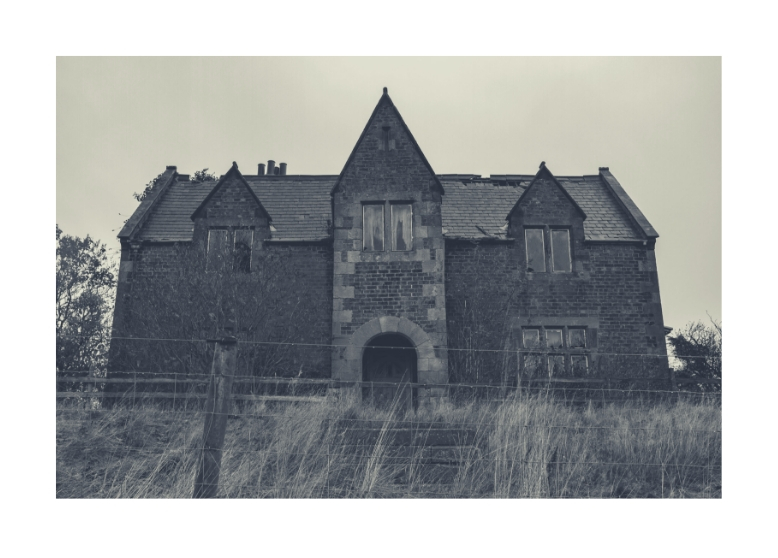
I came to Thornfield Hall at the hour of twilight. My path wended among hay field and hawthorn, and when a bend in the road blocked my view of the house, I even ran in my haste. The battlements on the roof loomed darkly against the glimmering west. If I could touch them, the blackness would rub off on my skin like soot, and cling to me; such is the strange presentiment of dreams.

I reached the pavement near the door. It, too, was black, and I stepped cautiously, fearing the sound of my own tread in spite of the silence that lay on the dead air. I mounted the steps, their stone faces worn smooth in well-remembered grooves. The vaulted hall within was deep in shadow, but a blaze of light shone from the dining room, majestic and warm. Was I welcome there? Mr. Rochester entertained fine company in that room, gentlemen and ladies endowed with wealth and grace. No, I had no place in the dining room. I would see where else he might be found. I went to the library, but the grate was cold, the chair tenantless. I searched the long gallery; every door yielded to my hand, but the rooms were vacant shells to me. Where was Mr. Rochester?

I sought him in the passageways and on the stairs. The nursery was no haunt of his, yet I searched there too. With a reluctant step, I approached the dining room once more. A laugh: low, lugubrious, familiar in its stirring antipathy, came from behind the door. What a strange foreboding inhabited me! It wrapped round me like a smoke that no breeze could dispel. But I would stifle fear for his sake; I would find him out, though my soul shudder and my heart sink beneath the discovery.

A wisp of smoke flowed from the dining room, like a mist creeping along the ceiling. Down timidity! Revelations must be made. I suppressed the shaking in my limbs and threw open the door – a wreath of fire embroiled the room and heated my face. Brocaded curtains, purple cloth, rich damask, all writhed together in flame. A motionless form reclined in the chair, senseless and still, his head sagging to his breast.

“Mr. Rochester!” I called. “Mr. Rochester! Wake up!”

Mr. Rochester did not stir. Before I could come to his aid, a different being approached, hauntingly familiar in its ghastly shape. The flame did not touch her, yet her dark hair moved and lifted in the heat. Bertha Mason, black and menacing against the crimson light, barred the way. Her eyes burned, too, with a blue flame in their depths. It was her, Mr. Rochester’s wife, whom he had hid from my knowledge. In her madness, she raved and flung herself upon me, keeping me from my master.

“Mr. Rochester!”

“I am here, Jane, I am here.”

His voice dispelled the flames; his hand cooled my burning forehead.

*****************

Here is Jane Eyre, and yet not.

The Hour of Fatality excerpt is a fever dream sequence. Devotees of Charlotte Brontë’s magnificent gothic work, JANE EYRE, will be familiar with Mr. Rochester, Jane, and Bertha Mason (Rochester) as characters, and the house, Thornfield Hall. I confess that I was a little thrown when I first began reading, because the excerpt is unnerving. Have I read this scene before? In the novel, perhaps? Jane’s voice is recognizably modern and dissimilar from Brontë’s original Jane, yet eerily familiar at the same time.  Recreating a famous character is a real challenge, and I give Brave Author high marks for achieving laudable similarities in both voice and atmosphere.

This is a good time to bring up the subject of modeling, TKZers. We’ve talked about it before here. Don’t bother to look up “modeling writing” because you will be awash in barely-related education-speak. What I suggest is to take a bit of work from a writer whose style you admire and type it out word by word. Do it a paragraph at a time. Type a line, then imagine what thought process the writer might have gone through in order to produce the next line, and so forth. You needn’t do this all day, but it can give you the feel of how a story was written. It’s an odd, but useful exercise.

The other thing I’ll mention here (again and again!) is reading. It’s obvious that Brave Author knows the novel JANE EYRE well, and has spent time internalizing Brontë’s/Jane’s voice. If you’re trying to write—either in someone else’s style or simply in your own—you’d better be reading. A LOT. If you’re not, it’s like trying to drive a car without fuel. Or casting your fishing line into a dry lake. Or trying to spell metaphor without meta.

Before I forget, let’s all be mindful of how the page looks when we start three paragraphs in a row with “I.”

“I came to Thornfield Hall at the hour of twilight. My path wended among hay field and hawthorn, and when a bend in the road blocked my view of the house, I even ran in my haste. The battlements on the roof loomed darkly against the glimmering west. If I could touch them, the blackness would rub off on my skin like soot, and cling to me; such is the strange presentiment of dreams.”

I’m fond of this first paragraph. The setting is instantly spooky, even if the reader doesn’t already know Thornfield Hall as one of the most famous houses in classic literature. There are several passages in JANE EYRE where the manner of the house’s appearance is alternately terrifying and dear to Jane. Brave Author even gets Jane’s sense of wanting the house to stay in view right. Jane is occasionally forgetful of her manners, particularly when her emotions are roused, so her running is rather a big deal. And the presumed sootiness of the battlements is vivid and nicely suggests a dream image.

But…dang it. We’re starting off this story/novel with a dream. Few things are riskier for an emerging writer to do, and are as irritating to many readers. Yes, it establishes the mood. Yes, it pays homage to a similar scene in the original novel, thus readers will recognize the connection between them. Unfortunately, I found myself distracted by the fact that the dream scene occurs in a dining room, and the referenced scene in the novel occurs in a bedroom. I started wondering if it really was supposed to be the same, or if the difference was significant. And why is the man reclining in a chair in the dining room? Is he actually reclining? Should he be perhaps slumped at the head of the table? This is only a problem for someone familiar with JANE EYRE, which is probably only half the over-thirty female population of the planet. Anyway, it was distracting.

“I reached the pavement near the door. It, too, was black, and I stepped cautiously, fearing the sound of my own tread in spite of the silence that lay on the dead air. I mounted the steps, their stone faces worn smooth in well-remembered grooves. The vaulted hall within was deep in shadow, but a blaze of light shone from the dining room, majestic and warm. Was I welcome there? Mr. Rochester entertained fine company in that room, gentlemen and ladies endowed with wealth and grace. No, I had no place in the dining room. I would see where else he might be found. I went to the library, but the grate was cold, the chair tenantless. I searched the long gallery; every door yielded to my hand, but the rooms were vacant shells to me. Where was Mr. Rochester?”

If we are truly concerned with pavement, I want to know what sort of pavement is near the door. And why we should care that it’s black–other than as a kind of floppy thought bridge from the previous paragraph? (Readers are smart. No floppy thought bridges required!) Does she open the door? Is the door already open? This feels like an important moment to me, and yet we are thrust immediately from the stone steps at the front door to the subject of the dining room. Jane is searching for her man, and yet doesn’t even peek into the room–the BLAZING dining room–showing the only sign of habitation in the entire house? And what’s wrong with her that she feels she can’t go into the dining room? (I know, but only because I already know Jane’s station in life.)

The word “tenantless” is such a Brontë word.

“…every door yielded to my hand, but the rooms were vacant shells to me.” Let’s lose “to me.” It strengthens the image.

I want a bit more information around the edges of this dream. As it is, it pre-supposes that the reader already has opinions about and knowledge of the characters.

“I sought him in the passageways and on the stairs. The nursery was no haunt of his, yet I searched there too. With a reluctant step, I approached the dining room once more. A laugh: low, lugubrious, familiar in its stirring antipathy, came from behind the door. What a strange foreboding inhabited me! It wrapped round me like a smoke that no breeze could dispel. But I would stifle fear for his sake; I would find him out, though my soul shudder and my heart sink beneath the discovery.”

Another strong paragraph.

“It wrapped round me like a smoke that no breeze could dispel.” Given that we find out quickly that an actual fire is happening, this is a bit much. Also, she is both inhabited and wrapped?

The final line of the paragraph is pure Jane, pure gothic.

“A wisp of smoke flowed from the dining room, like a mist creeping along the ceiling. Down timidity! Revelations must be made. I suppressed the shaking in my limbs and threw open the door – a wreath of fire embroiled the room and heated my face. Brocaded curtains, purple cloth, rich damask, all writhed together in flame. A motionless form reclined in the chair, senseless and still, his head sagging to his breast.

“Mr. Rochester!” I called. “Mr. Rochester! Wake up!”

Let us resume our examination of the dining room and its formerly elusive door. In an earlier paragraph, there’s a blaze of light emanating from the dining room, so we necessarily picture the door open. Yet there’s a wisp of smoke here which compels her to throw open the door! Also, a flowing and creeping wisp feels like a bit much. Perhaps: A wisp of smoke escaped the closed dining room door, creeping across the ceiling like a mist on the moor. And wouldn’t the door, or at least the handle, be hot when she opens it?

“Mr. Rochester!”

Bertha Mason Rochester has set the room on fire and is leering maliciously, like Carrie’s mother at home after the prom. Jane tries to wake her beloved, but he’s insensate. It’s fabulous that Bertha flings herself on Jane. BUT. If Jane must deal with Bertha, let’s have some grappling in the scene. This is Jane’s chance to scream good and loud, to be terribly afraid, or just really angry. She’s often outspoken and passionate, so she should be even more so in her dream. Let her go a little crazy, maybe even fight Bertha back. Simply calling Mr. Rochester’s name in her greatest physical crisis is unworthy of Jane. If this book is supposed to contain the same Jane, seasoned by pain and flame, that we saw at the end of JANE EYRE, she needs to react as though her whole life has already changed. This is the same young woman who must run the life of her blinded husband. Give Jane some spunk in her nightmares.

That said, opening the novel with this dream requires you to go back and quickly explain who and where she is, why she has a fever, that she’s married, who “Mr. Rochester” is, etc. It feels awkward when a writer has to cram in details and explanations right away.

An excellent example of a gothic novel opening with a dream is Daphne du Maurier’s REBECCA. She makes our heroine’s dream her entire first chapter, and afterwards goes back in time to tell the story from the beginning. You cannot go back and retell JANE EYRE. But I think it wouldn’t be a bad idea to try du Maurier’s approach. Try letting Jane tell the story of the dream with the distance of longer reflection. Draw it out and let her personality be more a part of it. Or not.

You have some remarkable prose here. Keep at it, Brave Author!
First Page Critique – Samuel’s Mine

by Debbie Burke

@burke_writer

Wikimedia Commons

Please welcome today’s Brave Anonymous Author with a submission entitled Samuel’s Mine.

CHAPTER ONE

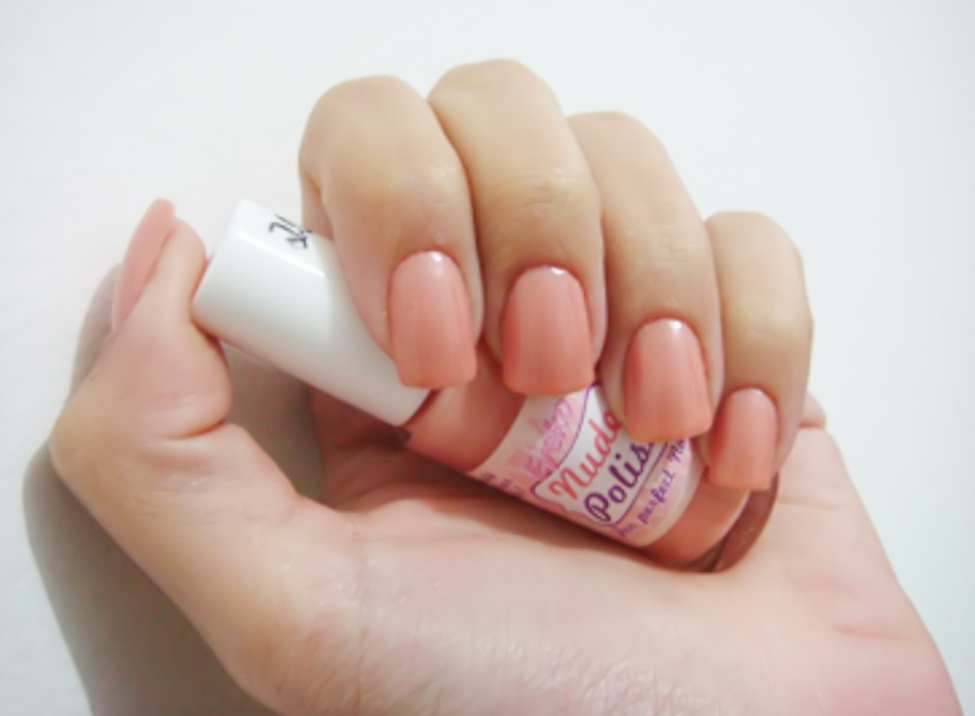
Oddly enough her fingernails were left unbroken. Each nail remained intact, as sharp and fresh as they had been right before Julia went to sleep. The bright pink polish now served as a beacon of hope in this otherwise despondent room. She looked around, unbelieving, and still trying to figure out the situation. How did she get here? Where is here? She remembered talking to Jacob on the phone. She remembered painting her nails  sitting on the edge of her bed. All else was a fog, like unrecognizable shadows in the poorly lit recesses of her brain. Something was there but yet nothing.

She turned her head. Her neck seized instantly with stiff pain. Oh dear Christ!  A thick perspiration began its slow descent down her forehead. She lay across the floor with a dull but growing pounding building inside her head. She rarely got headaches. I fell, she thought. The fog in her head was drifting away as her surroundings grew clearer. I fell..how could I fall? Sharp jabs of pain filled her upper body. No, No, I couldn’t have. This isn’t right. She winced while moving her head to the left. The room was dark and she could smell mildew. The perspiration slid a smooth path down her face although a chill ran through her. The fog finally lifted from her head leaving the remnants of ache and confusion. How did I get on the floor?

Her body shuttered, skin prickled, as a chilling draft surfaced. She could hear the faint shuffle of footsteps above her. Julia’s legs; however, were cramped and stiff pressed on the cold floor. In fact, the floor she was on was not a floor, but rather stones. She can see them now – large cobblestones like the ones that used to line the streets in the City. They were now biting against her body and left prickles on her skin. Goosebumps. This is not right. She scanned the room fighting the ache, unknowing where she was. Stone block walls now came into her ever-strengthening sight. And that smell was more than mildew, but what?

The thick moisture moving down from her brow found her parched lips and with a fine swoop of her tongue, Julia tasted it. At first the sheer moisture was soothing to her mouth, but shortly the taste surfaced. It was not sweat. This tasted coppery. She had her fair share of fights and busted her lip a few times playing hockey. Julia was tough and knew this taste well. It was the taste of blood.

***

Okay, let’s get to work.

At first glance, the title Samuel’s Mine doesn’t give any hints to the genre, story, or characters. Until the reader knows who Samuel is, it’s hard to determine if this is an effective title. It strikes me as vague and not that interesting. And it certainly seems on the tame side for the creepy scenario painted on the first page, which signals dark suspense or horror.

Julia, of unknown age, evidently had a bad fall she doesn’t quite remember and wakes up in an unfamiliar chilly basement that smells of mildew. She’s lying on a cobblestone floor, apparently can’t move, and is bleeding from a head wound. She hears footsteps above.

What sets Julia apart from many other stories that start with a similar setup?

Pink polish on unbroken fingernails.

Brave Author, your instincts are good to include vivid, specific details in your first paragraph. The reader easily sees Julia sitting on the edge of her bed, painting her nails and talking on the phone with Jacob. Then Julia evidently loses consciousness. She wakes up disoriented and is amazed that her nails aren’t broken.

The second and third paragraphs offer descriptions of her pain, confusion, and cold. A fair amount of overwriting and repetition could be cut and condensed.

More important, creepy descriptions will only hold the reader’s attention for a limited time. Compelling action is necessary to move the story forward. More about this in a moment.

A number of odd, awkward, or incorrect word choices jarred me. I sense the author is trying too hard.

Otherwise despondent room – Despondent describes an emotion that Julia feels but the room doesn’t. Maybe “desolate” instead?

Her neck seized with stiff pain – Is the pain stiff or is it her neck?

Thick perspiration – “thick” distracted me, although you later explain it’s not sweat but blood.

Shuttered – should be “shuddered.”

Lay across the floor – sounds awkward.

Growing pounding building – watch out for three words in a row ending in “ing”

Prickled, prickles, and goosebumps –  repetitive.

Julia’s legs; however, were cramped and stiff pressed on the cold floor. In fact, the floor she was on was not a floor – repetitive. Replace the semicolon with a comma.

…but rather stones. She can see them now [tense change] – large cobblestones like the ones that used to line the streets in the City. – Repetitive. Also, suggest you use this opportunity to specify which “City” so you convey more about her background as well as her possible location.

The thick moisture moving down from her brow found her parched lips and with a fine swoop of her tongue, Julia tasted it. At first the sheer moisture was soothing to her mouth, but shortly the taste surfaced. – Odd phrasing. How does a tongue make a fine swoop? How does a taste surface?

She had her fair share of fights and busted her lip a few times playing hockey. – Another excellent specific detail that characterizes Julia.

The first 400 words basically set the scene and don’t give much insight into Julia’s character nor the conflict. So far, it’s a helpless-female-in-jeopardy trope. Her reactions are generic fear.

However, the details about her pink fingernails and familiarity with hockey and fighting make Julia real and relatable. I suggest you include more specific details like that.

The biggest problem: Where is the action?

The author actually submitted about 1400 words that revealed additional clues about the story’s direction that were not found on the first page. I suggest you cut repetitious descriptions of Julia’s cold, confusion, and pain, and instead move to the action sooner.

I took the liberty of rewriting (in red below) to incorporate developments that didn’t show up on this first page but did occur later in the submission.

Oddly, Julia’s fingernails weren’t broken—bright pink, as sharp and fresh as when she’d painted them, sitting on the bed before she went to sleep. Yet now she lay on a cold floor, cramped with pain, in a dim room, hemmed in by stone block walls. She smelled mildew and a faint odor of something else.

When she tried to look around, spasms seized her neck. A draft chilled her bare legs, her nightshirt pulled up to her panties. Her pink-tipped fingers traced the rough contour of the floor—cobblestones, like old streets in London.

I fell…how could I fall? Unrecognizable shadows clouded the poorly lit recesses of her memory. She remembered talking to Jacob on the phone but after that, nothing.

Wet warmth flowed down her face. When it reached her parched mouth, she licked it. Not perspiration. Blood. She recognized the taste from split lips she’d endured while playing hockey. And from fights. She touched a raw, pulpy spot on her skull. The wound was bleeding badly.

Footsteps creaked on the wood planks above. “Daddy?” she pleaded, her whisper harsh and scratchy.

Through foggy vision, she made out a dark corner where a propane cylinder sat on a table with other tools she didn’t recognize.

Above, a door opened and footsteps clomped down the stairs. She tried to see who was coming but pain froze her. She squeezed her eyes shut, fighting tears.

A new smell, earthy and ripe, familiar yet not. Coal River Farm. The petting goats. Julia and her parents feeding the animals.

When she opened her eyes, a tall, lean man in dirty jeans and boots was walking to the table. Not her father.

“Where am I?” she croaked. “What do you want?”

“Shut up, sow.” He picked up the propane cylinder and a long thin rod.

Terror prickled her senses. She had to fight, run, escape. But when she struggled to stand, her legs felt too weak, too heavy. “Let me go, please. I won’t tell anyone.”

He stood over her, staring down with piercing brown eyes. “How old are you? Nineteen, twenty?”

“Twenty-two.” Tears rolled down her cheeks. “Why do you care?”

“Ah, twenty-two. You’re ready.”

“For what?” She shivered in the chill of her own blood that now soaked her nightshirt.

He pulled a lighter from his shirt and lit the propane torch. A long blue flame shot out. “The culling.”

***

Print out these early pages and read them aloud.  When you’ve repeated the same description several times—for example, how cold Julia is—choose the strongest way to say it and cut the others.

When you stumble over a sentence as you read aloud, that signals a place that needs smoothing out.

Take several different color highlighters. Assign one color to each element of the scene. For instance, orange for setting, blue for characterization, green for descriptionred for action. Once you’ve identified and marked up the scene in a tangible visual way, it’s easy to see where there’s too much emphasis on one aspect and too little of another. You can then work to play up the most important parts–action and character–to engage the reader.

Brave Author, there is a lot of scary promise in this story. Thanks for sharing your work.


TKZers, any helpful ideas for today’s Brave Author?


Using Real People in Historical Fiction

Happy President’s Day!

Today I want to talk about an issue that was raised a few weeks ago by one of our first page contributors who is proposing to use a real historical figure (namely Samuel Pepys) in his historical mystery. The brave submitter asked whether, if he did use the actual person in his novel, he had to include all that person’s flaws (which could ultimately make the character less sympathetic.) My initial answer was that my preference would be to either use the real person, warts and all, or fictionalize the character entirely…but the question got me thinking about the issue a little deeper, as it highlights the often blurred distinction between fact and fiction in many novels, not just historical fiction (although today I’m going to limit my scope to historical figures, so we don’t have to deal with defamation/libel and all the attendant risks when using real people who are still alive and well!).

Some novels become more ‘faction’ than fiction, when they use historical figures as material for their novels, especially where they try to stick to the historical record as accurately as possible. Even when novelists attempt to do this, however, they almost inevitably come under criticism for aspects that have either been omitted from the book or where the fictionalization differs from reader/reviewer expectations. While I enjoy reading well-researched historical fiction novels, I do get irritated when historical figures are used more as a hook or gimmick rather than the springboard for a truly compelling characterization or plot. I see this more in genre fiction and while I admire any writer who wants to incorporate real people in their mysteries, for me it has to be more than just a cute premise – which is perhaps why I tend not to read novels that involve real historical figures supposedly solving crimes when they obviously didn’t.

In my own novels, I use real historical figures to give historical context/texture to the story but not usually as protagonists or other main characters. I do, however, enjoy channeling real people and their stories to create my own characters. For me, it would be a far trickier proposition to use a real historical figure as I would feel constrained by the truth (or at least what the historical record/sources indicate is the truth) and would feel compelled to be as accurate as possible in my portrayal of that person. Fictional characters have no such constraints:) The only exception to this, for me, is in the realm of speculative historical fiction – where, again, the speculative/alternative nature of the history presented gives an author far more leeway to deviate from the truth. Having completed a speculative YA novel myself that incorporated a real historical figure, I did, however, feel a duty to research the real person in order to know how to create the speculative or alternative historical version (it was a lot of fun too!).

As with everything in writing, if you decide to use a real historical figure or person in your novel you have to do it well. Do your historical research, reach out to descendants if there are any (especially if you’re planning to create a less than flattering representation of the person), be mindful of how you incorporate real and fictionalized elements, and, above all, be conscious of your choices and don’t just use a historical figure as a gimmick but as a real flesh and blood character. My key take home message from all of this would be: if in doubt, fictionalize.

So TKZers, I’d love to get your feedback and opinions on this. What advice would you give a writer who is planning on using a real historical figure in their novel?

The Last Fifty Pages Make or Break Your Novel

by James Scott Bell
@jamesscottbell

We’ve all been through it. We get caught up in a book or movie, we’re cruising along, liking everything about the story and then … the ending stinks.

It’s too farfetched, too out-of-the-blue, illogical, unjustified, or enabled by some crazy coincidence.

Sometimes a book just, well, ends, with plot threads left dangling (producing the Whu? effect). Or, if the plot threads are woven together, it’s in a totally predictable manner (producing the Ho-hum effect).

I’ve described certain writing errors as speed bumps. That means the reader is momentarily jolted out of the fictive dream. It might be a teeny, tiny bump, but the reader does feel it. And if there are too many of them along the way, the pleasure of the trip is ruined.

But if the ending lets you down, it feels more like a sinkhole. The whole car comes to an inglorious, crashing halt. The poor reader has to climb out, dazed, wondering why he took this trip at all.

And said reader will now think twice about picking up another book by the same author.

Remember those immortal words of Mickey Spillane: “The first page of a book sells that book. The last page sells your next book.”

And these days, with so much content out there, a competent ending is not enough.

Endings need to be unforgettable.

Yet, as important as ending are, I’ve not found enough practical, nuts-and-bolts advice for creating truly powerful endings.

So I decided to write a book about it.

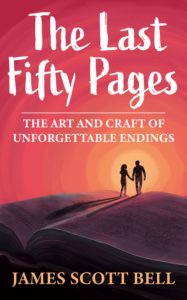
THE LAST FIFTY PAGES: THE ART AND CRAFT OF UNFORGETTABLE ENDINGS releases tomorrow.

Here’s some of what I cover:

  • The five types of endings.
  • What needs to happen in Act 3.
  • How to use the Ah and Uh-oh emotional wallops.
  • A simple technique for crafting twist endings.
  • The most important secret of all—resonance.
  • The Stew, Brew, Accrue, and Do brainstorming method.
  • The best way to tie up loose ends.
  • The most common ending mistakes, and how to avoid them.

And with my usual hope for peace in our time, it is written for both plotters and pantsers!

There are many examples from top writers, including Michael Connelly, Dashiell Hammett, Louis L’Amour, Mark Twain, Suzanne Collins, Jane Austen, F. Scott Fitzgerald, James M. Cain, and even Don Pendleton (author of The Executioner series). Each is called upon to illustrate the techniques involved so you can immediately put them to use.

A promising writer named Gilstrap is also quoted. This kid is going to break out soon!

I also use some film examples, including unpacking what is probably the most famous ending of all, with the most famous last line. Can you guess what that is? Hint: the last line includes the words “Louis” and “beautiful” and “friendship.”

You can order the ebook here:

KINDLE

NOOK

KOBO

AMAZON INTERNATIONAL STORES 

And here is the PRINT VERSION for those who like to use highlighters and sticky notes!

Here’s a little preview. One type of ending I call the Uh-oh! This is when the author leaves you with the feeling that something bad or really tense is going to happen, and soon! It’s a staple of horror fiction, but is sometimes found in great thrillers.

In Louis L’Amour’s bestseller Last of the Breed, Joe Mack is an American Air Force pilot, half Sioux, who is captured by Soviets during the Cold War and imprisoned in Siberia. It’s the task of Soviet Col. Arkady Zamatev to squeeze information out of Mack.

But he escapes the prison, which is deemed a stupid thing to do, for the winter is coming in Siberia. How can Mack expect to survive?

Because he is the last of the warrior breed, and his Indian skills come into play for survival.

Zamatev dispatches the Russian analogue of Mack—a Yakut named Alekhin—to do the tracking. The heart of the book is their back and forth, the narrow escapes, the body count.

Finally, at the end of the book, Alekhin and Mack are face to face. It’s time for the fight to the finish.

At this point L’Amour cuts to the last scene, in Col. Zamatev’s point of view. He has received a package—something wrapped up in cloth.

It is a scalp.

There is a note inside also, written on birchbark.

This was once a custom of my people. In my lifetime I shall take two. This is the first.

Uh-oh!

So what is one of your favorite endings? How did it affect you? Why do you think it worked so well? [NOTE: Be aware that *spoilers* may be included in the comments. So look first at the title and decide if you want to know the ending!]

Reader Friday: Reading Habits

“If you don’t have time to read, you don’t have the time (or the tools) to write. Simple as that.” ~ Stephen King


“Read a thousand books, and your words will flow like a river.” ~ Lisa See

One of my 2019 goals was to devour as many books as possible. Many folks read before bed, but I never could.

Instead, I love reading in the early morning hours and after I’m done writing for the day.

Do you have a set reading schedule? What’s your favorite time to read?

First Page Critique: The Devil’s Noose – A Pandemic Medical Thriller


Happy Valentine’s Day. You did remember the one you love, didn’t you? If not, finish this blog, then rush out and find something for your special someone.
Today another Brave Author, known as BA, sent in a First Page Critique. Take a look, and then we’ll talk about it. – Elaine Viets

The Devil’s Noose – A Pandemic Medical Thriller

Former Soviet Republic of Kazakhstan
Central Asia

Seven-year-old Aliya Nizova darted through the trees, her little horsehair-trimmed boots slipping on the carpet of wet pine needles, heart pounding in her chest.
Her breath rasped in her throat as she ran, desperately seeking someplace to hide. She came to a stop at the edge of a clearing and looked around. To the right, a gray granite boulder jutted from the ground, a rime of dirty snow clinging to its base. To the left, the mucky soil sloped down to a cluster of tangled berry bushes.
A not-so-distant shout filtered through the dark forest. She made her decision and moved to the left. Cold mud squelched under her boots as she knelt behind one of the bushes.
She waited, ears keen to pick up any sign of her pursuer.
Aliya heard a thump.
Unlike the shouts, the strange noise had come from nearby.
It had sounded a little like a heavy pinecone hitting the ground, she thought. She craned her neck to look around at the nearby trees. But none of them had cones dangling from their branches.
A second thump.
The sound was followed by a strange scuffling noise.
Then silence.
Jumping to her feet, she stepped out from the bushes and back into the clearing. At first, she saw nothing but tea-colored earth and gray-green sedge grass. The breeze picked up, cutting and cold.
Aliya skipped back a step as more thumps sounded next to her, one-two-three, like rifle bullets burying themselves in the earth. The clouds parted, allowing a thin shaft of sunlight to bathe the clearing in golden light. They were all around her.
Small, broken black shapes.
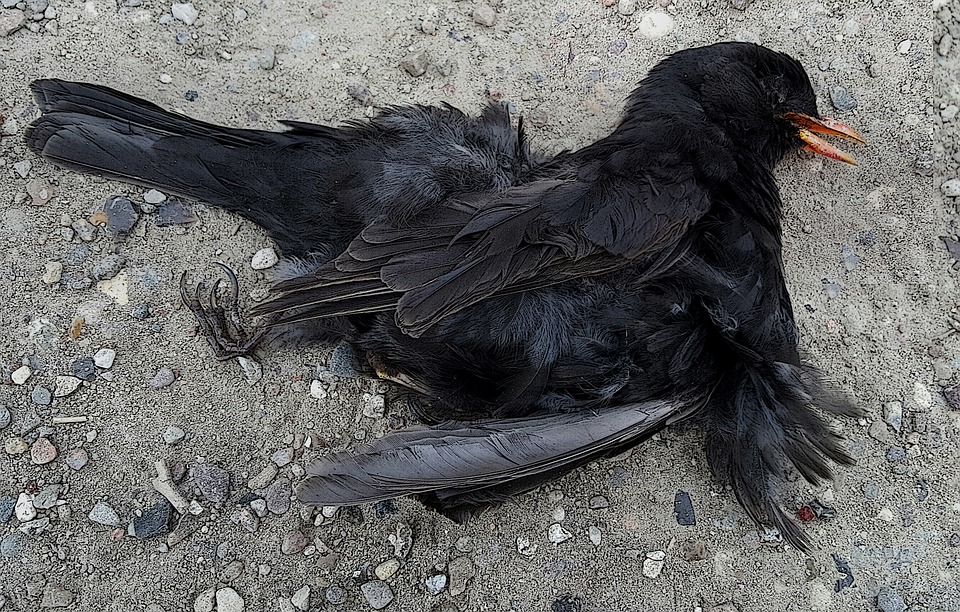
The ground was littered with the bodies of carrion crows. Their heavy beaks and ebony plumage glistened as they lay sprawled on the ground, necks broken and wings shattered They’d fallen from the sky as if expiring in mid-flight.


Even at seven years old, Aliya knew enough about the world to think: Something’s wrong here.
One of the dark shapes moved. The bird’s wings fluttered, beating against the ground with a scuffling sound before going still. She knelt next to it, absently grabbing a slender twig in one hand. She gave it a gentle poke in its side.
No reaction. She poked it again.
The crow’s head whipped around as it struck with a convulsive snap.

Elaine’s Comments: This pandemic medical thriller has a good, creepy opening. It’s well-paced and the writing is energetic. But I have some questions:
– Who is the little girl running from?
All we know is he or she is described as “her pursuer.”
– Why is she running?
Since this is a medical thriller, is she trying to escape from someone who wants to use her in a medical experiment? Or is there another reason: she’s the only survivor in her family or village? Or is her pursuer not related to the medical crisis: is the pursuer a soldier? Let us know. It’s distracting to have this unsolved question.
The second sentence would be a good place to give us an answer:
“Her breath rasped in her throat as she ran, desperately seeking someplace to hide” from the white-coated scientist who wanted to take her away. Or from the soldiers who killed her family. You get the idea, BA.
Where are her parents?
Are they dead, in hiding, or have they been taken away?
A misplaced sentence.
“They were all around her” does not work where it is. I’d make a new paragraph, start it like this:
They were all around her: small, broken black shapes.
Describe Aliya for us more.
Her “little horsehair-trimmed boots” is a nice touch. The dead crows hitting the ground sound like “rifle bullets burying themselves in the earth.” That phrase tells us a lot about Aliya. How many seven-year-olds know how rifle bullets sound? A clever hint. But is the girl big or small for a seven-year-old? Dark-haired or blonde? A phrase or two can answer these questions.
The ending scene with the crow is a good one.
There’s much to love here, BA.
What do you think, TKZers?

Looking for a forensic mystery? You’ll love Ice Blonde, my third Angela Richman novella. https://www.amazon.com/gp/product/1625673620/ref=ppx_yo_dt_b_asin_title_o00__o00_s00?ie=UTF8

A Whole Lot of Travel

By John Gilstrap

Today’s KZ post appears late because its author has been on the road and arrived home exhausted.

I left January 20 for the SHOT Show in Las Vegas, an event I go to every year because it is to weapons systems and technology what the Detroit Auto Show is to automobiles.  Plus, I get to shoot hundreds of rounds of other people’s ammunition.  I even got to shoot a crossbow.  The highlight of this year’s day at the range came when I nailed the center of a target at 850 yards with a 6.5 Creedmoor.

The day the SHOT Show ended, the January Writers Retreat began at the Golden Nugget Casino and Hotel on Fremont Street, also in Vegas. This is a one-day (or three-day, depending on how you count) retreat where writers get together to talk about writing.

That brings us to January 27, the day we embarked on a driving trip to from Las Vegas to Santa Fe with a stopover in Monument Valley.  This trip was purely vacation.  We traveled with our good friends, Reavis Wortham and his wife.  If you haven’t read any of Reavis’s books, you’re really missing something. Santa Fe is a beautiful town, situated at 7,000 feet.  Personally, I had some real problems with the thin air, particularly at night,  The secret, I learned, is to drink a ridiculous amount of water every day.

We returned home from Santa Fe on February 4, a day later than planned, thanks to flight delays.

On February 7, I left for a 5-day trip to Guantanamo Bay Naval Station, where my colleague Khris Baxter and I taught an all-day writing class for the residents of the base.  We also spoke to the high school there.  The cherries on the cake, though, were the tours we got of the base, including those areas for which Guantanamo is most famous.  I’m not comfortable yet regarding what I can and cannot write about that, but it was quite the experience.

I got home last night and was in bed by 9.  That’s 2100 hours.  Travel to and from Gitmo is a chore.  It includes driving from Washington to Norfolk to arrive at the Military Airlift Command (MAC) by 0400 to catch the 0530 flight to the Jacksonville, FL, Naval Station (JAX).  There, the key is patience because the wait is long.  At least two hours.  Then you catch the flight to GTMO.  Upon arrival, you catch the bus that takes you to the ferry that takes you from the Leeward side to the Windward side, which is where all the cool stuff is.

Yesterday, I had to reverse that procedure to get home.  Which is why I am tired, and didn’t get this post written on time.  Oh, did I mention that Internet service on GTMO is . . . spotty?  I’ve already committed to going back next year for a full week.  But more on that later.

Now it’s time for coffee.

First Page Critique:
What Color Is Your Story?


By PJ Parrish

I’ve been bingeing on all things British lately, so I was predisposed to like this tale. Plus, it appears to be about evil spirits to boot. I think…but I’m not sure. But that’s not the only issue. I also can’t tell what mood and tone the writer is going for here. And that, dear friends, is our dilemma, and lesson for the day.

Fox Blood and Family Anchors

Chapter 1

By the time she got home, Marte’s hands and feet ached with the cold, and her empty stomach was nauseated by the stink of the wharf. Her backpack clinked as she climbed the front steps. She’d found a few useful bits. Abalone shells, sea urchin spines, driftwood—the sort of trinkets the Life and Death folk could make use of but couldn’t get close enough to the water to gather for themselves.

In the early evening light, the ghostly chalk tracings of hexafoils—that surrounded the door frame and continued in paint across the threshold—seemed almost to glow. A comforting sign of protection. Turning her key in the lock, Marte leaned forward, set her shoulder to the swollen door and gave it a sharp bump. It squeaked inward slightly, showing only a crack of the familiar floorboards beyond. The damp Autumn nights were taking a toll on all the old houses.

She stepped up to have another crack, when gravity lurched away, the solidity of the door giving way beneath her as it was jerked open. From the hallway, came the hacksaw tone of her mother’s voice; “About bloody time!”

Off balance, Marte stumbled to the floorboards, swearing at the unexpected bolt of pain that ran up through her left knee and into her hip. Reaching up, she grasped the door handle to pull herself to her feet, trying her best to get a grip on the situation.

Her baby sister, Eve, was a squalling bundle in their mother’s arms, face red and rigid, as if about to implode, while their mum, Irena, was just as flushed, her usually pale skin mottled an ugly vermillion and white. Dressed to go out in the cold, she wore her pea-coloured coat, but both her temperature and mood were clearly on the rise. Irena’s fingers were gripped into tense claws behind Eve’s shoulders and she jiggled the baby painfully up and down, as though that might quieten the infant bleat somehow.

Treating herself to a deep breath and squaring off, Marte readied herself for the onslaught. “What’s going on?” she asked.

“I’m going to be late. Again!” Irena practically stamped her foot as she spoke.

Marte recoiled from the cool fleck of spit on her face. Months of pent-up frustration were bound up inside that one word and waiting to be let loose. Again. She fought the urge to look heavenward. “Okaaay…” they both heard the squeak of enamel as she gritted her teeth, barely containing it, her knuckles blanching as she throttled the door instead of something else. “And why is that my fault?”

___________________________

As we’ve often noted with our First Pagers, it’s hard to get your bearings as a reader in a mere 400 words. We lack the clues of cover art and back copy to ground us, so we critiquers often have to guess where we are, what year it is, and what genre we’re reading. All this said, you can still wrangle in readers with a well-written tease, even lacking context.

So what do we have here? Where are we? What era is it? I’m not sure. I’m guessing it’s England (“You’re bloody late!”), somewhere near the sea (Marte has gathered shells). What year is it? We get an enticing clue — hexafoils on the door. If you don’t know the term hexafoil, you’re not alone. I suspected it was an old marking of some kind but I had to look it up. Hexafoils are designs that appear in religious art and architecture (ie stained glass windows) but they are also medieval graffiti found in barns, churches, rural buildings, scratched in wood or stone to ward off evil spirits.

Way cool! I’m in. Love reading about darkly lit corners of British folklore. I’m an Anglophile, especially if it’s the old stuff. (Just got done watching Elizabeth and Lion in Winter again and am currently reading Minette Walter’s doorstop of a novel about the black plague, The Last Hours. 

Problem is, with this submission are we in medieval England or present time? I can’t tell. The house is old, the door warped, but there is nothing else to tell us if this is 1769 or 2019. The proper names are vaguely old-fashioned sounding. Hexafoils (also called daisy wheels) are ancient but can still be seen everywhere in the England countryside. Marte is carrying a “backpack,” which is a modern word of American derivation. (as opposed to rucksack or knapsack). And when confronted by angry mother, she says, “Okaaaay,” which sounds like a petulant modern teen. So…we have confusion here, right off the bat.

old door with hexafoil carving

Which is a shame, because, like I said, I want to like this based on the small clues dropped about the daisy wheels and the mysterious Life and Death folk. I wanted to know more about them and why Marte was collecting trinkets for them.

But where does Marte go? Home — which needs a bit more description so we can tell where we are in time and space — and straight in the arms of a rather boring domestic scene. Yes, there is tension created when Mom begins to rag on Marte, but given the fact that Marte’s character is still a mere sketch so far, I didn’t care. My only emotion was to want to go back out that door as fast as possible.

I’m a bit at sea with this submission, because I am not sure what would make it stronger. And because there is some confusion about era and geography, I’m finding it hard to advise about a better way to begin this story. I can’t figure out what kind of person Marte is (even her age range) and why we, as readers, are being asked to enter her life at this particular point.  Especially since the clues about evil spirits and Life and Death folk are far more interesting than a crabby mom and squalling baby.

Maybe the writer is trying to show us Marte’s “before” life so when something does happen to her — the “after” — we will be intrigued and care about her journey.  But that, as James often points out, is a fatal mistake of many opening pages. Don’t show us the normal life and then up-end it. Get to the conflict and then you can go back and explain what happened.

Maybe you all can help me out here and be more articulate about this submission. It’s not bad, but there is something just off about it that I can’t quite put my finger on. Let’s go to some specific points now:

Fox Blood and Family Anchors Not crazy about this title. If you’re writing about medieval ancient spirits in old or new England, you can do better.

By the time she got home, Marte’s hands and feet ached with the cold, and her empty stomach was nauseated by the stink of the wharf. So, does she live right by the wharf? Be more specific about where we are. Her backpack clinked as she climbed the front steps of her house. She’d found a few useful bits. Abalone shells, sea urchin spines, driftwood—the sort of trinkets the Life and Death folk could make use of but couldn’t get close enough to the water to gather for themselves.This, to my ear, is the most intriguing phrase in your opening. So somewhere there is a coven of weird folks who do magic with talismans from the sea but they can’t get near the water! 

In the early evening light, the ghostly chalk tracings of hexafoils—that surrounded the door frame and continued in paint across the threshold—seemed almost to glow. Another nice image, but a tad confusing. If they are chalk, that means they were put there recently since they would be erased in rain. So these are NEW daisy wheels? Who put them there? Did she do it? Why not tell us? A comforting sign of protection. Turning her key in the lock, Marte leaned forward, set her shoulder to the swollen door and gave it a sharp bump. It squeaked inward slightly, showing only a crack of the familiar floorboards beyond. The damp Autumn nights were taking a toll on all the old houses in where? Here is where you can slip it in.

She stepped up to have another crack, when gravity lurched away, the solidity of the door giving way beneath her as it was jerked open. Too much with the door, just get her inside. From the hallway, came the hacksaw tone of her mother’s voice; Not bad aural image there but could clean it up a bit. From the hallway came her mother’s hacksaw voice. And no semi-colon needed. “About bloody time!”

Off balance, Marte stumbled to the floorboards, swearing at the unexpected bolt of pain that ran up through her left knee and into her hip. Reaching up, she grasped the door handle to pull herself to her feet, trying her best to get a grip on the situation. Again, too much with the door. And what does “trying her best to get a grip on the situation” mean? She doesn’t even know what the situation is yet. Unless you had hinted before now that she KNEW she was late, that she had purposely lingered on the beach, not wanting to go home to this hell. As I said, you gave us so little about Marte before this, that it’s hard to care. 

Her baby sister, Eve, was a squalling bundle in their mother’s arms, face red and rigid, as if about to implode, while their mum, Irena, was just as flushed, her usually pale skin mottled an ugly vermillion and white. Mottled means marked with color, so you’ve double-stated the flushed/white/pale thing. Her pale face mottled with red spots. Dressed to go out in the cold, she wore her pea-coloured coat, but both her temperature and mood were clearly on the rise. Irena’s fingers were gripped into tense claws behind Eve’s shoulders not sure what you mean here. Isn’t she holding the baby? and she jiggled the baby painfully only the baby can feel the pain and you’re not in her POV. up and down, as though that might quieten the infant bleat somehow. The way you phrased this sentence sounds very old-fashioned, which is fine — if we are deep in the past.

Treating herself to a deep breath Treating herself? She just pulls in a deep breath. and squaring off, Marte readied herself for the onslaught.  Don’t overstate. If she pulled in a deep breath, that implies she is readying herself for something. Say it once and trust the reader to get it. “What’s going on?” she asked.

“I’m going to be late. Again!” Irena practically stamped her foot she either does or does not. as she spoke.

Marte recoiled from the cool fleck of spit on her face. Months of pent-up frustration were bound up inside that one word and waiting to be let loose. Again. Move this up before months and italicize it. She fought the urge to look heavenward. “Okaaay…” they both heard the squeak of enamel as she gritted her teeth, You’re letting your POV waver again. Stay with Marte. But rolling eyes heavenward, spittle, white knuckles and teeth gnashing is going overboard. We get it. We know she’s upset. Move on. barely containing it, her knuckles blanching as she throttled the doorwhy are we back with the door? instead of something else. “And why is that my fault?”

Again, I really liked the opening image of this person coming back from the beach bearing these things for the mysterious Life and Death folks. I’m almost thinking you came into your scene too late and I might even want to meet Marte on that lonely cold beach searching for her odd treasures. We might think she is a normal shell seeker but then you can start dropping hints as she thinks — is this bit of abalone the thing that will save me? Will this sea urchin spine set me free?

I think you might need to slow down and do a bit of world building here before you take her into mom-hell.

Consider, for a second, how much more compelling the beach scene could be — green roiling waves, cold wind, the sickly white sun sinking in the sea. Marte is hurrying to finish her chore of finding things for the weird people before dark.  Because evil things happen in the dark.  What is her mood? Is she scared of something? Is she depressed about going home? Yes, she can be thinking, but may be she sees someone strange watching her on a cliff? Or you can stage a scene on the beach with a stranger, so you get some dialogue. It might give you a chance to tell us something about the Life and Death people. You can imply danger, begin foreboding, and mirror Marte’s thoughts by using your unique location.  Instead of opening in a claustrophobic house amid a petty domestic scene (small canvas) maybe you need the outdoor backdrop (big canvas) to humanize your character and make us worry about what is going to happen to her. Does she have to take these weird trinkets to the Life and Death people? What is she thinking about THAT?  You need to inject an element of mystery.

A beach opening would also help you set your scene geographically better AND establish a mood, tone, and atmosphere. As it is, you have none of this yet. Remember, all good openings do several things:

  1. Introduce your main character.
  2. Set us in time and place.
  3. Establish a mood
  4. Begin to establish the central conflict (or at least hint at it)

You’ve done 1. but need to work on the other three. Here’s a test exercise: What color is your book? If you were designing the cover, what colors would you use? I have a hunch this book isn’t pink or periwinkle blue. Which is why I chose the stock photo I did at the top of this post. I feel a neo-gothic vibe here. 🙂

Chapter 2, you take her home…maybe. Because I don’t think your main story conflict is about mother-and-daughter. I hope it is something larger and more compelling.

Ask yourself: What does Marte want? Peace with mom? No, that’s too small, so why open with it?  What does Marte want in the deepest part of her soul? That is your story. That is what you have to hint about (the conflict) in the opening.

I know this is counter to what we often preach here about beginnings having to get out of the gate fast. But not every tale is a thriller. Your mood might be darker, your pace more measured. So go for it! Depending on your story and location, sometimes slower might be better.  IF…and this is a big if…you can find a way to make us care about Marte and wonder “what in the heck is that girl up to down there on that beach?”

Thanks writer, for letting me visit England again. Just make it — and Marte — come alive more!


When Real Life Collides with Fiction …

By SUE COLETTA

Lately, I’ve been consumed by my WIP. It happens with every book. You know the drill. At a certain point something inside takes over. No more struggling, no more hair-pulling, no more research trips down endless rabbit holes. Instead, we spend more time “in the zone” than out of it.

Keep that in mind while I share this conversation between me and my husband, Bob — with pics!

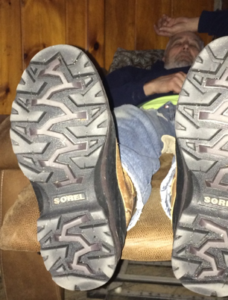
He’d just stretched out after a long day doing tile work as a favor for a friend, so exhausted he didn’t have the energy to take his boots off yet.

I’m sitting across from him. And within seconds, I’m enthralled by his boot treads. I can’t tear my gaze away, my mind whirling with endless scenarios of how I might use them in my WIP.

Bob: Why’re you staring at my boots?

Me: How long have you had those? Didn’t I buy ‘em, like, two Christmases ago?

Bob: Yeah. Why?

Me: Two years … gee, I woulda thought you’d have more of wear pattern by now. You must walk fairly even.

Bob: Thanks, I think.

It was more of an observation than a compliment, but he didn’t need to know that.

Eyes in a squint, I lean in to study the details of each tread, searching for any anomalies I could use.

Bob: What’s so fascinating about my boots?

I thumb the camera on my iPhone and aim at the treads. “Straighten your feet.”

Bob: In your mind, they’re bloody, huh?

Me: Why do you always assume the worse?

Okay, fine. Maybe I was envisioning blood in the grooves, but nobody likes a show off. 🙂 My main focus, however, was the type of impression these specific boots would leave in snow. At a crime scene, if footwear evidence is found and collected, examiners can compare these unknown impressions to known impressions, collected from other crime scenes and stored in databases.

To do this, examiners use three main characteristics for analysis …

  • Class
  • Individual
  • Wear

Class characters result from the manufacturing process and are divided as “general” —characteristics that are standard for every item of that make and model — or “limited” — any variations that are unique to a certain mold. Two boots may have identical tread patterns but may also hold slight differences due to imperfections in the molds during manufacturing.

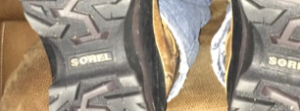
Back to Bob’s boots for a moment. This time, let’s zoom in …

See that tiny dot on the “S” in Sorel? On his right boot it’s on the bottom. On his left, it’s at the top. The “O” is filled in on the left but not on the right. Also on the right, it almost looks like there’s an apostrophe after the O, as if the brand spells its name as So’Rel. These imperfections are the perfect example of class characteristics.

Individual characteristics are unique to a particular shoe that’s worn from use, not manufacturing. Suppose someone steps on a nail. That nail hole is there for the life of the shoe, and that mark will show in the impression. Same holds true for a cut or gouge from stepping on something sharp, like broken glass. Even a small stone or twig stuck in the grooves of the tread will transfer to the impression.

Wear characteristics result from the natural erosion of the shoe caused by use. Specific wear characteristics include the wear pattern, the basic position of tread wear, the wear condition, the amount of depth of the wear, and the damage to, or destruction of, the tread pattern. The location and amount of tread loss varies for each individual, wearing that particular brand and style of shoe, based on how and where they’ve walked and the length of time they’ve owned the shoe.

Footwear impressions provide valuable information for investigators …

  • Where the crime occurred
  • Number of people present at the scene
  • Direction the suspect traveled before, during, and after the crime
  • Link other crime scenes to the same suspect

Prints are divided into three types …

  • Visible
  • Plastic
  • Latent

A visible print is exactly like it sounds. These prints can be seen by the naked eye. Think: bloody shoe prints across a linoleum floor.

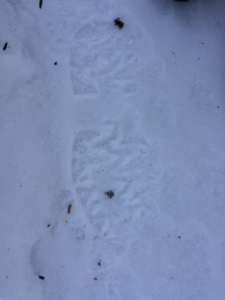
A plastic print is a three-dimensional impression left on a soft surface, like in sand, mud, or snow.

A latent print is one that’s not readily visible. It’s created through static charges between the sole of the shoe and the surface. Examiners use powders, chemicals, and/or alternative light sources to find latent prints. Think: a burglar’s shoeprint on a window sill.

The FBI compiles and maintains a footwear (and tire tread) database, which contains manufacturers’ information, as well as information from previously submitted evidence. But did you know the National Institute of Justice also maintains various forensic databases? They sure do. Which is perfect for an amateur sleuth character who doesn’t have access to the FBI’s database.

For print impressions, the NIJ maintains three databases called …

  1. SoleMate
  2. TreadMark
  3. TreadMate (for tire impressions)

For detailed information about how each database works, here’s the link to help with your research.

Knowing the basics of footwear impressions, I thought I was all set to write my scene. But if experience told me anything, it’s that a hands-on exercise trumps imagination. Hence why I’ve trapped myself in a steel drum to experience my character’s terror. And why, after spotting the boots, I dragged my poor husband outside to make prints in the snow.

Turns out, he had more of a wear pattern than I thought. After close inspection of several prints, worn spots in the grooves of the heel, toe, and instep revealed themselves. Guess someone doesn’t walk evenly after all. 🙂

If Bob hadn’t stretched out after work with his boots still on, and I wasn’t sitting across from him, consumed by my WIP, my story wouldn’t’ve taken a hard-right turn and led to several intense, gripping scenes. And I probably wouldn’t have written this post, either. Isn’t it amazing how that works?

We writers need to remain open to outside stimuli. If your short on ideas, you’re not paying attention to the world around you. Look through the writer’s lens at all times. That’s the biggest takeaway from this post (outside the helpful info. re: footwear impressions ;-)).

Our experiences bleed through every page we write. So, go ahead and drag your spouse/neighbor/friend into the snow to make prints, if that’s what you need for research. Or pause to listen to the throaty rattle of a raven, if you need a moment of clarity. Life is our greatest ally. Don’t squander the gift of perception by ignoring her.

Has real life ever collided with your fiction? Are you viewing the world through a writer’s lens? Please share a brief sliver of time. Like when a raindrop catches kaleidoscope colors as it rolls down a windshield or how the neighbor’s cat only limps when his owner’s watching.

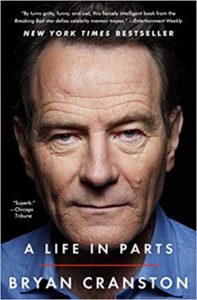
What Bryan Cranston Can Teach Writers

by James Scott Bell
@jamesscottbell

I’ve always liked the actor Bryan Cranston. He was my favorite secondary character on Seinfeld, playing WASP dentist Tim Whatley, who converts to Judaism so he can claim the rich history of Jewish jokes. (When Jerry objects, he is accused of being an anti-dentite.)

Cranston made regular TV appearances throughout the 90s, and spent seven seasons as the goofy father Hal in Malcolm in the Middle. Then came his signature role as Walter White, the high school chemistry teacher turned drug kingpin in Breaking Bad. Quite a jump for an actor known mostly for light comedy! But he was perfect casting in this binge-worthy descent into the heart of darkness.

On a recent long drive I listened to Cranston’s autobiography, A Life in Parts. Read by the author, it’s an enjoyable account of Cranston’s rise as an actor. What’s clear from the book is that he takes his craft seriously. That’s why he went from bit-part support to respected lead—evidenced by four Emmys, a Golden Globe, a Tony (for playing Lyndon Johnson on Broadway), and an Oscar nod for his portrayal of the blacklisted writer Dalton Trumbo.

What made the book all the more interesting for me is that he and I are about the same age and grew up in the same place—the west San Fernando Valley. He went to Canoga Park High School; I went to nearby Taft. I was a young, struggling actor at the same time he was. We may even have crossed paths in Los Angeles at an audition for a commercial or TV show.

I really connected to that part of the book where Cranston describes the cold chill of auditions. How well I remember walking into waiting rooms with twenty other guys my age and look. Everybody sizing each other up. Then going into a room with a camera and a panel of unsmiling casting folk and reading the lines I’d been given. When I was finished, someone would say, “We’ll let you know.” I’d walk out, past the other actors, all trying to read my face as I attempted to hide what I was thinking: I blew it! Why did I say the line that way? I bet that meathead with the perfect chin gets it! What teeth whitener does he use?

Cranston covered this process with good humor and insight. But at one time the attendant anxieties were starting to debilitate him. So his wife, as a gift, purchased sessions with a life coach, who …

… suggested that I focus on process rather than on outcome. I wasn’t going to the audition to get anything: a job or money or validation. I wasn’t going to compete with the other guys. I was going to give something.

I wasn’t there to get a job. I was there to do a job. Simple as that. I was there to give a performance. If I attached to the outcome, I was setting myself up to expect, and thus to fail. My job was to focus on character. My job was to be interesting. My job was to be compelling. Take some chances. Serve the text. Enjoy the process.

And this wasn’t some semantic sleight-of-hand, it wasn’t some subtle form of barter or gamesmanship. There was to be no predicting or manipulating, no thinking of the outcome. Outcome was irrelevant. I couldn’t afford any longer to approach my work as a means to an end.

Once I made the switch, I was no longer a supplicant. I had power in any room I walked into. Which meant I could relax. I was free.

That, it seems to me, is perfect advice for a writer, too. Get rid of expectations! You can’t control outcome, only process. Keep your focus on the page in front of you. Connect with your characters. Tackle the challenges.

You’re not here to get something, you’re here to give something—entertainment value to a reader.

When your book comes out, as far as you are able (you’re human, after all) nix any expected outcome. Keep working on your next book and developing more projects. Sure, you go through the marketing routine and learn what you can. But don’t obsess about rankings and reviews. Forget the awards and the honors, which you can’t buy.

Just love your craft, the way Bryan Cranston loves his.

Then you will no longer be a supplicant. You will have power on the page. You’ll be free.

Where are you in the expectations game?