Escapism Rocks!

by James Scott Bell
@jamesscottbell

There’s always been a certain amount of stress associated with being alive. In pre-historic times, this was largely based on concerns over being eaten by large animals. Or by having pointy things stuck into your body by the tribe down the road. At the same time, you had crops to attend to and weather events to deal with. All with no TV, internet, or Candy Crush.

Later on, the Greeks sat around inventing philosophy and giving people more reasons for stress, as in, trying to figure out the point of this bewildering existence. Religion was asking the same questions in places like India, China, and Jerusalem.

As the great historians say, stuff happens. Like war. More stress. In America we had a war oddly called “Civil.” And later joined the right side in a couple of wars big enough to be called “World.”

In between WWI and II, we had the Great Depression, and the stress of actually getting food onto the table. Jobs were scarce. Prospects, in many cases, dim.

Which is where escapism stepped in to offer rays of entertaining sunshine. You had the movies, of course. For a dime you could spend a few hours with Astaire and Rogers, Gable and Tracy, Hepburn and Grant. Radio was pervasive, providing laughs from Benny and Hope and Fibber McGee, and adventures with The Lone Ranger and The Shadow. And comfort by way of “fireside chats” delivered by President Franklin Delano Roosevelt himself.

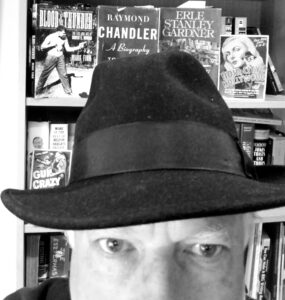
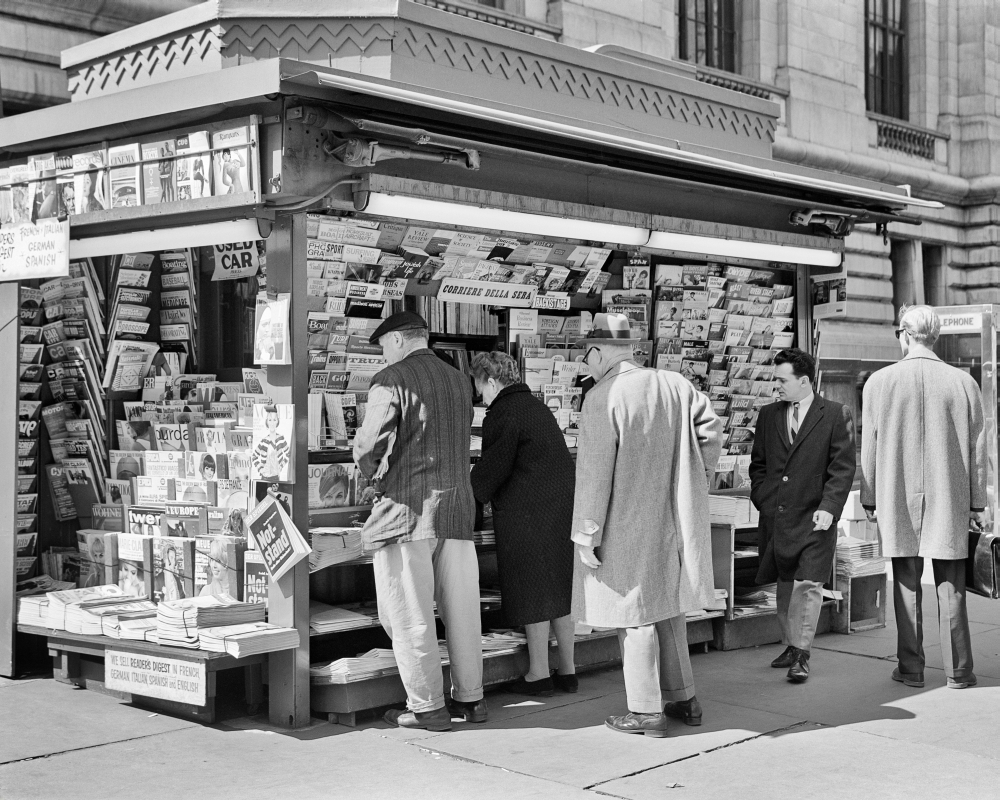
But by far the most popular form of escapism came by way of the pulp magazines. In the 1930s the pulps were booming. Newsstands and drug stores carried dozens of magazines with names like Black Mask, Dime Detective, Amazing Stories, Adventure, and Thrilling Western. Popular series characters (what the great pulp writer Erle Stanley Gardner called “the writer’s insurance policy”) included Nick Carter, Doc Savage, Tarzan, Conan the Cimmerian, Buck Rogers, Sailor Steve Costigan, and Bill Lennox.

Indeed, some of our best American writers came out of the pulps—people like Dashiell Hammett, Raymond Chandler, Robert E. Howard, Fredric Brown, and Horace McCoy. Not to mention the many steady professionals who knew one thing above all—how to tell a dang good story.

And just what did these stories have in common? I think Gardner himself said it best:

“The public wants stories because it wants to escape.…The writer is bringing moral strength to many millions of people because the successful story inspires the audience. If a story doesn’t inspire an audience in some way, it is no good.”

I believe this is still true. Which is why I’m launching my own short fiction channel via Patreon.

If you’re not familiar with Patreon, it’s a site where artists of various stripes can find support for their work. Friends, family, and fans become patrons of the artist. Usually that comes in the form of monthly pledges, in return for which a patron receives various benefits, such as early access to new work or a personally autographed print.

But there is another model called “per creation,” which seems to me more applicable to writers. In this model, patrons are not charged monthly, but only when an actual story is published. My job is to deliver the goods, which means entertaining escapism for a busy reading public. Stories you can read on the subway or the bus, or while waiting for the doctor, or simply at home after a long day when you don’t feel like cracking Moby Dick.

All of the details about this venture are on my page. I hope some of you will join me in this venture. The stories I publish will not appear anywhere else. You’ll be able to read this exclusive content online, on your phone via the free Patreon app, or on your Kindle, Nook or Kobo ereader.

My first story will come out June 1. It takes place in Hollywood in 1945. There’s a movie studio, a murder, and a studio troubleshooter named William “Wild Bill” Armbrewster. He’s going to be a series character, so this would be a good time to get in on the ground floor.

Because in times such as these, escapism rocks.

So what are some of your favorite books, movies, or TV shows when you simply want to escape?

10-4


One of my biggest problems when writing is that I tend to get in my own way. This has occurred with some frequency during my latest project, currently titled The Lake Effect, which I discussed here a few weeks ago. You may or may not recall that I dreamt the beginning, middle, and ending of what is a love story. All that I have had to do is write the thing. This I am doing,  and am having fun doing it. Occasionally, however, I can’t leave well enough alone. I know that I should simply tell the story. I’m doing that, but occasionally I seem to consider myself to be duty bound to insert into the narrative examples of how clever and knowledgeable I consider myself to be.  As one might expect, I am usually wrong. The result is that my narrative bogs down. I’m not getting tripped up in detail. Sometimes one should stop and smell the roses, so long as the scent is pertinent in some way to the story. My mistake has been that I will be moving from Point A to Point B but will insist on stopping and describing Points A1, A2, and A3 along the way as well. I don’t consider my reader, who (hopefully) will want to get to Point B with all due and deliberate speed. I do this and  wonder why it isn’t working, then realize that I am boring myself. If I am putting myself to sleep, then what am I doing to my poor reader, who will probably leave the building, never to return?

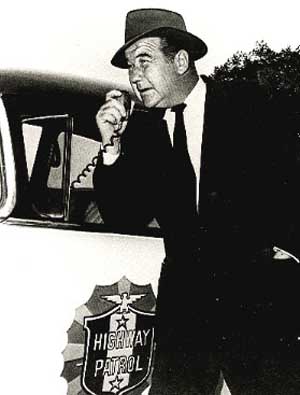
I have found that as a sort of enjoyable and tutorial penance for such a writing error I am best served by watching a few episodes of Highway Patrol.  It was one of my favorite television series in the 1950s and remains so today. Each episode was about twenty-five minutes long. They would shoot the episodes in two to three days, twice per week, and broadcast close to forty episodes a season. This was done on a very limited budget. There were no fiery car crashes or extended shootouts through shopping malls.  There were other constraints. Broderick Crawford was the lead actor. He played Dan Mathews, the taciturn, grizzled head of the unnamed Highway Patrol unit featured in the series. Crawford’s parts in each episode had to be shot in the morning because he was usually well-toasted by lunch. It somehow worked. Crawford delivered his dialog staccato-style (“Youshouldbesorryforwakin’meathishourwhaizzit?”) (“CorneraBrownanChocorantwoaclock”) (“21-50taheadquarters10-4”) when ordering his officers about. The cadence of Crawford’s diction, or lack thereof, was perfect for an episodic series where time was of the essence.  There was also a formula applied to the shows which becomes obvious after a few different viewings. It was simple. A crime would be committed, Matthews and his team would chase their tales, and some evidence would be discovered, all within the first half of the episode. The last half of the episode (all twelve minutes or so) would show Mathews and his associates bringing the evildoers to justice. Voice-over narration by a gentleman named Art Gilmore gave each episode a quasi-documentary feel (“Burglary is the alley cat of crime, wandering the night in search of prey”). At the conclusion of each episode, Mathews, as he was getting into his car, would stop, look at the camera, and break the fourth wall by directly addressing the television audience with a pithy safe driving platitude, such as “It isn’t the car that kills…it’s the driver!” Just so.  

Each episode of Highway Patrol was suspenseful and exciting even with such a cut and dry formula. Nothing ever really felt left out. Each minute — each second — was important. Highway Patrol was the first television series to utilize fast cutting — a few different action shots of just a couple of seconds’ duration (usually consisting of a police car racing to a crime, or chasing a suspect) — to move the action along.  They also didn’t spend a lot of time getting the viewer from Point A to B. Mathews would get a lead, jump up from his chair and say, “Let’s go!” The next scene might show him driving quickly down a street for about two seconds (stock footage was often used, as Crawford at one point during the series run had his real-world driver’s license suspended for driving under the influence) followed by Mathews getting out of the car at his destination and shooting it out with the criminals. Bing bang boom.

If while writing you find yourself stuck in a thicket of your own design and wondering what to weed and what to water watch a few episodes of Highway Patrol. It is possible that you will absorb its lessons about narrative and storytelling by osmosis. All four glorious seasons (Crawford said the series stopped because they ran out of crimes) can be found on DVD,  YouTube and a couple of cable channels. It works for me. If you already have a method of bringing your writing errors and ommissions on track, please share. And thank you. 1075 to 21-50. 10-4.


Reader Friday: Ask One Question to Any Author (Alive or Dead)

If you could ask any author (alive or dead) one question, what would it be and who would you ask?

I’d love to chat with Edgar Allan Poe. A palpable sadness bleeds through his writing. It’s no secret tragedy followed him throughout his life, but his story still seems incomplete.

Asking him only one question might be near-impossible for me. 😉


Fiction Research Links

Jordan Dane
@JordanDane

I came across some great resource links over the years and thought I would share some with my TKZ family. I’ll group them in no particular order.

MEDICAL:

This first link is to a site in Australia, but when I couldn’t find a similar one for the U.S., this serves the purpose. It gives writers a good visual as a reminder of what an Intensive Care Unit in a hospital looks like and the terminology: What’s in an ICU?

The Encyclopedia of Death and Dying – Wonder what’s in there? Plenty of weird topics alphabetized.

BioMed Search – Medical Resources – This has tons of medical resources on all sorts of illnesses, procedures, case reports, treatments for illnesses, surgical procedures, etc.

EMedicine: Medscape – Want to see what blunt force trauma does to the head and skull? This site is not for the squeamish. Various medical specialties are listed with slide show pictures. There’s also extensive resources on surgical procedures, pediatrics and general disease conditions.

FORENSICS:

This link has many resources, especially when you look under Forensic Resources Tab: American Academy of Forensic Sciences AAFS

Computer Forensics at SANS – Digital Forensics

Top 50 Forensic Science Blogs

CRIME SCENE:

This link has resources for writers to research crime scene cases and chat in forums to ask questions and get advice from detectives. Writers can research old cases and they even have an online store for fun purchases. Crime Scene

Crime Scene Investigator Network – This link gives writers plenty of resources on crime scene procedures and evidence gathering, with photos, forum to ask questions, videos, and case files.

Crimes & Clues: The Art & Science of Criminal Investigation – Ever wonder what a CSI job demands and the pay? This site has that and more. Profiling articles from top FBI agents, interrogation techniques and cases, courtroom testimony, various studies on forensic science, death investigation with pathology and entomology.

MISCELLANEOUS:

Police One – A solid resources for all things police: uniforms, gear, police cars, radios, body armor, body cams, police procedure, etc.

Botanical: Modern Herbal – A solid research source for herbs and poisons

Poison Plant Database

Firearms Tutorial – This is a resource for firearms with basic terminology, Lab procedures, examination of gun shot residue (GSR), and a study of ballistics, among other things. But since we have a resident expert in John Gilstrap, I would encourage anyone to start with John’s posts on guns here at TKZ – links below:

The Truth About Silencers

Cla-Shack

Choose Your Weapon

GENERAL WRITERS RESOURCES:

Internet Resources for Writers – Tons of resources on all topics for writers from networking resources, craft, research and business links.

The Internet Writing Journal: Research Resources for Mystery and Crime Writers – Lots of links on crime research, police procedure, forensics, government sites, and types of crimes.

CHARACTERS:

Building Fictional Characters – Lots of helpful links to resources on the topic of crafting characters with recommended instructional books. But I would be remiss if I didn’t also include our own TKZ resources on author craft through James Scott Bell (his list of books on writing are HERE) and Larry Brooks. Larry’s craft resources are listed HERE.

I hope you’ll find these links new and interesting.

FOR DISCUSSION:

What writers’ resource links have you found useful? Any topic from business/promotion to craft and research.


First Page Critique: They’re Gone


Greetings, writers.

Today, join us for a peek into the life of the cutest family ever! Take it away, Brave Author:

CHAPTER 1

We all have secrets. Josh prefers to keep his hidden, especially from his wife. Josh Benson is a 35 year old family man, devoted father, and loving husband. He has no idea his life will shatter in the next 24 hours.

Josh is scrolling through cell phone photos. He stops at one in particular. It’s from his first date with Lauren. He looks fit and his blue eyes are staring into Lauren’s without a hint of deception. Things change. This photo was taken nine years ago.

He hears little footsteps scurrying across the hardwood floor. Sean and Cooper come running into the living room and jump on the couch like it’s a trampoline.

“Mommy, Daddy, can we watch tv?” It’s a Saturday morning so this excitement is expected.

Lauren says, “Yes, but you need to quit breaking the couch. I’ve told you a hundred times.”

“Fine Mommy, we’ll stop.” The things kids say just to watch television.

Josh clicks a button on the remote control and asks the boys what show they want to watch.

They both respond at the exact same time as if they’re the Backstreet Boys. “Sesame Street!”

Josh looks at his two greatest accomplishments and just smiles. He loves them more than life itself.

After the kids find out the number of the day, they consume some snacks like Joey Chestnut in a hot dog eating competition.

Josh says, “Okay boys, guess what today is?”

“Family day!” Everyone cheers. Josh and Lauren are taking the boys to the Philadelphia Zoo for the first time.

“Who’s ready for the zoo? Who wants to see a lion?”

Cooper starts roaring as loudly as he can. He’s 3 years old so this is appropriate behavior.

The boys are adorable, as in they’re so perfectly good looking, you would think Brad Pitt and Jennifer Aniston had kids in their prime and out came Sean and Cooper.

Sean, their 5 year old, is full of life and never stops. He’s like the Energizer bunny. He says, “I’ll be right back, Daddy!”

He plays a quick game of frogger to avoid the never-ending amount of toys scattered across the living room floor. Once he finds the right bin, he puts on his favorite costume. He dresses up in a black mask, puffed out chest, gold utility belt, and a long black cape. He hustles to the kitchen table and taps Josh’s shoulder.


__________________

Before rushing into the meat of this submission, let’s address the piece’s first word: We. “We” is a huge word, and its implications are several.

  1. “We” implies a rare, first-person, plural narrator.
  2. Who is included in this we? Does it include all humans? Is it a Greek-style chorus of Josh’s friends and family? Perhaps an alien tribunal?
  3. Hearing this particular “we,” I’m immediately put in mind of Rod Serling’s opening and closing monologues on the original Twilight Zone television series. Serling’s monologues had an intimate, confidential, we’re all in this together, feel. He seemed to be addressing each listener across a table set with crystal ashtrays and chilled cocktails.
  4. A story with a first-person, plural narrator is definitely akin to second-person narration, which uses “you” handily. As in, “You may be reading this thinking, ‘Oh! The author is going to kill off that darling little puppy!’ But you would be wrong. We all know I’m way smarter than that.”

“We,” as intimate as it sounds, here leads us into a scene over which we hover as though we’re watching images sent back to us via drone. An opening scene sets the tone of the entire novel–and while there are plenty of clues that we’re dealing with a happy family and proud father, there is no other tension except Josh’s slight frustration with Elmo repeating himself.( My sympathies, I’ve been an Elmo prisoner.)

All this is to say, please give us some small, physical signs of John’s frustrations. Is he always the perfect, fun dad? Or is he occasionally grouchy and overly-protective.

Josh pulling out an old photo of him and his bride is a bit cliché.

Given the title, and the tale’s dire, first paragraph prediction, I’m going to assume that it’s the two adorable children who are the “They” who are soon gone? With those assumptions, the story will clearly be a thriller. Except…there’s a whole lot of cuteness to navigate that serves to make me wonder if that’s really going to be true.

Thinking about dialogue:

““Mommy, Daddy, can we watch tv?” It’s a Saturday morning so this excitement is expected.” –Who is talking here? Both of them? It would be weird and truly scary to have them say this simultaneously.

““Fine Mommy, we’ll stop.” The things kids say just to watch television.” –“Fine, Mommy, we’ll stop.” sounds a bit Stepford-child-ish. And, again, is it both children saying this?

“The things kids say just to watch television.” Is this Josh’s thought? Again, it feels like an intrusive narrator’s words, rather than those of a character.

All that said, I love the children’s presence, and the intense family feeling here.

Please keep in mind that an opening scene needn’t be saccharine to imply general happiness. If this is, indeed, a thriller, put in more tension, less Elmo.

Set to, dear readers! I’ve left plenty of open territory for other criticismsl


First Page Critique – Broken Thrones

Photo credit: Pixabay

by

Debbie Burke

@burke_writer

Please welcome another Brave Anonymous Author offering a submission entitled Broken Thrones.

1

Joanie Brown opened one eye. The darkness had lifted. Light filtered from a slit in the ragged curtains covering the one window in the room, dust drifting down in the narrow beam. She breathed deeply and gagged. The stench of human filth and the sweet smell of pot overpowered her senses. Her head pounded, keeping time with her racing heart as she struggled to make sense of her surroundings.

Where am I? Why can’t I remember?

She lay on her back on a concrete floor. Under her fingers splayed out at her sides, she felt a gritty moisture. She hastily wiped her hands on her pant legs. She reached out and brushed a cold, rough wall with her left hand. Deep snores sounded from somewhere in the room, so she knew she wasn’t alone. Out of her one eye—the other one wouldn’t open and it hurt—she saw a closed door and four dingy gray walls. The floor was littered with bits of paper, discarded needles, condoms, and a filthy jacket tossed in the corner nearest her. She saw no furniture of any kind, except a soiled striped mattress across the room. She squinted at it, seeing a dark shape curled up on it. The source of the snoring, no doubt. The only other sound was the clack-clack of some insect as its feet raced across the hard floor. She scooted closer to the wall at her left and hoped it wouldn’t come her way. Joanie hated bugs.

She reached up and brushed thick hair out of her face, running her fingers over her other eye, wondering why she couldn’t see anything out of it. Now she knew—it was swollen shut. Wincing, she tried to pry it open. Her fingers came away with a smell of blood. She knew that smell. Her brain kicked into high gear now.

Memory now returned in chunks. Kyle. Where was he? The thought of him made her chest heave.

The last time she’d seen him, he was getting the crap beat out of him in a potholed alley littered with garbage and weeks-old refuse—by two thugs who’d dragged him there from the LA street corner where she’d finally found him. She’d hunkered down and watched from behind a dumpster reeking of rotting vegetables and month-old French fries.

Before that, she had spent hours searching for him.

~~~

Brave Author, your excellent title makes a promise of dire conflict. Broken Thrones implies destruction and violent overthrow of power. It’s short, punchy, and memorable, especially effective since Game of Thrones is currently a popular topic of conversation. Well done!

Your writing is crisp, competent, and vivid. You immerse the reader in the scene by making good use of the senses—sights, sounds, touch, and especially smells. We’ve all caught a nasty whiff from a stinky dumpster and know exactly what you’re describing.

The sense of foreboding is strong. Something bad already happened and worse is yet to come—like bugs crawling over Joanie.

That said, I see two problems with this first page.

First, this opening has been done before. Editors and agents always ask for something “fresh.” They’ve likely read many submissions with opening pages about an injured character waking up in a strange place without any memory of how she got there. This may be an easy fix and we’ll get to that in a minute.

The second problem: lack of action. Almost the entire page is spent setting the scene—a filthy shooting gallery basement littered with drug paraphernalia, an unknown man snoring, Joanie’s swollen eye, and her confusion. She’s taking stock in a scary situation but she’s in the passive role of watching and waiting, rather than driving the action.

The last two paragraphs are a flashback: Joanie watches someone named Kyle, whom she’s been looking for, while he gets beat up. And she hides.

Now that’s action!

Let’s consider if the story would work more effectively if you start there.

A character getting the snot pounded out of him immediately piques the reader’s curiosity, even if it’s not yet clear who that poor soul is or why he’s being beaten. Is Kyle a mugging victim? A druggie who owes his dealer? Or did Kyle sell bad junk to the daughter of the guys who are stomping him?

What is the relationship between Joanie and Kyle? Is he her boyfriend? An ex-husband she’s been chasing for child support? Or perhaps her dealer?

Those answers lead to the next questions: Why has Joanie spent hours searching for Kyle? Did he run away? Does she desperately need a fix?

The most provocative question of all: Why is Joanie hiding? If she fears for her life, why not yell for help or use her cell to call 911?

Does she feel guilty for watching the attack without doing anything to help?

Or does she feel he deserves what he gets?

See what happens if you start with action? The reader is immediately engaged, wondering and guessing, rather than passively watching the scenery, even though the scenery is skillfully and vividly described.

Additionally, that avoids the need for a flashback, which always risks reader whiplash. Just as they’re settling into the story, you yank them to a different place and time. Why flash back when you don’t need to?

If, while Joanie’s crouched by the dumpster, you reveal her character in a way that makes the reader care about her and her quest, we’ll willingly follow her into the next scene in the basement.

When she wakes up, you can still use the vivid description of the disgusting drug den with discarded needles and used condoms. The only difference: it’s probably now page 2 instead of 1. And the reader is more invested in the story and characters.

Then introduce a new series of questions to intrigue the reader. Did Joanie try to stop the thugs and they turned on her? Did their accomplice sneak up behind her and knock her out?

While she’s lying on the floor, reveal her character more deeply through her thought process and actions. Does she crawl to the mattress to see if the snoring man is Kyle? Does she look for a way to escape? Does she grab a syringe and hide it as a weapon for when the bad guys come back?

Keep raising questions while building characters who make the reader care what the answers are.

One tiny nit: since dumpsters are usually emptied at least weekly, “month-old French fries” didn’t quite hit the mark. Otherwise your scents are spot on. Made me gag, but I mean that in a good way!

Brave Author, you have a promising beginning for a dark thriller/suspense novel. Thanks for sharing your work.


Over to you, TKZers. What suggestions do you have for today’s Brave Author?


Today is the last day to download Debbie Burke’s thriller Instrument of the Devil for only 99 cents. Here’s the link.


First Page Critique: Ghost Wind

Happy Monday! Today I’m critiquing the first page of a historical novel entitled Ghost Wind. My comments follow and I look forward to getting some great feedback from you, TKZers!

The Ghost Wind

This was the door the Mexican boy had pointed out to her. She stepped up onto the boardwalk, side-stepping a hole in the rotten wood, the wind pelting her with dirt and dead leaves and causing the oil lamp overhead to swing precariously back and forth. The door was solid and locked tight. Standing on her toes and reaching above her head her fingers found the iron key above the lintel, just as he’d said. The glass panes in one of the windows were shattered, their jagged edges reflecting the moonlight. She struggled with the lock, the key finally turning with a hollow click. The force of the wind slammed the door inward and knocked the few remaining shards of window glass from their panes.  She entered cautiously and looked around the room.  Just enough moonlight penetrated the darkness to reveal several pieces of furniture shrouded in dusty canvas. Lifting the coverings, she found a long leather-covered central table, a cot, a few cabinets still in serviceable condition.  The building seemed solid, but the wind still whined around the warped window sills sending leaves and twigs skittering over the floor and causing the ghostly canvas to billow and fall. She shivered and tried to rub some warmth back into her arms. Whatever made her think it was always hot here?

She continued making a slow circuit of the room, trying not to bang her shins against unseen obstacles. It was near midnight, but the night was still alive with sound. Guitar music drifted from a cantina across the street accompanied by bursts of laughter from a nearby saloon. A door banged somewhere farther down the street. Slow footsteps marched up the narrow boardwalk and then stopped, grinding the broken glass below the window. For a moment it seemed whoever was passing had moved on until a familiar sound stopped her cold. The four, slow, distinct clicks of a gun hammer being drawn back. She knew that sound.

She drew a sharp breath, inhaling the room’s lingering odors of dust, mildew, sour liquor, and stale sweat. The dry branches of a leafless tree scratched against a window making demon shadows dance on the far wall.  The lamp outside, creaking on its rusty hinges, thrashed in the gusty wind. Her hands, already cold inside her gloves, grew clammy.

“Don’t. Move.”

§

It had been a long journey across some of the ugliest, most barren wasteland imaginable. First by train to Waco, then by stage to some godforsaken place called Ben Ficklin, and finally by horseback to… here. San Angela, Texas. A hundred miles from nowhere and on the road to who the hell cares where. But here she was. Nearly fifteen hundred miles. And she felt like she had walked every one of those miles. She was dirty, cold, tired, hungry, and in no mood for an argument.

My comments

The real strength of the first page is the atmosphere it evokes and the attention to detail that allows the reader to get a strong sense of place as well as the past. That being said, these could also be considered weaknesses given the lack of action and dialogue – illustrating the delicate balancing act any author has to achieve on this all important first page!

Because I really enjoyed this first page, I’m wary of making too many recommendations (reader tastes are always subjective after all) but I do think tightening up the initial descriptive paragraphs would help pick up the pace so the reader can reach the critical moment where the gun is being drawn back a little quicker. I wouldn’t take out much, but some of the description is redundant and could be removed without impacting the atmosphere or dramatic tension in this first scene. I would also consider changing the one line of dialogue “Don’t. Move.” to something less conventional or cliched. Something unexpected here would definitely intrigue the reader especially since the next paragraph provides further background (I have to say I love the way the line ‘she was dirty, cold, tired, hungry, and in no mood for an argument’ could feed back into that one line of dialogue).

By way of suggestion only, I’ve re-pasted the first few sections, striking through some of the lines of description I feel are redundant.  See if you agree, TKZers. I think visually if the first page could end with the line of dialogue it would also seem less wordy and more appealing to readers. Otherwise, I thought this was a terrific first page. Bravo to our brave submitter!

The Ghost Wind

This was the door the Mexican boy had pointed out to her. She stepped up onto the boardwalk, side-stepping a hole in the rotten wood, the wind pelting her with dirt and dead leaves and causing the oil lamp overhead to swing precariously back and forth. The door was solid and locked tight. Standing on her toes and reaching above her headher fingers found the iron key above the lintel, just as he’d said. The glass panes in one of the windows were shattered, their jagged edges reflecting the moonlight. She struggled with the lock, the key finally turning with a hollow click. The force of the wind slammed the door inward and knocked the few remaining shards of window glass from their panes.  She entered cautiously and looked around the room. Just enough moonlight penetrated the darkness to reveal several pieces of furniture shrouded in dusty canvas. Lifting the coverings, she found a long leather-covered central table, a cot, a few cabinets still in serviceable condition.  The building seemed solid, but the wind still whined around the warped window sills sending leaves and twigs skittering over the floor and causing the ghostly canvas to billow and fall. She shivered and tried to rub some warmth back into her arms. Whatever made her think it was always hot here?

She continued making a slow circuit of the room, trying not to bang her shins against unseen obstacles.It was near midnight, but the night was still alive with sound. Guitar music drifted from a cantina across the street accompanied by bursts of laughter from a nearby saloon. A door banged somewhere farther down the street. Slow footsteps marched up the narrow boardwalk and then stopped, grinding the broken glass below the window. For a moment it seemed whoever was passing had moved on until a familiar sound stopped her cold. The four, slow, distinct clicks of a gun hammer being drawn back. She knew that sound.

She drew a sharp breath, inhaling the room’s lingering odors of dust, mildew, sour liquor, and stale sweat. The dry branches of a leafless tree scratched against a window making demon shadows dance on the far wall. The lamp outside, creaking on its rusty hinges, thrashed in the gusty wind. Her hands, already cold inside her gloves, grew clammy.

Write Tight

by James Scott Bell
@jamesscottbell

Here’s a first page. You know the drill. We’ll talk on the other side.

The Reaper’s Scythe

The jungle had already started to darken around them when Lucas spoke up.

“We need to head back,” he urged, even as they continued down the barely-there dirt trail. “Even if the pigs really are there, I doubt they’re safe to eat.”

Imro let out a grunt. He shifted the grip on his 12-gauge as he pushed through a tangle of vines. The man’s knuckles were as dark and worn as the fiddleback myrtle that made up his shotgun’s stock.

“My brother says he saw them,” Imro finally said. His Sranan accent smoothed brother into brudda. “That damn good enough for me. ‘Sides, say we come back to camp empty-handed, you t’ink anyone going to be happy about their empty bellies?”

“That’s right,” Maikel called back from up ahead. “Maybe if they hungry enough, they gobble you up instead!”

Maikel made a wet smacking sound with his lips and laughed at his own joke.

Lucas rolled his eyes but said nothing. He’d arrived in Suriname as a volunteer with the Peace Corps. Over time, he’d picked up the country’s English-based creole language.

He’d also picked up a bad case of gold fever.

The rumors spoke of a place downriver that glittered with bright golden flakes. The location was achingly remote. But Lucas and a dozen others had gone in and reached the place, panning the sandbars from sunrise to sunset.

Eventually the stores of beans and tinned meat ran low. Lots were drawn, so the three least lucky were sent off to forage for bush meat. Pickings had been sparse. Then Maikel had climbed a tree and spotted them with his binoculars.

A group of dead peccaries lying like tusked gray stones in the clearing up ahead.

Lucas didn’t like it. The jungle’s ‘skunk pig’ was good eating. Up to sixty pounds of meat lay under a peccary’s collar of bristly hair.

But something must have killed those animals.

Worse, the rain forest made sure that every free scrap of flesh, skin or bone got recycled by a thousand tiny mouths. That nothing had yet come to touch these pigs did not make sense to Lucas. That sense turned into an uneasy feeling that settled into an ache at his temples.

Maikel froze. He pointed up ahead, his index finger quivering in disbelief.

“What you doing?” Imro hissed. “Stop playin’ at sticks, or I’ll–”

“The pigs…” Maikel gasped. “They gone.”

***

JSB: There’s a lot to like about the content. It’s action—characters in motion toward a goal—in a fraught-with-danger location (the jungle). And there’s a disturbance: all those dead pigs suddenly … gone! Plus, it’s a unique setting (Suriname).

So what I have to say here has to do with making the writing tighter. In a thriller, that’s always the better way to go. Heck, in any kind of writing it’s better. Note: I’m not talking about pace. That’s an entirely different subject. I’m not talking about scenes or scene length. I’m talking about the sentence level, so the words you use (your stock-in-trade, after all) can be most effective.

Let’s start with the opening line.

The jungle had already started to darken around them when Lucas spoke up.

This is a bit too sloggy, because of: had already started to darken. Whenever you write the word had, train yourself to pause and see if there is a crisper way of putting it. (I’ll have more on this in a moment.) Here, a tighter line would grab faster and better:

The jungle was starting to darken when Lucas spoke up.

Boom. We’re there without superfluous verbiage. The them isn’t needed because the scene reveals the trio as we go along.

“We need to head back,” he urged

As most of you know, I’m of the said school of attribution, unless another word is absolutely necessary for clarity. Here, urged is superfluous. The line itself is urging. And we don’t need he, because you just told us it was Lucas. Try something like this:

The jungle was starting to darken when Lucas spoke up. “We need to head back.”

Boom again.

Imro let out a grunt. He shifted the grip on his 12-gauge as he pushed through a tangle of vines. The man’s knuckles were as dark and worn as the fiddleback myrtle that made up his shotgun’s stock.

I have no idea what fiddleback myrtle is, or why it’s important here. I believe a majority of readers would get tripped up by this. Since the point is to describe Imro’s skin, the shotgun’s stock would do on its own.

“My brother says he saw them,” Imro finally said. His Sranan accent smoothed brother into brudda.

This is fine. You don’t want to overload dialect-dialogue with odd spellings. The occasional use of a phonetic spelling is fine, too. This is a judgment call. You could also do it this way:

“My brudda say he saw them,” Imro said in his Sranan accent.

I like this better, since (again) fewer words. The only “rule” is to get the sound of the dialect into a reader’s head as quickly and efficiently as possible.

Maikel made a wet smacking sound with his lips and laughed at his own joke.

This is close to the line of POV violation. While Lucas (the POV character in this scene) might surmise Maikel is laughing at his own joke, it feels like we’ve slipped into Maikel’s head. So why leave in this possible “speed bump”? Since Maikel just made a joke, we don’t need to be told why he laughed. Just end the sentence at and laughed.

Lucas rolled his eyes but said nothing. He’d arrived in Suriname as a volunteer with the Peace Corps. Over time, he’d picked up the country’s English-based creole language.

He’d also picked up a bad case of gold fever.

Okay, let’s talk about that pesky little word had again. When you are dipping into the past, one had is enough to get you there. You don’t need it after that. Take a look at my rewrite:

Lucas rolled his eyes but said nothing. He’d arrived in Suriname as a volunteer with the Peace Corps. Over time, he picked up the country’s English-based creole language.

He also picked up a bad case of gold fever.

See how much more immediate that reads? (Note also that Creole should be capitalized.)

The rumors spoke of a place downriver that glittered with bright golden flakes. The location was achingly remote. But Lucas and a dozen others had gone in and reached the place, panning the sandbars from sunrise to sunset.

Note the strikethrough, getting rid of had again.

I touched up the following:

Eventually the stores of beans and tinned meat ran low. Lots were drawn, so the three least lucky were sent off to forage for bush meat. Pickings had been [were] sparse. Then Maikel had climbed a tree and spotted them with his binoculars—a group of dead peccaries lying like tusked gray stones in the clearing up ahead.

We have a POV issue again. Who would describe these pigs as tusked gray stones? Certainly not Lucas, because he hasn’t seen them. And would Maikel describe them this way? I think not. This is one of those instances where “kill your darlings” applies. Please note that I like the description. It just doesn’t fit here.

Maikel froze. He pointed up ahead, his index finger quivering in disbelief.

A POV bump again. Only Maikel would know why his finger is quivering. But the main thing is we don’t need the modifier to prop up his index finger quivering. That is great images, so tighter writing keeps it from being diluted with unnecessary verbiage.

“What you doing?” Imro hissed. “Stop playin’ at sticks, or I’ll–”

I find hissed to be another speed bump. Outside of Kaa in The Jungle Book, who ever hisses anything?

“The pigs…” Maikel gasped. “They gone.”

It’s always the better choice, in my view, to let the dialogue itself and the surrounding action do the work, making the extraordinary attribution unnecessary:

“The pigs…They gone.”

We know from the exchange that Maikel is the one speaking, and the ellipses indicate the gasp. Tight!

Just one more thing. I’m not wild about the title. It’s hard to pronounce. How many people know what a scythe is anymore? Or that it is associated with The Grim Reaper? The author says this a “pandemic medical thriller.” Maybe there’s a one-word title somewhere out there, like Outbreak (the Dustin Hoffman movie based on The Hot Zone). But do some more thinking on this. Come up with several titles and test them on your friends.

Again, I like the potential here. With a bit of trimming, this is one where I’d definitely turn to page two!

We now turn matters over to the comments. Good luck, author!

True Crime Thursday – Employment Scam

by Debbie Burke

@burke_writer


Photo purchased from Shutterstock by Debbie Burke

You thought you’d found a home-based job to earn extra income. Instead, you became the unwitting participant in money laundering.

Today’s True Crime is a sneaky scam that the Better Business Bureau reports is sweeping the country.  It recently hit a man in my small home town of Kalispell, Montana. Here’s his story.


Debbie Burke regularly launders money when she throws jeans in the washer w/o checking pockets. Her thriller Instrument of the Devil is on sale during April for only 99 cents. Here’s the link.