Ins and Outs of Indie Publishing: Going Wide

Going Wide–or Don’t Put All Your Eggs In One Basket.
Terry Odell

Garry had an excellent post going into great depth for using Amazon to self publish, tips that are useful for anyone putting their own books out there. I use Amazon, and it makes up a strong percentage of my writing income, but I’m a strong proponent of going wide. For me, it’s about people, and not everyone shops Amazon, especially internationally. I’ve reached readers in countries I’ve never heard of via Kobo’s platform. (Not that geography was ever my strong suit.)

publishing wide

My 2020 Kobo sales by country

Another perk of going wide is being able to set your book’s price to free at any time. I’ve found offering first in series free for several of my series is an excellent way to attract readers and drive them to the rest of the books. Amazon will price match–maybe, but it often takes some effort. Plus, as I understand it, the KDP Select TOS say you can’t distribute enrolled ebooks for free, so giving them away via services like BookFunnel, etc., as reader magnets or rewards is off the table. Many readers who subscribe to Kindle Unlimited are the sort who want lots of books at little or no cost, and I prefer to attract readers who are willing to pay for books, not wait for free days. However, going wide opens the door for other subscription services such as Scribd or Kobo Plus.

First, my personal history. When I started writing, which wasn’t all that long ago, I was with digital publishers. There was no Amazon, so each publisher had its own website with its own store. Digital publishing got its push with Ellora’s Cave, because they published erotica (which they called “romantica”). Privacy was a huge selling point. Readers could buy books on line and read them on their PDAs. (Yes, it was that long ago.)

Then, Amazon came into the mix, and digital publishing took off. For all practical purposes, they were now the “only” game in town, and when my traditional publisher remaindered my first book, it seemed reasonable to give Amazon a try. I wasn’t a huge name, so sales weren’t great, but it was a new way to reach readers with ebooks, since the publisher printed only in hard cover and targeted libraries, not bookstores. There was no monetary investment, so I had nothing to lose.

As I recall, Smashwords appeared shortly thereafter, and Barnes & Noble was next on the digital scene. I added them to my distribution channels. Amazon had just started its “Select” program requiring 90-day exclusivity, and I didn’t want to play that game. (Note: I still don’t.) When Nook came out with its now defunct “Nook First” program, I was in the right place with a new release, and gave them 30-day exclusivity. In return, my book appeared on their home page for a week, and emails promoting my book were sent to anyone who owned a Nook or had bought any of my books. I recall the Hubster saying, “Hey, Barnes & Noble just told me to buy your book,” and my daughter-in-law saying someone at work came up to her and asked if she was related to the author. I made $20,000 that month from Nook sales (and had to give back most of my Social Security and hire a tax guy).

As more channels opened, I added all my titles to each. So, that’s my publishing history. Back then, the technical aspects of getting books formatted was more challenging, but I figured it out, and if I can do it, anyone should be able to, especially now. Some basics are formatting in TNR, 12 point font, 1 inch margins all around and use a paragraph style for indenting, NOT TABS. EVER.

(Note: as more and more e-readers have come out, the end-user has control over things like fonts, etc., so there’s no need to get fancy with formatting. Stick to the recommendations.)

Now, it’s SO much easier. If you’re not comfortable with formatting, Draft2Digital will take your word doc and format it for you. All you really need to start is the doc file (they take docx, rtf, and epub as well). In their words, “If Word can read it, we can, too.” They also give you a choice of “decorations” for chapter headings and scene breaks, as well as drop caps if you want them, or other ‘start of chapter/scene’ options. (But not if you give them an epub.)

publishing wide(Another note: I don’t justify my digital files because when you up the font, as many readers do, you get huge ugly gaps of white space. Kindle automatically justifies the file. I do justify my print format.)

D2D will also create front and back matter, including an “also by the author” page that sends people to Books2Read, a link to a choice of bookstores for the reader. I first used D2D when they were new and the only way to get to Apple without a Mac, but they also distribute to places like Hoopla, Scribd, Tolino, 24 Symbols, and Bibliotheca and OverDrive for libraries.

As digital has grown, so has conversion software, because the better the book looks, and the easier it is to use the channel’s site, the more money you both will make. However, the former author relations guy at Kobo said D2D had the best conversion software out there, and he used them to make his epubs to put up at Kobo.

I go direct to Nook, Kobo, and Kindle and Smashwords because there are some perks available, such as promotion opportunities, discount coupon offers to readers, but D2D will distribute to those channels if you want. I use the epub file that D2D provides (no charge—you can download their epub and mobi formats and don’t even have to publish your book with them.) I’ve used them to create reader magnets for giveaways. I can use that file at Kobo, Nook, Kindle, and Smashwords. Again, the easier the interface is to use, the more likely authors will publish, so following directions at each of the channels is all you need to do. They’re all (of course) slightly different, but if I can figure out where to put the information, anyone should be able to.
publishing wide

Image by Terri Cnudde from Pixabay

It took me longer to establish a readership at the other channels, but now that I have it, I don’t want to lose them. They’re the frosting on my royalty cake. Plus, if Amazon sales sag, the other channels help make up for it.

For the record, I’m a Nook book-buyer, so if a book is exclusive to Amazon, it’s not likely I’ll buy it. Yes, I have the Kindle app, but  I prefer the user interface on my Nook. About the only Kindle books I “buy” are the Prime freebies each month, and many months, not even those. Yes, as an author, I make more money selling at Amazon, but exclusivity rubs me the wrong way. My take: The more power we give Amazon, the more they can change the rules to suit their game. This means that if they decide to end Kindle Unlimited, which they could, you’ll have to start from scratch building a wide readership. Putting all my eggs in one basket doesn’t work for me.

You do what works for you, and since I’m retired and don’t need to put food on the table with my book earnings, I prefer to reach more people who will buy my books, not make the most money possible. I write because I can’t imagine not writing.

Questions? Experiences to share? The floor is open.
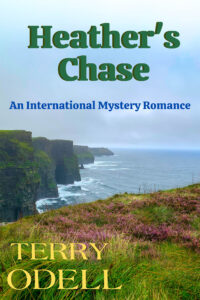

Heather's ChaseMy new Mystery Romance, Heather’s Chase, is now available at most e-book channels. and in print from Amazon.

Terry Odell is an award-winning author of Mystery and Romantic Suspense, although she prefers to think of them all as “Mysteries with Relationships.” Follow her on Facebook and Twitter.

Help! I Have Flies in my Files

By Debbie Burke

@burke_writer

Photo credit: Gabriel Manlake – Unsplash

Typos are the annoying, buzzing flies in a writer’s life. After 57 proofreads of your novel, you must have swatted every single one, right?

I sometimes wonder if typos, like flies, lay eggs throughout the manuscript. After everything is perfectly spelled, punctuated, and you’ve hit the “publish” button, suddenly the eggs hatch.

Wrong. Typos do not spontaneously appear. Much as I hate to admit it, I put them there.

Blatant misspelling is not a problem most of the time. More often, it’s transposed letters or transposed words, errors that are invisible because the word is spelled correctly—it’s just not the right word, or it’s in the wrong place.

For that reason, I’ve never depended on spellcheck.

Unfortunately, the more times you proof something, the less visible those little devils become. That’s why proofreaders with fresh eyes are invaluable. I can spot typos in someone else’s manuscript easily but am often blind to my own.

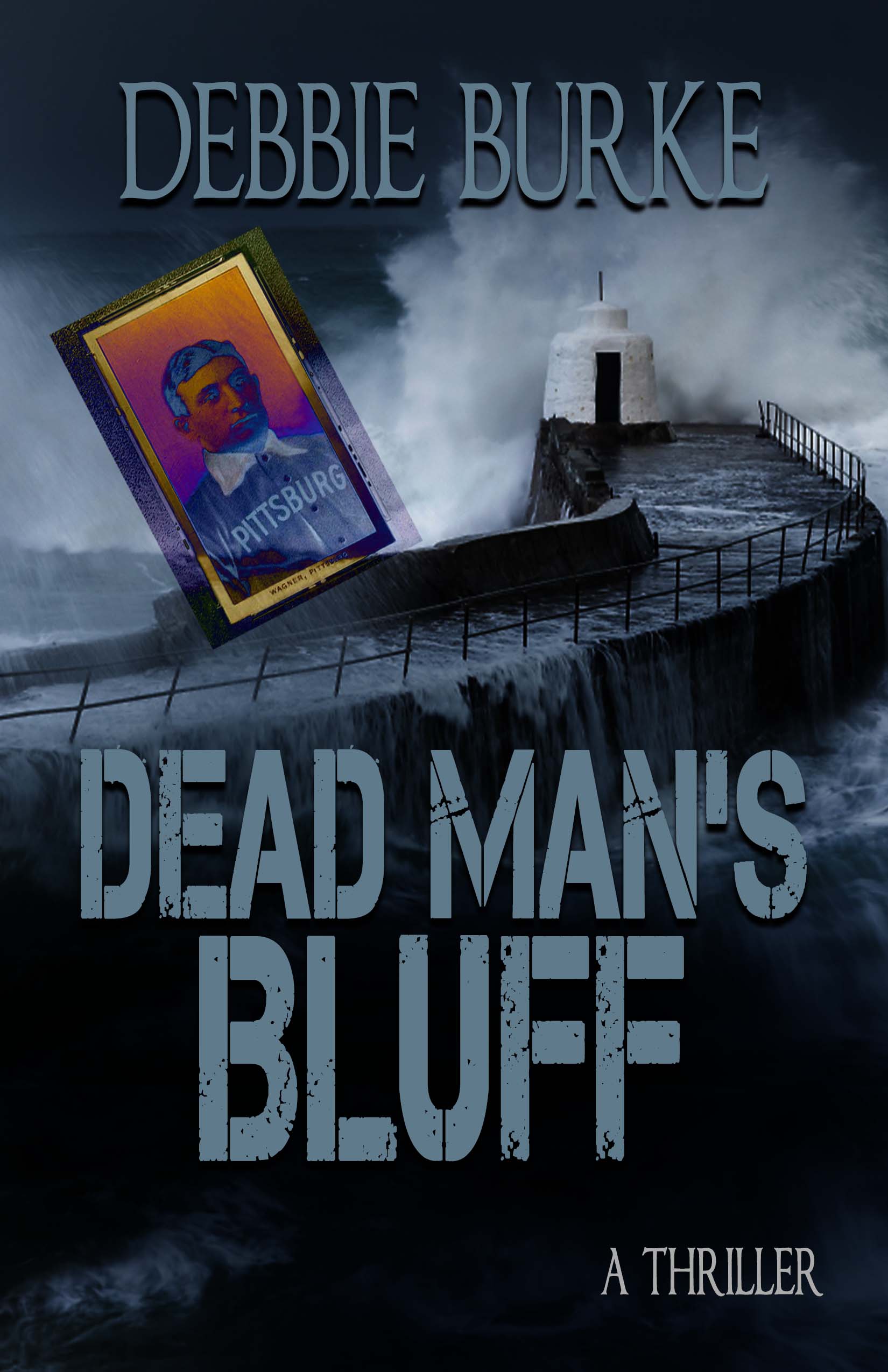
Recently, TKZ regular Kay DiBianca sent me a lovely email to say she’d enjoyed my latest thriller, Dead Man’s Bluff, particularly the twist at the end. Then she added she found a typo in Chapter 4 when the main characters come upon a dead deer in a Florida swamp. The sentence read: “Files buzzed thick around its open eyes…”

Photo credit: Sharon McCutcheon – Unsplash

Drat! I wondered where I’d put those darn files!

Then Kay shared a typo she’d caught while proofing her upcoming book:

I had written “died-in-the-wool” instead of “dyed-in-the-wool.” Our son said readers would think the character got run over by a sheep.

Photo credit: Pexels

Here’s another example that proves just how totally blind the author can be.

The librarian at an active senior community has been wonderfully supportive and included all my books in their collection. In Eyes in the Sky, she found a typo which she emailed me about. She noted the exact page where it appeared. I opened my copy to that page and read it over and over, searching for the typo. I emailed her back and asked which sentence the typo appeared in. She quoted it. I read and reread her email and couldn’t find a typo in her quote. Again, I stared at the sentence in the book for several more minutes and still couldn’t see it.

I was about to call her, admit humiliation, and ask what I was missing.

At last, my now-bleary, squinting eyes recognized it. The sentence was supposed to read: “Let’s go back to the hotel.” Instead, it said: “Let’s back go to the hotel.”

All the right words, correctly spelled…just in the wrong order. Because my brain knew the correct order, that’s what it perceived. And probably most readers’ brains had the same perception because, so far, the librarian is the only one who commented.

For years, memes have made the rounds on the net that say, in effect, if you can read the following, you’re a genius. The first and last letters of words are correct but everything in the middle is jumbled.

Here’s one example:
[Collected on the Internet, 2003]

Aoccdrnig to rscheearch at Cmabrigde uinervtisy, it deosn’t mttaer waht oredr the ltteers in a wrod are, the olny iprmoetnt tihng is taht the frist and lsat ltteres are at the rghit pclae. The rset can be a tatol mses and you can sitll raed it wouthit a porbelm. Tihs is bcuseae we do not raed ervey lteter by it slef but the wrod as a wlohe.

And another that’s harder:

7H15 M3554G3 53RV35 7O PR0V3 H0W 0UR M1ND5 C4N D0 4M4Z1NG 7H1NG5! 1MPR3551V3 7H1NG5! 1N 7H3 B3G1NN1NG 17 WA5 H4RD BU7
N0W, 0N 7H15 LIN3 Y0UR M1ND 1S R34D1NG 17 4U70M471C4LLY W17H 0U7 3V3N 7H1NK1NG 4B0U7 17, B3 PROUD! 0NLY C3R741N P30PL3 C4N R3AD 7H15. PL3453 F0RW4RD 1F U C4N R34D 7H15.

Perhaps this is meant to reassure people who can’t spell or proofread that, hey, it’s okay because you’re super smart.

But if writers want to be perceived as professionals, we must hold ourselves to higher standards than internet folklore.

Another eagle-eyed reader caught a different goof in Dead Man’s Bluff, involving a 13-year-old character who was originally named “Leticia.”

My husband and I have a young friend named Jessica with special needs whom we’ve known since she was 13. She’s now 30 with ongoing medical problems that restrict her activity. Therefore, reading is her favorite pastime and she’s always excited when I give her a new book.

About six months ago, we were at lunch with her and her mom. Jessica leaned across the table and, in a conspiratorial whisper, said to me, “Wouldn’t it be cool if, in your next book, you had a character named Jessica?”  

How could I say no?

Dead Man’s Bluff was complete and close to launching. I knew Jessica would like her name used for the 13-year-old kickass character who’s trying to train a search dog. I went home, clicked on “find and replace”, and changed “Leticia” to “Jessica.”

Boom, done, easy peasy…or so I thought. 

However, I didn’t realize in one place I had misspelled “Leticia” as “Letitia.” That name didn’t get replaced because it was spelled differently. Oops.

The beauty of electronic publishing is the ability to make corrections and re-upload the file for an instant fix. If you have books on various platforms, the process takes longer but is still easy. With Print on Demand, thankfully, fixes are also simple. Can you imagine being stuck with a print run of 500 books with embarrassing errors?

I’ve heard of one author who makes typos into a game with her readers. She offers a bounty (I think, a free ebook) to readers who spot goofs. While that’s a smart way to turn lemons into lemonade, error-free should still be the goal.

Better to catch those files—I mean, flies—before the book is published.

Here are a few tricks to swat the sneaky little devils:

#1. Read the manuscript out loud. Every. Single. Word. This also helps with punctuation goofs, e.g. where a period should be a comma, etc.

#2. Listen to the manuscript using read-aloud programs like Natural Reader, Balabolka, or the Text to Speech function in Word and Office.

#3. Change the font for your whole manuscript and increase it a size or two. If you normally use Times New Roman at 12 pt., try Comic Sans at 14 or 16 pt. You fool your brain into thinking it’s not the same document. The more visual differences between your manuscript and your proof copy, the more you are apt to see oddities.

#4. Find a careful, meticulous reader, perhaps an English teacher or librarian. Offer to buy lunch or barter services in exchange for proofreading. Be sure to include their names in the acknowledgements page and give them a thank-you copy when the book is published.

#5. Consider hiring a professional copywriter and/or proofreader if you struggle with spelling and grammar. Yes, it’s expensive. That cost may motivate you to improve your own skills!


Speaking of expensive, here are some boo-boos that probably cost a few bucks to rectify: https://blog.hubspot.com/marketing/14-worst-typos-ever

~~~

TKZers: What was the worst typo you ever made? Feel free to go back as far as elementary school.

What’s your favorite typo?

~~~

Debbie Burke is reasonably sure she has now swatted all the files and flies in Dead Man’s Bluff. Please check it out at this link.

Beta Readers

I’m back from a summer hiatus and would like to say that I used the opportunity to jet set around the world in glamorous style but…well, you know…I did get a chance to visit the mountains a few times but we’ve had so much smoke from the recent wildfires that even that experience felt very much on-brand for 2020…

In the meantime, I have been writing and painting – but I’ve also been broadening my beta-reader opportunities, which got me thinking about the whole notion and value of beta-readers. In the past my beta-reader pool has pretty much been confined to friends and family, and, if I’m lucky, co-bloggers here at TKZ:)

By now most of my friends and family have read (and re-read!) many of my manuscripts, but only recently have I begun to look further afield to see if I can get critical input from potential readers. This interest was sparked by a UK historical fiction editorial group who began offering a beta-reader service – which (serendipitously for me) came just after I finished revisions to an old manuscript of mine. What I liked was that these beta-readers will be complete strangers with a love for historical fiction (so they can be as blunt and honest as they like – something I’m never totally sure friends/family are!) and they also must answer a series of very specific questions to help a writer hone in on issues with the book. I haven’t got feedback as yet so the jury is still out on the benefits of the program but I’m excited to broaden my beta-reader reach nonetheless.

So TKZers how do you focus on the beta reader question…Who do you get to be a beta-reader (?) and at what stage in your process do you get them involved? I usually have much earlier input but I’m thinking fresh eyes in this final, just about to submit stage, will be very helpful. What’s your experience been with beta-readers? Mine’s been as mixed as my experience with writer’s groups, some input has been terrific, some not so much…

Glad to be back and looking forward to your feedback on what has worked/hasn’t worked for you all when it comes to beta-readers!


Scene and Un-Scene

by James Scott Bell
@jamesscottbell

Today’s first-page critique raises the question of what makes a scene…and what doesn’t. Let’s have a look:

  1. The Envelope

Vanessa’s eyes watched the second-hand tick it’s way around the clocks face. The odor of furniture polish drifted into her nostrils as she sat alone at the conference room table. From the second floor, she had a clear view of the Bay Bridge. She took deep breaths as she watched the traffic.

Vanessa swiveled around when the conference room door opened. She witnessed Lindsey Harper, one of the firm’s secretaries, slam a water jug on the table. Lindsey then turned around and calmly walked out of the room. Vanessa blotted the spilled water off her client’s file. Then she opened the voice recorder app on her phone and placed it on the conference room table.

She had five more minutes to wait before her four o’clock appointment with Mr. Henderson. He needed legal representation as the police viewed him as the prime suspect in his wife’s murder.

Vanessa leaned back in her chair and looked through the glass partition at unoccupied desks. Most of the staff at Anderson & Smith LLP had gone home for the weekend. Even her boss, Mr. Smith, had left the office. She then exhaled before she folded back the cover on his file. She knew the crime scene photographs were gruesome. Her job as a criminal paralegal meant that she had to gather and examine the evidence.

Vanessa had worked at Anderson & Smith LLP, one of the top criminal law firms in San Francisco, for over two years. She earned her four-year degree in criminal justice from San Francisco State University. She attended forensic classes in college, and then she discovered she had no stomach for viewing dissected bodies.

Her job as a criminal paralegal on occasion took her to a crime scene. But usually, the Coroner had already removed the victim’s body.

The police viewed their client, Mr. Henderson, as a prime suspect in the brutal murder of his wife. He claimed to be home all evening, on the night of his wife’s murder, but there were no witnesses to confirm his story. Their live-in maid had taken a three day weekend to visit her sister in San Jose. The victim’s blood was all over the crime scene. Yet the police report stated that their client had no traces of blood on his clothes when the police arrived at his home.

***

JSB: Before we discuss the text, I want to say something about chapters with titles. I don’t like ’em. They might be okay for juvenile fiction, but I don’t see any gain in adult genres. It doesn’t do anything to motivate me to read on. Indeed, I never think about or even remember a chapter title as I read the actual chapter. It’s just clutter, and who needs that? (Give me your feedback in the comments.)

On to the text. We’re going to talk about the difference between an active scene, and exposition and backstory. A scene shows us action on the page; exposition and backstory tell us things about the story and characters. These latter elements are fine in their place, but their place is not on the opening page. (If you’re unclear about show and tell, I suggest you read Kris’s great post on the topic, and do some more self-study until you’ve got this issue nailed. It is absolutely essential for your success as a writer.)

Here, the first paragraph gives us a scene set-up, which is fine:

Vanessa’s eyes watched the second-hand tick it’s way around the clocks face. The odor of furniture polish drifted into her nostrils as she sat alone at the conference room table. From the second floor, she had a clear view of the Bay Bridge. She took deep breaths as she watched the traffic.

A couple of quick notes: clocks should be clock’s. I do like that you used the sense of smell. It’s underutilized in fiction. We then have Vanessa watching the traffic through the window. It’s a nice way to tell us we’re in San Francisco, but isn’t she looking at the clock? Simple fix. She can be listening to the clock. Or she can turn her head to look out the window.

These small physical matters are important. Many a time I’ve had an editor tell me that a character who had sat down early in a scene was now walking around. Readers notice these little speed bumps.

Vanessa swiveled around when the conference room door opened.

Here’s another speed bump and it comes from the misordering of stimulus and response. We never want to invert these. In the sentence above, the stimulus is the door opening. The response is Vanessa swiveling around. She should hear the door open and then swivel.

The great writing teacher Jack Bickham (whose book I credit with setting me on the road to publication) explains that a stimulus is something external, as if we were seeing or hearing it in real time. The response must also be external, something physical (note: dialogue counts as physical). And these must be in the right order.

Not: Audrey yelped. A shot had just been fired.

But: A shot rang out. Audrey yelped.

Moving on:

She witnessed Lindsey Harper, one of the firm’s secretaries, slam a water jug on the table.

We’re starting to slip out of vivid, active writing now. This sounds like the author telling us what has happened. Scene writing needs to sound like it’s happening in right in front of us: Lindsey Harper, one of the firm’s secretaries, slammed a water jug on the table.

See the difference? And notice you don’t need to tell us Vanessa witnessed the action. If it’s happening on the page, and we’re in her POV, it’s a given that the scene is played out through her eyes.

Lindsey then turned around and calmly walked out of the room. Vanessa blotted the spilled water off her client’s file. Then she opened the voice recorder app on her phone and placed it on the conference room table.

Too bad Lindsey left, because she’s another character, has just done something annoying, and that’s fodder for conflict. If you’re not showing us some form of conflict, you’re either not writing a scene…or the scene you’re writing is a yawner.

She had five more minutes to wait before her four o’clock appointment with Mr. Henderson. He needed legal representation as the police viewed him as the prime suspect in his wife’s murder.

This is pure exposition, the author telling us what’s happening, and why. I have a little axiom: act first, explain later. Readers will wait a long time for information if something interesting is happening. What if Lindsey had hung around and we got this instead:

Lindsey slammed the water jug on the table. Some water splashed out, landing like raindrops on the client file.

“Hey!” Vanessa said. “Careful.”

“He’ll be here in five minutes,” Lindsey said.

Vanessa grabbed a couple of tissues from the box on the table and started sopping up the water.

“Show him right in when he gets here,” Vanessa said.

“Are you sure?”

“Of course I’m sure.” 

Lindsey shrugged and put her finger on one of the water drops on the table. “I just thought…”

“Thought what?”

“Because of what happened last time.”

I don’t know what they’re talking about, of course, because I’m not the author. But I do know this is a scene and that I want to read on to find out what’s happening!

Let’s skip to this:

Vanessa had worked at Anderson & Smith LLP, one of the top criminal law firms in San Francisco, for over two years. She earned her four-year degree in criminal justice from San Francisco State University. She attended forensic classes in college, and then she discovered she had no stomach for viewing dissected bodies.

This is exposition combined with backstory. It should now be clear to you that it’s not a scene happening in “real time” on the page.

The police viewed their client, Mr. Henderson, as a prime suspect in the brutal murder of his wife. He claimed to be home all evening, on the night of his wife’s murder, but there were no witnesses to confirm his story. Their live-in maid had taken a three day weekend to visit her sister in San Jose. The victim’s blood was all over the crime scene. Yet the police report stated that their client had no traces of blood on his clothes when the police arrived at his home.

All tell. “But,” you say, “readers need to know all this to make sense of the scene!”

Nay, not so.

Indeed, it’s better to hold back as much information as you can, as it creates immediate mystery. Readers will keep reading to find out what’s going on.

So when and how do you reveal crucial information? Here’s one technique: confrontational dialogue. In a tense exchange it’s easy and natural to slip in some exposition. Let’s put Mr. Henderson in the room with Vanessa:

“Let’s get this over with,” Henderson said.

“This is going to take a little time,” Vanessa said.

“You have twenty minutes.”

“Mr. Henderson, they’re going to charge you with murder. I think we need—”

“I didn’t do it.”

“And that’s why we have to—”

“Do you think I did it?”

His slate-colored eyes glared at her.

“I’m just gathering information,” she said.

“Not what I asked.”

Vanessa’s throat clenched. She took a breath and said, “You’re our client.”

“You think I took a butcher knife and cut my wife to pieces?”

By substituting dialogue for pure exposition, you are forcing yourself to write an active scene, which is the basic unit of readable fiction. So remember:

  • Act first, explain later
  • Keep stimulus-response transactions in proper order
  • With the exception of necessary description, try nixing all exposition and backstory on the opening page
  • Set the crucial information inside tense dialogue

All right! That’s enough for today. Over to you, TKZers. If you have some suggestions for our author on the submitted text, please chime in.

***

If you want more in-depth fiction craft teaching, my one-day seminar “Writing a Novel They Can’t Put Down” is on special right now. Usually $197, we’ve knocked $100 off the price. Check it out here!

Mighty Irks From Little Eggcorns Grow

By Elaine Viets

Did you ever mistake the word “acorn” for “eggcorn”?
Me, either. But apparently enough people mistakenly heard eggcorn instead of acorn, and that was enough to name a whole category of mistakes. Mistakes that can bedevil writers.

The Christian Science Monitor calls an eggcorn “a slip of the ear . . . the written expression of a plausible mishearing of a standard term. ‘For all intents and purposes,’ for example, is a set phrase—inherently redundant, perhaps, but it’s the idiom. It gets misheard though as ‘for all intensive purposes,’ and sometimes appears that way in print.”

Little eggcorns are mighty big traps for writers. There’s even a site devoted to eggcorns, called the Eggcorn Database (eggcorns.lascribe.net). You can while away many hours checking out eggcorns. At least, I did. I was surprised by the number of experienced writers who stumbled over eggcorns.

Here’s how Deadline Hollywood mangled when all is said and done:
“There is no deal in place but when all is set and done, something is expected to happen after the Academy Awards . . . ”

The Associated Press ran afoul of another phrase, but we should chalk it up to deadline pressure:
“‘Chock it up to just another amateur exhibition of a lack of administrative ability,’ said Georgia pollster Claibourne Darden.”

Even the great Ansel Adams made a mishmash of criticism in this letter: “‘Photography in the Fine Arts’ was a distressing mixmash.”

Some eggcorns make more sense than the correct word:

“Extreme Court” for “Supreme Court,”
“Close-a-phobia” for “claustrophobia,”
“Hearbuds” for “earbuds.”

I like the eggcorn “ostenspacious” instead of “ostentatious,” especially if it’s a big house.
“Skyscratcher” is more accurate than “skyscraper.”
Other eggcorns make writers look just plain dumb.
I wince when I read that someone who moved away from their country is an “ex-patriot.”
How about claiming someone “passed mustard” instead of “passed muster”?
“Physical policy” instead of “fiscal policy” is downright embarrassing.
Ditto for calling ambitious persons “real goal-getters” when they’re “real go-getters.”


How many books have you seen where someone has to “tow the line” instead of “toe the line”?
Here are a few more:

“cold slaw” for “cole slaw”
“old timer’s disease” for “Alzheimer’s Disease”
“chesterdraws” for “chest of drawers”
“wipe board” for “whiteboard”
“curve your enthusiasm” for “curb your enthusiasm”
“A doggie-dog world” sounds much nicer than “a dog-eat-dog world.”
Anyone who’s ever been wiped out at a poker game knows a “card shark” is more accurate than a “card sharp.”

There is one surprising eggcorn that almost everyone gets wrong. Calling an earthquake a “tremblor.” The correct word for an earthquake is . . .
TEMBLOR.
No R after that T.

A temblor is an earthquake.
There’s no such word as tremblor, according to Merriam-Webster. And a trembler is someone who shivers or shakes.
Some lesser dictionaries allow “tremblor” as an informal term for earthquake. But the big names, like Webster, remain unshaken.
Beware the eggcorn – a reminder that words should never be taken for granite.
Name your favorite eggcorns.
**********************************************************
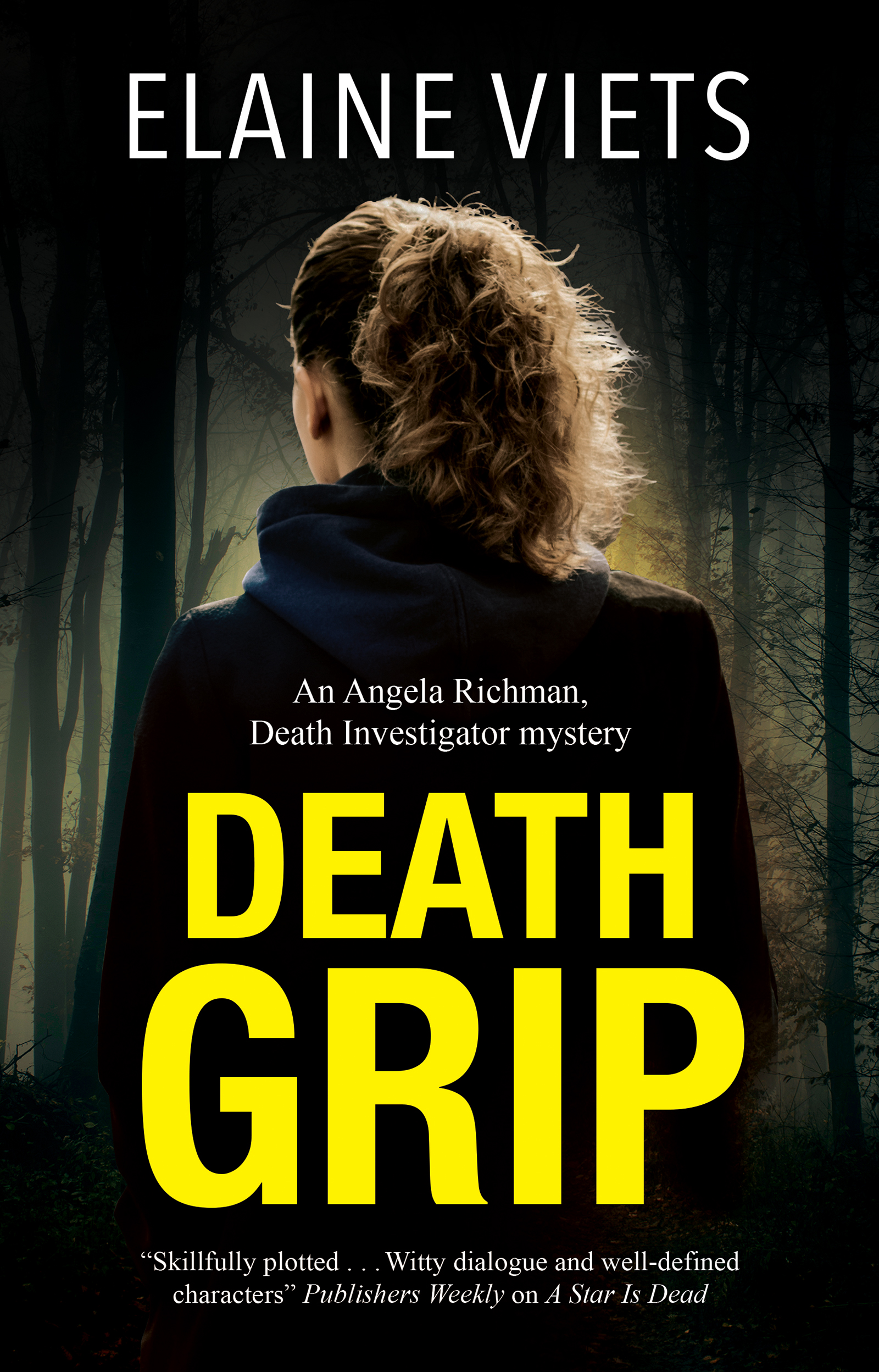
Break out the champagne! I have a contract for two more Angela Richman mysteries. Pre-order Death Grip, Angela # 5 now.

https://tinyurl.com/y2zz9hb5


Well Behaved Characters (Redux)

By John Gilstrap

FULL DISCLOSURE: The article that I originally planned to post today isn’t ready for prime time. It’s a nuanced look at writing in the white space–making what isn’t on the page resonate as clearly as what is. I’ll post it next time, I hope.

What follows is an edited version of one of my TKZ entries from 12 years ago(!). I called it:

Well Behaved Characters

Like all authors, I suppose, I teach a number of writing classes and attend my share of conferences, and one of the questions that always comes up goes something like this: “I hear authors talk about how there comes a point in every story when the characters take over and start writing the story for you. Does that happen to you?”

The short answer is no; and frankly, it sort of ticks me off. I’d love to cede the process of plot development to my characters. Hell, somewhere in the middle of the second act, where all the tedious stuff is being manipulated and I’ve got to keep the pacing going, I’d cede the process to a stranger in a grocery store if he could make it any less painful.

As it is, my characters just sit there and wait to be told what to do. Lazy bastards. Not an original thought from any of them. In fact, during those tough times when I’ve written myself into a corner and don’t know how to extricate myself, I believe I’ve seen them chuckling at my plight. If I didn’t need the characters to make the story work, I swear sometimes that I’d fire them all.

When I first wrote this post, I was staring down the throat of an approaching and I needed an ending. I mean, I already had an ending from the initial drafts, but I needed an ending. A kick-ass final sequence that would leave the reader exhausted and satisfied. The one I already had took care of the satisfaction part, but it didn’t have the roller coaster feel that I wanted.

So I shot one of the characters.

Don’t worry, it wasn’t a gratuitous thing. The shooting is organic to the plot, and it provides the twist I needed. It also wiped those sanctimonious smirks off their faces. Sometimes it helps to remind them of the power I have over their lives.

Seriously, though, when I found myself in this crisis-of-ending, I think I discovered what authors really mean when they talk about characters taking over. By shooting that character, I gave the other characters in the scene something to react to. Things started happening—things that I hadn’t planned for, which is really saying something for an author who is as outline obsessed as I was back then—and new twists occurred to me as I wrote. I got really into the scene. The characters’ reality became so much my own reality that all I had to do was observe and record what I saw in my imagination. It was one of those moments of high concentration that I think every writer adores. When I finished and went back and read the thirty pages I’d written, I loved it. I’d nailed it.

I submitted the manuscript a week early!

Back to this business of characters taking on lives of their own. I’ve decided that when I’m in the zone, writing fiction has a lot in common with method acting. As the creator of characters, I spend a lot of time in my characters’ head space. Every action they take is the result of some plot-related motivation, and over time I come to understand those motivations. As plot twists come along—triggered by the actions of other characters whose motivations I’ve come to understand even as the rest of the cast have not—the reaction becomes obvious.

It’s not about them telling me what to do; it’s about me drawing them clearly enough to know what they’d do on their own if they were real enough to walk among us.

I do love this job.

So, TKZers, are your characters lazy and wait for direction, or do they take over the story?

First Page Critique: Pick A Tense
And Then Make Things Tense

By PJ Parrish

A good Tuesday morning to you all out there. Hope you are well and sane. Hope you are getting some writing done. Me, I’ve managed to grow a couple tomatoes. So it was fun to see someone else’s creative juices are flowing nicely. I’m referring to today’s First Page Critique. Let’s give it a read together and then we’ll discuss. Thanks, writer, for submitting.

Carrie’s Secret

I thought I would never see Carrie Genesen again and then she gets admitted to this hospital, where I work. I thought I would never see Carrie Genesen again and then she gets admitted to this hospital, where I work. WHERE I WORK!!! I knew she might talk and that would be a problem, a big problem.

But I am systematic. I am in control. And I will deal with it.

When she was admitted to Danton, Carrie was considered both a flight risk and a suicide risk so that day she was taken directly to the locked ward on the first floor. I had just stepped into the lobby as she came through the front door. She was flanked by an ambulance attendant on one side and a woman from the admitting office on the other, each holding an arm. Her parents, Noah and Marlene Genesen, followed close behind her. Carrie was older surely, about fifteen now, and a little taller with longer hair, but it was her. There was no doubt. I watched as the group turned to my left and entered the locked ward. None of them noticed me then, but I stopped cold.

The situation was urgent. Critical. Carrie would soon be in therapy and she could reveal the truth any time in the course of treatment. I could not let her say anything. Louise Ponte would probably be her therapist. She works with most of the kids. How long could Carrie keep the secret bottled up inside her here? It will tear her apart, I’m sure. A good shrink like Ponte will pull it out of her. And if Carrie said what she knows, would that fucking bitch of a psychiatrist believe her? Yes. Would her parents believe it? Definitely. I cannot take the risk.

So I had to adjust quickly and as soon as I had the opportunity that first afternoon, I confronted Carrie. Change-of-shift had just started so most of the staff were meeting behind the closed door to the nursing office. I went right to her room.

There wasn’t much time. I stood in her doorway, blocking her exit. She was sitting on her bed and she looked up at me. Her big brown eyes were unfocused. She was holding her bandaged arm and dressed in a tight red tank top and extremely short cut-off jeans. I could not help looking at her naked legs for an instant. Then I looked up to her face.

___________________________

There’s some nice things going on here. As we often say here at TKZ, it’s always good to start with a nifty action scene. As James always says, do first and explain later. In other words, show something intriguing going on and then, later, tell us what it meant. Notice that I put two words in red there?

Show, don’t tell.

I love the fact this writer opened with something happening. A person (unnamed and no gender identified…more on that later) is confronted in the hospital where they work by an old “friend.” Or maybe a foe. But at the very least, this person from the past has a secret that our narrator does not wish to be known. Nice set up!

But I think the writer missed a chance to ramp up the tension factor by telling us too much when, with a little restructuring, it could be shown and thus have more dramatic impact.

Plus, we have here a problem with tense. It wavers between past and present, and the overall style is an odd hybrid of action and reminiscence.

The first paragraph, for instance, is refracted through the narrator’s thoughts rather than pure action, and thus feels more like a memory. “I thought I would never see Carrie Genesen again and then she gets admitted to this hospital, where I work.”  And with the capitalization and punctuation of the next line — WHERE I WORK!!! — it’s almost as if the writer subconsciously understood the first line was weak and she or he had to add caps and three exclamation marks to hit us over the head with the narrator’s intensity of emotion.

Might it not have been more effective to go right with action? I don’t know if Carrie, as she is being brought in, is fighting or half-comatose. So I am guessing here when I offer this suggested approach. I give it not as an attempt to rewrite this person’s style but to make a point about how, as an alternative, narration can be reshaped into a pure action scene.

The girl was screaming and kicking, her long dark hair flying around her face. The ambulance attendant had a hard grip on her right arm and a nurse jumped up from the desk to grab the girl’s right arm.  I was standing by the admitting desk, and as they lurched past, the girl’s head shot up.

Her wild brown eyes locked on mine. It was only for a second, but in that moment, I saw her.  

Carrie…

The only person in the world who knew what I had done.

Carrie’s head swung back and she gave me a questioning look that darkened into a glare. Then, with the wheeze of the ward’s door, she was gone.

Seconds later, a man and woman hurried in, not giving me a glance. Carrie’s parents. They didn’t recognize me, thank God.

My heart had stopped but now it was pounding. I took three deep breaths.

I am systematic. I am in control. And  damn it, I will deal with this.

See the difference? Get the action moving first and then start explaining things. And when you do go into the character’s thoughts, make it powerful, pithy and put it in italics.

Because this is a mixture of direct action scene and remembered narration, there are other problems. The narrator, upon merely seeing Carrie come into the hospital, cannot possibly know — yet — that she is suicidal and a flight risk. She cannot know either that a certain doctor Louise Ponte will be assigned to her case.  But these issues are easily resolved by continuing the action forward logically. For instance, the narrator, who apparently works at this facility, can immediately begin inquiries, maybe talk to the EMT when he comes back out? He could relate that she tried to kill herself.  Show us, via action and dialogue, don’t tell us.

Suggestion: Use the first scene — maybe the whole first chapter — to flesh out your great set-up. Play up the narrator’s shock and the fear of what this might bring (why is Carrie here? What happened? Will she tell someone our terrible secret?) You’ve done a good job of creating a sense of peril, so why rush it? Build your tension! Then you move on, logically, to the narrator going to Carrie’s room and confronting her.  That is probably worth a chapter all by itself. A third chapter could be a meeting with Dr. Ponte, wherein you can add some more background on why Carrie is there and why the narrator hates Ponte so much. Layers…it’s all about creating layers.

One problem many writers have is trying to figure out where to begin a chapter. This writer picked a great moment. But an equally vexing problem is figuring out where to END a scene or chapter. This is something this writer needs to work on. End one scene (in the lobby of hospital) and transition to the next scene (Carrie’s room).

Each scene and/or chapter needs to have its own beginning, middle and end. And you must DECIDE what the dramatic point of each individual scene is.  For this story, the point of the first scene is to introduce the protagonist via their shock at seeing someone who harbors a bad secret. This opening scene must also have an ending that then connects (via a smooth transition) to the next scene.

A small thing but important: Don’t bother to introduce character names until it is important. We don’t need to clutter up this great action moment with Carrie’s parents’ names.

Ditto the shrink.  Don’t give us Dr. Ponte’s name until she becomes an actual character in the action rather than in the narrator’s thoughts. Show us Dr. Ponte’s entrance, don’t tell us. I could see a great scene later, maybe chapter 3 or 4, where the narrator reads Carrie’s chart and finds out Dr. Ponte has been assigned to the case. Then maybe she goes and talks to the doctor? Show us, don’t tell us that Ponte is, ahem, a “fucking bitch.”  Remember the great movie One Flew Over The Cuckoo’s Nest? We didn’t “meet” Nurse Ratched through Randall McMurphy’s thoughts. We met her on the ward, in all her terrible glory, interacting with the patients. Action is showing.

That’s my main points. I’d like to do a line edit to bring things into sharper focus.

I thought I would never see Carrie Genesen again and then she gets admitted to this hospital, where I work. WHERE I WORK!!! I knew she might talk and that would be a problem, a big problem.

But I am systematic. I am in control. And I will deal with it. This submission came to me with a couple graphs in italics, so that’s how I left it. But I see no need for it.

When she was admitted to Danton, This lapses into past tense and sounds like the narrator is remembering this. It disrupts the tension. Carrie was considered both a flight risk and a suicide risk The narrator has no way to know this. And “flight risk” is a legal term meaning a person is thought likely to leave the country before a trial or bail hearing. so that day she was taken directly to the locked ward on the first floor. I had just stepped into the lobby as she came through the front door. Again, the past tense construction “I had just” sounds like she’s recounting something that happened a while ago. She was flanked by an ambulance attendant on one side and a woman from the admitting office on the other, each holding an arm. Her parents, Noah and Marlene Genesen, followed close behind her. Carrie was older surely, about fifteen now, and a little taller with longer hair, but it was her. There was no doubt. I watched as the group turned to my left and entered the locked ward. None of them noticed me then, but I stopped cold.

The situation was urgent. Critical. This is a classic example of the writer TELLING us what the character feels rather than letting the emotions emerge through SHOWING the urgency. Carrie would soon be in therapy and she could reveal the truth any time in the course of treatment. I could not let her say anything. Louise Ponte would probably be her therapist. She works with most of the kids. How long could Carrie keep the secret bottled up inside her here? It will tear her apart, I’m sure. A good shrink like Ponte will pull it out of her. And if Carrie said what she knows, would that fucking bitch of a psychiatrist believe her? Yes. Would her parents believe it? Definitely. I cannot Again, we are shifting between past and present tense. Doesn’t work. take the risk.

So I had to adjust quickly and as soon as I had the opportunity that first afternoon, This is so confusing. Are we in the present day or is this character relating something that happened in the past? This construction suggests the latter. Which is not where we want to be opening a story. I confronted Carrie. Again, you’re telling us; show us. Change-of-shift had just started so most of the staff were meeting behind the closed door to the nursing office. I went right to her room.

There wasn’t much time. I stood in her doorway, blocking her exit. She is on suicide watch. Her door would be locked. She was sitting on her bed and she looked up at me. Her big brown eyes were unfocused. She was holding her bandaged arm and dressed in a tight red tank top and extremely short cut-off jeans. I could not help looking at her naked legs for an instant. Then I looked up to her face. She already looked at her face, her unfocused brown eyes specifically.

Okay, this is important. Whenever you describe something, be it a room as a character enters, or seeing a person, always start with what is first-impression logical and move on to other details from there. What you would logically see — IN ORDER OF YOUR SENSES PROCESSING THINGS?

Carrie was slumped on her bed. Her lank hair covered her face, and she was rubbing her bandaged wrist. For the first time, I noticed what she was wearing — a tight red tank top and short cut-off jeans. I was staring at her long legs when Carrie looked up. 

See the difference in the order of the description? It has to be logical. And use it to up the tension. Also: Never let a chance go by in your description to make it specific and thus salient to character. You said she was “sitting on the bed.” Is she slumped? Curled in a fetal ball? Sprawled? Each suggests something specific about character and mood. And the bandage on her arm. What kind of bandage and where it is? A wrist gauze suggests a slit wrist and is a way for the narrator to get this knowledge of a suicide attempt via showing instead of telling. 

One last thing. We don’t known a thing about the narrator and presumptive protagonist of this story. When working in first person, it’s hard to get in names and such. (Forget description in the early going!).  But it becomes annoying, the longer your scene goes on, for the reader not to have a clue who they are listening to.  We don’t even know the sex of our narrator.  Such “busy work” can be dropped easily in dialogue, maybe as the narrator stands there in shock at seeing Carrie, someone calls out, “Dr. Rogers, are you okay? Jane? Jane, did you hear me?”  A simple “trick” like this would give us A.) the protag’s sex B.) name  C.) profession.

Okay, that’s about it.  Again, I want to give kudos to the writer for picking a good dramatic moment to drop us into the story. I really like the set-up, a teenager from the protag’s past harbors a bad secret that terrifies the protag enough to make them spring into action.

But, dear writer, you need to slow down a tad and give more thought to the structure of each individual scene and/or chapter and to hone in on the dramatic point of each. Good luck and thanks for letting us share your work.


Turning Real Terror into Fiction

Years ago, I experienced a terrifying hell ride when the gas pedal on my Ford Explorer stuck wide-open while driving Rte. 125 during rush hour traffic. Two days later, I received a recall notice in the mail. Little good it did me then. The experience remains as fresh in my mind today as it did then.

I’d just left Khols parking lot and stopped at a red light. When the light turned green my foot shifted to the gas pedal, and the SUV took off like a bullet fired from an automatic pistol. Here’s the strange thing. When something like this happens, you try to reason it away. Never do you think anything dangerous could be happening. Our self-protection mode kicks in and we waver in and out of denial.

Until we can’t any longer.

Until we need to face the truth — this day could be our last. And it’s terrifying!

The SUV kept gaining more and more momentum till the speedometer read 40 mph, 50 mph, 60 mph, and climbing. Rte. 125 is a main drag. Traffic lights stood every mile or so, and most of them turned red. But I couldn’t stop. With both feet on the brake, I screamed out the window for someone to help me.

No one did.

Other drivers honked their horns. They didn’t know what was happening inside my Explorer. All they saw was a crazed woman swerving in and out of traffic, barely missing numerous vehicles, black smoke trailing behind from the brake pads tearing clean off. Next, smoke poured out the back. Not sure why. If I had to guess, I’d say it was the rotors or something else brake-related. All I knew was I couldn’t stop the damn SUV.

As the speedometer climbed toward 70mph, a gazillion things raced through my mind in the span of a few seconds, including how to crash the vehicle without killing myself or others. After five sets of lights and miles and miles of the most harrowing journey I’d ever had the displeasure of experiencing, I came to a stretch of road with a field on the right. My plan was to veer in to the field and crash into a tree, where hopefully I could jump out the driver’s door. Obviously, I wasn’t thinking clearly. My complete focus was on avoiding obstacle after obstacle so I didn’t kill anyone.

If it weren’t for two college students who pulled alongside me, I might not be alive today.

They hollered at me to throw the SUV into neutral, which I did. But the car kept accelerating. Then they told me to turn off the ignition. Finally, I rolled to a stop. When they hustled to my door, I could barely speak, nerves zinging through my system, tears streaming down my twitching cheeks.

Horrible memories make great fodder for books. Wouldn’t you agree?

Fast forward to 2017.

In May, my neighbor asked to borrow my vehicle because his wouldn’t turn over. Thing is, it was a fairly new vehicle. What we soon discovered was he’d missed a loan payment. The lender blocked access to the car by using what’s called a starter interrupter device to make the vehicle un-driveable till he brought his payments up-to-date.

My crime writer antennae dinged.

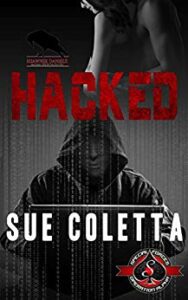
If they could prevent him from starting his SUV, could someone hack in and take control? What I discovered chilled me to the bone . . . and breathed life into HACKED.

Have you used a terrifying experience in your writing? Do tell.


“HACKED is a meaty novella packed with great characters, unexpected humor, intriguing plot twists & page turning pace. This comes from good writing and an author who delivers every time.” ~ Jordan Dane

“Witty, exciting and perfectly paced! Normally, novellas leave me wishing for more but Sue Coletta’s ‘Hacked’ was absolutely perfect!” ~ Amazon Reviewer

Look Inside: https://amzn.to/321QDqM 

Why You Don’t Feel Like Writing

by James Scott Bell
@jamesscottbell

As Yogi Berra once observed, “90% of the game is half mental.” That’s why I wrote a book called The Mental Game of Writing. We have to master the space between in our ears in order to produce our best work on the page.

I’ve noticed many blog posts over the last five months talking about what a struggle it is to write in Virus World. These writers talk about a lack of energy, spark, interest, creativity. The feeling is described in a post by Peter Olson: “A frustrating sense of ‘molasses’ clogging your thoughts. A fatigue you just can’t seem to shake. Feeling ‘tired’ or ‘worn-out’ as you … journey through normal days that simply don’t feel as normal as they should.”

Every now and then a scribe wonders if there’s something wrong with them. Do they really want to do this anymore? Is the joy gone for good?

Turns out there’s an understandable, biological reason you feel this way. Your brain is experiencing “culture shock.” From the above article:

When someone moves to a completely new culture, many of the ‘autopilots’ your brain uses for thousands of small decisions every day become ineffective. In a similar way, your current environment has likely changed sufficiently enough that many of your own ‘autopilots’ are no longer working. When this happens, the next remaining option for your brain is to use a second decision-making process that requires far more effort and energy (glucose) to operate. Your body can only supply glucose to your brain at a certain rate – a rate far below what would be required to use this kind of thinking continually. Thus, additional thinking about routine matters has likely left you with a chronically depleted level of glucose in your brain. All to say: You are experiencing “culture shock”.

Psychologist Daniel Kahneman, winner of the 2002 Nobel Prize in Economic Sciences, explains how our brains work in his book, Thinking, Fast and Slow. Here is a summary:

  1. Your brain is a great decision-making engine.
  2. Your brain has two distinct processes it uses to make decisions.
  3. One of these systems operates quickly and automatically and does not require much energy.
  4. One of these systems operates slowly and deliberately and requires a lot more energy.

Kahneman gave names to the two processes your brain uses. He called one the “fast” system. This kind of thinking has also been called the “subconscious” system. The other he called our “slow” system. “Slow” thinking is what you are doing when you say that you are “thinking” about something.

What’s happening is that our brains have to do a lot more “slow” thinking these days. We used to just run out to the store for groceries with a simple routine: Park the car, get out (without fiddling with a mask), grab a cart, stroll around, thump a cantaloupe, look over the meats, etc. But now we have to think about masks, distance, touching, not touching, hand sanitizing, keeping an eye on that guy coming down the aisle and keeping our feet on the floor stickers in the checkout line. Thus, even this once innocuous little slice of your life drains your brain.

Think of “slow thinking” a bit like ‘turbo’ from the old video games. You need it to power through some parts of life. But use it all and you’ll need to wait for it to come back again. This is why you have perhaps said that your brain feels ‘tired’ after a long meeting, an intense discussion, or after much studying. That ‘tired’ feeling is your brain calling for a break so it can replenish the sugar it just used up.

***

Hundreds of times every day we are now facing moments where fast & cheap was handling your decisions for you … but can’t anymore. Last year greeting a friend didn’t require us to use the limited capacity of slow thinking. But now it may. With many of our autopilots disabled, we are facing a world where we are being forced to think in ways we are not accustomed to. And it’s draining your brain of capacity you used to have for other – more meaningful – things.

Meaningful things like writing!

Or maybe somewhere in your tired brain there’s a voice whispering that fiction is really not all that meaningful.

Shut that voice down! People need stories more than ever. We are the ones to lighten the load of our fellow citizens dealing with the stark, often irrational, and sometimes violent nature of current reality.

As Ray Bradbury once said, “You must stay drunk on writing so reality cannot destroy you.” Share that dram with your readers!

To avoid slow-brain sluggishness, let me suggest the following:

  1. Prioritize morning writing

Awaken, get your morning beverage, then write something. I know some of you claim not be “morning people,” but it’s morning and you’re a person, right? Instead of immediately hopping onto Facebook or Instagram, play with words.

I don’t care what words. Maybe it’s a scene in your WIP, but not always. Try jotting in a journal, or starting a short story based on whatever is in your mind at the moment (the Ray Bradbury Method). Don’t judge the words, just produce them.

I like writing flash fiction (under 1,000 words) and often use early mornings to start stories…some of which I may not finish. But that’s okay. It gets me in the writing mood.

  1. Quarantine the news and social media 

Decide when and for how long you’ll glance at the news and social media. The news can get you sad, mad or both within seconds. Social media is, in the words of Cal Newport, “digital fast food.” The instant Dopamine rush you get leads to a crash later, which may result in a massive case of the blues.

Really. Set a timer. Do anything to limit the input of these two stimuli.

  1. Get together with real people

This is a bit difficult in the California compound, where I often feel like Steve McQueen in The Great Escape. In L.A. you can’t have some people over to enjoy a backyard barbecue, but you can have 6 people at your table at a restaurant with outdoor dining. Go figure.

So do what you can under the rules of your locality to get real with real people. We need flesh and blood interactions more than  Zoom and Skype.

Now, if you’ll excuse me, I’m off to look for wire cutters and a motorcycle.

So how is your energy to write these days? Any tips on staying motivated?