Barnes & Noble Makes a Comeback

Photo Credit: Ethan Hoover, Unsplash

By Debbie Burke

@burke_writer


What goes around comes around. And around. And around.

So goes the tale of Barnes & Noble.

The bookseller was founded in New York in 1886 as Arthur Hinds & Company. A clerk named Gilbert Clifford Noble rose to partnership and soon changed the name to Hinds & Noble. In 1917, Noble partnered with William Barnes to become Barnes & Noble.

Fun fact: In 1940, B&N was one of the first businesses to feature Muzak. 

A single NYC store grew to a nationwide chain. In 1974, the Fifth Avenue B&N became the biggest bookstore in the world.

Along the way, B&N gained a reputation as a corporate bully that gobbled up smaller chains and elbowed aside numerous independent bookstores, putting many out of business.

Big fish eat little fish. To the dismay of readers, few indie minnows survived B&N’s dominance.

“Barnes & Noble was perceived as not just the enemy,” said a former chief executive of the American Booksellers Association, which represents indie shops, told the New York Times, “but as being everything about corporate book selling that was wrong.”

Then…along came a whale named Amazon.

Photo credit: Stephane Wegner, Unsplash

Online book sales thrived while physical bookstores dropped by the wayside. The juggernaut of Amazon led to mergers and bankruptcies of sizable chains like Waldenbooks, Crown, and B. Dalton. In 2011, Borders filed bankruptcy, leaving B&N the sole remaining national bookstore chain.

Amazon was fast gaining ground.

In 2010, B&N introduced the Nook e-reader to compete with Kindle but it never came close to Kindle’s success. Stores added coffee shops, free wi-fi, gifts, and non-book merchandise, hoping to survive. Nothing worked. Sales dropped, employees were fired, stores closed.

Per Ted Gioia, The Honest Broker:

“By 2018 the company was in total collapse. Barnes & Noble lost $18 million that year, and fired 1,800 full time employees—in essence shifting almost all store operations to part time staff. Around that same time, the company fired its CEO due to sexual harassment claims.”

The bookseller that had put so many other bookstores out of business appeared ready to join their fate.

Enter James Daunt. The 59-year-old former banker and business exec had founded Daunt Books and turned around Waterstone’s, a British bookseller that had once languished in similar straits to B&N. In 2019, he took the helm as B&N’s CEO and set out to rescue the floundering chain.

A daunting task (sorry, couldn’t help myself).

Daunt turned the focus back to books and got rid of unrelated merchandise. He gave control of stores to local staff, correctly reasoning that the people who meet customers every day are in the best position to know what their particular readers want.

Y’know, like mom-and-pop indie bookstores used to do.

Managers have free rein to stock books by local authors, including good-quality self-published ones, and those of regional interest. They no longer have to stock books chosen by a single head buyer from thousands of miles away.

A few months ago, I visited B&N in Missoula, Montana. The manager not only ordered some of my books, she is also happy to host an in-person event later this year.

B&N stores are now becoming more like the indie bookstores they used to put out of business.

Daunt’s strategies are succeeding. In 2023, B&N plans to open 30 new stores. Ironically, some will take over the same locations where Amazon’s experimental physical bookstores failed.

What goes around comes around.

What’s coming around now for B&N is good news for readers. It also gives a boost to local authors who want to see their books on real shelves.

~~~

TKZers: Have you visited a B&N store recently? Do you see changes? What’s your opinion about them under the new leadership?

~~~


COMING SOON! SPRING 2023!

DEEP FAKE ~ Tawny Lindholm Thriller #8

You can’t believe your own eyes.

To be notified when Deep Fake is released, please sign up here.

First Page Critique — Filthy Money

Let’s welcome another Brave Author who submitted a first page for review and critique. Please read through this submission, Filthy Money, and I’ll see you on the other side.

Filthy Money

It’s effortless, like a gliding albatross.

A shaft of sun bounces off the silver leading edge of the Cessna’s wing. I blink and glance down at the instrument panel. Only seven minutes, thirty nautical miles to the island. I scan the horizon.

And there it is.

Santa Catarina.

A dark iris surrounded by the tranquil cerulean blue waters of the Indian Ocean.

The runway, a bleached grey stripe, cuts through the sickle-shaped piece of land. It’ll have deteriorated. It’s been twenty years since this runway, once a carpet-smooth welcome to the wealthy and famed, was abandoned.

The question is how badly has it deteriorated?

I can see pockets sea grass in the still shallow waters. The dune bush barely ripples. I dip slow and low over the runway to check the condition of the surface.

I peer down. It’s a crumbling ribbon. The tar has cracked and burst in the searing sun. The hairs on my nape and arms lift.

Tall yellow weeds droop at the outer edges.

A second loop confirms my fears.

It’s not safe to land. Only an idiot would try. I’ve got to think of the safety of the five passengers sitting cocooned in luxury behind me. Never mind the likely damage to the state-of-the-art jet I am piloting.

Vonn will not take this news well. Not after all the months of strategy meetings and preparations. I wipe my clammy hand on my trousers.

‘Mr Le Clezio?’ At first, he doesn’t hear me. My voice is reluctant. I clear my throat and call again.

He acknowledges me with a nod of his head, then swallows the half inch of Wild Turkey in the tumbler and turns to Butch. ‘Drink up, we’re about to land.’ He slips the now half empty bottle into the side pocket of his holdall.

‘Mr Le Clezio, I’m sorry. It’s not safe to land. The runway’s in a far worse state than we were advised.’

‘Don’t be ridiculous, José.’ He spits the words at me.

In my peripheral vision, I’m aware of Butch turning to face me. Judging, watching. He’s the only investor invited to join Vonn in this first recce. Embarrassing Vonn is not an option. Sweat pricks in my hairline.

‘I thought this bloody fancy jet was designed to land on rough terrain?’

‘It is, but —’

‘Well, land it. That’s what I pay you for.’


* * *

First Impression: Right away, the first sentence caught my attention by juxtaposing the serenity of gliding with the foreboding of the word “albatross.” Nice. And anytime a scene begins with people in an airplane, you know there’s going to be trouble.

The setting: The author did an excellent job of setting up the environment without going into too much detail. “A dark iris surrounded by the tranquil cerulean blue waters of the Indian Ocean.” We know where we are geographically.

Pace: Each sentence drew me to the next one. The contrast between the beauty of the island and the impending danger is well done.

Stakes: In just a few paragraphs, we learn the problem. We can feel the pilot’s angst, and we know even before he turns to call to Mr. Moneybags that things are going to escalate quickly. James Scott Bell wrote in a recent TKZ post, “Unless the conflict is a life-and-death struggle, the plot will not engage as it should.” This plot clearly avoids that problem.

POV: I also like the use of first person, present tense. It gives a sense of immediacy that works well here. (There were several comments about writing in first person, present tense on John Gilstrap’s TKZ post last week, so I’ll be interested to see what others think of this.)

* * *

There were a few areas I thought needed some work:

The Title: I don’t particularly care for Filthy Money as the title. “Filthy” isn’t one of my favorite words, but I don’t have an alternative since I don’t know the entire story. Maybe some commenters can chime in and make a suggestion.

Grammar: I spotted a couple of small issues in one sentence and I show the corrections here:

I can see pockets of sea grass in the still, shallow waters.


Other Issues:

“A shaft of sun bounces off the silver leading edge of the Cessna’s wing.” When I initially read this, I assumed the Cessna was the kind I flew: a single-engine, propeller-driven, four-seater. To avoid that misunderstanding, add the specific model (e.g., Cessna Citation).

“He’s the only investor invited to join Vonn in this first recce.” I had to look up the word “recce.” The Cambridge Dictionary defines it as “the process of visiting and quickly looking around a place in order to find out information about it.” Maybe readers of thrillers would know this, but I didn’t. If it isn’t common knowledge to the intended audience, replace it.

“The runway, a bleached grey stripe, cuts through the sickle-shaped piece of land.”  The island was originally described as an “iris,” which I assume is round.

British vs. American spelling and punctuation. The use of the word “grey” rather than “gray” in the snippet above and the use of single quotes rather than double quotes to enclose dialogue throughout the piece indicate the author is British. If the intended audience is largely American, it would be wise to change to the American standard. (i.e., “gray” and double quotes for dialogue.)

Those were the only real issues I found. However, I think the prose could be tightened up a bit. I noticed the words “deteriorated” and “runway” were used more than once in close proximity. I’ve taken the liberty to make suggestions below. A few of the suggestions rely on my own sense of cadence. Deletions are in blue, changes and additions are in red. My comments are in green.

* * *


It’s effortless, like a gliding albatross.

A shaft of sun bounces off the silver leading edge of the Cessna Citation’s wing. I blink and glance down at the instrument panel. Only Seven minutes to go. Just thirty nautical miles to the island. I scan the horizon. [Good short sentences set the pace. I changed a couple of words around.]

And there it is. Santa Catarina. A dark green iris surrounded by the tranquil cerulean blue waters of the Indian Ocean.

The runway, a bleached grey stripe, cuts through the sickle-shaped piece of land. It’ll have deteriorated. It’s been in the twenty years since this airstrip runway, once a carpet-smooth welcome to the wealthy and famed, was abandoned. [Rewrote two sentences into one and changed the second use of “runway” to “airstrip.”]

The question is how badly has it deteriorated? how bad is it? [No need to repeat “deteriorated.”]

I can see pockets of sea grass in the still, shallow waters. The dune bush barely ripples. I dip slow and low over the runway to check the condition of the surface.

I peer down. It’s a crumbling ribbon. Tall yellow weeds droop at the outer edges. The tar has cracked and burst in the searing sun. The hairs on my nape and arms lift.

Tall yellow weeds droop at the outer edges. [Moved this sentence up for effect.]

A second loop confirms my fears.

It’s not safe to land. Only an idiot would try to land on that corroded strip of disintegrating asphalt. [Strengthened the danger.] I’ve got to think of the safety of the five passengers sitting cocooned in luxury behind me. Never mind the likely damage to the state-of-the-art jet I am piloting.

Vonn will not take this news well. Not after all the months of strategy meetings and preparations. I wipe my clammy hand on my trousers.

‘Mr Le Clezio?’ At first, he doesn’t hear me. My voice is reluctant. I clear my throat and call again.

He acknowledges me with a nod of his head, then swallows the half inch of Wild Turkey in the tumbler and turns to Butch. ‘Drink up, we’re about to land.’ He slips the now half empty bottle into the side pocket of his holdall.

‘Mr Le Clezio, I’m sorry. It’s not safe to land. The runway’s in a far worse state than we were advised.’

‘Don’t be ridiculous, José.’ He spits the words at me.

In my peripheral vision, I’m aware of I see Butch turning to face me. Judging, watching. He’s the only investor invited to join Vonn in this first recce. Embarrassing Vonn is not an option. Sweat pricks in my hairline.

‘I thought this bloody fancy jet was designed to land on rough terrain?.

‘It is, but —’

‘Well, land it. That’s what I pay you for.’

* * *


Lasting Impression: Fine job, Brave Author. I’d turn the page. Now let’s see what everyone else thinks.


TKZers: What’s your impression of this first page? Would you keep reading? Please offer your comments and suggestions.

True Crime Thursday – GoFundMe Scam

Photo credit – Marco Verch, CC 2.0


By Debbie Burke

@burke_writer

In November, 2017, Katelyn McClure met a homeless veteran named Johnny Bobbitt when she ran out of gas on a Philadelphia highway. Bobbitt gave McClure his last twenty dollars. Grateful for his selfless generosity, McClure started a GoFundMe campaign to raise money to help the former Marine get back on his feet.

Their feel-good story went viral. Within three weeks, 14,000 people donated more than $400,000 to the campaign.

HEA (happily ever after), right?

Nope.

Turns out the entire story was a scam concocted by McClure and her boyfriend Mark D’Amico.  Although Bobbitt didn’t initiate the fraud, when donations skyrocketed, he joined their conspiracy.

In 2018, the plot thickened when Bobbitt sued McClure and D’Amico, claiming he had received only $75,000 from them out of the $400,000 raised for his benefit. McClure and D’Amico used the rest of the money on vacations, gambling, expensive handbags, and a BMW.

According to Military.com:

D’Amico attempted to justify withholding the money from the veteran because of Bobbitt’s purported struggle with drug addiction, telling the Philadelphia Inquirer in 2018 that he’d rather “burn it in front of him” and that giving him the money would be like “giving him a loaded gun.” Though the couple told the paper that they had paid for a hotel room, electronics, food, clothing and eventually a camper for the veteran, they declined to provide receipts.

The unusual lawsuit drew the attention of prosecutors in Burlington, NJ, the NJ Department of Justice, and federal authorities.

During the investigation, a text from McClure came to light. Less than an hour after kicking off the GoFundMe campaign, Military.com reports that McClure messaged a friend:

“Ok so wait the gas part is completely made up, but the guy isn’t,” she said, according to New Jersey prosecutor Scott A. Coffina. “I had to make something up to make people feel bad.”

“So shush about the made up stuff,” she reportedly added.

Digging deeper, investigators found a similar scenario in Bobbitt’s past from a Facebook post in 2012 where he claimed that he’d given his supper money to a woman in need, garnering sympathy and donations.

The GoFundMe scam unraveled. Ultimately, all three pleaded guilty to state and federal charges.

D’Amico, 43, pleaded guilty to misappropriation of funds. In 2022, he was sentenced to five years in prison on state charges, and 27 months for federal charges, sentences to be served concurrently.

In October, 2022, Bobbitt, 39, was sentenced to three years of probation for conspiracy to commit money laundering and ordered to pay $25,000 restitution. He was admitted to an addiction recovery program.

In January, 2023, McClure, 32, guilty of second-degree theft by deception, was sentenced to three years in state prison and is already serving time on a one year and one day sentence in federal prison. She was a former New Jersey state employee and is prohibited from holding any state job.

All were ordered to pay restitution to GoFundMe.

GoFundMe refunded all donations to contributors who were taken in by the fraudulent story.  

GoFundMe posts warnings on how to spot scams and frauds here.

Most people want to help others in need. Con artists prey on those generous, compassionate instincts.

Give from your heart but, first, investigate with your head.

~~~

TKZers: Do you check out people or organizations before you donate to them? How?

Have you heard of similar scams?

~~~

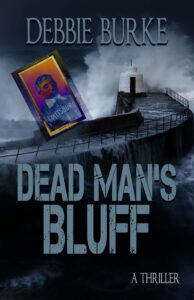
In Stalking Midas, a glamorous con artist takes advantage of an aging, addled millionaire who loves his nine rescue cats. She can’t allow investigator Tawny Lindholm to disrupt her profitable scam. After all, she’s killed before and each time it gets easier.

Buy at Amazon and major online booksellers.

The Invisible Writer

By John Gilstrap

I spent last week in Las Vegas at the SHOT Show, the once-again-annual convention thrown by the National Shooting Sports Foundation (NSSF). Attended by roughly 65,000 people, the SHOT Show is to the shooting, hunting and outdoor adventure industry what the Detroit Auto Show is for cars. It’s the place where firearms manufacturers announce their new products. It’s also the place where I can meet up with the various subject matter experts who keep me from making huge mistakes. Good times.

On the flight out, I watched an episode of a documentary called, “One Perfect Shot,” which turned out to be entirely different than what I was expecting. The shots in this series refer to movies. Each episode highlights a different film director, who chooses his or her favorite shot, and reveals the story behind the story. I chose to watch the episode in which Michael Mann discusses the the bank robbery sequence from Heat–hands down, I believe, the best gunfight ever filmed.

The episode was interesting, but it featured a filmmaking quirk that is the point of writing this post. The director of the episode, whose name I cannot find in the brief time I am willing to dedicate to the search, chose to shoot much of her interview with Michael Mann in a wildly asymmetrical way. If you’ve studied filmmaking at all, you know about the rule of thirds, where the subject of an interview is rarely in the center of the screen. In this episode, which appears to have been shot in a black box theater and is formatted in wide screen, the subject spends much of the screen time in the lower corner, with his eyes looking off screen, rather than toward the center, which is the expected convention.

It was an interesting choice, but I think it was also a foolish one. I chose the episode because I wanted to hear the director’s story. The quirky filmmaking took away from that in a way that felt almost disrespectful. Mann was the man of the moment, yet the director decided to call attention to him/herself. It interrupted the story that it was trying to tell.

There’s an analogy her to writing for the page.

I strive to remain invisible in my writing. I want my readers to be fully aware of everything my characters are thinking and feeling, thoroughly immersed in Brother Bell’s “fictive dream.” The moment I draw attention to myself, I show disrespect to my characters and their tribulations.

Writerly affectations–lack of quotation marks for dialogue, impossibly long paragraphs, and the like–annoy me. They eject me from the story. Good writing isn’t flowery, it’s concise. This is why word choice matters so much. Why the flow of sentences matters.

If you’re reading this and you’re new to the craft, think twice–and then twice again–about the nature and structure of that oh-so-important first book. Adhere to conventions while still being interesting. I have repeated proclaimed that there are no rules in this writing game, and I always will. But there are expectations and human reactions.

On the rare occasions when I agree to critique rookie writing, I cringe when I see that the piece is written in present tense. Not that there’s anything inherently wrong with that, but it’s hard to pull off, and my Spidey sense warns me that there’s likely to be trouble ahead. The reason? Because the author is deliberately writing against the current and trying to draw attention to himself. One of the reasons I don’t read fantasy/science fiction (or many foreign novels) is the propensity for unpronounceable names. How am I supposed to keep the characters straight in my head if I can’t say their names?

Are you Mensa and have a giant vocabulary? Good for you. If you want to succeed in a commercial fiction market, check your brilliance at the door. Obeisance is a fine word, but respect is better recognized and known by more people. If you’re hoping to sell your stories, you’re hoping to break into a corner of the entertainment business. Everything you do is about your customer–your reader–not you.

When I mention this in seminars, I often field objections from students who are incensed that I expect them to write down to people. Inherent within the objection is a sense that writers are smarter than their readers. (One cannot write down without considering oneself to be above.) I don’t believe that to be the case at all. My job is to give readers a fun ride, and to make it feel effortless on my part. That effortless part is where the really hard work comes in.

So, TKZ family, what do you think? How easy is it for you to be ejected from a story? Do you like authors to show off, or do prefer for them to stay in the background?

Finding Those Laser Beam Words

“When I read, I notice with pleasure when an author has chosen a particular word…for the picture it will convey to the reader.”―Ruth Bader Ginsburg

By PJ Parrish

The older I get, the more words fail me. This is a common ailment, I realize, but that’s cold comfort. What’s worse, there’s no logic to these lapses. I can sing all four verses of the theme song from The Patty Duke Show. But “thing” has now become my go-to noun in daily life — as in when I asked the husband to hand me “that thing over there” so I could change the channel on the TV.

You’d think that, as a writer, I’d be used to this. Not being able to claw up the right word from the morass of our memory is just normal for us, right? It’s part of the torture of our creative process. I’m telling you, crime dogs, this doesn’t get easier with age.

I’m judging a contest right now for a writer’s conference. The entries range from derivative to really delightful. What separates the standouts from the pack is not a matter of just plot and character or mastery of craft. Sometimes it is coming down to something as “small” as word choices. There is nothing better, as the late justice said, than to come across a phrase or sentence that is so striking and original, that you pause in your reading to savor it.

As a writer, when you hit upon just the right word, your sentences and scenes take on a vibrancy and alive-ness. The right word, phrase, metaphor, has a magical power to instantly connect with a reader, making them go “Yes! I know exactly how that feels!”

When you settle for the merely adequate word, your story becomes mundane and bloodless.

Look at these lovelies:

Ray Bradbury in Fahrenheit 451 describing the “beauty” of the pages of a book being burned: “Each becomes a black butterfly.”

John LeCarre in The Spy Who Came In From The Cold describing torture: “The pain just increases like a violinist going up the E string. You think it can’t get any higher and it does–the pain’s like that, it rises and rises.”

Does it give you, as a writer, any comfort to know that all writers struggle with this? It helps me. It’s just one more thing we have to worry about as we move through our stories, trying to keep all the pie plates spinning.

Gustave Flaubert was tortured by his quest for le bon mot, as he lamented in a letter to Guy de Maupassant:

Whatever you want to say, there is only one word that will express it, one verb to make it move, one adjective to qualify it. You must seek that word, that verb, that adjective, and never be satisfied with approximations, never resort to tricks, even clever ones, or to verbal pirouettes to escape the difficulty.

Well, I don’t know if this will make your trials any easier, but here are a couple things I’ve found useful to keep in mind as you struggle for the right words.

Keep word choice true to the characters background and age. Streetwise characters in a PI novel have their own jargon. Ditto the hero of a historical regency romance. Country folks speak a different vocabulary than city swells.  Nothing will yank a reader out of your story faster than ill-fitting words coming from your characters mouths or brains.

Be a good listener. We’re always saying here at TKZ that you must be a great observer of human behavior to write well. So must you be a great listener. Now, in daily life, people talk in cliches, banalities and tried metaphors. If you ever use one of these…

  • play your cards right
  • bring to the table
  • low-hanging fruit
  • it’s an uphill battle
  • bite the bullet
  • nerves of steel
  • weak as a kitten

…I will hunt you down. You can take that to the bank. But listening to people talk gives you a good grounding by which to fashion unique character voices. Everyone on earth has their own music. It’s your job to hear each note.

Be aware of your tone. Humor demands a different vocabulary than hardboiled. The word choices you make for mystery set in the Civil War South are going to be more specific and regimented than those for a dystopian fantasy wherein you are free to invent words and phrases. (See below!)

Beware the Thesaurus. I know, I know…it is useful but it can be a dangerous crutch. If you are overly reliant on standard synonyms, your brain will never become muscular enough to come up with something truly original to your own voice.

Okay, okay, if you’re really constipated you can take a dose of Thesaurus. Sometimes just looking a list of almost-right words can free up the juices. Just be careful that you’re not so desperate that you fall for the first pretty synonym that comes along. Here’s a really fun site for word shopping:  https://onelook.com/ (Enter your word in the box but don’t hit enter; hit Related Words)

Don’t gild every word. Sometimes, “He walked into the room” does the trick. It’s usually not “a verdant swath of fescue,” it’s just “grass.”  Pick your places to punch things up and don’t overdo it because you’ll just end up looking silly. Don’t get addicted to metaphors. As Florence King said, writers who have nothing to say always strain for metaphors to say it in.

Likewise, be aware of the moment. This is a problem I’m finding with some of the entries I am judging — the writers over-describe or strain for originality when the context/situation calls for tightness, simplicity, or specificity. This is especially true in their action scenes. The tenser the moment, the simpler the writing, I say. Do you write this?

Frank reached a trembling hand into his holster and pulled out his blue-black Glock 22,, grimacing as the hulk of his would-be assassin emerged from the shadows, lit for only a second by the red reflection of a nearby neon sign. He fired the gun, blinded for a moment by the muzzle-fire, then blinked the scene back just in time to see the large man fall forward, face first, down onto the wet street.

Or something like this?

Frank jerked out his gun, squinting to see the man in the dark alley. A second of neon throbbing on the man’s gun was enough to get off one bullet.  The man fell to the asphalt, his gun skittering into the shadows.

With this example, I cut all extraneous words to keep things moving fast. I purposely left out some things to leave room for imagination. And I tried to find the right word(s) — jerked, squinting, skittering, neon throb.

Don’t sweat it on the first draft. Sometimes, you just can’t find the word. You’re in the ballpark, but it’s not a home run. You’re sorta, kinda, just about, not far from, close to, nearly, more or less…almost there! But nothing comes. Don’t do what I often do — sit there, staring at the screen, brain in knots, paralyzed by the perfection police. PUT ANY WORD IN THERE AND MOVE ON. Believe me, the word will be there in the next draft. Or in the middle of the night.

Have fun. Don’t be afraid to make up words or use them weirdly. Now, this comes with a big caveat because you can end up looking like pretentious fool. But every once in a while, you can get away with this. I didn’t know this until I did some research, but there’s a fancy (specific!) word for this: anthimeria  It means subbing one word for another, usually a noun for a verb. “Chill” was originally a synonym noun for “cold” but has morphed into a verb meaning to relax. After Clint Eastwood gave his famous speech at the 2012 Republican National Convention, “Eastwooding” meant talking to an empty chair. Thankfully, this one didn’t catch on.  Here are a couple of good examples:

I’ve often got the kid in my mind’s eye. She’s a dolichocephalic Trachtenberg, with her daddy’s narrow face and Jesusy look. — Saul Bellow in More Die of Heartbreak.

Until then, I’d never liked petunias, their heavy stems, the peculiar spittooning sound of their name. –Kate Daniels in In the Marvelous Dimension.

You keep lyin’ when you oughta be truthin’ — Nancy Sinatra, These Boots Are Made For Walking.

I unwittingly committed anthimeria at pickleball once when I joked to a female opponent after she fired off a nasty shot: “Stop mean-girling me.” It stuck, though we don’t have an equivalent for the guys.

Okay, go forward and find the right stuff. And relax! This is supposed to fun, right? As I often try to do, I leave you with some final words of inspiration. These come from the great American bard, Frankie Goes to Hollywood:

But shoot it in the right direction
Make making it your intention-ooh yeah
Live those dreams
Scheme those schemes
Got to hit me
Hit me
Hit me with those laser beam [words.]


Boz

Larry Bozka died of cancer on January 5, at 4:30.

I know the time, because I’d checked my phone at that exact moment, waiting for an electrician who was keeping me from going to my deer stand.

Outdoor enthusiasts, hunters, and fishermen in Texas knew about Boz, because he was an outstanding photojournalist with credits in countless outdoor publications, Past President of the Texas Outdoor Writers Association, former editor of Texas Fish and Game Magazine, and the author of Larry Bozka’s Saltwater Strategies, before launching into a long list of successful photographic and video endeavors too numerous to list here.

Boz gave me a chance, way back in 1992. I’d reached out to him via snail mail to see if he was interested in allowing me to write for a pulp outdoor newsletter I can’t name today. It was a statewide publication and I thought it would give me the opportunity to get my name out there, since I was working hard to expand my self-syndicated newspaper column.

He called long distance from Houston a few days after getting my packet, and hired me on the spot to write for him. We talked for an hour on the phone that day, on his dime, and from the moment I heard his voice, we were friends.

Taking a pretty much unknown writer under his wing, he gave me the opportunity to expand my imagination. I wrote humor for his paper, and we spent hours in the field, planning our next adventure, story ideas, and where we wanted to be twenty years from then.

From there Boz moved over to become editor of Texas Fish and Game, and brought me along, giving me the opportunity to write whatever I want. He was a gentle editor, who taught me much.

Then we lost our minds and took figurative shots at everything we could think of in an insane satirical publication called the National Fish Rapper. He was encouraging to a budding author, always there when I had a question or thought. He was a mentor, editor, friend, and never knew what he did for me.

Hang in here with me as this meandering trail brings me to my days as a middle school photography teacher. This was the late 1970s and early 80s, a time full of great rock and roll, parachute pants on the boys, Calvin Klein jeans and long bangs on the girls, and a troubled kid named Mark B.

Back then I had a reputation as a hard teacher who was a disciplinarian, and one who taught a fun class at the same time. Because of that, a number of floundering students appeared in my room who needed whatever it was that I could offer.

Mark was one of them. He’d been kicked out of most of his classes at one time or another and was no stranger to expulsion. Tougher than boot leather, he was always in trouble and tended to fight other guys at the drop of a hat. With a squad of toadies following behind, he cut quite a swath through the school.

I didn’t put up with much back then, and he and I butted heads almost on a daily basis. Once night he broke into the school, kicked through walls to access the principal’s office. I won’t go into details about what he left in the principal’s desk drawer, but suffice it to say that everything in there had to be thrown away.

Finding success and satisfaction in breaking through sheetrock that night, he turned his attention to my classroom. The hole in my wall reminded me of the Road Runner or Coyote punching through billboards. He tore the room apart to teach me a lesson.

For his enthusiasm, he wound up being expelled for the remainder of the year, and I never heard another word about Mark.

Four or five years ago the Bride and I went to Billy Bob’s dance hall in Ft. Worth to see Mark Chesnutt. I met the country music star through Boz (wait for the connection…) and we became friends. Mark loves to fish, and so do I, so the three of us had a great time in Rockport, Texas, sharing the outdoors and creating stories that should never be told.

At Billy Bob’s that night I sent word backstage to Mark, telling him I was there and would like to come back and visit with him before the show. I got a note ten minutes later to come through a specific stage door.

Note in hand, the Bride and I went backstage and were stopped in a dark hallway by a big deputy sheriff who looked at the note, then down at me.

“You aren’t going back there right now.”

I looked up at the bear-sized lawman. “This note came from Mark himself. Here’s his handwriting.”

“Nope. You’re not going in there.”

Face flushing with anger, I looked at the Bride for support. For once she didn’t have any answer except for a raised eyebrow, so I turned to the big guy. “I’m not sure what I’ve done to offend you, but we’d just like to go back and visit with my friend.”

“Mr. Wortham, you and I have something to talk about first.”

I paused. “Do I know you?”

“You did, Mr. Wortham. I’m Mark B.”

My eyes widened in shock.

The big guy grinned. “Thought I was in the pen, didn’t you?”

“Frankly, yes. But you’re a deputy sheriff. How….?”

“Because of you, and the principal. I was out of control when I was a kid, but you two talked to me, and listened, and y’all stayed on me. You encouraged me in class, and it stuck, though I didn’t know it at the time.

“All that kicked in a few years later when I got in trouble again. It wasn’t pretty, but the judge sealed my records and I straightened up. If it wasn’t for y’all, I’d be in prison, but you helped turn me around.”

Then he hugged me, and I disappeared as that big guy wrapped his arms around me. I had only one thing to say.

“Don’t hurt me.”

He pushed me back and grinned. “I just want to thank you for taking the time to work with me.”

We talked for a few more minutes before he allowed us backstage, which is another story that evolved that night.

Part of my point is that Boz introduced me to Chesnutt, who in a roundabout way allowed me to talk with Mark B., a success story I would have never know about.

The second point is that we don’t know what impact we have on others. One student in my photography class eventually became the Chief Photographer for Texas Parks and Wildlife Magazine, who has a connection with…Larry Bozka.

Boz’s passing leads me to this observation. We don’t know what future impact a kind word, or a kind act can have on someone. Giving a writer positive feedback might be all they need to continue trying to make it. Honest critiques can make all the difference. Maybe nothing but a sincere, encouraging word is all we need to offer.

I’ll always hear his encouraging voice that was supportive and full of life and humor. Helping and encouraging freshmen writers was always part of his mission, and it should be ours as published authors, too.

It was because of Larry Bozka, and others who believed in me, that I’ve achieved success as a newspaper columnist, magazine writer and monthly columnist still for Texas Fish and Game, and an author 15 novels and counting.

He was one of a kind, and readers everywhere will miss that twinkle in his eyes and his distinctive writing voice. We

I lift my glass to Boz. Another fine writer and friend gone.

Using ChatGPT as a Blog Research and Writing Tool

ChatGPT is a deep-learning natural language processing application developed by Open AI that can simplify research and writing for bloggers.

In today’s digital landscape, bloggers are regularly being challenged to produce high quality, informative blogs to reach their target audience. This can be a daunting task, especially when a blogger is pressed for time and resources. Luckily, with advances in technology, a helping hand is now available: Open AI ChatGPT.

ChatGPT is a text-generating deep-learning means application developed by Open AI. It uses a number of artificial intelligence (AI) algorithms, including natural language processing (NLP), to help people generate text.

By entering a prompt and providing concise answers to the application’s questions, ChatGPT can provide a starting point for your blog article. It does this by returning the prompt in a new format, with additional verbiage, in order to aid in the research and writing aspects of your blog post.

Using ChatGPT is an efficient way to streamline research and writing. It allows you to skip the preliminary research and start writing. ChatGPT simplifies the research and writing process through three key steps.

The first step is to enter your prompt into the application’s text window. Once your prompt has been entered, the user is then asked to provide answers to questions that are related to the prompt. By submitting your answers, ChatGPT can generate a blog post topic and develop a skeleton structure that can be used as a basis for the content.

The second step is validating the information. After the initial output has been generated, the user can then refine the research by verifying any information that is provided by the program. This is an important step as it ensures that any data provided by the application is accurate.

The third step is to utilise the text output in the blog post. Once your main points have been made, the information generated by ChatGPT can be used to craft content around the main points by providing additional detail. This can be especially helpful if the user is short on ideas or lacks the depth of knowledge required for a particular subject.

ChatGPT is an effective tool for bloggers because of the time and resources it saves. Instead of putting in hours of research and writing, users can quickly get the information they need and have a solid foundation for their blog post.

Unlike other AI applications, ChatGPT is extremely versatile, offering blog writers an effective means of generating fresh ideas, verifying sources of material, and providing structure and direction to their writing. Furthermore, the application’s natural language capability makes it quite effective at helping users stay in tune with readers’ interest and quickly provide quality material.

To conclude, ChatGPT is a powerful tool that offers real and tangible benefits to bloggers. It can help save time and resources by providing a easy and convenient starting point for blog content. Moreover, its natural language capabilities ensure that the content created is relevant to readers. So, if you are looking for a way to simplify research and writing for your blog, Open AI ChatGPT should be at the top of your list.

Kill Zoners — I (Garry Rodgers) didn’t write this post. Nor did I copy & paste. Artificial Intelligence composed this original content for me, at my request. Yes, it’s a bot’s work and it’s unedited. All I did was enter the following prompt into Open AI ChatGPT. Then I pressed submit and, in 34 seconds, the app produced the preceding piece:

Please write me an approximately 500-word blog post on what Open AI ChatGPT is and how to effectively use it as a blog research and writing tool. I want to post this on The Kill Zone and need it written in a format that suits The Kill Zone style. Please include a clear and helpful conclusion.

Here’s the link to the Playground where you can try out ChatGPT:  https://beta.openai.com/playground

Here’s a link to a clear tutorial about using ChatGPT: https://app.gumroad.com/d/e52116ff42766c5d8567cb6d812c5dbb

Discussion question: Has anyone else used ChatGPT technology? It’s been available for six weeks and is getting a lot of attention.

Footnote: I’m offline for the next few days, so I’ve asked Debbie Burke to drive the KZ comment bus for me. Thanks, Debbie!

Automated Editing? Or Not?

Automated Editing? Or Not?”
Terry Odell

In the process of doing the final pass of the manuscript for Deadly Relations before sending it to my editor, I ran checks through several automated programs. I use SmartEdit to check for overused words and phrases, adverbs, etc. I’ve reported about that here at TKZ before. People have talked about using Grammarly (SmartEdit doesn’t check for grammar), so I tested that with a few chapters. (I used the free version. Premium mileage may vary.)

I wasn’t impressed, as almost every suggestion Grammarly made was “wrong” but I had to look at them to decide. Time suck. And, I had to know enough grammar to recognize when the suggestions were valid, optional, or off-the-wall. A while back, John Gilstrap talked about discovering an Editor function in Word, so I gave that one a shot as well. Most of the suggestions the Editor gave me dealt with commas. I agreed with some, disagreed with many—mostly about commas before “but”. Enough so I looked it up, because Mr. Holtby in HS English drilled into us that ‘but’ can connect two independent clauses, but you needed to use a comma. The Google Machine agreed. I don’t know why the Editor didn’t.

Which brings me to the main ‘flaw’ with these automated editing helpers. They’re not set up for fiction, and they can’t read in context.

Example: The jerry can sat in a spreading puddle of liquid. Both Grammarly and Word’s Editor told me that “can sat” is incorrect usage. It didn’t understand that “can” is a noun in that sentence.

And never mind dialogue, which comes from the character and many rules fly out the window because people don’t speak with perfect, rule-abiding grammar. Or jargon. Many of my characters in this book are cops, and they use “cop speak” which doesn’t follow the rules of grammar.

There’s also the case of voice, which is mine, and I’m not changing my style for any automated program.

Then there’s the section called “Inclusiveness.” Mr. Gilstrap opened a big discussion when he talked about what the Editor flagged in that category for him, so I did a deeper dive. Editor flagged several spots where it thought some people might find my word choices offensive. Not offensive in a profanity way, but rather reinforcing biases and stereotypes.

Here are some examples of what I’d written and what (and why) the Editor suggested changes. It also gave suggested words to substitute. Some made sense. Some didn’t.

“Be home soon.” Gordon put his SUV in gear—only a little white lie that he was already on his way—and headed for home.

You might consider using different language to avoid equating “black” with negative or “white” with positive. Although this term doesn’t directly refer to race, these connotations can unintentionally reinforce racial stereotypes and biases.

A high-pitched voice—Frieda’s—called to Moose. The dog, tail wagging, bounded to the front porch. “Who’s there?” Frieda clutched the dog’s collar. Moose, still eyeing Gordon warily, sat by her side. Not that the frail woman could restrain him should the dog bolt.

Some expressions may draw undue attention to age or imply negative attributes due to a person’s age. Consider removing unnecessary, negative, or condescending references to age.

The coating of dust on the three-inch wide rungs was disturbed by what Gordon interpreted as the toe end of boot prints. Man-sized.

Some terms may suggest negative attitudes or stereotypes related to gender roles or a person’s gender identity or expression. Consider avoiding expressions that may imply bias.

Other usages the Editor pointed out:

  • Gordon checks his manpower spreadsheets.
  • He refers to someone manning the front desk.
  • He searches for a character using her maiden name
  • Gordon faces a gunman.

After a little digging, I discovered you can adjust the settings so the Editor checks only for what you want it to. (Note: You should also be sure you’ve selected “Casual” rather than “Formal” or “Professional” before running any checks.) Under “Inclusiveness” I found the following options:

  • Age Bias
  • Cultural Bias
  • Ethnic Slurs
  • Gender Bias
  • Gendered Pronouns
  • Gender Specific Language
  • Racial Bias
  • Sexual Orientation Bias
  • Socioeconomic Bias

Now, I’m of a generation that remembers the addition of “Ms” to the honorific options. I remember what we referred to as “Women’s Lib.” I asked my daughters about some of the usages the Editor flagged, and they agreed with the sentiments behind them, and didn’t think the Editor was out of line. Their social and professional circles differ a great deal from mine. But they also agreed that reading a novel wasn’t the same as face to face talking to other people.

The Big Question is “How does this apply to fiction?” Word doesn’t have a setting for that. And, if you’re writing in Deep POV, everything on the page should come from the character’s voice. Will I consider the words the Editor said were biased? Yes. Will I make all the changes the Editor suggested? No. Because my characters don’t talk that way. At least now. Will they change with the times? Maybe.

**Note. We here at TKZ value our readers’ comments and discussions. Recently, we’ve been having some issues with leaving comments. If this happens to you, we hope you’ll understand. And keep trying. Our web guru is working on the issue.


Coming Soon! Deadly Relations.
Nothing Ever Happens in Mapleton … Until it Does
Gordon Hepler, Mapleton, Colorado’s Police Chief, is called away from a quiet Sunday with his wife to an emergency situation at the home he’s planning to sell. A man has chained himself to the front porch, threatening to set off an explosive.


Terry Odell is an award-winning author of Mystery and Romantic Suspense, although she prefers to think of them all as “Mysteries with Relationships.”

Happy Public Domain Day 2023

By Debbie Burke

@burke_writer

1927 was a watershed year in motion picture history. 

Wings won the first Academy Award for Best Picture. 

“Wait a minute…wait a minute…you ain’t heard nothin’ yet.”

Those were the first words ever spoken in a motion picture. Although The Jazz Singer is now considered insensitive, nevertheless, it stands as an historic moment in 1927 when the first “talkie” rang the death knell for the silent film era.

You can listen to a clip of Al Jolson’s first words here. 


January 1, 2023 was Happy Public Domain Day when copyrights ended for movies, literary works, and music published in 1927.

Here’s a partial list of works that are now in the public domain, provided by Duke University.

Literary:

Herbert Asbury, The Gangs of New York

Willa Cather, Death Comes for the Archbishop

Agatha Christie, The Big Four

Countee Cullen, ed., Caroling Dusk: An Anthology of Verse by Black Poets of the Twenties

Franklin W. Dixon, The Tower Treasure (The Hardy Boys #1)

Franklin W. Dixon, The House on the Cliff (The Hardy Boys #2)

Franklin W. Dixon, The Secret of the Old Mill (The Hardy Boys #3)


Arthur Conan Doyle, “The Adventure of the Veiled Lodger” and “The Adventure of Shoscombe Old Place,” the last two stories from The Case-Book of Sherlock Holmes (which means Holmes himself is now in the public domain)

E.M. Forster, Aspects of the Novel

Ernest Hemingway, Men Without Women

Hermann Hesse, Steppenwolf

Franz Kafka, Amerika

Anita Loos, But Gentlemen Marry Brunettes

Edith Wharton, Twilight Sleep

Thornton Wilder, The Bridge of San Luis Rey

Virginia Woolf, To the Lighthouse

Films: 

Metropolis (directed by Fritz Lang)

The Jazz Singer (the first feature-length film with synchronized dialogue; directed by Alan Crosland)

Wings (winner of the first Academy Award for outstanding picture; directed by William A. Wellman)

Sunrise (directed by F.W. Murnau)

The Lodger: A Story of the London Fog (Alfred Hitchcock’s first thriller)

The King of Kings (directed by Cecil B. DeMille)

London After Midnight (now a lost film; directed by Tod Browning)

The Way of All Flesh (now a lost film; directed by Victor Fleming)

7th Heaven (inspired the ending of the 2016 film La La Land; directed by Frank Borzage)

The Kid Brother (starring Harold Lloyd; directed by Ted Wilde)

The Battle of the Century (starring the comedy duo Laurel and Hardy; directed by Clyde Bruckman)

Upstream (directed by John Ford)

Music:

The Best Things in Life Are Free (George Gard De Sylva, Lew Brown, Ray Henderson; from the musical Good News)

(I Scream You Scream, We All Scream for) Ice Cream (Howard Johnson, Billy Moll, Robert A. King)

Puttin’ on the Ritz (Irving Berlin)

Funny Face and ’S Wonderful (Ira and George Gershwin; from the musical Funny Face)

Can’t Help Lovin’ Dat Man and Ol’ Man River (Oscar Hammerstein II, Jerome Kern; from the musical Show Boat)

Back Water BluesPreaching the BluesFoolish Man Blues (Bessie Smith) Listen here.

Potato Head BluesGully Low Blues (Louis Armstrong)

Rusty Pail BluesSloppy Water BluesSoothin’ Syrup Stomp (Thomas Waller)

Black and Tan Fantasy and East St. Louis Toodle-O (Bub Miley, Duke Ellington)

Billy Goat StompHyena StompJungle Blues (Ferdinand Joseph Morton)

My Blue Heaven (George Whiting, Walter Donaldson)

Diane (Erno Rapee, Lew Pollack)

Mississippi Mud (Harry Barris, James Cavanaugh)

~~~

Of particular interest to mystery authors, the last two works by Arthur Conan Doyle featuring Sherlock Holmes are now in the public domain. What does this mean to writers?

If you’ve always hankered to feature the iconic Sherlock as a character in new adventures, you are free to do so without violating copyright or worrying about legal repercussions (more on that in a moment).

Here are a few genre possibilities:

Sherlock uses his powers of deduction to solve contemporary mysteries in the 21st century;

Or he time-travels through history in pursuit of villains;

Or fantasy stories might bestow magical superpowers like flying, turning invisible, telekinetically moving objects, and casting spells;

Or sci-fi, where he travels to distant universes—a rocket ship or space station makes a great setting for a locked room mystery;

Or for romantic suspense, he can fall in love.

Although a number of contemporary works have featured Holmes and Watson, there is a copyright backstory that’s nearly as complicated as Conan Doyle’s mysteries.

Even though Sherlock and Watson had already entered the public domain, legal battles over Sherlock’s copyright persisted for years. The Conan Doyle estate claimed various justifications to charge licensing fees to authors and film makers who wanted to use the characters.

Most creators paid the fees rather than endure the time and expense of taking the estate to court. But attorney Leslie Klinger fought back and won.

In one suit, Judge Richard Posner criticized the estate’s “unlawful business strategy” and stated:

The Doyle estate’s business strategy is plain: charge a modest license fee for which there is no legal basis, in the hope that the ‘rational’ writer or publisher asked for the fee will pay it rather than incur a greater cost, in legal expenses, in challenging the legality of the demand.

The expiration of the copyright on the last two works featuring Sherlock has now ended any possible claims by the estate.

Sherlock is finally, unquestionably free for any creator to use.

That means, as to Sherlock’s future adventures…you ain’t heard nothin’ yet.

~~~

Just for fun, here’s The Battle of the Century, featuring Laurel and Hardy and the greatest custard pie fight of all time:

~~~

TKZers: Do any stories, movies, or songs from 1927 make your creative juices flow?

Do you have ideas for repurposing works that are now in the public domain?

Please share your ideas in the comments.