In Praise of the Antikythera Mechanism!

When I was last here two weeks ago I discussed ancient books and authors. I was gratified to receive a number of comments on the topic, including one from Dan Phalen, who wondered what would become of our digital prose. Dan used the example of an archeologist coming upon an iPhone a thousand years from now who would be faced with the task of coaxing digital text from the device.  

Dan’s example isn’t going to have to wait for one thousand years to occur. It’s happening right now. Remember floppy disks? Some of you may not. They were and are these square things that were read by something known, by amazing coincidence, as a floppy disk drive. If some of you have a bunch taking up space in a forgotten corner of your office you might be surprised and disappointed to find that the data on them is corrupted or bye-bye. On the other hand, some companies, like Boeing, the airplane people, still use them.  Think about that the next time you are in the air and you hear your pilot say “Uh-oh” on a hot mike, followed by an extended period of turbulence.

There are also .art files. Back when AOL was (almost) the only game in town and you downloaded pictures from the internet using AOL those pictures were saved in the form of an .art file. A great many of those are corrupted as well. I have tried several programs to open them but none have worked. AMF. That said, the unknown of the obsolete goes back much, much further than the most recent turn of the century. More on that in a minute.

I did another research deep dive — this one into the topic of information storage retrieval — and almost didn’t get this post written because of it. I was in so deep and had to come up so fast that I am still recovering from the bends. I did find a number of interesting websites dealing with the topic of retrieving data from obsolete technical doo-dahs. I’ll (attempt to) limit my discussion to two of them, which hopefully will be particularly relevant for those of you who labor in the historical fiction grammar mine. As an aside, let me note that there doesn’t seem to be an agreed-upon definition of what “historical fiction” is. For our purposes, we’ll call it a story set at least twenty-five years before the year in which the story is written. That would be from the beginning of all of this around us to…um…1996. That is disconcerting because I can remember a number of major events in my life from that year but not what I had for lunch yesterday. Oh, the humanity!

Onward. There is a wonderfully nerdy (and I say that with the highest respect) site named the Museum of Obsolete Media which is a time bandit of the highest order. If you look under the “Popular Tags” section you will see links to decades beginning with the 1860s. If you are neck-deep in writing a series set in the 1900s and want to see what was there in 1906 that ain’t no more and want to use it as a starting point for some element of your novel, this is the place to go for that and so much more. I was surprised when looking through my own timeline to note how many cutting-edge items (at that time) were listed that seemed futuristic but are now practically forgotten. Anyone want to buy a non-functioning Apple Newton?

Obsoletemedia.org is a labor of love. If you want to get up to your neck in things, however, the oft-forgotten but absolutely indispensable National Archives has an area — a very, very large area — devoted to “special media preservation.” That area has everything from wire recordings and machines to play them on to that new iPhone that you’ll brick in two years. It is particularly noteworthy that you can email questions to them about such topics and the worker bees there will happily email you back with everything you ever wanted to know about, say, wax cylinder recordings, the same way that your local library still does for more mundane topics. 

It all sounds very cool. The problem, though,  is that all of that data, particularly the digital type on collections such as the ones in the National Archives, is sitting on a time bomb. The immediate problem with contemporary “media preservation” is that digital media isn’t built to last. It is fragile coming out of the box and deteriorates relatively rapidly.  That is but one reason that I can’t open .art files I made twenty years ago but I can go on eBay and buy photographs taken in the 1800s. As far as digital information is concerned, there is more and more of it being made, lost, and found even as there are fewer people dedicated to exploring the obsolete storage mechanisms and preserving what they find. Information is being lost, as is the ability to retrieve it in the first place. Meanwhile, wire recordings made by Thomas Alva Edison still work and can be repaired.

Getting back to archeologists and the like…this photo may look like the water shutoff valve in your basement
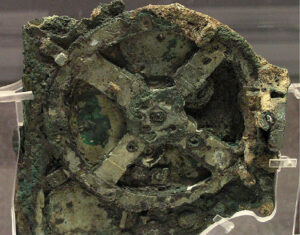
but it is something called the “Antikythera Mechanism,” considered to be the world’s oldest computer. It is believed to have predated Bill Gates’ monster by around two thousand years. The Antikythera Mechanism was discovered amidst the ruins of an ancient shipwreck in 1901. It was not until 2008 that it was recognized for what it was (“Why…that’s an Antikythera Mechanism!”). Yes. It took a looong time for archeologists and scientists to figure out what the f-heck it was and what it could do, which was predicting solar eclipses and organizing calendars (“Meet Lycastra on the down-low. 4P by the sundial”). It can probably do a heck of a lot more, such as spontaneously opening dimensions between our reality and the netherworld on July 11, 2021.  What I find particularly interesting is that our contemporary technology had to catch up with the Antikythera Mechanism so that it could be recognized for what it was. Otherwise, it would probably be a paperweight on a desk of a Greek fishing boat.

Sobering, isn’t it?

 I had a conversation last week with my granddaughter, who is starting high school next year. We talked about fields of study. My advice to her was to master computer systems and storage retrieval. “This is all going to break down,” I said. “All of it. It’s not a question of ‘if’ but a question of ‘when.’ When all the king’s horses and men need those digital bits put back together be ready to be the one to do it. You’ll be able to name your own price. Settle for nothing less than your own island and a bunch of people — well paid, but well paid by somebody else — to look after it.” 

When I think about the Antikythera Mechanism, that advice looks better with each day. 

So what technological device, program, or storage entity do you miss? Windows 7 is an okay answer.

 

Ethics, Integrity & Trust for Writers

Several days ago, my writer friend Adam Croft and I were exchanging emails. We keep in regular touch, and Adam serves as a mentor to me. For those of you who don’t know the name, Adam Croft is a highly successful indie crime writer from the UK. I brag that Adam and I go back long before he became famous and when I still had hair.

Adam had just come off a bad experience with an online scammer who offered kick-back money—big money—to other unethical online scammers who recommend scams like useless writing courses sold at ridiculous prices. Adam vented to me about the downward spiral of suckering-ins going on, and how well-intended, trusting writers get thoroughly hosed by unscrupulous shysters.

“With you, dude,” I replied to Adam, as the old cop in me has long detected some of these writing “gurus” who produce online courses sell snake oil from Brother Love’s Travellin’ Salvation Show. Then, yesterday morning, I clicked on the Indie Author Mindset Facebook Group that Adam Croft facilitates and saw this post. I PM’d Adam and asked if I could share it with Kill Zoners and he said, “Yes, absolutely fine posting stuff on the blog.”

So here it is:

——

Ethics, Integrity & Trust. (By Adam Croft)

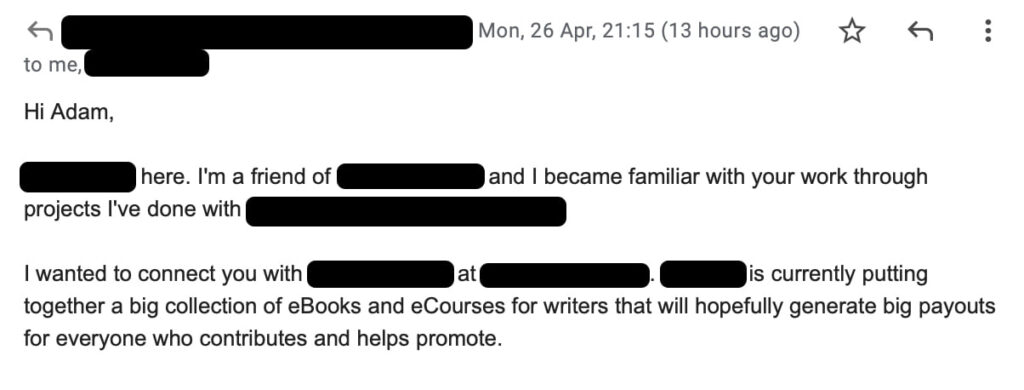
Last night, I received an email which — for me — summed up many of the ways in which this industry has taken a wrong turn.

I’ve attached a screenshot (with names redacted) as an image on this post.

It’s nothing new or revolutionary. These things come through all the time. But it symbolizes something we need to address.

Look at the wording. There’s no mention whatsoever of helping authors, providing education, or doing our best to help those at the start of their journey. Instead, the main (and only) selling point is that it’ll ‘generate big payouts’ for me.

I repeat: this email is nothing new or revolutionary. And do you know why? Because our industry is absolutely full of this.

Promoting and referring other people’s products and services is big business. I know providers and ‘gurus’ who make thousands upon thousands each month purely by telling new and inexperienced authors to take certain courses or buy certain products.

Many courses — even the really expensive ones — pay referrers 50% as a kickback. Of course these people recommend them to their followers — they get hundreds of dollars each time someone signs up. Why wouldn’t they?

Because when you see someone recommending a product, you will likely assume it’s a genuine recommendation. Sometimes it might be. But the vast majority of products and services in this industry are recommended because they pay well for the person recommending them.

When I started The Indie Author Mindset, I was very clear that I would only recommend products and services I’ve used myself, and would recommend otherwise. Affiliate and referral fees were irrelevant. Money and ‘big payouts’ don’t motivate me. Ethics, integrity, and trust do.

Those three words have always been difficult ones. They’re the reason I wavered for two years before setting up The Indie Author Mindset. They’re the reason I was extraordinarily cautious about what paid content I offered for a short while. And they’re the reason I stopped doing so.

So let me be clear about a few things:

1. I receive absolutely no financial inducements, incentives, or rewards from any products, services or resources I recommend. My integrity and your trust mean far more to me than money.

2. I do not provide paid courses, coaching, or any other form of ‘upsold’ products. You are not a commodity to me.

3. I have always modelled my career on ensuring I am financially — or otherwise — beholden to nobody, allowing me to speak freely and honestly.

I choose to operate this way for three reasons:

1: It allows me to give advice with complete integrity and transparency.

2. It allows you to trust my advice. You know absolutely that my only interest is in helping you and your books, not lining my pockets.

3. My fiction books do very well indeed, so I don’t need to top up my earnings by taking money from other authors.

I love helping authors at all stages of their careers. When I started publishing more than a decade ago, the advice just wasn’t there. I was one of the early writers fumbling through the mists, trying to work out how on earth we could make this work.

The issue then was a lack of information. Now the opposite is true. Many authors mention being overwhelmed with stuff. And the reason for a lot of that is because it’s impossible to know what’s good advice and what someone is pretending to advise because they get a financial kickback for doing so.

I hope The Indie Author Mindset helps you cut through that crap. I hope that by sharing this email and writing this post I can reinforce that I won’t have any part in it. That I put my personal integrity and your trust before all else.

I’ve spent too many years at the forefront of this industry to prioritize ‘big payouts’. My focus will always be on levelling, improving, and preserving a strong indie publishing industry for authors like you for years to come. I’d far rather my legacy be visible in that way, than on a balance sheet. My fiction books do just fine on that front, and I don’t need to exploit anybody in doing so.

It all comes back to those three words: Ethics. Integrity. Trust.

——

Bio from Adam Croft’s Website

With over two million books sold to date, Adam Croft is one of the most successful independently published authors in the world, and one of the biggest selling authors of the past few years, having sold books in over 138 different countries.
To date, Adam has achieved seven Amazon storewide number 1 bestsellers, in the United Kingdom, United States, Canada and Australia.

His 2015 worldwide bestseller Her Last Tomorrow became one of the bestselling books of the year, peaking at number 12 in the combined paperback fiction and non-fiction chart.

His Knight & Culverhouse crime thriller series has seen huge popularity worldwide, with his Kempston Hardwick mystery books being adapted as audio plays starring some of the biggest names in British TV.

In 2016, the Knight & Culverhouse Box Set reached storewide number 1 in Canada, knocking J.K. Rowling’s Harry Potter and the Cursed Child off the top spot only weeks after Her Last Tomorrow was also number 1 in the same country.

During the summer of 2016, two of Adam’s books hit the USA Today bestseller list only weeks apart, making them two of the most-purchased books in the United States over the summer.

In February 2017, Only The Truth became a worldwide bestseller, reaching storewide number 1 at both Amazon US and Amazon UK, making it the bestselling book in the world at that moment in time. The same day, Amazon’s overall Author Rankings placed Adam as the most widely read author in the world, with J.K. Rowling in second place.
In January 2018, Adam’s bestselling book to date, Tell Me I’m Wrong became a worldwide bestseller and quickly went on to outsell Her Last Tomorrow.

Adam is considered to be one of the world’s leading experts on independent publishing and has been featured on BBC television, BBC Radio 4, BBC Radio 5 Live, the BBC World Service, The Guardian, The Huffington Post, The Bookseller and a number of other news and media outlets.

In March 2018, Adam was conferred as an Honorary Doctor of Arts, the highest academic qualification in the UK, by the University of Bedfordshire in recognition of his services to literature.

Adam presents the regular crime fiction podcast Partners in Crime with fellow bestselling author Robert Daws.

——

Note from Garry Rodgers: I’ve known Adam Croft for nearly a decade and I can personally vouch for his outstanding ethics, integrity, and trustworthiness. Two years ago, Adam developed his Indie Author Mindset program which was completely game-changing for me. The program consisted of two books, a series of tutorial articles, and a Facebook group page.


Adam Croft’s two books, The Indie Author Mindset and The Indie Author Checklist, are available through major online retailers. Unfortunately, Adam has discontinued his tutorials, but his Facebook site still thrives and is open to everyone who believes in making the indie writing world a better place.

Kill Zoners — What’s your experience with paid-content recommendations sent your way? And poor-value material? We’d all like to hear.

Character Descriptions – Part 1

Character Descriptions, Part 1
Terry Odell

When I decided to address self-description, I found that it would make for a very long post. Since everyone’s time is valuable, I opted to split it into two posts, so you’ll get more on the topic when it’s my turn again. Today, it’s a few tips for writing character descriptions.

A while back, I started reading a book I’d received at a conference. I’d never heard of the author, and was looking forward to adding this one to my collection. I love discovering new authors and new characters, and since this book was part of a series, I knew, if I enjoyed it, there would be more.

I settled in to meet the characters. The first paragraph immediately punched some of my buttons. I prefer a “deep” or “close” point of view, and if the first time I meet a character, she’s brushing her thick auburn hair away from her face, I get antsy. People don’t normally think of themselves that way. This says, “outside narrator” to me. Not a deal-breaker, but not my taste. I’m a Deep POV person.

These descriptions went on with more self description—shoving white hands into the pockets of her black jeans. I don’t know about you, but I’ve never thought about what color my hands are—unless I’ve been painting.

I moved on to Chapter 2. My twitchiness increased when in the first paragraph, the introduction to the character had her capturing her long raven hair and fastening it into a ponytail. When the first sentence of chapter 3 introduced a new character pulling her long blond hair into a ponytail, I hit my limit.

Yes, understand that readers like to “see” characters, and if you’re not writing in a close POV, you can describe them the way an outside narrator would see them, but readers would like to see that you can get beyond hair—or at least vary more than the color. By now, I’m not seeing different characters, I’m seeing pages full of clones of faceless, shapeless, long-haired women with ponytails.

There’s more to describing a character than hair color. There are other physical features one can mention, as well as emotional states. Here are a couple of examples, all including hair and more.

From “An Unquiet Grave,” by PJ Parrish, where the protagonist is observing another character, one he knows from the past:

“She was standing at the stove, her hands clasped in front of her apron. She had put on a few more pounds, her face round and flushed from the heat of the oven. Her hairstyle was the same, a halo of light brown hair, a few curls sweat-plastered to her forehead.”

Another, this from “Rapture in Death” by JD Robb, who writes in an omniscient POV:

“The man was as bright as Roarke was dark. Long golden hair flowed over the shoulders of a snug blue jacket. The face was square and handsome with lips just slightly too thin, but the contrast of his dark brown eyes kept the observer from noticing.”

Or here, from “Rain Fall” by Barry Eisler, written in 1st person POV, where hair is a major part of the description of the main POV character, but it’s showing more than a simply physical description—and readers haven’t “seen” the POV character before this from page 7—we don’t need to know what he looks like from page 1, paragraph 1.

“When I returned to Tokyo in the early eighties, my brown hair, a legacy from my mother, worked for me the way a fluorescent vest does for a hunter, and I had to dye it black to develop the anonymity that protects me now.”

When I’m writing, I prefer to use very broad strokes and wait until another character does the describing. My editor and I go back and forth about how much time I should spend describing my heroine in my opening paragraphs “because readers like it” versus “it’s not how people think of themselves.” I know we’ll see her through the hero’s eyes in chapter 2, just as we’ll see him through her eyes. So, in my first chapter, in paragraph 1, readers see her emotional state. The only description comes in the second paragraph:

Or (not to put myself in a league with the above quoted authors), a quick sample from one of my books. The character is on her way to a job interview.

“She refreshed her makeup, then finger-combed her hair, trying to get her curls to behave.”

Does it matter what color her hair is? She certainly knows and isn’t going to be thinking of it—unless she’s changed it for a reason, such as in the Eisler quote. We know she cares about grooming because she’s stopped to check her appearance before her interview. She wears makeup, which reveals something about her character, and she’s got unruly curls. That’s enough for page 1.

My tips:

  1. Remember the POV of the character.
  2. Avoid “mirror” type self-descriptions.
  3. Less can be more. Readers like to fill in the blanks.
  4. Don’t be afraid to wait for another character to do the describing.
  5. Have your descriptions do double-duty, such as revealing character.
  6. Don’t show the same traits for every character, and remember to make your characters different!

Do you have any other tips to share? Pet peeves?


Terry Odell is an award-winning author of Mystery and Romantic Suspense, although she prefers to think of them all as “Mysteries with Relationships.” Follow her on Facebook and Twitter.

Deadly Options

Are Gordon’s Days in Mapleton Numbered?

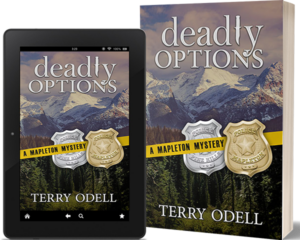
Deadly Options, a Mapleton Mystery/Pine Hills Police crossover.

Introducing Audiobook Narrator Eve Passeltiner

by Debbie Burke

@burke_writer

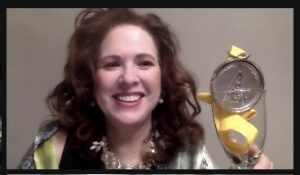
Audiobook narrator Eve Passeltiner

Gifts sometimes fall into my lap from benevolent angels who watch out for writers. During a book appearance last summer, good fortune smiled on me.

The venue was an outdoor bar/café on the shoreline of the Swan River in Bigfork, Montana.

About 30 people sat on socially-distanced lawn chairs, noshing, sipping, and soaking up sunshine while listening to me and three other authors chat about our books. For most of us, it was the first gathering since the pandemic began and everyone’s spirits were high.

Afterward a woman approached me and introduced herself as Eve Passeltiner, a stage actress who’d performed for years in New York and New England. She’d recently moved to Montana, had read my work, and said, “I’d like to narrate your books.”

Well!

Although I was flattered, I sidestepped. Readers often ask about audio versions but I wasn’t ready to take the plunge yet.

When we later met for coffee, I let her know my concerns but, bless Eve, she persisted. She had more faith in my books than I did and convinced me that an audiobook was worthwhile.

Market stats back her up and mirror the continued rise in audiobook popularity. According to a June, 2020 article in Publishers Weekly:

The Audio Publishers Association’s [APA] annual sales survey found that sales from 24 reporting companies rose 16% in 2019 over 2018, reaching $1.2 billion. The survey also found that unit sales increased by 16%. The gain in 2019 was the eighth consecutive year in which audiobook revenue rose by double digits, the APA said.

Another PW article about the 2020 online BookExpo stated:

APA retail member Chirp reported an initial dip in listening during commuting hours at the start of the lockdown, but it rebounded quickly as people discovered their new routines at home, and listenership has in fact increased to above the pre-shutdown level.

Authors need to put ourselves into the minds of our readers and figure out what they want.

Although I personally prefer written words over spoken ones, many book buyers choose to listen.

Eve convinced me I need to consider those buyers…and the sales I was missing.

During more coffee dates, I learned that Eve had been a flashlight-under-covers young reader who saved her babysitting money to buy books. Her early love of reading provides a solid grounding for audiobook creation.

In addition to performing and directing theatre, Eve is also an accomplished voice-over actor (video games, commercials and more). One of her most treasured projects was being the featured voice actor for the Washington Post’s Webby Award Honoree multimedia piece “The Women of Kabul” where she portrayed three different Afghan women, bringing each to life with a unique vocal quality and energy.

Eve Passeltiner with her Audie medal

In 2020, she was part of audiobooks that were nominated for awards including the Audie (the Oscars of the audiobook world) and an Independent Audiobook Award from the Audiobook Publishers Association (think Sundance Film Festival). She has also been reviewed in AudioFile Magazine, the source for everything audiobook.

Because Eve has traveled extensively, lived in big cities and small towns, and speaks several languages, she is skillful with accents and dialects (British, Irish, Scottish, Spanish, German, French, Russian, New York, Southern and more). She says, “Accents are a wonderful flavor that add to the work, but they shouldn’t overpower the storytelling.”

What is a day in the life of a narrator like?

Like most narrators, Eve wears several hats—researcher, actor, director, and engineer. Roughly half of Eve’s jobs come from publishers and half from indie authors. Although she does the initial engineering to record the book, publishers either have in-house staff or contract out the final editing, mastering, and proofing of the audiobook.

When I visited her home studio, it was a beautiful, carpeted, walk-in closet with a high ceiling. Eve says its unusual trapezoid shape is ideal because of the way sound waves move, making it preferable to a square room.

Hanging garments, covered with curtains, surround a desk with recording equipment. Eve says, “Clothing is a great sound dampener, along with the carpet.” Sound-absorbing pillows and blankets give the room a tranquil feeling. The studio is in the center of the house which acts as a natural barrier to noises from the outside world.

“What you want,” she says, “is a good dead sound, not boxy [echo or hollow].”

Dead sounds appropriate for crime fiction, doesn’t it?

When recording, Eve turns off the furnace, leaves her phone in another part of the house, and shoos Marco the cat out of the bedroom.

“Narrators are always looking for the sweet spot in terms of hydration and eating,” Eve says. “I start drinking water hours before I record—but not too much. And, of course as far as food goes, I want to avoid stomach gurgles. It is amazing how many sounds the body can make once you tune in to them.”

Eve does extensive preparation before she even starts to record. She reads the book, maps the story, casts the characters in her mind, studies relationships, character and story arcs, and looks up unfamiliar words and locations. She does a lot of the same in-depth research that writers do.

One of her favorite tools is her iPad. From it, Eve creates the master document for performance and recording. Using a special application, she inserts character notes, differentiates narration from dialogue, and includes correct pronunciation of names, places, or foreign words. She adds either an audio clip with pronunciation or types out the phonetic spelling.

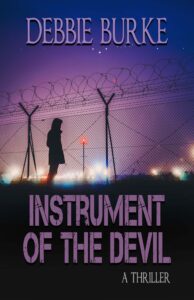
For example, the name Kahlil Sharivar is noted as Kaw-LEEL SHAH-ree-var. She’ll be saying that name a lot as she records Instrument of the Devil, the first thriller in my series.

For each character’s dialogue, she color-codes the script: women’s voices are often highlighted in pink, orange, or purple, with the female lead in yellow. Men’s voices are often blue, green, or brown. She uses harsher colors for dangerous characters.

In addition to the script on the iPad screen, she monitors another screen in her studio that displays Twisted Wave, an editing software program for audio. Punch and roll is the industry standard for recording long-form audio and allows her to re-record or make changes to the audio file. If Eve misspeaks, coughs, or hears a car drag-racing in the distance, she can go back, reset the cursor, and start recording again. This allows for a seamless wave file that is ideal for editing, mastering, and proofing once the book is recorded.

On the tech equipment side, Eve is a big fan of Audio-Technica AT4047 microphones (she has two, one as a backup) because it perfectly matches her rich alto voice. Her Beyerdynamic headphones are easy (literally) on the ears and her pre-amp (a magic box that is a conduit between mic and computer) is an Audient iD4.

She prefers to sit when recording because it gives a more intimate feel, like telling a story to a good friend over coffee. Sessions last between 45-90 minutes, usually to the end of a chapter. During breaks, she stretches and uses a foam roller for massage. Then it’s back to the studio.

When asked how long it takes to record an audiobook, Eve gives the same answer that authors often give when asked how long it takes to write a book: “It depends.”  Variables include how many accents, the number of characters, and the writing style of the author. Plus, of course, the length.

Similar to acting, the narrator “lives” in the world the author created. She must get to know characters well enough to portray them with convincing, engaging voices. To differentiate the sound of a character, she uses pitch, speed, and even body placement to create an individual voice. To indicate internal thoughts, she may change her tone or volume.

My Tawny Lindholm Thrillers are set in northwest Montana where both Eve and I live. To further capture the story mood, Eve went the extra mile, checking out locations in the series, including the classic Craftsman bungalow that I’d used as a model for Tawny’s home and Hungry Horse Dam, the scene of the climax in the first book.

As a self-described “student of humanity,” Eve travels extensively and has a lifelong love of learning. New experiences help her relate to characters and make them feel more real.

Eve performs in three dimensions as if she’s on stage. Her body position and facial expression reflect what’s happening in a scene, whether she arches her back or hunches over, is wide-eyed or squints, etc. She says, “Stage actors make great narrators because they have endurance and know how to inhabit the character.”

During one of our visits, I saw firsthand how convincingly Eve inhabits a character.

The male lead in my series is a brilliant, intimidating lawyer named Tillman Rosenbaum who’s 6’7”, with a James Earl Jones voice, and an intense, dark stare that skewers his opponents.

How the heck could this pretty, petite, blue-eyed woman pull that off?

At the time, she was reading the second book in the series, Stalking Midas. She mentioned how much she liked my female lead, Tawny, and hated to see her suffer.

I made the smartass crack, “Wait until you read the later books where I really beat her up.”

Eve’s entire demeanor changed. In a flash, she grew larger and imposing. She leaned toward me and pierced me with a stare that was so threatening, it sent a shiver up my neck.

She became Tillman—a man who would kill to protect his beloved Tawny. 

At that moment, any doubts I’d had about Eve’s ability to capture Tillman  evaporated. Now we joke often about the “Tillman Stare.” 

Hearing my book for the first time is an author’s milestone that feels much the same as the first time holding the physical copy of my published books.

Here’s a small sample performed by Eve:

I didn’t go in search of an audio narrator but, by good fortune, I found one. Eve is not only hard-working and talented but is also a genuinely nice person who’s become a good friend.

How did I get so lucky? 

~~~

TKZers: Do you listen to audiobooks? What do you like most about them? What, if anything, do you dislike?

Any authors with audio versions, please chime in with your experiences.

~~~

Stay tuned for the launch of the audio version of Instrument of the Devil. 


Meanwhile you can read ebooks or paperbacks in the series, Tawny Lindholm Thrillers with a Heart…and Sass.

For sale at Amazon and online retailers. 

Character Name Crisis!

I’m at the point in my current WIP where I’m having a ‘naming crisis’. Although I’m happy with the names of my key protagonists, my antagonist currently has a name that just doesn’t fit (sigh…) so I’m in the throes of character naming angst. Being the type of writer that finds it hard to write a character until I have adequately ‘christened’ him or her, this angst is causing me quite a headache as well as producing a weird kind of writer’s block as I write and rewrite the antagonist’s name in various scenes as I struggle to get it right.

Finding the right name for a character is always a critical first step for me. I can’t just put in a placeholder or any old name in a first draft, I really have to be sure of at least the main character’s name before I can find the right voice. Usually female character names are easy – they come to me right away, or at least after just a little historical research (when you write historical like I do, the last thing you want is a modern name that’s completely wrong for the period). When it comes to male characters, however, there’s always some degree of angst. For example, in my current WIP I’ve only just realized that I’m using the same name for my principal male protagonist as in a book a wrote a few years ago – so obviously I have some favorites that I need to eliminate:) I also avoid names of ex-boyfriends or former colleagues (I find it difficult to separate the real person from the imaginary one when using particular names). When it comes to female characters I don’t seem to have the same sensitivity (I also accidentally named a maid after my sister and had no idea until she pointed this out to me…). In my current WIP I can’t work out exactly why the name of the antagonist doesn’t fit (my beta readers are happy with it after all), all I know is that it doesn’t…and I’m struggling to find a name that does.

This character angst has got me desperately looking for new naming strategies including scouring my bookshelves for random author and character names in the hope that these strike some inspiration (nope…) and resorting to baby naming websites (also with little success). So what to do when a character’s name is so elusive?? Honestly, I’m not sure (but maybe you TKZers can help!).

When starting a first draft I often ‘try on’ a couple of character names for my main protagonist (or protagonists) as I work through accessing their voice and POV. Usually this isn’t a major hurdle, but with my current WIP every time I try on a name for the main antagonist it just doesn’t seem right (ugh!)…So TKZers, any advice? What is your character naming process? Have you ever had a ‘naming crisis’ and if so, how did you eventually find just the right name in the end?


Style – The Spectrum

by Steve Hooley

After reading JSB’s post on 2/21/21, Who is on Your Writing Rushmore? – https://killzoneblog.com/2021/02/who-is-on-your-writing-rushmore.html – I have been working on my remedial reading list. If you missed that post, it is worth reviewing for the list of “Greatest of all time” (GOAT) authors, presented in the article and in the comments.

Here is the list of GOAT Authors (compiled from the post and comments) if you want to copy and paste:

  • Dostoevsky
  • Twain
  • Hemingway
  • Raymond Chandler
  • Faulkner
  • McCarthy
  • Agatha Christie
  • Jane Austen
  • Charlotte Bronte
  • George Eliot
  • Tolkien
  • Arthur Conan Doyle
  • Conrad
  • Edgar Allan Poe
  • Chekhov
  • Dickens
  • C. S. Lewis
  • Steinbeck
  • Ray Bradbury
  • George Orwell
  • Elmore Leonard
  • H. G. Wells
  • Jules Verne
  • O. Henry

The reason for the topic today – “Style, the Spectrum”: I read Raymond Chandler and Hemingway back-to-back. Talk about different styles. Hemingway’s writing has been described as “spare, tight prose.” Chandler’s style is saturated with description. At the beginning of The Big Sleep, every other sentence contains a simile. I exaggerate, but description definitely gets your attention.

So, what is “style” in writing?

According to – https://literarydevices.net/style/

“The style in writing can be defined as the way a writer writes. It is the technique that an individual author uses in his writing. It varies from author to author, and depends upon one’s syntax, word choice, and tone. It can also be described as a “voice” that readers listen to when they read the work of a writer.”

The author of the article lists four “basic” styles: expositive or argumentative, descriptive, persuasive, and narrative. For our discussion today, we are focusing on descriptive and narrative.

Descriptive style: “In descriptive writing style, the author focuses on describing an event, a character or a place in detail. Sometimes, descriptive writing style is poetic in nature, where the author specifies an event, an object, or a thing rather than merely giving information about an event that has happened. Usually, the description incorporates sensory details.

Narrative: “Narrative writing style is a type of writing wherein the writer narrates a story. It includes short stories, novels, novellas, biographies, and poetry.”

I remembered JSB describing John D. MacDonald’s style as having just the right amount of literary poetry (“unobtrusive poetry”) sprinkled in for seasoning, and went back to reread John D. MacDonald’s The Deep Blue Good-by. I found a style somewhere in the middle, between Chandler’s and Hemingway’s.

In a review of The Kill Zone blog I found tributes to MacDonald by JSB and Kris:

Kris’s comment on MacDonald’s style – https://killzoneblog.com/2016/05/john-d-and-meand-all-brother-writers-i.html

His style “had an ease and breeze as fresh as the ocean winds”

JSB’s comment on MacDonald’s style – https://killzoneblog.com/2018/06/authors-i-have-learned-from-john-d-macdonald.html –

“The first lesson I picked up from a wide reading of MacDonald is what he termed “unobtrusive poetry” in the style. That’s not an easy thing to accomplish. You don’t want a style that calls so much attention to itself that’s all the reader is thinking about. On the other hand, it’s not stripped-down minimalism of the Hemingway-Cain school.”

I didn’t see MacDonald’s name on the GOAT list, but I greatly enjoyed his style.

And I realized that I definitely liked his style better than many others, and it would influence which books I wanted to read in the future. I then wondered, does my favorite style for reading affect the style I seek to attain in my writing?

And that is our discussion for today.


Which author’s writing style do you most enjoy reading? Does that affect which books you plan to buy or read? And does that style, influence the voice and style you seek to attain in your own writing?

Crime or Not?

by Debbie Burke

@burke_writer

On March 20, an unidentified man rode a horse into the Town Pump convenience store in Bozeman, Montana.

I’m not sure if this constitutes a crime. After all, in Montana, it’s not unheard of to ride a horse into a bar and sometimes even a hotel lobby.

There is also the fuzzy legal question of whether or not DUI laws apply to horseback riding. The Montana code reads:

61-8-401 states that it is unlawful for any person to operate or be in physical control of a motor vehicle while under the influence of alcohol, drugs, intoxicants or any combination thereof with a blood alcohol concentration of .08% or greater.

One can argue the law doesn’t apply because the horse is not a motor vehicle. Also, the horse is quite likely to get the intoxicated rider home safely. So, ensuring public safety seems to come down on the side of Ole Dobbin.

That raises another question: if this rider is sober, what crime, if any, should he be charged with? Trespassing? Misdemeanor showing off?

What do you think, TKZers? Should this prank be considered a crime? If so, what’s the charge? 

Shut Up And Write Stories

By John Gilstrap

These are interesting times to be a writer. Last night, I was chatting with four other writers when one took another to task for including the phrase “had no dog in this fight” in the body of his story. The one who called the other out worried that because the phrase traced its origins to the practice of siccing dogs on one another to watch them fight to the death, the reference was likely trigger pushback from sensitive readers.

I had two thoughts on this in rapid succession. First: You’ve got to be kidding. Second: Okay, so what? My squint on the world is such that the harder an individual searches for a reason to be offended, the more responsibility the offended must take for his own discomfort.

A couple of weeks ago, I did a live two-hour Zoom seminar for a writer’s group in the Midwest. My topic was a craft-oriented one that focused on some of the granular elements of writing a tight, tense story. During the final Q&A, an attendee (whose camera was turned off, of course) asked me what efforts I take in my stories to make sure I include a cast of characters that is widely inclusive of ethnicity, religion and sexual orientation.

I confess I was not ready for that one, but I was fully aware that my camera was on, and I was in closeup. I defaulted to the truth: I don’t do anything along those lines. I don’t write sex scenes, so what difference does their orientation make? And I rarely–rarely–describe the ethnicity of even my primary series characters. If an ethnic reference does not directly affect the story, then I see no reason to include it. Obviously, when Chechen terrorists are the bad guys, we can conclude the ethnicity, but I see no reason to mention if they are Muslim or Christian. It doesn’t affect the story, so I don’t care. My answer seemed to work because there was no follow-up.

As an interesting side note, one of the primary characters in my Jonathan Grave series (Stealth Attack will hit the stands on June 29) goes by the codename Boxers. He’s close to 7 feet tall, bends the needle on most household scales, and is deeply lethal. I’ve never described his ethnicity, but I was surprised to learn that everyone–including my editor and my agent–assumes that Boxers is black. He is not. Do I mind that people see him as they do? Not a bit.

Last week, I received this email from a fan:

Hi John,

I just purchased “Against All Enemies” and am looking foreword to reading it. Tell me, what are your views on the 2nd amendment?

That was the entirety of the email. I smelled a trap. I considered ignoring the email, but I promise on my website to reply personally to every email I receive, and, well, a deal’s a deal. Here’s my reply:

Hi, [Name].

I hope you enjoy the book. Thanks for the support. As for the Second Amendment, I have little respect for entertainers who expound on political issues. I just tell stories and try never to write politics. My characters have strong feelings about many issues. I agree with some, disagree with others. I figure I’m doing my job if readers can’t tell one from the other.
This is the new standard I wish to set for anyone in the entertainment business. For the life of me, I do not understand why a non-expert with a readership (or viewership) would consider his or her views as more relevant or nuanced than a non-expert who has no “platform”. I cannot count the number of writer colleagues whom I’ve watched commit professional suicide during the weirdness of the past 15 months by posting diatribes that are guaranteed to anger 50% of their potential audiences.
It’s interesting that the focus of an audience on a writer or presenter is called a “bully pulpit” because too many people use it to bully others. It’s a gift to enjoy a facility with words and images, but by definition, anything on the page is a one-sided conversation. Sure, there are comments sections tagged to the end of op-ed screeds, but we all know that’s not the same. Readers with huge hearts and different world views often do not have that same gift to express their thoughts in writing or to gain the attention of others. All to often, such people feel aggrieved and silenced. And angry.
I think that the bullying is especially pernicious when it blindsides the audience. When someone opens one of my books–or reads blog posts like this–they have certain expectations. With the books, they expect an exciting, entertaining ride through fictional thrills. Here, I presume they expect to be given something to think about. In neither case do I think they want to hear about my half-baked thoughts on social or political issues.
Now, as I write this conclusion, I feel that I must apologize if I inadvertently did that very thing.

Here Are The Words You Need
To Kill, She Advised Ruthlessly

“Put down everything that comes into your head, and then you’re a writer. But an author is one who can judge his own stuff’s worth, without pity, and destroy most of it.” — Colette.

By PJ Parrish

I’m in editing mode this week. After getting the rights back to one of our older series books Thicker Than Water, we’re getting ready to self-publish it on Amazon. It’s been fun going back and reading a work that we wrote nineteen years ago. (yikes…nineteen years?)

It’s also eye opening. Because even though I had always thought this was one of our tightest written books, I’m finding a lot of detritus, lint, and junk wordage. Which led me to start thinking hard about Colette’s advice.

Yeah, put down everything that comes into your head. That’s the hot-flash passion of the first draft. But then, cool down and start the cold-hearted process of killing your darlings. Write with your heart. Edit with your head.

Sue’s post from yesterday offered this tasty morsel from writing instructor Gary Provost:

When writing…remove every sentence until you come to one you cannot do without.

Gary’s advice extends of course, to every word you cannot do without. This is a concept that many novelists struggle with, even us old dogs with twenty or more books under our belts. I see this regularly with most of our First Page Critique submissions. Often, I ask the writers to put more in — to establish a sense of place and time frame, to begin creating a mood, to begin layering in character with well-placed snippets of backstory. But more often, there are many words — let’s call them junk words — that should be sliced out because they contribute nothing.

So…you’ve got that first draft done. You’ve let it bake in the hard drive for at least a week. You’re ready to edit with the head. What should you look to cut?

Filler Words. First, get the easy stuff out of there, words like “really,” “very,” “that,” “suddenly,” and my favorite foible — “then.”

  • “Suddenly, a shot whizzed by my head” becomes “A shot whizzed by my head.” Gun shots tend to come at you pretty suddenly. No need to gild the Glock.
  • “And then Louis lowered himself into the dark cavern” becomes “Louis lowered himself into the dark cavern.”
  • “His dog Stella was very excited to see him as he came in the door” becomes “Stella was excited to see him come in the door.” Or even better: “Stella’s tail whirled like a helicopter rotor when he came in.”   Show, don’t tell whenever you can.

Redundancies. We all do this — we just stick these junk words in and move on. It’s almost like we don’t even see the insidious little suckers. Things like: The armed gunman ran down the alley. The gunman didn’t realize he was in close proximity to the cop. But he got back to the parked Fiat and make his getaway in the sleek little foreign import. After ditching the Fiat, he snuck into the estate, stopping at the pool to toss in his Glock. He went inside, mingling among the the invited guests. When the cop spotted the Glock at the bottom of the pool, he knew it was a major breakthrough in the case.”

Adverbs. Yeah, we’re going to beat up on poor old adverbs again. But with good reason. Yes, you can use one once in a blue moon but you rarely need to. The presence of an adverb usually means the absence of something else.  Nine times out of ten, if you need an adverb, your verb is puny and you need to work harder.

  • “She wept uncontrollably” becomes “She sobbed.”
  • “He walked jauntily into the bar as if he owned the place.” This becomes “He sauntered into the bar.” BTW, stuff like “as if he owned the place” is cliche. You didn’t invent it so don’t try to steal it.
  • “Stella the dog ran quickly across the lawn to get the ball” becomes “Stella raced to get the ball.”

Watch out for adverbial “said” tags. They are crutches we all use when we’ve written lazy dialogue.

  • “You’re crazy to think you can get away with this,” he said angrily becomes “You’re nuts! You can’t get away with this!” he yelled. (Yes, you can use the occasional exclamation point.)
  • “I like you,” she said flirtatiously becomes “You’re not too smart. I like that in a man.” (One of Matty’s best lines just before she seduces Ned Racine in Body Heat.) If your dialogue is as sinewy as this, you don’t need said tags.

Be aware that, given our pulp ancestors, we modern crime fiction writers can fall prey to the purple adverbs of yore. “He smiled thinly.”  “She frowned grimly.”  And yes, this is from The Maltese Falcon, which means Hammett can pull this off but the rest of us can’t anymore: “Sorry,” Spade said, and grinned wolfishly, showing his jaw teeth.”

And if I ever see any of you writing things like “She whispered softly” or “He screamed loudly” I will hunt you down and smash your Acer. She said mercilessly.

Okay, time for an object lesson. Here is the ending of a chapter in the book I am editing. Quick set-up: Louis Kincaid is trying to crack an old case — the murder of a teenager named Kitty Jagger. He has sought out the original detective from the case, Bob Ahnert, who’s been demoted and is exiled to an out-station on the edge of the Everglades. Here is the scene, as we wrote and as it was published in 2003:

“I think you still want to solve this case,” Louis said. “In fact, I think you’re the only one who does.”

“Besides you, you mean,” Ahnert replied.

Louis took a moment to answer. “Yes.”

Ahnert was silent for a long time, looking out over the desolate landscape.

“It’s over for me,” he said finally. “She’s yours now.”

Louis was surprised to hear a hint of relief in Ahnert’s voice. He wondered what the hell had happened to this man twenty years ago. He suspected that Ahnert had been so obsessed with finding Kitty’s killer that it had destroyed his career and the rest of his life. He suddenly could hear Sheriff Mobley talking to him as he leaned over the bar at O’Sullivan’s.

He stole an item that belonged to the victim. A gold necklace. Some kind of heart-shaped locket. Guess Ahnert needed the money.

But Louis knew that Ahnert had not needed the money a cheap locket would have brought, and he also suspected now that he had been wrong about Ahnert being obsessed with finding Kitty’s killer. Ahnert was obsessed with Kitty herself.

“Why did you stop investigating?” Louis asked.

“I was told to to stop,” Ahnert said.

Louis shook his head. “I don’t believe that.”

Ahnert finally looked back at Louis. “I was hung up on a dead girl,” he said, then looked away. “That’s really sick, isn’t it.”

Louis ran a hand over the back of his neck and looked up at the sun. But it wasn’t the sun that was making him sweat. It was his own growing suspicion that he, too, was hung up on Kitty Jagger. 

“I’m just trying to give her some justice,” Louis said quietly.

Ahnert tossed his cigar into the sand and ground it out with his boot. Then he picked a piece of tobacco off his lip and flicked it away.

“Here’s some advice,” he said. “Forget justice. Just give her some peace.”

Now here’s my editing. I took out every filler word, every dumb hiccup-word, every extraneous emotion-word that I could.

“I think you still want to solve this case,” Louis said. “I think you’re the only one who does.”

“Besides you, you mean,” Ahnert replied.

Louis took a moment to answer. “Yes.”

Ahnert was silent for a long time, looking out over the desolate landscape.

“It’s over for me,” he said finally. “She’s yours now.”

Louis was surprised to hear a There was a hint of relief in Ahnert’s voice. He wondered What the hell had happened to this man twenty years ago? He suspected that Ahnert Had been so been so obsessed with finding Kitty’s killer that it had destroyed his career and the rest of his life? He suddenly could hear Sheriff Mobley talking to him as he leaned over the bar at O’Sullivans.  Mobley’s words came back to him.

He stole an item that belonged to the victim. A gold necklace. Some kind of heart-shaped locket. Guess Ahnert needed the money.

But Louis knew that Ahnert had not needed the money a cheap locket would have brought. and he also suspected now that he had been wrong about And Ahnert wasn’t being obsessed with finding Kitty’s killer. Ahnert was obsessed with Kitty herself.It was Kitty Ahnert was  He was obsessed with her.

“Why did you stop investigating?” Louis asked.

“I was told  to stop,” Ahnert said.

Louis shook his head. “I don’t believe that.”

Ahnert finally looked back at Louis. “I was hung up on a dead girl,” he said, then looked away. He looked away. “That’s really “It’s sick, isn’t it.”

Louis ran a hand over the back of his neck and looked up at the sun. But it wasn’t the sun that was making him sweat. It was his own growing suspicion that he, too, was hung up on Kitty Jagger. 

“I’m just trying to give her some justice,” Louis said quietly.

Ahnert tossed his cigar into the sand and ground it out with his boot. Then He picked a piece of tobacco off his lip and flicked it away.

“Here’s some advice,” he said. “Forget justice. Just give her some peace.”

Here’s how it looks, edited. Notice how much cleaner it looks on the page and how much more active it feels in terms of pacing:

“I think you still want to solve this case,” Louis said. “I think you’re the only one who does.”

“Besides you, you mean.” 

“Yes.”

Ahnert was silent, looking out over the desolate landscape. “It’s over for me,” he said. “She’s yours now.”

There was a hint of relief in Ahnert’s voice. What the hell had happened to this man twenty years ago? Had he been so been so obsessed with finding Kitty’s killer that it had destroyed his career and the rest of his life? Mobley’s words came back to him.

He stole an item that belonged to the victim. Some kind of heart-shaped locket. Guess Ahnert needed the money.

Ahnert had not needed the money a cheap locket would have brought. And he wasn’t obsessed with finding Kitty’s killer. He was obsessed with her.

“Why did you stop investigating?” Louis asked.

“I was told to.”

“I don’t believe that.”

“I was hung up on a dead girl,” He looked away. “It’s sick, isn’t it.”

Louis ran a hand over the back of his neck. It wasn’t the sun that was making him sweat. “I’m just trying to give her some justice,” he said.

Ahnert tossed his cigar into the sand and ground it out with his boot. He picked a piece of tobacco off his lip and flicked it away.

“Forget justice,” he said. “Just give her some peace.”

The original version is 347 words. The edited version is 250. Did we lose anything important? Nope. In fact, the edit trusts the reader to “get” what Louis is thinking and feeling. Specifically the fact that Louis himself is becoming obsessed with the dead girl. Which is showing instead of telling. Which is leaving something unsaid and trusting the reader to get it.

That’s it for today. I’m back to editing. Please weigh in and tell us what your worst junk-word habits are. Even old crime dogs need to learn new tricks.

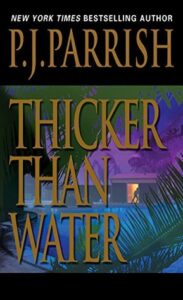
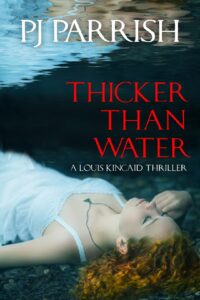
P.S. Below is the original cover for Thicker Than Water and our redesign mock-up.


Scamming Nigerian Funds to Build Your Time Machine

G’mornin’ Kill Zoners. On Tuesday, Debbie Burke mentioned internet scams and how an old-time con by the name of Eugene Francois Vidocq managed to defraud pre-internetters and become the father of modern criminology. Great story to check out: Eugene Francois Vidocq and the Origins of Criminology

Debbie also wrote “nigerian prince” in that post. That got me thinking of a piece I wrote some time ago on my blog. It’s titled How to Scam Nigerian Funds for Your Time Machine.

I’m a serious writer (nah, not.) and delve into darkness depths with psychotic characters, crime scenes you can smell through the words, forensic fluids that drip off the page so shouldn’t be read in bed, and nothing-good-will-come-of-these plots. But I know a good writer is a rounded writer, and I welcomed the chance to do a little humor when I got another of “those emails”. Here’s the DyingWords post:

———

“If you don’t know about Nigerian scams, then you’ve probably never used the internet. Seems like every couple weeks these West-African crooks drop me an email thinking I’m dumb enough to bite. Some people must, or the cons wouldn’t keep trying. So it was no surprise when I checked my inbox Tuesday morning and found another Nigerian grab at my wallet.



But it was different this round. For a change, I had little on my plate and time on my hands, so I decided to turn the tide on this guy. Here’s what “Mr. Martins Logan Scott” from Nigeria wrote me. Then I’ll show you my reply.

—– Original Message —–
From: “Martins Logan Scott” <voldemars@ngn.lv>
Sent: Tuesday, March 7, 2017 4:24:23 AM
Subject: Investment Proposal

Attn: Sir — We have gone through your country’s investment profile and history and we are interested to invest in it, we will be willing to partner with you and invest a substantial amount of money in your company if you have an existing company or we can also partner with you to set up a new one, provided you have a substantial and complete feasibility study and a well prepared business plan on the business/company you wil (sp) need us to partner with you.

Our group is a major player in investment in the middle east, Africa and the United States of America, we believe in pursuing a positive goal, in which your ideas can be enhanced potentially for mutual benefit.

As we seek new frontier and opportunities, we look forward to partner with you. Your prompt reply will be most welcome.

Best regards — Martins Logan Scott — martin.loganscott@gmail.com

—– Original Reply —–
From: “Garry Rodgers” <garry.rodgers@shaw.ca>
Sent: Tuesday, March 7, 2017 7:48:09 AM
Subject: Investment Proposal

Good day Mr. Logan Scott,

Thank you for your investment interest. I trust this reply finds you well and in accordance with the situation.

I appreciate your due diligence in appraising my investment profile and history. That is the primary mark of a careful and prudent investor as I’m sure you and the major players in your group are.

Your unsolicited offer comes at a timely stage in a current venture I’m working on. I was planning to release investment offerings by-invitation-only prior to a NYSE IPO. However, I’m open to prioritizing your group’s investment of a substantial amount of money during my project’s Research & Development (R&D) stage. Therefore, I’d be pleased to accommodate you and your esteemed business associates in safely appropriating your funds.

With an understanding of your agreement to confidentiality, my project involves a revised form of hyper-velocity, multi-directional transportation. The concept for analogous movement between distant portals, both historic and forthcoming, is nothing new. Space-time dilation based on the Einstein-Rosen bridge theory has been conceptualized for decades. Practical application of Faster-Than-Light (FTL) amplification was bottlenecked due to tachyon condensation which restricted Portal Entrance and Exit (PEE), but there’s now a clear and unique opportunity for a massive breakthrough.
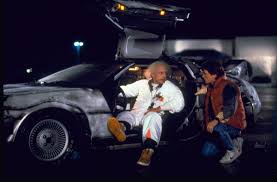
I’m sure you’re familiar with the 1985 works of Professor Emeritus Dr. Emmett Brown and his DeLorean model. Unfortunately, it’s been three decades, going on four, since Doc vanished in a timely experiment. Although I patiently await his return, progress must move forward. With this, I’ve acquired Doc’s patent rights to the Flux Capacitor (FC) – the propulsion device central to warping the Space-Time Continuum (STC). Early technology restricted FC Input/Output (I/O) to 1.21 jigawatts, however… I’ve found a method of quadrupling I/O to 4.84 jigawatts, theoretically making the trip four times faster.

An additional advancement is planned in STC vehicle adaptation. The initial Entry/Reentry Velocity (ERV) difficulties experienced by the DeLorean vehicle proved dangerous. It’s now identified the angular, gull-wing profile created a Disturbance-In-The-Force (DITF). Evolving trials using a rounded VW Beetle prototype was thought to calm FTL/STC/PEE/DITF/ERV vibration – also known as Tolman’s paradox. Quickly, I learned the bulky Punch-Buggie (PB) approach brought no returns and I took a hit.

Compounding the situation is the original 1.21 jigawatt FC only required an 88 mph ERV. With a four-times capacity 4.84 jigawatt FC, it’s boosted the ERV to 352 mph. I realized… Great Scott! That’s a lot of ground speed. Fortunately, I’ve identified the new Aston Martin AM RB-001 Valkyrie as the perfect design. Now—here’s where you come in.
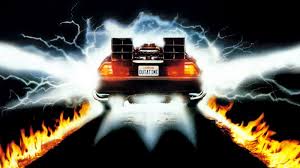
As you know, the Valkyrie is a highly advanced work of technology and produced in 25 unit allotments. I’ve placed an order for one Valkyrie to be refitted as a PEE vehicle, however, the Aston Martin Corporation requires pre-payment in full. With your timely offer of substantial investment capital, in return, I’m offering you the exclusive opportunity to fund my Valkyrie acquisition as the PEE vehicle of choice. It’s noble you believe in pursuing a positive goal and ideas than can be enhanced potentially for our mutual benefit.

Appreciatively, I’m accepting your group’s investment of $3.12 million USD. This covers the Valkyrie purchase, shipping, and handling. Please make an immediate monetary transfer via Western Union for deposit into my account #6105-883-464-0901 at Nanaimo, British Columbia, Canada. In lieu of cash, your direct purchase of the AM RB-001 PEE Valkyrie can be delivered to my Vancouver Island R&D facility.

Thank you for your generous offer, Mr. Logan Scott. Once my project is operational, I confidently assure your investment will be returned to you, along with accrued interest, to any point you prescribe in time. Your prompt reply will be most welcome.

I remain, sir, humbly indebted.

Garry Rodgers

———

I’ve yet to hear from Mr. Martins Logan Scott, but I trust he’ll be back in the future.

———

How about you Kill Zoners? Ever written a piece on a whim and were silly enough to send it? Let’s hear other experiences!