Key Ways to Rediscover your Writing “Fun Mojo”

Jordan Dane
@JordanDane

Alert the Media. Writing is hard. From the moment I knew I wanted to write a novel, I’ve poured long hours into learning about the industry and the craft of writing. I spent hours in front of a computer, even with my full time draining job. Weekends were spent trying to sneak in hours to write. When I wasn’t writing, I thought of writing. I’ve read countless books in many genres, networked at writer conferences, entered national writing competitions, and suffered through the agony of rejection as many of us have.

When I first started out, I had nothing to lose. Rejections were expected. Some were even comical. I had a rejection ritual that involved mystical incantations and a shredder. Remember when you used the words – “It was a better rejection” – and knew what that meant? It’s not easy putting yourself out there and as the months and years went by–with rejections & expenses piling up with nothing to show for it–it wore me down. When I had hit that point, I asked myself a very real question.

Would I still write if I never sold?

I thought about it and eventually said it aloud. “YES!” It was if a weight had been lifted off my shoulders. I found that I cared less about rejections. They became opportunities toward my goal. I also didn’t feel the need to follow a trend. Hell, I WAS the trend. As an avid reader myself, if I wrote the kind of book I wanted to read, then I WAS the market. Editors and agents are industry professionals, but so was I. My time had value. Most of all, I had found a passion that I’d longed for my entire life and I was living my dream. That was good enough.

That’s when I sold. (Link to my FIRST SALE story.)

For my post today, I wanted to think back upon that time when everything had possibility and dig into what makes writing fun for me, still. I hope you’ll share what brings joy to you in your comments.

KEY WAYS TO REDISCOVER YOUR WRITING FUN MOJO

1.) Writers Notice Stuff

You may not be aware of this, but after honing the craft of writing, writers become more observant. We look at a setting location and wonder – How I would write this? Or how I would I describe the “feeling” of this place? Writers notice more in news stories, for example. We see the possibility of a story behind the story. A tragedy may be reported in the news–the journalistic facts of who, what, when, where, why–but writers’ minds go beyond the news. We want to know how the story would affect the people experiencing it. We want to know what the reporters might’ve missed. Where are the human stories behind an event? We want to make it personal. Our empathetic minds go there. We see things differently and hone our imaginations into becoming more compassionate human beings.

2.) Writers Tap Into Deep Emotions

When most people suppress their emotions, we want to live them–even if it’s hard. We write from the heart or we write from our worst fears. And it’s not just the word choices we make. It’s what we create that can trigger emotions and experiences in our readers and ourselves. Writing is not just about the craft of it. It’s about how it makes us feel to do it, no matter what level we are in skills.

3.) Writers Know Passion

How many people know true passion? Most people can live a lifetime and not know the passion we experience every day that we write. It’s a solitary exploration that satisfies us. It’s something we can do every day & it doesn’t feel like a job. Even if we’re not sitting at our desks or cranking on our laptops, we can fill our minds and our creative juices with the world we are creating and the plot or the characters we’re developing. We sometimes work through our book issues in our sleep. That’s sheer joy few people know. It’s special and extraordinary.

4.) Writers are Curious and Brain Thirsty

Writers are curious, driven people. We want to know and understand stuff. Research unleashes our inquisitive minds and broadens our writing experiences. Have you ever found yourself so sucked into your research, that you noticed you’d drifted into topics you hadn’t planned on writing about? Your mind drew you into the research and you kept going? The things is, you never know where you might use good info. Your research curiosity may pay off for the next book. Your mind is a sponge. It’s like living another life & filling your brain with ideas for use later.

5.) Writers Experience Books Differently

For good or bad, writers experience more as readers. It’s lovely when you can read a book and get lost in the story, but let’s face it. Many times we see behind the craft and truly appreciate what the author has created–or we hate it–but either way, we experience a book more deeply. Where most observant readers might notice a typo, authors might appreciate a clever turn of phrase or understand what it takes to create a complex character. A well developed plot twist is gold and we can break it down, not just let it happen. We’re insiders to an amazing process.

6.) Writers Don’t Have to be Original

We just have to write the best book we know how. Don’t worry about whether anyone has ever written about a certain plot before. No one can duplicate how you choose to tell a story. No one can filter their storytelling through your unique eyes and life’s experiences. Yes, it’s great to discover a fresh take on something and we should all strive to push the envelope to writing with new ideas, but there’s something deeply satisfying about telling a story that touches a reader in a special way, that only YOU can do.

7.) Writing is Therapy

When bad stuff happens to writers in their lives, we have a way to explore it through our writing. We can distance the pain from our own stories by telling what happened through our characters. Writing is about emotion. It’s a gift to tell your story and tap into feelings that readers can relate to. It’s one thing to be compassionate and empathetic when we imagine what a character might be feeling, but to add a personal reflection (even when it’s painful), takes guts. Dare to be gutsy and you may find it helps you in return.

8.) Writing is Community

As writers, we instantly become a part of a wonderful community of creatives. If you’re reading this, you are one of us. I’ve found that most writers are a generous lot. We know how wonderful it feels to write and we want to share that success with others. When I first sold, I began to see writing as part of a grander stage. Writers can relate to actors, singers, song writers and other artists who create something special from nothing.

9.) Writing Comes with a Thick Skin

Rhino skin can be a blessing. There, I said it. Rejections CAN be a good thing. Most people don’t have critics looking over their shoulders as they do their work, people who criticize everything they do. Online book reviews and beta or social media comments can hurt, but we get through it because we’re driven by our passion to write. There are precious few people who pursue writing and actually finish a novel. In light of that, reviews and harsh comments mean nothing.

10.) Writers Publish

Isn’t it glorious that authors have choices these days? Whether we sell our novels through traditional publishing houses or self-publish, we have options that weren’t always available in the past. We can explore the opportunities to sell or become our own publisher and retain the margin and the creative control from formatting, to cover design, to promotion and pricing. We can do both. It’s great to have choices.

***

I love being a part of our TKZ writing family. Having an online community to read what others are experiencing means a lot to me. It bolsters my spirit. When authors share tips on writing craft or share what works for promotion or research–whether it’s in a blog post or in comments–that is a solid reminder that we all share the passion of writing and it’s so worth it.

FOR DISCUSSION:
1.) What brings joy to you about writing? Please share what you would put on YOUR list.

How (and where) To Research Historical Crime

By SUE COLETTA

A few regular readers of TKZ requested tips to help research criminal cases from the past. If the crime occurred in the 18th or early 19th century, the task becomes much more difficult. My hope is that these tips will aid you in finding reliable information.

Let’s say you only have a name, place, and approximate year for your victim or killer. The first logical step is to conduct a Google search to see what’s available online. Someone must have written about the case, right? Well, not necessarily. Sometimes you get lucky and find a couple articles, other times … *crickets* Which I happen to like, because it means the industry isn’t saturated with books on the same topic. But it’s also harder to find what we need. Not impossible; we just need to think like an investigator.

GENERAL TIPS

If you find an online article about the crime, do not solely rely on that information. Instead, within said article search for the author’s sources. Most true crime writers will either link to another source or cite where they gathered their facts from, and that’s where the gold resides.

My overly suspicious crime writer brain tends to question where bloggers and/or journalists get their facts. To satisfy my own curiosity I use a three-source rule. Meaning, if I can’t verify a fact with two other sources, then I don’t consider it a historical fact.

By the way, this is my personal rule, not an industry requirement. Although, some publishers do ask that you verify each major fact with one other source. Even if they never request the citation, their legal department might. So, be sure to keep a log of where you find information, both primary and secondary sources. It’ll save you from having to go back to find where the killer said something, or whatever.

There’s one exception to my three-source rule…

Suppose I find a newspaper article that I am able to authenticate with a trial transcript, deposition, or other court document. Because I have the primary source (court document) which says the same thing, then the newspaper article gains credibility. If I don’t have access to a primary source for verification, then I need two secondary sources to substantiate the fact(s).

True crime readers expect the truth, not our fictional interpretation. It’s our job to question a reporter’s research and not take what s/he says at face-value. They want to sell newspapers, so facts can often be embellished or sensationalized. When I first started searching through old newspapers (I’ll share where you can find them in a sec), I was shocked to find misinformation, discrepancies, untruths, and rumors stated as fact. Embellishments help to create eye-popping headlines but can also hinder a true crime writer/researcher if we’re not careful.

For example, there’s a lot of online content about one of my five female serial killers due to the fact that she rocked the nation with her cold-bloodedness. But all these articles weren’t ideal. If anything, they muddied the water. In order to separate fact from fiction I had to wade through opinions, theories, innuendoes, and rumors. You may have to do the same. My best advice is to roll up your sleeves, consider it a challenge, and dig in. 😉

PRIMARY vs. SECONDARY SOURCES

Think of research as a bullseye, with the killer and/or victim at the center. The first ring around the bullseye includes eyewitness accounts, investigative reports, court testimony, the killer’s journal and/or confession — primary sources. Moving outward, the next ring would be secondary sources, such as a newspaper article written by a journalist who interviewed someone involved with the case (killer, detective, juror, DA).

The third ring includes newspaper articles written by someone with no first-hand or second-hand knowledge. To get the article written on time they simply regurgitated information from other articles — that’s where you’ll find the most mistakes. In this ring you’ll also find bloggers, some credible, some not.

See why I created a three-source rule? If we were to write historical nonfiction using only the third ring as our primary source, the book and its author would lose all credibility among historical nonfiction readers as well as writers. I’ve read numerous snarky remarks about true crime writers who play fast and loose with the facts. Since I would never advocate to spotlight another writer’s inadequacies, I’ll leave it at that. My point is, research as though the whole world is watching. It’ll keep you honest. 🙂

HOMING IN ON PRIMARY SOURCES

One of the best places to gather historic information is the National Archives. Once called the Archival Research Catalog (ARC), which retired in 2013 and was replaced with the Online Public Access (OPA) prototype, the National Archives Catalog searches all web pages on Archives.gov and lists articles, pdf documents, books, and periodicals on a search result page. Along with catalog records, researchers are able to add notes that may cite additional sources, so during your search also be mindful of gold nuggets hidden in research notes.

The current catalog provides access to over two million electronic records in the Electronic Records Archives (ERA). These digital records aren’t available elsewhere. The National Archives is a fantastic place to find reliable primary source material.

Now, suppose the case you’re looking for hasn’t been digitalized. In that case you’ll need to Google “National Archives of [insert the state capitol where the crime occurred].” Note the email address and send a formal record request. The more information you provide, the greater your chances of gaining results. Record requests take about ten business days to complete.

If the crime you’re researching was not heard in federal court, then you’ll need to drop down to the state level. Google: “[state where crime took place] State Archives.” Example: Massachusetts State Archives. This may sound like the same place as above, but it’s not. State Archives house court records on the district court level.

Then there’s the Supreme Judicial Archives. In Boston, it’s a separate building with a separate email address. This may not always be the case, though. You’ll need to find out how it works in the state you’re researching, but you can use this example as a guide.

Prepare to spend time on the phone with law libraries and historical societies. The folks who work in these places are extremely helpful, and they love writers. The law library directed me to a wealth of information that I wouldn’t have gotten on my own, because they have access to databases that the public does not. Search for the county where your crime was committed, then add “law library.” For example, I searched for “Barnstable Law Library” for one of my female serial killers.

For my New Hampshire killer, the local historical society had diaries tucked inside an old box, with daily logs written during the string of murders. The gentleman who wrote these diaries knew the victims and the killer. Scoring a firsthand account of a centuries old murder case is difficult to find, but when it happens, it’s the best feeling ever.

See why it pays to keep digging? You never know what you might uncover next.

Most police departments are useless, as they don’t keep investigative records that long. It’s still worth sending a quick email, though. If I didn’t contact one particular department, I would have never known that the town where my killer operated housed their own independent archives that were a lot more detailed than the records I’d acquired elsewhere. It also gave me two primary sources to check facts against.

NEWSPAPER ARTICLES

As you may have guessed, a great place to find old newspapers are libraries. Depending on your subject’s location, many libraries have transferred newspapers to microfiche. Be sure to have the month and date for the librarian. If the crime you’re researching made national headlines, you may even luck out at your local library.

But wait …

Before you truck down to the library, check out the Library of Congress. They list 15,273,703 digitized newspaper pages from 1789-1963. Always best to save the shoe leather whenever possible. 🙂

Remember, as you research, search for primary source material to verify your secondary or thrice-removed accounts. Readers will thank you for the added effort.

Researching historical crime takes time and patience, but it’s also fun to piece the puzzle together. Just don’t get discouraged. For every three or four dead ends, you’ll stumble across something new and exciting that’ll set your writer brain ablaze.

I better stop there before this post morphs into a book. Do you have any research tips to share?


When is a MS Ready?

Having just submitted a new draft MS to my agent, I recently found myself facing the perennial dilemma of deciding whether the draft was actually, really, well and truly, ‘ready’ to be sent…The answer being (of course) that a MS is never ready! But, even though that may be true – a story can never be perfect – such a glib answer doesn’t help anyone, least of all a beginning/aspiring writer embarking on their first few tentative steps towards being published. So how do you know when your MS is ‘ready’ to be sent off?

For me, the answer depends in part on who I’m sending it to…some of my beta readers get my drafts in chunks and stages, depending on the feedback I need. Other beta readers get the MS only when it has been revised and polished to the point where I would send it to my agent – and even then, the MS is still, in my mind, in the ‘draft’ stages. At that point, my story is not even close to being publication ready – It’s just at the stage where I can’t revise it any further without someone else’s input…or maybe when I am so close to the story that I can no longer see its flaws:)

This really is a gut feeling for me – a sense deep inside that the draft is finally done and ready to be sent off (for better or worse) to receive criticism and feedback.  It’s taken me a long time to understand this gut feeling or to have much confidence in it – though I am also lucky that my agent is happy to play the role of first editor so I don’t have the pressure to be totally perfect (at the same time though, I am also mindful of her time and would never want to send her something that wasn’t in my mind ‘ready’).

I’ve also (finally!) begun to accept my own writing process – realizing that time and time again I follow the same pathway when it comes to getting the MS ‘ready’. Although I’ve outlined my own process a few times before in previous blog posts, I thought it might be useful to show how I get to the point where I feel comfortable that my MS is indeed ‘ready’ to be sent into the world.

First comes the proposal – a brief summary/synopsis of my idea that I send to my agent before I start writing the MS. Then, after I receive feedback and (hopefully) her blessing, I proceed with putting together an outline and then writing the first 100 pages of the MS. I spend a lot of time at this stage, focusing on POV/voice, character, and setting. I send these pages to my agent for feedback as a kind of litmus test for the book. At this point, I often get beta reader feedback as well – but not always. For me, these foundational pages have to be virtually perfect before I can write the rest of the book (weird, I know!). When I do get around to writing the rest of the book, I use and revise the outline as I go. I rarely complete a ‘crappy first draft’ of any MS – each major section of the novel gets drafted and revised before I can move on. Once I do have a complete draft in place, however, I will go back through the entire MS for multiple revisions but this rarely involves major plot changes (I’m an outliner after all!). The whole drafting process usually takes me a year to a year and a half…and then of course I make further revisions once I get my agent’s feedback and we proceed with (hopefully) putting the MS out on submission.

I still find that at each step in the process I worry about whether the synopsis/pages/MS are truly ‘ready’ to be sent off. The fear never goes away – fear that my writing is crap, fear that I’m a fraud for even trying, fear even that I’m wasting everyone’s time by making them read what I’ve written…Perhaps, nothing is ever truly ‘ready’ to go out, you just have to be brave enough to do it anyway:)

So TKZers, how do you determine when your work is ‘ready’ to be sent out? How does your writing process help you get to the point where you know (or at least are brave enough) to send out your MS?

All I Really Needed to Know, I Learned from my Parents

Jordan Dane
@JordanDane

If you’ve never read humorist Robert Fulghum, treat yourself by buying his books. His most famous one is ‘All I Really Needed to Know, I Learned in Kindergarten.’ More than 17 million copies of his books are in print, in 31 languages, in 103 countries.

On the downloads tab of his website, he had a delightful offering – Argentina Tango Chronicles – tales from a solo traveler. Since I am traveling solo to northern Italy in the fall, I can’t wait to read how Fulghum makes the most of his trips where he reinvents himself in foreign lands. Yes, he even changes his name.

Robert Fulghum grew up in Waco, Texas. In his youth he worked as a ditch-digger, newspaper carrier, ranch hand, and singing cowboy. After college, he had a brief career with IBM, but he wasn’t satisfied. After completing his graduate degree in theology, he served 22 years as a Unitarian parish minister in the Pacific Northwest. He’s taught drawing, painting, art history and philosophy. He’s also an accomplished painter and sculptor and sings, plays guitar and mando-cello. Fulghum even marches in parades, playing cymbals and tambourine.

Now that’s a diverse resume. He’d be a blast to hang out with.

His good-natured stories about families and life lessons are told with subtle ‘feel good’ humor. I love reading his short stories at bedtime, particularly after a long, trying day. His humor, and his ways of structuring a short story, always makes me laugh.

Fulghum’s work makes me think about my own upbringing and what I’ve learned from my parents. I’ve been blessed with a loving family and wanted to share my parents with you, my TKZ family.

***

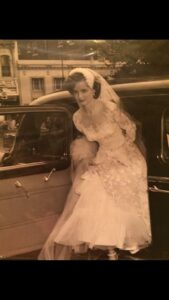
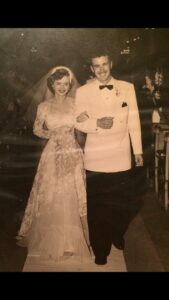
My parents (Ignacio & Kathryn) have been married 68 years. They had a picture-perfect wedding in San Antonio at one of the oldest active cathedrals in the United States, the stunning San Fernando Cathedral, founded in 1731. We are blessed that they are still healthy and active and thriving. Good genes.

My dad is 93 years old and still going strong. I call him ‘the renaissance man’ because there is NO TOPIC that doesn’t interest him or that he wouldn’t try. He gave me my love for art and self-expression. He also gave me a competitive spirit and a ‘never say never’ attitude at trying new things. In his career, he designed and built things – an architect who became influential in developing downtown San Antonio. He actually named the Riverwalk – the Paseo del Rio. He retired early, but that didn’t stop him from exploring his love for the many things that still interest him. He has a mind like a sponge, always learning. I hope I have a fraction of his ability. He loves to cook, especially gourmet food and exotic recipes. This is the guy who dug a pit in our backyard to cook game on a spit or who wrapped fish in banana leaves to cook in an underground oven.

To this day, my dad studies food and painting techniques as if he were a young man. He’s a constant inspiration on how to grab life and hang on tight. He loves mind puzzles and the strategies of playing chess. Despite having hearing problems–due to his stubbornness at wearing hearing aids–he’s quick with a joke that makes me laugh. I usually say that my worst habits, I got from my dad, but I’m thankful I inherited other things too.

My mother is 90 years old. From her, I learned my lifetime love for reading. I have many fond memories with my mom, but she literally taught me how to devour books and planted the seed for my love of writing. Summers off from school were spent at the library (in the stacks) and I came home with dozens of books to read. My mom’s compassion for people and her generosity helped me see the world in a different way. That certainly gave me the insight to write about the lives of others in my books. She’s my best friend. We talk several times a day and I am their primary care giver, living only minutes away. Quite a change from when I was an angry rebellious teen. Even with our age difference, she has an intriguing mind that has adjusted over the years. She accepts a great deal and tries to understand things. We have long talks about how everything has changed, but she is curious and I love it.

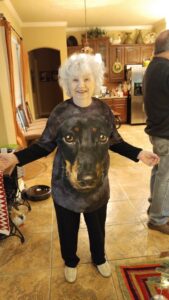
Both my parents have a great deal of humor, but they are different. That doubles down the fun. I buy my mom the latest in Youtube (she calls it U2) viral video-wear, like her ‘Honey Badger Don’t Care‘ shirt or the Weiner Dog tee she’s wearing in this pic. Dad tries not to be seen with her in public when she’s wearing them. (Isn’t she cute?)

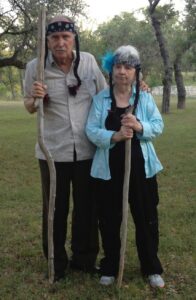
But on a day of weakness, even dad can be persuaded to do crazy family stuff, like the time we did a retreat to celebrate Willie Nelson. Long story. Even my dogs have headbands and braids.

FOR DISCUSSION:
1.) Please share what you learned from your parents or your childhood that has influenced you as an adult.

2.) Any funny stories to share?

Now if you’ll excuse me. My tambourine lesson is in thirty minutes.

First Page Critique: A Goan Holiday

Happy Monday! Today’s first page review is for a novel entitled A Goan Holiday – which seems appropriate since I just got back from India (although, sadly, I’ve never visited Goa). My comments follow and I look forward to feedback from our great TKZ community. Read on!

A Goan Holiday

For the leftover hippies sunbathing nude on the beaches of Goa, drug-induced illusions were often indistinguishable from the breath-taking reality of the moss-covered cliffs and the bright blue sea. Back in the ’sixties, Vagator was one such beach few knew of until a forty-year-old American tourist with only eight fingers trudged down the mud track to the nearby village, starting a hippie stampede to the settlement. The disgruntled children of the West left the residents puzzled by adopting the matted hair, the rancid clothes, and the broken sandals of the homeless, seeking enlightenment in LSD and heroin, but there was one enterprising fellow who saw in the new arrivals a chance to make an easy buck.

Gossip had it his ramshackle shed at the far end of the beach was the designated cop-free zone where the hippies rented cots to crash at night. To the surprise of no one who knew him, the owner of the establishment disappeared one day, only to resurface the next week as the corpse found in a fishing boat adrift a few miles from the shore.

Half a century later, the shed’s owner was forgotten. Rich, young locals and backpackers from around the world still partied to trance music on the moonlit beaches of the former Portuguese colony on India’s west coast, the pungent smoke from industrial-sized rolls of charas, the home-grown weed, swirling all around. White surf frothed over rocks, tickling the feet of the stoned couples as they groped their companions for the night and made promises which wouldn’t last past daybreak.

The shed itself morphed into a hip café which served delicious seafood and fine wines for exorbitant prices. It was where the rich and the famous were frequently caught in carefully choreographed candid pictures. At least, that’s what the kaamwaali bai—the maid—employed at the Joshi vacation home a few miles away claimed. The woman showed up at her leisure and barely did any work if she could help it but always carried news of the movie stars spotted in the seaside village where her cousin lived.

None of the celebs seemed to have ventured outside this lousy night. Lucky for them, thought Anjali Joshi, skirting the group of tourists dancing to ear-splitting music on the beach despite the ominous dark clouds rolling across the half-moon. Each screech from the synthesiser thrummed across her skull. Even her eyeballs were vibrating.

Overall Comments

To be honest, this first page reads more like a travelogue at first than the start of a novel.

In my opinion it suffers from way too much data dumping about the history and clientele of the beaches of Goa and also from a lack of immediacy. Everything in this first page feels distant and third-hand to me – whereas I really wanted to be sucked into the drug scene at the beach and the ear-splitting music at the bar. I wanted to be introduced to a main character I could care about. I I wanted an inciting incident that would draw me into the story. Instead, I wasn’t sure who the book was really going to be about: Was it the forty-year-old American tourist with only eight fingers who started the hippie stampede to the settlement? Was it the enterprising fellow who saw a chance to make an easy buck and whose corpse showed up adrift a few miles from the shore? Was the maid who showed up at her leisure and barely did any work relevant to the story at all? Is Anjali Joshi who shows up in the final paragraph actually the protagonist? All of these characters have great potential but they are placed scattershot on this first page with no hint as to their relevance or importance to the story.

In this first page, nothing about the actual story is really clear and until the reader gets a handle on the story itself, the description and background to the drug culture in Goa doesn’t resonate (and, though I liked some of the detail and descriptions, most of this information could be inserted into the first chapter in discrete chunks rather than all at once).

So my main recommendation to our brave submitter is to start again – start the novel where the story really begins. Let us walk along the beach with Anjali Joshi and feel the music (I liked the image of her eyeballs vibrating BTW). Let us be drawn into the drama of an actual scene. Who is she? Why is she there? What incident is going to propel this story forward? Is it the discovery of a celebrity’s corpse? What dark events do the the ominous dark clouds suggest? Once we get these answers on the page, then, as readers, we will want to turn the page and care about the novel and its characters moving forward. Until then, this first page reads more like an interesting catalogue of the drug and hippie culture of the Goan beaches rather than the beginning of a novel.

TKZers, what advice would you provide to our brave submitter. How would you tackle the issues I’ve outlined?


An Amazing Research Resource for First Responders

Jordan Dane
@JordanDane

Happy July 4th! I’m grilling and celebrating with my family. I hope you all have plans. It’s a time to celebrate the birth of our nation. Freedom does not come free. 

***

When I think about what makes our country great, I think of emergency first responders who are on duty 24/7/365. It takes a special kind of person to protect the public-from EMTs to firefighters to police.

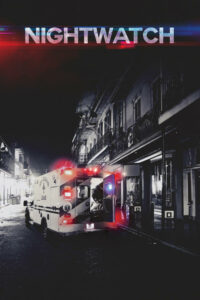
While working with another author, I found a great resource that I thought TKZ might find useful as a resource for first responders. The show primarily focuses on two EMT teams in New Orleans, but other groups come into play, too. Look on HULU for season 2 – 4 of NightWatch which follows the most dangerous shift time from 9pm to 3am. For those of you not streaming HULU, Season 1 is on A&E and those episodes are available at this LINK.

WARNING: This is graphic. I don’t think I’ve ever seen what EMTs see firsthand as they arrive on scene, for example.

From a writer’s perspective, what I found most interesting is:

1.) Fast paced action with stories well-told. Not sure who writes or directs/produces this series, but it is extremely well done. It’s a good reminder of how to show action scenes with the author craft principle of ELLE – Enter Late, Leave Early.

2.) Dialogue is tight. The scenarios are not staged so the treatment must be the first priority. Quick medical lingo between EMTs is carried on without explanation. You see the action as it happens, but when there is time to narrate, the EMTs share what’s medically happening and why they are doing it. You get to see how each case affects them.

3.) See inside first responders’ heads – EMTs (and other first responders) share their thoughts as they come onto the scene, as in what they expect to find. Often, they are surprised and have to react quickly. Dispatch details can be sketchy. The compassion of these people is striking. They are patient and calm amidst chaos and their first priority is for the patient. They calmly talk to them, reassure them, and do whatever it takes to keep them calm. Sometimes the emergency isn’t about a medical solution and more of a human resolution. It’s all there.

4.) You get to see what dispatch communicates to first responders and how they locate the scene with the GPS equipment they have on-board the vehicles.

5.) You see how the first responder teams work together. One of my favorite teams is a man and woman EMS unit. You can see the camaraderie and the banter while they are driving to a scene, but they jump into action and work intuitively with each other. You also get to witness how the other services work with them. Good stuff.

6.) New Orleans as a Venue – My newest series is set in New Orleans and this series is very helpful to get oriented. I make notes and check each location on an online map to see the streets and how it’s oriented in the city.

7.) Local Dialects & Speech Patterns for Emergency Teams – It’s been helpful for me to hear the speech patterns for first responders (especially in New Orleans) but the banter and emergency jargon and official dispatch lingo/code is authentic.

8.) Medical Lingo & Equipment – For the EMTs, they discuss what equipment they have on “the truck” and how it can assist different patients. They’re proud of their service and what they carry on-board. You also get to see what happens in an emergency and what they have to clean up after they drop the patient off at the hospital.

This series is addictive. I find it helps me get  my head into the writing I am doing, since it takes place in New Orleans, but this series is fast-paced and authentic.

DISCUSSION:

What other movie or TV resources do you use to add authenticity to your writing?

No One Heard Her Scream – Ebook Reissue Now Available (in print soon).

Publishers Weekly Best Books of 2008 – Mass Market

How Can 1 Person Have 2 Different Sets of DNA?

Image by Elias Sch. from Pixabay

A human with two different sets of DNA is called a chimera, and it’s more common than you might think. Most chimeras don’t even know they have this strange phenomenon going on inside them.

You could be a chimera, and so could I.

As we go along, take note of the interesting tidbits you could twist into a plot to add conflict.

Without any help from the scientific community, the process of becoming a chimera occurs naturally. Numerous books and movies explore chimerism using a killer who’s had a bone marrow transplant or blood transfusion. But are these characters based in fact?

Let’s take a look and find out.

The tissue inside our bones is called bone marrow, and it’s responsible for making white blood cells, red blood cells, and platelets. When someone has a bone marrow transplant, doctors use chemotherapy or radiation to destroy all the recipient’s diseased bone marrow. The donor’s healthy marrow is then introduced and continues to produce blood cells with the donor’s DNA, thereby transforming the recipient into a chimera.

In some cases, all of the blood cells in a person who received a bone marrow transplant will match the DNA of their donor. But in other cases, the recipient may have a mix of both their own blood cells and donor cells. A blood transfusion will also temporarily give a person cells from someone else, but in a bone marrow transplant, the new blood cells are permanent, according to the Tech Museum of Innovation in San Jose, California.

What if we’ve never had a transplant?

Doesn’t matter. There are other ways to become a chimera.

Early on in pregnancy a mother can be carrying fraternal twins and one of the embryos might die in utero. The surviving embryo may absorb cells from the deceased twin. When the baby is born, s/he can have two sets of DNA. Since twin loss occurs in 21-30% of multiple-fetus pregnancies, think of how many chimeras could be walking around. Are the story wheels spinning yet?

It can also happen with a normal pregnancy.

In the 1990s, scientists discovered that a pregnant woman may retain some DNA from her baby, if fetal cells happen to migrate into her bloodstream and travel to different organs. The New York Times referred to this as a “pregnancy souvenir”— but it’s more scientifically known as “microchimerism.”

A 2015 study suggests this happens in almost ALL pregnancies (you read that right), at least temporarily. The researchers tested tissue samples from the kidneys, livers, spleens, lungs, hearts, and brains of 26 women who died while pregnant or within one month of giving birth. The study found fetal cells in all of the women’s tissues. The researchers were able to tell the fetus cells from the mothers by searching for Y chromosomes (only found in males). The deceased mothers were all carrying sons.

Writers: Don’t take the obvious road. Think victims instead of killers.

  • What if a human brain washed up on the beach?
  • What if the Medical Examiner wrongly assumed the victim was male due to the Y chromosomes?

This is one way to use research to our advantage.

  • What if the brain contained animal and human DNA?

Remember, we’re thinking victim, not killer, which puts a different spin on it.

According to Live Science, fetal cells may stay in a woman’s body for years. In a 2012 study, researchers analyzed the brains of 59 deceased women ages 32 to 101. A shocking 63 percent had traces of male DNA from fetal cells in their brains. The oldest woman died at 94 years old, suggesting that these cells can sometimes last a lifetime.

The blood-brain barrier is the body’s defense system to block many drugs and germs in the bloodstream from entering the brain, but doctors have found this barrier becomes more permeable during pregnancy, which may explain how these fetal cells migrated into the brains of their mothers.

  • What if a serial killer only targeted people with chimerism because s/he viewed them as freaks of nature?
  • How might the killer find potential victims?

If you said the medical field, you’re not thinking outside the box.

Interestingly enough, 26 of the 59 women had no signs of brain disorders while alive. The other 33 were diagnosed with Alzheimer’s disease. The researchers found that women with Alzheimer’s were less likely to have male DNA in their brains than women without the disease.

Previous work on microchimerism suggested fetal cells might protect against breast cancer and aid tissue repair in the mothers, but could increase the risk of colon cancer. Microchimerism can also incite various autoimmune diseases. Autoimmune diseases occur when a person’s body is mistakenly attacked by its own immune system.

Past research suggested Alzheimer’s is more common in women who had a high number of pregnancies than in childless women. One of the limitations of this research is that the number of brains studied was relatively small. Other researchers involved with microchimerism want to explore what effects a mother’s cells might have in her offspring’s development and health.

Imagine all the different scenarios? Parts of your writer brain must be on fire by now. No? Then check this out …  

Are you a chimera? 

You may never know. Unless you wind up in a similar situation to a woman named Karen Keegan. In 2002, her story became a report in the New England Journal of Medicine after doctors told her that she wasn’t the biological mother of her children.

Imagine? Think of all the ways this one conversation could implode an MC’s life.

  • Maybe the woman’s marriage broke up and the only reason her and her husband reunited was because she said she gave birth to his child while he was stationed overseas.

Turns out, the DNA in Karen Keegan’s bloodstream didn’t match the DNA in her ovaries. The doctors later determined she’d most likely absorbed a fraternal twin in utero.

How’s the ol’ writer brain feeling now?


Why Waiting is Difficult

By SUE COLETTA

It’s no secret that the writing biz requires patience. Sometimes, though, waiting can be agonizing. Recently, an exciting opportunity came my way. In order to make this dream come true, I had two weeks (two weeks!) to produce something I’ve never done before. Sorry for being so cryptic, but I don’t want to jinx it.

Now that I made my deadline, all that’s left to do is wait. And wait. And wait. Even with a new release, my mind keeps wandering back to this secret project … and the wait.

via GIPHY

That got me thinking, I wonder how or if waiting affects the brain.

Turns out, researchers recently asked the same question. For the first time, a research team at McGill University clearly identified the specific parts of the brain involved in decisions that call for delayed gratification.

Here’s how it works …

The hippocampus (associated with memory) and the nucleus accumbens (associated with pleasure) work together to make critical decisions where time plays a role. For example, suppose you send a query to a literary agent or publisher. You’re making a decision that requires you to wait for the outcome, thereby triggering both the hippocampus and nucleus accumbens.

Still with me? Okay, cool. Let’s look at exactly what these researchers did to prove or disprove their theory …

The researchers used rats trained to make choices between stimuli that resulted in rewards. Some rewards were delivered instantly, some meant delayed gratification. The rats had a choice between two identical visual shapes on a touchscreen (similar to an iPad). In exchange for sugar pellets, the rats had the choice to press their noses against the shape that delivered one sugar pellet immediately or the shape that would deliver four sugar pellets if they waited to receive the reward.

Over time, the rats learned to negotiate a trade-off between the smaller, instant gratification and a windfall, even if it meant waiting for a short period. Researchers argue that most people will also wait for a decision to pay off, if the reward is worth it.

Do you agree? she asks a community of writers whose dreams stand at the intersection of hurry up and wait.

Now, what do you think happened when the researchers disrupted the circuit from the rats’ hippocampus and nucleus accumbens? You guessed it. The rats became impatient and irritable, unwilling to wait even for a few seconds.

Why?

Our brains weigh the pros and cons of thousands of situations every day without conscious thought. The nucleus accumbens is made up of a group of tiny cells deep within our brains, and those cells are responsible for the release of dopamine. The amount of dopamine released depends on the size of the reward.

Is it any wonder why we hate waiting? Our bodies crave dopamine! Hence, why exercise is so important for good mental health.

What can we do to help with waiting for news? You guessed it. Get your body to pump dopamine. Which is why today (Saturday) I jumped on my husband’s tractor and mowed the lawn before writing this post. 😉

Yeah, he couldn’t believe it either. I’m not what anyone would describe as a manual labor type of chick. I like my fingernails too much to break them. But I needed a way to switch off my brain before I drove myself crazy by checking and rechecking my email. When I saw my husband on the tractor, it looked like fun.

You know what? I had a blast! Who knew mowing the lawn could double as an exercise in creativity? As my husband cringed, I sailed around the yard creating animal shapes with the blades. Always keep ‘em guessing, ladies!

Men, you can stop groaning now. You’ll be pleased to know I fixed the grass afterward by riding back and forth in military straight lines, but it was nowhere near as fun.

In other study, researchers at the University of Texas measured what occurs inside the brain during a long wait vs. a short wait. For the experiment they used two different tones. The first tone meant a 15-20 second waiting period, the second equaled wait times of 65-75 seconds. Both tones signaled the same reward. The only difference was the length of delay. What they discovered was the nucleus accumbens released more dopamine when the short wait tone sounded. Which means, we’re willing to wait for a reward if the wait doesn’t take too long.

Makes sense, right?

So, if you’re waiting for something to happen as a result of a decision you made, do yourself a favor and get outside, or hit the gym … anything that might help to release dopamine. If you follow this advice, the wait won’t feel as long.

Are you in the wait zone? Care to share what you’re waiting for? What are some ways that have helped you to wait?


It starts with an innocent stuffed animal. It ends with mind-numbing terror. 

RACKED, Grafton County, Book 4, is now available for pre-order! Only 99c.