Ernest Hemingway: Public Domain image Wikipedia
Describe your writer space and what setting best makes your creative juices flow.


Purchased from Shutterstock by Jordan Dane
A story has been niggling my brain for the past week. It tickles, in a good way. It started out as a vague melange of unconnected notions (like walking down a dark tunnel) until I started to define a premise and narrow the focus as if I had a light to guide me. Through online research of headline type tragedies, I searched for something with punch that would push me into the almost uncomfortable zone. I developed a loose character profile, playing with gender for the main character, but I needed more.
Over the last two days, I’ve refined my ideas about the story and “fleshed it out” in a way that excites me the most. I can’t share my book idea yet, but I’ve made notes of my process to share here at TKZ. Here are my steps going forward.
1.) Imagine basic ‘what ifs” about a potential character (a storyteller) and a problem–an unfathomable tragedy, an emotionally charged story concept, or a compelling situation–to create a list of “what if” scenarios. One story idea can have many “what ifs.” In SILENCE OF THE LAMBS, another “what if” could center on Hannibal or Crawford who risks his career and reputation on an FBI trainee. Brainstorm a list before you narrow it down to the one you want to develop as the foundation starting point to your story.
2.) Next, whose story will it be? Let’s talk character. Who has the most to lose? Pick the best character(s) to tell the story. Then decide how you want to “punish” them to test their worthiness for a starring role in your book.
3.) What is the external conflict between the main players (villain or adversary included)? But a good story is not only about the obvious conflict. Flawed characters have double the challenges. How will their internal crutches (their inherent weaknesses) keep them from getting what they want & add to the stress of the conflict? Make the story a personal and intimate journey.
4.) What’s at stake & how will the stakes escalate and play out? Maximize the emotional impact by ramping up the conflict between two main players at odds with each other. Yes, they could be on the same side, but pit them against each other to make things progressively worse and see how they’ll make it through.
5.) Now draft your “pitch” or a premise. You have your basic story ideas – your cast of characters, the conflict, the escalating stakes and a general sense of how things will play out, so you’re ready to draft a “pitch” or develop a premise that best fits your story. Something that would make an agent, editor, or reader say, “Wow, I have to read that.”
Here’s a basic premise example for SILENCE OF THE LAMBS:
A young female FBI trainee must barter her intimate secrets with an infamous psychopath held in solitary confinement to gain his help in catching a serial killer who’s killing women for their skins.
Notice there’s a well-defined protagonist, a formidable antagonist, a sense of the setting, conflict and stakes, and a notion of how the action will play out. The protagonist is up against forces that seem much bigger than she is. The stakes are high. If she fails, more women die. A premise works best when it’s about a vulnerable character with a formidable problem that would seem compelling to the reader.
A good premise should:
A word of caution:
Do not overload the story with too many focal points or subplots that take away or distract from the main character(s) plight. Keep a laser focus. If the premise is compelling enough, the story won’t need embellishment.
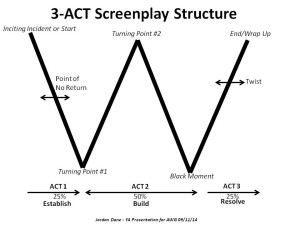
From this point forward: Now that I’ve developed a more focused idea for a new book, I will draft a general plot using a method that’s worked for me and one that I’ve blogged about before at TKZ: The Author’s Bucket List on Plotting Structure. Using the shape of a “W” to remind me, I’ll create the inciting incident, the point of no return, turning points, the black moment, and the twisty wrap up in 7 points that will get me started. A high level outline. Since I’m an impatient writer, I usually start to write the beginning to play with what will work best. If I’m writing on proposal, I will draft a 5-7 page synopsis to go along with the writing sample to a publisher. I like having a fuller synopsis, than merely my 7 point “W’ outline, to develop the story line in a way that guides me as I write. I can incorporate character motivation and ramp up the conflict in such a synopsis so I don’t forget any necessary plot points. At this point, I am on my way and writing in the zone.
Here is a visual idea of the “W” plotting I use: It a visual summary of my blog post.
DISCUSSION EXERCISE: Write a brief yet effective premise for any of these 5 well- known movies:
1.) Silence of the Lambs (Can you do one from Hannibal’s perspective?}
2.) Jaws
3.) It’s a Wonderful Life
4.) Hunger Games
5.) Wizard of Oz
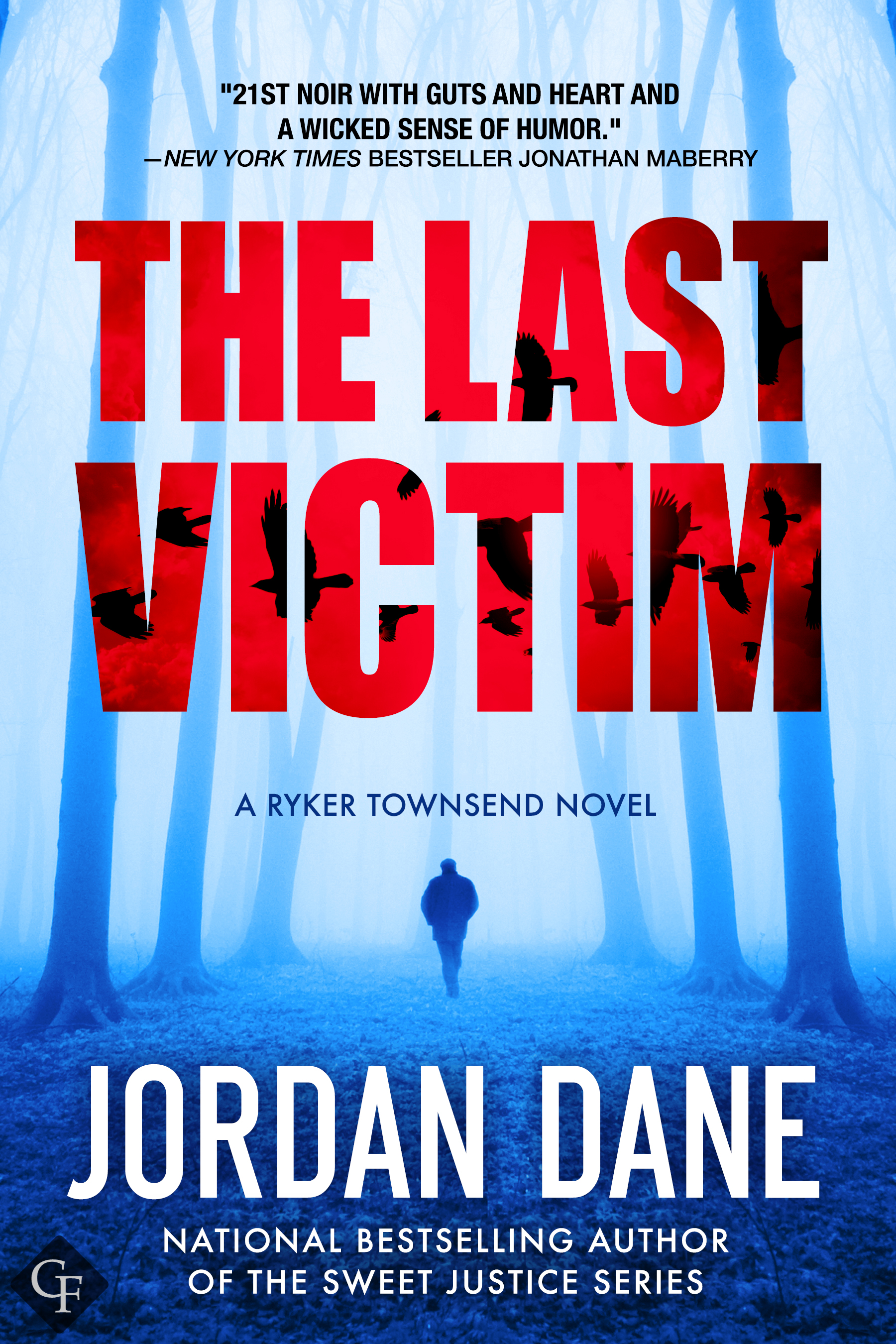 The Last Victim coming Oct 30, 2015 in print and ebook. Available for ebook preorder through Amazon Kindle at a discounted price.
Enter Goodreads GIVEAWAY at this LINK. Win one of 15 signed print copies See rules and enter.
Not to scale
I’ll tell you a little secret. Come closer so I can whisper it in your ear. I write about friends, relatives and my pets and immortalize them in my books. There, I said it. At first I did it because it was my little joke with my family. When I had a minor character, I would make them someone I knew and they came alive in my mind. Often I gave them speaking parts or sometimes they were the voices of annoying relatives on the answering machine of my characters.
The fun part is that for my relatives, I never tell them I’m doing it. They often find out as their reading my latest. I love hearing their reactions.
Any pet mentioned in my books is one of mine or a pet of my family. Since it’s fiction, I can make them well-behaved.
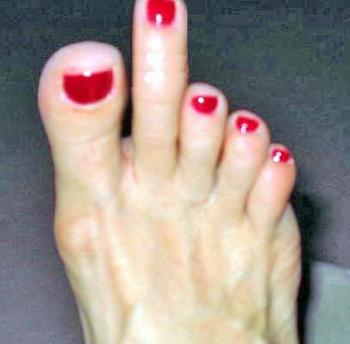
In my first YA, I let my mind wander to find the voice of my main character Brenna Nash. I have twin sisters who inherited the odd toes of my dad’s side of the family. (My mom is quick to point out that all her family has lovely feet, so this trait must’ve come from dad.) Their middle toes jut out and look a bit obscene. My niece inherited her mother’s toes and since I had my young niece in mind—and made her a minor character in my debut YA book IN THE ARMS OF STONE ANGELS—I HAD to write about her “secret” toes.
Here’s the passage:
I sleep with the dead.
I don’t remember the first time I did it and I try not to think about why. It’s just something I do. And my fascination with the dead has become part of me, like the way my middle toes jut out. They make my feet look like they’re shooting the finger twenty-four seven. My ‘screw you’ toes are my best feature, but that doesn’t mean I brag about them. Those babies are kept under wraps—just for my entertainment—the same way I now keep my habit of sleeping in cemeteries a secret from anyone. Not even my mother knows I sneak out at night sometimes to curl up with the headstones … and the stillness. Some things are best left unsaid.
In the arms of stone angels, I’m not afraid.
In one of my Sweet Justice series books (which shall remain nameless since I don’t want to be a spoiler), I wrote two characters and gave them fictitious names, but they were my crazy parents. All their strange idiosyncrasies—my dad’s hoarder tendencies and my mother’s love of ginger snap cookies—became a part of the story line and made me laugh til I cried. When I read the passages to my brother, I didn’t tell him who the characters were supposed to be, but he knew and roared with laughter. Now my parents very proudly tell people, “We’re spies in this book.” Well, thanks mom and dad, for telegraphing a twist in the book. But writing them into my novel was a decision I will never regret.
It’s one thing to “see” and “hear” a fictional character vividly in your head so that they feel alive to you, but it’s quite another sensation to already have that character in your mind from years of knowing them. A word of caution: you can get carried away and let the character take over more of the scene than you intended, simply because you want them to play a bigger part. But written judiciously, you can have fun with it and make a more layered character in a short amount of time because you already know them.
Discussion:
1.) Have you ever used a real person as a character in your books? Who was it? Tell us about how you did it and if they found out, what was their reaction?
2.) Has doing this ever backfired on you?
The Last Victim – When he sleeps, the hunt begins.
Available for preorder through Amazon Kindle at this LINK.
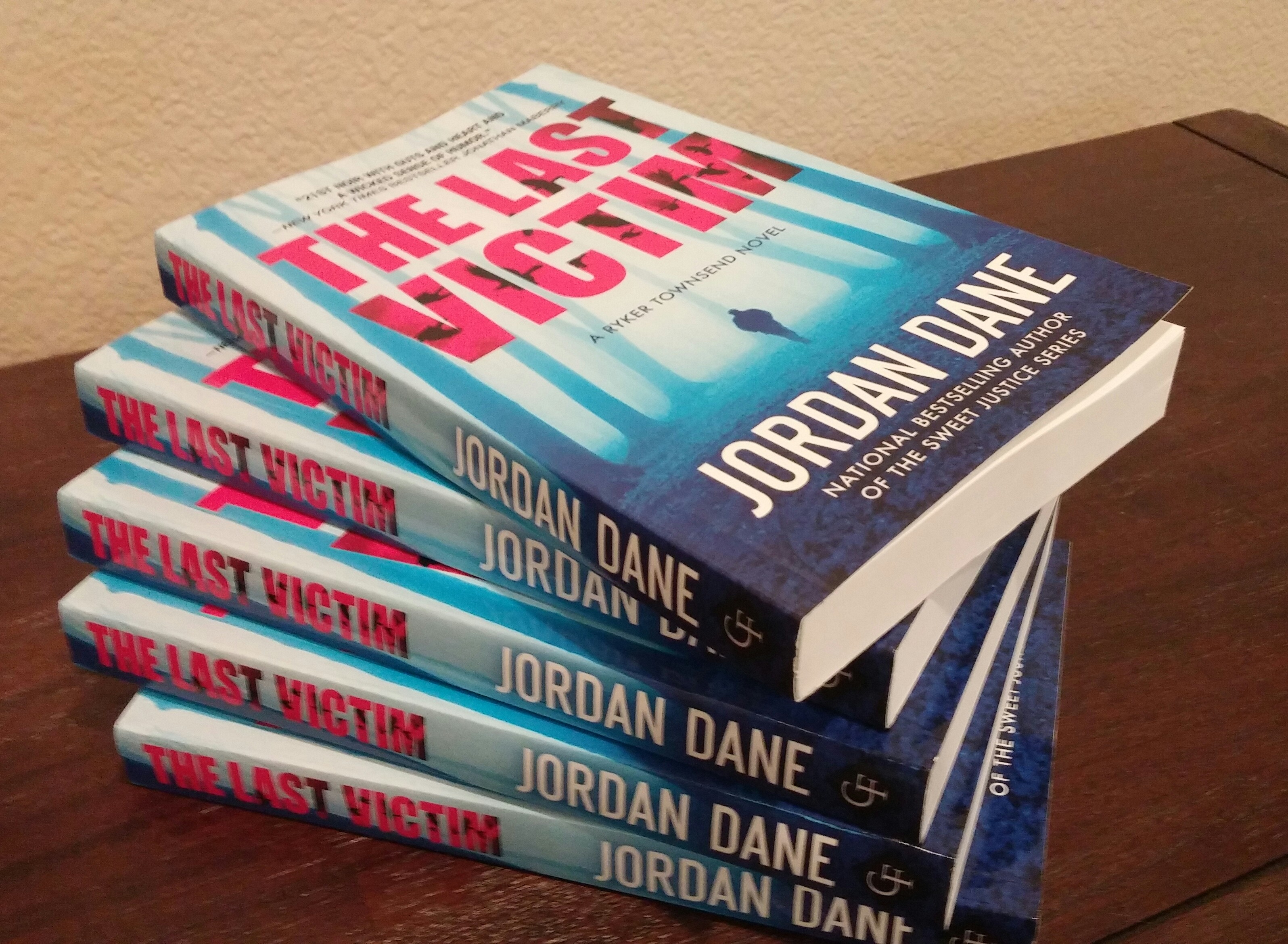
Available for Amazon ebook preorder now
Interested in getting your ebooks into libraries and get paid? And would you like to do it without forcing libraries to repurchase your digital offering after a restricted loan count as if it has a limited shelf life? You can upload your ebook into Overdrive or get to Overdrive through Smashwords. Both can be cumbersome systems to work with and have their challenges, there are many e-book programs being developed every year, such as Sqribble, and more and more platforms to read ebooks, not just iBooks.
But I wanted to share a developing alternative.
EbooksAreForever
EbooksAreForever is a platform to help libraries sustainably purchase ebooks from independent authors and publishers. It was launched in March 2014. Since it’s new to me, and I’d been looking for a means to reach out to libraries for my indie pubbed and backlist novels, I thought I’d share what I found.
Ebooksareforever’s philosophy is based around sustainability. They believe libraries should be able to buy ebooks at affordable prices. Since ebooks are digital and not physically degradable items, libraries should be able to own and offer them to loan for eternity.
Authors JA Konrath and August Wainwright co-founded ebooksareforever to sell DRM-free ebooks with no re-licensing restrictions.
“We deliver a curated collection of titles from independent authors and independent publishers and make it as simple as possible for both the author/publisher and the library to interact with the collection and to fairly compensate the author/publisher for every transaction.”
—August Wainwright, co-founder
How does EbooksAreForever work?
I’m excited at the prospect of having a new avenue into libraries, but understandably, libraries need a gatekeeper to ensure quality. How does that work?
Every author and book is approved by a curation team. “We need this because we’re working hand in hand with libraries”, says Wainwright, “and we need to deliver what they’re asking for. We assess by reviews, number of titles the author has available, whether those titles are in a series, quality of cover art, interest in libraries, and genre saturation in our system. We couldn’t be taken seriously if, say, 80% of our titles were romance. It equally wouldn’t work if every book had to have at least 200 reviews on Amazon.”
Good news. If your book is rejected, you can reapply 60 days later.
Each book is purchased by a library on ‘perpetual license’. They pay once and they can use it forever. Only one copy can be checked out at a time.
Will authors get paid?
Yes. Titles are sold to libraries for $7.99 (full-length) and $3.99 to $4.99 for shorter works. Authors receive 70% royalty of every sale.
Ebooksareforever says it hopes to evolve the submission/rejection process once the business grows and the system flourishes, but the current focus is on developing and sustaining a robust system which is a trusted resource and popular with libraries.
They are also working on ‘patron apps’ which will break the business out of the US and allow global libraries to purchase titles with patrons loaning copies using universal apps. This system should also see broader opportunities for author payment. A very exciting prospect.
PROS
• Free to submit
• Author payment
• Set up by authors for authors
CONS
• There are rigorous curation efforts that favor series and higher-profile authors
• For now, it’s limited to US-only
Discussion:
What have you heard about EbooksAreForever?
Any other ways to distribute your ebooks into libraries besides the ones I’ve mentioned?
The Last Victim available for ebook preorder at a discounted price. After release, will be available in print and ebook formats.

Purchased Image by Jordan Dane: book cover
Off the top I will say that spending a great deal of time doing promotion, instead of writing, is probably not a good thing. Even if you’re an indie author, having inventory to sell is a key way (the best way) to keep your work in front of readers.
Writing new material should be a goal for every author. Having said that, book promotion is a necessary evil, even if you’re traditionally published with book tours and appearances, but even more so if you are an indie or hybrid author straddling business and creative lines.
So let’s talk about promo. It’s been awhile since I looked into this topic. Even if you are traditionally published, it can help to enhance your sales if you assist your publisher with your own marketing strategy – something that isn’t redundant with what they may be doing for you. The average author today can not escape promoting their own books, no matter how big their publisher might be.
Promotion Resources:
BookBub still is a popular option if you are lucky enough to get your book selected by them. It can be costly (depending on what genre you pick to promote your book in) but I’ve heard authors have good odds of making the expense pay off in sales because you get your book in front of readers of your genre. Always a good thing.
Other popular options are:
BookBuzz is a fee-based service company that will help you promote your book in various packages, including getting your book listed on NetGalley for reviews (which costs money). The fees are reasonable and you choose which package best fits your purposes and budget.
BookGorilla is a reader-based service that sends out emails daily, listing great books deals. If you’re offering your book at a discount upon release or for preorder, this might be a good place to reach a vast list of reader members.
Upload Service Question:
For those of you in “the know,” is there a service that will input a new release book into 50+ reader-based sites for a fee? I seem to recall there used to be one but I’ve had trouble locating it online. It would certainly be a cool feature for any author or publisher to find a service like this.
Facebook Parties:
Many authors add Facebook Parties to their launches. It could be part of a virtual tour offered by a service company. It helps to have more than one author of a genre to make the party more fun and generate interest. Has anyone had success with a Facebook Party for a crime fiction book? (Romance and Erotica authors do these quite a bit.)
Promo Question:
Does anyone have promo sites for either promotion service companies to generate buzz or reader-based sites to get new releases into readers’ hands that have paid off? It’s often hard to quantify whether a fee has paid off in book sales, but please share anything you’ve tried with success. I’m especially interested in services for crime fiction, mystery, suspense, and thrillers.
I hope you’ll share what has worked for you. Please join in the discussion. Below are links to promote free or discounted books. Hopefully some are new to you.
ENT (E-Reader News Today)
Pixel of Ink
The Reader Cafe
Free Booksy
Kindle Nation Daily
Digital Book Today
Free Digital Reads
http://ereaderutopia.com/
http://www.humanmade.net/submission-form
http://www.orangeberrybooktours.com/
http://www.bookblast.co/advertise/advertise.php
https://www.themidlist.com/
http://www.ebooksoda.com/
http://www.masqueradecrew.com/2014/10/advertising-options-from-masquerade-crew.html
http://newfreekindlebooks.com/authors
http://kindlemojo.com/
http://www.thekindlebookreview.net/advertise-here/
http://www.bookbear.info
http://www.totallyfreestuff.com/
http://www.icravefreebies.com/contact/
http://blog.booksontheknob.org/about-this-blog-and-contact-info
http://freebooksy.com/editorial-submissions
http://www.kindleboards.com/free-book-promo/
http://indiebookoftheday.com/authors/free-on-kindle-listing/
http://freekindlefiction.blogspot.co.uk/p/tell-us-about-free-books.html
http://www.freeebooksdaily.com/
http://www.freebookshub.com/authors/
http://www.ereaderiq.com/about/
http://ebookshabit.com/about-us/
http://www.blackcaviar-bookclub.com/free-book-promotion.html#.UXFB27XYeOc
http://www.kornerkonnection.com/index.html?fb=ebookkornerkafe

(Surprise! I made a switch of a post date with James Scott Bell. He took my Thursday, July 16, and I swapped him for his usual Sunday. Who can say “No” to Jim, seriously?)
I made the change from crime fiction thrillers to young adult (and back) because I had a niece who wanted to be a writer and I included her in on my process while I wrote my first YA – IN THE ARMS OF STONE ANGELS (Harlequin Teen). We had fun together. I flew her from Texas and we spent a long weekend visiting the locals sights I wanted to use for the story, taking photos. I also worked with her to come up with character images and names and we plotted the first 8 chapters.
The sixteen year old character (Brenna Nash) had been born in my head while I wrote the Prologue. It should have felt like a drastic change in voice (from adult to teen), yet I made the leap with only one real foundation in crime fiction to connect my stories. I had deliberately chosen to make my first YA a cold case mystery so I could tie into my reader base. I didn’t analyze this change in genre, but I’ve been thinking of VOICE lately and wanted to break it down.
If you are a new author trying to find your way, or a more experienced writer who would like to venture into a new genre, I hope this post gets you thinking.
Keys Ways to Establish Your Own Voice Yet Stay Flexible Across Genres
1.) Ask Yourself: What is my natural voice? Answer this question on your own, but then ask those closest to you how they see you. Are you naturally cynical? Are you great with the one liners? Or are you quieter with good timing for well-timed jabs?
Exercise: Describe Yourself in Three Adjectives (Snarky, Fun, Flirty) Then ask: Is this how I talk?
2.) What books have you enjoyed in the genre you are interested in writing? I’m not just talking about reading a book and liking it. I’m suggesting you analyze exactly why you liked it. I’m talking notes in the margins and highlighted lines of dialogue or imagery you liked. Understanding your taste will help you define what comes naturally to you. You are drawn to author voices you like and hope to write yourself.
Exercise: Picture your ideal reader. If you can describe him or her, then write to your reader as if you were one on one. Does this make your voice easier to develop?
3.) Can you hear the central character in your head? Can you resist censoring him or her? I call this “free association.” It’s as if the character is telling you his story and you’re the scribe. Throw everything onto the page without filter and you might stumble onto your next book.
Exercise: Take a pen and paper and free write without censorship. Go bonkers. When you’re done, ask yourself – Do I write like this? Is this more natural than what I’m writing now? I’m convinced you must enjoy what you’re doing, otherwise it’s too much like work.
4.) Can you trust your instincts to get it right? When I’m working out a character, I resist getting feedback from anyone else. I want to feel sure about the character before I open myself up to criticism or get input from a committee of beta readers. Trust your gut. It’s your story.
Exercise: Answer these questions: Is my writing something I would read? What’s on my shelves? Am I forcing my voice?
5.) Don’t push your instincts into an area of voice that does not feel completely comfortable to you. I like writing when I’m slightly off balance and unsure, but I know my boundaries. I couldn’t write Chicklit for example. Not a whole novel, for sure. Plus my sense of humor runs more subtle so I’m not likely to try slapstick weirdness for a whole book either. Even if you’re a risk taker, I feel strongly that there are limits and we must determine what those are to make any adjustment to voice that has any hope of being successful.
Exercise: Am I enjoying what I’m writing? Does it feel like work or fun? Unless I’m writing something that comes naturally, it can seem like drudgery. Remember this is your passion and it should be fun.
Even when I ventured into YA, I still wrote about loners, the quietly brave hero, the cynical character, the well timed one liners, and the brooding male. I created my teen characters to be unique to the story line, yet my world building and character voices were consistent with my comfort zone. I read many many YA books before I wrote the genre. I wanted to write about smart and unique characters who knew how to tread through life alone if they had to, the kid who could be shadows that most people don’t notice until these kids rise up to become heroes. Those are the kinds of books I like to read and write.
So what about you? How did you develop your author voice? Any new tips to add?
I expect to get a few push backs on this post. Many writers use the “draft” process of editing their book after they get it written. They push to get a first draft done before they edit in several more drafts, but for me, I’ve never been able to do this. There’s a compulsive part of my nature that can’t let my own imperfections remain on the page until the end. If I know my book is riddled with my idiosyncrasies, it would haunt me too much, but that’s just me.
I do what I call “rolling edits” because I want to stay close to the action and character motivation at hand. I still get my daily word count in, but I read and reread my daily new material until I have nothing more to edit. In other words, if I write a chapter on one day, I edit it as I continue to move forward until I consider moving on.
Here’s my edit process:
1.) DELETE WITH A VENGEANCE – My first pass is always to delete and tighten each sentence. To help this process, I usually read aloud. Anything I stumble over gets a redo. I have a tendency to use compound sentences, so I make sure not to have dangling participles or long sentences that are hard to follow. I have a two comma rule. Any sentence that needs more than two commas, should probably be broken apart.
2.) LOOK FOR REPETITION (MORE DELETES) – I look for overused words, redundant wording, repeated phrases or “crutch” words that I fall back on too often. This can change from book to book and each author will have their own verbal handicaps.
3.) ADD EMOTIONAL LAYERING – Every scene has an emotional component to it. I push to add more emotion, even if it seems over the top. In fiction, this works because stories are about triggering emotions that the reader can relate to. If the scene is action packed, I’m looking for those delectable word choices to support the action or short viscerally descriptive sentences that will make the thrill palpable to the reader.
4.) REVISE THE DIALOGUE – I read the scene dialogue (without the narratives) to see if I can imagine the characters in my head and hear their voices. If there is humor in the scene, I work to punch it up or improve the timing (usually by deleting). If there is menace in the exchange, I ramp up the threat.
5.) EDIT THE BODY LANGUAGE – I often add body language in each scene as if I am watching a movie, but books aren’t that visual and I can sometimes overdo certain “crutch” reactions, like too many shrugs or nods. Again this is another opportunity to delete usually and it’s worth having a step to look for this.
6.) SPOT CHECK CHARACTER MOTIVATION – Do the characters’ reactions ring true? What if one of them reacted differently, how would that change my scene. I test my character motivation while I am “in” the scene to make sure it feels authentic. As I go through the book and stay close to each character’s story arc, I want the ability to “feel” a different outcome or twist as it is occurring, rather than waiting until the end to realize I like a different turn to happen and have to rewrite major sections.
7.) LAYER IN SETTING – I like to make sure my setting enhances each scene to infuse the action with a setting that is almost like another character. I love writing stories with a strong sense of world building, to make the reader feel as if they can walk the same streets that my characters do, with all their senses.
8.) REMEMBER THE INTIMACY – If my characters have a spark of attraction (that can have it’s own story arc), there is nothing more titillating than mounting intimacy. A glance, a first touch, can be drawn out so the reader feels everything. This can be construed as #3 (adding emotional layering), but for me, a growing romance should carry its own importance. If you can strip out the romance of a story, and the book no longer makes sense, then you have the right balance. This means that the romance is integral. The lovers are “punished” for wanting to be together and they get into more trouble because of it.
ROLLING PROCESS:
As I’ve mentioned, I keep writing my daily word goals, but continue to edit prior scenes (usually a chapter or two previously written) until I’m content to move on. Because I’m old school, I kill a lot of trees by printing out my edit pages and making notes in the margins. Every night I read what I’ve written before I go to bed. My reward is to get my own work done first before I treat myself to reading someone else’s book. The next morning, I make the changes.
By the time I get to the end, my novel is fully edited by me. I usually make one or two more passes through, to read it as a reader might. But most of the major edits are done. When I’m done, I’m done.
I set my daily word count, depending on the contractual due date. The usual range can be 2500-5000 words per day. My advice to other writers, on setting word count goals, is to take into account your priorities and set realistic goals. Even if you can only squeeze in a page a day, that is still progress and you will eventually get done.
DISCUSSION:
1.) How many of you do something similar? Anything you would add to my list?
2.) If you edit in drafts, what tips do you have to make this draft process more effective?
Jordan Dane
@JordanDane

This week I’m moving and in the middle of a major renovation in my new home. Needless to say I’ve been distracted, but Stephen King got me thinking about plot. He suggests writers should forget about plot and give more importance to “situation.”
Wow, that knocked me into next week. Imagine contriving an amazing situation for your characters to react to. One that comes to mind is the plot of a horror movie where vampires invade a small coastal village near the Bering Sea on the nothern tip of Alaska, where in winter, the sun never comes up. Yikes. Or a Battlestar Gallactica premise where earth is destroyed and what’s left of the human race is forced into ships to launch into space with nowhere go. The “situation” has legs. It may take writerly experience to know how to focus the multiple stories that can spring from that incredible situation, but what a great problem to have if your story comes wrapped in a great situation package.
Doesn’t it make you want to take the time to develop a great “situation” or conflict, rather than focusing on the mainstays of plot?
What do you think of King’s assertion that plot is separate from “the situation” premise? Does it have to be separate? Can a great situation be enhanced by the structure of plot, ot would that inhibit the free flow of an author’s creativity to develop the situation organically, by feel using natural storytelling abilities?
King’s notion really inspired me to think out of the box on how I develop story ideas. How about you? Is there room for both plot and situation? Is one more effective than the other for you? Can an author get complacent in method if the focus is purely on plot?