by James Scott Bell
@jamesscottbell
 Mrs. B and I like to start our mornings together, early, with a cup of joe and some talk. We take it in the front room where we can hear the early morning birds come out to sing. We have a nice aviary in our back yard—mockingbirds, blue jays, doves, even the occasional oriole. The mockingbirds always take the lead. After all, they can have up to 200 songs in their feathery breast.
One morning a few years ago, eerily concurrent with lockdown frenzy, the music stopped.
Cindy was the first to notice. “I don’t hear the birds,” she said.
We waited. No sound.
The next morning was the same.
We were flummoxed.
Then one morning I went out back with my AlphaSmart and a fresh cup of java. I was typing away when I heard a rustling in the trees. A squirrel jumped out and ran across our wall. Fast. Heading toward another tree.
Because a big old hawk was swooping down on the frightened ball of fur. I rooted for the squirrel. Who found safe haven.
The hawk then perched itself on the corner of my roof, where it had an unobscured view of my entire yard.
It just sat there. Watching.
Could that be the reason the birds were silent?
I went out again the next morning. No singing birds. But presently I heard the loud squawk of a mockingbird. Not in song, but in distress. I looked up.
There, on top of a telephone pole, sat the hawk. A few yards away, on a wire, was the mockingbird, screaming at the hawk in no uncertain terms to go away.
Which the hawk imperiously ignored.
The mockingbird intensified its screech. The hawk stayed put. My theory was that the bird had a nest nearby and was protecting its young.
Finally, the mockingbird kicked things up a notch. It flew at the hawk, flapping its wings as it went by, giving the predator a feathery slap.
The hawk looked puzzled.
The mockingbird flew at him again. And again. The fourth time, the hawk decided he’d had enough, and flew off.
Score one for the little guy!
It took some weeks, but eventually the hawk moved on. And the birds started singing again.
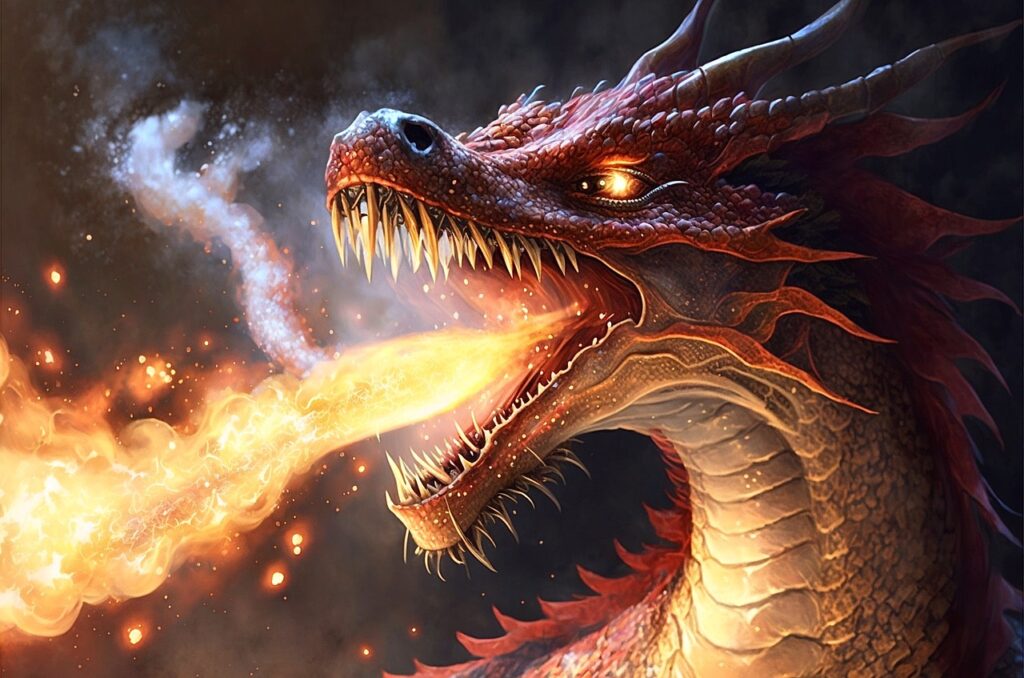
Which has me thinking: what hawks are there in our writing life that keep us from singing our best songs? Here are three:
Self doubt
Every writer goes through periods of self doubt—about whether they have the goods, whether the book they’re working on is good enough. Or maybe they’ve had some success and wonder if they can keep it going. A little self doubt can be a motivator to check your craft and see if you might improve something. But you can’t let it sit there like a hawk.
You will not be shocked to learn that the remedy is to write. Type words. As Dennis Palumbo says in his book Writing From the Inside Out, “Every hour you spend writing is an hour not spent fretting about your writing.” When you’re writing, you’re not doubting. That is, unless this hawk is swooping:
Inner critic
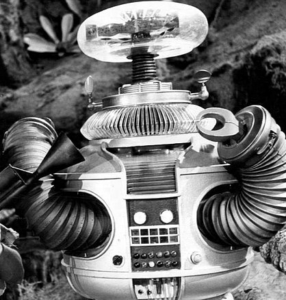
“Danger, Will Robinson!” – Robot from Lost in Space
We all know this voice. “Hold it.” You’ve written a sentence. Or a paragraph. And suddenly you clutch. You want to go back and fix the thing. Danger, Will Robinson! (Boy, does that ever date me.) Listening to that voice leads to Writus Interruptus—the cessation of creative flow.
We all want to write in the flow state. Letting the words come out by following the James Thurber advice, “Don’t get it write. Get it written.” Go back and fix it later.
“Write like you’re in love. Edit like you’re in charge.” (JSB)
If you find yourself prey to the inner critic, you need to get used to turning it off. Do that with the practice of morning pages. See my post on that here.
Risk aversion
Sometimes a writer chasing commercial success will choose a genre and then write safely within the conventions. The problem is, there is enough same-old fiction being produced that such a book will not stand out in any significant way. Heck, artificial intelligence can now spew out competent genre fiction. Are we going to let the machines make monkeys out of us? We need to bring our unique voice, heart, perspective, passion to the page!
Don’t be afraid to take a risk, especially in the first draft. You can always pull things back later, or polish the rough gems…but first they need to be there.
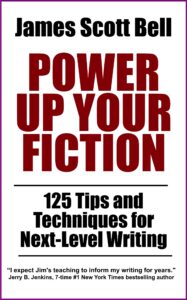 In that regard, I’d like to mention my new writing craft book, because it is all about the “extras” that we love to find in great fiction. It’s called Power Up Your Fiction: 125 Tips and Techniques for Next-Level Writing. It’s up for pre-sale on Amazon now at the deal price of $2.99 (reg. will be $5.99). If you’re out of the U.S., go to your Amazon store and search for: B0BZ5WQVXD.
So flap your wings and chase away those birds of prey. Then sing your song.
What preys on your fiction?
 How to win friends and influence people.

 In the case of the signing at Four Seasons Books, since I’m new to the community, I bought a gorgeous charcuterie platter from
 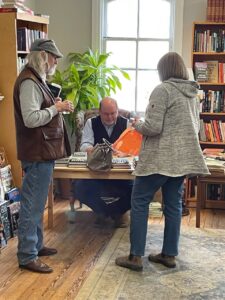 I always bring extra books–especially for the first event with a new bookseller. It’s always hard to estimate how many books is the right number for a signing, and for reasons that make all the sense in the world, booksellers often underestimate. If they run out of their stock, they can dig into my author’s copies, which they sell at list price and then just backfill my copies with the next order from their distributor. This saves a lot of embarrassment.
 As writers, it shouldn’t surprise you to learn that even while silent, our bodies speak volumes. Nonverbal cues — body language — are the physical behavior, expressions, and mannerisms that communicate how we really feel.
 I had a tough decision to make for this installment of JSB at the Movies. It came down to a choice between
 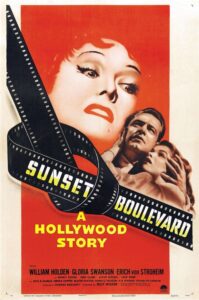 The director George Cukor suggested Swanson to Wilder, and how perfect she was. She had been one of the great “faces” of silents, and was the right age—50—for Norma. That’s when Wilder got the brilliant idea of using Cecil B. DeMille as himself, for he had famously worked with Swanson in the silent era and was still directing movies. Swanson would essentially be playing a version of herself.