Creating a Scene Outline for Your Novel

by Jodie Renner, editor & author

@JodieRennerEd

(This is a quick fill-in post for P.J. Parrish, who’s been hit by a flu bug. Get well soon, Kris!)

First, what’s a scene?

Although most novels are divided up into chapters, the scene is the fundamental unit of fiction. Each scene is a mini-story, with a main character, a problem or challenge, and a beginning, middle, and end of its own. Every scene needs tension or conflict, and at the end of each scene, at least one of the main characters must have gone through some sort of change. Otherwise, the scene isn’t pulling its weight and needs to be revised or cut. Every scene needs a mission (goal), an obstacle, and an outcome (usually a disaster). For more on scenes, see Jodie’s article “Every Scene Needs Conflict and a Change.”

A modern novel normally has several dozen scenes. Each scene can range in length from a few paragraphs to a dozen pages or more. A chapter can contain one scene or several. Some authors like to use jump cuts, where they “cut away” in the middle of a scene to go to a different scene, then perhaps interrupt that one in the middle to go back to the first scene and resume where they left off. In this case, a scene can span several chapters, often with other scenes interspersed.

Using the Scene Outline:

The outline below will help you organize your scenes and decide if any of them need to be moved, revised, amped up, or cut.

This is a great tool for both plotters and pantsers. Plotters/outliners can use it to outline your scenes early on in the process, and those of you who prefer to just let the words flow and write “by the seat of your pants” can use it later, to make sure the timeline makes sense and that the scene has conflict/tension and a change.

Keep each scene description to a minimum. Don’t get carried away with too many details, or the task could become arduous. The most important thing is the POV (point of view) character’s goal for that scene, and what’s preventing him/her from reaching that goal, plus any new conflicts / problems / questions that arise.

And you can use a different font color or highlight color for each main character, for a quick reference on who was the POV character for each scene. Also, you can print it up and cut them out to rearrange the scenes, or use a writing software for that.

If in doubt as to who should be the viewpoint character for that scene, most often it’s your protagonist. The point of view character can also, less often, be your antagonist or another main character. Almost never a minor character. If you can’t decide who should be the POV character for a particular scene, go with the character who has the most invested emotionally or the most to lose.

SCENE OUTLINE FORM:

Scene 1: Chapter:1 Place:

Date/Month/Season: Year (approx.):

POV character for this scene:

Other main characters here:

POV character’s goal here:

Motivation for their goal (why do they want that?):

Main problem / conflict – Who/What is preventing POV character from reaching his/her goal:

Outcome – Usually a setback / new problem:

(And/or new info, revelation, new question, or, rarely, the resolution of the problem):

Scene 2: Chapter: Place:

Date/Month/Season: Year (approx.):
    

POV character:

Other main characters:

POV character’s goal:

Motivation for their goal:   

Main problem/conflict/question:

Outcome (most often a setback):

Scene 3: Chapter: Place:

Date/Month/Season: Year (approx.):

POV character:

Other main characters:

POV character’s goal:

Motivation:     

Main problem/conflict/question:

Outcome (most often a setback):

Scene 4:

Etc. Continue for as many scenes as you have.


Fiction writers – Do you have any tips to add to this scene outline?

Besides publishing numerous blog posts, her popular Editor’s Guides to Writing Compelling Fiction, the award-winning Fire up Your Fiction and Writing a Killer Thriller and her upcoming Captivate Your Readers, as well as her handy, clickable e-resources, Quick Clicks: Word Usage and Quick Clicks: Spelling List, Jodie Renner is a freelance fiction editor. Find Jodie on Facebookand Twitter, and sign up for her occasional newsletter here. Author website: JodieRenner.com.

12 Tips for Writing Blog Posts That Get Noticed

Jodie Renner, editor, author, blogger

I don’t know about you, but I can’t possibly get to all the blogs I’d like to in any given day. We’re all busy people, so we want to know within seconds whether a blog post will offer anything of value to our hectic lives. And we might even get annoyed at time-wasters that meander or don’t deliver on their promises.

Blogging is a great way to build a community feeling, connect with readers and writers, and get your books noticed and if you’re looking to start your own blog then I would say go for it! If you need help starting one, just visit Blogging.com for help. I’m honored and proud to be a member of this award-winning group blog, The Kill Zone, where my fellow bloggers, all savvy, accomplished writers, offer daily value and entertainment to writers, and our community of eager participants enrich every post with insightful comments.

But if you’re just getting started in the world of blogging and want to build a following, the most important thing to remember is that it’s not about you. It’s all about offering the readers value in an open, accessible style and format. A rambling, unclear, too formal, or overly long blog post can be irritating or boring – a turnoff. And can jeopardize your reputation or blog.

Starting a blog can be scary, especially if you don’t really know what you’re getting yourself in to. The first tip I can give you is to make sure you have a strong web hosting provider. You could even do something like Check Now HostiServer Website Server Hosting to give you a better idea of what you should be looking for when it comes to a web hosting provider. This will give your blog the foundation it needs in order to build a dedicated, large following. If you’re starting a blog and in need of good web hosting, you might want to check out the best web hosting uk to help get you started.

Here are some tips for engaging readers with your blog posts so they’ll share them with friends and on social media.

1. Offer value.

When you’re deciding what to write on, focus on what will benefit your readers, and make them come back the next time. Maybe it’s useful info that will help them in some way, or just some entertaining or humorous or uplifting writing for them to enjoy, for a break in their busy or stressful day. If it’s a personal anecdote, show readers why your story or content could be relevant to their lives, how they can benefit from your experience.

2. Be clear about your topic right from the start.

The subject of your post should be evident by the title and the first few sentences. Readers are so busy these days, with long to-do lists and many other blogs competing for their scarce reading/browsing time, that if they have no idea what your post is about, they’ll probably just move on to the next one.

If you can’t describe your topic in one or two sentences, then it won’t be clear to readers, either. Work on that brief description of the post, then take out any digressions that don’t fit under the topic and would be best under another topic or as their own blog post.
Captivate_full_w_decal3. Hook them in with a great headline.

Give readers a really good reason to stop and read your blog post. What’s in it for them? How will your article enrich their lives in some way? Your headline should clearly tell readers what your post is about, in an inviting way that makes them sit up and take notice.

4. Then follow it up with an enticing intro.

Again, how can readers gain from your article? Make sure it’s obvious right away what exactly you’re going to talk about and why/how it will benefit them.

5. Stick to one main topic per post.

Make sure your whole post is focused on the initial promise you made in your title and first sentences. If you’ve written a long, rambling blog post that covers several topics, even if they’re related, divide it up into several different posts. Then next time you need to submit a post, most of your work is already done!

6. Use a casual, chatty tone.

Blog posts are not the place for formal writing or lectures. Imagine you’re in a coffeehouse discussing a topic with friends. Keep your “voice” casual, open, and friendly.

7. Keep it brief – don’t go on and on.

Readers and writers are busy these days, so be respectful of their time. For most subjects, it’s best not to go over 1000 words – 1,500 max. An optimal guideline for word count is about 400 to 900 words, I think. If your post is long, like this one, I recommend subheadings to help the readers glean the info quickly.

8. Make your post reader-friendly.

There are hundreds of great blogs out there competing for your readers’ time, so make the info readily apparent and easily accessible. Edit out all the extra wordiness, use short paragraphs and lots of white space, and if you’re offering several subtopics under your main topic, use bolded subheadings so they can quickly scan your article to see if it would be useful to them. Numbered lists or bullet points are good, too.

9. Include your readers and invite their opinions.

Use “you” or “we” wherever you can throughout your post to include your readers and make it relevant to them. End your article with a question or two that invites comments and participation by readers. I find I’ve learned a great deal from comments left by readers, which enrich my knowledge of the subject and future articles on that topic. Maybe even start your blog post with a question that will draw your readers in and invite their active participation. Keep your readers involved!

10. Start your blog post a few days in advance, so you have time to revise and tweak.

That gives you time to go back and reread and edit and smooth out your phrasing and think of more interesting word choices and examples. Maybe you’ll come up with some great additional ideas while you’re in the shower, driving somewhere, out for a walk, or just falling asleep or waking up.

Go through your article several times, at different sittings, looking for repetitions, rambling, off-topic sentences, typos, etc. Read it out loud to catch those little missing words and awkward phrasing. If you pause, put in a comma there, or maybe a period, dash, or semicolon. Then, if it’s on your own blog, after you’ve uploaded it, “view” it as it will appear on the blog, then make any final changes. I always find some areas for improvement after I see it as it will appear to the public. If it’s a guest post, use Windows Live Writer to see how it will look on the blog.

11. Pay attention to formatting.

If you have trouble with the formatting of your posts, with odd fonts or too much or too little space between paragraphs, you can fix that in two ways:

(1) While you’re still in Microsoft Word, do a Control All (Ctrl+A) to highlight the whole article, then click on the “Clear formatting” in the tool bar (Home tab, little whiteboard and eraser that looks like chalk).

(2) If you’ve already uploaded your post to the blog, fix the formatting by clearing it in the blog. In Blogger, Do the Ctrl+A thing or just highlight the whole post manually, then click on the Tx at the top right (“Remove formatting”). Then correct the spacing between paragraphs, and redo your bolding, italics, etc. Maybe make your subheads a larger font or a different color so they stand out.

12. To increase the SEO and get more traffic, add in key words.

To increase search engine optimization, so Google shows your article on the first pages, add key words about your topic in your heading and throughout your article, plus in the list of labels at the end. (See mine below.)

Finally, adding a related image or two (be sure they’re yours or in the public domain or you have permission to use them) and some links to other related posts adds to the overall positive experience for readers.

Of course, for guest posting, be sure to read and follow all the guidelines of the host blog!

Bloggers, do you have any blogging tips to add? Or maybe you disagree with some of my points? Give us your opinion below!

Also, check out a related by one of my favorite bloggers, Anne R. Allen, called “How to Blog: A Guide for Authors” and another excellent one by Chuck Sambuchino called “7 Easy Things You Can Do Right Now to Get more Blog Traffic.”
Jodie Renner is a freelance fiction editor and the award-winning author of three craft-of-writing guides in her series An Editor’s Guide to Writing Compelling Fiction: Captivate Your Readers, Fire up Your Fiction, and Writing a Killer Thriller. She has also published two clickable time-saving e-resources to date: Quick Clicks: Spelling List and Quick Clicks: Word Usage. You can find Jodie at www.JodieRenner.com, www.JodieRennerEditing.com, her blog, http://jodierennerediting.blogspot.com/, and on Facebook, Twitter, and Google+.

Writing Doesn’t Make You a Better Writer

I was sitting contentedly at one of my branch offices (with the round green sign) when I overheard a curly-headed young man say, “The only way to learn how to write is to write!”
His female companion nodded with the reverential gaze of the weary pilgrim imbibing the grand secret of the universe from a wizened guru on a Himalayan summit. I dared not break the soporific spell. Even so, I was tempted to slide over and say, “And the only way to learn how to do brain surgery is to do brain surgery.”

I would have gone on to explain that it is too simplistic to say “writing makes you a better writer.” It might make you a better typist. But most writers want to produce prose that other people will actually buy. For that you need more than a clacking keyboard, as essential as that is to the career-minded writer. I’ve heard that some decide to look into having a custom research paper for sale made for them to have a specialized writing reference to help hone the structure of their prose.

Bobby Knight, the legendary basketball coach and tormenter of referees, had a wise saying: “Practice doesn’t make perfect. Perfect practice makes perfect.”

That’s so true. If what you ingrain in your muscle memory are bad habits, you are not moving toward competence in your sport. In point of fact, you’re hurting your chances of getting to be the best you can be.

When I was learning basketball, I made sure my shot was fundamentally sound: elbow in, hands properly placed, perfect spin on the ball. I became one of the great shooters of my generation (he says, humbly). That skill never left me. At my first Bouchercon I got in the pickup basketball game that S. J. Rozan put together. Nobody knew me yet, but as we were shooting around Reed Farrel Coleman saw my shot and said, “Wow. Look at that spin!” That was cool. (I should have said to Reed, “Look at that prose!”)

But I had spent countless hours refining my shot with the proper fundamentals. By way of contrast, I’d play against kids who had goofy, elbow-out, sidespin shots that had never been corrected. They were never a long-term threat.

So, let’s get a few things straight about getting better at this craft:

1. You learn to write by learning how to write

As a kid I’d check out basketball books from the library and study them. Then I’d practice what I studied on my driveway. I’d watch players like Jerry West and Rick Barry and observe their technique. Later on, I got coaching, and once went to John Wooden’s basketball camp. I played in endless pickup games, and afterward I’d think about how I played and what I could do to improve.

Writers learn their craft by reading novels and picking up techniques. Also by reading books on writing. Then they practice what they learn. They get coaching from editors and go to writers’ conferences. They write every day and after they write they think about how they wrote and what they can do to improve.

2. Creativity and craft go together

Every now and then some contrarian will say a writer should forget about “rules” and just write, man. That’s all you need to do! Rules only choke off your creativity. Burn all those Writer’s Digest books!

It’s a silly argument.

First, they use the word rules as if writing craft teachers (such as your humble correspondent) lay them out as law. But no one ever does that. We talk about the techniques that work because they have been proven to do so over and over again, in actual books that actually sell. And even if a technique is so rock solid someone calls it a rule, we always allow that rules can be broken if—and only if—you know why you’re breaking them and why doing so works better for your story.

What should be said by creativity mavens is this: creativity and the “wild mind” (Natalie Goldberg’s phrase) are the beginning but not the end of the whole creative enterprise. One of the skills the selling writer needs to develop is how to unleash the muse at the right time but then whip her material into shape for the greater needs of the story and the marketplace for that story.
That’s why structure is so important. Structure enables story to get through to readers, you know, the ones who dish out the lettuce. That’s why I call structure “translation software for your imagination.” I know many writers would love to be able to simply wear a beret, sit at Starbucks all day, and have whatever they write go out to the world and bring in abundant bank and critical accolades.

Not going to happen.

Meanwhile, more and more writers who have taken the time to study the craft are happily selling their books in this new, open marketplace we have.

3. Passion, precision and productivity make for writing success

To gain traction in this game, you would do well to consider the three Ps: passion, precision and productivity.

Passion.You find the kind of stories you are burning to tell. For me, it’s usually contemporary suspense. I love reading it, so that’s mostly what I write. But I also believe a writer can pick a genre and learnto love it. Like an arranged marriage. The key is to find some emotional investment in what you write (usually that happens by way of heavy investment in the characters you create). But that’s only the first step.

Precision.Eventually, the selling writers know precisely where the niche is for the books they write. They spend some time studying the market. That’s how all the pulp writers and freelancers of the past made a living. Dean Koontz at one time wanted to be a comic novelist like Joseph Heller. But when his war farce didn’t sell, he switched markets. He went all-in with thrillers. He’s done pretty well at this.

Productivity. Finally, selling writers produce the words. Even so, not everything will sell as hoped, but the words won’t be wasted. They will be making better writers, because they have studied the craft and keep on studying and never give up.

Therefore, writing friends, don’t be lulled into thinking all you have to do each day is traipse through the tulips of your fertile imaginings, fingers following along on the QWERTY tapper, recording every jot and tittle of your genius. That’s the fun part of writing, being totally wild and writing in the zone. The work part of writing is sweating over the material so it has the best chance to connect with readers. That is what makes you a better writer.

An Interrogation Tip

This will be a brief post because I’m attending the ThrillerFest conference this weekend. I just wanted to share a tidbit I got from one of the FBI agents who spoke to the thriller writers assembled at the Grand Hyatt this morning. An agent who works out of the FBI’s New York City field office said he was investigating someone he suspected of stealing an extremely valuable vintage baseball card, worth hundreds of thousands of dollars. The agent went to the suspect’s house without any warning and the first thing the agent said was, “You know why I’m here?” The suspect looked stricken and said, “It’s about the children, right?” It turned out he was a child molester in addition to being a baseball-card thief.

The agent said he uses that opening line all the time, “You know why I’m here?” Contrary to popular belief, most criminals aren’t devious masterminds. Tormented and corrupted by their sins, most of them secretly want to talk about what they did, and will do so if you give them an opening.

Can Storytelling Be Taught?

Jordan Dane
@JordanDane


I posted some quotes below from bestselling authors on the craft of writing and the writer’s life. Some are funny, most are thought provoking, but the one at the top of the list from Willa Cather struck me as a topic for conversation here at TKZ.


From Cather’s quote, it would appear she believed that most of an author’s innate ability to write comes from how their lives were shaped in the first 15 years. We can read craft books, attend lectures, and follow as much advice as we have time to absorb on how to write books, construct stories, create characters, and world build, but there is also a part of who we are that makes up the total author.

For me, I grew up in a large family and our parents taught us how to laugh and we used our imaginations to tell stories and have adventures outside, not with video games. We even had skits we did for summer projects on our own. We did audio recordings of scripts I wrote as TV show parodies, complete with fake commercials. We chose video recordings (like a filmmaker) for class projects. We were all about theatrics and drama, for fun. 

I wrote a lot of things and had always been drawn to the written word. My grandfather had been a big influence on me. He came to this country from Mexico after fleeing the revolution in his country. He wrote for the Hispanic newspaper, La Prensa, in San Antonio and he eventually managed the Alameda Theatre that brought in vaudeville acts and Mexican movie stars to the stage. As a young child I rode a pony across the stage of that theatre as part of an act. 

Mostly I remember listening to my grandfather’s many stories. Some were real and others, not so much. What he didn’t know, he made up with a flourish. All of these influences became ways for me to tell a story and stretch my imagination.


I can see what influenced me as a writer in those early years, but I’d love to hear from you about your lives and formative experiences.

1.) What in your earlier years influenced you to become a writer?

2.) Do you agree with Willa Cather that most of a writer’s basic skills are experienced before 15 years of age?

3.) What do you think influences authors most in those first 15 years?

Quote For Discussion:
“Most of the basic material a writer works with is acquired before the age of fifteen.”
Willa Cather


Quotes On Craft & The Writer’s Life:

“All the information you need can be given in dialogue.”
Elmore Leonard


“Writing a novel is like driving a car at night. You can only see as far as your headlights, but you can make the whole trip that way.”
E. L. Doctorow


“Get it down. Take chances. It may be bad, but it’s the only way you can do anything really good.”
William Faulkner


“People on the outside think there’s something magical about writing, that you go up in the attic at midnight and cast the bones and come down in the morning with a story, but it isn’t like that. You sit in back of the typewriter and you work, and that’s all there is to it.”
Harlan Ellison


HUMOROUS (I hope):

“A blank piece of paper is God’s way of telling us how hard it to be God.”
Sidney Sheldon


“Writing is easy. All you have to do is cross out the wrong words.”
Mark Twain


“Finishing a book is just like you took a child out in the back yard and shot it.”
Truman Capote


“I try to create sympathy for my characters, then turn the monsters loose.”
Stephen King


“It’s none of their business that you have to learn to write. Let them think you were born that way.”
Ernest Hemingway


“Writing is not necessarily something to be ashamed of, but do it in private and wash your hands afterwards.”
Robert A. Heinlein

“I love deadlines. I like the whooshing sound they make as they fly by.”
Douglas Adams

Obstacles, roadblocks and detours

By Joe Moore
@JoeMoore_writer

When you write a story, whether it’s short fiction or a novel-length manuscript, there are always two major components to deal with: characters and plot. Combined, they make up the “body” of the story. And of the two, the plot can be thought of as the skeleton while the characters are the meat and muscle.

When it comes to building your plot, nothing should be random or by accident. It may appear random to the reader but every twist and turn of the plot should be significant and move the story to its final conclusion. Every element, whether it deals with a character’s inner or outer being should contribute to furthering the story.

In order to determine the significance of each element, always ask why. Why does he look or dress that way? Why did she say or react in that manner? Why does the action take place in this particular location as opposed to that setting? If you ask why, and don’t get a convincing answer, delete or change the element. Every word, every sentence, every detail must matter. If they don’t, and there’s a chance they could confuse the reader or get in the way of the story, change or delete.

Your plot should grow out of the obstructions placed in the character’s path. What is causing the protagonist to stand up for his beliefs? What is motivating her to fight for survival? That’s what makes up the critical points of the plot—those obstacles placed in the path of your characters.

Be careful of overreaction; a character acting or reacting beyond the belief model you’ve built in your reader’s mind. There’s nothing wrong with placing an ordinary person in an extraordinary situation—that’s what great stories are made from. But you must build your character in such a manner that his actions and reactions to each plot point are plausible. Push the character, but keep them in the realm of reality. A man who has never been in an airplane cannot be expected to fly a passenger plane. But a private pilot who has flown small planes could be able to fly a large passenger plane and possibly land it under the right conditions. The actions and the obstacles can be thrilling, but must be believable.

Avoid melodrama in your plot—the actions of a character without believable motivation. Action for the sake of action is empty and two-dimensional. Each character should have a pressing agenda from which the plot unfolds. That agenda is what motivates their actions. The reader should care about the individual’s agenda, but what’s more important is that the reader believes the characters care about their own agendas. And as each character pursues his or her agenda, they should periodically face roadblocks and never quite get everything they want. The protagonist should always stand in the way of the antagonist, and vice versa.

Another plot tripwire to avoid is deus ex machina (god from the machine) whereby a previously unsolvable problem is suddenly overcome by a contrived element: the sudden introduction of a new character or device. Doing so is cheap writing and you run the risk of losing your reader. Instead, use foreshadowing to place elements into the plot that, if added up, will present a believable solution to the problem. The character may have to work hard at it, but in the end, the reader will accept it as plausible.

Always consider your plot as a series of opportunities for your character to reveal his or her true self. The plot should offer the character a chance to be better (or worse in the case of the antagonist) than they were in the beginning. The opportunities manifest themselves in the form of obstacles, roadblocks and detours. If the path was straight and level with smooth sailing, it would be dull and boring. Give your characters a chance to shine. Let them grow and develop by building a strong skeleton on which to flesh out their true selves.

Notes from Thrillerfest 2014: The FBI Seminar for Writers

I just returned from the pre-conference, full-day seminar for writers at the FBI. There was a long waiting list for this popular workshop, so I was thrilled to attend! We met top FBI officials for the New York Field Office, including George Venizelos, Assistant Director-in-Charge. The session was jam-packed with presentations by the Special Agents in Charge of the New York Field Divisions, including Criminal, Special Operations/Cyber, Intelligence, and Counterterrorism.

Working with the FBI as a writer

We received a useful handout called WORKING WITH THE FBI: A Brief Guide for Writers. It describes how to request assistance from the FBI for a literary project. The Investigative Publicity and Public Affairs Unit (IPPAU) of the FBI reviews written requests for assistance on a case-by-case basis.

In case you missed it

If you’d like to learn more about the FBI, various Field Offices offer a 10-week Citizens Academy. Follow the link for more information.


Your favorite FBI story?
 
What’s your favorite portrayal of the FBI in books or film? I like following the fictional characters of the Behavioral Analysis Unit (BAU)  in CRIMINAL MINDS.

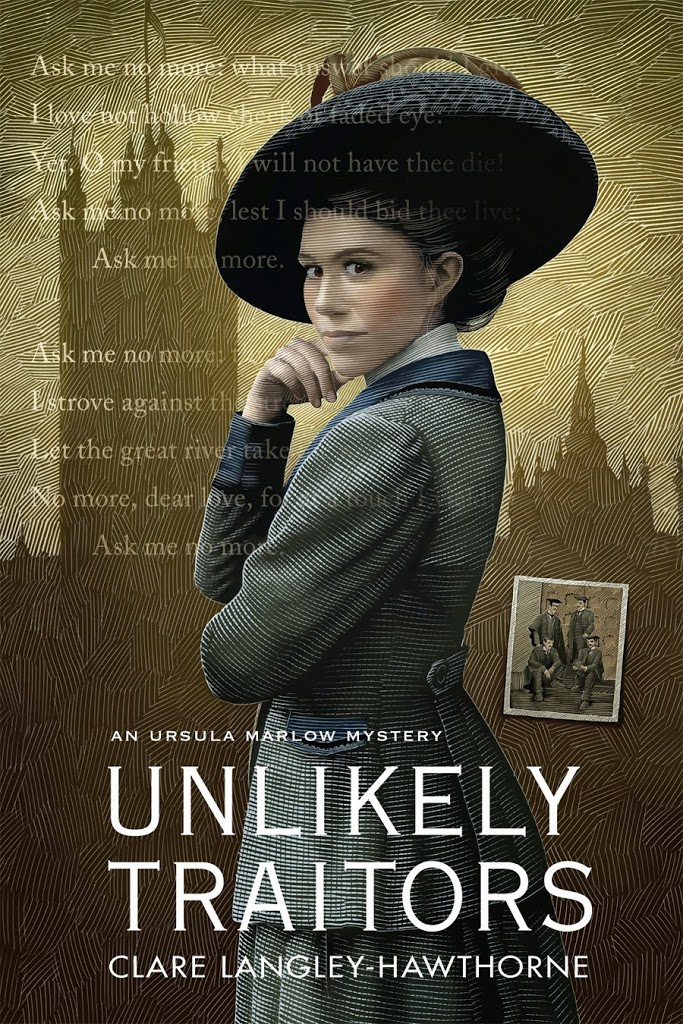
Release of Unlikely Traitors

by Clare Langley-Hawthorne

It’s an exciting week for me with the release of Unlikely Traitors, the third in my Edwardian mystery series featuring Ursula Marlow.   It’s been a long time coming and I’m thankful my readers no longer have to wait to find out what happened after the unexpected ending to The Serpent and The Scorpion (but don’t worry I’m not going to give it away – no spoilers here!) 

The inspiration for Unlikely Traitors was a classic ‘what if’ scenario that came out of my research on Irish history. Ever since I was a teenager, I’ve been obsessed with the history of ‘the troubles’ in Ireland (I certainly disconcerted the librarian at our local library by asking for a copy of Bobby Sands’ poetry when I was ten years old…)

While researching the issue of Home Rule for Ireland (which was, not surprisingly, an ongoing controversy in Edwardian England) I found references to Sir Roger Casement and was immediately intrigued. Casement was an Irish born diplomat who was knighted by King George V in 1911 and hanged for treason in 1916. 

Prior to the war, Casement was most famous for having exposed illegal slavery in South America and the Congo but when he returned to England (and despite his Protestant roots) he became a fervent supporter of Irish Independence. The outbreak of the First World War only cemented that fervour and, after traveling to Germany to secure aid for an armed Irish uprising against Britain, Casement was arrested and subsequently executed for treason.

Immediately I wondered – what was therefore happening in Ireland before the outbreak of the First World War? What if people had been attempting to get armaments and aid from Germany in support of an Irish Republic before war broke out? Turns out my “what if?” scenario wasn’t too far from the truth.

By 1912, Ulster was a powder-keg. Divided between the protestant pro-Ulster forces and the Irish Republicans, both sides were seeking to arm themselves to defend their opposing political positions. Within the pro-Ulster movement there already was a secret committee established to buy arms from abroad to resist any moves toward home rule or Irish independence. On the Irish Republican side, the Edwardian era provided fertile ground for resistance, rebellion and frustration over stalled Home Rule efforts. By the time I had finished my research, I knew that my third Ursula Marlow book would deal directly with tensions over Home Rule and the murky past of some of Ursula’s closest friends (particularly when it came to support for Irish Independence). I also knew that in the third book, the stakes for betrayal had to be higher than they’d ever been before. 

So an exciting (and, I confess nerve-wracking) time for me as Unlikely Traitors is released into the world (first as an ebook then in print on August 12th). For me it’s the culmination of a “what if?…” scenario.

I wonder, how many “what if?” questions have led you, TKZers, to a new book or work in progress? 

How to Keep the Long Tail Wagging


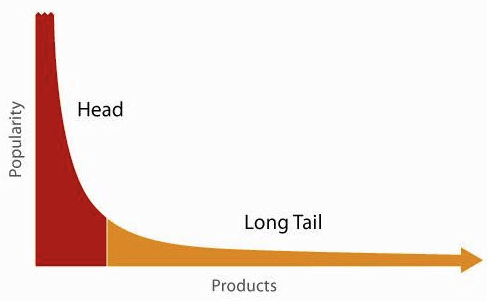
There’s been a lot of blogspace this week dedicated to the “long tail.” If you’re unfamiliar with the concept, see my post here.

The long tail is simply a way of describing a line of product that remains available for consumers. For books, it is the backlist. It’s become a relevant topic because now, in the digital world, books are “shelved” forever.

Recently there’s been some commentary on how just having a long tail online is not any help with discovery. That much is true. You still have to provide a way for readers to find your offerings.

This is the big challenge for traditional publishing right now. It the “old days” (pre-2007), big pub got books into bookstores and bought prime real estate for the titles it wanted to push. If a name was big enough—like Stephen King—a reader could also find a lot of his backlist sitting on a shelf.

Unfortunately, this was not the case for the midlist writer. Usually their frontlist title went to a shelf, spine out, and if the book didn’t catch on the bookstores would be less willing to buy the next. The publishers, who are after all in business, would usually not “throw good money after bad,” and thus a writer’s second book got only minimal treatment. Then the author disappeared from the shelves. Career over or consignment to the backwaters of small publishing. 

Enter the Kindle and digital self-publishing. In those early years (what I call the Konrathian period), it was common to hear the naysayers opine that this was a blip, that only a very few authors would make any kind of money at this, and that it would unleash a “tsunami of crap” that consumers would be unable to wade through.

Well, we now know that early opinion is the bunk. We moved quickly to the Entrepreneurial period (see above link). Now every week it seems we hear about another self-published writer making really good money at this game.

It’s even possible that a debut self-pubber will smash through in a big way. As Hugh Howey recently stated:

[D]espite what some experts would have you believe, self-published authors are still breaking out with their first works. AJ Riddle and Brenna Aubrey are two examples, and the current bestseller lists on Amazon are loaded with new self-published authors you’ve never heard of. Andy Weir’s THE MARTIAN sold a ton of copies and was picked up by Random House and 20th Century Fox. This was a debut novel, and Andy hasn’t published anything since. He succeeded through self-publishing faster than he would have landed an agent if he went the traditional route.

But most of the time real bank is being made by productive writers who are developing that long tail. Which gives rise to a few thoughts for my fellow scribes: 

1. Make sure the tail is worth wagging

Quality makes a difference. I’m not talking about some literary standard kept in a secret vault in an underground bunker below the offices of the New York Review of Books. I’m talking about making whatever you choose to put your keyboard to the best it can be. Don’t formulate this opinion on your own. Please refer to a post wherein I explain how to know you have a quality product. See also Jodie’s list of beta reader questions


2. Pay for a trumpet blast

There are several e-book deal alert services out there worth your investment. The reigning king is BookBub. A listing there is tough to land, but if you do it’s the best advertising money can buy. Check out their submission tipsand keep trying. Other good services are Kindle Nation Daily, BookGorilla, eBooksoda, Ereader News Today, and Pixel of Ink.

Keep trumpeting your backlist on a rotating basis with these services. Don’t worry if you don’t make back every dollar of your investment. A percentage of these new readers will be of value down the line, as repeat customers. 


3. Consider perma-free

If you have written a series of books, one strategy several recommend is making that first book free. That way there’s no cost barrier at all for readers to get started on the series. It’s a virtual guarantee that a percentage of the readers will go on to buy one or more of the related titles.

That’s happened with my historical series. Book #1, City of Angels, is free on Amazon. When I made the change last month, several blogs that announce freebies got wind of it––without any effort on my part. I saw a huge spike in downloads and the book reached #26 in the free Kindle store. There has indeed been a nice uptick for the other books in the long tail. My sales chart for all the other titles looks like the heart monitor of a patient going from stable to good condition.

Perma-free is a strategy that, so far, Amazon does not discourage. To qualify your book must be offered for free on Kobo, iTunes or Barnes & Noble. You can accomplish this via Smashwords, but I simply did it via Kobo, which allows you to set “free” as a price. Then you go to your book’s page on Amazon and hit the “tell us about a lower price” link and follow the instructions.


4. Put your marketing on auto-pilot

The first six months of this year have been, far and away, the best for my self-publishing stream. I attribute much of that to setting up a marketing calendar at the beginning of the year and simply following that plan each month. I spread out my paid placements, KDP Select offerings, social media and e-mail notifications so I know what to do automatically. 


5. Keep adding to the tail

Finally, and most important of all, keep adding content to the long tail. People can’t buy what isn’t there.

Do all this, and soon you’ll be able to say to your less-productive colleagues what the fox said to Otis: