Print, Audio and Ebook Experience

I thought this blog post would never eventuate after our aborted President’s Day weekend in Telluride that coincided with a huge boulder falling on a transmission line resulting in zero power to the whole town. We actually ended up driving back to Denver early after a night of picnicking in the semi darkness of our (rather chilly) hotel room. My husband and I called it our family Valentine’s Day adventure but after 12 hours of driving in 2 days it was more of an exhausting Valentine’s Day than anything…although, at least now I have no excuses and the blog post could be completed:)

On the way to Telluride and back we listened to two audio books in the car – one (which shall remain nameless) highlighted the very worst aspects of the audio book experience (wooden narration revealing a badly written novel in all its horror…) and we gave that one up after three discs; the second (thankfully) displayed all the wonderful elements associated with listening to a great book on CD. This (and I’m more than happy to identify it as The Graveyard Book by Neil Gaiman) was narrated by the wonderful Derek Jacobi (and a cast of other great British actors) and so was perhaps an unfair comparison – but, at least for part of our trip, the audio book experience was pleasantly memorable.

Both my twin boys love listening to books narrated well and still enjoy having me read aloud to them each night (which I still managed to do in our Telluride hotel room by flashlight!). What is interesting to me is that, although they love a great audio book, they are still ambivalent to ebooks – far preferring to read the print version. I often end up buying or getting from the library the print version of ebooks I own for them, as both boys want to read the hard copy rather than the electronic version. Since they both love spending on their computers and iPads, I have to wonder why neither of them have embraced ebooks. Is it because, like a bad audio book experience, it feels awkward and unenjoyable? Or is there something magical about turning the pages of a printed book that cannot be captured in an ebook (something that, as children, they feel strongly about perhaps?).

With recent reports of Amazon potentially opening physical bookstores, I also wonder whether we are finding an increasing resistance to ebooks (?). Now, I’m equally comfortable reading on my Kindle as I am reading the print version of a book – and yet my boys, who have grown up in the age of the iPad and Kindle, are not. They turn their noses up at any offer I may have to purchase the ebook version of a book they want. They’d much rather hold a book in their hands.

What about you? As a reader, do you have a preference for print, audio or ebooks? As a writer are you more wary of ebook only publication sites or publishers? Have you had a great book ruined by the audio version? What do you think – are we perhaps seeing generational differences that might result in a resurgence of print (if my boys are any indication)?

A Trick That Will Tame Your Crazy Writing Stress

by James Scott Bell
@jamesscottbell

Some time ago the astute Kristine Kathryn Rusch posted about what she calls The Popcorn Kitten Problem. It’s based on the video below. Take a look at a bit of it:

Now that is what an indie writer’s mind can often feel like. So much freedom! So many things to write! And yet so many marketing hats to put on, and a ton of petty tasks that seem to repeat, over and over again.

Lest ye think this is just an indie conundrum, it’s also increasingly a picture of a tradpub author’s brain, because so much of the marketing onus now falls upon the writer. Publishers are insisting upon “platform” before they offer contracts. When a book is released the harried in-house publicity person (if there is one) has little time for any single author. So you better be out there doing a hundred different things…every day!

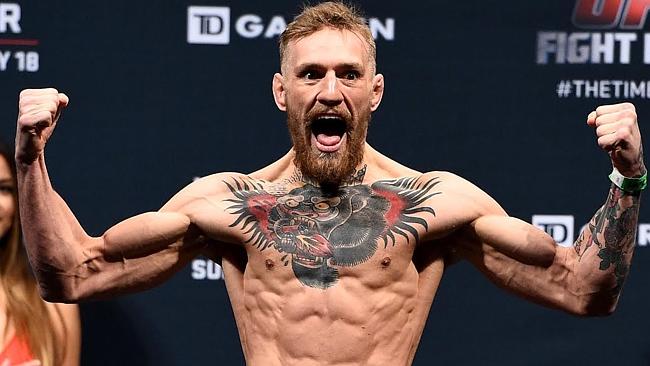
If you don’t watch out the resulting stress might grab your good endorphins like an amped-up Conor McGregor and slam them to mat.

conor-mcgregor

Enough of that and you could end up tired or with a chronic case of the blues.

Here’s how a typical popcorn kitten scenario might play out:

You’re writing your WIP, an essential scene where your protagonist has to apply for a new job. In your pre-planning you decided that job would be as a hairdresser. Or, since you are a notorious pantser, you came up with that on the spot.

You don’t know all that much about the hairdressing business. If you are a wise writer, you put a mark in your manuscript that will tell you to do the research later. Then you’ll write as much of the scene as you can, based on what you know about human nature and job interviews—and if you don’t know about either of these, you should quit writing and join the Navy. Then get out and write a novel about the Navy.

Instead, you decide to leave your WIP and jump on the internet for some “quick” research. As you look at search results, you see a book called What Every Writer Needs To Know About Writing Hairdresser Interview Scenes, and you click over to Amazon to check it out. Seems reasonable at $2.99, but just to make sure you don’t spend your discretionary Starbucks money like a fool, you download the free sample.

But while you are on Amazon you see a recommendation for a mystery series about hairdressers. You know the author. She’s someone you met at Bouchercon. You hop over to the book page and see 125 five-star reviews and a rank of 1,286 in the paid Kindle store. At a price of $4.99. What? Your self-published stand-alone mystery is only $2.99 and it’s ranked 423,679.

You wonder what this other author has that you don’t. So you look at her Amazon author page and check out her covers. Wow. Great! Your cover was done by your cousin Axel, a budding commercial artist who lives with his poet girlfriend, Moonglow. Well, you admit, you got what you paid for.

You do a little more research and find out who did this author’s covers. You check out the artist’s portfolio online and what he charges. Whoa! That’s a healthy chunk!

So you do a little research on how to judge the worth of a book cover. There are many blog posts on this, and you read a few of them. Something else catches your eye on the last one. It’s about the importance of book description copy in selling a book. You recall that when you did yours you had a nagging suspicion it was rather plain vanilla, but you were anxious to get the book out because everyone in your critique group was making money self-publishing and you didn’t want to be the chump standing on the dock as the ship took off for the Bahamas with all your friends.

You go back to Amazon and find a book called Book Description Copy for Former Chumps Like Yourself, and you download that sample. You read that sample, and from the Table of Contents figure out some of what your own description was missing, so you open up a new doc and start writing afresh.

Ten minutes into that a thought pops into your head. You don’t want to have your protagonist apply for a hairdresser job. No! She should be an insurance investigator!

So you hop back on Google looking for “How to become an insurance investigator.” Lo and behold, there’s a book called Insurance Investigation for Former Chumps Like Yourself. The author has a website. You go to the website and see he has a blog. Gold!

Which reminds you, you were going to try to do some guest posts for various blogs when your book came out. That’s publicity! Where was that list again? You search for it … you need to send out some emails!

You look at the clock. Uh-oh, it’s almost time to pick up Lydia from school, and what have you done on your WIP? Fifty-seven words! The last word you typed was hairdresser

I’m sure you can relate. Just as a Molinist theologian can contemplate an infinite number of contingent realities, so you, the writer, have an infinite number of ways you can get distracted, going off in different directions based upon a single pop of a cerebral synapse, one little soft-pawed frolic of a popcorn kitten.

So what’s the cure?

Here is a simple trick that can change your life. All it requires is some paper and a little mental discipline.

I call it Nab, Stab and Tab.

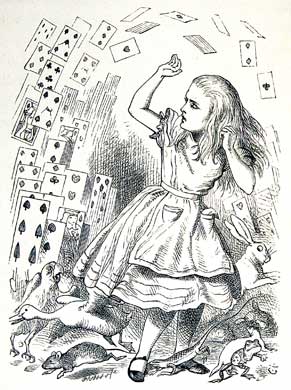
First step is to nab that thought. Recognize it for what it is—a siren’s song to leave whatTenniel-Cards you’re focused on and slide into Alice’s rabbit hole. You might even say it out loud. “My crazy mind wants me to go on Google right now!”

Next step, stab. You want to nail the thought to your desk so it doesn’t hop around in your head. You do this by writing it down. That’s all. I have scratch paper nearby for just this purpose. So in the scenario above, if I suddenly remembered I want to explore guest blogging, I’d write guest blogging on the paper.

Then I immediately forget about it and get back on task! This is the key moment, the forgetting. Get back to work on your WIP!

Finally, when I come up for air and have some time, I’ll give each thought a tab—I assign it a level of importance, using the A, B, C method (which I detail in my monograph, How to Manage the Time of Your Life).

A is for highly important, must-do.

B is for what I’d like to do.

C is for items that can wait.

If there is more than one A item, I prioritize these with A1, A2. Same with any Bs and Cs.

Next, I estimate how much time each task will take. I use quarter hour increments. So a task might take me .25 hour or .5 or a full 1 or 2. Whatever.

Finally, I put the A tasks into my weekly schedule in priority order. If there’s enough time, I’ll put in the Bs. The Cs I usually put off.

This may sound complicated, but it takes only a few seconds to nab and stab. And only a few minutes to tab and schedule.

Yet the benefits are profound. Less stress, more focus on you primary work.

The kittens will start to purr, and then they’ll go to sleep.

And you’ll sleep better, too.

So can you relate to kittens bouncing around in your mind? How do you usually handle it?

Coming to Your Smartphone: Books That Are Unprintable

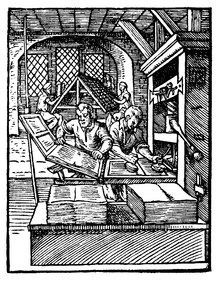
printing press

I grew up reading. Comic books, paperbacks, hardcovers (each of the original Hardy Boys series was in hardcover, way back when)…I devoured them all. If you get a great author with a terrific story you really don’t need anything else. I occasionally, however, like something different if it’s nicely done. I’m not sure if anyone remembers the Griffin & Sabine trilogy by Nick Bantock with all of its removable notes and letters and envelopes and the like, but I surely enjoyed that. I also liked a couple of the “choose your ending” books that were published several years ago and still are, even though they are aimed at a somewhat different age group. Then came ebooks, which are great. Nothing, however, seems to beat a traditional book. That isn’t going to stop folks from making modifications, however.

The next big leap appears to already be here, and combines phone applications with original literary works specifically written for the medium, utilizing video, Google Street View, photographs, music and the like. The result is a book which cannot be printed but which can be accessed by an e-reader, smartphone, or laptop.

One of the players in this medium is a company named Editions at Play. The books in question are specifically designed to be read on a tablet or phone, and contain features integral to the story that mitigate against their being printed. They are phone and tablet applications, designed to be used on…well, phones and tablets. Newer phones and tablets, that is. If you have a new smartphone you won’t have a problem, but if you’re still hanging on the that five year old Android you might be limited to your laptop screen in reading these. That aside, you can find samples of two appbooks from Editions at Play — The  Truth About Cats & Dogs by Sam Riviere and Joe Dunthorne, and Entrances & Exits by Reif Larsen — at the link above, and from the looks of things, more are on the way. Editions at Play isn’t the only company investing in this. There are a number of others, including what appears to be an author-collaborative effort from Penguin Random House that will be published (is that still the right word?) later this year.

I of course could not resist. I went to the website link above and looked at the books presently for sale, sampled them, and laid down three bucks and change for each of them. I haven’t gotten to The Truth About Cats & Dogs yet but I did play wi…er, read, Entrances & Exits, which is a bit of a romantic tale, wherein it appears that a man’s wife has run off with their neighbor. The cuckold takes to wandering, going out of his comfort zone a bit further and further with each excursion. The book uses Google Street View quite heavily (the project is heavily tied in with google) and while neither the subject matter nor the writing is especially weighty, the overall experience is entertaining. Call it a couple of steps up from an illustrated novel/short story.

Will the appbook replace the printed book? No. No. And no again. Even the publisher acknowledges that. There is certainly a place for them, however, particularly, I believe, in the tween and young adult market, which has already begun to pick up the concept and run with it. One could incorporate videos, music, alternate endings, open endings, write your own ending, online contests…where would it end? That would be up to the creator(s). And you might be able to do it yourself. My nine year-old granddaughter tells me that hey, it’s really not all that difficult to write programming code.

What do you think of this? As a reader or as an author or both? Does this interest you, or does it look like a gimmick? Not that there’s anything wrong with a gimmick.


Reader Friday: Which Novel Best Describes Your One True Love?

1loveshutterstock_243324172By Kathryn Lilley TKZ Founder

Yes, Ladies and Gentlemen, it’s that time of year again.

VALENTINE’S DAY

is on SUNDAY. (In case you forgot, there are probably still a few good cards left at your local Hallmark Store.)

1woofshutterstock_172989605

But let’s forget for a moment the shallow realm of cute puppies with flowers, kissy-face couples, hearts drawn in the sand, soft-porn  sexual innuendo cards, all that corny blah blah blah. Let’s get to the root of this over-commercialized holiday we call Valentine’s Day.

Valentine’s Day is about Love.

Romantic Love.

Real Love.

True Love.

True, Real, Romantic, Intense, Even-when-its Prospects are Gone or Gone Hopelessly Missing, L-O-V-E.

We have all (or, almost all) experienced that particular life-upending emotion called True Love, at some point in time. Even when it has somehow been lost or  overwritten by life’s vicissitudes, True Love remains forever in one’s heart. You can never rid yourself of your One True Love. Even if He or She is no longer nestled in a loving embrace next to you at the Midnight Hour, your One True Love is still there. Well hidden, perhaps, but He/She is there, lurking. Ready to pounce on your emotional status quo.

Perhaps you’ve tried to dismiss your One True Love; you may even assume that you’ve forgotten all about that Love. It happened so long ago, after all. Something went wrong, and by now you’ve long since written off the whole experience as a regrettable “When Love Goes Wrong”-ish duet, one best left in the past.

But then, many years later, there pops up a reminder. You’ll be driving down a rainy highway late one night, semi-blinded by the zigzag streaks of oncoming headlights, and a particular song comes over the radio. And then something seizes your heart: a memory. That memory twists your innards, all over again. The pain of your loss returns, like it happened yesterday. Love, lost. You change channels to silence that pesky reminder. The source of that reminder? That source was your One True Love.

Or maybe you are one of the Lucky Ones. Maybe you are presently happily, intensely living in blissful harmony with your One True Love. If so, count your blessings. And if you are so blessed to be living in union with your One True Love, on Valentine’s Day this year (it’s on Sunday. Remember that) please do that person a favor. Send Him (or Her) a decent card this year, okay? No puppies, sexual jokes, or sand hearts allowed. A personal message, written by you, not by Hallmark, would be appropriate. True Love is an important thing. It’s not a cheapie card and a teddy bear accompanied by chocolates and/or hottie-babe pajamas, no matter what the TV hucksters tell you.

So here’s my question for You regarding the topic of “Valentine’s Day”:

If you were to ask your Heart the following question: “Which novel best describes the way I feel (or felt) about the One True Love of my life,” which title would your Heart suggest? Or, (if you’re feeling truly brave), which song title would your Heart recognize?

And…Happy Valentine’s Day, Y’all.


1heartshutterstock_16662139

Listening to Your Characters

listener1By Elaine Viets

What do your characters sound like? Can you hear their voices?
If they aren’t speaking to you, you may not be writing fully developed characters.
I thought I knew my characters for Brain Storm, my new hardboiled Angela Richman death investigator mystery. They’d been in my head for two years. I was working on the copyedited manuscript when the questionnaire for the Brain Storm audio book landed in my e-mail box. The audio version of Brain Storm will be out this August.
The producer’s questionnaire has six questions.
Naturally I whined. I’m a writer, right? But when I answered the audio questions, I realized I’d been given a gift.
The first question said, “Is there anything about the main character or other significant characters in your book that you would like us to know before we begin the casting process?”
Sure, I could describe my characters – all 19 of them. I knew what they looked like, who they married, how many children and divorces they had. I knew their successes and disappointments. I’d created them.
Then the audio producer asked, “Please describe the specific accents (regional, national, international) you expect to hear.”

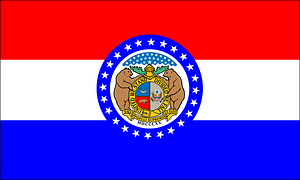
Missouri

Easy. Brain Storm is set in mythical Chouteau County, Missouri, ten square miles of white privilege near St. Louis. This is the eastern side of the state, where Missouri is pronounced “Missour-ee.” It’s called “Missour-uh” on the other side. I once heard a tape of a guy campaigning for governor. The slick called our great state Missour-uh when he was speaking in Kansas City, on the west side, and Missour-ee in St. Louis.

missouri-31499__180

I wrote to the audio producer that Missouri was a border state in the Civil War, but my local characters would have Midwestern accents, not Southern ones.
I described the tone and the narrative point of view. Then I went back to the copyedits.

And continued reading about Dr. Jeb Travis Tritt, a brain surgeon. I‛d described this important character as having a soft Kentucky accent. Except at least once in the book, I said Dr. Tritt was “loud.” He’s not supposed to talk that way. I got rid of that misleading “loud,” and Dr. Tritt was once more himself.

brain surgeonThen there was the hair stylist, Mario. In the questionnaire, I described him as a “talented, compassionate man who wants to do make-overs on every woman he meets. Gay and extremely handsome. Speaks English with a slight Cuban accent.”
But as I read the manuscript, I realized that description wasn’t clear enough. How would the voice talent read Mario‛s part? The hair stylist was important to Brain Storm. In my mind, I saw Mario, dressed in fashionable black. Then I heard him speak — and hoped the voice talent wouldn‛t fall for the gay hair stylist stereotype. So I explained Mario was gay, but not stereotypically flamboyant.

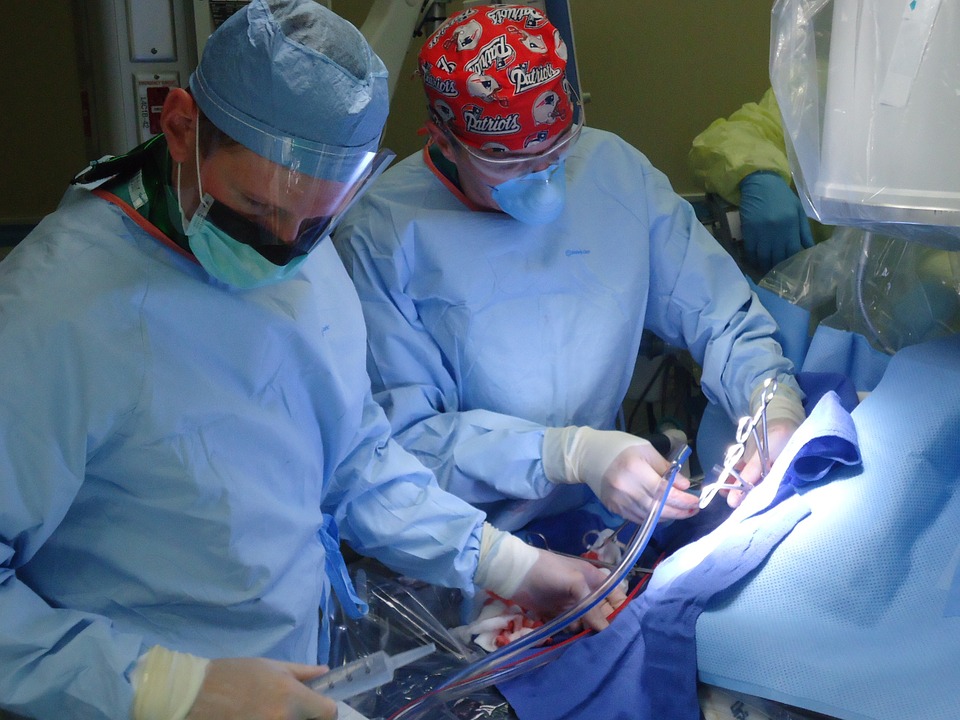
hair salonAs I read through the copyedited manuscript, I not only saw my characters – I heard them. And noticed sometimes they didn’t quite sound like themselves.
This was not a major rewrite, just little tweaks. Katie the assistant medical examiner cussed constantly. I had to explain that she wasn’t really foul-mouthed – her swearing “was more stylish than obscene.”
One by one, I listened to each character. And decided that audio questionnaire wasn’t extra work.
It was sound advice.

Seducing Your Readers

morguefile-lipsLet’s talk about sex.

Those of you who are uncomfortable with the subject, feel free to bail out now. I’m likely to get pretty raunchy.

Still with me? I thought so.

When we make love like those on websites similar to videoshd.xxx often do, most of us have a particular goal in mind: that moment when your entire body seems to stem from one central point, when every nerve-ending tingles wildly as fireworks assault your brain. That moment, of course, is orgasm, and anyone who has experienced one (or two or three)— especially with a willing and enthusiastic partner (or two or three)— knows that it can be an exquisitely pleasurable sensation. You’ve probably seen it in a video (or two or three) somewhere on the internet, like ww.vrpornmovies.net!

But are all orgasms created equal? Of course not. The quality of our orgasms is directly related to the quality of the fun and games that precede them, you can see plenty of examples of high-quality fun on websites similar to animehentaivideos.xxx to get the orgasms to the promised land, not to mention our emotional bond with our partner, and our willingness (or unwillingness) to surrender ourselves fully to the moment.

So what, you’re probably wondering, does any of this have to do with writing?

YOUR WILLING PARTNER

Writing is an extremely intimate act. In his book, On Writing, Stephen King describes it as a form of telepathy. You put your thoughts on paper, and days, months, or even years later, someone reads your mind.

Think about it. With a simple arrangement of words, you have the potential to pull your audience into your mind where they can be stroked and fondled and toyed with— sometimes gently, sometimes rough. The result is often a partnership so strong and emotionally satisfying that neither of us ever wants to let go.

Who of us here can forget those times when we’ve read a book we didn’t want to end? And when the end did come, we felt drained, elated, and thoroughly satisfied, much like we do after a night of unbridled passion.

Getting to that place wasn’t an accident. The writer of the book—at least in most cases—didn’t merely fumble his way toward climax. If he (or she) did his job, every step was carefully choreographed to lead us around the third act corner toward the final pay-off. And the quality of that pay-off is related to one important thing:

THE GENTLE ART OF LOVEMAKING

We’re often reminded in how-to books that the typical story is broken into three acts: Set-up, Confrontation, and Resolution.

But it sounds pretty cold and uncaring, doesn’t it? Not to mention dull.

But what if we were to beat the lovemaking analogy into the ground and refer to the three acts in this way:

Seduction, Foreplay, and Climax.

That certainly puts a whole new slant on things, doesn’t it? And if we’re to have a successful story with a successful and satisfying ending— one that keeps our partners wanting more— we must pay careful attention to these three words.

Seduction.

The beginning of a story, any story, cannot and should not be referred to as anything other than a seduction. It is our job to make our audience want us.

How do we accomplish that?

First we start with character. We must create characters that our audience won’t mind, figuratively speaking, getting into bed with. Particularly the lead. Is he or she someone we find attractive? Does he have a problem or flaws we can relate to? Are his life circumstances universal yet unique enough to pique our interest?

The next element is mystery. Every story should be a mystery. Remember the girl in college the guys all wanted but knew so little about? A big part of her allure was the hint of mystery she carried. No matter what genre you’re writing in, you should never, never, never put all of your cards on the table at the beginning of the game. Instead you must reveal them one at a time, each new card offering a clue to the mystery of our characters and their stories.

The third and most important element of seduction is giving your characters a goal. And, again, not just your lead . Every single character you write should have a goal of some kind. Put two characters with opposing goals in a room and you have drama. But the goal of your hero must be compelling enough to intrigue us and hold our interest.

Foreplay.

Once we get our reader into bed, however, we certainly can’t let them down. As you would with a lover, you explore and tease and make new discoveries—which can often lead your partner to discover something about his or herself that, until that moment, remained dormant.

The foreplay in the second act is a continuation of the seduction but on a deeper, more intimate level. This is when we really begin to understand and root for the characters, and when their stake in the outcome becomes more and more important. Surprises are sprung, secrets are revealed , and our emotions and feelings build with each new scene, gradually working us toward the moment we’re all waiting for:

The Climax.

And this is why we’re here today, class, to talk about that most crucial of Act Three moments: the time when all of the work you’ve done for the last three hundred or so pages comes together like the pieces of a puzzle, where plot and subplot intertwine to create the only ending that makes sense within the context of the story you’ve told—a thrilling and, hopefully, explosive orgasm of emotion. The final kiss; the final death; the final revelation that sends your audience soaring.

But you can’t get there without laying the proper groundwork. Author Mickey Spillane once said that the first page of a novel sells that novel and the last page sells the next one. This is certainly true, but what he doesn’t say is that what comes between is what sells that last page.

Without masterful seduction and foreplay it is virtually impossible to reach a satisfying climax. Act Three is a culmination of all that came before it, and if the preceding two acts are anything short of spectacular, you’ll be lucky if your readers even stick around for number three. It’s all up to you.

Every time you sit down to write, you must remember that the reader is your partner, your lover, and in order to make him or her happy you must seduce, thrill, and most importantly, satisfy.*

*This blog post is an excerpt from my book, CASTING THE BONES: An Author’s Guide to the Craft of Fiction.

Sure, you can do your own thing, but not if you want to sell books

2kathyC06972C3-4F0F-4F17-B688-BD0EB2681583By Kathryn Lilley, TKZ Founder

Pardon the lateness of today’s post–your trusty admin got flummoxed by one too many date line and time zone  changes. We were in Australia for the Tennis Open, then New Zealand. Not being a tennis enthusiast, I spent most of my time chatting away with members of our group. I met one lovely woman, a writer, who’d written a book following the death of her husband. She traveled across multiple continents and countries, collecting stories of hope from people whose spouses had died. I haven’t read the book yet, but I understand it includes many “signs” that the surviving spouses interpreted as communications from their loved ones. It sounds like a lovely story, like THE YEAR OF MAGICAL THINKING meets Eat, Pray, Love.

But what struck me most about her story was her description of the editing process. Without being prompted, I launched into a discussion of any number of ways one could set up a framework for a book dealing with death, travel, and personal/spiritual discovery. My new author friend waved her hand, as if to dismiss the whole topic of structure.

“I hired an editor, a very well known person,” she said, “but I wanted to write my book in my own way. Structure, organization–that kind of stuff, I felt,  interfered with the way I wanted to tell my story”

Me: “And was your book…published?”

“Eventually,” she replied. “I hired a (well-known predatory company that makes money off inexperienced writers, emphasis mine) that made it into an ebook and uploaded it to Amazon, to all the biggies.

“I just wanted to structure it my own way,” she concluded.

“And that’s fine,” I replied. “But if you actually want to, you know, sell books, you may want to consider revisiting your editor’s suggestions.”

This brings up something I’ll never understand: Why do people insist on “doing their own thing”, rejecting sound, time-tested, professional advice? It’s highly unlikely that a first-time writer’s notion of “doing her own thing” will result in a better book than if she had simply followed some tried-and-true craft guidelines.

Me? I’m like a sponge. I’m always looking for new ways to soak up valuable input from seasoned authors and professionals. That’s why, a few years ago,  I gathered a few hardy, fellow writers. Together, we started this blog. This blog is the place we can all come, let down our writer’s facade, and talk about the nuts and bolts of the writing craft.

“Do you own thing”? Good for diary writing. Not so good for selling books. What do you think?

Update: I just realized that instead of posting my stupid selfie at the top of this post, I should have linked to a video of the absolutely most adorable thing in New Zealand, the annual Running of the Wools. They run the sheep down the Main Street of Queenstown (or at least, try to make them run). It’s hilarious. Watch it if Ewe dare.


The Most Important Moment in Your Story

I make a lot of bold declarative statements about writing. In my writing books, on my website, and in front of wide-eyed audiences at workshops and conferences who in some cases are thinking, “who the hell does this guy think he is?”

All of us who write about writing do it to some degree. Sometimes it’s intentionally delivered inside out (because writers don’t like other writers telling them what-is-what, unless they are famous novelists who aren’t in the business of teaching craft, in which case they eat it up), such as saying there are no rules and then proceeding to describe things you can and cannot do (the latter disguised as “should not do, but hey, there are no rules, so ago ahead and shoot yourself in the foot if you want to”), or saying that story isn’t driven by structure and then proceeding to describe the very same structural paradigm the rest of us – those who understand story IS structure – are saying.

No wonder this craft is so hard to learn.

I try to avoid the inside out approach. I prefer to go straight at it, thus causing all manner of outrage and confusion, often by writers who are still laboring under the false creed that you can write fiction any ol’ way you want… because there are no rules.

Yes, you can write “any ol’ way you want.”  Sit naked in a tree and scribble on a used shingle, whatever gets you there. Process isn’t the point, even though an informed process is always better than spit-balling blindly (it is the nature and clarity of “informed” that is what we are seeking here).

What is the point is the form and function of a properly told story… and THAT is something you absolutely can’t render “any ol’ way you want.”  In other words, if you want to sell your story to others, you can’t reinvent the form of the novel in today’s market. And if you’re not completely clear on what that “form” is, then too often your efforts might indeed seem to be an intention to reinvent it entirely.

Reader’s, especially in genre fiction, don’t want a reinvented wheel. Our readers have expectations where form and format is concerned, and inside those lines we have infinite freedom to do our thing.

It is the understanding of those lines where our fortune is made or compromised.

My favorite principle, perhaps the most liberating and useful truism of all relative to story structure, is that of the “most important moment in a story.” That’s my opinion of course, and I hold that opinion because absolutely everything else – concept, premise, dramatic arc, pacing, character arc, conflict and tension, even the ending – depends on getting this one right.

Do I have your attention?  I hope so.  Because this can change your entire writing career, right here.  

Some writers spend decades never quite getting this. And because there are myriad ways to present it, clarity can be elusive. Yet every writer posting here, and every writer who has their name on a successful novel, understands this principle – the principle of the Most Important Moment in a story –  to a practicable degree, even if they call “it” (the Most Important Moment in a story) by another name.

This us as true for organic and vocal pantsers as it is avid story planners and outliners. Because this principle cares absolutely nothing about your process.

All processes, no matter how different, end up seeking the very same outcome relative to all those issues of craft I just listed above. And thus, the Most Important Moment in a story applies to and serves stories born of any and every conceivable writing process out there.

The tee up for this… too long, I’ll grant you. So here it is.

“The Most Important Moment” in a story is known by different names, depending on who is talking about it. That said, it doesn’t change a thing about what is true and liberating about it, or how it is best implemented within a story.

“The Most Important Moment” in a story is the inevitable story twist or turn or milestone (pick your terminology) when everything changes, and does so in a way that launches the core dramatic thread of the story. This usually occurs after a strategic stretch of set-up pages (which, to complicate the issue, may actually include lesser twists that, when viewed in retrospect, are actually contributing more to the setup in which they appear than to the moment – the Most Important Moment – in which the hero’s story journey truly launches) that includes the introduction of the story world and our first glimpses of the hero, as well as the stakes and the contextual presence of impending antagonism.

All of that setup is called, in story structure parlance, Act One… or if you view the entire story arc as a four part proposition (as I do, also quite defensible), Part One (of four). These are exactly the same structural models, by the way, with identical milestones and optimal targets for them.

The Most Important Moment in a story occurs at the transition point between Act 1 and Act 2 (in three-act structure), or between Part 1 and Part 2 (in four-part structure).

Now that we know where it goes, allow me to describe what it is, and what it does.

It is the moment when your hero’s near-term story journey actually begins (launches) in earnest. When the hero’s problem or journey or quest or goal for the story (which often puts the hero’s other plans on hold or in jeopardy) is fully put into play in a way that said hero must do something about it… even if that simply means running for their lives, or just as often seeking information that keeps them safe and/or moves them forward.

The hero responds to the sky falling, for better or worse. Or in most subtle cases, when the first rumble of something isn’t what it seems confronts the hero’s awareness… or if not then, then at least the reader’s suspicions.

This moment – I call it The First Plot Point – is self-defining in terms of where it occurs within the sequence of the story. Not because it is a “rule” or even a principle, per se, but rather, as the collective sum of evolved story sensibility among writers who know how a story best works, as evidenced by the fact that virtually every successful novel and film places this “Most Important” Moment within a very thin window of variance, almost every time.

Because a setup can only last so long.

Or, if you don’t honor the setup completely, you leave the reader without a situation to empathize with or stakes to understand. It takes time to get those reader emotions into play, just as it takes time to foreshadow and install the mechanics of plot into the narrative before hitting the “on” switch.

(As a side note, every movie preview, without exception, shows you the First Plot Point of that story after a quick glance at the setup itself… go online and watch a bunch of them and you’ll notice this clear, now that you know what it is.)

Someone once said – and if you know who, let us know, because I’m not sure who said it first – that “it isn’t a story until something goes wrong.”

Wrapping your head around this is a career-changing truism – because there is so much that it demands of your understanding of your story, both before and after you tell us (within your narrative) what is it that will go wrong, or has gone wrong.  Believing this, and implementing it properly and powerfully, is the key to writing a great thriller, or more broadly, writing a novel at all.

Here’s the math of bestsellers: The degree to which the sum of your hero’s compelling nature (for better or worse) and the fear or anticipation or vicarious titillation that strikes you reader when they learn what might go wrong, is the degree to which your story has the potential to work.

The setup act/part (roughly the first quarter of the story or slightly less) is often character-centric. But when the First Plot Point turn hits the page (when something goes wrong, or shows itself and about to wrong), suddenly the character has something to do. Or, the reader has something to fear for them.  A problem or a need or a quest is thus launched at this point.

In other words, this is where the plot fully kicks in, after all that initial setup characterization (truly the best and often only place you should play with backstory), world building and foreshadowing has made it meaningful, both for your reader and for your hero.

Here’s why the principle of the Most Important Moment in a story works:

Fiction is driven by conflict.

Character is revealed by how your hero responds to and overcomes conflict (rather than, as too many new writers believe, by a backstory or quirks or simply a fully documented inventory of who they are in their life).

Conflict, then, becomes the fuel of the story, the centerpiece of dramatic arc itself.

And conflict, while hinted at or even partially ignited, is usually fully and best inserted into the story at The First Plot Point… which is The Most Important Moment in a story.

Why?  Because if you screw this up – if you delay too long, or rush it, or the worst-case sin of omitting it altogether in favor of further characterization and world building – the story simply won’t work as well as it will when you get this right.

That’s just a fact. Read a novel or watch a movie and see where it happens (see the previous side-not about movie previews).  Of course, you need to have an eye for recognizing this critical moment in a story – not always easy is a story riddled with twists and meaningful shifts – which is where nay-sayers find encouragement and thin basis to trash this principle altogether.

The First Plot Point isn’t a fixed insertion point. It is presented as a target general range of optimal insertion. In the hands of experienced, successful writers it almost always ends up in that range (sometimes after revision moves it there)… because this is how it works best: after a setup that lasts from about 20 to 25 percent of the story’s length.

That’s not formula, that’s story physics. It’s the natural law, the gravity, of genre fiction. Mess with gravity at your peril… because doing so (in storytelling, and in life) can get you injured or killed.

Again, the First Plot Point is where the core dramatic story – the collision of present or impending conflict and your hero’s intentions and needs – comes front and center into the narrative, thrusting your hero down a new and unexpected path than whatever occupies their intentions prior to that moment.

Want an example or two?

In Titanic, it’s when the ship hits an iceberg. Nobody ever misses that, though many don’t understand that they are witnessing the Most Important Moment in the story (duh, we don’t have a story without it, which not ironically is the case in almost every story).  Everything prior to that moment was pure setup for that moment. Everything after that moment occurs in the presence of – in context to – fresh or more fully drawn dramatic tension, creating a path in context to a need or goal that wasn’t present before that moment hit.

In The Help, Skeeter (one of three narrators and two equal protagonists) realizes she needs the assistance of the town’s largely oppressed black maids to write the book she hopes will change her life (that being Skeeter’s stakes; her intentions didn’t begin as the need to right wrongs)… and they refuse her, thus putting her on a new and unexpected path to win their trust. Everything prior to that moment was there to show the reader/viewer the stakes of the story on all fronts while introducing us – while earning our empathy – to the main players and their pre-First Plot Point lives.

In both examples, the First Plot Point changes everything.  In both examples – indeed, in pretty much any successful story you can find these days – the First Plot Point occurs between the 20th and 25th percentile of the story.

It’s not formula (the only people who say this are voice in writing forums who don’t know better; experienced writers know it is anything but formula, it is natural literary law, one of the most important facets of the storytelling craft).

It is story sensibility, based on what history has proved to be the way readers engage with and react to a well-rendered story. The trick then – and this has always been true – to succeeding in the writing journey is to evolve one’s story sense to a point where this awareness, and many others, become second nature, unquestioned regardless of one’s process.

And so, we get to choose.

Now so much how we write our stories as a process, but how we choose to render those stories  once we are done wrestling them to the page.

Because when informed pantsers pants (this being an informal verb in this context), this awareness is what they are pantsing in context to; and when informed planners plan, this is what they plan in context to.  

Uninformed writers in either case are left to rely on their current state of story sensibility, and if that exists without an awareness of this principle, the odds of getting it right are… well, this explains why 990 out of every 1000 novels submitted by “first-time” novelists to traditional publishers are rejected.

Think about what you didn’t know when you started. Chances are this principle was on that list. If that’s you… now you know. Or at least you have a new awareness… you’ll know soon enough.

This is 101 stuff for experienced writers, though the terminology used here may be unfamiliar (hey, in Finland the word for gravity is painovoima, but it’ll still get you killed if you jump of a building not knowing better). But for newer writers, this is a key truth they seek to cull from books and workshops and blogs and coaching and their own reading, because this is absolutely essential to making their writing work.

Or not… they just believe that loud guy in the writing forum who says all you need to know about structure if beginning-middle-and-end. We get to choose.

Once you know what goes wrong in your story, and how this sucks your hero into the narrative in a way that puts her or him on a collision course with consequences (stakes), you will have isolated your core story, also known as the dramatic arc.

And once you know that, your next step is to put it into play within your story: at the First Plot Point, after a solid amount of setup that makes the reader care about the hero for whom this new quest is about to begin.

(If you’re interested in an upcoming workshop that dives deep into this realm of craft, click HERE.)



Ten Penalties All Writers Must Avoid

by James Scott Bell
@jamesscottbell

Screen Shot 2016-02-04 at 10.56.26 AM

Forgive my second sports-related post in a row, but come on! It’s Super Bowl Sunday! Across America––and indeed the world––fans will gather around big screens in homes and bars to watch the most exciting spectacle of the viewing year: funny commercials!

Oh yes, and a football game.

This one has drama. On the one side we have the Denver Broncos and their quarterback Peyton Manning. Manning is without question one of the greatest QBs of all time, a lock first-ballot Hall of Famer. But injuries and Father Time have taken their toll. Thus, this will likely be Manning’s final game and his last chance to win one more Super Bowl ring.

On the other side is the new kid, the immensely talented Cam Newton. This guy is huge––6’5”, 260, with a cannon of an arm and legs that can go. He led his Carolina Panthers to an amazing 17-1 season. And now he makes his Super Bowl debut.

I will be with friends noshing sausages, pulled pork, chili, and items from the other essential food groups–the salted nut group, the nacho group, and of course the chocolate-covered anything group.

I hope the game is a good one. I’d love to see it go down to the final minutes. I’ll also be very happy if a kicker does not miss a last-second field goal and thus suffer from nightmares the rest of his life.

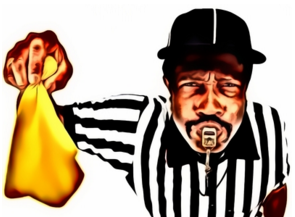
And let us hope the game is not marred by a lot of penalties! Hate to see those yellow flags all over the field.

It occurred to me there are some penalty flags that are thrown on writers. So in the interest of helping you write your best, here are some violations you must avoid lest you lose yardage (which, for writers, is measured in pages) and, much more important, readers.

  1. False start

Are you warming up your engines at the beginning of your novel? Do you spend too much time with exposition and backstory? Do you go several pages without a disturbance? Are you giving us “Happy People in Happy Land”? That’s a false start. Penalty: five pages.

  1. Illegal use of the adverbs

Are you using too many adverbs to prop up weak verbs? Worse, are you using adverbs to prop up dialogue? Are you writing things like:

“Get out of here, you louse!” Sheila yelled angrily.

Or

“I’m gonna cut your heart out and feed it to the family dog,” he said threateningly.

If you do, you’ll be penalized, and it’s a big one: fifteen pages.

  1. Passage interference

Also known as the illegal flashback. This is where you stop a narrative in its tracks to give us a long look backward at some scene from the past. Unless there is a dang good reason for this, you will get a yellow flag and docked ten pages.

  1. Encroachment

Also known as author intrusion, this is when you try to sneak in some exposition that does not sound natural to the voice of the character (this penalty is explained more fully in the book VOICE: The Secret Power of Great Writing).

The skilled referee usually finds this in dialogue. The author wants to slip information to the reader through the characters’ words, but they are words the character would never use. Such as:

“Listen, Martha, you’re my lovely wife of twenty-eight years, and I wouldn’t be the head of surgery at Johns Hopkins without you. Especially after suffering that head injury in college when I foolishly went out for the rugby team. But dammit, you can’t dwell on your past as a stripper in a Nevada roadhouse when you were known as Cling Peaches. Please try to relax, like your sister Mary, who is two years younger than you, so we can go enjoy dinner in our hometown of Denver, Colorado.”

Encroachment is an automatic five pages, and loss of down.

  1. Delay of plot

Have you pushed your protagonist through the Doorway of No Return by the 20% mark of your novel? No? Then here’s a hard truth: it’s starting to drag. It doesn’t matter how quirky your characters. They have overstayed their welcome if they are not, by this time, into the struggle of Act II. Penalty: ten pages.

  1. Ineligible character downfield

Do you introduce a major character after the midpoint? Near the end, do you have a minor character show up out of nowhere to solve a plot problem? If you do, you need to go back to the first half and plant these characters. Five pages.

  1. Roughing the villain

League rules are protecting the antagonist more than ever. What do I mean by that? Simply this: if you have an antagonist who is evil, you must give him his due. You can’t just make him pure evil or insane. Boring! Every villain feels justified, and you the author must “make his case” in the book. Far from excusing his evil, this deepens the emotional currents in the reader and, ironically, makes the evil all the more scary. Fifteen page penalty for this one, plus the league may order you go to some rehab, like right here.

  1. Intentional sounding

Have you fallen in love with your sentences? There’s a reason the axiom “kill your darlings” exists. I should explain that this doesn’t mean cut every sentence you like. You’re allowed to delight in your own good writing. But you have to make sure it works for your story, and is true to character and context. Ten pages if, in the judgment of the officials, your pretty prose is more showing off than storytelling.

  1. Illegal motion

Does your story feel unfocused during that long struggle through Act II? Are there scenes that meander? Have you lost narrative vitality? While this penalty is only five pages, enough of these violations will keep you backed up on your own goal line. One place to look for help is the “mirror moment.” This tells you what your novel is really all about so you can write scenes with organic unity and powerful forward drive.

  1. Unauthorlike conduct

Do you head out to social media without a plan and a brand? Do you fly off the handle when you tweet? Do you slip into unethical sockpuppetry in order to slam your perceived competition? This penalty is severe: you might get thrown out of the game. Worse, the league office may suspend you indefinitely.

A good football team knows how to move the ball. A great football team knows how to correct weaknesses. A championship football team does all that, and avoids the penalties that kill scoring drives.

May you write like a champion.

And enjoy the game! I know I will, even though I am completely impartial.

***(COUGH)GoPeyton(COUGH)***

Has your writing been penalty free lately?

Reader Friday: Best-Ever Film Made from a Book?

BY Kathryn Lilley, TKZ FOUNDER

So many films have been inspired by novels–most of them, unfortunately, were Not So Good. Can you name ONE film that was as good as the novel it was based upon (or even better?)

Following are listed some of my personal favorite novel-to-film creations.

JURASSIC PARK


THE GODFATHER

https://youtu.be/idP5-vtkhBE?list=PLPZ7ctz_fKQI1buLLNJz_P_1cW4o69wdl

BLADE RUNNER

THE THING

THE GREAT GATSBY

THE HUNGER GAMES

TO KILL A MOCKINGBIRD

GONE WITH THE WIND

SILENCE OF THE LAMBS

50 SHADES OF GRAY

https://youtu.be/2ddv2PWJo2Y

JAWS

drunkirishdogshutterstock_178849166

In honor of our leprechaun fans.