And The Whimper Is…

Unpacking the Edgars

Unpacking the Edgars pre-banquet

By PJ Parrish

So I am doing my usual warm-up before hitting the computer this morning: folding laundry and watching “Frazier” reruns. I love Frazier because beneath his smooth surface is a roiling bog of neediness and insecurity.

Today was the episode where Frazier and his producer Roz are nominated for the Seebee Award, given out to Seattle’s best broadcasters. Frazier tries to be above it all, but he just can’t. He wants to win, dammit! But at the banquet, he finds out he is up against the aging icon Fletcher Grey. Fletcher has been nominated 11 times in a row and lost 10. Fletcher’s date is his 84-year-old mother who has flown in from Scottsdale — for the 11th straight year. Fletcher is also retiring. Frazier tells Roz, “if we win, they’ll string us up.” Roz says, “I don’t care. I’d crawl over his mother to win this award!”

Frazier loses, of course. His agent Beebee deserts him. Roz gets drunk on Pink Ladies.

Sounds like a couple award banquets I’ve been to. I’ve been chairing the Edgar Awards banquet for ten years now, plus Kelly and I have been lucky to have been nominated for some awards over the years. Our second Louis Kincaid book, Dead of Winter, was nominated for the Edgar. We were desperately excited. Bought new dresses. Went to New York City. Kelly’s son Robert, her date for the big night, rented his first tux at Abe’s Formal Wear on Sixth Avenue. We met our agent for drinks in the Grand Hyatt bar but ordered diet Cokes because we wanted to be stone sober in case we won and had to give a speech.

We sat through the excruciatingly long evening, dry-mouthed and wet-palmed. Then our category came up and…we lost.  We all reached for the wine bottle in the middle of the table at the same time.  I think my agent cried. I’m pretty sure I got drunk.

Here’s the thing about awards. Yes, it is always an honor to be nominated. But it bites to lose. I can’t lie and tell you otherwise.

I’ve been thinking about this lately, and not just because of Frazier. This is the week I start gearing up for the Edgar banquet, which is April 28. (Click HERE to see the list of the 2016 nominees.)
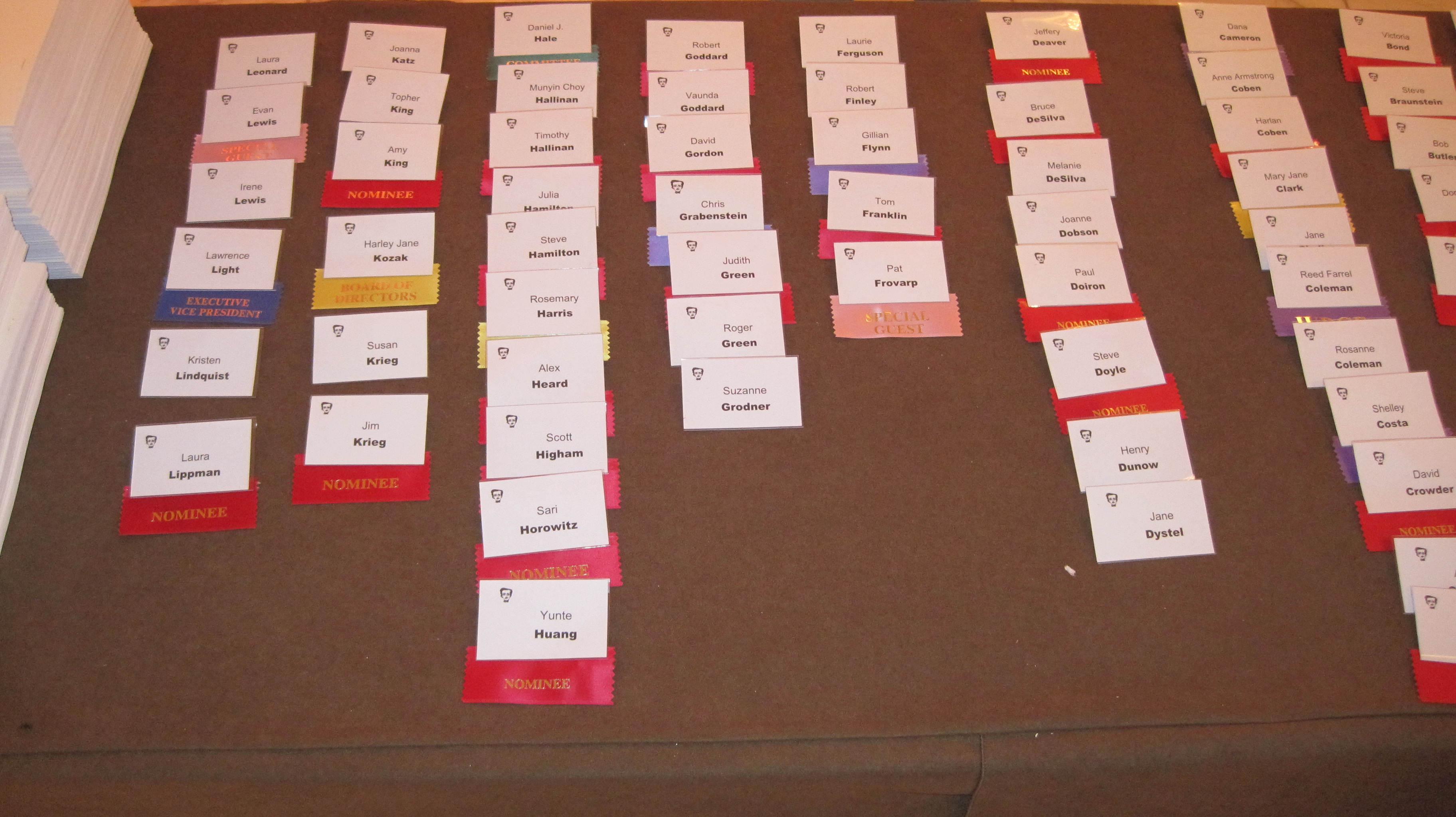
Badges ready for the nominees.

Badges ready for the nominees.

I love this gig.  It’s really cool to see old friends again every year and hang out with the big names at the cocktail reception. But my favorite chore is helping to man the nominee greeting table, because I get to meet all the nominees who come in, spouses and children in tow, the mens’ clip-on tux ties askew, the women’s lovely faces flush with anticipation. They all are so darn happy. I want them all to win. Because I do know how that feels as well.

In 2007, our book An Unquiet Grave was nominated for the International Thriller Award. And just like the first time, all the toads and newts in my bog of insecurity bubbled to the surface.

I went to banquet with no expectations, sitting  between my agent and Ali Karem. Everyone wished me luck, but I was filled with dread. My sister Kelly couldn’t make it, so I felt pretty alone despite all the good vibes. We might write hard-boiled, but I am not. The evening dragged on through the various categories. Finally, I couldn’t take it anymore. I bolted for the lobby.

Jim Fusilli was standing there and barred my way, putting an arm around my shoulders. Each nominee was announced by reading the first line of the book. Ours is “The Christmas lights were already up.” I remember thinking, “God, that sucks.”

I heard the title of our book announced as the winner. I started crying. I don’t remember what I said on stage. Many authors, when they are up for awards, jot down a few bon mots so they don’t make asses of themselves. They at least think things through. These are the authors whose gracious and often clever speeches are quoted on Facebook the next morning.

This is what SHOULD have been in my head as I went up there:

“Thank you so much for this great honor. First, I want to thank the ITW judges who put their careers on hold for months. Their job is doubly hard in that they first must read hundreds of books but then, they must decide on just one when any of the five finalists would be worthy. Second, I want to thank my fellow nominees. I am honored to have my book mentioned among their fine works. Third, I want to thank my agent and editor who….”

This is what was REALLY in my head:

“God, I can’t believe I am crying! How pathetic and needy! Where’s the friggin’ stairs? I can’t see! Who is that man at the podium? Damn, I forget his name! THE LIGHTS! I CAN’T SEE ANYTHING! Do I have lettuce on my teeth? Agent…mention her name. My bra is showing, I just know it. DON’T PULL AT YOUR BRA!! He’s handing it to me. Jesus, it’s heavy…don’t drop it…don’t drop it…don’t drop it. Say something nice about the other nominees! Can’t…can’t…can’t remember their names. YOU TWIT! You just sat on a panel with TWO of them this morning! Wait, wait…is it Paul LeVEEN or Paul LeVINE??? Forget it…buy them a drink later. I should have gone to the hairdresser before I left home. My roots are showing. Damn, did I thank my SISTER at least? JESUS! THE LIGHTS! Stop talking now…you’re rambling, you ass…stop now and just go sit down. Okay, leaving now. TAKE THE AWARD! Don’t drop it…don’t drop it…don’t drop it. Good grief…I’m here in New York City wearing Nine West because I was too cheap to spring for those black Blahniks at Off Fifth. Dear God, just let me just off this stage so I can get to the john and pull up my Spanx and get a glass of wine….

So, here’s the thing, dear writer friends, as we enter the award season for the Edgar, the ITWs, the Shamus, Anthony, et al:  Awards are nice, but they won’t change your life or probably not even affect your writing career.  Truth be told, you can go back and read the list of past Best First Novel Edgar winners (click here), and you’ll be shocked how few made it big. And some of the brightest bestselling lights in our crime business have never won squat. They don’t keep an empty spot on their shelf hoping to fill it with that little porcelain Poe statue. They fill their shelves with their finished books. That is what really matters — hard work, consistency, and the constant quest to get better.

But…if you are ever lucky enough to be nominated for something — anything — enjoy the moment. It really is an honor to be recognized by your peers. Just leave the Spanx at home.
The Dreaded P Word

Apologies for having a rather truncated blog post this week – owing to a kitchen knife injury to a finger requiring stitches I’m a little less ‘keyboard able’ than usual….Although there’s always the craziness of the dreaded ‘P’ word to keep me distracted…and by that, of course, I mean politics.

As a general rule I can’t avoid at least some politics in my writing – history tends to be enmeshed in the politics of the day, but as another general rule I tend to leave out (overtly at least) my own political ideals and opinions in my books (I figure readers don’t want to hear them but would rather immerse themselves in a historical period). But politics shapes indirectly (and sometimes very directly) all the characters in my work – which can be a challenge when many of the political ideas espoused in early 20th century England are an anathema to modern sensibilities. However, I believe that well-crafted characters, placed in an appropriately explained historical situation, help illuminate the politics of an era far more so that a non-fiction history book  ever could.

That being said, I’m sure many  writers try to avoid injecting obvious ‘politics’ in their novels. No one wants to alienate a sizable portion of their readership after all, and usually a book’s  characters can display a range of values and attitudes to encompass contemporary (as well as historical) political thought. It’s hard at the moment, however, to avoid the dreaded ‘P’ word as the current election cycle is on our news 24/7 (or so it seems!).

So I thought I’d check in with the TKZ community to see how you tackle politics in your writing – do you avoid injecting your own political views and opinions in your books? Do you consider a character’s politics during their developmental stage?  I  find it  both interesting and challenging to explore a range of opinions and political/social beliefs when creating my characters, but obviously, as a historical writer, I also have to reflect the times I’m writing about. There are many social issues that were viewed quite differently in Edwardian and WW1 England for instance and I try to respect the era by making sure I encapsulate (as best I can) the mood, politics and social conditions of the time. What about you? what’s your view and experience of the dreaded ‘P’ word in your mysteries (both as a reader and a writer)?


Getting Inspired to Write


by James Scott Bell
@jamesscottbell

While I am a firm believer in the adage that to be a writer it takes an iron butt, and also that a pro can’t afford to sit around waiting for the Muse, I do believe in inspiration. Just like a football team gets a locker-room speech, so the writer can use the occasional boost in motivation.

That’s why I like writing quotes. Over the years I’ve collected hundreds of them. I glance at them from time to time and, depending on my particular writing challenge of the moment, I usually find a quote that speaks to it.

Today, I thought I’d share a few of them with you, along with some annotations.

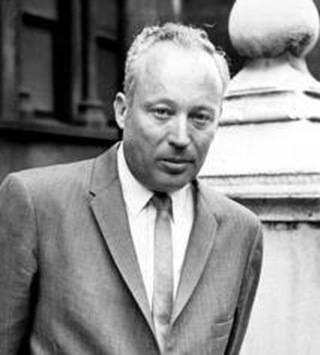
Leonard Bishop

Leonard Bishop

If you boldly risk writing a novel that might be acclaimed as great, and fail, you could succeed in writing a book that is splendid. – Leonard Bishop

You get what you dare, baby, and if you want big, you dare big. – Leonard Bishop

Leonard Bishop was a novelist and author of one of the first craft books I ever purchased, Dare To Be a Great Writer. I still love that book and have it sticky-noted all over the place. Here, Bishop advocates the setting of high standards. I join him in saying, Go for it! Look at your own work and assess it according to what I call “The 7 Critical Success Factors of Fiction”—plot, structure, characters, scenes, dialogue, voice, and meaning—and determine to kick each of them up a notch in your writing.

One needs natural talent, much physical energy (which calls for a strict regimen of diet and exercise), and the resilience to bounce back after the most shattering disappointment and frustration. – L. Sprague de Camp

L. Sprague de Camp was a writer from the golden age of science fiction, the America of the 1930’s, and continued writing until his death in 2000 at the age of 92. He was the author of over 120 science fiction and fantasy novels, and several hundred short stories. The kind of writer I admire, one who worked hard at his craft and kept producing pages. Why? Because if he didn’t, he didn’t eat.

Let’s talk about talent. You do need some, but in my opinion it is the least important of the attributes for writerly success. It’s taking the talent you have to the highest level you can that counts.

So does bouncing back. The writing life has myriad ways to disappoint, frustrate, and even anger you. The trick is never to take any setback lying down. Get up and keep writing.

You have to evolve a permanent set of values to serve as motivation. – Leon Uris

Leon Uris’s books have sold over 150 million copies worldwide and have been translated

Leon Uris

Leon Uris

into 29 languages. There has to be a reason for this.

Values may be the heart of it. Uris was a Marine in World War II, and thus his novels have a certain fundamental nobility. Uris’s protagonists are full of passion for justice, and often involved in wider battles for freedom. Battle Cry, Exodus, QB VII, and Trinity each reached the top spot on the New York Times bestseller list.

What are you most passionate beliefs? Transfer that fire to your protagonist. What would he die for? If nothing, he’s probably not that interesting.

At every significant juncture in a story, consciously look at the situation from the viewpoint of every character involved – and let each of them make the best move they can from his or her own point of view. – Stanley Schmidt

Stanley Schmidt is the science-fiction author of such books as Newton and the Quasi-Apple (1970), Lifeboat Earth (1978) and Tweedlioop (1986). From 1978 to 2012 he was the editor of Analog, the noted SF magazine. Schmidt knows story.

Here he emphasizes a key rule of the craft, that of “maximum capacity.” Every character should be in the story for a reason, and the reason must matter greatly to that character (see the previous entry). When shove comes to slap, the characters all should be thinking how they can get their licks in. Don’t ever let the opponents of the Lead operate half-heartedly, lest the readers feel cheated. Don’t ever let the allies of the Lead just “hang around.”

Take a look at your WIP and assess the drive of each major character. Now turn those into overdrive.

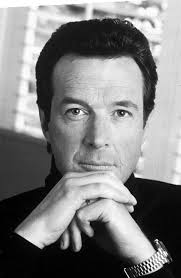
Keep working. Don’t wait for inspiration. Work inspires inspiration. Keep working. – Michael Crichton

The best cure for not writing is writing. The best antidote for the writing blues is writing.

Michael Crichton

Michael Crichton

The best thing to do if you can’t face the blank page or screen is . . . write!

But what about the writers block deal we’ve been talking about here at TKZ? Is that real? Only if you don’t attack it by typing or moving a pen.

You don’t have to write on the project that’s stalling you. Work on something else. Have several projects going.

Isaac Asimov had a number of typewriters around his apartment, and when he was stalled on one project he’d get up, stretch, and walk to another typewriter, with a page in it, on some completely different subject, and he’d type some more.

So if you stall on your WIP, work on something else. Anything. Write your obituary. Truly. How do you want to be remembered? This is a great way to focus the mind and get your life in order.

Journal. Talk to yourself on paper or screen.

digiorno-1Heck, you can even be creative with your grocery list. Make it a thing of beauty. Turn it into a series of mini-essays, on the questionable identity of beets, and the pleasures of DiGiorno Pizza.

Once the brain starts cooking with words you’ll be back in the flow in no time.

Do you have a favorite writing quote? Let’s hear it!

How Did You Get Here?

by Joe Hartlaub

It was only a few hours ago that I spoke with a friend that I hadn’t conversed with in almost forty years. Don and I worked for a couple of summers on a municipal road crew in the Akron, Ohio area in the early 1970s. We came from very different backgrounds and had a bit of an age difference between us but became something more than work friends. He had a number of colorful expressions, most of which I can’t use in family blog, but which pepper my conversation to this day. The method we used to rid a field of a hornet’s nest almost got me arrested some fifteen years after the fact when I replicated it elsewhere.

You don’t forget a guy like that, but you do lose touch. I moved to Columbus in 1978; Don stayed in Akron. Life got in the way for both of us. There weren’t emails or cell phones or Skype and we became busy with jobs and raising families the way that people do. I never forgot Don, however, given that I quoted him like Scripture on a frequent basis, usually with appreciative laughter from whatever audience I was before. I started looking for him on the internet several years ago but couldn’t find him and assumed he had moved or even passed. I had long since given up trying to reach Don when I saw him featured on the front page of a northeastern Ohio newspaper. He had been ambushed by a reporter outside of a polling station; he looked older (unlike me) but it was still the same guy, for sure. His internet presence, however, was still non-existent. I was able to locate a couple of phone numbers for him but they were out of service. I did, however, get a street address for Don after some effort and wrote him a letter — an actual letter — with my prized fountain pen. It took eight days for him to get it (they don’t call it “snail mail” for nothing) but he ultimately received it and called me. We’re going to get together soon (“…before one or both of us dies!” he said) and catch up further.

All of this got me to wondering about all of you. I remember where and how I met Don, and most of my other friends, and my wife, business associates, etc. But those of us who contribute blog posts to The Kill Zone don’t know how you, our wonderful readers and commenters, got here. What brought you to The Kill Zone originally? How did you get here? Twitter? Facebook? Writer’s Digest? An author’s link? I’d love to know. And if you have any stories about reuniting with old friends and acquaintances that are unique and/or unusual, please share if you’re so inclined.

BERLIN, GERMANY - NOVEMBER 03:  Cars and traffic fill the A100 ring highway at dusk on November 3, 2014 in Berlin, Germany. Germany is heatedly debating the introduction of highway tolls (in German: Maut), which in the current form proposed by German Transport Minister Alexander Dobrindt would be levied solely on foreigners. Dobrindt's office argues that this is not discrimination, which would be illegal under European Union law, since Germans already pay an annual car tax.  (Photo by Sean Gallup/Getty Images)

(Photo by Sean Gallup/Getty Images)            

What Do You Do about Writer’s Block?

By Elaine Vietswriters block4

My grandfather was a security guard. He worked weekends, holidays, and nights when temperatures plummeted below zero and frozen winds blasted the empty parking lots. He never said, “I don’t feel like guarding the warehouse tonight. I’m blocked.”
My grandmother babysat. She never said, “I’m not watching those brats today. I’m blocked.”
When I spoke at Fort Lauderdale High School, a student asked, “What do you do about writer’s block?”
“Writer’s block doesn’t exist,” I said. “It’s an indulgence.”writers block3Writing is a job, and working writers cannot afford writer’s block. It’s a luxury. Pros know that inspiration won’t strike like lightning. We can’t wait for it to hit us. We have to write.
I wish I had a dollar for every day I didn’t feel like dragging my sorry carcass to the computer. I could retire.
But I write because it’s my job. Even on the worst days, I love being a writer.
Many former newspaper reporters become mystery writers, including Michael Connelly, Kris Montee (PJ Parrish), and me. We’re trained to respect deadlines. Writing is our work and we sit down and do it.writers block1Early in my newspaper career, I told my editor, “I’m blocked. I can’t write this story.”

“Write something,” he said, waving the blank layouts. “We have pages to fill. We’re a newspaper, not a high school theater program: We can’t leave blank spaces on the page with ‘COMPLIMENTS OF A FRIEND.’ ”
Some days, the words flow, gushing in fertile streams. I feel alive and electric. Other days the words trickle out like water in a rusty, clogged pipe.
But I still write.
What do I do when the words don’t come?

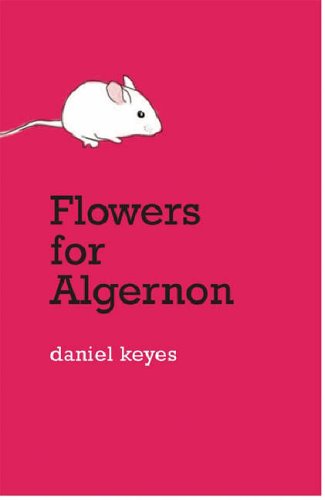
flowers-for-algernon-daniel-keyesI remember what Daniel Keyes, who wrote Flowers for Algernon, said at a speech:
“When I feel blocked I start typing – anything,” he said. “It doesn’t have to make sense: ababababsjsjsjfjfjfhhshshshkaka.
“Then I start typing words. Any words. The first words that come to mind.
“Next I start writing sentences. Again, they don’t have to make sense. But I keep on typing and eventually they do make sense and I’ve started writing. I may throw out ninety percent of what I wrote that day.
“But I wrote.”
You can, too.

winged pen
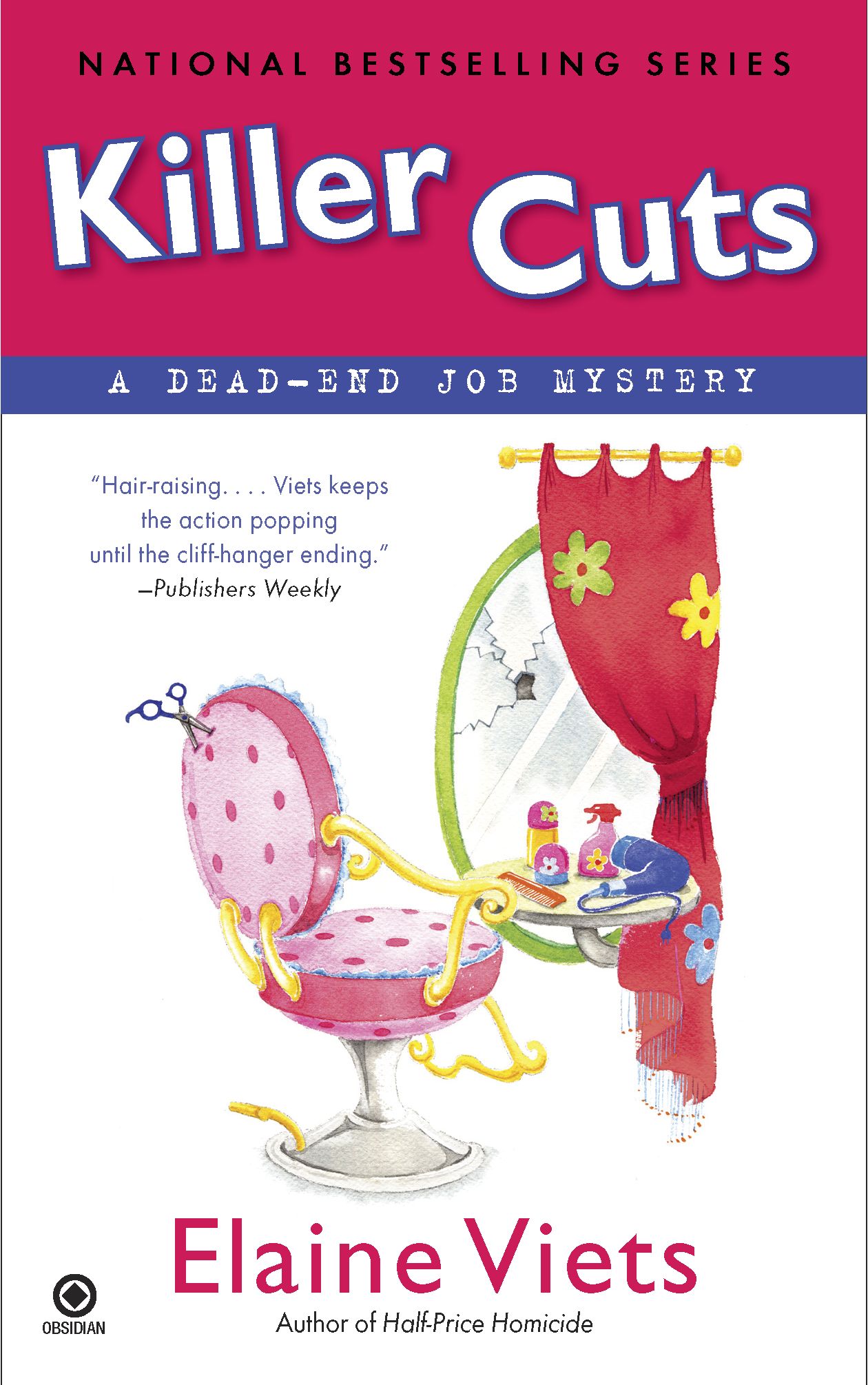
Win Killer Cuts, my 8th Dead-End Job mystery set at a high-end hair salon. Read about Helen Hawthorne’s wedding. www.elaineviets.com and click Contests.Killer Cuts

The Wonderful World of Subplots

Robert Gregory Browne

It was bound to happen. I have been sick for the first time in years, and of course, I completely forgot that I have obligations, one of them being this blog. Those two weeks went fast!

So, because I’m still recovering, I’m going to take the easy way out and post an excerpt from my book, CASTING THE BONES. Next time you’ll get something brand-spanking new. I promise. No, really.

THE WONDERFUL WORLD OF SUBPLOTS

While you can certainly get away with a short story having only one plot, novels will almost always have a number of plots going at once. One of those plots is dominant, of course, but what about those smaller, all important subplots?

In The Godfather, we watch as a violent power play is made against Don Corleone by a rival Mafia family. His young, clean-cut son, Michael Corleone, volunteers to take revenge, and the movie follows Michael’s descent into the dark world of the Mafia and his eventual emergence as the new Godfather.

There are a number of subplots in the movie, but the one that most strikes a chord is Michael’s relationship with two women. The first is Kay, who is not Italian, not part of the “family” and is Michael’s lifeline to the outside world. His connection to “reality.”

But as he’s drawn deeper into the violence, Michael’s ties to her become more and more tenuous, until he finds himself completely cut off from her—and the outside world—as he hides out in Sicily.

In Sicily, Michael meets a young local woman who steals his heart. She’s his soul mate, his true love, whom he marries. Then, in another act of revenge, a car carrying his new bride is blown to bits, plunging Michael into an emotional darkness he’s never known.
He goes back to the U.S. a considerably different man, but rekindles his relationship with Kay and eventually marries her—a marriage that is obviously doomed.

This particular subplot would probably have a tough time standing on its own. Its reliance on the main storyline is obvious enough, but what really makes it great is that it parallels and impacts Michael’s descent. Kay represents Michael’s relationship to the “civilian” world, while his marriage to the Sicilian woman illustrates his rediscovery of his roots.

The tragic twist in this subplot is one of the major causes of Michael’s emotional retreat and his rise to power. He becomes a man so cold and ruthless that he’s able (in Part II) to put a hit out on his own brother…

And that’s what all great movie and novel subplots do. They rise organically from the main storyline, attaching themselves to your hero and impacting his ability to reach his goal. Great subplots are so closely woven into the fabric of the story that we often have a hard time discerning them.

Even so-called “lesser” movies than The Godfather recognize the need for a solid subplot.
A favorite of mine is a dark thriller called Resurrection, which was written by Brad Mirman, the writer of several good thrillers. To some, Resurrection plays like a poor man’s rip-off of Seven, but I much prefer Mirman’s take on the hunt for a serial killer because of its inventiveness.

Resurrection is essentially about a couple of cops hunting for a serial killer who is taking the body parts of his victims and building them into a representation of Christ. Each of the victims is named after an apostle and the killer’s timeline runs him straight toward Easter, the day of resurrection.

The subplot is a minor one, but it certainly deepens the lead character. He’s a cop who, after the tragic death of his son, has discarded his faith in God and is quickly losing his emotional connection to his wife.

During the course of the movie, his wife attempts to repair their marriage and his faith by inviting the local priest over for a pep talk, but our hero soundly rejects the man and any notion of accepting help from him.

Then, while looking for a clue to the killer’s plan that seems deeply rooted in Biblical lore, our hero must finally seek the help of the priest. But as he enters the church, he hesitates, as if the mere act of stepping foot in the place is a betrayal of his son’s memory.

Again, this subplot is powerful because it is so securely attached to the main storyline that it can’t exist on its own. The two plots feed off of each other and both are stronger because of it.

A lot of books today treat subplots as an afterthought. Stories are often built based on a “hot” idea, the characters created to fill out a plot that’s stretched so thin that the slightest jolt could snap it apart.

Subplots are haphazardly tacked on in a weak attempt to keep the whole mess together, and their paint-by-numbers obviousness is one of the greatest contributors to the collective snore rising from the readers.

Many storytellers today have it backwards. Yes, start with a great idea, but rather than try to force characters and subplot into that story, try creating the characters first, then let the story and subplot grow from them.

Characters are story. And any great plot or subplot is driven by the characters’ wants and desires.

Remember this as you sit down to write and, with time and patience, you too can give us writing the caliber of The Godfather and Resurrection.

Not a bad place to be.

Were “Rules” Meant To Be Broken?

image

By Kathryn Lilley, TKZ

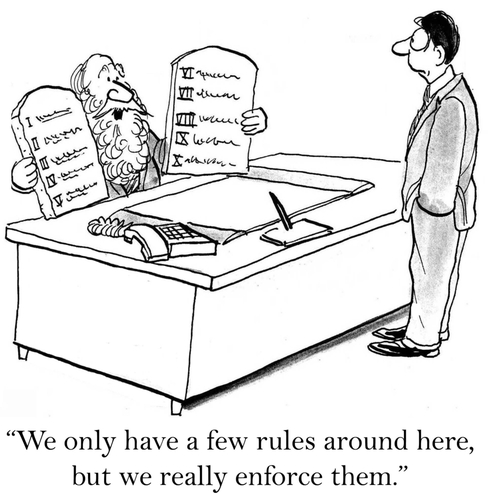
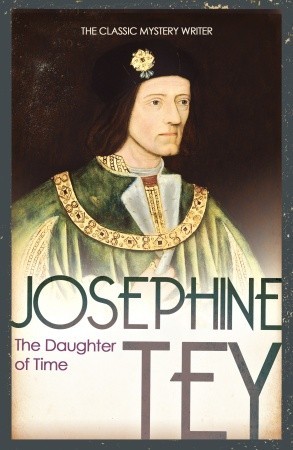
Right now I’m reading AN EXPERT IN MURDER, a bang-up mystery written by Josephine Tey (a pseudonym for Scottish author Elizabeth MacIntosh, 1896-1952). Tey was a writer who delighted in breaking the formulaic mystery writing rules of her era. Those rules, as proclaimed by a group of London-based mystery writers, had been set forth in a manifesto called “The 10 Commandments of the Detection Club”. (Agatha Christie and Dorothy Sayers were founding members of the club.)

TEN COMMANDMENTS OF THE DETECTION CLUB

1. The criminal must be someone mentioned in the early part of the story, but must not be anyone whose thoughts the reader has been allowed to follow.

2. All supernatural or preternatural agencies are ruled out as a matter of course.

3. Not more than one secret room or passage is allowable.

4. No hitherto undiscovered poisons may be used, nor any appliance which will need a long scientific explanation at the end.

5. No (archaic ethnic term) must figure in the story. (Editor’s note: At the time, popular mysteries frequently included a character of Chinese descent. The writers used an archaic ethnic term that I don’t care to repeat here).

6. No accident must ever help the detective, nor must he ever have an unaccountable intuition which proves to be right.

7. The detective must not himself commit the crime.

8. The detective must not light on any clues which are not instantly produced for the inspection of the reader.

9. The stupid friend of the detective, the Watson, must not conceal any thoughts which pass through his mind; his intelligence must be slightly, but very slightly, below that of the average reader.

10. Twin brothers, and doubles generally, must not appear unless we have been duly prepared for them.

***

Josephine Tey gleefully broke most of these rules in her mysteries. Twin imageimposters? Check. A sleuth playing a hunch? Check. In some of her books, Josephine Tey herself featured as a sleuth. (The Detective Club probably never dreamed of creating a rule against doing that).

Because she was a gifted, excellent writer, Tey got away with jettisoning the standard writing tropes of her era.

Nowadays, genre writers still like to talk about the “rules” of writing. (“Never open with a dream or the weather,” for example).  Have you ever intentionally broken a writing rule in your work? Did your “infraction” succeed or fail? Or, have you ever read a story that broke the rules, but was successful nonetheless?

The Fickle, Frustrating, Beautiful Arc of your Writing Career

Being a guy – sometimes known as the guy – who can take too long to get to a salient point (because I believe in the power of contextual setup… see, I’m doing it right now), allow me to begin today’s post what just that.

A salient, career-making point of awareness.

Here it is. It may not knock you off your chair.  But look closer.  Because this might just tell you everything you need to know about where you are, and why.

Some truths are like that. They are insidious in their subtlety.

Your success isn’t solely about what you write.

Over time, your success is largely driven by what you know.

A few posts ago I mentioned a wildly successful author who, in her interview with Writers Digest Magazine, seemed not to be all that confident that she knows anything at all about how she writes what she writers. I’m pretty sure that’s not true (she built her readership over 10 novels and then her eleventh sold 5 million copies; as luck goes, that’s a whopper of a lottery ticket).

Whether this can be explained as an over-wrought sense of humility or she truly can’t tell us why her stories work… who knows.

Doesn’t matter.  Because when it comes to the craft of writing compelling fiction, I guarantee you that she does know what she is doing.  (Her name is JoJo Moyes, by the way, and I have nothing but the highest admiration for her and her work.)

Don’t take this one for granted. Nailing a novel is a little like self-diagnosing your own health issues. You can guess right. You can stumble across the right solution without ever really understanding how you got there, or the criteria for what you’ve just backed into. You can become famous from that good guess — or if not a guess, then a keen sense of story that, for you, doesn’t yet have names for the parts — and then, going forward, never really be able to articulate why your story works.

That one sounds like this: “I dunno, I just sit down and listen to my characters, I just follow them, I really don’t know where I’m going with it all…”

Unspoken translation for such a writer’s take on what happened: aren’t I a genius?

Or perhaps: I really don’t have a clue what I’m doing.

Thinly veiled hubris? Even thinner self-awareness? Not so thinly-veiled cluelessness?

Doesn’t matter. Don’t be that writer. The road is longer and steeper when you lean into that perspective.

Rather, seek to know.

What we know breaks down into two categories.

Both of which become context for the writing of a novel that hits all the bases and polishes them to a glowing sheen (or perhaps, a raw serrated edge, depending on genre).

First, there is the deep and wide ocean of craft.

In my teaching work I’ve attempted to categorize them (six realms of story forces – what I call story physics – that tell us why our stories work, and thus become a checklist to assess the efficacy of what we’ve written…

… and then, six core competencies that tell us the things we must do with those six realms of story forces. In the context of today’s title, do them consistently and with a growing sense of mastery.

Don’t like lists? I get that. But these lists are like gravity.

They’re simply there. Bundle them any way you like, but they are waiting to make (when you get them right) or break (when missing or done poorly) your story.  Here they are:

       The Six Realms of Story Forces/Physics              

  1. A concept-rich premise.
  2. A powerful dramatic proposition/arc.
  3. Properly modulated pacing.
  4. Reader empathy for your hero.
  5. Delivering a rich vicarious experience.
  6. An optimized narrative strategy

 The Six Core Competencies

1. The sense of what is conceptual                                                                                    2. The ability to write rich characters on both sides of the hero/villain scale.                  3. A sense of thematic relevance.                                                                                    4. A solid grasp of story structure                                                                               5. Knowing what makes a scene work.                                                                            6. A clean, compelling writing voice.

If you’re thinking this is a lot to know, you’re certain right about that. But, in my view, pretty much anything and everything we need to know and do falls into one or more of these twelve buckets.

Each of these is a matter of degree and precision, as well.

One writer may believe that a story about a CPA who can’t quite get her Schedule C to make sense is dramatically compelling to the rest of us… while another might not understand that they are simply writing about an arena (time or place or some avocational, occupations or societal niche), rather than writing about something dramatic that happens within that arena.

I hope you’ll read that last sentence again. This one tanks more stories – and over time, careers – than any of form of misunderstanding or rejection.

It all boils down to your own personal story sensibility. That’s the entire ballgame, right there. A rich and thorough story sensibility is informed by all twelve buckets (each of which is a deep well of specific issues, elements and essences) on those two lists. It is the very thing that explains consistent A-list success.

Because to a large extent those writers get it better than the rest of us. If you’re searching for the “it” in your career, these two lists are where the answers await.

Or not. And that’s the frustrating part. Because…

Secondly, we must know how to navigate today’s “publishing” landscape.

Today more than ever, and stated quite simply, if you’re not the game and using the right tools to compete, it may not matter how well you understand those twelve buckets of craft.

Because it absolutely is a competition, not so much with other writers, but with agents and editors who have already made up their mind about your story before you sit down in front of them at a workshop, and readers who are fickle and largely driven by an ADD-type of awareness span.

This market landscape is shifting like the rim of an active volcano. It’s a function of knowing and doing.  While knowing and doing also applies to craft, in this context is applies to getting our work out there, And it’s not what it was a few years ago, nor is it anything like what it was 10 or 15 years ago when we still hoped to see our book in the window at Barnes & Noble.

You’re competing on that front, too, by the way, with the likes of Nora Roberts and David Baldacci and Stephen King. So as they say on the Lotto billboards, adjust your dreams accordingly.

There are also things we can’t know.

And in not knowing we can lay some sort of calming, rationalized claim to sanity.

Because luck remains part of the math of getting a novel out there. A right-place-right-time flavor of luck. This luck is certainly driven by persistence – that much hasn’t changed – but the sad truth is that you can write a novel that blows some of those A-listers off the page, that is worthy of a Big Fat Award of some kind, and yet you may not ever see it in print, or your readers might just fit into a couple of booths at Denny’s.

I have to be careful with this one. The Kumbaya of writing conferences is sometimes antithetical to the truth… and this is the truth.

Which leaves us with this: we do the best we can do, we seek to grow our knowledge on both of those fronts, and we keep on truckin’.

Which brings us full circle to why we starting doing this in the first place: we love to tell stories.

That remains the most accessible outcome of all. Leading to the best possible paradox of all – the more you know, the better your stories will be, and the more likely you’ll be to get lucky.

Drilling Down Into Your Deep Writing Soil

by James Scott Bell
@jamesscottbell

The outskirts of Flagstaff, Arizona. I was with my high school church group, taking a week in the summer s-l225to do volunteer work for the Hopi. Our bus had stopped for the night and we brought our sleeping bags and duffels into the fellowship hall of a local church. We were told by our adult leaders to relax, read, play games, listen to the radio––but by all means stay inside the hall! Which of course my friend Randy and I interpreted as meaning: “Feel free to wander into town and find some trouble to get into.”

Ever ready to follow instructions as we understood them, Randy and I slipped out the side doors and started a nocturnal tour of the bustling Flagstaff metropolis, which seemed to have, as they used to say, rolled up the sidewalks.

So we walked and talked and came to a railroad crossing, moving therefrom into the soft red-and-yellow neon of a LIQUOR STORE sign. To a couple of seventeen-year-olds on a nighttime prowl, such illumination is catnip. Randy suggested we baptize our adventure with a bottle.

I agreed, as Randy Winter was my brother from another mother, my closest friend, with whom I laughed much and talked deeply. We would discuss with equal fervor the mystery of girls and the character of God (whose reputation, by the way, we were failing to uphold as we schemed how to lay our hands on some demon intoxicant).

Our first order of business was what manner of spirits to acquire. As an athlete who was not a member of the party circuit, I was not an imbiber of any sort. I did not like the taste of beer. I’d snuck a nip of gin once in my parents’ liquor cabinet and wondered why on earth anyone would want to drink gasoline.

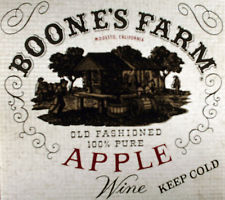
So Randy suggested we try some wine. He’d heard that Boone’s Farm Apple Wine went down nicely, and the decision was made.

Then the next step: to lurk in the shadows of the parking lot until a car drove up, then casually approach the driver with a request that he be our procurer. This was nervous time, for who knew what kind of personality we would engage? What if it was an off-duty cop? Or some old Veteran of Foreign Wars who’d want to lecture us on the evils of drink?

A chance we would have to take. Which we did presently when a car drove in, and out stepped a man of about thirty, with long hair. Long hair! A good sign. A hippie perhaps, or at least a musician. In either case, cool. We emerged from our hiding spot and said, “Excuse me …”

The man stopped and read our faces in the soft, primrose light. “You want me to get you a bottle, don’t you?” he said.

We nodded. My face felt flush, as if the entire world were witnessing my iniquity.

The man laughed. “I used to do the same thing. What do you want?”

We gave the man a couple of fins, our pooled resources, and Randy said, “Boone’s Farm Apple Wine.”

It seemed to me the man hesitated, as if to give us one last chance to reconsider our fate. And then he went through the door.

Randy and I high-fived our success. And soon thereafter we had in our hands a brown paper bag and some change, passed to us with a “Good luck” sentiment from our partner in crime.

We left the scene of our misdemeanor, went back near the railroad tracks, and sat cross-legged on the ground.

Randy unscrewed the top. We were too unsophisticated to smell the cap.

Then he drank and passed the bottle to me. I took a tentative sip. Ah, I thought. Sprightly, with a conversational fruitiness and subdued notes of summer. (Actually, what I really thought was, This isn’t so bad.)

And so ‘neath the Arizona stars Randy Winter and I shared a bottle of what was generously classified as wine, and discovered something interesting about the human body, namely, that there is a lag time between the ingestion of alcoholic content and its effect on one’s physiology.

Which meant, at one point, it suddenly felt as if a switch was flipped in my brain. The disco ball lit up and went round and round, and I heard myself say something like, “Rammy, my headth pinning” before I teetered backward and ended up on the gravel, looking up at the stars as they raced around the heavens like sparkling emergency room nurses shouting, “Stat! Stat!”

Which is the last thing I remember about that night. In the morning I was in my sleeping bag on the church floor. At least I think it was my sleeping bag. My stomach felt like a balloon of toxic gasses. Two miniature railroad workers were on either side of my head, driving spikes into my temples with their sledgehammers.

The adult leaders were none too pleased with Randy and me. We knew we’d messed up, crossed the line, failed to represent our church. We were threatened with expulsion, which would mean a long and humiliating drive for our parents to come pick us up. We threw ourselves upon the mercy of the court and were granted a temporary stay. I began then to truly appreciate the power of forgiveness. Plus, I was ready to swear off booze for good.

Honest, hard work kept Randy and me on the straight and narrow for at least a week. There’s a victory in there somewhere.

I don’t know why I’m writing about this now, except that I was thinking about Randy the other day, as I do often. He died at the age of nineteen. Leukemia. When I think about him, and all the good times we had, this particular memory is the one that surfaces first.

Why is that? Maybe because it typified our friendship. We took risks together, got in trouble on occasion, but mostly laughed. A couple of times there were tears. There’s something deeply meaningful to me in all this, and if I explore it I sense it will tell me something about what I write and why. It may also be a story idea trying to get out.

Memories are the deep soil of strong fiction. We do well to work that land from time to time. Journal about it. Record it. Listen to it.

Early in his career Ray Bradbury started making lists of nouns, many of them based on childhood memories. Things like The Lake, The Night, The Crickets, The Ravine.

“These lists were the provocations,” he writes in Zen in the Art of Writing, “that caused my better stuff to surface. I was feeling my way toward something honest, hidden under the trapdoor on the top of my skull.”

Open up your own trapdoor. You’ll get to really good stuff that way. You can use it outright as the basis for a piece of fiction, or tap it for characters, emotions, scenes. Nothing is wasted. All of life is material.

And it will teach you, too, if you’re open. For I don’t believe I’ve had a taste of Boone’s Farm wine since that night. Nothing against it, you understand, but I prefer a nice California cab. In fact, I think I’ll have a glass tonight––just one––and raise a toast to my best friend, Randy Winter.

Randy Winter

What about you? What friend from your youth do you remember, and why?