The Bestseller Code

by Larry Brooks

If today’s title rings familiar, that may be because there is a new writing book out by that title (with a subtitle added: Anatomy of the Blockbuster Novel, by Jodie Archer and Matthew L. Jockers) .

The title at first struck me as shamelessly derivative (what’s next, The Lovely Funny Bones?), but when I investigated further I realized that it is actually clever, since the book describes how novels like The Davinci Code achieve as they sometimes do, with over-the-moon success that everyone immediately tries to explain.

With — literally — a code, no less.

The Davinci Code is, of course, a gift to cynics — Dan Brown? A symbologist? An albino assassin working on retainer for The Vatican? Really? — but the numbers prove them wrong. Inarguably so. Sometimes when a novel breaks that big it can be explained — even cynically — as some happy confluence of social temperature, marketing budget and the unbreakable Tipping Point Code (not a novel yet, just a mystery we all strive to solve), rather that what it really is: an intense application of the forces of story that make novels work. Which include a conceptually-rich premise, dramatic tension, an empathetic hero in a world of trouble, more dramatic tension, thematic weight, killer scenes, and a passable writing voice… stir in a publisher’s commitment to back it strongly, then hope the media likes it as much as that pub committee did… then pray for a little luck and a big order from B&N.

But there is always a better explanation behind the numbers. And, even in this book, it begins with the list of story attributes I just described.

Writing is a lot like love, in that regard. The principles are simple, but the chemistry remains beyond defintion. And so we dive in, do what we can with our best choices, and keep hoping we hit the jackpot.

Writers of these iconic blockbusters have done something right. I mean, really right. Saying you aren’t impressed with the writing is like saying you don’t think that Cate Blanchat is good looking… it’s not the point. The explanation goes much deeper than what meets the eye and ear, and for the serious emerging author it’s worth pursuing.

The Bestseller Code is to writing novels what sabermetrics is/was to baseball, and to the novel Moneyball: The Art of Winning Unfair Game (Michael Lewis, 2003) that broke it to the public, and popularized it with a movie adaptation starring Brad Pitt (because yeah, all baseball GMs look just like that). It is an attempt to codify the aesthetics of storytelling that go ballistic in ways that transcend basic, commodity craft — not to mention logic — to reach people on a deeper level. It actually seeks to explain the numbers as a form of algorithm that can be analytically applied to raw manuscripts to access potential for marketplace success.

I’ve attempted that same explanation myself, in my book Story Physics, which covers the same elements of craft without the ones and zeros.

The Bestseller Code presents a case that I believe fails in its aspiration — that we can predict success based on a survey and quantification of story essences… while indeed landing on the identification of the core elements of dramatic fiction that tend to whip readers into a frenzy. The authors duly observe that books come and go that score high on that algorhythmic scale (as high as the home run titles) and achieve little notice, while some novels with C-level scores end up on bestseller lists without an explanation at all.

Proving what William Goldman famously told us in his book, Adventures in the Screen Trade: “nobody knows anything.” Including the 46 agents who rejected Kathryn Stockett’s manuscript called The Help a few years ago.

So I’m not here to recommend the book, per se.  Rather…

… just to flag it for you, and to suggest that you go to Amazon, click on the cover and read the first chapter (The Bestseller-Ometer, or, How Text Mining Might Change Publishing) shown in the Look Inside feature. It is a fascinating 1500 word read, quite well written, which circles around the drain of suggesting that success can be predicted based on which boxes are checked off (something us writing guru types like to echo), instead of the more easily swallowed rationale that to achieve massive success those boxes corresponding to issues of core craft must indeed be honored… the very thing this magic algorhythem seeks to digitize.

It’s finding a publisher and a handful of reviewers who notice that’s the real math of it.

Click HERE to give it a read. Chewy food for thought, indeed.

*****

This is my last KZ post of 2016, before we break for the holidays to catch our breath and plan our assault on 2017. I wish you all a blessed season, rich and warm with family and friends, and may you arrive at the New Year story milestone refreshed, renewed and armed with a killer premise that will make Dan Brown wish he’d thought of it first.

See you back here in January!
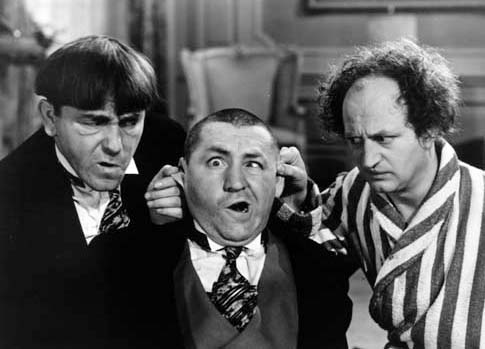
 

The Three Stooges of Writing

by James Scott Bell
@jamesscottbell

healthywealthyNo, that’s not a typo. I’m not talking about the three “stages” of writing. I’m talking about the Moe, Larry and Curly inside your head.

You know what I mean. You’re writing along, and then, all of a sudden, slap … poke … bam … woob woob woob! You’ve got a whole lot of Stooge noise going on.

So I thought it best to isolate these boys and deal with them once and for all, lest our writing time become a comedy of errors.

Moe is Perfectionism

Ah, Moe. He thinks he’s the boss. And he backs it up with violence. The two-finger eye poke, the basic slap, and any tool he can lay his hands on. And he’s always angry about something.

So you may be writing or editing, and suddenly you’re smacked with, That’s no good. And neither am I! Who am I kidding, trying to be a writer? 

Or you’ve finished a novel, you’ve done the very best you can, and the next step is submission. But then you get your eyes poked by your inner Moe. You knucklehead! This isn’t nearly good enough! Submit it, and you’ll get turned down and never get another shot! 

Now, there’s nothing wrong with a little bit of constructive questioning. But that’s far from the ham-fisted Moe! You’ve got to stop that Stooge in his tracks How? I suggest you do it physically (that, after all, is the Stooge style). Slap your cheek (gently!) and say, Stop it! All you can do is all you can do. And all you can do is enough!

Don’t laugh. This is a little trick that actually works. You can interrupt destructive thoughts with a physical move, then replace the thought with a better one, or with some positive action. When I was just starting out I’d sometimes get a Moe in my head, and he was vicious. So one day I slapped myself and, out loud, quoted Cher from Moonstruck: “Snap out of it!”

And then immediately went back to my writing.

Do this and at the very least you’ll be getting more words down on the page. That’s a lot better than letting Moe rule your roost.

Larry is Befuddlement

Poor Larry. He smarter than Curly but dumber than Moe, and is always caught somewhere in the middle. He spends most of his time confused. He can’t do a thing with his hair. When Moe slaps him, he usually has no idea why.

Ever feel like Larry about the publishing business? Should I go for an agent? How do I query an agent? How many agents can I query at once? Should I self-publish? How do I do that and get discovered? Will it hurt my chances of getting a traditional contract someday?

And then one day you’re slapped, and you don’t know why. Why didn’t they like my novel? Why didn’t it meet their needs? Is that just a phrase or does it mean I stink?

Your inner Larry needs get some education. Make a list of the areas you’re confused about. Write them down. Define them. And then you can make a plan to study each area.

Because I was once told I couldn’t learn to write fiction, and then went out and learned, I strongly believe that anything you need to learn to move forward in your career you can learn. The information is out there.

You don’t have to live with Larry in your head.

Curly is Emotion

We love Curly. Maybe that’s because he’s the Stooge who is most like us. He does things out of raw emotion and frequently ends up getting hurt. We’ve all been there.

But remember, Curly is resilient. My favorite Stooge moment is always when Moe clobbers Curly with some nasty weapon, like a pickax. Curly hollers, “OH OH OH OH!” then he quietly goes, “Look.” And the weapon itself is in worse shape than his head. That pickax is folded up like an accordion.

This writing life will hit you over the head. Rejections, bad reviews, unfair reviews, reviews with spoilers … lots of frustration! Sometimes you just want to lie on the ground and run around in a circle, Curly-style.

So realize this: it’s okay to let out an Oh! Oh! Oh! when you get hit.

And when something good happens, to shout out a full-throated Nyuck! Nyuck! Nyuck!

But never stay there. Let something hurt for half an hour, and rejoice over good news for a day.

But then get back to your keyboard!

If you do that, I guarantee you won’t get a pie in the face. You will get better as a writer.

What about you? Is there a Stooge who overstays his welcome in your writer’s mind? What do you do with him?

How Make Living Writer-printed version***

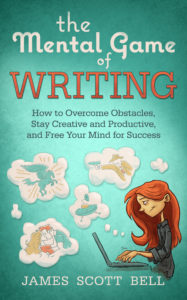
And if you need further Stooge alleviation, please see my book The Mental Game of Writing

I Got Your Number


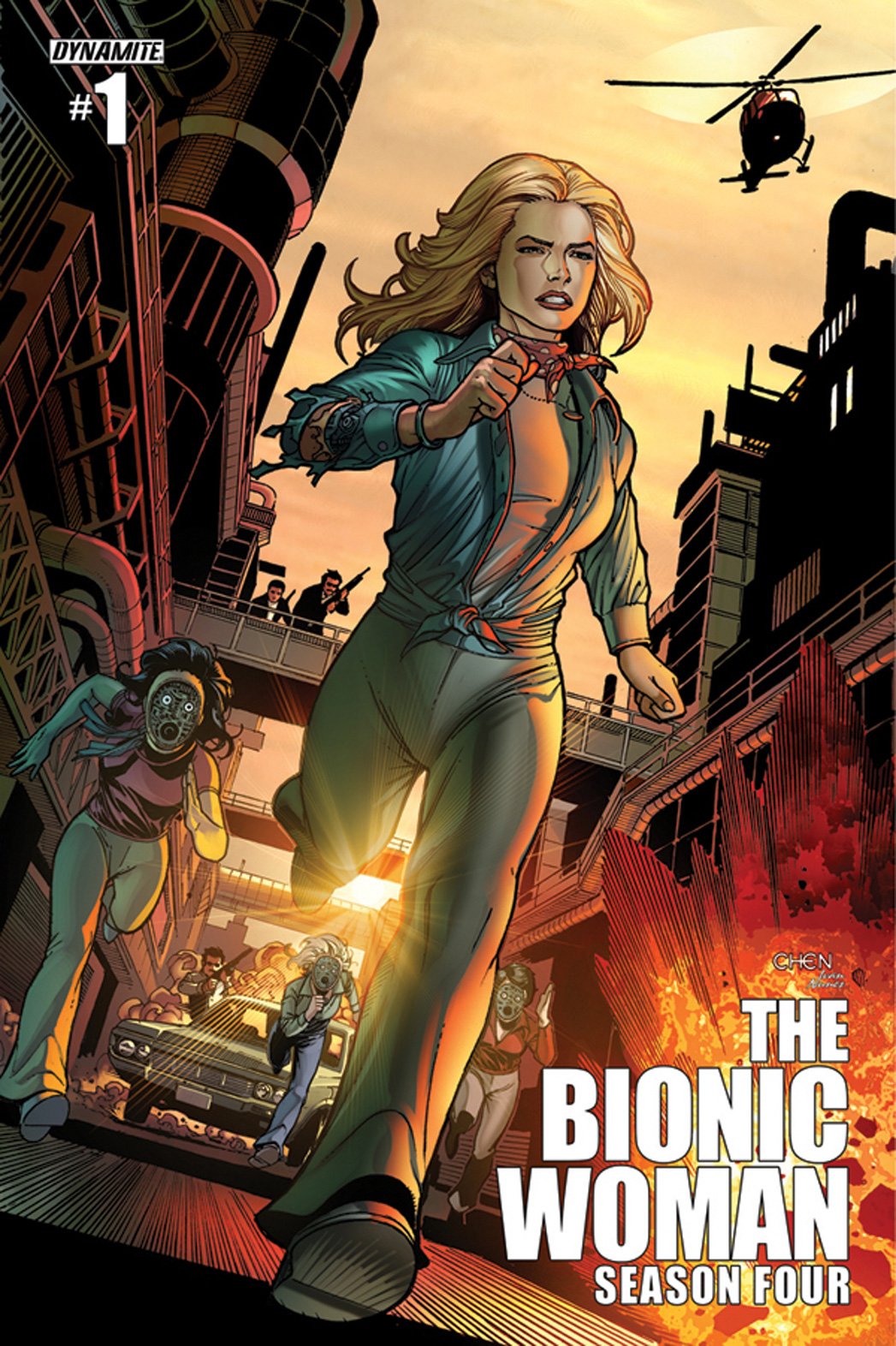
the-bionic-woman-1-coverBy Elaine Viets

My body is special, and here’s why: It’s traceable from top to bottom.
Several winters ago, I slipped on the ice in St. Louis and wound up with a total hip replacement. I was recovering from the surgery in the hospital, floating on a fluffy morphine cloud. (Let me tell you, morphine is definitely my favorite drug. No wonder the docs take it away after three days.) Anyway, I was pushed off my morphine high when a pathologist friend called.

hospital-room“Congratulations on your hip replacement!” she said.
Huh? I didn’t see any reason to celebrate.
“No matter what happens,” she said, “if you’re murdered and buried in the woods, they’ll always be able to identify your headless body.”

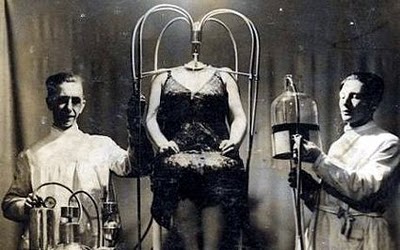
6-olga-the-headless-ladyThat’s never been one of my top ten worries. But at the time, a serial killer was stalking the area, kidnapping women, cutting off their heads, and leaving their decomposing bodies in trash bags along the highway. Police were having trouble identifying the victims – many didn’t have fingerprints in the system.
But my hip replacement had a nice traceable number engraved in the titanium. Decomp would make no difference. I wasn’t a no body any more.
Fast forward twenty years. That’s when I had six strokes, including a hemorrhagic stroke, and brain surgery. (I’m fully recovered, thanks.) Brain surgery put me a head of most people. When the surgeon sawed open my skull, he held the pieces in with titanium doodads (that’s a medical term). Those are numbered, too.
I am now identifiable top to bottom.
If deer hunters stumble across my skull in the woods, or I wind up on a shelf in some serial killer’s basement, I’m no Jane Doe.

skullMost mystery writers struggle with body identification in their novels. Identifying the victim can slow down a fast-paced plot. Yes, there are dental records, but you need to know the victim’s name to match her to them. Her prints have to be in the system for those to work. And you have to know who she is already to confirm her identity with DNA.
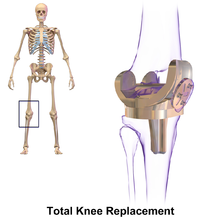
Medical implants cut through that. You usually won’t find out the victim’s name in ten minutes. But implants can help you trace your victim faster. If you want to pick up the pace of your crime novel and have your victim ID’d quicker, consider giving her a medical implant: a knee implant, hip implant, a pacemaker or other cardiac device.

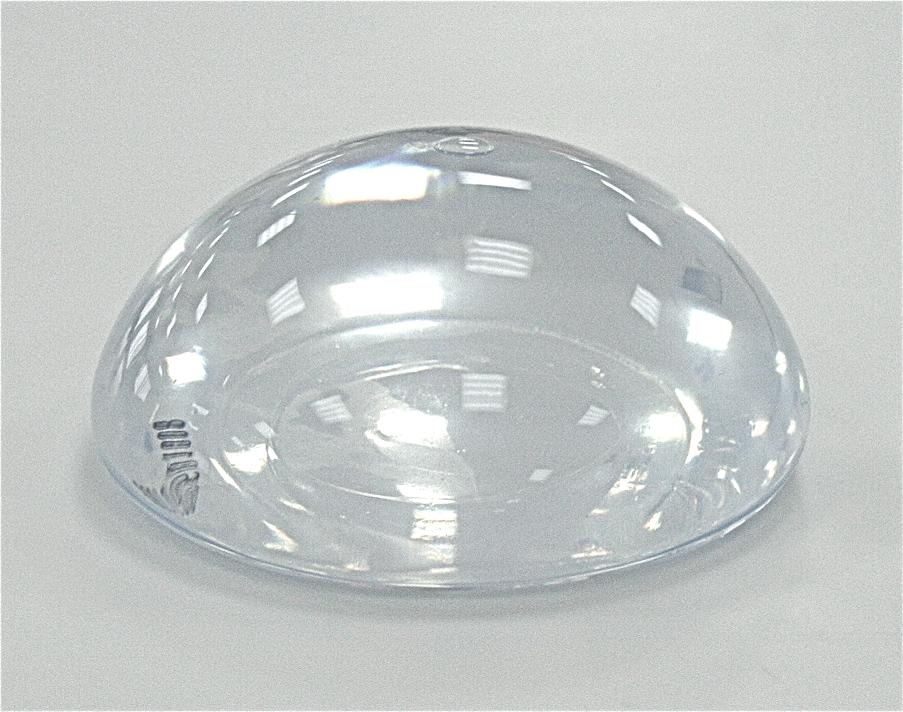
knee_replacementBreast implants are also numbered. Both kinds, saline-filled and silicone gel. So your unidentified woman – or man, for that matter – could be someone who wanted a larger chest. Or she could be a woman who had breast implants after a mastectomy or other reconstruction from an experienced surgeon.

breast-implantThe makers of medical implants sold in the US must list them with the FDA, and ME’s offices usually contact the manufacturer. It’s faster – but not lightning quick. The surgeon who used the implant may have closed his practice, and the records may be in storage. The hospital where the surgery took place may have the records on file.
Twenty years after I had a hip replacement, I had to track down the model and name of the device for an orthopedic surgeon. The surgeon who’d performed the replacement was long gone – but the hospital had the records stored in the cloud.
They had my number.

******************************************************************
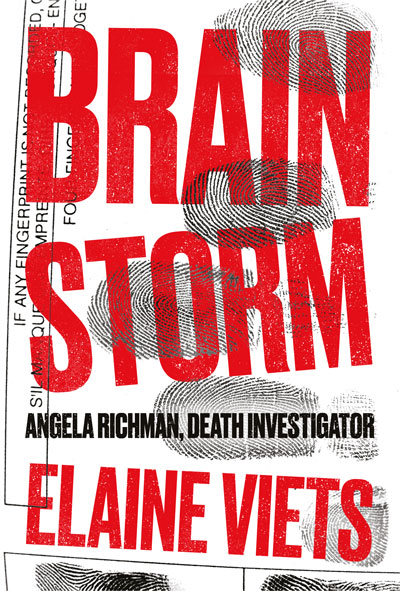
viets-brainstorm-smallWin Brain Storm, my new Angela Richman Death Investigator mystery. TKZer PJ Parrish says, “Brain Storm has everything I love in crime fiction – complexity, intelligence, pretzel plotting, and a touch of dark humor.” To enter, click Contests at www.elaineviets.com

My Day With John Wayne and Perry Como

By John Gilstrap

For those of you who came here today to learn a little more about blowing stuff up–which I promised to discuss–you’re likely to be a little disappointed.  Fact is, there’s breaking news that takes precedence.  On December 19, at 3:00 pm (and probably again, later) getTV will rebroadcast Perry Como’s Early American Christmas, which first aired on December 12, 1978.  It features the College of William and Mary Choir, of which I was a part.  Here’s a screen shot of my 21-year-old self in the company of my dear friend, Jim Shaffran (who is now part of the permanent company of the Washington National Opera).

screenshot-2016-12-06-12-11-43

That was taken while shooting a tavern scene, the entirety of which can be seen here.  It’s worth noting that shooting started somewhere around 5:00 a.m., encompassed many takes, and that the tankards all contained real beer.  More on that later.

We had known from the beginning of the school year that the Perry Como Christmas Special would be shot in Williamsburg, and that the choir would be involved.  We also knew that the Men of the Choir (as we called ourselves) would have a featured part, but as I recall, we didn’t know until very late in the game that it would be a costumed performance.  That meant visits to the Colonial Williamsburg costume shop, fittings, and, well, responsibility.  By the time I was a senior, I had designed my entire existence around as little responsibility as possible.  But I stepped up and, I have to say, rocked the outfit.

Was I concerned that the shooting schedule fell squarely in the middle of midterm exams?  Well, maybe.  But I was going to get to meet John Wayne.  No, really.  John Friggin Wayne.  I could repeat my senior year if I had to, but, come on . . . John Wayne!

First a little bit about Mr. Wayne.  For me, being a male of a certain age, the Duke exhibited pretty much everything that defined being a man’s man.  In person, he was huge.  When he shook my hand, he engulfed pretty much the whole thing, up to the wrist.  He spoke in real life in that same halting syntax that you hear in the movies.  And he was cranky.  (We didn’t know it at the time, but this Christmas special would be one of his last performances before passing away.)

If you’ve ever done any kind of video, you know how long and boring the setup for any shot can be.  While the crews did their thing, Perry worked the crowd.  We were at least one–maybe two–flagons of ale into the morning before the director said, “action” for the first time.  If you listen carefully to Perry, I think you’ll hear that he was a bit lolly-tongued when it came time for “I Saw Three Ships.”  And he kept blowing takes.  Full disclosure: As a practical matter, it was impossible for us to blow takes because the singing you hear was all prerecorded.  It’s all our voices, but done in a studio.  In the video, we’re singing along with the playback.

As the morning–and the takes–ground on, John Wayne’s fuse grew shorter and shorter.

And the flagons flowed.  I was pretty much an Olympic class beer drinker when I was 21, and I remember realizing that I was ripshit well before noon.  Not shown in the video clip is the climax of the tavern scene where Perry and the Duke toast us with, “Merry Christmas!” and we respond in kind, upending the mugs of beer and their contents.  And then a new mug would appear.  And of course, the scene had to be shot from every angle.

By the time it ended, the Duke was, well, pissed off.  Made things a little awkward on the set, but Perry seemed to be having the time of his life.

I had a blast that day.  At the end of the shooting, around 1:30, as I recall, the director said they needed extras for other scenes they’d be shooting that day and night and asked if any of us would like to stick around.  What the hell?  No one looks at senior year grades anyway.  If you watch the entire special and look closely, you’ll see me walking in and around a number of other scenes.  You’ll also see a couple of stunning performances by the entire choir.

For as long as I can remember, my mother had a serious crush on Perry Como, the the news of my involvement in the Christmas special was particularly well-received in Springfield, Virginia.  To hear her tell the story, the show was really about Perry and me.  Moms are like that.  In one especially amusing anecdote, I called home to relay the events of the shooting day.  While telling the story of the endless flagons of ale and Perry’s progressing inebriation, I mentioned in passing that during one of the breaks, Perry and I chatted while peeing at adjacent urinals.  My mother’s question: “Did you peek?”  Me: “Mom!”

When the very long day was over, and crews were breaking things down, I found myself face-to-face with John Wayne with no others pulling at his attention.  I told him that I was a huge fan of his work, and what an honor it was to have spent the day with him, and if I could please have an autograph.  He said, and I quote, “No.”  Then he walked away.  I figure he wasn’t feeling well.

But I got to meet him.  And I shook his hand.

We folks at The Killzone will be taking our Holiday Hiatus before my next posting time comes around, so let me take this opportunity to wish all of you a wonderful time with family and friends, good food and lots of laughter.  I’ll see you on the flip, in 2017, and I promise we’ll start by blowing stuff up again.


You Know You Want It…
It’s the Bad Sex in Fiction Awards!

By PJ Parrish

You’ve been waiting for it all year with bated breath. Your pulse rises every time you think about it. Some of you, oh faithful TKZ regulars, have even been emailing me begging to know when I was going to post my one annual post you can’t live without.

issue-449-dec-2016-600x800

Yes, friends, just in time for Christmas, wrapped up here in a big blue-language bow, is THE LITERARY REVIEW’S BAD SEX IN FICTION AWARDS!

This is the 24th year the Literary Review has honored an author who has written the most “outstandingly bad scene of sexual description in an otherwise good novel.” Past winners have included Norman Mailer, David Guterson, and Thomas Wolfe and the nominees pretty much include every big literary name you’ve heard of. I like presenting this every December because, if nothing else, it makes us mere mortal writers understand that when it comes to sex, we’re all human — or, in one case this year, maybe bovine. The award was announced at a lavish ceremony Nov. 30 at the In & Out Club in London. No, I did not make up the name of that club. It is a distinguished private gathering place for members of the British armed forces.

But let’s get on with it, what say?

Here are the finalists first, so we can work ourselves up into a good lather waiting for the winner. And don’t write blaming me for any of this. I’m just the messenger here. I stopped trying to write sex scenes decades ago.

gas

But  a loose ball bearing was his downfall…

A Doubter’s Almanac by Ethan Canin
As she talked Andret would make gentle, two-fingered tugs all the way around the hem of her dress to expose the lacy parts of her undersuit, like a child pulling candles from the rim of a birthday cake. Then he would begin kissing the frills. This she found beguiling. During sex she would quiet, moving suddenly on top of him like a lion over its prey. Her eyes stayed wide, Andret liked to keep his own closed; but whenever he opened them, there she would be, staring down at him, her black pupils gyroscopically inert. Again: leonine. He couldn’t help thinking that her gaze, even as she bent over him and strained her shoulders like a collared beast, was in fact an indictment.

The act itself was fervent. Like a brisk tennis game or a summer track meet, something performed in daylight between competitors. The cheap mattress bounced. She liked to do it more than once, and he was usually able to comply. Bourbon was his gasoline.

age-of-cigar-box-label-beach-mercuria

Is that a cigar rack in your back or are you just glad to see me?

The Tobacconist by Robert Seethaler

She looked him in the eyes, and, very slowly, brought her face up close to his, and when he felt her breath on his mouth and saw the delicate trembling of her puckered top lip, a shudder of joy passed through him with such force that he would almost certainly have fallen backwards into the cigar rack if Anezka hadn’t caught him at the last moment and pressed him firmly against her body. He closed his eyes and heard himself make a gurgling sound. And as his trousers slipped down his legs all the burdens of his life to date seemed to fall away from him; he tipped back his head and faced up into the darkness beneath the ceiling, and for one blessed moment he felt as if he could understand the things of this world in all their immeasurable beauty. How strange they are, he thought, life and all of these things. Then he felt Anezka slide down before him to the floor, felt her hands grab his naked buttocks and draw him to her. ‘Come, sonny boy!’ he heard her whisper, and with a smile he let go.

sawing-logs-on-the-airport-floor-podolux-flickr

I could have lasted longer if we hadn’t used TSA Pre-Check.

Men Like Air by Tom Connolly
The walkway to the terminal was all carpet, no oxygen. Dilly bundled Finn into the first restroom on offer, locked the cubicle door and pulled at his leather belt. ‘You’re beautiful,’ she told him, going down on to her haunches and unzipping him. He watched her passport rise gradually out of the back pocket of her jeans in time with the rhythmic bobbing of her buttocks as she sucked him. He arched over her back and took hold of the passport before it landed on the pimpled floor. Despite the immediate circumstances, human nature obliged him to take a look at her passport photo.

cows

Cow-A-Bung-Her!

The Butcher’s Hook by Janet Ellis
I slide my hands down his back, all along his spine, rutted with bone like mud ridges in a dry field, to the audacious swell below. His finger is inside me, his thumb circling, and I spill like grain from a bucket. He is panting, still running his race. I laugh at the incongruous size of him, sticking to his stomach and escaping from the springing hair below. All the while, we stifle our noise and whisper like a church congregation during the sermon. He pinches my lips when I yelp, I shove my fingers in his mouth when he opens it to howl.

‘Anne,’ he says, stopping and looking down at me. I am pinned like wet washing with his peg. ‘Till now, I thought the sweetest sound I could ever hear was cows chewing grass. But this is better.’ He sways and we listen to the soft suck at the exact place we meet. Then I move and put all thoughts of livestock out of his head.

how-to-last-longer-in-bed

Like a virgin, knock-knocking for the very first time

Leave Me by Gayle Forman
Once they were in that room, Jason had slammed the door and devoured her with his mouth, his hands, which were everywhere. As if he were ravenous.

And she remembered standing in front of him, her dress a puddle on the floor, and how she’d started to shake, her knees knocking together, like she was a virgin, like this was the first time. Because had she allowed herself to hope, this was what she would’ve hoped for. And now here it was. And that was terrifying.

Jason had taken her hand and placed it over his bare chest, to his heart, which was pounding wildly, in tandem with hers. She’d thought he was just excited, turned on. It had not occurred to her that he might be terrified, too.

Whew…

And finally, here is our winner, the Italian author Erri De Luca, who has been called by critics “the writer of the decade.” Proving, as the judges said, that even in the wake of Brexit, bad sex knows no borders.

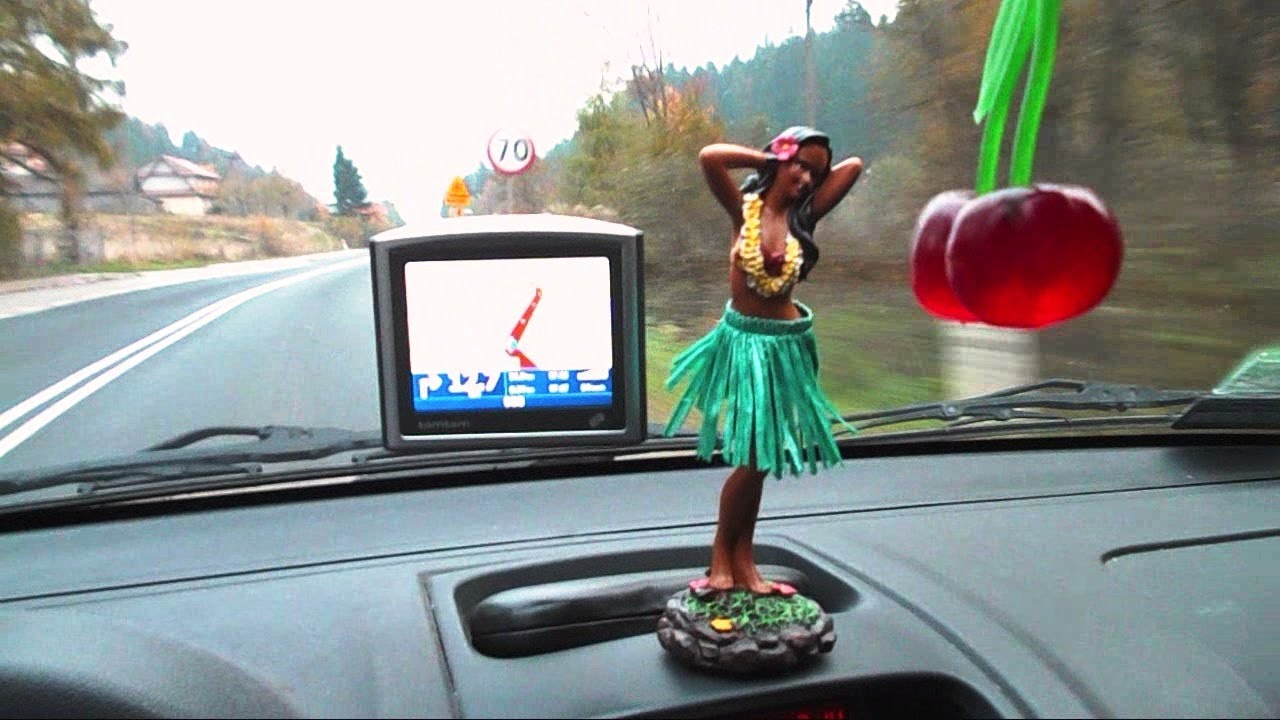
hula

Paradise by the dashboard light

The Day Before Happiness by Erri De Luca
She looked at me, her eyes wide open, and brought her bloody lips to mine, pushed her mouth inside mine until I could feel it in my throat. My prick was a plank stuck to her stomach. She eased the pressure of the kiss, broke off. With a swerve of her hips, she turned me over and I was on top of her. She unwound her arms from my shoulders and guided my hands to her breasts. Opened her legs, pulled up her dress and, holding my hips over her, pushed my prick against her opening. I was her plaything, which she moved around. Our sexes were ready, poised in expectation, barely touching each other: ballet dancers hovering en pointe.

We stayed like that. Anna looked down at them. She pushed on my hips, an order that thrust me in. I entered her. Not only my prick, but the whole of me entered her, into her guts, into her darkness, eyes wide open, seeing nothing. My whole body had gone inside her. I went in with her thrusts and stayed still. While I got used to the quiet and the pulsing of my blood in my ears and nose, she pushed me out a little, then in again. She did it again and again, holding me with force and moving me to the rhythm of the surf. She wiggled her breasts beneath my hands and intensified the pushing. I went in up to my groin and came out almost entirely. My body was her gearstick.

Happy holidays, TKZers! Good health and good writing to you in the coming new year. Peace out.

Call the Typo Police!

Last week I was helping an author friend of mine with some final proofreading of the galley proofs her publisher had sent – she sent me and other friends approx. 50 pages each to do a final typo check and, to her dismay, everyone still found some. The manuscript had been through so many rounds of revision, editing and proofreading that it seemed incredible that there were still minor typos to be found – but, as any author will tell you, those little buggers manage to elude even the most eagle eyed amongst us…

This got me thinking about my own proofreading process (or, to be honest, the lack thereof!). Obviously, I use spell check and have beta readers (although they are mainly there for content feedback) and I do as many careful run-throughs of the manuscript that I can before I email it off to my agent. Then, whatever revisions are needed are completed and another proofreading occurs before the manuscript is (hopefully) ready to go off to publishers. If you go the traditional route, publishers also have line editors who are the last line of ‘typo defense’ and usually the process results in a relatively clean manuscript…although inevitably (as readers will always point out to you) there are still  typos that slip through the dragnet and end up in the published book.

In the indie route, it’s really up to the author to make sure this ‘typo’ cleaning process is done and dusted before the book is uploaded and made available to the reading public. While there isn’t the same formal process as a traditional publisher undertakes, I assume most professional indie authors go through the same multiple ’rounds’ of editing to ensure the cleanest manuscript is produced.

I am acutely aware of my own proofreading limitations. While I am pretty good on the content editing side (and willing to take constructive feedback on that front and revise as many times as needs be) when it comes to the laborious task of proofreading I know I fall way short. The main problem is that I am too close to the material to spot typographical errors any more – and, if my friend’s experience is anything to go by, often multiple people can miss some typos even in a rigorous proofreading process. Although it’s much easier to proofread someone else’s work, when it comes to your own manuscript it can often be hard to find friends or family who are all that keen on acting as the ‘typo police’ after they’ve already read the book in its many iterations before.

So TKZers, what is your process for dealing with ridding your manuscript of all those pesky last minute typos? How do you handle the dreaded proofreading stage?

Social Media is Eating Your Brain

by James Scott Bell
@jamesscottbell

In 2007 the lovers were born. Soon they met, and conceived a bastard child. The child looked so beautiful … until …

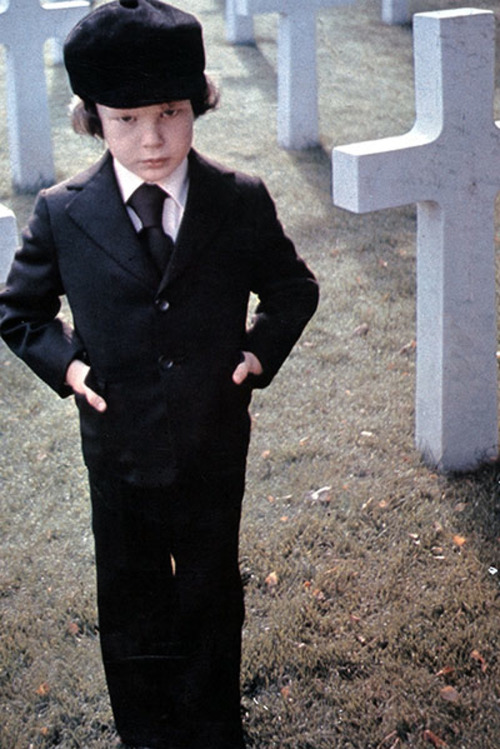
damienDamien!

What’s this? A riff on The Omen?

Nay, for it really happened. The lovers were the Kindle and Twitter. And their child is that brain-eating spawn, social media marketing.

When the child turned one, writers were just starting to figure out they could profitably self-publish on the Kindle platform.

They also saw Twitter exploding with users. They began to reason: Hey! What an easy way to reach a zillion potential book buyers! All I have to do is tweet out, “My new thriller is not to be missed. Buy it here!” and keep on tweeting that same message. Over and over. A dozen times a day. The money will pour in!

Which it never did, of course. For authors and businesses soon woke up to the harsh reality that Twitter is not great shakes at direct marketing. In fact, it is barely any shakes at all. It is social, and personal … but it is no citadel of commerce.

Still, addicted to hope, authors jumped upon each shiny new social media outlet that appeared. Pinterest! Tumblr! Google Plus! In truth, Instagram may be the only social media platform that has shown signs of longevity in terms of a social media marketing platform. Why do you think that so many people are interested that socialfollow helps you get followers? People are always looking to boost their numbers to appear more attractive to brands.

This addiction was fueled by enablers. Writers hoping to catch the interest of a traditional publishing house were being advised by agents and editors and critique-group chatterboxes that a gigantic social media platform was an absolute necessity for success!

Biggest load of flapdoodle since Fen-Fen, with just as many ruinous side effects.

Here’s the truth: social media madness is eating your brain, affecting your ability to concentrate and work deeply, and sabotaging the quality of your fiction––which is the one thing you cannot afford to have sabotaged if you want a long-term career!

Social media stimuli is actually akin to a drug addiction. Really. Brain scans show that constant internet users have similar brain patterns as drug addicts and alcoholics. And since social media involves another “you,” the social-you, the branded-you, the you you want to present to the world, there’s a dopamine effect. You get a good jolt of pleasure when you post, because it’s easy and it’s all about you. Which in turn makes you crave more of it.

Is Walter White behind social media madness?

The book Deep Work by Dr. Cal Newport is an eye-opener on all this. The gist of the book comes from it’s cover copy:

Deep work is the ability to focus without distraction on a cognitively demanding task. It’s a skill that allows you to quickly master complicated information and produce better results in less time. Deep work will make you better at what you do and provide the sense of true fulfillment that comes from craftsmanship. In short, deep work is like a super power in our increasingly competitive twenty-first century economy. And yet, most people have lost the ability to go deep-spending their days instead in a frantic blur of e-mail and social media, not even realizing there’s a better way.

Writing a novel is hard work. So the moment you get to a challenging spot, your brain starts to crave the easy pleasure and fast distraction of hopping onto the internet. The more you follow that impulse, the stronger the impulse center grows.

Thus, you’ll be distracted from your fiction all the time. Your ability to concentrate and stay engaged, and actually work through a writing problem toward a breakthrough, will weaken. You’ll be like a former champion pole vaulter who has started to take frequent breaks from training to snag donuts and coffee. Instead of vaulting to greater heights, the bar is going to have to be set lower and lower. Pretty soon, you’ll be doing The Limbo.

After reading Newport’s book, I saw how much of it applied to me. I’d fallen into some bad habits. Too often as I wrote I’d find an excuse to go check social media, which took me out of “flow” and often kept me distracted far too long.

This, in turn, hurt my concentration in other areas, like reading. I noticed that I’d only get through a few pages in a book before I’d feel like checking Twitter or Feedly or some news sites. I was losing the ability to “get lost” in a book, one of the main pleasures of reading. (Fess up. It’s happened to you, too, hasn’t it?)

So I took some steps that have helped enormously, and now pass them on to you:

  1. Schedule your internet time

Do not go on the net at all, ever, without scheduling the time to do so. When you sit down to write or read a book, give yourself a slot––one, two, three hours––during which you will not go net surfing at all. Then jot down the exact time you’ll do some internet, what your objective is (news, email, social media, etc.), and how much time you’ll allow for it.

Do this for the entire day.

At first, you’ll notice as you work that the strong call of the internet is still there. Like the Sirens singing to Odysseus. Fight off that urge every time it arises! Put yourself back into the pages or the books. Slowly, but most certainly, you’ll retrain yourself to concentrate on matters at hand. It’s a great feeling to get that back! And your writing will be stronger, your reading comprehension better.

  1. Mute your phone

And put it somewhere where you can’t see it––pocket, backpack, another room. There used to be a time, youngsters, when we could take a phone “off the hook” so it wouldn’t ring. Learn from your grandparents.

  1. Do memorization exercises

This is something Newport recommends. The concentration required in memory work is good training for when you’re writing or reading or studying.

My two favorite memory books are …. wait a second …

Oh yes! The Memory Book by Harry Lorayne and Jerry Lucas, and Maximize Your Memory by Jonathan Hancock. (You can get a used copy of the latter for a song via sellers on Amazon. This is a very good deal!)

I’ve noticed that when I do memory exercises (one of my faves is memorizing phone numbers), my mind feels more alert and active when I get into my writing.

  1. Read something challenging every day

Choose a book or subject that forces you to concentrate in order to understand it. Then read and make yourself understand it!

I own a set of the Great Books (as collected by Mortimer Adler). The best part is the three-volume Syntopicon, an index of the 102 “great ideas” and the various places they are discussed in the books themselves. Each subject has a long introductory essay by Adler (this guy was an amazing brain! He knew not Twitter or Facebook!). My new goal is to read each essay and pursue the references that interest me, and take copious notes.

Here’s another idea: there are TENS OF THOUSANDS of great books, free and Kindle-ready, at Project Gutenberg. Literature, history, philosophy, memoir. Some starter titles I recommend:

A Manual of the Art of Fiction

The Journal of Henri-Frederic Amiel

Democracy in America

Moonbeams from the Larger Luncay

Now, I don’t advocate you ditch all social media. My own view is that you ought to specialize in one outlet and do it because you enjoy it. I specialize in Twitter, with some Facebook presence, and of course my Sunday posts here at TKZ.

pac-manBut I do, however, counsel that you take a hard look at your social media practices. Are you using it, or is it using you? Are you getting on it first thing in the morning (when you could be writing your Nifty 350 or Furious 500?). Are you haphazard about it during the day? Do you stop randomly as you write to go check something out on YouTube, Twitter, or Facebook? (If so, you could be a YouTwitFace). Do you check your phone several times an hour?

My guess is that for 97.8% of you, there’s brain-eating going on. It’s Pac-Man in the synapses! Time to unplug that game!

Does this ring true? What’s been your long-term experience with social media? Madness or method?

(Here’s the talk by Cal Newport that started me thinking about all this):

FIRST PAGE CRITIQUE: (No Title) by Anonymous

annalisa-and-colman2

Photograph (c) 2015 by Annalisa Hartlaub. All rights reserved.


Anonymous, on behalf of all the of TKZ family  I bid you welcome and thank you for submitting to our FIRST PAGE CRITIQUE and thus braving the constructive slings and arrows which may or may not be coming your way!

“Lyssa, come back!” the large, dark haired man shouted.  The woman had lured him into a hedge maze, but he suspected that was only to provide him with a false sense of security.  If the woman had survived this long, had done the things he suspected she did, there was no chance that she wouldn’t know his particular abilities.  He sighed, exhaling slowly and closing his eyes, hearing the voices on the wind as the plants themselves bent to whisper of her actions to him.  She was waiting at the center.  He hesitated, almost turning to leave but deciding that if he could not defeat this hack on his own grounds then he was doomed to fall on hers.  He strode forward, determined and defiant, the plants parting for his footsteps until he reached the end of the maze.

Lyssa saw the dwarf boxes part, a grin crawling onto her face.  She was laying on her back, her head towards the man that currently pursued her and her arms spread out to her sides, tilting her chin up to look up towards the man.  “Did you like the maze mister?  I know how much you love plants.”  She saw him hesitate again, only grinning wider, stretching comfortably on the grass.  Reaching this moment overjoyed her, the peak of her efforts, the climax of this story.  The man was reluctant, but he too had fallen to the strings that bound all living beings, and in a moment he would be no more than a mere puppet, a toy for her to toss away as she became bored with him.  Toys were never any fun after they stopped working.

He had loved her like a daughter.  He still did, but he needed to know what she was.  He continued his strong stride towards her, her words like needles in his mind, laced with that all too familiar giggle.  He snapped his fingers, the hedges moving like vines to snap around her limbs and hold her on the grounds.  She squirmed a little, but her grin did not waver in the slightest.  Was she so confident he would not kill her?  It would take only a moment like this, another snap, but he dared not imagine what the brambles would do to her if he did.

Anon, this is an intriguing opening page with an interesting premise. I like the pacing and was actually disappointed that I only had one page to read. That’s a good sign, especially for someone like myself who doesn’t read fantasy literature on a regular basis. Let’s keep that in mind as I review a few deficiencies which I think are readily remediable:

Names — Give the male character  a name at or very near to the beginning And since you have named the female character “Lyssa,” use her name rather than “the woman” as general rule. Repetitive use of  “the woman” and “the man” tends to depersonalize both of them; when we’re reading we want to get them in focus a little more clearly and naming them will do that.  often than not. And let’s use the term “dwarf boxes” — a terrific name — repetitively instead of “plants,” at least for a couple of pages. Drop little hints, like breadcrumbs through the forest of your story, each one describing the dwarf boxes so that by the third page or so we know that they are plants without telling us. Show, don’t tell.

Perspective — Let’s keep the perspective with the man for the first page or two. It changes here after the first paragraph and it’s a bit of a sudden jump. Shifting perspectives so early in the story and so quickly is a bit jarring, and doing so from paragraph to paragraph is a bit much. I’m seeing a little more of the abrupt shifting, probably for the reason of creating suspense, in published books these days but it usually takes place (much) later in the story. I recommend getting your story rolling — and I mean really rolling, like several chapters — before you start doing that if you do it at all. It appears that you are trying to create what I call a “Bugs (Bunny) and Elmer (Fudd)” scenario, as in Elmer sticking his hand down the rabbit hole saying “Now I’ve got you!” to which Bugs responds, “On the contrary! I’ve got YOU!” You can do this solely from the man’s perspective. He sees her smile, hears her question about the maze, and senses her confidence but is in turn confident in his own powers over the dwarf boxes to control the situation.

Literary elements — Some of the similes, metaphors and turns of phrase in the second and third paragraphs read as if you’re trying just a little too hard. You get an ‘A’ for effort, but sometimes the phrasing is a bit awkward. “Grin crawling on her face…” Ugh. I pictured a spider or something crawling out of the grass. Try something like “The corners of her mouth slowly turned upward.” Then there is“The moment overjoyed her, the peak of her efforts, the climax of this story.”  I’m not sure what that means. The story has barely started and you’re talking about the climax. “The words like needles in his mind…” again, it’s a simile that doesn’t quite work. It’s somewhat cringe-inducing.  I think it’s just a matter of overreaching, and while there are worse sins you could commit I recommend that you focus on telling the best story you can the first time through and then going back and judiciously embellishing your sentences. A great example of a metaphor of yours that works is in the final sentence of the second paragraph. It’s simple and we can all relate.

Relationships — I’m somewhat confused about the extent of the relationship between the two characters. The man knows Lyssa’s name, and indicates that he loves her like a daughter, while from her perspective he is “the man who currently pursued her.” Again, name the man, and you can clear up the confusion by having Lyssa either call him by name, addressing him as “Stranger,” or a bit of further dialogue that hints at their familiarity with one another.

Proofreading — Proofreading is always a must, and you did a good job here, Anon, for the most part. I spotted two mistakes in one sentence in the second paragraph.  “Did you like the maze mister” would read better as “Did you like the maze, Mister?” There are probably more, but possibly not. I need a second steady eye to review my work and recommend that you employ the same if you’re not doing so already.

Anon, all else aside, I like the conflict that you have set up by the end of the page: the two characters are confronting each other, the man seemingly having Lyssa at a lethal disadvantage for a reason that you have revealed, while Lyssa seems to have a yet-unrevealed advantage of her own. Again, I really wanted to see more of this tale when I reached the conclusion of your submission. Keep plugging away and let us know when your efforts are rewarded. And thank you again for submitting your work to our First Page Critique. With that, I shall step aside and let our readers make their comments!