I Just Finished My First Novel And …

by James Scott Bell
@jamesscottbell

…I was hoping you could recommend an agent.

…I was hoping you’d have a look and tell me if I’m on the right track.

…I was hoping you’d tell me the best way to self-publish so it will have a chance to sell.

These are all variations on a theme in emails I’ve received over the years. I’ve answered each one, but calculate that in the cumulative expenditure of time I could probably have written a novel or two. I thought I’d write this blog post so the next time I get such an email I can simply send a link!

So … Hello, hopeful first-timer! And thanks for your email.

A few thoughts:

You are not ready for an agent. Most likely, that is, for an agent is not looking for a book to sell. An agent is looking for a writer to represent, one who will be able to produce quality books (plural). And by quality, I mean something that stands out, is bold and beautiful, but also has a reasonable chance to capture a significant market share. Can you say that about this first novel? And by the way, are you developing a second novel? Have you got a great idea for a third?

I can’t read your manuscript. I am a working writer, and there are only so many hours in a day. If you attend a conference where I am reading manuscripts as part of the deal, I will have a look at your first 3000 words or so. I can tell a lot about a writer in 3k…so, by the way, can an agent or editor. But outside of that limited venue, I just don’t have the time, and I don’t read for a fee. There are good teachers who do. One of them is blog brother Larry Brooks via Storyfix.

You are probably not ready to self-publish. You could be the exception, but generally speaking your first novel is going to need a lot of work. By the way, have you heard that writing is work? Making money self-publishing is work. Tossing up books that aren’t ready for prime time is not the way to make money. Becoming a professional about things is (and I use professional in the sense of doing productive things in a systematic way). You need a plan, and business sense. Here I can recommend a book.

But you’ve finished your first novel. Congratulations! That is a big step. There are more:

  • Let your manuscript sit for three weeks or so. Print out a hard copy and read it as if you had just purchased the book and it’s from a brand new author. Take minimal notes, but be looking for places where things slow down or don’t work for some reason. Mark those places.
  • Do any fixing you can. If something’s not working, try to figure out for yourself what to do about it. Books on revision, for example, can help you here. You will learn invaluable lessons that will serve you in the future.
  • Write a second draft.
  • Show your second draft to beta readers, people you know and trust to give you specific feedback. It helps to give them a checklist of questions, like this one.
  • Re-write again.
  • As this is your first novel, a pass from a good professional editor is a good investment.

You’re here? You’ve done all that? Good going! I trust, then, that you are at least halfway through the first draft of your next novel.

What?

Yep.

This is the work ethic of the career writer.

Repeat over and over the rest of your life.

Thank you for your email.

Keep writing.

JSB

Any other advice for such a one as this?

First Page Critique ‘Beware of Geeks Bearing Grifts’

Jordan Dane

@JordanDane

Bernie Madoff – DOJ photo 2009

The title of this anonymous submission gives us a clue on what this story might be about. At first pass, I had misgivings about mixing the tension of finding Granny’s body with the humor of this voice, but the title made me realize this is the voice of a grifter. I’ll have my thoughts on the flip side. Please share yours in the comments.

***

The pissy mood that sprang up when the supermarket was out of my favorite brand of salsa, evaporated at the sight of my grandmother sprawled at the foot of the stairs. I peeled the plastic bags off my right arm and dropped them on the needlepoint bench in the entryway.

“Nana?” My voice boomed in the silence of the house.

I don’t know why I said anything. It’s not like I expected an answer. I didn’t have to be a medic to interpret the sideways tilt of her head and the ninety-degree wrong way bend of her knee. There was also no need to call in the CSI team to figure out what happened. The old wood floors had soaked up most of the gin, but the outline of the shiny stain hinted that the broken glass had been full. The near-empty bottle near her head told me the glass had been refilled more than once. The cherry on top of this shit sundae was the bunched-up throw rug about halfway down the stairs.

I sat cross-legged, with my back against the elephant ear plant, sipping the dregs of her booze. At that moment, I wanted nothing more than a cigarette. I’d kicked in prison, it was easier than hustling, but if I had a pack right now, I’d be blazing up as fast as I could suck them down. I thought about calling the cops and even reached for my phone. Then, through the light liquor haze, I remembered the last time I’d voluntarily talked to the law. I’d stepped into the interrogation room and hadn’t seen daylight again for two years. I was an ex-con with a dead body on the floor and my name on all her financial accounts. I spun the bottle across the floor like a stone on a pond.

No cops.

Without a death certificate I couldn’t arrange a funeral, and even if I could, there was no money to give her the nice send-off she’d always wanted. Fixing the roof had drained most of the proceeds from the reverse mortgage. The words reverse mortgage sobered me up faster than a pot of hot coffee. The minute the bank heard that grandma had kicked they’d swoop in and take the house faster than I could say next-of-kin.

FEEDBACK

Overview: Feeling a little larcenous? After I imagined this guy coming across his dear Nana planted at the foot of the stairs (completely potted), and seeing him plop down for a drink to shrewdly think through his dilemma, I had to chuckle. Forget about a forensics team determining time of death and that his grocery receipt may give him an alibi, he’s an ex-con who would cause a good detective to put him at the top of his suspect list. What comes next for this grifter could be lots of fun.

INTRO – I would start with “Nana?” to focus on the inciting disturbance. With this being a grifter and the dark humor is apparent, I would take some of the first paragraph and add it as follows:

REWRITE example:

“Nana?” My voice boomed in the silence of the house. With my grandmother sprawled at the foot of the stairs, I forgave the supermarket for not having my favorite brand of salsa and set down my grocery bags.

POV – I’m assuming this is a man, but there is nothing that indicates this, other than reading between the lines. A way to remedy this is to have him chastise himself, using his own name, when he gets riled or finding another way to clarify gender before the reader gets too far into the narrative.

POINTS OF CLARIFICATION
1.) With the fall breaking her drinking glass, I can buy a shine left on the floor might indicate it was nearly full, but the author may want to describe the nearly empty gin bottle was unbroken. Did it have a cap on? Otherwise the shine on the floor may have come from the bottle tipping and spilling.
2.) The throw rug that caused her fall should probably be clearer that it was on the landing. I thought at first this was a stair runner or wondered why a throw rug had been on the steps.
3.) Why would she be carrying the bottle and the glass as she walked on the stairs? Was she going upstairs for bed and it was her usual habit to drink up there? She would have to be going up the stairs. I don’t know why she would be coming downstairs with the bottle and glass. Most people keep their booze downstairs.

WEIGHTY PARAGRAPHS
The paragraphs strike me as too many ideas lumped into each long train of thought. If the author broke up the elements, it would showcase the dark humor more.

REWRITE example:
I sat cross-legged, with my back against the elephant ear plant, sipping the dregs of her booze. I hated drinking alone. I raised a glass to Nana and craved a cigarette. Why the hell did I ever give up smoking? Oh, right, I remember. Selling smokes in prison had been easier than hustling.

I thought about calling the cops and even reached for my phone until deja vu cured me of stupidity. The last time I’d voluntarily talked to the law, I’d stepped into the interrogation room and hadn’t seen daylight again for two years.

I assessed my situation from a cop’s point of view. One dead body, check. One ex-con at the scene–that would be me–double check. Only one name on all the financial accounts of the dearly departed–yes, me again–trifecta check. DING! DING! DING! We have a winner.

FLOW – As I stated before, breaking apart a weighty paragraph might highlight the character’s thoughts better, show his dark humor, and highlight his train of thought flow better.

REWRITE (broken into 2 paragraphs):
Step one had to be no cops. Done, decision made. Step two, I needed a proper death certificate. Without legit paper, no funeral. Nana deserved a nice send off, but the funds from her reverse mortgage were nearly gone after fixing her roof.

Shit! The reverse mortgage sobered me faster than a good slap to the face. The minute the bank realized grandma had kicked it, they’d swoop in and take the house faster than I could say, ‘next of kin.’ Nana would’ve wanted me to have the house. That left me with only one choice.

SUMMARY:
I like where this is going, because it seems as if our ex-con has a scheme to grift grandma’s death into a fiasco. Reminds me of FARGO. I would encourage the author to get over the top with what this guy does. FARGO was based on real events. Keep piling on the absurd situation while you keep the protag deadly earnest with his situation. There’s load of potential for this plot and I love the dark humor of it.

DISCUSSION:
Where do you see this story going, TKZers? Constructive comments on the writing would be appreciated.

VIGILANTE JUSTICE (Available Now) $1.99 Ebook
In Montana, when a disturbing pattern of missing teens and college students falls under the FBI’s radar, former CIA operative Mercer Broderick fears the violent abductions are at the heart of a dark web of conspiracy that must be stopped and Brotherhood Protectors won’t be denied from the fight.

On Vacation

by John Gilstrap

Good morning, everyone.  It was my intent to have a compelling piece posted here this morning on the topic of marketing.  In fact, the title of the piece is “Always Be Marketing.”  But here’s the thing: I’m on vacation, and the current draft kind of sucks.

So, rather than posting something that is sucky, I thought I’d take this week off.  See you in two, with a well-considered and edited piece on marketing.  Happy Independence Day!

Do You Have the Title Gene?

Purposely bad cover created by my sister Kelly to go with bad title

By PJ Parrish

Let me run something by you, just for your opinion. Which of these titles grabs you for a thriller/mystery?

Somebody’s Daughter
Hunger Moon
A Walk in the Woods

We’ll get back to those in a second. But now, let’s talk about one of the most important things you need to succeed in this business. Forget talent, forget perseverance, forget craftsmanship. Even forget luck. I’m thinking today that what you really need is The Title Gene.

Okay, I am being a little flip here (That happens when you’re coming off a bad writing day and no sleep). Of course you need all those other things. But I am beginning to think that you just can’t discount having the knack for great titles. It’s a different talent than book writing. It’s akin to headline writing in journalism. (I once made my living doing this). You have to sum up in one to five words the heart and soul of your story. And make it sound sexy, exciting and oh-so different from every other book screaming for attention on the shelves.

I think we give good title. But I tell you, it is getting harder and harder to come up with something fresh in the crime writing business. How many variations are there on all the usual buzzwords — death, black, darkness, grave, murder, cold, midnight, evil? You get the point.

Titles are a little bit like bras. Finding the right one is a deeply frustrating, uncomfortable exercise and you have to try on a bunch of them to find one that really fits. (Men, you’re on your own here — jockstraps?)

Our first book Dark of of the Moon began life as The Last Rose of Summer (Yuck…and too romancy) and mutated into Circle of Evil (not bad but a little heard-that-before) before I found the Langston Hughes poem “Silhouette” that inspired it.  The line was: “Southern gentle lady, do not swoon. They’ve just hung a black man in the dark of the moon.”

Our third book Paint It Black? Well, just listen to the lyrics of the Rolling Stones’ song and you get the shivers. We went back to the Stones for our first stand alone thriller, in their song “Too Much Blood.” We wanted to use that as our title but our editor nixed it and came up with The Killing Song.  I still like the Stones title better.

Then there’s our book Thicker Than Water. It’s a good story, one of my faves, but man, what a lousy title. And guess what? It was our worst-seller. Its original title was Flesh and Blood but Jonathon Kellerman had a book coming out the same time with the same title and our editor told us, “Your book will suffer.” Lisa Gardner had a book called Gone, same title as Kellerman. I wonder if she suffered?

We followed up with Island of Bones. Can’t go wrong with “bones” on a title and frankly, we hit on the title before we had a plot for this one. It sold really well.

Then came A Killing Rain. We didn’t have a title until we were almost done, and while writing a synopsis for the marketing people, I wrote: “The story takes place during a Florida cold snap, what the farmers here call a killing rain.” Well, duh. But here’s a postscript. M Continue reading

From Idea to Novel

Starting a new project is always nerve wracking – there’s the empty page for starters but then there’s also making sure that the idea is sufficient to form the foundation for a complete novel. Generating ideas has never been my problem – a number pop into my head each day and some are sufficiently intriguing that I jot them down in my ‘ideas book’ to see if they will gradually begin to take shape in my mind to form the foundation for a story. Many ideas fall by the wayside at this point – because while they interest me, they never really coalesce into a premise that can sustain a novel. Even after that, I’m consumed with doubts…although I’ve really only had one story die after I’d finished the first draft because I realized the premise was too convoluted and confused (the idea, though still holds promise!).

I’m about to embark on a new WIP and I’m at the doubt-filled stage of wrestling with a new idea. Since I have other projects in various stages of the submission process, it’s definitely time to knuckle down to a new manuscript but in this early stage of the creative process I have to grapple with how to formulate an idea into (hopefully!) a great story.

My process (such that it is) usually goes something like this:

  • Light-bulb moment – new idea starts to whip round in the brain and, of course, I think it’s awesome.
  • Write down idea in vague terms – lots of questions and possibilities…
  • Start research (almost always involving some historical period/event)
  • First doubts – which way to proceed? More questions than answers? Do I have enough for a novel??
  • Begin to outline a proposal to help shape the idea into a real concept and (ultimately, I hope) the premise for a novel. This is usually when the second round of doubts start to hit… Sometimes I end up with multiple proposals revolving around the same initial idea as I fumble around trying to decide if this project really is ready to get off the ground.
  • More research = more procrastination and sometimes panic that whole idea really sucks…
  • Send outline to beta readers for feedback – see if it’s intriguing and clear enough (my issue is always one of complicating rather than simplifying a story!)
  • After feedback – sometimes involving a choice between proposals – I send to my agent for her initial read/buy in. This is where I have to formulate the log-line/blurb so I can succinctly describe it to her and others.
  • Once I have agent buy-in I start on an outline and the first chapters to establish the POV/Voice for the book (I spend a long time on the first chapters feeling my way into the book as well as drafting an outline of where I’m headed with the plot/characters)
  • More research (I like to hide between the pages of history books!) = procrastination
  • Finally begin draft!

So TKZers how do you go from idea to first draft? Do you spend time, like me, formulating the premise and making sure your idea is sufficient to sustain a novel? Or do you just set off writing from the get go with the confidence that it will all come together and work out in the end? What’s your process?


Listening to Your Book

by James Scott Bell
@jamesscottbell

You know how sometimes you get home from a social gathering and think of the perfect line you didn’t say?

It’s like that episode of Seinfeld where George is in a meeting and is gorging on the shrimp tray. Another guy says, “Hey George, the ocean called. They’re running out of shrimp.” Everyone laughs at George, who has no comeback.

So he spends the whole episode trying to come up with the perfect rejoinder, and to set up another meeting with the same guy. The line George settles on is, “Oh yeah? Well, the jerk store called. They’re running out of you.”

This line fails to impress Jerry, Elaine, or Kramer. But George insists that’s the one!

Near the end he has his meeting, and has brought the shrimp himself. He stuffs his face until his rival once again says, “Hey George, the ocean called. They’re running out of shrimp.”

With a smug smile, George stands and says, “Oh yeah? Well the jerk store called. They’re running out of you.”

But then his adversary immediately comes back at him: “What’s the difference? You’re their all-time bestseller!” And once again, everyone laughs at George (which is really sort of the premise of the show, right?)

I thought about poor George the other day as I was considering how to take advantage of unbidden suggestions from our deep writer’s mind, as poised against “the best laid plans…” It’s a matter of three things, I think: awareness, craft and risk.

The best impromptu line I ever delivered came at one of the Men of Mystery gatherings. This is an annual event in SoCal which brings in fans of mysteries to listen to fifty authors pitch their books for one minute each—and then enjoy a nice lunch and a keynote.

This particular year the ballroom was packed.

As the microphone made its way down my row, the author two tables away spoke about his noir series and how it takes place in the “seamy underbelly of the city.”

The next author was a fine fellow named Mike Befeler, a senior citizen writer of what he calls “Geezer lit.” These are mysteries set in places like retirement homes. Mike made his amusing pitch.

Then the mic came to me. And I said, “Mike, I have one question. In your genre does seamy underbelly have a different connotation?”

The laughter was explosive. It’s probably my favorite moment as a public speaker. Everything just fell together. First, the conditions, of which I was acutely aware, because I was actually listening. Next, the craft of the English sentence, forming one for the best effect. Finally, taking a risk, for how many times have we heard a comedian tell a joke and get crickets in return?

Fortunately, it all worked out. It will in your writing, too, if you learn to listen to the book, respond to it with craft, and risk some writing time. Yes, it could turn out to actually be the wrong move. But sometimes you have to write to find out.

This applies whether you are a planner, a pantser or some sort of breed in between. When you’re into the actual writing, the book should start to take on life. It should whisper to you on occasion, and sometimes maybe make some demands.

It might be a character who talks back to you. I wrote a novel once with a fairly detailed outline. It was about a lawyer being stalked by an old enemy, putting both him and his wife in danger. I had planned to have the wife get out of town for awhile and stay with a relative.

But when I got to that scene, the wife refused to leave. I tried to get her out the door, but every move I attempted felt false. I finally had to accept the fact that the character was right.

Which meant, of course, adjusting my plans. As I recall, it took me a couple of hours to move around the pieces and account for the ripple effects. I made use of my novel journal. This is a free-form document where I “talk” to myself about the book. I usually do most of this in the pre-planning stages, getting to know the story and characters, setting down plot ideas and delving deeper into why I am drawn to this story.

But the novel journal is an extremely valuable tool during the writing itself. (For Scrivener users, the “Project Notes” pane is a great way to do it.)

Now, you pure pantsers are always doing a lot of listening. Your challenge is to know which voices to heed! Often you don’t find this out without a lot of wandering around in the woods, falling into bogs, retracing your steps and realizing that wasn’t such a good voice after all.

Plotters, on the other hand, often resist listening at all because their outline is a finely-honed edifice they are loathe to mess with.

In either case, the more craft you know, the better moves you will make. For example, if you’re aware of what needs to happen structurally, at the very least you’ll save yourself a lot of time and frustration. As I mentioned in a comment to Joe H. yesterday, it’s good to have a map of the signposts.

And then, finally, it comes down to risk. There should always be some risks in your writing, or you’re not pushing yourself far enough along. And you know what else? Taking risks is one of the great joys of writing, no matter how it turns out.

I experienced that just a few weeks ago. I was rolling along in the first act of my WIP. I had a map of my signpost scenes, and knew the “mirror moment.” Then suddenly, out of the blue, and I mean way out of the blue, one of my characters said something that was so shocking, so upside-down turning, that I literally sat back in my chair and stared at the screen.

I hadn’t planned it, I never anticipated it. This one line would completely change the trajectory of the novel. I had to think about it, and you know what I decided? It’s one of the best doggone twists I’ve ever come up with (or should I say my book came up with it and fed it to me?) So I’m keeping it, man. I went into my novel journal and started justifying the change and creating a whole new backstory.

In my humble writer’s opinion, it is much better than what I started out with—because I listened to the book, am trusting my craft, and am taking the risk.

And loving it.

You will, too … if you listen.

Do you ever hear your books talking to you? How often do your characters wander off your chosen path? How does your craft serve you in those times?

Getting to Z Street

Photo by Hermes Rivera on Unspash

My younger daughter Annalisa during her third year of life started talking about “Z Street.” We had no idea what she was talking about, but it was nonetheless interesting. There were apparently all sorts of things and many different stores on Z Street. Most of her sentences began with “On Z Street, there is…” or “On Z Street, they have…”. I asked her late on one afternoon if she knew where Z Steet was. She answered, “Sure!” I said, “Okay. Show me.” We jumped in the car and a couple of minutes later we were on the road while Annalisa eerily prefigured a talking GPS unit, telling me, with steadily decreasing confidence, to turn right at the next light, then left at the next corner and so on and so forth. We ultimately arrived behind a shopping center where we found ourselves parked by a couple of dumpsters and several stacks of palettes behind a Kroger. “So this is it?” I asked. Annalisa told me yes, with some hesitation. It was all good. Z Street had a Jersey Mike’s nearby, and the Hartlaub family had a fine meal to top off the journey. Annalisa, for her part, never mentioned Z Street again, opting instead to talk about her “owl friend.” 

More on the owl friend in a bit. Annalisa’s directions to Z Street were a terrific example of the writing process known as “pantsing.” She had a concept in her head which told her what Z Street was but really no idea of how to get there.  She comes by this honestly. I am horrible at outlining, which in part is why in my longer work I more often than not found myself…well, sitting at the rump end of someplace and looking at the mental equivalence of pallets and dumpsters. This isn’t the case with every author, of course. James Lee Burke reportedly has no idea about what his next book is going to be about until he starts writing, yet he arguably writes better than anyone. I don’t think that Cormac McCarthy outlines either. Jeffery Deaver, however, outlines obsessively, spending as much time outlining as he does writing the novel, year in and year out. It certainly has held him in wonderful stead.

I had an epiphany a few weeks ago about all of this when I suddenly realized how to get over a roadblock in a novel I’ve been working on for a bit now. Part of the epiphany included the unfortunate realization that the roadblock didn’t just suddenly appear in the story. I had, at some earlier point in the narrative, snuck ahead and built it without realizing it and without building a reasonable detour around it. I could have solved all of that by outlining, but let’s not forget…(cue up the chorus)… “I am horrible at outlining.”

What I want to report — to share with you — is that I worked my way around it. I thought about Z Street, and how I travel. I drive everywhere, and don’t like getting lost, so I map out my journey. I check hotel prices and distances and gas stations and how far it is between Cracker Barrels and Sonics and how long it’s going to take me to get where I’m going. Oh, and speed traps. I check for speed traps. Some folks use AAA, but I do it myself. The realization hit me: what is outlining, if it isn’t a self-made Triptik, or map, for writers?

I’m outlining now. What I do more resembles a map than an outline like you might use, but it’s getting me there. And if I want to pull away from what I have outlined and take a scenic diversion, why, that’s okay too. It’s my trip. I hope to tell you about it sooner rather than later.

I have one more thing, in case some of you are wondering about “the owl friend.” It became a constant source of reference for Annalisa. Accordingly, while on a family vacation in New Orleans a few months later, we were in the Audubon Aquarium of the Americas and walked into the aviary. “Look, Annalisa,” I said, point up toward the top of a sloping rock wall, at a wise old bird sitting quietly on a ledge. “Is that your owl friend?” Annalisa immediately detached herself from me and started scampering up the wall on all fours. She almost got away from me on that one. The owl reacted by peering imperiously down at us, as if to say, “Whaddya want from me?” I of course had no answer, nor did Annalisa when I asked her, “So. What would you have done with him when you got him?”

Enough about me. Let’s talk about you. Are you outlining your story/Great American Novel? How are you doing it? In the traditional manner, like Jim Bell learned (and I didn’t) in Catholic school? With post it notes on a giant bulletin board (Yo! P.J. Parrish!) As if it is a map? Or some other way? Please share.


Writers on Social Media: Does It Even Make a Difference?

Posting on social media can feel like you’re sending up hundreds of trial balloons. Which will return?

Today I want to share some thoughts with you about a writer’s role on social media. I’ll start with my experience and understanding of it, but I’m very curious to know what your thoughts and experiences are, so there are lots of questions for you at the end. Also, just to say, whatever you put on the internet, look into using something like a privacy tool to help reduce the risk of your data or any other form of work being stolen or invaded. It’s just about being safe online.

I’ve been very active in social media since 2006 and MySpace. I liked MySpace a lot. It was new and fun, and I dove right into it as soon as I signed my first book contract. Author book promotion was in its infancy, and I gained reader, writer, and social connections. Other emerging writers and I were all trying to figure out book promo/social networking together. I blogged there several times a week, usually writing long, long pieces that were very essay-like. Telling stories on myself. Talking about learning to write, and the publishing process. When MySpace began to wane, I—and many other folks—drifted to Crimespace and eventually Facebook. Group blogs like Jungle Red Writers and Murderati sprang up. (Forgive me if I don’t know when Kill Zone began, but I know someone here will be able to say.) I started my own Blogspot blog, where I added interviews and book reviews. Last year, I moved my blog to my (fourth) website.

That all sounds like ancient history doesn’t it? Maybe I’m just old, but the pace of change on the Internet sometimes feels inconceivably fast. The rules—especially the rules for author promotion–change constantly. But the biggest rule is that there are no rules because things move so quickly that there’s little time for non-professionals to figure out what works before things change again. You would think publishers would have entire departments full of professionals that have this stuff figured out, but you would be wrong.

There’s a genuine expectation—sometimes stated, sometimes just understood—for authors to be active on social media. For now, author social media outlets have stabilized: Facebook, LinkedIn, Twitter, Pinterest, Instagram, Goodreads. I don’t know many authors who are very active on Google +, or Snapchat—well, I tried Snapchat and it made me crazy. Some Instagram authors can also use websites like Kenji to boost their content out to people that it would never reach before and may even one day become a key influencer because of it! If there are other very active platforms, please let us know. (Oh, and if someone could help me figure out Instagram Stories so I don’t end up just taking live video of my shoes until I freak out and turn it off, I’d be eternally grateful.)

While many people in the writing/publishing business strongly believe that social media doesn’t sell books, some folks disagree. I’ve put up a lot of links here, but if you want to save a few clicks, here’s the gist: Social media is there to build relationships. The aspect of building relationships is key, no matter on what industry you work within. Take a look at examples of Digital Transformation to see why this is important and how you can use it to your advantage.

People with whom you have relationships will like you. If they like you AND you spend at least 80% of your time giving them great “content” they will tolerate the 20% of time you spend promoting your work. But the conversion rate will be less than 2%, which means you’re selling yourself and your time very, very cheaply. But folks truly dislike a hard sell. Many of the people who say you can sell books through social media want you to pay them to tell you how to do it, and they won’t give you quantifiable forecasts.

(Traditionally published books still sell best through tried and true methods like word-of-mouth, tv, radio, magazine, and web ads, vertical marketing to influencers like librarians and booksellers, hand-selling, and peer reviews. But almost none of those methods is free, and it’s only rational that publishers would prefer free methods that rely on author execution to methods that cost money.)

What is content? Content is added value, often in the form of information: lists, quizzes, articles, expertise, audio or video entertainment, memes, blogs, observations. Given the 80/20 rule, if you do fifty posts in a week, the theory is that at least forty of them should be content and not mention your work at all. Ideally, the content should be at least tangentially related to your field of expertise or the lifestyles of your audience. But even if you automate those posts with Buffer or HootSuite or some other social media-scheduling program, it takes time to curate that content.

A brief cautionary tale: A self-published writer I know spends a lot of time posting on Instagram, but I’d say 80-90% of the writer’s posts are specifically about the book. They’re quotes formatted as memes, or pictures of the cover, or bits of dialogue taken out of context and framed with artistic graphics. The posts are careful and attractive, but I gloss over them, and even find myself a little angry at having to scroll past them every time I log onto Instagram. If the 80/20-percentage figure is at all valid, it’s completely upside down. And the writer uses a blue million hashtags, but only ever gets 10 or 11 likes. I can only imagine how much time the writer spends creating those posts (or perhaps the writer pays for them). Plus, even though it almost looks like content, it’s not, and is off-putting.

There are two big dangers for me when it comes to content. I spend a lot of time crafting my blog posts. This one (I’m adding this bit in editing) has taken me about 3.5 hours, and I’ll spend at least another 45 minutes editing and posting it. On my own daily blog, it’s a challenge to come up with fresh concepts. Then there’s finding the right photos, adding links, and pumping up the SEO. Unfortunately there’s no way to quantify the ROI on publishing blog posts. Another particular danger for me is rabbit holes. Ideally, I like to spend about thirty minutes online in the morning checking out news stories and resources for my own amusement and edification—but I often spend an hour or more. Usually, I’ll manage to bookmark only one or two links to pass on to social media. But which ones to choose?

I read a lot of crime news stories—many are too sensitive or explicit to share without grossing people out over their morning coffee. But I also read some politics (no, never post about that), bits of history and archeology, and stories about textiles or architecture. I’ll occasionally post about writing and books. Nearly everyone likes books. But I don’t think of my personal blog audience as being full of writers. I’m not selling books on writing, and few people who aren’t writers care about writing motivation, or how to build a character. So I save the writer-centric stuff for here or my own blogs about the writing life.

Making content choices is tough. And how much me should my audience have to bear? Where is the balance between plucking out articles that might interest the people who might be interested in my writing, and sharing bits of my life that might actually make me human and likeable? The whole thing feels a bit cynical to me.

I do like this quote from Amy Cuddy’s deservedly influential book, Presence: Bringing your Boldest Self to your Biggest Challenges. “When we are trying to manage the impression we’re making on others, we’re choreographing ourselves in an unnatural way. This is hard work, and we don’t have the cognitive and emotional bandwidth to do it well. The result is that we come across as fake.”

Coming off as fake is never, ever good.
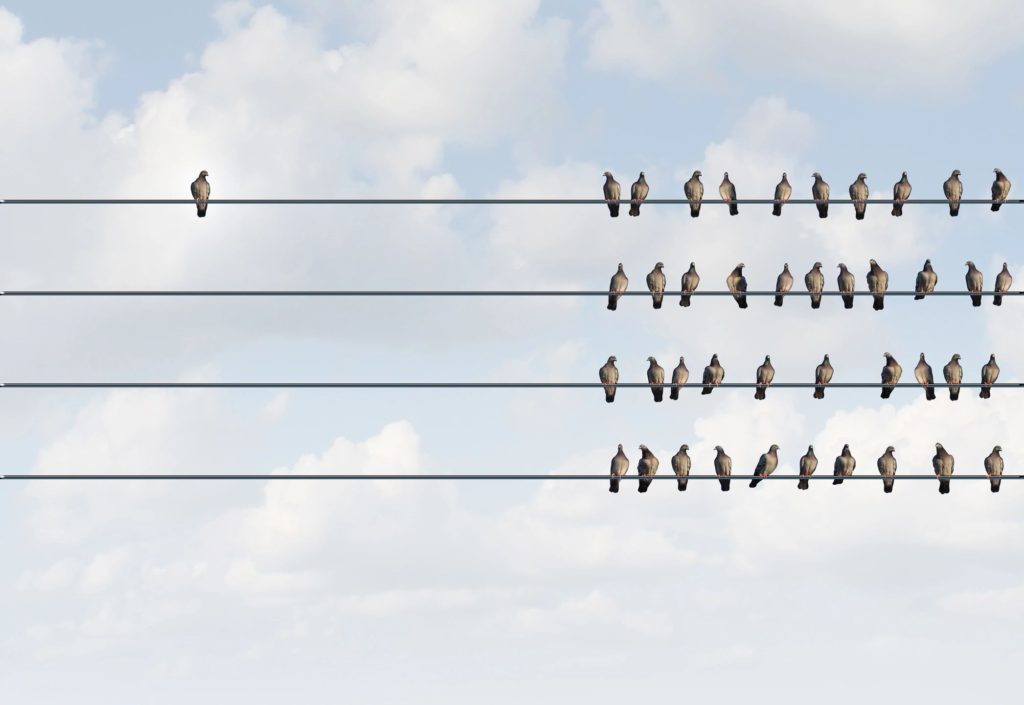
Be an individual. Be yourself.

As someone born in the sixties at the tail end of the baby boom, I grew up reading books and newspapers, and watching television and films. No one knew anything about authors. They rarely showed up on television, and if they did, they were already super famous. It was a time when public images were carefully crafted by publicists, agencies, network people, and record labels. Image crafting now begins at birth. Children—and not just celebrity children—have their own Snapchat and Instagram accounts curated by their parents. Soon after, kids learn how to use phone cameras, and take selfies. And they’re not posting pictures of their dirty bedrooms. They’re curating their lives, using images for complaints (school lunches) or self-gratification (I’m wearing blue and puce eyeliner every day this week, and check out my #hairfail hahaha!). They learn early to make their lives appear as they want them to appear. Who knows what’s real?

An entire generation is learning to promote without actually having something to promote. We writers have a LOT of competition for time, interest, and dollars. (Because a lot of people on social media are selling something, or their sponsors are.)

Personally, I don’t remember ever purchasing a book after seeing it on the author’s social media, unless I had already planned to buy the book. Fiction writers seriously are not the best representatives of their own writing—and, of course, their ultimate goal is always to sell me their books. I’m more likely to buy books after reading reviews, associated news stories or essays, coming upon compelling covers, or listening to word-of-mouth from booksellers or friends (sometime even social media friends), or other people I respect.

I buy into the notion that maintaining an active social media presence—including one on one contact through newsletters—is part of a professional writer’s job. But how little is not enough, and how much is too much?

All right. I asked for your help, but I’ve done a whole lot of talking. Now it’s your turn. I have many discussion questions, so feel free to pick and choose. I can’t wait to read what you have to say.

How important is it for a writer to have a strong social media presence?

If you participate, are you programmatic about it?

Do you enjoy it?

How much time do you spend on it daily, and/or weekly?

Who are some writers that you see doing a great job at social media?

And the $64,000 question: Have you ever bought a book because of an author’s social media posts?

**Photos via GoDaddy Stock