On a long drive, if you could only listen to one group or singer, who would it be?

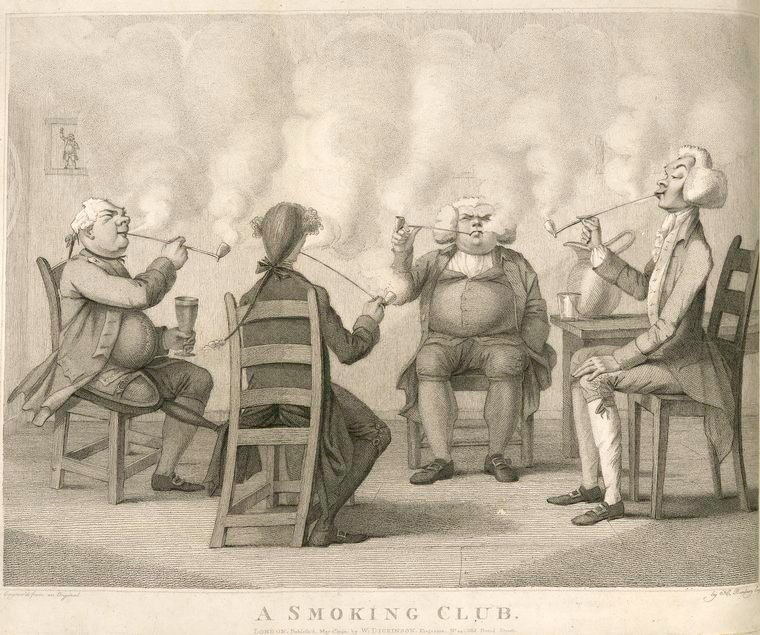
These gentlemen of bygone days knew how to double up on bad habits–sit and smoke.
“Sitting is the new smoking”— Dr. James Levine of the Mayo Clinic.
The writer’s job is to plunk our butts in chairs and produce words day in, day out. As a result, posture suffers, eyes blur, brains fog, carpals cramp, and rear ends keep getting wider. In extreme cases, Butt-in-Chair Syndrome leads to the dreaded Dead Butt Syndrome (you can’t make this stuff up!).
Here’s a countdown of five easy tips to counteract the occupational hazards of our profession:
Sitting hunched over a computer leads to shallow breathing. The lungs need to fully expand to allow oxygen to fill the alveoli (little air sacs) and move into the bloodstream. The shallower the breathing, the less oxygen flows through the blood to the brain. The less oxygen, the harder for the brain to solve problems in stories.
According to yoga practitioners, deep exhalation is even more vital than inhalation, because exhalation flushes carbon dioxide out of the body.
If you don’t exhale fully, it’s like sticking a banana in the tailpipe of a car. Fresh air can’t get in, gases build up, and pretty soon the engine stalls and quits.
New ideas, brilliant plot twists, and compelling characters require a fresh intake of oxygen and a full expulsion of carbon dioxide.
Effective breathing is easy:
Sit straight with your butt tucked against the chair back. Lift your chest, arch your spine and pull your shoulder blades together, then allow shoulders to drop. Contract abdominal muscles to press your belly button toward your spine. Place a hand on your belly and inhale for a slow ten-count. Feel your abdomen expand as you draw air in. Hold for a slow ten-count. Then exhale slowly until you completely empty the lungs. Repeat several times an hour. You may feel tingling in the scalp.
Your mom always told you to sit up straight. Turns out she was right. According to I.A. Kapandji, MD: “For every inch of Forward Head Posture, it can increase the weight of the head on the spine by an additional 10 pounds.” In other words, if a normal 12 pound head leans three inches closer to the computer screen, it now feels more like 42 pounds. Yikes!

Over time, that additional pressure can lead to neck and spine problems that may become permanent.
It’s always better to prevent problems than try to reverse them.
To counteract the tendency to slump forward, sit with your rear end tucked firmly against the chair back. Lift your chest, arch your spine and pull your shoulder blades together.
Hmmm, isn’t this the same position for deep breathing? You can take care of two exercises at once—talk about efficient. Your mom would be proud.
Caution: Stretching should NEVER be painful; if you feel discomfort, STOP!
Many writers suffer from numbness, tingling, and pain in wrists and hands from carpal tunnel syndrome which occurs when the median nerve to the hand is compressed in the wrist. Treatment options range from NSAIDs (hard on the stomach, liver, and kidneys) to splints/braces (uncomfortable and awkward to type while wearing) to steroid injections (ouch!) to surgery (been there, done that, not fun).
Simple stretches can help alleviate symptoms. Extend your arm in front of you, palm up. Bending your wrist, use your other hand to gently pull the fingers of your extended hand toward you until you feel a mild to moderate stretch in your wrist. Hold for 15-30 seconds. Repeat with the opposite hand.

For more stretches, visit this link.
Do you have 20/20/20 vision? No, that’s not a typo, but rather an exercise suggested by eye doctors to counteract eyestrain and blurry vision from too much screen time.
Every 20 minutes, look away from your screen to an object at least 20 feet away and focus on it for at least 20 seconds.
For more eye exercises, check out: http://www.allaboutvision.com/cvs/irritated.htm
And finally, my favorite exercise…
When you take your dog for a walk, she knows what she’s supposed to do. The writer’s brain can be trained and reinforced with praise the same way you train your pooch. As you move muscles and increase blood flow, your brain expels waste.
I confess during walks I’ve left many hot, steaming piles along the pathway. The best part is, unlike the dog, I don’t need a baggie to pick them up!
Once waste thoughts are cleared out, there’s room for new ideas and solutions to bubble up from the subconscious (Check out Jim Bell’s classic post about “the boys in the basement”).
Start training your brain with a small problem: let’s say you’re seeking a particular word that’s eluding you, despite searching the thesaurus. Go for a short walk and let the brain relax. After a few minutes of exercise and fresh air, the elusive word often pops up from the subconscious.
Give yourself a pat on the head and praise, “Good brain!”

A Milk Bone is optional, your choice.
Pretty soon, the subconscious learns that when you take a walk, it’s expected to perform, just like Fifi. While it sniffs the bushes and chases a squirrel, it’s also learning to deliver fresh ideas and solutions. The more you positively reinforce the subconscious for its results, the better and more frequently it comes up with solutions.
Walking works for me 100% of the time because my brain is conditioned. If I’m stumped about what a character should do next, or if the plot gets lost down a rabbit hole, I take a spin around the neighborhood. Before long, the uncertain character now knows her next move; or the rabbit hole has led to an unexpected escape route. I can’t wait to rush back to the keyboard eager to implement the solutions my subconscious offered up.
Wishing you good health and good writing in the New Year!
TKZers, do you have a favorite exercise that helps your writing?
Debbie Burke is often found aimlessly wandering the streets, claiming she’s at work. Her thriller Instrument of the Devil is on sale at Amazon for 99 cents during January.

(Photo by author)
I love it when a reader tells me one of my books gave them a good scare. Oddly enough, despite having written many dark suspense and gothic novels and stories, I’ve rarely actually set out to frighten readers. The scares in my stories are incidental to their unfolding.
Though, now that I think about it, there was one time I tried my hand at a truly creepy passage, but my editor shot it down. In my first novel, Isabella Moon, I thought it would be very cool for the villain to roll the decapitated head of my heroine’s erstwhile love interest into the kitchen to scare the hell out of her. The image seemed dramatic and seriously creepy to me, but my editor said it went too far. And I knew he was right. So I took it out. (Also, take note. DON’T kill off the love interest unless you’re writing a tragic love story, or you reveal that the love interest was a bad, bad person, and probably deserved to die. It’s almost, but not quite, as bad as killing a fictional dog or cat or rabbit or bird or mouse or even a particularly memorable flea. Kill all the humans you like, but leave the critters alone unless your story’s about the life of a very lovable dog that dies peacefully in its sleep.)
You don’t have to be writing a horror or suspense story to make good use of fear. Fear is a remarkable motivator in both life and fiction. I’m convinced that I write crime stories because I’m the most paranoid person I know.
When we write about things that frighten us, chances are there will be lots of readers who share our fears. We can exploit (terrible word, but I mean it in the nicest way) those fears and redeem ourselves through characters that may suffer for a while, but journey to overcome their fears or terrifying situations.
As humans we all have fears. They don’t have to be big, bloody fears, or deeply felt emotional fears to propel or inspire a story. They can be as small as a spider or as microscopic as damaged chromosomes. Resonance is the important thing.
Here’s a list of fears that immediately spark stories of all sorts for me:
Fear of death.
Fear of being submerged in water.
Fear of my embarrassing secrets being revealed in public.
Fear of losing a child.
Fear of being blackmailed.
Fear of being taken advantage of.
Fear of success.
Fear of being a failure.
Fear of a bug crawling in one’s ear or nose.
Fear of being watched in a lighted house from the darkness outside.
Fear of being pulled over by a fake cop on a lonesome road.
Fear of being mistaken for a criminal.
Fear of home invasion.
Fear of the apocalypse.
Fear of snakes in the house.
Fear of roaming packs of dogs.
Fear of being watched through a computer’s camera.
Fear of being kidnapped.
Fear of a child being hurt or being killed by one’s carelessness.
Fear of being judged and found wanting.
Fear of being too happy, because it can’t last.
Fear of one’s eye(s) being gouged out.
Fear of the supernatural.
Fear of random violence.
Fear of cancer.
Fear of loving too much.
Fear of poverty.
Fear of seeing open, bleeding wounds.
Fear of corpses.
Fear of being wrong.
Fear of betrayal.
Fear of snarky groups of teenage girls.
Fear of being vulnerable.
Fear of losing a lover.
Fear of losing a friendship.
As you can see from the list, many of these fears are close to being universal for humans. Readers always want to discover things in stories that they can identify with. It’s all about the resonance, and not so much about the shock value.
I’d love for you to add to this list!
 Whenever the “boys in the back room” go on strike and fresh writing ideas are nowhere to be found, social media can sometimes provide a quick injection of inspiration. It can also function as a needed cattle prod to getting off one’s lazy caboose.
A late-night surfing safari turned up a few of these little gems from social media cicerones:
From the “Thing Could Be Worse” files

How writers should handle bad reviews

“You are without a doubt the worst writer I’ve ever heard of.”
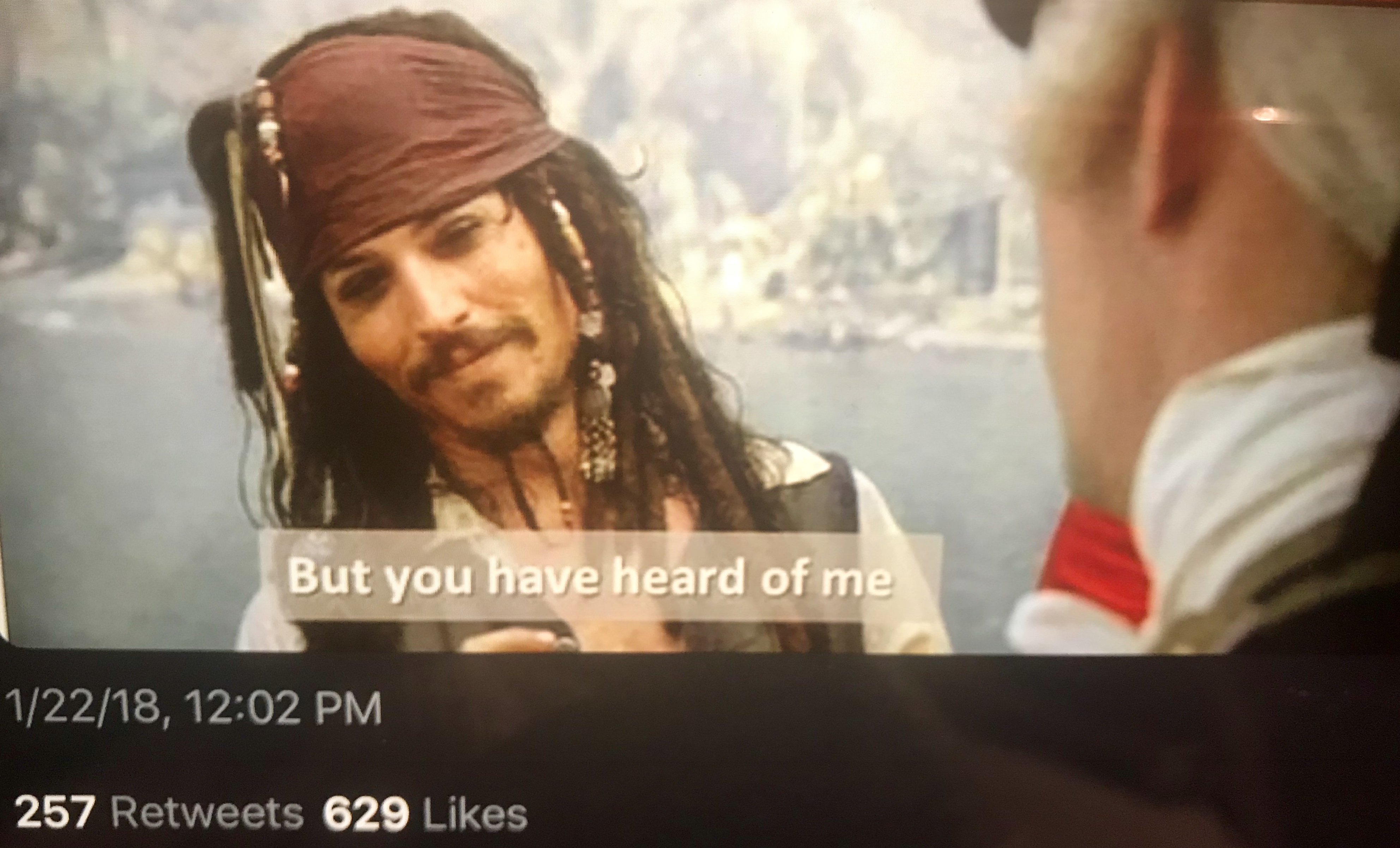
“But you HAVE heard of me.”
Thanks, we think

Instead of angsting over your inner clouds, spread a little sunshine
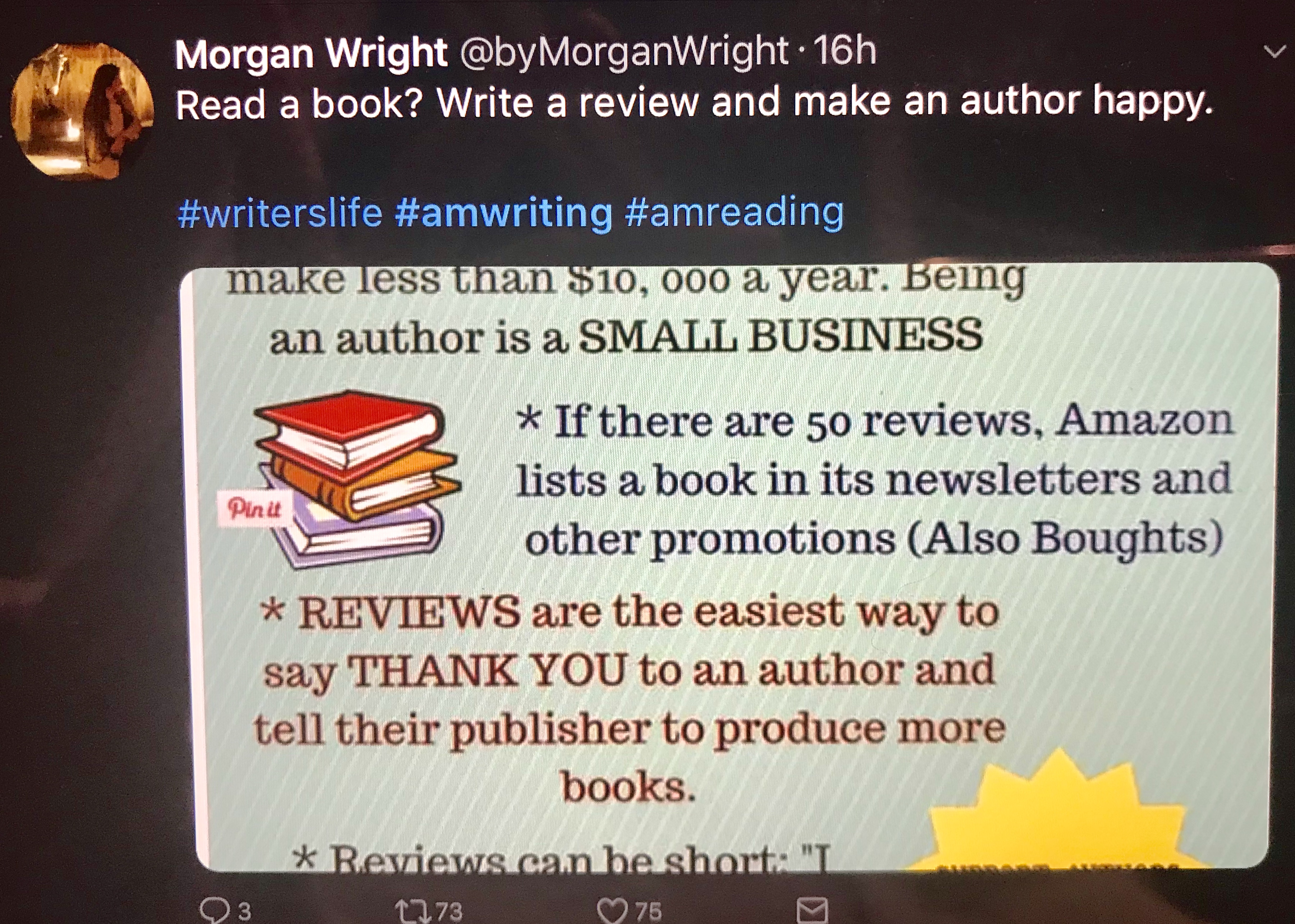
And know this: we are all in this together
What about you? Do you ever turn to the web for uplift or creative inspiration? Any good sources you can share with us?
By SUE COLETTA
We have another brave writer who submitted a First Page for critique. My comments will follow.
ACROSS THE ROAD
Edward stepped on the brakes and brought the car to a halt on the edge of the road. Adjusting his rearview mirror, he again looked to make certain his intervention was indeed required. On the streets of Accra two people fighting was hardly a novel sight, and third party intervention was not always welcome. But the man still held the young woman by her throat, and she squirmed in vain to break free.
Edward turned off the engine, took out the keys, and stepped out of the car.
It hit him like a falling object. “What the…?” he muttered. Cupping his hand over his eyes, he looked up.
It was a stupid thing to do. The pain in his head only worsened. He looked at his watch to ensure it wasn’t already mid-day. Even at 7:45 in the morning, the sun churned an unbearable amount of heat. If he kept driving, he’d be in his office in fifteen minutes waiting on an aspirin from his secretary. He squinted in the direction of the helpless young woman, and marched towards her.
Every step he took increased the throbbing in his head. He’d stopped his car only a couple of metres away. Amidst her gasping and choking, Edward heard the woman say, “Let…go of me.” Her small hands slipped and slapped against the man’s vice-like grip.
“Give me my money or else…” The man, who couldn’t have been shorter than six-foot-four, threw up a big, veiny left hand, palm wide open, and began to drop it at a target on the side of her face.
Edward reached it in time. He caught the weapon in his left hand before it reached its target. His fingers barely closed around the thick wrist. “Easy, my friend,” he said.
The man staggered, and Edward’s head exploded. Still holding on to the woman, the man turned his eyes from her to Edward. Deep furrows in his forehead marked his confusion. In a quick movement Edward transferred the seized hand from his left hand to his right. With his left hand he grabbed the choking hazard and calmly said to the brute, “Let her go.”
For a brief moment the two men glared at each other in a not-so-epic Mexican stand-off. Edward fixed his gaze. Too many times he’d been told he had kind eyes.
* * *
The writer has given us a peek into Edward’s character and we’re thrown into an action scene. Yet the writer didn’t hook me enough to turn the page. Why? Because when we don’t resist the urge to explain every movement in detail, it ruins the suspense. Readers are smart. Trust us to fill in the blanks. I’ll give you a quick example.
He reached for the bloody rag. By two fingers he pulled it from the stranger’s grasp, then retracted his arm.
See how overly descriptive that is? Remember, every word counts.
He snatched the bloody rag.
Same action. Same visualization. Four words instead of 19. We know what it looks like to snatch a rag from someone’s hand. Too many body movements slow (or stop) the suspense rather than enhance it.
The Headache
Throughout the first page we learn about Edward’s headache. I’m guessing these episodes play a key role in the story. In which case, the writer has done a good job of showing us how migraines start as a dull ache and little by little build into mind-numbing pain.
A word of caution here. Headaches aren’t all that interesting, nor are migraines. They help gain empathy for the MC, but they’re not enough to carry an entire story. Unless— and this is key—these migraines are a symptom of something larger. Jason Borne had migraines after the CIA erased his identity. If Edward went through a similar procedure, then you need to drop a few clues. As it stands now, Edward’s an average Joe who makes his secretary bring him aspirin. Speaking of, unless the story takes place before the 1970’s, this tidbit makes Edward look like a male chauvinist pig. Do you want to turn your female readers against Edward?
Word Choices
Throughout the first page the writer chose odd wording. For clarity, the brave writer’s questionable word choices are in red, my remarks in blue. Please add your own helpful suggestions in the comments.
Edward stepped on the brakes and brought the car to a halt on the edge of the road. “Brought” is generic. The edge of the road makes me think Edward stopped at the edge of a steep cliff. Breakdown lane or dirt shoulder may work better.
It hit him like a falling object. What hit him? “It” tells us nothing.
The man, who couldn’t have been shorter than six-foot-four (don’t confuse the reader with odd wording. If he’s the size of a Patriot’s linebacker, say so), threw up a big, veiny left hand (first, gross; second, unless Edward is inches away he wouldn’t be able to see the dude’s veins), palm wide open, and began to drop it at a target (what target? Did a bullseye suddenly appear on her cheek?) on the side of her face.
Edward reached it (reached what?) in time. He caught the weapon (there’s a weapon now?) in his left hand before it reached its target (I still don’t see a target).
Adjusting his rearview mirror, he again looked (did he look a first time?) to make certain his intervention (intervention reminds me of an alcoholic who needs to get sober) was indeed required.
Also, the first line is nowhere near strong enough for an opener. Rather than rehash TKZ’s sound advice on first lines, I’ve linked a few posts that may help HERE, HERE, and HERE.
Always try to use strong action verbs. You can find an active verb pdf HERE.
On the streets of Accra two people fighting was hardly a novel sight, and third party intervention was not always welcome. The first half of the sentence shows us that Accra isn’t a safe place. Bravo! After the comma, however, is called over-writing. Most people don’t like others prying into their business. Because it’s common sense and it doesn’t help to clarify, well, anything, we can (and should) delete.
But the man still held the young woman by her throat (still? This is the 1st time you’ve shown us), and she squirmed in vain (meh. You can do better) to break free.
Edward turned off the engine, took out the keys, and stepped out of the car.
Unless men have a habit of strangling women on the side of the roads in Accra, the terror should be palpable. He’s killing her! Yet Edward turned off the engine, took out the keys, and stepped out of the car? No, no, no.
Edward slammed the shifter into park and leaped out the driver’s door. “Let go of her, you bastard!”
Force us into that fight! Let us feel Edward’s face flush with rage as he witnesses a man beat on a woman half his size.
Let’s jump ahead.
The man staggered, and Edward’s head exploded. His head exploded? What a mess! I understand what the writer is trying to convey here, but I can’t help but giggle every time I read that line. Migraines are no joke, though. Please choose words that best describe how painful they are.
Example:
A volcanic blast exploded within Edward’s head. Vision blurred. Words jumbled. With a flat hand, he latched on to the hood to steady his gait. The goon dragged the woman by the hair, but Edward couldn’t react. The migraine held him hostage.
Still holding on to the woman, the man turned his eyes from her to Edward. How does one turn their eyes? I’m able to “shift” my eyes, but alas, I cannot turn them. I’m also a stickler for “eyes” that shoot across a room. “Gazes” can shoot to and fro. They can also roam, wander, and dance. Eyeballs, to my knowledge, remain in their sockets at all times. Unless, or until, someone pries them out.
Deep furrows in his forehead marked his confusion. Simple, clear, paints an image in the reader’s mind. Well done!
In a quick movement Edward transferred the seized hand (Seized? Money and property can be seized, hands cannot) from his left hand to his right. With his left hand (avoid repetition. In less than two sentences the word “hand” is used three times. Too many details confuse the reader. Which hand did what now?) he grabbed the choking hazard (I must admit, I’ve reread this first page umpteenth times and am still unsuccessful in finding “the choking hazard.” To me, a choking hazard is a small toy or toy part that we keep away from babies and toddlers) and calmly said to the brute, “Let her go.”
For a brief moment the two men (we’re not in Edward’s head anymore) glared at each other in a not-so-epic Mexican stand-off (cliché). Edward fixed his gaze (this works better than the preceding sentence; good job here!). Too many times he’d been told he had kind eyes (delete this line. Not only is it irrelevant, but it makes no sense in this context).
To review
Over to you, TKZers. What tips would you give this brave writer?
by James Scott Bell
@jamesscottbell
 Novelist Tracy Chevalier recently observed:
Part of me wishes it were easy to describe my typical writing day. I have heard about them, those smug productive hours when a writer – usually male, it has to be said – sits down each day at 9am with an espresso, writes till 1, makes bouillabaisse, writes from 2 till 5, plays tennis, and after supper sits with a glass of single malt whisky reading over what he’s written that day. That is a scenario I both crave and detest. It will never be that controlled and disciplined for me.
This is an absolute slander! I make a sandwich for lunch, haven’t played tennis in years, and in the evening prefer a California red.
I do, however, have a typical writing day, though of course it has varying tones and I’m free to be as flexible as I want to be. That’s the nice part of being your own boss. Yes, I have to call myself into the office and chew myself out from time to time, but I generally get along with the old so-and-so fellow.
Here’s how I like my day to go:
I’m up before the sun rises. The coffeemaker was set to timer the evening before so my morning brew is ready. I love starting work in the dark. Most people I’ve broached this subject with look at me with a mix of wonder and horror. Their eyes and dropped jaws nonverbally retort, “You do what? The dark? Are you daft?”
Yep. From daft to draft!
I try to do some writing immediately, to bring up what my writer’s mind has been working on all night. There might be a good plot twist there, or an idea for another book, or maybe just a way of phrasing something. Or perhaps it’s just junk. Whatever it is, I spill it into a free form document that I’ll assess later.
I then set out to write a Nifty 350.
Later on, I’ll give a light edit to my previous day’s pages, then go for my quota.
What I really have to watch out for is the temptation to jump onto social media the moment I hit some challenge or other. I’ve written about this before.
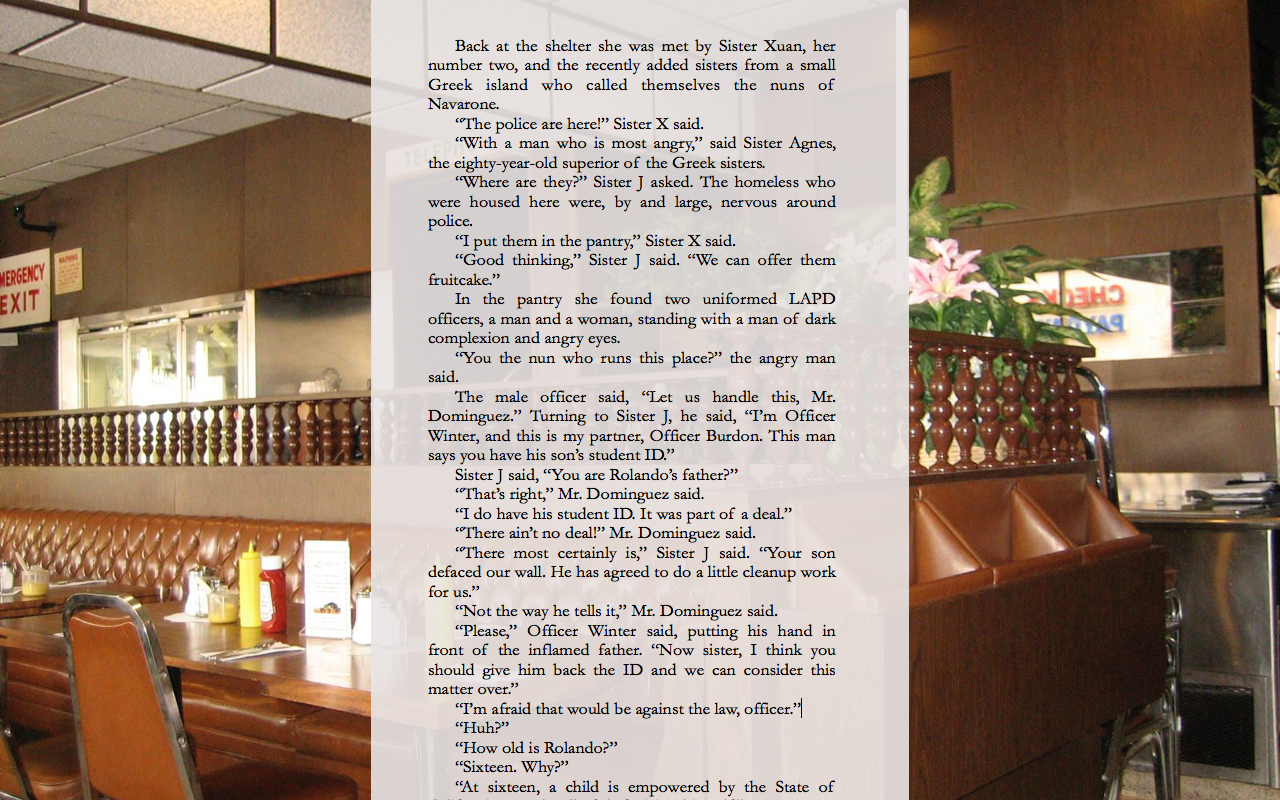
However, I do like having some ambient noise going on, which means I will sometimes be found writing at some local coffee establishment. But at home, I turn on Coffitivity. I compose in Scrivener, which allows me to have a background on my screen. I have taken a photo of my favorite deli, Langer’s, so it’s like I’m there in a booth, writing:
From about 11 – 1 I’ll generally take care of business matters (e.g., marketing, email) and have some lunch. I’ve pretty much settled that from 1 – 3 it’s zombie time. My brain just wants to lie in a hammock. So I’ll work in a power nap (15 – 20 minutes). That sets me up for the late afternoon. I can usually squeeze in another hour of writing or editing from about 4 – 5.
Then I pretty much knock off. Dinner with Mrs. B. We might watch a movie or classic TV show. If I finish a book, or my wife closes a real estate deal, we’ll celebrate by going out to eat. It’s a short drive to Malibu, where we can nosh by our beloved Pacific Ocean.
That’s as typical as it gets, so long as there are no earthquakes, fires, mudslides, power outages, or locusts.
So now I’d like to hear from you. Do you have a typical writing day? If not, how would you design one?

Attribution – Niki K (Wikimedia Commons)
John Gilstrap had an excellent post yesterday on Internal Monologue that resonated with me. He gave great examples of what works and what may not, with explanations on his sage reasoning. He certainly gave me things to think about in my own writing.
I tend to write in deep POV and very tight, with sparse narratives. This is especially true when I write my novella length stories for Kindle World, which is a great exercise in writing a tight plot and keeping the pace up.
In my full novels, I reign in my internal monologue and make it focused, with the character having a journey from beginning to end of the book, as well as a journey even within each scene, so I don’t repeat the deep POV thoughts.
On the FOR WRITERS resource on my website, I have a post titled – START WITH A BANG. If you scroll down to the “Ever thought about building an onion from the inside out?” sub-heading, you’ll find a section on how I let dialogue be the starting framework and how I layer in elements to fill out a scene. Internal monologue is vital to establishing my character’s journey and emotional growth and it’s something I focus on a great deal – even when I do my final draft read – but it’s the last thing I add to any scene, because I want to control it and isolate the journey to avoid pitfalls.
Despite my own methods, I greatly admire writers like Michael Connelly (particularly his Bosch series) where his mastery of his character’s internal views feel so authentic of an experienced war weary cop. He effortlessly brings in Bosch’s personal relationships and his workload to give a 360 view of this man’s life. That’s not an easy thing to do. It requires an intense knowledge of his character Bosch.
No matter how a writer learns how to craft internal monologue, it is easily one of the areas an author can veer off course and overuse…or under use, for that matter. Have you ever read a book that is all action, devoid of emotion or insight into the character’s internal battle and conflict? This is definitely a balancing game to get internal monologue to enhance your writing and make your stories memorable for readers.
Key Points to Finding the Right Balance for Internal Monologue:
1.) DIALOGUE – If you see your narrative paragraphs stretching out onto the page in weighty clumps, look for ways to make your internal monologue lean and mean by use of dialogue. This is something I have to pay attention to, even with my sparse style. Clever dialogue is a challenge, but it can be so much fun to write.
Plus, effective dialogue can help you pace your novel and tease the reader with red herrings or mystery elements, and not a plot dump of internal thoughts.
2.) LESS IS MORE – It’s easy to get carried away with every aspect of a character’s POV. The reader doesn’t need to know every logical argument for their action or inaction. People don’t think like this, especially in the heat of the moment in an action scene.
Have patience to let the story unfold. Too much internal thought can dry up pace and bore readers. The reader doesn’t need to know everything, especially all at once in a dump.
Also be careful NOT to repeat the same thought over and over. Repeating internal strife does not constitute a journey. It only reminds the reader that the author is searching for different ways to describe the same thing. Oy.
3.) TIMING – pick your spots when internal monologue makes the most sense. James Scott Bell wrote a great post on What’s the Deal on Dreams in Fiction where he talks about starting a novel with a character in thought, no action or disturbance. Resist the urge to bury your reader in internal monologue right out of the gate.
In addition, if your character is in the middle of a shoot out, that would not be the most opportune time to share his feelings on getting dumped by his girlfriend, not even if she is the one shooting at him. (Although I would love to read a scene like that.) To make the danger seem real, stick with the action and minimize the internal strife until it’s logical for the character to ponder what happened after.
Plus, if you spill the exposition too early, the reader won’t retain it as well as if you had waited for the right timing, when the reveal would be most effective.
4.) SHOW DON’T TELL – Once you get into the quagmire of telling a character’s POV, it’s too easy to get carried away with the rest of your book. If you can SHOW what a character is feeling, and let the reader take what they will from the scene, you will leave an image nugget that will stick with them. TELLING doesn’t have the same impact.
5.) ACTION & DIALOGUE DEFINE CHARACTER – These are the two areas where readers will most remember a book. Unless you’re into author craft and can appreciate the internal monologue finesse of John Gilstrap and Michael Connelly and many other author favorites, you probably may not remember how effectively the author used internal monologue. It’s like the color black. It goes with everything in such a subtle way that you may not notice it.
FOR DISCUSSION:
1.) What tips do you have to share on how you handle internal monologue in your own writing?
2.) With the key points I listed above, do any of them pose a particular challenge for you?
3.) Name a recent book you read where you noticed the author’s deft handling of internal monologue. (I would love to expand my TBR pile.)
Today’s post responds to a request from a TKZ reader who asked about internal monologue. (I’ve heard this referred to as internal dialogue, as well, but outside the world of psychoses, I’m not sure such a thing is possible.) This is my take on the way to present thoughts on the page.
Narrative voice. For fiction to work at its finest, every word of every line of every paragraph should advance either story or character, preferably both. I discussed this previously in a post I called The Point of View Tapestry, and more recently, I addressed it in a video on my YouTube Channel in a piece I call, Point of View and Voice. When writing in the first person or close third person, every line of narration serves as a presentation of a character’s point of view. As an example, consider this paragraph from Scorpion Strike, the next Jonathan Grave thriller (July, 2018):
[Gail] was still trying to process what she had just seen. She understood that she’d fallen in love with a crusader whose combat skills had been honed over nearly two decades of training and experience with the most elite Special Forces unit in the world. Yes, she’d seen him kill before. Indeed, she’d killed right alongside him. But those incidents had all involved firearms and extraordinary marksmanship. Killing with a knife seemed so personal, and Jonathan had wielded the blade with such expert precision that it took her breath away.
That entire passage is, in effect, internal monologue. We are seeing the world through Gail’s eyes. And, because this scene comes from very early in the novel, we learn a little backstory, too. In the previous scene, separated by a space break, we were in Jonathan’s point of view as he killed their attacker with a focused precision that clearly comes naturally to him. That scene was essentially internal monologue, as well. Done effectively, your narrative voice carries a lot of the water for internal monologue.
Quoted thought. The accepted practice these days is to italicize quoted thought, and then tag it as if it were dialogue: Nice place, Jonathan thought. It’s a simple, effective convention that I believe can easily be overdone. If the narrative voice handles the description of a place well, the reader–who is firmly rooted in a character’s point of view–will know simply by word choice whether or not the character is impressed or repelled.
I approach italicized quoted thought with the same trepidation with which I approach dialect. Misspellings and startling contractions stop the narrative and break the spell for the reader. (I feel the same about expressions in foreign languages that are then translated for the reader. A much better approach is, “Please have a seat,” he said in Russian. Why make me plow through unintelligible Cyrillic characters first?) A little bit goes a long, long way.
The reader who asked me to address this topic presented to me in an email a passage for which his freelance editor took him to task. He granted permission for me to share it here. This is a paragraph from his work in progress:
Phil was right. I’ve been doing my best to keep evil out or to deny it. But what’s the alternative? Permanent depression? I’m pretty depressed right now . . . Maybe it was a mistake. Maybe Lara was with some guy and something happened and he panicked and had to ditch the body.
His editor told him–and I agree–that this passage comes off as “inauthentic” if only because we don’t actually think in words. We certainly don’t think in complex logical analyses. We think in bursts of reaction and instinct that can be an enormous challenge to present effectively on the page. The example above doesn’t work because it is too complex. In this case, the fix is simple:
Phil was right, Paula thought. She’d been doing her best to keep evil out or to deny it. But what’s the alternative? Permanent depression? She was pretty depressed right now . . . Maybe it was a mistake. Maybe Lara was with some guy and something happened and he panicked and had to ditch the body.
The same passage that feels clunky in italicized thought works (though it’s absent context) as straight narrative and communicates the same thoughts.
As a further example that’s a little closer to my wheelhouse, there are probably dozens of considerations in drawing and firing a pistol, and while all of them are present in the shooter’s head, it would be inauthentic to articulate them on the page. Imagine . . .
If the wine is sour, throw it out. — Michelangelo
By PJ Parrish
Have you ever wanted to just say the hell with it and give up?
I have. I’ve been publishing fiction in one form or another since 1980 and I can’t count the number of times I have wanted to pack it in and go drive the cart at the airport for a living. Sometimes it was a bad editor who brought this on. Or being dropped from a publisher (twice). Or doing too many book signings where the only people who showed up were the staff and a homeless guy trying to get out of the rain. Or being caught in the dreaded Barnes & Noble Death Spiral. (this is an official term for the dynamic of mediocre-sales-so-we-won’t-stock-you-but-no-way-to-increase-sales-because-we-won’t-carry-your-books.
Or sometimes it was simply because I thought I had run out of energy or worse, ideas. But maybe the worst kind of giving up is the one where you have invested a lot of time and energy into a book and there’s this little voice inside your head whispering, “This is pure crap.” And you know the voice is telling you the truth.
When is it time to give up on a story and start over?
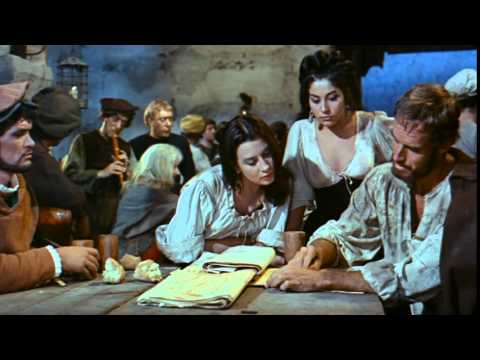
Michelangelo is the one who got me thinking about this. Or actually, Charleton Heston. Last weekend, my bad cold had me mainlining old movies and I happened upon The Agony and the Ecstasy. Charleton Heston as the artist and Rex Harrison as the pope who commissions him to paint the Sistine Chapel. Good movie, based on the bestselling novel by Irving Stone. Michelangelo is maybe a couple hundred feet into his backbreaking project but he’s haunted by self-doubt — especially over the fresco he has painted depicting the face of God. He retreats to a tavern, where he sketches the peasants as models for apostles. But it’s God’s face who taunts him. Michelangelo takes a drink of wine, spits it out and yells, “This wine is sour!” The tavern owner tastes it, agrees, and uncorks the cask onto the floor, saying, “If the wine is sour, throw it out!”

Michelangelo has his epiphany. He goes back to the chapel and takes a scythe to God’s face, scraping it off. A year of work demolished. He starts over.
If the wine is sour, throw it out.
Flashback to 1998. I am writing my first attempt at a mystery. My first chapter opens with a Miami homicide detective sitting in a fishing boat in the Everglades. She is thinking…mourning…remembering…her husband who got blown up in a drug deal gone bad. Do you see the problem? She is thinking. She is…doing nothing. If you don’t get it, go back into TKZ archives and search for any of James Scott Bell’s posts on characters thinking and not doing.
I finished that first book and sent it out to agents. I got oh, maybe twelve rejections. Not one agent was kind enough or smart enough to tell me what was wrong. I tossed the whole book and started over. About two years later, the first book in the Louis Kincaid series got published. (For the record, it opens with Louis unearthing a shallow grave in rural Mississippi and finding a skeleton with a rotted noose around its neck).
Okay, flash forward to now. After our book She’s Not There was published last year by Thomas & Mercer, they asked to see a sequel that centered on a subplot featuring a secondary character named Clay Buchanan. Six chapters poured out of my laptop. I was on a roll.
Then this little voice started whispering. I ignored it, plowing on through a hundred pages. Finally, I went back and re-read Chapter 1.
I had opened with my protagonist Clay Buchanan sitting in a boat in an Arkansas bayou. He is a skip tracer by trade but also an avid bird-watcher. He has come looking for a woodpecker that’s supposedly extinct. But he is thinking about his wife and infant son who disappeared ten years ago. This quest is supposed to a metaphor for his hopeless search for something lovely that he knows is really dead. Beautiful chapter, full of poignancy, dripping with Spanish moss and symbolism.
You’d think I would have learned something in twenty years.
Yesterday, I threw it out, all hundred pages. It took me five months to get to this point. That’s a lot of wine on the floor. But it had to be done. The idea for the book is solid but the first five chapters are not working. I knew it in my heart.
Why do we resist starting over? Well, after twenty years, I’ve got my thoughts.
Deadlines: It may be an actual contract deadline, or one you set yourself (I will finish this book by July! I will write 1500 words per day!) It is also the pressure of our genre, the idea that you won’t get noticed or survive unless you can produce good books at a steady clip.
Deadlines can be bad — the tyranny of the ticking clock can make you burp out some bad stuff. But deadlines can be good — a finite amount of time forces you to write instead of playing Spider Solitaire or folding laundry). Deadlines can make you angry. Deadlines can make you feel frustrated and exhausted. As a classic procrastinator, I’ve learned it’s best to try to embrace a deadline. Think of it as having a pet porcupine.
Self-doubt: This can be bad because it can eat away at your soul. (I’ll never get published. I can never write as well as fill-in-the-blank. I’m out of good ideas.). But self-doubt can be good because it forces you to slow down, reassess and reflect. When things look dark, sometimes it’s not a bad idea to pump the brakes so you don’t drive off the cliff. If your novel is going badly, you might need to set it aside, let the frustration cool, and go back later. Divorce or reconciliation? It’s easier to decide with a clear head instead of a heavy heart. Some books can, with hard work, be saved. Others have to be abandoned.
Negative people: This can be bad because sometimes you have to literally live with these folks. Your spouse might not be supportive enough. Your friends might tell you your wasting your time. Your “real” job screams at you like a harpy. But it can be good if you’ve got someone in your life who can, with a clear critical eye and kind heart, tell you when your book has lost its way. All of us want praise. But what we really need are folks –a trusted beta reader or a good critique group — who will tell us “This ain’t working.”
Now I can hear some of you saying, “Okay, that’s the agony. When does the ecstasy kick in?”
I can’t say. It’s a personal thing. Each of us handles disappointment and defeat in his or her own way. I can only say that once I made the decision to throw away the first hundred pages of Clay’s story, I felt…good. Like Michaelango, I had a clean white canvas again. I’ve been here before. I can do it again. I’ve only got, oh, about 100,000 words to go…